User login
Almost Half of Psoriasis Patients Have Metabolic Syndrome
Forty percent of patients with psoriasis were found to have the metabolic syndrome in a study of a nationally representative sample of more than 6,500 adults published online Dec. 20 in the Archives of Dermatology.
The prevalence of the metabolic syndrome was approximately twice as high in psoriasis patients as in adults without psoriasis, even after adjustment for potential confounders such as age, sex, race/ethnicity, smoking status, and CRP levels. "Given its associated serious complications, this comorbidity needs to be recognized and taken into account when treating individuals with psoriasis," reported Dr. Thorvardur Jon Love of Brigham and Women’s Hospital, Boston, and his associates.
"Based on these data, it is estimated that of the 6.6 million adults (age range 20-59 years) with psoriasis in the United States, 2.7 million have the metabolic syndrome, or nearly a million more individuals than would be expected from individuals without psoriasis," they noted.
The study findings may partially explain why previous research has found increased risks of cardiovascular and metabolic morbidity and mortality among psoriasis patients. In particular, patients with severe psoriasis have been reported to be at an increased risk for MI, stroke, and cardiovascular mortality, and have been reported to die 3-4 years earlier than people without psoriasis, the investigators added.
The metabolic syndrome is characterized by abdominal obesity, hypertriglyceridemia, low HDL cholesterol levels, hypertension, and high fasting glucose levels. Recent research has pegged the incidence of the disorder at 15%-24% in the general U.S. population.
Noting that there has been only one previous study examining the relationship between psoriasis and the metabolic syndrome, and that until now there have been no population-based data on the issue, Dr. Love and his colleagues used data from the National Health and Nutrition Examination Survey (NHANES) 2003-2006 to assess the prevalence of the metabolic syndrome and its components in psoriasis.
The study subjects included 2,456 adults (mean age 39 years) who did not have preexisting diabetes; 71 had psoriasis.
The prevalence of the metabolic syndrome was 40% among psoriasis patients, compared with 23% among patients without psoriasis. The odds ratio for patients with psoriasis to have the metabolic syndrome was 2.16 on univariate analysis and 1.96 after the data were adjusted to account for potential confounding factors.
When CRP levels were removed from the analysis to cancel out the potentially confounding effect of inflammation, odds ratios did not change materially, Dr. Love and his associates reported (Arch. Dermatol. 2010 Dec. 20 [doi:10.1001/archdermatol.2010.370]).
"When we applied these data to the 2008 U.S. census population estimate, 6.6 million (95% CI, 4.8-8.3) individuals aged 20-59 years were estimated to have psoriasis in the United States, and 2.7 million (95% CI, 1.6-3.6) of these individuals with psoriasis were estimated to have the metabolic syndrome, an excess of 1 million patients compared with the expected value among individuals without psoriasis," they noted.
The most common feature of the metabolic syndrome to be found among psoriasis patients was abdominal obesity, present in 63%. Hypertriglyceridemia and low HDL-cholesterol levels also were common.
These findings indicate that "a diagnosis of psoriasis should trigger a high clinical suspicion [of] and investigation for a potential coexistence of the metabolic syndrome. If present, the syndrome needs to be recognized as a potentially more life-threatening factor than psoriasis given the serious associated complications," Dr. Love and his colleagues wrote.
This association also should be considered when choosing therapy for psoriasis. "For example, tumor necrosis factor blockers may decrease insulin resistance," they added.
This study was supported in part by the National Institutes of Health, the Psoriasis Foundation, and the National Heart, Lung, and Blood Institute. One of Dr. Love’s associates reported ties to Amgen, Abbott, Celgene, Centocor, Pfizer, and Novartis.
Forty percent of patients with psoriasis were found to have the metabolic syndrome in a study of a nationally representative sample of more than 6,500 adults published online Dec. 20 in the Archives of Dermatology.
The prevalence of the metabolic syndrome was approximately twice as high in psoriasis patients as in adults without psoriasis, even after adjustment for potential confounders such as age, sex, race/ethnicity, smoking status, and CRP levels. "Given its associated serious complications, this comorbidity needs to be recognized and taken into account when treating individuals with psoriasis," reported Dr. Thorvardur Jon Love of Brigham and Women’s Hospital, Boston, and his associates.
"Based on these data, it is estimated that of the 6.6 million adults (age range 20-59 years) with psoriasis in the United States, 2.7 million have the metabolic syndrome, or nearly a million more individuals than would be expected from individuals without psoriasis," they noted.
The study findings may partially explain why previous research has found increased risks of cardiovascular and metabolic morbidity and mortality among psoriasis patients. In particular, patients with severe psoriasis have been reported to be at an increased risk for MI, stroke, and cardiovascular mortality, and have been reported to die 3-4 years earlier than people without psoriasis, the investigators added.
The metabolic syndrome is characterized by abdominal obesity, hypertriglyceridemia, low HDL cholesterol levels, hypertension, and high fasting glucose levels. Recent research has pegged the incidence of the disorder at 15%-24% in the general U.S. population.
Noting that there has been only one previous study examining the relationship between psoriasis and the metabolic syndrome, and that until now there have been no population-based data on the issue, Dr. Love and his colleagues used data from the National Health and Nutrition Examination Survey (NHANES) 2003-2006 to assess the prevalence of the metabolic syndrome and its components in psoriasis.
The study subjects included 2,456 adults (mean age 39 years) who did not have preexisting diabetes; 71 had psoriasis.
The prevalence of the metabolic syndrome was 40% among psoriasis patients, compared with 23% among patients without psoriasis. The odds ratio for patients with psoriasis to have the metabolic syndrome was 2.16 on univariate analysis and 1.96 after the data were adjusted to account for potential confounding factors.
When CRP levels were removed from the analysis to cancel out the potentially confounding effect of inflammation, odds ratios did not change materially, Dr. Love and his associates reported (Arch. Dermatol. 2010 Dec. 20 [doi:10.1001/archdermatol.2010.370]).
"When we applied these data to the 2008 U.S. census population estimate, 6.6 million (95% CI, 4.8-8.3) individuals aged 20-59 years were estimated to have psoriasis in the United States, and 2.7 million (95% CI, 1.6-3.6) of these individuals with psoriasis were estimated to have the metabolic syndrome, an excess of 1 million patients compared with the expected value among individuals without psoriasis," they noted.
The most common feature of the metabolic syndrome to be found among psoriasis patients was abdominal obesity, present in 63%. Hypertriglyceridemia and low HDL-cholesterol levels also were common.
These findings indicate that "a diagnosis of psoriasis should trigger a high clinical suspicion [of] and investigation for a potential coexistence of the metabolic syndrome. If present, the syndrome needs to be recognized as a potentially more life-threatening factor than psoriasis given the serious associated complications," Dr. Love and his colleagues wrote.
This association also should be considered when choosing therapy for psoriasis. "For example, tumor necrosis factor blockers may decrease insulin resistance," they added.
This study was supported in part by the National Institutes of Health, the Psoriasis Foundation, and the National Heart, Lung, and Blood Institute. One of Dr. Love’s associates reported ties to Amgen, Abbott, Celgene, Centocor, Pfizer, and Novartis.
Forty percent of patients with psoriasis were found to have the metabolic syndrome in a study of a nationally representative sample of more than 6,500 adults published online Dec. 20 in the Archives of Dermatology.
The prevalence of the metabolic syndrome was approximately twice as high in psoriasis patients as in adults without psoriasis, even after adjustment for potential confounders such as age, sex, race/ethnicity, smoking status, and CRP levels. "Given its associated serious complications, this comorbidity needs to be recognized and taken into account when treating individuals with psoriasis," reported Dr. Thorvardur Jon Love of Brigham and Women’s Hospital, Boston, and his associates.
"Based on these data, it is estimated that of the 6.6 million adults (age range 20-59 years) with psoriasis in the United States, 2.7 million have the metabolic syndrome, or nearly a million more individuals than would be expected from individuals without psoriasis," they noted.
The study findings may partially explain why previous research has found increased risks of cardiovascular and metabolic morbidity and mortality among psoriasis patients. In particular, patients with severe psoriasis have been reported to be at an increased risk for MI, stroke, and cardiovascular mortality, and have been reported to die 3-4 years earlier than people without psoriasis, the investigators added.
The metabolic syndrome is characterized by abdominal obesity, hypertriglyceridemia, low HDL cholesterol levels, hypertension, and high fasting glucose levels. Recent research has pegged the incidence of the disorder at 15%-24% in the general U.S. population.
Noting that there has been only one previous study examining the relationship between psoriasis and the metabolic syndrome, and that until now there have been no population-based data on the issue, Dr. Love and his colleagues used data from the National Health and Nutrition Examination Survey (NHANES) 2003-2006 to assess the prevalence of the metabolic syndrome and its components in psoriasis.
The study subjects included 2,456 adults (mean age 39 years) who did not have preexisting diabetes; 71 had psoriasis.
The prevalence of the metabolic syndrome was 40% among psoriasis patients, compared with 23% among patients without psoriasis. The odds ratio for patients with psoriasis to have the metabolic syndrome was 2.16 on univariate analysis and 1.96 after the data were adjusted to account for potential confounding factors.
When CRP levels were removed from the analysis to cancel out the potentially confounding effect of inflammation, odds ratios did not change materially, Dr. Love and his associates reported (Arch. Dermatol. 2010 Dec. 20 [doi:10.1001/archdermatol.2010.370]).
"When we applied these data to the 2008 U.S. census population estimate, 6.6 million (95% CI, 4.8-8.3) individuals aged 20-59 years were estimated to have psoriasis in the United States, and 2.7 million (95% CI, 1.6-3.6) of these individuals with psoriasis were estimated to have the metabolic syndrome, an excess of 1 million patients compared with the expected value among individuals without psoriasis," they noted.
The most common feature of the metabolic syndrome to be found among psoriasis patients was abdominal obesity, present in 63%. Hypertriglyceridemia and low HDL-cholesterol levels also were common.
These findings indicate that "a diagnosis of psoriasis should trigger a high clinical suspicion [of] and investigation for a potential coexistence of the metabolic syndrome. If present, the syndrome needs to be recognized as a potentially more life-threatening factor than psoriasis given the serious associated complications," Dr. Love and his colleagues wrote.
This association also should be considered when choosing therapy for psoriasis. "For example, tumor necrosis factor blockers may decrease insulin resistance," they added.
This study was supported in part by the National Institutes of Health, the Psoriasis Foundation, and the National Heart, Lung, and Blood Institute. One of Dr. Love’s associates reported ties to Amgen, Abbott, Celgene, Centocor, Pfizer, and Novartis.
FROM ARCHIVES OF DERMATOLOGY
Major Finding: Of psoriasis patients, 40% have the metabolic syndrome, approximately double the rate found in adults who do not have psoriasis.
Data Source: Analysis of data from a cross-sectional health survey of a nationally representative random sample of 6,549 U.S. adults.
Disclosures: This study was supported in part by the National Institutes of Health, the Psoriasis Foundation, and the National Heart, Lung, and Blood Institute. One of Dr. Love's associates reported ties to Amgen, Abbott, Celgene, Centocor, Pfizer, and Novartis.
Few Women, Men See Indoor Tanning as Harmful
Only 13% of women and 4% of men in a nationally representative sample of 2,869 adults recognized that indoor tanning raises the risk of skin cancer, according to a report in the December issue of the Archives of Dermatology.
In addition, 18% of women and 6% of men reported they had used indoor tanning in the previous year, reported Kelvin Choi, Ph.D., of the division of epidemiology and community health at the University of Minnesota, Minneapolis, and his associates.
Although several studies have characterized indoor tanning use among adolescents, few have addressed the practice among adults, and those few have been restricted to regional samples only or to the parents of adolescents. Dr. Choi and his colleagues examined adult indoor tanning via data from a National Cancer Institute survey of a nationally representative, random sample of white subjects aged 18-64 years.
It is "concerning" that such a small proportion of adults understand the potential damage from indoor tanning. "Perhaps people are confused by the messages from the indoor tanning industry on possible benefits ... [such as] getting vitamin D from moderate exposure to artificial UV radiation," the investigators wrote.
"Effective dissemination of the harms of indoor tanning use may reduce the prevalence of its use among adults. Interventions to reduce indoor tanning use to date have focused on the appearance-damaging effect of indoor tanning, but such an approach may not change participants' perceived susceptibility to skin damage or cancer," they noted (Arch. Dermatol. 2010;146:1356-61).
Strategies such as clinician-patient communication may be necessary to address this knowledge gap, since brief health advice from physicians has been effective for other health behaviors such as smoking cessation, Dr. Choi and his associates added.
The prevalence of indoor tanning use was highest in the youngest members of the study sample and declined steadily with age. Residents of the Midwest were the most likely to use indoor tanning, and residents of the South also were significantly more likely to do so than residents of the eastern or western United States. "The regional differences may reflect greater availability of tanning salons, as the Midwest region has been shown to have the highest per capita [number of] indoor tanning facilities in the country," the researchers wrote.
Among men, those living in metropolitan areas were more likely to use indoor tanning, but this was not true of women. "Although we did not have sufficient information to investigate reasons for this finding, we speculate that differences in appearance motives between men living in metropolitan and nonmetropolitan areas could be one possibility. Alternatively, differences in marketing strategies used by the indoor tanning industry or in access to tanning salons between these areas could explain" this difference, they added.
Unexpectedly, people who used spray tanning products were more likely than those who did not to use indoor tanning. This suggests that people do not substitute tanning products for actual tanning, but instead use both means to achieve a tanned appearance.
Women who used sunscreen and other methods of protection, such as wearing protective clothing or seeking shade, were significantly less likely to use indoor tanning, probably because they recognized the need to protect their skin from damage. This means that women who use indoor tanning devices are likely not to use sunscreen or other methods of protection, putting them at additional risk for skin cancer.
In an accompanying editorial, Dr. Robert P. Dellavalle noted that the high prevalence of indoor tanning means that physicians will once again be called on to counsel patients against a risky behavior. But clinicians – dermatologists no less than primary-care physicians – are already under distinct time pressure and may not have the luxury of devoting several minutes to routine advice against the use of tanning beds. "Primary care clinicians should not reduce the time that they spend counseling teens on seat belt and bicycle helmet use or on tobacco avoidance and cessation [in order] to spend more time on sun safety and tanning bed avoidance," he wrote (Arch. Dermatol. 2010;146:1361-2).
Besides, the most recent U.S. Preventive Services Task Force guidelines "found little evidence to determine the effects of counseling on the sun protection behaviors of adults, including avoiding sunlamps and tanning beds, and did not recommend any routine counseling by primary care clinicians to prevent skin cancer," noted Dr. Dellavalle of the department of dermatology at the University of Colorado at Denver, and the Colorado School of Public Health, Aurora. "This guideline recommendation is unlikely to change soon as no major (and expensive) randomized controlled trial on skin cancer counseling efficacy appears on the horizon," he wrote.
The study was supported by the National Cancer Institute. No financial disclosures were reported by the investigators, nor by Dr. Dellavalle.
Given the high prevalence of indoor tanning use that was discovered in this study, physicians will once again be called on to counsel patients against a risky behavior, said Dr. Robert P. Dellavalle.
But clinicians – dermatologists no less than primary-care physicians – are already under distinct time pressure and may not have the luxury of devoting several minutes to routine advice against the use of tanning beds. "Primary care clinicians should not reduce the time that they spend counseling teens on seat belt and bicycle helmet use or on tobacco avoidance and cessation [in order] to spend more time on sun safety and tanning bed avoidance," he wrote.
Besides, the efficacy of such advice is questionable. The most recent U.S. Preventive Services Task Force guidelines "found little evidence to determine the effects of counseling on the sun protection behaviors of adults, including avoiding sunlamps and tanning beds, and did not recommend any routine counseling by primary care clinicians to prevent skin cancer," Dr. Dellavalle noted.
"This guideline recommendation is unlikely to change soon as no major (and expensive) randomized controlled trial on skin cancer counseling efficacy appears on the horizon," he wrote.
Dr. Dellavalle is in the department of dermatology at the University of Colorado at Denver, and the Colorado School of Public Health, Aurora. He reported no financial disclosures. These comments were adapted from his editorial accompanying Dr. Choi’s report (Arch. Dermatol. 2010;146:1361-2).
Given the high prevalence of indoor tanning use that was discovered in this study, physicians will once again be called on to counsel patients against a risky behavior, said Dr. Robert P. Dellavalle.
But clinicians – dermatologists no less than primary-care physicians – are already under distinct time pressure and may not have the luxury of devoting several minutes to routine advice against the use of tanning beds. "Primary care clinicians should not reduce the time that they spend counseling teens on seat belt and bicycle helmet use or on tobacco avoidance and cessation [in order] to spend more time on sun safety and tanning bed avoidance," he wrote.
Besides, the efficacy of such advice is questionable. The most recent U.S. Preventive Services Task Force guidelines "found little evidence to determine the effects of counseling on the sun protection behaviors of adults, including avoiding sunlamps and tanning beds, and did not recommend any routine counseling by primary care clinicians to prevent skin cancer," Dr. Dellavalle noted.
"This guideline recommendation is unlikely to change soon as no major (and expensive) randomized controlled trial on skin cancer counseling efficacy appears on the horizon," he wrote.
Dr. Dellavalle is in the department of dermatology at the University of Colorado at Denver, and the Colorado School of Public Health, Aurora. He reported no financial disclosures. These comments were adapted from his editorial accompanying Dr. Choi’s report (Arch. Dermatol. 2010;146:1361-2).
Given the high prevalence of indoor tanning use that was discovered in this study, physicians will once again be called on to counsel patients against a risky behavior, said Dr. Robert P. Dellavalle.
But clinicians – dermatologists no less than primary-care physicians – are already under distinct time pressure and may not have the luxury of devoting several minutes to routine advice against the use of tanning beds. "Primary care clinicians should not reduce the time that they spend counseling teens on seat belt and bicycle helmet use or on tobacco avoidance and cessation [in order] to spend more time on sun safety and tanning bed avoidance," he wrote.
Besides, the efficacy of such advice is questionable. The most recent U.S. Preventive Services Task Force guidelines "found little evidence to determine the effects of counseling on the sun protection behaviors of adults, including avoiding sunlamps and tanning beds, and did not recommend any routine counseling by primary care clinicians to prevent skin cancer," Dr. Dellavalle noted.
"This guideline recommendation is unlikely to change soon as no major (and expensive) randomized controlled trial on skin cancer counseling efficacy appears on the horizon," he wrote.
Dr. Dellavalle is in the department of dermatology at the University of Colorado at Denver, and the Colorado School of Public Health, Aurora. He reported no financial disclosures. These comments were adapted from his editorial accompanying Dr. Choi’s report (Arch. Dermatol. 2010;146:1361-2).
Only 13% of women and 4% of men in a nationally representative sample of 2,869 adults recognized that indoor tanning raises the risk of skin cancer, according to a report in the December issue of the Archives of Dermatology.
In addition, 18% of women and 6% of men reported they had used indoor tanning in the previous year, reported Kelvin Choi, Ph.D., of the division of epidemiology and community health at the University of Minnesota, Minneapolis, and his associates.
Although several studies have characterized indoor tanning use among adolescents, few have addressed the practice among adults, and those few have been restricted to regional samples only or to the parents of adolescents. Dr. Choi and his colleagues examined adult indoor tanning via data from a National Cancer Institute survey of a nationally representative, random sample of white subjects aged 18-64 years.
It is "concerning" that such a small proportion of adults understand the potential damage from indoor tanning. "Perhaps people are confused by the messages from the indoor tanning industry on possible benefits ... [such as] getting vitamin D from moderate exposure to artificial UV radiation," the investigators wrote.
"Effective dissemination of the harms of indoor tanning use may reduce the prevalence of its use among adults. Interventions to reduce indoor tanning use to date have focused on the appearance-damaging effect of indoor tanning, but such an approach may not change participants' perceived susceptibility to skin damage or cancer," they noted (Arch. Dermatol. 2010;146:1356-61).
Strategies such as clinician-patient communication may be necessary to address this knowledge gap, since brief health advice from physicians has been effective for other health behaviors such as smoking cessation, Dr. Choi and his associates added.
The prevalence of indoor tanning use was highest in the youngest members of the study sample and declined steadily with age. Residents of the Midwest were the most likely to use indoor tanning, and residents of the South also were significantly more likely to do so than residents of the eastern or western United States. "The regional differences may reflect greater availability of tanning salons, as the Midwest region has been shown to have the highest per capita [number of] indoor tanning facilities in the country," the researchers wrote.
Among men, those living in metropolitan areas were more likely to use indoor tanning, but this was not true of women. "Although we did not have sufficient information to investigate reasons for this finding, we speculate that differences in appearance motives between men living in metropolitan and nonmetropolitan areas could be one possibility. Alternatively, differences in marketing strategies used by the indoor tanning industry or in access to tanning salons between these areas could explain" this difference, they added.
Unexpectedly, people who used spray tanning products were more likely than those who did not to use indoor tanning. This suggests that people do not substitute tanning products for actual tanning, but instead use both means to achieve a tanned appearance.
Women who used sunscreen and other methods of protection, such as wearing protective clothing or seeking shade, were significantly less likely to use indoor tanning, probably because they recognized the need to protect their skin from damage. This means that women who use indoor tanning devices are likely not to use sunscreen or other methods of protection, putting them at additional risk for skin cancer.
In an accompanying editorial, Dr. Robert P. Dellavalle noted that the high prevalence of indoor tanning means that physicians will once again be called on to counsel patients against a risky behavior. But clinicians – dermatologists no less than primary-care physicians – are already under distinct time pressure and may not have the luxury of devoting several minutes to routine advice against the use of tanning beds. "Primary care clinicians should not reduce the time that they spend counseling teens on seat belt and bicycle helmet use or on tobacco avoidance and cessation [in order] to spend more time on sun safety and tanning bed avoidance," he wrote (Arch. Dermatol. 2010;146:1361-2).
Besides, the most recent U.S. Preventive Services Task Force guidelines "found little evidence to determine the effects of counseling on the sun protection behaviors of adults, including avoiding sunlamps and tanning beds, and did not recommend any routine counseling by primary care clinicians to prevent skin cancer," noted Dr. Dellavalle of the department of dermatology at the University of Colorado at Denver, and the Colorado School of Public Health, Aurora. "This guideline recommendation is unlikely to change soon as no major (and expensive) randomized controlled trial on skin cancer counseling efficacy appears on the horizon," he wrote.
The study was supported by the National Cancer Institute. No financial disclosures were reported by the investigators, nor by Dr. Dellavalle.
Only 13% of women and 4% of men in a nationally representative sample of 2,869 adults recognized that indoor tanning raises the risk of skin cancer, according to a report in the December issue of the Archives of Dermatology.
In addition, 18% of women and 6% of men reported they had used indoor tanning in the previous year, reported Kelvin Choi, Ph.D., of the division of epidemiology and community health at the University of Minnesota, Minneapolis, and his associates.
Although several studies have characterized indoor tanning use among adolescents, few have addressed the practice among adults, and those few have been restricted to regional samples only or to the parents of adolescents. Dr. Choi and his colleagues examined adult indoor tanning via data from a National Cancer Institute survey of a nationally representative, random sample of white subjects aged 18-64 years.
It is "concerning" that such a small proportion of adults understand the potential damage from indoor tanning. "Perhaps people are confused by the messages from the indoor tanning industry on possible benefits ... [such as] getting vitamin D from moderate exposure to artificial UV radiation," the investigators wrote.
"Effective dissemination of the harms of indoor tanning use may reduce the prevalence of its use among adults. Interventions to reduce indoor tanning use to date have focused on the appearance-damaging effect of indoor tanning, but such an approach may not change participants' perceived susceptibility to skin damage or cancer," they noted (Arch. Dermatol. 2010;146:1356-61).
Strategies such as clinician-patient communication may be necessary to address this knowledge gap, since brief health advice from physicians has been effective for other health behaviors such as smoking cessation, Dr. Choi and his associates added.
The prevalence of indoor tanning use was highest in the youngest members of the study sample and declined steadily with age. Residents of the Midwest were the most likely to use indoor tanning, and residents of the South also were significantly more likely to do so than residents of the eastern or western United States. "The regional differences may reflect greater availability of tanning salons, as the Midwest region has been shown to have the highest per capita [number of] indoor tanning facilities in the country," the researchers wrote.
Among men, those living in metropolitan areas were more likely to use indoor tanning, but this was not true of women. "Although we did not have sufficient information to investigate reasons for this finding, we speculate that differences in appearance motives between men living in metropolitan and nonmetropolitan areas could be one possibility. Alternatively, differences in marketing strategies used by the indoor tanning industry or in access to tanning salons between these areas could explain" this difference, they added.
Unexpectedly, people who used spray tanning products were more likely than those who did not to use indoor tanning. This suggests that people do not substitute tanning products for actual tanning, but instead use both means to achieve a tanned appearance.
Women who used sunscreen and other methods of protection, such as wearing protective clothing or seeking shade, were significantly less likely to use indoor tanning, probably because they recognized the need to protect their skin from damage. This means that women who use indoor tanning devices are likely not to use sunscreen or other methods of protection, putting them at additional risk for skin cancer.
In an accompanying editorial, Dr. Robert P. Dellavalle noted that the high prevalence of indoor tanning means that physicians will once again be called on to counsel patients against a risky behavior. But clinicians – dermatologists no less than primary-care physicians – are already under distinct time pressure and may not have the luxury of devoting several minutes to routine advice against the use of tanning beds. "Primary care clinicians should not reduce the time that they spend counseling teens on seat belt and bicycle helmet use or on tobacco avoidance and cessation [in order] to spend more time on sun safety and tanning bed avoidance," he wrote (Arch. Dermatol. 2010;146:1361-2).
Besides, the most recent U.S. Preventive Services Task Force guidelines "found little evidence to determine the effects of counseling on the sun protection behaviors of adults, including avoiding sunlamps and tanning beds, and did not recommend any routine counseling by primary care clinicians to prevent skin cancer," noted Dr. Dellavalle of the department of dermatology at the University of Colorado at Denver, and the Colorado School of Public Health, Aurora. "This guideline recommendation is unlikely to change soon as no major (and expensive) randomized controlled trial on skin cancer counseling efficacy appears on the horizon," he wrote.
The study was supported by the National Cancer Institute. No financial disclosures were reported by the investigators, nor by Dr. Dellavalle.
FROM THE ARCHIVES OF DERMATOLOGY
Major Finding: Overall, 18% of women and 6% of men reported that they had used indoor tanning in the previous year.
Data Source: A cross-sectional study of a random sample of 2,869 white adults who participated in an extended telephone interview concerning health behaviors.
Disclosures: This study was supported by the National Cancer Institute. No financial disclosures were reported.
Few Women, Men See Indoor Tanning as Harmful
Only 13% of women and 4% of men in a nationally representative sample of 2,869 adults recognized that indoor tanning raises the risk of skin cancer, according to a report in the December issue of the Archives of Dermatology.
In addition, 18% of women and 6% of men reported they had used indoor tanning in the previous year, reported Kelvin Choi, Ph.D., of the division of epidemiology and community health at the University of Minnesota, Minneapolis, and his associates.
['Sunless' Tanning Intervention Cuts Women's UV Exposure]
Although several studies have characterized indoor tanning use among adolescents, few have addressed the practice among adults, and those few have been restricted to regional samples only or to the parents of adolescents. Dr. Choi and his colleagues examined adult indoor tanning via data from a National Cancer Institute survey of a nationally representative, random sample of white subjects aged 18-64 years.
It is "concerning" that such a small proportion of adults understand the potential damage from indoor tanning. "Perhaps people are confused by the messages from the indoor tanning industry on possible benefits ... [such as] getting vitamin D from moderate exposure to artificial UV radiation," the investigators wrote.
"Effective dissemination of the harms of indoor tanning use may reduce the prevalence of its use among adults. Interventions to reduce indoor tanning use to date have focused on the appearance-damaging effect of indoor tanning, but such an approach may not change participants’ perceived susceptibility to skin damage or cancer," they noted (Arch. Dermatol. 2010;146:1356-61).
[With Melanoma, Risk of Other Cancers Is High]
Strategies such as clinician-patient communication may be necessary to address this knowledge gap, since brief health advice from physicians has been effective for other health behaviors such as smoking cessation, Dr. Choi and his associates added.
The prevalence of indoor tanning use was highest in the youngest members of the study sample and declined steadily with age. Residents of the Midwest were the most likely to use indoor tanning, and residents of the South also were significantly more likely to do so than residents of the eastern or western United States. "The regional differences may reflect greater availability of tanning salons, as the Midwest region has been shown to have the highest per capita [number of] indoor tanning facilities in the country," the researchers wrote.
[FDA Panel Urges Restrictions on Tanning Beds]
Among men, those living in metropolitan areas were more likely to use indoor tanning, but this was not true of women. "Although we did not have sufficient information to investigate reasons for this finding, we speculate that differences in appearance motives between men living in metropolitan and nonmetropolitan areas could be one possibility. Alternatively, differences in marketing strategies used by the indoor tanning industry or in access to tanning salons between these areas could explain" this difference, they added.
Unexpectedly, people who used spray tanning products were more likely than those who did not to use indoor tanning. This suggests that people do not substitute tanning products for actual tanning, but instead use both means to achieve a tanned appearance.
Women who used sunscreen and other methods of protection, such as wearing protective clothing or seeking shade, were significantly less likely to use indoor tanning, probably because they recognized the need to protect their skin from damage. This means that women who use indoor tanning devices are likely not to use sunscreen or other methods of protection, putting them at additional risk for skin cancer.
[Melanoma Risk Higher With Indoor Tanning]
The study was supported by the National Cancer Institute. No financial disclosures were reported by the investigators, nor by Dr. Dellavalle.
Given the high prevalence of indoor tanning use that was discovered in this study, physicians will once again be called on to counsel patients against a risky behavior, said Dr. Robert P. Dellavalle.
But clinicians – dermatologists no less than primary-care physicians – are already under distinct time pressure and may not have the luxury of devoting several minutes to routine advice against the use of tanning beds. "Primary care clinicians should not reduce the time that they spend counseling teens on seat belt and bicycle helmet use or on tobacco avoidance and cessation [in order] to spend more time on sun safety and tanning bed avoidance," he wrote.
Besides, the efficacy of such advice is questionable. The most recent U.S. Preventive Services Task Force guidelines "found little evidence to determine the effects of counseling on the sun protection behaviors of adults, including avoiding sunlamps and tanning beds, and did not recommend any routine counseling by primary care clinicians to prevent skin cancer," Dr. Dellavalle noted.
"This guideline recommendation is unlikely to change soon as no major (and expensive) randomized controlled trial on skin cancer counseling efficacy appears on the horizon," he wrote.
Dr. Dellavalle is in the department of dermatology at the University of Colorado at Denver, and the Colorado School of Public Health, Aurora. He reported no financial disclosures. These comments were adapted from his editorial accompanying Dr. Choi’s report (Arch. Dermatol. 2010;146:1361-2).
Given the high prevalence of indoor tanning use that was discovered in this study, physicians will once again be called on to counsel patients against a risky behavior, said Dr. Robert P. Dellavalle.
But clinicians – dermatologists no less than primary-care physicians – are already under distinct time pressure and may not have the luxury of devoting several minutes to routine advice against the use of tanning beds. "Primary care clinicians should not reduce the time that they spend counseling teens on seat belt and bicycle helmet use or on tobacco avoidance and cessation [in order] to spend more time on sun safety and tanning bed avoidance," he wrote.
Besides, the efficacy of such advice is questionable. The most recent U.S. Preventive Services Task Force guidelines "found little evidence to determine the effects of counseling on the sun protection behaviors of adults, including avoiding sunlamps and tanning beds, and did not recommend any routine counseling by primary care clinicians to prevent skin cancer," Dr. Dellavalle noted.
"This guideline recommendation is unlikely to change soon as no major (and expensive) randomized controlled trial on skin cancer counseling efficacy appears on the horizon," he wrote.
Dr. Dellavalle is in the department of dermatology at the University of Colorado at Denver, and the Colorado School of Public Health, Aurora. He reported no financial disclosures. These comments were adapted from his editorial accompanying Dr. Choi’s report (Arch. Dermatol. 2010;146:1361-2).
Given the high prevalence of indoor tanning use that was discovered in this study, physicians will once again be called on to counsel patients against a risky behavior, said Dr. Robert P. Dellavalle.
But clinicians – dermatologists no less than primary-care physicians – are already under distinct time pressure and may not have the luxury of devoting several minutes to routine advice against the use of tanning beds. "Primary care clinicians should not reduce the time that they spend counseling teens on seat belt and bicycle helmet use or on tobacco avoidance and cessation [in order] to spend more time on sun safety and tanning bed avoidance," he wrote.
Besides, the efficacy of such advice is questionable. The most recent U.S. Preventive Services Task Force guidelines "found little evidence to determine the effects of counseling on the sun protection behaviors of adults, including avoiding sunlamps and tanning beds, and did not recommend any routine counseling by primary care clinicians to prevent skin cancer," Dr. Dellavalle noted.
"This guideline recommendation is unlikely to change soon as no major (and expensive) randomized controlled trial on skin cancer counseling efficacy appears on the horizon," he wrote.
Dr. Dellavalle is in the department of dermatology at the University of Colorado at Denver, and the Colorado School of Public Health, Aurora. He reported no financial disclosures. These comments were adapted from his editorial accompanying Dr. Choi’s report (Arch. Dermatol. 2010;146:1361-2).
Only 13% of women and 4% of men in a nationally representative sample of 2,869 adults recognized that indoor tanning raises the risk of skin cancer, according to a report in the December issue of the Archives of Dermatology.
In addition, 18% of women and 6% of men reported they had used indoor tanning in the previous year, reported Kelvin Choi, Ph.D., of the division of epidemiology and community health at the University of Minnesota, Minneapolis, and his associates.
['Sunless' Tanning Intervention Cuts Women's UV Exposure]
Although several studies have characterized indoor tanning use among adolescents, few have addressed the practice among adults, and those few have been restricted to regional samples only or to the parents of adolescents. Dr. Choi and his colleagues examined adult indoor tanning via data from a National Cancer Institute survey of a nationally representative, random sample of white subjects aged 18-64 years.
It is "concerning" that such a small proportion of adults understand the potential damage from indoor tanning. "Perhaps people are confused by the messages from the indoor tanning industry on possible benefits ... [such as] getting vitamin D from moderate exposure to artificial UV radiation," the investigators wrote.
"Effective dissemination of the harms of indoor tanning use may reduce the prevalence of its use among adults. Interventions to reduce indoor tanning use to date have focused on the appearance-damaging effect of indoor tanning, but such an approach may not change participants’ perceived susceptibility to skin damage or cancer," they noted (Arch. Dermatol. 2010;146:1356-61).
[With Melanoma, Risk of Other Cancers Is High]
Strategies such as clinician-patient communication may be necessary to address this knowledge gap, since brief health advice from physicians has been effective for other health behaviors such as smoking cessation, Dr. Choi and his associates added.
The prevalence of indoor tanning use was highest in the youngest members of the study sample and declined steadily with age. Residents of the Midwest were the most likely to use indoor tanning, and residents of the South also were significantly more likely to do so than residents of the eastern or western United States. "The regional differences may reflect greater availability of tanning salons, as the Midwest region has been shown to have the highest per capita [number of] indoor tanning facilities in the country," the researchers wrote.
[FDA Panel Urges Restrictions on Tanning Beds]
Among men, those living in metropolitan areas were more likely to use indoor tanning, but this was not true of women. "Although we did not have sufficient information to investigate reasons for this finding, we speculate that differences in appearance motives between men living in metropolitan and nonmetropolitan areas could be one possibility. Alternatively, differences in marketing strategies used by the indoor tanning industry or in access to tanning salons between these areas could explain" this difference, they added.
Unexpectedly, people who used spray tanning products were more likely than those who did not to use indoor tanning. This suggests that people do not substitute tanning products for actual tanning, but instead use both means to achieve a tanned appearance.
Women who used sunscreen and other methods of protection, such as wearing protective clothing or seeking shade, were significantly less likely to use indoor tanning, probably because they recognized the need to protect their skin from damage. This means that women who use indoor tanning devices are likely not to use sunscreen or other methods of protection, putting them at additional risk for skin cancer.
[Melanoma Risk Higher With Indoor Tanning]
The study was supported by the National Cancer Institute. No financial disclosures were reported by the investigators, nor by Dr. Dellavalle.
Only 13% of women and 4% of men in a nationally representative sample of 2,869 adults recognized that indoor tanning raises the risk of skin cancer, according to a report in the December issue of the Archives of Dermatology.
In addition, 18% of women and 6% of men reported they had used indoor tanning in the previous year, reported Kelvin Choi, Ph.D., of the division of epidemiology and community health at the University of Minnesota, Minneapolis, and his associates.
['Sunless' Tanning Intervention Cuts Women's UV Exposure]
Although several studies have characterized indoor tanning use among adolescents, few have addressed the practice among adults, and those few have been restricted to regional samples only or to the parents of adolescents. Dr. Choi and his colleagues examined adult indoor tanning via data from a National Cancer Institute survey of a nationally representative, random sample of white subjects aged 18-64 years.
It is "concerning" that such a small proportion of adults understand the potential damage from indoor tanning. "Perhaps people are confused by the messages from the indoor tanning industry on possible benefits ... [such as] getting vitamin D from moderate exposure to artificial UV radiation," the investigators wrote.
"Effective dissemination of the harms of indoor tanning use may reduce the prevalence of its use among adults. Interventions to reduce indoor tanning use to date have focused on the appearance-damaging effect of indoor tanning, but such an approach may not change participants’ perceived susceptibility to skin damage or cancer," they noted (Arch. Dermatol. 2010;146:1356-61).
[With Melanoma, Risk of Other Cancers Is High]
Strategies such as clinician-patient communication may be necessary to address this knowledge gap, since brief health advice from physicians has been effective for other health behaviors such as smoking cessation, Dr. Choi and his associates added.
The prevalence of indoor tanning use was highest in the youngest members of the study sample and declined steadily with age. Residents of the Midwest were the most likely to use indoor tanning, and residents of the South also were significantly more likely to do so than residents of the eastern or western United States. "The regional differences may reflect greater availability of tanning salons, as the Midwest region has been shown to have the highest per capita [number of] indoor tanning facilities in the country," the researchers wrote.
[FDA Panel Urges Restrictions on Tanning Beds]
Among men, those living in metropolitan areas were more likely to use indoor tanning, but this was not true of women. "Although we did not have sufficient information to investigate reasons for this finding, we speculate that differences in appearance motives between men living in metropolitan and nonmetropolitan areas could be one possibility. Alternatively, differences in marketing strategies used by the indoor tanning industry or in access to tanning salons between these areas could explain" this difference, they added.
Unexpectedly, people who used spray tanning products were more likely than those who did not to use indoor tanning. This suggests that people do not substitute tanning products for actual tanning, but instead use both means to achieve a tanned appearance.
Women who used sunscreen and other methods of protection, such as wearing protective clothing or seeking shade, were significantly less likely to use indoor tanning, probably because they recognized the need to protect their skin from damage. This means that women who use indoor tanning devices are likely not to use sunscreen or other methods of protection, putting them at additional risk for skin cancer.
[Melanoma Risk Higher With Indoor Tanning]
The study was supported by the National Cancer Institute. No financial disclosures were reported by the investigators, nor by Dr. Dellavalle.
Major Finding: Overall, 18% of women and 6% of men reported that they had used indoor tanning in the previous year.
Data Source: A cross-sectional study of a random sample of 2,869 white adults who participated in an extended telephone interview concerning health behaviors.
Disclosures: This study was supported by the National Cancer Institute. No financial disclosures were reported.
Poor Outcomes Reported for Many Medicare Stroke Patients
Nearly two-thirds of Medicare beneficiaries who had an ischemic stroke either died or required rehospitalization within 1 year in an analysis of a registry of more than 90,000 patients.
In-hospital mortality was 14% within 30 days of hospital admission, and 1-year mortality exceeded 26%, Dr. Gregg C. Fonarow of Ahmanson-UCLA Cardiomyopathy Center, Los Angeles, and his associates reported Dec. 16 in the journal Stroke.
Although there was wide variation in the rates of death or rehospitalization between the bottom 10th percentile of hospitals and the top 10th percentile, hospital characteristics accounted for only a small percentage of the variance in clinical outcomes.
Until now, there have been few studies assessing the burden of rehospitalization and death following ischemic stroke. Most previous studies were conducted outside the United States and were limited by "restricted cohorts, typically from a single or small number of institutions; [a] limited geographic area; select clinical trial patient populations; [and] short follow-up," the investigators said. Most of these studies were also focused on a limited number of outcomes, they noted.
Dr. Fonarow and his colleagues used data from the Get With the Guidelines–Stroke registry to quantify rates of readmission and mortality. They examined the records of 91,134 Medicare patients treated at 625 participating hospitals, representing all geographic regions in the United States. Patients were admitted for acute ischemic stroke during 2003-2006 and followed through the end of 2007.
The registry included a variety of types of treatment centers, from small community hospitals to academic institutions and facilities officially designated as primary stroke centers.
The mean patient age was 79 years, and most patients had comorbidities such as hypertension (77%), diabetes (28%), coronary artery disease (33%), and atrial fibrillation or flutter (24%).
The combined end point of rehospitalization or death was quite frequent after ischemic stroke, with rates of 21% at 30 days and 62% at 1 year.
There was marked variation among hospitals in rates of death and readmission, which was obvious within 30 days and persisted throughout follow-up. "This suggests there may be significant variation in care processes and systems of care in-hospital, during transition of care, and during the post-discharge management," the investigators wrote.
There was an approximately twofold difference in outcomes between the highest-performing and lowest-performing hospitals. After adjustment for risk factors, the 30-day mortality was 18% at hospitals in the bottom 10th percentile, compared with 10% at hospitals in the top 10th percentile. The corresponding 30-day rates of death or readmission were 26% and 16%.
However, hospital characteristics accounted for only 2%-5% of the overall variation in clinical outcomes. Neither the volume of stroke patients nor teaching status affected hospital performance. Outcomes were not significantly different between hospitals that were designated as primary stroke centers and hospitals that were not. Geographic location exerted a small effect, with hospitals in the West and Northeast performing slightly better than those in the South or Midwest.
One "disappointing" finding was that outcomes did not improve over time. The mortality and readmission rates in 2006 were nearly identical to the rates in 2003, Dr. Fonarow and his associates wrote.
The primary limitation of this study was that stroke severity was measured and documented in only 37% of patients, despite its being "an important component of basic patient assessment and determination of prognosis." Use of the National Institutes of Health Stroke Scale or other severity scales is not routine in clinical practice, they noted.
Without data on stroke severity, it was not possible to identify the reasons for poorer outcomes in some hospitals and better outcomes in others, or to identify which aspects of patient care might be the best targets for quality improvement interventions.
Moreover, "as evident by patients’ comorbid conditions, ambulatory status, and disposition at discharge, many of these patients may have been quite impaired, and a portion of postdischarge events may not have been preventable, even with improved transitional and outpatient care," Dr. Fonarow and his colleagues wrote.
But one finding pointed to an area where improvement is needed: Many patients arrived at the hospital by private transportation. This highlights the need for further patient and public education on the importance of recognizing stroke symptoms early and immediately calling for emergency medical assistance, they noted.
Several investigators cited financial ties to manufacturers of drugs for ischemic stroke.
Nearly two-thirds of Medicare beneficiaries who had an ischemic stroke either died or required rehospitalization within 1 year in an analysis of a registry of more than 90,000 patients.
In-hospital mortality was 14% within 30 days of hospital admission, and 1-year mortality exceeded 26%, Dr. Gregg C. Fonarow of Ahmanson-UCLA Cardiomyopathy Center, Los Angeles, and his associates reported Dec. 16 in the journal Stroke.
Although there was wide variation in the rates of death or rehospitalization between the bottom 10th percentile of hospitals and the top 10th percentile, hospital characteristics accounted for only a small percentage of the variance in clinical outcomes.
Until now, there have been few studies assessing the burden of rehospitalization and death following ischemic stroke. Most previous studies were conducted outside the United States and were limited by "restricted cohorts, typically from a single or small number of institutions; [a] limited geographic area; select clinical trial patient populations; [and] short follow-up," the investigators said. Most of these studies were also focused on a limited number of outcomes, they noted.
Dr. Fonarow and his colleagues used data from the Get With the Guidelines–Stroke registry to quantify rates of readmission and mortality. They examined the records of 91,134 Medicare patients treated at 625 participating hospitals, representing all geographic regions in the United States. Patients were admitted for acute ischemic stroke during 2003-2006 and followed through the end of 2007.
The registry included a variety of types of treatment centers, from small community hospitals to academic institutions and facilities officially designated as primary stroke centers.
The mean patient age was 79 years, and most patients had comorbidities such as hypertension (77%), diabetes (28%), coronary artery disease (33%), and atrial fibrillation or flutter (24%).
The combined end point of rehospitalization or death was quite frequent after ischemic stroke, with rates of 21% at 30 days and 62% at 1 year.
There was marked variation among hospitals in rates of death and readmission, which was obvious within 30 days and persisted throughout follow-up. "This suggests there may be significant variation in care processes and systems of care in-hospital, during transition of care, and during the post-discharge management," the investigators wrote.
There was an approximately twofold difference in outcomes between the highest-performing and lowest-performing hospitals. After adjustment for risk factors, the 30-day mortality was 18% at hospitals in the bottom 10th percentile, compared with 10% at hospitals in the top 10th percentile. The corresponding 30-day rates of death or readmission were 26% and 16%.
However, hospital characteristics accounted for only 2%-5% of the overall variation in clinical outcomes. Neither the volume of stroke patients nor teaching status affected hospital performance. Outcomes were not significantly different between hospitals that were designated as primary stroke centers and hospitals that were not. Geographic location exerted a small effect, with hospitals in the West and Northeast performing slightly better than those in the South or Midwest.
One "disappointing" finding was that outcomes did not improve over time. The mortality and readmission rates in 2006 were nearly identical to the rates in 2003, Dr. Fonarow and his associates wrote.
The primary limitation of this study was that stroke severity was measured and documented in only 37% of patients, despite its being "an important component of basic patient assessment and determination of prognosis." Use of the National Institutes of Health Stroke Scale or other severity scales is not routine in clinical practice, they noted.
Without data on stroke severity, it was not possible to identify the reasons for poorer outcomes in some hospitals and better outcomes in others, or to identify which aspects of patient care might be the best targets for quality improvement interventions.
Moreover, "as evident by patients’ comorbid conditions, ambulatory status, and disposition at discharge, many of these patients may have been quite impaired, and a portion of postdischarge events may not have been preventable, even with improved transitional and outpatient care," Dr. Fonarow and his colleagues wrote.
But one finding pointed to an area where improvement is needed: Many patients arrived at the hospital by private transportation. This highlights the need for further patient and public education on the importance of recognizing stroke symptoms early and immediately calling for emergency medical assistance, they noted.
Several investigators cited financial ties to manufacturers of drugs for ischemic stroke.
Nearly two-thirds of Medicare beneficiaries who had an ischemic stroke either died or required rehospitalization within 1 year in an analysis of a registry of more than 90,000 patients.
In-hospital mortality was 14% within 30 days of hospital admission, and 1-year mortality exceeded 26%, Dr. Gregg C. Fonarow of Ahmanson-UCLA Cardiomyopathy Center, Los Angeles, and his associates reported Dec. 16 in the journal Stroke.
Although there was wide variation in the rates of death or rehospitalization between the bottom 10th percentile of hospitals and the top 10th percentile, hospital characteristics accounted for only a small percentage of the variance in clinical outcomes.
Until now, there have been few studies assessing the burden of rehospitalization and death following ischemic stroke. Most previous studies were conducted outside the United States and were limited by "restricted cohorts, typically from a single or small number of institutions; [a] limited geographic area; select clinical trial patient populations; [and] short follow-up," the investigators said. Most of these studies were also focused on a limited number of outcomes, they noted.
Dr. Fonarow and his colleagues used data from the Get With the Guidelines–Stroke registry to quantify rates of readmission and mortality. They examined the records of 91,134 Medicare patients treated at 625 participating hospitals, representing all geographic regions in the United States. Patients were admitted for acute ischemic stroke during 2003-2006 and followed through the end of 2007.
The registry included a variety of types of treatment centers, from small community hospitals to academic institutions and facilities officially designated as primary stroke centers.
The mean patient age was 79 years, and most patients had comorbidities such as hypertension (77%), diabetes (28%), coronary artery disease (33%), and atrial fibrillation or flutter (24%).
The combined end point of rehospitalization or death was quite frequent after ischemic stroke, with rates of 21% at 30 days and 62% at 1 year.
There was marked variation among hospitals in rates of death and readmission, which was obvious within 30 days and persisted throughout follow-up. "This suggests there may be significant variation in care processes and systems of care in-hospital, during transition of care, and during the post-discharge management," the investigators wrote.
There was an approximately twofold difference in outcomes between the highest-performing and lowest-performing hospitals. After adjustment for risk factors, the 30-day mortality was 18% at hospitals in the bottom 10th percentile, compared with 10% at hospitals in the top 10th percentile. The corresponding 30-day rates of death or readmission were 26% and 16%.
However, hospital characteristics accounted for only 2%-5% of the overall variation in clinical outcomes. Neither the volume of stroke patients nor teaching status affected hospital performance. Outcomes were not significantly different between hospitals that were designated as primary stroke centers and hospitals that were not. Geographic location exerted a small effect, with hospitals in the West and Northeast performing slightly better than those in the South or Midwest.
One "disappointing" finding was that outcomes did not improve over time. The mortality and readmission rates in 2006 were nearly identical to the rates in 2003, Dr. Fonarow and his associates wrote.
The primary limitation of this study was that stroke severity was measured and documented in only 37% of patients, despite its being "an important component of basic patient assessment and determination of prognosis." Use of the National Institutes of Health Stroke Scale or other severity scales is not routine in clinical practice, they noted.
Without data on stroke severity, it was not possible to identify the reasons for poorer outcomes in some hospitals and better outcomes in others, or to identify which aspects of patient care might be the best targets for quality improvement interventions.
Moreover, "as evident by patients’ comorbid conditions, ambulatory status, and disposition at discharge, many of these patients may have been quite impaired, and a portion of postdischarge events may not have been preventable, even with improved transitional and outpatient care," Dr. Fonarow and his colleagues wrote.
But one finding pointed to an area where improvement is needed: Many patients arrived at the hospital by private transportation. This highlights the need for further patient and public education on the importance of recognizing stroke symptoms early and immediately calling for emergency medical assistance, they noted.
Several investigators cited financial ties to manufacturers of drugs for ischemic stroke.
FROM STROKE
Major Finding: Sixty-two percent of patients with ischemic stroke die or require rehospitalization within 1 year.
Data Source: A large cohort study involving 91,134 Medicare patients hospitalized across the United States for acute ischemic stroke during a 3-year period.
Disclosures: Several investigators cited financial ties to manufacturers of drugs for ischemic stroke.
Active in Young Adulthood? Slimmer in Middle Age
Maintaining a high level of physical activity throughout young adulthood curbed both the weight gain and the expanding waistline characteristic of middle age, according to a report in the Dec. 15 issue of JAMA.
That finding, from a longitudinal study that tracked men and women during the 20-year transition from young adulthood to middle age, "highlights the value of incorporating and maintaining at least 30 minutes of activity into daily life," said Dr. Arlene L. Hankinson of the department of preventive medicine at Northwestern University, Chicago, and her associates (JAMA 2010;304:2603-10).
The investigators undertook their study because public health guidelines recommending regular exercise have been "largely based on cross-sectional observational and short-term clinical evidence that cannot account for the changing risk of weight gain with increasing age," the investigators noted.
Moreover, it had never been shown that federal guidelines advocating 30 minutes of moderate to vigorous daily activity are sufficient to prevent weight gain during the transition to middle age, "when the highest risk of weight gain occurs," they said.
Dr. Hankinson and her colleagues examined the issue using data from CARDIA (Coronary Artery Risk Development in Young Adults), a multicenter, longitudinal, cohort study of the development of coronary risk factors in young adults. They assessed data collected for 3,554 subjects who were 18-30 years of age at baseline in 1985-1986 regarding self-reported participation in 13 specific sports, exercise, home maintenance, and occupational activities.
At all activity levels, men and women alike showed gains in weight, body mass index, and waist circumference during 20 years of follow-up. "Some age-related weight gain may be unavoidable in our society, as it has been observed even among a population of vigorously active runners through middle age," the researchers noted.
However, habitual daily vigorous physical activity was associated with smaller increases in mean weight, BMI, and waist circumference, compared with moderate, inconsistent, or low activity.
Men with high activity levels gained 2.6 fewer kilograms, and women with high activity levels gained 6.1 fewer kilograms per year than did men and women with low activity levels. Similarly, men with high activity levels gained 3.1 fewer centimeters and women with high activity levels gained 3.8 fewer centimeters in waist circumference per year.
However, only a small proportion of the study subjects (11% of men and 12% of women) maintained that high level of vigorous activity over 20 years.
Approximately 37% of the study cohort participated in regular activity equivalent to the levels recommended by the U. S. Department of Health and Human Services. At that level of activity, men gained 1.8 fewer kilograms and women gained 4.7 fewer kilograms during follow-up than did study subjects who had lower levels of activity.
The National Heart, Lung, and Blood Institute supported the study. No financial conflicts of interest were reported.
Maintaining a high level of physical activity throughout young adulthood curbed both the weight gain and the expanding waistline characteristic of middle age, according to a report in the Dec. 15 issue of JAMA.
That finding, from a longitudinal study that tracked men and women during the 20-year transition from young adulthood to middle age, "highlights the value of incorporating and maintaining at least 30 minutes of activity into daily life," said Dr. Arlene L. Hankinson of the department of preventive medicine at Northwestern University, Chicago, and her associates (JAMA 2010;304:2603-10).
The investigators undertook their study because public health guidelines recommending regular exercise have been "largely based on cross-sectional observational and short-term clinical evidence that cannot account for the changing risk of weight gain with increasing age," the investigators noted.
Moreover, it had never been shown that federal guidelines advocating 30 minutes of moderate to vigorous daily activity are sufficient to prevent weight gain during the transition to middle age, "when the highest risk of weight gain occurs," they said.
Dr. Hankinson and her colleagues examined the issue using data from CARDIA (Coronary Artery Risk Development in Young Adults), a multicenter, longitudinal, cohort study of the development of coronary risk factors in young adults. They assessed data collected for 3,554 subjects who were 18-30 years of age at baseline in 1985-1986 regarding self-reported participation in 13 specific sports, exercise, home maintenance, and occupational activities.
At all activity levels, men and women alike showed gains in weight, body mass index, and waist circumference during 20 years of follow-up. "Some age-related weight gain may be unavoidable in our society, as it has been observed even among a population of vigorously active runners through middle age," the researchers noted.
However, habitual daily vigorous physical activity was associated with smaller increases in mean weight, BMI, and waist circumference, compared with moderate, inconsistent, or low activity.
Men with high activity levels gained 2.6 fewer kilograms, and women with high activity levels gained 6.1 fewer kilograms per year than did men and women with low activity levels. Similarly, men with high activity levels gained 3.1 fewer centimeters and women with high activity levels gained 3.8 fewer centimeters in waist circumference per year.
However, only a small proportion of the study subjects (11% of men and 12% of women) maintained that high level of vigorous activity over 20 years.
Approximately 37% of the study cohort participated in regular activity equivalent to the levels recommended by the U. S. Department of Health and Human Services. At that level of activity, men gained 1.8 fewer kilograms and women gained 4.7 fewer kilograms during follow-up than did study subjects who had lower levels of activity.
The National Heart, Lung, and Blood Institute supported the study. No financial conflicts of interest were reported.
Maintaining a high level of physical activity throughout young adulthood curbed both the weight gain and the expanding waistline characteristic of middle age, according to a report in the Dec. 15 issue of JAMA.
That finding, from a longitudinal study that tracked men and women during the 20-year transition from young adulthood to middle age, "highlights the value of incorporating and maintaining at least 30 minutes of activity into daily life," said Dr. Arlene L. Hankinson of the department of preventive medicine at Northwestern University, Chicago, and her associates (JAMA 2010;304:2603-10).
The investigators undertook their study because public health guidelines recommending regular exercise have been "largely based on cross-sectional observational and short-term clinical evidence that cannot account for the changing risk of weight gain with increasing age," the investigators noted.
Moreover, it had never been shown that federal guidelines advocating 30 minutes of moderate to vigorous daily activity are sufficient to prevent weight gain during the transition to middle age, "when the highest risk of weight gain occurs," they said.
Dr. Hankinson and her colleagues examined the issue using data from CARDIA (Coronary Artery Risk Development in Young Adults), a multicenter, longitudinal, cohort study of the development of coronary risk factors in young adults. They assessed data collected for 3,554 subjects who were 18-30 years of age at baseline in 1985-1986 regarding self-reported participation in 13 specific sports, exercise, home maintenance, and occupational activities.
At all activity levels, men and women alike showed gains in weight, body mass index, and waist circumference during 20 years of follow-up. "Some age-related weight gain may be unavoidable in our society, as it has been observed even among a population of vigorously active runners through middle age," the researchers noted.
However, habitual daily vigorous physical activity was associated with smaller increases in mean weight, BMI, and waist circumference, compared with moderate, inconsistent, or low activity.
Men with high activity levels gained 2.6 fewer kilograms, and women with high activity levels gained 6.1 fewer kilograms per year than did men and women with low activity levels. Similarly, men with high activity levels gained 3.1 fewer centimeters and women with high activity levels gained 3.8 fewer centimeters in waist circumference per year.
However, only a small proportion of the study subjects (11% of men and 12% of women) maintained that high level of vigorous activity over 20 years.
Approximately 37% of the study cohort participated in regular activity equivalent to the levels recommended by the U. S. Department of Health and Human Services. At that level of activity, men gained 1.8 fewer kilograms and women gained 4.7 fewer kilograms during follow-up than did study subjects who had lower levels of activity.
The National Heart, Lung, and Blood Institute supported the study. No financial conflicts of interest were reported.
FROM JAMA
Active in Young Adulthood? Slimmer in Middle Age
Maintaining a high level of physical activity throughout young adulthood curbed both the weight gain and the expanding waistline characteristic of middle age, according to a report in the Dec. 15 issue of JAMA.
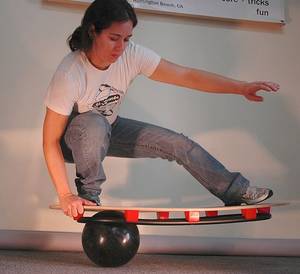
That finding, from a longitudinal study that tracked men and women during the 20-year transition from young adulthood to middle age, "highlights the value of incorporating and maintaining at least 30 minutes of activity into daily life," said Dr. Arlene L. Hankinson of the department of preventive medicine at Northwestern University, Chicago, and her associates (JAMA 2010;304:2603-10).
The investigators undertook their study because public health guidelines recommending regular exercise have been "largely based on cross-sectional observational and short-term clinical evidence that cannot account for the changing risk of weight gain with increasing age," the investigators noted.
Moreover, it had never been shown that federal guidelines advocating 30 minutes of moderate to vigorous daily activity are sufficient to prevent weight gain during the transition to middle age, "when the highest risk of weight gain occurs," they said.
Dr. Hankinson and her colleagues examined the issue using data from CARDIA (Coronary Artery Risk Development in Young Adults), a multicenter, longitudinal, cohort study of the development of coronary risk factors in young adults. They assessed data collected for 3,554 subjects who were 18-30 years of age at baseline in 1985-1986 regarding self-reported participation in 13 specific sports, exercise, home maintenance, and occupational activities.
At all activity levels, men and women alike showed gains in weight, body mass index, and waist circumference during 20 years of follow-up. "Some age-related weight gain may be unavoidable in our society, as it has been observed even among a population of vigorously active runners through middle age," the researchers noted.
However, habitual daily vigorous physical activity was associated with smaller increases in mean weight, BMI, and waist circumference, compared with moderate, inconsistent, or low activity.
Men with high activity levels gained 2.6 fewer kilograms, and women with high activity levels gained 6.1 fewer kilograms per year than did men and women with low activity levels. Similarly, men with high activity levels gained 3.1 fewer centimeters and women with high activity levels gained 3.8 fewer centimeters in waist circumference per year.
However, only a small proportion of the study subjects (11% of men and 12% of women) maintained that high level of vigorous activity over 20 years.
Approximately 37% of the study cohort participated in regular activity equivalent to the levels recommended by the U. S. Department of Health and Human Services. At that level of activity, men gained 1.8 fewer kilograms and women gained 4.7 fewer kilograms during follow-up than did study subjects who had lower levels of activity.
The National Heart, Lung, and Blood Institute supported the study. No financial conflicts of interest were reported.
Maintaining a high level of physical activity throughout young adulthood curbed both the weight gain and the expanding waistline characteristic of middle age, according to a report in the Dec. 15 issue of JAMA.
That finding, from a longitudinal study that tracked men and women during the 20-year transition from young adulthood to middle age, "highlights the value of incorporating and maintaining at least 30 minutes of activity into daily life," said Dr. Arlene L. Hankinson of the department of preventive medicine at Northwestern University, Chicago, and her associates (JAMA 2010;304:2603-10).
The investigators undertook their study because public health guidelines recommending regular exercise have been "largely based on cross-sectional observational and short-term clinical evidence that cannot account for the changing risk of weight gain with increasing age," the investigators noted.
Moreover, it had never been shown that federal guidelines advocating 30 minutes of moderate to vigorous daily activity are sufficient to prevent weight gain during the transition to middle age, "when the highest risk of weight gain occurs," they said.
Dr. Hankinson and her colleagues examined the issue using data from CARDIA (Coronary Artery Risk Development in Young Adults), a multicenter, longitudinal, cohort study of the development of coronary risk factors in young adults. They assessed data collected for 3,554 subjects who were 18-30 years of age at baseline in 1985-1986 regarding self-reported participation in 13 specific sports, exercise, home maintenance, and occupational activities.
At all activity levels, men and women alike showed gains in weight, body mass index, and waist circumference during 20 years of follow-up. "Some age-related weight gain may be unavoidable in our society, as it has been observed even among a population of vigorously active runners through middle age," the researchers noted.
However, habitual daily vigorous physical activity was associated with smaller increases in mean weight, BMI, and waist circumference, compared with moderate, inconsistent, or low activity.
Men with high activity levels gained 2.6 fewer kilograms, and women with high activity levels gained 6.1 fewer kilograms per year than did men and women with low activity levels. Similarly, men with high activity levels gained 3.1 fewer centimeters and women with high activity levels gained 3.8 fewer centimeters in waist circumference per year.
However, only a small proportion of the study subjects (11% of men and 12% of women) maintained that high level of vigorous activity over 20 years.
Approximately 37% of the study cohort participated in regular activity equivalent to the levels recommended by the U. S. Department of Health and Human Services. At that level of activity, men gained 1.8 fewer kilograms and women gained 4.7 fewer kilograms during follow-up than did study subjects who had lower levels of activity.
The National Heart, Lung, and Blood Institute supported the study. No financial conflicts of interest were reported.
Maintaining a high level of physical activity throughout young adulthood curbed both the weight gain and the expanding waistline characteristic of middle age, according to a report in the Dec. 15 issue of JAMA.
That finding, from a longitudinal study that tracked men and women during the 20-year transition from young adulthood to middle age, "highlights the value of incorporating and maintaining at least 30 minutes of activity into daily life," said Dr. Arlene L. Hankinson of the department of preventive medicine at Northwestern University, Chicago, and her associates (JAMA 2010;304:2603-10).
The investigators undertook their study because public health guidelines recommending regular exercise have been "largely based on cross-sectional observational and short-term clinical evidence that cannot account for the changing risk of weight gain with increasing age," the investigators noted.
Moreover, it had never been shown that federal guidelines advocating 30 minutes of moderate to vigorous daily activity are sufficient to prevent weight gain during the transition to middle age, "when the highest risk of weight gain occurs," they said.
Dr. Hankinson and her colleagues examined the issue using data from CARDIA (Coronary Artery Risk Development in Young Adults), a multicenter, longitudinal, cohort study of the development of coronary risk factors in young adults. They assessed data collected for 3,554 subjects who were 18-30 years of age at baseline in 1985-1986 regarding self-reported participation in 13 specific sports, exercise, home maintenance, and occupational activities.
At all activity levels, men and women alike showed gains in weight, body mass index, and waist circumference during 20 years of follow-up. "Some age-related weight gain may be unavoidable in our society, as it has been observed even among a population of vigorously active runners through middle age," the researchers noted.
However, habitual daily vigorous physical activity was associated with smaller increases in mean weight, BMI, and waist circumference, compared with moderate, inconsistent, or low activity.
Men with high activity levels gained 2.6 fewer kilograms, and women with high activity levels gained 6.1 fewer kilograms per year than did men and women with low activity levels. Similarly, men with high activity levels gained 3.1 fewer centimeters and women with high activity levels gained 3.8 fewer centimeters in waist circumference per year.
However, only a small proportion of the study subjects (11% of men and 12% of women) maintained that high level of vigorous activity over 20 years.
Approximately 37% of the study cohort participated in regular activity equivalent to the levels recommended by the U. S. Department of Health and Human Services. At that level of activity, men gained 1.8 fewer kilograms and women gained 4.7 fewer kilograms during follow-up than did study subjects who had lower levels of activity.
The National Heart, Lung, and Blood Institute supported the study. No financial conflicts of interest were reported.
FROM JAMA
Major Finding: Men with high activity levels in young adulthood gained 2.6 fewer kilograms and 3.1 fewer centimeters in waist circumference per year than did men with low activity levels; women with high activity levels gained 6.1 fewer kilograms and 3.8 fewer centimeters in waist circumference per year than did women with low activity levels.
Data Source: Secondary analysis of data on 3,554 subjects in the CARDIA multicenter, longitudinal (20-year), cohort study.
Disclosures: The National Heart, Lung, and Blood Institute supported the study. No financial conflicts of interest were reported.
Protective Strategy Nearly Doubles Lungs Suitable for Transplant
A strategy for protecting the lungs in potential organ donors nearly doubled the number of lungs that were suitable for transplantation, according to a report in the Dec. 15 issue of JAMA.
The lung-protection strategy, which apparently forestalled much of the pulmonary damage associated with brain injury and mechanical ventilation, had no detrimental effects on other organs – hearts, livers, and kidneys – harvested from the same donors for transplantation, said Dr. Luciana Mascia of the departments of anesthesia and intensive care medicine at the University of Turin (Italy).
Potential organ donors who have relatively normal pulmonary function at the time of brain death often show marked declines in that function, so that only 15%-20% of these lungs are suitable for transplantation when organ harvesting commences.
Dr. Mascia and her colleagues studied 118 patients with brain death who were potential organ donors and were being treated at 12 intensive care units (ICUs) in Italy and Spain between 2004 and 2009. A total of 59 patients were randomly assigned to undergo conventional lung ventilation techniques, and the other 59 were assigned to a strategy of using lower tidal volumes, higher positive end-expiratory pressure (to prevent atelectasis), a closed system for any tracheal suctioning, alveolar recruitment maneuvers after any ventilator disconnections, and continuous positive airway pressure during apnea tests.
After a mandatory 6-hour interval before brain death could be officially declared, there were 49 potential donors in the conventional-care group and 51 in the lung-protection group. The number of patients who then were found to meet lung-donor eligibility criteria had decreased with the conventional ventilation strategy by 29% to only 32 patients. In contrast, the number in the lung-protection group had increased to 56 patients, a significant difference.
This means that of the original potential donors, only 54% in the conventional-care group met eligibility criteria, compared with 95% in the lung-protection group, Dr. Mascia and her associates said (JAMA 2010;304:2620-27).
The ultimate number of lungs that were successfully harvested was 27% of the conventional-care group (16 lungs), compared with 54% of the lung-protection group (32 lungs), also a significant difference.
For the lung recipients, the median ICU length of stay was 12 days for patients who received lungs from the conventional-care group and 8 days for those who received lungs from the lung-protection group. Six-month survival was 69% for patients who received lungs from the conventional-care group and 75% for those who received lungs from the lung-protection group, a nonsignificant difference.
The number of other organs harvested did not differ between the two study groups, and 6-month survival of those recipients also did not differ significantly.
The Protective Ventilatory Strategy in Potential Organ Donors Study (clinicaltrials.gov ID: NCT00260676) was stopped after 118 patients were enrolled, because of termination of funding.
This study was supported by the Ministero della Salute Programma Ricerca Finalizzata, the Regione Piemonte Programma Ricerca Finalizzata, and the Ministero dell’Universita Programma di Ricerca di Interesse Nazionale. No financial conflicts of interest were reported.
"This study breaks important new ground in providing a solid evidence base for the care of potential organ donors and testing techniques of organ preservation," said Dr. Mark S. Roberts.
The "profound" results showed that a relatively simple protection strategy nearly doubled the number of donor lungs and did double the number of patients from whom transplantable lungs could be harvested. Moreover, although the study sample was small, there were no detrimental effects on transplant outcomes, either with the lungs or with other donated organs.
"Doubling [the lung] donation rate could potentially meet steady-state demand as well as reduce waiting-list backlog, especially because each donor provides organs for more than 1 transplant," he noted.
"The study by Mascia et al. [also] provides sobering evidence that conventional lung preservation practices, which have been used for many years, are remarkably inefficient in their task," he added.
Mark S. Roberts, M.D., is in the department of health policy and management at the University of Pittsburgh School of Public Health. He reported no financial disclosures. These comments were taken from his editorial accompanying Dr. Mascia’s report (JAMA 2010;304:2643-4).
"This study breaks important new ground in providing a solid evidence base for the care of potential organ donors and testing techniques of organ preservation," said Dr. Mark S. Roberts.
The "profound" results showed that a relatively simple protection strategy nearly doubled the number of donor lungs and did double the number of patients from whom transplantable lungs could be harvested. Moreover, although the study sample was small, there were no detrimental effects on transplant outcomes, either with the lungs or with other donated organs.
"Doubling [the lung] donation rate could potentially meet steady-state demand as well as reduce waiting-list backlog, especially because each donor provides organs for more than 1 transplant," he noted.
"The study by Mascia et al. [also] provides sobering evidence that conventional lung preservation practices, which have been used for many years, are remarkably inefficient in their task," he added.
Mark S. Roberts, M.D., is in the department of health policy and management at the University of Pittsburgh School of Public Health. He reported no financial disclosures. These comments were taken from his editorial accompanying Dr. Mascia’s report (JAMA 2010;304:2643-4).
"This study breaks important new ground in providing a solid evidence base for the care of potential organ donors and testing techniques of organ preservation," said Dr. Mark S. Roberts.
The "profound" results showed that a relatively simple protection strategy nearly doubled the number of donor lungs and did double the number of patients from whom transplantable lungs could be harvested. Moreover, although the study sample was small, there were no detrimental effects on transplant outcomes, either with the lungs or with other donated organs.
"Doubling [the lung] donation rate could potentially meet steady-state demand as well as reduce waiting-list backlog, especially because each donor provides organs for more than 1 transplant," he noted.
"The study by Mascia et al. [also] provides sobering evidence that conventional lung preservation practices, which have been used for many years, are remarkably inefficient in their task," he added.
Mark S. Roberts, M.D., is in the department of health policy and management at the University of Pittsburgh School of Public Health. He reported no financial disclosures. These comments were taken from his editorial accompanying Dr. Mascia’s report (JAMA 2010;304:2643-4).
A strategy for protecting the lungs in potential organ donors nearly doubled the number of lungs that were suitable for transplantation, according to a report in the Dec. 15 issue of JAMA.
The lung-protection strategy, which apparently forestalled much of the pulmonary damage associated with brain injury and mechanical ventilation, had no detrimental effects on other organs – hearts, livers, and kidneys – harvested from the same donors for transplantation, said Dr. Luciana Mascia of the departments of anesthesia and intensive care medicine at the University of Turin (Italy).
Potential organ donors who have relatively normal pulmonary function at the time of brain death often show marked declines in that function, so that only 15%-20% of these lungs are suitable for transplantation when organ harvesting commences.
Dr. Mascia and her colleagues studied 118 patients with brain death who were potential organ donors and were being treated at 12 intensive care units (ICUs) in Italy and Spain between 2004 and 2009. A total of 59 patients were randomly assigned to undergo conventional lung ventilation techniques, and the other 59 were assigned to a strategy of using lower tidal volumes, higher positive end-expiratory pressure (to prevent atelectasis), a closed system for any tracheal suctioning, alveolar recruitment maneuvers after any ventilator disconnections, and continuous positive airway pressure during apnea tests.
After a mandatory 6-hour interval before brain death could be officially declared, there were 49 potential donors in the conventional-care group and 51 in the lung-protection group. The number of patients who then were found to meet lung-donor eligibility criteria had decreased with the conventional ventilation strategy by 29% to only 32 patients. In contrast, the number in the lung-protection group had increased to 56 patients, a significant difference.
This means that of the original potential donors, only 54% in the conventional-care group met eligibility criteria, compared with 95% in the lung-protection group, Dr. Mascia and her associates said (JAMA 2010;304:2620-27).
The ultimate number of lungs that were successfully harvested was 27% of the conventional-care group (16 lungs), compared with 54% of the lung-protection group (32 lungs), also a significant difference.
For the lung recipients, the median ICU length of stay was 12 days for patients who received lungs from the conventional-care group and 8 days for those who received lungs from the lung-protection group. Six-month survival was 69% for patients who received lungs from the conventional-care group and 75% for those who received lungs from the lung-protection group, a nonsignificant difference.
The number of other organs harvested did not differ between the two study groups, and 6-month survival of those recipients also did not differ significantly.
The Protective Ventilatory Strategy in Potential Organ Donors Study (clinicaltrials.gov ID: NCT00260676) was stopped after 118 patients were enrolled, because of termination of funding.
This study was supported by the Ministero della Salute Programma Ricerca Finalizzata, the Regione Piemonte Programma Ricerca Finalizzata, and the Ministero dell’Universita Programma di Ricerca di Interesse Nazionale. No financial conflicts of interest were reported.
A strategy for protecting the lungs in potential organ donors nearly doubled the number of lungs that were suitable for transplantation, according to a report in the Dec. 15 issue of JAMA.
The lung-protection strategy, which apparently forestalled much of the pulmonary damage associated with brain injury and mechanical ventilation, had no detrimental effects on other organs – hearts, livers, and kidneys – harvested from the same donors for transplantation, said Dr. Luciana Mascia of the departments of anesthesia and intensive care medicine at the University of Turin (Italy).
Potential organ donors who have relatively normal pulmonary function at the time of brain death often show marked declines in that function, so that only 15%-20% of these lungs are suitable for transplantation when organ harvesting commences.
Dr. Mascia and her colleagues studied 118 patients with brain death who were potential organ donors and were being treated at 12 intensive care units (ICUs) in Italy and Spain between 2004 and 2009. A total of 59 patients were randomly assigned to undergo conventional lung ventilation techniques, and the other 59 were assigned to a strategy of using lower tidal volumes, higher positive end-expiratory pressure (to prevent atelectasis), a closed system for any tracheal suctioning, alveolar recruitment maneuvers after any ventilator disconnections, and continuous positive airway pressure during apnea tests.
After a mandatory 6-hour interval before brain death could be officially declared, there were 49 potential donors in the conventional-care group and 51 in the lung-protection group. The number of patients who then were found to meet lung-donor eligibility criteria had decreased with the conventional ventilation strategy by 29% to only 32 patients. In contrast, the number in the lung-protection group had increased to 56 patients, a significant difference.
This means that of the original potential donors, only 54% in the conventional-care group met eligibility criteria, compared with 95% in the lung-protection group, Dr. Mascia and her associates said (JAMA 2010;304:2620-27).
The ultimate number of lungs that were successfully harvested was 27% of the conventional-care group (16 lungs), compared with 54% of the lung-protection group (32 lungs), also a significant difference.
For the lung recipients, the median ICU length of stay was 12 days for patients who received lungs from the conventional-care group and 8 days for those who received lungs from the lung-protection group. Six-month survival was 69% for patients who received lungs from the conventional-care group and 75% for those who received lungs from the lung-protection group, a nonsignificant difference.
The number of other organs harvested did not differ between the two study groups, and 6-month survival of those recipients also did not differ significantly.
The Protective Ventilatory Strategy in Potential Organ Donors Study (clinicaltrials.gov ID: NCT00260676) was stopped after 118 patients were enrolled, because of termination of funding.
This study was supported by the Ministero della Salute Programma Ricerca Finalizzata, the Regione Piemonte Programma Ricerca Finalizzata, and the Ministero dell’Universita Programma di Ricerca di Interesse Nazionale. No financial conflicts of interest were reported.
FROM JAMA
Protective Strategy Nearly Doubles Lungs Suitable for Transplant
A strategy for protecting the lungs in potential organ donors nearly doubled the number of lungs that were suitable for transplantation, according to a report in the Dec. 15 issue of JAMA.
The lung-protection strategy, which apparently forestalled much of the pulmonary damage associated with brain injury and mechanical ventilation, had no detrimental effects on other organs – hearts, livers, and kidneys – harvested from the same donors for transplantation, said Dr. Luciana Mascia of the departments of anesthesia and intensive care medicine at the University of Turin (Italy).
Potential organ donors who have relatively normal pulmonary function at the time of brain death often show marked declines in that function, so that only 15%-20% of these lungs are suitable for transplantation when organ harvesting commences.
Dr. Mascia and her colleagues studied 118 patients with brain death who were potential organ donors and were being treated at 12 intensive care units (ICUs) in Italy and Spain between 2004 and 2009. A total of 59 patients were randomly assigned to undergo conventional lung ventilation techniques, and the other 59 were assigned to a strategy of using lower tidal volumes, higher positive end-expiratory pressure (to prevent atelectasis), a closed system for any tracheal suctioning, alveolar recruitment maneuvers after any ventilator disconnections, and continuous positive airway pressure during apnea tests.
After a mandatory 6-hour interval before brain death could be officially declared, there were 49 potential donors in the conventional-care group and 51 in the lung-protection group. The number of patients who then were found to meet lung-donor eligibility criteria had decreased with the conventional ventilation strategy by 29% to only 32 patients. In contrast, the number in the lung-protection group had increased to 56 patients, a significant difference.
This means that of the original potential donors, only 54% in the conventional-care group met eligibility criteria, compared with 95% in the lung-protection group, Dr. Mascia and her associates said (JAMA 2010;304:2620-27).
The ultimate number of lungs that were successfully harvested was 27% of the conventional-care group (16 lungs), compared with 54% of the lung-protection group (32 lungs), also a significant difference.
For the lung recipients, the median ICU length of stay was 12 days for patients who received lungs from the conventional-care group and 8 days for those who received lungs from the lung-protection group. Six-month survival was 69% for patients who received lungs from the conventional-care group and 75% for those who received lungs from the lung-protection group, a nonsignificant difference.
The number of other organs harvested did not differ between the two study groups, and 6-month survival of those recipients also did not differ significantly.
The Protective Ventilatory Strategy in Potential Organ Donors Study (clinicaltrials.gov ID: NCT00260676) was stopped after 118 patients were enrolled, because of termination of funding.
This study was supported by the Ministero della Salute Programma Ricerca Finalizzata, the Regione Piemonte Programma Ricerca Finalizzata, and the Ministero dell’Universita Programma di Ricerca di Interesse Nazionale. No financial conflicts of interest were reported.
"This study breaks important new ground in providing a solid evidence base for the care of potential organ donors and testing techniques of organ preservation," said Dr. Mark S. Roberts.
The "profound" results showed that a relatively simple protection strategy nearly doubled the number of donor lungs and did double the number of patients from whom transplantable lungs could be harvested. Moreover, although the study sample was small, there were no detrimental effects on transplant outcomes, either with the lungs or with other donated organs.
"Doubling [the lung] donation rate could potentially meet steady-state demand as well as reduce waiting-list backlog, especially because each donor provides organs for more than 1 transplant," he noted.
"The study by Mascia et al. [also] provides sobering evidence that conventional lung preservation practices, which have been used for many years, are remarkably inefficient in their task," he added.
Mark S. Roberts, M.D., is in the department of health policy and management at the University of Pittsburgh School of Public Health. He reported no financial disclosures. These comments were taken from his editorial accompanying Dr. Mascia’s report (JAMA 2010;304:2643-4).
"This study breaks important new ground in providing a solid evidence base for the care of potential organ donors and testing techniques of organ preservation," said Dr. Mark S. Roberts.
The "profound" results showed that a relatively simple protection strategy nearly doubled the number of donor lungs and did double the number of patients from whom transplantable lungs could be harvested. Moreover, although the study sample was small, there were no detrimental effects on transplant outcomes, either with the lungs or with other donated organs.
"Doubling [the lung] donation rate could potentially meet steady-state demand as well as reduce waiting-list backlog, especially because each donor provides organs for more than 1 transplant," he noted.
"The study by Mascia et al. [also] provides sobering evidence that conventional lung preservation practices, which have been used for many years, are remarkably inefficient in their task," he added.
Mark S. Roberts, M.D., is in the department of health policy and management at the University of Pittsburgh School of Public Health. He reported no financial disclosures. These comments were taken from his editorial accompanying Dr. Mascia’s report (JAMA 2010;304:2643-4).
"This study breaks important new ground in providing a solid evidence base for the care of potential organ donors and testing techniques of organ preservation," said Dr. Mark S. Roberts.
The "profound" results showed that a relatively simple protection strategy nearly doubled the number of donor lungs and did double the number of patients from whom transplantable lungs could be harvested. Moreover, although the study sample was small, there were no detrimental effects on transplant outcomes, either with the lungs or with other donated organs.
"Doubling [the lung] donation rate could potentially meet steady-state demand as well as reduce waiting-list backlog, especially because each donor provides organs for more than 1 transplant," he noted.
"The study by Mascia et al. [also] provides sobering evidence that conventional lung preservation practices, which have been used for many years, are remarkably inefficient in their task," he added.
Mark S. Roberts, M.D., is in the department of health policy and management at the University of Pittsburgh School of Public Health. He reported no financial disclosures. These comments were taken from his editorial accompanying Dr. Mascia’s report (JAMA 2010;304:2643-4).
A strategy for protecting the lungs in potential organ donors nearly doubled the number of lungs that were suitable for transplantation, according to a report in the Dec. 15 issue of JAMA.
The lung-protection strategy, which apparently forestalled much of the pulmonary damage associated with brain injury and mechanical ventilation, had no detrimental effects on other organs – hearts, livers, and kidneys – harvested from the same donors for transplantation, said Dr. Luciana Mascia of the departments of anesthesia and intensive care medicine at the University of Turin (Italy).
Potential organ donors who have relatively normal pulmonary function at the time of brain death often show marked declines in that function, so that only 15%-20% of these lungs are suitable for transplantation when organ harvesting commences.
Dr. Mascia and her colleagues studied 118 patients with brain death who were potential organ donors and were being treated at 12 intensive care units (ICUs) in Italy and Spain between 2004 and 2009. A total of 59 patients were randomly assigned to undergo conventional lung ventilation techniques, and the other 59 were assigned to a strategy of using lower tidal volumes, higher positive end-expiratory pressure (to prevent atelectasis), a closed system for any tracheal suctioning, alveolar recruitment maneuvers after any ventilator disconnections, and continuous positive airway pressure during apnea tests.
After a mandatory 6-hour interval before brain death could be officially declared, there were 49 potential donors in the conventional-care group and 51 in the lung-protection group. The number of patients who then were found to meet lung-donor eligibility criteria had decreased with the conventional ventilation strategy by 29% to only 32 patients. In contrast, the number in the lung-protection group had increased to 56 patients, a significant difference.
This means that of the original potential donors, only 54% in the conventional-care group met eligibility criteria, compared with 95% in the lung-protection group, Dr. Mascia and her associates said (JAMA 2010;304:2620-27).
The ultimate number of lungs that were successfully harvested was 27% of the conventional-care group (16 lungs), compared with 54% of the lung-protection group (32 lungs), also a significant difference.
For the lung recipients, the median ICU length of stay was 12 days for patients who received lungs from the conventional-care group and 8 days for those who received lungs from the lung-protection group. Six-month survival was 69% for patients who received lungs from the conventional-care group and 75% for those who received lungs from the lung-protection group, a nonsignificant difference.
The number of other organs harvested did not differ between the two study groups, and 6-month survival of those recipients also did not differ significantly.
The Protective Ventilatory Strategy in Potential Organ Donors Study (clinicaltrials.gov ID: NCT00260676) was stopped after 118 patients were enrolled, because of termination of funding.
This study was supported by the Ministero della Salute Programma Ricerca Finalizzata, the Regione Piemonte Programma Ricerca Finalizzata, and the Ministero dell’Universita Programma di Ricerca di Interesse Nazionale. No financial conflicts of interest were reported.
A strategy for protecting the lungs in potential organ donors nearly doubled the number of lungs that were suitable for transplantation, according to a report in the Dec. 15 issue of JAMA.
The lung-protection strategy, which apparently forestalled much of the pulmonary damage associated with brain injury and mechanical ventilation, had no detrimental effects on other organs – hearts, livers, and kidneys – harvested from the same donors for transplantation, said Dr. Luciana Mascia of the departments of anesthesia and intensive care medicine at the University of Turin (Italy).
Potential organ donors who have relatively normal pulmonary function at the time of brain death often show marked declines in that function, so that only 15%-20% of these lungs are suitable for transplantation when organ harvesting commences.
Dr. Mascia and her colleagues studied 118 patients with brain death who were potential organ donors and were being treated at 12 intensive care units (ICUs) in Italy and Spain between 2004 and 2009. A total of 59 patients were randomly assigned to undergo conventional lung ventilation techniques, and the other 59 were assigned to a strategy of using lower tidal volumes, higher positive end-expiratory pressure (to prevent atelectasis), a closed system for any tracheal suctioning, alveolar recruitment maneuvers after any ventilator disconnections, and continuous positive airway pressure during apnea tests.
After a mandatory 6-hour interval before brain death could be officially declared, there were 49 potential donors in the conventional-care group and 51 in the lung-protection group. The number of patients who then were found to meet lung-donor eligibility criteria had decreased with the conventional ventilation strategy by 29% to only 32 patients. In contrast, the number in the lung-protection group had increased to 56 patients, a significant difference.
This means that of the original potential donors, only 54% in the conventional-care group met eligibility criteria, compared with 95% in the lung-protection group, Dr. Mascia and her associates said (JAMA 2010;304:2620-27).
The ultimate number of lungs that were successfully harvested was 27% of the conventional-care group (16 lungs), compared with 54% of the lung-protection group (32 lungs), also a significant difference.
For the lung recipients, the median ICU length of stay was 12 days for patients who received lungs from the conventional-care group and 8 days for those who received lungs from the lung-protection group. Six-month survival was 69% for patients who received lungs from the conventional-care group and 75% for those who received lungs from the lung-protection group, a nonsignificant difference.
The number of other organs harvested did not differ between the two study groups, and 6-month survival of those recipients also did not differ significantly.
The Protective Ventilatory Strategy in Potential Organ Donors Study (clinicaltrials.gov ID: NCT00260676) was stopped after 118 patients were enrolled, because of termination of funding.
This study was supported by the Ministero della Salute Programma Ricerca Finalizzata, the Regione Piemonte Programma Ricerca Finalizzata, and the Ministero dell’Universita Programma di Ricerca di Interesse Nazionale. No financial conflicts of interest were reported.
FROM JAMA
Major Finding: A lung-protection strategy using lower tidal volumes, higher positive end-expiratory pressure, and other techniques yielded nearly twice as many donor lungs suitable for transplantation as did a conventional strategy.
Data Source: A multicenter, international, randomized controlled trial comparing conventional ventilation techniques with a lung-protection strategy in 118 potential organ donors over a 6-year period.
Disclosures: This study was supported by the Ministero della Salute Programma Ricerca Finalizzata, the Regione Piemonte Programma Ricerca Finalizzata, and the Ministero dell’Universita Programma di Ricerca di Interesse Nazionale. No financial conflicts of interest were reported.
Some Opioids Safer Than Others in Elderly With Nonmalignant Pain
The risks of opioid use for elderly patients with nonmalignant pain vary considerably by different agents and by different durations of use, according to a report in the Dec. 13/27 issue of Archives of Internal Medicine.
Patients taking codeine for more than 180 days are at increased risk for cardiovascular events, and those taking oxycodone or codeine for only 30 days are at increased risk for mortality due to any cause, said Dr. Daniel H. Solomon and his associates in the rheumatology department and the pharmacoepidemiology division at Brigham and Women’s Hospital, Boston.
"This study’s findings do not agree with a commonly held belief that all opioids are associated with similar risk," the investigators noted.
They compared the safety profiles of different opioids for the treatment of nonmalignant pain in elderly patients because "relatively little attention has been paid" to this issue even though the use of these drugs has increased by 50%-100% in recent years. In contrast, patients and physicians are relatively well informed about the toxicities of NSAIDs used for the same indications.
Dr. Solomon and his colleagues analyzed information in two states’ Medicare databases of pharmaceutical coverage for low-income patients (mean age, 79 years) between 1995 and 2005. They were able to match 6,275 subjects who took five of the most commonly prescribed opioids for a variety of baseline factors using propensity scores.
Hydrocodone was used as the reference exposure, to which codeine, oxycodone, propoxyphene, and tramadol were compared.
The risk of cardiovascular events including MI, stroke, heart failure, revascularization, and cardiac death was similar across the five opioid groups after 30 days of use. However, by 180 days the cardiovascular risk with codeine was significantly elevated (risk ratio, 1.62), compared with the other four opioids.
This finding is surprising and requires validation in other study populations, the investigators said (Arch. Intern. Med. 2010;170:1979-86).
All-cause mortality was elevated after only 30 days of use for patients taking oxycodone (RR, 2.43) or codeine (RR, 2.05), but not for those taking other opioids.
In contrast, the risk of fracture of the hip, pelvis, wrist, or humerus was significantly reduced after 30 days of treatment for patients taking tramadol (RR, 0.21) or propoxyphene (RR, 0.54).
The risk of gastrointestinal adverse events – which included upper GI bleeding, lower GI bleeding, and bowel obstruction – did not differ across opioid groups at either 30 days or 180 days.
These risks remained consistent through a range of sensitivity analyses of the data. Importantly, the risks also were consistent regardless of whether patients were taking low, medium, high, or very high doses of the drugs. "The risks were substantial and translated into numbers needed to treat that would be considered clinically significant," Dr. Solomon and his associates wrote.
This study was supported by the Agency for Healthcare Research and Quality. Dr. Solomon reported being an unpaid member of a celecoxib trial executive committee sponsored by Pfizer and an unpaid member of the data safety monitoring board for an analgesic trial sponsored by Pfizer.
The findings by Dr. Solomon and his associates "challenge the conventional notion that the safety profiles of opioids are generally interchangeable" and carry two important clinical implications, said Dr. William C. Becker and Dr. Patrick G. O’Connor.
The first and most crucial implication is that the frequent use of codeine must be reexamined. "The untested but widespread assumption that codeine is safer from an addiction standpoint because of its lower potency may need to give way to these data demonstrating increased risk of cardiovascular events and all-cause mortality. If codeine is of middling efficacy for pain and is more risky than other opioids, there would be little reason to use it," they noted.
Secondly, the elevated risk of fractures with opioid use "has solid biological plausibility" by two mechanisms of action: Opioids raise the rate of falls, and they suppress the production of androgen and estradiol, imperiling bone health. The study findings suggest that basic safety measures to counterbalance these effects are not being implemented. "Efforts to improve patients’ understanding of safe medication-taking practices, providers’ understanding of safe prescribing practices, and standardization of safety-oriented follow-up are sorely needed," Dr. Becker and Dr. O’Connor said.
Dr. Becker and Dr. O’Connor are internists at Yale University, New Haven, Conn. They reported no relevant financial disclosures. These comments were taken from their invited commentary accompanying Dr. Solomon’s report (Arch. Intern. Med. 2010;170:1986-8).
The findings by Dr. Solomon and his associates "challenge the conventional notion that the safety profiles of opioids are generally interchangeable" and carry two important clinical implications, said Dr. William C. Becker and Dr. Patrick G. O’Connor.
The first and most crucial implication is that the frequent use of codeine must be reexamined. "The untested but widespread assumption that codeine is safer from an addiction standpoint because of its lower potency may need to give way to these data demonstrating increased risk of cardiovascular events and all-cause mortality. If codeine is of middling efficacy for pain and is more risky than other opioids, there would be little reason to use it," they noted.
Secondly, the elevated risk of fractures with opioid use "has solid biological plausibility" by two mechanisms of action: Opioids raise the rate of falls, and they suppress the production of androgen and estradiol, imperiling bone health. The study findings suggest that basic safety measures to counterbalance these effects are not being implemented. "Efforts to improve patients’ understanding of safe medication-taking practices, providers’ understanding of safe prescribing practices, and standardization of safety-oriented follow-up are sorely needed," Dr. Becker and Dr. O’Connor said.
Dr. Becker and Dr. O’Connor are internists at Yale University, New Haven, Conn. They reported no relevant financial disclosures. These comments were taken from their invited commentary accompanying Dr. Solomon’s report (Arch. Intern. Med. 2010;170:1986-8).
The findings by Dr. Solomon and his associates "challenge the conventional notion that the safety profiles of opioids are generally interchangeable" and carry two important clinical implications, said Dr. William C. Becker and Dr. Patrick G. O’Connor.
The first and most crucial implication is that the frequent use of codeine must be reexamined. "The untested but widespread assumption that codeine is safer from an addiction standpoint because of its lower potency may need to give way to these data demonstrating increased risk of cardiovascular events and all-cause mortality. If codeine is of middling efficacy for pain and is more risky than other opioids, there would be little reason to use it," they noted.
Secondly, the elevated risk of fractures with opioid use "has solid biological plausibility" by two mechanisms of action: Opioids raise the rate of falls, and they suppress the production of androgen and estradiol, imperiling bone health. The study findings suggest that basic safety measures to counterbalance these effects are not being implemented. "Efforts to improve patients’ understanding of safe medication-taking practices, providers’ understanding of safe prescribing practices, and standardization of safety-oriented follow-up are sorely needed," Dr. Becker and Dr. O’Connor said.
Dr. Becker and Dr. O’Connor are internists at Yale University, New Haven, Conn. They reported no relevant financial disclosures. These comments were taken from their invited commentary accompanying Dr. Solomon’s report (Arch. Intern. Med. 2010;170:1986-8).
The risks of opioid use for elderly patients with nonmalignant pain vary considerably by different agents and by different durations of use, according to a report in the Dec. 13/27 issue of Archives of Internal Medicine.
Patients taking codeine for more than 180 days are at increased risk for cardiovascular events, and those taking oxycodone or codeine for only 30 days are at increased risk for mortality due to any cause, said Dr. Daniel H. Solomon and his associates in the rheumatology department and the pharmacoepidemiology division at Brigham and Women’s Hospital, Boston.
"This study’s findings do not agree with a commonly held belief that all opioids are associated with similar risk," the investigators noted.
They compared the safety profiles of different opioids for the treatment of nonmalignant pain in elderly patients because "relatively little attention has been paid" to this issue even though the use of these drugs has increased by 50%-100% in recent years. In contrast, patients and physicians are relatively well informed about the toxicities of NSAIDs used for the same indications.
Dr. Solomon and his colleagues analyzed information in two states’ Medicare databases of pharmaceutical coverage for low-income patients (mean age, 79 years) between 1995 and 2005. They were able to match 6,275 subjects who took five of the most commonly prescribed opioids for a variety of baseline factors using propensity scores.
Hydrocodone was used as the reference exposure, to which codeine, oxycodone, propoxyphene, and tramadol were compared.
The risk of cardiovascular events including MI, stroke, heart failure, revascularization, and cardiac death was similar across the five opioid groups after 30 days of use. However, by 180 days the cardiovascular risk with codeine was significantly elevated (risk ratio, 1.62), compared with the other four opioids.
This finding is surprising and requires validation in other study populations, the investigators said (Arch. Intern. Med. 2010;170:1979-86).
All-cause mortality was elevated after only 30 days of use for patients taking oxycodone (RR, 2.43) or codeine (RR, 2.05), but not for those taking other opioids.
In contrast, the risk of fracture of the hip, pelvis, wrist, or humerus was significantly reduced after 30 days of treatment for patients taking tramadol (RR, 0.21) or propoxyphene (RR, 0.54).
The risk of gastrointestinal adverse events – which included upper GI bleeding, lower GI bleeding, and bowel obstruction – did not differ across opioid groups at either 30 days or 180 days.
These risks remained consistent through a range of sensitivity analyses of the data. Importantly, the risks also were consistent regardless of whether patients were taking low, medium, high, or very high doses of the drugs. "The risks were substantial and translated into numbers needed to treat that would be considered clinically significant," Dr. Solomon and his associates wrote.
This study was supported by the Agency for Healthcare Research and Quality. Dr. Solomon reported being an unpaid member of a celecoxib trial executive committee sponsored by Pfizer and an unpaid member of the data safety monitoring board for an analgesic trial sponsored by Pfizer.
The risks of opioid use for elderly patients with nonmalignant pain vary considerably by different agents and by different durations of use, according to a report in the Dec. 13/27 issue of Archives of Internal Medicine.
Patients taking codeine for more than 180 days are at increased risk for cardiovascular events, and those taking oxycodone or codeine for only 30 days are at increased risk for mortality due to any cause, said Dr. Daniel H. Solomon and his associates in the rheumatology department and the pharmacoepidemiology division at Brigham and Women’s Hospital, Boston.
"This study’s findings do not agree with a commonly held belief that all opioids are associated with similar risk," the investigators noted.
They compared the safety profiles of different opioids for the treatment of nonmalignant pain in elderly patients because "relatively little attention has been paid" to this issue even though the use of these drugs has increased by 50%-100% in recent years. In contrast, patients and physicians are relatively well informed about the toxicities of NSAIDs used for the same indications.
Dr. Solomon and his colleagues analyzed information in two states’ Medicare databases of pharmaceutical coverage for low-income patients (mean age, 79 years) between 1995 and 2005. They were able to match 6,275 subjects who took five of the most commonly prescribed opioids for a variety of baseline factors using propensity scores.
Hydrocodone was used as the reference exposure, to which codeine, oxycodone, propoxyphene, and tramadol were compared.
The risk of cardiovascular events including MI, stroke, heart failure, revascularization, and cardiac death was similar across the five opioid groups after 30 days of use. However, by 180 days the cardiovascular risk with codeine was significantly elevated (risk ratio, 1.62), compared with the other four opioids.
This finding is surprising and requires validation in other study populations, the investigators said (Arch. Intern. Med. 2010;170:1979-86).
All-cause mortality was elevated after only 30 days of use for patients taking oxycodone (RR, 2.43) or codeine (RR, 2.05), but not for those taking other opioids.
In contrast, the risk of fracture of the hip, pelvis, wrist, or humerus was significantly reduced after 30 days of treatment for patients taking tramadol (RR, 0.21) or propoxyphene (RR, 0.54).
The risk of gastrointestinal adverse events – which included upper GI bleeding, lower GI bleeding, and bowel obstruction – did not differ across opioid groups at either 30 days or 180 days.
These risks remained consistent through a range of sensitivity analyses of the data. Importantly, the risks also were consistent regardless of whether patients were taking low, medium, high, or very high doses of the drugs. "The risks were substantial and translated into numbers needed to treat that would be considered clinically significant," Dr. Solomon and his associates wrote.
This study was supported by the Agency for Healthcare Research and Quality. Dr. Solomon reported being an unpaid member of a celecoxib trial executive committee sponsored by Pfizer and an unpaid member of the data safety monitoring board for an analgesic trial sponsored by Pfizer.
FROM ARCHIVES OF INTERNAL MEDICINE
Some Opioids Safer Than Others in Elderly With Nonmalignant Pain
The risks of opioid use for elderly patients with nonmalignant pain vary considerably by different agents and by different durations of use, according to a report in the Dec. 13/27 issue of Archives of Internal Medicine.
Patients taking codeine for more than 180 days are at increased risk for cardiovascular events, and those taking oxycodone or codeine for only 30 days are at increased risk for mortality due to any cause, said Dr. Daniel H. Solomon and his associates in the rheumatology department and the pharmacoepidemiology division at Brigham and Women’s Hospital, Boston.
"This study’s findings do not agree with a commonly held belief that all opioids are associated with similar risk," the investigators noted.
They compared the safety profiles of different opioids for the treatment of nonmalignant pain in elderly patients because "relatively little attention has been paid" to this issue even though the use of these drugs has increased by 50%-100% in recent years. In contrast, patients and physicians are relatively well informed about the toxicities of NSAIDs used for the same indications.
Dr. Solomon and his colleagues analyzed information in two states’ Medicare databases of pharmaceutical coverage for low-income patients (mean age, 79 years) between 1995 and 2005. They were able to match 6,275 subjects who took five of the most commonly prescribed opioids for a variety of baseline factors using propensity scores.
Hydrocodone was used as the reference exposure, to which codeine, oxycodone, propoxyphene, and tramadol were compared.
The risk of cardiovascular events including MI, stroke, heart failure, revascularization, and cardiac death was similar across the five opioid groups after 30 days of use. However, by 180 days the cardiovascular risk with codeine was significantly elevated (risk ratio, 1.62), compared with the other four opioids.
This finding is surprising and requires validation in other study populations, the investigators said (Arch. Intern. Med. 2010;170:1979-86).
All-cause mortality was elevated after only 30 days of use for patients taking oxycodone (RR, 2.43) or codeine (RR, 2.05), but not for those taking other opioids.
In contrast, the risk of fracture of the hip, pelvis, wrist, or humerus was significantly reduced after 30 days of treatment for patients taking tramadol (RR, 0.21) or propoxyphene (RR, 0.54).
The risk of gastrointestinal adverse events – which included upper GI bleeding, lower GI bleeding, and bowel obstruction – did not differ across opioid groups at either 30 days or 180 days.
These risks remained consistent through a range of sensitivity analyses of the data. Importantly, the risks also were consistent regardless of whether patients were taking low, medium, high, or very high doses of the drugs. "The risks were substantial and translated into numbers needed to treat that would be considered clinically significant," Dr. Solomon and his associates wrote.
This study was supported by the Agency for Healthcare Research and Quality. Dr. Solomon reported being an unpaid member of a celecoxib trial executive committee sponsored by Pfizer and an unpaid member of the data safety monitoring board for an analgesic trial sponsored by Pfizer.
The findings by Dr. Solomon and his associates "challenge the conventional notion that the safety profiles of opioids are generally interchangeable" and carry two important clinical implications, said Dr. William C. Becker and Dr. Patrick G. O’Connor.
The first and most crucial implication is that the frequent use of codeine must be reexamined. "The untested but widespread assumption that codeine is safer from an addiction standpoint because of its lower potency may need to give way to these data demonstrating increased risk of cardiovascular events and all-cause mortality. If codeine is of middling efficacy for pain and is more risky than other opioids, there would be little reason to use it," they noted.
Secondly, the elevated risk of fractures with opioid use "has solid biological plausibility" by two mechanisms of action: Opioids raise the rate of falls, and they suppress the production of androgen and estradiol, imperiling bone health. The study findings suggest that basic safety measures to counterbalance these effects are not being implemented. "Efforts to improve patients’ understanding of safe medication-taking practices, providers’ understanding of safe prescribing practices, and standardization of safety-oriented follow-up are sorely needed," Dr. Becker and Dr. O’Connor said.
Dr. Becker and Dr. O’Connor are internists at Yale University, New Haven, Conn. They reported no relevant financial disclosures. These comments were taken from their invited commentary accompanying Dr. Solomon’s report (Arch. Intern. Med. 2010;170:1986-8).
The findings by Dr. Solomon and his associates "challenge the conventional notion that the safety profiles of opioids are generally interchangeable" and carry two important clinical implications, said Dr. William C. Becker and Dr. Patrick G. O’Connor.
The first and most crucial implication is that the frequent use of codeine must be reexamined. "The untested but widespread assumption that codeine is safer from an addiction standpoint because of its lower potency may need to give way to these data demonstrating increased risk of cardiovascular events and all-cause mortality. If codeine is of middling efficacy for pain and is more risky than other opioids, there would be little reason to use it," they noted.
Secondly, the elevated risk of fractures with opioid use "has solid biological plausibility" by two mechanisms of action: Opioids raise the rate of falls, and they suppress the production of androgen and estradiol, imperiling bone health. The study findings suggest that basic safety measures to counterbalance these effects are not being implemented. "Efforts to improve patients’ understanding of safe medication-taking practices, providers’ understanding of safe prescribing practices, and standardization of safety-oriented follow-up are sorely needed," Dr. Becker and Dr. O’Connor said.
Dr. Becker and Dr. O’Connor are internists at Yale University, New Haven, Conn. They reported no relevant financial disclosures. These comments were taken from their invited commentary accompanying Dr. Solomon’s report (Arch. Intern. Med. 2010;170:1986-8).
The findings by Dr. Solomon and his associates "challenge the conventional notion that the safety profiles of opioids are generally interchangeable" and carry two important clinical implications, said Dr. William C. Becker and Dr. Patrick G. O’Connor.
The first and most crucial implication is that the frequent use of codeine must be reexamined. "The untested but widespread assumption that codeine is safer from an addiction standpoint because of its lower potency may need to give way to these data demonstrating increased risk of cardiovascular events and all-cause mortality. If codeine is of middling efficacy for pain and is more risky than other opioids, there would be little reason to use it," they noted.
Secondly, the elevated risk of fractures with opioid use "has solid biological plausibility" by two mechanisms of action: Opioids raise the rate of falls, and they suppress the production of androgen and estradiol, imperiling bone health. The study findings suggest that basic safety measures to counterbalance these effects are not being implemented. "Efforts to improve patients’ understanding of safe medication-taking practices, providers’ understanding of safe prescribing practices, and standardization of safety-oriented follow-up are sorely needed," Dr. Becker and Dr. O’Connor said.
Dr. Becker and Dr. O’Connor are internists at Yale University, New Haven, Conn. They reported no relevant financial disclosures. These comments were taken from their invited commentary accompanying Dr. Solomon’s report (Arch. Intern. Med. 2010;170:1986-8).
The risks of opioid use for elderly patients with nonmalignant pain vary considerably by different agents and by different durations of use, according to a report in the Dec. 13/27 issue of Archives of Internal Medicine.
Patients taking codeine for more than 180 days are at increased risk for cardiovascular events, and those taking oxycodone or codeine for only 30 days are at increased risk for mortality due to any cause, said Dr. Daniel H. Solomon and his associates in the rheumatology department and the pharmacoepidemiology division at Brigham and Women’s Hospital, Boston.
"This study’s findings do not agree with a commonly held belief that all opioids are associated with similar risk," the investigators noted.
They compared the safety profiles of different opioids for the treatment of nonmalignant pain in elderly patients because "relatively little attention has been paid" to this issue even though the use of these drugs has increased by 50%-100% in recent years. In contrast, patients and physicians are relatively well informed about the toxicities of NSAIDs used for the same indications.
Dr. Solomon and his colleagues analyzed information in two states’ Medicare databases of pharmaceutical coverage for low-income patients (mean age, 79 years) between 1995 and 2005. They were able to match 6,275 subjects who took five of the most commonly prescribed opioids for a variety of baseline factors using propensity scores.
Hydrocodone was used as the reference exposure, to which codeine, oxycodone, propoxyphene, and tramadol were compared.
The risk of cardiovascular events including MI, stroke, heart failure, revascularization, and cardiac death was similar across the five opioid groups after 30 days of use. However, by 180 days the cardiovascular risk with codeine was significantly elevated (risk ratio, 1.62), compared with the other four opioids.
This finding is surprising and requires validation in other study populations, the investigators said (Arch. Intern. Med. 2010;170:1979-86).
All-cause mortality was elevated after only 30 days of use for patients taking oxycodone (RR, 2.43) or codeine (RR, 2.05), but not for those taking other opioids.
In contrast, the risk of fracture of the hip, pelvis, wrist, or humerus was significantly reduced after 30 days of treatment for patients taking tramadol (RR, 0.21) or propoxyphene (RR, 0.54).
The risk of gastrointestinal adverse events – which included upper GI bleeding, lower GI bleeding, and bowel obstruction – did not differ across opioid groups at either 30 days or 180 days.
These risks remained consistent through a range of sensitivity analyses of the data. Importantly, the risks also were consistent regardless of whether patients were taking low, medium, high, or very high doses of the drugs. "The risks were substantial and translated into numbers needed to treat that would be considered clinically significant," Dr. Solomon and his associates wrote.
This study was supported by the Agency for Healthcare Research and Quality. Dr. Solomon reported being an unpaid member of a celecoxib trial executive committee sponsored by Pfizer and an unpaid member of the data safety monitoring board for an analgesic trial sponsored by Pfizer.
The risks of opioid use for elderly patients with nonmalignant pain vary considerably by different agents and by different durations of use, according to a report in the Dec. 13/27 issue of Archives of Internal Medicine.
Patients taking codeine for more than 180 days are at increased risk for cardiovascular events, and those taking oxycodone or codeine for only 30 days are at increased risk for mortality due to any cause, said Dr. Daniel H. Solomon and his associates in the rheumatology department and the pharmacoepidemiology division at Brigham and Women’s Hospital, Boston.
"This study’s findings do not agree with a commonly held belief that all opioids are associated with similar risk," the investigators noted.
They compared the safety profiles of different opioids for the treatment of nonmalignant pain in elderly patients because "relatively little attention has been paid" to this issue even though the use of these drugs has increased by 50%-100% in recent years. In contrast, patients and physicians are relatively well informed about the toxicities of NSAIDs used for the same indications.
Dr. Solomon and his colleagues analyzed information in two states’ Medicare databases of pharmaceutical coverage for low-income patients (mean age, 79 years) between 1995 and 2005. They were able to match 6,275 subjects who took five of the most commonly prescribed opioids for a variety of baseline factors using propensity scores.
Hydrocodone was used as the reference exposure, to which codeine, oxycodone, propoxyphene, and tramadol were compared.
The risk of cardiovascular events including MI, stroke, heart failure, revascularization, and cardiac death was similar across the five opioid groups after 30 days of use. However, by 180 days the cardiovascular risk with codeine was significantly elevated (risk ratio, 1.62), compared with the other four opioids.
This finding is surprising and requires validation in other study populations, the investigators said (Arch. Intern. Med. 2010;170:1979-86).
All-cause mortality was elevated after only 30 days of use for patients taking oxycodone (RR, 2.43) or codeine (RR, 2.05), but not for those taking other opioids.
In contrast, the risk of fracture of the hip, pelvis, wrist, or humerus was significantly reduced after 30 days of treatment for patients taking tramadol (RR, 0.21) or propoxyphene (RR, 0.54).
The risk of gastrointestinal adverse events – which included upper GI bleeding, lower GI bleeding, and bowel obstruction – did not differ across opioid groups at either 30 days or 180 days.
These risks remained consistent through a range of sensitivity analyses of the data. Importantly, the risks also were consistent regardless of whether patients were taking low, medium, high, or very high doses of the drugs. "The risks were substantial and translated into numbers needed to treat that would be considered clinically significant," Dr. Solomon and his associates wrote.
This study was supported by the Agency for Healthcare Research and Quality. Dr. Solomon reported being an unpaid member of a celecoxib trial executive committee sponsored by Pfizer and an unpaid member of the data safety monitoring board for an analgesic trial sponsored by Pfizer.
FROM ARCHIVES OF INTERNAL MEDICINE
Major Finding: The risks of opioid use in elderly patients vary substantially according to the specific drug used and the duration of use.
Data Source: A propensity-matched cohort analysis involving more than 31,000 Medicare patients who received opioids for nonmalignant pain in 1996-2005.
Disclosures: This study was supported by the Agency for Healthcare Research and Quality. Dr. Solomon reported being an unpaid member of a celecoxib trial executive committee sponsored by Pfizer and an unpaid member of the data safety monitoring board for an analgesic trial sponsored by Pfizer.