User login
Groups investigate malaria complications in children
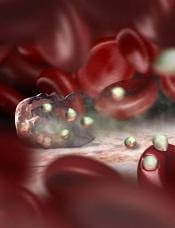
Credit: Peter H. Seeberger
Two studies published in PLOS Pathogens provide new insight into the malaria-related complications that can occur in children.
One study revealed how the immune system manages to prevent malaria fever in children infected with Plasmodium falciparum.
And with the other study, researchers identified proteins that can help them distinguish children with complicated malaria syndromes from those with uncomplicated malaria.
Analyzing immune response
In the first study, Peter Crompton, MD, of the US National Institute of Allergy and Infectious Diseases in Rockville, Maryland, and his colleagues analyzed immune cells from healthy children before the malaria season and from the same children after their first bout of malaria fever during the ensuing malaria season.
The researchers exposed both sets of immune cells to parasite-infected red blood cells and found that their responses were different.
When confronted with parasites before the malaria season, the children’s immune cells produced large amounts of molecules that promote inflammation—such as IL-1b, IL-6, and IL-8—which results in fever and other malaria symptoms.
But after a malaria fever episode, the immune cells responded by producing more anti-inflammatory molecules—such as IL-10 and TGF-b—and showed evidence of an enhanced ability to recognize and destroy parasites.
The ability of the immune cells to mount this response—somewhat effective in controlling the parasites but avoiding systemic inflammation and fever—seems to depend on the continued exposure to parasites through bites of infected mosquitoes.
When the researchers took blood again from the same children after the subsequent dry season (when there are few or no new infections) and exposed the immune cells to parasite-infected red blood cells, the anti-inflammatory response had returned to baseline, leaving children susceptible again to malaria-induced inflammation and fever.
The researchers said these findings shed new light on the notion of premunition, an immune response that protects against illness and high numbers of parasites in the blood without completely eliminating the infection.
They suggested that it evolved as an appropriate immune response to at least partially protect young children from potentially life-threatening inflammation and unchecked parasite replication before they acquire antibodies that protect against the onset of malaria symptoms.
Proteins provide answers
In the second study, Peter Nilsson, PhD, of SciLifeLab in Stockholm, Sweden, and his colleagues used a systematic proteomics approach to distinguish children who develop malaria-related complications from those who do not.
The researchers compared proteins in the blood of uninfected children with proteins in malaria-infected children. And they compared proteins in children with severe malaria syndromes to proteins in uncomplicated cases.
The team analyzed 1015 proteins in blood samples from more than 719 children. They divided the samples into “discovery” and “verification” sets, and only associations found in both sets were reported.
The researchers identified 41 proteins that distinguished malaria patients from uninfected children from the same community. Most of these were components of the inflammatory response.
Thirteen proteins helped the team distinguish uncomplicated malaria from severe malaria syndromes. They identified proteins specific to the 2 most deadly complicated malaria syndromes in children—severe malarial anemia and cerebral malaria.
Markers of oxidative stress were related to severe malarial anemia. And markers of endothelial activation, platelet adhesion, and muscular damage were identified in children with cerebral malaria.
The researchers said their study could aid the discovery of distinct mechanisms in the human response to malaria infection between the 2 most fatal syndromes of childhood malaria. 
Credit: Peter H. Seeberger
Two studies published in PLOS Pathogens provide new insight into the malaria-related complications that can occur in children.
One study revealed how the immune system manages to prevent malaria fever in children infected with Plasmodium falciparum.
And with the other study, researchers identified proteins that can help them distinguish children with complicated malaria syndromes from those with uncomplicated malaria.
Analyzing immune response
In the first study, Peter Crompton, MD, of the US National Institute of Allergy and Infectious Diseases in Rockville, Maryland, and his colleagues analyzed immune cells from healthy children before the malaria season and from the same children after their first bout of malaria fever during the ensuing malaria season.
The researchers exposed both sets of immune cells to parasite-infected red blood cells and found that their responses were different.
When confronted with parasites before the malaria season, the children’s immune cells produced large amounts of molecules that promote inflammation—such as IL-1b, IL-6, and IL-8—which results in fever and other malaria symptoms.
But after a malaria fever episode, the immune cells responded by producing more anti-inflammatory molecules—such as IL-10 and TGF-b—and showed evidence of an enhanced ability to recognize and destroy parasites.
The ability of the immune cells to mount this response—somewhat effective in controlling the parasites but avoiding systemic inflammation and fever—seems to depend on the continued exposure to parasites through bites of infected mosquitoes.
When the researchers took blood again from the same children after the subsequent dry season (when there are few or no new infections) and exposed the immune cells to parasite-infected red blood cells, the anti-inflammatory response had returned to baseline, leaving children susceptible again to malaria-induced inflammation and fever.
The researchers said these findings shed new light on the notion of premunition, an immune response that protects against illness and high numbers of parasites in the blood without completely eliminating the infection.
They suggested that it evolved as an appropriate immune response to at least partially protect young children from potentially life-threatening inflammation and unchecked parasite replication before they acquire antibodies that protect against the onset of malaria symptoms.
Proteins provide answers
In the second study, Peter Nilsson, PhD, of SciLifeLab in Stockholm, Sweden, and his colleagues used a systematic proteomics approach to distinguish children who develop malaria-related complications from those who do not.
The researchers compared proteins in the blood of uninfected children with proteins in malaria-infected children. And they compared proteins in children with severe malaria syndromes to proteins in uncomplicated cases.
The team analyzed 1015 proteins in blood samples from more than 719 children. They divided the samples into “discovery” and “verification” sets, and only associations found in both sets were reported.
The researchers identified 41 proteins that distinguished malaria patients from uninfected children from the same community. Most of these were components of the inflammatory response.
Thirteen proteins helped the team distinguish uncomplicated malaria from severe malaria syndromes. They identified proteins specific to the 2 most deadly complicated malaria syndromes in children—severe malarial anemia and cerebral malaria.
Markers of oxidative stress were related to severe malarial anemia. And markers of endothelial activation, platelet adhesion, and muscular damage were identified in children with cerebral malaria.
The researchers said their study could aid the discovery of distinct mechanisms in the human response to malaria infection between the 2 most fatal syndromes of childhood malaria.
Credit: Peter H. Seeberger
Two studies published in PLOS Pathogens provide new insight into the malaria-related complications that can occur in children.
One study revealed how the immune system manages to prevent malaria fever in children infected with Plasmodium falciparum.
And with the other study, researchers identified proteins that can help them distinguish children with complicated malaria syndromes from those with uncomplicated malaria.
Analyzing immune response
In the first study, Peter Crompton, MD, of the US National Institute of Allergy and Infectious Diseases in Rockville, Maryland, and his colleagues analyzed immune cells from healthy children before the malaria season and from the same children after their first bout of malaria fever during the ensuing malaria season.
The researchers exposed both sets of immune cells to parasite-infected red blood cells and found that their responses were different.
When confronted with parasites before the malaria season, the children’s immune cells produced large amounts of molecules that promote inflammation—such as IL-1b, IL-6, and IL-8—which results in fever and other malaria symptoms.
But after a malaria fever episode, the immune cells responded by producing more anti-inflammatory molecules—such as IL-10 and TGF-b—and showed evidence of an enhanced ability to recognize and destroy parasites.
The ability of the immune cells to mount this response—somewhat effective in controlling the parasites but avoiding systemic inflammation and fever—seems to depend on the continued exposure to parasites through bites of infected mosquitoes.
When the researchers took blood again from the same children after the subsequent dry season (when there are few or no new infections) and exposed the immune cells to parasite-infected red blood cells, the anti-inflammatory response had returned to baseline, leaving children susceptible again to malaria-induced inflammation and fever.
The researchers said these findings shed new light on the notion of premunition, an immune response that protects against illness and high numbers of parasites in the blood without completely eliminating the infection.
They suggested that it evolved as an appropriate immune response to at least partially protect young children from potentially life-threatening inflammation and unchecked parasite replication before they acquire antibodies that protect against the onset of malaria symptoms.
Proteins provide answers
In the second study, Peter Nilsson, PhD, of SciLifeLab in Stockholm, Sweden, and his colleagues used a systematic proteomics approach to distinguish children who develop malaria-related complications from those who do not.
The researchers compared proteins in the blood of uninfected children with proteins in malaria-infected children. And they compared proteins in children with severe malaria syndromes to proteins in uncomplicated cases.
The team analyzed 1015 proteins in blood samples from more than 719 children. They divided the samples into “discovery” and “verification” sets, and only associations found in both sets were reported.
The researchers identified 41 proteins that distinguished malaria patients from uninfected children from the same community. Most of these were components of the inflammatory response.
Thirteen proteins helped the team distinguish uncomplicated malaria from severe malaria syndromes. They identified proteins specific to the 2 most deadly complicated malaria syndromes in children—severe malarial anemia and cerebral malaria.
Markers of oxidative stress were related to severe malarial anemia. And markers of endothelial activation, platelet adhesion, and muscular damage were identified in children with cerebral malaria.
The researchers said their study could aid the discovery of distinct mechanisms in the human response to malaria infection between the 2 most fatal syndromes of childhood malaria.
Agent can reduce ESR in SCD, study suggests
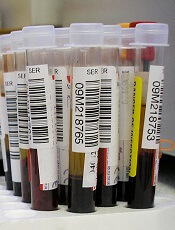
Credit: Graham Colm
MIAMI—Results of a small study suggest an experimental agent can decrease the erythrocyte sedimentation rate (ESR) in patients with sickle cell disease (SCD).
Previous research has shown the ESR is elevated in SCD patients during vaso-occlusive crisis.
In the current study, the experimental agent MST-188 decreased elevated ESRs by 50% in blood from SCD patients.
According to researchers, this reflects reduced red blood cell (RBC) aggregation and suggests improved microvascular blood flow.
“The data from this study are consistent with observations in prior studies that MST-188 decreases blood viscosity and RBC aggregation and improves microvascular blood flow, and supportive of the potential for MST-188 to shorten the duration of sickle cell crisis,” said Martin Emanuele, PhD, of Mast Therapeutics, the company developing MST-188.
Dr Emanuele presented the study data at the recent 8th Annual Sickle Cell Disease Research & Educational Symposium.
MST-188 is a non-ionic, linear block copolymer composed of a central chain of hydrophobic polyoxypropylene and 2 flanking chains of hydrophylic polyoxyethylene. In previous studies, the agent has shown hemorheologic properties that result in improved microvascular blood flow.
For the current study, the researchers compared MST-188 to dextrans, evaluating their effects on the ESR in blood collected from SCD patients and healthy controls. Dextrans are branched polysaccharides of 10-70 kDa that have been used as antithrombotic agents and plasma expanders.
The researchers analyzed EDTA-anticoagulated whole blood collected from 8 healthy individuals and 11 SCD patients. The team treated samples with MST-188; dextran 10K, 18K , 40K, and 70K at various concentrations; or saline control.
At baseline, ESRs for SCD patients were significantly higher than for the healthy subjects. The mean ESRs were 26.4 ± 7.1 mm/hr and 14.6 ± 2.1 mm/hr, respectively.
However, adding MST-188 to the SCD patient samples decreased the mean ESR to 14.1 ± 4.6 mm/hr (Δ47%). On the other hand, comparable concentrations of dextrans showed little or no effect on the ESR in SCD samples.
The researchers said MST-188 may reduce the ESR by inhibiting acute-phase-reactant-induced RBC aggregates, and this may result from the effect of MST-188 on RBC membranes or cell-protein interactions.
Regardless of the exact mechanism, the team said lowering the ESR reflects reduced RBC aggregation and suggests improved microvascular blood flow, which indicates that MST-188 may be able to shorten the duration of vaso-occlusive crisis.
“It is widely understood that multiple biological processes contribute to vaso-occlusion and that an effective solution requires a broad, multi-modal approach rather than a single targeted therapy,” Dr Emanuele said.
“In addition to the effects on RBC aggregation, our data suggest that MST-188 addresses cell adhesion and platelet activation, reduces hemolysis, lowers blood viscosity, and limits reperfusion injury following restoration of blood flow.”
He and his colleagues at Mast Therapeutics are planning additional studies of MST-188 in SCD. The agent is currently under investigation in a phase 3 trial.
Credit: Graham Colm
MIAMI—Results of a small study suggest an experimental agent can decrease the erythrocyte sedimentation rate (ESR) in patients with sickle cell disease (SCD).
Previous research has shown the ESR is elevated in SCD patients during vaso-occlusive crisis.
In the current study, the experimental agent MST-188 decreased elevated ESRs by 50% in blood from SCD patients.
According to researchers, this reflects reduced red blood cell (RBC) aggregation and suggests improved microvascular blood flow.
“The data from this study are consistent with observations in prior studies that MST-188 decreases blood viscosity and RBC aggregation and improves microvascular blood flow, and supportive of the potential for MST-188 to shorten the duration of sickle cell crisis,” said Martin Emanuele, PhD, of Mast Therapeutics, the company developing MST-188.
Dr Emanuele presented the study data at the recent 8th Annual Sickle Cell Disease Research & Educational Symposium.
MST-188 is a non-ionic, linear block copolymer composed of a central chain of hydrophobic polyoxypropylene and 2 flanking chains of hydrophylic polyoxyethylene. In previous studies, the agent has shown hemorheologic properties that result in improved microvascular blood flow.
For the current study, the researchers compared MST-188 to dextrans, evaluating their effects on the ESR in blood collected from SCD patients and healthy controls. Dextrans are branched polysaccharides of 10-70 kDa that have been used as antithrombotic agents and plasma expanders.
The researchers analyzed EDTA-anticoagulated whole blood collected from 8 healthy individuals and 11 SCD patients. The team treated samples with MST-188; dextran 10K, 18K , 40K, and 70K at various concentrations; or saline control.
At baseline, ESRs for SCD patients were significantly higher than for the healthy subjects. The mean ESRs were 26.4 ± 7.1 mm/hr and 14.6 ± 2.1 mm/hr, respectively.
However, adding MST-188 to the SCD patient samples decreased the mean ESR to 14.1 ± 4.6 mm/hr (Δ47%). On the other hand, comparable concentrations of dextrans showed little or no effect on the ESR in SCD samples.
The researchers said MST-188 may reduce the ESR by inhibiting acute-phase-reactant-induced RBC aggregates, and this may result from the effect of MST-188 on RBC membranes or cell-protein interactions.
Regardless of the exact mechanism, the team said lowering the ESR reflects reduced RBC aggregation and suggests improved microvascular blood flow, which indicates that MST-188 may be able to shorten the duration of vaso-occlusive crisis.
“It is widely understood that multiple biological processes contribute to vaso-occlusion and that an effective solution requires a broad, multi-modal approach rather than a single targeted therapy,” Dr Emanuele said.
“In addition to the effects on RBC aggregation, our data suggest that MST-188 addresses cell adhesion and platelet activation, reduces hemolysis, lowers blood viscosity, and limits reperfusion injury following restoration of blood flow.”
He and his colleagues at Mast Therapeutics are planning additional studies of MST-188 in SCD. The agent is currently under investigation in a phase 3 trial.
Credit: Graham Colm
MIAMI—Results of a small study suggest an experimental agent can decrease the erythrocyte sedimentation rate (ESR) in patients with sickle cell disease (SCD).
Previous research has shown the ESR is elevated in SCD patients during vaso-occlusive crisis.
In the current study, the experimental agent MST-188 decreased elevated ESRs by 50% in blood from SCD patients.
According to researchers, this reflects reduced red blood cell (RBC) aggregation and suggests improved microvascular blood flow.
“The data from this study are consistent with observations in prior studies that MST-188 decreases blood viscosity and RBC aggregation and improves microvascular blood flow, and supportive of the potential for MST-188 to shorten the duration of sickle cell crisis,” said Martin Emanuele, PhD, of Mast Therapeutics, the company developing MST-188.
Dr Emanuele presented the study data at the recent 8th Annual Sickle Cell Disease Research & Educational Symposium.
MST-188 is a non-ionic, linear block copolymer composed of a central chain of hydrophobic polyoxypropylene and 2 flanking chains of hydrophylic polyoxyethylene. In previous studies, the agent has shown hemorheologic properties that result in improved microvascular blood flow.
For the current study, the researchers compared MST-188 to dextrans, evaluating their effects on the ESR in blood collected from SCD patients and healthy controls. Dextrans are branched polysaccharides of 10-70 kDa that have been used as antithrombotic agents and plasma expanders.
The researchers analyzed EDTA-anticoagulated whole blood collected from 8 healthy individuals and 11 SCD patients. The team treated samples with MST-188; dextran 10K, 18K , 40K, and 70K at various concentrations; or saline control.
At baseline, ESRs for SCD patients were significantly higher than for the healthy subjects. The mean ESRs were 26.4 ± 7.1 mm/hr and 14.6 ± 2.1 mm/hr, respectively.
However, adding MST-188 to the SCD patient samples decreased the mean ESR to 14.1 ± 4.6 mm/hr (Δ47%). On the other hand, comparable concentrations of dextrans showed little or no effect on the ESR in SCD samples.
The researchers said MST-188 may reduce the ESR by inhibiting acute-phase-reactant-induced RBC aggregates, and this may result from the effect of MST-188 on RBC membranes or cell-protein interactions.
Regardless of the exact mechanism, the team said lowering the ESR reflects reduced RBC aggregation and suggests improved microvascular blood flow, which indicates that MST-188 may be able to shorten the duration of vaso-occlusive crisis.
“It is widely understood that multiple biological processes contribute to vaso-occlusion and that an effective solution requires a broad, multi-modal approach rather than a single targeted therapy,” Dr Emanuele said.
“In addition to the effects on RBC aggregation, our data suggest that MST-188 addresses cell adhesion and platelet activation, reduces hemolysis, lowers blood viscosity, and limits reperfusion injury following restoration of blood flow.”
He and his colleagues at Mast Therapeutics are planning additional studies of MST-188 in SCD. The agent is currently under investigation in a phase 3 trial.
Protective cells are impaired in aggressive CLL

Credit: Monash University
New research may explain why patients with chronic lymphocytic leukemia (CLL) are vulnerable to severe, recurrent infections.
The study showed that plasmacytoid dendritic cells (pDCs), which orchestrate innate and adaptive immune responses, were eliminated in patients with aggressive CLL.
However, patients with a milder form of CLL appeared to have more pDCs, which suggests some protective effect.
Researchers reported these findings in Leukemia.
“These unprecedented findings reveal that these rare but critical cells can be restored at the experiment level, resulting in re-activated immune functions, including the destruction of cancer cells,” said study author Fabienne Mackay, PhD, of Monash University in Melbourne, Victoria, Australia.
“These results provide supporting evidence that a similar approach might have therapeutic benefits in patients with CLL.”
Dr Mackay and her colleagues noted that CLL patients’ vulnerability to infection is caused by a variety of immunological defects. But the initiating events of immunodeficiency in CLL are unclear.
To gain more insight, the researchers studied samples from CLL patients and conducted experiments in mouse models of the disease.
They found that, in progressive CLL, pDC numbers decreased, and their functionality was impaired. As a result, interferon alpha (IFNα) production decreased.
Additional investigation revealed that the decrease in pDCs and reduction in IFNα production resulted from decreased expression of FLT3 and TLR9.
However, the researchers were able to increase FLT3 expression using inhibitors of TGF-β and TNF. And this reduced the tumor load.
The team said these results offer new insight into mechanisms underpinning the immunodeficiency observed in CLL.
And they hope their discoveries will aid the development of new therapeutic strategies that reactivate the immune system and enhance the long-term survival of those CLL patients who are particularly vulnerable to fatal infectious complications.
Credit: Monash University
New research may explain why patients with chronic lymphocytic leukemia (CLL) are vulnerable to severe, recurrent infections.
The study showed that plasmacytoid dendritic cells (pDCs), which orchestrate innate and adaptive immune responses, were eliminated in patients with aggressive CLL.
However, patients with a milder form of CLL appeared to have more pDCs, which suggests some protective effect.
Researchers reported these findings in Leukemia.
“These unprecedented findings reveal that these rare but critical cells can be restored at the experiment level, resulting in re-activated immune functions, including the destruction of cancer cells,” said study author Fabienne Mackay, PhD, of Monash University in Melbourne, Victoria, Australia.
“These results provide supporting evidence that a similar approach might have therapeutic benefits in patients with CLL.”
Dr Mackay and her colleagues noted that CLL patients’ vulnerability to infection is caused by a variety of immunological defects. But the initiating events of immunodeficiency in CLL are unclear.
To gain more insight, the researchers studied samples from CLL patients and conducted experiments in mouse models of the disease.
They found that, in progressive CLL, pDC numbers decreased, and their functionality was impaired. As a result, interferon alpha (IFNα) production decreased.
Additional investigation revealed that the decrease in pDCs and reduction in IFNα production resulted from decreased expression of FLT3 and TLR9.
However, the researchers were able to increase FLT3 expression using inhibitors of TGF-β and TNF. And this reduced the tumor load.
The team said these results offer new insight into mechanisms underpinning the immunodeficiency observed in CLL.
And they hope their discoveries will aid the development of new therapeutic strategies that reactivate the immune system and enhance the long-term survival of those CLL patients who are particularly vulnerable to fatal infectious complications.
Credit: Monash University
New research may explain why patients with chronic lymphocytic leukemia (CLL) are vulnerable to severe, recurrent infections.
The study showed that plasmacytoid dendritic cells (pDCs), which orchestrate innate and adaptive immune responses, were eliminated in patients with aggressive CLL.
However, patients with a milder form of CLL appeared to have more pDCs, which suggests some protective effect.
Researchers reported these findings in Leukemia.
“These unprecedented findings reveal that these rare but critical cells can be restored at the experiment level, resulting in re-activated immune functions, including the destruction of cancer cells,” said study author Fabienne Mackay, PhD, of Monash University in Melbourne, Victoria, Australia.
“These results provide supporting evidence that a similar approach might have therapeutic benefits in patients with CLL.”
Dr Mackay and her colleagues noted that CLL patients’ vulnerability to infection is caused by a variety of immunological defects. But the initiating events of immunodeficiency in CLL are unclear.
To gain more insight, the researchers studied samples from CLL patients and conducted experiments in mouse models of the disease.
They found that, in progressive CLL, pDC numbers decreased, and their functionality was impaired. As a result, interferon alpha (IFNα) production decreased.
Additional investigation revealed that the decrease in pDCs and reduction in IFNα production resulted from decreased expression of FLT3 and TLR9.
However, the researchers were able to increase FLT3 expression using inhibitors of TGF-β and TNF. And this reduced the tumor load.
The team said these results offer new insight into mechanisms underpinning the immunodeficiency observed in CLL.
And they hope their discoveries will aid the development of new therapeutic strategies that reactivate the immune system and enhance the long-term survival of those CLL patients who are particularly vulnerable to fatal infectious complications.
Findings could increase use of delayed cord clamping

Credit: Meutia Chaerani
and Indradi Soemardjan
A baby’s position prior to delayed umbilical cord clamping does not affect the volume of placental blood transferred, according to a study published in The Lancet.
Researchers found that placing a baby on the mother’s chest or abdomen before clamping does not decrease the amount of blood transferred when compared to holding the child in the recommended introitus position.
As the chest/abdomen position is more desirable, the researchers believe this discovery could help increase the use of delayed cord clamping, which has been shown to reduce the risk of iron deficiency in infancy.
Current recommendations for delayed cord clamping are based on studies conducted 35 years ago. They suggest that, for effective placental transfusion to occur, a baby must be held at the level of the placenta—the introitus position.
The researchers noted that this position can be uncomfortable for the person holding the baby and interferes with immediate contact between the mother and child. These issues could be contributing to low compliance with delayed cord clamping, ultimately resulting in higher-than-necessary levels of iron deficiency in babies.
So the team decided to examine whether the transfer of blood in delayed cord clamping procedures is affected by the position in which the baby is held immediately after birth.
They conducted the study in 3 university-affiliated hospitals in Argentina, evaluating 197 babies who were held in the introitus position and 194 babies who were immediately placed on the mother’s abdomen or chest.
By measuring the babies’ weights at the point of birth and immediately after the delayed cord clamping procedure, the researchers were able to measure the volume of blood that had transferred from the placenta to the child.
They found no statistically significant difference between the 2 groups in the volume of blood transferred. The mean weight change was 56 g for babies in the introitus group and 53 g for babies in the abdomen/chest group (P=0.45).
“Our study suggests that when umbilical cord clamping is delayed for 2 minutes, holding the baby on the mother’s chest or abdomen is no worse than the currently recommended practice of holding the baby below this level,” said study author Nestor Vain, MD, of the Foundation for Maternal and Child Health (FUNDASAMIN) in Buenos Aires, Argentina.
“Because of the potential of enhanced bonding between mother and baby, increased success of breastfeeding, and the compliance with the procedure, holding the infant by the mother immediately after birth should be strongly recommended.”
Writing in a related comment article, Tonse Raju, MD, of the National Institute of Child Health and Human Development in Bethesda, Maryland, noted that introducing delayed cord clamping into practice has not been easy, and logistical issues might be partly responsible.
“Intuitively, to keep the newborn baby’s position below the level of the placenta in situ should maximize the volume of placental transfusion,” Dr Raju wrote. “However, trying to hold on to a wet, vigorously crying, and wriggling infant at the perineum for 2 minutes, in gloved hands, is awkward and can be risky.”
“[This study] should bring a sigh of relief from those trying to incorporate delayed umbilical cord clamping into practice. The results are convincing and show that gravity did not have an effect on volume of placental transfusion.”
Credit: Meutia Chaerani
and Indradi Soemardjan
A baby’s position prior to delayed umbilical cord clamping does not affect the volume of placental blood transferred, according to a study published in The Lancet.
Researchers found that placing a baby on the mother’s chest or abdomen before clamping does not decrease the amount of blood transferred when compared to holding the child in the recommended introitus position.
As the chest/abdomen position is more desirable, the researchers believe this discovery could help increase the use of delayed cord clamping, which has been shown to reduce the risk of iron deficiency in infancy.
Current recommendations for delayed cord clamping are based on studies conducted 35 years ago. They suggest that, for effective placental transfusion to occur, a baby must be held at the level of the placenta—the introitus position.
The researchers noted that this position can be uncomfortable for the person holding the baby and interferes with immediate contact between the mother and child. These issues could be contributing to low compliance with delayed cord clamping, ultimately resulting in higher-than-necessary levels of iron deficiency in babies.
So the team decided to examine whether the transfer of blood in delayed cord clamping procedures is affected by the position in which the baby is held immediately after birth.
They conducted the study in 3 university-affiliated hospitals in Argentina, evaluating 197 babies who were held in the introitus position and 194 babies who were immediately placed on the mother’s abdomen or chest.
By measuring the babies’ weights at the point of birth and immediately after the delayed cord clamping procedure, the researchers were able to measure the volume of blood that had transferred from the placenta to the child.
They found no statistically significant difference between the 2 groups in the volume of blood transferred. The mean weight change was 56 g for babies in the introitus group and 53 g for babies in the abdomen/chest group (P=0.45).
“Our study suggests that when umbilical cord clamping is delayed for 2 minutes, holding the baby on the mother’s chest or abdomen is no worse than the currently recommended practice of holding the baby below this level,” said study author Nestor Vain, MD, of the Foundation for Maternal and Child Health (FUNDASAMIN) in Buenos Aires, Argentina.
“Because of the potential of enhanced bonding between mother and baby, increased success of breastfeeding, and the compliance with the procedure, holding the infant by the mother immediately after birth should be strongly recommended.”
Writing in a related comment article, Tonse Raju, MD, of the National Institute of Child Health and Human Development in Bethesda, Maryland, noted that introducing delayed cord clamping into practice has not been easy, and logistical issues might be partly responsible.
“Intuitively, to keep the newborn baby’s position below the level of the placenta in situ should maximize the volume of placental transfusion,” Dr Raju wrote. “However, trying to hold on to a wet, vigorously crying, and wriggling infant at the perineum for 2 minutes, in gloved hands, is awkward and can be risky.”
“[This study] should bring a sigh of relief from those trying to incorporate delayed umbilical cord clamping into practice. The results are convincing and show that gravity did not have an effect on volume of placental transfusion.”
Credit: Meutia Chaerani
and Indradi Soemardjan
A baby’s position prior to delayed umbilical cord clamping does not affect the volume of placental blood transferred, according to a study published in The Lancet.
Researchers found that placing a baby on the mother’s chest or abdomen before clamping does not decrease the amount of blood transferred when compared to holding the child in the recommended introitus position.
As the chest/abdomen position is more desirable, the researchers believe this discovery could help increase the use of delayed cord clamping, which has been shown to reduce the risk of iron deficiency in infancy.
Current recommendations for delayed cord clamping are based on studies conducted 35 years ago. They suggest that, for effective placental transfusion to occur, a baby must be held at the level of the placenta—the introitus position.
The researchers noted that this position can be uncomfortable for the person holding the baby and interferes with immediate contact between the mother and child. These issues could be contributing to low compliance with delayed cord clamping, ultimately resulting in higher-than-necessary levels of iron deficiency in babies.
So the team decided to examine whether the transfer of blood in delayed cord clamping procedures is affected by the position in which the baby is held immediately after birth.
They conducted the study in 3 university-affiliated hospitals in Argentina, evaluating 197 babies who were held in the introitus position and 194 babies who were immediately placed on the mother’s abdomen or chest.
By measuring the babies’ weights at the point of birth and immediately after the delayed cord clamping procedure, the researchers were able to measure the volume of blood that had transferred from the placenta to the child.
They found no statistically significant difference between the 2 groups in the volume of blood transferred. The mean weight change was 56 g for babies in the introitus group and 53 g for babies in the abdomen/chest group (P=0.45).
“Our study suggests that when umbilical cord clamping is delayed for 2 minutes, holding the baby on the mother’s chest or abdomen is no worse than the currently recommended practice of holding the baby below this level,” said study author Nestor Vain, MD, of the Foundation for Maternal and Child Health (FUNDASAMIN) in Buenos Aires, Argentina.
“Because of the potential of enhanced bonding between mother and baby, increased success of breastfeeding, and the compliance with the procedure, holding the infant by the mother immediately after birth should be strongly recommended.”
Writing in a related comment article, Tonse Raju, MD, of the National Institute of Child Health and Human Development in Bethesda, Maryland, noted that introducing delayed cord clamping into practice has not been easy, and logistical issues might be partly responsible.
“Intuitively, to keep the newborn baby’s position below the level of the placenta in situ should maximize the volume of placental transfusion,” Dr Raju wrote. “However, trying to hold on to a wet, vigorously crying, and wriggling infant at the perineum for 2 minutes, in gloved hands, is awkward and can be risky.”
“[This study] should bring a sigh of relief from those trying to incorporate delayed umbilical cord clamping into practice. The results are convincing and show that gravity did not have an effect on volume of placental transfusion.”
NICE supports use of ESAs in cancer patients
Anemic cancer patients in the UK may soon have 6 erythropoiesis-stimulating agents (ESAs) available through the National Health Service.
The National Institute for Health and Care Excellence (NICE) has drafted a guidance recommending 5 epoetins—2 alfas, 1 beta, 1 theta, and 1 zeta—and 1 darbepoetin to treat anemia in adult cancer patients receiving chemotherapy.
NICE has started a consultation on the guidance, and it will be open for comment until May 9.
To inform NICE on the clinical effectiveness of the 6 ESAs, an independent appraisal committee looked at results from several clinical trials and reviewed the existing guidance.
The committee concluded that the ESAs were effective at increasing hemoglobin levels and managing anemia when compared to current standards of care. The drugs reduced the need for blood transfusions in patients receiving cancer treatment.
Furthermore, analyses suggested the ESAs are cost-effective. However, the draft guidance recommends that healthcare professionals offer patients the appropriate ESA with the lowest cost.
The guidance recommends the ESAs for their approved indications.
Epoetin alfa (marketed as Eprex and Binocrit) and epoetin zeta (marketed as Retacrit) are approved in the UK to treat anemia and reduce transfusion requirements in adult patients receiving chemotherapy for solid tumors, malignant lymphoma, or multiple myeloma. Patients must be at risk of transfusion, as assessed by their general status (eg, cardiovascular status, pre-existing anemia at the start of chemotherapy).
Eprex, Binocrit, and Retacrit are available in pre-filled syringes at net prices of £5.53, £5.09, and £5.66 per 1000 units, respectively.
Epoetin beta (marketed as NeoRecormon) and Epoetin theta (marketed as Eporatio) are approved to treat symptomatic anemia in adult patients with non-myeloid malignancies who are receiving chemotherapy.
NeoRecormo is available in a pre-filled syringe at a net price of £3.51 per 500 units, and Eporatio is available in a pre-filled syringe at a net price of £5.99 per 1000 units.
Darbepoetin alfa (marketed as Aranesp) is approved to treat symptomatic anemia in adult patients with non-myeloid malignancies who are receiving chemotherapy. It is recommended for use at hemoglobin concentrations of 100 g/l or lower, with target values up to 120 g/l. Aranesp is available in a pre-filled syringe at a net price of £14.68 per 10 micrograms.
Costs exclude tax and may vary in different settings. For more information, see the draft guidance.
Anemic cancer patients in the UK may soon have 6 erythropoiesis-stimulating agents (ESAs) available through the National Health Service.
The National Institute for Health and Care Excellence (NICE) has drafted a guidance recommending 5 epoetins—2 alfas, 1 beta, 1 theta, and 1 zeta—and 1 darbepoetin to treat anemia in adult cancer patients receiving chemotherapy.
NICE has started a consultation on the guidance, and it will be open for comment until May 9.
To inform NICE on the clinical effectiveness of the 6 ESAs, an independent appraisal committee looked at results from several clinical trials and reviewed the existing guidance.
The committee concluded that the ESAs were effective at increasing hemoglobin levels and managing anemia when compared to current standards of care. The drugs reduced the need for blood transfusions in patients receiving cancer treatment.
Furthermore, analyses suggested the ESAs are cost-effective. However, the draft guidance recommends that healthcare professionals offer patients the appropriate ESA with the lowest cost.
The guidance recommends the ESAs for their approved indications.
Epoetin alfa (marketed as Eprex and Binocrit) and epoetin zeta (marketed as Retacrit) are approved in the UK to treat anemia and reduce transfusion requirements in adult patients receiving chemotherapy for solid tumors, malignant lymphoma, or multiple myeloma. Patients must be at risk of transfusion, as assessed by their general status (eg, cardiovascular status, pre-existing anemia at the start of chemotherapy).
Eprex, Binocrit, and Retacrit are available in pre-filled syringes at net prices of £5.53, £5.09, and £5.66 per 1000 units, respectively.
Epoetin beta (marketed as NeoRecormon) and Epoetin theta (marketed as Eporatio) are approved to treat symptomatic anemia in adult patients with non-myeloid malignancies who are receiving chemotherapy.
NeoRecormo is available in a pre-filled syringe at a net price of £3.51 per 500 units, and Eporatio is available in a pre-filled syringe at a net price of £5.99 per 1000 units.
Darbepoetin alfa (marketed as Aranesp) is approved to treat symptomatic anemia in adult patients with non-myeloid malignancies who are receiving chemotherapy. It is recommended for use at hemoglobin concentrations of 100 g/l or lower, with target values up to 120 g/l. Aranesp is available in a pre-filled syringe at a net price of £14.68 per 10 micrograms.
Costs exclude tax and may vary in different settings. For more information, see the draft guidance.
Anemic cancer patients in the UK may soon have 6 erythropoiesis-stimulating agents (ESAs) available through the National Health Service.
The National Institute for Health and Care Excellence (NICE) has drafted a guidance recommending 5 epoetins—2 alfas, 1 beta, 1 theta, and 1 zeta—and 1 darbepoetin to treat anemia in adult cancer patients receiving chemotherapy.
NICE has started a consultation on the guidance, and it will be open for comment until May 9.
To inform NICE on the clinical effectiveness of the 6 ESAs, an independent appraisal committee looked at results from several clinical trials and reviewed the existing guidance.
The committee concluded that the ESAs were effective at increasing hemoglobin levels and managing anemia when compared to current standards of care. The drugs reduced the need for blood transfusions in patients receiving cancer treatment.
Furthermore, analyses suggested the ESAs are cost-effective. However, the draft guidance recommends that healthcare professionals offer patients the appropriate ESA with the lowest cost.
The guidance recommends the ESAs for their approved indications.
Epoetin alfa (marketed as Eprex and Binocrit) and epoetin zeta (marketed as Retacrit) are approved in the UK to treat anemia and reduce transfusion requirements in adult patients receiving chemotherapy for solid tumors, malignant lymphoma, or multiple myeloma. Patients must be at risk of transfusion, as assessed by their general status (eg, cardiovascular status, pre-existing anemia at the start of chemotherapy).
Eprex, Binocrit, and Retacrit are available in pre-filled syringes at net prices of £5.53, £5.09, and £5.66 per 1000 units, respectively.
Epoetin beta (marketed as NeoRecormon) and Epoetin theta (marketed as Eporatio) are approved to treat symptomatic anemia in adult patients with non-myeloid malignancies who are receiving chemotherapy.
NeoRecormo is available in a pre-filled syringe at a net price of £3.51 per 500 units, and Eporatio is available in a pre-filled syringe at a net price of £5.99 per 1000 units.
Darbepoetin alfa (marketed as Aranesp) is approved to treat symptomatic anemia in adult patients with non-myeloid malignancies who are receiving chemotherapy. It is recommended for use at hemoglobin concentrations of 100 g/l or lower, with target values up to 120 g/l. Aranesp is available in a pre-filled syringe at a net price of £14.68 per 10 micrograms.
Costs exclude tax and may vary in different settings. For more information, see the draft guidance.
Patient perception of control affects satisfaction

patient and her father
Credit: Rhoda Baer
Feeling as though they play an active role in their treatment decisions increases satisfaction among cancer patients undergoing radiotherapy (RT), according to research published in Cancer.
In a study of more than 300 RT patients, those who were involved in their treatment decisions—or perceived they had some control over their treatment—were more satisfied than their peers.
On the other hand, patients who wanted control over their treatment but did not feel they had any were more likely than their peers to experience anxiety, depression, and fatigue.
“Our findings emphasize the value of patient-physician relationships and communication, specifically in radiation oncology, and their impact on patient experience in a way that hasn’t been shown before,” said study author Neha Vapiwala, MD, of the Perelman School of Medicine at the University of Pennsylvania.
Dr Vapiwala and her colleagues noted that past studies of shared decision-making (SDM)—in which patients and providers make healthcare decisions together, taking into account scientific evidence and patient preferences—have shown an association between patient satisfaction and quality of life.
However, none of these studies has evaluated the impact of SDM on patients undergoing RT. Often, radiation oncology is seen as a treatment avenue that is ultimately left to the physician to dictate. But there are tailored options, decisions, and discussions that can apply to individual patients.
With this in mind, the researchers conducted a survey of SDM in 305 patients undergoing RT. In all, 31% of patients said they experienced SDM, 32% perceived control in their treatment decisions, and 76% reported feeling very satisfied with their radiation treatment course overall.
Patient satisfaction was significantly higher among those who perceived SDM than among those who did not—84.4% and 71.4%, respectively (P<0.02).
And satisfaction was higher among patients who perceived control over their treatment than among those who did not—89.7% and 69.2%, respectively (P<0.001).
Patients who expressed a desire for control over their treatment decisions but did not perceive having any control were significantly more likely than their peers to experience symptoms tied to psychological distress.
Anxiety was reported in 44% and 20% of patients, respectively (P<0.02). Depression was reported in 44% and 15%, respectively (P<0.01). And fatigue was reported in 68% and 39.2%, respectively (P<0.01).
The researchers said one of this study’s strengths is the diverse group of patients enrolled. Ages ranged from 18 to 87 years, and a variety of ethnic/racial groups were represented. Patients had a range of cancers at all stages, and could participate in the study as long as they were well enough.
The team said the next step for this research is to determine both physician and patient barriers to SDM and identify methods to break down these barriers.
“As providers, it doesn’t matter what treatment you are offering, or how complicated it is, or how busy you may be,” Dr Vapiwala said. “It’s worth taking even a few minutes to talk to patients about seemingly minor decisions in which they can provide some input.”
“It’s not only critical in today’s healthcare setting, where both information and misinformation are rampant, but will very likely lead to the patient feeling positively about the encounter.”
patient and her father
Credit: Rhoda Baer
Feeling as though they play an active role in their treatment decisions increases satisfaction among cancer patients undergoing radiotherapy (RT), according to research published in Cancer.
In a study of more than 300 RT patients, those who were involved in their treatment decisions—or perceived they had some control over their treatment—were more satisfied than their peers.
On the other hand, patients who wanted control over their treatment but did not feel they had any were more likely than their peers to experience anxiety, depression, and fatigue.
“Our findings emphasize the value of patient-physician relationships and communication, specifically in radiation oncology, and their impact on patient experience in a way that hasn’t been shown before,” said study author Neha Vapiwala, MD, of the Perelman School of Medicine at the University of Pennsylvania.
Dr Vapiwala and her colleagues noted that past studies of shared decision-making (SDM)—in which patients and providers make healthcare decisions together, taking into account scientific evidence and patient preferences—have shown an association between patient satisfaction and quality of life.
However, none of these studies has evaluated the impact of SDM on patients undergoing RT. Often, radiation oncology is seen as a treatment avenue that is ultimately left to the physician to dictate. But there are tailored options, decisions, and discussions that can apply to individual patients.
With this in mind, the researchers conducted a survey of SDM in 305 patients undergoing RT. In all, 31% of patients said they experienced SDM, 32% perceived control in their treatment decisions, and 76% reported feeling very satisfied with their radiation treatment course overall.
Patient satisfaction was significantly higher among those who perceived SDM than among those who did not—84.4% and 71.4%, respectively (P<0.02).
And satisfaction was higher among patients who perceived control over their treatment than among those who did not—89.7% and 69.2%, respectively (P<0.001).
Patients who expressed a desire for control over their treatment decisions but did not perceive having any control were significantly more likely than their peers to experience symptoms tied to psychological distress.
Anxiety was reported in 44% and 20% of patients, respectively (P<0.02). Depression was reported in 44% and 15%, respectively (P<0.01). And fatigue was reported in 68% and 39.2%, respectively (P<0.01).
The researchers said one of this study’s strengths is the diverse group of patients enrolled. Ages ranged from 18 to 87 years, and a variety of ethnic/racial groups were represented. Patients had a range of cancers at all stages, and could participate in the study as long as they were well enough.
The team said the next step for this research is to determine both physician and patient barriers to SDM and identify methods to break down these barriers.
“As providers, it doesn’t matter what treatment you are offering, or how complicated it is, or how busy you may be,” Dr Vapiwala said. “It’s worth taking even a few minutes to talk to patients about seemingly minor decisions in which they can provide some input.”
“It’s not only critical in today’s healthcare setting, where both information and misinformation are rampant, but will very likely lead to the patient feeling positively about the encounter.”
patient and her father
Credit: Rhoda Baer
Feeling as though they play an active role in their treatment decisions increases satisfaction among cancer patients undergoing radiotherapy (RT), according to research published in Cancer.
In a study of more than 300 RT patients, those who were involved in their treatment decisions—or perceived they had some control over their treatment—were more satisfied than their peers.
On the other hand, patients who wanted control over their treatment but did not feel they had any were more likely than their peers to experience anxiety, depression, and fatigue.
“Our findings emphasize the value of patient-physician relationships and communication, specifically in radiation oncology, and their impact on patient experience in a way that hasn’t been shown before,” said study author Neha Vapiwala, MD, of the Perelman School of Medicine at the University of Pennsylvania.
Dr Vapiwala and her colleagues noted that past studies of shared decision-making (SDM)—in which patients and providers make healthcare decisions together, taking into account scientific evidence and patient preferences—have shown an association between patient satisfaction and quality of life.
However, none of these studies has evaluated the impact of SDM on patients undergoing RT. Often, radiation oncology is seen as a treatment avenue that is ultimately left to the physician to dictate. But there are tailored options, decisions, and discussions that can apply to individual patients.
With this in mind, the researchers conducted a survey of SDM in 305 patients undergoing RT. In all, 31% of patients said they experienced SDM, 32% perceived control in their treatment decisions, and 76% reported feeling very satisfied with their radiation treatment course overall.
Patient satisfaction was significantly higher among those who perceived SDM than among those who did not—84.4% and 71.4%, respectively (P<0.02).
And satisfaction was higher among patients who perceived control over their treatment than among those who did not—89.7% and 69.2%, respectively (P<0.001).
Patients who expressed a desire for control over their treatment decisions but did not perceive having any control were significantly more likely than their peers to experience symptoms tied to psychological distress.
Anxiety was reported in 44% and 20% of patients, respectively (P<0.02). Depression was reported in 44% and 15%, respectively (P<0.01). And fatigue was reported in 68% and 39.2%, respectively (P<0.01).
The researchers said one of this study’s strengths is the diverse group of patients enrolled. Ages ranged from 18 to 87 years, and a variety of ethnic/racial groups were represented. Patients had a range of cancers at all stages, and could participate in the study as long as they were well enough.
The team said the next step for this research is to determine both physician and patient barriers to SDM and identify methods to break down these barriers.
“As providers, it doesn’t matter what treatment you are offering, or how complicated it is, or how busy you may be,” Dr Vapiwala said. “It’s worth taking even a few minutes to talk to patients about seemingly minor decisions in which they can provide some input.”
“It’s not only critical in today’s healthcare setting, where both information and misinformation are rampant, but will very likely lead to the patient feeling positively about the encounter.”
Team finds Achilles’ heel in malaria parasite protein

Credit: Ute Frevert
and Margaret Shear
Changing the administration of chloroquine might prevent resistance to the antimalarial agent, according to a study published in PNAS.
Investigators found the parasite protein that causes chloroquine resistance—the Plasmodium falciparum chloroquine resistance transporter (PfCRT)—has an Achilles’ heel.
“We studied diverse versions of this protein and, in all cases, found that it is limited in its capacity to remove the drug from the parasite,” said Rowena Martin, PhD, of The Australian National University in Canberra.
“This means malaria could once again be treated with chloroquine if it is administered twice-daily, rather than just once a day.”
Dr Martin and her colleagues noted that a number of distinct PfCRT haplotypes, containing between 4 and 10 mutations, have given rise to chloroquine resistance.
So they set out to characterize these forms of PfCRT and determine the number of mutations, as well as the order of their addition, required to confer chloroquine transport activity.
The investigators analyzed more than 100 variants of PfCRT, measuring their ability to transport chloroquine.
The team identified multiple mutational pathways that led to chloroquine transport via PfCRT but divided these pathways into 2 main lineages.
“We found that the protein gains the ability to move chloroquine out of the parasite through 1 of 2 evolutionary pathways but that this process is rigid,” Dr Martin said. “One wrong turn, and the protein is rendered useless.”
In fact, the investigators found that, if mutations did not occur in a precise order, chloroquine transport activity decreased.
The number of mutations played a key role as well. A minimum of 2 mutations was sufficient for chloroquine transport activity, but as few as 4 conferred full activity.
“This indicates that the protein is under conflicting pressures, which is a weakness that could be exploited in future antimalarial strategies,” Dr Martin said.
She also noted that these findings might not apply only to chloroquine. They might apply to several chloroquine-like drugs that are also becoming less effective as the malaria parasite builds up resistance.
Credit: Ute Frevert
and Margaret Shear
Changing the administration of chloroquine might prevent resistance to the antimalarial agent, according to a study published in PNAS.
Investigators found the parasite protein that causes chloroquine resistance—the Plasmodium falciparum chloroquine resistance transporter (PfCRT)—has an Achilles’ heel.
“We studied diverse versions of this protein and, in all cases, found that it is limited in its capacity to remove the drug from the parasite,” said Rowena Martin, PhD, of The Australian National University in Canberra.
“This means malaria could once again be treated with chloroquine if it is administered twice-daily, rather than just once a day.”
Dr Martin and her colleagues noted that a number of distinct PfCRT haplotypes, containing between 4 and 10 mutations, have given rise to chloroquine resistance.
So they set out to characterize these forms of PfCRT and determine the number of mutations, as well as the order of their addition, required to confer chloroquine transport activity.
The investigators analyzed more than 100 variants of PfCRT, measuring their ability to transport chloroquine.
The team identified multiple mutational pathways that led to chloroquine transport via PfCRT but divided these pathways into 2 main lineages.
“We found that the protein gains the ability to move chloroquine out of the parasite through 1 of 2 evolutionary pathways but that this process is rigid,” Dr Martin said. “One wrong turn, and the protein is rendered useless.”
In fact, the investigators found that, if mutations did not occur in a precise order, chloroquine transport activity decreased.
The number of mutations played a key role as well. A minimum of 2 mutations was sufficient for chloroquine transport activity, but as few as 4 conferred full activity.
“This indicates that the protein is under conflicting pressures, which is a weakness that could be exploited in future antimalarial strategies,” Dr Martin said.
She also noted that these findings might not apply only to chloroquine. They might apply to several chloroquine-like drugs that are also becoming less effective as the malaria parasite builds up resistance.
Credit: Ute Frevert
and Margaret Shear
Changing the administration of chloroquine might prevent resistance to the antimalarial agent, according to a study published in PNAS.
Investigators found the parasite protein that causes chloroquine resistance—the Plasmodium falciparum chloroquine resistance transporter (PfCRT)—has an Achilles’ heel.
“We studied diverse versions of this protein and, in all cases, found that it is limited in its capacity to remove the drug from the parasite,” said Rowena Martin, PhD, of The Australian National University in Canberra.
“This means malaria could once again be treated with chloroquine if it is administered twice-daily, rather than just once a day.”
Dr Martin and her colleagues noted that a number of distinct PfCRT haplotypes, containing between 4 and 10 mutations, have given rise to chloroquine resistance.
So they set out to characterize these forms of PfCRT and determine the number of mutations, as well as the order of their addition, required to confer chloroquine transport activity.
The investigators analyzed more than 100 variants of PfCRT, measuring their ability to transport chloroquine.
The team identified multiple mutational pathways that led to chloroquine transport via PfCRT but divided these pathways into 2 main lineages.
“We found that the protein gains the ability to move chloroquine out of the parasite through 1 of 2 evolutionary pathways but that this process is rigid,” Dr Martin said. “One wrong turn, and the protein is rendered useless.”
In fact, the investigators found that, if mutations did not occur in a precise order, chloroquine transport activity decreased.
The number of mutations played a key role as well. A minimum of 2 mutations was sufficient for chloroquine transport activity, but as few as 4 conferred full activity.
“This indicates that the protein is under conflicting pressures, which is a weakness that could be exploited in future antimalarial strategies,” Dr Martin said.
She also noted that these findings might not apply only to chloroquine. They might apply to several chloroquine-like drugs that are also becoming less effective as the malaria parasite builds up resistance.
FDA approves dressing to control bleeding

The US Food and Drug Administration (FDA) has approved marketing of an expandable, multi-sponge wound dressing to control bleeding from certain types of wounds inflicted in battle.
The dressing, called XSTAT, is for military use only. It is intended for use on gunshot or shrapnel wounds in areas where a tourniquet cannot be placed, such as the groin or armpit.
The dressing can be used for up to 4 hours, which could allow time for a patient to receive surgical care.
XSTAT consists of 3 syringe-style applicators containing 92 compressed cellulose sponges that have an absorbent coating.
The sponges expand and swell to fill the wound cavity, after approximately 20 seconds upon contact with water from blood or bodily fluid. This creates a temporary physical barrier to blood flow.
The number of sponges needed for effective hemorrhage control will vary depending on the size and depth of the wound. Up to 3 applicators may be used on a patient.
The tablet-shaped sponges are each 9.8 mm in diameter and 4 mm to 5 mm in height. They can absorb 3 mL of blood or body fluid. An applicator filled with 92 sponges, therefore, can absorb about 300 mL of fluid.
The sponges cannot be absorbed by the body, and all sponges must be removed before a wound is closed. For ease of visualization and to confirm removal of every sponge, each sponge contains a marker that is visible via X-ray.
The FDA reviewed XSTAT through its de novo classification process, a regulatory pathway for some novel, low-to-moderate-risk medical devices that are the first of their kind.
Before approving XSTAT, the FDA reviewed data from animal studies demonstrating the product’s ability to stop bleeding and its absorption capacity. The agency also reviewed non-clinical biocompatibility data and results of human factors testing.
XSTAT is manufactured by RevMedX, Inc., in Wilsonville, Oregon. For more information on XSTAT, see the company’s website.
The US Food and Drug Administration (FDA) has approved marketing of an expandable, multi-sponge wound dressing to control bleeding from certain types of wounds inflicted in battle.
The dressing, called XSTAT, is for military use only. It is intended for use on gunshot or shrapnel wounds in areas where a tourniquet cannot be placed, such as the groin or armpit.
The dressing can be used for up to 4 hours, which could allow time for a patient to receive surgical care.
XSTAT consists of 3 syringe-style applicators containing 92 compressed cellulose sponges that have an absorbent coating.
The sponges expand and swell to fill the wound cavity, after approximately 20 seconds upon contact with water from blood or bodily fluid. This creates a temporary physical barrier to blood flow.
The number of sponges needed for effective hemorrhage control will vary depending on the size and depth of the wound. Up to 3 applicators may be used on a patient.
The tablet-shaped sponges are each 9.8 mm in diameter and 4 mm to 5 mm in height. They can absorb 3 mL of blood or body fluid. An applicator filled with 92 sponges, therefore, can absorb about 300 mL of fluid.
The sponges cannot be absorbed by the body, and all sponges must be removed before a wound is closed. For ease of visualization and to confirm removal of every sponge, each sponge contains a marker that is visible via X-ray.
The FDA reviewed XSTAT through its de novo classification process, a regulatory pathway for some novel, low-to-moderate-risk medical devices that are the first of their kind.
Before approving XSTAT, the FDA reviewed data from animal studies demonstrating the product’s ability to stop bleeding and its absorption capacity. The agency also reviewed non-clinical biocompatibility data and results of human factors testing.
XSTAT is manufactured by RevMedX, Inc., in Wilsonville, Oregon. For more information on XSTAT, see the company’s website.
The US Food and Drug Administration (FDA) has approved marketing of an expandable, multi-sponge wound dressing to control bleeding from certain types of wounds inflicted in battle.
The dressing, called XSTAT, is for military use only. It is intended for use on gunshot or shrapnel wounds in areas where a tourniquet cannot be placed, such as the groin or armpit.
The dressing can be used for up to 4 hours, which could allow time for a patient to receive surgical care.
XSTAT consists of 3 syringe-style applicators containing 92 compressed cellulose sponges that have an absorbent coating.
The sponges expand and swell to fill the wound cavity, after approximately 20 seconds upon contact with water from blood or bodily fluid. This creates a temporary physical barrier to blood flow.
The number of sponges needed for effective hemorrhage control will vary depending on the size and depth of the wound. Up to 3 applicators may be used on a patient.
The tablet-shaped sponges are each 9.8 mm in diameter and 4 mm to 5 mm in height. They can absorb 3 mL of blood or body fluid. An applicator filled with 92 sponges, therefore, can absorb about 300 mL of fluid.
The sponges cannot be absorbed by the body, and all sponges must be removed before a wound is closed. For ease of visualization and to confirm removal of every sponge, each sponge contains a marker that is visible via X-ray.
The FDA reviewed XSTAT through its de novo classification process, a regulatory pathway for some novel, low-to-moderate-risk medical devices that are the first of their kind.
Before approving XSTAT, the FDA reviewed data from animal studies demonstrating the product’s ability to stop bleeding and its absorption capacity. The agency also reviewed non-clinical biocompatibility data and results of human factors testing.
XSTAT is manufactured by RevMedX, Inc., in Wilsonville, Oregon. For more information on XSTAT, see the company’s website.
NICE standard aims to improve care of SCD patients

and a normal one
Betty Pace
The UK’s National Institute for Health and Care Excellence (NICE) has published a new quality standard to improve care for patients with acute painful episodes resulting from sickle cell disease (SCD).
NICE quality standards include statements that describe high-priority areas for improvement in a defined care or service area.
The current standard builds upon the 2012 NICE clinical guideline for the management of acute painful sickle cell episodes.
The standard states that SCD patients who present at the hospital with a pain episode should have a thorough assessment and receive appropriate pain relief within 30 minutes.
They should then be assessed regularly until satisfactory pain relief has been achieved, with careful monitoring of adverse events in those who are taking strong opioids.
Patients should be assessed for symptoms of acute chest syndrome, such as chest pain, fever, and abnormal respiratory signs.
Healthcare professionals must have access to locally agreed protocols on treatment and management, as well as support from specialist centers.
Healthcare professionals should also provide SCD patients with clear written information to encourage involvement in their continuing care.
“We know that the management of this condition is variable across the country, and there is a need to address patient concerns, such as unacceptable delays in receiving pain relief,” said Gillian Leng, Deputy Chief Executive and Director of Health and Social Care at NICE.
“This new standard will drive up the quality of care people with sickle cell receive, so that they can be confident they will be comfortable during their stay in hospital.”
NICE quality standards are not requirements or targets, but the health and social care system is obliged to consider them in planning and delivering services.
and a normal one
Betty Pace
The UK’s National Institute for Health and Care Excellence (NICE) has published a new quality standard to improve care for patients with acute painful episodes resulting from sickle cell disease (SCD).
NICE quality standards include statements that describe high-priority areas for improvement in a defined care or service area.
The current standard builds upon the 2012 NICE clinical guideline for the management of acute painful sickle cell episodes.
The standard states that SCD patients who present at the hospital with a pain episode should have a thorough assessment and receive appropriate pain relief within 30 minutes.
They should then be assessed regularly until satisfactory pain relief has been achieved, with careful monitoring of adverse events in those who are taking strong opioids.
Patients should be assessed for symptoms of acute chest syndrome, such as chest pain, fever, and abnormal respiratory signs.
Healthcare professionals must have access to locally agreed protocols on treatment and management, as well as support from specialist centers.
Healthcare professionals should also provide SCD patients with clear written information to encourage involvement in their continuing care.
“We know that the management of this condition is variable across the country, and there is a need to address patient concerns, such as unacceptable delays in receiving pain relief,” said Gillian Leng, Deputy Chief Executive and Director of Health and Social Care at NICE.
“This new standard will drive up the quality of care people with sickle cell receive, so that they can be confident they will be comfortable during their stay in hospital.”
NICE quality standards are not requirements or targets, but the health and social care system is obliged to consider them in planning and delivering services.
and a normal one
Betty Pace
The UK’s National Institute for Health and Care Excellence (NICE) has published a new quality standard to improve care for patients with acute painful episodes resulting from sickle cell disease (SCD).
NICE quality standards include statements that describe high-priority areas for improvement in a defined care or service area.
The current standard builds upon the 2012 NICE clinical guideline for the management of acute painful sickle cell episodes.
The standard states that SCD patients who present at the hospital with a pain episode should have a thorough assessment and receive appropriate pain relief within 30 minutes.
They should then be assessed regularly until satisfactory pain relief has been achieved, with careful monitoring of adverse events in those who are taking strong opioids.
Patients should be assessed for symptoms of acute chest syndrome, such as chest pain, fever, and abnormal respiratory signs.
Healthcare professionals must have access to locally agreed protocols on treatment and management, as well as support from specialist centers.
Healthcare professionals should also provide SCD patients with clear written information to encourage involvement in their continuing care.
“We know that the management of this condition is variable across the country, and there is a need to address patient concerns, such as unacceptable delays in receiving pain relief,” said Gillian Leng, Deputy Chief Executive and Director of Health and Social Care at NICE.
“This new standard will drive up the quality of care people with sickle cell receive, so that they can be confident they will be comfortable during their stay in hospital.”
NICE quality standards are not requirements or targets, but the health and social care system is obliged to consider them in planning and delivering services.
ASCO releases guidelines for managing cancer survivors

with a cancer patient
NCI/Mathews Media Group
The American Society of Clinical Oncology (ASCO) has issued 3 practice guidelines for preventing and managing symptoms that can affect adult cancer survivors—neuropathy, fatigue, and depression/anxiety.
The guideline on chemotherapy-induced peripheral neuropathy (CIPN) lists a few options for treating the condition but discourages interventions to prevent CIPN, as there is insufficient evidence that these interventions benefit patients.
The guideline on fatigue recommends that healthcare providers start screening cancer patients for the condition at diagnosis and emphasizes the importance of educating patients about fatigue.
The guideline on depression and anxiety recommends periodic evaluations for symptoms of depression and anxiety in all cancer patients. It also suggests that all patients be offered supportive care services.
All 3 of these guidelines are published in the Journal of Clinical Oncology.
Treating and preventing CIPN
ASCO’s guideline on CIPN lists a handful of drugs that may be helpful in diminishing the symptoms of CIPN, but it does not recommend any agents for preventing the condition.
In fact, the guideline provides a list of agents that should not be offered for the prevention of CIPN, including acetyl-L-carnitine, amifostine, amitriptyline, CaMg, diethyldithio-carbamate, glutathione, nimodipine, Org 2766, all-trans retinoic acid, rhuLIF, and vitamin E.
“There is no clear panacea for neuropathy,” said Gary Lyman, MD, MPH, co-chair of the ASCO Survivorship Guidelines Advisory Group.
“Some of the drugs used for prevention or treatment of neuropathy may cause side effects or interfere with other drugs. We want to be clear that if there is no evidence of benefit from those drugs, it’s probably best not to take them.”
As for treatment, the guideline states that data support a “moderate” recommendation for duloxetine.
It also notes that there is no strong evidence of benefit for the use of tricyclic antidepressants, gabapentin, and a topical gel containing baclofen, amitriptyline, and ketamine. However, it may be reasonable to try those agents in select patients.
To develop this guideline, an ASCO panel conducted a systematic review of relevant medical literature. They analyzed data from 48 randomized, clinical trials focused on managing CIPN.
Screening and managing fatigue
ASCO’s guideline on fatigue recommends that all patients be screened for fatigue from the point of diagnosis onward. Healthcare providers should assess fatigue history, disease status, and treatable contributing factors.
All patients should be educated about the differences between normal and cancer-related fatigue, causes of fatigue, and contributing factors.
Healthcare providers should discuss with patients strategies to manage fatigue, including physical activity, psychosocial interventions (such as cognitive and behavioral therapies or psycho-educational therapies), and mind-body interventions (such as yoga or acupuncture).
To develop this guideline, an ASCO panel conducted a systematic review of clinical practice guideline databases and relevant medical literature. The adaptation is based on a Pan-Canadian guideline on fatigue and 2 National Comprehensive Cancer Network guidelines on cancer-related fatigue and survivorship.
Handling anxiety and depression
ASCO’s guideline on anxiety and depression recommends that healthcare providers periodically evaluate all cancer patients for symptoms of depression and anxiety. The assessments should be performed using validated, published measures and procedures.
All patients should have the option of receiving supportive care services, such as education about the normalcy of stress in the context of cancer, signs and symptoms of distress, and stress reduction strategies.
Patients who display moderate or severe symptoms of anxiety and depression should be referred for the appropriate psychological, psychosocial, or psychiatric interventions.
“Doctors sometimes don’t give these symptoms much attention because they think it’s normal that their patients are a little anxious or depressed about their disease,” Dr Lyman said. “But it’s important to keep an eye on the symptoms and step in when they start to interfere with the patients’ quality of life.”
To develop this guideline, an ASCO panel conducted a systematic review of clinical practice guideline databases and relevant medical literature. The adaptation is based on a Pan-Canadian practice guideline on psychological distress in adults with cancer.
with a cancer patient
NCI/Mathews Media Group
The American Society of Clinical Oncology (ASCO) has issued 3 practice guidelines for preventing and managing symptoms that can affect adult cancer survivors—neuropathy, fatigue, and depression/anxiety.
The guideline on chemotherapy-induced peripheral neuropathy (CIPN) lists a few options for treating the condition but discourages interventions to prevent CIPN, as there is insufficient evidence that these interventions benefit patients.
The guideline on fatigue recommends that healthcare providers start screening cancer patients for the condition at diagnosis and emphasizes the importance of educating patients about fatigue.
The guideline on depression and anxiety recommends periodic evaluations for symptoms of depression and anxiety in all cancer patients. It also suggests that all patients be offered supportive care services.
All 3 of these guidelines are published in the Journal of Clinical Oncology.
Treating and preventing CIPN
ASCO’s guideline on CIPN lists a handful of drugs that may be helpful in diminishing the symptoms of CIPN, but it does not recommend any agents for preventing the condition.
In fact, the guideline provides a list of agents that should not be offered for the prevention of CIPN, including acetyl-L-carnitine, amifostine, amitriptyline, CaMg, diethyldithio-carbamate, glutathione, nimodipine, Org 2766, all-trans retinoic acid, rhuLIF, and vitamin E.
“There is no clear panacea for neuropathy,” said Gary Lyman, MD, MPH, co-chair of the ASCO Survivorship Guidelines Advisory Group.
“Some of the drugs used for prevention or treatment of neuropathy may cause side effects or interfere with other drugs. We want to be clear that if there is no evidence of benefit from those drugs, it’s probably best not to take them.”
As for treatment, the guideline states that data support a “moderate” recommendation for duloxetine.
It also notes that there is no strong evidence of benefit for the use of tricyclic antidepressants, gabapentin, and a topical gel containing baclofen, amitriptyline, and ketamine. However, it may be reasonable to try those agents in select patients.
To develop this guideline, an ASCO panel conducted a systematic review of relevant medical literature. They analyzed data from 48 randomized, clinical trials focused on managing CIPN.
Screening and managing fatigue
ASCO’s guideline on fatigue recommends that all patients be screened for fatigue from the point of diagnosis onward. Healthcare providers should assess fatigue history, disease status, and treatable contributing factors.
All patients should be educated about the differences between normal and cancer-related fatigue, causes of fatigue, and contributing factors.
Healthcare providers should discuss with patients strategies to manage fatigue, including physical activity, psychosocial interventions (such as cognitive and behavioral therapies or psycho-educational therapies), and mind-body interventions (such as yoga or acupuncture).
To develop this guideline, an ASCO panel conducted a systematic review of clinical practice guideline databases and relevant medical literature. The adaptation is based on a Pan-Canadian guideline on fatigue and 2 National Comprehensive Cancer Network guidelines on cancer-related fatigue and survivorship.
Handling anxiety and depression
ASCO’s guideline on anxiety and depression recommends that healthcare providers periodically evaluate all cancer patients for symptoms of depression and anxiety. The assessments should be performed using validated, published measures and procedures.
All patients should have the option of receiving supportive care services, such as education about the normalcy of stress in the context of cancer, signs and symptoms of distress, and stress reduction strategies.
Patients who display moderate or severe symptoms of anxiety and depression should be referred for the appropriate psychological, psychosocial, or psychiatric interventions.
“Doctors sometimes don’t give these symptoms much attention because they think it’s normal that their patients are a little anxious or depressed about their disease,” Dr Lyman said. “But it’s important to keep an eye on the symptoms and step in when they start to interfere with the patients’ quality of life.”
To develop this guideline, an ASCO panel conducted a systematic review of clinical practice guideline databases and relevant medical literature. The adaptation is based on a Pan-Canadian practice guideline on psychological distress in adults with cancer.
with a cancer patient
NCI/Mathews Media Group
The American Society of Clinical Oncology (ASCO) has issued 3 practice guidelines for preventing and managing symptoms that can affect adult cancer survivors—neuropathy, fatigue, and depression/anxiety.
The guideline on chemotherapy-induced peripheral neuropathy (CIPN) lists a few options for treating the condition but discourages interventions to prevent CIPN, as there is insufficient evidence that these interventions benefit patients.
The guideline on fatigue recommends that healthcare providers start screening cancer patients for the condition at diagnosis and emphasizes the importance of educating patients about fatigue.
The guideline on depression and anxiety recommends periodic evaluations for symptoms of depression and anxiety in all cancer patients. It also suggests that all patients be offered supportive care services.
All 3 of these guidelines are published in the Journal of Clinical Oncology.
Treating and preventing CIPN
ASCO’s guideline on CIPN lists a handful of drugs that may be helpful in diminishing the symptoms of CIPN, but it does not recommend any agents for preventing the condition.
In fact, the guideline provides a list of agents that should not be offered for the prevention of CIPN, including acetyl-L-carnitine, amifostine, amitriptyline, CaMg, diethyldithio-carbamate, glutathione, nimodipine, Org 2766, all-trans retinoic acid, rhuLIF, and vitamin E.
“There is no clear panacea for neuropathy,” said Gary Lyman, MD, MPH, co-chair of the ASCO Survivorship Guidelines Advisory Group.
“Some of the drugs used for prevention or treatment of neuropathy may cause side effects or interfere with other drugs. We want to be clear that if there is no evidence of benefit from those drugs, it’s probably best not to take them.”
As for treatment, the guideline states that data support a “moderate” recommendation for duloxetine.
It also notes that there is no strong evidence of benefit for the use of tricyclic antidepressants, gabapentin, and a topical gel containing baclofen, amitriptyline, and ketamine. However, it may be reasonable to try those agents in select patients.
To develop this guideline, an ASCO panel conducted a systematic review of relevant medical literature. They analyzed data from 48 randomized, clinical trials focused on managing CIPN.
Screening and managing fatigue
ASCO’s guideline on fatigue recommends that all patients be screened for fatigue from the point of diagnosis onward. Healthcare providers should assess fatigue history, disease status, and treatable contributing factors.
All patients should be educated about the differences between normal and cancer-related fatigue, causes of fatigue, and contributing factors.
Healthcare providers should discuss with patients strategies to manage fatigue, including physical activity, psychosocial interventions (such as cognitive and behavioral therapies or psycho-educational therapies), and mind-body interventions (such as yoga or acupuncture).
To develop this guideline, an ASCO panel conducted a systematic review of clinical practice guideline databases and relevant medical literature. The adaptation is based on a Pan-Canadian guideline on fatigue and 2 National Comprehensive Cancer Network guidelines on cancer-related fatigue and survivorship.
Handling anxiety and depression
ASCO’s guideline on anxiety and depression recommends that healthcare providers periodically evaluate all cancer patients for symptoms of depression and anxiety. The assessments should be performed using validated, published measures and procedures.
All patients should have the option of receiving supportive care services, such as education about the normalcy of stress in the context of cancer, signs and symptoms of distress, and stress reduction strategies.
Patients who display moderate or severe symptoms of anxiety and depression should be referred for the appropriate psychological, psychosocial, or psychiatric interventions.
“Doctors sometimes don’t give these symptoms much attention because they think it’s normal that their patients are a little anxious or depressed about their disease,” Dr Lyman said. “But it’s important to keep an eye on the symptoms and step in when they start to interfere with the patients’ quality of life.”
To develop this guideline, an ASCO panel conducted a systematic review of clinical practice guideline databases and relevant medical literature. The adaptation is based on a Pan-Canadian practice guideline on psychological distress in adults with cancer.