User login
Mobile messages support safe sleep practices
Mobile health interventions targeting mothers of healthy newborns significantly improved safe sleep practices, compared with controls, in a randomized trial of 1,600 mothers published online July 25 in JAMA.
Despite the success of the Back to Sleep campaign in reducing rates of sudden infant death syndrome, approximately 3,500 infant deaths due to SIDS, accidental suffocation, or strangulation in bed occurred in 2014, wrote Rachel Y. Moon, MD, of the University of Virginia, Charlottesville, and her colleagues (JAMA. 2017;318:351-9).
A total of 1,263 mothers completed the study, and mothers who received the mobile messages about safe sleep were significantly more likely than those who received the control messages to engage in safe sleep practices, including placing babies on their backs (89% vs. 80%), sharing a room without cosleeping (83% vs. 70%), avoiding the use of soft bedding (79% vs. 68%), and use of pacifiers (69% vs. 60%). The initial nursing quality intervention alone had no significant impact on any of the safe sleep practices, the researchers noted.
The results were limited by several factors, including the 21% lost to follow up and lack of data on adverse events and clinical outcomes, the researchers said. However, the results suggest that mobile messages could be cost effective and easily implemented by hospitals.
“Furthermore, because the rates of opening and viewing messages in this study were consistently higher than 50%, and almost all adults now have cell phones or email access, it is likely that this type of intervention would be feasible and well received by parents,” Dr. Moon and her associates added. “Whether widespread implementation is feasible or if it reduces sudden and unexpected infant death rates remains to be studied.”
“The messages and videos were timed to address challenges and questions that arise at specific time points; therefore, providing this additional information to parents at critical times may have been important in assuaging concerns about adherence to recommended practices. Furthermore, receiving frequent videos and email or text messages may have served as a virtual support system for mothers, reinforcing safe parental practices,” Dr. Moon and her associates noted.
The researchers had no financial conflicts to disclose. The study was supported in part by the National Institute of Child Health and Human Development and by the CJ Foundation for SIDS.
In this study by Dr. Moon and her associates, new mothers who received both the nursing educational intervention and mobile intervention for safe sleep reported the highest percentages for adhering to safe sleep practices, and moms who received the safe sleep mobile intervention alone had the second-highest percentages.
However, the study was underpowered and too short termed to determine whether this intervention actually will reduce the occurrence of SIDS.
Limitations of this study include that the mothers who did not respond at follow-up were more likely to be younger, black, single, and less educated – all risk factors for SIDS. The study also was restricted to healthy term infants, and preterm babies are another high-risk SIDS group.
Nonetheless, the fact that this study chose to use multifaceted approaches was promising, combining “health messaging, education of health care professionals, and interventions aimed at reducing barriers to safe sleep practices for infant caregivers.” Whatever interventions are tried, they “need to be adapted for implementation among the highest-risk groups such as non-Hispanic black, American Indian, and Alaskan Native mothers and families because these are the populations with the highest rates of SIDS and sleep-related infant death.”
Carrie K. Shapiro-Mendoza, PhD, MPH is affiliated with the division of reproductive health at the Centers for Disease Control and Prevention in Atlanta, Georgia. She commented in an editorial accompanying the report by Moon et al. (JAMA. 2017;318:336-8). Dr. Shapiro-Mendoza had no financial conflicts to disclose.
In this study by Dr. Moon and her associates, new mothers who received both the nursing educational intervention and mobile intervention for safe sleep reported the highest percentages for adhering to safe sleep practices, and moms who received the safe sleep mobile intervention alone had the second-highest percentages.
However, the study was underpowered and too short termed to determine whether this intervention actually will reduce the occurrence of SIDS.
Limitations of this study include that the mothers who did not respond at follow-up were more likely to be younger, black, single, and less educated – all risk factors for SIDS. The study also was restricted to healthy term infants, and preterm babies are another high-risk SIDS group.
Nonetheless, the fact that this study chose to use multifaceted approaches was promising, combining “health messaging, education of health care professionals, and interventions aimed at reducing barriers to safe sleep practices for infant caregivers.” Whatever interventions are tried, they “need to be adapted for implementation among the highest-risk groups such as non-Hispanic black, American Indian, and Alaskan Native mothers and families because these are the populations with the highest rates of SIDS and sleep-related infant death.”
Carrie K. Shapiro-Mendoza, PhD, MPH is affiliated with the division of reproductive health at the Centers for Disease Control and Prevention in Atlanta, Georgia. She commented in an editorial accompanying the report by Moon et al. (JAMA. 2017;318:336-8). Dr. Shapiro-Mendoza had no financial conflicts to disclose.
In this study by Dr. Moon and her associates, new mothers who received both the nursing educational intervention and mobile intervention for safe sleep reported the highest percentages for adhering to safe sleep practices, and moms who received the safe sleep mobile intervention alone had the second-highest percentages.
However, the study was underpowered and too short termed to determine whether this intervention actually will reduce the occurrence of SIDS.
Limitations of this study include that the mothers who did not respond at follow-up were more likely to be younger, black, single, and less educated – all risk factors for SIDS. The study also was restricted to healthy term infants, and preterm babies are another high-risk SIDS group.
Nonetheless, the fact that this study chose to use multifaceted approaches was promising, combining “health messaging, education of health care professionals, and interventions aimed at reducing barriers to safe sleep practices for infant caregivers.” Whatever interventions are tried, they “need to be adapted for implementation among the highest-risk groups such as non-Hispanic black, American Indian, and Alaskan Native mothers and families because these are the populations with the highest rates of SIDS and sleep-related infant death.”
Carrie K. Shapiro-Mendoza, PhD, MPH is affiliated with the division of reproductive health at the Centers for Disease Control and Prevention in Atlanta, Georgia. She commented in an editorial accompanying the report by Moon et al. (JAMA. 2017;318:336-8). Dr. Shapiro-Mendoza had no financial conflicts to disclose.
Mobile health interventions targeting mothers of healthy newborns significantly improved safe sleep practices, compared with controls, in a randomized trial of 1,600 mothers published online July 25 in JAMA.
Despite the success of the Back to Sleep campaign in reducing rates of sudden infant death syndrome, approximately 3,500 infant deaths due to SIDS, accidental suffocation, or strangulation in bed occurred in 2014, wrote Rachel Y. Moon, MD, of the University of Virginia, Charlottesville, and her colleagues (JAMA. 2017;318:351-9).
A total of 1,263 mothers completed the study, and mothers who received the mobile messages about safe sleep were significantly more likely than those who received the control messages to engage in safe sleep practices, including placing babies on their backs (89% vs. 80%), sharing a room without cosleeping (83% vs. 70%), avoiding the use of soft bedding (79% vs. 68%), and use of pacifiers (69% vs. 60%). The initial nursing quality intervention alone had no significant impact on any of the safe sleep practices, the researchers noted.
The results were limited by several factors, including the 21% lost to follow up and lack of data on adverse events and clinical outcomes, the researchers said. However, the results suggest that mobile messages could be cost effective and easily implemented by hospitals.
“Furthermore, because the rates of opening and viewing messages in this study were consistently higher than 50%, and almost all adults now have cell phones or email access, it is likely that this type of intervention would be feasible and well received by parents,” Dr. Moon and her associates added. “Whether widespread implementation is feasible or if it reduces sudden and unexpected infant death rates remains to be studied.”
“The messages and videos were timed to address challenges and questions that arise at specific time points; therefore, providing this additional information to parents at critical times may have been important in assuaging concerns about adherence to recommended practices. Furthermore, receiving frequent videos and email or text messages may have served as a virtual support system for mothers, reinforcing safe parental practices,” Dr. Moon and her associates noted.
The researchers had no financial conflicts to disclose. The study was supported in part by the National Institute of Child Health and Human Development and by the CJ Foundation for SIDS.
Mobile health interventions targeting mothers of healthy newborns significantly improved safe sleep practices, compared with controls, in a randomized trial of 1,600 mothers published online July 25 in JAMA.
Despite the success of the Back to Sleep campaign in reducing rates of sudden infant death syndrome, approximately 3,500 infant deaths due to SIDS, accidental suffocation, or strangulation in bed occurred in 2014, wrote Rachel Y. Moon, MD, of the University of Virginia, Charlottesville, and her colleagues (JAMA. 2017;318:351-9).
A total of 1,263 mothers completed the study, and mothers who received the mobile messages about safe sleep were significantly more likely than those who received the control messages to engage in safe sleep practices, including placing babies on their backs (89% vs. 80%), sharing a room without cosleeping (83% vs. 70%), avoiding the use of soft bedding (79% vs. 68%), and use of pacifiers (69% vs. 60%). The initial nursing quality intervention alone had no significant impact on any of the safe sleep practices, the researchers noted.
The results were limited by several factors, including the 21% lost to follow up and lack of data on adverse events and clinical outcomes, the researchers said. However, the results suggest that mobile messages could be cost effective and easily implemented by hospitals.
“Furthermore, because the rates of opening and viewing messages in this study were consistently higher than 50%, and almost all adults now have cell phones or email access, it is likely that this type of intervention would be feasible and well received by parents,” Dr. Moon and her associates added. “Whether widespread implementation is feasible or if it reduces sudden and unexpected infant death rates remains to be studied.”
“The messages and videos were timed to address challenges and questions that arise at specific time points; therefore, providing this additional information to parents at critical times may have been important in assuaging concerns about adherence to recommended practices. Furthermore, receiving frequent videos and email or text messages may have served as a virtual support system for mothers, reinforcing safe parental practices,” Dr. Moon and her associates noted.
The researchers had no financial conflicts to disclose. The study was supported in part by the National Institute of Child Health and Human Development and by the CJ Foundation for SIDS.
FROM JAMA
Key clinical point: Email and text messages effectively communicated safe infant sleep practices to mothers.
Major finding: Overall,
Data source: The data come from a randomized trial of 1,600 mothers with healthy newborns.
Disclosures: The researchers had no financial conflicts to disclose. The study was supported in part by the National Institute of Child Health and Human Development and by the CJ Foundation for SIDS.

Minor measles vaccination decline could triple childhood cases
, based on data from a mathematical model published in JAMA Pediatrics.
Increased reluctance among parents to vaccinate children has led to calls for a government commission on vaccine safety, wrote Nathan C. Lo of Stanford (Calif.) University, and Peter J. Hotez, MD, PhD, of Baylor College of Medicine, Houston (JAMA Pediatr. 2017 Jul 24. doi: 10.1001/jamapediatrics.2017.1695).
The researchers sought to estimate the potential impact of reduced vaccination on public health and the economy, using the MMR vaccine as an example. They collected vaccination data from the Centers for Disease Control and Prevention, created a mathematical model, and estimated $20,000 per case of measles from a public health perspective. They simulated a measles outbreak following the importation of measles into a county in the United States, and estimated the size of an outbreak based on local vaccine coverage.
In the model population, the average baseline coverage for MMR vaccination was 93% prevalence (varying by state from 87% to 97%). The average prevalence of nonmedical exemptions was 2%; state prevalence ranged from 0.4% to 6.2%. The annual number of measles cases was 48.
Using the model, a drop in MMR vaccination as little as 5% “would result in a threefold increase in national measles cases in this age group, for a total of 150 cases and an additional $2.1 million in economic costs to the public sector,” the researchers said. By contrast, increasing national MMR coverage to 95% would reduce the number of cases by 20%, they predicted.
“These estimates would be substantially higher if unvaccinated infants, adolescents, and adult populations are also considered,” Mr. Lo and Dr. Hotez said.
The study findings were limited by the use of a model and simulation of vaccine coverage, and by restricting the study to children aged 2-11 years.
However, the results “directly confront the notion that measles is no longer a threat in the United States,” and suggest “substantial public health and economic consequences with even minor reductions in MMR coverage due to vaccine hesitancy,” they emphasized. “Removal of the nonmedical personal belief exemptions for childhood vaccination may mitigate these consequences.”
Mr. Lo disclosed funding from Stanford’s Medical Scientist Training Program; no financial conflicts were disclosed.
, based on data from a mathematical model published in JAMA Pediatrics.
Increased reluctance among parents to vaccinate children has led to calls for a government commission on vaccine safety, wrote Nathan C. Lo of Stanford (Calif.) University, and Peter J. Hotez, MD, PhD, of Baylor College of Medicine, Houston (JAMA Pediatr. 2017 Jul 24. doi: 10.1001/jamapediatrics.2017.1695).
The researchers sought to estimate the potential impact of reduced vaccination on public health and the economy, using the MMR vaccine as an example. They collected vaccination data from the Centers for Disease Control and Prevention, created a mathematical model, and estimated $20,000 per case of measles from a public health perspective. They simulated a measles outbreak following the importation of measles into a county in the United States, and estimated the size of an outbreak based on local vaccine coverage.
In the model population, the average baseline coverage for MMR vaccination was 93% prevalence (varying by state from 87% to 97%). The average prevalence of nonmedical exemptions was 2%; state prevalence ranged from 0.4% to 6.2%. The annual number of measles cases was 48.
Using the model, a drop in MMR vaccination as little as 5% “would result in a threefold increase in national measles cases in this age group, for a total of 150 cases and an additional $2.1 million in economic costs to the public sector,” the researchers said. By contrast, increasing national MMR coverage to 95% would reduce the number of cases by 20%, they predicted.
“These estimates would be substantially higher if unvaccinated infants, adolescents, and adult populations are also considered,” Mr. Lo and Dr. Hotez said.
The study findings were limited by the use of a model and simulation of vaccine coverage, and by restricting the study to children aged 2-11 years.
However, the results “directly confront the notion that measles is no longer a threat in the United States,” and suggest “substantial public health and economic consequences with even minor reductions in MMR coverage due to vaccine hesitancy,” they emphasized. “Removal of the nonmedical personal belief exemptions for childhood vaccination may mitigate these consequences.”
Mr. Lo disclosed funding from Stanford’s Medical Scientist Training Program; no financial conflicts were disclosed.
, based on data from a mathematical model published in JAMA Pediatrics.
Increased reluctance among parents to vaccinate children has led to calls for a government commission on vaccine safety, wrote Nathan C. Lo of Stanford (Calif.) University, and Peter J. Hotez, MD, PhD, of Baylor College of Medicine, Houston (JAMA Pediatr. 2017 Jul 24. doi: 10.1001/jamapediatrics.2017.1695).
The researchers sought to estimate the potential impact of reduced vaccination on public health and the economy, using the MMR vaccine as an example. They collected vaccination data from the Centers for Disease Control and Prevention, created a mathematical model, and estimated $20,000 per case of measles from a public health perspective. They simulated a measles outbreak following the importation of measles into a county in the United States, and estimated the size of an outbreak based on local vaccine coverage.
In the model population, the average baseline coverage for MMR vaccination was 93% prevalence (varying by state from 87% to 97%). The average prevalence of nonmedical exemptions was 2%; state prevalence ranged from 0.4% to 6.2%. The annual number of measles cases was 48.
Using the model, a drop in MMR vaccination as little as 5% “would result in a threefold increase in national measles cases in this age group, for a total of 150 cases and an additional $2.1 million in economic costs to the public sector,” the researchers said. By contrast, increasing national MMR coverage to 95% would reduce the number of cases by 20%, they predicted.
“These estimates would be substantially higher if unvaccinated infants, adolescents, and adult populations are also considered,” Mr. Lo and Dr. Hotez said.
The study findings were limited by the use of a model and simulation of vaccine coverage, and by restricting the study to children aged 2-11 years.
However, the results “directly confront the notion that measles is no longer a threat in the United States,” and suggest “substantial public health and economic consequences with even minor reductions in MMR coverage due to vaccine hesitancy,” they emphasized. “Removal of the nonmedical personal belief exemptions for childhood vaccination may mitigate these consequences.”
Mr. Lo disclosed funding from Stanford’s Medical Scientist Training Program; no financial conflicts were disclosed.
FROM JAMA PEDIATRICS
Key clinical point: Even a small reduction in vaccination rates has significant public health and economic implications.
Major finding: A 5% decline in MMR vaccine coverage among children aged 2-11 years in the United States would yield an additional 150 measles cases at an economic cost of $2.1 million.
Data source: The data come from an analysis of children aged 2-11 years based on a mathematical model of MMR vaccination.
Disclosures: Mr. Lo disclosed funding from Stanford’s Medical Scientist Training Program; no financial conflicts were disclosed.
EUS beats MRCP on sensitivity for bile duct stones
Endoscopic ultrasound (EUS) beat magnetic resonance cholangiopancreatography (MRCP) on diagnostic accuracy for choledocholithiasis, but both provided similar specificity, according to data from a meta-analysis of head-to-head comparisons. The findings were published in Gastrointestinal Endoscopy.
EUS and MRCP can provide accurate diagnosis of choledocholithiasis with lower adverse event rates than the clinical standards of endoscopic retrograde cholangiopancreatography and intraoperative cholangiography, but a meta-analysis of the diagnostic test accuracy (DTA) of the two methods was lacking, wrote Mohammad Yaghoobi, MD, of McMaster University, Hamilton, Ont., and his colleagues (Gastrointest Endosc. 2017. doi: 10.1016/j.gie.2017.06.009).
“The methodology of a meta-analysis of DTA is different from a conventional meta-analysis in several aspects, including statistical analysis and quality assessment of the included trials,” the researchers wrote.
They reviewed data from studies conducted between 1980 and January 2017 and identified five studies of head-to-head comparisons of EUS and MRCP. Studies involving children, and those with insufficient data, no reference standards, and a gap of more than 48 hours between two index tests were excluded.
Overall, the diagnostic odds ratio was significantly higher for EUS than MRCP (P = .008). This difference was mainly a factor of the significantly higher sensitivity of EUS vs. MRCP (P = .006). Specificity was not significantly different between the two tests.
The results were limited by several factors, including inadequate data for a subgroup analysis based on stone size and the relatively small number of studies included in the analysis, but the strict inclusion criteria add to the strength of the findings, the researchers noted.
“EUS should be incorporated in the diagnostic algorithm in patients suspected for choledocholithiasis, whenever appropriate, given its reasonable safety profile,” the researchers said. “This might specially apply to the patients who need an esophagogastroduodenoscopy for investigating other alternative causes of abdominal pain,” they added. The researchers had no financial conflicts to disclose.
Endoscopic ultrasound (EUS) beat magnetic resonance cholangiopancreatography (MRCP) on diagnostic accuracy for choledocholithiasis, but both provided similar specificity, according to data from a meta-analysis of head-to-head comparisons. The findings were published in Gastrointestinal Endoscopy.
EUS and MRCP can provide accurate diagnosis of choledocholithiasis with lower adverse event rates than the clinical standards of endoscopic retrograde cholangiopancreatography and intraoperative cholangiography, but a meta-analysis of the diagnostic test accuracy (DTA) of the two methods was lacking, wrote Mohammad Yaghoobi, MD, of McMaster University, Hamilton, Ont., and his colleagues (Gastrointest Endosc. 2017. doi: 10.1016/j.gie.2017.06.009).
“The methodology of a meta-analysis of DTA is different from a conventional meta-analysis in several aspects, including statistical analysis and quality assessment of the included trials,” the researchers wrote.
They reviewed data from studies conducted between 1980 and January 2017 and identified five studies of head-to-head comparisons of EUS and MRCP. Studies involving children, and those with insufficient data, no reference standards, and a gap of more than 48 hours between two index tests were excluded.
Overall, the diagnostic odds ratio was significantly higher for EUS than MRCP (P = .008). This difference was mainly a factor of the significantly higher sensitivity of EUS vs. MRCP (P = .006). Specificity was not significantly different between the two tests.
The results were limited by several factors, including inadequate data for a subgroup analysis based on stone size and the relatively small number of studies included in the analysis, but the strict inclusion criteria add to the strength of the findings, the researchers noted.
“EUS should be incorporated in the diagnostic algorithm in patients suspected for choledocholithiasis, whenever appropriate, given its reasonable safety profile,” the researchers said. “This might specially apply to the patients who need an esophagogastroduodenoscopy for investigating other alternative causes of abdominal pain,” they added. The researchers had no financial conflicts to disclose.
Endoscopic ultrasound (EUS) beat magnetic resonance cholangiopancreatography (MRCP) on diagnostic accuracy for choledocholithiasis, but both provided similar specificity, according to data from a meta-analysis of head-to-head comparisons. The findings were published in Gastrointestinal Endoscopy.
EUS and MRCP can provide accurate diagnosis of choledocholithiasis with lower adverse event rates than the clinical standards of endoscopic retrograde cholangiopancreatography and intraoperative cholangiography, but a meta-analysis of the diagnostic test accuracy (DTA) of the two methods was lacking, wrote Mohammad Yaghoobi, MD, of McMaster University, Hamilton, Ont., and his colleagues (Gastrointest Endosc. 2017. doi: 10.1016/j.gie.2017.06.009).
“The methodology of a meta-analysis of DTA is different from a conventional meta-analysis in several aspects, including statistical analysis and quality assessment of the included trials,” the researchers wrote.
They reviewed data from studies conducted between 1980 and January 2017 and identified five studies of head-to-head comparisons of EUS and MRCP. Studies involving children, and those with insufficient data, no reference standards, and a gap of more than 48 hours between two index tests were excluded.
Overall, the diagnostic odds ratio was significantly higher for EUS than MRCP (P = .008). This difference was mainly a factor of the significantly higher sensitivity of EUS vs. MRCP (P = .006). Specificity was not significantly different between the two tests.
The results were limited by several factors, including inadequate data for a subgroup analysis based on stone size and the relatively small number of studies included in the analysis, but the strict inclusion criteria add to the strength of the findings, the researchers noted.
“EUS should be incorporated in the diagnostic algorithm in patients suspected for choledocholithiasis, whenever appropriate, given its reasonable safety profile,” the researchers said. “This might specially apply to the patients who need an esophagogastroduodenoscopy for investigating other alternative causes of abdominal pain,” they added. The researchers had no financial conflicts to disclose.
FROM GASTROINTESTINAL ENDOSCOPY
Key clinical point: EUS offers greater sensitivity and similar specificity compared with MRCP in detecting choledocholithiasis.
Major finding: The diagnostic odds ratio was significantly higher for EUS than MRCP (P = .008).
Data source: A meta-analysis of diagnostic test accuracy including five head-to-head studies.
Disclosures: The researchers had no financial conflicts to disclose.
Bowel prep score helps predict missed polyps
“Several recent prospective studies of one-time colonoscopies have demonstrated an association between higher BBPS (Boston Bowel Preparation Scale) scores and higher polyp and adenoma detection rates,” wrote Matthew A. Kluge, MD, of Boston University Medical Center, and his colleagues.
“We hypothesized that the BBPS could predict the likelihood of missed polyps based on initial BBPS segment scores among a large consortium of gastroenterology practices throughout the United States, thereby providing evidence to inform recommendations for repeat colonoscopy after less-than-perfect bowel preparation,” they said.
The researchers reviewed data from 335 pairs of colonoscopy exams in which the second exam (C2) was performed within 3 years of the first exam (C1). The primary endpoint was the detection of polyps and advanced polyps among colon segments at C2 stratified by BBPS scores at C1 (Gastrointest Endosc. 2017 Jun 22. doi: 10.1016/j.gie.2017.06.012).
Overall, patients with inadequate bowel prep were significantly more likely than those with adequate prep to be male (71% vs. 60%) and younger (average age, 59 years vs. 61 years). *
In a multivariate model, the risk of advanced polyps at C2 was significantly higher for patients who had advanced polyps at C1 (odds ratio, 3.5), but inadequate BBPS scores at C1 had no significant impact on advanced polyp risk at C2. The risk of advanced polyps at C2 increased slightly with each year of age (OR, 1.1), but was not impacted by sex or time between C1 and C2 visits.
In addition, polyps at C2 were significantly more likely in patients with inadequate examinations at C1 vs. adequate C1 exams (18% vs. 7%).
The study’s strengths include the use of a large database, but limitations include lack of information about pathology and the use of surrogate measures of polyp size, the researchers noted. However, the results highlight the importance of proper bowel prep and support previous observations that “individuals with a BBPS segment score of 0 and 1 may be at increased risk for missed polyps, especially if advanced polyps are detected,” they said.
The study was supported in part by the Clinical Outcomes Research Initiative (CORI) and by the National Institutes of Health, and CORI has received infrastructure support from companies including AstraZeneca, Bard International, Endosoft, Ethicon, GIVEN Imaging, Pentax USA, and ProVation. Lead author Dr. Kluge had no financial conflicts to disclose.
* This story was updated on 7/26/2017
“Several recent prospective studies of one-time colonoscopies have demonstrated an association between higher BBPS (Boston Bowel Preparation Scale) scores and higher polyp and adenoma detection rates,” wrote Matthew A. Kluge, MD, of Boston University Medical Center, and his colleagues.
“We hypothesized that the BBPS could predict the likelihood of missed polyps based on initial BBPS segment scores among a large consortium of gastroenterology practices throughout the United States, thereby providing evidence to inform recommendations for repeat colonoscopy after less-than-perfect bowel preparation,” they said.
The researchers reviewed data from 335 pairs of colonoscopy exams in which the second exam (C2) was performed within 3 years of the first exam (C1). The primary endpoint was the detection of polyps and advanced polyps among colon segments at C2 stratified by BBPS scores at C1 (Gastrointest Endosc. 2017 Jun 22. doi: 10.1016/j.gie.2017.06.012).
Overall, patients with inadequate bowel prep were significantly more likely than those with adequate prep to be male (71% vs. 60%) and younger (average age, 59 years vs. 61 years). *
In a multivariate model, the risk of advanced polyps at C2 was significantly higher for patients who had advanced polyps at C1 (odds ratio, 3.5), but inadequate BBPS scores at C1 had no significant impact on advanced polyp risk at C2. The risk of advanced polyps at C2 increased slightly with each year of age (OR, 1.1), but was not impacted by sex or time between C1 and C2 visits.
In addition, polyps at C2 were significantly more likely in patients with inadequate examinations at C1 vs. adequate C1 exams (18% vs. 7%).
The study’s strengths include the use of a large database, but limitations include lack of information about pathology and the use of surrogate measures of polyp size, the researchers noted. However, the results highlight the importance of proper bowel prep and support previous observations that “individuals with a BBPS segment score of 0 and 1 may be at increased risk for missed polyps, especially if advanced polyps are detected,” they said.
The study was supported in part by the Clinical Outcomes Research Initiative (CORI) and by the National Institutes of Health, and CORI has received infrastructure support from companies including AstraZeneca, Bard International, Endosoft, Ethicon, GIVEN Imaging, Pentax USA, and ProVation. Lead author Dr. Kluge had no financial conflicts to disclose.
* This story was updated on 7/26/2017
“Several recent prospective studies of one-time colonoscopies have demonstrated an association between higher BBPS (Boston Bowel Preparation Scale) scores and higher polyp and adenoma detection rates,” wrote Matthew A. Kluge, MD, of Boston University Medical Center, and his colleagues.
“We hypothesized that the BBPS could predict the likelihood of missed polyps based on initial BBPS segment scores among a large consortium of gastroenterology practices throughout the United States, thereby providing evidence to inform recommendations for repeat colonoscopy after less-than-perfect bowel preparation,” they said.
The researchers reviewed data from 335 pairs of colonoscopy exams in which the second exam (C2) was performed within 3 years of the first exam (C1). The primary endpoint was the detection of polyps and advanced polyps among colon segments at C2 stratified by BBPS scores at C1 (Gastrointest Endosc. 2017 Jun 22. doi: 10.1016/j.gie.2017.06.012).
Overall, patients with inadequate bowel prep were significantly more likely than those with adequate prep to be male (71% vs. 60%) and younger (average age, 59 years vs. 61 years). *
In a multivariate model, the risk of advanced polyps at C2 was significantly higher for patients who had advanced polyps at C1 (odds ratio, 3.5), but inadequate BBPS scores at C1 had no significant impact on advanced polyp risk at C2. The risk of advanced polyps at C2 increased slightly with each year of age (OR, 1.1), but was not impacted by sex or time between C1 and C2 visits.
In addition, polyps at C2 were significantly more likely in patients with inadequate examinations at C1 vs. adequate C1 exams (18% vs. 7%).
The study’s strengths include the use of a large database, but limitations include lack of information about pathology and the use of surrogate measures of polyp size, the researchers noted. However, the results highlight the importance of proper bowel prep and support previous observations that “individuals with a BBPS segment score of 0 and 1 may be at increased risk for missed polyps, especially if advanced polyps are detected,” they said.
The study was supported in part by the Clinical Outcomes Research Initiative (CORI) and by the National Institutes of Health, and CORI has received infrastructure support from companies including AstraZeneca, Bard International, Endosoft, Ethicon, GIVEN Imaging, Pentax USA, and ProVation. Lead author Dr. Kluge had no financial conflicts to disclose.
* This story was updated on 7/26/2017
FROM GASTROINTESTINAL ENDOSCOPY
Key clinical point: Individuals with a score of 0 or 1 on the Boston Bowel Preparation Scale may be at increased risk for missed polyps.
Major finding: Polyps at a second colonoscopy were significantly more likely in patients who had advanced polyps at an initial visit (odds ratio, 3.5).
Data source: The data come from a prospective, observational study of adults aged 50-75 years who had average risk screening colonoscopies.
Disclosures: The study was supported in part by the Clinical Outcomes Research Initiative (CORI) and by the National Institutes of Health, and CORI has received infrastructure support from companies including AstraZeneca, Bard International, Endosoft, Ethicon, GIVEN Imaging, Pentax USA, and ProVation. Dr. Kluge had no financial conflicts to disclose.
New tool predicts antimicrobial resistance in sepsis
Use of a clinical decision tree predicted antibiotic resistance in sepsis patients infected with gram-negative bacteria, based on data from 1,618 patients.
Increasing rates of bacterial resistance have “contributed to the unwarranted empiric administration of broad-spectrum antibiotics, further promoting resistance emergence across microbial species,” said M. Cristina Vazquez Guillamet, MD, of the University of New Mexico, Albuquerque, and her colleagues (Clin Infect Dis. cix612. 2017 Jul 10. doi: 10.1093/cid/cix612).
The researchers identified adults with sepsis or septic shock caused by bloodstream infections who were treated at a single center between 2008 and 2015. They developed clinical decision trees using the CHAID algorithm (Chi squared Automatic Interaction Detection) to analyze risk factors for resistance associated with three antibiotics: piperacillin-tazobactam (PT), cefepime (CE), and meropenem (ME).
Overall, resistance rates to PT, CE, and ME were 29%, 22%, and 9%, respectively, and 6.6% of the isolates were resistant to all three antibiotics.
Factors associated with increased resistance risk included residence in a nursing home, transfer from an outside hospital, and prior antibiotics use. Resistance to ME was associated with infection with Pseudomonas or Acinetobacter spp, the researchers noted, and resistance to PT was associated with central nervous system and central venous catheter infections.
Clinical decision trees were able to separate patients at low risk for resistance to PT and CE, as well as those with a risk greater than 30% of resistance to PT, CE, or ME. “We also found good overall agreement between the accuracies of the [multivariable logistic regression] models and the decision tree analyses for predicting antibiotic resistance,” the researchers said.
The findings were limited by several factors, including the use of data from a single center and incomplete reporting of previous antibiotic exposure, the researchers noted. However, the results “provide a framework for how empiric antibiotics can be tailored according to decision tree patient clusters,” they said.
Combining user-friendly clinical decision trees and multivariable logistic regression models may offer the best opportunities for hospitals to derive local models to help with antimicrobial prescription.
The researchers had no financial conflicts to disclose.
Use of a clinical decision tree predicted antibiotic resistance in sepsis patients infected with gram-negative bacteria, based on data from 1,618 patients.
Increasing rates of bacterial resistance have “contributed to the unwarranted empiric administration of broad-spectrum antibiotics, further promoting resistance emergence across microbial species,” said M. Cristina Vazquez Guillamet, MD, of the University of New Mexico, Albuquerque, and her colleagues (Clin Infect Dis. cix612. 2017 Jul 10. doi: 10.1093/cid/cix612).
The researchers identified adults with sepsis or septic shock caused by bloodstream infections who were treated at a single center between 2008 and 2015. They developed clinical decision trees using the CHAID algorithm (Chi squared Automatic Interaction Detection) to analyze risk factors for resistance associated with three antibiotics: piperacillin-tazobactam (PT), cefepime (CE), and meropenem (ME).
Overall, resistance rates to PT, CE, and ME were 29%, 22%, and 9%, respectively, and 6.6% of the isolates were resistant to all three antibiotics.
Factors associated with increased resistance risk included residence in a nursing home, transfer from an outside hospital, and prior antibiotics use. Resistance to ME was associated with infection with Pseudomonas or Acinetobacter spp, the researchers noted, and resistance to PT was associated with central nervous system and central venous catheter infections.
Clinical decision trees were able to separate patients at low risk for resistance to PT and CE, as well as those with a risk greater than 30% of resistance to PT, CE, or ME. “We also found good overall agreement between the accuracies of the [multivariable logistic regression] models and the decision tree analyses for predicting antibiotic resistance,” the researchers said.
The findings were limited by several factors, including the use of data from a single center and incomplete reporting of previous antibiotic exposure, the researchers noted. However, the results “provide a framework for how empiric antibiotics can be tailored according to decision tree patient clusters,” they said.
Combining user-friendly clinical decision trees and multivariable logistic regression models may offer the best opportunities for hospitals to derive local models to help with antimicrobial prescription.
The researchers had no financial conflicts to disclose.
Use of a clinical decision tree predicted antibiotic resistance in sepsis patients infected with gram-negative bacteria, based on data from 1,618 patients.
Increasing rates of bacterial resistance have “contributed to the unwarranted empiric administration of broad-spectrum antibiotics, further promoting resistance emergence across microbial species,” said M. Cristina Vazquez Guillamet, MD, of the University of New Mexico, Albuquerque, and her colleagues (Clin Infect Dis. cix612. 2017 Jul 10. doi: 10.1093/cid/cix612).
The researchers identified adults with sepsis or septic shock caused by bloodstream infections who were treated at a single center between 2008 and 2015. They developed clinical decision trees using the CHAID algorithm (Chi squared Automatic Interaction Detection) to analyze risk factors for resistance associated with three antibiotics: piperacillin-tazobactam (PT), cefepime (CE), and meropenem (ME).
Overall, resistance rates to PT, CE, and ME were 29%, 22%, and 9%, respectively, and 6.6% of the isolates were resistant to all three antibiotics.
Factors associated with increased resistance risk included residence in a nursing home, transfer from an outside hospital, and prior antibiotics use. Resistance to ME was associated with infection with Pseudomonas or Acinetobacter spp, the researchers noted, and resistance to PT was associated with central nervous system and central venous catheter infections.
Clinical decision trees were able to separate patients at low risk for resistance to PT and CE, as well as those with a risk greater than 30% of resistance to PT, CE, or ME. “We also found good overall agreement between the accuracies of the [multivariable logistic regression] models and the decision tree analyses for predicting antibiotic resistance,” the researchers said.
The findings were limited by several factors, including the use of data from a single center and incomplete reporting of previous antibiotic exposure, the researchers noted. However, the results “provide a framework for how empiric antibiotics can be tailored according to decision tree patient clusters,” they said.
Combining user-friendly clinical decision trees and multivariable logistic regression models may offer the best opportunities for hospitals to derive local models to help with antimicrobial prescription.
The researchers had no financial conflicts to disclose.
FROM CLINICAL INFECTIOUS DISEASES
Key clinical point:
Major finding: The model found prevalence rates for resistance to piperacillin-tazobactam, cefepime, and meropenem of 28.6%, 21.8%, and 8.5%, respectively.
Data source: A review of 1,618 adults with sepsis.
Disclosures: The researchers had no financial conflicts to disclose.
High-dose vitamin D fails against young children’s upper respiratory infections
A daily dose of 2,000 IU of vitamin D had no impact on reducing wintertime upper respiratory tract infections in young children, compared with a 400 IU dose, based on a study of 703 children aged 1-5 years. The report was published July 18 in JAMA.
“Vitamin D increases the synthesis of the antimicrobial peptide cathelicidin in respiratory epithelium, which has been shown to reduce disease severity and replication of the influenza virus in vitro,” but studies on the effect of vitamin D on upper respiratory infections have been limited, wrote Mary Aglipay of St. Michael’s Hospital, Toronto, and her colleagues.
The average number of laboratory-confirmed cases of upper respiratory tract infections per child was not significantly different between the high-dose and low-dose groups (1.05 vs. 1.03).
The median time to the first laboratory-confirmed infection was similar between the groups: 3.95 months in the high-dose group and 3.29 months in the low-dose group. In addition, the number of parent-reported upper respiratory tract infections was similar between the high-dose and low-dose groups (625 vs. 600).
Serum 25-hydroxyvitamin D levels also remained comparable between the high-dose and low-dose groups at the study’s end (48.7 ng/mL vs. 36.8 ng/mL).
The results were limited by several factors, including the lack of a placebo group and the high baseline vitamin D levels in the children at the end of the summer, the researchers noted.
However, “these findings do not support the routine use of high-dose vitamin D supplementation in children for the prevention of viral upper respiratory tract infection,” they said.
The study was supported by the Canadian Institutes of Health Research, Institute of Human Development, Child and Youth Health, and Institute of Nutrition, Metabolism and Diabetes, and the Thrasher Research Fund. The vitamin D formulations were donated by Ddrops. Ms. Aglipay had no financial conflicts to disclose. One coauthor, Muhammad Mamdani, MPH, had ties to a number of pharmaceutical companies.
A daily dose of 2,000 IU of vitamin D had no impact on reducing wintertime upper respiratory tract infections in young children, compared with a 400 IU dose, based on a study of 703 children aged 1-5 years. The report was published July 18 in JAMA.
“Vitamin D increases the synthesis of the antimicrobial peptide cathelicidin in respiratory epithelium, which has been shown to reduce disease severity and replication of the influenza virus in vitro,” but studies on the effect of vitamin D on upper respiratory infections have been limited, wrote Mary Aglipay of St. Michael’s Hospital, Toronto, and her colleagues.
The average number of laboratory-confirmed cases of upper respiratory tract infections per child was not significantly different between the high-dose and low-dose groups (1.05 vs. 1.03).
The median time to the first laboratory-confirmed infection was similar between the groups: 3.95 months in the high-dose group and 3.29 months in the low-dose group. In addition, the number of parent-reported upper respiratory tract infections was similar between the high-dose and low-dose groups (625 vs. 600).
Serum 25-hydroxyvitamin D levels also remained comparable between the high-dose and low-dose groups at the study’s end (48.7 ng/mL vs. 36.8 ng/mL).
The results were limited by several factors, including the lack of a placebo group and the high baseline vitamin D levels in the children at the end of the summer, the researchers noted.
However, “these findings do not support the routine use of high-dose vitamin D supplementation in children for the prevention of viral upper respiratory tract infection,” they said.
The study was supported by the Canadian Institutes of Health Research, Institute of Human Development, Child and Youth Health, and Institute of Nutrition, Metabolism and Diabetes, and the Thrasher Research Fund. The vitamin D formulations were donated by Ddrops. Ms. Aglipay had no financial conflicts to disclose. One coauthor, Muhammad Mamdani, MPH, had ties to a number of pharmaceutical companies.
A daily dose of 2,000 IU of vitamin D had no impact on reducing wintertime upper respiratory tract infections in young children, compared with a 400 IU dose, based on a study of 703 children aged 1-5 years. The report was published July 18 in JAMA.
“Vitamin D increases the synthesis of the antimicrobial peptide cathelicidin in respiratory epithelium, which has been shown to reduce disease severity and replication of the influenza virus in vitro,” but studies on the effect of vitamin D on upper respiratory infections have been limited, wrote Mary Aglipay of St. Michael’s Hospital, Toronto, and her colleagues.
The average number of laboratory-confirmed cases of upper respiratory tract infections per child was not significantly different between the high-dose and low-dose groups (1.05 vs. 1.03).
The median time to the first laboratory-confirmed infection was similar between the groups: 3.95 months in the high-dose group and 3.29 months in the low-dose group. In addition, the number of parent-reported upper respiratory tract infections was similar between the high-dose and low-dose groups (625 vs. 600).
Serum 25-hydroxyvitamin D levels also remained comparable between the high-dose and low-dose groups at the study’s end (48.7 ng/mL vs. 36.8 ng/mL).
The results were limited by several factors, including the lack of a placebo group and the high baseline vitamin D levels in the children at the end of the summer, the researchers noted.
However, “these findings do not support the routine use of high-dose vitamin D supplementation in children for the prevention of viral upper respiratory tract infection,” they said.
The study was supported by the Canadian Institutes of Health Research, Institute of Human Development, Child and Youth Health, and Institute of Nutrition, Metabolism and Diabetes, and the Thrasher Research Fund. The vitamin D formulations were donated by Ddrops. Ms. Aglipay had no financial conflicts to disclose. One coauthor, Muhammad Mamdani, MPH, had ties to a number of pharmaceutical companies.
FROM JAMA
Key clinical point:
Major finding: The average number of laboratory-confirmed upper respiratory tract infections per child was not significantly different between the high-dose and low-dose groups (1.05 vs. 1.03).
Data source: A study of 703 healthy children aged 1-5 years randomized to 2,000 IU or 400 IU of vitamin D.
Disclosures: The study was supported by the Canadian Institutes of Health Research, Institute of Human Development, Child and Youth Health, and Institute of Nutrition, Metabolism and Diabetes, and the Thrasher Research Fund. The vitamin D formulations were donated by Ddrops. Ms. Aglipay had no financial conflicts to disclose. One coauthor, Muhammad Mamdani, MPH, had ties to a number of pharmaceutical companies.

Counsel low-risk patients case by case on diet, exercise
Clinical judgment should drive referrals for diet and exercise behavioral counseling for adults with a low risk for cardiovascular disease (CVD), according to a new recommendation statement from the U.S. Preventive Services Task Force published online July 11 in JAMA.
“Persons who are interested and ready to make behavioral changes may be most likely to benefit from behavioral counseling,” according to the statement (JAMA 2017 Jul 11;318:167-74. doi: 10.1001/jama.2017.7171).
The recommendation is a C, which means that clinicians should consider patient preferences and clinical judgment, wrote David C. Grossman, MD, of Kaiser Permanente Washington Health Research Institute, Seattle, and his colleagues.
To assess the value of behavioral counseling in adults at low risk for cardiovascular disease, the USPSTF reviewed 88 trials including more than 120 interventions related to a healthful diet, physical activity, or both. None of the trials included in the review noted specific adverse events related to counseling.
Although the evidence was insufficient to support benefits from behavioral counseling for reducing death or CVD rates, the data showed that behavioral counseling was associated with improved systolic and diastolic blood pressure levels, cholesterol, body mass index, and waist circumference over 6-12 months.
In data from 34 trials, behavior counseling resulted in significant changes to several CVD risk factors, with average improvements of –1.26 mm Hg for systolic blood pressure, –0.49 mm Hg for diastolic blood pressure, –2.85 mg/dL for total cholesterol, –0.41 kg/m2 for body mass index, –1.04 kg for weight, and –0.19 cm for waist circumference.
The current recommendation updates the 2012 recommendations that primary care clinicians “selectively provide or refer patients who do not have hypertension, dyslipidemia, diabetes, or CVD to behavioral counseling to promote a healthful diet and physical activity rather than incorporating counseling into the routine care of adults.”
Separate USPSTF recommendations focus on behavioral counseling in adults with risk factors including obesity, abnormal blood glucose levels, diabetes, or CVD, therefore, the current recommendation “focuses on persons without these risk factors,” the researchers noted.
In the evidence report accompanying the recommendations, Carrie D. Patnode, PhD, of Kaiser Permanente in Portland, Ore., and her colleagues concluded that higher-intensity interventions may promote greater improvements in health outcomes, but that “there is very limited evidence on longer-term intermediate and health outcomes or on harmful effects of these interventions” (JAMA 2017;318:175-93. doi: 10.1001/jama.2017.3303).
The researchers had no financial conflicts to disclose.
“The evidence is strong, consistent, and persuasive that CVD risk factor prevention and treatment are associated with lower rates of CVD,” wrote Philip Greenland, MD, and Valentin Fuster, MD, PhD, in an accompanying editorial (JAMA 2017 Jul 11;318:130-1). “There are no universally effective solutions to accomplish this, but certain principles apply. Recommended dietary patterns focus on meals high in vegetables, fruit, whole grains, seafood, legumes, and nuts; moderate in low-fat and nonfat dairy products; lower in red and processed meat, foods and beverages containing added sugar, and refined grains,” they said. In addition, “physical activity must be encouraged in children and adults and emphasize a regular and consistent commitment to daily exercise habits. Research findings support the need to begin interventions in preschool children, [and should] involve the family, and continue lifelong,” they noted.
Although the guidelines address the challenges faced by clinicians in controlling CVD risk factors, “risk factor control in the clinical setting begins with risk assessment, aims at targeting all risk factors above ideal levels, and moves patients in measured steps toward more ideal cardiovascular health,” the editorialists said.
Dr. Greenland is affiliated with the department of preventive medicine at Northwestern University, Chicago. Dr. Fuster is director of the Zena and Michael A. Wiener Cardiovascular Institute, Icahn School of Medicine at Mount Sinai, N.Y. They had no financial conflicts to disclose.
“The evidence is strong, consistent, and persuasive that CVD risk factor prevention and treatment are associated with lower rates of CVD,” wrote Philip Greenland, MD, and Valentin Fuster, MD, PhD, in an accompanying editorial (JAMA 2017 Jul 11;318:130-1). “There are no universally effective solutions to accomplish this, but certain principles apply. Recommended dietary patterns focus on meals high in vegetables, fruit, whole grains, seafood, legumes, and nuts; moderate in low-fat and nonfat dairy products; lower in red and processed meat, foods and beverages containing added sugar, and refined grains,” they said. In addition, “physical activity must be encouraged in children and adults and emphasize a regular and consistent commitment to daily exercise habits. Research findings support the need to begin interventions in preschool children, [and should] involve the family, and continue lifelong,” they noted.
Although the guidelines address the challenges faced by clinicians in controlling CVD risk factors, “risk factor control in the clinical setting begins with risk assessment, aims at targeting all risk factors above ideal levels, and moves patients in measured steps toward more ideal cardiovascular health,” the editorialists said.
Dr. Greenland is affiliated with the department of preventive medicine at Northwestern University, Chicago. Dr. Fuster is director of the Zena and Michael A. Wiener Cardiovascular Institute, Icahn School of Medicine at Mount Sinai, N.Y. They had no financial conflicts to disclose.
“The evidence is strong, consistent, and persuasive that CVD risk factor prevention and treatment are associated with lower rates of CVD,” wrote Philip Greenland, MD, and Valentin Fuster, MD, PhD, in an accompanying editorial (JAMA 2017 Jul 11;318:130-1). “There are no universally effective solutions to accomplish this, but certain principles apply. Recommended dietary patterns focus on meals high in vegetables, fruit, whole grains, seafood, legumes, and nuts; moderate in low-fat and nonfat dairy products; lower in red and processed meat, foods and beverages containing added sugar, and refined grains,” they said. In addition, “physical activity must be encouraged in children and adults and emphasize a regular and consistent commitment to daily exercise habits. Research findings support the need to begin interventions in preschool children, [and should] involve the family, and continue lifelong,” they noted.
Although the guidelines address the challenges faced by clinicians in controlling CVD risk factors, “risk factor control in the clinical setting begins with risk assessment, aims at targeting all risk factors above ideal levels, and moves patients in measured steps toward more ideal cardiovascular health,” the editorialists said.
Dr. Greenland is affiliated with the department of preventive medicine at Northwestern University, Chicago. Dr. Fuster is director of the Zena and Michael A. Wiener Cardiovascular Institute, Icahn School of Medicine at Mount Sinai, N.Y. They had no financial conflicts to disclose.
Clinical judgment should drive referrals for diet and exercise behavioral counseling for adults with a low risk for cardiovascular disease (CVD), according to a new recommendation statement from the U.S. Preventive Services Task Force published online July 11 in JAMA.
“Persons who are interested and ready to make behavioral changes may be most likely to benefit from behavioral counseling,” according to the statement (JAMA 2017 Jul 11;318:167-74. doi: 10.1001/jama.2017.7171).
The recommendation is a C, which means that clinicians should consider patient preferences and clinical judgment, wrote David C. Grossman, MD, of Kaiser Permanente Washington Health Research Institute, Seattle, and his colleagues.
To assess the value of behavioral counseling in adults at low risk for cardiovascular disease, the USPSTF reviewed 88 trials including more than 120 interventions related to a healthful diet, physical activity, or both. None of the trials included in the review noted specific adverse events related to counseling.
Although the evidence was insufficient to support benefits from behavioral counseling for reducing death or CVD rates, the data showed that behavioral counseling was associated with improved systolic and diastolic blood pressure levels, cholesterol, body mass index, and waist circumference over 6-12 months.
In data from 34 trials, behavior counseling resulted in significant changes to several CVD risk factors, with average improvements of –1.26 mm Hg for systolic blood pressure, –0.49 mm Hg for diastolic blood pressure, –2.85 mg/dL for total cholesterol, –0.41 kg/m2 for body mass index, –1.04 kg for weight, and –0.19 cm for waist circumference.
The current recommendation updates the 2012 recommendations that primary care clinicians “selectively provide or refer patients who do not have hypertension, dyslipidemia, diabetes, or CVD to behavioral counseling to promote a healthful diet and physical activity rather than incorporating counseling into the routine care of adults.”
Separate USPSTF recommendations focus on behavioral counseling in adults with risk factors including obesity, abnormal blood glucose levels, diabetes, or CVD, therefore, the current recommendation “focuses on persons without these risk factors,” the researchers noted.
In the evidence report accompanying the recommendations, Carrie D. Patnode, PhD, of Kaiser Permanente in Portland, Ore., and her colleagues concluded that higher-intensity interventions may promote greater improvements in health outcomes, but that “there is very limited evidence on longer-term intermediate and health outcomes or on harmful effects of these interventions” (JAMA 2017;318:175-93. doi: 10.1001/jama.2017.3303).
The researchers had no financial conflicts to disclose.
Clinical judgment should drive referrals for diet and exercise behavioral counseling for adults with a low risk for cardiovascular disease (CVD), according to a new recommendation statement from the U.S. Preventive Services Task Force published online July 11 in JAMA.
“Persons who are interested and ready to make behavioral changes may be most likely to benefit from behavioral counseling,” according to the statement (JAMA 2017 Jul 11;318:167-74. doi: 10.1001/jama.2017.7171).
The recommendation is a C, which means that clinicians should consider patient preferences and clinical judgment, wrote David C. Grossman, MD, of Kaiser Permanente Washington Health Research Institute, Seattle, and his colleagues.
To assess the value of behavioral counseling in adults at low risk for cardiovascular disease, the USPSTF reviewed 88 trials including more than 120 interventions related to a healthful diet, physical activity, or both. None of the trials included in the review noted specific adverse events related to counseling.
Although the evidence was insufficient to support benefits from behavioral counseling for reducing death or CVD rates, the data showed that behavioral counseling was associated with improved systolic and diastolic blood pressure levels, cholesterol, body mass index, and waist circumference over 6-12 months.
In data from 34 trials, behavior counseling resulted in significant changes to several CVD risk factors, with average improvements of –1.26 mm Hg for systolic blood pressure, –0.49 mm Hg for diastolic blood pressure, –2.85 mg/dL for total cholesterol, –0.41 kg/m2 for body mass index, –1.04 kg for weight, and –0.19 cm for waist circumference.
The current recommendation updates the 2012 recommendations that primary care clinicians “selectively provide or refer patients who do not have hypertension, dyslipidemia, diabetes, or CVD to behavioral counseling to promote a healthful diet and physical activity rather than incorporating counseling into the routine care of adults.”
Separate USPSTF recommendations focus on behavioral counseling in adults with risk factors including obesity, abnormal blood glucose levels, diabetes, or CVD, therefore, the current recommendation “focuses on persons without these risk factors,” the researchers noted.
In the evidence report accompanying the recommendations, Carrie D. Patnode, PhD, of Kaiser Permanente in Portland, Ore., and her colleagues concluded that higher-intensity interventions may promote greater improvements in health outcomes, but that “there is very limited evidence on longer-term intermediate and health outcomes or on harmful effects of these interventions” (JAMA 2017;318:175-93. doi: 10.1001/jama.2017.3303).
The researchers had no financial conflicts to disclose.
FROM JAMA
Key clinical point: Even adults with no CVD risk factors benefit from behavioral counseling about diet and exercise, according to the USPSTF.
Major finding: In 34 trials involving intermediate outcomes, behavior counseling was associated with significant improvements in systolic blood pressure, diastolic blood pressure, total cholesterol, BMI, weight, and waist circumference.
Data source: The data come from a USPSTF review of 88 trials and more 120 interventions.
Disclosures: The researchers had no relevant financial conflicts to disclose.
Isotretinoin patients need not postpone skin surgery
Skin procedures including superficial chemical peels, laser hair removal, minor cutaneous surgery, manual dermabrasion, and fractional ablative and fractional nonablative laser procedures can be performed safely on patients who have recently been or are currently being treated with isotretinoin, according to new recommendations from a consensus panel.
The recommendations were published online in JAMA Dermatology.
Postponing surgical procedures in patients taking isotretinoin because of the potential for keloid formation and delayed wound healing “has persisted despite increasing reports to the contrary,” wrote Leah K. Spring, DO, of Naval Hospital Camp Lejeune, Camp Lejeune, N.C., and her colleagues (JAMA Dermatol. 2017. doi: 10.1001/jamadermatol.2017.2077).
This protocol is based on 11 patients with delayed healing and keloids, the researchers noted. “In our consensus-based assessment, these initial cases presented a hypothesis to be tested, rather than the foundation for medical dogma on which more than 30 years of clinical practice was built,” they wrote.
To establish the current level of evidence for delaying procedures in isotretinoin patients and to make recommendations, an expert panel reviewed data from 32 publications and more than 1,485 procedures. The literature was divided into five areas: dermabrasion, chemical peels, cutaneous surgery, laser hair removal, and ablative/nonablative laser treatments.
The researchers determined that evidence does not support the safety of mechanical dermabrasion or fully ablative laser surgeries for current or recent isotretinoin users. Manual dermabrasion and microdermabrasion were deemed safe for isotretinoin patients based on the latest evidence, however, as were fractional ablative and fractional nonablative procedures.
In addition, the evidence did not support refraining from chemical peels, laser hair removal, or cutaneous surgery for current and recent isotretinoin patients, although the panel recommended additional prospective, controlled clinical trials in these areas.
In the area of cutaneous surgery, the consensus panel also noted the need for “a rigorous evaluation of the aforementioned specific warning that muscle flap insertion should be delayed until the patient displays normal [creatine phosphokinase (CPK)] levels or, at least, CPK levels below twofold of normal.”
The recommendations can be a resource for discussions with patients about the risks of procedures concurrent with isotretinoin, Dr. Spring and her associates emphasized. “For some patients and some conditions, an informed decision may lead to earlier and potentially more effective interventions.”
Lead author Dr. Spring had no relevant financial conflicts to disclose. Several members of the consensus group disclosed relationships with multiple companies including Allergan, Merz, Leo, Promius, Lumenis, Cynosure, and Valeant.
Skin procedures including superficial chemical peels, laser hair removal, minor cutaneous surgery, manual dermabrasion, and fractional ablative and fractional nonablative laser procedures can be performed safely on patients who have recently been or are currently being treated with isotretinoin, according to new recommendations from a consensus panel.
The recommendations were published online in JAMA Dermatology.
Postponing surgical procedures in patients taking isotretinoin because of the potential for keloid formation and delayed wound healing “has persisted despite increasing reports to the contrary,” wrote Leah K. Spring, DO, of Naval Hospital Camp Lejeune, Camp Lejeune, N.C., and her colleagues (JAMA Dermatol. 2017. doi: 10.1001/jamadermatol.2017.2077).
This protocol is based on 11 patients with delayed healing and keloids, the researchers noted. “In our consensus-based assessment, these initial cases presented a hypothesis to be tested, rather than the foundation for medical dogma on which more than 30 years of clinical practice was built,” they wrote.
To establish the current level of evidence for delaying procedures in isotretinoin patients and to make recommendations, an expert panel reviewed data from 32 publications and more than 1,485 procedures. The literature was divided into five areas: dermabrasion, chemical peels, cutaneous surgery, laser hair removal, and ablative/nonablative laser treatments.
The researchers determined that evidence does not support the safety of mechanical dermabrasion or fully ablative laser surgeries for current or recent isotretinoin users. Manual dermabrasion and microdermabrasion were deemed safe for isotretinoin patients based on the latest evidence, however, as were fractional ablative and fractional nonablative procedures.
In addition, the evidence did not support refraining from chemical peels, laser hair removal, or cutaneous surgery for current and recent isotretinoin patients, although the panel recommended additional prospective, controlled clinical trials in these areas.
In the area of cutaneous surgery, the consensus panel also noted the need for “a rigorous evaluation of the aforementioned specific warning that muscle flap insertion should be delayed until the patient displays normal [creatine phosphokinase (CPK)] levels or, at least, CPK levels below twofold of normal.”
The recommendations can be a resource for discussions with patients about the risks of procedures concurrent with isotretinoin, Dr. Spring and her associates emphasized. “For some patients and some conditions, an informed decision may lead to earlier and potentially more effective interventions.”
Lead author Dr. Spring had no relevant financial conflicts to disclose. Several members of the consensus group disclosed relationships with multiple companies including Allergan, Merz, Leo, Promius, Lumenis, Cynosure, and Valeant.
Skin procedures including superficial chemical peels, laser hair removal, minor cutaneous surgery, manual dermabrasion, and fractional ablative and fractional nonablative laser procedures can be performed safely on patients who have recently been or are currently being treated with isotretinoin, according to new recommendations from a consensus panel.
The recommendations were published online in JAMA Dermatology.
Postponing surgical procedures in patients taking isotretinoin because of the potential for keloid formation and delayed wound healing “has persisted despite increasing reports to the contrary,” wrote Leah K. Spring, DO, of Naval Hospital Camp Lejeune, Camp Lejeune, N.C., and her colleagues (JAMA Dermatol. 2017. doi: 10.1001/jamadermatol.2017.2077).
This protocol is based on 11 patients with delayed healing and keloids, the researchers noted. “In our consensus-based assessment, these initial cases presented a hypothesis to be tested, rather than the foundation for medical dogma on which more than 30 years of clinical practice was built,” they wrote.
To establish the current level of evidence for delaying procedures in isotretinoin patients and to make recommendations, an expert panel reviewed data from 32 publications and more than 1,485 procedures. The literature was divided into five areas: dermabrasion, chemical peels, cutaneous surgery, laser hair removal, and ablative/nonablative laser treatments.
The researchers determined that evidence does not support the safety of mechanical dermabrasion or fully ablative laser surgeries for current or recent isotretinoin users. Manual dermabrasion and microdermabrasion were deemed safe for isotretinoin patients based on the latest evidence, however, as were fractional ablative and fractional nonablative procedures.
In addition, the evidence did not support refraining from chemical peels, laser hair removal, or cutaneous surgery for current and recent isotretinoin patients, although the panel recommended additional prospective, controlled clinical trials in these areas.
In the area of cutaneous surgery, the consensus panel also noted the need for “a rigorous evaluation of the aforementioned specific warning that muscle flap insertion should be delayed until the patient displays normal [creatine phosphokinase (CPK)] levels or, at least, CPK levels below twofold of normal.”
The recommendations can be a resource for discussions with patients about the risks of procedures concurrent with isotretinoin, Dr. Spring and her associates emphasized. “For some patients and some conditions, an informed decision may lead to earlier and potentially more effective interventions.”
Lead author Dr. Spring had no relevant financial conflicts to disclose. Several members of the consensus group disclosed relationships with multiple companies including Allergan, Merz, Leo, Promius, Lumenis, Cynosure, and Valeant.
FROM JAMA DERMATOLOGY
Key clinical point:
Major finding: Experts found insufficient evidence to postpone manual dermabrasion, superficial chemical peels, fractional ablative or nonablative laser resurfacing, laser hair removal, or cutaneous surgery in patients taking isotretinoin or those who have taken it within the past 6 to 12 months.
Data source: The data come from 32 clinical publications and a total of 1,485 procedures.
Disclosures: Lead author Dr. Spring had no relevant financial conflicts to disclose. Several members of the consensus group disclosed relationships with multiple companies, including Allergan, Merz, Leo, Promius, Lumenis, Cynosure, and Valeant.
Opioid prescribing drops nationally, remains high in some counties
Opioid prescribing in the United States declined overall between 2010 and 2015, but remained stable or increased in some counties, according to a report from the Centers for Disease Control and Prevention. The findings were published online in the CDC’s Morbidity and Mortality Weekly Report.
“The bottom line remains: We have too many people getting too many prescriptions at too high a dose,” Anne Schuchat, MD, acting director of the CDC, said in a July 6 teleconference.
CDC researchers calculated prescribing rates from 2006 to 2015 by dividing the number of opioid prescriptions by the population estimates from the U.S. census for each year and created quartiles using morphine milligram equivalent per capita to analyze opioid distribution. Annual opioid prescribing rates increased from 72 to 81 prescriptions per 100 persons from 2006 to 2010 and remained relatively constant from 2010 to 2012 before showing a 13% decrease to 71 prescriptions per 100 persons from 2012 to 2015 (MMWR. 2017 Jul 7;66[26]:697-704. doi: 10.15585/mmwr.mm6626a4).
But despite these overall declines, “We are now experiencing the highest overdose death rates ever recorded in the United States,” Dr. Schuchat said. Quartiles were created using MME per capita to characterize the distribution of opioids prescribed.
In the report, areas associated with higher opioid prescribing rates on a county level included small cities or towns, areas that had a higher proportion of white residents, areas with more doctors and dentists, and areas with more cases of arthritis, diabetes, or other disabilities, she said.
The findings suggest a need for more consistency among health care providers about prescription opioids, Dr. Schuchat said. “Clinical practice is all over the place, which is a sign that you need better standards; we hope the 2016 guidelines are a turning point for better prescribing,” she said.
The CDC’s guidelines on opioid prescribing were released in 2016. The guidelines recommend alternatives when possible. Clinicians should instead consider nonopioid therapy, other types of pain medication, and nondrug pain relief options, such as physical therapy and cognitive-behavioral therapy. Other concerns include the length and strength of opioid prescriptions. Even taking opioids for a few months increases the risk for addiction, Dr. Schuchat said.
“Physicians must continue to lead efforts to reverse the epidemic by using prescription drug–monitoring programs, eliminating stigma, prescribing the overdose reversal drug naloxone, and enhancing their education about safe opioid prescribing and effective pain management,” Patrice A. Harris, MD, chair of the American Medical Association Opioid Task Force, said in a statement in response to the report. “Our country must do more to provide evidence-based, comprehensive treatment for pain and for substance use disorders,” she said.
“We really encourage clinicians to look to the guidelines and the tools that are available,” Dr. Schuchat said. “We do know that internists and other primary care physicians prescribe most of the opioids, so it is important for them to be aware.” The CDC has developed a checklist and a mobile app that have been downloaded by thousands of clinicians so far, she noted. Changes in annual prescribing hold promise that practices can improve, she said.
The researchers reported no conflicts of interest.
Opioid prescribing in the United States declined overall between 2010 and 2015, but remained stable or increased in some counties, according to a report from the Centers for Disease Control and Prevention. The findings were published online in the CDC’s Morbidity and Mortality Weekly Report.
“The bottom line remains: We have too many people getting too many prescriptions at too high a dose,” Anne Schuchat, MD, acting director of the CDC, said in a July 6 teleconference.
CDC researchers calculated prescribing rates from 2006 to 2015 by dividing the number of opioid prescriptions by the population estimates from the U.S. census for each year and created quartiles using morphine milligram equivalent per capita to analyze opioid distribution. Annual opioid prescribing rates increased from 72 to 81 prescriptions per 100 persons from 2006 to 2010 and remained relatively constant from 2010 to 2012 before showing a 13% decrease to 71 prescriptions per 100 persons from 2012 to 2015 (MMWR. 2017 Jul 7;66[26]:697-704. doi: 10.15585/mmwr.mm6626a4).
But despite these overall declines, “We are now experiencing the highest overdose death rates ever recorded in the United States,” Dr. Schuchat said. Quartiles were created using MME per capita to characterize the distribution of opioids prescribed.
In the report, areas associated with higher opioid prescribing rates on a county level included small cities or towns, areas that had a higher proportion of white residents, areas with more doctors and dentists, and areas with more cases of arthritis, diabetes, or other disabilities, she said.
The findings suggest a need for more consistency among health care providers about prescription opioids, Dr. Schuchat said. “Clinical practice is all over the place, which is a sign that you need better standards; we hope the 2016 guidelines are a turning point for better prescribing,” she said.
The CDC’s guidelines on opioid prescribing were released in 2016. The guidelines recommend alternatives when possible. Clinicians should instead consider nonopioid therapy, other types of pain medication, and nondrug pain relief options, such as physical therapy and cognitive-behavioral therapy. Other concerns include the length and strength of opioid prescriptions. Even taking opioids for a few months increases the risk for addiction, Dr. Schuchat said.
“Physicians must continue to lead efforts to reverse the epidemic by using prescription drug–monitoring programs, eliminating stigma, prescribing the overdose reversal drug naloxone, and enhancing their education about safe opioid prescribing and effective pain management,” Patrice A. Harris, MD, chair of the American Medical Association Opioid Task Force, said in a statement in response to the report. “Our country must do more to provide evidence-based, comprehensive treatment for pain and for substance use disorders,” she said.
“We really encourage clinicians to look to the guidelines and the tools that are available,” Dr. Schuchat said. “We do know that internists and other primary care physicians prescribe most of the opioids, so it is important for them to be aware.” The CDC has developed a checklist and a mobile app that have been downloaded by thousands of clinicians so far, she noted. Changes in annual prescribing hold promise that practices can improve, she said.
The researchers reported no conflicts of interest.
Opioid prescribing in the United States declined overall between 2010 and 2015, but remained stable or increased in some counties, according to a report from the Centers for Disease Control and Prevention. The findings were published online in the CDC’s Morbidity and Mortality Weekly Report.
“The bottom line remains: We have too many people getting too many prescriptions at too high a dose,” Anne Schuchat, MD, acting director of the CDC, said in a July 6 teleconference.
CDC researchers calculated prescribing rates from 2006 to 2015 by dividing the number of opioid prescriptions by the population estimates from the U.S. census for each year and created quartiles using morphine milligram equivalent per capita to analyze opioid distribution. Annual opioid prescribing rates increased from 72 to 81 prescriptions per 100 persons from 2006 to 2010 and remained relatively constant from 2010 to 2012 before showing a 13% decrease to 71 prescriptions per 100 persons from 2012 to 2015 (MMWR. 2017 Jul 7;66[26]:697-704. doi: 10.15585/mmwr.mm6626a4).
But despite these overall declines, “We are now experiencing the highest overdose death rates ever recorded in the United States,” Dr. Schuchat said. Quartiles were created using MME per capita to characterize the distribution of opioids prescribed.
In the report, areas associated with higher opioid prescribing rates on a county level included small cities or towns, areas that had a higher proportion of white residents, areas with more doctors and dentists, and areas with more cases of arthritis, diabetes, or other disabilities, she said.
The findings suggest a need for more consistency among health care providers about prescription opioids, Dr. Schuchat said. “Clinical practice is all over the place, which is a sign that you need better standards; we hope the 2016 guidelines are a turning point for better prescribing,” she said.
The CDC’s guidelines on opioid prescribing were released in 2016. The guidelines recommend alternatives when possible. Clinicians should instead consider nonopioid therapy, other types of pain medication, and nondrug pain relief options, such as physical therapy and cognitive-behavioral therapy. Other concerns include the length and strength of opioid prescriptions. Even taking opioids for a few months increases the risk for addiction, Dr. Schuchat said.
“Physicians must continue to lead efforts to reverse the epidemic by using prescription drug–monitoring programs, eliminating stigma, prescribing the overdose reversal drug naloxone, and enhancing their education about safe opioid prescribing and effective pain management,” Patrice A. Harris, MD, chair of the American Medical Association Opioid Task Force, said in a statement in response to the report. “Our country must do more to provide evidence-based, comprehensive treatment for pain and for substance use disorders,” she said.
“We really encourage clinicians to look to the guidelines and the tools that are available,” Dr. Schuchat said. “We do know that internists and other primary care physicians prescribe most of the opioids, so it is important for them to be aware.” The CDC has developed a checklist and a mobile app that have been downloaded by thousands of clinicians so far, she noted. Changes in annual prescribing hold promise that practices can improve, she said.
The researchers reported no conflicts of interest.
FROM MMWR
Imaging after bariatric surgery appears overdone
Nearly 70% of bariatric surgery patients received postoperative imaging, with more than one-third receiving CT imaging. This high level of screening resulted in symptom-related findings in only 23% of cases, and may be excessive, according to researchers who studied nearly 600 adults who underwent bariatric surgery.
As the volume of bariatric surgery has increased, so has the role of postoperative imaging, wrote Dana Haddad, MD, and her colleagues at Harlem Hospital Center, New York.
“However, there is a lack of well-defined postoperative imaging guidelines,” they said. “Detrimental aspects of postoperative imaging include the potential for false-positive findings leading to further and often unnecessary investigations, radiation exposure, and additional cost,” they added.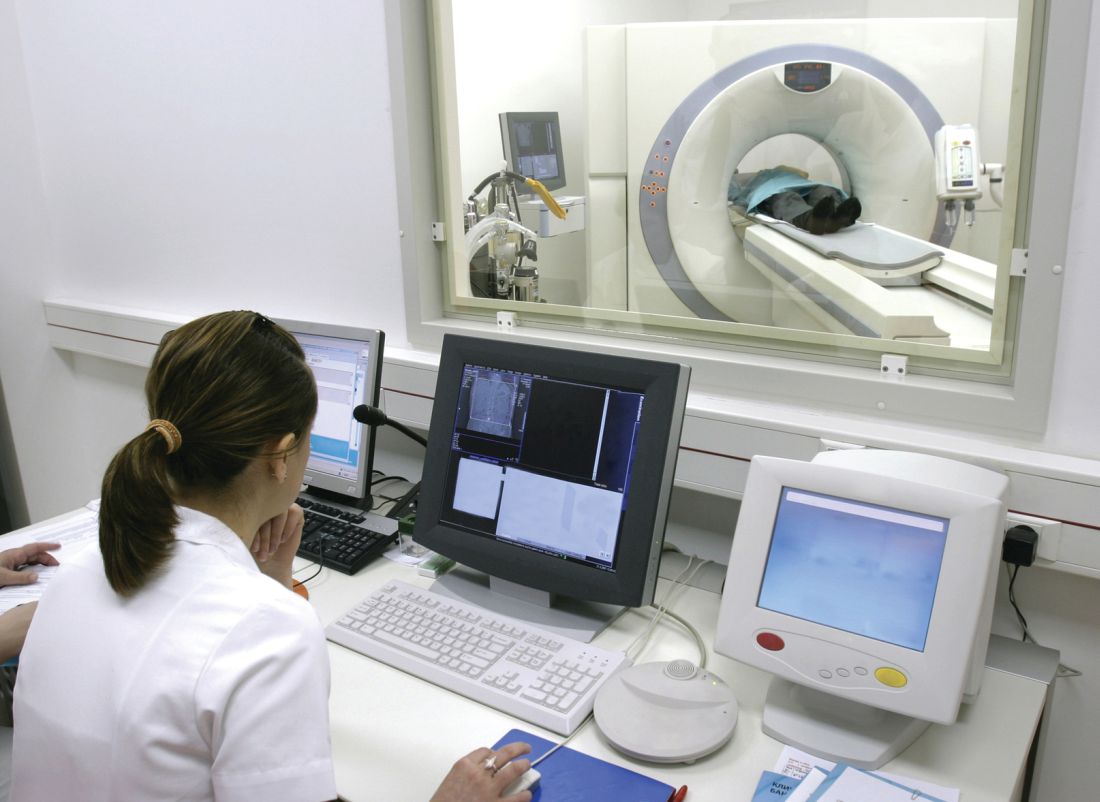
The primary outcomes were the numbers of initial postimaging studies and whether the findings supported subsequent studies.
The study population included 399 adults who underwent laparoscopic bypass and 144 who underwent sleeve gastrectomy. The average age of the patients was 41 years and 90% were women.
The researchers identified 907 imaging studies performed in 400 patients (69% of the study population). Of these, 38% were ultrasound, 36% were CT, 15% were x-ray, 6.6% were fluoroscopy, 3.3% were MRI, and .6% were nuclear medicine.
On review of the imaging findings, the researchers found that half (50%) were unremarkable, while 13% were either surgery related or symptom related, 6.8% were not related to surgery but might have explained patients’ symptoms, 4.3% were surgery-related but not likely to explain symptoms, and 26% were incidental. “Interestingly, no incidental findings were found to be of major clinical importance; all were benign,” according to the researchers.
However, incidental findings led to a total of 71 additional studies, and to 5 laparoscopic cholecystectomies.
A univariate analysis showed that the factors with a significant impact a patient’s odds of undergoing postoperative abdominal imaging included having a bypass procedure vs. a sleeve procedure, older age, and lower baseline body mass index. In addition, patients with a history of abdominal surgery or dyspepsia or those who had a routine postoperative upper gastrointestinal series were significantly more likely to undergo CT scans. Patients with history of ulcer or reflux were significantly less likely to undergo CT scans.
Although the study was limited by the retrospective design and lack of information about possible imaging of patients at other centers, “results suggest that nonroutine postoperative abdominal imaging in the bariatric population is common and requires streamlined protocols, with almost 70% of patients undergoing imaging and greater than 70% of findings being unrelated to symptoms or negative,” the researchers said.
A clinical algorithm for imaging of bariatric patients should be based on clinical parameters collected during a physical exam. “Once an algorithm is in place, further studies will be needed to validate its accuracy and efficiency,” the researchers stated.
Dr. Haddad and her colleagues had no financial conflicts to disclose.
Nearly 70% of bariatric surgery patients received postoperative imaging, with more than one-third receiving CT imaging. This high level of screening resulted in symptom-related findings in only 23% of cases, and may be excessive, according to researchers who studied nearly 600 adults who underwent bariatric surgery.
As the volume of bariatric surgery has increased, so has the role of postoperative imaging, wrote Dana Haddad, MD, and her colleagues at Harlem Hospital Center, New York.
“However, there is a lack of well-defined postoperative imaging guidelines,” they said. “Detrimental aspects of postoperative imaging include the potential for false-positive findings leading to further and often unnecessary investigations, radiation exposure, and additional cost,” they added.
The primary outcomes were the numbers of initial postimaging studies and whether the findings supported subsequent studies.
The study population included 399 adults who underwent laparoscopic bypass and 144 who underwent sleeve gastrectomy. The average age of the patients was 41 years and 90% were women.
The researchers identified 907 imaging studies performed in 400 patients (69% of the study population). Of these, 38% were ultrasound, 36% were CT, 15% were x-ray, 6.6% were fluoroscopy, 3.3% were MRI, and .6% were nuclear medicine.
On review of the imaging findings, the researchers found that half (50%) were unremarkable, while 13% were either surgery related or symptom related, 6.8% were not related to surgery but might have explained patients’ symptoms, 4.3% were surgery-related but not likely to explain symptoms, and 26% were incidental. “Interestingly, no incidental findings were found to be of major clinical importance; all were benign,” according to the researchers.
However, incidental findings led to a total of 71 additional studies, and to 5 laparoscopic cholecystectomies.
A univariate analysis showed that the factors with a significant impact a patient’s odds of undergoing postoperative abdominal imaging included having a bypass procedure vs. a sleeve procedure, older age, and lower baseline body mass index. In addition, patients with a history of abdominal surgery or dyspepsia or those who had a routine postoperative upper gastrointestinal series were significantly more likely to undergo CT scans. Patients with history of ulcer or reflux were significantly less likely to undergo CT scans.
Although the study was limited by the retrospective design and lack of information about possible imaging of patients at other centers, “results suggest that nonroutine postoperative abdominal imaging in the bariatric population is common and requires streamlined protocols, with almost 70% of patients undergoing imaging and greater than 70% of findings being unrelated to symptoms or negative,” the researchers said.
A clinical algorithm for imaging of bariatric patients should be based on clinical parameters collected during a physical exam. “Once an algorithm is in place, further studies will be needed to validate its accuracy and efficiency,” the researchers stated.
Dr. Haddad and her colleagues had no financial conflicts to disclose.
Nearly 70% of bariatric surgery patients received postoperative imaging, with more than one-third receiving CT imaging. This high level of screening resulted in symptom-related findings in only 23% of cases, and may be excessive, according to researchers who studied nearly 600 adults who underwent bariatric surgery.
As the volume of bariatric surgery has increased, so has the role of postoperative imaging, wrote Dana Haddad, MD, and her colleagues at Harlem Hospital Center, New York.
“However, there is a lack of well-defined postoperative imaging guidelines,” they said. “Detrimental aspects of postoperative imaging include the potential for false-positive findings leading to further and often unnecessary investigations, radiation exposure, and additional cost,” they added.
The primary outcomes were the numbers of initial postimaging studies and whether the findings supported subsequent studies.
The study population included 399 adults who underwent laparoscopic bypass and 144 who underwent sleeve gastrectomy. The average age of the patients was 41 years and 90% were women.
The researchers identified 907 imaging studies performed in 400 patients (69% of the study population). Of these, 38% were ultrasound, 36% were CT, 15% were x-ray, 6.6% were fluoroscopy, 3.3% were MRI, and .6% were nuclear medicine.
On review of the imaging findings, the researchers found that half (50%) were unremarkable, while 13% were either surgery related or symptom related, 6.8% were not related to surgery but might have explained patients’ symptoms, 4.3% were surgery-related but not likely to explain symptoms, and 26% were incidental. “Interestingly, no incidental findings were found to be of major clinical importance; all were benign,” according to the researchers.
However, incidental findings led to a total of 71 additional studies, and to 5 laparoscopic cholecystectomies.
A univariate analysis showed that the factors with a significant impact a patient’s odds of undergoing postoperative abdominal imaging included having a bypass procedure vs. a sleeve procedure, older age, and lower baseline body mass index. In addition, patients with a history of abdominal surgery or dyspepsia or those who had a routine postoperative upper gastrointestinal series were significantly more likely to undergo CT scans. Patients with history of ulcer or reflux were significantly less likely to undergo CT scans.
Although the study was limited by the retrospective design and lack of information about possible imaging of patients at other centers, “results suggest that nonroutine postoperative abdominal imaging in the bariatric population is common and requires streamlined protocols, with almost 70% of patients undergoing imaging and greater than 70% of findings being unrelated to symptoms or negative,” the researchers said.
A clinical algorithm for imaging of bariatric patients should be based on clinical parameters collected during a physical exam. “Once an algorithm is in place, further studies will be needed to validate its accuracy and efficiency,” the researchers stated.
Dr. Haddad and her colleagues had no financial conflicts to disclose.
FROM SURGERY FOR OBESITY AND RELATED DISEASES
Key clinical point: No well-defined guidelines exist for when to use postoperative imaging in bariatric surgery patients.
Major finding: Approximately 70% of postoperative imaging findings were not symptom related, and incidental findings led to 71 additional studies.
Data source: A review of 578 patients who underwent gastric bypass or sleeve gastrectomy.
Disclosures: The researchers had no financial conflicts to disclose.