User login
Rosacea tied to physical and psychological comorbidities
according to a review of 29 studies.
The recognition of rosacea as an inflammatory condition similar to psoriasis suggests that, as with psoriasis, rosacea may be associated with a range of systemic diseases, but data on such an association are limited, wrote Roger Haber, MD, from the department of dermatology at Saint George Hospital University Medical Center, Beirut, Lebanon.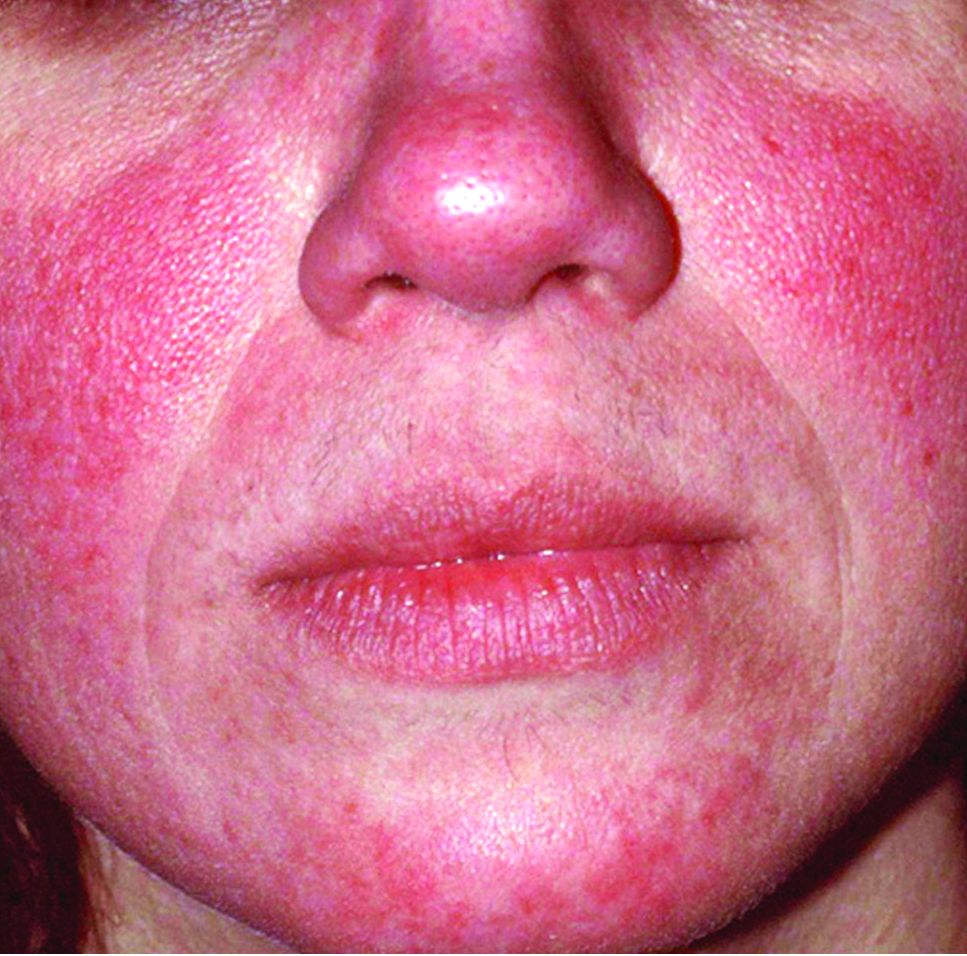
“To the best of our knowledge, our study is the first review analyzing available data regarding the diseases associated with rosacea,” they said.
Overall, the most common comorbidities associated with rosacea were depression (reported in 117,848 patients), hypertension (18,176 patients), cardiovascular disease (9,739 patients), anxiety disorder (9,079 patients), dyslipidemia (7,004 patients), diabetes mellitus (6,306 patients), and migraine (6,136 patients). All associations were statistically significant.
Psychological problems significantly associated with rosacea include depression and anxiety, which may be related to similar inflammatory pathways among these conditions, the researchers noted.
Cardiovascular disease risk factors significantly associated with rosacea included coronary artery disease, cardiovascular disease, peripheral artery disease, heart failure, diabetes mellitus, hypertension, dyslipidemia, and metabolic syndrome. The association with coronary artery disease remained significant after adjusting for multiple variables, as has been shown with psoriasis, which supports consideration of rosacea as an independent risk factor for CAD, the researchers said.
In terms of gastrointestinal comorbidities, the studies reviewed found an association between rosacea and several GI disorders, including celiac disease, Crohn’s disease, and ulcerative colitis, and Helicobacter pylori infection, they wrote. Although the current data do not imply causality, clinicians should screen rosacea patients for GI disorders, they noted.
The link between rosacea and migraine may stem from the similar vascular abnormalities and triggers common to both conditions, such as stress and alcohol, the researchers added.
The review does not establish causality between rosacea and any of the comorbidities examined in part because of the inclusion of observational studies, the researchers noted. “It is also possible that the observed association with rosacea is explained by shared environmental or lifestyle factors rather than by a common genetic disposition or pathophysiologic pathways,” they said. Controlled and prospective studies are needed to better identify associations, but general physicians and dermatologists who recognize the potential risk of comorbidities in rosacea patients may be better able to manage and treat them, they added.
The researchers had no financial conflicts to disclose. There was no funding source for the study.
SOURCE: Haber R et al. J Am Acad Dermatol. 2018 April;78(4):786-92.
according to a review of 29 studies.
The recognition of rosacea as an inflammatory condition similar to psoriasis suggests that, as with psoriasis, rosacea may be associated with a range of systemic diseases, but data on such an association are limited, wrote Roger Haber, MD, from the department of dermatology at Saint George Hospital University Medical Center, Beirut, Lebanon.
“To the best of our knowledge, our study is the first review analyzing available data regarding the diseases associated with rosacea,” they said.
Overall, the most common comorbidities associated with rosacea were depression (reported in 117,848 patients), hypertension (18,176 patients), cardiovascular disease (9,739 patients), anxiety disorder (9,079 patients), dyslipidemia (7,004 patients), diabetes mellitus (6,306 patients), and migraine (6,136 patients). All associations were statistically significant.
Psychological problems significantly associated with rosacea include depression and anxiety, which may be related to similar inflammatory pathways among these conditions, the researchers noted.
Cardiovascular disease risk factors significantly associated with rosacea included coronary artery disease, cardiovascular disease, peripheral artery disease, heart failure, diabetes mellitus, hypertension, dyslipidemia, and metabolic syndrome. The association with coronary artery disease remained significant after adjusting for multiple variables, as has been shown with psoriasis, which supports consideration of rosacea as an independent risk factor for CAD, the researchers said.
In terms of gastrointestinal comorbidities, the studies reviewed found an association between rosacea and several GI disorders, including celiac disease, Crohn’s disease, and ulcerative colitis, and Helicobacter pylori infection, they wrote. Although the current data do not imply causality, clinicians should screen rosacea patients for GI disorders, they noted.
The link between rosacea and migraine may stem from the similar vascular abnormalities and triggers common to both conditions, such as stress and alcohol, the researchers added.
The review does not establish causality between rosacea and any of the comorbidities examined in part because of the inclusion of observational studies, the researchers noted. “It is also possible that the observed association with rosacea is explained by shared environmental or lifestyle factors rather than by a common genetic disposition or pathophysiologic pathways,” they said. Controlled and prospective studies are needed to better identify associations, but general physicians and dermatologists who recognize the potential risk of comorbidities in rosacea patients may be better able to manage and treat them, they added.
The researchers had no financial conflicts to disclose. There was no funding source for the study.
SOURCE: Haber R et al. J Am Acad Dermatol. 2018 April;78(4):786-92.
according to a review of 29 studies.
The recognition of rosacea as an inflammatory condition similar to psoriasis suggests that, as with psoriasis, rosacea may be associated with a range of systemic diseases, but data on such an association are limited, wrote Roger Haber, MD, from the department of dermatology at Saint George Hospital University Medical Center, Beirut, Lebanon.
“To the best of our knowledge, our study is the first review analyzing available data regarding the diseases associated with rosacea,” they said.
Overall, the most common comorbidities associated with rosacea were depression (reported in 117,848 patients), hypertension (18,176 patients), cardiovascular disease (9,739 patients), anxiety disorder (9,079 patients), dyslipidemia (7,004 patients), diabetes mellitus (6,306 patients), and migraine (6,136 patients). All associations were statistically significant.
Psychological problems significantly associated with rosacea include depression and anxiety, which may be related to similar inflammatory pathways among these conditions, the researchers noted.
Cardiovascular disease risk factors significantly associated with rosacea included coronary artery disease, cardiovascular disease, peripheral artery disease, heart failure, diabetes mellitus, hypertension, dyslipidemia, and metabolic syndrome. The association with coronary artery disease remained significant after adjusting for multiple variables, as has been shown with psoriasis, which supports consideration of rosacea as an independent risk factor for CAD, the researchers said.
In terms of gastrointestinal comorbidities, the studies reviewed found an association between rosacea and several GI disorders, including celiac disease, Crohn’s disease, and ulcerative colitis, and Helicobacter pylori infection, they wrote. Although the current data do not imply causality, clinicians should screen rosacea patients for GI disorders, they noted.
The link between rosacea and migraine may stem from the similar vascular abnormalities and triggers common to both conditions, such as stress and alcohol, the researchers added.
The review does not establish causality between rosacea and any of the comorbidities examined in part because of the inclusion of observational studies, the researchers noted. “It is also possible that the observed association with rosacea is explained by shared environmental or lifestyle factors rather than by a common genetic disposition or pathophysiologic pathways,” they said. Controlled and prospective studies are needed to better identify associations, but general physicians and dermatologists who recognize the potential risk of comorbidities in rosacea patients may be better able to manage and treat them, they added.
The researchers had no financial conflicts to disclose. There was no funding source for the study.
SOURCE: Haber R et al. J Am Acad Dermatol. 2018 April;78(4):786-92.
FROM JAAD
Key clinical point: Rosacea is significantly associated with several comorbidities, including depression, hypertension, cardiovascular disease, and anxiety.
Major finding: Approximately 75% of studies on depression and rosacea showed a positive correlation between these conditions.
Study details: A systematic review of 29 studies: 14 case-control, 8 cross-sectional, and 7 cohort.
Disclosures: The researchers had no financial conflicts to disclose.
Source: Haber R et al. J Am Acad Dermatol. 2018 April;78(4):786-92.
Chikungunya infection in children masquerades as SJS-TEN
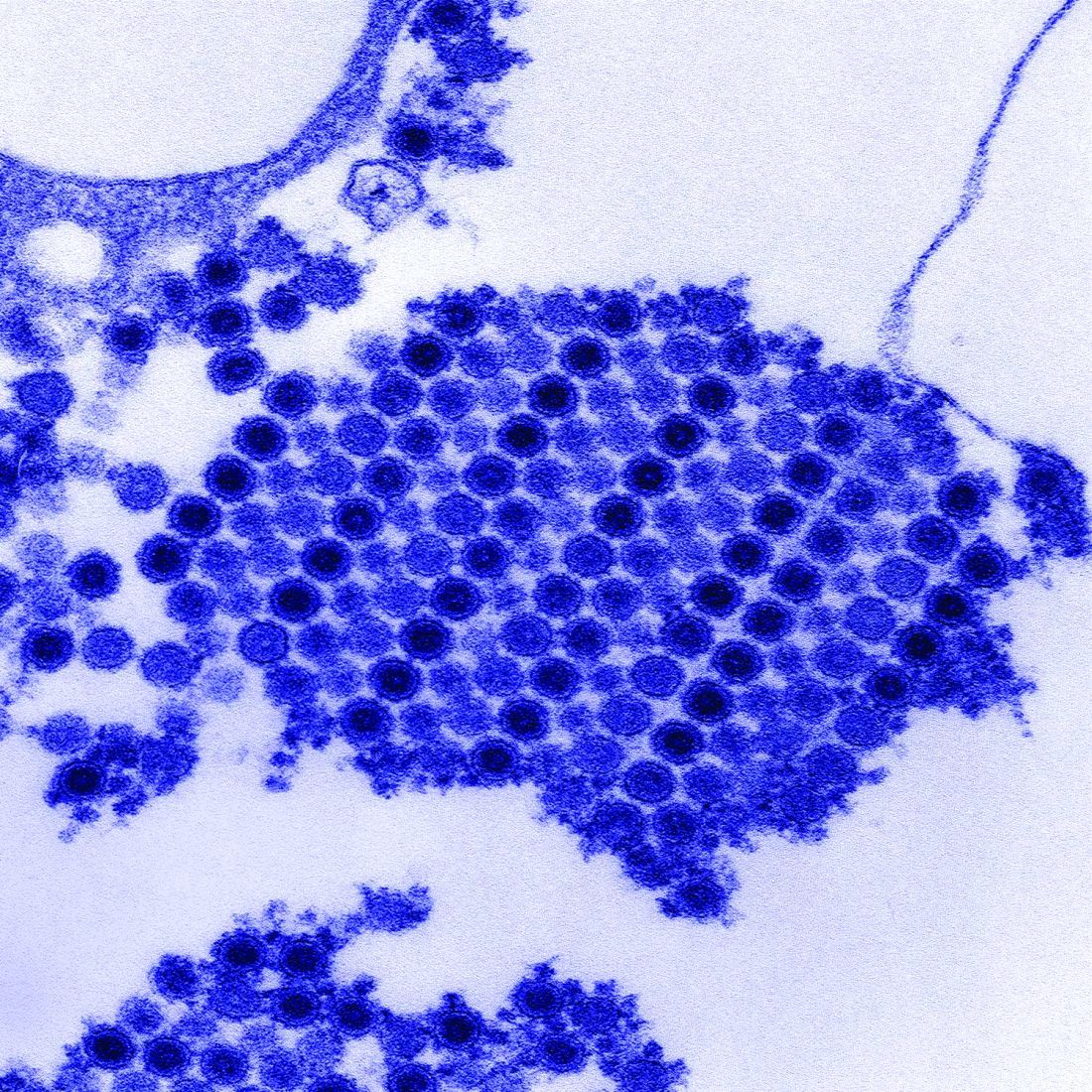
Chikungunya infections in young children resemble skin symptoms characteristic of Stevens-Johnson syndrome and toxic epidermal necrolysis, (SJS-TEN), according to data from a case series of 21 children seen during a chikungunya outbreak in India in August and September 2016.
The researchers described their observations of 13 boys and eight girls aged 1-36 months in Pediatric Dermatology. All 21 children presented with vesiculobullous and necrotic lesions and mild to moderate fever; 16 children (76%) had large erosions, purpuric macules, and necrosis. Most of the lesions occurred on the extremities.
The time from the onset of illness to presentation ranged from 1 to 9 days, and the skin lesions resolved in 5-7 days. The lesions resolved with no sequelae in 11 patients, with hyperpigmentation in seven (33%) , and with hypopigmentation in three patients (14%).
In addition, three patients (14%) developed minor oral erosions, and four (19%) developed palmoplantar erythema, which also may be associated with SJS-TEN. However, none of the patients experienced the severe mucositis and ocular and genital involvement common to SJS-TEN, Dr. Garg and associates noted. A total of seven children tested positive for chikungunya based on enzyme-linked immunosorbent assay results.
Severity of illness can be helpful to distinguish chikungunya from SJS-TEN, the researchers said. Based on the Nelson severity index, 11 children in this series met the criteria for “not sick,” nine were “moderately sick,” and one was “very sick.”
It is key “to be aware of SJS-TEN–like presentation of chikungunya and not to misinterpret it as true SJS-TEN, which will lead to unnecessary intervention and management,” Dr. Garg and associates said.
The researchers had no financial conflicts to disclose.
SOURCE: Garg T et al. Pediatr Dermatol. 2018 Mar 24. doi: 10.1111/pde.13450.
Chikungunya infections in young children resemble skin symptoms characteristic of Stevens-Johnson syndrome and toxic epidermal necrolysis, (SJS-TEN), according to data from a case series of 21 children seen during a chikungunya outbreak in India in August and September 2016.
The researchers described their observations of 13 boys and eight girls aged 1-36 months in Pediatric Dermatology. All 21 children presented with vesiculobullous and necrotic lesions and mild to moderate fever; 16 children (76%) had large erosions, purpuric macules, and necrosis. Most of the lesions occurred on the extremities.
The time from the onset of illness to presentation ranged from 1 to 9 days, and the skin lesions resolved in 5-7 days. The lesions resolved with no sequelae in 11 patients, with hyperpigmentation in seven (33%) , and with hypopigmentation in three patients (14%).
In addition, three patients (14%) developed minor oral erosions, and four (19%) developed palmoplantar erythema, which also may be associated with SJS-TEN. However, none of the patients experienced the severe mucositis and ocular and genital involvement common to SJS-TEN, Dr. Garg and associates noted. A total of seven children tested positive for chikungunya based on enzyme-linked immunosorbent assay results.
Severity of illness can be helpful to distinguish chikungunya from SJS-TEN, the researchers said. Based on the Nelson severity index, 11 children in this series met the criteria for “not sick,” nine were “moderately sick,” and one was “very sick.”
It is key “to be aware of SJS-TEN–like presentation of chikungunya and not to misinterpret it as true SJS-TEN, which will lead to unnecessary intervention and management,” Dr. Garg and associates said.
The researchers had no financial conflicts to disclose.
SOURCE: Garg T et al. Pediatr Dermatol. 2018 Mar 24. doi: 10.1111/pde.13450.
Chikungunya infections in young children resemble skin symptoms characteristic of Stevens-Johnson syndrome and toxic epidermal necrolysis, (SJS-TEN), according to data from a case series of 21 children seen during a chikungunya outbreak in India in August and September 2016.
The researchers described their observations of 13 boys and eight girls aged 1-36 months in Pediatric Dermatology. All 21 children presented with vesiculobullous and necrotic lesions and mild to moderate fever; 16 children (76%) had large erosions, purpuric macules, and necrosis. Most of the lesions occurred on the extremities.
The time from the onset of illness to presentation ranged from 1 to 9 days, and the skin lesions resolved in 5-7 days. The lesions resolved with no sequelae in 11 patients, with hyperpigmentation in seven (33%) , and with hypopigmentation in three patients (14%).
In addition, three patients (14%) developed minor oral erosions, and four (19%) developed palmoplantar erythema, which also may be associated with SJS-TEN. However, none of the patients experienced the severe mucositis and ocular and genital involvement common to SJS-TEN, Dr. Garg and associates noted. A total of seven children tested positive for chikungunya based on enzyme-linked immunosorbent assay results.
Severity of illness can be helpful to distinguish chikungunya from SJS-TEN, the researchers said. Based on the Nelson severity index, 11 children in this series met the criteria for “not sick,” nine were “moderately sick,” and one was “very sick.”
It is key “to be aware of SJS-TEN–like presentation of chikungunya and not to misinterpret it as true SJS-TEN, which will lead to unnecessary intervention and management,” Dr. Garg and associates said.
The researchers had no financial conflicts to disclose.
SOURCE: Garg T et al. Pediatr Dermatol. 2018 Mar 24. doi: 10.1111/pde.13450.
FROM PEDIATRIC DERMATOLOGY
Key clinical point:
Major finding: Of 21 children with chikungunya, 76% had developed vesicles and bullae with purpuric macules and necrosis.
Study details: A case series of 21 children with chikungunya fever in India.
Disclosures: The researchers had no financial conflicts to disclose.
Source: Garg T et al. Pediatr Dermatol. 2018 Mar 24. doi: 10.1111/pde.13450.
Boosting bedside skills in hands-on session
A low faculty-to-learner ratio helped HM18 attendees get the most from their learning experience in the Sunday pre-conference course “Bedside Procedures for the Hospitalist.”
The pre-course blended live didactic teaching and hands-on training with simulators so participants could not only learn but also review and demonstrate techniques for many common invasive procedures hospitalists encounter in practice.
“Our goal is to make the entire bedside procedures pre-course a unique experience,” course codirector Alyssa Burkhart, MD, of the Billings (Mont.) Clinic, said in an interview before the session.

“We carefully select the curriculum to create a program most relevant to the participants and their day-to-day work in patient care,” said Dr. Burkhart.
“The low faculty-to-learner ratio coupled with ample time to practice under expert guidance separates us from others. ... It’s a privilege to share our love of procedures with this year’s SHM participants,” said Dr. Burkhart, who comoderated the session with Joshua Lenchus, DO, SFHM, of the University of Miami.
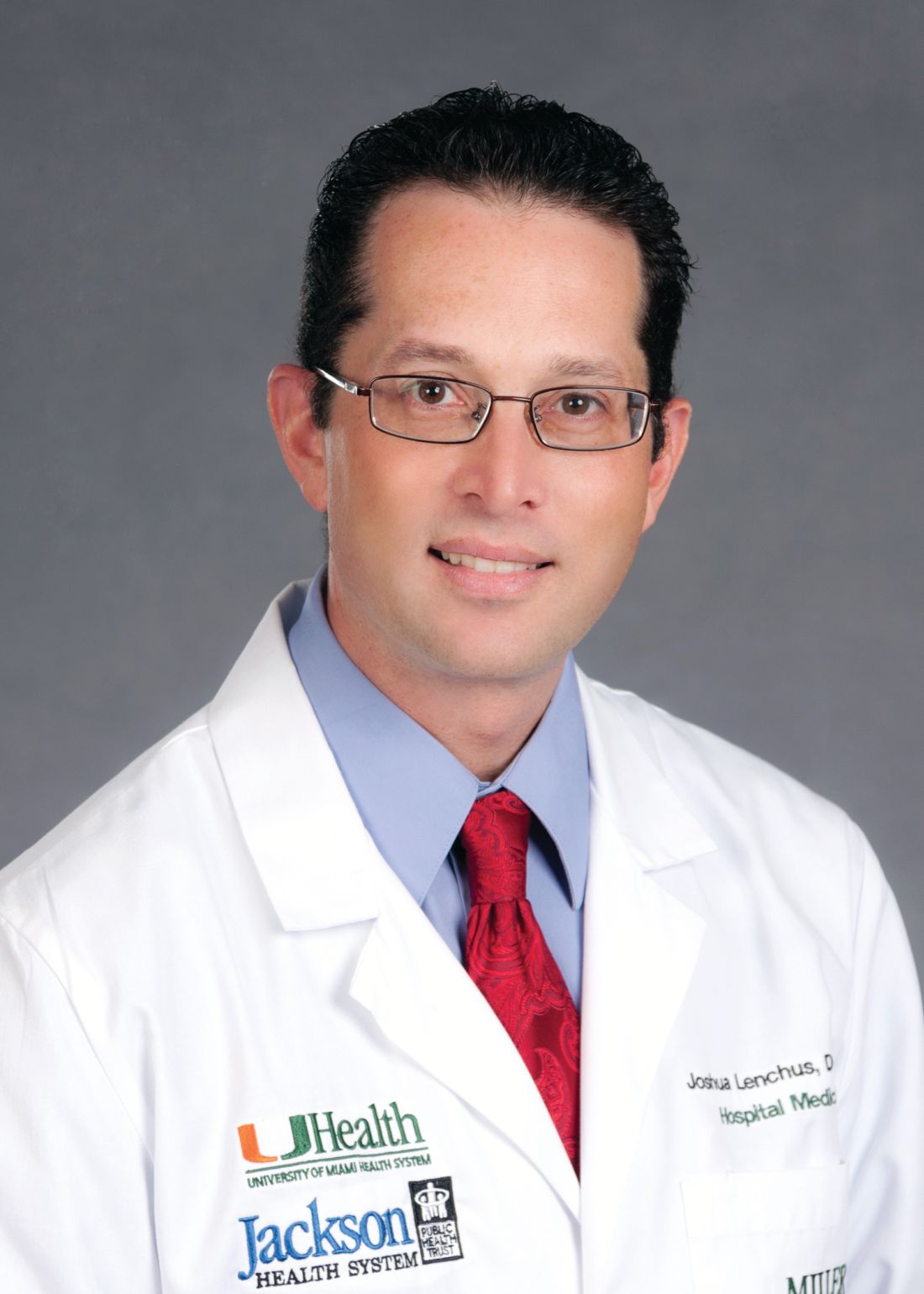
An interactive focus on bedside procedures benefits novices and experienced clinicians, said Dr. Lenchus.
The simulation experience involved practice with ultrasound as well as anatomically representative training equipment.
“Our hope is that many hospitalists may once again find that spark of interest in performing more of their own procedures. The interactive sessions embedded within the pre-course are vital to the success of our program. Many other training sessions are didactics based. We strive to keep lecture time to a minimum so that small groups can learn from the expert facilitators,” Dr. Burkhart added.
“Ample hands-on practice time, interactive experience, and direct supervision separate our pre-course from other commercially available offerings,” Dr. Lenchus said.
The agenda kicked off with vascular and intraosseous access in the morning, followed by paracentesis, thoracentesis, lumbar puncture, and basic airway management, including the use of supraglottic devices.
Dr. Burkhart noted that the course included two separate practice sessions for vascular access because of the number of technical steps and potential complications. “Attendees typically wish to spend a considerable amount of time on vascular access,” she said. “The intraosseous access station and its exceptional trainers always receive very positive feedback.”
Dr. Burkhart and Dr. Lenchus had no financial conflicts to disclose.
A low faculty-to-learner ratio helped HM18 attendees get the most from their learning experience in the Sunday pre-conference course “Bedside Procedures for the Hospitalist.”
The pre-course blended live didactic teaching and hands-on training with simulators so participants could not only learn but also review and demonstrate techniques for many common invasive procedures hospitalists encounter in practice.
“Our goal is to make the entire bedside procedures pre-course a unique experience,” course codirector Alyssa Burkhart, MD, of the Billings (Mont.) Clinic, said in an interview before the session.
“We carefully select the curriculum to create a program most relevant to the participants and their day-to-day work in patient care,” said Dr. Burkhart.
“The low faculty-to-learner ratio coupled with ample time to practice under expert guidance separates us from others. ... It’s a privilege to share our love of procedures with this year’s SHM participants,” said Dr. Burkhart, who comoderated the session with Joshua Lenchus, DO, SFHM, of the University of Miami.
An interactive focus on bedside procedures benefits novices and experienced clinicians, said Dr. Lenchus.
The simulation experience involved practice with ultrasound as well as anatomically representative training equipment.
“Our hope is that many hospitalists may once again find that spark of interest in performing more of their own procedures. The interactive sessions embedded within the pre-course are vital to the success of our program. Many other training sessions are didactics based. We strive to keep lecture time to a minimum so that small groups can learn from the expert facilitators,” Dr. Burkhart added.
“Ample hands-on practice time, interactive experience, and direct supervision separate our pre-course from other commercially available offerings,” Dr. Lenchus said.
The agenda kicked off with vascular and intraosseous access in the morning, followed by paracentesis, thoracentesis, lumbar puncture, and basic airway management, including the use of supraglottic devices.
Dr. Burkhart noted that the course included two separate practice sessions for vascular access because of the number of technical steps and potential complications. “Attendees typically wish to spend a considerable amount of time on vascular access,” she said. “The intraosseous access station and its exceptional trainers always receive very positive feedback.”
Dr. Burkhart and Dr. Lenchus had no financial conflicts to disclose.
A low faculty-to-learner ratio helped HM18 attendees get the most from their learning experience in the Sunday pre-conference course “Bedside Procedures for the Hospitalist.”
The pre-course blended live didactic teaching and hands-on training with simulators so participants could not only learn but also review and demonstrate techniques for many common invasive procedures hospitalists encounter in practice.
“Our goal is to make the entire bedside procedures pre-course a unique experience,” course codirector Alyssa Burkhart, MD, of the Billings (Mont.) Clinic, said in an interview before the session.
“We carefully select the curriculum to create a program most relevant to the participants and their day-to-day work in patient care,” said Dr. Burkhart.
“The low faculty-to-learner ratio coupled with ample time to practice under expert guidance separates us from others. ... It’s a privilege to share our love of procedures with this year’s SHM participants,” said Dr. Burkhart, who comoderated the session with Joshua Lenchus, DO, SFHM, of the University of Miami.
An interactive focus on bedside procedures benefits novices and experienced clinicians, said Dr. Lenchus.
The simulation experience involved practice with ultrasound as well as anatomically representative training equipment.
“Our hope is that many hospitalists may once again find that spark of interest in performing more of their own procedures. The interactive sessions embedded within the pre-course are vital to the success of our program. Many other training sessions are didactics based. We strive to keep lecture time to a minimum so that small groups can learn from the expert facilitators,” Dr. Burkhart added.
“Ample hands-on practice time, interactive experience, and direct supervision separate our pre-course from other commercially available offerings,” Dr. Lenchus said.
The agenda kicked off with vascular and intraosseous access in the morning, followed by paracentesis, thoracentesis, lumbar puncture, and basic airway management, including the use of supraglottic devices.
Dr. Burkhart noted that the course included two separate practice sessions for vascular access because of the number of technical steps and potential complications. “Attendees typically wish to spend a considerable amount of time on vascular access,” she said. “The intraosseous access station and its exceptional trainers always receive very positive feedback.”
Dr. Burkhart and Dr. Lenchus had no financial conflicts to disclose.
Melanoma in young children may be biologically distinct from that in teens
Pediatric melanomas appear to be more progressive in adolescents than in young children, based on data from a retrospective study of 32 cases.
Few young children with melanoma die, despite a greater likelihood of thicker tumors, lymph node metastasis, and later diagnosis, which suggests that melanoma in young children may be biologically distinct from melanoma in adolescents, wrote Diana W. Bartenstein, of Harvard University Medical School, Boston, and her colleagues.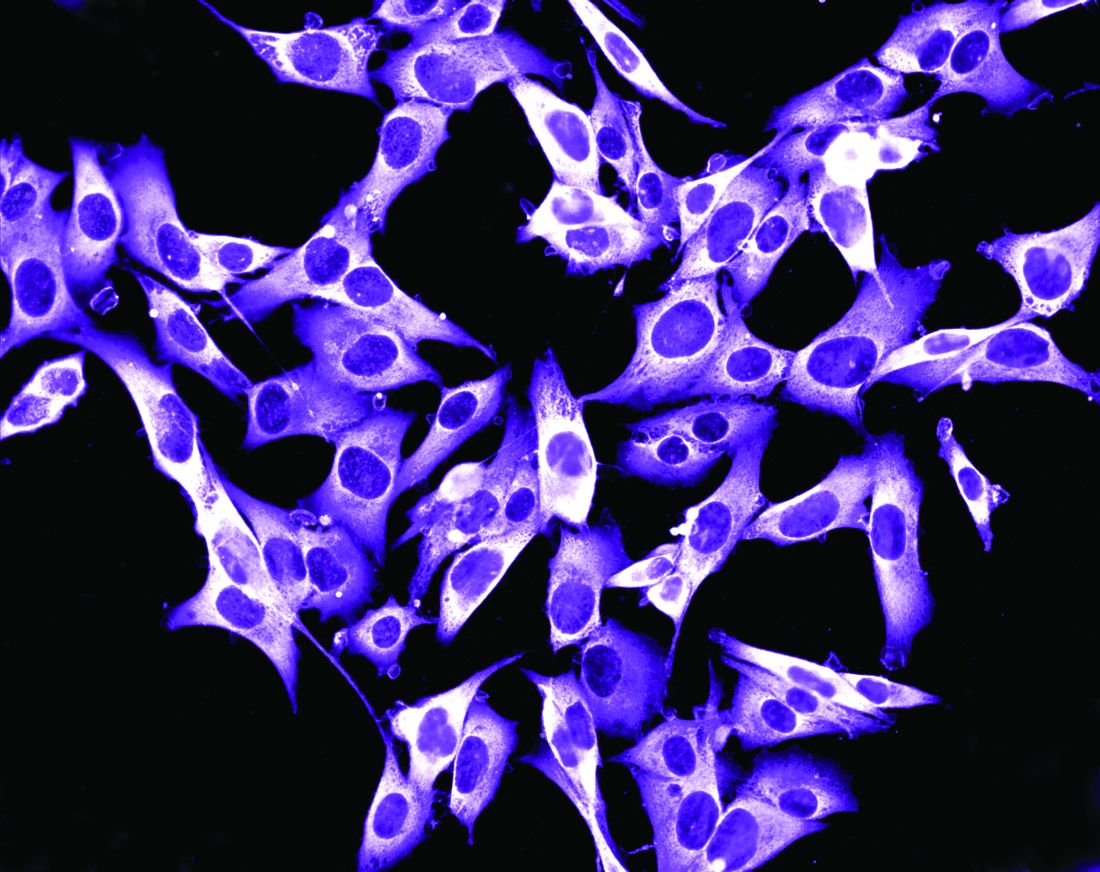
Overall, significantly more children than adolescents had spitzoid melanoma (50% vs. 10%, P = .01). In addition, children were more likely than adolescents to present with stage 3 or 4 cancer (58% vs. 25%) and with Clark level IV and V tumors (42% vs. 35%), although these differences were not significant. The median Breslow thickness of lesions was greater in children than in adolescents (3.5 mm vs. 1.5 mm) as was the median mitotic index (5 mitotic figures per mm2 vs. 2 mitotic figures per mm2) and children were more likely than adolescents to have neural invasion, but these differences were not significant either.
During the study period of more than 20 years, none of the children younger than 11 years died, compared with four deaths in adolescents, a statistically significant difference (P = .04). The follow-up for surviving individuals ranged from 9-37 months with a median of 44 months.
The study findings were limited by several factors including the small sample size and difficulty in assessing spitzoid tumors, the researchers noted.
However, “these results support the hypothesis that melanoma in young children may be biologically distinct from melanoma in adults,” they said. “Alternatively, melanoma subtype may drive survival differences between children and adolescents.”
No conflicts of interest were reported. The study was supported by the Alpha Omega Alpha Carolyn L. Kuckein Student Research Fellowship and the Society for Pediatric Dermatology and Pediatric Dermatology Research Alliance.
SOURCE: Bartenstein DW et al. Pediatr Dermatol. 2018 Mar 23. doi: 10.1111/pde.13454.
Pediatric melanomas appear to be more progressive in adolescents than in young children, based on data from a retrospective study of 32 cases.
Few young children with melanoma die, despite a greater likelihood of thicker tumors, lymph node metastasis, and later diagnosis, which suggests that melanoma in young children may be biologically distinct from melanoma in adolescents, wrote Diana W. Bartenstein, of Harvard University Medical School, Boston, and her colleagues.
Overall, significantly more children than adolescents had spitzoid melanoma (50% vs. 10%, P = .01). In addition, children were more likely than adolescents to present with stage 3 or 4 cancer (58% vs. 25%) and with Clark level IV and V tumors (42% vs. 35%), although these differences were not significant. The median Breslow thickness of lesions was greater in children than in adolescents (3.5 mm vs. 1.5 mm) as was the median mitotic index (5 mitotic figures per mm2 vs. 2 mitotic figures per mm2) and children were more likely than adolescents to have neural invasion, but these differences were not significant either.
During the study period of more than 20 years, none of the children younger than 11 years died, compared with four deaths in adolescents, a statistically significant difference (P = .04). The follow-up for surviving individuals ranged from 9-37 months with a median of 44 months.
The study findings were limited by several factors including the small sample size and difficulty in assessing spitzoid tumors, the researchers noted.
However, “these results support the hypothesis that melanoma in young children may be biologically distinct from melanoma in adults,” they said. “Alternatively, melanoma subtype may drive survival differences between children and adolescents.”
No conflicts of interest were reported. The study was supported by the Alpha Omega Alpha Carolyn L. Kuckein Student Research Fellowship and the Society for Pediatric Dermatology and Pediatric Dermatology Research Alliance.
SOURCE: Bartenstein DW et al. Pediatr Dermatol. 2018 Mar 23. doi: 10.1111/pde.13454.
Pediatric melanomas appear to be more progressive in adolescents than in young children, based on data from a retrospective study of 32 cases.
Few young children with melanoma die, despite a greater likelihood of thicker tumors, lymph node metastasis, and later diagnosis, which suggests that melanoma in young children may be biologically distinct from melanoma in adolescents, wrote Diana W. Bartenstein, of Harvard University Medical School, Boston, and her colleagues.
Overall, significantly more children than adolescents had spitzoid melanoma (50% vs. 10%, P = .01). In addition, children were more likely than adolescents to present with stage 3 or 4 cancer (58% vs. 25%) and with Clark level IV and V tumors (42% vs. 35%), although these differences were not significant. The median Breslow thickness of lesions was greater in children than in adolescents (3.5 mm vs. 1.5 mm) as was the median mitotic index (5 mitotic figures per mm2 vs. 2 mitotic figures per mm2) and children were more likely than adolescents to have neural invasion, but these differences were not significant either.
During the study period of more than 20 years, none of the children younger than 11 years died, compared with four deaths in adolescents, a statistically significant difference (P = .04). The follow-up for surviving individuals ranged from 9-37 months with a median of 44 months.
The study findings were limited by several factors including the small sample size and difficulty in assessing spitzoid tumors, the researchers noted.
However, “these results support the hypothesis that melanoma in young children may be biologically distinct from melanoma in adults,” they said. “Alternatively, melanoma subtype may drive survival differences between children and adolescents.”
No conflicts of interest were reported. The study was supported by the Alpha Omega Alpha Carolyn L. Kuckein Student Research Fellowship and the Society for Pediatric Dermatology and Pediatric Dermatology Research Alliance.
SOURCE: Bartenstein DW et al. Pediatr Dermatol. 2018 Mar 23. doi: 10.1111/pde.13454.
FROM PEDIATRIC DERMATOLOGY
Key clinical point:
Major finding: Significantly more children than adolescents had spitzoid melanoma (50% vs. 10%, P = .01).
Study details: A retrospective cohort study of 32 children and adolescents with melanoma.
Disclosures: The study was supported by the Alpha Omega Alpha–Carolyn L. Kuckein Student Research Fellowship and the Society for Pediatric Dermatology and Pediatric Dermatology Research Alliance. No conflicts of interest were reported.
Source: Bartenstein DW et al. Pediatr Dermatol. 2018 Mar 23. doi: 10.1111/pde.13454.
Stay on top of perioperative medicine
The fluid, evolving nature of perioperative medicine lends itself to a lively literature review and research update, according to Steven L. Cohn, MD, SFHM, a presenter of “ ‘A Whole New World’ of Perioperative Medicine: The 2018 Update” on Monday, April 9, at HM18.

The perioperative medicine update has been a fixture at the SHM annual conference for several years and provides an opportunity to highlight articles that may affect practice, said Dr. Cohn of the University of Miami in an interview. “Our goals are to familiarize the attendees with this new data so they are aware, so they can review the key articles in detail on their own, and so they can then apply the new information in their clinical practices,” he said.
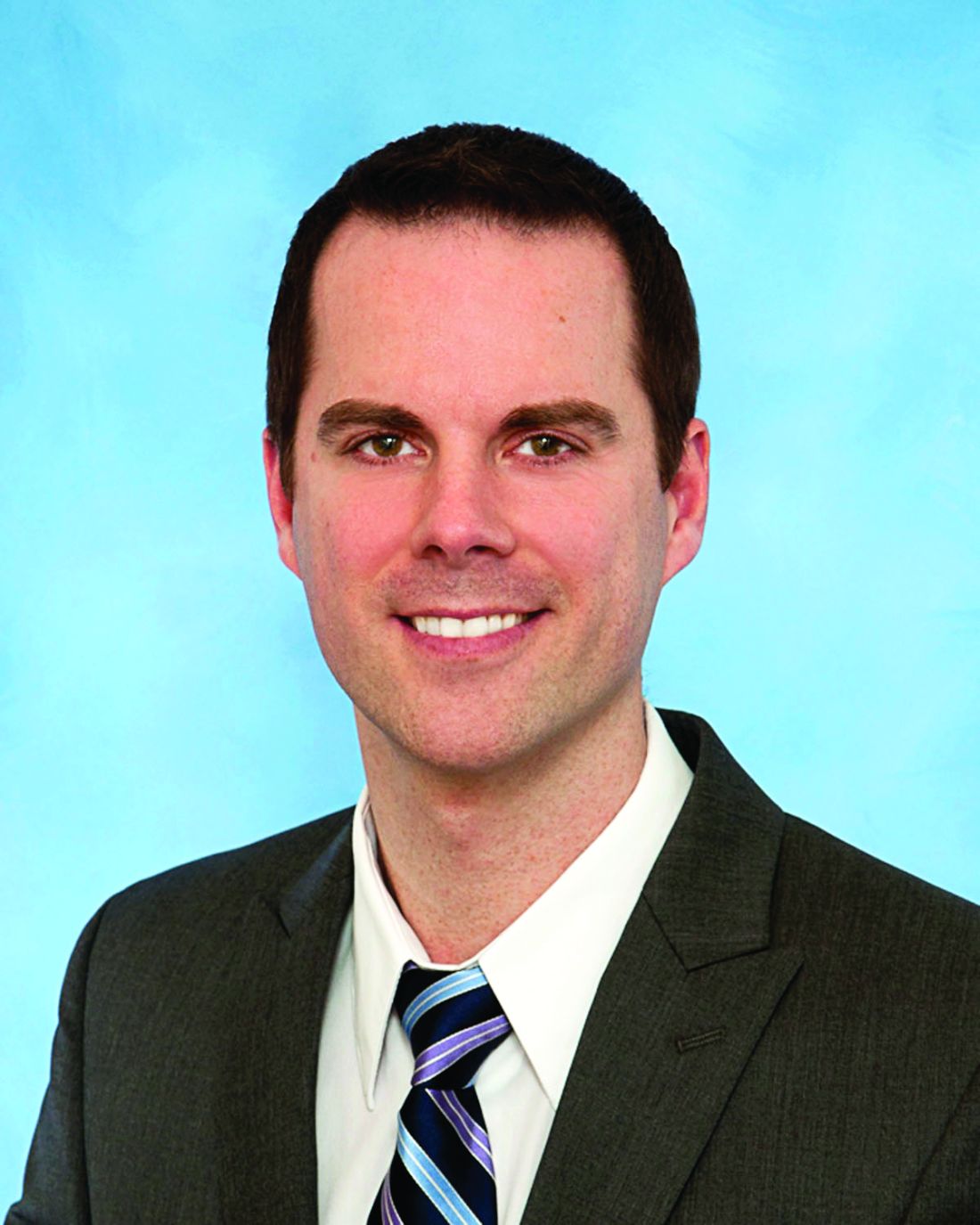
The agenda for the session involves a presentation of 10-15 articles published since HM17. Dr. Cohn and presenter Paul J. Grant, MD, SFHM, the director of the consultative and perioperative medicine program and an associate chief medical information officer at Michigan Medicine, Ann Arbor, will briefly review the objectives and methods of each study before moving on to focus primarily on the result and conclusions.
“The top take-home message is to try to keep up with the perioperative literature, particularly in cardiology, because the evidence base keeps expanding and changing,” said Dr. Cohn. “This session is designed to deliver new information and also to stimulate the attendees to periodically review the literature on their own during the year,” he said.
This year’s collection of articles will address a range of topics, Dr. Cohn said, but he highlighted several articles “that will be thought provoking and potentially impact clinical practice regarding perioperative surveillance with the new fifth generation high sensitivity troponin assay and management of myocardial injury after noncardiac surgery. In particular, results from the MANAGE trial that was presented as a late-breaking trial at the American College of Cardiology meeting in March will be of interest to anyone involved in perioperative medicine,” he noted.
Dr. Cohn and Dr. Grant had no relevant financial conflicts to disclose.
“A Whole New World” of Perioperative Medicine: The 2018 Update
Monday, April 9, 2:00-2:40 p.m.
Crystal Ballroom G2/C-F
The fluid, evolving nature of perioperative medicine lends itself to a lively literature review and research update, according to Steven L. Cohn, MD, SFHM, a presenter of “ ‘A Whole New World’ of Perioperative Medicine: The 2018 Update” on Monday, April 9, at HM18.
The perioperative medicine update has been a fixture at the SHM annual conference for several years and provides an opportunity to highlight articles that may affect practice, said Dr. Cohn of the University of Miami in an interview. “Our goals are to familiarize the attendees with this new data so they are aware, so they can review the key articles in detail on their own, and so they can then apply the new information in their clinical practices,” he said.
The agenda for the session involves a presentation of 10-15 articles published since HM17. Dr. Cohn and presenter Paul J. Grant, MD, SFHM, the director of the consultative and perioperative medicine program and an associate chief medical information officer at Michigan Medicine, Ann Arbor, will briefly review the objectives and methods of each study before moving on to focus primarily on the result and conclusions.
“The top take-home message is to try to keep up with the perioperative literature, particularly in cardiology, because the evidence base keeps expanding and changing,” said Dr. Cohn. “This session is designed to deliver new information and also to stimulate the attendees to periodically review the literature on their own during the year,” he said.
This year’s collection of articles will address a range of topics, Dr. Cohn said, but he highlighted several articles “that will be thought provoking and potentially impact clinical practice regarding perioperative surveillance with the new fifth generation high sensitivity troponin assay and management of myocardial injury after noncardiac surgery. In particular, results from the MANAGE trial that was presented as a late-breaking trial at the American College of Cardiology meeting in March will be of interest to anyone involved in perioperative medicine,” he noted.
Dr. Cohn and Dr. Grant had no relevant financial conflicts to disclose.
“A Whole New World” of Perioperative Medicine: The 2018 Update
Monday, April 9, 2:00-2:40 p.m.
Crystal Ballroom G2/C-F
The fluid, evolving nature of perioperative medicine lends itself to a lively literature review and research update, according to Steven L. Cohn, MD, SFHM, a presenter of “ ‘A Whole New World’ of Perioperative Medicine: The 2018 Update” on Monday, April 9, at HM18.
The perioperative medicine update has been a fixture at the SHM annual conference for several years and provides an opportunity to highlight articles that may affect practice, said Dr. Cohn of the University of Miami in an interview. “Our goals are to familiarize the attendees with this new data so they are aware, so they can review the key articles in detail on their own, and so they can then apply the new information in their clinical practices,” he said.
The agenda for the session involves a presentation of 10-15 articles published since HM17. Dr. Cohn and presenter Paul J. Grant, MD, SFHM, the director of the consultative and perioperative medicine program and an associate chief medical information officer at Michigan Medicine, Ann Arbor, will briefly review the objectives and methods of each study before moving on to focus primarily on the result and conclusions.
“The top take-home message is to try to keep up with the perioperative literature, particularly in cardiology, because the evidence base keeps expanding and changing,” said Dr. Cohn. “This session is designed to deliver new information and also to stimulate the attendees to periodically review the literature on their own during the year,” he said.
This year’s collection of articles will address a range of topics, Dr. Cohn said, but he highlighted several articles “that will be thought provoking and potentially impact clinical practice regarding perioperative surveillance with the new fifth generation high sensitivity troponin assay and management of myocardial injury after noncardiac surgery. In particular, results from the MANAGE trial that was presented as a late-breaking trial at the American College of Cardiology meeting in March will be of interest to anyone involved in perioperative medicine,” he noted.
Dr. Cohn and Dr. Grant had no relevant financial conflicts to disclose.
“A Whole New World” of Perioperative Medicine: The 2018 Update
Monday, April 9, 2:00-2:40 p.m.
Crystal Ballroom G2/C-F
Fun in the Florida sun
Chris Harrington knows that not all the benefits of attending the Society of Hospital Medicine’s annual meetings come from the lectures and courses; there is the formation of friendships that endure.
“I am very grateful to SHM for allowing me the opportunity to accompany Bob to their annual conferences and leadership academies over the years,” said Mrs. Harrington, spouse of former SHM president Robert Harrington Jr., MD, SFHM in an interview.
“It truly has been a rewarding experience for me both as a spouse to travel with my husband and spend time with our friends, and as a health care professional to witness the tremendous growth of SHM membership and the educational and networking opportunities it provides to its members. Watching SHM become even more innovative in universally improving patient care has been an amazing experience as well.
“It is through many SHM conferences that Bob and I have met some wonderful people and have formed many lasting friendships that we will be forever grateful for,” she said.
Mrs. Harrington has some suggestions for activities in Orlando, starting with the Walt Disney World Resort theme parks, which are convenient to the meeting headquarters at the Orlando World Center Marriott. Other popular spots for those with kids (or the young at heart) include SeaWorld Orlando, Legoland Florida, and Universal’s Islands of Adventure, notably the Harry Potter and the Forbidden Journey and the Jurassic Park River Adventure attractions.
Within the Orlando World Center Marriott, families can check out the pool complex with its waterslides and slide tower, as well as the kids’ activity center, interactive game room, and table tennis. The resort also offers full-day (10 a.m. to 5 p.m.) or half-day (10 a.m. to 1:30 p.m. or 1:30 p.m. to 5 p.m.) Kid’s World programs and evening Kid’s Night Out programs (6-10 p.m.) for children aged 4-12, so parents get some time to themselves.
For the fitness enthusiasts, “bring your golf clubs, tennis rackets, and running shoes,” Mrs. Harrington said. The resort offers eight tennis courts, volleyball courts, swimming pools for laps, and Hawk’s Landing, a championship golf course that includes a Jack Nicklaus Academy of Golf, should the urge for instruction strike.
Runners, set your alarms for the 5K SHM Fun Run at 6 a.m. on April 10. The Harringtons said they will sign up and be at the start line after a quick visit to the resort’s in-house Starbucks.
“If you want to unwind after a day of meetings and workshops or rejuvenate after a workout, make an appointment (as soon as possible) at the resort’s full service spa,” Mrs. Harrington advised. Spa services include manicures/pedicures, facials, and even couple’s massages, she noted.
Other activities for individuals and families include ZE Segway Tours, the nearby town of Celebration, and the Basilica of the National Shrine of Mary, Queen of the Universe.
Spouses seeking some shopping during meeting time may enjoy nearby outlet malls, the Florida Mall, and the high-end shops of the Mall at Millenia, Mrs Harrington said. One of her favorite “hidden gems” for out-of-town shopping is Park Avenue in Winter Park, which has many boutiques and restaurants. Mount Dora, a small town once known as the Antiques Capital of Florida, includes a wide variety of specialty shops, she noted, and foodies should explore the East End Market, an Orlando neighborhood market and cultural food hub inspired by Central Florida’s local farmers and food artisans.
When it’s time for dining out in Orlando, Mrs. Harrington recommended the Big Fin Seafood Kitchen, a family-owned upscale casual restaurant serving lobster, snow crabs, fresh raw oysters, sushi rolls, steaks, and pasta with an option for outdoor dining on a covered balcony. Christini’s Ristorante Italiano, the most-awarded fine dining Italian restaurant in Orlando for more than 30 years, is consistently popular, and Vines Grille and Wine Bar, “a gem on Orlando’s Restaurant Row,” Mrs. Harrington said, is a great choice for happy hour and features jazz and blues in the evenings starting about 7 p.m.
Finally, “I would recommend meeting some SHM staff members either at registration or between meetings,” Mrs. Harrington advised. “They have been so welcoming to me over the years and have been a great resource and support system. Also, be open to meeting other spouses at group outings, dinners, or networking events whenever you have the opportunity, as they might become a treasured friend,” she said.
Chris Harrington knows that not all the benefits of attending the Society of Hospital Medicine’s annual meetings come from the lectures and courses; there is the formation of friendships that endure.
“I am very grateful to SHM for allowing me the opportunity to accompany Bob to their annual conferences and leadership academies over the years,” said Mrs. Harrington, spouse of former SHM president Robert Harrington Jr., MD, SFHM in an interview.
“It truly has been a rewarding experience for me both as a spouse to travel with my husband and spend time with our friends, and as a health care professional to witness the tremendous growth of SHM membership and the educational and networking opportunities it provides to its members. Watching SHM become even more innovative in universally improving patient care has been an amazing experience as well.
“It is through many SHM conferences that Bob and I have met some wonderful people and have formed many lasting friendships that we will be forever grateful for,” she said.
Mrs. Harrington has some suggestions for activities in Orlando, starting with the Walt Disney World Resort theme parks, which are convenient to the meeting headquarters at the Orlando World Center Marriott. Other popular spots for those with kids (or the young at heart) include SeaWorld Orlando, Legoland Florida, and Universal’s Islands of Adventure, notably the Harry Potter and the Forbidden Journey and the Jurassic Park River Adventure attractions.
Within the Orlando World Center Marriott, families can check out the pool complex with its waterslides and slide tower, as well as the kids’ activity center, interactive game room, and table tennis. The resort also offers full-day (10 a.m. to 5 p.m.) or half-day (10 a.m. to 1:30 p.m. or 1:30 p.m. to 5 p.m.) Kid’s World programs and evening Kid’s Night Out programs (6-10 p.m.) for children aged 4-12, so parents get some time to themselves.
For the fitness enthusiasts, “bring your golf clubs, tennis rackets, and running shoes,” Mrs. Harrington said. The resort offers eight tennis courts, volleyball courts, swimming pools for laps, and Hawk’s Landing, a championship golf course that includes a Jack Nicklaus Academy of Golf, should the urge for instruction strike.
Runners, set your alarms for the 5K SHM Fun Run at 6 a.m. on April 10. The Harringtons said they will sign up and be at the start line after a quick visit to the resort’s in-house Starbucks.
“If you want to unwind after a day of meetings and workshops or rejuvenate after a workout, make an appointment (as soon as possible) at the resort’s full service spa,” Mrs. Harrington advised. Spa services include manicures/pedicures, facials, and even couple’s massages, she noted.
Other activities for individuals and families include ZE Segway Tours, the nearby town of Celebration, and the Basilica of the National Shrine of Mary, Queen of the Universe.
Spouses seeking some shopping during meeting time may enjoy nearby outlet malls, the Florida Mall, and the high-end shops of the Mall at Millenia, Mrs Harrington said. One of her favorite “hidden gems” for out-of-town shopping is Park Avenue in Winter Park, which has many boutiques and restaurants. Mount Dora, a small town once known as the Antiques Capital of Florida, includes a wide variety of specialty shops, she noted, and foodies should explore the East End Market, an Orlando neighborhood market and cultural food hub inspired by Central Florida’s local farmers and food artisans.
When it’s time for dining out in Orlando, Mrs. Harrington recommended the Big Fin Seafood Kitchen, a family-owned upscale casual restaurant serving lobster, snow crabs, fresh raw oysters, sushi rolls, steaks, and pasta with an option for outdoor dining on a covered balcony. Christini’s Ristorante Italiano, the most-awarded fine dining Italian restaurant in Orlando for more than 30 years, is consistently popular, and Vines Grille and Wine Bar, “a gem on Orlando’s Restaurant Row,” Mrs. Harrington said, is a great choice for happy hour and features jazz and blues in the evenings starting about 7 p.m.
Finally, “I would recommend meeting some SHM staff members either at registration or between meetings,” Mrs. Harrington advised. “They have been so welcoming to me over the years and have been a great resource and support system. Also, be open to meeting other spouses at group outings, dinners, or networking events whenever you have the opportunity, as they might become a treasured friend,” she said.
Chris Harrington knows that not all the benefits of attending the Society of Hospital Medicine’s annual meetings come from the lectures and courses; there is the formation of friendships that endure.
“I am very grateful to SHM for allowing me the opportunity to accompany Bob to their annual conferences and leadership academies over the years,” said Mrs. Harrington, spouse of former SHM president Robert Harrington Jr., MD, SFHM in an interview.
“It truly has been a rewarding experience for me both as a spouse to travel with my husband and spend time with our friends, and as a health care professional to witness the tremendous growth of SHM membership and the educational and networking opportunities it provides to its members. Watching SHM become even more innovative in universally improving patient care has been an amazing experience as well.
“It is through many SHM conferences that Bob and I have met some wonderful people and have formed many lasting friendships that we will be forever grateful for,” she said.
Mrs. Harrington has some suggestions for activities in Orlando, starting with the Walt Disney World Resort theme parks, which are convenient to the meeting headquarters at the Orlando World Center Marriott. Other popular spots for those with kids (or the young at heart) include SeaWorld Orlando, Legoland Florida, and Universal’s Islands of Adventure, notably the Harry Potter and the Forbidden Journey and the Jurassic Park River Adventure attractions.
Within the Orlando World Center Marriott, families can check out the pool complex with its waterslides and slide tower, as well as the kids’ activity center, interactive game room, and table tennis. The resort also offers full-day (10 a.m. to 5 p.m.) or half-day (10 a.m. to 1:30 p.m. or 1:30 p.m. to 5 p.m.) Kid’s World programs and evening Kid’s Night Out programs (6-10 p.m.) for children aged 4-12, so parents get some time to themselves.
For the fitness enthusiasts, “bring your golf clubs, tennis rackets, and running shoes,” Mrs. Harrington said. The resort offers eight tennis courts, volleyball courts, swimming pools for laps, and Hawk’s Landing, a championship golf course that includes a Jack Nicklaus Academy of Golf, should the urge for instruction strike.
Runners, set your alarms for the 5K SHM Fun Run at 6 a.m. on April 10. The Harringtons said they will sign up and be at the start line after a quick visit to the resort’s in-house Starbucks.
“If you want to unwind after a day of meetings and workshops or rejuvenate after a workout, make an appointment (as soon as possible) at the resort’s full service spa,” Mrs. Harrington advised. Spa services include manicures/pedicures, facials, and even couple’s massages, she noted.
Other activities for individuals and families include ZE Segway Tours, the nearby town of Celebration, and the Basilica of the National Shrine of Mary, Queen of the Universe.
Spouses seeking some shopping during meeting time may enjoy nearby outlet malls, the Florida Mall, and the high-end shops of the Mall at Millenia, Mrs Harrington said. One of her favorite “hidden gems” for out-of-town shopping is Park Avenue in Winter Park, which has many boutiques and restaurants. Mount Dora, a small town once known as the Antiques Capital of Florida, includes a wide variety of specialty shops, she noted, and foodies should explore the East End Market, an Orlando neighborhood market and cultural food hub inspired by Central Florida’s local farmers and food artisans.
When it’s time for dining out in Orlando, Mrs. Harrington recommended the Big Fin Seafood Kitchen, a family-owned upscale casual restaurant serving lobster, snow crabs, fresh raw oysters, sushi rolls, steaks, and pasta with an option for outdoor dining on a covered balcony. Christini’s Ristorante Italiano, the most-awarded fine dining Italian restaurant in Orlando for more than 30 years, is consistently popular, and Vines Grille and Wine Bar, “a gem on Orlando’s Restaurant Row,” Mrs. Harrington said, is a great choice for happy hour and features jazz and blues in the evenings starting about 7 p.m.
Finally, “I would recommend meeting some SHM staff members either at registration or between meetings,” Mrs. Harrington advised. “They have been so welcoming to me over the years and have been a great resource and support system. Also, be open to meeting other spouses at group outings, dinners, or networking events whenever you have the opportunity, as they might become a treasured friend,” she said.
Top hospital heart failure performance translates to longer survival
ORLANDO – Hospitals in the first quartile of short-term performance in treating heart failure patients had higher long-term survival rates for those patients, based on data from 317 hospitals that participated in a voluntary quality improvement program.
The burden of heart failure remains substantial in the United States, and health policies are increasingly focused on improving care for heart failure patients, said Ambarish Pandey, MD, of the University of Texas, Dallas, in a presentation at the annual meeting of the American College of Cardiology.
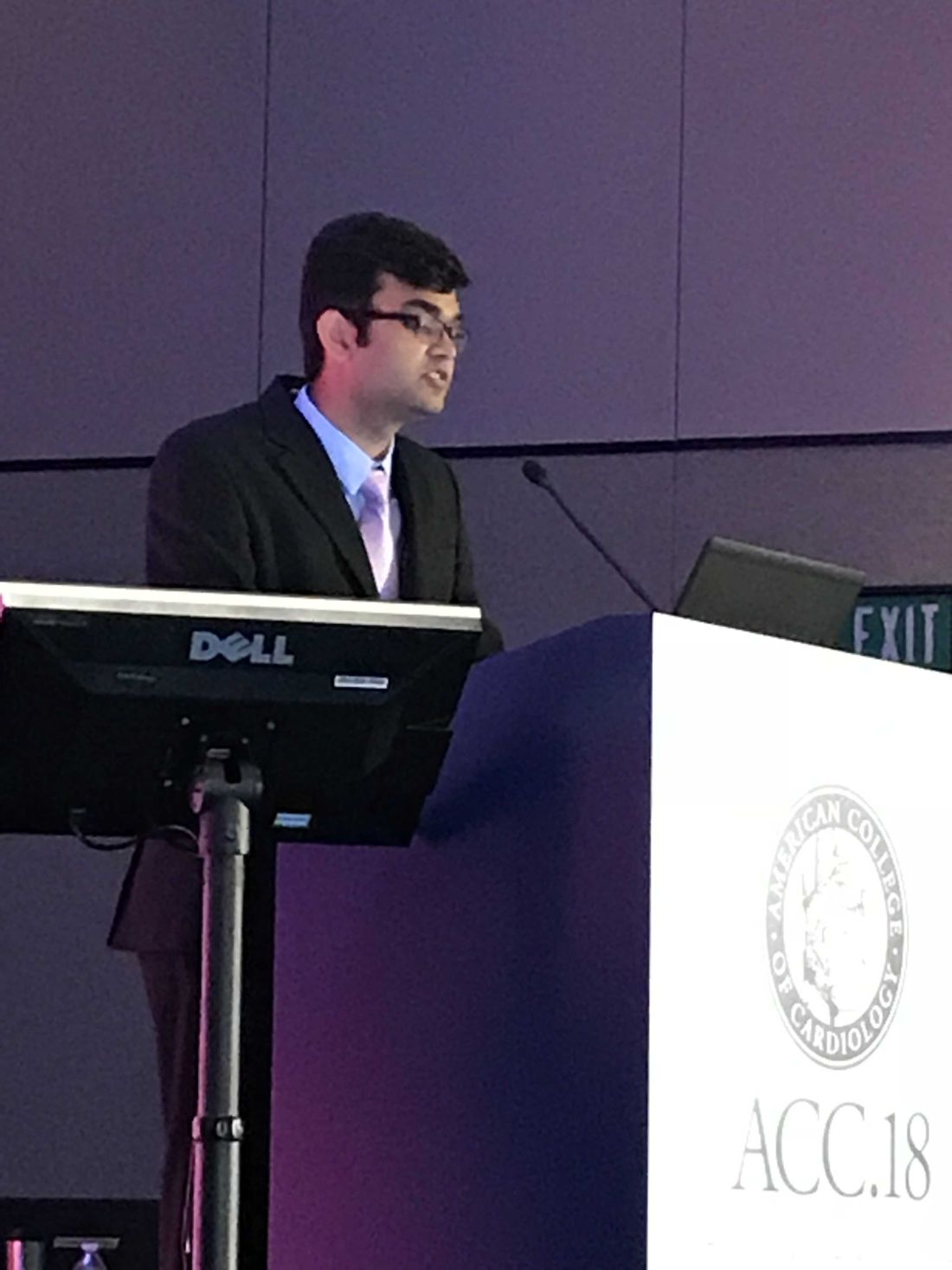
The researchers assessed hospital performance based on 30-day risk-standardized mortality rates (RSMR) in hospitals participating in the Get With the Guidelines–Heart Failure (GWTG-HF) registry, using a hierarchical, logistic regression model to calculate hospital-specific 30-day RSMRs.
Get With the Guidelines is a voluntary, observational quality improvement program that has been linked with CMS to capture long-term follow-up data, Dr. Pandey explained.
The study included 106,304 heart failure patients older than 65 years at 317 GWTG hospitals across the United States during 2005-2013. The hospitals were divided into performance quartiles based on 30-day RSMR. The 30-day RSMRs were 8.6%, 9.4%, 9.9%, and 10.7% in the first, second, third, and fourth quartiles, respectively.
There was a strong association between the top-performing hospitals and long-term survival rates for the patients that persisted beyond 30 days, said Dr. Pandey. The mortality rates after 5 years were 75.6%, 76.2%, 76.9%, and 79.6%, in the first, second, third, and fourth quartiles, respectively.
The hospitals in the first quartile were more likely than those in the fourth quartile to have primary percutaneous coronary intervention capabilities (80% vs. 73%), in-house cardiac surgery (66% vs. 57%), and a heart transplant center (13% vs. 2%).
In addition, the hospitals in the highest quartile had higher rates of adherence than those in the lowest quartile to guideline-directed heart failure therapies, including evidence-based beta-blocker use, ACE inhibitor and angiotensin receptor blocker use, postdischarge heart failure follow-up, implantable cardioverter defibrillator placement prior to discharge, and cardiac resynchronization therapy prior to discharge.The study was limited by a possible lack of generalizability to hospitals not participating in the GWTG program, Dr. Pandey said. In addition, “we cannot establish causation between hospital performance based on 30-day RSMR and long-term survival.”
However, the long-term survival advantage for heart failure patients treated at hospitals with the highest measures of short-term performance suggests that the 30-day RSMR could be used as an incentive for quality care and the improvement of long-term outcomes, he said.
Dr. Pandey had no financial conflicts to disclose. The Get With the Guidelines–Heart Failure program is supported by the American Heart Association, and has been previously funded by Medtronic, GlaxoSmithKline, Ortho-McNeil, and the AHA Pharmaceutical Roundtable. The findings were published simultaneously in JAMA Cardiology (2018 Mar 12. doi:10.1001/jamacardio.2018.0579).
SOURCE: Pandy A. ACC 2018.
ORLANDO – Hospitals in the first quartile of short-term performance in treating heart failure patients had higher long-term survival rates for those patients, based on data from 317 hospitals that participated in a voluntary quality improvement program.
The burden of heart failure remains substantial in the United States, and health policies are increasingly focused on improving care for heart failure patients, said Ambarish Pandey, MD, of the University of Texas, Dallas, in a presentation at the annual meeting of the American College of Cardiology.
The researchers assessed hospital performance based on 30-day risk-standardized mortality rates (RSMR) in hospitals participating in the Get With the Guidelines–Heart Failure (GWTG-HF) registry, using a hierarchical, logistic regression model to calculate hospital-specific 30-day RSMRs.
Get With the Guidelines is a voluntary, observational quality improvement program that has been linked with CMS to capture long-term follow-up data, Dr. Pandey explained.
The study included 106,304 heart failure patients older than 65 years at 317 GWTG hospitals across the United States during 2005-2013. The hospitals were divided into performance quartiles based on 30-day RSMR. The 30-day RSMRs were 8.6%, 9.4%, 9.9%, and 10.7% in the first, second, third, and fourth quartiles, respectively.
There was a strong association between the top-performing hospitals and long-term survival rates for the patients that persisted beyond 30 days, said Dr. Pandey. The mortality rates after 5 years were 75.6%, 76.2%, 76.9%, and 79.6%, in the first, second, third, and fourth quartiles, respectively.
The hospitals in the first quartile were more likely than those in the fourth quartile to have primary percutaneous coronary intervention capabilities (80% vs. 73%), in-house cardiac surgery (66% vs. 57%), and a heart transplant center (13% vs. 2%).
In addition, the hospitals in the highest quartile had higher rates of adherence than those in the lowest quartile to guideline-directed heart failure therapies, including evidence-based beta-blocker use, ACE inhibitor and angiotensin receptor blocker use, postdischarge heart failure follow-up, implantable cardioverter defibrillator placement prior to discharge, and cardiac resynchronization therapy prior to discharge.The study was limited by a possible lack of generalizability to hospitals not participating in the GWTG program, Dr. Pandey said. In addition, “we cannot establish causation between hospital performance based on 30-day RSMR and long-term survival.”
However, the long-term survival advantage for heart failure patients treated at hospitals with the highest measures of short-term performance suggests that the 30-day RSMR could be used as an incentive for quality care and the improvement of long-term outcomes, he said.
Dr. Pandey had no financial conflicts to disclose. The Get With the Guidelines–Heart Failure program is supported by the American Heart Association, and has been previously funded by Medtronic, GlaxoSmithKline, Ortho-McNeil, and the AHA Pharmaceutical Roundtable. The findings were published simultaneously in JAMA Cardiology (2018 Mar 12. doi:10.1001/jamacardio.2018.0579).
SOURCE: Pandy A. ACC 2018.
ORLANDO – Hospitals in the first quartile of short-term performance in treating heart failure patients had higher long-term survival rates for those patients, based on data from 317 hospitals that participated in a voluntary quality improvement program.
The burden of heart failure remains substantial in the United States, and health policies are increasingly focused on improving care for heart failure patients, said Ambarish Pandey, MD, of the University of Texas, Dallas, in a presentation at the annual meeting of the American College of Cardiology.
The researchers assessed hospital performance based on 30-day risk-standardized mortality rates (RSMR) in hospitals participating in the Get With the Guidelines–Heart Failure (GWTG-HF) registry, using a hierarchical, logistic regression model to calculate hospital-specific 30-day RSMRs.
Get With the Guidelines is a voluntary, observational quality improvement program that has been linked with CMS to capture long-term follow-up data, Dr. Pandey explained.
The study included 106,304 heart failure patients older than 65 years at 317 GWTG hospitals across the United States during 2005-2013. The hospitals were divided into performance quartiles based on 30-day RSMR. The 30-day RSMRs were 8.6%, 9.4%, 9.9%, and 10.7% in the first, second, third, and fourth quartiles, respectively.
There was a strong association between the top-performing hospitals and long-term survival rates for the patients that persisted beyond 30 days, said Dr. Pandey. The mortality rates after 5 years were 75.6%, 76.2%, 76.9%, and 79.6%, in the first, second, third, and fourth quartiles, respectively.
The hospitals in the first quartile were more likely than those in the fourth quartile to have primary percutaneous coronary intervention capabilities (80% vs. 73%), in-house cardiac surgery (66% vs. 57%), and a heart transplant center (13% vs. 2%).
In addition, the hospitals in the highest quartile had higher rates of adherence than those in the lowest quartile to guideline-directed heart failure therapies, including evidence-based beta-blocker use, ACE inhibitor and angiotensin receptor blocker use, postdischarge heart failure follow-up, implantable cardioverter defibrillator placement prior to discharge, and cardiac resynchronization therapy prior to discharge.The study was limited by a possible lack of generalizability to hospitals not participating in the GWTG program, Dr. Pandey said. In addition, “we cannot establish causation between hospital performance based on 30-day RSMR and long-term survival.”
However, the long-term survival advantage for heart failure patients treated at hospitals with the highest measures of short-term performance suggests that the 30-day RSMR could be used as an incentive for quality care and the improvement of long-term outcomes, he said.
Dr. Pandey had no financial conflicts to disclose. The Get With the Guidelines–Heart Failure program is supported by the American Heart Association, and has been previously funded by Medtronic, GlaxoSmithKline, Ortho-McNeil, and the AHA Pharmaceutical Roundtable. The findings were published simultaneously in JAMA Cardiology (2018 Mar 12. doi:10.1001/jamacardio.2018.0579).
SOURCE: Pandy A. ACC 2018.
REPORTING FROM ACC 2018
Key clinical point:
Major finding: Hospitals in the lowest quartile had a 22% higher 5-year mortality rate for heart failure patients compared with the highest quartile hospitals.
Study details: The data come from 106,304 heart failure patients admitted to 317 hospitals participating in a voluntary quality improvement program.
Disclosures: Dr. Pandey had no financial conflicts to disclose. The Get With the Guidelines–Heart Failure program is supported by the American Heart Association, and has been previously funded by Medtronic, GlaxoSmithKline, Ortho-McNeil, and the AHA Pharmaceutical Roundtable.
Source: Pandey A. ACC 2018.
VIDEO: PFO closure device 100% effective against future strokes
ORLANDO – Closing a patent foramen ovale reduced the incidence of stroke and other adverse events in patients at increased risk the DEFENSE-PRO trial.
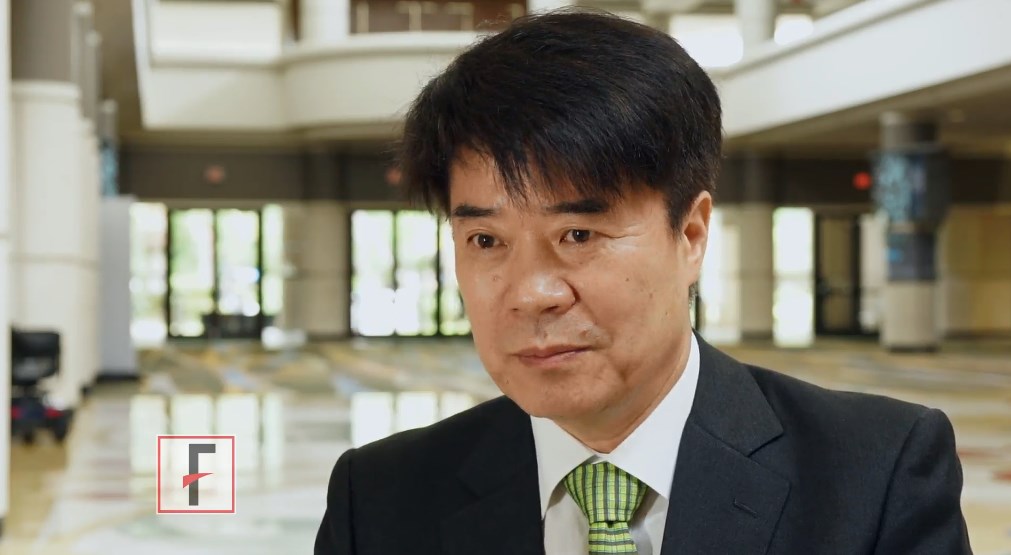
“The potential association between patent foramen ovale [PFO] and cryptogenic stroke has been a controversial issue for decades,” Jae Kwan Song, MD, of Asan Medical Center in Seoul, South Korea, said in an interview at the annual meeting of the American College of Cardiology.
In this study, 60 patients with high-risk PFOs (at least 2 mm) were randomized to receive anticoagulant or antiplatelet medications alone, and 60 were randomized to medication plus implantation of the Amplatzer PFO closure device.
The device implantation was successful for all patients in the device group. The primary endpoint was a combination of stroke, vascular death, and major bleeding within 2 years of follow-up after the procedure.
After an average follow-up of 2.8 years, none of the patients in the device group and six (10%) of patients in the medication-only group experienced a primary endpoint event. The events in the medication-only group included five cases of ischemic stroke, two cases of TIMI-defined major bleeding, one cerebral hemorrhage, and one transient ischemic attack.
Nonfatal procedural complications included two cases of atrial fibrillation, one case of pericardial effusion, and one pseudoaneurysm.
The average age of the patients was 54 years in the medication-only group and 49 years in the device group, and roughly one-third of the patients in each group were male. The baseline clinical characteristics, including the presence of hypertension, diabetes, smoking, and high cholesterol, were similar between the groups.
“We should consider two things before clinical decision of device closure,” Dr. Song said. First, exclude other causes of cryptogenic stroke; and second, conduct a comprehensive evaluation of the PFO to determine which patients are at highest risk and would be most likely to benefit from the procedure, he said.
To better determine which patients would benefit from the device implantation, Dr. Song and his colleagues used imaging to review data on the size and features of the PFO; patients with evidence of an atrial septal aneurysm or hypermobility (defined as a septal excursion 10 mm or larger) were deemed at especially high risk.
Dr. Song said that the next steps for research on management of PFOs include determining which medications are most effective in patients treated with medication alone, as well as clarifying the process of patient selection for device use based on PFO morphology.
The study was terminated early because of several factors, including low patient recruitment and the decision not to deny patients the closure treatment because of its demonstrated effectiveness, Dr. Song noted.
The study was supported by the Cardiovascular Research Foundation in Seoul, South Korea. Dr. Song had no financial conflicts to disclose. The findings were published simultaneously in the Journal of the American College of Cardiology (doi: 10.1016/j.jacc.2018.02.046).
SOURCE: Song J. ACC 2018.
ORLANDO – Closing a patent foramen ovale reduced the incidence of stroke and other adverse events in patients at increased risk the DEFENSE-PRO trial.
“The potential association between patent foramen ovale [PFO] and cryptogenic stroke has been a controversial issue for decades,” Jae Kwan Song, MD, of Asan Medical Center in Seoul, South Korea, said in an interview at the annual meeting of the American College of Cardiology.
In this study, 60 patients with high-risk PFOs (at least 2 mm) were randomized to receive anticoagulant or antiplatelet medications alone, and 60 were randomized to medication plus implantation of the Amplatzer PFO closure device.
The device implantation was successful for all patients in the device group. The primary endpoint was a combination of stroke, vascular death, and major bleeding within 2 years of follow-up after the procedure.
After an average follow-up of 2.8 years, none of the patients in the device group and six (10%) of patients in the medication-only group experienced a primary endpoint event. The events in the medication-only group included five cases of ischemic stroke, two cases of TIMI-defined major bleeding, one cerebral hemorrhage, and one transient ischemic attack.
Nonfatal procedural complications included two cases of atrial fibrillation, one case of pericardial effusion, and one pseudoaneurysm.
The average age of the patients was 54 years in the medication-only group and 49 years in the device group, and roughly one-third of the patients in each group were male. The baseline clinical characteristics, including the presence of hypertension, diabetes, smoking, and high cholesterol, were similar between the groups.
“We should consider two things before clinical decision of device closure,” Dr. Song said. First, exclude other causes of cryptogenic stroke; and second, conduct a comprehensive evaluation of the PFO to determine which patients are at highest risk and would be most likely to benefit from the procedure, he said.
To better determine which patients would benefit from the device implantation, Dr. Song and his colleagues used imaging to review data on the size and features of the PFO; patients with evidence of an atrial septal aneurysm or hypermobility (defined as a septal excursion 10 mm or larger) were deemed at especially high risk.
Dr. Song said that the next steps for research on management of PFOs include determining which medications are most effective in patients treated with medication alone, as well as clarifying the process of patient selection for device use based on PFO morphology.
The study was terminated early because of several factors, including low patient recruitment and the decision not to deny patients the closure treatment because of its demonstrated effectiveness, Dr. Song noted.
The study was supported by the Cardiovascular Research Foundation in Seoul, South Korea. Dr. Song had no financial conflicts to disclose. The findings were published simultaneously in the Journal of the American College of Cardiology (doi: 10.1016/j.jacc.2018.02.046).
SOURCE: Song J. ACC 2018.
ORLANDO – Closing a patent foramen ovale reduced the incidence of stroke and other adverse events in patients at increased risk the DEFENSE-PRO trial.
“The potential association between patent foramen ovale [PFO] and cryptogenic stroke has been a controversial issue for decades,” Jae Kwan Song, MD, of Asan Medical Center in Seoul, South Korea, said in an interview at the annual meeting of the American College of Cardiology.
In this study, 60 patients with high-risk PFOs (at least 2 mm) were randomized to receive anticoagulant or antiplatelet medications alone, and 60 were randomized to medication plus implantation of the Amplatzer PFO closure device.
The device implantation was successful for all patients in the device group. The primary endpoint was a combination of stroke, vascular death, and major bleeding within 2 years of follow-up after the procedure.
After an average follow-up of 2.8 years, none of the patients in the device group and six (10%) of patients in the medication-only group experienced a primary endpoint event. The events in the medication-only group included five cases of ischemic stroke, two cases of TIMI-defined major bleeding, one cerebral hemorrhage, and one transient ischemic attack.
Nonfatal procedural complications included two cases of atrial fibrillation, one case of pericardial effusion, and one pseudoaneurysm.
The average age of the patients was 54 years in the medication-only group and 49 years in the device group, and roughly one-third of the patients in each group were male. The baseline clinical characteristics, including the presence of hypertension, diabetes, smoking, and high cholesterol, were similar between the groups.
“We should consider two things before clinical decision of device closure,” Dr. Song said. First, exclude other causes of cryptogenic stroke; and second, conduct a comprehensive evaluation of the PFO to determine which patients are at highest risk and would be most likely to benefit from the procedure, he said.
To better determine which patients would benefit from the device implantation, Dr. Song and his colleagues used imaging to review data on the size and features of the PFO; patients with evidence of an atrial septal aneurysm or hypermobility (defined as a septal excursion 10 mm or larger) were deemed at especially high risk.
Dr. Song said that the next steps for research on management of PFOs include determining which medications are most effective in patients treated with medication alone, as well as clarifying the process of patient selection for device use based on PFO morphology.
The study was terminated early because of several factors, including low patient recruitment and the decision not to deny patients the closure treatment because of its demonstrated effectiveness, Dr. Song noted.
The study was supported by the Cardiovascular Research Foundation in Seoul, South Korea. Dr. Song had no financial conflicts to disclose. The findings were published simultaneously in the Journal of the American College of Cardiology (doi: 10.1016/j.jacc.2018.02.046).
SOURCE: Song J. ACC 2018.
REPORTING FROM ACC 18
Key clinical point: Closure of patent foramen ovale resulted in no adverse events or recurrent strokes during 2 years’ follow-up.
Major finding: No adverse event or strokes occurred in the device-plus-medication group, compared with six events in the medication-only group.
Study details: The data come from DEFENSE-PFO, a randomized trial of 120 adults with a history of cryptogenic stroke and high-risk PFO.
Disclosures: DEFENSE-PFO was supported by the Cardiovascular Research Foundation in Seoul, South Korea. Dr. Song had no financial conflicts to disclose.
Source: Song J. ACC 2018.
Genetic Pap tests catch more cancers
A Pap test combined with assays for gene mutations showed an 81% and 33% sensitivity or identifying endometrial and ovarian cancer, respectively.
In a study published in Science Translational Medicine, Yuxuan Wang, MD, of Johns Hopkins University, Baltimore, and her colleagues used a polymerase chain reaction–based test known as PapSEEK to examine Pap brush samples from 382 women with endometrial cancer, 245 women with ovarian cancer, and 714 women without cancer.
Overall, 81% of the endometrial cancer patients and 29% of the ovarian cancer patients had detectable mutations on Pap smears taken with a Pap brush. Among endometrial cancer patients, the genetic test identified mutations in 78% of patients with early-stage disease and 89% of those with late-stage disease. Among ovarian cancer patients, the genetic test identified 28% of patients with early-stage disease and 30% of those with late-stage disease.
The investigators also used the genetic test on Tao brush samples from the intrauterine cavity from a subset of 123 patients with endometrial cancer, 51 with ovarian cancer, and 125 controls and identified genetic mutations in 93% and 45% of endometrial and ovarian cancers, respectively.
The results demonstrate the potential of mutation-based diagnostic testing, and samples taken with the Tao brush may be especially helpful for ovarian cancers, especially in samples combining Pap and plasma sample data, the researchers said.
The study was limited by several factors including its retrospective design and having a study population confined to women with known cancers, the researchers noted. More research is needed, but results suggest the potential for DNA analysis to catch cancers early in a screening setting, they said. “Our study lays the foundation for evaluating PapSEEK in a large prospective study,” ideally including patients at high risk for gynecologic cancers, they added.
The study was funded by multiple sources including the Virginia and D.K. Ludwig Fund for Cancer Research, the National Institutes of Health, and the Stand Up to Cancer Colorectal Dream Team Translational Research Grant. Dr. Wang and several coauthors disclosed patent, equity, and royalty interest in technologies discussed in the paper. Four coauthors are cofounders of and stockholders in PapGene, which has licensed technologies related to the work described in the paper.
SOURCE: Wang Y et al. Sci Transl Med. 2018 Mar 21;10(433):eaap8793.
A Pap test combined with assays for gene mutations showed an 81% and 33% sensitivity or identifying endometrial and ovarian cancer, respectively.
In a study published in Science Translational Medicine, Yuxuan Wang, MD, of Johns Hopkins University, Baltimore, and her colleagues used a polymerase chain reaction–based test known as PapSEEK to examine Pap brush samples from 382 women with endometrial cancer, 245 women with ovarian cancer, and 714 women without cancer.
Overall, 81% of the endometrial cancer patients and 29% of the ovarian cancer patients had detectable mutations on Pap smears taken with a Pap brush. Among endometrial cancer patients, the genetic test identified mutations in 78% of patients with early-stage disease and 89% of those with late-stage disease. Among ovarian cancer patients, the genetic test identified 28% of patients with early-stage disease and 30% of those with late-stage disease.
The investigators also used the genetic test on Tao brush samples from the intrauterine cavity from a subset of 123 patients with endometrial cancer, 51 with ovarian cancer, and 125 controls and identified genetic mutations in 93% and 45% of endometrial and ovarian cancers, respectively.
The results demonstrate the potential of mutation-based diagnostic testing, and samples taken with the Tao brush may be especially helpful for ovarian cancers, especially in samples combining Pap and plasma sample data, the researchers said.
The study was limited by several factors including its retrospective design and having a study population confined to women with known cancers, the researchers noted. More research is needed, but results suggest the potential for DNA analysis to catch cancers early in a screening setting, they said. “Our study lays the foundation for evaluating PapSEEK in a large prospective study,” ideally including patients at high risk for gynecologic cancers, they added.
The study was funded by multiple sources including the Virginia and D.K. Ludwig Fund for Cancer Research, the National Institutes of Health, and the Stand Up to Cancer Colorectal Dream Team Translational Research Grant. Dr. Wang and several coauthors disclosed patent, equity, and royalty interest in technologies discussed in the paper. Four coauthors are cofounders of and stockholders in PapGene, which has licensed technologies related to the work described in the paper.
SOURCE: Wang Y et al. Sci Transl Med. 2018 Mar 21;10(433):eaap8793.
A Pap test combined with assays for gene mutations showed an 81% and 33% sensitivity or identifying endometrial and ovarian cancer, respectively.
In a study published in Science Translational Medicine, Yuxuan Wang, MD, of Johns Hopkins University, Baltimore, and her colleagues used a polymerase chain reaction–based test known as PapSEEK to examine Pap brush samples from 382 women with endometrial cancer, 245 women with ovarian cancer, and 714 women without cancer.
Overall, 81% of the endometrial cancer patients and 29% of the ovarian cancer patients had detectable mutations on Pap smears taken with a Pap brush. Among endometrial cancer patients, the genetic test identified mutations in 78% of patients with early-stage disease and 89% of those with late-stage disease. Among ovarian cancer patients, the genetic test identified 28% of patients with early-stage disease and 30% of those with late-stage disease.
The investigators also used the genetic test on Tao brush samples from the intrauterine cavity from a subset of 123 patients with endometrial cancer, 51 with ovarian cancer, and 125 controls and identified genetic mutations in 93% and 45% of endometrial and ovarian cancers, respectively.
The results demonstrate the potential of mutation-based diagnostic testing, and samples taken with the Tao brush may be especially helpful for ovarian cancers, especially in samples combining Pap and plasma sample data, the researchers said.
The study was limited by several factors including its retrospective design and having a study population confined to women with known cancers, the researchers noted. More research is needed, but results suggest the potential for DNA analysis to catch cancers early in a screening setting, they said. “Our study lays the foundation for evaluating PapSEEK in a large prospective study,” ideally including patients at high risk for gynecologic cancers, they added.
The study was funded by multiple sources including the Virginia and D.K. Ludwig Fund for Cancer Research, the National Institutes of Health, and the Stand Up to Cancer Colorectal Dream Team Translational Research Grant. Dr. Wang and several coauthors disclosed patent, equity, and royalty interest in technologies discussed in the paper. Four coauthors are cofounders of and stockholders in PapGene, which has licensed technologies related to the work described in the paper.
SOURCE: Wang Y et al. Sci Transl Med. 2018 Mar 21;10(433):eaap8793.
FROM SCIENCE TRANSLATIONAL MEDICINE
Key clinical point: Genetics-based Pap test identified endometrial and ovarian cancers.
Major finding: Pap brush samples identified mutations in 81% of women with endometrial cancer and 29% of women with ovarian cancer.
Study details: Analysis of 1,915 Pap samples from 1,658 women; 1,002 were healthy controls, while 656 had gynecologic cancer.
Disclosures: The study was funded by multiple sources including the Virginia and D.K. Ludwig Fund for Cancer Research, the National Institutes of Health, and the Stand Up to Cancer Colorectal Dream Team Translational Research Grant. Dr. Wang and several coauthors disclosed patent, equity, and royalty interest in technologies discussed in the paper. Four coauthors are cofounders of and stockholders in PapGene, which has licensed technologies related to the work described in the paper.
Source: Wang Y et al. Sci Transl Med. 2018 Mar 21;10(433):eaap8793.
Counsel children and young adults on skin cancer prevention
(USPSTF). The recommendations, published online March 20 in JAMA, advise clinicians to counsel young adults, children, and parents of young children who are aged 6 months to 24 years and have fair skin types about skin cancer prevention. Counseling for individuals aged 24 years and older should be based on a clinician’s assessment of patient risk.
The recommendations target asymptomatic individuals with no history of skin cancer who might be likely to sunburn easily, wrote David C. Grossman, MD, of Kaiser Permanente Washington Health Research Institute, Seattle, the corresponding author of the USPSTF recommendation statement, and his associates.
The task force found adequate (grade B) evidence to support behavioral counseling for children and young adults aged 6 months to 24 years with no notable risk of harm from this intervention. The task force gave a grade C recommendation for routine skin cancer counseling for adults older than 24 years, citing a small net benefit. In addition, the USPSTF found insufficient evidence (I statement) to evaluate the risks versus benefits of counseling adults about skin self-examination as a way to reduce skin cancer risk.
In the evidence report, lead author Nora B. Henrikson, PhD, of Kaiser Permanente Washington Health Research Institute, Seattle, and her colleagues addressed five topics: the effects of skin cancer prevention counseling on short- and long-term outcomes, the effects of primary care counseling interventions on skin cancer prevention behavior, the association between skin self-examination and skin cancer outcomes, the potential harms of counseling interventions, and the potential harms of skin self-examinations.
“Small to moderate effects of behavioral interventions on increased sun protection behaviors were observed in studies of all age groups, though overall, adult trial results were mixed and fewer studies demonstrated an intervention effect,” the researchers said.
The evidence review was limited by several factors including a focus on primary care intervention only and an exclusion of skin cancer survivors, the researchers noted. Although evidence does not show that sunburns are less frequent as a result of interventions, behavioral intervention can improve sun protection behavior, they said. However, intervention in adults “may lead to increased skin procedures without detecting additional atypical nevi or skin cancers,” they noted.
The recommendations are consistent with the draft recommendations published in 2017 and expand the recommendations from 2012 that advised counseling for individuals aged 10-24 years.
The research was funded by the Agency for Healthcare Research and Quality. The authors had no financial conflicts to disclose.
SOURCE: Grossman DC et al. JAMA. 2018;319(11):1134-42.
The term “fair skin types” as used in the USPSTF recommendations is not necessarily helpful in identifying individuals who could benefit from skin cancer prevention counseling, June K. Robinson, MD, and Nina G. Jablonski, PhD, wrote in an accompanying editorial (JAMA. 2018;319[11]:1101-2). Hair and eye color do not predict sun sensitivity, and in general, men and individuals with darker skin don’t think they are at risk for skin cancer even when they sunburn, they noted.
“The terminology that is used by investigators and then incorporated into the USPSTF evidence base needs to evolve to include all persons at risk, without disenfranchising portions of the diverse U.S. population,” they said. In addition to skin type, physicians need to evaluate a patient’s melanoma risk based on lifestyle factors, such as time spent outdoors, photosensitizing medications, and sun protection habits, they added, but primary care clinicians often lack the time to offer personalized sun protection counseling.
“It would be better to encourage people to check the UV Index daily – or consider a mobile application that automatically provides it – and plan outdoor activities, especially physical activities, to be sun safe,” they said. In addition, individuals may be more likely to manage skin cancer risk with a mix of supportive messages via social media to augment in-person counseling from a clinician; furthermore, “normative approval by friends and peers can have a strong reinforcing influence on sun safety behaviors, particularly among youth, who are at a vulnerable age for acquiring melanoma risk,” they emphasized.
Dr. Robinson is a research professor of dermatology at Northwestern University, Chicago, and is the editor of JAMA Dermatology. She is supported in part by the National Cancer Institute. Dr. Jablonski is a professor of anthropology at Pennsylvania State University, University Park. Dr. Robinson had no financial conflicts to disclose; Dr. Jablonski has served on the scientific advisory board of the L’Oreal Group.
The term “fair skin types” as used in the USPSTF recommendations is not necessarily helpful in identifying individuals who could benefit from skin cancer prevention counseling, June K. Robinson, MD, and Nina G. Jablonski, PhD, wrote in an accompanying editorial (JAMA. 2018;319[11]:1101-2). Hair and eye color do not predict sun sensitivity, and in general, men and individuals with darker skin don’t think they are at risk for skin cancer even when they sunburn, they noted.
“The terminology that is used by investigators and then incorporated into the USPSTF evidence base needs to evolve to include all persons at risk, without disenfranchising portions of the diverse U.S. population,” they said. In addition to skin type, physicians need to evaluate a patient’s melanoma risk based on lifestyle factors, such as time spent outdoors, photosensitizing medications, and sun protection habits, they added, but primary care clinicians often lack the time to offer personalized sun protection counseling.
“It would be better to encourage people to check the UV Index daily – or consider a mobile application that automatically provides it – and plan outdoor activities, especially physical activities, to be sun safe,” they said. In addition, individuals may be more likely to manage skin cancer risk with a mix of supportive messages via social media to augment in-person counseling from a clinician; furthermore, “normative approval by friends and peers can have a strong reinforcing influence on sun safety behaviors, particularly among youth, who are at a vulnerable age for acquiring melanoma risk,” they emphasized.
Dr. Robinson is a research professor of dermatology at Northwestern University, Chicago, and is the editor of JAMA Dermatology. She is supported in part by the National Cancer Institute. Dr. Jablonski is a professor of anthropology at Pennsylvania State University, University Park. Dr. Robinson had no financial conflicts to disclose; Dr. Jablonski has served on the scientific advisory board of the L’Oreal Group.
The term “fair skin types” as used in the USPSTF recommendations is not necessarily helpful in identifying individuals who could benefit from skin cancer prevention counseling, June K. Robinson, MD, and Nina G. Jablonski, PhD, wrote in an accompanying editorial (JAMA. 2018;319[11]:1101-2). Hair and eye color do not predict sun sensitivity, and in general, men and individuals with darker skin don’t think they are at risk for skin cancer even when they sunburn, they noted.
“The terminology that is used by investigators and then incorporated into the USPSTF evidence base needs to evolve to include all persons at risk, without disenfranchising portions of the diverse U.S. population,” they said. In addition to skin type, physicians need to evaluate a patient’s melanoma risk based on lifestyle factors, such as time spent outdoors, photosensitizing medications, and sun protection habits, they added, but primary care clinicians often lack the time to offer personalized sun protection counseling.
“It would be better to encourage people to check the UV Index daily – or consider a mobile application that automatically provides it – and plan outdoor activities, especially physical activities, to be sun safe,” they said. In addition, individuals may be more likely to manage skin cancer risk with a mix of supportive messages via social media to augment in-person counseling from a clinician; furthermore, “normative approval by friends and peers can have a strong reinforcing influence on sun safety behaviors, particularly among youth, who are at a vulnerable age for acquiring melanoma risk,” they emphasized.
Dr. Robinson is a research professor of dermatology at Northwestern University, Chicago, and is the editor of JAMA Dermatology. She is supported in part by the National Cancer Institute. Dr. Jablonski is a professor of anthropology at Pennsylvania State University, University Park. Dr. Robinson had no financial conflicts to disclose; Dr. Jablonski has served on the scientific advisory board of the L’Oreal Group.
(USPSTF). The recommendations, published online March 20 in JAMA, advise clinicians to counsel young adults, children, and parents of young children who are aged 6 months to 24 years and have fair skin types about skin cancer prevention. Counseling for individuals aged 24 years and older should be based on a clinician’s assessment of patient risk.
The recommendations target asymptomatic individuals with no history of skin cancer who might be likely to sunburn easily, wrote David C. Grossman, MD, of Kaiser Permanente Washington Health Research Institute, Seattle, the corresponding author of the USPSTF recommendation statement, and his associates.
The task force found adequate (grade B) evidence to support behavioral counseling for children and young adults aged 6 months to 24 years with no notable risk of harm from this intervention. The task force gave a grade C recommendation for routine skin cancer counseling for adults older than 24 years, citing a small net benefit. In addition, the USPSTF found insufficient evidence (I statement) to evaluate the risks versus benefits of counseling adults about skin self-examination as a way to reduce skin cancer risk.
In the evidence report, lead author Nora B. Henrikson, PhD, of Kaiser Permanente Washington Health Research Institute, Seattle, and her colleagues addressed five topics: the effects of skin cancer prevention counseling on short- and long-term outcomes, the effects of primary care counseling interventions on skin cancer prevention behavior, the association between skin self-examination and skin cancer outcomes, the potential harms of counseling interventions, and the potential harms of skin self-examinations.
“Small to moderate effects of behavioral interventions on increased sun protection behaviors were observed in studies of all age groups, though overall, adult trial results were mixed and fewer studies demonstrated an intervention effect,” the researchers said.
The evidence review was limited by several factors including a focus on primary care intervention only and an exclusion of skin cancer survivors, the researchers noted. Although evidence does not show that sunburns are less frequent as a result of interventions, behavioral intervention can improve sun protection behavior, they said. However, intervention in adults “may lead to increased skin procedures without detecting additional atypical nevi or skin cancers,” they noted.
The recommendations are consistent with the draft recommendations published in 2017 and expand the recommendations from 2012 that advised counseling for individuals aged 10-24 years.
The research was funded by the Agency for Healthcare Research and Quality. The authors had no financial conflicts to disclose.
SOURCE: Grossman DC et al. JAMA. 2018;319(11):1134-42.
(USPSTF). The recommendations, published online March 20 in JAMA, advise clinicians to counsel young adults, children, and parents of young children who are aged 6 months to 24 years and have fair skin types about skin cancer prevention. Counseling for individuals aged 24 years and older should be based on a clinician’s assessment of patient risk.
The recommendations target asymptomatic individuals with no history of skin cancer who might be likely to sunburn easily, wrote David C. Grossman, MD, of Kaiser Permanente Washington Health Research Institute, Seattle, the corresponding author of the USPSTF recommendation statement, and his associates.
The task force found adequate (grade B) evidence to support behavioral counseling for children and young adults aged 6 months to 24 years with no notable risk of harm from this intervention. The task force gave a grade C recommendation for routine skin cancer counseling for adults older than 24 years, citing a small net benefit. In addition, the USPSTF found insufficient evidence (I statement) to evaluate the risks versus benefits of counseling adults about skin self-examination as a way to reduce skin cancer risk.
In the evidence report, lead author Nora B. Henrikson, PhD, of Kaiser Permanente Washington Health Research Institute, Seattle, and her colleagues addressed five topics: the effects of skin cancer prevention counseling on short- and long-term outcomes, the effects of primary care counseling interventions on skin cancer prevention behavior, the association between skin self-examination and skin cancer outcomes, the potential harms of counseling interventions, and the potential harms of skin self-examinations.
“Small to moderate effects of behavioral interventions on increased sun protection behaviors were observed in studies of all age groups, though overall, adult trial results were mixed and fewer studies demonstrated an intervention effect,” the researchers said.
The evidence review was limited by several factors including a focus on primary care intervention only and an exclusion of skin cancer survivors, the researchers noted. Although evidence does not show that sunburns are less frequent as a result of interventions, behavioral intervention can improve sun protection behavior, they said. However, intervention in adults “may lead to increased skin procedures without detecting additional atypical nevi or skin cancers,” they noted.
The recommendations are consistent with the draft recommendations published in 2017 and expand the recommendations from 2012 that advised counseling for individuals aged 10-24 years.
The research was funded by the Agency for Healthcare Research and Quality. The authors had no financial conflicts to disclose.
SOURCE: Grossman DC et al. JAMA. 2018;319(11):1134-42.
FROM JAMA
Key clinical point: Moderate evidence supports behavioral counseling to help reduce skin cancer risk in children and young adults.
Major finding: One trial that included 1,356 adults showed no difference in the number of skin cancers and atypical nevi between a control group and patients who received counseling to encourage skin examination.
Study details: The evidence review included 21 trials in 27 publications for a total of 20,561 individuals.
Disclosures: The review was funded by the Agency for Healthcare Research and Quality.
Source: Grossman DC et al. JAMA. 2018;319(11):1134-42.