User login
LMWH more cost-effective than UFH for VTE

Credit: Petr Kratochvil
New research suggests the low-molecular-weight heparin (LMWH) dalteparin is more cost-effective than unfractionated heparin (UFH) for preventing venous thromboembolism (VTE) in critically ill patients.
The study showed that using dalteparin was the most effective and least costly strategy to prevent all thrombotic events, pulmonary embolism (PE), deep-vein thrombosis (DVT), major bleeding, and heparin-induced thrombocytopenia (HIT).
These results were published in JAMA and presented at the Critical Care Canada Forum in Toronto.
For this study, Robert A. Fowler, MDCM, of the Sunnybrook Health Sciences Centre at the University of Toronto in Ontario, and his colleagues conducted an economic evaluation concurrent with the PROTECT trial.
For PROTECT, researchers compared the effectiveness of dalteparin and UFH as VTE prophylaxis in critically ill patients. The results revealed no difference in the rate of DVT between the two treatment groups, but patients who received dalteparin had lower rates of PE and HIT.
To evaluate the cost-effectiveness of LMWH and UFH, Dr Fowler and his colleagues assessed costs among 2344 patients enrolled on PROTECT. The team evaluated costs in the context of resource use and patient outcomes.
The median post-randomization hospital cost of care was greater for patients who received UFH than for those who received dalteparin—$40,805 vs $39,508—but the difference was not statistically significant (P=0.41).
Subgroup analyses (assessing patients according to such factors as illness severity and body mass index) indicated that dalteparin was the most effective and least costly strategy to prevent all thrombotic events, PE, DVT, major bleeding, and HIT.
Sensitivity analyses indicated that a strategy using LMWH was most effective, least costly 78% of the time, and would remain less costly unless the drug acquisition cost of dalteparin was to increase by more than 20-fold. There was no threshold in which lowering the acquisition cost of UFH favored VTE prophylaxis with UFH.
The researchers said these findings are important for the care of critically ill patients because they provide a cost-minimization rationale that complements clinical effectiveness knowledge from PROTECT.
For example, if an intensive care unit with 1000 medical-surgical admissions per year uses UFH instead of LMWH for VTE prophylaxis, the annual incremental cost would be between $1,000,000 and $1,500,000 with similar or worse clinical outcomes, despite the individual drug cost of UFH being $4 to $5 less per day.
The researchers noted that these findings were driven by lower rates of PE and HIT and the corresponding lower overall use of resources with LMWH. 
Credit: Petr Kratochvil
New research suggests the low-molecular-weight heparin (LMWH) dalteparin is more cost-effective than unfractionated heparin (UFH) for preventing venous thromboembolism (VTE) in critically ill patients.
The study showed that using dalteparin was the most effective and least costly strategy to prevent all thrombotic events, pulmonary embolism (PE), deep-vein thrombosis (DVT), major bleeding, and heparin-induced thrombocytopenia (HIT).
These results were published in JAMA and presented at the Critical Care Canada Forum in Toronto.
For this study, Robert A. Fowler, MDCM, of the Sunnybrook Health Sciences Centre at the University of Toronto in Ontario, and his colleagues conducted an economic evaluation concurrent with the PROTECT trial.
For PROTECT, researchers compared the effectiveness of dalteparin and UFH as VTE prophylaxis in critically ill patients. The results revealed no difference in the rate of DVT between the two treatment groups, but patients who received dalteparin had lower rates of PE and HIT.
To evaluate the cost-effectiveness of LMWH and UFH, Dr Fowler and his colleagues assessed costs among 2344 patients enrolled on PROTECT. The team evaluated costs in the context of resource use and patient outcomes.
The median post-randomization hospital cost of care was greater for patients who received UFH than for those who received dalteparin—$40,805 vs $39,508—but the difference was not statistically significant (P=0.41).
Subgroup analyses (assessing patients according to such factors as illness severity and body mass index) indicated that dalteparin was the most effective and least costly strategy to prevent all thrombotic events, PE, DVT, major bleeding, and HIT.
Sensitivity analyses indicated that a strategy using LMWH was most effective, least costly 78% of the time, and would remain less costly unless the drug acquisition cost of dalteparin was to increase by more than 20-fold. There was no threshold in which lowering the acquisition cost of UFH favored VTE prophylaxis with UFH.
The researchers said these findings are important for the care of critically ill patients because they provide a cost-minimization rationale that complements clinical effectiveness knowledge from PROTECT.
For example, if an intensive care unit with 1000 medical-surgical admissions per year uses UFH instead of LMWH for VTE prophylaxis, the annual incremental cost would be between $1,000,000 and $1,500,000 with similar or worse clinical outcomes, despite the individual drug cost of UFH being $4 to $5 less per day.
The researchers noted that these findings were driven by lower rates of PE and HIT and the corresponding lower overall use of resources with LMWH.
Credit: Petr Kratochvil
New research suggests the low-molecular-weight heparin (LMWH) dalteparin is more cost-effective than unfractionated heparin (UFH) for preventing venous thromboembolism (VTE) in critically ill patients.
The study showed that using dalteparin was the most effective and least costly strategy to prevent all thrombotic events, pulmonary embolism (PE), deep-vein thrombosis (DVT), major bleeding, and heparin-induced thrombocytopenia (HIT).
These results were published in JAMA and presented at the Critical Care Canada Forum in Toronto.
For this study, Robert A. Fowler, MDCM, of the Sunnybrook Health Sciences Centre at the University of Toronto in Ontario, and his colleagues conducted an economic evaluation concurrent with the PROTECT trial.
For PROTECT, researchers compared the effectiveness of dalteparin and UFH as VTE prophylaxis in critically ill patients. The results revealed no difference in the rate of DVT between the two treatment groups, but patients who received dalteparin had lower rates of PE and HIT.
To evaluate the cost-effectiveness of LMWH and UFH, Dr Fowler and his colleagues assessed costs among 2344 patients enrolled on PROTECT. The team evaluated costs in the context of resource use and patient outcomes.
The median post-randomization hospital cost of care was greater for patients who received UFH than for those who received dalteparin—$40,805 vs $39,508—but the difference was not statistically significant (P=0.41).
Subgroup analyses (assessing patients according to such factors as illness severity and body mass index) indicated that dalteparin was the most effective and least costly strategy to prevent all thrombotic events, PE, DVT, major bleeding, and HIT.
Sensitivity analyses indicated that a strategy using LMWH was most effective, least costly 78% of the time, and would remain less costly unless the drug acquisition cost of dalteparin was to increase by more than 20-fold. There was no threshold in which lowering the acquisition cost of UFH favored VTE prophylaxis with UFH.
The researchers said these findings are important for the care of critically ill patients because they provide a cost-minimization rationale that complements clinical effectiveness knowledge from PROTECT.
For example, if an intensive care unit with 1000 medical-surgical admissions per year uses UFH instead of LMWH for VTE prophylaxis, the annual incremental cost would be between $1,000,000 and $1,500,000 with similar or worse clinical outcomes, despite the individual drug cost of UFH being $4 to $5 less per day.
The researchers noted that these findings were driven by lower rates of PE and HIT and the corresponding lower overall use of resources with LMWH.
NICE recommends dabigatran for DVT, PE
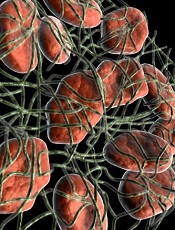
Credit: NHS
The UK’s National Institute for Health and Care Excellence (NICE) has issued a draft guidance recommending dabigatran etexilate (Pradaxa) as an option for treating and preventing recurrent deep-vein thrombosis (DVT) and pulmonary embolism (PE) in adults.
A committee advising NICE concluded that dabigatran is a cost-effective use of resources and a convenient alternative to warfarin, especially for patients who require longer-term anticoagulant therapy.
“For many people, using warfarin can be difficult because of the need for frequent tests to see if the blood is clotting properly and having to adjust the dose of the drug if it is not,” said Carole Longson, NICE Health Technology Evaluation Centre Director.
“The appraisal committee felt that dabigatran represents a potential benefit for many people who have had a DVT or PE, particularly those who have risk factors for recurrence of a blood clot and who therefore need longer-term treatment. We are pleased, therefore, to be able to recommend dabigatran as a cost-effective option for treating DVT and PE and preventing further episodes in adults.”
Dabigatran, made by Boehringer Ingelheim, costs £65.90 for a 60-capsule pack of the 150 mg or 110 mg doses (excluding value-added tax) and costs £2.20 per day of treatment. However, costs may vary in different settings because of negotiated procurement discounts.
The most plausible incremental cost-effectiveness ratio (ICER) for dabigatran compared with warfarin for acute treatment of venous thromboembolism (VTE) was uncertain.
However, both Boehringer Ingelheim’s ICER and an evidence review group’s ICER remained in the range that could be considered a cost-effective use of National Health Service resources. Both were under £20,000 per quality-adjusted life-year (QALY) gained.
Neither Boehringer Ingelheim nor the evidence review group found any significant difference in efficacy between dabigatran and rivaroxaban for acute treatment of VTE in their indirect comparisons, and the costs were very similar between these two treatments.
For combined treatment and secondary prevention of VTE, the committee noted that Boehringer Ingelheim’s base-case ICER for dabigatran compared with warfarin was likely too low (£9973 per QALY gained).
But the evidence review group’s base-case for dabigatran compared with warfarin may have overestimated the ICER (£35,786 per QALY gained). So the committee said the ICER probably falls somewhere between the two estimates.
The committee also noted that dabigatran and rivaroxaban appear to have similar efficacy for combined treatment and secondary prevention of VTE, and their costs are very similar.
For more details, see the draft guidance.
Credit: NHS
The UK’s National Institute for Health and Care Excellence (NICE) has issued a draft guidance recommending dabigatran etexilate (Pradaxa) as an option for treating and preventing recurrent deep-vein thrombosis (DVT) and pulmonary embolism (PE) in adults.
A committee advising NICE concluded that dabigatran is a cost-effective use of resources and a convenient alternative to warfarin, especially for patients who require longer-term anticoagulant therapy.
“For many people, using warfarin can be difficult because of the need for frequent tests to see if the blood is clotting properly and having to adjust the dose of the drug if it is not,” said Carole Longson, NICE Health Technology Evaluation Centre Director.
“The appraisal committee felt that dabigatran represents a potential benefit for many people who have had a DVT or PE, particularly those who have risk factors for recurrence of a blood clot and who therefore need longer-term treatment. We are pleased, therefore, to be able to recommend dabigatran as a cost-effective option for treating DVT and PE and preventing further episodes in adults.”
Dabigatran, made by Boehringer Ingelheim, costs £65.90 for a 60-capsule pack of the 150 mg or 110 mg doses (excluding value-added tax) and costs £2.20 per day of treatment. However, costs may vary in different settings because of negotiated procurement discounts.
The most plausible incremental cost-effectiveness ratio (ICER) for dabigatran compared with warfarin for acute treatment of venous thromboembolism (VTE) was uncertain.
However, both Boehringer Ingelheim’s ICER and an evidence review group’s ICER remained in the range that could be considered a cost-effective use of National Health Service resources. Both were under £20,000 per quality-adjusted life-year (QALY) gained.
Neither Boehringer Ingelheim nor the evidence review group found any significant difference in efficacy between dabigatran and rivaroxaban for acute treatment of VTE in their indirect comparisons, and the costs were very similar between these two treatments.
For combined treatment and secondary prevention of VTE, the committee noted that Boehringer Ingelheim’s base-case ICER for dabigatran compared with warfarin was likely too low (£9973 per QALY gained).
But the evidence review group’s base-case for dabigatran compared with warfarin may have overestimated the ICER (£35,786 per QALY gained). So the committee said the ICER probably falls somewhere between the two estimates.
The committee also noted that dabigatran and rivaroxaban appear to have similar efficacy for combined treatment and secondary prevention of VTE, and their costs are very similar.
For more details, see the draft guidance.
Credit: NHS
The UK’s National Institute for Health and Care Excellence (NICE) has issued a draft guidance recommending dabigatran etexilate (Pradaxa) as an option for treating and preventing recurrent deep-vein thrombosis (DVT) and pulmonary embolism (PE) in adults.
A committee advising NICE concluded that dabigatran is a cost-effective use of resources and a convenient alternative to warfarin, especially for patients who require longer-term anticoagulant therapy.
“For many people, using warfarin can be difficult because of the need for frequent tests to see if the blood is clotting properly and having to adjust the dose of the drug if it is not,” said Carole Longson, NICE Health Technology Evaluation Centre Director.
“The appraisal committee felt that dabigatran represents a potential benefit for many people who have had a DVT or PE, particularly those who have risk factors for recurrence of a blood clot and who therefore need longer-term treatment. We are pleased, therefore, to be able to recommend dabigatran as a cost-effective option for treating DVT and PE and preventing further episodes in adults.”
Dabigatran, made by Boehringer Ingelheim, costs £65.90 for a 60-capsule pack of the 150 mg or 110 mg doses (excluding value-added tax) and costs £2.20 per day of treatment. However, costs may vary in different settings because of negotiated procurement discounts.
The most plausible incremental cost-effectiveness ratio (ICER) for dabigatran compared with warfarin for acute treatment of venous thromboembolism (VTE) was uncertain.
However, both Boehringer Ingelheim’s ICER and an evidence review group’s ICER remained in the range that could be considered a cost-effective use of National Health Service resources. Both were under £20,000 per quality-adjusted life-year (QALY) gained.
Neither Boehringer Ingelheim nor the evidence review group found any significant difference in efficacy between dabigatran and rivaroxaban for acute treatment of VTE in their indirect comparisons, and the costs were very similar between these two treatments.
For combined treatment and secondary prevention of VTE, the committee noted that Boehringer Ingelheim’s base-case ICER for dabigatran compared with warfarin was likely too low (£9973 per QALY gained).
But the evidence review group’s base-case for dabigatran compared with warfarin may have overestimated the ICER (£35,786 per QALY gained). So the committee said the ICER probably falls somewhere between the two estimates.
The committee also noted that dabigatran and rivaroxaban appear to have similar efficacy for combined treatment and secondary prevention of VTE, and their costs are very similar.
For more details, see the draft guidance.
Air pollution not to blame for childhood leukemia, study suggests

The increased risk of leukemia reported among children born close to overhead power lines is likely not a result of alterations in air pollution, researchers have reported in the Journal of Radiological Protection.
The group found little evidence to support the “corona-ion hypothesis” which has been cited as a possible explanation for the excess of childhood leukemia cases close to high-voltage overhead power lines in the UK prior to the 1980s.
The hypothesis is based on the fact that high-voltage overhead power lines create charged particles in the surrounding air.
These ionized particles, known as corona ions, can be blown away by the wind and attach to air pollutants, such as those from traffic or smoking.
The corona-ion hypothesis suggests these electrically charged pollutants are more likely to be retained in the airways or lungs, and this could lead to serious health effects, including childhood leukemia.
The researchers previously showed that, on average, there has been no increased risk of leukemia among children born near high-voltage power lines in recent decades. However, the same piece of research confirmed an increased risk prior to the 1980s, which has yet to be explained.
To investigate this theory, John Swanson, of National Grid in London, and his colleagues used data from 7347 children in England and Wales who were born and diagnosed with leukemia between 1968 and 2008, and who lived within 600 m of a high-voltage overhead power line.
The researchers calculated the exposure of each of the subjects to corona ions using a model based on: the voltage of the power line; the distance from the line; how the concentration of corona ions varied with distance from the power lines; and, using data from various meteorological stations, the amount of time and speed that wind blew in each direction around the power lines.
The results did not suggest that exposure to corona ions explained the pattern of increased leukemia rates close to high-voltage overhead power lines previously found in earlier decades.
“We found in earlier studies that, for previous decades, childhood leukemia rates were higher near power lines,” said Kathryn Bunch, of the University of Oxford.
“This new paper seems to show that this wasn’t caused by corona ions, but it leaves us still searching for the true cause, and we are undertaking further investigations of the variation in risk over time.”
The increased risk of leukemia reported among children born close to overhead power lines is likely not a result of alterations in air pollution, researchers have reported in the Journal of Radiological Protection.
The group found little evidence to support the “corona-ion hypothesis” which has been cited as a possible explanation for the excess of childhood leukemia cases close to high-voltage overhead power lines in the UK prior to the 1980s.
The hypothesis is based on the fact that high-voltage overhead power lines create charged particles in the surrounding air.
These ionized particles, known as corona ions, can be blown away by the wind and attach to air pollutants, such as those from traffic or smoking.
The corona-ion hypothesis suggests these electrically charged pollutants are more likely to be retained in the airways or lungs, and this could lead to serious health effects, including childhood leukemia.
The researchers previously showed that, on average, there has been no increased risk of leukemia among children born near high-voltage power lines in recent decades. However, the same piece of research confirmed an increased risk prior to the 1980s, which has yet to be explained.
To investigate this theory, John Swanson, of National Grid in London, and his colleagues used data from 7347 children in England and Wales who were born and diagnosed with leukemia between 1968 and 2008, and who lived within 600 m of a high-voltage overhead power line.
The researchers calculated the exposure of each of the subjects to corona ions using a model based on: the voltage of the power line; the distance from the line; how the concentration of corona ions varied with distance from the power lines; and, using data from various meteorological stations, the amount of time and speed that wind blew in each direction around the power lines.
The results did not suggest that exposure to corona ions explained the pattern of increased leukemia rates close to high-voltage overhead power lines previously found in earlier decades.
“We found in earlier studies that, for previous decades, childhood leukemia rates were higher near power lines,” said Kathryn Bunch, of the University of Oxford.
“This new paper seems to show that this wasn’t caused by corona ions, but it leaves us still searching for the true cause, and we are undertaking further investigations of the variation in risk over time.”
The increased risk of leukemia reported among children born close to overhead power lines is likely not a result of alterations in air pollution, researchers have reported in the Journal of Radiological Protection.
The group found little evidence to support the “corona-ion hypothesis” which has been cited as a possible explanation for the excess of childhood leukemia cases close to high-voltage overhead power lines in the UK prior to the 1980s.
The hypothesis is based on the fact that high-voltage overhead power lines create charged particles in the surrounding air.
These ionized particles, known as corona ions, can be blown away by the wind and attach to air pollutants, such as those from traffic or smoking.
The corona-ion hypothesis suggests these electrically charged pollutants are more likely to be retained in the airways or lungs, and this could lead to serious health effects, including childhood leukemia.
The researchers previously showed that, on average, there has been no increased risk of leukemia among children born near high-voltage power lines in recent decades. However, the same piece of research confirmed an increased risk prior to the 1980s, which has yet to be explained.
To investigate this theory, John Swanson, of National Grid in London, and his colleagues used data from 7347 children in England and Wales who were born and diagnosed with leukemia between 1968 and 2008, and who lived within 600 m of a high-voltage overhead power line.
The researchers calculated the exposure of each of the subjects to corona ions using a model based on: the voltage of the power line; the distance from the line; how the concentration of corona ions varied with distance from the power lines; and, using data from various meteorological stations, the amount of time and speed that wind blew in each direction around the power lines.
The results did not suggest that exposure to corona ions explained the pattern of increased leukemia rates close to high-voltage overhead power lines previously found in earlier decades.
“We found in earlier studies that, for previous decades, childhood leukemia rates were higher near power lines,” said Kathryn Bunch, of the University of Oxford.
“This new paper seems to show that this wasn’t caused by corona ions, but it leaves us still searching for the true cause, and we are undertaking further investigations of the variation in risk over time.”
New agents challenge role of transplant in high-risk CLL

Credit: Chad McNeeley
NEW YORK—The role of allogeneic hematopoietic stem cell transplant (HSCT) for patients with high-risk chronic lymphocytic leukemia (CLL) is changing in the age of targeted therapy.
While allogeneic HSCT has been considered standard treatment for these patients, the question arises whether it will maintain its position in the era “of all these wonderful new drugs,” said David Maloney, MD, PhD, of the Fred Hutchinson Cancer Research Center in Seattle, Washington.
Dr Maloney undertook to convince the audience at the Lymphoma & Myeloma 2014 congress that there is still a role for allogeneic transplant in CLL patients.
He noted that early allogeneic transplant trials used myeloablative conditioning regimens, which were “prohibitively toxic.” They have now given way to reduced-intensity regimens.
“But the breakthrough came about when it was realized that the reason that allogeneic transplant could cure patients with CLL had really nothing to do with their conditioning regimen . . . ,” he said. “[I]t was probably the donor T cells providing immunologic activity and graft-vs-host activity that was actually able to provide graft-vs-tumor activity and cure patients.”
Seattle regimen
Dr Maloney described the reduced-intensity regimen used in Seattle—fludarabine and 2 Gy total body irradiation. The single dose of radiation is typically 1/6 of what a myeloablative regimen would be.
“This is truly an outpatient regimen,” he said. “Most patients, 50%, get through this without ever being in the hospital.”
Follow-up at 5 years showed overall survival to be 43%, progression-free survival 36%, complete responses 52%, and relapse 34%.
“This may not look very good,” Dr Maloney said, but these are fludarabine-refractory CLL patients whose expected median survival is around 12 months.
Dr Maloney noted that approximately the same outcomes were achieved whether the graft was from a matched related or unrelated donor, and cytogenetics really didn’t play a huge role in outcome.
The biggest factor affecting outcome was lymph node size. Patients with nodes 5 cm or larger did very poorly. And patients with lymph nodes smaller than 5 cm, irrespective of white cell count or bone marrow infiltration, actually did quite well in comparison to the group with large lymph nodes.
“So the graft-vs-tumor activity seems to be limited in its ability to get rid of bulky lymphadenopathy in this population,” Dr Maloney said.
Prior alemtuzumab therapy was also associated with the worst outcome in terms of relapse and disease progression.
Patients without comorbidities and without bulky lymphadenopathy have a very good outcome, Dr Maloney noted, saying, “You can cure 60% to 70% with an allogeneic transplant.”
He also pointed out that many groups are now doing this type of transplant with related and unrelated donors.
Transplant vs new agents
In addition to offering a potential cure, allogeneic transplant may provide better-functioning hematopoietic and immune systems after transplant than before, especially in those patients who received FCR (fludarabine, mitoxantrone, and rituximab) or other treatments.
Transplant, while potentially curative with a high complete response rate, has early non-relapse mortality around 15% to 20%.
“So this makes it hard to position in this era of pills that you can take,” Dr Maloney said.
He pointed out that while ibrutinib and idelalisib have excellent outcomes and overall survival, “these studies are very, very early . . . but obviously extremely promising.”
A group of European physicians recently published a position paper proposing a treatment algorithm that includes transplant for high-risk CLL patients. The algorithm indicates that relapsed/refractory patients should try the novel agents first.
Then, if patients respond, they can continue with the novel agent or proceed to transplant. Patients with lower-risk disease or those who are a higher transplant risk should probably continue on the novel agent.
Those who are younger with higher-risk disease, such as a 17p deletion, or who are a low transplant risk may be willing to choose transplant earlier.
Patients who do not respond to the novel agents can consider transplant or an alternative salvage regimen.
“[O]bviously, this is extremely controversial,” Dr Maloney said, “and what everyone is going to do is use these new agents to push transplant further down the road. And I think that’s appropriate.”
At the very least, Dr Maloney believes patients deserve a discussion of options early on.
He added that chimeric antigen receptor (CAR) T cells “will likely bump transplant even down another notch” because patients are likely to be willing to take the risk of CAR T cells before they’ll take the risk of chronic graft-vs-host disease with an unrelated donor.”
Credit: Chad McNeeley
NEW YORK—The role of allogeneic hematopoietic stem cell transplant (HSCT) for patients with high-risk chronic lymphocytic leukemia (CLL) is changing in the age of targeted therapy.
While allogeneic HSCT has been considered standard treatment for these patients, the question arises whether it will maintain its position in the era “of all these wonderful new drugs,” said David Maloney, MD, PhD, of the Fred Hutchinson Cancer Research Center in Seattle, Washington.
Dr Maloney undertook to convince the audience at the Lymphoma & Myeloma 2014 congress that there is still a role for allogeneic transplant in CLL patients.
He noted that early allogeneic transplant trials used myeloablative conditioning regimens, which were “prohibitively toxic.” They have now given way to reduced-intensity regimens.
“But the breakthrough came about when it was realized that the reason that allogeneic transplant could cure patients with CLL had really nothing to do with their conditioning regimen . . . ,” he said. “[I]t was probably the donor T cells providing immunologic activity and graft-vs-host activity that was actually able to provide graft-vs-tumor activity and cure patients.”
Seattle regimen
Dr Maloney described the reduced-intensity regimen used in Seattle—fludarabine and 2 Gy total body irradiation. The single dose of radiation is typically 1/6 of what a myeloablative regimen would be.
“This is truly an outpatient regimen,” he said. “Most patients, 50%, get through this without ever being in the hospital.”
Follow-up at 5 years showed overall survival to be 43%, progression-free survival 36%, complete responses 52%, and relapse 34%.
“This may not look very good,” Dr Maloney said, but these are fludarabine-refractory CLL patients whose expected median survival is around 12 months.
Dr Maloney noted that approximately the same outcomes were achieved whether the graft was from a matched related or unrelated donor, and cytogenetics really didn’t play a huge role in outcome.
The biggest factor affecting outcome was lymph node size. Patients with nodes 5 cm or larger did very poorly. And patients with lymph nodes smaller than 5 cm, irrespective of white cell count or bone marrow infiltration, actually did quite well in comparison to the group with large lymph nodes.
“So the graft-vs-tumor activity seems to be limited in its ability to get rid of bulky lymphadenopathy in this population,” Dr Maloney said.
Prior alemtuzumab therapy was also associated with the worst outcome in terms of relapse and disease progression.
Patients without comorbidities and without bulky lymphadenopathy have a very good outcome, Dr Maloney noted, saying, “You can cure 60% to 70% with an allogeneic transplant.”
He also pointed out that many groups are now doing this type of transplant with related and unrelated donors.
Transplant vs new agents
In addition to offering a potential cure, allogeneic transplant may provide better-functioning hematopoietic and immune systems after transplant than before, especially in those patients who received FCR (fludarabine, mitoxantrone, and rituximab) or other treatments.
Transplant, while potentially curative with a high complete response rate, has early non-relapse mortality around 15% to 20%.
“So this makes it hard to position in this era of pills that you can take,” Dr Maloney said.
He pointed out that while ibrutinib and idelalisib have excellent outcomes and overall survival, “these studies are very, very early . . . but obviously extremely promising.”
A group of European physicians recently published a position paper proposing a treatment algorithm that includes transplant for high-risk CLL patients. The algorithm indicates that relapsed/refractory patients should try the novel agents first.
Then, if patients respond, they can continue with the novel agent or proceed to transplant. Patients with lower-risk disease or those who are a higher transplant risk should probably continue on the novel agent.
Those who are younger with higher-risk disease, such as a 17p deletion, or who are a low transplant risk may be willing to choose transplant earlier.
Patients who do not respond to the novel agents can consider transplant or an alternative salvage regimen.
“[O]bviously, this is extremely controversial,” Dr Maloney said, “and what everyone is going to do is use these new agents to push transplant further down the road. And I think that’s appropriate.”
At the very least, Dr Maloney believes patients deserve a discussion of options early on.
He added that chimeric antigen receptor (CAR) T cells “will likely bump transplant even down another notch” because patients are likely to be willing to take the risk of CAR T cells before they’ll take the risk of chronic graft-vs-host disease with an unrelated donor.”
Credit: Chad McNeeley
NEW YORK—The role of allogeneic hematopoietic stem cell transplant (HSCT) for patients with high-risk chronic lymphocytic leukemia (CLL) is changing in the age of targeted therapy.
While allogeneic HSCT has been considered standard treatment for these patients, the question arises whether it will maintain its position in the era “of all these wonderful new drugs,” said David Maloney, MD, PhD, of the Fred Hutchinson Cancer Research Center in Seattle, Washington.
Dr Maloney undertook to convince the audience at the Lymphoma & Myeloma 2014 congress that there is still a role for allogeneic transplant in CLL patients.
He noted that early allogeneic transplant trials used myeloablative conditioning regimens, which were “prohibitively toxic.” They have now given way to reduced-intensity regimens.
“But the breakthrough came about when it was realized that the reason that allogeneic transplant could cure patients with CLL had really nothing to do with their conditioning regimen . . . ,” he said. “[I]t was probably the donor T cells providing immunologic activity and graft-vs-host activity that was actually able to provide graft-vs-tumor activity and cure patients.”
Seattle regimen
Dr Maloney described the reduced-intensity regimen used in Seattle—fludarabine and 2 Gy total body irradiation. The single dose of radiation is typically 1/6 of what a myeloablative regimen would be.
“This is truly an outpatient regimen,” he said. “Most patients, 50%, get through this without ever being in the hospital.”
Follow-up at 5 years showed overall survival to be 43%, progression-free survival 36%, complete responses 52%, and relapse 34%.
“This may not look very good,” Dr Maloney said, but these are fludarabine-refractory CLL patients whose expected median survival is around 12 months.
Dr Maloney noted that approximately the same outcomes were achieved whether the graft was from a matched related or unrelated donor, and cytogenetics really didn’t play a huge role in outcome.
The biggest factor affecting outcome was lymph node size. Patients with nodes 5 cm or larger did very poorly. And patients with lymph nodes smaller than 5 cm, irrespective of white cell count or bone marrow infiltration, actually did quite well in comparison to the group with large lymph nodes.
“So the graft-vs-tumor activity seems to be limited in its ability to get rid of bulky lymphadenopathy in this population,” Dr Maloney said.
Prior alemtuzumab therapy was also associated with the worst outcome in terms of relapse and disease progression.
Patients without comorbidities and without bulky lymphadenopathy have a very good outcome, Dr Maloney noted, saying, “You can cure 60% to 70% with an allogeneic transplant.”
He also pointed out that many groups are now doing this type of transplant with related and unrelated donors.
Transplant vs new agents
In addition to offering a potential cure, allogeneic transplant may provide better-functioning hematopoietic and immune systems after transplant than before, especially in those patients who received FCR (fludarabine, mitoxantrone, and rituximab) or other treatments.
Transplant, while potentially curative with a high complete response rate, has early non-relapse mortality around 15% to 20%.
“So this makes it hard to position in this era of pills that you can take,” Dr Maloney said.
He pointed out that while ibrutinib and idelalisib have excellent outcomes and overall survival, “these studies are very, very early . . . but obviously extremely promising.”
A group of European physicians recently published a position paper proposing a treatment algorithm that includes transplant for high-risk CLL patients. The algorithm indicates that relapsed/refractory patients should try the novel agents first.
Then, if patients respond, they can continue with the novel agent or proceed to transplant. Patients with lower-risk disease or those who are a higher transplant risk should probably continue on the novel agent.
Those who are younger with higher-risk disease, such as a 17p deletion, or who are a low transplant risk may be willing to choose transplant earlier.
Patients who do not respond to the novel agents can consider transplant or an alternative salvage regimen.
“[O]bviously, this is extremely controversial,” Dr Maloney said, “and what everyone is going to do is use these new agents to push transplant further down the road. And I think that’s appropriate.”
At the very least, Dr Maloney believes patients deserve a discussion of options early on.
He added that chimeric antigen receptor (CAR) T cells “will likely bump transplant even down another notch” because patients are likely to be willing to take the risk of CAR T cells before they’ll take the risk of chronic graft-vs-host disease with an unrelated donor.”
Team creates universal heparin antidote
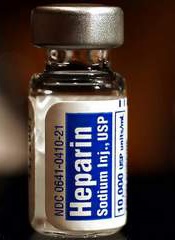
Researchers say they’ve developed a synthetic molecule that can reverse the effects of all heparin products, both in vitro and in vivo.
Finding a drug to reverse the anticoagulant effect of heparin is complicated because there are about a dozen approved heparin products on the market.
None of the available, synthetically made reversal drugs work with all varieties of heparins, and they are relatively toxic, with toxicity varying from person to person.
With all this in mind, Jayachandran Kizhakkedathu, PhD, of the University of British Columbia in Vancouver, and his colleagues set out to create a safe, synthetic antidote that works with all heparins used in clinics today.
They described their results in Science Translational Medicine.
The team created a range of fully synthetic dendritic polymer-based universal heparin reversal agents (UHRAs). These UHRA molecules completely neutralized the activity of unfractionated heparin, tinzaparin, semuloparin, and fondaparinux in vitro.
In comparison, the agent protamine was able to reverse the effects of unfractionated heparin but could only partially reverse the activity of tinzaparin, fondaparinux, and semuloparin.
The UHRA lead molecule, UHRA-7, completely and rapidly neutralized the effects of unfractionated heparin and enoxaparin in rats. Protamine reversed the effects of unfractionated heparin completely but could only reverse 60% of enoxaparin activity.
In mice, UHRA-7 arrested bleeding induced by all the heparins. Mice that received 10 mg/kg of UHRA-7 five minutes after unfractionated or low-molecular-weight heparins had significantly reduced bleeding times and hemoglobin loss compared to mice that received heparin alone (P<0.0001). UHRA-7 at 20 mg/kg arrested the bleeding induced by fondaparinux.
The researchers also assessed the safety of UHRA-7 in mice, monitoring them for 29 days after administration. The team saw no changes in body weight and no signs of acute toxicity in these mice.
Aditionally, there were no changes in lactate dehydrogenase levels in serum and no abnormalities detected by necropsy analysis of the organs.
These results suggest UHRA-7 could benefit patients undergoing high-risk surgical procedures and those requiring treatment for bleeding complications, Dr Kizhakkedathu said.
He noted that a synthetic drug offers consistency in health effects and performance. It also avoids possible immunological reactions sometimes associated with antidotes of biological origin.
Dr Kizhakkedathu and his colleagues plan to continue investigating UHRA-7 in the lab, with the goal of conducting human testing in 3 to 5 years.
Researchers say they’ve developed a synthetic molecule that can reverse the effects of all heparin products, both in vitro and in vivo.
Finding a drug to reverse the anticoagulant effect of heparin is complicated because there are about a dozen approved heparin products on the market.
None of the available, synthetically made reversal drugs work with all varieties of heparins, and they are relatively toxic, with toxicity varying from person to person.
With all this in mind, Jayachandran Kizhakkedathu, PhD, of the University of British Columbia in Vancouver, and his colleagues set out to create a safe, synthetic antidote that works with all heparins used in clinics today.
They described their results in Science Translational Medicine.
The team created a range of fully synthetic dendritic polymer-based universal heparin reversal agents (UHRAs). These UHRA molecules completely neutralized the activity of unfractionated heparin, tinzaparin, semuloparin, and fondaparinux in vitro.
In comparison, the agent protamine was able to reverse the effects of unfractionated heparin but could only partially reverse the activity of tinzaparin, fondaparinux, and semuloparin.
The UHRA lead molecule, UHRA-7, completely and rapidly neutralized the effects of unfractionated heparin and enoxaparin in rats. Protamine reversed the effects of unfractionated heparin completely but could only reverse 60% of enoxaparin activity.
In mice, UHRA-7 arrested bleeding induced by all the heparins. Mice that received 10 mg/kg of UHRA-7 five minutes after unfractionated or low-molecular-weight heparins had significantly reduced bleeding times and hemoglobin loss compared to mice that received heparin alone (P<0.0001). UHRA-7 at 20 mg/kg arrested the bleeding induced by fondaparinux.
The researchers also assessed the safety of UHRA-7 in mice, monitoring them for 29 days after administration. The team saw no changes in body weight and no signs of acute toxicity in these mice.
Aditionally, there were no changes in lactate dehydrogenase levels in serum and no abnormalities detected by necropsy analysis of the organs.
These results suggest UHRA-7 could benefit patients undergoing high-risk surgical procedures and those requiring treatment for bleeding complications, Dr Kizhakkedathu said.
He noted that a synthetic drug offers consistency in health effects and performance. It also avoids possible immunological reactions sometimes associated with antidotes of biological origin.
Dr Kizhakkedathu and his colleagues plan to continue investigating UHRA-7 in the lab, with the goal of conducting human testing in 3 to 5 years.
Researchers say they’ve developed a synthetic molecule that can reverse the effects of all heparin products, both in vitro and in vivo.
Finding a drug to reverse the anticoagulant effect of heparin is complicated because there are about a dozen approved heparin products on the market.
None of the available, synthetically made reversal drugs work with all varieties of heparins, and they are relatively toxic, with toxicity varying from person to person.
With all this in mind, Jayachandran Kizhakkedathu, PhD, of the University of British Columbia in Vancouver, and his colleagues set out to create a safe, synthetic antidote that works with all heparins used in clinics today.
They described their results in Science Translational Medicine.
The team created a range of fully synthetic dendritic polymer-based universal heparin reversal agents (UHRAs). These UHRA molecules completely neutralized the activity of unfractionated heparin, tinzaparin, semuloparin, and fondaparinux in vitro.
In comparison, the agent protamine was able to reverse the effects of unfractionated heparin but could only partially reverse the activity of tinzaparin, fondaparinux, and semuloparin.
The UHRA lead molecule, UHRA-7, completely and rapidly neutralized the effects of unfractionated heparin and enoxaparin in rats. Protamine reversed the effects of unfractionated heparin completely but could only reverse 60% of enoxaparin activity.
In mice, UHRA-7 arrested bleeding induced by all the heparins. Mice that received 10 mg/kg of UHRA-7 five minutes after unfractionated or low-molecular-weight heparins had significantly reduced bleeding times and hemoglobin loss compared to mice that received heparin alone (P<0.0001). UHRA-7 at 20 mg/kg arrested the bleeding induced by fondaparinux.
The researchers also assessed the safety of UHRA-7 in mice, monitoring them for 29 days after administration. The team saw no changes in body weight and no signs of acute toxicity in these mice.
Aditionally, there were no changes in lactate dehydrogenase levels in serum and no abnormalities detected by necropsy analysis of the organs.
These results suggest UHRA-7 could benefit patients undergoing high-risk surgical procedures and those requiring treatment for bleeding complications, Dr Kizhakkedathu said.
He noted that a synthetic drug offers consistency in health effects and performance. It also avoids possible immunological reactions sometimes associated with antidotes of biological origin.
Dr Kizhakkedathu and his colleagues plan to continue investigating UHRA-7 in the lab, with the goal of conducting human testing in 3 to 5 years.
EMA grants product orphan status for AML
The European Medicines Agency (EMA) has granted orphan status to Atir, a product consisting of T-cell-depleted donor immune cells, for the treatment of acute myeloid leukemia (AML).
The EMA and the US Food and Drug Administration previously granted Atir orphan status for the prevention of acute graft-vs-host-disease (GVHD) following hematopoietic stem cell transplant (HSCT).
The EMA’s orphan designation provides incentives to support drug development. This includes fee reductions and a 10-year period of market exclusivity in the European Union after product approval.
About Atir
Atir consists of donor immune cells from which the alloreactive T-cells that would otherwise attack the patient’s body have been selectively eliminated.
The product is produced using a molecule known as TH9402 to selectively remove those T cells from the donor graft, while preserving other immune cells. To activate patient-reactive T cells, the graft is mixed (ex vivo) with patient cells.
Then, TH9402 is added. As this phototoxic compound selectively accumulates in activated T cells, the cells can be eliminated by exposing the cell mixture to light of a specific wavelength. The resulting Atir product can be frozen and stored and is infused into the patient in a scheduled procedure.
Trial data
Researchers said Atir proved safe and effective in a phase 1/2 study in which high-risk leukemia patients with very poor prognosis were treated with escalating doses of Atir after a haploidentical HSCT.
The overall survival of 19 patients who received an optimal dose of Atir was 78% at 1 year and 67% at 5 years, rates that compare favorably to outcomes of HSCTs from fully matched donors. The data also suggest that immune cells responsible for the graft-vs-leukemia effect are retained in Atir.
Five-year follow-up data show that none of the 19 patients developed acute grade 3/4 GVHD, compared to an incidence of 30% in matched unrelated HSCTs. In the 9 patients who received an optimal dose of Atir, there was no transplant-related mortality.
Researchers are currently testing Atir in a phase 2 study of patients with AML, acute lymphoblastic leukemia, and myelodysplastic syndrome, to corroborate and extend the safety and efficacy results from the phase 1/2 study. Data from this trial are expected in the second half of 2014.
Atir is under development by Kiadis Pharma. For more information, visit the company’s website.
The European Medicines Agency (EMA) has granted orphan status to Atir, a product consisting of T-cell-depleted donor immune cells, for the treatment of acute myeloid leukemia (AML).
The EMA and the US Food and Drug Administration previously granted Atir orphan status for the prevention of acute graft-vs-host-disease (GVHD) following hematopoietic stem cell transplant (HSCT).
The EMA’s orphan designation provides incentives to support drug development. This includes fee reductions and a 10-year period of market exclusivity in the European Union after product approval.
About Atir
Atir consists of donor immune cells from which the alloreactive T-cells that would otherwise attack the patient’s body have been selectively eliminated.
The product is produced using a molecule known as TH9402 to selectively remove those T cells from the donor graft, while preserving other immune cells. To activate patient-reactive T cells, the graft is mixed (ex vivo) with patient cells.
Then, TH9402 is added. As this phototoxic compound selectively accumulates in activated T cells, the cells can be eliminated by exposing the cell mixture to light of a specific wavelength. The resulting Atir product can be frozen and stored and is infused into the patient in a scheduled procedure.
Trial data
Researchers said Atir proved safe and effective in a phase 1/2 study in which high-risk leukemia patients with very poor prognosis were treated with escalating doses of Atir after a haploidentical HSCT.
The overall survival of 19 patients who received an optimal dose of Atir was 78% at 1 year and 67% at 5 years, rates that compare favorably to outcomes of HSCTs from fully matched donors. The data also suggest that immune cells responsible for the graft-vs-leukemia effect are retained in Atir.
Five-year follow-up data show that none of the 19 patients developed acute grade 3/4 GVHD, compared to an incidence of 30% in matched unrelated HSCTs. In the 9 patients who received an optimal dose of Atir, there was no transplant-related mortality.
Researchers are currently testing Atir in a phase 2 study of patients with AML, acute lymphoblastic leukemia, and myelodysplastic syndrome, to corroborate and extend the safety and efficacy results from the phase 1/2 study. Data from this trial are expected in the second half of 2014.
Atir is under development by Kiadis Pharma. For more information, visit the company’s website.
The European Medicines Agency (EMA) has granted orphan status to Atir, a product consisting of T-cell-depleted donor immune cells, for the treatment of acute myeloid leukemia (AML).
The EMA and the US Food and Drug Administration previously granted Atir orphan status for the prevention of acute graft-vs-host-disease (GVHD) following hematopoietic stem cell transplant (HSCT).
The EMA’s orphan designation provides incentives to support drug development. This includes fee reductions and a 10-year period of market exclusivity in the European Union after product approval.
About Atir
Atir consists of donor immune cells from which the alloreactive T-cells that would otherwise attack the patient’s body have been selectively eliminated.
The product is produced using a molecule known as TH9402 to selectively remove those T cells from the donor graft, while preserving other immune cells. To activate patient-reactive T cells, the graft is mixed (ex vivo) with patient cells.
Then, TH9402 is added. As this phototoxic compound selectively accumulates in activated T cells, the cells can be eliminated by exposing the cell mixture to light of a specific wavelength. The resulting Atir product can be frozen and stored and is infused into the patient in a scheduled procedure.
Trial data
Researchers said Atir proved safe and effective in a phase 1/2 study in which high-risk leukemia patients with very poor prognosis were treated with escalating doses of Atir after a haploidentical HSCT.
The overall survival of 19 patients who received an optimal dose of Atir was 78% at 1 year and 67% at 5 years, rates that compare favorably to outcomes of HSCTs from fully matched donors. The data also suggest that immune cells responsible for the graft-vs-leukemia effect are retained in Atir.
Five-year follow-up data show that none of the 19 patients developed acute grade 3/4 GVHD, compared to an incidence of 30% in matched unrelated HSCTs. In the 9 patients who received an optimal dose of Atir, there was no transplant-related mortality.
Researchers are currently testing Atir in a phase 2 study of patients with AML, acute lymphoblastic leukemia, and myelodysplastic syndrome, to corroborate and extend the safety and efficacy results from the phase 1/2 study. Data from this trial are expected in the second half of 2014.
Atir is under development by Kiadis Pharma. For more information, visit the company’s website.
Study supports 2:1 ratio for transfusion in pregnancy

PHILADELPHIA—Results of a single-center study suggest that, when it comes to massive transfusion in pregnancy, a 1:1 ratio of red blood cells (RBCs) to plasma is not needed to maintain adequate hemostasis.
A 2:1 ratio produces prothrombin times (PTs), activated partial thromboplastin times (PTTs), and fibrinogen levels within references ranges.
Vanessa Plasencia, MLS (ASCP)CM, of Texas Children’s Hospital in Houston, presented these findings at the AABB Annual Meeting 2014 (abstract S43-030G).
She noted that hospital staff perform approximately 4500 to 5000 deliveries per year, and they define massive transfusion as 4 or more RBC units in 1 hour or 10 or more RBC units in 24 hours.
The hospital’s initial obstetric massive transfusion protocol was 4 units of RBCs and 4 units of plasma to be issued in a cooler. Four units of group AB thawed plasma or liquid plasma were always available.
To determine if this protocol is optimal, Plasencia and her colleagues conducted a retrospective review of patient records from April 2012 to June 2014. During this time, there were 28 cases of massive transfusion.
Two of these patients died and were excluded from the study. One, who had placental abruption, received 131 RBC units and 48 plasma units (ratio=2.7:1). The other, who had placenta percreta, received 90 RBC units and 52 plasma units (ratio=1.7:1).
The median age of the remaining 26 patients was 34 years (range, 24-44). Four of these patients had placenta accreta, 2 had placenta increta, 14 had placenta percreta, and 6 had other complications (such as placental abruption, diabetes, and risks due to advanced-age pregnancy).
A median of 12 RBC units (range, 9-20) and 9 plasma units (range, 5-19) were issued. And a median of 8 RBC units (range, 6-12) and 5 plasma units (range, 4-8) were actually transfused. That translates to RBC-to-plasma ratios of 1.4:1 (range, 1.0-2.0) and 1.7:1 (1.3-2.5), respectively.
So despite the hospital’s protocol of a 1:1 RBC-to-plasma ratio, the actual ratio of transfusion in practice was approximately 2:1, Plasencia noted. And the patients had PT, PTT, and fibrinogen values within reference ranges.
Coagulation data were collected after transfusions took place, once patients were stable. The median PT was 14.8 seconds (range, 14.1-15.2), the median PTT was 29.9 seconds (range, 27.6-33.3), and the median fibrinogen was 283 mg/dL (range, 225-325).
Because of these results, Texas Children’s Hospital decided to change its massive transfusion protocol for obstetrics to a 2:1 RBC-to-plasma ratio. Now, the hospital issues 4 units of RBCs and 2 units of plasma in its initial blood package.
PHILADELPHIA—Results of a single-center study suggest that, when it comes to massive transfusion in pregnancy, a 1:1 ratio of red blood cells (RBCs) to plasma is not needed to maintain adequate hemostasis.
A 2:1 ratio produces prothrombin times (PTs), activated partial thromboplastin times (PTTs), and fibrinogen levels within references ranges.
Vanessa Plasencia, MLS (ASCP)CM, of Texas Children’s Hospital in Houston, presented these findings at the AABB Annual Meeting 2014 (abstract S43-030G).
She noted that hospital staff perform approximately 4500 to 5000 deliveries per year, and they define massive transfusion as 4 or more RBC units in 1 hour or 10 or more RBC units in 24 hours.
The hospital’s initial obstetric massive transfusion protocol was 4 units of RBCs and 4 units of plasma to be issued in a cooler. Four units of group AB thawed plasma or liquid plasma were always available.
To determine if this protocol is optimal, Plasencia and her colleagues conducted a retrospective review of patient records from April 2012 to June 2014. During this time, there were 28 cases of massive transfusion.
Two of these patients died and were excluded from the study. One, who had placental abruption, received 131 RBC units and 48 plasma units (ratio=2.7:1). The other, who had placenta percreta, received 90 RBC units and 52 plasma units (ratio=1.7:1).
The median age of the remaining 26 patients was 34 years (range, 24-44). Four of these patients had placenta accreta, 2 had placenta increta, 14 had placenta percreta, and 6 had other complications (such as placental abruption, diabetes, and risks due to advanced-age pregnancy).
A median of 12 RBC units (range, 9-20) and 9 plasma units (range, 5-19) were issued. And a median of 8 RBC units (range, 6-12) and 5 plasma units (range, 4-8) were actually transfused. That translates to RBC-to-plasma ratios of 1.4:1 (range, 1.0-2.0) and 1.7:1 (1.3-2.5), respectively.
So despite the hospital’s protocol of a 1:1 RBC-to-plasma ratio, the actual ratio of transfusion in practice was approximately 2:1, Plasencia noted. And the patients had PT, PTT, and fibrinogen values within reference ranges.
Coagulation data were collected after transfusions took place, once patients were stable. The median PT was 14.8 seconds (range, 14.1-15.2), the median PTT was 29.9 seconds (range, 27.6-33.3), and the median fibrinogen was 283 mg/dL (range, 225-325).
Because of these results, Texas Children’s Hospital decided to change its massive transfusion protocol for obstetrics to a 2:1 RBC-to-plasma ratio. Now, the hospital issues 4 units of RBCs and 2 units of plasma in its initial blood package.
PHILADELPHIA—Results of a single-center study suggest that, when it comes to massive transfusion in pregnancy, a 1:1 ratio of red blood cells (RBCs) to plasma is not needed to maintain adequate hemostasis.
A 2:1 ratio produces prothrombin times (PTs), activated partial thromboplastin times (PTTs), and fibrinogen levels within references ranges.
Vanessa Plasencia, MLS (ASCP)CM, of Texas Children’s Hospital in Houston, presented these findings at the AABB Annual Meeting 2014 (abstract S43-030G).
She noted that hospital staff perform approximately 4500 to 5000 deliveries per year, and they define massive transfusion as 4 or more RBC units in 1 hour or 10 or more RBC units in 24 hours.
The hospital’s initial obstetric massive transfusion protocol was 4 units of RBCs and 4 units of plasma to be issued in a cooler. Four units of group AB thawed plasma or liquid plasma were always available.
To determine if this protocol is optimal, Plasencia and her colleagues conducted a retrospective review of patient records from April 2012 to June 2014. During this time, there were 28 cases of massive transfusion.
Two of these patients died and were excluded from the study. One, who had placental abruption, received 131 RBC units and 48 plasma units (ratio=2.7:1). The other, who had placenta percreta, received 90 RBC units and 52 plasma units (ratio=1.7:1).
The median age of the remaining 26 patients was 34 years (range, 24-44). Four of these patients had placenta accreta, 2 had placenta increta, 14 had placenta percreta, and 6 had other complications (such as placental abruption, diabetes, and risks due to advanced-age pregnancy).
A median of 12 RBC units (range, 9-20) and 9 plasma units (range, 5-19) were issued. And a median of 8 RBC units (range, 6-12) and 5 plasma units (range, 4-8) were actually transfused. That translates to RBC-to-plasma ratios of 1.4:1 (range, 1.0-2.0) and 1.7:1 (1.3-2.5), respectively.
So despite the hospital’s protocol of a 1:1 RBC-to-plasma ratio, the actual ratio of transfusion in practice was approximately 2:1, Plasencia noted. And the patients had PT, PTT, and fibrinogen values within reference ranges.
Coagulation data were collected after transfusions took place, once patients were stable. The median PT was 14.8 seconds (range, 14.1-15.2), the median PTT was 29.9 seconds (range, 27.6-33.3), and the median fibrinogen was 283 mg/dL (range, 225-325).
Because of these results, Texas Children’s Hospital decided to change its massive transfusion protocol for obstetrics to a 2:1 RBC-to-plasma ratio. Now, the hospital issues 4 units of RBCs and 2 units of plasma in its initial blood package.
Panobinostat demonstrates ‘profound’ synergy with bortezomib

NEW YORK—Calling the synergy with the proteasome inhibitor “profound,” Paul G. Richardson, MD, presented results on the combination of the pan deacetylase inhibitor panobinostat with bortezomib and dexamethasone in relapsed/refractory multiple myeloma (MM).
The phase 3 PANORAMA 1 study confirmed data from the phase 1 and 2 trials, in which the triple combination demonstrated durable responses, even in bortezomib-refractory disease.
Dr Richardson, of the Dana-Farber Cancer Institute in Boston, presented updated data from the PANORAMA 1 trial, which received an award for the most clinically relevant myeloma abstract at the Lymphoma & Myeloma 2014 congress, held October 23–25.
Investigators randomized 768 patients with relapsed or relapsed and refractory MM to receive either panobinostat (n=387) or placebo (n=381) with bortezomib and dexamethasone. Bortezomib-refractory patients were excluded.
The study was conducted in 2 treatment phases, and patients with clinical benefit at the end of the first 24-week phase could proceed to the second treatment phase, consisting of four 42-day cycles.
The primary endpoint was progression-free survival (PFS) according to modified European Society for Blood and Marrow Transplantation criteria.
The key secondary endpoint was overall survival, and additional secondary endpoints included overall response rate, complete response/near complete response, duration of response, time to response, time to progression, quality of life, and safety.
Dr Richardson pointed out that in the first treatment phase, bortezomib was administered twice a week at 1.3 mg/m2 intravenously, and, in the second phase, it was given once a week. The panobinostat dose was 20 mg orally 3 times a week, and oral dexamethasone was given at 20 mg on the same day and the day after bortezomib administration.
Patients were a median age of 63 years, and nearly half (48.4%) had received 2 or more prior therapies, including bortezomib, at 43.7% in the panobinostat arm and 42.3% in the placebo arm. Half the patients had prior exposure to thalidomide, and 1 in 4 patients had received bortezomib and an immunomodulator.
Approximately two-thirds of the patients had relapsed MM, and one-third had relapsed and refractory disease.
Twenty-six percent of patients in either arm completed treatment. Forty-four percent of patients in the panobinostat arm and 50% in the placebo arm entered treatment phase 2.
The dose intensity of panobinostat decreased to 78.2% at cycle 3 and remained stable through the rest of the trial. By cycle 3, the majority of patients were receiving 15 mg of panobinostat.
Results
The 3-drug combination met its primary endpoint, with a clinically relevant increase in median PFS of 3.9 months (P<0.0001).
The benefit with panobinostat was maintained regardless of prior treatment history or baseline characteristics.
“There was benefit across all subgroups,” Dr Richardson said, “but especially in the poor-risk group.”
He noted that the overall survival curve was holding between the 2 arms at about a 3-month difference.
And the complete response/near complete response rate in the panobinostat arm was nearly double that of the control arm, at 27.6% and 15.7%, respectively (P=0.00006).
While not significant, there were clinically meaningful improvements in overall response rate, duration of response, and time to progression. The overall response rate with panobinostat was 34.5%, the clinical benefit rate 52.7%, and the median PFS 5.4 months.
Safety
“Overall, side effects were relatively low,” Dr Richardson said, the major ones consisting of hematologic laboratory abnormalities.
Almost 98% of the patients receiving panobinostat and 83.5% of those in the placebo arm had thrombocytopenia of any grade. And 1.6% of patients on panobinostat discontinued due to thrombocytopenia, compared with 0.5% in the control arm.
Dr Richardson said the thrombocytopenia was reversible and not cumulative. Platelet levels rebounded to baseline by day 1 of each cycle.
Lymphopenia, neutropenia, and anemia were also more frequent in the panobinostat arm.
Nonhematologic adverse events, particularly diarrhea and fatigue, were, for the most part, increased over control, with 4.5% of patients on the panobinostat arm discontinuing due to diarrhea and 2.9% discontinuing due to fatigue.
The incidence of adverse events was lower in the second treatment phase, when bortezomib was administered once a week.
And deaths related to study drug were very low, Dr Richardson said, with 11 in the panobinostat arm and 7 in the control arm.
The triple drug combination is “a very important concept going forward,” Dr Richardson said.
Other combinations and additional histone deacetylase inhibitors are being evaluated for MM.
NEW YORK—Calling the synergy with the proteasome inhibitor “profound,” Paul G. Richardson, MD, presented results on the combination of the pan deacetylase inhibitor panobinostat with bortezomib and dexamethasone in relapsed/refractory multiple myeloma (MM).
The phase 3 PANORAMA 1 study confirmed data from the phase 1 and 2 trials, in which the triple combination demonstrated durable responses, even in bortezomib-refractory disease.
Dr Richardson, of the Dana-Farber Cancer Institute in Boston, presented updated data from the PANORAMA 1 trial, which received an award for the most clinically relevant myeloma abstract at the Lymphoma & Myeloma 2014 congress, held October 23–25.
Investigators randomized 768 patients with relapsed or relapsed and refractory MM to receive either panobinostat (n=387) or placebo (n=381) with bortezomib and dexamethasone. Bortezomib-refractory patients were excluded.
The study was conducted in 2 treatment phases, and patients with clinical benefit at the end of the first 24-week phase could proceed to the second treatment phase, consisting of four 42-day cycles.
The primary endpoint was progression-free survival (PFS) according to modified European Society for Blood and Marrow Transplantation criteria.
The key secondary endpoint was overall survival, and additional secondary endpoints included overall response rate, complete response/near complete response, duration of response, time to response, time to progression, quality of life, and safety.
Dr Richardson pointed out that in the first treatment phase, bortezomib was administered twice a week at 1.3 mg/m2 intravenously, and, in the second phase, it was given once a week. The panobinostat dose was 20 mg orally 3 times a week, and oral dexamethasone was given at 20 mg on the same day and the day after bortezomib administration.
Patients were a median age of 63 years, and nearly half (48.4%) had received 2 or more prior therapies, including bortezomib, at 43.7% in the panobinostat arm and 42.3% in the placebo arm. Half the patients had prior exposure to thalidomide, and 1 in 4 patients had received bortezomib and an immunomodulator.
Approximately two-thirds of the patients had relapsed MM, and one-third had relapsed and refractory disease.
Twenty-six percent of patients in either arm completed treatment. Forty-four percent of patients in the panobinostat arm and 50% in the placebo arm entered treatment phase 2.
The dose intensity of panobinostat decreased to 78.2% at cycle 3 and remained stable through the rest of the trial. By cycle 3, the majority of patients were receiving 15 mg of panobinostat.
Results
The 3-drug combination met its primary endpoint, with a clinically relevant increase in median PFS of 3.9 months (P<0.0001).
The benefit with panobinostat was maintained regardless of prior treatment history or baseline characteristics.
“There was benefit across all subgroups,” Dr Richardson said, “but especially in the poor-risk group.”
He noted that the overall survival curve was holding between the 2 arms at about a 3-month difference.
And the complete response/near complete response rate in the panobinostat arm was nearly double that of the control arm, at 27.6% and 15.7%, respectively (P=0.00006).
While not significant, there were clinically meaningful improvements in overall response rate, duration of response, and time to progression. The overall response rate with panobinostat was 34.5%, the clinical benefit rate 52.7%, and the median PFS 5.4 months.
Safety
“Overall, side effects were relatively low,” Dr Richardson said, the major ones consisting of hematologic laboratory abnormalities.
Almost 98% of the patients receiving panobinostat and 83.5% of those in the placebo arm had thrombocytopenia of any grade. And 1.6% of patients on panobinostat discontinued due to thrombocytopenia, compared with 0.5% in the control arm.
Dr Richardson said the thrombocytopenia was reversible and not cumulative. Platelet levels rebounded to baseline by day 1 of each cycle.
Lymphopenia, neutropenia, and anemia were also more frequent in the panobinostat arm.
Nonhematologic adverse events, particularly diarrhea and fatigue, were, for the most part, increased over control, with 4.5% of patients on the panobinostat arm discontinuing due to diarrhea and 2.9% discontinuing due to fatigue.
The incidence of adverse events was lower in the second treatment phase, when bortezomib was administered once a week.
And deaths related to study drug were very low, Dr Richardson said, with 11 in the panobinostat arm and 7 in the control arm.
The triple drug combination is “a very important concept going forward,” Dr Richardson said.
Other combinations and additional histone deacetylase inhibitors are being evaluated for MM.
NEW YORK—Calling the synergy with the proteasome inhibitor “profound,” Paul G. Richardson, MD, presented results on the combination of the pan deacetylase inhibitor panobinostat with bortezomib and dexamethasone in relapsed/refractory multiple myeloma (MM).
The phase 3 PANORAMA 1 study confirmed data from the phase 1 and 2 trials, in which the triple combination demonstrated durable responses, even in bortezomib-refractory disease.
Dr Richardson, of the Dana-Farber Cancer Institute in Boston, presented updated data from the PANORAMA 1 trial, which received an award for the most clinically relevant myeloma abstract at the Lymphoma & Myeloma 2014 congress, held October 23–25.
Investigators randomized 768 patients with relapsed or relapsed and refractory MM to receive either panobinostat (n=387) or placebo (n=381) with bortezomib and dexamethasone. Bortezomib-refractory patients were excluded.
The study was conducted in 2 treatment phases, and patients with clinical benefit at the end of the first 24-week phase could proceed to the second treatment phase, consisting of four 42-day cycles.
The primary endpoint was progression-free survival (PFS) according to modified European Society for Blood and Marrow Transplantation criteria.
The key secondary endpoint was overall survival, and additional secondary endpoints included overall response rate, complete response/near complete response, duration of response, time to response, time to progression, quality of life, and safety.
Dr Richardson pointed out that in the first treatment phase, bortezomib was administered twice a week at 1.3 mg/m2 intravenously, and, in the second phase, it was given once a week. The panobinostat dose was 20 mg orally 3 times a week, and oral dexamethasone was given at 20 mg on the same day and the day after bortezomib administration.
Patients were a median age of 63 years, and nearly half (48.4%) had received 2 or more prior therapies, including bortezomib, at 43.7% in the panobinostat arm and 42.3% in the placebo arm. Half the patients had prior exposure to thalidomide, and 1 in 4 patients had received bortezomib and an immunomodulator.
Approximately two-thirds of the patients had relapsed MM, and one-third had relapsed and refractory disease.
Twenty-six percent of patients in either arm completed treatment. Forty-four percent of patients in the panobinostat arm and 50% in the placebo arm entered treatment phase 2.
The dose intensity of panobinostat decreased to 78.2% at cycle 3 and remained stable through the rest of the trial. By cycle 3, the majority of patients were receiving 15 mg of panobinostat.
Results
The 3-drug combination met its primary endpoint, with a clinically relevant increase in median PFS of 3.9 months (P<0.0001).
The benefit with panobinostat was maintained regardless of prior treatment history or baseline characteristics.
“There was benefit across all subgroups,” Dr Richardson said, “but especially in the poor-risk group.”
He noted that the overall survival curve was holding between the 2 arms at about a 3-month difference.
And the complete response/near complete response rate in the panobinostat arm was nearly double that of the control arm, at 27.6% and 15.7%, respectively (P=0.00006).
While not significant, there were clinically meaningful improvements in overall response rate, duration of response, and time to progression. The overall response rate with panobinostat was 34.5%, the clinical benefit rate 52.7%, and the median PFS 5.4 months.
Safety
“Overall, side effects were relatively low,” Dr Richardson said, the major ones consisting of hematologic laboratory abnormalities.
Almost 98% of the patients receiving panobinostat and 83.5% of those in the placebo arm had thrombocytopenia of any grade. And 1.6% of patients on panobinostat discontinued due to thrombocytopenia, compared with 0.5% in the control arm.
Dr Richardson said the thrombocytopenia was reversible and not cumulative. Platelet levels rebounded to baseline by day 1 of each cycle.
Lymphopenia, neutropenia, and anemia were also more frequent in the panobinostat arm.
Nonhematologic adverse events, particularly diarrhea and fatigue, were, for the most part, increased over control, with 4.5% of patients on the panobinostat arm discontinuing due to diarrhea and 2.9% discontinuing due to fatigue.
The incidence of adverse events was lower in the second treatment phase, when bortezomib was administered once a week.
And deaths related to study drug were very low, Dr Richardson said, with 11 in the panobinostat arm and 7 in the control arm.
The triple drug combination is “a very important concept going forward,” Dr Richardson said.
Other combinations and additional histone deacetylase inhibitors are being evaluated for MM.
Number of cord blood units doesn’t affect survival
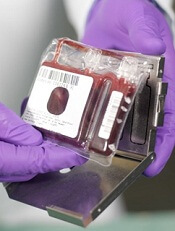
Credit: NHS
Single and double cord blood transplants produce similar outcomes, according to a study of young patients with hematologic disorders.
Researchers found that rates of overall and disease-free survival were not significantly different in patients who received a single unit of cord blood and those who received two units.
Other outcome measures, such as neutrophil recovery, relapse, and transplant-related death, were similar between the two groups as well.
However, patients who received a single cord blood unit showed improved platelet recovery, a lower incidence of grade 3-4 acute graft-vs-host disease (GVHD), and a lower rate of extensive chronic GVHD.
John Wagner, Jr, MD, of the University of Minnesota in Minneapolis, and his colleagues reported these results in NEJM. Dr Wagner previously presented results from this study at ASH 2012.
“Based on promising early studies using two cord blood units in adults for whom one unit is often not sufficient, we designed this study in order to determine if the higher number of blood-forming stem cells in two cord blood units might improve survival,” Dr Wagner said. “What we found, however, was that both treatment arms performed very well, with similar rates of white blood cell recovery and survival.”
The researchers enrolled 224 patients, ages 1 to 21 years, with hematologic disorders, including acute and chronic leukemias as well as myelodysplastic syndromes.
Patients were randomized to receive double-unit (n=111) or single-unit (n=113) cord blood transplants after a uniform myeloablative conditioning regimen and immunoprophylaxis for GVHD.
The researchers matched the treatment arms for age, sex, self-reported race, performance status, degree of donor-recipient HLA matching, disease type, and disease status at transplant.
Survival and relapse
The study’s primary endpoint was 1-year survival, which was 65% in the double-unit arm and 73% in the single-unit arm (P=0.17). In a multivariate analysis, the risk of death did not differ significantly between the arms (hazard ratio=1.34, P=0.20).
Similarly, there was no significant difference in 1-year disease-free survival between the double- and single-unit arms—64% and 70%, respectively (P=0.11). In a multivariate analysis, the risk of relapse or death did not differ significantly between arms (hazard ratio=1.48, P=0.08).
It therefore follows that rates of relapse and transplant-related death were similar at 1 year as well. The incidence of relapse was 14% in the double-unit arm and 12% in the single-unit arm (P=0.12). And rates of transplant-related death were 22% and 19%, respectively (P=0.43).
Recovery and GVHD
The incidence of neutrophil recovery was similar between treatment arms—88% in the double-unit arm and 89% in the single-unit arm (P=0.29) at a median of 23 days (range, 11 to 133) and 21 days (range, 11 to 62) after transplant, respectively.
However, the rate of platelet recovery was significantly higher in the single-unit arm—76% vs 65% (P=0.04). Furthermore, the median time to platelet recovery was 58 days (range, 28 to 295) in the single-unit arm and 84 days (range, 22 to 716) in the double-unit arm.
The rate of grade 2-4 acute GVHD was similar between the treatment arms (P=0.78), but patients in the double-unit arm had a higher incidence of grade 3-4 acute GVHD—23% vs 13% (P=0.02).
There was no difference in the incidence of any chronic GVHD at 1 year after transplant—32% in the double-unit arm and 30% in the single-unit arm (P=0.51). But there was a higher incidence of extensive chronic GVHD after double-unit transplant—15% vs 9% (P=0.05).
“This is helpful news for physicians considering the best treatment options for their patients,” said Joanne Kurtzberg, MD, of Duke University Medical Center in Durham, North Carolina.
“We found children who have a cord blood unit with an adequate number of cells do not benefit from receiving two units. This reduces the cost of a cord blood transplant for the majority of pediatric patients needing the procedure. However, for larger children without an adequately dosed single cord blood unit, using two units will provide access to a potentially life-saving transplant.”
Credit: NHS
Single and double cord blood transplants produce similar outcomes, according to a study of young patients with hematologic disorders.
Researchers found that rates of overall and disease-free survival were not significantly different in patients who received a single unit of cord blood and those who received two units.
Other outcome measures, such as neutrophil recovery, relapse, and transplant-related death, were similar between the two groups as well.
However, patients who received a single cord blood unit showed improved platelet recovery, a lower incidence of grade 3-4 acute graft-vs-host disease (GVHD), and a lower rate of extensive chronic GVHD.
John Wagner, Jr, MD, of the University of Minnesota in Minneapolis, and his colleagues reported these results in NEJM. Dr Wagner previously presented results from this study at ASH 2012.
“Based on promising early studies using two cord blood units in adults for whom one unit is often not sufficient, we designed this study in order to determine if the higher number of blood-forming stem cells in two cord blood units might improve survival,” Dr Wagner said. “What we found, however, was that both treatment arms performed very well, with similar rates of white blood cell recovery and survival.”
The researchers enrolled 224 patients, ages 1 to 21 years, with hematologic disorders, including acute and chronic leukemias as well as myelodysplastic syndromes.
Patients were randomized to receive double-unit (n=111) or single-unit (n=113) cord blood transplants after a uniform myeloablative conditioning regimen and immunoprophylaxis for GVHD.
The researchers matched the treatment arms for age, sex, self-reported race, performance status, degree of donor-recipient HLA matching, disease type, and disease status at transplant.
Survival and relapse
The study’s primary endpoint was 1-year survival, which was 65% in the double-unit arm and 73% in the single-unit arm (P=0.17). In a multivariate analysis, the risk of death did not differ significantly between the arms (hazard ratio=1.34, P=0.20).
Similarly, there was no significant difference in 1-year disease-free survival between the double- and single-unit arms—64% and 70%, respectively (P=0.11). In a multivariate analysis, the risk of relapse or death did not differ significantly between arms (hazard ratio=1.48, P=0.08).
It therefore follows that rates of relapse and transplant-related death were similar at 1 year as well. The incidence of relapse was 14% in the double-unit arm and 12% in the single-unit arm (P=0.12). And rates of transplant-related death were 22% and 19%, respectively (P=0.43).
Recovery and GVHD
The incidence of neutrophil recovery was similar between treatment arms—88% in the double-unit arm and 89% in the single-unit arm (P=0.29) at a median of 23 days (range, 11 to 133) and 21 days (range, 11 to 62) after transplant, respectively.
However, the rate of platelet recovery was significantly higher in the single-unit arm—76% vs 65% (P=0.04). Furthermore, the median time to platelet recovery was 58 days (range, 28 to 295) in the single-unit arm and 84 days (range, 22 to 716) in the double-unit arm.
The rate of grade 2-4 acute GVHD was similar between the treatment arms (P=0.78), but patients in the double-unit arm had a higher incidence of grade 3-4 acute GVHD—23% vs 13% (P=0.02).
There was no difference in the incidence of any chronic GVHD at 1 year after transplant—32% in the double-unit arm and 30% in the single-unit arm (P=0.51). But there was a higher incidence of extensive chronic GVHD after double-unit transplant—15% vs 9% (P=0.05).
“This is helpful news for physicians considering the best treatment options for their patients,” said Joanne Kurtzberg, MD, of Duke University Medical Center in Durham, North Carolina.
“We found children who have a cord blood unit with an adequate number of cells do not benefit from receiving two units. This reduces the cost of a cord blood transplant for the majority of pediatric patients needing the procedure. However, for larger children without an adequately dosed single cord blood unit, using two units will provide access to a potentially life-saving transplant.”
Credit: NHS
Single and double cord blood transplants produce similar outcomes, according to a study of young patients with hematologic disorders.
Researchers found that rates of overall and disease-free survival were not significantly different in patients who received a single unit of cord blood and those who received two units.
Other outcome measures, such as neutrophil recovery, relapse, and transplant-related death, were similar between the two groups as well.
However, patients who received a single cord blood unit showed improved platelet recovery, a lower incidence of grade 3-4 acute graft-vs-host disease (GVHD), and a lower rate of extensive chronic GVHD.
John Wagner, Jr, MD, of the University of Minnesota in Minneapolis, and his colleagues reported these results in NEJM. Dr Wagner previously presented results from this study at ASH 2012.
“Based on promising early studies using two cord blood units in adults for whom one unit is often not sufficient, we designed this study in order to determine if the higher number of blood-forming stem cells in two cord blood units might improve survival,” Dr Wagner said. “What we found, however, was that both treatment arms performed very well, with similar rates of white blood cell recovery and survival.”
The researchers enrolled 224 patients, ages 1 to 21 years, with hematologic disorders, including acute and chronic leukemias as well as myelodysplastic syndromes.
Patients were randomized to receive double-unit (n=111) or single-unit (n=113) cord blood transplants after a uniform myeloablative conditioning regimen and immunoprophylaxis for GVHD.
The researchers matched the treatment arms for age, sex, self-reported race, performance status, degree of donor-recipient HLA matching, disease type, and disease status at transplant.
Survival and relapse
The study’s primary endpoint was 1-year survival, which was 65% in the double-unit arm and 73% in the single-unit arm (P=0.17). In a multivariate analysis, the risk of death did not differ significantly between the arms (hazard ratio=1.34, P=0.20).
Similarly, there was no significant difference in 1-year disease-free survival between the double- and single-unit arms—64% and 70%, respectively (P=0.11). In a multivariate analysis, the risk of relapse or death did not differ significantly between arms (hazard ratio=1.48, P=0.08).
It therefore follows that rates of relapse and transplant-related death were similar at 1 year as well. The incidence of relapse was 14% in the double-unit arm and 12% in the single-unit arm (P=0.12). And rates of transplant-related death were 22% and 19%, respectively (P=0.43).
Recovery and GVHD
The incidence of neutrophil recovery was similar between treatment arms—88% in the double-unit arm and 89% in the single-unit arm (P=0.29) at a median of 23 days (range, 11 to 133) and 21 days (range, 11 to 62) after transplant, respectively.
However, the rate of platelet recovery was significantly higher in the single-unit arm—76% vs 65% (P=0.04). Furthermore, the median time to platelet recovery was 58 days (range, 28 to 295) in the single-unit arm and 84 days (range, 22 to 716) in the double-unit arm.
The rate of grade 2-4 acute GVHD was similar between the treatment arms (P=0.78), but patients in the double-unit arm had a higher incidence of grade 3-4 acute GVHD—23% vs 13% (P=0.02).
There was no difference in the incidence of any chronic GVHD at 1 year after transplant—32% in the double-unit arm and 30% in the single-unit arm (P=0.51). But there was a higher incidence of extensive chronic GVHD after double-unit transplant—15% vs 9% (P=0.05).
“This is helpful news for physicians considering the best treatment options for their patients,” said Joanne Kurtzberg, MD, of Duke University Medical Center in Durham, North Carolina.
“We found children who have a cord blood unit with an adequate number of cells do not benefit from receiving two units. This reduces the cost of a cord blood transplant for the majority of pediatric patients needing the procedure. However, for larger children without an adequately dosed single cord blood unit, using two units will provide access to a potentially life-saving transplant.”
FDA grants drug orphan designation for GVHD

Credit: Bill Branson
The US Food and Drug Administration (FDA) has granted orphan designation for a human alpha-1 antitrypsin (AAT) product known as Glassia to treat graft-vs-host disease (GVHD).
Orphan drug designation carries multiple benefits, including the availability of grant money, certain tax credits, and 7 years of market exclusivity, as well as the possibility of an expedited regulatory process.
Glassia is the first available ready-to-infuse liquid alpha1-proteinase inhibitor.
The product is already approved by the FDA to treat adults with clinically evident emphysema due to severe congenital AAT deficiency. Glassia is given intravenously once a week to augment the levels of AAT, a protein derived from human plasma, in the blood.
In recent years, researchers have discovered that AAT has anti-inflammatory, tissue protective, immunomodulatory, and anti-apoptotic properties in direct or indirect consequence of its underlying antiprotease capabilities.
These properties may attenuate inflammation by lowering levels of proinflammatory mediators such as cytokines, chemokines, and proteases that are associated with GVHD.
Preliminary human and animal studies indicate that Glassia may be able to treat and reduce the severity of GVHD occurring after allogeneic stem cell transplant.
Researchers are now evaluating Glassia in a phase 1/2 study of 24 GVHD patients with inadequate responses to steroid treatment following allogeneic stem cell transplant. The patients are enrolled in 4 dose cohorts, in which they receive up to 8 doses of Glassia. Interim data from this study is expected by the end of this year.
“Results from this phase 1/2 study in GVHD may support global clinical development activities and may serve as a platform to apply for an expansion of the AAT indications to include general organ transplantation, based on a similar mechanism of action,“ said David Tsur, Co-founder and Chief Executive Officer of Kamada, makers of Glassia.
“GVHD is a disease of significant unmet medical need, and both the disease and current therapy options carry considerable side effects. Given the favorable safety profile of Glassia, there is a strong rationale to support the development of this new indication and an increased likelihood of it becoming an effective therapy for this potentially life-threatening disease.”
“We will pursue discussion with the US and European regulators with regard to our development pathway and with an aim to move forward with a more advanced study of Glassia to treat GVHD.”
For more information on Glassia, see the full prescribing information.
Credit: Bill Branson
The US Food and Drug Administration (FDA) has granted orphan designation for a human alpha-1 antitrypsin (AAT) product known as Glassia to treat graft-vs-host disease (GVHD).
Orphan drug designation carries multiple benefits, including the availability of grant money, certain tax credits, and 7 years of market exclusivity, as well as the possibility of an expedited regulatory process.
Glassia is the first available ready-to-infuse liquid alpha1-proteinase inhibitor.
The product is already approved by the FDA to treat adults with clinically evident emphysema due to severe congenital AAT deficiency. Glassia is given intravenously once a week to augment the levels of AAT, a protein derived from human plasma, in the blood.
In recent years, researchers have discovered that AAT has anti-inflammatory, tissue protective, immunomodulatory, and anti-apoptotic properties in direct or indirect consequence of its underlying antiprotease capabilities.
These properties may attenuate inflammation by lowering levels of proinflammatory mediators such as cytokines, chemokines, and proteases that are associated with GVHD.
Preliminary human and animal studies indicate that Glassia may be able to treat and reduce the severity of GVHD occurring after allogeneic stem cell transplant.
Researchers are now evaluating Glassia in a phase 1/2 study of 24 GVHD patients with inadequate responses to steroid treatment following allogeneic stem cell transplant. The patients are enrolled in 4 dose cohorts, in which they receive up to 8 doses of Glassia. Interim data from this study is expected by the end of this year.
“Results from this phase 1/2 study in GVHD may support global clinical development activities and may serve as a platform to apply for an expansion of the AAT indications to include general organ transplantation, based on a similar mechanism of action,“ said David Tsur, Co-founder and Chief Executive Officer of Kamada, makers of Glassia.
“GVHD is a disease of significant unmet medical need, and both the disease and current therapy options carry considerable side effects. Given the favorable safety profile of Glassia, there is a strong rationale to support the development of this new indication and an increased likelihood of it becoming an effective therapy for this potentially life-threatening disease.”
“We will pursue discussion with the US and European regulators with regard to our development pathway and with an aim to move forward with a more advanced study of Glassia to treat GVHD.”
For more information on Glassia, see the full prescribing information.
Credit: Bill Branson
The US Food and Drug Administration (FDA) has granted orphan designation for a human alpha-1 antitrypsin (AAT) product known as Glassia to treat graft-vs-host disease (GVHD).
Orphan drug designation carries multiple benefits, including the availability of grant money, certain tax credits, and 7 years of market exclusivity, as well as the possibility of an expedited regulatory process.
Glassia is the first available ready-to-infuse liquid alpha1-proteinase inhibitor.
The product is already approved by the FDA to treat adults with clinically evident emphysema due to severe congenital AAT deficiency. Glassia is given intravenously once a week to augment the levels of AAT, a protein derived from human plasma, in the blood.
In recent years, researchers have discovered that AAT has anti-inflammatory, tissue protective, immunomodulatory, and anti-apoptotic properties in direct or indirect consequence of its underlying antiprotease capabilities.
These properties may attenuate inflammation by lowering levels of proinflammatory mediators such as cytokines, chemokines, and proteases that are associated with GVHD.
Preliminary human and animal studies indicate that Glassia may be able to treat and reduce the severity of GVHD occurring after allogeneic stem cell transplant.
Researchers are now evaluating Glassia in a phase 1/2 study of 24 GVHD patients with inadequate responses to steroid treatment following allogeneic stem cell transplant. The patients are enrolled in 4 dose cohorts, in which they receive up to 8 doses of Glassia. Interim data from this study is expected by the end of this year.
“Results from this phase 1/2 study in GVHD may support global clinical development activities and may serve as a platform to apply for an expansion of the AAT indications to include general organ transplantation, based on a similar mechanism of action,“ said David Tsur, Co-founder and Chief Executive Officer of Kamada, makers of Glassia.
“GVHD is a disease of significant unmet medical need, and both the disease and current therapy options carry considerable side effects. Given the favorable safety profile of Glassia, there is a strong rationale to support the development of this new indication and an increased likelihood of it becoming an effective therapy for this potentially life-threatening disease.”
“We will pursue discussion with the US and European regulators with regard to our development pathway and with an aim to move forward with a more advanced study of Glassia to treat GVHD.”
For more information on Glassia, see the full prescribing information.