User login
Antiplatelet agent shows promise in phase 1 trial
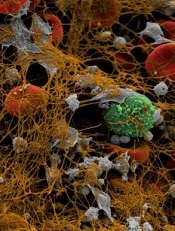
Image by Andre E.X. Brown
Results of a phase 1 study suggest the experimental agent PZ-128 provides rapid and reversible inhibition of platelet aggregation.
PZ-128 inhibited platelet aggregation in a cohort of patients who had vascular disease or multiple risk factors for coronary artery disease.
This effect was dose-dependent and diminished over time. The drug did not affect bleeding, coagulation, clinical chemistry, or ECG parameters.
Investigators reported these results in Arteriosclerosis, Thrombosis and Vascular Biology.
The team explained that PZ-128 is a protease-activated receptor-1 (PAR1)-based pepducin intended as an antiplatelet agent. Pepducins are membrane-tethered, cell-penetrating lipopeptides that target the cytoplasmic surface of their cognate receptor.
The current study is the first demonstration of pepducins’ potential benefits in humans, said study author Athan Kuliopulos, MD, PhD, of Tufts Medical Center in Boston, Massachusetts.
He and his colleagues tested PZ-128 in 31 patients, ages 43 to 74. The patients had vascular disease (22%)—coronary artery disease, previous myocardial infarction, etc.—or multiple coronary artery disease risk factors—dyslipidemia (81%), hypertension (69%), diabetes (34%), etc.
Many of the patients were taking other medications at baseline, including blood pressure medications (66%), aspirin (63%), lipid-lowering medications (56%), and diabetes medications (22%).
The patients received PZ-128 by 1- to 2-hour-long intravenous infusion at doses ranging from 0.01 mg/kg to 2 mg/kg. The investigators evaluated patients at baseline and 0.5, 1, 2, 6, and 24 hours after dosing, as well as 7 to 10 days after dosing.
PZ-128 had a dose-dependent inhibitory effect on platelet aggregation stimulated by the PAR1 agonist SFLLRN (8 µmol/L). At 30 minutes to 6 hours after dosing, the investigators observed 20% to 40% inhibition with PZ-128 at 0.3 mg/kg, 40% to 60% inhibition at 0.5 mg/kg, and 80% to 100% inhibition at 1 to 2 mg/kg.
Patients who were receiving aspirin in the 0.5 mg/kg and 1 mg/kg dose cohorts had 65% to 100% inhibition of final aggregation to SFLLRN at 30 minutes to 2 hours after dosing and 95% to 100% inhibition by 6 hours.
The impact of PZ-128 was reversible, with 50% recovery of aggregation to SFLLRN by 24 hours and near-complete recovery by 192 hours.
The investigators said PZ-128 did not have any significant effects on aggregation induced by AYPGKF, ADP, or collagen, which suggests the observed effects were specific to PAR1.
Likewise, the team said PZ-128 did not have any significant effects on bleeding, coagulation, clinical chemistry, or ECG parameters.
The investigators noted that there are currently no drugs on the market that target PAR1 and can be used during procedures when the risk of serious complications is high.
The PAR1 inhibitor vorapaxar is available for non-acute use in patients with a prior myocardial infarction or current peripheral artery disease. But the drug, whose effects build slowly and are long-lasting, was not approved for use during cardiac procedures due to a risk of excessive bleeding, Dr Kuliopulos said.
By contrast, PZ-128 appears able to block PAR1 fast enough to be used in an urgent procedure and for a time short enough to limit bleeding risk afterward, he said. Of course, more research is needed to confirm this.
To that end, the investigators are planning a phase 2 study of PZ-128 in up to 600 patients who have acute coronary syndromes or are undergoing percutaneous coronary intervention. 
Image by Andre E.X. Brown
Results of a phase 1 study suggest the experimental agent PZ-128 provides rapid and reversible inhibition of platelet aggregation.
PZ-128 inhibited platelet aggregation in a cohort of patients who had vascular disease or multiple risk factors for coronary artery disease.
This effect was dose-dependent and diminished over time. The drug did not affect bleeding, coagulation, clinical chemistry, or ECG parameters.
Investigators reported these results in Arteriosclerosis, Thrombosis and Vascular Biology.
The team explained that PZ-128 is a protease-activated receptor-1 (PAR1)-based pepducin intended as an antiplatelet agent. Pepducins are membrane-tethered, cell-penetrating lipopeptides that target the cytoplasmic surface of their cognate receptor.
The current study is the first demonstration of pepducins’ potential benefits in humans, said study author Athan Kuliopulos, MD, PhD, of Tufts Medical Center in Boston, Massachusetts.
He and his colleagues tested PZ-128 in 31 patients, ages 43 to 74. The patients had vascular disease (22%)—coronary artery disease, previous myocardial infarction, etc.—or multiple coronary artery disease risk factors—dyslipidemia (81%), hypertension (69%), diabetes (34%), etc.
Many of the patients were taking other medications at baseline, including blood pressure medications (66%), aspirin (63%), lipid-lowering medications (56%), and diabetes medications (22%).
The patients received PZ-128 by 1- to 2-hour-long intravenous infusion at doses ranging from 0.01 mg/kg to 2 mg/kg. The investigators evaluated patients at baseline and 0.5, 1, 2, 6, and 24 hours after dosing, as well as 7 to 10 days after dosing.
PZ-128 had a dose-dependent inhibitory effect on platelet aggregation stimulated by the PAR1 agonist SFLLRN (8 µmol/L). At 30 minutes to 6 hours after dosing, the investigators observed 20% to 40% inhibition with PZ-128 at 0.3 mg/kg, 40% to 60% inhibition at 0.5 mg/kg, and 80% to 100% inhibition at 1 to 2 mg/kg.
Patients who were receiving aspirin in the 0.5 mg/kg and 1 mg/kg dose cohorts had 65% to 100% inhibition of final aggregation to SFLLRN at 30 minutes to 2 hours after dosing and 95% to 100% inhibition by 6 hours.
The impact of PZ-128 was reversible, with 50% recovery of aggregation to SFLLRN by 24 hours and near-complete recovery by 192 hours.
The investigators said PZ-128 did not have any significant effects on aggregation induced by AYPGKF, ADP, or collagen, which suggests the observed effects were specific to PAR1.
Likewise, the team said PZ-128 did not have any significant effects on bleeding, coagulation, clinical chemistry, or ECG parameters.
The investigators noted that there are currently no drugs on the market that target PAR1 and can be used during procedures when the risk of serious complications is high.
The PAR1 inhibitor vorapaxar is available for non-acute use in patients with a prior myocardial infarction or current peripheral artery disease. But the drug, whose effects build slowly and are long-lasting, was not approved for use during cardiac procedures due to a risk of excessive bleeding, Dr Kuliopulos said.
By contrast, PZ-128 appears able to block PAR1 fast enough to be used in an urgent procedure and for a time short enough to limit bleeding risk afterward, he said. Of course, more research is needed to confirm this.
To that end, the investigators are planning a phase 2 study of PZ-128 in up to 600 patients who have acute coronary syndromes or are undergoing percutaneous coronary intervention.
Image by Andre E.X. Brown
Results of a phase 1 study suggest the experimental agent PZ-128 provides rapid and reversible inhibition of platelet aggregation.
PZ-128 inhibited platelet aggregation in a cohort of patients who had vascular disease or multiple risk factors for coronary artery disease.
This effect was dose-dependent and diminished over time. The drug did not affect bleeding, coagulation, clinical chemistry, or ECG parameters.
Investigators reported these results in Arteriosclerosis, Thrombosis and Vascular Biology.
The team explained that PZ-128 is a protease-activated receptor-1 (PAR1)-based pepducin intended as an antiplatelet agent. Pepducins are membrane-tethered, cell-penetrating lipopeptides that target the cytoplasmic surface of their cognate receptor.
The current study is the first demonstration of pepducins’ potential benefits in humans, said study author Athan Kuliopulos, MD, PhD, of Tufts Medical Center in Boston, Massachusetts.
He and his colleagues tested PZ-128 in 31 patients, ages 43 to 74. The patients had vascular disease (22%)—coronary artery disease, previous myocardial infarction, etc.—or multiple coronary artery disease risk factors—dyslipidemia (81%), hypertension (69%), diabetes (34%), etc.
Many of the patients were taking other medications at baseline, including blood pressure medications (66%), aspirin (63%), lipid-lowering medications (56%), and diabetes medications (22%).
The patients received PZ-128 by 1- to 2-hour-long intravenous infusion at doses ranging from 0.01 mg/kg to 2 mg/kg. The investigators evaluated patients at baseline and 0.5, 1, 2, 6, and 24 hours after dosing, as well as 7 to 10 days after dosing.
PZ-128 had a dose-dependent inhibitory effect on platelet aggregation stimulated by the PAR1 agonist SFLLRN (8 µmol/L). At 30 minutes to 6 hours after dosing, the investigators observed 20% to 40% inhibition with PZ-128 at 0.3 mg/kg, 40% to 60% inhibition at 0.5 mg/kg, and 80% to 100% inhibition at 1 to 2 mg/kg.
Patients who were receiving aspirin in the 0.5 mg/kg and 1 mg/kg dose cohorts had 65% to 100% inhibition of final aggregation to SFLLRN at 30 minutes to 2 hours after dosing and 95% to 100% inhibition by 6 hours.
The impact of PZ-128 was reversible, with 50% recovery of aggregation to SFLLRN by 24 hours and near-complete recovery by 192 hours.
The investigators said PZ-128 did not have any significant effects on aggregation induced by AYPGKF, ADP, or collagen, which suggests the observed effects were specific to PAR1.
Likewise, the team said PZ-128 did not have any significant effects on bleeding, coagulation, clinical chemistry, or ECG parameters.
The investigators noted that there are currently no drugs on the market that target PAR1 and can be used during procedures when the risk of serious complications is high.
The PAR1 inhibitor vorapaxar is available for non-acute use in patients with a prior myocardial infarction or current peripheral artery disease. But the drug, whose effects build slowly and are long-lasting, was not approved for use during cardiac procedures due to a risk of excessive bleeding, Dr Kuliopulos said.
By contrast, PZ-128 appears able to block PAR1 fast enough to be used in an urgent procedure and for a time short enough to limit bleeding risk afterward, he said. Of course, more research is needed to confirm this.
To that end, the investigators are planning a phase 2 study of PZ-128 in up to 600 patients who have acute coronary syndromes or are undergoing percutaneous coronary intervention.
Venetoclax produces deep responses in ultra-high-risk CLL
Photo courtesy of ASH
ORLANDO, FL—The pivotal phase 2 study of venetoclax monotherapy in patients with relapsed/refractory 17p-deleted chronic lymphocytic leukemia (CLL) has achieved unprecedented deep responses, according to investigators.
More than 10% of patients had a complete response (CR), complete response with incomplete blood count recovery (CRi), or near partial response (nPR), as confirmed by an independent review committee (IRC).
And more than 20% of responders became negative for minimal residual disease (MRD).
Venetoclax is an orally bioavailable, selective BCL-2 inhibitor that directly induces apoptosis in CLL cells independent of p53.
The US Food and Drug Administration granted venetoclax breakthrough therapy designation for relapsed/refractory CLL earlier this year.
“Patients with a 17p deletion in CLL have very poor prognosis,” said Stephan Stilgenbauer, MD, of University of Ulm in Germany, “and limited treatment options.”
The median progression-free survival (PFS) with frontline chemoimmunotherapy in this population is less than 12 months.
The first-in-human study of venetoclax, which was recently published in NEJM, showed a 79% overall response rate (ORR) in relapsed/refractory CLL patients.
Dr Stilgenbauer presented the pivotal phase 2 results at the 2015 ASH Annual Meeting as LBA-6.
Study overview
The primary objective of the trial was ORR by independent review committee. The secondary endpoints were CR/PR rates, time to first response, duration of response, PFS, overall survival (OS), and safety.
Investigators also included the exploratory endpoint of MRD as determined by flow cytometry with a sensitivity of less than 10-4.
Patients had to have an ECOG score of 2 or less, an absolute neutrophil count of 1000/μL or greater, a platelet count of 40,000/mm3 or higher, and a hemoglobin count of at least 8 g/dL. They also had to have a creatinine clearance of 50 mL/min or more.
“With regard to performance status, blood counts, and creatinine clearance,” Dr Stilgenbauer said, “inclusion criteria were relatively liberal, allowing patients with comorbidity on the trial.”
Patients were excluded if they had prior allogeneic stem cell transplantation, Richter’s transformation, uncontrolled autoimmune cytopenia, other malignancy, or major organ dysfunction.
Trial design
Patients received an oral dose of venetoclax once daily continuously until disease progression or discontinuation for another reason.
Because tumor lysis syndrome (TLS) was a concern, investigators devised a step-wise weekly ramp-up with risk-based prophylaxis to mitigate TLS.
Patients started on a dose of 20 mg on day 1. If they did not experience any electrolyte abnormalities, they received a 50 mg daily dose for the rest of the first week, escalating to 100 mg, 200 mg, and to the target dose of 400 mg daily on subsequent weeks. Patients continued on 400 mg daily for the remainder of the study.
The investigators assessed response using iwCLL 2008 criteria with monthly physical exams and blood counts, CT scans to confirm clinical response at week 36, and a bone marrow biopsy to confirm CR.
Patient population and disposition
Investigators enrolled 107 patients with a median age of 67 (range, 37–85). Seventy (65%) were male.
Patients had a median of 2 prior therapies (range, 1–10): 54 (50%) had prior bendamustine and 38 (70%) were refractory to it; 78 (73%) had prior fludarabine and 34 (44%) were refractory to it; and 90 (84%) had a prior CD20 monoclonal antibody.
About half (52%) were ECOG grade 1, 53% had 1 or more nodes 5 cm or larger, and 51% had absolute lymphocyte (ALC) levels 25 x 109/L or higher.
Eighty-two percent of patients were in the medium and high TLS risk categories, slightly less than half were Rai stage III or IV, and 81% were IGHV unmutated.
As of the data lock on April 30, 2015, patients remained a median of 12.1 months on study (range, 0.03–21.5). Seventy are still active on venetoclax, and 37 discontinued the treatment.
Eleven patients discontinued due to Richter’s transformation, 11 due to CLL progression, and 9 due to adverse events. Three patients proceeded to stem cell transplant, 2 withdrew consent, and 1 was noncompliant.
Eighteen patients died, 14 due to disease progression.
Response
Eighty-five patients responded, for an ORR of 79.4% by IRC. Eight patients (7.5%) achieved a CR or CRi, 3 (2.8%) had an nPR, and 74 (69.2%) had a PR. Twenty-two patients (20.6%) had no response.
Twenty-five of 48 patients had no evidence of CLL in their bone marrow by immunohistochemistry, and 18 of 45 patients assessed were MRD-negative in the peripheral blood.
Reduction in lymphocytosis “was quite a universal phenomenon across this trial,” Dr Stilgenbauer said. Only 4 patients of 87 with baseline lymphocytosis failed to reduce their lymphocyte count to below 4 x 10⁹/L, the usual threshold for a CR. And the median time to normalization was 22 days (range, 2–122).
Eighty-nine of 96 patients had 50% or more reduction in their nodal size in a median of 2.7 months (range, 0.7–8.4).
The median time to first response was 0.8 months (range, 0.1–8.1), and the median time to CR/CRi was 8.2 months (range, 3.0–16.3).
“And this number still appears to evolve over the duration of the trial,” Dr Stilgenbauer said.
The median duration of response has not yet been reached. But investigators estimated that of the 85 responders, 84.7% would maintain their response at 12 months, 100% of patients in the CR/CRi and nPR groups would maintain their response, and 94.4% of patients who were MRD-negative would maintain their response.
The median PFS and OS have not been reached. The PFS estimate for 12 months was 72.0%, and the OS estimate was 86.7%.
Adverse events
Treatment-emergent adverse events of any grade occurred in 96% of patients. The most frequent were neutropenia (43%), diarrhea (29%), nausea (29%), anemia (27%), fatigue (22%), pyrexia (20%), thrombocytopenia (19%), hyperphosphatemia (16%), vomiting (15%), and upper respiratory tract infection (15%).
The most frequent grade 3/4 adverse events were neutropenia (40%), anemia (18%), and thrombocytopenia (15%).
Dr Stilgenbauer pointed out that 22.4% of patients had neutropenia at baseline. Neutropenia was managed with dose interruption or reduction, G-CSF, and/or antibiotics.
Infections occurred in 72% of patients, with 20% of patients experiencing grade 3 or higher.
“The types of infections were the usual expected ones,” Dr Stilgenbauer said.
Laboratory TLS occurred in 5 patients exclusively during the ramp-up period. Two required a dose interruption of 1 day each. There were no clinical TLS events.
Serious adverse events occurred in 55% of patients, the most common being pyrexia (7%), autoimmune hemolytic anemia (7%), pneumonia (6%), and febrile neutropenia (5%).
The investigators concluded that venetoclax offers a favorable risk-benefit profile. The risk of TLS can be effectively mitigated with no clinical TLS, and the incidence of neutropenia and infection are similar to frontline chemoimmunotherapy.
“Venetoclax may provide an attractive treatment option for 17p-deleted CLL as monotherapy or as a component of novel combination strategies,” Dr Stilgenbauer said.
AbbVie and Genentech, collaborators in the development of venetoclax, provided financial support for the study design, study conduct, analysis, data interpretation, writing, and review.
Photo courtesy of ASH
ORLANDO, FL—The pivotal phase 2 study of venetoclax monotherapy in patients with relapsed/refractory 17p-deleted chronic lymphocytic leukemia (CLL) has achieved unprecedented deep responses, according to investigators.
More than 10% of patients had a complete response (CR), complete response with incomplete blood count recovery (CRi), or near partial response (nPR), as confirmed by an independent review committee (IRC).
And more than 20% of responders became negative for minimal residual disease (MRD).
Venetoclax is an orally bioavailable, selective BCL-2 inhibitor that directly induces apoptosis in CLL cells independent of p53.
The US Food and Drug Administration granted venetoclax breakthrough therapy designation for relapsed/refractory CLL earlier this year.
“Patients with a 17p deletion in CLL have very poor prognosis,” said Stephan Stilgenbauer, MD, of University of Ulm in Germany, “and limited treatment options.”
The median progression-free survival (PFS) with frontline chemoimmunotherapy in this population is less than 12 months.
The first-in-human study of venetoclax, which was recently published in NEJM, showed a 79% overall response rate (ORR) in relapsed/refractory CLL patients.
Dr Stilgenbauer presented the pivotal phase 2 results at the 2015 ASH Annual Meeting as LBA-6.
Study overview
The primary objective of the trial was ORR by independent review committee. The secondary endpoints were CR/PR rates, time to first response, duration of response, PFS, overall survival (OS), and safety.
Investigators also included the exploratory endpoint of MRD as determined by flow cytometry with a sensitivity of less than 10-4.
Patients had to have an ECOG score of 2 or less, an absolute neutrophil count of 1000/μL or greater, a platelet count of 40,000/mm3 or higher, and a hemoglobin count of at least 8 g/dL. They also had to have a creatinine clearance of 50 mL/min or more.
“With regard to performance status, blood counts, and creatinine clearance,” Dr Stilgenbauer said, “inclusion criteria were relatively liberal, allowing patients with comorbidity on the trial.”
Patients were excluded if they had prior allogeneic stem cell transplantation, Richter’s transformation, uncontrolled autoimmune cytopenia, other malignancy, or major organ dysfunction.
Trial design
Patients received an oral dose of venetoclax once daily continuously until disease progression or discontinuation for another reason.
Because tumor lysis syndrome (TLS) was a concern, investigators devised a step-wise weekly ramp-up with risk-based prophylaxis to mitigate TLS.
Patients started on a dose of 20 mg on day 1. If they did not experience any electrolyte abnormalities, they received a 50 mg daily dose for the rest of the first week, escalating to 100 mg, 200 mg, and to the target dose of 400 mg daily on subsequent weeks. Patients continued on 400 mg daily for the remainder of the study.
The investigators assessed response using iwCLL 2008 criteria with monthly physical exams and blood counts, CT scans to confirm clinical response at week 36, and a bone marrow biopsy to confirm CR.
Patient population and disposition
Investigators enrolled 107 patients with a median age of 67 (range, 37–85). Seventy (65%) were male.
Patients had a median of 2 prior therapies (range, 1–10): 54 (50%) had prior bendamustine and 38 (70%) were refractory to it; 78 (73%) had prior fludarabine and 34 (44%) were refractory to it; and 90 (84%) had a prior CD20 monoclonal antibody.
About half (52%) were ECOG grade 1, 53% had 1 or more nodes 5 cm or larger, and 51% had absolute lymphocyte (ALC) levels 25 x 109/L or higher.
Eighty-two percent of patients were in the medium and high TLS risk categories, slightly less than half were Rai stage III or IV, and 81% were IGHV unmutated.
As of the data lock on April 30, 2015, patients remained a median of 12.1 months on study (range, 0.03–21.5). Seventy are still active on venetoclax, and 37 discontinued the treatment.
Eleven patients discontinued due to Richter’s transformation, 11 due to CLL progression, and 9 due to adverse events. Three patients proceeded to stem cell transplant, 2 withdrew consent, and 1 was noncompliant.
Eighteen patients died, 14 due to disease progression.
Response
Eighty-five patients responded, for an ORR of 79.4% by IRC. Eight patients (7.5%) achieved a CR or CRi, 3 (2.8%) had an nPR, and 74 (69.2%) had a PR. Twenty-two patients (20.6%) had no response.
Twenty-five of 48 patients had no evidence of CLL in their bone marrow by immunohistochemistry, and 18 of 45 patients assessed were MRD-negative in the peripheral blood.
Reduction in lymphocytosis “was quite a universal phenomenon across this trial,” Dr Stilgenbauer said. Only 4 patients of 87 with baseline lymphocytosis failed to reduce their lymphocyte count to below 4 x 10⁹/L, the usual threshold for a CR. And the median time to normalization was 22 days (range, 2–122).
Eighty-nine of 96 patients had 50% or more reduction in their nodal size in a median of 2.7 months (range, 0.7–8.4).
The median time to first response was 0.8 months (range, 0.1–8.1), and the median time to CR/CRi was 8.2 months (range, 3.0–16.3).
“And this number still appears to evolve over the duration of the trial,” Dr Stilgenbauer said.
The median duration of response has not yet been reached. But investigators estimated that of the 85 responders, 84.7% would maintain their response at 12 months, 100% of patients in the CR/CRi and nPR groups would maintain their response, and 94.4% of patients who were MRD-negative would maintain their response.
The median PFS and OS have not been reached. The PFS estimate for 12 months was 72.0%, and the OS estimate was 86.7%.
Adverse events
Treatment-emergent adverse events of any grade occurred in 96% of patients. The most frequent were neutropenia (43%), diarrhea (29%), nausea (29%), anemia (27%), fatigue (22%), pyrexia (20%), thrombocytopenia (19%), hyperphosphatemia (16%), vomiting (15%), and upper respiratory tract infection (15%).
The most frequent grade 3/4 adverse events were neutropenia (40%), anemia (18%), and thrombocytopenia (15%).
Dr Stilgenbauer pointed out that 22.4% of patients had neutropenia at baseline. Neutropenia was managed with dose interruption or reduction, G-CSF, and/or antibiotics.
Infections occurred in 72% of patients, with 20% of patients experiencing grade 3 or higher.
“The types of infections were the usual expected ones,” Dr Stilgenbauer said.
Laboratory TLS occurred in 5 patients exclusively during the ramp-up period. Two required a dose interruption of 1 day each. There were no clinical TLS events.
Serious adverse events occurred in 55% of patients, the most common being pyrexia (7%), autoimmune hemolytic anemia (7%), pneumonia (6%), and febrile neutropenia (5%).
The investigators concluded that venetoclax offers a favorable risk-benefit profile. The risk of TLS can be effectively mitigated with no clinical TLS, and the incidence of neutropenia and infection are similar to frontline chemoimmunotherapy.
“Venetoclax may provide an attractive treatment option for 17p-deleted CLL as monotherapy or as a component of novel combination strategies,” Dr Stilgenbauer said.
AbbVie and Genentech, collaborators in the development of venetoclax, provided financial support for the study design, study conduct, analysis, data interpretation, writing, and review.
Photo courtesy of ASH
ORLANDO, FL—The pivotal phase 2 study of venetoclax monotherapy in patients with relapsed/refractory 17p-deleted chronic lymphocytic leukemia (CLL) has achieved unprecedented deep responses, according to investigators.
More than 10% of patients had a complete response (CR), complete response with incomplete blood count recovery (CRi), or near partial response (nPR), as confirmed by an independent review committee (IRC).
And more than 20% of responders became negative for minimal residual disease (MRD).
Venetoclax is an orally bioavailable, selective BCL-2 inhibitor that directly induces apoptosis in CLL cells independent of p53.
The US Food and Drug Administration granted venetoclax breakthrough therapy designation for relapsed/refractory CLL earlier this year.
“Patients with a 17p deletion in CLL have very poor prognosis,” said Stephan Stilgenbauer, MD, of University of Ulm in Germany, “and limited treatment options.”
The median progression-free survival (PFS) with frontline chemoimmunotherapy in this population is less than 12 months.
The first-in-human study of venetoclax, which was recently published in NEJM, showed a 79% overall response rate (ORR) in relapsed/refractory CLL patients.
Dr Stilgenbauer presented the pivotal phase 2 results at the 2015 ASH Annual Meeting as LBA-6.
Study overview
The primary objective of the trial was ORR by independent review committee. The secondary endpoints were CR/PR rates, time to first response, duration of response, PFS, overall survival (OS), and safety.
Investigators also included the exploratory endpoint of MRD as determined by flow cytometry with a sensitivity of less than 10-4.
Patients had to have an ECOG score of 2 or less, an absolute neutrophil count of 1000/μL or greater, a platelet count of 40,000/mm3 or higher, and a hemoglobin count of at least 8 g/dL. They also had to have a creatinine clearance of 50 mL/min or more.
“With regard to performance status, blood counts, and creatinine clearance,” Dr Stilgenbauer said, “inclusion criteria were relatively liberal, allowing patients with comorbidity on the trial.”
Patients were excluded if they had prior allogeneic stem cell transplantation, Richter’s transformation, uncontrolled autoimmune cytopenia, other malignancy, or major organ dysfunction.
Trial design
Patients received an oral dose of venetoclax once daily continuously until disease progression or discontinuation for another reason.
Because tumor lysis syndrome (TLS) was a concern, investigators devised a step-wise weekly ramp-up with risk-based prophylaxis to mitigate TLS.
Patients started on a dose of 20 mg on day 1. If they did not experience any electrolyte abnormalities, they received a 50 mg daily dose for the rest of the first week, escalating to 100 mg, 200 mg, and to the target dose of 400 mg daily on subsequent weeks. Patients continued on 400 mg daily for the remainder of the study.
The investigators assessed response using iwCLL 2008 criteria with monthly physical exams and blood counts, CT scans to confirm clinical response at week 36, and a bone marrow biopsy to confirm CR.
Patient population and disposition
Investigators enrolled 107 patients with a median age of 67 (range, 37–85). Seventy (65%) were male.
Patients had a median of 2 prior therapies (range, 1–10): 54 (50%) had prior bendamustine and 38 (70%) were refractory to it; 78 (73%) had prior fludarabine and 34 (44%) were refractory to it; and 90 (84%) had a prior CD20 monoclonal antibody.
About half (52%) were ECOG grade 1, 53% had 1 or more nodes 5 cm or larger, and 51% had absolute lymphocyte (ALC) levels 25 x 109/L or higher.
Eighty-two percent of patients were in the medium and high TLS risk categories, slightly less than half were Rai stage III or IV, and 81% were IGHV unmutated.
As of the data lock on April 30, 2015, patients remained a median of 12.1 months on study (range, 0.03–21.5). Seventy are still active on venetoclax, and 37 discontinued the treatment.
Eleven patients discontinued due to Richter’s transformation, 11 due to CLL progression, and 9 due to adverse events. Three patients proceeded to stem cell transplant, 2 withdrew consent, and 1 was noncompliant.
Eighteen patients died, 14 due to disease progression.
Response
Eighty-five patients responded, for an ORR of 79.4% by IRC. Eight patients (7.5%) achieved a CR or CRi, 3 (2.8%) had an nPR, and 74 (69.2%) had a PR. Twenty-two patients (20.6%) had no response.
Twenty-five of 48 patients had no evidence of CLL in their bone marrow by immunohistochemistry, and 18 of 45 patients assessed were MRD-negative in the peripheral blood.
Reduction in lymphocytosis “was quite a universal phenomenon across this trial,” Dr Stilgenbauer said. Only 4 patients of 87 with baseline lymphocytosis failed to reduce their lymphocyte count to below 4 x 10⁹/L, the usual threshold for a CR. And the median time to normalization was 22 days (range, 2–122).
Eighty-nine of 96 patients had 50% or more reduction in their nodal size in a median of 2.7 months (range, 0.7–8.4).
The median time to first response was 0.8 months (range, 0.1–8.1), and the median time to CR/CRi was 8.2 months (range, 3.0–16.3).
“And this number still appears to evolve over the duration of the trial,” Dr Stilgenbauer said.
The median duration of response has not yet been reached. But investigators estimated that of the 85 responders, 84.7% would maintain their response at 12 months, 100% of patients in the CR/CRi and nPR groups would maintain their response, and 94.4% of patients who were MRD-negative would maintain their response.
The median PFS and OS have not been reached. The PFS estimate for 12 months was 72.0%, and the OS estimate was 86.7%.
Adverse events
Treatment-emergent adverse events of any grade occurred in 96% of patients. The most frequent were neutropenia (43%), diarrhea (29%), nausea (29%), anemia (27%), fatigue (22%), pyrexia (20%), thrombocytopenia (19%), hyperphosphatemia (16%), vomiting (15%), and upper respiratory tract infection (15%).
The most frequent grade 3/4 adverse events were neutropenia (40%), anemia (18%), and thrombocytopenia (15%).
Dr Stilgenbauer pointed out that 22.4% of patients had neutropenia at baseline. Neutropenia was managed with dose interruption or reduction, G-CSF, and/or antibiotics.
Infections occurred in 72% of patients, with 20% of patients experiencing grade 3 or higher.
“The types of infections were the usual expected ones,” Dr Stilgenbauer said.
Laboratory TLS occurred in 5 patients exclusively during the ramp-up period. Two required a dose interruption of 1 day each. There were no clinical TLS events.
Serious adverse events occurred in 55% of patients, the most common being pyrexia (7%), autoimmune hemolytic anemia (7%), pneumonia (6%), and febrile neutropenia (5%).
The investigators concluded that venetoclax offers a favorable risk-benefit profile. The risk of TLS can be effectively mitigated with no clinical TLS, and the incidence of neutropenia and infection are similar to frontline chemoimmunotherapy.
“Venetoclax may provide an attractive treatment option for 17p-deleted CLL as monotherapy or as a component of novel combination strategies,” Dr Stilgenbauer said.
AbbVie and Genentech, collaborators in the development of venetoclax, provided financial support for the study design, study conduct, analysis, data interpretation, writing, and review.
CAR T cells persist for 3 years in young ALL patients
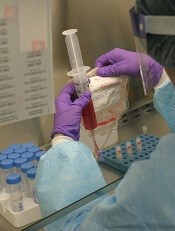
Photo courtesy of Penn Medicine
ORLANDO, FL—CTL019, a CD19 chimeric antigen receptor (CAR) T-cell therapy, can persist for 3 years or longer in children and young adults with relapsed/refractory acute lymphoblastic leukemia (ALL), according to the latest results of a pilot study.
This suggests CTL019 can offer long-term disease control without subsequent therapy, such as stem cell transplant, said study author Stephan Grupp, MD, PhD, of the University of Pennsylvania in Philadelphia.
Dr Grupp presented these results at the 2015 ASH Annual Meeting (abstract 681*).
Previously, Dr Grupp and his colleagues reported that CTL019 led to durable antitumor activity, including sustained complete responses (CRs) in adults and children with ALL (ASH 2012, NEJM 2013, ASH 2013, NEJM 2014, ASH 2014).
At this year’s ASH meeting, he reported on outcomes and longer follow-up of the first 59 patients with relapsed/refractory ALL treated in a pilot trial. The patients had a median age of 11 years.
The median follow-up was 12 months. Fifty-five patients (93%) achieved a CR at 1 month. Six patients went on to receive a transplant, and 1 patient went on to receive donor lymphocyte infusion.
The relapse-free survival was 76% at 6 months and 55% at 12 months. Overall survival was 79% at 12 months.
“There were no relapses past 1 year,” Dr Grupp said, noting that 18 patients beyond 1 year are in remission, and 13 patients have not received further therapy.
“We are able to get patients into remission,” he said, adding that response is similar at high and low disease burden.
“We see massive proliferation of CAR T cells. Prolonged CTL019 persistence is detected by flow cytometry. About 70% of patients maintain CAR T cells.”
Resistance was seen in 7% of patients due to failure of T cells to proliferate. One-third of recurrences occurred in those with CD19-positive relapse and two-thirds with CD19-negative relapse.
Dr Grupp noted that CTL019 has an impact on central nervous system (CNS) disease.
“We are able to control CNS disease,” he said. “We found no CNS relapses in patients who were treated, and 98% of them still have CTL019 in the cerebral spinal fluid.”
B-cell aplasia persists beyond 3.5 years in all responding patients. This is managed by immunoglobulin replacement.
“Patients in remission and with B-cell aplasia at 1 year are still alive at 2 to 3 years,” Dr Grupp said. “We do not know how long this will last and if B cells will recover.”
Severe cytokine release syndrome (CRS), observed in 88% of patients, is the principal toxicity. This is controlled with anti-IL6 therapy. Patients who are less likely to have CRS are those with a lower disease burden.
“IL-6 is a major player but does not predict CRS; it only correlates strongly with it,” Dr Grupp said.
Some toxicity is also associated with macrophage activation syndrome and neurotoxicity.
CTL019 was invented at The University of Pennsylvania but has been licensed to Novartis. Most of the researchers involved in this study reported research funding and/or consultancy payments from Novartis, and 1 researcher is employed by the company.
*Data in the abstract differ from the presentation.
Photo courtesy of Penn Medicine
ORLANDO, FL—CTL019, a CD19 chimeric antigen receptor (CAR) T-cell therapy, can persist for 3 years or longer in children and young adults with relapsed/refractory acute lymphoblastic leukemia (ALL), according to the latest results of a pilot study.
This suggests CTL019 can offer long-term disease control without subsequent therapy, such as stem cell transplant, said study author Stephan Grupp, MD, PhD, of the University of Pennsylvania in Philadelphia.
Dr Grupp presented these results at the 2015 ASH Annual Meeting (abstract 681*).
Previously, Dr Grupp and his colleagues reported that CTL019 led to durable antitumor activity, including sustained complete responses (CRs) in adults and children with ALL (ASH 2012, NEJM 2013, ASH 2013, NEJM 2014, ASH 2014).
At this year’s ASH meeting, he reported on outcomes and longer follow-up of the first 59 patients with relapsed/refractory ALL treated in a pilot trial. The patients had a median age of 11 years.
The median follow-up was 12 months. Fifty-five patients (93%) achieved a CR at 1 month. Six patients went on to receive a transplant, and 1 patient went on to receive donor lymphocyte infusion.
The relapse-free survival was 76% at 6 months and 55% at 12 months. Overall survival was 79% at 12 months.
“There were no relapses past 1 year,” Dr Grupp said, noting that 18 patients beyond 1 year are in remission, and 13 patients have not received further therapy.
“We are able to get patients into remission,” he said, adding that response is similar at high and low disease burden.
“We see massive proliferation of CAR T cells. Prolonged CTL019 persistence is detected by flow cytometry. About 70% of patients maintain CAR T cells.”
Resistance was seen in 7% of patients due to failure of T cells to proliferate. One-third of recurrences occurred in those with CD19-positive relapse and two-thirds with CD19-negative relapse.
Dr Grupp noted that CTL019 has an impact on central nervous system (CNS) disease.
“We are able to control CNS disease,” he said. “We found no CNS relapses in patients who were treated, and 98% of them still have CTL019 in the cerebral spinal fluid.”
B-cell aplasia persists beyond 3.5 years in all responding patients. This is managed by immunoglobulin replacement.
“Patients in remission and with B-cell aplasia at 1 year are still alive at 2 to 3 years,” Dr Grupp said. “We do not know how long this will last and if B cells will recover.”
Severe cytokine release syndrome (CRS), observed in 88% of patients, is the principal toxicity. This is controlled with anti-IL6 therapy. Patients who are less likely to have CRS are those with a lower disease burden.
“IL-6 is a major player but does not predict CRS; it only correlates strongly with it,” Dr Grupp said.
Some toxicity is also associated with macrophage activation syndrome and neurotoxicity.
CTL019 was invented at The University of Pennsylvania but has been licensed to Novartis. Most of the researchers involved in this study reported research funding and/or consultancy payments from Novartis, and 1 researcher is employed by the company.
*Data in the abstract differ from the presentation.
Photo courtesy of Penn Medicine
ORLANDO, FL—CTL019, a CD19 chimeric antigen receptor (CAR) T-cell therapy, can persist for 3 years or longer in children and young adults with relapsed/refractory acute lymphoblastic leukemia (ALL), according to the latest results of a pilot study.
This suggests CTL019 can offer long-term disease control without subsequent therapy, such as stem cell transplant, said study author Stephan Grupp, MD, PhD, of the University of Pennsylvania in Philadelphia.
Dr Grupp presented these results at the 2015 ASH Annual Meeting (abstract 681*).
Previously, Dr Grupp and his colleagues reported that CTL019 led to durable antitumor activity, including sustained complete responses (CRs) in adults and children with ALL (ASH 2012, NEJM 2013, ASH 2013, NEJM 2014, ASH 2014).
At this year’s ASH meeting, he reported on outcomes and longer follow-up of the first 59 patients with relapsed/refractory ALL treated in a pilot trial. The patients had a median age of 11 years.
The median follow-up was 12 months. Fifty-five patients (93%) achieved a CR at 1 month. Six patients went on to receive a transplant, and 1 patient went on to receive donor lymphocyte infusion.
The relapse-free survival was 76% at 6 months and 55% at 12 months. Overall survival was 79% at 12 months.
“There were no relapses past 1 year,” Dr Grupp said, noting that 18 patients beyond 1 year are in remission, and 13 patients have not received further therapy.
“We are able to get patients into remission,” he said, adding that response is similar at high and low disease burden.
“We see massive proliferation of CAR T cells. Prolonged CTL019 persistence is detected by flow cytometry. About 70% of patients maintain CAR T cells.”
Resistance was seen in 7% of patients due to failure of T cells to proliferate. One-third of recurrences occurred in those with CD19-positive relapse and two-thirds with CD19-negative relapse.
Dr Grupp noted that CTL019 has an impact on central nervous system (CNS) disease.
“We are able to control CNS disease,” he said. “We found no CNS relapses in patients who were treated, and 98% of them still have CTL019 in the cerebral spinal fluid.”
B-cell aplasia persists beyond 3.5 years in all responding patients. This is managed by immunoglobulin replacement.
“Patients in remission and with B-cell aplasia at 1 year are still alive at 2 to 3 years,” Dr Grupp said. “We do not know how long this will last and if B cells will recover.”
Severe cytokine release syndrome (CRS), observed in 88% of patients, is the principal toxicity. This is controlled with anti-IL6 therapy. Patients who are less likely to have CRS are those with a lower disease burden.
“IL-6 is a major player but does not predict CRS; it only correlates strongly with it,” Dr Grupp said.
Some toxicity is also associated with macrophage activation syndrome and neurotoxicity.
CTL019 was invented at The University of Pennsylvania but has been licensed to Novartis. Most of the researchers involved in this study reported research funding and/or consultancy payments from Novartis, and 1 researcher is employed by the company.
*Data in the abstract differ from the presentation.
Graft source and timing of HSCT affect survival in SCD
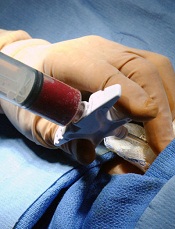
Photo by Chad McNeeley
ORLANDO, FL—In a large, registry-based study, transplants from human leukocyte antigen (HLA)-identical sibling donors proved successful in more than 90% of children and adults with severe sickle cell disease (SCD).
However, younger patients and those who received bone marrow (BM) or cord blood (CB) transplants fared the best.
Patient age and stem cell source were both independently associated with event-free and overall survival.
These results suggest SCD patients should be referred for transplant early but should not receive peripheral blood stem cell (PBSC) transplants, said Barbara Cappelli, MD, of the Eurocord International Registry in Paris, France.
Dr Cappelli presented the results of this study at the 2015 ASH Annual Meeting (abstract 541*).
The study included 1000 SCD patients who received HLA-identical sibling transplants from 1986 through 2013. The transplants took place at 88 centers in 23 countries and were reported to the Eurocord-Monacord/European Group for Blood and Marrow Transplantation and the Center for International Blood and Marrow Transplant Research.
The patients’ median age was 9 (range, 1-54), and most (85%) were younger than 16. Most patients (94%) were homozygotes for hemoglobin S. Most had received red blood cell transfusions (94%), and a little more than half had received hydroxyurea (56%).
About half of HSCTs (53%) were performed after 2007, 29% from 2000 to 2006, 16% from 1991 to 1999, and 2% before 1999.
The most common indication for HSCT was recurrent vaso-occlusive crisis (77%), followed by stroke or central nervous system event (48%), and recurrent chest syndrome (32%), among other indications.
Most patients received BM transplants (84%), although a minority received CB (9%) or PBSC (7%) transplants.
A majority of patients received myeloablative conditioning regimens (n=873, 87%), largely based on the combination of busulfan and cyclophosphamide (n=719). Among the patients who received reduced-intensity conditioning (n=127, 13%), fludarabine with cyclophosphamide was the predominant regimen (n=48).
Most regimens included in vivo T-cell depletion (70%) with anti-thymocyte globulin (n=630) or alemtuzumab (n=76). The most common regimen for graft-vs-host disease (GVHD) prophylaxis was cyclosporine plus methotrexate (56%).
Results
The median follow-up was 45 months (range, 1-325).
At 60 days, the cumulative incidence of neutrophil engraftment was 98%, and the median time to neutrophil engraftment was 19 days. The cumulative incidence of platelet engraftment was 96%, and the median time to platelet engraftment was 25 days.
Acute GVHD occurred in 14.4% of patients, and chronic GVHD occurred 13.3%.
Multivariate analysis showed that the risk of acute GVHD was significantly higher in older patients, but none of the variables the researchers tested (T-cell depletion, conditioning regimen, etc.) were associated with chronic GVHD.
Younger age at HSCT and receiving a BM or CB transplant were independently associated with better event-free survival and overall survival. Undergoing HSCT after the year 2000 was associated with better overall survival.
The 3-year event-free survival was 90% overall, 90% for patients who received BM transplants, 78% for those who received PBSCs, and 97% for those who received CB transplants.
The 3-year overall survival was 94% overall, 94% for patients who received BM transplants, 80% for those who received PBSCs, and 99% for those who received CB transplants.
Seventy-one patients (7%) had autologous reconstitution (45 with late graft failure), 31 (3%) underwent a second HSCT, and 67 (7%) died—6% in the BM group, 21% in the PBSC group, and 1% in the CB group.
Death was related to transplant in 59 cases—14 due to infection, 12 due to toxicity, 9 due to GVHD, and 24 were of an unknown (but presumably HSCT-related) cause.
Three patients died from disease recurrence or persistence, 2 died from secondary malignancies, and 3 had unknown causes of death.
“This study shows excellent 3-year overall and event-free survival, with limited toxicity, despite the use of myeloablative conditioning regimens,” Dr Cappelli noted. “This should increase the early referral to transplant for patients with severe sickle cell disease, as age is an independent predictor for event-free survival and overall survival.”
She added that PBSC transplants “are not recommended,” as they were associated with higher mortality. And novel strategies are needed for lowing rates of graft failure and GVHD in SCD patients.
*Data in the abstract differ from the presentation.
Photo by Chad McNeeley
ORLANDO, FL—In a large, registry-based study, transplants from human leukocyte antigen (HLA)-identical sibling donors proved successful in more than 90% of children and adults with severe sickle cell disease (SCD).
However, younger patients and those who received bone marrow (BM) or cord blood (CB) transplants fared the best.
Patient age and stem cell source were both independently associated with event-free and overall survival.
These results suggest SCD patients should be referred for transplant early but should not receive peripheral blood stem cell (PBSC) transplants, said Barbara Cappelli, MD, of the Eurocord International Registry in Paris, France.
Dr Cappelli presented the results of this study at the 2015 ASH Annual Meeting (abstract 541*).
The study included 1000 SCD patients who received HLA-identical sibling transplants from 1986 through 2013. The transplants took place at 88 centers in 23 countries and were reported to the Eurocord-Monacord/European Group for Blood and Marrow Transplantation and the Center for International Blood and Marrow Transplant Research.
The patients’ median age was 9 (range, 1-54), and most (85%) were younger than 16. Most patients (94%) were homozygotes for hemoglobin S. Most had received red blood cell transfusions (94%), and a little more than half had received hydroxyurea (56%).
About half of HSCTs (53%) were performed after 2007, 29% from 2000 to 2006, 16% from 1991 to 1999, and 2% before 1999.
The most common indication for HSCT was recurrent vaso-occlusive crisis (77%), followed by stroke or central nervous system event (48%), and recurrent chest syndrome (32%), among other indications.
Most patients received BM transplants (84%), although a minority received CB (9%) or PBSC (7%) transplants.
A majority of patients received myeloablative conditioning regimens (n=873, 87%), largely based on the combination of busulfan and cyclophosphamide (n=719). Among the patients who received reduced-intensity conditioning (n=127, 13%), fludarabine with cyclophosphamide was the predominant regimen (n=48).
Most regimens included in vivo T-cell depletion (70%) with anti-thymocyte globulin (n=630) or alemtuzumab (n=76). The most common regimen for graft-vs-host disease (GVHD) prophylaxis was cyclosporine plus methotrexate (56%).
Results
The median follow-up was 45 months (range, 1-325).
At 60 days, the cumulative incidence of neutrophil engraftment was 98%, and the median time to neutrophil engraftment was 19 days. The cumulative incidence of platelet engraftment was 96%, and the median time to platelet engraftment was 25 days.
Acute GVHD occurred in 14.4% of patients, and chronic GVHD occurred 13.3%.
Multivariate analysis showed that the risk of acute GVHD was significantly higher in older patients, but none of the variables the researchers tested (T-cell depletion, conditioning regimen, etc.) were associated with chronic GVHD.
Younger age at HSCT and receiving a BM or CB transplant were independently associated with better event-free survival and overall survival. Undergoing HSCT after the year 2000 was associated with better overall survival.
The 3-year event-free survival was 90% overall, 90% for patients who received BM transplants, 78% for those who received PBSCs, and 97% for those who received CB transplants.
The 3-year overall survival was 94% overall, 94% for patients who received BM transplants, 80% for those who received PBSCs, and 99% for those who received CB transplants.
Seventy-one patients (7%) had autologous reconstitution (45 with late graft failure), 31 (3%) underwent a second HSCT, and 67 (7%) died—6% in the BM group, 21% in the PBSC group, and 1% in the CB group.
Death was related to transplant in 59 cases—14 due to infection, 12 due to toxicity, 9 due to GVHD, and 24 were of an unknown (but presumably HSCT-related) cause.
Three patients died from disease recurrence or persistence, 2 died from secondary malignancies, and 3 had unknown causes of death.
“This study shows excellent 3-year overall and event-free survival, with limited toxicity, despite the use of myeloablative conditioning regimens,” Dr Cappelli noted. “This should increase the early referral to transplant for patients with severe sickle cell disease, as age is an independent predictor for event-free survival and overall survival.”
She added that PBSC transplants “are not recommended,” as they were associated with higher mortality. And novel strategies are needed for lowing rates of graft failure and GVHD in SCD patients.
*Data in the abstract differ from the presentation.
Photo by Chad McNeeley
ORLANDO, FL—In a large, registry-based study, transplants from human leukocyte antigen (HLA)-identical sibling donors proved successful in more than 90% of children and adults with severe sickle cell disease (SCD).
However, younger patients and those who received bone marrow (BM) or cord blood (CB) transplants fared the best.
Patient age and stem cell source were both independently associated with event-free and overall survival.
These results suggest SCD patients should be referred for transplant early but should not receive peripheral blood stem cell (PBSC) transplants, said Barbara Cappelli, MD, of the Eurocord International Registry in Paris, France.
Dr Cappelli presented the results of this study at the 2015 ASH Annual Meeting (abstract 541*).
The study included 1000 SCD patients who received HLA-identical sibling transplants from 1986 through 2013. The transplants took place at 88 centers in 23 countries and were reported to the Eurocord-Monacord/European Group for Blood and Marrow Transplantation and the Center for International Blood and Marrow Transplant Research.
The patients’ median age was 9 (range, 1-54), and most (85%) were younger than 16. Most patients (94%) were homozygotes for hemoglobin S. Most had received red blood cell transfusions (94%), and a little more than half had received hydroxyurea (56%).
About half of HSCTs (53%) were performed after 2007, 29% from 2000 to 2006, 16% from 1991 to 1999, and 2% before 1999.
The most common indication for HSCT was recurrent vaso-occlusive crisis (77%), followed by stroke or central nervous system event (48%), and recurrent chest syndrome (32%), among other indications.
Most patients received BM transplants (84%), although a minority received CB (9%) or PBSC (7%) transplants.
A majority of patients received myeloablative conditioning regimens (n=873, 87%), largely based on the combination of busulfan and cyclophosphamide (n=719). Among the patients who received reduced-intensity conditioning (n=127, 13%), fludarabine with cyclophosphamide was the predominant regimen (n=48).
Most regimens included in vivo T-cell depletion (70%) with anti-thymocyte globulin (n=630) or alemtuzumab (n=76). The most common regimen for graft-vs-host disease (GVHD) prophylaxis was cyclosporine plus methotrexate (56%).
Results
The median follow-up was 45 months (range, 1-325).
At 60 days, the cumulative incidence of neutrophil engraftment was 98%, and the median time to neutrophil engraftment was 19 days. The cumulative incidence of platelet engraftment was 96%, and the median time to platelet engraftment was 25 days.
Acute GVHD occurred in 14.4% of patients, and chronic GVHD occurred 13.3%.
Multivariate analysis showed that the risk of acute GVHD was significantly higher in older patients, but none of the variables the researchers tested (T-cell depletion, conditioning regimen, etc.) were associated with chronic GVHD.
Younger age at HSCT and receiving a BM or CB transplant were independently associated with better event-free survival and overall survival. Undergoing HSCT after the year 2000 was associated with better overall survival.
The 3-year event-free survival was 90% overall, 90% for patients who received BM transplants, 78% for those who received PBSCs, and 97% for those who received CB transplants.
The 3-year overall survival was 94% overall, 94% for patients who received BM transplants, 80% for those who received PBSCs, and 99% for those who received CB transplants.
Seventy-one patients (7%) had autologous reconstitution (45 with late graft failure), 31 (3%) underwent a second HSCT, and 67 (7%) died—6% in the BM group, 21% in the PBSC group, and 1% in the CB group.
Death was related to transplant in 59 cases—14 due to infection, 12 due to toxicity, 9 due to GVHD, and 24 were of an unknown (but presumably HSCT-related) cause.
Three patients died from disease recurrence or persistence, 2 died from secondary malignancies, and 3 had unknown causes of death.
“This study shows excellent 3-year overall and event-free survival, with limited toxicity, despite the use of myeloablative conditioning regimens,” Dr Cappelli noted. “This should increase the early referral to transplant for patients with severe sickle cell disease, as age is an independent predictor for event-free survival and overall survival.”
She added that PBSC transplants “are not recommended,” as they were associated with higher mortality. And novel strategies are needed for lowing rates of graft failure and GVHD in SCD patients.
*Data in the abstract differ from the presentation.
Preoperative VTE prophylaxis is safe for cancer patients, team says
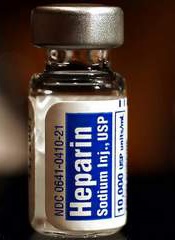
Preoperative anticoagulant therapy is safe and effective for cancer patients, a single-center study suggests.
Among patients undergoing major cancer operations, the preoperative use of anticoagulants did not increase rates of major bleeding or transfusion.
And the treatment proved effective, decreasing the risk of venous thromboembolism (VTE).
Researchers reported these results in the Journal of the American College of Surgeons.
The team conducted this study after discovering that their institution, Memorial Sloan Kettering Cancer Center in New York, New York, had higher-than-expected rates of deep vein thrombosis (DVT) and pulmonary embolism (PE).
This was according to the American College of Surgeons National Surgical Quality Improvement Project (ACS NSQIP®) database, a nationally validated, risk-adjusted, outcomes-based program to measure and improve the quality of surgical care in hospitals.
So the researchers set out to identify the reason for their high VTE rate and lower it.
“We weren’t sure if our VTE rate was due to the complexity of our operations, the fact that our patients had cancer, or that we weren’t administering heparin, which could decrease the blood clots,” said study author Vivian Strong, MD.
“There was serious concern that administering preoperative VTE prophylaxis to our patients, who undergo extensive surgical resection, would increase the risk of bleeding,” said Luke V. Selby, MD.
“Knowing, from NSQIP, that we had a higher-than-expected VTE rate, the question was whether it was safe to expose our patients to the additional bleeding risk from VTE prophylaxis.”
To find out, the researchers selected 2058 patients undergoing major operations for cancer to receive preoperative VTE prophylaxis with low-molecular-weight heparin or unfractionated heparin.
The team compared these patients—called the “post-intervention cohort”—with a group of 4960 cancer patients who had already undergone a major surgical procedure a year earlier but, for the most part, did not receive preoperative VTE prophylaxis—the “pre-intervention cohort.” Forty patients in this group did receive VTE prophylaxis.
There was no significant difference in the rate of major bleeding between the pre- and post-intervention cohorts. The major bleeding rates were 0.8% and 0.5%, respectively (P=0.2).
The rate of any documented bleeding was actually higher in the pre-intervention group—4.2% vs 2.5% (P=0.001)—as was the rate of transfusion—17% vs 14% (P=0.0003).
As expected, rates of DVT and PE were significantly lower in the post-intervention group. The rate of DVT was 1.3% in the pre-intervention group and 0.2% in the post-intervention group (P<0.0001). The rates of PE were 1.0% and 0.4%, respectively (P=0.017).
Because of these findings, Memorial Sloan Kettering Cancer Center has adopted a routine anticoagulation approach for patients who meet certain selection criteria.
“This research has been a practice-changing study for our institution,” Dr Strong said. “Our study results demonstrate to other institutions that you can use preoperative VTE prophylaxis safely, so I think that it has very broad-reaching, practice-changing implications.”
Preoperative anticoagulant therapy is safe and effective for cancer patients, a single-center study suggests.
Among patients undergoing major cancer operations, the preoperative use of anticoagulants did not increase rates of major bleeding or transfusion.
And the treatment proved effective, decreasing the risk of venous thromboembolism (VTE).
Researchers reported these results in the Journal of the American College of Surgeons.
The team conducted this study after discovering that their institution, Memorial Sloan Kettering Cancer Center in New York, New York, had higher-than-expected rates of deep vein thrombosis (DVT) and pulmonary embolism (PE).
This was according to the American College of Surgeons National Surgical Quality Improvement Project (ACS NSQIP®) database, a nationally validated, risk-adjusted, outcomes-based program to measure and improve the quality of surgical care in hospitals.
So the researchers set out to identify the reason for their high VTE rate and lower it.
“We weren’t sure if our VTE rate was due to the complexity of our operations, the fact that our patients had cancer, or that we weren’t administering heparin, which could decrease the blood clots,” said study author Vivian Strong, MD.
“There was serious concern that administering preoperative VTE prophylaxis to our patients, who undergo extensive surgical resection, would increase the risk of bleeding,” said Luke V. Selby, MD.
“Knowing, from NSQIP, that we had a higher-than-expected VTE rate, the question was whether it was safe to expose our patients to the additional bleeding risk from VTE prophylaxis.”
To find out, the researchers selected 2058 patients undergoing major operations for cancer to receive preoperative VTE prophylaxis with low-molecular-weight heparin or unfractionated heparin.
The team compared these patients—called the “post-intervention cohort”—with a group of 4960 cancer patients who had already undergone a major surgical procedure a year earlier but, for the most part, did not receive preoperative VTE prophylaxis—the “pre-intervention cohort.” Forty patients in this group did receive VTE prophylaxis.
There was no significant difference in the rate of major bleeding between the pre- and post-intervention cohorts. The major bleeding rates were 0.8% and 0.5%, respectively (P=0.2).
The rate of any documented bleeding was actually higher in the pre-intervention group—4.2% vs 2.5% (P=0.001)—as was the rate of transfusion—17% vs 14% (P=0.0003).
As expected, rates of DVT and PE were significantly lower in the post-intervention group. The rate of DVT was 1.3% in the pre-intervention group and 0.2% in the post-intervention group (P<0.0001). The rates of PE were 1.0% and 0.4%, respectively (P=0.017).
Because of these findings, Memorial Sloan Kettering Cancer Center has adopted a routine anticoagulation approach for patients who meet certain selection criteria.
“This research has been a practice-changing study for our institution,” Dr Strong said. “Our study results demonstrate to other institutions that you can use preoperative VTE prophylaxis safely, so I think that it has very broad-reaching, practice-changing implications.”
Preoperative anticoagulant therapy is safe and effective for cancer patients, a single-center study suggests.
Among patients undergoing major cancer operations, the preoperative use of anticoagulants did not increase rates of major bleeding or transfusion.
And the treatment proved effective, decreasing the risk of venous thromboembolism (VTE).
Researchers reported these results in the Journal of the American College of Surgeons.
The team conducted this study after discovering that their institution, Memorial Sloan Kettering Cancer Center in New York, New York, had higher-than-expected rates of deep vein thrombosis (DVT) and pulmonary embolism (PE).
This was according to the American College of Surgeons National Surgical Quality Improvement Project (ACS NSQIP®) database, a nationally validated, risk-adjusted, outcomes-based program to measure and improve the quality of surgical care in hospitals.
So the researchers set out to identify the reason for their high VTE rate and lower it.
“We weren’t sure if our VTE rate was due to the complexity of our operations, the fact that our patients had cancer, or that we weren’t administering heparin, which could decrease the blood clots,” said study author Vivian Strong, MD.
“There was serious concern that administering preoperative VTE prophylaxis to our patients, who undergo extensive surgical resection, would increase the risk of bleeding,” said Luke V. Selby, MD.
“Knowing, from NSQIP, that we had a higher-than-expected VTE rate, the question was whether it was safe to expose our patients to the additional bleeding risk from VTE prophylaxis.”
To find out, the researchers selected 2058 patients undergoing major operations for cancer to receive preoperative VTE prophylaxis with low-molecular-weight heparin or unfractionated heparin.
The team compared these patients—called the “post-intervention cohort”—with a group of 4960 cancer patients who had already undergone a major surgical procedure a year earlier but, for the most part, did not receive preoperative VTE prophylaxis—the “pre-intervention cohort.” Forty patients in this group did receive VTE prophylaxis.
There was no significant difference in the rate of major bleeding between the pre- and post-intervention cohorts. The major bleeding rates were 0.8% and 0.5%, respectively (P=0.2).
The rate of any documented bleeding was actually higher in the pre-intervention group—4.2% vs 2.5% (P=0.001)—as was the rate of transfusion—17% vs 14% (P=0.0003).
As expected, rates of DVT and PE were significantly lower in the post-intervention group. The rate of DVT was 1.3% in the pre-intervention group and 0.2% in the post-intervention group (P<0.0001). The rates of PE were 1.0% and 0.4%, respectively (P=0.017).
Because of these findings, Memorial Sloan Kettering Cancer Center has adopted a routine anticoagulation approach for patients who meet certain selection criteria.
“This research has been a practice-changing study for our institution,” Dr Strong said. “Our study results demonstrate to other institutions that you can use preoperative VTE prophylaxis safely, so I think that it has very broad-reaching, practice-changing implications.”
SAA patients benefit from upfront eltrombopag combo
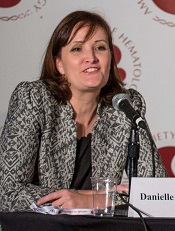
Photo courtesy of ASH
ORLANDO, FL—Investigators are pursuing an upfront approval for eltrombopag in combination with immunosuppressive therapy for the treatment of severe aplastic anemia (SAA).
Based on eltrombopag’s single-agent activity in refractory SAA, they hypothesized that its addition to standard immunosuppressive therapy of horse antithymocyte globulin (hATG) and cyclosporine (CsA) in the first-line setting could improve patient outcome.
And, in a phase 2 trial, it did.
“The addition of eltrombopag resulted in over 20% higher overall response rates and complete response rates for both 3 and 6 months,” said Danielle
Townsley, MD, who presented the data at the 2015 ASH Annual Meeting.
Dr Townsley, of the National Heart, Lung, and Blood Institute, National Institutes of Health, in Bethesda, Maryland, presented the findings as abstract LBA-2.*
The US Food and Drug Administration approved eltrombopag to treat refractory SAA in November 2014, and the European Commission approved it in 2015.
Investigators believed eltrombopag in the upfront, treatment-naïve setting could yield higher overall response rates (ORRs) than the 60% to 70% achieved with standard immunosuppressives worldwide.
“[It was] logical to consider treating patients early at the start of their disease,” Dr Townsley said.
So she and her colleagues conducted an investigator-initiated, phase 2, single-center trial of eltrombopag combined with immunosuppressive agents for first-line treatment of SAA.
Study design and patient population
Patients had to have confirmed treatment-naïve SAA, be a minimum of 2 years old, and weigh more than 12 kg. They were excluded if they had prior immunosuppressive therapy with ATG, alemtuzumab, or cyclophosphamide. They were also excluded if they had liver cirrhosis, AST/ALT more than 5 times normal, or Fanconi anemia.
Primary endpoints of the study were complete response (CR) at 6 months and toxicity. Secondary endpoints included ORR and partial response (PR) rate, survival, clonal evolution, and relapse.
Investigators defined CR as having an absolute neutrophil count (ANC) of 1000/μL or higher, a hemoglobin level of 10 g/dL or higher, and a platelet count of 100,000/μL or higher. They defined PR as blood counts no longer meeting criteria for SAA or CR.
All 92 patients received standard hATG (on days 1 to 4) and CsA (for 6 months). Patients in cohort 1 (n=30) also received eltrombopag at 150 mg daily, starting on day 14 for 6 months.
Patients in cohort 2 (n=31) received eltrombopag at 150 mg daily, starting on day 14 for 3 months. And the 31 patients in cohort 3 started 150 mg of daily eltrombopag simultaneously with the immunosuppressants and continued to receive the drug for 6 months.
Investigators assessed response at 3 and 6 months and planned to follow patients for at least 5 years.
Patients in all cohorts were a median of 32 years (range, 3–82), with 21% being younger than 18. About half were male, 66% had less than 1% of a paroxysmal nocturnal hemoglobinuria clone, 37% had a median neutrophil count less than 200/μL, a median reticulocyte count of 20,000/μL (range, 1600–60,400/μL), and a median platelet count of 9000/μL (range, 0–37,000/μL).
Results
At 3 months, the ORR for the entire population was 81%, and the CR rate was 28%. The ORR was 77% in cohorts 1 and 2 and 92% in cohort 3. The CR rate was 17%, 26%, and 44% in cohorts 1, 2, and 3, respectively.
At 6 months, the ORR for the entire population was 86%, and the CR rate was 37%. The ORR was 80%, 87%, and 95% in cohorts 1, 2, and 3, respectively. And the CR rate was 33%, 26%, and 60%, respectively.
Compared to historic rates for patients on hATG and CsA alone, “the addition of eltrombopag resulted in over 20% higher overall response rates and complete response rates for both 3 and 6 months,” Dr Townsley said.
“And for cohort 3, when eltrombopag is given on day 1, the rate of response in evaluable patients to date appears even higher, with 95% overall response rate at 6 months, of which 60% are complete.”
Dr Townsley also noted that, compared to historical experience, neutrophil recovery was more robust in responding patients treated with eltrombopag. Patients on eltrombopag had a mean ANC of 2253/μL, compared with an ANC of 1716/μL for the historic comparator.
“And likewise, more robust platelet recovery was observed with eltrombopag,” Dr Townsley said, with the eltrombopag-treated patients achieving a mean count of 115,262/μL, compared to a mean of 84,303/μL for the historic group.
She added that, among all eltrombopag-treated patients, the median time to neutrophil recovery was 29 days for an ANC greater than 200/μL and 47 days for an ANC greater than 500/μL. In cohort 3—in which eltrombopag was initiated on day 1—those endpoints were achieved in a median of 8 days and 38 days, respectively.
Patients became transfusion-independent for red cells in a median of 42 days and for platelets in a median of 32 days.
Eltrombopag-treated patients had a 99% overall survival at a median follow-up of 18 months (range 1 – 42) when censored for stem cell transplant. When not censored for transplant, their overall survival was 97%.
Adverse events
“The addition of eltrombopag to ATG and cyclosporine was, overall, well tolerated,” Dr Townsley said. “Few grade 3 to 4 events were attributed to eltrombopag.”
Severe cutaneous reactions in 2 patients caused eltrombopag to be stopped, and 10% of patients had grade 2–3 transaminase and bilirubin elevations.
Bone marrow biopsies revealed no increased fibrosis.
One patient with thymoma died while on study due to encephalopathy. And 2 deaths occurred after hematopoietic stem cell transplant, one with relapsed acute myeloid leukemia and the other from relapsed aplastic anemia.
Clonal evolution occurred in 7 patients, 2 who had achieved CR and evolved in 3 and 30 months. Neither patient had bone marrow dysplasia. One patient’s cytogenetics normalized, and the other had stable disease.
“In our protocol, we define any new cytogenetic abnormality as clonal evolution—we have always done this,” Dr Townsley said.
Of the other 5 patients who evolved, 1 achieved a CR and relapsed, 1 achieved a PR and relapsed, 2 achieved a PR, and 1 had no response. Three of these patients had stem cell transplants, 1 had stable disease, and 1 died of acute myeloid leukemia after stem cell transplant.
The investigators concluded that eltrombopag increases complete and overall hematologic response rates in treatment-naïve SAA patients. Immediate introduction of eltrombopag with immunosuppressant therapy may be optimal, and CR does not appear to prevent clonal evolution.
Investigators are currently in the process of conducting a long-term, serial genomic analysis. The study is open for accrual to an extension cohort.
Eltrombopag is marketed as Promacta in the US and Revolade in most countries outside the US.
Dr Townsley disclosed drug and research funding from GlaxoSmithKline and Novartis, developers of eltrombopag.
*Data in the abstract differ from the presentation.
Photo courtesy of ASH
ORLANDO, FL—Investigators are pursuing an upfront approval for eltrombopag in combination with immunosuppressive therapy for the treatment of severe aplastic anemia (SAA).
Based on eltrombopag’s single-agent activity in refractory SAA, they hypothesized that its addition to standard immunosuppressive therapy of horse antithymocyte globulin (hATG) and cyclosporine (CsA) in the first-line setting could improve patient outcome.
And, in a phase 2 trial, it did.
“The addition of eltrombopag resulted in over 20% higher overall response rates and complete response rates for both 3 and 6 months,” said Danielle
Townsley, MD, who presented the data at the 2015 ASH Annual Meeting.
Dr Townsley, of the National Heart, Lung, and Blood Institute, National Institutes of Health, in Bethesda, Maryland, presented the findings as abstract LBA-2.*
The US Food and Drug Administration approved eltrombopag to treat refractory SAA in November 2014, and the European Commission approved it in 2015.
Investigators believed eltrombopag in the upfront, treatment-naïve setting could yield higher overall response rates (ORRs) than the 60% to 70% achieved with standard immunosuppressives worldwide.
“[It was] logical to consider treating patients early at the start of their disease,” Dr Townsley said.
So she and her colleagues conducted an investigator-initiated, phase 2, single-center trial of eltrombopag combined with immunosuppressive agents for first-line treatment of SAA.
Study design and patient population
Patients had to have confirmed treatment-naïve SAA, be a minimum of 2 years old, and weigh more than 12 kg. They were excluded if they had prior immunosuppressive therapy with ATG, alemtuzumab, or cyclophosphamide. They were also excluded if they had liver cirrhosis, AST/ALT more than 5 times normal, or Fanconi anemia.
Primary endpoints of the study were complete response (CR) at 6 months and toxicity. Secondary endpoints included ORR and partial response (PR) rate, survival, clonal evolution, and relapse.
Investigators defined CR as having an absolute neutrophil count (ANC) of 1000/μL or higher, a hemoglobin level of 10 g/dL or higher, and a platelet count of 100,000/μL or higher. They defined PR as blood counts no longer meeting criteria for SAA or CR.
All 92 patients received standard hATG (on days 1 to 4) and CsA (for 6 months). Patients in cohort 1 (n=30) also received eltrombopag at 150 mg daily, starting on day 14 for 6 months.
Patients in cohort 2 (n=31) received eltrombopag at 150 mg daily, starting on day 14 for 3 months. And the 31 patients in cohort 3 started 150 mg of daily eltrombopag simultaneously with the immunosuppressants and continued to receive the drug for 6 months.
Investigators assessed response at 3 and 6 months and planned to follow patients for at least 5 years.
Patients in all cohorts were a median of 32 years (range, 3–82), with 21% being younger than 18. About half were male, 66% had less than 1% of a paroxysmal nocturnal hemoglobinuria clone, 37% had a median neutrophil count less than 200/μL, a median reticulocyte count of 20,000/μL (range, 1600–60,400/μL), and a median platelet count of 9000/μL (range, 0–37,000/μL).
Results
At 3 months, the ORR for the entire population was 81%, and the CR rate was 28%. The ORR was 77% in cohorts 1 and 2 and 92% in cohort 3. The CR rate was 17%, 26%, and 44% in cohorts 1, 2, and 3, respectively.
At 6 months, the ORR for the entire population was 86%, and the CR rate was 37%. The ORR was 80%, 87%, and 95% in cohorts 1, 2, and 3, respectively. And the CR rate was 33%, 26%, and 60%, respectively.
Compared to historic rates for patients on hATG and CsA alone, “the addition of eltrombopag resulted in over 20% higher overall response rates and complete response rates for both 3 and 6 months,” Dr Townsley said.
“And for cohort 3, when eltrombopag is given on day 1, the rate of response in evaluable patients to date appears even higher, with 95% overall response rate at 6 months, of which 60% are complete.”
Dr Townsley also noted that, compared to historical experience, neutrophil recovery was more robust in responding patients treated with eltrombopag. Patients on eltrombopag had a mean ANC of 2253/μL, compared with an ANC of 1716/μL for the historic comparator.
“And likewise, more robust platelet recovery was observed with eltrombopag,” Dr Townsley said, with the eltrombopag-treated patients achieving a mean count of 115,262/μL, compared to a mean of 84,303/μL for the historic group.
She added that, among all eltrombopag-treated patients, the median time to neutrophil recovery was 29 days for an ANC greater than 200/μL and 47 days for an ANC greater than 500/μL. In cohort 3—in which eltrombopag was initiated on day 1—those endpoints were achieved in a median of 8 days and 38 days, respectively.
Patients became transfusion-independent for red cells in a median of 42 days and for platelets in a median of 32 days.
Eltrombopag-treated patients had a 99% overall survival at a median follow-up of 18 months (range 1 – 42) when censored for stem cell transplant. When not censored for transplant, their overall survival was 97%.
Adverse events
“The addition of eltrombopag to ATG and cyclosporine was, overall, well tolerated,” Dr Townsley said. “Few grade 3 to 4 events were attributed to eltrombopag.”
Severe cutaneous reactions in 2 patients caused eltrombopag to be stopped, and 10% of patients had grade 2–3 transaminase and bilirubin elevations.
Bone marrow biopsies revealed no increased fibrosis.
One patient with thymoma died while on study due to encephalopathy. And 2 deaths occurred after hematopoietic stem cell transplant, one with relapsed acute myeloid leukemia and the other from relapsed aplastic anemia.
Clonal evolution occurred in 7 patients, 2 who had achieved CR and evolved in 3 and 30 months. Neither patient had bone marrow dysplasia. One patient’s cytogenetics normalized, and the other had stable disease.
“In our protocol, we define any new cytogenetic abnormality as clonal evolution—we have always done this,” Dr Townsley said.
Of the other 5 patients who evolved, 1 achieved a CR and relapsed, 1 achieved a PR and relapsed, 2 achieved a PR, and 1 had no response. Three of these patients had stem cell transplants, 1 had stable disease, and 1 died of acute myeloid leukemia after stem cell transplant.
The investigators concluded that eltrombopag increases complete and overall hematologic response rates in treatment-naïve SAA patients. Immediate introduction of eltrombopag with immunosuppressant therapy may be optimal, and CR does not appear to prevent clonal evolution.
Investigators are currently in the process of conducting a long-term, serial genomic analysis. The study is open for accrual to an extension cohort.
Eltrombopag is marketed as Promacta in the US and Revolade in most countries outside the US.
Dr Townsley disclosed drug and research funding from GlaxoSmithKline and Novartis, developers of eltrombopag.
*Data in the abstract differ from the presentation.
Photo courtesy of ASH
ORLANDO, FL—Investigators are pursuing an upfront approval for eltrombopag in combination with immunosuppressive therapy for the treatment of severe aplastic anemia (SAA).
Based on eltrombopag’s single-agent activity in refractory SAA, they hypothesized that its addition to standard immunosuppressive therapy of horse antithymocyte globulin (hATG) and cyclosporine (CsA) in the first-line setting could improve patient outcome.
And, in a phase 2 trial, it did.
“The addition of eltrombopag resulted in over 20% higher overall response rates and complete response rates for both 3 and 6 months,” said Danielle
Townsley, MD, who presented the data at the 2015 ASH Annual Meeting.
Dr Townsley, of the National Heart, Lung, and Blood Institute, National Institutes of Health, in Bethesda, Maryland, presented the findings as abstract LBA-2.*
The US Food and Drug Administration approved eltrombopag to treat refractory SAA in November 2014, and the European Commission approved it in 2015.
Investigators believed eltrombopag in the upfront, treatment-naïve setting could yield higher overall response rates (ORRs) than the 60% to 70% achieved with standard immunosuppressives worldwide.
“[It was] logical to consider treating patients early at the start of their disease,” Dr Townsley said.
So she and her colleagues conducted an investigator-initiated, phase 2, single-center trial of eltrombopag combined with immunosuppressive agents for first-line treatment of SAA.
Study design and patient population
Patients had to have confirmed treatment-naïve SAA, be a minimum of 2 years old, and weigh more than 12 kg. They were excluded if they had prior immunosuppressive therapy with ATG, alemtuzumab, or cyclophosphamide. They were also excluded if they had liver cirrhosis, AST/ALT more than 5 times normal, or Fanconi anemia.
Primary endpoints of the study were complete response (CR) at 6 months and toxicity. Secondary endpoints included ORR and partial response (PR) rate, survival, clonal evolution, and relapse.
Investigators defined CR as having an absolute neutrophil count (ANC) of 1000/μL or higher, a hemoglobin level of 10 g/dL or higher, and a platelet count of 100,000/μL or higher. They defined PR as blood counts no longer meeting criteria for SAA or CR.
All 92 patients received standard hATG (on days 1 to 4) and CsA (for 6 months). Patients in cohort 1 (n=30) also received eltrombopag at 150 mg daily, starting on day 14 for 6 months.
Patients in cohort 2 (n=31) received eltrombopag at 150 mg daily, starting on day 14 for 3 months. And the 31 patients in cohort 3 started 150 mg of daily eltrombopag simultaneously with the immunosuppressants and continued to receive the drug for 6 months.
Investigators assessed response at 3 and 6 months and planned to follow patients for at least 5 years.
Patients in all cohorts were a median of 32 years (range, 3–82), with 21% being younger than 18. About half were male, 66% had less than 1% of a paroxysmal nocturnal hemoglobinuria clone, 37% had a median neutrophil count less than 200/μL, a median reticulocyte count of 20,000/μL (range, 1600–60,400/μL), and a median platelet count of 9000/μL (range, 0–37,000/μL).
Results
At 3 months, the ORR for the entire population was 81%, and the CR rate was 28%. The ORR was 77% in cohorts 1 and 2 and 92% in cohort 3. The CR rate was 17%, 26%, and 44% in cohorts 1, 2, and 3, respectively.
At 6 months, the ORR for the entire population was 86%, and the CR rate was 37%. The ORR was 80%, 87%, and 95% in cohorts 1, 2, and 3, respectively. And the CR rate was 33%, 26%, and 60%, respectively.
Compared to historic rates for patients on hATG and CsA alone, “the addition of eltrombopag resulted in over 20% higher overall response rates and complete response rates for both 3 and 6 months,” Dr Townsley said.
“And for cohort 3, when eltrombopag is given on day 1, the rate of response in evaluable patients to date appears even higher, with 95% overall response rate at 6 months, of which 60% are complete.”
Dr Townsley also noted that, compared to historical experience, neutrophil recovery was more robust in responding patients treated with eltrombopag. Patients on eltrombopag had a mean ANC of 2253/μL, compared with an ANC of 1716/μL for the historic comparator.
“And likewise, more robust platelet recovery was observed with eltrombopag,” Dr Townsley said, with the eltrombopag-treated patients achieving a mean count of 115,262/μL, compared to a mean of 84,303/μL for the historic group.
She added that, among all eltrombopag-treated patients, the median time to neutrophil recovery was 29 days for an ANC greater than 200/μL and 47 days for an ANC greater than 500/μL. In cohort 3—in which eltrombopag was initiated on day 1—those endpoints were achieved in a median of 8 days and 38 days, respectively.
Patients became transfusion-independent for red cells in a median of 42 days and for platelets in a median of 32 days.
Eltrombopag-treated patients had a 99% overall survival at a median follow-up of 18 months (range 1 – 42) when censored for stem cell transplant. When not censored for transplant, their overall survival was 97%.
Adverse events
“The addition of eltrombopag to ATG and cyclosporine was, overall, well tolerated,” Dr Townsley said. “Few grade 3 to 4 events were attributed to eltrombopag.”
Severe cutaneous reactions in 2 patients caused eltrombopag to be stopped, and 10% of patients had grade 2–3 transaminase and bilirubin elevations.
Bone marrow biopsies revealed no increased fibrosis.
One patient with thymoma died while on study due to encephalopathy. And 2 deaths occurred after hematopoietic stem cell transplant, one with relapsed acute myeloid leukemia and the other from relapsed aplastic anemia.
Clonal evolution occurred in 7 patients, 2 who had achieved CR and evolved in 3 and 30 months. Neither patient had bone marrow dysplasia. One patient’s cytogenetics normalized, and the other had stable disease.
“In our protocol, we define any new cytogenetic abnormality as clonal evolution—we have always done this,” Dr Townsley said.
Of the other 5 patients who evolved, 1 achieved a CR and relapsed, 1 achieved a PR and relapsed, 2 achieved a PR, and 1 had no response. Three of these patients had stem cell transplants, 1 had stable disease, and 1 died of acute myeloid leukemia after stem cell transplant.
The investigators concluded that eltrombopag increases complete and overall hematologic response rates in treatment-naïve SAA patients. Immediate introduction of eltrombopag with immunosuppressant therapy may be optimal, and CR does not appear to prevent clonal evolution.
Investigators are currently in the process of conducting a long-term, serial genomic analysis. The study is open for accrual to an extension cohort.
Eltrombopag is marketed as Promacta in the US and Revolade in most countries outside the US.
Dr Townsley disclosed drug and research funding from GlaxoSmithKline and Novartis, developers of eltrombopag.
*Data in the abstract differ from the presentation.
Five-year data suggest ruxolitinib improves survival in MF

ASH Annual Meeting
Photo courtesy of ASH
ORLANDO, FL—Five-year results from the COMFORT-II trial appear to confirm that treatment with ruxolitinib can improve spleen size and survival in patients with myelofibrosis (MF).
“These results pave the way to use ruxolitinib earlier in the course of the disease,” said lead study author Claire Harrison, MD, a consultant hematologist at Guy’s and St. Thomas’ NHS Foundation Trust in London, UK.
Dr Harrison presented the results at the 2015 ASH Annual Meeting (abstract 59).
Ruxolitinib, a JAK1/JAK2 inhibitor, has demonstrated rapid, durable improvements in splenomegaly and MF symptoms, as well as improved survival in the phase 3 COMFORT-I and COMFORT-II studies.
In COMFORT-II, significantly more patients achieved the primary endpoint—a 35% or greater decrease in spleen volume from baseline at week 48—with ruxolitinib than with best available therapy (BAT).
The 3-year follow-up confirmed that spleen volume reductions were sustained, and ruxolitinib treatment remained tolerable with long-term use.
The randomized, open-label, multicenter study included 219 patients with primary MF, post-polycythemia vera MF, or post-essential thrombocythemia MF.
Two-thirds of patients received ruxolitinib twice daily, and one-third of patients received BAT, which was administered at doses and schedules determined by the investigator.
Almost two-thirds of the patients on the BAT arm crossed over to receive ruxolitinib upon protocol-defined progression following the primary analysis after week 48. All patients randomized to BAT have crossed over or discontinued, Dr Harrison said.
She presented the 5-year final study results, which showed that more than half of the patients (53.4%) experienced significant reductions in spleen size with ruxolitinib therapy and sustained this benefit over a median duration of 3.2 years.
“There was a 33% improvement in overall survival with ruxolitinib as compared to BAT,” she said.
Using a statistical model of survival if patients had not crossed-over to ruxolitinib, the survival benefit was 56% in favor of ruxolitinib.
“The plateau in spleen responses correlates well with the survival advantage,” Dr Harrison said.
She noted that the JAK allele burden was also reduced in the majority of patients who crossed over during the study. A recent bone marrow analysis shows a 20% improvement in fibrosis as well.
Nearly one-quarter of patients from both the ruxolitinib arm and those who crossed over from the BAT arm remained on treatment with ruxolitinib for 5 years.
All adverse events were consistent with previous analyses of treatment with ruxolitinib in MF, Dr Harrison said. The most common adverse events in ruxolitinib-treated patients were thrombocytopenia (52.4%), anemia (49.2%), diarrhea (35.6%), and peripheral edema (33%).
The most common grade 3/4 adverse events included anemia (22.5%), thrombocytopenia (15.2%), pneumonia (5.8%), general physical health deterioration (4.2%), and shortness of breath (4.2%).
“This long-term analysis after a vast number of patient-years shows the ongoing benefit, with no new safety signals and a strong survival message,” Dr Harrison said.
“Hematologists can be confident treating patients with ruxolitinib. It is safe, effective, and leads to significant long-term benefit. Myelofibrosis patients feel better, their spleens are smaller, and they may survive longer.”
COMFORT-II was sponsored by Novartis, which licensed ruxolitinib from Incyte Corporation for development and commercialization outside the US. COMFORT-I was sponsored by Incyte.
ASH Annual Meeting
Photo courtesy of ASH
ORLANDO, FL—Five-year results from the COMFORT-II trial appear to confirm that treatment with ruxolitinib can improve spleen size and survival in patients with myelofibrosis (MF).
“These results pave the way to use ruxolitinib earlier in the course of the disease,” said lead study author Claire Harrison, MD, a consultant hematologist at Guy’s and St. Thomas’ NHS Foundation Trust in London, UK.
Dr Harrison presented the results at the 2015 ASH Annual Meeting (abstract 59).
Ruxolitinib, a JAK1/JAK2 inhibitor, has demonstrated rapid, durable improvements in splenomegaly and MF symptoms, as well as improved survival in the phase 3 COMFORT-I and COMFORT-II studies.
In COMFORT-II, significantly more patients achieved the primary endpoint—a 35% or greater decrease in spleen volume from baseline at week 48—with ruxolitinib than with best available therapy (BAT).
The 3-year follow-up confirmed that spleen volume reductions were sustained, and ruxolitinib treatment remained tolerable with long-term use.
The randomized, open-label, multicenter study included 219 patients with primary MF, post-polycythemia vera MF, or post-essential thrombocythemia MF.
Two-thirds of patients received ruxolitinib twice daily, and one-third of patients received BAT, which was administered at doses and schedules determined by the investigator.
Almost two-thirds of the patients on the BAT arm crossed over to receive ruxolitinib upon protocol-defined progression following the primary analysis after week 48. All patients randomized to BAT have crossed over or discontinued, Dr Harrison said.
She presented the 5-year final study results, which showed that more than half of the patients (53.4%) experienced significant reductions in spleen size with ruxolitinib therapy and sustained this benefit over a median duration of 3.2 years.
“There was a 33% improvement in overall survival with ruxolitinib as compared to BAT,” she said.
Using a statistical model of survival if patients had not crossed-over to ruxolitinib, the survival benefit was 56% in favor of ruxolitinib.
“The plateau in spleen responses correlates well with the survival advantage,” Dr Harrison said.
She noted that the JAK allele burden was also reduced in the majority of patients who crossed over during the study. A recent bone marrow analysis shows a 20% improvement in fibrosis as well.
Nearly one-quarter of patients from both the ruxolitinib arm and those who crossed over from the BAT arm remained on treatment with ruxolitinib for 5 years.
All adverse events were consistent with previous analyses of treatment with ruxolitinib in MF, Dr Harrison said. The most common adverse events in ruxolitinib-treated patients were thrombocytopenia (52.4%), anemia (49.2%), diarrhea (35.6%), and peripheral edema (33%).
The most common grade 3/4 adverse events included anemia (22.5%), thrombocytopenia (15.2%), pneumonia (5.8%), general physical health deterioration (4.2%), and shortness of breath (4.2%).
“This long-term analysis after a vast number of patient-years shows the ongoing benefit, with no new safety signals and a strong survival message,” Dr Harrison said.
“Hematologists can be confident treating patients with ruxolitinib. It is safe, effective, and leads to significant long-term benefit. Myelofibrosis patients feel better, their spleens are smaller, and they may survive longer.”
COMFORT-II was sponsored by Novartis, which licensed ruxolitinib from Incyte Corporation for development and commercialization outside the US. COMFORT-I was sponsored by Incyte.
ASH Annual Meeting
Photo courtesy of ASH
ORLANDO, FL—Five-year results from the COMFORT-II trial appear to confirm that treatment with ruxolitinib can improve spleen size and survival in patients with myelofibrosis (MF).
“These results pave the way to use ruxolitinib earlier in the course of the disease,” said lead study author Claire Harrison, MD, a consultant hematologist at Guy’s and St. Thomas’ NHS Foundation Trust in London, UK.
Dr Harrison presented the results at the 2015 ASH Annual Meeting (abstract 59).
Ruxolitinib, a JAK1/JAK2 inhibitor, has demonstrated rapid, durable improvements in splenomegaly and MF symptoms, as well as improved survival in the phase 3 COMFORT-I and COMFORT-II studies.
In COMFORT-II, significantly more patients achieved the primary endpoint—a 35% or greater decrease in spleen volume from baseline at week 48—with ruxolitinib than with best available therapy (BAT).
The 3-year follow-up confirmed that spleen volume reductions were sustained, and ruxolitinib treatment remained tolerable with long-term use.
The randomized, open-label, multicenter study included 219 patients with primary MF, post-polycythemia vera MF, or post-essential thrombocythemia MF.
Two-thirds of patients received ruxolitinib twice daily, and one-third of patients received BAT, which was administered at doses and schedules determined by the investigator.
Almost two-thirds of the patients on the BAT arm crossed over to receive ruxolitinib upon protocol-defined progression following the primary analysis after week 48. All patients randomized to BAT have crossed over or discontinued, Dr Harrison said.
She presented the 5-year final study results, which showed that more than half of the patients (53.4%) experienced significant reductions in spleen size with ruxolitinib therapy and sustained this benefit over a median duration of 3.2 years.
“There was a 33% improvement in overall survival with ruxolitinib as compared to BAT,” she said.
Using a statistical model of survival if patients had not crossed-over to ruxolitinib, the survival benefit was 56% in favor of ruxolitinib.
“The plateau in spleen responses correlates well with the survival advantage,” Dr Harrison said.
She noted that the JAK allele burden was also reduced in the majority of patients who crossed over during the study. A recent bone marrow analysis shows a 20% improvement in fibrosis as well.
Nearly one-quarter of patients from both the ruxolitinib arm and those who crossed over from the BAT arm remained on treatment with ruxolitinib for 5 years.
All adverse events were consistent with previous analyses of treatment with ruxolitinib in MF, Dr Harrison said. The most common adverse events in ruxolitinib-treated patients were thrombocytopenia (52.4%), anemia (49.2%), diarrhea (35.6%), and peripheral edema (33%).
The most common grade 3/4 adverse events included anemia (22.5%), thrombocytopenia (15.2%), pneumonia (5.8%), general physical health deterioration (4.2%), and shortness of breath (4.2%).
“This long-term analysis after a vast number of patient-years shows the ongoing benefit, with no new safety signals and a strong survival message,” Dr Harrison said.
“Hematologists can be confident treating patients with ruxolitinib. It is safe, effective, and leads to significant long-term benefit. Myelofibrosis patients feel better, their spleens are smaller, and they may survive longer.”
COMFORT-II was sponsored by Novartis, which licensed ruxolitinib from Incyte Corporation for development and commercialization outside the US. COMFORT-I was sponsored by Incyte.
Regimen with intensified PEG-ASP feasible in young adults with ALL

Annual Meeting
Photo courtesy of ASH
ORLANDO, FL—Results of a DFCI ALL Consortium trial have shown that adults with acute lymphoblastic leukemia (ALL) can be successfully and safely treated with a pediatric regimen using intensified pegylated asparaginase (PEG-ASP).
Investigators recently reported that young adults treated with native E coli asparaginase as part of their regimen had improved 4-year disease-free survival and overall survival (OS) rates.
Now, the team has shown it is possible to use PEG-ASP to improve young adult outcomes as well.
The investigators also described the toxicities with PEG-ASP and compared them to the prior DFCI ALL Consortium trial with native E coli asparaginase.
“[Wendy] Stock, years ago, analyzed young adult patients 16 to 20 based on whether or not they were treated on Children’s Cancer Group trials or CALGB trials,” said Daniel J. DeAngelo, MD, PhD, of the Dana-Farber Cancer Institute in Boston, Massachusetts.
“And what she reported was that there was a dramatic improvement in the disease- and event-free survival . . . . And since that publication and presentation at ASH several years ago, there’ve been a large number of us who’ve tried to adapt pediatric trials or pediatric-inspired trials for the treatment of young adults with acute lymphoblastic leukemia.”
The PEG-ASP DFCI ALL trial is one such effort. Dr DeAngelo discussed the results of this trial at the 2015 ASH Annual Meeting (abstract 80).
Patient population
Investigators enrolled 110 patients on the trial.
Patients had to be between 18 and 50 years of age, with untreated ALL and no history of secondary ALL. Patients with Burkitt’s lymphoma were excluded.
The patients’ median age was 32 (range, 18–50), 62% were male, 80% were white, and 85% were non-Hispanic. Eleven percent had central nervous system (CNS) status 2 or 3 prior to the initiation of chemotherapy.
Most (87%) had a performance status of 0 or 1, 82% had the B-cell and 18% the T-cell phenotype, 19% were Ph-positive, 6% had an MLL translocation (11q23), and 18% had other translocations.
Study design
Induction chemotherapy consisted of doxorubicin, prednisone, vincristine, PEG-ASP, and intrathecal therapy.
The first consolidation consisted of high-dose methotrexate followed by a BFM-like intensification and high-dose cytarabine, etoposide, and dexamethasone.
CNS prophylaxis included intrathecal chemotherapy and cranial irradiation.
The second consolidation consisted of eight 3-week courses of doxorubicin, vincristine, dexamethasone, 6-mercaptopurine, and 30 weeks of PEG-ASP.
The PEG-ASP was initially dosed at the pediatric level of 2500 IU/m2 every 2 weeks.
“But due to some toxicity concerns in this treatment strategy—with specific emphasis on liver function abnormalities with hyperbilirubinemia, elevations of AST/ALT—we decided to amend the protocol and decrease the PEG dose from 2500 to 2000 and increase the interval from every 2 weeks to every 3 weeks,” Dr DeAngelo said.
Therefore, during this 30-week course, patients received 10 doses of PEG ASP as opposed to 15.
“We also went back and swapped out the PEG asparaginase during induction and reinserted native E coli to really ascertain comparative properties,” he said.
Maintenance therapy consisted of 3-week courses of vincristine, dexamethasone, methotrexate, and 6-mercaptopurine for 2 years from achievement of complete remission (CR).
During PEG-ASP therapy, patients received anticoagulation prophylaxis, preferably with low-molecular-weight heparin, as long as patients had a platelet count greater than 30,000/μL.
Results
Of the 110 patients enrolled, 65 received the higher dose of asparaginase, and 45 received the amended lower dose.
Ninety-one patients (89%) achieved a CR, 57 of whom received the higher dose of asparaginase and 34 the lower dose.
There were 2 induction deaths, both in the higher-dose group.
Twenty-one patients went on to transplant in CR1, 15 in the higher-dose group and 6 in the lower-dose group.
Twenty-three patients relapsed, 17 in the higher-dose group and 6 in the lower-dose group. Two of the relapses were CNS only.
Three patients died in remission, 2 in the higher-dose asparaginase group and 1 in the lower. And 3 patients died after stem cell transplant in CR, 2 in the higher-dose group and 1 in the lower.
At a median follow-up of 42.2 months, the 3-year disease-free survival for the entire cohort was 73%, and overall survival was 75%.
Subset analyses
The investigators performed subgroup analyses and came up with some “interesting observations,” Dr DeAngelo said.
Younger patients, ages 18 to 19 and 20 to 29, had a better OS than the older patients. The OS for younger patients is in the 80% to 85% range, “which is significantly better than the other patients in the 30 to 40 or 40 to 50 age groups,” Dr DeAngelo said.
Patients with T-cell ALL had a better OS than those with B-cell ALL and Ph-positive ALL, who had the worst OS of approximately 50%. The vast majority of Ph-negative patients were transplanted, and all received imatinib in addition to chemotherapy.
“[Patients with the T-cell phenotype] seemed to do particularly well on this strategy, which is something we showed in the last study as well, with an overall survival of 80%, compared to 70% for the B-cell Philadelphia-negative [patients],” Dr DeAngelo said.
He and his colleagues also found an association between OS and body mass index (BMI).
Obese or morbidly obese patients with a BMI of 30 or over had an OS of around 40%, while underweight or normal-weight patients had an OS of almost 90%, a “profound overall survival in the less-than-obese patients,” Dr DeAngelo said.
“And I think one of the things that is bringing down the curves is the obese,” he added, “which is a concern as the body mass index of the American population increases.”
Another discovery was that patients with minimal residual disease (MRD) of less than 10-4 had better OS than those with a high MRD level.
After a single dose of PEG ASP during induction on day 4, asparagine was depleted for a median of 3 weeks. With a single dose of E coli asparaginase, on the other hand, asparagine is depleted for about a week.
Asparaginase levels during consolidation were “extraordinarily elevated” with the 2500 dose level of PEG-ASP compared to the lower dose level. Toxicity was much more manageable, however, as the dose was reduced, Dr DeAngelo said. And asparagine was still depleted throughout the 30 weeks, as per protocol.
Toxicity
The higher asparaginase dose group “surprisingly, had a very low rate of clinical pancreatitis,” Dr DeAngelo said.
At the higher asparaginase dose—2500 IU/m2 every 2 weeks—66 patients experienced grade 3-5 adverse events: 30 (46%) febrile neutropenia, 1 (1%) pancreatitis, 19 (29%) AST, 34 (52%) ALT, 24 (36%) bilirubin, 19 (29%) thrombosis, 2 (3%) CNS hemorrhage, 3 (4%) hypersensitivity, and 4 (6%) osteonecrosis.
After the protocol amendment, “we saw a marked reduction in hyperbilirubinemia,” Dr DeAngelo said.
Grade 3–4 hyperbilirubinemia decreased from 36% to 7%, grade 3–4 ALT elevation decreased from 52% to 29%, and the rate of thrombosis decreased from 29% to 16%.
“Whether the latter decrease [thrombosis] was reflective of the decreased dose of asparaginase or the addition of anticoagulation, I can’t determine,” Dr DeAngelo said, “but it seemed to reflect other studies.”
The investigators concluded that a dose-intensified pediatric regimen in adults is feasible, with an acceptable toxicity profile.
The team said this approach may translate to better survival for adults with ALL, with the exception of older adults and patients with a high BMI. PEG-ASP has increased toxicity in these patients.
The investigators recommend addressing the challenges that remain—psychosocial issues, practice patterns, and biology—with a unified approach and more cooperative group trials in young adults.
Annual Meeting
Photo courtesy of ASH
ORLANDO, FL—Results of a DFCI ALL Consortium trial have shown that adults with acute lymphoblastic leukemia (ALL) can be successfully and safely treated with a pediatric regimen using intensified pegylated asparaginase (PEG-ASP).
Investigators recently reported that young adults treated with native E coli asparaginase as part of their regimen had improved 4-year disease-free survival and overall survival (OS) rates.
Now, the team has shown it is possible to use PEG-ASP to improve young adult outcomes as well.
The investigators also described the toxicities with PEG-ASP and compared them to the prior DFCI ALL Consortium trial with native E coli asparaginase.
“[Wendy] Stock, years ago, analyzed young adult patients 16 to 20 based on whether or not they were treated on Children’s Cancer Group trials or CALGB trials,” said Daniel J. DeAngelo, MD, PhD, of the Dana-Farber Cancer Institute in Boston, Massachusetts.
“And what she reported was that there was a dramatic improvement in the disease- and event-free survival . . . . And since that publication and presentation at ASH several years ago, there’ve been a large number of us who’ve tried to adapt pediatric trials or pediatric-inspired trials for the treatment of young adults with acute lymphoblastic leukemia.”
The PEG-ASP DFCI ALL trial is one such effort. Dr DeAngelo discussed the results of this trial at the 2015 ASH Annual Meeting (abstract 80).
Patient population
Investigators enrolled 110 patients on the trial.
Patients had to be between 18 and 50 years of age, with untreated ALL and no history of secondary ALL. Patients with Burkitt’s lymphoma were excluded.
The patients’ median age was 32 (range, 18–50), 62% were male, 80% were white, and 85% were non-Hispanic. Eleven percent had central nervous system (CNS) status 2 or 3 prior to the initiation of chemotherapy.
Most (87%) had a performance status of 0 or 1, 82% had the B-cell and 18% the T-cell phenotype, 19% were Ph-positive, 6% had an MLL translocation (11q23), and 18% had other translocations.
Study design
Induction chemotherapy consisted of doxorubicin, prednisone, vincristine, PEG-ASP, and intrathecal therapy.
The first consolidation consisted of high-dose methotrexate followed by a BFM-like intensification and high-dose cytarabine, etoposide, and dexamethasone.
CNS prophylaxis included intrathecal chemotherapy and cranial irradiation.
The second consolidation consisted of eight 3-week courses of doxorubicin, vincristine, dexamethasone, 6-mercaptopurine, and 30 weeks of PEG-ASP.
The PEG-ASP was initially dosed at the pediatric level of 2500 IU/m2 every 2 weeks.
“But due to some toxicity concerns in this treatment strategy—with specific emphasis on liver function abnormalities with hyperbilirubinemia, elevations of AST/ALT—we decided to amend the protocol and decrease the PEG dose from 2500 to 2000 and increase the interval from every 2 weeks to every 3 weeks,” Dr DeAngelo said.
Therefore, during this 30-week course, patients received 10 doses of PEG ASP as opposed to 15.
“We also went back and swapped out the PEG asparaginase during induction and reinserted native E coli to really ascertain comparative properties,” he said.
Maintenance therapy consisted of 3-week courses of vincristine, dexamethasone, methotrexate, and 6-mercaptopurine for 2 years from achievement of complete remission (CR).
During PEG-ASP therapy, patients received anticoagulation prophylaxis, preferably with low-molecular-weight heparin, as long as patients had a platelet count greater than 30,000/μL.
Results
Of the 110 patients enrolled, 65 received the higher dose of asparaginase, and 45 received the amended lower dose.
Ninety-one patients (89%) achieved a CR, 57 of whom received the higher dose of asparaginase and 34 the lower dose.
There were 2 induction deaths, both in the higher-dose group.
Twenty-one patients went on to transplant in CR1, 15 in the higher-dose group and 6 in the lower-dose group.
Twenty-three patients relapsed, 17 in the higher-dose group and 6 in the lower-dose group. Two of the relapses were CNS only.
Three patients died in remission, 2 in the higher-dose asparaginase group and 1 in the lower. And 3 patients died after stem cell transplant in CR, 2 in the higher-dose group and 1 in the lower.
At a median follow-up of 42.2 months, the 3-year disease-free survival for the entire cohort was 73%, and overall survival was 75%.
Subset analyses
The investigators performed subgroup analyses and came up with some “interesting observations,” Dr DeAngelo said.
Younger patients, ages 18 to 19 and 20 to 29, had a better OS than the older patients. The OS for younger patients is in the 80% to 85% range, “which is significantly better than the other patients in the 30 to 40 or 40 to 50 age groups,” Dr DeAngelo said.
Patients with T-cell ALL had a better OS than those with B-cell ALL and Ph-positive ALL, who had the worst OS of approximately 50%. The vast majority of Ph-negative patients were transplanted, and all received imatinib in addition to chemotherapy.
“[Patients with the T-cell phenotype] seemed to do particularly well on this strategy, which is something we showed in the last study as well, with an overall survival of 80%, compared to 70% for the B-cell Philadelphia-negative [patients],” Dr DeAngelo said.
He and his colleagues also found an association between OS and body mass index (BMI).
Obese or morbidly obese patients with a BMI of 30 or over had an OS of around 40%, while underweight or normal-weight patients had an OS of almost 90%, a “profound overall survival in the less-than-obese patients,” Dr DeAngelo said.
“And I think one of the things that is bringing down the curves is the obese,” he added, “which is a concern as the body mass index of the American population increases.”
Another discovery was that patients with minimal residual disease (MRD) of less than 10-4 had better OS than those with a high MRD level.
After a single dose of PEG ASP during induction on day 4, asparagine was depleted for a median of 3 weeks. With a single dose of E coli asparaginase, on the other hand, asparagine is depleted for about a week.
Asparaginase levels during consolidation were “extraordinarily elevated” with the 2500 dose level of PEG-ASP compared to the lower dose level. Toxicity was much more manageable, however, as the dose was reduced, Dr DeAngelo said. And asparagine was still depleted throughout the 30 weeks, as per protocol.
Toxicity
The higher asparaginase dose group “surprisingly, had a very low rate of clinical pancreatitis,” Dr DeAngelo said.
At the higher asparaginase dose—2500 IU/m2 every 2 weeks—66 patients experienced grade 3-5 adverse events: 30 (46%) febrile neutropenia, 1 (1%) pancreatitis, 19 (29%) AST, 34 (52%) ALT, 24 (36%) bilirubin, 19 (29%) thrombosis, 2 (3%) CNS hemorrhage, 3 (4%) hypersensitivity, and 4 (6%) osteonecrosis.
After the protocol amendment, “we saw a marked reduction in hyperbilirubinemia,” Dr DeAngelo said.
Grade 3–4 hyperbilirubinemia decreased from 36% to 7%, grade 3–4 ALT elevation decreased from 52% to 29%, and the rate of thrombosis decreased from 29% to 16%.
“Whether the latter decrease [thrombosis] was reflective of the decreased dose of asparaginase or the addition of anticoagulation, I can’t determine,” Dr DeAngelo said, “but it seemed to reflect other studies.”
The investigators concluded that a dose-intensified pediatric regimen in adults is feasible, with an acceptable toxicity profile.
The team said this approach may translate to better survival for adults with ALL, with the exception of older adults and patients with a high BMI. PEG-ASP has increased toxicity in these patients.
The investigators recommend addressing the challenges that remain—psychosocial issues, practice patterns, and biology—with a unified approach and more cooperative group trials in young adults.
Annual Meeting
Photo courtesy of ASH
ORLANDO, FL—Results of a DFCI ALL Consortium trial have shown that adults with acute lymphoblastic leukemia (ALL) can be successfully and safely treated with a pediatric regimen using intensified pegylated asparaginase (PEG-ASP).
Investigators recently reported that young adults treated with native E coli asparaginase as part of their regimen had improved 4-year disease-free survival and overall survival (OS) rates.
Now, the team has shown it is possible to use PEG-ASP to improve young adult outcomes as well.
The investigators also described the toxicities with PEG-ASP and compared them to the prior DFCI ALL Consortium trial with native E coli asparaginase.
“[Wendy] Stock, years ago, analyzed young adult patients 16 to 20 based on whether or not they were treated on Children’s Cancer Group trials or CALGB trials,” said Daniel J. DeAngelo, MD, PhD, of the Dana-Farber Cancer Institute in Boston, Massachusetts.
“And what she reported was that there was a dramatic improvement in the disease- and event-free survival . . . . And since that publication and presentation at ASH several years ago, there’ve been a large number of us who’ve tried to adapt pediatric trials or pediatric-inspired trials for the treatment of young adults with acute lymphoblastic leukemia.”
The PEG-ASP DFCI ALL trial is one such effort. Dr DeAngelo discussed the results of this trial at the 2015 ASH Annual Meeting (abstract 80).
Patient population
Investigators enrolled 110 patients on the trial.
Patients had to be between 18 and 50 years of age, with untreated ALL and no history of secondary ALL. Patients with Burkitt’s lymphoma were excluded.
The patients’ median age was 32 (range, 18–50), 62% were male, 80% were white, and 85% were non-Hispanic. Eleven percent had central nervous system (CNS) status 2 or 3 prior to the initiation of chemotherapy.
Most (87%) had a performance status of 0 or 1, 82% had the B-cell and 18% the T-cell phenotype, 19% were Ph-positive, 6% had an MLL translocation (11q23), and 18% had other translocations.
Study design
Induction chemotherapy consisted of doxorubicin, prednisone, vincristine, PEG-ASP, and intrathecal therapy.
The first consolidation consisted of high-dose methotrexate followed by a BFM-like intensification and high-dose cytarabine, etoposide, and dexamethasone.
CNS prophylaxis included intrathecal chemotherapy and cranial irradiation.
The second consolidation consisted of eight 3-week courses of doxorubicin, vincristine, dexamethasone, 6-mercaptopurine, and 30 weeks of PEG-ASP.
The PEG-ASP was initially dosed at the pediatric level of 2500 IU/m2 every 2 weeks.
“But due to some toxicity concerns in this treatment strategy—with specific emphasis on liver function abnormalities with hyperbilirubinemia, elevations of AST/ALT—we decided to amend the protocol and decrease the PEG dose from 2500 to 2000 and increase the interval from every 2 weeks to every 3 weeks,” Dr DeAngelo said.
Therefore, during this 30-week course, patients received 10 doses of PEG ASP as opposed to 15.
“We also went back and swapped out the PEG asparaginase during induction and reinserted native E coli to really ascertain comparative properties,” he said.
Maintenance therapy consisted of 3-week courses of vincristine, dexamethasone, methotrexate, and 6-mercaptopurine for 2 years from achievement of complete remission (CR).
During PEG-ASP therapy, patients received anticoagulation prophylaxis, preferably with low-molecular-weight heparin, as long as patients had a platelet count greater than 30,000/μL.
Results
Of the 110 patients enrolled, 65 received the higher dose of asparaginase, and 45 received the amended lower dose.
Ninety-one patients (89%) achieved a CR, 57 of whom received the higher dose of asparaginase and 34 the lower dose.
There were 2 induction deaths, both in the higher-dose group.
Twenty-one patients went on to transplant in CR1, 15 in the higher-dose group and 6 in the lower-dose group.
Twenty-three patients relapsed, 17 in the higher-dose group and 6 in the lower-dose group. Two of the relapses were CNS only.
Three patients died in remission, 2 in the higher-dose asparaginase group and 1 in the lower. And 3 patients died after stem cell transplant in CR, 2 in the higher-dose group and 1 in the lower.
At a median follow-up of 42.2 months, the 3-year disease-free survival for the entire cohort was 73%, and overall survival was 75%.
Subset analyses
The investigators performed subgroup analyses and came up with some “interesting observations,” Dr DeAngelo said.
Younger patients, ages 18 to 19 and 20 to 29, had a better OS than the older patients. The OS for younger patients is in the 80% to 85% range, “which is significantly better than the other patients in the 30 to 40 or 40 to 50 age groups,” Dr DeAngelo said.
Patients with T-cell ALL had a better OS than those with B-cell ALL and Ph-positive ALL, who had the worst OS of approximately 50%. The vast majority of Ph-negative patients were transplanted, and all received imatinib in addition to chemotherapy.
“[Patients with the T-cell phenotype] seemed to do particularly well on this strategy, which is something we showed in the last study as well, with an overall survival of 80%, compared to 70% for the B-cell Philadelphia-negative [patients],” Dr DeAngelo said.
He and his colleagues also found an association between OS and body mass index (BMI).
Obese or morbidly obese patients with a BMI of 30 or over had an OS of around 40%, while underweight or normal-weight patients had an OS of almost 90%, a “profound overall survival in the less-than-obese patients,” Dr DeAngelo said.
“And I think one of the things that is bringing down the curves is the obese,” he added, “which is a concern as the body mass index of the American population increases.”
Another discovery was that patients with minimal residual disease (MRD) of less than 10-4 had better OS than those with a high MRD level.
After a single dose of PEG ASP during induction on day 4, asparagine was depleted for a median of 3 weeks. With a single dose of E coli asparaginase, on the other hand, asparagine is depleted for about a week.
Asparaginase levels during consolidation were “extraordinarily elevated” with the 2500 dose level of PEG-ASP compared to the lower dose level. Toxicity was much more manageable, however, as the dose was reduced, Dr DeAngelo said. And asparagine was still depleted throughout the 30 weeks, as per protocol.
Toxicity
The higher asparaginase dose group “surprisingly, had a very low rate of clinical pancreatitis,” Dr DeAngelo said.
At the higher asparaginase dose—2500 IU/m2 every 2 weeks—66 patients experienced grade 3-5 adverse events: 30 (46%) febrile neutropenia, 1 (1%) pancreatitis, 19 (29%) AST, 34 (52%) ALT, 24 (36%) bilirubin, 19 (29%) thrombosis, 2 (3%) CNS hemorrhage, 3 (4%) hypersensitivity, and 4 (6%) osteonecrosis.
After the protocol amendment, “we saw a marked reduction in hyperbilirubinemia,” Dr DeAngelo said.
Grade 3–4 hyperbilirubinemia decreased from 36% to 7%, grade 3–4 ALT elevation decreased from 52% to 29%, and the rate of thrombosis decreased from 29% to 16%.
“Whether the latter decrease [thrombosis] was reflective of the decreased dose of asparaginase or the addition of anticoagulation, I can’t determine,” Dr DeAngelo said, “but it seemed to reflect other studies.”
The investigators concluded that a dose-intensified pediatric regimen in adults is feasible, with an acceptable toxicity profile.
The team said this approach may translate to better survival for adults with ALL, with the exception of older adults and patients with a high BMI. PEG-ASP has increased toxicity in these patients.
The investigators recommend addressing the challenges that remain—psychosocial issues, practice patterns, and biology—with a unified approach and more cooperative group trials in young adults.
Study reveals decrease in NIH-funded trials
Photo by Esther Dyson
A new study suggests that, in recent years, there has been a decrease in clinical trials funded by the National Institutes of Health (NIH) but an increase in trials with funding from other sources.
Researchers looked at trials newly registered on ClinicalTrials.gov and observed a substantial increase in trial listings from 2006 through 2014.
During that time period, the number of NIH-funded trials declined, but the number of trials funded by other US federal agencies, industry, and other groups (such as universities and organizations) increased.
Stephan Ehrhardt, MD, of Johns Hopkins Bloomberg School of Public Health in Baltimore, Maryland, and his colleagues conducted this study and recounted their findings in a letter to JAMA.
The researchers downloaded data from ClinicalTrials.gov, searched for “interventional study” and obtained counts of newly registered trials by funder type: “NIH,” “industry,” “other US federal agency,” or “all others (individuals, universities, organizations).”
According to the “first received” date (when trials were first registered with ClinicalTrials.gov), the number of newly registered trials increased from 9321 in 2006 to 18,400 in 2014 (97.4%).
During the same period, the number of industry-funded trials increased from 4585 to 6550 (42.9%), and the number of NIH-funded trials decreased from 1376 to 1048 (23.8%).
The number of trials funded by other US federal agencies increased from 263 to 339 (28.9%), and the number of trials funded by “all others” increased from 3240 to 10,597 (227.1%).
The researchers also examined the data according to the trial start date and observed similar patterns. They found the total number of trials increased from 9208 in 2006 to 14,618 in 2014 (58.8%).
The number of industry-funded trials increased from 4516 to 5274 (36.1%), and the number of NIH-funded trials decreased from 1189 to 873 (26.6%).
The number of trials funded by other US federal agencies increased from 229 to 292 (27.5%), and the number of trials funded by “all others” increased from 3397 to 8295 (144.2%).
Dr Ehrhardt said he believes the decline in NIH-funded studies can be traced to 2 things: flat NIH funding (the 2014 budget was 14% less than in 2006, after adjusting for inflation) and greater competition for these limited dollars from other, relatively new research areas such as genomic research or personalized medicine studies.
Photo by Esther Dyson
A new study suggests that, in recent years, there has been a decrease in clinical trials funded by the National Institutes of Health (NIH) but an increase in trials with funding from other sources.
Researchers looked at trials newly registered on ClinicalTrials.gov and observed a substantial increase in trial listings from 2006 through 2014.
During that time period, the number of NIH-funded trials declined, but the number of trials funded by other US federal agencies, industry, and other groups (such as universities and organizations) increased.
Stephan Ehrhardt, MD, of Johns Hopkins Bloomberg School of Public Health in Baltimore, Maryland, and his colleagues conducted this study and recounted their findings in a letter to JAMA.
The researchers downloaded data from ClinicalTrials.gov, searched for “interventional study” and obtained counts of newly registered trials by funder type: “NIH,” “industry,” “other US federal agency,” or “all others (individuals, universities, organizations).”
According to the “first received” date (when trials were first registered with ClinicalTrials.gov), the number of newly registered trials increased from 9321 in 2006 to 18,400 in 2014 (97.4%).
During the same period, the number of industry-funded trials increased from 4585 to 6550 (42.9%), and the number of NIH-funded trials decreased from 1376 to 1048 (23.8%).
The number of trials funded by other US federal agencies increased from 263 to 339 (28.9%), and the number of trials funded by “all others” increased from 3240 to 10,597 (227.1%).
The researchers also examined the data according to the trial start date and observed similar patterns. They found the total number of trials increased from 9208 in 2006 to 14,618 in 2014 (58.8%).
The number of industry-funded trials increased from 4516 to 5274 (36.1%), and the number of NIH-funded trials decreased from 1189 to 873 (26.6%).
The number of trials funded by other US federal agencies increased from 229 to 292 (27.5%), and the number of trials funded by “all others” increased from 3397 to 8295 (144.2%).
Dr Ehrhardt said he believes the decline in NIH-funded studies can be traced to 2 things: flat NIH funding (the 2014 budget was 14% less than in 2006, after adjusting for inflation) and greater competition for these limited dollars from other, relatively new research areas such as genomic research or personalized medicine studies.
Photo by Esther Dyson
A new study suggests that, in recent years, there has been a decrease in clinical trials funded by the National Institutes of Health (NIH) but an increase in trials with funding from other sources.
Researchers looked at trials newly registered on ClinicalTrials.gov and observed a substantial increase in trial listings from 2006 through 2014.
During that time period, the number of NIH-funded trials declined, but the number of trials funded by other US federal agencies, industry, and other groups (such as universities and organizations) increased.
Stephan Ehrhardt, MD, of Johns Hopkins Bloomberg School of Public Health in Baltimore, Maryland, and his colleagues conducted this study and recounted their findings in a letter to JAMA.
The researchers downloaded data from ClinicalTrials.gov, searched for “interventional study” and obtained counts of newly registered trials by funder type: “NIH,” “industry,” “other US federal agency,” or “all others (individuals, universities, organizations).”
According to the “first received” date (when trials were first registered with ClinicalTrials.gov), the number of newly registered trials increased from 9321 in 2006 to 18,400 in 2014 (97.4%).
During the same period, the number of industry-funded trials increased from 4585 to 6550 (42.9%), and the number of NIH-funded trials decreased from 1376 to 1048 (23.8%).
The number of trials funded by other US federal agencies increased from 263 to 339 (28.9%), and the number of trials funded by “all others” increased from 3240 to 10,597 (227.1%).
The researchers also examined the data according to the trial start date and observed similar patterns. They found the total number of trials increased from 9208 in 2006 to 14,618 in 2014 (58.8%).
The number of industry-funded trials increased from 4516 to 5274 (36.1%), and the number of NIH-funded trials decreased from 1189 to 873 (26.6%).
The number of trials funded by other US federal agencies increased from 229 to 292 (27.5%), and the number of trials funded by “all others” increased from 3397 to 8295 (144.2%).
Dr Ehrhardt said he believes the decline in NIH-funded studies can be traced to 2 things: flat NIH funding (the 2014 budget was 14% less than in 2006, after adjusting for inflation) and greater competition for these limited dollars from other, relatively new research areas such as genomic research or personalized medicine studies.
Surprising finding in upfront use of idelalisib monotherapy

Photo courtesy of ASH
ORLANDO, FL—Investigators have observed early fulminant hepatotoxicity in a subset of primarily younger chronic lymphocytic leukemia (CLL) patients treated with idelalisib monotherapy in the frontline setting.
In a phase 2 study of idelalisib plus ofatumumab, 52% of the 24 patients enrolled experienced grade 3 or higher hepatotoxicity shortly after idelalisib was started.
The investigators say this may occur because a proportion of regulatory T cells in the peripheral blood decreases while patients are on idelalisib. The team believes this early hepatotoxicity is immune-mediated.
Benjamin Lampson, MD, PhD, of the Dana-Farber Cancer Institute in Boston, Massachusetts, described these surprising findings at the 2015 ASH Annual Meeting as abstract 497.*
Study design and patient demographics
Patients received 150 mg of idelalisib twice daily as monotherapy on days 1 through 56. They then received combination therapy with idelalisib plus ofatumumab for 8 weekly infusions, followed by 4 monthly infusions through day 225, and then idelalisib monotherapy indefinitely.
The primary endpoint of overall response rate was assessed 2 months after the completion of combination therapy.
“This dosing strategy is slightly different than what has been previously used in trials combining these particular drugs,” Dr Lampson said. “Specifically, previously reported trials started these agents simultaneously without a lead-in period of monotherapy.”
The investigators monitored the patients weekly for toxicities during the 2-month monotherapy lead-in period.
Three-quarters of the patients are male. Their median age is 67.4 years (range, 57.6–84.9), 54% have unmutated IgHV, 17% have deletion 17p or TP53 mutation, 4% have deletion 11q, and 54% have deletion 13q.
The patients received no prior therapies.
Results
The trial is currently ongoing.
The 24 patients enrolled as of early November have been on therapy a median of 7.7 months, for a median follow-up time of 14.7 months.
“What we began to notice after enrolling just a few subjects on the trial was that severe hepatotoxicity was occurring shortly after initiating idelalisib,” Dr Lampson said.
In the first 2 months of therapy, 52% of patients developed transaminitis, and 13% developed colitis or diarrhea, all grade 3 or higher. Thirteen percent developed pneumonitis of any grade.
Younger age is a risk factor for early hepatotoxicity, Dr Lampson said, with a significance of P=0.02. All subjects age 65 or younger (n=7) required systemic steroids to treat their toxicities.
Hepatotoxicity developed in a median of 28 days, he said, “and the hepatotoxicity is typically occurring before the first dose of ofatumumab is administered at week 8, suggesting that idelalisib alone is the cause of the hepatotoxicity.”
Dr Lampson noted that toxicities resolved rapidly with steroids.
“I do want to point out that all subjects evaluable for a response have had a response,” he added. “Additionally, in all subjects where treatment has been discontinued, the discontinuation was due to adverse events rather than disease progression.”
Twelve patients with grade 2 or higher transaminitis were re-challenged with idelalisib after holding the drug for toxicity.
Five patients were re-challenged while off steroids, and 4 developed recurrent transaminitis within 4 days. Seven patients were re-challenged while on steroids, and 2 developed recurrent transaminitis within 4 days.
“In general, our experience has been, if idelalisib is resumed while the subject remains on steroids, the drug is more likely to be tolerated and the subject can eventually be taken off steroids,” Dr Lampson said.
Comparison with earlier studies
The investigators compared the frequency of toxicity in their trial to earlier studies of idelalisib (Brown, Blood 2014; Coutre, EHA 2015, abstr P588; O’Brien, Blood 2015).
They found that grade 3 or higher transaminitis (52%) and any grade pneumonitis (13%) were higher in their trial than in the 3 other trials.
Colitis/diarrhea was about the same in 2 of the 3 other trials. But in the paper by O’Brien et al, 42% of patients experienced grade 3 or greater colitis/diarrhea.
The lower rate of colitis in the present trial may be due to the shorter follow-up, Dr Lampson said, as colitis is a late adverse event.
The O’Brien trial was also an upfront study, so patients had no prior therapies. The investigators observed that toxicities appeared to be more common in less heavily pretreated patients.
“As the median number of prior therapies decreases,” Dr Lampson said, “the frequency of adverse events increases.”
He noted that, in the O’Brien trial, idelalisib was started simultaneously with the other drugs, perhaps accounting for its somewhat lower rate (21%) of grade 3 or higher transaminitis.
Additionally, the patient population in the O’Brien trial was older than the population in the current trial, which could account for the higher rate of transaminitis, as younger age is a risk factor.
Decrease in regulatory T cells
Investigators noted a decrease in regulatory T cells while patients were on therapy. Eleven of 15 patients (73%) with matched samples had a significant (P<0.05) decrease in the percentage of T cells over time.
This, they say, could provide a possible explanation for the development of early hepatotoxicity.
The trial is investigator-initiated and funded by Gilead Sciences.
*Data in the presentation differs from the abstract.
Photo courtesy of ASH
ORLANDO, FL—Investigators have observed early fulminant hepatotoxicity in a subset of primarily younger chronic lymphocytic leukemia (CLL) patients treated with idelalisib monotherapy in the frontline setting.
In a phase 2 study of idelalisib plus ofatumumab, 52% of the 24 patients enrolled experienced grade 3 or higher hepatotoxicity shortly after idelalisib was started.
The investigators say this may occur because a proportion of regulatory T cells in the peripheral blood decreases while patients are on idelalisib. The team believes this early hepatotoxicity is immune-mediated.
Benjamin Lampson, MD, PhD, of the Dana-Farber Cancer Institute in Boston, Massachusetts, described these surprising findings at the 2015 ASH Annual Meeting as abstract 497.*
Study design and patient demographics
Patients received 150 mg of idelalisib twice daily as monotherapy on days 1 through 56. They then received combination therapy with idelalisib plus ofatumumab for 8 weekly infusions, followed by 4 monthly infusions through day 225, and then idelalisib monotherapy indefinitely.
The primary endpoint of overall response rate was assessed 2 months after the completion of combination therapy.
“This dosing strategy is slightly different than what has been previously used in trials combining these particular drugs,” Dr Lampson said. “Specifically, previously reported trials started these agents simultaneously without a lead-in period of monotherapy.”
The investigators monitored the patients weekly for toxicities during the 2-month monotherapy lead-in period.
Three-quarters of the patients are male. Their median age is 67.4 years (range, 57.6–84.9), 54% have unmutated IgHV, 17% have deletion 17p or TP53 mutation, 4% have deletion 11q, and 54% have deletion 13q.
The patients received no prior therapies.
Results
The trial is currently ongoing.
The 24 patients enrolled as of early November have been on therapy a median of 7.7 months, for a median follow-up time of 14.7 months.
“What we began to notice after enrolling just a few subjects on the trial was that severe hepatotoxicity was occurring shortly after initiating idelalisib,” Dr Lampson said.
In the first 2 months of therapy, 52% of patients developed transaminitis, and 13% developed colitis or diarrhea, all grade 3 or higher. Thirteen percent developed pneumonitis of any grade.
Younger age is a risk factor for early hepatotoxicity, Dr Lampson said, with a significance of P=0.02. All subjects age 65 or younger (n=7) required systemic steroids to treat their toxicities.
Hepatotoxicity developed in a median of 28 days, he said, “and the hepatotoxicity is typically occurring before the first dose of ofatumumab is administered at week 8, suggesting that idelalisib alone is the cause of the hepatotoxicity.”
Dr Lampson noted that toxicities resolved rapidly with steroids.
“I do want to point out that all subjects evaluable for a response have had a response,” he added. “Additionally, in all subjects where treatment has been discontinued, the discontinuation was due to adverse events rather than disease progression.”
Twelve patients with grade 2 or higher transaminitis were re-challenged with idelalisib after holding the drug for toxicity.
Five patients were re-challenged while off steroids, and 4 developed recurrent transaminitis within 4 days. Seven patients were re-challenged while on steroids, and 2 developed recurrent transaminitis within 4 days.
“In general, our experience has been, if idelalisib is resumed while the subject remains on steroids, the drug is more likely to be tolerated and the subject can eventually be taken off steroids,” Dr Lampson said.
Comparison with earlier studies
The investigators compared the frequency of toxicity in their trial to earlier studies of idelalisib (Brown, Blood 2014; Coutre, EHA 2015, abstr P588; O’Brien, Blood 2015).
They found that grade 3 or higher transaminitis (52%) and any grade pneumonitis (13%) were higher in their trial than in the 3 other trials.
Colitis/diarrhea was about the same in 2 of the 3 other trials. But in the paper by O’Brien et al, 42% of patients experienced grade 3 or greater colitis/diarrhea.
The lower rate of colitis in the present trial may be due to the shorter follow-up, Dr Lampson said, as colitis is a late adverse event.
The O’Brien trial was also an upfront study, so patients had no prior therapies. The investigators observed that toxicities appeared to be more common in less heavily pretreated patients.
“As the median number of prior therapies decreases,” Dr Lampson said, “the frequency of adverse events increases.”
He noted that, in the O’Brien trial, idelalisib was started simultaneously with the other drugs, perhaps accounting for its somewhat lower rate (21%) of grade 3 or higher transaminitis.
Additionally, the patient population in the O’Brien trial was older than the population in the current trial, which could account for the higher rate of transaminitis, as younger age is a risk factor.
Decrease in regulatory T cells
Investigators noted a decrease in regulatory T cells while patients were on therapy. Eleven of 15 patients (73%) with matched samples had a significant (P<0.05) decrease in the percentage of T cells over time.
This, they say, could provide a possible explanation for the development of early hepatotoxicity.
The trial is investigator-initiated and funded by Gilead Sciences.
*Data in the presentation differs from the abstract.
Photo courtesy of ASH
ORLANDO, FL—Investigators have observed early fulminant hepatotoxicity in a subset of primarily younger chronic lymphocytic leukemia (CLL) patients treated with idelalisib monotherapy in the frontline setting.
In a phase 2 study of idelalisib plus ofatumumab, 52% of the 24 patients enrolled experienced grade 3 or higher hepatotoxicity shortly after idelalisib was started.
The investigators say this may occur because a proportion of regulatory T cells in the peripheral blood decreases while patients are on idelalisib. The team believes this early hepatotoxicity is immune-mediated.
Benjamin Lampson, MD, PhD, of the Dana-Farber Cancer Institute in Boston, Massachusetts, described these surprising findings at the 2015 ASH Annual Meeting as abstract 497.*
Study design and patient demographics
Patients received 150 mg of idelalisib twice daily as monotherapy on days 1 through 56. They then received combination therapy with idelalisib plus ofatumumab for 8 weekly infusions, followed by 4 monthly infusions through day 225, and then idelalisib monotherapy indefinitely.
The primary endpoint of overall response rate was assessed 2 months after the completion of combination therapy.
“This dosing strategy is slightly different than what has been previously used in trials combining these particular drugs,” Dr Lampson said. “Specifically, previously reported trials started these agents simultaneously without a lead-in period of monotherapy.”
The investigators monitored the patients weekly for toxicities during the 2-month monotherapy lead-in period.
Three-quarters of the patients are male. Their median age is 67.4 years (range, 57.6–84.9), 54% have unmutated IgHV, 17% have deletion 17p or TP53 mutation, 4% have deletion 11q, and 54% have deletion 13q.
The patients received no prior therapies.
Results
The trial is currently ongoing.
The 24 patients enrolled as of early November have been on therapy a median of 7.7 months, for a median follow-up time of 14.7 months.
“What we began to notice after enrolling just a few subjects on the trial was that severe hepatotoxicity was occurring shortly after initiating idelalisib,” Dr Lampson said.
In the first 2 months of therapy, 52% of patients developed transaminitis, and 13% developed colitis or diarrhea, all grade 3 or higher. Thirteen percent developed pneumonitis of any grade.
Younger age is a risk factor for early hepatotoxicity, Dr Lampson said, with a significance of P=0.02. All subjects age 65 or younger (n=7) required systemic steroids to treat their toxicities.
Hepatotoxicity developed in a median of 28 days, he said, “and the hepatotoxicity is typically occurring before the first dose of ofatumumab is administered at week 8, suggesting that idelalisib alone is the cause of the hepatotoxicity.”
Dr Lampson noted that toxicities resolved rapidly with steroids.
“I do want to point out that all subjects evaluable for a response have had a response,” he added. “Additionally, in all subjects where treatment has been discontinued, the discontinuation was due to adverse events rather than disease progression.”
Twelve patients with grade 2 or higher transaminitis were re-challenged with idelalisib after holding the drug for toxicity.
Five patients were re-challenged while off steroids, and 4 developed recurrent transaminitis within 4 days. Seven patients were re-challenged while on steroids, and 2 developed recurrent transaminitis within 4 days.
“In general, our experience has been, if idelalisib is resumed while the subject remains on steroids, the drug is more likely to be tolerated and the subject can eventually be taken off steroids,” Dr Lampson said.
Comparison with earlier studies
The investigators compared the frequency of toxicity in their trial to earlier studies of idelalisib (Brown, Blood 2014; Coutre, EHA 2015, abstr P588; O’Brien, Blood 2015).
They found that grade 3 or higher transaminitis (52%) and any grade pneumonitis (13%) were higher in their trial than in the 3 other trials.
Colitis/diarrhea was about the same in 2 of the 3 other trials. But in the paper by O’Brien et al, 42% of patients experienced grade 3 or greater colitis/diarrhea.
The lower rate of colitis in the present trial may be due to the shorter follow-up, Dr Lampson said, as colitis is a late adverse event.
The O’Brien trial was also an upfront study, so patients had no prior therapies. The investigators observed that toxicities appeared to be more common in less heavily pretreated patients.
“As the median number of prior therapies decreases,” Dr Lampson said, “the frequency of adverse events increases.”
He noted that, in the O’Brien trial, idelalisib was started simultaneously with the other drugs, perhaps accounting for its somewhat lower rate (21%) of grade 3 or higher transaminitis.
Additionally, the patient population in the O’Brien trial was older than the population in the current trial, which could account for the higher rate of transaminitis, as younger age is a risk factor.
Decrease in regulatory T cells
Investigators noted a decrease in regulatory T cells while patients were on therapy. Eleven of 15 patients (73%) with matched samples had a significant (P<0.05) decrease in the percentage of T cells over time.
This, they say, could provide a possible explanation for the development of early hepatotoxicity.
The trial is investigator-initiated and funded by Gilead Sciences.
*Data in the presentation differs from the abstract.