User login
ROCK2 inhibitor treats chronic GVHD in mice

Preclinical data suggest that blocking the Rho-associated coiled-coil kinase 2 (ROCK2) signaling pathway with the ROCK2 inhibitor KD025 can ameliorate chronic graft-versus-host disease (cGVHD).
Previous studies have shown that IL-21 and IL-17, 2 pro-inflammatory cytokines regulated by the ROCK2 signaling pathway, play a key role in cGVHD pathogenesis.
In the new study, targeted ROCK2 inhibition with KD025 had a therapeutic effect on cGVHD cytokines and signaling pathways involved in the pathogenesis of cGVHD.
Bruce R. Blazar, MD, of the University of Minnesota in Minneapolis, and his colleagues reported these findings in Blood.
The research was supported by Kadmon Corporation, LLC, the company developing KD025, as well as other sources.
The researchers found that KD025 reversed the clinical and immunological symptoms of cGVHD in 2 murine models: a full major histocompatibility complex (MHC)-mismatch model of multi-organ system cGVHD with bronchiolitis obliterans syndrome and a minor MHC-mismatch model of sclerodermatous GVHD.
Mice treated with KD025 showed improvements in pulmonary function and had a significant decrease in cGVHD pathology in the lung, liver, and spleen, when compared to vehicle-treated animals.
In addition, KD025 treatment did not affect the graft-versus-leukemia effect or immune response to viral pathogens.
In both animal models, KD025 treatment downregulated phosphorylation of STAT3, a pro-inflammatory signaling pathway that plays a key role in the development of cGVHD.
In human cells, KD025 inhibited the production of IL-21, IL-17, and IFN-γ. The drug also decreased STAT3 activity.
In both murine and human cells, KD025 downregulated STAT3 phosphorylation and simultaneously upregulated STAT5 phosphorylation, thereby reducing cGVHD progression.
“These data demonstrate that ROCK2 inhibition decreases cGVHD manifestation in murine and human models, which correlates with a demonstrated effect on molecular signaling pathways responsible for cGVHD pathogenesis,” Dr Blazar said.
Based on these results, Kadmon is planning to initiate a phase 2 study of KD025 for the treatment of cGVHD in mid-2016. The drug has already been tested in phase 1 studies of healthy volunteers. 
Preclinical data suggest that blocking the Rho-associated coiled-coil kinase 2 (ROCK2) signaling pathway with the ROCK2 inhibitor KD025 can ameliorate chronic graft-versus-host disease (cGVHD).
Previous studies have shown that IL-21 and IL-17, 2 pro-inflammatory cytokines regulated by the ROCK2 signaling pathway, play a key role in cGVHD pathogenesis.
In the new study, targeted ROCK2 inhibition with KD025 had a therapeutic effect on cGVHD cytokines and signaling pathways involved in the pathogenesis of cGVHD.
Bruce R. Blazar, MD, of the University of Minnesota in Minneapolis, and his colleagues reported these findings in Blood.
The research was supported by Kadmon Corporation, LLC, the company developing KD025, as well as other sources.
The researchers found that KD025 reversed the clinical and immunological symptoms of cGVHD in 2 murine models: a full major histocompatibility complex (MHC)-mismatch model of multi-organ system cGVHD with bronchiolitis obliterans syndrome and a minor MHC-mismatch model of sclerodermatous GVHD.
Mice treated with KD025 showed improvements in pulmonary function and had a significant decrease in cGVHD pathology in the lung, liver, and spleen, when compared to vehicle-treated animals.
In addition, KD025 treatment did not affect the graft-versus-leukemia effect or immune response to viral pathogens.
In both animal models, KD025 treatment downregulated phosphorylation of STAT3, a pro-inflammatory signaling pathway that plays a key role in the development of cGVHD.
In human cells, KD025 inhibited the production of IL-21, IL-17, and IFN-γ. The drug also decreased STAT3 activity.
In both murine and human cells, KD025 downregulated STAT3 phosphorylation and simultaneously upregulated STAT5 phosphorylation, thereby reducing cGVHD progression.
“These data demonstrate that ROCK2 inhibition decreases cGVHD manifestation in murine and human models, which correlates with a demonstrated effect on molecular signaling pathways responsible for cGVHD pathogenesis,” Dr Blazar said.
Based on these results, Kadmon is planning to initiate a phase 2 study of KD025 for the treatment of cGVHD in mid-2016. The drug has already been tested in phase 1 studies of healthy volunteers.
Preclinical data suggest that blocking the Rho-associated coiled-coil kinase 2 (ROCK2) signaling pathway with the ROCK2 inhibitor KD025 can ameliorate chronic graft-versus-host disease (cGVHD).
Previous studies have shown that IL-21 and IL-17, 2 pro-inflammatory cytokines regulated by the ROCK2 signaling pathway, play a key role in cGVHD pathogenesis.
In the new study, targeted ROCK2 inhibition with KD025 had a therapeutic effect on cGVHD cytokines and signaling pathways involved in the pathogenesis of cGVHD.
Bruce R. Blazar, MD, of the University of Minnesota in Minneapolis, and his colleagues reported these findings in Blood.
The research was supported by Kadmon Corporation, LLC, the company developing KD025, as well as other sources.
The researchers found that KD025 reversed the clinical and immunological symptoms of cGVHD in 2 murine models: a full major histocompatibility complex (MHC)-mismatch model of multi-organ system cGVHD with bronchiolitis obliterans syndrome and a minor MHC-mismatch model of sclerodermatous GVHD.
Mice treated with KD025 showed improvements in pulmonary function and had a significant decrease in cGVHD pathology in the lung, liver, and spleen, when compared to vehicle-treated animals.
In addition, KD025 treatment did not affect the graft-versus-leukemia effect or immune response to viral pathogens.
In both animal models, KD025 treatment downregulated phosphorylation of STAT3, a pro-inflammatory signaling pathway that plays a key role in the development of cGVHD.
In human cells, KD025 inhibited the production of IL-21, IL-17, and IFN-γ. The drug also decreased STAT3 activity.
In both murine and human cells, KD025 downregulated STAT3 phosphorylation and simultaneously upregulated STAT5 phosphorylation, thereby reducing cGVHD progression.
“These data demonstrate that ROCK2 inhibition decreases cGVHD manifestation in murine and human models, which correlates with a demonstrated effect on molecular signaling pathways responsible for cGVHD pathogenesis,” Dr Blazar said.
Based on these results, Kadmon is planning to initiate a phase 2 study of KD025 for the treatment of cGVHD in mid-2016. The drug has already been tested in phase 1 studies of healthy volunteers.
Increasing metabolite levels may prevent GVHD

Photo by Aaron Logan
Increasing levels of a gut microbiome-derived metabolite could help prevent graft-versus-host disease (GVHD) after hematopoietic stem cell transplant (HSCT), according to preclinical research published in Nature Immunology.
For this study, researchers searched for alterations in the gut microbiome to see whether metabolites could impact outcomes after HSCT.
They found that levels of a metabolite called butyrate were significantly reduced in the intestinal tract of mice that received a transplant.
When the researchers increased butyrate levels in these mice, they saw a decrease in the incidence and severity of GVHD.
“Our findings suggest we can prevent graft-vs-host disease by bolstering the amount of the microbiome-derived metabolite butyrate,” said study author Pavan Reddy, MD, of the University of Michigan Comprehensive Cancer Center in Ann Arbor.
He and his colleagues found they could mitigate GVHD by administering butyrate to mice or by altering the composition of indigenous gastrointestinal microbiota so they produced high levels of butyrate.
The team noted that diet is another way to control butyrate production by the gut microbiome—specifically, through resistant starch such as that found in potatoes.
The researchers hope to begin a clinical trial later this year in which they will combine resistant starch with current methods of preventing GVHD to assess whether they can increase butyrate and reduce the incidence and severity of GVHD in HSCT recipients.
“This is a whole new approach,” Dr Reddy said. “The idea is to make the host cells stronger, to be able to withstand the assault of the donor immune cells while reducing the risk of infection or [disease] relapse.”
Photo by Aaron Logan
Increasing levels of a gut microbiome-derived metabolite could help prevent graft-versus-host disease (GVHD) after hematopoietic stem cell transplant (HSCT), according to preclinical research published in Nature Immunology.
For this study, researchers searched for alterations in the gut microbiome to see whether metabolites could impact outcomes after HSCT.
They found that levels of a metabolite called butyrate were significantly reduced in the intestinal tract of mice that received a transplant.
When the researchers increased butyrate levels in these mice, they saw a decrease in the incidence and severity of GVHD.
“Our findings suggest we can prevent graft-vs-host disease by bolstering the amount of the microbiome-derived metabolite butyrate,” said study author Pavan Reddy, MD, of the University of Michigan Comprehensive Cancer Center in Ann Arbor.
He and his colleagues found they could mitigate GVHD by administering butyrate to mice or by altering the composition of indigenous gastrointestinal microbiota so they produced high levels of butyrate.
The team noted that diet is another way to control butyrate production by the gut microbiome—specifically, through resistant starch such as that found in potatoes.
The researchers hope to begin a clinical trial later this year in which they will combine resistant starch with current methods of preventing GVHD to assess whether they can increase butyrate and reduce the incidence and severity of GVHD in HSCT recipients.
“This is a whole new approach,” Dr Reddy said. “The idea is to make the host cells stronger, to be able to withstand the assault of the donor immune cells while reducing the risk of infection or [disease] relapse.”
Photo by Aaron Logan
Increasing levels of a gut microbiome-derived metabolite could help prevent graft-versus-host disease (GVHD) after hematopoietic stem cell transplant (HSCT), according to preclinical research published in Nature Immunology.
For this study, researchers searched for alterations in the gut microbiome to see whether metabolites could impact outcomes after HSCT.
They found that levels of a metabolite called butyrate were significantly reduced in the intestinal tract of mice that received a transplant.
When the researchers increased butyrate levels in these mice, they saw a decrease in the incidence and severity of GVHD.
“Our findings suggest we can prevent graft-vs-host disease by bolstering the amount of the microbiome-derived metabolite butyrate,” said study author Pavan Reddy, MD, of the University of Michigan Comprehensive Cancer Center in Ann Arbor.
He and his colleagues found they could mitigate GVHD by administering butyrate to mice or by altering the composition of indigenous gastrointestinal microbiota so they produced high levels of butyrate.
The team noted that diet is another way to control butyrate production by the gut microbiome—specifically, through resistant starch such as that found in potatoes.
The researchers hope to begin a clinical trial later this year in which they will combine resistant starch with current methods of preventing GVHD to assess whether they can increase butyrate and reduce the incidence and severity of GVHD in HSCT recipients.
“This is a whole new approach,” Dr Reddy said. “The idea is to make the host cells stronger, to be able to withstand the assault of the donor immune cells while reducing the risk of infection or [disease] relapse.”
EMA recommends safety measures for idelalisib
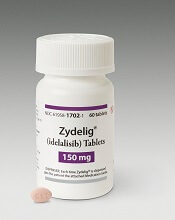
Photo courtesy of
Gilead Sciences, Inc.
In light of recently reported safety concerns, the European Medicines Agency’s (EMA) Pharmacovigilance Risk Assessment Committee (PRAC) has issued provisional advice for doctors and patients using idelalisib (Zydelig).
The EMA recently began reviewing the safety of idelalisib because of serious adverse events, most of which were infection-related, that were reported in 3 clinical trials investigating idelalisib in combination with other drugs.
These trials have since been stopped.
Now, the PRAC is making provisional recommendations to ensure idelalisib is used as safely as possible outside of clinical trials.
These recommendations will be forwarded to the European Commission, which will issue a provisional legally binding decision applicable in all European Union (EU) member states.
In the EU, idelalisib is approved as monotherapy for adults with follicular lymphoma that is refractory to 2 prior lines of treatment.
Idelalisib is also approved for use in combination with rituximab to treat adults with chronic lymphocytic leukemia (CLL) who have received at least 1 prior therapy or as first-line treatment in the presence of 17p deletion or TP53 mutation in CLL patients considered unsuitable for chemo-immunotherapy.
Recommendations
The PRAC is recommending that previously untreated CLL patients with 17p deletion or TP53 mutation do not begin treatment with idelalisib. In addition, doctors should re-evaluate each patient taking idelalisib as first-line treatment for CLL and only continue treatment if the benefits outweigh the risks.
Idelalisib can continue to be used in combination, only with rituximab, in CLL patients who have received at least 1 prior therapy and as monotherapy in patients with follicular lymphoma that is refractory to 2 lines of treatment.
Patients with any evidence of ongoing systemic infection should not be started on treatment with idelalisib.
And patients should be informed about the risk of serious infections with idelalisib.
All patients who do receive idelalisib should take antibiotics to prevent Pneumocystis jirovecii pneumonia, and they should be monitored for respiratory signs and symptoms. Regular clinical and laboratory monitoring for cytomegalovirus infection is also recommended.
Patients should have regular blood tests to detect neutropenia. In case a patient has moderate or severe neutropenia, treatment with idelalisib may have to be interrupted, in line with the updated summary of product characteristics.
The EMA said further details on these provisional measures will be provided in writing to healthcare professionals, and the product information will be updated accordingly.
Likewise, further information on the review of idelalisib will be provided as necessary and once the review is finished.
About the review
The EMA’s review of idelalisib started after a higher rate of serious adverse events, including deaths, was seen in 3 clinical trials evaluating the addition of idelalisib to standard therapy in first-line CLL and relapsed indolent non-Hodgkin lymphoma (NHL).
Most of the deaths were related to infections such as Pneumocystis jirovecii pneumonia and cytomegalovirus infection. Other excess deaths were related mainly to respiratory events.
The NHL studies (NCT01732926 and NCT01732913) included patients with disease characteristics different from those covered by the currently approved indication for idelalisib and investigated combinations of drugs that are not currently approved in the EU—idelalisib plus rituximab for NHL and idelalisib plus bendamustine and rituximab for NHL.
The CLL trial (NCT01980888) involved patients who had not received previous treatment, some of whom had the 17p deletion or TP53 mutation. However, the trial also investigated a combination of drugs not currently approved in the EU—idelalisib plus bendamustine and rituximab.
At present, the PRAC is conducting the review. Once the PRAC is finished, its recommendations will be forwarded to the EMA’s Committee for Medicinal Products for Human Use, which will adopt a final opinion.
The European Commission will take this opinion into account and adopt a legally binding decision that is applicable in all EU member states.
Photo courtesy of
Gilead Sciences, Inc.
In light of recently reported safety concerns, the European Medicines Agency’s (EMA) Pharmacovigilance Risk Assessment Committee (PRAC) has issued provisional advice for doctors and patients using idelalisib (Zydelig).
The EMA recently began reviewing the safety of idelalisib because of serious adverse events, most of which were infection-related, that were reported in 3 clinical trials investigating idelalisib in combination with other drugs.
These trials have since been stopped.
Now, the PRAC is making provisional recommendations to ensure idelalisib is used as safely as possible outside of clinical trials.
These recommendations will be forwarded to the European Commission, which will issue a provisional legally binding decision applicable in all European Union (EU) member states.
In the EU, idelalisib is approved as monotherapy for adults with follicular lymphoma that is refractory to 2 prior lines of treatment.
Idelalisib is also approved for use in combination with rituximab to treat adults with chronic lymphocytic leukemia (CLL) who have received at least 1 prior therapy or as first-line treatment in the presence of 17p deletion or TP53 mutation in CLL patients considered unsuitable for chemo-immunotherapy.
Recommendations
The PRAC is recommending that previously untreated CLL patients with 17p deletion or TP53 mutation do not begin treatment with idelalisib. In addition, doctors should re-evaluate each patient taking idelalisib as first-line treatment for CLL and only continue treatment if the benefits outweigh the risks.
Idelalisib can continue to be used in combination, only with rituximab, in CLL patients who have received at least 1 prior therapy and as monotherapy in patients with follicular lymphoma that is refractory to 2 lines of treatment.
Patients with any evidence of ongoing systemic infection should not be started on treatment with idelalisib.
And patients should be informed about the risk of serious infections with idelalisib.
All patients who do receive idelalisib should take antibiotics to prevent Pneumocystis jirovecii pneumonia, and they should be monitored for respiratory signs and symptoms. Regular clinical and laboratory monitoring for cytomegalovirus infection is also recommended.
Patients should have regular blood tests to detect neutropenia. In case a patient has moderate or severe neutropenia, treatment with idelalisib may have to be interrupted, in line with the updated summary of product characteristics.
The EMA said further details on these provisional measures will be provided in writing to healthcare professionals, and the product information will be updated accordingly.
Likewise, further information on the review of idelalisib will be provided as necessary and once the review is finished.
About the review
The EMA’s review of idelalisib started after a higher rate of serious adverse events, including deaths, was seen in 3 clinical trials evaluating the addition of idelalisib to standard therapy in first-line CLL and relapsed indolent non-Hodgkin lymphoma (NHL).
Most of the deaths were related to infections such as Pneumocystis jirovecii pneumonia and cytomegalovirus infection. Other excess deaths were related mainly to respiratory events.
The NHL studies (NCT01732926 and NCT01732913) included patients with disease characteristics different from those covered by the currently approved indication for idelalisib and investigated combinations of drugs that are not currently approved in the EU—idelalisib plus rituximab for NHL and idelalisib plus bendamustine and rituximab for NHL.
The CLL trial (NCT01980888) involved patients who had not received previous treatment, some of whom had the 17p deletion or TP53 mutation. However, the trial also investigated a combination of drugs not currently approved in the EU—idelalisib plus bendamustine and rituximab.
At present, the PRAC is conducting the review. Once the PRAC is finished, its recommendations will be forwarded to the EMA’s Committee for Medicinal Products for Human Use, which will adopt a final opinion.
The European Commission will take this opinion into account and adopt a legally binding decision that is applicable in all EU member states.
Photo courtesy of
Gilead Sciences, Inc.
In light of recently reported safety concerns, the European Medicines Agency’s (EMA) Pharmacovigilance Risk Assessment Committee (PRAC) has issued provisional advice for doctors and patients using idelalisib (Zydelig).
The EMA recently began reviewing the safety of idelalisib because of serious adverse events, most of which were infection-related, that were reported in 3 clinical trials investigating idelalisib in combination with other drugs.
These trials have since been stopped.
Now, the PRAC is making provisional recommendations to ensure idelalisib is used as safely as possible outside of clinical trials.
These recommendations will be forwarded to the European Commission, which will issue a provisional legally binding decision applicable in all European Union (EU) member states.
In the EU, idelalisib is approved as monotherapy for adults with follicular lymphoma that is refractory to 2 prior lines of treatment.
Idelalisib is also approved for use in combination with rituximab to treat adults with chronic lymphocytic leukemia (CLL) who have received at least 1 prior therapy or as first-line treatment in the presence of 17p deletion or TP53 mutation in CLL patients considered unsuitable for chemo-immunotherapy.
Recommendations
The PRAC is recommending that previously untreated CLL patients with 17p deletion or TP53 mutation do not begin treatment with idelalisib. In addition, doctors should re-evaluate each patient taking idelalisib as first-line treatment for CLL and only continue treatment if the benefits outweigh the risks.
Idelalisib can continue to be used in combination, only with rituximab, in CLL patients who have received at least 1 prior therapy and as monotherapy in patients with follicular lymphoma that is refractory to 2 lines of treatment.
Patients with any evidence of ongoing systemic infection should not be started on treatment with idelalisib.
And patients should be informed about the risk of serious infections with idelalisib.
All patients who do receive idelalisib should take antibiotics to prevent Pneumocystis jirovecii pneumonia, and they should be monitored for respiratory signs and symptoms. Regular clinical and laboratory monitoring for cytomegalovirus infection is also recommended.
Patients should have regular blood tests to detect neutropenia. In case a patient has moderate or severe neutropenia, treatment with idelalisib may have to be interrupted, in line with the updated summary of product characteristics.
The EMA said further details on these provisional measures will be provided in writing to healthcare professionals, and the product information will be updated accordingly.
Likewise, further information on the review of idelalisib will be provided as necessary and once the review is finished.
About the review
The EMA’s review of idelalisib started after a higher rate of serious adverse events, including deaths, was seen in 3 clinical trials evaluating the addition of idelalisib to standard therapy in first-line CLL and relapsed indolent non-Hodgkin lymphoma (NHL).
Most of the deaths were related to infections such as Pneumocystis jirovecii pneumonia and cytomegalovirus infection. Other excess deaths were related mainly to respiratory events.
The NHL studies (NCT01732926 and NCT01732913) included patients with disease characteristics different from those covered by the currently approved indication for idelalisib and investigated combinations of drugs that are not currently approved in the EU—idelalisib plus rituximab for NHL and idelalisib plus bendamustine and rituximab for NHL.
The CLL trial (NCT01980888) involved patients who had not received previous treatment, some of whom had the 17p deletion or TP53 mutation. However, the trial also investigated a combination of drugs not currently approved in the EU—idelalisib plus bendamustine and rituximab.
At present, the PRAC is conducting the review. Once the PRAC is finished, its recommendations will be forwarded to the EMA’s Committee for Medicinal Products for Human Use, which will adopt a final opinion.
The European Commission will take this opinion into account and adopt a legally binding decision that is applicable in all EU member states.
FDA proposes ban on most powdered medical gloves

Photo by Chonion Antoine
The US Food and Drug Administration (FDA) is proposing a ban on most powdered gloves in the US.
The proposed ban applies to powdered surgeon’s gloves, powdered patient examination gloves, and absorbable powder for lubricating a surgeon’s glove.
The FDA said these gloves pose an unreasonable and substantial risk of illness or injury to healthcare providers, patients, and other individuals who are exposed to them, which cannot be corrected through new or updated labeling.
“This ban is about protecting patients and healthcare professionals from a danger they might not even be aware of,” said Jeffrey Shuren, MD, director of FDA’s Center for Devices and Radiological Health.
“We take bans very seriously and only take this action when we feel it’s necessary to protect the public health.”
The FDA said powdered gloves are dangerous for a variety of reasons. In particular, aerosolized glove powder on natural rubber latex gloves, but not on synthetic powdered gloves, can carry proteins that may cause respiratory allergic reactions.
Although powdered synthetic gloves do not present the risk of allergic reactions, these gloves are associated with an extensive list of potentially serious adverse events, including severe airway inflammation, wound inflammation, and post-surgical adhesions. These side effects have been attributed to the use of glove powder with all types of gloves.
As these risks cannot be corrected through new or updated labeling, the FDA is moving forward with the proposal to ban these products, which—if finalized—would ultimately remove them from the marketplace completely.
In making the determination that these products are dangerous and present an unreasonable and substantial risk, the FDA considered all available evidence, which included a thorough review of the scientific literature and comments received on a February 2011 Federal Register Notice.
The FDA also conducted an economic analysis that showed a powdered glove ban would not cause a glove shortage, and the economic impact of a ban would not be significant. The ban is also not likely to impact medical practice, because many non-powdered protective glove options are currently available.
The FDA has determined that the banning standard would not apply to powdered radiographic protection gloves. The agency is not aware of any powdered radiographic protection gloves that are currently on the market.
Non-powdered surgeon gloves and non-powdered patient examination gloves will not be included in the ban and will remain Class I medical devices. Therefore, the FDA is also proposing amendments to their classification regulations to clarify that they apply only to non-powdered gloves.
The proposed rule is available online at www.regulations.gov for public comment for 90 days.
Photo by Chonion Antoine
The US Food and Drug Administration (FDA) is proposing a ban on most powdered gloves in the US.
The proposed ban applies to powdered surgeon’s gloves, powdered patient examination gloves, and absorbable powder for lubricating a surgeon’s glove.
The FDA said these gloves pose an unreasonable and substantial risk of illness or injury to healthcare providers, patients, and other individuals who are exposed to them, which cannot be corrected through new or updated labeling.
“This ban is about protecting patients and healthcare professionals from a danger they might not even be aware of,” said Jeffrey Shuren, MD, director of FDA’s Center for Devices and Radiological Health.
“We take bans very seriously and only take this action when we feel it’s necessary to protect the public health.”
The FDA said powdered gloves are dangerous for a variety of reasons. In particular, aerosolized glove powder on natural rubber latex gloves, but not on synthetic powdered gloves, can carry proteins that may cause respiratory allergic reactions.
Although powdered synthetic gloves do not present the risk of allergic reactions, these gloves are associated with an extensive list of potentially serious adverse events, including severe airway inflammation, wound inflammation, and post-surgical adhesions. These side effects have been attributed to the use of glove powder with all types of gloves.
As these risks cannot be corrected through new or updated labeling, the FDA is moving forward with the proposal to ban these products, which—if finalized—would ultimately remove them from the marketplace completely.
In making the determination that these products are dangerous and present an unreasonable and substantial risk, the FDA considered all available evidence, which included a thorough review of the scientific literature and comments received on a February 2011 Federal Register Notice.
The FDA also conducted an economic analysis that showed a powdered glove ban would not cause a glove shortage, and the economic impact of a ban would not be significant. The ban is also not likely to impact medical practice, because many non-powdered protective glove options are currently available.
The FDA has determined that the banning standard would not apply to powdered radiographic protection gloves. The agency is not aware of any powdered radiographic protection gloves that are currently on the market.
Non-powdered surgeon gloves and non-powdered patient examination gloves will not be included in the ban and will remain Class I medical devices. Therefore, the FDA is also proposing amendments to their classification regulations to clarify that they apply only to non-powdered gloves.
The proposed rule is available online at www.regulations.gov for public comment for 90 days.
Photo by Chonion Antoine
The US Food and Drug Administration (FDA) is proposing a ban on most powdered gloves in the US.
The proposed ban applies to powdered surgeon’s gloves, powdered patient examination gloves, and absorbable powder for lubricating a surgeon’s glove.
The FDA said these gloves pose an unreasonable and substantial risk of illness or injury to healthcare providers, patients, and other individuals who are exposed to them, which cannot be corrected through new or updated labeling.
“This ban is about protecting patients and healthcare professionals from a danger they might not even be aware of,” said Jeffrey Shuren, MD, director of FDA’s Center for Devices and Radiological Health.
“We take bans very seriously and only take this action when we feel it’s necessary to protect the public health.”
The FDA said powdered gloves are dangerous for a variety of reasons. In particular, aerosolized glove powder on natural rubber latex gloves, but not on synthetic powdered gloves, can carry proteins that may cause respiratory allergic reactions.
Although powdered synthetic gloves do not present the risk of allergic reactions, these gloves are associated with an extensive list of potentially serious adverse events, including severe airway inflammation, wound inflammation, and post-surgical adhesions. These side effects have been attributed to the use of glove powder with all types of gloves.
As these risks cannot be corrected through new or updated labeling, the FDA is moving forward with the proposal to ban these products, which—if finalized—would ultimately remove them from the marketplace completely.
In making the determination that these products are dangerous and present an unreasonable and substantial risk, the FDA considered all available evidence, which included a thorough review of the scientific literature and comments received on a February 2011 Federal Register Notice.
The FDA also conducted an economic analysis that showed a powdered glove ban would not cause a glove shortage, and the economic impact of a ban would not be significant. The ban is also not likely to impact medical practice, because many non-powdered protective glove options are currently available.
The FDA has determined that the banning standard would not apply to powdered radiographic protection gloves. The agency is not aware of any powdered radiographic protection gloves that are currently on the market.
Non-powdered surgeon gloves and non-powdered patient examination gloves will not be included in the ban and will remain Class I medical devices. Therefore, the FDA is also proposing amendments to their classification regulations to clarify that they apply only to non-powdered gloves.
The proposed rule is available online at www.regulations.gov for public comment for 90 days.
Four genes control growth of HSCs, team says

Image by John Perry
Four genes govern the growth and multiplication of hematopoietic stem cells (HSCs), according to a study published in Cell Reports.
Investigators conducted a genome-wide RNA interference screen in cells derived from human cord blood, looking for genes whose knockdown maintained the HSC phenotype during culture.
This revealed the 4 genes—STAG2, RAD21, STAG1, and SMC3—which are all members of the cohesin complex.
“The discovery showed that this protein complex is crucial and has an overarching function in the growth of the blood stem cells,” said study author Jonas Larsson, MD, PhD, of Lund University in Sweden.
Dr Larsson and his colleagues screened 15,000 genes for this study and found 20 candidates with a strong capacity to affect the balance of growth in HSCs.
Four of the genes—STAG2, RAD21, STAG1, and SMC3—were physically connected through cooperation in the cohesin complex. This complex forms a sort of brace that holds different parts of the DNA strand together in the cell.
The researchers believe this allows the cohesin complex to control access to the “on/off switches” in the DNA and to change the impulses that HSCs receive from various genes, thereby affecting whether an HSC multiplies or matures.
“Clarifying what regulates the balance between multiplication and maturation of blood stem cells could provide the right keys to expanding them outside the body,” said Roman Galeev, a doctoral student at Lund University.
“In addition, it would enable the identification of new points of attack for the treatment of blood cancer, which is precisely a disruption of the balance between multiplication and maturation.”
Galeev noted that research by other groups has revealed mutations in the cohesin complex genes in patients with hematologic malignancies (Mazumdar C, Cell Stem Cell 2015; Mullenders J, J Exp Med 2015; and Viny AD, J Exp Med 2015).
“This is incredibly exciting,” Galeev said. “Together with the results from our study, this indicates that the cohesin genes are directly and crucially significant in the development of blood cancer.”
“Our findings entail a new understanding of how the expansion of blood stem cells is controlled. Eventually, this can lead to new ways of affecting the process, either to prevent the development of cancer or to expand the stem cells for transplant.”
Image by John Perry
Four genes govern the growth and multiplication of hematopoietic stem cells (HSCs), according to a study published in Cell Reports.
Investigators conducted a genome-wide RNA interference screen in cells derived from human cord blood, looking for genes whose knockdown maintained the HSC phenotype during culture.
This revealed the 4 genes—STAG2, RAD21, STAG1, and SMC3—which are all members of the cohesin complex.
“The discovery showed that this protein complex is crucial and has an overarching function in the growth of the blood stem cells,” said study author Jonas Larsson, MD, PhD, of Lund University in Sweden.
Dr Larsson and his colleagues screened 15,000 genes for this study and found 20 candidates with a strong capacity to affect the balance of growth in HSCs.
Four of the genes—STAG2, RAD21, STAG1, and SMC3—were physically connected through cooperation in the cohesin complex. This complex forms a sort of brace that holds different parts of the DNA strand together in the cell.
The researchers believe this allows the cohesin complex to control access to the “on/off switches” in the DNA and to change the impulses that HSCs receive from various genes, thereby affecting whether an HSC multiplies or matures.
“Clarifying what regulates the balance between multiplication and maturation of blood stem cells could provide the right keys to expanding them outside the body,” said Roman Galeev, a doctoral student at Lund University.
“In addition, it would enable the identification of new points of attack for the treatment of blood cancer, which is precisely a disruption of the balance between multiplication and maturation.”
Galeev noted that research by other groups has revealed mutations in the cohesin complex genes in patients with hematologic malignancies (Mazumdar C, Cell Stem Cell 2015; Mullenders J, J Exp Med 2015; and Viny AD, J Exp Med 2015).
“This is incredibly exciting,” Galeev said. “Together with the results from our study, this indicates that the cohesin genes are directly and crucially significant in the development of blood cancer.”
“Our findings entail a new understanding of how the expansion of blood stem cells is controlled. Eventually, this can lead to new ways of affecting the process, either to prevent the development of cancer or to expand the stem cells for transplant.”
Image by John Perry
Four genes govern the growth and multiplication of hematopoietic stem cells (HSCs), according to a study published in Cell Reports.
Investigators conducted a genome-wide RNA interference screen in cells derived from human cord blood, looking for genes whose knockdown maintained the HSC phenotype during culture.
This revealed the 4 genes—STAG2, RAD21, STAG1, and SMC3—which are all members of the cohesin complex.
“The discovery showed that this protein complex is crucial and has an overarching function in the growth of the blood stem cells,” said study author Jonas Larsson, MD, PhD, of Lund University in Sweden.
Dr Larsson and his colleagues screened 15,000 genes for this study and found 20 candidates with a strong capacity to affect the balance of growth in HSCs.
Four of the genes—STAG2, RAD21, STAG1, and SMC3—were physically connected through cooperation in the cohesin complex. This complex forms a sort of brace that holds different parts of the DNA strand together in the cell.
The researchers believe this allows the cohesin complex to control access to the “on/off switches” in the DNA and to change the impulses that HSCs receive from various genes, thereby affecting whether an HSC multiplies or matures.
“Clarifying what regulates the balance between multiplication and maturation of blood stem cells could provide the right keys to expanding them outside the body,” said Roman Galeev, a doctoral student at Lund University.
“In addition, it would enable the identification of new points of attack for the treatment of blood cancer, which is precisely a disruption of the balance between multiplication and maturation.”
Galeev noted that research by other groups has revealed mutations in the cohesin complex genes in patients with hematologic malignancies (Mazumdar C, Cell Stem Cell 2015; Mullenders J, J Exp Med 2015; and Viny AD, J Exp Med 2015).
“This is incredibly exciting,” Galeev said. “Together with the results from our study, this indicates that the cohesin genes are directly and crucially significant in the development of blood cancer.”
“Our findings entail a new understanding of how the expansion of blood stem cells is controlled. Eventually, this can lead to new ways of affecting the process, either to prevent the development of cancer or to expand the stem cells for transplant.”
Computer models simulate HSCT recovery

Photo by Darren Baker
New research indicates that computer models can simulate the recovery of the immune system in patients undergoing hematopoietic stem cell transplant (HSCT).
The study suggests the possibility of using DNA sequencing and computer modeling to predict which HSCT recipients might suffer complications such as graft-versus-host-disease.
The research was published in Biology of Blood and Marrow Transplantation.
The study builds upon prior research, which showed that the immune system may be modeled as a dynamical system. Dynamical systems are mathematical objects used to model physical phenomena that change over time. These systems can be used to predict future states via observations of past and present states.
Researchers say the ability to predict immune system recovery after HSCT could potentially allow doctors to refine donor selection and better personalize post-transplant care to improve outcomes.
With this in mind, the team sequenced the DNA of 34 HSCT donor-recipient pairs and used the resulting information in a computer model to simulate how the recipient’s T-cell repertoire will recover following transplant.
“This study is the first to simulate the growth of the T-cell repertoire following transplantation using variables that aren’t accounted for in typical HLA donor-recipient matching,” said study author Amir Ahmed Toor, MD, of Virginia Commonwealth University in Richmond.
“Using a larger cohort of patients than in previous studies, we were able to mathematically predict the interactions of these variables, which led to simulations that appear to be very similar to clinically observed post-transplantation T-cell repertoire development.”
Previous research by Dr Toor and his colleagues revealed large variations between donor-recipient minor histocompatibility antigens that could potentially contribute to transplant complications not accounted for by HLA testing.
The models used in the computer simulations were driven by population growth formulas developed from past studies by Dr Toor and his colleagues that revealed distinct patterns of lymphocyte recovery in HSCT recipients.
Using matrix mathematics to develop the simulations, the researchers observed competition among T cells as the T-cell repertoire develops.
This competition leads to certain families of T cells becoming dominant and more numerous, which crowds out weaker T-cell families, causing them to develop later and in fewer numbers.
“We are attempting to account for the many variables that could impact T-cell repertoire development and, in turn, patient outcomes,” Dr Toor said.
“In future studies, we hope to explore the impact of organ-specific antigen expression. The knowledge gained from this research could potentially allow more accurate predictions of which organs could be most affected by graft-versus-host-disease.”
Photo by Darren Baker
New research indicates that computer models can simulate the recovery of the immune system in patients undergoing hematopoietic stem cell transplant (HSCT).
The study suggests the possibility of using DNA sequencing and computer modeling to predict which HSCT recipients might suffer complications such as graft-versus-host-disease.
The research was published in Biology of Blood and Marrow Transplantation.
The study builds upon prior research, which showed that the immune system may be modeled as a dynamical system. Dynamical systems are mathematical objects used to model physical phenomena that change over time. These systems can be used to predict future states via observations of past and present states.
Researchers say the ability to predict immune system recovery after HSCT could potentially allow doctors to refine donor selection and better personalize post-transplant care to improve outcomes.
With this in mind, the team sequenced the DNA of 34 HSCT donor-recipient pairs and used the resulting information in a computer model to simulate how the recipient’s T-cell repertoire will recover following transplant.
“This study is the first to simulate the growth of the T-cell repertoire following transplantation using variables that aren’t accounted for in typical HLA donor-recipient matching,” said study author Amir Ahmed Toor, MD, of Virginia Commonwealth University in Richmond.
“Using a larger cohort of patients than in previous studies, we were able to mathematically predict the interactions of these variables, which led to simulations that appear to be very similar to clinically observed post-transplantation T-cell repertoire development.”
Previous research by Dr Toor and his colleagues revealed large variations between donor-recipient minor histocompatibility antigens that could potentially contribute to transplant complications not accounted for by HLA testing.
The models used in the computer simulations were driven by population growth formulas developed from past studies by Dr Toor and his colleagues that revealed distinct patterns of lymphocyte recovery in HSCT recipients.
Using matrix mathematics to develop the simulations, the researchers observed competition among T cells as the T-cell repertoire develops.
This competition leads to certain families of T cells becoming dominant and more numerous, which crowds out weaker T-cell families, causing them to develop later and in fewer numbers.
“We are attempting to account for the many variables that could impact T-cell repertoire development and, in turn, patient outcomes,” Dr Toor said.
“In future studies, we hope to explore the impact of organ-specific antigen expression. The knowledge gained from this research could potentially allow more accurate predictions of which organs could be most affected by graft-versus-host-disease.”
Photo by Darren Baker
New research indicates that computer models can simulate the recovery of the immune system in patients undergoing hematopoietic stem cell transplant (HSCT).
The study suggests the possibility of using DNA sequencing and computer modeling to predict which HSCT recipients might suffer complications such as graft-versus-host-disease.
The research was published in Biology of Blood and Marrow Transplantation.
The study builds upon prior research, which showed that the immune system may be modeled as a dynamical system. Dynamical systems are mathematical objects used to model physical phenomena that change over time. These systems can be used to predict future states via observations of past and present states.
Researchers say the ability to predict immune system recovery after HSCT could potentially allow doctors to refine donor selection and better personalize post-transplant care to improve outcomes.
With this in mind, the team sequenced the DNA of 34 HSCT donor-recipient pairs and used the resulting information in a computer model to simulate how the recipient’s T-cell repertoire will recover following transplant.
“This study is the first to simulate the growth of the T-cell repertoire following transplantation using variables that aren’t accounted for in typical HLA donor-recipient matching,” said study author Amir Ahmed Toor, MD, of Virginia Commonwealth University in Richmond.
“Using a larger cohort of patients than in previous studies, we were able to mathematically predict the interactions of these variables, which led to simulations that appear to be very similar to clinically observed post-transplantation T-cell repertoire development.”
Previous research by Dr Toor and his colleagues revealed large variations between donor-recipient minor histocompatibility antigens that could potentially contribute to transplant complications not accounted for by HLA testing.
The models used in the computer simulations were driven by population growth formulas developed from past studies by Dr Toor and his colleagues that revealed distinct patterns of lymphocyte recovery in HSCT recipients.
Using matrix mathematics to develop the simulations, the researchers observed competition among T cells as the T-cell repertoire develops.
This competition leads to certain families of T cells becoming dominant and more numerous, which crowds out weaker T-cell families, causing them to develop later and in fewer numbers.
“We are attempting to account for the many variables that could impact T-cell repertoire development and, in turn, patient outcomes,” Dr Toor said.
“In future studies, we hope to explore the impact of organ-specific antigen expression. The knowledge gained from this research could potentially allow more accurate predictions of which organs could be most affected by graft-versus-host-disease.”
Antibody recognizes human plasma cells
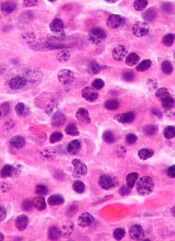
Researchers say they have generated a monoclonal antibody that could have diagnostic and therapeutic applications for multiple myeloma (MM) and other plasma cell disorders.
The team generated this antibody, VLRB MM3, from immunized lampreys, a type of jawless fish.
Experiments with VLRB MM3 showed that it can identify normal plasma cells in samples from healthy donors and malignant plasma cells in samples from patients with MM.
Götz Ehrhardt, PhD, of the University of Toronto in Ontario, Canada, and his colleagues described this work in JCI Insight.
The researchers noted that antibody-secreting plasma cells arise from B-cell precursors and are essential for adaptive immune responses against invading pathogens. Plasma cell dysfunction is associated with autoimmune and neoplastic disorders, including MM.
Surface markers that are specific to plasma cells have not been identified, and antibodies that only recognize these cells have been challenging to generate using conventional systems.
However, Dr Ehrhardt and his colleagues found they could generate a plasma-cell-specific antibody from immunized lampreys.
The researchers injected lamprey larvae with a bone marrow isolate from an MM patient and screened the resulting monoclonal antibodies for those that recognized both malignant and non-malignant plasma cells.
Further characterization of the antibody VLRB MM3 revealed that it is specific to plasma cells and does not recognize other B-cell populations or progenitors.
VLRB MM3 binding was shown to coincide with CD38 dimerization and correlate with and impede the NAD glycohydrolase activity of this glycoprotein.
Considering these findings together, the researchers concluded that VLRB MM3 represents a unique tool that might aid the treatment and diagnosis of plasma cell disorders.
Researchers say they have generated a monoclonal antibody that could have diagnostic and therapeutic applications for multiple myeloma (MM) and other plasma cell disorders.
The team generated this antibody, VLRB MM3, from immunized lampreys, a type of jawless fish.
Experiments with VLRB MM3 showed that it can identify normal plasma cells in samples from healthy donors and malignant plasma cells in samples from patients with MM.
Götz Ehrhardt, PhD, of the University of Toronto in Ontario, Canada, and his colleagues described this work in JCI Insight.
The researchers noted that antibody-secreting plasma cells arise from B-cell precursors and are essential for adaptive immune responses against invading pathogens. Plasma cell dysfunction is associated with autoimmune and neoplastic disorders, including MM.
Surface markers that are specific to plasma cells have not been identified, and antibodies that only recognize these cells have been challenging to generate using conventional systems.
However, Dr Ehrhardt and his colleagues found they could generate a plasma-cell-specific antibody from immunized lampreys.
The researchers injected lamprey larvae with a bone marrow isolate from an MM patient and screened the resulting monoclonal antibodies for those that recognized both malignant and non-malignant plasma cells.
Further characterization of the antibody VLRB MM3 revealed that it is specific to plasma cells and does not recognize other B-cell populations or progenitors.
VLRB MM3 binding was shown to coincide with CD38 dimerization and correlate with and impede the NAD glycohydrolase activity of this glycoprotein.
Considering these findings together, the researchers concluded that VLRB MM3 represents a unique tool that might aid the treatment and diagnosis of plasma cell disorders.
Researchers say they have generated a monoclonal antibody that could have diagnostic and therapeutic applications for multiple myeloma (MM) and other plasma cell disorders.
The team generated this antibody, VLRB MM3, from immunized lampreys, a type of jawless fish.
Experiments with VLRB MM3 showed that it can identify normal plasma cells in samples from healthy donors and malignant plasma cells in samples from patients with MM.
Götz Ehrhardt, PhD, of the University of Toronto in Ontario, Canada, and his colleagues described this work in JCI Insight.
The researchers noted that antibody-secreting plasma cells arise from B-cell precursors and are essential for adaptive immune responses against invading pathogens. Plasma cell dysfunction is associated with autoimmune and neoplastic disorders, including MM.
Surface markers that are specific to plasma cells have not been identified, and antibodies that only recognize these cells have been challenging to generate using conventional systems.
However, Dr Ehrhardt and his colleagues found they could generate a plasma-cell-specific antibody from immunized lampreys.
The researchers injected lamprey larvae with a bone marrow isolate from an MM patient and screened the resulting monoclonal antibodies for those that recognized both malignant and non-malignant plasma cells.
Further characterization of the antibody VLRB MM3 revealed that it is specific to plasma cells and does not recognize other B-cell populations or progenitors.
VLRB MM3 binding was shown to coincide with CD38 dimerization and correlate with and impede the NAD glycohydrolase activity of this glycoprotein.
Considering these findings together, the researchers concluded that VLRB MM3 represents a unique tool that might aid the treatment and diagnosis of plasma cell disorders.
FDA authorizes new test for Zika virus
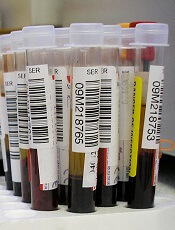
Photo by Graham Colm
In response to a request from the US Centers for Disease Control and Prevention (CDC), the US Food and Drug Administration (FDA) has issued an Emergency Use Authorization (EUA) for the Trioplex Real-time RT-PCR Assay, a tool that can be used to detect Zika virus.
The assay allows doctors to tell if an individual is infected with chikungunya, dengue, or Zika virus using a single test, instead of having to perform 3 separate tests to identify the infection.
The Trioplex Real-time RT-PCR Assay can be used to detect virus RNA in serum, cerebrospinal fluid, urine, and amniotic fluid specimens.
The CDC hopes this EUA will allow the agency to more rapidly perform testing to detect acute Zika virus infection.
An EUA allows the use of unapproved medical products or unapproved uses of approved medical products in an emergency. The products must be used to diagnose, treat, or prevent serious or life-threatening conditions caused by chemical, biological, radiological, or nuclear threat agents, when there are no adequate alternatives.
The CDC said it will begin distributing the Trioplex Real-time RT-PCR Assay during the next 2 weeks to qualified laboratories in the Laboratory Response Network, an integrated network of domestic and international laboratories that respond to public health emergencies.
The test will not be available in US hospitals or other primary care settings.
Last month, the FDA issued an EUA for a different test used to detect the Zika virus, the Zika IgM Antibody Capture Enzyme-Linked Immunosorbent Assay (Zika MAC-ELISA).
This test was distributed to qualified laboratories in the Laboratory Response Network but was not made available in US hospitals or other primary care settings.
Photo by Graham Colm
In response to a request from the US Centers for Disease Control and Prevention (CDC), the US Food and Drug Administration (FDA) has issued an Emergency Use Authorization (EUA) for the Trioplex Real-time RT-PCR Assay, a tool that can be used to detect Zika virus.
The assay allows doctors to tell if an individual is infected with chikungunya, dengue, or Zika virus using a single test, instead of having to perform 3 separate tests to identify the infection.
The Trioplex Real-time RT-PCR Assay can be used to detect virus RNA in serum, cerebrospinal fluid, urine, and amniotic fluid specimens.
The CDC hopes this EUA will allow the agency to more rapidly perform testing to detect acute Zika virus infection.
An EUA allows the use of unapproved medical products or unapproved uses of approved medical products in an emergency. The products must be used to diagnose, treat, or prevent serious or life-threatening conditions caused by chemical, biological, radiological, or nuclear threat agents, when there are no adequate alternatives.
The CDC said it will begin distributing the Trioplex Real-time RT-PCR Assay during the next 2 weeks to qualified laboratories in the Laboratory Response Network, an integrated network of domestic and international laboratories that respond to public health emergencies.
The test will not be available in US hospitals or other primary care settings.
Last month, the FDA issued an EUA for a different test used to detect the Zika virus, the Zika IgM Antibody Capture Enzyme-Linked Immunosorbent Assay (Zika MAC-ELISA).
This test was distributed to qualified laboratories in the Laboratory Response Network but was not made available in US hospitals or other primary care settings.
Photo by Graham Colm
In response to a request from the US Centers for Disease Control and Prevention (CDC), the US Food and Drug Administration (FDA) has issued an Emergency Use Authorization (EUA) for the Trioplex Real-time RT-PCR Assay, a tool that can be used to detect Zika virus.
The assay allows doctors to tell if an individual is infected with chikungunya, dengue, or Zika virus using a single test, instead of having to perform 3 separate tests to identify the infection.
The Trioplex Real-time RT-PCR Assay can be used to detect virus RNA in serum, cerebrospinal fluid, urine, and amniotic fluid specimens.
The CDC hopes this EUA will allow the agency to more rapidly perform testing to detect acute Zika virus infection.
An EUA allows the use of unapproved medical products or unapproved uses of approved medical products in an emergency. The products must be used to diagnose, treat, or prevent serious or life-threatening conditions caused by chemical, biological, radiological, or nuclear threat agents, when there are no adequate alternatives.
The CDC said it will begin distributing the Trioplex Real-time RT-PCR Assay during the next 2 weeks to qualified laboratories in the Laboratory Response Network, an integrated network of domestic and international laboratories that respond to public health emergencies.
The test will not be available in US hospitals or other primary care settings.
Last month, the FDA issued an EUA for a different test used to detect the Zika virus, the Zika IgM Antibody Capture Enzyme-Linked Immunosorbent Assay (Zika MAC-ELISA).
This test was distributed to qualified laboratories in the Laboratory Response Network but was not made available in US hospitals or other primary care settings.
FDA rejects ready-to-use bivalirudin formulation

Image by Kevin MacKenzie
The US Food and Drug Administration (FDA) has said it cannot, at present, approve a ready-to-use (RTU) formulation of bivalirudin (Kangio).
The product is a liquid, intravenous formulation of 5 mg/mL of bivalirudin in a 50-mL vial.
It does not require reconstitution before administration.
This RTU bivalirudin is intended for use as an anticoagulant in patients with unstable angina who are undergoing percutaneous transluminal coronary angioplasty.
The drug is also intended for patients undergoing percutaneous coronary intervention (PCI) with provisional use of a glycoprotein IIb/IIIa inhibitor and for patients undergoing PCI who have or are at risk of developing heparin-induced thrombocytopenia and thrombosis syndrome.
The RTU bivalirudin contains the same active ingredient and is designed to be given at the same dose and rate as Angiomax, a lyophilized powder form of bivalirudin that must be reconstituted. The RTU formulation does not require any reconstitution or initial dilution, which is intended to reduce work flow and the risk of dosing errors.
The FDA issued a complete response letter to the company developing the RTU formulation of bivalirudin, Eagle Pharmaceuticals.
The FDA issues complete response letters to communicate that the initial review of an application is complete, but the agency cannot approve the application in its present form and requests additional information.
In its letter to Eagle Pharmaceuticals, the FDA requested further characterization of bivalirudin-related substances in the drug product. The company said it will work directly with the FDA to determine an appropriate path forward to address the comments.
“We are evaluating the FDA’s response and will work closely with the agency to better understand and address their comments regarding Kangio,” said Scott Tarriff, president and chief executive officer of Eagle Pharmaceuticals.
“We remain committed to Kangio as an important new formulation of bivalirudin for intravenous use, offering multiple benefits for patients and caregivers.”
Image by Kevin MacKenzie
The US Food and Drug Administration (FDA) has said it cannot, at present, approve a ready-to-use (RTU) formulation of bivalirudin (Kangio).
The product is a liquid, intravenous formulation of 5 mg/mL of bivalirudin in a 50-mL vial.
It does not require reconstitution before administration.
This RTU bivalirudin is intended for use as an anticoagulant in patients with unstable angina who are undergoing percutaneous transluminal coronary angioplasty.
The drug is also intended for patients undergoing percutaneous coronary intervention (PCI) with provisional use of a glycoprotein IIb/IIIa inhibitor and for patients undergoing PCI who have or are at risk of developing heparin-induced thrombocytopenia and thrombosis syndrome.
The RTU bivalirudin contains the same active ingredient and is designed to be given at the same dose and rate as Angiomax, a lyophilized powder form of bivalirudin that must be reconstituted. The RTU formulation does not require any reconstitution or initial dilution, which is intended to reduce work flow and the risk of dosing errors.
The FDA issued a complete response letter to the company developing the RTU formulation of bivalirudin, Eagle Pharmaceuticals.
The FDA issues complete response letters to communicate that the initial review of an application is complete, but the agency cannot approve the application in its present form and requests additional information.
In its letter to Eagle Pharmaceuticals, the FDA requested further characterization of bivalirudin-related substances in the drug product. The company said it will work directly with the FDA to determine an appropriate path forward to address the comments.
“We are evaluating the FDA’s response and will work closely with the agency to better understand and address their comments regarding Kangio,” said Scott Tarriff, president and chief executive officer of Eagle Pharmaceuticals.
“We remain committed to Kangio as an important new formulation of bivalirudin for intravenous use, offering multiple benefits for patients and caregivers.”
Image by Kevin MacKenzie
The US Food and Drug Administration (FDA) has said it cannot, at present, approve a ready-to-use (RTU) formulation of bivalirudin (Kangio).
The product is a liquid, intravenous formulation of 5 mg/mL of bivalirudin in a 50-mL vial.
It does not require reconstitution before administration.
This RTU bivalirudin is intended for use as an anticoagulant in patients with unstable angina who are undergoing percutaneous transluminal coronary angioplasty.
The drug is also intended for patients undergoing percutaneous coronary intervention (PCI) with provisional use of a glycoprotein IIb/IIIa inhibitor and for patients undergoing PCI who have or are at risk of developing heparin-induced thrombocytopenia and thrombosis syndrome.
The RTU bivalirudin contains the same active ingredient and is designed to be given at the same dose and rate as Angiomax, a lyophilized powder form of bivalirudin that must be reconstituted. The RTU formulation does not require any reconstitution or initial dilution, which is intended to reduce work flow and the risk of dosing errors.
The FDA issued a complete response letter to the company developing the RTU formulation of bivalirudin, Eagle Pharmaceuticals.
The FDA issues complete response letters to communicate that the initial review of an application is complete, but the agency cannot approve the application in its present form and requests additional information.
In its letter to Eagle Pharmaceuticals, the FDA requested further characterization of bivalirudin-related substances in the drug product. The company said it will work directly with the FDA to determine an appropriate path forward to address the comments.
“We are evaluating the FDA’s response and will work closely with the agency to better understand and address their comments regarding Kangio,” said Scott Tarriff, president and chief executive officer of Eagle Pharmaceuticals.
“We remain committed to Kangio as an important new formulation of bivalirudin for intravenous use, offering multiple benefits for patients and caregivers.”
Drug may best BSC in some high-risk MDS patients
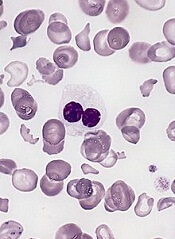
Results of a phase 3 trial suggest the small-molecule inhibitor rigosertib may improve overall survival (OS) in some patients with higher-risk myelodysplastic syndromes (HR-MDS).
Overall, researchers found no significant difference in OS between patients who received rigosertib and those who received best supportive care (BSC).
However, the data indicate that rigosertib can confer a survival benefit in certain subgroups of HR-MDS patients.
The results of this trial, known as ONTIME, were published in The Lancet Oncology. The trial was sponsored by Onconova Therapeutics, Inc., the company developing rigosertib.
The trial enrolled 299 HR-MDS patients. They had refractory anemia with excess blasts (RAEB)-1, RAEB-2, RAEB-t, or chronic myelomonocytic leukemia based on local site assessment. They had all failed treatment with a hypomethylating agent (HMA) in the past 2 years.
The patients were randomized (2:1) to receive rigosertib at 1800 mg per 24 hours via 72-hour continuous intravenous (IV) infusion, administered every other week (n=199), or BSC with or without low-dose cytarabine (n=100).
At a median follow-up of 19.5 months, there was no significant difference in OS between the treatment arms. The median OS was 8.2 months in the rigosertib arm and 5.9 months in the BSC arm. The hazard ratio (HR) was 0.87 (P=0.33).
However, the researchers said that subgroup analyses suggested rigosertib may provide a survival benefit over BSC in some HR-MDS patients. This includes:
- Patients younger than 75 years of age (HR=0.55, P=0.0010)
- Patients who received HMA therapy for 9 months or fewer (HR=0.54, P=0.0016)
- Patients with primary, rather than secondary, HMA failure (HR=0.72, P=0.060)
- Patients who were classified as “very high risk” according to the Revised International Prognostic Scoring System (HR=0.61, P=0.015)
- Patients with monosomy 7 (HR=0.26, P=0.0041)
- Patients with trisomy 8 (HR=0.28, P=0.0083).
The most common grade 3 or higher adverse events—in the rigosertib and BSC arms, respectively—were anemia (18% vs 8%), thrombocytopenia (19% vs 7%), neutropenia (17% vs 8%), febrile neutropenia (12% vs 11%), and pneumonia (12% vs 11%).
Twenty-two percent of patients in the rigosertib arm and 33% in the BSC arm died due to adverse events. Three deaths were attributed to rigosertib.
“Rigosertib was well-tolerated in patients with a high unmet medical need who have no approved therapeutic options,” said study author Guillermo Garcia-Manero, MD, of The University of Texas MD Anderson Cancer Center in Houston.
“We are impressed by the trend to notable efficacy in well-defined, well-balanced subgroups of HR-MDS patients with very poor prognosis. Based on these findings, we have designed the new phase 3 INSPIRE study with IV rigosertib, which is currently enrolling patients.”
INSPIRE is a randomized, controlled study designed to assess the efficacy and safety of IV rigosertib in HR-MDS patients under 80 years of age who had progressed on, failed to respond to, or relapsed after previous treatment with an HMA within the first 9 months of HMA treatment initiation.
The trial is expected to enroll approximately 225 patients, who will be randomized at a 2:1 ratio into 2 treatment arms: IV rigosertib plus BSC versus physician’s choice plus BSC. The primary endpoint is OS. Full details on the trial can be found on clinicaltrials.gov (NCT02562443).
Results of a phase 3 trial suggest the small-molecule inhibitor rigosertib may improve overall survival (OS) in some patients with higher-risk myelodysplastic syndromes (HR-MDS).
Overall, researchers found no significant difference in OS between patients who received rigosertib and those who received best supportive care (BSC).
However, the data indicate that rigosertib can confer a survival benefit in certain subgroups of HR-MDS patients.
The results of this trial, known as ONTIME, were published in The Lancet Oncology. The trial was sponsored by Onconova Therapeutics, Inc., the company developing rigosertib.
The trial enrolled 299 HR-MDS patients. They had refractory anemia with excess blasts (RAEB)-1, RAEB-2, RAEB-t, or chronic myelomonocytic leukemia based on local site assessment. They had all failed treatment with a hypomethylating agent (HMA) in the past 2 years.
The patients were randomized (2:1) to receive rigosertib at 1800 mg per 24 hours via 72-hour continuous intravenous (IV) infusion, administered every other week (n=199), or BSC with or without low-dose cytarabine (n=100).
At a median follow-up of 19.5 months, there was no significant difference in OS between the treatment arms. The median OS was 8.2 months in the rigosertib arm and 5.9 months in the BSC arm. The hazard ratio (HR) was 0.87 (P=0.33).
However, the researchers said that subgroup analyses suggested rigosertib may provide a survival benefit over BSC in some HR-MDS patients. This includes:
- Patients younger than 75 years of age (HR=0.55, P=0.0010)
- Patients who received HMA therapy for 9 months or fewer (HR=0.54, P=0.0016)
- Patients with primary, rather than secondary, HMA failure (HR=0.72, P=0.060)
- Patients who were classified as “very high risk” according to the Revised International Prognostic Scoring System (HR=0.61, P=0.015)
- Patients with monosomy 7 (HR=0.26, P=0.0041)
- Patients with trisomy 8 (HR=0.28, P=0.0083).
The most common grade 3 or higher adverse events—in the rigosertib and BSC arms, respectively—were anemia (18% vs 8%), thrombocytopenia (19% vs 7%), neutropenia (17% vs 8%), febrile neutropenia (12% vs 11%), and pneumonia (12% vs 11%).
Twenty-two percent of patients in the rigosertib arm and 33% in the BSC arm died due to adverse events. Three deaths were attributed to rigosertib.
“Rigosertib was well-tolerated in patients with a high unmet medical need who have no approved therapeutic options,” said study author Guillermo Garcia-Manero, MD, of The University of Texas MD Anderson Cancer Center in Houston.
“We are impressed by the trend to notable efficacy in well-defined, well-balanced subgroups of HR-MDS patients with very poor prognosis. Based on these findings, we have designed the new phase 3 INSPIRE study with IV rigosertib, which is currently enrolling patients.”
INSPIRE is a randomized, controlled study designed to assess the efficacy and safety of IV rigosertib in HR-MDS patients under 80 years of age who had progressed on, failed to respond to, or relapsed after previous treatment with an HMA within the first 9 months of HMA treatment initiation.
The trial is expected to enroll approximately 225 patients, who will be randomized at a 2:1 ratio into 2 treatment arms: IV rigosertib plus BSC versus physician’s choice plus BSC. The primary endpoint is OS. Full details on the trial can be found on clinicaltrials.gov (NCT02562443).
Results of a phase 3 trial suggest the small-molecule inhibitor rigosertib may improve overall survival (OS) in some patients with higher-risk myelodysplastic syndromes (HR-MDS).
Overall, researchers found no significant difference in OS between patients who received rigosertib and those who received best supportive care (BSC).
However, the data indicate that rigosertib can confer a survival benefit in certain subgroups of HR-MDS patients.
The results of this trial, known as ONTIME, were published in The Lancet Oncology. The trial was sponsored by Onconova Therapeutics, Inc., the company developing rigosertib.
The trial enrolled 299 HR-MDS patients. They had refractory anemia with excess blasts (RAEB)-1, RAEB-2, RAEB-t, or chronic myelomonocytic leukemia based on local site assessment. They had all failed treatment with a hypomethylating agent (HMA) in the past 2 years.
The patients were randomized (2:1) to receive rigosertib at 1800 mg per 24 hours via 72-hour continuous intravenous (IV) infusion, administered every other week (n=199), or BSC with or without low-dose cytarabine (n=100).
At a median follow-up of 19.5 months, there was no significant difference in OS between the treatment arms. The median OS was 8.2 months in the rigosertib arm and 5.9 months in the BSC arm. The hazard ratio (HR) was 0.87 (P=0.33).
However, the researchers said that subgroup analyses suggested rigosertib may provide a survival benefit over BSC in some HR-MDS patients. This includes:
- Patients younger than 75 years of age (HR=0.55, P=0.0010)
- Patients who received HMA therapy for 9 months or fewer (HR=0.54, P=0.0016)
- Patients with primary, rather than secondary, HMA failure (HR=0.72, P=0.060)
- Patients who were classified as “very high risk” according to the Revised International Prognostic Scoring System (HR=0.61, P=0.015)
- Patients with monosomy 7 (HR=0.26, P=0.0041)
- Patients with trisomy 8 (HR=0.28, P=0.0083).
The most common grade 3 or higher adverse events—in the rigosertib and BSC arms, respectively—were anemia (18% vs 8%), thrombocytopenia (19% vs 7%), neutropenia (17% vs 8%), febrile neutropenia (12% vs 11%), and pneumonia (12% vs 11%).
Twenty-two percent of patients in the rigosertib arm and 33% in the BSC arm died due to adverse events. Three deaths were attributed to rigosertib.
“Rigosertib was well-tolerated in patients with a high unmet medical need who have no approved therapeutic options,” said study author Guillermo Garcia-Manero, MD, of The University of Texas MD Anderson Cancer Center in Houston.
“We are impressed by the trend to notable efficacy in well-defined, well-balanced subgroups of HR-MDS patients with very poor prognosis. Based on these findings, we have designed the new phase 3 INSPIRE study with IV rigosertib, which is currently enrolling patients.”
INSPIRE is a randomized, controlled study designed to assess the efficacy and safety of IV rigosertib in HR-MDS patients under 80 years of age who had progressed on, failed to respond to, or relapsed after previous treatment with an HMA within the first 9 months of HMA treatment initiation.
The trial is expected to enroll approximately 225 patients, who will be randomized at a 2:1 ratio into 2 treatment arms: IV rigosertib plus BSC versus physician’s choice plus BSC. The primary endpoint is OS. Full details on the trial can be found on clinicaltrials.gov (NCT02562443).