User login
The core skills of communication and patient education emerge front and center in the treatment of patients who take anticoagulants. Even long-term users of warfarin often lack the understanding it takes to avoid adverse events and readmissions, according to a recent study.
Clinicians and medical centers are responding to this problem armed with both data and individual experience.
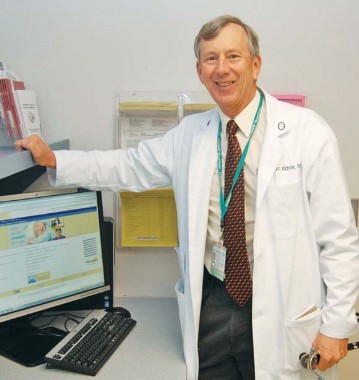
At the University of California, Davis Medical Center, Dr. Richard White described a scenario: He sits down with a patient and starts to explain the side effects of taking warfarin, or Coumadin under its brand name. He looks at the patient and says, "I want you to understand that on this medication, Coumadin, there can be a lot of interactions with other medicines."
The reaction: a blank stare.
For about one-third of patients, it’s the moment there’s a communication disconnect, said Dr. White, medical director of the UC Davis Anticoagulation Service. "The word interaction, they sometimes don’t understand it. They just immediately get lost." The solution: Rephrase and communicate in clear, simple language.
"We’re worried how Coumadin mixes with any new medication. If you start a new medication, call us," explained Dr. White. Also, patient education with easy-to-understand language is extremely important for this commonly prescribed drug with its well-known trifecta of trip wires: It requires careful blood monitoring, has a strict dosing regimen, and can lead to potentially dangerous drug and food interactions. A survey of 184 long-term warfarin patients of the UC Davis Medical Center’s anticoagulation clinic found that the majority of participants had trouble recognizing high-risk situations that compromised patient safety. (See related story.)
The survey, reported in the January 2013 issue of the Joint Commission Journal on Quality and Patient Safety, found that more than 50% of respondents categorized acute chest pain and taking the wrong dosage as among "urgent" situations, while a significant percentage failed to recognize the urgency of other high-risk scenarios like stroke symptoms that include a loss of vision and risk of bleeding after incidental head trauma. The Joint Commission concluded that patient-centered strategies are needed to teach the difference between high- and low-risk situations related to warfarin, attributed to an estimated 29,000 emergency department visits annually and one out of every seven adverse drug events (Jt. Comm. J. Qual. Patient Saf. 2013;39:22-31).
Speak plainly, not pharmacologically
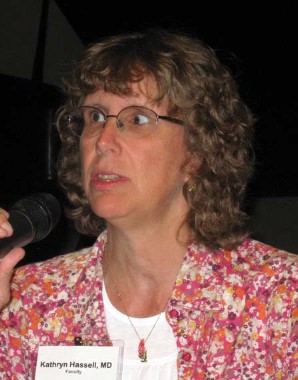
Miscommunication is a leading cause of medical errors with this drug, according to Dr. Kathryn Hassell, professor of medicine in the division of hematology at the University of Colorado, Denver, and head of the anticoagulation monitoring clinic at the University of Colorado Hospital.
To help patients discern high-risk from low-risk situations, experts say it’s best to present patients with "real-life" scenarios and ask for feedback to gauge level of understanding.
"Rather than the doctors teaching the patients about the pharmacology of Coumadin, we create a list of potential events and teach people how to be prepared for that event," said Dr. White, coauthor of the Joint Commission article. He advises fellow physicians to think about possible events that would make the doctor, pharmacist, or patient "very concerned." Then, ask patients a series of questions, like: What should you do if you forget to take your medication or accidentally take too much? What should you do if you suddenly see bruising? What should you do if your bowel movements suddenly turn black? If you suddenly develop a nosebleed, what should you do?
And follow up with clear instructions.
"If you get a nosebleed or cut yourself, you apply pressure for 5 to 10 minutes, and if you continue to bleed, call us in the clinic or go to the emergency room," Dr. White explained. "They don’t know how long to apply pressure or that if you apply pressure, it may stop. These are the kinds of situations that a patient experiences, and they may not be educated at all about what to do."
Similarly, Dr. Hassell lays out scenarios for her patients skilled at skiing and other physical activities, which are possible on warfarin. She doesn’t advise them to ditch their active lifestyle, but to use good judgment, because there may be risks and greater consequences when patients are on anticoagulation therapy. For example, she’d ask a downhill skier about his crash history and resulting injuries. To "a guy who says, ‘I’ve busted everything every time I’ve gone, and had to get blood transfusions’ when not on Coumadin," she would ask: "Okay, really, do you want to put yourself in that place?"
She also stressed the importance of debunking other common myths, including that warfarin actually causes bleeding and that those on the drug should not eat vitamin K–rich foods like salads.
Pamphlets, video chats, and apps
As physicians work to better meet the needs of their patients, hospitals are simultaneously improving warfarin education outreach. The UC Davis Medical Center provides handouts explaining medication-related scenarios in 14 languages including English, Russian, and Mandarin. To ease confusion, the hospital keeps language at the elementary-school level.
"We try to get between the fourth and sixth grades in terms of written materials," said Dr. White. "You don’t want to present them at a high school or college level, because they just won’t understand."
There are weekly Coumadin classes in the anticoagulation clinic, where patients learn about the drug and blood-clotting tests, and discuss bleeding scenarios, among other concerns. The UC Davis Medical Center also provides trained medical interpreters to assist in physician-patient communication. When faced with a language barrier, the doctor can request an interpreter to provide translation services in person, or as part of a three-way conversation with the patient and physician using video technology similar to Skype. And an inpatient starting warfarin treatment triggers an education order that includes reviewing a hospital video about the pill, a strategy Dr. White questioned because sick patients may have trouble grasping the information.
At the University of California, Irvine, pharmacists run classes with patients, doctors educate family members when needed, and education materials are at the fifth-grade level. "We try to implement read-backs for the patients to tell us what we’ve talked to them about," said Dr. Alpesh Amin, professor and chairman of the department of medicine and executive director of the hospitalist program at UC Irvine.

Dr. Amin, who also serves as medical director of the anticoagulation clinic, said they take a multilayered approach to warfarin patient education that includes weekly education courses and policies and procedures focused on teaching patients during their transitions of care. He said they put "a lot of energy and effort" into maintaining standardized policies in how they run the anticoagulation clinic and educate patients.
When it comes to warfarin, patient education comes in many forms: from basic handouts with pill color and dosage to digital technologies. At Cedars-Sinai Medical Center in Los Angeles, staff uses a variety of patient reminder tools. Dr. John G. Harold, president-elect of the American College of Cardiology and attending physician at Cedars-Sinai Heart Institute, encourages his patients to use the CardioSmart Med Reminder app, which features medication reminder alerts.
Still, nothing can replace face-to-face interaction. Said Dr. Harold: "You just can’t hand materials to the patients without communicating with them directly."

|
|
Dr. White made some very good points in this article. Using simple language is among the most important of them.
We have all experienced that blank stare from patients when we begin speaking, sort of like a deer in the headlights. While some patients are better at hiding their confusion than others, to be safe, it is just best to use basic language that everyone understands. That is particularly important for hospitalists, since in the midst of trying to counsel patients, invariably we get paged a time or two and have to mentally regroup to assess the urgency of those interruptions. In addition, patients’ attention spans – between the routine hospital-associated sleep deprivation, medication side effects, and lingering pain – are often suboptimal (to put it mildly) during bedside counseling sessions.
Giving our patients specific yet limited things to look for is also important. Under the best of circumstances, few people can remember a long list of details, but most can retain a few bullet points. So pick the issues you feel are most important for patients to know, and hone in on those. That list may even be tailored to the specific needs of individuals. The nurse can give them detailed written material on Coumadin later, but our time at the bedside is limited and we need to make the most of it.
Dr. A. Maria Hester is a hospitalist with Baltimore-Washington Medical Center, Glen Burnie, Md.
|
|
|
Dr. White made some very good points in this article. Using simple language is among the most important of them.
We have all experienced that blank stare from patients when we begin speaking, sort of like a deer in the headlights. While some patients are better at hiding their confusion than others, to be safe, it is just best to use basic language that everyone understands. That is particularly important for hospitalists, since in the midst of trying to counsel patients, invariably we get paged a time or two and have to mentally regroup to assess the urgency of those interruptions. In addition, patients’ attention spans – between the routine hospital-associated sleep deprivation, medication side effects, and lingering pain – are often suboptimal (to put it mildly) during bedside counseling sessions.
Giving our patients specific yet limited things to look for is also important. Under the best of circumstances, few people can remember a long list of details, but most can retain a few bullet points. So pick the issues you feel are most important for patients to know, and hone in on those. That list may even be tailored to the specific needs of individuals. The nurse can give them detailed written material on Coumadin later, but our time at the bedside is limited and we need to make the most of it.
Dr. A. Maria Hester is a hospitalist with Baltimore-Washington Medical Center, Glen Burnie, Md.
|
|
|
Dr. White made some very good points in this article. Using simple language is among the most important of them.
We have all experienced that blank stare from patients when we begin speaking, sort of like a deer in the headlights. While some patients are better at hiding their confusion than others, to be safe, it is just best to use basic language that everyone understands. That is particularly important for hospitalists, since in the midst of trying to counsel patients, invariably we get paged a time or two and have to mentally regroup to assess the urgency of those interruptions. In addition, patients’ attention spans – between the routine hospital-associated sleep deprivation, medication side effects, and lingering pain – are often suboptimal (to put it mildly) during bedside counseling sessions.
Giving our patients specific yet limited things to look for is also important. Under the best of circumstances, few people can remember a long list of details, but most can retain a few bullet points. So pick the issues you feel are most important for patients to know, and hone in on those. That list may even be tailored to the specific needs of individuals. The nurse can give them detailed written material on Coumadin later, but our time at the bedside is limited and we need to make the most of it.
Dr. A. Maria Hester is a hospitalist with Baltimore-Washington Medical Center, Glen Burnie, Md.
The core skills of communication and patient education emerge front and center in the treatment of patients who take anticoagulants. Even long-term users of warfarin often lack the understanding it takes to avoid adverse events and readmissions, according to a recent study.
Clinicians and medical centers are responding to this problem armed with both data and individual experience.
At the University of California, Davis Medical Center, Dr. Richard White described a scenario: He sits down with a patient and starts to explain the side effects of taking warfarin, or Coumadin under its brand name. He looks at the patient and says, "I want you to understand that on this medication, Coumadin, there can be a lot of interactions with other medicines."
The reaction: a blank stare.
For about one-third of patients, it’s the moment there’s a communication disconnect, said Dr. White, medical director of the UC Davis Anticoagulation Service. "The word interaction, they sometimes don’t understand it. They just immediately get lost." The solution: Rephrase and communicate in clear, simple language.
"We’re worried how Coumadin mixes with any new medication. If you start a new medication, call us," explained Dr. White. Also, patient education with easy-to-understand language is extremely important for this commonly prescribed drug with its well-known trifecta of trip wires: It requires careful blood monitoring, has a strict dosing regimen, and can lead to potentially dangerous drug and food interactions. A survey of 184 long-term warfarin patients of the UC Davis Medical Center’s anticoagulation clinic found that the majority of participants had trouble recognizing high-risk situations that compromised patient safety. (See related story.)
The survey, reported in the January 2013 issue of the Joint Commission Journal on Quality and Patient Safety, found that more than 50% of respondents categorized acute chest pain and taking the wrong dosage as among "urgent" situations, while a significant percentage failed to recognize the urgency of other high-risk scenarios like stroke symptoms that include a loss of vision and risk of bleeding after incidental head trauma. The Joint Commission concluded that patient-centered strategies are needed to teach the difference between high- and low-risk situations related to warfarin, attributed to an estimated 29,000 emergency department visits annually and one out of every seven adverse drug events (Jt. Comm. J. Qual. Patient Saf. 2013;39:22-31).
Speak plainly, not pharmacologically
Miscommunication is a leading cause of medical errors with this drug, according to Dr. Kathryn Hassell, professor of medicine in the division of hematology at the University of Colorado, Denver, and head of the anticoagulation monitoring clinic at the University of Colorado Hospital.
To help patients discern high-risk from low-risk situations, experts say it’s best to present patients with "real-life" scenarios and ask for feedback to gauge level of understanding.
"Rather than the doctors teaching the patients about the pharmacology of Coumadin, we create a list of potential events and teach people how to be prepared for that event," said Dr. White, coauthor of the Joint Commission article. He advises fellow physicians to think about possible events that would make the doctor, pharmacist, or patient "very concerned." Then, ask patients a series of questions, like: What should you do if you forget to take your medication or accidentally take too much? What should you do if you suddenly see bruising? What should you do if your bowel movements suddenly turn black? If you suddenly develop a nosebleed, what should you do?
And follow up with clear instructions.
"If you get a nosebleed or cut yourself, you apply pressure for 5 to 10 minutes, and if you continue to bleed, call us in the clinic or go to the emergency room," Dr. White explained. "They don’t know how long to apply pressure or that if you apply pressure, it may stop. These are the kinds of situations that a patient experiences, and they may not be educated at all about what to do."
Similarly, Dr. Hassell lays out scenarios for her patients skilled at skiing and other physical activities, which are possible on warfarin. She doesn’t advise them to ditch their active lifestyle, but to use good judgment, because there may be risks and greater consequences when patients are on anticoagulation therapy. For example, she’d ask a downhill skier about his crash history and resulting injuries. To "a guy who says, ‘I’ve busted everything every time I’ve gone, and had to get blood transfusions’ when not on Coumadin," she would ask: "Okay, really, do you want to put yourself in that place?"
She also stressed the importance of debunking other common myths, including that warfarin actually causes bleeding and that those on the drug should not eat vitamin K–rich foods like salads.
Pamphlets, video chats, and apps
As physicians work to better meet the needs of their patients, hospitals are simultaneously improving warfarin education outreach. The UC Davis Medical Center provides handouts explaining medication-related scenarios in 14 languages including English, Russian, and Mandarin. To ease confusion, the hospital keeps language at the elementary-school level.
"We try to get between the fourth and sixth grades in terms of written materials," said Dr. White. "You don’t want to present them at a high school or college level, because they just won’t understand."
There are weekly Coumadin classes in the anticoagulation clinic, where patients learn about the drug and blood-clotting tests, and discuss bleeding scenarios, among other concerns. The UC Davis Medical Center also provides trained medical interpreters to assist in physician-patient communication. When faced with a language barrier, the doctor can request an interpreter to provide translation services in person, or as part of a three-way conversation with the patient and physician using video technology similar to Skype. And an inpatient starting warfarin treatment triggers an education order that includes reviewing a hospital video about the pill, a strategy Dr. White questioned because sick patients may have trouble grasping the information.
At the University of California, Irvine, pharmacists run classes with patients, doctors educate family members when needed, and education materials are at the fifth-grade level. "We try to implement read-backs for the patients to tell us what we’ve talked to them about," said Dr. Alpesh Amin, professor and chairman of the department of medicine and executive director of the hospitalist program at UC Irvine.
Dr. Amin, who also serves as medical director of the anticoagulation clinic, said they take a multilayered approach to warfarin patient education that includes weekly education courses and policies and procedures focused on teaching patients during their transitions of care. He said they put "a lot of energy and effort" into maintaining standardized policies in how they run the anticoagulation clinic and educate patients.
When it comes to warfarin, patient education comes in many forms: from basic handouts with pill color and dosage to digital technologies. At Cedars-Sinai Medical Center in Los Angeles, staff uses a variety of patient reminder tools. Dr. John G. Harold, president-elect of the American College of Cardiology and attending physician at Cedars-Sinai Heart Institute, encourages his patients to use the CardioSmart Med Reminder app, which features medication reminder alerts.
Still, nothing can replace face-to-face interaction. Said Dr. Harold: "You just can’t hand materials to the patients without communicating with them directly."
The core skills of communication and patient education emerge front and center in the treatment of patients who take anticoagulants. Even long-term users of warfarin often lack the understanding it takes to avoid adverse events and readmissions, according to a recent study.
Clinicians and medical centers are responding to this problem armed with both data and individual experience.
At the University of California, Davis Medical Center, Dr. Richard White described a scenario: He sits down with a patient and starts to explain the side effects of taking warfarin, or Coumadin under its brand name. He looks at the patient and says, "I want you to understand that on this medication, Coumadin, there can be a lot of interactions with other medicines."
The reaction: a blank stare.
For about one-third of patients, it’s the moment there’s a communication disconnect, said Dr. White, medical director of the UC Davis Anticoagulation Service. "The word interaction, they sometimes don’t understand it. They just immediately get lost." The solution: Rephrase and communicate in clear, simple language.
"We’re worried how Coumadin mixes with any new medication. If you start a new medication, call us," explained Dr. White. Also, patient education with easy-to-understand language is extremely important for this commonly prescribed drug with its well-known trifecta of trip wires: It requires careful blood monitoring, has a strict dosing regimen, and can lead to potentially dangerous drug and food interactions. A survey of 184 long-term warfarin patients of the UC Davis Medical Center’s anticoagulation clinic found that the majority of participants had trouble recognizing high-risk situations that compromised patient safety. (See related story.)
The survey, reported in the January 2013 issue of the Joint Commission Journal on Quality and Patient Safety, found that more than 50% of respondents categorized acute chest pain and taking the wrong dosage as among "urgent" situations, while a significant percentage failed to recognize the urgency of other high-risk scenarios like stroke symptoms that include a loss of vision and risk of bleeding after incidental head trauma. The Joint Commission concluded that patient-centered strategies are needed to teach the difference between high- and low-risk situations related to warfarin, attributed to an estimated 29,000 emergency department visits annually and one out of every seven adverse drug events (Jt. Comm. J. Qual. Patient Saf. 2013;39:22-31).
Speak plainly, not pharmacologically
Miscommunication is a leading cause of medical errors with this drug, according to Dr. Kathryn Hassell, professor of medicine in the division of hematology at the University of Colorado, Denver, and head of the anticoagulation monitoring clinic at the University of Colorado Hospital.
To help patients discern high-risk from low-risk situations, experts say it’s best to present patients with "real-life" scenarios and ask for feedback to gauge level of understanding.
"Rather than the doctors teaching the patients about the pharmacology of Coumadin, we create a list of potential events and teach people how to be prepared for that event," said Dr. White, coauthor of the Joint Commission article. He advises fellow physicians to think about possible events that would make the doctor, pharmacist, or patient "very concerned." Then, ask patients a series of questions, like: What should you do if you forget to take your medication or accidentally take too much? What should you do if you suddenly see bruising? What should you do if your bowel movements suddenly turn black? If you suddenly develop a nosebleed, what should you do?
And follow up with clear instructions.
"If you get a nosebleed or cut yourself, you apply pressure for 5 to 10 minutes, and if you continue to bleed, call us in the clinic or go to the emergency room," Dr. White explained. "They don’t know how long to apply pressure or that if you apply pressure, it may stop. These are the kinds of situations that a patient experiences, and they may not be educated at all about what to do."
Similarly, Dr. Hassell lays out scenarios for her patients skilled at skiing and other physical activities, which are possible on warfarin. She doesn’t advise them to ditch their active lifestyle, but to use good judgment, because there may be risks and greater consequences when patients are on anticoagulation therapy. For example, she’d ask a downhill skier about his crash history and resulting injuries. To "a guy who says, ‘I’ve busted everything every time I’ve gone, and had to get blood transfusions’ when not on Coumadin," she would ask: "Okay, really, do you want to put yourself in that place?"
She also stressed the importance of debunking other common myths, including that warfarin actually causes bleeding and that those on the drug should not eat vitamin K–rich foods like salads.
Pamphlets, video chats, and apps
As physicians work to better meet the needs of their patients, hospitals are simultaneously improving warfarin education outreach. The UC Davis Medical Center provides handouts explaining medication-related scenarios in 14 languages including English, Russian, and Mandarin. To ease confusion, the hospital keeps language at the elementary-school level.
"We try to get between the fourth and sixth grades in terms of written materials," said Dr. White. "You don’t want to present them at a high school or college level, because they just won’t understand."
There are weekly Coumadin classes in the anticoagulation clinic, where patients learn about the drug and blood-clotting tests, and discuss bleeding scenarios, among other concerns. The UC Davis Medical Center also provides trained medical interpreters to assist in physician-patient communication. When faced with a language barrier, the doctor can request an interpreter to provide translation services in person, or as part of a three-way conversation with the patient and physician using video technology similar to Skype. And an inpatient starting warfarin treatment triggers an education order that includes reviewing a hospital video about the pill, a strategy Dr. White questioned because sick patients may have trouble grasping the information.
At the University of California, Irvine, pharmacists run classes with patients, doctors educate family members when needed, and education materials are at the fifth-grade level. "We try to implement read-backs for the patients to tell us what we’ve talked to them about," said Dr. Alpesh Amin, professor and chairman of the department of medicine and executive director of the hospitalist program at UC Irvine.
Dr. Amin, who also serves as medical director of the anticoagulation clinic, said they take a multilayered approach to warfarin patient education that includes weekly education courses and policies and procedures focused on teaching patients during their transitions of care. He said they put "a lot of energy and effort" into maintaining standardized policies in how they run the anticoagulation clinic and educate patients.
When it comes to warfarin, patient education comes in many forms: from basic handouts with pill color and dosage to digital technologies. At Cedars-Sinai Medical Center in Los Angeles, staff uses a variety of patient reminder tools. Dr. John G. Harold, president-elect of the American College of Cardiology and attending physician at Cedars-Sinai Heart Institute, encourages his patients to use the CardioSmart Med Reminder app, which features medication reminder alerts.
Still, nothing can replace face-to-face interaction. Said Dr. Harold: "You just can’t hand materials to the patients without communicating with them directly."