User login
Severe Acne Erupts During Transgender Transition
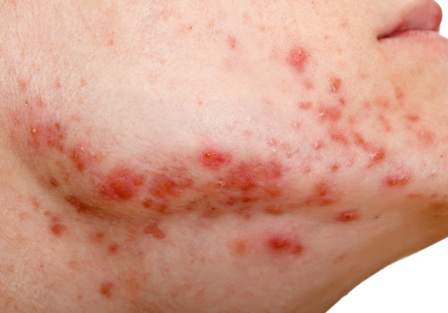
Individuals undergoing a transition from female to male (trans men) may be prone to severe acne in response to the testosterone therapy associated with that process, according to data from case reports presented in a research letter in JAMA Dermatology.
Data on the impact of testosterone therapy on the skin of trans men are limited, and previous studies suggested that the therapy did not promote acne, but Dr. Lucia Turrion-Merino of Ramón y Cajal Hospital, Madrid, and colleagues reported otherwise.
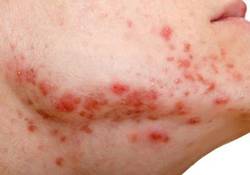
“Our 2 patients developed severe inflammatory acne with scarring, even with physiological male T [testosterone] levels,” they said.
Both patients were in their 20s, with no history of severe acne, but they presented with, in one case, inflammatory acne and scarring on the face and chest, and in the second case, seborrhea and severe acne on the face and trunk. In both cases, the acne arose within 6 months of starting testosterone therapy. Both patients improved on isotretinoin but have required ongoing treatment, as the acne returned when the isotretinoin was discontinued.
“In our opinion, it is reasonable to think that if the patient keeps receiving masculinizing doses of T, virilizing characteristics such as acne will persist,” the researchers wrote.
The findings were published online May 20 (JAMA Dermatol. 2015 [doi:10.1001/jamadermatol.2015.0761]). Find the full study here.
Individuals undergoing a transition from female to male (trans men) may be prone to severe acne in response to the testosterone therapy associated with that process, according to data from case reports presented in a research letter in JAMA Dermatology.
Data on the impact of testosterone therapy on the skin of trans men are limited, and previous studies suggested that the therapy did not promote acne, but Dr. Lucia Turrion-Merino of Ramón y Cajal Hospital, Madrid, and colleagues reported otherwise.
“Our 2 patients developed severe inflammatory acne with scarring, even with physiological male T [testosterone] levels,” they said.
Both patients were in their 20s, with no history of severe acne, but they presented with, in one case, inflammatory acne and scarring on the face and chest, and in the second case, seborrhea and severe acne on the face and trunk. In both cases, the acne arose within 6 months of starting testosterone therapy. Both patients improved on isotretinoin but have required ongoing treatment, as the acne returned when the isotretinoin was discontinued.
“In our opinion, it is reasonable to think that if the patient keeps receiving masculinizing doses of T, virilizing characteristics such as acne will persist,” the researchers wrote.
The findings were published online May 20 (JAMA Dermatol. 2015 [doi:10.1001/jamadermatol.2015.0761]). Find the full study here.
Individuals undergoing a transition from female to male (trans men) may be prone to severe acne in response to the testosterone therapy associated with that process, according to data from case reports presented in a research letter in JAMA Dermatology.
Data on the impact of testosterone therapy on the skin of trans men are limited, and previous studies suggested that the therapy did not promote acne, but Dr. Lucia Turrion-Merino of Ramón y Cajal Hospital, Madrid, and colleagues reported otherwise.
“Our 2 patients developed severe inflammatory acne with scarring, even with physiological male T [testosterone] levels,” they said.
Both patients were in their 20s, with no history of severe acne, but they presented with, in one case, inflammatory acne and scarring on the face and chest, and in the second case, seborrhea and severe acne on the face and trunk. In both cases, the acne arose within 6 months of starting testosterone therapy. Both patients improved on isotretinoin but have required ongoing treatment, as the acne returned when the isotretinoin was discontinued.
“In our opinion, it is reasonable to think that if the patient keeps receiving masculinizing doses of T, virilizing characteristics such as acne will persist,” the researchers wrote.
The findings were published online May 20 (JAMA Dermatol. 2015 [doi:10.1001/jamadermatol.2015.0761]). Find the full study here.
FROM JAMA DERMATOLOGY
Severe acne erupts during transgender transition
Individuals undergoing a transition from female to male (trans men) may be prone to severe acne in response to the testosterone therapy associated with that process, according to data from case reports presented in a research letter in JAMA Dermatology.
Data on the impact of testosterone therapy on the skin of trans men are limited, and previous studies suggested that the therapy did not promote acne, but Dr. Lucia Turrion-Merino of Ramón y Cajal Hospital, Madrid, and colleagues reported otherwise.
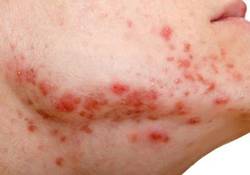
“Our 2 patients developed severe inflammatory acne with scarring, even with physiological male T [testosterone] levels,” they said.
Both patients were in their 20s, with no history of severe acne, but they presented with, in one case, inflammatory acne and scarring on the face and chest, and in the second case, seborrhea and severe acne on the face and trunk. In both cases, the acne arose within 6 months of starting testosterone therapy. Both patients improved on isotretinoin but have required ongoing treatment, as the acne returned when the isotretinoin was discontinued.
“In our opinion, it is reasonable to think that if the patient keeps receiving masculinizing doses of T, virilizing characteristics such as acne will persist,” the researchers wrote.
The findings were published online May 20 (JAMA Dermatol. 2015 [doi:10.1001/jamadermatol.2015.0761]). Find the full study here.
Individuals undergoing a transition from female to male (trans men) may be prone to severe acne in response to the testosterone therapy associated with that process, according to data from case reports presented in a research letter in JAMA Dermatology.
Data on the impact of testosterone therapy on the skin of trans men are limited, and previous studies suggested that the therapy did not promote acne, but Dr. Lucia Turrion-Merino of Ramón y Cajal Hospital, Madrid, and colleagues reported otherwise.
“Our 2 patients developed severe inflammatory acne with scarring, even with physiological male T [testosterone] levels,” they said.
Both patients were in their 20s, with no history of severe acne, but they presented with, in one case, inflammatory acne and scarring on the face and chest, and in the second case, seborrhea and severe acne on the face and trunk. In both cases, the acne arose within 6 months of starting testosterone therapy. Both patients improved on isotretinoin but have required ongoing treatment, as the acne returned when the isotretinoin was discontinued.
“In our opinion, it is reasonable to think that if the patient keeps receiving masculinizing doses of T, virilizing characteristics such as acne will persist,” the researchers wrote.
The findings were published online May 20 (JAMA Dermatol. 2015 [doi:10.1001/jamadermatol.2015.0761]). Find the full study here.
Individuals undergoing a transition from female to male (trans men) may be prone to severe acne in response to the testosterone therapy associated with that process, according to data from case reports presented in a research letter in JAMA Dermatology.
Data on the impact of testosterone therapy on the skin of trans men are limited, and previous studies suggested that the therapy did not promote acne, but Dr. Lucia Turrion-Merino of Ramón y Cajal Hospital, Madrid, and colleagues reported otherwise.
“Our 2 patients developed severe inflammatory acne with scarring, even with physiological male T [testosterone] levels,” they said.
Both patients were in their 20s, with no history of severe acne, but they presented with, in one case, inflammatory acne and scarring on the face and chest, and in the second case, seborrhea and severe acne on the face and trunk. In both cases, the acne arose within 6 months of starting testosterone therapy. Both patients improved on isotretinoin but have required ongoing treatment, as the acne returned when the isotretinoin was discontinued.
“In our opinion, it is reasonable to think that if the patient keeps receiving masculinizing doses of T, virilizing characteristics such as acne will persist,” the researchers wrote.
The findings were published online May 20 (JAMA Dermatol. 2015 [doi:10.1001/jamadermatol.2015.0761]). Find the full study here.
FROM JAMA DERMATOLOGY
Women’s Acne Mirrors Teen Acne
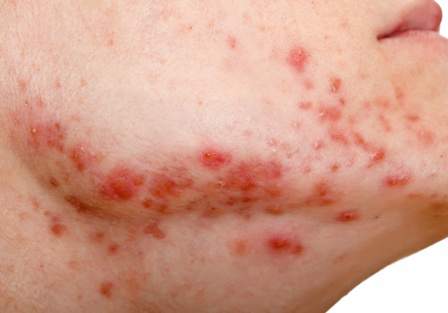
The distribution of acne lesions in adults is similar to that in adolescents, based on data from a prospective study of 374 women aged 25 years and older.
“The stereotype of adult female acne being due to hormonal disturbances presenting as inflammatory acne localized only to the mandibular area was not found in the majority of this large group,” noted Dr. Brigitte Dreno of Nantes (France) University and colleagues.
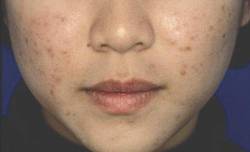
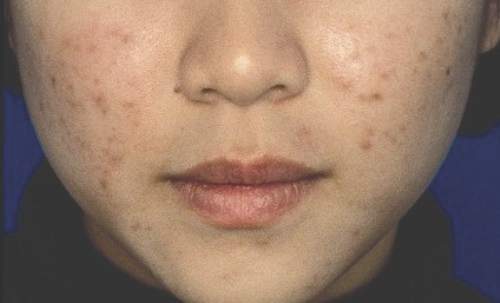
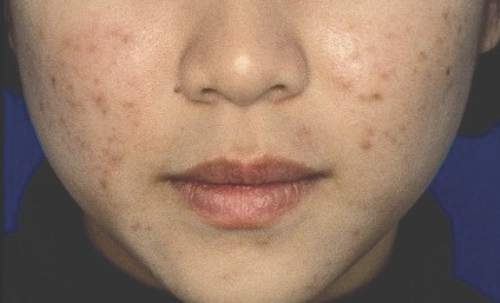
Approximately 90% of the women demonstrated facial acne severity typical to that seen in adolescents, with involvement of the cheeks, forehead, temples, and mandibular area, the researchers noted. The most common presentation was mixed facial acne, with both inflammatory and noninflammatory lesions. A total of 6% of women had inflammatory acne only, with no reported noninflammatory lesions, and 17% had comedonal acne and no reported inflammatory lesions.
“We recommend that the general treatment approach for adult acne should include agents that target each of the acne lesion subtypes,” the researchers wrote.
The findings were published in the Journal of the European Academy of Dermatology and Venereology (2015;29:1096-106 [doi:10.1111/jdv.12757]).
The distribution of acne lesions in adults is similar to that in adolescents, based on data from a prospective study of 374 women aged 25 years and older.
“The stereotype of adult female acne being due to hormonal disturbances presenting as inflammatory acne localized only to the mandibular area was not found in the majority of this large group,” noted Dr. Brigitte Dreno of Nantes (France) University and colleagues.
Approximately 90% of the women demonstrated facial acne severity typical to that seen in adolescents, with involvement of the cheeks, forehead, temples, and mandibular area, the researchers noted. The most common presentation was mixed facial acne, with both inflammatory and noninflammatory lesions. A total of 6% of women had inflammatory acne only, with no reported noninflammatory lesions, and 17% had comedonal acne and no reported inflammatory lesions.
“We recommend that the general treatment approach for adult acne should include agents that target each of the acne lesion subtypes,” the researchers wrote.
The findings were published in the Journal of the European Academy of Dermatology and Venereology (2015;29:1096-106 [doi:10.1111/jdv.12757]).
The distribution of acne lesions in adults is similar to that in adolescents, based on data from a prospective study of 374 women aged 25 years and older.
“The stereotype of adult female acne being due to hormonal disturbances presenting as inflammatory acne localized only to the mandibular area was not found in the majority of this large group,” noted Dr. Brigitte Dreno of Nantes (France) University and colleagues.
Approximately 90% of the women demonstrated facial acne severity typical to that seen in adolescents, with involvement of the cheeks, forehead, temples, and mandibular area, the researchers noted. The most common presentation was mixed facial acne, with both inflammatory and noninflammatory lesions. A total of 6% of women had inflammatory acne only, with no reported noninflammatory lesions, and 17% had comedonal acne and no reported inflammatory lesions.
“We recommend that the general treatment approach for adult acne should include agents that target each of the acne lesion subtypes,” the researchers wrote.
The findings were published in the Journal of the European Academy of Dermatology and Venereology (2015;29:1096-106 [doi:10.1111/jdv.12757]).
FROM JEADV
Women’s acne mirrors teen acne
The distribution of acne lesions in adults is similar to that in adolescents, based on data from a prospective study of 374 women aged 25 years and older.
“The stereotype of adult female acne being due to hormonal disturbances presenting as inflammatory acne localized only to the mandibular area was not found in the majority of this large group,” noted Dr. Brigitte Dreno of Nantes (France) University and colleagues.
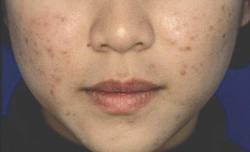
Approximately 90% of the women demonstrated facial acne severity typical to that seen in adolescents, with involvement of the cheeks, forehead, temples, and mandibular area, the researchers noted. The most common presentation was mixed facial acne, with both inflammatory and noninflammatory lesions. A total of 6% of women had inflammatory acne only, with no reported noninflammatory lesions, and 17% had comedonal acne and no reported inflammatory lesions.
“We recommend that the general treatment approach for adult acne should include agents that target each of the acne lesion subtypes,” the researchers wrote.
The findings were published in the Journal of the European Academy of Dermatology and Venereology (2015;29:1096-106 [doi:10.1111/jdv.12757]).
The distribution of acne lesions in adults is similar to that in adolescents, based on data from a prospective study of 374 women aged 25 years and older.
“The stereotype of adult female acne being due to hormonal disturbances presenting as inflammatory acne localized only to the mandibular area was not found in the majority of this large group,” noted Dr. Brigitte Dreno of Nantes (France) University and colleagues.
Approximately 90% of the women demonstrated facial acne severity typical to that seen in adolescents, with involvement of the cheeks, forehead, temples, and mandibular area, the researchers noted. The most common presentation was mixed facial acne, with both inflammatory and noninflammatory lesions. A total of 6% of women had inflammatory acne only, with no reported noninflammatory lesions, and 17% had comedonal acne and no reported inflammatory lesions.
“We recommend that the general treatment approach for adult acne should include agents that target each of the acne lesion subtypes,” the researchers wrote.
The findings were published in the Journal of the European Academy of Dermatology and Venereology (2015;29:1096-106 [doi:10.1111/jdv.12757]).
The distribution of acne lesions in adults is similar to that in adolescents, based on data from a prospective study of 374 women aged 25 years and older.
“The stereotype of adult female acne being due to hormonal disturbances presenting as inflammatory acne localized only to the mandibular area was not found in the majority of this large group,” noted Dr. Brigitte Dreno of Nantes (France) University and colleagues.
Approximately 90% of the women demonstrated facial acne severity typical to that seen in adolescents, with involvement of the cheeks, forehead, temples, and mandibular area, the researchers noted. The most common presentation was mixed facial acne, with both inflammatory and noninflammatory lesions. A total of 6% of women had inflammatory acne only, with no reported noninflammatory lesions, and 17% had comedonal acne and no reported inflammatory lesions.
“We recommend that the general treatment approach for adult acne should include agents that target each of the acne lesion subtypes,” the researchers wrote.
The findings were published in the Journal of the European Academy of Dermatology and Venereology (2015;29:1096-106 [doi:10.1111/jdv.12757]).
FROM JEADV
Automatic Counseling Failed to Improve Adolescent Acne
Adding automated counseling to an acne education website had no impact on improving acne severity and quality of life, but it did encourage more patients to begin or maintain an antiacne skin care routine, based on data from a randomized trial published online May 27 in JAMA Dermatology.
Patient education is the key to successful acne management, but the effects of patient education programs on clinical outcomes have not been well studied, wrote William Tuong of the University of California, Davis, and his colleagues. Mr. Tuong and his colleagues designed an educational acne website that included virtual counselors to take the place of an in-person visit with a doctor. They randomized 98 high school students aged 14-29 years with mild to moderate acne to this website or a second similar website without the virtual counseling component (JAMA Dermatology 2015 [doi:10.1001/jamadermatol.2015.0859]).

The primary outcome of the study was the difference in acne lesion counts at baseline vs. 12 weeks after patients completed the online education program. At 12 weeks, the change in acne lesion counts was not significantly different between the automated counseling and control groups, and the total lesion count at 12 weeks was approximately 21 for both groups. In addition, the average improvement in quality of life scores was not significantly different between the groups.
However, significantly more participants in the automated counseling website group vs. the standard website group reported having “maintained or adopted a skin care regimen” at 12 weeks’ follow-up, the researchers noted.
“For some participants in this study, this alliance [with the virtual counselor] may have provided effective counseling on skin care or positive feedback that reinforced current behaviors,” they wrote.
The results were limited by the lower-than-expected use of the study websites, the researchers noted. However, the findings suggest that “interactive, Internet-based education may still carry the potential to improve long-term clinical factors, such as acne severity and quality of life,” and these factors can be explored in future studies, the investigators said.
The study was supported in part by a grant from the National Institutes of Health. The researchers had no relevant financial conflicts to disclose.
Adding automated counseling to an acne education website had no impact on improving acne severity and quality of life, but it did encourage more patients to begin or maintain an antiacne skin care routine, based on data from a randomized trial published online May 27 in JAMA Dermatology.
Patient education is the key to successful acne management, but the effects of patient education programs on clinical outcomes have not been well studied, wrote William Tuong of the University of California, Davis, and his colleagues. Mr. Tuong and his colleagues designed an educational acne website that included virtual counselors to take the place of an in-person visit with a doctor. They randomized 98 high school students aged 14-29 years with mild to moderate acne to this website or a second similar website without the virtual counseling component (JAMA Dermatology 2015 [doi:10.1001/jamadermatol.2015.0859]).
The primary outcome of the study was the difference in acne lesion counts at baseline vs. 12 weeks after patients completed the online education program. At 12 weeks, the change in acne lesion counts was not significantly different between the automated counseling and control groups, and the total lesion count at 12 weeks was approximately 21 for both groups. In addition, the average improvement in quality of life scores was not significantly different between the groups.
However, significantly more participants in the automated counseling website group vs. the standard website group reported having “maintained or adopted a skin care regimen” at 12 weeks’ follow-up, the researchers noted.
“For some participants in this study, this alliance [with the virtual counselor] may have provided effective counseling on skin care or positive feedback that reinforced current behaviors,” they wrote.
The results were limited by the lower-than-expected use of the study websites, the researchers noted. However, the findings suggest that “interactive, Internet-based education may still carry the potential to improve long-term clinical factors, such as acne severity and quality of life,” and these factors can be explored in future studies, the investigators said.
The study was supported in part by a grant from the National Institutes of Health. The researchers had no relevant financial conflicts to disclose.
Adding automated counseling to an acne education website had no impact on improving acne severity and quality of life, but it did encourage more patients to begin or maintain an antiacne skin care routine, based on data from a randomized trial published online May 27 in JAMA Dermatology.
Patient education is the key to successful acne management, but the effects of patient education programs on clinical outcomes have not been well studied, wrote William Tuong of the University of California, Davis, and his colleagues. Mr. Tuong and his colleagues designed an educational acne website that included virtual counselors to take the place of an in-person visit with a doctor. They randomized 98 high school students aged 14-29 years with mild to moderate acne to this website or a second similar website without the virtual counseling component (JAMA Dermatology 2015 [doi:10.1001/jamadermatol.2015.0859]).
The primary outcome of the study was the difference in acne lesion counts at baseline vs. 12 weeks after patients completed the online education program. At 12 weeks, the change in acne lesion counts was not significantly different between the automated counseling and control groups, and the total lesion count at 12 weeks was approximately 21 for both groups. In addition, the average improvement in quality of life scores was not significantly different between the groups.
However, significantly more participants in the automated counseling website group vs. the standard website group reported having “maintained or adopted a skin care regimen” at 12 weeks’ follow-up, the researchers noted.
“For some participants in this study, this alliance [with the virtual counselor] may have provided effective counseling on skin care or positive feedback that reinforced current behaviors,” they wrote.
The results were limited by the lower-than-expected use of the study websites, the researchers noted. However, the findings suggest that “interactive, Internet-based education may still carry the potential to improve long-term clinical factors, such as acne severity and quality of life,” and these factors can be explored in future studies, the investigators said.
The study was supported in part by a grant from the National Institutes of Health. The researchers had no relevant financial conflicts to disclose.
FROM JAMA DERMATOLOGY

Automatic counseling failed to improve adolescent acne
Adding automated counseling to an acne education website had no impact on improving acne severity and quality of life, but it did encourage more patients to begin or maintain an antiacne skin care routine, based on data from a randomized trial published online May 27 in JAMA Dermatology.
Patient education is the key to successful acne management, but the effects of patient education programs on clinical outcomes have not been well studied, wrote William Tuong of the University of California, Davis, and his colleagues. Mr. Tuong and his colleagues designed an educational acne website that included virtual counselors to take the place of an in-person visit with a doctor. They randomized 98 high school students aged 14-29 years with mild to moderate acne to this website or a second similar website without the virtual counseling component (JAMA Dermatology 2015 [doi:10.1001/jamadermatol.2015.0859]).

The primary outcome of the study was the difference in acne lesion counts at baseline vs. 12 weeks after patients completed the online education program. At 12 weeks, the change in acne lesion counts was not significantly different between the automated counseling and control groups, and the total lesion count at 12 weeks was approximately 21 for both groups. In addition, the average improvement in quality of life scores was not significantly different between the groups.
However, significantly more participants in the automated counseling website group vs. the standard website group reported having “maintained or adopted a skin care regimen” at 12 weeks’ follow-up, the researchers noted.
“For some participants in this study, this alliance [with the virtual counselor] may have provided effective counseling on skin care or positive feedback that reinforced current behaviors,” they wrote.
The results were limited by the lower-than-expected use of the study websites, the researchers noted. However, the findings suggest that “interactive, Internet-based education may still carry the potential to improve long-term clinical factors, such as acne severity and quality of life,” and these factors can be explored in future studies, the investigators said.
The study was supported in part by a grant from the National Institutes of Health. The researchers had no relevant financial conflicts to disclose.
Adding automated counseling to an acne education website had no impact on improving acne severity and quality of life, but it did encourage more patients to begin or maintain an antiacne skin care routine, based on data from a randomized trial published online May 27 in JAMA Dermatology.
Patient education is the key to successful acne management, but the effects of patient education programs on clinical outcomes have not been well studied, wrote William Tuong of the University of California, Davis, and his colleagues. Mr. Tuong and his colleagues designed an educational acne website that included virtual counselors to take the place of an in-person visit with a doctor. They randomized 98 high school students aged 14-29 years with mild to moderate acne to this website or a second similar website without the virtual counseling component (JAMA Dermatology 2015 [doi:10.1001/jamadermatol.2015.0859]).
The primary outcome of the study was the difference in acne lesion counts at baseline vs. 12 weeks after patients completed the online education program. At 12 weeks, the change in acne lesion counts was not significantly different between the automated counseling and control groups, and the total lesion count at 12 weeks was approximately 21 for both groups. In addition, the average improvement in quality of life scores was not significantly different between the groups.
However, significantly more participants in the automated counseling website group vs. the standard website group reported having “maintained or adopted a skin care regimen” at 12 weeks’ follow-up, the researchers noted.
“For some participants in this study, this alliance [with the virtual counselor] may have provided effective counseling on skin care or positive feedback that reinforced current behaviors,” they wrote.
The results were limited by the lower-than-expected use of the study websites, the researchers noted. However, the findings suggest that “interactive, Internet-based education may still carry the potential to improve long-term clinical factors, such as acne severity and quality of life,” and these factors can be explored in future studies, the investigators said.
The study was supported in part by a grant from the National Institutes of Health. The researchers had no relevant financial conflicts to disclose.
Adding automated counseling to an acne education website had no impact on improving acne severity and quality of life, but it did encourage more patients to begin or maintain an antiacne skin care routine, based on data from a randomized trial published online May 27 in JAMA Dermatology.
Patient education is the key to successful acne management, but the effects of patient education programs on clinical outcomes have not been well studied, wrote William Tuong of the University of California, Davis, and his colleagues. Mr. Tuong and his colleagues designed an educational acne website that included virtual counselors to take the place of an in-person visit with a doctor. They randomized 98 high school students aged 14-29 years with mild to moderate acne to this website or a second similar website without the virtual counseling component (JAMA Dermatology 2015 [doi:10.1001/jamadermatol.2015.0859]).
The primary outcome of the study was the difference in acne lesion counts at baseline vs. 12 weeks after patients completed the online education program. At 12 weeks, the change in acne lesion counts was not significantly different between the automated counseling and control groups, and the total lesion count at 12 weeks was approximately 21 for both groups. In addition, the average improvement in quality of life scores was not significantly different between the groups.
However, significantly more participants in the automated counseling website group vs. the standard website group reported having “maintained or adopted a skin care regimen” at 12 weeks’ follow-up, the researchers noted.
“For some participants in this study, this alliance [with the virtual counselor] may have provided effective counseling on skin care or positive feedback that reinforced current behaviors,” they wrote.
The results were limited by the lower-than-expected use of the study websites, the researchers noted. However, the findings suggest that “interactive, Internet-based education may still carry the potential to improve long-term clinical factors, such as acne severity and quality of life,” and these factors can be explored in future studies, the investigators said.
The study was supported in part by a grant from the National Institutes of Health. The researchers had no relevant financial conflicts to disclose.
FROM JAMA DERMATOLOGY
Key clinical point: A virtual counseling component on an education website did not decrease acne severity.
Major finding: The total lesion count at 12 weeks was approximately 21 for both groups.
Data source: A randomized trial of 98 high school students with mild to moderate acne.
Disclosures: The study was supported in part by a grant from the National Institutes of Health. The researchers had no relevant financial conflicts to disclose.

VIDEO: Get excited about the excimer laser for dermatitis
ASHEVILLE, N.C. – Excimer lasers can be used for patients with allergic contact dermatitis for whom topical therapies are unsuccessful or undesirable, according to Dr. Alison Ehrlich of George Washington University in Washington.
In an interview at the annual meeting of the Noah Worcester Dermatological Society, Dr. Ehrlich discussed her use of the excimer laser for dermatitis patients and shared some tips for successful treatment.
The video associated with this article is no longer available on this site. Please view all of our videos on the MDedge YouTube channel
ASHEVILLE, N.C. – Excimer lasers can be used for patients with allergic contact dermatitis for whom topical therapies are unsuccessful or undesirable, according to Dr. Alison Ehrlich of George Washington University in Washington.
In an interview at the annual meeting of the Noah Worcester Dermatological Society, Dr. Ehrlich discussed her use of the excimer laser for dermatitis patients and shared some tips for successful treatment.
The video associated with this article is no longer available on this site. Please view all of our videos on the MDedge YouTube channel
ASHEVILLE, N.C. – Excimer lasers can be used for patients with allergic contact dermatitis for whom topical therapies are unsuccessful or undesirable, according to Dr. Alison Ehrlich of George Washington University in Washington.
In an interview at the annual meeting of the Noah Worcester Dermatological Society, Dr. Ehrlich discussed her use of the excimer laser for dermatitis patients and shared some tips for successful treatment.
The video associated with this article is no longer available on this site. Please view all of our videos on the MDedge YouTube channel
AT NOAH 57

VIDEO: Dermatologists should embrace tissue adhesive
ASHEVILLE, N.C. – Cutaneous adhesives have many advantages in dermatologic surgery, according to Dr. John West of Seaport Dermatology and Mohs Surgery in Mystic, Conn.
In a video interview at the annual meeting of the Noah Worcester Dermatological Society, Dr. West explained some of the benefits of tissue adhesives for both doctors and patients and shared several pearls for optimal use of these products.
The video associated with this article is no longer available on this site. Please view all of our videos on the MDedge YouTube channel
ASHEVILLE, N.C. – Cutaneous adhesives have many advantages in dermatologic surgery, according to Dr. John West of Seaport Dermatology and Mohs Surgery in Mystic, Conn.
In a video interview at the annual meeting of the Noah Worcester Dermatological Society, Dr. West explained some of the benefits of tissue adhesives for both doctors and patients and shared several pearls for optimal use of these products.
The video associated with this article is no longer available on this site. Please view all of our videos on the MDedge YouTube channel
ASHEVILLE, N.C. – Cutaneous adhesives have many advantages in dermatologic surgery, according to Dr. John West of Seaport Dermatology and Mohs Surgery in Mystic, Conn.
In a video interview at the annual meeting of the Noah Worcester Dermatological Society, Dr. West explained some of the benefits of tissue adhesives for both doctors and patients and shared several pearls for optimal use of these products.
The video associated with this article is no longer available on this site. Please view all of our videos on the MDedge YouTube channel
AT NOAH 57

VIDEO: Lasers take on the toughest scars
ASHEVILLE, N.C. – Advances in laser and light sources are making it possible to greatly improve the treatment of atrophic and hypertrophic scars, according to Dr. Michael Gold of the Gold Skin Care Center in Nashville, Tenn. In a video interview at the annual meeting of the Noah Worcester Dermatological Society, Dr. Gold explained how laser technology is being used today to manage contracture and other elements of the most challenging scars, such as those sustained by military personnel.
The video associated with this article is no longer available on this site. Please view all of our videos on the MDedge YouTube channel
ASHEVILLE, N.C. – Advances in laser and light sources are making it possible to greatly improve the treatment of atrophic and hypertrophic scars, according to Dr. Michael Gold of the Gold Skin Care Center in Nashville, Tenn. In a video interview at the annual meeting of the Noah Worcester Dermatological Society, Dr. Gold explained how laser technology is being used today to manage contracture and other elements of the most challenging scars, such as those sustained by military personnel.
The video associated with this article is no longer available on this site. Please view all of our videos on the MDedge YouTube channel
ASHEVILLE, N.C. – Advances in laser and light sources are making it possible to greatly improve the treatment of atrophic and hypertrophic scars, according to Dr. Michael Gold of the Gold Skin Care Center in Nashville, Tenn. In a video interview at the annual meeting of the Noah Worcester Dermatological Society, Dr. Gold explained how laser technology is being used today to manage contracture and other elements of the most challenging scars, such as those sustained by military personnel.
The video associated with this article is no longer available on this site. Please view all of our videos on the MDedge YouTube channel
AT NOAH 57

Safely Patch Test Children for Contact Dermatitis
ASHEVILLE, N.C. – “Children really do develop contact dermatitis, and they are frequently mislabeled as cases of eczema,” Dr. Bruce Brod said at the annual meeting of the Noah Worcester Dermatological Society.
When taking a history in a child with potential contact dermatitis, keep the most likely allergens in mind, especially nickel, said Dr. Brod of the University of Pennsylvania, Philadelphia. Nickel remains the most common allergen in adults and young children, and more than a quarter of patients are positive on patch testing.
Consider all possible sources of nickel. In addition to the old standbys of jewelry and buckles, ask patients and families about the use of flip-style cell phones, as well as first generation iPads (the cases contained nickel). “Old cell phones do not make great toys,” Dr. Brod emphasized.
Patch testing children with potential contact dermatitis makes sense in several situations, including cases of new-onset dermatitis; progressing or deteriorating dermatitis; involvement of specific body sites, such as the face, eyelids, or neck folds; an increase in the total body surface area affected; clinical presentation of dyshidrosis; and dermatitis that resists standard therapies and only improves with oral or extremely potent topical steroids, he said.
Children with atopic dermatitis are more prone to irritation from patch testing, so shorten the exposure time and use a lower concentration of allergens such as nickel, formaldehyde, and rubber additives, advised Dr. Brod. Shorten the exposure time for children younger than 5 years of age, whether or not they have atopy, he added. Videos or video games can work well as a distraction.
When taking a history, consider the most the common allergens in children, defined in a recent study of patch testing results (Dermatitis 2014;25:345-55), said Dr. Brod. He offered the mnemonic MAFLPP (More Allergies for Lovable Pediatric Patients) to characterize the top categories: metals (nickel and cobalt), antibiotics (neomycin and bacitracin), fragrance (fragrances and balsam of Peru), lanolin, phenylenediamine, and preservatives (including quatemium-15 and methylisothiazolinone).
After patch testing, describe the allergen to patients and their families, and explain where it is found, Dr. Brod said. The site mypatchlink.com has helpful information. Also remind patients to read product labels, and to check pharmacy websites such as drugstore.com or cvs.com.
Members of the American Contact Dermatitis Society can access the Contact Allergen Management Program (CAMP) database to help patients identify allergen-free products based on their patch test results, he said.
Dr. Brod had no relevant financial conflicts to disclose.
ASHEVILLE, N.C. – “Children really do develop contact dermatitis, and they are frequently mislabeled as cases of eczema,” Dr. Bruce Brod said at the annual meeting of the Noah Worcester Dermatological Society.
When taking a history in a child with potential contact dermatitis, keep the most likely allergens in mind, especially nickel, said Dr. Brod of the University of Pennsylvania, Philadelphia. Nickel remains the most common allergen in adults and young children, and more than a quarter of patients are positive on patch testing.
Consider all possible sources of nickel. In addition to the old standbys of jewelry and buckles, ask patients and families about the use of flip-style cell phones, as well as first generation iPads (the cases contained nickel). “Old cell phones do not make great toys,” Dr. Brod emphasized.
Patch testing children with potential contact dermatitis makes sense in several situations, including cases of new-onset dermatitis; progressing or deteriorating dermatitis; involvement of specific body sites, such as the face, eyelids, or neck folds; an increase in the total body surface area affected; clinical presentation of dyshidrosis; and dermatitis that resists standard therapies and only improves with oral or extremely potent topical steroids, he said.
Children with atopic dermatitis are more prone to irritation from patch testing, so shorten the exposure time and use a lower concentration of allergens such as nickel, formaldehyde, and rubber additives, advised Dr. Brod. Shorten the exposure time for children younger than 5 years of age, whether or not they have atopy, he added. Videos or video games can work well as a distraction.
When taking a history, consider the most the common allergens in children, defined in a recent study of patch testing results (Dermatitis 2014;25:345-55), said Dr. Brod. He offered the mnemonic MAFLPP (More Allergies for Lovable Pediatric Patients) to characterize the top categories: metals (nickel and cobalt), antibiotics (neomycin and bacitracin), fragrance (fragrances and balsam of Peru), lanolin, phenylenediamine, and preservatives (including quatemium-15 and methylisothiazolinone).
After patch testing, describe the allergen to patients and their families, and explain where it is found, Dr. Brod said. The site mypatchlink.com has helpful information. Also remind patients to read product labels, and to check pharmacy websites such as drugstore.com or cvs.com.
Members of the American Contact Dermatitis Society can access the Contact Allergen Management Program (CAMP) database to help patients identify allergen-free products based on their patch test results, he said.
Dr. Brod had no relevant financial conflicts to disclose.
ASHEVILLE, N.C. – “Children really do develop contact dermatitis, and they are frequently mislabeled as cases of eczema,” Dr. Bruce Brod said at the annual meeting of the Noah Worcester Dermatological Society.
When taking a history in a child with potential contact dermatitis, keep the most likely allergens in mind, especially nickel, said Dr. Brod of the University of Pennsylvania, Philadelphia. Nickel remains the most common allergen in adults and young children, and more than a quarter of patients are positive on patch testing.
Consider all possible sources of nickel. In addition to the old standbys of jewelry and buckles, ask patients and families about the use of flip-style cell phones, as well as first generation iPads (the cases contained nickel). “Old cell phones do not make great toys,” Dr. Brod emphasized.
Patch testing children with potential contact dermatitis makes sense in several situations, including cases of new-onset dermatitis; progressing or deteriorating dermatitis; involvement of specific body sites, such as the face, eyelids, or neck folds; an increase in the total body surface area affected; clinical presentation of dyshidrosis; and dermatitis that resists standard therapies and only improves with oral or extremely potent topical steroids, he said.
Children with atopic dermatitis are more prone to irritation from patch testing, so shorten the exposure time and use a lower concentration of allergens such as nickel, formaldehyde, and rubber additives, advised Dr. Brod. Shorten the exposure time for children younger than 5 years of age, whether or not they have atopy, he added. Videos or video games can work well as a distraction.
When taking a history, consider the most the common allergens in children, defined in a recent study of patch testing results (Dermatitis 2014;25:345-55), said Dr. Brod. He offered the mnemonic MAFLPP (More Allergies for Lovable Pediatric Patients) to characterize the top categories: metals (nickel and cobalt), antibiotics (neomycin and bacitracin), fragrance (fragrances and balsam of Peru), lanolin, phenylenediamine, and preservatives (including quatemium-15 and methylisothiazolinone).
After patch testing, describe the allergen to patients and their families, and explain where it is found, Dr. Brod said. The site mypatchlink.com has helpful information. Also remind patients to read product labels, and to check pharmacy websites such as drugstore.com or cvs.com.
Members of the American Contact Dermatitis Society can access the Contact Allergen Management Program (CAMP) database to help patients identify allergen-free products based on their patch test results, he said.
Dr. Brod had no relevant financial conflicts to disclose.
EXPERT ANALYSIS FROM NOAH 57