User login
Hospital Medicine Administrator Amanda Trask Values Hospitalists, HM Role in Healthcare

Most people think a career in hospital medicine means a medical degree that confers those two ubiquitous letters after your name.
Amanda Trask blazed her own path.
She got to her job—vice president of the national hospitalist service line for Catholic Health Initiatives of Englewood, Colo.—by following a slightly different path. In her case, it was a master’s of business administration (MBA), a master’s in health administration (MHA), and a few fellowships to boot.
“Many years ago I chose to move forward in my education and attain advanced degrees,” says Trask, MBA, MHA, SFHM, FACHE, CMPE. “Through that, you get a really broad perspective of healthcare and the business of healthcare.”
It’s a perspective Dr. Trask is bringing to Team Hospitalist, as one of seven new members of The Hospitalist’s volunteer editorial advisory board. She sees HM as a vital specialty in a changing healthcare landscape.
“Hospital medicine is uniquely positioned to truly impact a very large breadth of patients and improve the continuum of care,” she says.
Question: Tell me about your role at Catholic Health Initiatives.
Answer: CHI operates in 19 states and 105 hospitals. We have a variety of hospitalist models in our hospitals, everything from direct employed with our local medical groups to contracted with hospitalist companies to independent groups that provide hospitalist services to their patients. At CHI, my role is to coordinate hospitalist efforts to improve clinical and efficiency outcomes in our hospitals and in other pre- and post-acute care settings where hospitalists play a role.
Q: People like to say, “If you’ve seen one hospitalist group, you’ve seen one hospitalist group.” How difficult is it to replicate commonalities in different buildings?
A: I definitely agree that “if you’ve seen one hospitalist group, you’ve seen one hospitalist group”; however, a great percentage of the work is common among hospitalists. We have a national hospital medicine leadership team composed of our divisional medical directors and dyad administrative partners to oversee the efforts of hospital medicine at CHI. That leadership team identifies the commonalities of opportunities across our hospital medicine markets. How can we support local innovation while maximizing the opportunity for standardization? What are the things that are fairly consistent no matter where you practice? What are those things that might have a substantial amount of difference? The focus of CHI’s national hospital medicine service line is to align standards that improve the practice of hospital medicine across CHI.
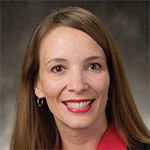
—Dr. Trask
Q: How important is it to find those commonalities?
A: In this day and age of healthcare, as we consider new payment models, we look at population health and what that means in a future state for healthcare. In the future, hospitalists are a critical component of ensuring we deliver higher clinical quality outcomes and better efficiencies to care for our population as a whole. As opposed to having each of our practices continuing to work individually and, in many cases, on many of the same exact issues, we identified the opportunity to bring those efforts together and try to do so in a more efficient fashion.
I’ll give an example: When we look at clinical documentation, much of that is related to electronic health records. How can we work together to identify opportunities to improve the use of our electronic health record when we have the same health record in different divisions?
Q: Where do you see yourself in five years, 10 years?
A: It’s funny you ask that question, as that is the question I always ask people I’m interviewing. My answer to that is not always as concrete as others’ answers.
I look at what doors might open, and I look at what opportunities present themselves. I think, looking at opportunities like we have in hospital medicine and looking at opportunities to really expand beyond current state, many of my experiences have led me to realize that I like to be involved in improvements, change in evolving the healthcare industry, and bringing teams together to improve the status quo.
Q: You work with some 900 hospitalists. What’s your favorite thing about working with them and the role they play?
A: Every single hospitalist I’ve encountered has demonstrated such a strong desire to make improvements in the patients that they’re caring for. What’s great about hospitalists is that they have an innate desire to improve the health and well-being of our communities. Hospitalists are truly passionate about improving the way we care for patients, advancing quality outcomes, and leading the shift from volume to value for the communities we serve. For me, this role is not simply a task or a job that I do, but it really is a passion.
Q: The flip side of that is nobody’s job is perfect. What’s the toughest thing about working with hospitalists?
A: One of the toughest things in this particular industry is the fact that it has been the fastest growing of all of time [in medicine], and there are times when supply and demand are not well balanced. There are a lot of demands placed on hospitalists, and there are a lot of expectations by hospital leaders and health system leaders, that hospitalists can solve many of the problems that may exist. Because of that, sometimes the supply of hospitalists, or the ability to have top talent, is really challenging.
The balance is not yet perfect between the availability of top talent and the ability to meet the needs of the organization and community.
Richard Quinn is a freelance writer in New Jersey.
Most people think a career in hospital medicine means a medical degree that confers those two ubiquitous letters after your name.
Amanda Trask blazed her own path.
She got to her job—vice president of the national hospitalist service line for Catholic Health Initiatives of Englewood, Colo.—by following a slightly different path. In her case, it was a master’s of business administration (MBA), a master’s in health administration (MHA), and a few fellowships to boot.
“Many years ago I chose to move forward in my education and attain advanced degrees,” says Trask, MBA, MHA, SFHM, FACHE, CMPE. “Through that, you get a really broad perspective of healthcare and the business of healthcare.”
It’s a perspective Dr. Trask is bringing to Team Hospitalist, as one of seven new members of The Hospitalist’s volunteer editorial advisory board. She sees HM as a vital specialty in a changing healthcare landscape.
“Hospital medicine is uniquely positioned to truly impact a very large breadth of patients and improve the continuum of care,” she says.
Question: Tell me about your role at Catholic Health Initiatives.
Answer: CHI operates in 19 states and 105 hospitals. We have a variety of hospitalist models in our hospitals, everything from direct employed with our local medical groups to contracted with hospitalist companies to independent groups that provide hospitalist services to their patients. At CHI, my role is to coordinate hospitalist efforts to improve clinical and efficiency outcomes in our hospitals and in other pre- and post-acute care settings where hospitalists play a role.
Q: People like to say, “If you’ve seen one hospitalist group, you’ve seen one hospitalist group.” How difficult is it to replicate commonalities in different buildings?
A: I definitely agree that “if you’ve seen one hospitalist group, you’ve seen one hospitalist group”; however, a great percentage of the work is common among hospitalists. We have a national hospital medicine leadership team composed of our divisional medical directors and dyad administrative partners to oversee the efforts of hospital medicine at CHI. That leadership team identifies the commonalities of opportunities across our hospital medicine markets. How can we support local innovation while maximizing the opportunity for standardization? What are the things that are fairly consistent no matter where you practice? What are those things that might have a substantial amount of difference? The focus of CHI’s national hospital medicine service line is to align standards that improve the practice of hospital medicine across CHI.
—Dr. Trask
Q: How important is it to find those commonalities?
A: In this day and age of healthcare, as we consider new payment models, we look at population health and what that means in a future state for healthcare. In the future, hospitalists are a critical component of ensuring we deliver higher clinical quality outcomes and better efficiencies to care for our population as a whole. As opposed to having each of our practices continuing to work individually and, in many cases, on many of the same exact issues, we identified the opportunity to bring those efforts together and try to do so in a more efficient fashion.
I’ll give an example: When we look at clinical documentation, much of that is related to electronic health records. How can we work together to identify opportunities to improve the use of our electronic health record when we have the same health record in different divisions?
Q: Where do you see yourself in five years, 10 years?
A: It’s funny you ask that question, as that is the question I always ask people I’m interviewing. My answer to that is not always as concrete as others’ answers.
I look at what doors might open, and I look at what opportunities present themselves. I think, looking at opportunities like we have in hospital medicine and looking at opportunities to really expand beyond current state, many of my experiences have led me to realize that I like to be involved in improvements, change in evolving the healthcare industry, and bringing teams together to improve the status quo.
Q: You work with some 900 hospitalists. What’s your favorite thing about working with them and the role they play?
A: Every single hospitalist I’ve encountered has demonstrated such a strong desire to make improvements in the patients that they’re caring for. What’s great about hospitalists is that they have an innate desire to improve the health and well-being of our communities. Hospitalists are truly passionate about improving the way we care for patients, advancing quality outcomes, and leading the shift from volume to value for the communities we serve. For me, this role is not simply a task or a job that I do, but it really is a passion.
Q: The flip side of that is nobody’s job is perfect. What’s the toughest thing about working with hospitalists?
A: One of the toughest things in this particular industry is the fact that it has been the fastest growing of all of time [in medicine], and there are times when supply and demand are not well balanced. There are a lot of demands placed on hospitalists, and there are a lot of expectations by hospital leaders and health system leaders, that hospitalists can solve many of the problems that may exist. Because of that, sometimes the supply of hospitalists, or the ability to have top talent, is really challenging.
The balance is not yet perfect between the availability of top talent and the ability to meet the needs of the organization and community.
Richard Quinn is a freelance writer in New Jersey.
Most people think a career in hospital medicine means a medical degree that confers those two ubiquitous letters after your name.
Amanda Trask blazed her own path.
She got to her job—vice president of the national hospitalist service line for Catholic Health Initiatives of Englewood, Colo.—by following a slightly different path. In her case, it was a master’s of business administration (MBA), a master’s in health administration (MHA), and a few fellowships to boot.
“Many years ago I chose to move forward in my education and attain advanced degrees,” says Trask, MBA, MHA, SFHM, FACHE, CMPE. “Through that, you get a really broad perspective of healthcare and the business of healthcare.”
It’s a perspective Dr. Trask is bringing to Team Hospitalist, as one of seven new members of The Hospitalist’s volunteer editorial advisory board. She sees HM as a vital specialty in a changing healthcare landscape.
“Hospital medicine is uniquely positioned to truly impact a very large breadth of patients and improve the continuum of care,” she says.
Question: Tell me about your role at Catholic Health Initiatives.
Answer: CHI operates in 19 states and 105 hospitals. We have a variety of hospitalist models in our hospitals, everything from direct employed with our local medical groups to contracted with hospitalist companies to independent groups that provide hospitalist services to their patients. At CHI, my role is to coordinate hospitalist efforts to improve clinical and efficiency outcomes in our hospitals and in other pre- and post-acute care settings where hospitalists play a role.
Q: People like to say, “If you’ve seen one hospitalist group, you’ve seen one hospitalist group.” How difficult is it to replicate commonalities in different buildings?
A: I definitely agree that “if you’ve seen one hospitalist group, you’ve seen one hospitalist group”; however, a great percentage of the work is common among hospitalists. We have a national hospital medicine leadership team composed of our divisional medical directors and dyad administrative partners to oversee the efforts of hospital medicine at CHI. That leadership team identifies the commonalities of opportunities across our hospital medicine markets. How can we support local innovation while maximizing the opportunity for standardization? What are the things that are fairly consistent no matter where you practice? What are those things that might have a substantial amount of difference? The focus of CHI’s national hospital medicine service line is to align standards that improve the practice of hospital medicine across CHI.
—Dr. Trask
Q: How important is it to find those commonalities?
A: In this day and age of healthcare, as we consider new payment models, we look at population health and what that means in a future state for healthcare. In the future, hospitalists are a critical component of ensuring we deliver higher clinical quality outcomes and better efficiencies to care for our population as a whole. As opposed to having each of our practices continuing to work individually and, in many cases, on many of the same exact issues, we identified the opportunity to bring those efforts together and try to do so in a more efficient fashion.
I’ll give an example: When we look at clinical documentation, much of that is related to electronic health records. How can we work together to identify opportunities to improve the use of our electronic health record when we have the same health record in different divisions?
Q: Where do you see yourself in five years, 10 years?
A: It’s funny you ask that question, as that is the question I always ask people I’m interviewing. My answer to that is not always as concrete as others’ answers.
I look at what doors might open, and I look at what opportunities present themselves. I think, looking at opportunities like we have in hospital medicine and looking at opportunities to really expand beyond current state, many of my experiences have led me to realize that I like to be involved in improvements, change in evolving the healthcare industry, and bringing teams together to improve the status quo.
Q: You work with some 900 hospitalists. What’s your favorite thing about working with them and the role they play?
A: Every single hospitalist I’ve encountered has demonstrated such a strong desire to make improvements in the patients that they’re caring for. What’s great about hospitalists is that they have an innate desire to improve the health and well-being of our communities. Hospitalists are truly passionate about improving the way we care for patients, advancing quality outcomes, and leading the shift from volume to value for the communities we serve. For me, this role is not simply a task or a job that I do, but it really is a passion.
Q: The flip side of that is nobody’s job is perfect. What’s the toughest thing about working with hospitalists?
A: One of the toughest things in this particular industry is the fact that it has been the fastest growing of all of time [in medicine], and there are times when supply and demand are not well balanced. There are a lot of demands placed on hospitalists, and there are a lot of expectations by hospital leaders and health system leaders, that hospitalists can solve many of the problems that may exist. Because of that, sometimes the supply of hospitalists, or the ability to have top talent, is really challenging.
The balance is not yet perfect between the availability of top talent and the ability to meet the needs of the organization and community.
Richard Quinn is a freelance writer in New Jersey.
Hospitals Save Estimated $67 Million by Tracking Energy Consumption
Estimated savings in energy costs posted by hospitals participating in the American Hospital Association’s affiliated American Society for Healthcare Engineering (ASHE) Energy to Care Program. Twenty participating hospitals received Energy to Care awards from ASHE in July for reducing their energy consumption by 10% or more. ASHE’s free program includes a benchmarking dashboard hospitals can use to track their own energy consumption, thereby saving energy and reducing costs.
Larry Beresford is a freelance writer in Alameda, Calif.
Estimated savings in energy costs posted by hospitals participating in the American Hospital Association’s affiliated American Society for Healthcare Engineering (ASHE) Energy to Care Program. Twenty participating hospitals received Energy to Care awards from ASHE in July for reducing their energy consumption by 10% or more. ASHE’s free program includes a benchmarking dashboard hospitals can use to track their own energy consumption, thereby saving energy and reducing costs.
Larry Beresford is a freelance writer in Alameda, Calif.
Estimated savings in energy costs posted by hospitals participating in the American Hospital Association’s affiliated American Society for Healthcare Engineering (ASHE) Energy to Care Program. Twenty participating hospitals received Energy to Care awards from ASHE in July for reducing their energy consumption by 10% or more. ASHE’s free program includes a benchmarking dashboard hospitals can use to track their own energy consumption, thereby saving energy and reducing costs.
Larry Beresford is a freelance writer in Alameda, Calif.
How to Develop a Comprehensive Pediatric Palliative Care Program

For Ami Doshi, MD, FAAP, a hospitalist at Rady Children’s Hospital San Diego, the path to establishing a comprehensive pediatric palliative care program began with her realization during medical training that doctors didn’t always adequately address the suffering of young patients with advanced disease and their families. Then, in a hospice rotation, she saw that the palliative approach could offer a better way.
During a pediatric hospital medicine fellowship at the University of California at San Diego, Dr. Doshi conducted an educational needs assessment and then created a palliative care curriculum for residents. Rady administrators supported her attending the Palliative Care Leadership Center training at UC San Francisco, with a team from Rady and Harvard Medical School’s program in Palliative Care Education and Practice.
After five years of development, the program Dr. Doshi helped to launch at Rady has grown into a division of palliative medicine, with a medical director, an inpatient consultation service, a palliative home care program coordinated by a health navigator, and a variety of models in the outpatient clinics.
“The goal is to be seamless and to treat patients across the continuum of care,” says Dr. Doshi, who is now board certified in hospice and palliative. Although she is based in the division of hospital medicine, she leads sit-down rounds with the full palliative care team and bioethics consultants every other week.
“Finding time for this work is always a challenge,” she says, adding that administrative support for physicians’ protected time is growing and that the program is ramping up its data collection to document outcomes resulting from palliative care.
For more information on the program, email her at adoshi@rchsd.org.
Larry Beresford is a freelance writer in Alameda, Calif.
For Ami Doshi, MD, FAAP, a hospitalist at Rady Children’s Hospital San Diego, the path to establishing a comprehensive pediatric palliative care program began with her realization during medical training that doctors didn’t always adequately address the suffering of young patients with advanced disease and their families. Then, in a hospice rotation, she saw that the palliative approach could offer a better way.
During a pediatric hospital medicine fellowship at the University of California at San Diego, Dr. Doshi conducted an educational needs assessment and then created a palliative care curriculum for residents. Rady administrators supported her attending the Palliative Care Leadership Center training at UC San Francisco, with a team from Rady and Harvard Medical School’s program in Palliative Care Education and Practice.
After five years of development, the program Dr. Doshi helped to launch at Rady has grown into a division of palliative medicine, with a medical director, an inpatient consultation service, a palliative home care program coordinated by a health navigator, and a variety of models in the outpatient clinics.
“The goal is to be seamless and to treat patients across the continuum of care,” says Dr. Doshi, who is now board certified in hospice and palliative. Although she is based in the division of hospital medicine, she leads sit-down rounds with the full palliative care team and bioethics consultants every other week.
“Finding time for this work is always a challenge,” she says, adding that administrative support for physicians’ protected time is growing and that the program is ramping up its data collection to document outcomes resulting from palliative care.
For more information on the program, email her at adoshi@rchsd.org.
Larry Beresford is a freelance writer in Alameda, Calif.
For Ami Doshi, MD, FAAP, a hospitalist at Rady Children’s Hospital San Diego, the path to establishing a comprehensive pediatric palliative care program began with her realization during medical training that doctors didn’t always adequately address the suffering of young patients with advanced disease and their families. Then, in a hospice rotation, she saw that the palliative approach could offer a better way.
During a pediatric hospital medicine fellowship at the University of California at San Diego, Dr. Doshi conducted an educational needs assessment and then created a palliative care curriculum for residents. Rady administrators supported her attending the Palliative Care Leadership Center training at UC San Francisco, with a team from Rady and Harvard Medical School’s program in Palliative Care Education and Practice.
After five years of development, the program Dr. Doshi helped to launch at Rady has grown into a division of palliative medicine, with a medical director, an inpatient consultation service, a palliative home care program coordinated by a health navigator, and a variety of models in the outpatient clinics.
“The goal is to be seamless and to treat patients across the continuum of care,” says Dr. Doshi, who is now board certified in hospice and palliative. Although she is based in the division of hospital medicine, she leads sit-down rounds with the full palliative care team and bioethics consultants every other week.
“Finding time for this work is always a challenge,” she says, adding that administrative support for physicians’ protected time is growing and that the program is ramping up its data collection to document outcomes resulting from palliative care.
For more information on the program, email her at adoshi@rchsd.org.
Larry Beresford is a freelance writer in Alameda, Calif.
Consumer Reports Rates Hospitals on Infection Control, Prevention
Consumer Reports included for the first time in its national hospital quality ratings a ranking of how well 3,000 hospitals are controlling common deadly infections such as methicillin-resistant Staphylococcus aureus (MRSA) and Clostridium difficile.
The How Your Hospital Can Make You Sick report is based on information provided to the CDC between October 2013 and September 2014. The CDC found that 105 hospitals distinguished themselves by earning high ratings against both infections. Nine hospitals received top ratings for having no infections from MRSA, C. diff, or other measured infections, although none of the country’s highest-profile hospitals are on that list. Only 6% of hospitals scored well against both infections in the new ratings. The CDC estimates that 648,000 people develop infections during their hospital stay, with 75,000 dying from them; many of the deaths can be traced back to widespread, inappropriate use of antibiotics.
“High rates for MRSA and C. diff can be a red flag that a hospital isn’t following the best practices in preventing infections and prescribing antibiotics,” notes Doris Peter, PhD, director of Consumer Reports’ Health Ratings Center, in a prepared statement. “The data show that it is possible to keep infection rates down and in some cases avoid them altogether.”
Among Consumer Reports’ recommendations for hospitals:
- Consistently follow established protocols for managing superbug infections;
- Accurately track how many infections patients get; and
- Promptly report outbreaks to patients and health authorities.
Reference
- Consumer Reports. America’s antibiotic crisis: how your hospital can make you sick. July 29, 2015. Accessed September 12, 2015.
Consumer Reports included for the first time in its national hospital quality ratings a ranking of how well 3,000 hospitals are controlling common deadly infections such as methicillin-resistant Staphylococcus aureus (MRSA) and Clostridium difficile.
The How Your Hospital Can Make You Sick report is based on information provided to the CDC between October 2013 and September 2014. The CDC found that 105 hospitals distinguished themselves by earning high ratings against both infections. Nine hospitals received top ratings for having no infections from MRSA, C. diff, or other measured infections, although none of the country’s highest-profile hospitals are on that list. Only 6% of hospitals scored well against both infections in the new ratings. The CDC estimates that 648,000 people develop infections during their hospital stay, with 75,000 dying from them; many of the deaths can be traced back to widespread, inappropriate use of antibiotics.
“High rates for MRSA and C. diff can be a red flag that a hospital isn’t following the best practices in preventing infections and prescribing antibiotics,” notes Doris Peter, PhD, director of Consumer Reports’ Health Ratings Center, in a prepared statement. “The data show that it is possible to keep infection rates down and in some cases avoid them altogether.”
Among Consumer Reports’ recommendations for hospitals:
- Consistently follow established protocols for managing superbug infections;
- Accurately track how many infections patients get; and
- Promptly report outbreaks to patients and health authorities.
Reference
- Consumer Reports. America’s antibiotic crisis: how your hospital can make you sick. July 29, 2015. Accessed September 12, 2015.
Consumer Reports included for the first time in its national hospital quality ratings a ranking of how well 3,000 hospitals are controlling common deadly infections such as methicillin-resistant Staphylococcus aureus (MRSA) and Clostridium difficile.
The How Your Hospital Can Make You Sick report is based on information provided to the CDC between October 2013 and September 2014. The CDC found that 105 hospitals distinguished themselves by earning high ratings against both infections. Nine hospitals received top ratings for having no infections from MRSA, C. diff, or other measured infections, although none of the country’s highest-profile hospitals are on that list. Only 6% of hospitals scored well against both infections in the new ratings. The CDC estimates that 648,000 people develop infections during their hospital stay, with 75,000 dying from them; many of the deaths can be traced back to widespread, inappropriate use of antibiotics.
“High rates for MRSA and C. diff can be a red flag that a hospital isn’t following the best practices in preventing infections and prescribing antibiotics,” notes Doris Peter, PhD, director of Consumer Reports’ Health Ratings Center, in a prepared statement. “The data show that it is possible to keep infection rates down and in some cases avoid them altogether.”
Among Consumer Reports’ recommendations for hospitals:
- Consistently follow established protocols for managing superbug infections;
- Accurately track how many infections patients get; and
- Promptly report outbreaks to patients and health authorities.
Reference
- Consumer Reports. America’s antibiotic crisis: how your hospital can make you sick. July 29, 2015. Accessed September 12, 2015.
Joint Commission Offers Resource to Prevent Hospital Falls
The Joint Commission’s Center for Transforming Healthcare has released its Targeted Solutions Tool for preventing hospital inpatient falls and falls with injuries. This step-by-step, online resource helps hospitals measure their fall rates and identify barriers to fall prevention and the specific contributing factors that lead to falls. A systematic approach enables the organization to assess each patient’s risk for falling and then implement specific targeted solutions to address the contributing factors, which will vary from one organization to the next.
Hospital falls total between 700,000 and one million per year, according to the Agency for Healthcare Research and Quality; since 2008, the Centers for Medicare and Medicaid Services has not paid hospitals for the costs of extra care related to falls.
The Joint Commission calculates, based on average baseline and improvement figures from its Preventing Falls with Injury Project, that a typical 200-bed hospital could reduce its number of patients injured by falls annually from 117 to 45. Key elements of a program achieving that kind of success include consistent messaging focused on operational and cultural change, staff engagement, and an “all hands on deck” approach that involves hospitalists and other physicians in helping to prevent falls by hospitalized patients.
The Joint Commission’s Center for Transforming Healthcare has released its Targeted Solutions Tool for preventing hospital inpatient falls and falls with injuries. This step-by-step, online resource helps hospitals measure their fall rates and identify barriers to fall prevention and the specific contributing factors that lead to falls. A systematic approach enables the organization to assess each patient’s risk for falling and then implement specific targeted solutions to address the contributing factors, which will vary from one organization to the next.
Hospital falls total between 700,000 and one million per year, according to the Agency for Healthcare Research and Quality; since 2008, the Centers for Medicare and Medicaid Services has not paid hospitals for the costs of extra care related to falls.
The Joint Commission calculates, based on average baseline and improvement figures from its Preventing Falls with Injury Project, that a typical 200-bed hospital could reduce its number of patients injured by falls annually from 117 to 45. Key elements of a program achieving that kind of success include consistent messaging focused on operational and cultural change, staff engagement, and an “all hands on deck” approach that involves hospitalists and other physicians in helping to prevent falls by hospitalized patients.
The Joint Commission’s Center for Transforming Healthcare has released its Targeted Solutions Tool for preventing hospital inpatient falls and falls with injuries. This step-by-step, online resource helps hospitals measure their fall rates and identify barriers to fall prevention and the specific contributing factors that lead to falls. A systematic approach enables the organization to assess each patient’s risk for falling and then implement specific targeted solutions to address the contributing factors, which will vary from one organization to the next.
Hospital falls total between 700,000 and one million per year, according to the Agency for Healthcare Research and Quality; since 2008, the Centers for Medicare and Medicaid Services has not paid hospitals for the costs of extra care related to falls.
The Joint Commission calculates, based on average baseline and improvement figures from its Preventing Falls with Injury Project, that a typical 200-bed hospital could reduce its number of patients injured by falls annually from 117 to 45. Key elements of a program achieving that kind of success include consistent messaging focused on operational and cultural change, staff engagement, and an “all hands on deck” approach that involves hospitalists and other physicians in helping to prevent falls by hospitalized patients.
Hospitalists’ Research Analyzes Links between Hyperglycemia, Sleep Deprivation
An RIV poster presented at HM15 highlights a common problem hospitalists face: morning hyperglycemia in hospitalized patients, including patients not previously diagnosed with diabetes.1 Lead author Regina Heyl DePietro, BA, now a medical student at Stony Brook (N.Y.) School of Medicine, working with colleagues including David O. Meltzer, MD, PhD, MHM, and Vineet Arora, MD, MAPP, FHM, at the University of Chicago, gathered data to analyze the connections among sleep deprivation, diabetes, and hyperglycemia of hospitalization.
Prior epidemiologic and laboratory research has shown a correlation between hyperglycemia and impaired sleep, DePietro says, but she is not aware of any inpatient cohort study done on this subject. Although diabetic patients have worse morning fasting glucose measures, the correlation between poor quality and quantity of sleep and higher blood glucose levels is also present in patients not previously diagnosed with diabetes.
In her study, participating patients reported their sleep quality prior to hospitalization, while wrist actigraphy measured the duration and efficiency of their sleep in the hospital. Every hour of inpatient sleep loss raised the odds of elevated subsequent morning blood glucose rates by 17%.
by 17%.
“Sleep helps healing,” DePietro says. “Sleep deprivation is a preventable patient quality metric that we have shown affects a health measure.”
Based on additional research, hospitals could take behavioral and/or design measures to help ameliorate this problem.
Reference
- DePietro RH, Spampinato LM, Knutson KL, Cauter EV, Meltzer DO, Arora VM. Hyperglycemia of hospitalization: side effect of sleep deprivation? [abstract] Society of Hospital Medicine Annual Meeting 2015. Accessed September 12, 2015.
An RIV poster presented at HM15 highlights a common problem hospitalists face: morning hyperglycemia in hospitalized patients, including patients not previously diagnosed with diabetes.1 Lead author Regina Heyl DePietro, BA, now a medical student at Stony Brook (N.Y.) School of Medicine, working with colleagues including David O. Meltzer, MD, PhD, MHM, and Vineet Arora, MD, MAPP, FHM, at the University of Chicago, gathered data to analyze the connections among sleep deprivation, diabetes, and hyperglycemia of hospitalization.
Prior epidemiologic and laboratory research has shown a correlation between hyperglycemia and impaired sleep, DePietro says, but she is not aware of any inpatient cohort study done on this subject. Although diabetic patients have worse morning fasting glucose measures, the correlation between poor quality and quantity of sleep and higher blood glucose levels is also present in patients not previously diagnosed with diabetes.
In her study, participating patients reported their sleep quality prior to hospitalization, while wrist actigraphy measured the duration and efficiency of their sleep in the hospital. Every hour of inpatient sleep loss raised the odds of elevated subsequent morning blood glucose rates by 17%.
by 17%.
“Sleep helps healing,” DePietro says. “Sleep deprivation is a preventable patient quality metric that we have shown affects a health measure.”
Based on additional research, hospitals could take behavioral and/or design measures to help ameliorate this problem.
Reference
- DePietro RH, Spampinato LM, Knutson KL, Cauter EV, Meltzer DO, Arora VM. Hyperglycemia of hospitalization: side effect of sleep deprivation? [abstract] Society of Hospital Medicine Annual Meeting 2015. Accessed September 12, 2015.
An RIV poster presented at HM15 highlights a common problem hospitalists face: morning hyperglycemia in hospitalized patients, including patients not previously diagnosed with diabetes.1 Lead author Regina Heyl DePietro, BA, now a medical student at Stony Brook (N.Y.) School of Medicine, working with colleagues including David O. Meltzer, MD, PhD, MHM, and Vineet Arora, MD, MAPP, FHM, at the University of Chicago, gathered data to analyze the connections among sleep deprivation, diabetes, and hyperglycemia of hospitalization.
Prior epidemiologic and laboratory research has shown a correlation between hyperglycemia and impaired sleep, DePietro says, but she is not aware of any inpatient cohort study done on this subject. Although diabetic patients have worse morning fasting glucose measures, the correlation between poor quality and quantity of sleep and higher blood glucose levels is also present in patients not previously diagnosed with diabetes.
In her study, participating patients reported their sleep quality prior to hospitalization, while wrist actigraphy measured the duration and efficiency of their sleep in the hospital. Every hour of inpatient sleep loss raised the odds of elevated subsequent morning blood glucose rates by 17%.
by 17%.
“Sleep helps healing,” DePietro says. “Sleep deprivation is a preventable patient quality metric that we have shown affects a health measure.”
Based on additional research, hospitals could take behavioral and/or design measures to help ameliorate this problem.
Reference
- DePietro RH, Spampinato LM, Knutson KL, Cauter EV, Meltzer DO, Arora VM. Hyperglycemia of hospitalization: side effect of sleep deprivation? [abstract] Society of Hospital Medicine Annual Meeting 2015. Accessed September 12, 2015.
Empathy, Patients, and Caregivers
Empathy—the feeling that you understand and share another person’s experiences and emotions: the ability to share someone else’s feelings.
—Merriam-Webster
By the time I became a third-year medical resident, I had mastered the repertoire of “don’t tread on me” behaviors that seemed essential to survive as a senior level trainee. I emulated my supervisors, mostly residents, as they advocated for themselves in the face of an onslaught of demand from other departments and from patients. I remember one occasion when, in front of my intern, I firmly “told off” a patient who was obviously poor and possibly homeless and who I thought was faking pain in order to get admitted to the hospital and receive analgesics. I was pleased with myself when I informed the ED staff that I would not accept the patient onto the medical service.
In retrospect, I wonder how and why I had become a “tough guy”? What had happened to my desire to “be there” for patients in their hour of need? Had I lost my aspiration to care for others, fueled by role models like my father, an internist and pillar in the community?
Does Empathy Decrease over Time?
A number of studies support my personal observation that physician empathy decreases during the training years and later persists at lower levels.1
Yet, perhaps ironically, increased empathy is associated with fewer medical errors, increased patient satisfaction, fewer malpractice claims, and improved clinical outcomes.1
Can We Increase Empathy?
In a 2012 study, Helen Reiss and colleagues randomized residents from several specialties into two groups, one receiving standard post-graduate education and a second whose education included three 60-minute empathy training modules. The empathy training consisted of the following elements:
- Neurobiology of empathy;
- Approaches to increase awareness of the physiology of emotions during patient encounters;
- Skills involved in interpreting the meaning of facial expressions; and
- Breathing exercises and mindfulness practices to enhance empathic responses to patients.
Using a validated instrument to measure empathy as rated by patients, the study reported increased empathy scores for the residents who participated in the empathy training program. An important skill the residents learned in the training was the ability to read/decode the facial expressions of patients and use that information to alter their behavior, thereby increasing patient-reported empathy.1
The authors point to the need for more studies to learn if, and to what extent, empathy training can improve performance in key areas like patient outcomes, malpractice claims, physician well-being, and patient satisfaction. Furthermore, they concluded that “long-lasting improvements in empathic clinical care cannot be sustained without organizational changes at all levels of healthcare. Such cultural changes require a commitment from clinical and administrative leaders to place empathic care at the forefront of institutional missions.”
Committing to Enhancing Physician Empathy
The Cleveland Clinic has addressed empathy as an important element of its institutional mission. Consider the following initiatives and interventions:
- The health system’s CEO publicly prioritizes empathy as a path to better patient experience and caregiver well-being.
- There is a chief experience officer position.
- All employees receive specialized H.E.A.R.T. (Hear, Empathize, Apologize, Respond, Thank) training; embedded approaches and practices support ongoing prioritization of empathy.
- All employees are trained to see themselves as caregivers.
- Physicians and trainees receive training in communication with patients.
- The health system holds an annual national summit on empathy and patient experience.
If you haven’t seen the Cleveland Clinic video that has gone viral, Google “Empathy: The Human Connection to Patient Care.” The video takes advantage of a universal human trait: When we truly know what another person is experiencing and feeling, we can experience and feel the same thing.
Can Hospitalists Retain an Empathic Approach over the Long Term?
I believe hospitalists can retain or regain the empathy that led to our choice of medicine as a career. To do this, we should consider a few critical practices, some of which occur at work and some at home. These include the following strategies:
- Find ways to be fully present in your human encounters with patients and co-workers. This includes minimizing interruptions whenever possible, sitting with people, making eye contact, and putting your phone away.
- Reward yourself for hard work. Make rewards, which needn’t always be expensive, a regular part of your life.
- Take measures to avoid overwork. Know when to say “no” to added responsibilities. Find time to add a wellness practice to your life, such as exercise, art, literature, spending time with your spouse/children, or community service.
- Express the gratitude you are feeling to those you work and live with.
Resources for Empathy Training
Empathetics.com offers CME and nursing continuing education credits for training in “how to detect and manage the emotional states of patients and how to respond with empathy and compassion, even in difficult interactions.”
PaulEkman.com has a series of training modules geared to detecting the “unspoken feelings” of others by recognizing the meaning of facial expressions.

Reference
- Reiss H, Kelley JM, Bailey RW, Dunn EJ, Phillips M. Empathy training for resident physicians: a randomized controlled trial of a neuroscience-informed curriculum. J Gen Intern Med. 2012;27(10):1280-1286.
Empathy—the feeling that you understand and share another person’s experiences and emotions: the ability to share someone else’s feelings.
—Merriam-Webster
By the time I became a third-year medical resident, I had mastered the repertoire of “don’t tread on me” behaviors that seemed essential to survive as a senior level trainee. I emulated my supervisors, mostly residents, as they advocated for themselves in the face of an onslaught of demand from other departments and from patients. I remember one occasion when, in front of my intern, I firmly “told off” a patient who was obviously poor and possibly homeless and who I thought was faking pain in order to get admitted to the hospital and receive analgesics. I was pleased with myself when I informed the ED staff that I would not accept the patient onto the medical service.
In retrospect, I wonder how and why I had become a “tough guy”? What had happened to my desire to “be there” for patients in their hour of need? Had I lost my aspiration to care for others, fueled by role models like my father, an internist and pillar in the community?
Does Empathy Decrease over Time?
A number of studies support my personal observation that physician empathy decreases during the training years and later persists at lower levels.1
Yet, perhaps ironically, increased empathy is associated with fewer medical errors, increased patient satisfaction, fewer malpractice claims, and improved clinical outcomes.1
Can We Increase Empathy?
In a 2012 study, Helen Reiss and colleagues randomized residents from several specialties into two groups, one receiving standard post-graduate education and a second whose education included three 60-minute empathy training modules. The empathy training consisted of the following elements:
- Neurobiology of empathy;
- Approaches to increase awareness of the physiology of emotions during patient encounters;
- Skills involved in interpreting the meaning of facial expressions; and
- Breathing exercises and mindfulness practices to enhance empathic responses to patients.
Using a validated instrument to measure empathy as rated by patients, the study reported increased empathy scores for the residents who participated in the empathy training program. An important skill the residents learned in the training was the ability to read/decode the facial expressions of patients and use that information to alter their behavior, thereby increasing patient-reported empathy.1
The authors point to the need for more studies to learn if, and to what extent, empathy training can improve performance in key areas like patient outcomes, malpractice claims, physician well-being, and patient satisfaction. Furthermore, they concluded that “long-lasting improvements in empathic clinical care cannot be sustained without organizational changes at all levels of healthcare. Such cultural changes require a commitment from clinical and administrative leaders to place empathic care at the forefront of institutional missions.”
Committing to Enhancing Physician Empathy
The Cleveland Clinic has addressed empathy as an important element of its institutional mission. Consider the following initiatives and interventions:
- The health system’s CEO publicly prioritizes empathy as a path to better patient experience and caregiver well-being.
- There is a chief experience officer position.
- All employees receive specialized H.E.A.R.T. (Hear, Empathize, Apologize, Respond, Thank) training; embedded approaches and practices support ongoing prioritization of empathy.
- All employees are trained to see themselves as caregivers.
- Physicians and trainees receive training in communication with patients.
- The health system holds an annual national summit on empathy and patient experience.
If you haven’t seen the Cleveland Clinic video that has gone viral, Google “Empathy: The Human Connection to Patient Care.” The video takes advantage of a universal human trait: When we truly know what another person is experiencing and feeling, we can experience and feel the same thing.
Can Hospitalists Retain an Empathic Approach over the Long Term?
I believe hospitalists can retain or regain the empathy that led to our choice of medicine as a career. To do this, we should consider a few critical practices, some of which occur at work and some at home. These include the following strategies:
- Find ways to be fully present in your human encounters with patients and co-workers. This includes minimizing interruptions whenever possible, sitting with people, making eye contact, and putting your phone away.
- Reward yourself for hard work. Make rewards, which needn’t always be expensive, a regular part of your life.
- Take measures to avoid overwork. Know when to say “no” to added responsibilities. Find time to add a wellness practice to your life, such as exercise, art, literature, spending time with your spouse/children, or community service.
- Express the gratitude you are feeling to those you work and live with.
Resources for Empathy Training
Empathetics.com offers CME and nursing continuing education credits for training in “how to detect and manage the emotional states of patients and how to respond with empathy and compassion, even in difficult interactions.”
PaulEkman.com has a series of training modules geared to detecting the “unspoken feelings” of others by recognizing the meaning of facial expressions.
Reference
- Reiss H, Kelley JM, Bailey RW, Dunn EJ, Phillips M. Empathy training for resident physicians: a randomized controlled trial of a neuroscience-informed curriculum. J Gen Intern Med. 2012;27(10):1280-1286.
Empathy—the feeling that you understand and share another person’s experiences and emotions: the ability to share someone else’s feelings.
—Merriam-Webster
By the time I became a third-year medical resident, I had mastered the repertoire of “don’t tread on me” behaviors that seemed essential to survive as a senior level trainee. I emulated my supervisors, mostly residents, as they advocated for themselves in the face of an onslaught of demand from other departments and from patients. I remember one occasion when, in front of my intern, I firmly “told off” a patient who was obviously poor and possibly homeless and who I thought was faking pain in order to get admitted to the hospital and receive analgesics. I was pleased with myself when I informed the ED staff that I would not accept the patient onto the medical service.
In retrospect, I wonder how and why I had become a “tough guy”? What had happened to my desire to “be there” for patients in their hour of need? Had I lost my aspiration to care for others, fueled by role models like my father, an internist and pillar in the community?
Does Empathy Decrease over Time?
A number of studies support my personal observation that physician empathy decreases during the training years and later persists at lower levels.1
Yet, perhaps ironically, increased empathy is associated with fewer medical errors, increased patient satisfaction, fewer malpractice claims, and improved clinical outcomes.1
Can We Increase Empathy?
In a 2012 study, Helen Reiss and colleagues randomized residents from several specialties into two groups, one receiving standard post-graduate education and a second whose education included three 60-minute empathy training modules. The empathy training consisted of the following elements:
- Neurobiology of empathy;
- Approaches to increase awareness of the physiology of emotions during patient encounters;
- Skills involved in interpreting the meaning of facial expressions; and
- Breathing exercises and mindfulness practices to enhance empathic responses to patients.
Using a validated instrument to measure empathy as rated by patients, the study reported increased empathy scores for the residents who participated in the empathy training program. An important skill the residents learned in the training was the ability to read/decode the facial expressions of patients and use that information to alter their behavior, thereby increasing patient-reported empathy.1
The authors point to the need for more studies to learn if, and to what extent, empathy training can improve performance in key areas like patient outcomes, malpractice claims, physician well-being, and patient satisfaction. Furthermore, they concluded that “long-lasting improvements in empathic clinical care cannot be sustained without organizational changes at all levels of healthcare. Such cultural changes require a commitment from clinical and administrative leaders to place empathic care at the forefront of institutional missions.”
Committing to Enhancing Physician Empathy
The Cleveland Clinic has addressed empathy as an important element of its institutional mission. Consider the following initiatives and interventions:
- The health system’s CEO publicly prioritizes empathy as a path to better patient experience and caregiver well-being.
- There is a chief experience officer position.
- All employees receive specialized H.E.A.R.T. (Hear, Empathize, Apologize, Respond, Thank) training; embedded approaches and practices support ongoing prioritization of empathy.
- All employees are trained to see themselves as caregivers.
- Physicians and trainees receive training in communication with patients.
- The health system holds an annual national summit on empathy and patient experience.
If you haven’t seen the Cleveland Clinic video that has gone viral, Google “Empathy: The Human Connection to Patient Care.” The video takes advantage of a universal human trait: When we truly know what another person is experiencing and feeling, we can experience and feel the same thing.
Can Hospitalists Retain an Empathic Approach over the Long Term?
I believe hospitalists can retain or regain the empathy that led to our choice of medicine as a career. To do this, we should consider a few critical practices, some of which occur at work and some at home. These include the following strategies:
- Find ways to be fully present in your human encounters with patients and co-workers. This includes minimizing interruptions whenever possible, sitting with people, making eye contact, and putting your phone away.
- Reward yourself for hard work. Make rewards, which needn’t always be expensive, a regular part of your life.
- Take measures to avoid overwork. Know when to say “no” to added responsibilities. Find time to add a wellness practice to your life, such as exercise, art, literature, spending time with your spouse/children, or community service.
- Express the gratitude you are feeling to those you work and live with.
Resources for Empathy Training
Empathetics.com offers CME and nursing continuing education credits for training in “how to detect and manage the emotional states of patients and how to respond with empathy and compassion, even in difficult interactions.”
PaulEkman.com has a series of training modules geared to detecting the “unspoken feelings” of others by recognizing the meaning of facial expressions.
Reference
- Reiss H, Kelley JM, Bailey RW, Dunn EJ, Phillips M. Empathy training for resident physicians: a randomized controlled trial of a neuroscience-informed curriculum. J Gen Intern Med. 2012;27(10):1280-1286.
Expert Witness Primer Offers Tips for Hospitalists
Editor’s note: Second in a two-part series on hospitalists as expert witnesses.
You have officially decided to take the plunge and become an expert witness, but you have never seen the inside of a courtroom, sat for a deposition, or prepared an expert report. This article serves as a primer for all of those things, as well as testifying at trial.
Given the tremendous advantage to be gained by having the expert available to advise the attorney in preparing discovery and responding to the opposing attorney’s discovery, hopefully you have been actively involved in the litigation process and are not trying to get up to speed just weeks or even days before your deposition or the deadline for your expert report.
Steps you can take to become an indispensable expert witness, above and beyond your expert report, deposition, and trial testimony, include:
- Familiarizing yourself with all relevant aspects of the case so that you understand where your opinion fits in;
- Advising the attorney of both favorable and unfavorable facts;
- Identifying key documents that must be obtained;
- Spotting false or weak assumptions and inadequate work by the opposing expert; and/or
- Providing peer-reviewed journal articles and other literature, which decipher complex subjects for the attorney.
Expert Reports
Now that you have become an indispensable expert, what needs to be included in your expert report? If the matter is in state court, the content of the expert report will depend on state court rules that vary by jurisdiction and the judge’s own preferences. In federal court, the mandatory signed expert report must contain at least the following six things:
- A complete statement of all opinions the witness will express and the basis and reasons for these opinions;
- The facts or data considered by the witness in forming them;
- Any exhibits that will be used to summarize or support them;
- The witness’s qualifications, including a list of all publications authored in the previous 10 years;
- A list of all other cases in which, during the previous four years, the witness testified as an expert at trial or by deposition; and
- A statement of the compensation to be paid for the study and testimony in the case.
The report is due at least 90 days before the case is set for trial. The expert then has the opportunity to submit a rebuttal report 30 days after receipt of the opposing expert’s report “solely to contradict or rebut” that report.
In preparing the expert report, it is important to remember that, in essence, everything the expert touches is discoverable by the other side. So before you decide to jot down a note to yourself, consider the fact that that note may need to be produced to the other side. Be especially careful not to jot down editorial comments on documents, particularly deposition transcripts. Imagine the cross-examiner’s delight at finding the penned-in words “problem area” or “smoking gun” or “discuss issue with attorney” next to some unfavorable fact regarding the client. The rule of thumb is “the more unnecessary notes, the longer the deposition.” On the other hand, it may be essential to preserve notes containing calculations, formulas, measurements, and similar documentation to support your opinions.
Additionally, any communications with your attorney and drafts of the report are not privileged. So you need to make sure that it is you—and you alone—who is writing the report.
Depositions
As mentioned in the first article, testifying under oath, whether in a deposition or trial setting, can be a grueling experience. This is especially true if the deposition is videotaped or the trial is a high-profile case for which media might be present in the courtroom.
Although it may not be granted, you should request a convenient day, time, and place, including your office if you prefer, for your deposition. Some hospitalists prefer to have the deposition at their office because it minimizes the time they are unable to engage in patient care. Other hospitalists prefer to be in a more private setting, such as the opposing counsel’s law firm office, so that their patients are not aware of their expert witness activities.
Typically, the deposition takes place at an attorney’s office, with the attorneys for the parties, the parties themselves, and a court reporter present. The deposition begins with the court reporter swearing in the expert witness so that all of the expert’s answers are under oath.
At the deposition, it is the expert’s job to tell the truth briefly. Telling the truth briefly means providing accurate answers to questions after they are understood—and clarified if necessary—and stating those accurate answers in as short a way as possible without unnecessary adverbs, adjectives, parentheticals, footnotes, asides, qualifications, and other unrequested information. The rule of thumb is that the more information an expert volunteers, the longer the deposition and ability to cross-examine will be.
Often it is helpful to engage in role playing with the attorney to explore likely initial and follow-up questions from opposing counsel. Typically, the format of these questions will include who, what, when, where, why, how, tell us, describe, or explain. You should also review important documents, so that you have a familiarity and comfort with the documents considered part of your analysis and are prepared to interpret them and explain their significance.
At the deposition, you will likely be asked if you reviewed any documents in preparation and, specifically, which ones you examined.
Just as you would in a trial situation, you should pause after a question is asked, to allow your attorney to make an appropriate objection to the question.
It should be noted that the top six answers to most deposition questions are:
- Yes;
- No;
- I don’t know;
- I don’t remember;
- I don’t understand the question; and
- I need a break.
Don’t be afraid to answer “yes” or “no” to a yes or no question or to use “I don’t know” when it’s the most accurate answer. The last piece of advice for depositions is to remember at all times that the deposing attorney is not your friend.
Trial Testimony
Getting ready for trial will be much the same as preparing for the deposition; you want to ensure that your testimony is consistent and protect yourself from potential impeachment. The focus, however, is a different audience; you are educating the judge and jury in a way that will make your testimony understandable and consistent with the jury’s common sense.
You will again be sworn in during both direct and cross-examination. If there is an objection to the form of the question or to your testimony, you should again stop and wait for the judge to instruct whether or not to answer the question and in what manner. Direct examination is likely to include questions based upon your qualifications, methodology, basis or assumptions, and anticipated cross. In responding, remember to look directly at counsel while the question is being asked and then at the jury in explaining the answer.
There is no question that serving as an expert witness is challenging and rewarding work. Are you ready for the challenge?
Editor’s note: Second in a two-part series on hospitalists as expert witnesses.
You have officially decided to take the plunge and become an expert witness, but you have never seen the inside of a courtroom, sat for a deposition, or prepared an expert report. This article serves as a primer for all of those things, as well as testifying at trial.
Given the tremendous advantage to be gained by having the expert available to advise the attorney in preparing discovery and responding to the opposing attorney’s discovery, hopefully you have been actively involved in the litigation process and are not trying to get up to speed just weeks or even days before your deposition or the deadline for your expert report.
Steps you can take to become an indispensable expert witness, above and beyond your expert report, deposition, and trial testimony, include:
- Familiarizing yourself with all relevant aspects of the case so that you understand where your opinion fits in;
- Advising the attorney of both favorable and unfavorable facts;
- Identifying key documents that must be obtained;
- Spotting false or weak assumptions and inadequate work by the opposing expert; and/or
- Providing peer-reviewed journal articles and other literature, which decipher complex subjects for the attorney.
Expert Reports
Now that you have become an indispensable expert, what needs to be included in your expert report? If the matter is in state court, the content of the expert report will depend on state court rules that vary by jurisdiction and the judge’s own preferences. In federal court, the mandatory signed expert report must contain at least the following six things:
- A complete statement of all opinions the witness will express and the basis and reasons for these opinions;
- The facts or data considered by the witness in forming them;
- Any exhibits that will be used to summarize or support them;
- The witness’s qualifications, including a list of all publications authored in the previous 10 years;
- A list of all other cases in which, during the previous four years, the witness testified as an expert at trial or by deposition; and
- A statement of the compensation to be paid for the study and testimony in the case.
The report is due at least 90 days before the case is set for trial. The expert then has the opportunity to submit a rebuttal report 30 days after receipt of the opposing expert’s report “solely to contradict or rebut” that report.
In preparing the expert report, it is important to remember that, in essence, everything the expert touches is discoverable by the other side. So before you decide to jot down a note to yourself, consider the fact that that note may need to be produced to the other side. Be especially careful not to jot down editorial comments on documents, particularly deposition transcripts. Imagine the cross-examiner’s delight at finding the penned-in words “problem area” or “smoking gun” or “discuss issue with attorney” next to some unfavorable fact regarding the client. The rule of thumb is “the more unnecessary notes, the longer the deposition.” On the other hand, it may be essential to preserve notes containing calculations, formulas, measurements, and similar documentation to support your opinions.
Additionally, any communications with your attorney and drafts of the report are not privileged. So you need to make sure that it is you—and you alone—who is writing the report.
Depositions
As mentioned in the first article, testifying under oath, whether in a deposition or trial setting, can be a grueling experience. This is especially true if the deposition is videotaped or the trial is a high-profile case for which media might be present in the courtroom.
Although it may not be granted, you should request a convenient day, time, and place, including your office if you prefer, for your deposition. Some hospitalists prefer to have the deposition at their office because it minimizes the time they are unable to engage in patient care. Other hospitalists prefer to be in a more private setting, such as the opposing counsel’s law firm office, so that their patients are not aware of their expert witness activities.
Typically, the deposition takes place at an attorney’s office, with the attorneys for the parties, the parties themselves, and a court reporter present. The deposition begins with the court reporter swearing in the expert witness so that all of the expert’s answers are under oath.
At the deposition, it is the expert’s job to tell the truth briefly. Telling the truth briefly means providing accurate answers to questions after they are understood—and clarified if necessary—and stating those accurate answers in as short a way as possible without unnecessary adverbs, adjectives, parentheticals, footnotes, asides, qualifications, and other unrequested information. The rule of thumb is that the more information an expert volunteers, the longer the deposition and ability to cross-examine will be.
Often it is helpful to engage in role playing with the attorney to explore likely initial and follow-up questions from opposing counsel. Typically, the format of these questions will include who, what, when, where, why, how, tell us, describe, or explain. You should also review important documents, so that you have a familiarity and comfort with the documents considered part of your analysis and are prepared to interpret them and explain their significance.
At the deposition, you will likely be asked if you reviewed any documents in preparation and, specifically, which ones you examined.
Just as you would in a trial situation, you should pause after a question is asked, to allow your attorney to make an appropriate objection to the question.
It should be noted that the top six answers to most deposition questions are:
- Yes;
- No;
- I don’t know;
- I don’t remember;
- I don’t understand the question; and
- I need a break.
Don’t be afraid to answer “yes” or “no” to a yes or no question or to use “I don’t know” when it’s the most accurate answer. The last piece of advice for depositions is to remember at all times that the deposing attorney is not your friend.
Trial Testimony
Getting ready for trial will be much the same as preparing for the deposition; you want to ensure that your testimony is consistent and protect yourself from potential impeachment. The focus, however, is a different audience; you are educating the judge and jury in a way that will make your testimony understandable and consistent with the jury’s common sense.
You will again be sworn in during both direct and cross-examination. If there is an objection to the form of the question or to your testimony, you should again stop and wait for the judge to instruct whether or not to answer the question and in what manner. Direct examination is likely to include questions based upon your qualifications, methodology, basis or assumptions, and anticipated cross. In responding, remember to look directly at counsel while the question is being asked and then at the jury in explaining the answer.
There is no question that serving as an expert witness is challenging and rewarding work. Are you ready for the challenge?
Editor’s note: Second in a two-part series on hospitalists as expert witnesses.
You have officially decided to take the plunge and become an expert witness, but you have never seen the inside of a courtroom, sat for a deposition, or prepared an expert report. This article serves as a primer for all of those things, as well as testifying at trial.
Given the tremendous advantage to be gained by having the expert available to advise the attorney in preparing discovery and responding to the opposing attorney’s discovery, hopefully you have been actively involved in the litigation process and are not trying to get up to speed just weeks or even days before your deposition or the deadline for your expert report.
Steps you can take to become an indispensable expert witness, above and beyond your expert report, deposition, and trial testimony, include:
- Familiarizing yourself with all relevant aspects of the case so that you understand where your opinion fits in;
- Advising the attorney of both favorable and unfavorable facts;
- Identifying key documents that must be obtained;
- Spotting false or weak assumptions and inadequate work by the opposing expert; and/or
- Providing peer-reviewed journal articles and other literature, which decipher complex subjects for the attorney.
Expert Reports
Now that you have become an indispensable expert, what needs to be included in your expert report? If the matter is in state court, the content of the expert report will depend on state court rules that vary by jurisdiction and the judge’s own preferences. In federal court, the mandatory signed expert report must contain at least the following six things:
- A complete statement of all opinions the witness will express and the basis and reasons for these opinions;
- The facts or data considered by the witness in forming them;
- Any exhibits that will be used to summarize or support them;
- The witness’s qualifications, including a list of all publications authored in the previous 10 years;
- A list of all other cases in which, during the previous four years, the witness testified as an expert at trial or by deposition; and
- A statement of the compensation to be paid for the study and testimony in the case.
The report is due at least 90 days before the case is set for trial. The expert then has the opportunity to submit a rebuttal report 30 days after receipt of the opposing expert’s report “solely to contradict or rebut” that report.
In preparing the expert report, it is important to remember that, in essence, everything the expert touches is discoverable by the other side. So before you decide to jot down a note to yourself, consider the fact that that note may need to be produced to the other side. Be especially careful not to jot down editorial comments on documents, particularly deposition transcripts. Imagine the cross-examiner’s delight at finding the penned-in words “problem area” or “smoking gun” or “discuss issue with attorney” next to some unfavorable fact regarding the client. The rule of thumb is “the more unnecessary notes, the longer the deposition.” On the other hand, it may be essential to preserve notes containing calculations, formulas, measurements, and similar documentation to support your opinions.
Additionally, any communications with your attorney and drafts of the report are not privileged. So you need to make sure that it is you—and you alone—who is writing the report.
Depositions
As mentioned in the first article, testifying under oath, whether in a deposition or trial setting, can be a grueling experience. This is especially true if the deposition is videotaped or the trial is a high-profile case for which media might be present in the courtroom.
Although it may not be granted, you should request a convenient day, time, and place, including your office if you prefer, for your deposition. Some hospitalists prefer to have the deposition at their office because it minimizes the time they are unable to engage in patient care. Other hospitalists prefer to be in a more private setting, such as the opposing counsel’s law firm office, so that their patients are not aware of their expert witness activities.
Typically, the deposition takes place at an attorney’s office, with the attorneys for the parties, the parties themselves, and a court reporter present. The deposition begins with the court reporter swearing in the expert witness so that all of the expert’s answers are under oath.
At the deposition, it is the expert’s job to tell the truth briefly. Telling the truth briefly means providing accurate answers to questions after they are understood—and clarified if necessary—and stating those accurate answers in as short a way as possible without unnecessary adverbs, adjectives, parentheticals, footnotes, asides, qualifications, and other unrequested information. The rule of thumb is that the more information an expert volunteers, the longer the deposition and ability to cross-examine will be.
Often it is helpful to engage in role playing with the attorney to explore likely initial and follow-up questions from opposing counsel. Typically, the format of these questions will include who, what, when, where, why, how, tell us, describe, or explain. You should also review important documents, so that you have a familiarity and comfort with the documents considered part of your analysis and are prepared to interpret them and explain their significance.
At the deposition, you will likely be asked if you reviewed any documents in preparation and, specifically, which ones you examined.
Just as you would in a trial situation, you should pause after a question is asked, to allow your attorney to make an appropriate objection to the question.
It should be noted that the top six answers to most deposition questions are:
- Yes;
- No;
- I don’t know;
- I don’t remember;
- I don’t understand the question; and
- I need a break.
Don’t be afraid to answer “yes” or “no” to a yes or no question or to use “I don’t know” when it’s the most accurate answer. The last piece of advice for depositions is to remember at all times that the deposing attorney is not your friend.
Trial Testimony
Getting ready for trial will be much the same as preparing for the deposition; you want to ensure that your testimony is consistent and protect yourself from potential impeachment. The focus, however, is a different audience; you are educating the judge and jury in a way that will make your testimony understandable and consistent with the jury’s common sense.
You will again be sworn in during both direct and cross-examination. If there is an objection to the form of the question or to your testimony, you should again stop and wait for the judge to instruct whether or not to answer the question and in what manner. Direct examination is likely to include questions based upon your qualifications, methodology, basis or assumptions, and anticipated cross. In responding, remember to look directly at counsel while the question is being asked and then at the jury in explaining the answer.
There is no question that serving as an expert witness is challenging and rewarding work. Are you ready for the challenge?
Hospitalist Lance Maki, MD, Spends Spare Time Tandem Surfing, Practicing Ballet

Lance Maki, MD, has accomplished many things in his life. He joined the Air Force and flew KC-135 tankers as an aircraft commander, and he served as a flight surgeon and T-38 instructor pilot. As an OB/GYN physician, he worked in private practice. Now he is a bicoastal hospitalist and intimacy therapist. Still, it’s what he does in his spare time that attracts the most attention.
Dr. Maki is a tandem surfer and ballet dancer.
Tandem what? Ballet dancer? The kind who wears tights, stands on his tiptoes, and leaps into the air?
Make no mistake. At 5 feet, 10 inches and 190 pounds, this 68-year-old doctor is no weakling. Ballet requires the strength and coordination to leap high into the air while doing the splits. Tandem surfing demands even more skill and similar strength. The sport requires surfers to lift someone half their weight or more above their head and hold them in various poses while riding four- to six-foot high ocean waves on a surfboard less than two feet wide.
“We live in a crazy world,” says Dr. Maki, explaining that very little compares to surfing with dolphins and manatees. “When you enjoy life, you’re well-rounded and have that mind-body-spirit connection. You’re going to be a much better doctor and much more pleasant to be around.”
Practice, Persistence, and Prayers
Dr. Maki’s fascination with the ocean began in 1960, when his family vacationed in California. The following year, when he was in high school, they moved from his hometown in St. Johns, Mich., to La Mirada, Calif. During his senior year of high school, he says he surfed 150 days.
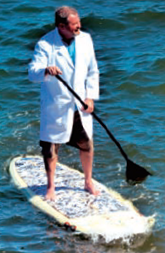
Back then, surfing was simply fun, nothing more. While attending California State University at Fullerton, he rarely surfed. There were too many things to do. In 1967, he married Kristine, now a nurse practitioner, and he joined the Air Force in 1972. He served as a pilot for the next 12 years.
The couple had six children from 1970 to 1982. Two years later, on an Air Force scholarship at age 37, he attended Texas Tech University Health Sciences Center School of Medicine in Lubbock.
After graduating from medical school in 1988, he returned to active duty and completed his OB/GYN residency at Wright State University and Miami Valley Hospital, which were affiliated with Wright-Patterson Air Force Base in Dayton, Ohio. He spent another four years as an OB/GYN doctor and flight surgeon at Griffiss Air Force base in upstate New York. After retiring from the Air Force in 1996, he moved his family to Tipton, Ind., where he started an OB/GYN private practice.
That same year, his 14-year-old son started exhibiting normal teenage behavioral problems. Before it got out of hand, Kristine suggested that Dr. Maki enroll him in a structured and positive activity like surf camp.
“I said there aren’t any oceans in Indiana. I can’t surf anymore,” recalls Dr. Maki, now a devout Catholic who prays for a good and safe surf once he gets past the breakers.
Still, Kristine persisted, so Dr. Maki found a surf camp in San Clemente, Calif. As it turned out, Michael didn’t care for surfing and, as Dr. Maki quickly discovered, surfing wasn’t like riding a bike. It takes a while to remember how to just stay on the board.
“I went surfing and was absolutely terrible,” he says. “I was ready to quit, but people encouraged me to get on a big, old, fat surfboard, and pushed me into a wave. All of a sudden, it was like I was back surfing in high school.”
Dr. Maki’s renewed interest in surfing quickly evolved into his favorite passion. The family moved again, to Florida in 2002. Dr. Maki has worked as a locum tenens hospitalist for Ob Hospitalist Group at various facilities in California and Florida.
Through his surfing network, he learned about tandem surfing. Although Kristine and his friends believed he was “too old” and “too much of a klutz,” he was determined. So, in 2007, he traveled to Hawaii and—at the age of 60—learned how to tandem surf. Ironically, Kristine found him the perfect tandem partner—a family friend who was five years his junior and half his size and weight.
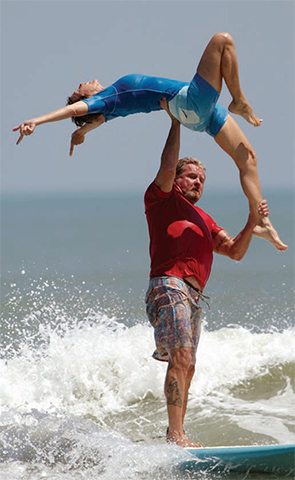
For almost two years, they trained with an Olympic gymnast learning lifts.
“He would have us lie down on the mat and, over and over again, get up as fast as we could and go into a lift,” he says. “Florida waves are very short-lived. We worked like mad at that.”
Dance, Dance, Dance
Besides surfing every other day, Dr. Maki has taken 90-minute ballet classes twice a week for the past five years. He works with a trainer for an hour, also twice a week.
“Without bragging, I have to say I’m much better now than I was when I first started surfing back in 1960,” he says. “I do pushups, calisthenics, and use a ballet bar and a balancing training board called an indo board.”
In 2012, he and his tandem surfing partner went on the International Tandem Surf Association’s world tour. They surfed in contests in Virginia, California, Hawaii, Florida, and France, earning 11th place overall.
But this year, he’s taking time off. Not to worry, though. When he turns 70, he plans on returning to the World Tandem Tour.
The break, he says, will allow him to focus more on his ballet. For the past three holiday seasons, he has played the role of Herr Drosselmeyer in The Nutcracker at Cocoa Village Playhouse in Cocoa Village, Fla.
“I hope to be dancing ballet and tandem surfing until I can’t walk anymore, because they’re so much fun,” Dr. Maki says. “If you have a positive attitude and do your best to be happy with what you’re doing at work—some days can be brutal as a hospitalist—it carries over to your patients and they heal faster. You don’t get healed by medicine alone.”
Carol Patton is a freelance writer in Las Vegas.
Lance Maki, MD, has accomplished many things in his life. He joined the Air Force and flew KC-135 tankers as an aircraft commander, and he served as a flight surgeon and T-38 instructor pilot. As an OB/GYN physician, he worked in private practice. Now he is a bicoastal hospitalist and intimacy therapist. Still, it’s what he does in his spare time that attracts the most attention.
Dr. Maki is a tandem surfer and ballet dancer.
Tandem what? Ballet dancer? The kind who wears tights, stands on his tiptoes, and leaps into the air?
Make no mistake. At 5 feet, 10 inches and 190 pounds, this 68-year-old doctor is no weakling. Ballet requires the strength and coordination to leap high into the air while doing the splits. Tandem surfing demands even more skill and similar strength. The sport requires surfers to lift someone half their weight or more above their head and hold them in various poses while riding four- to six-foot high ocean waves on a surfboard less than two feet wide.
“We live in a crazy world,” says Dr. Maki, explaining that very little compares to surfing with dolphins and manatees. “When you enjoy life, you’re well-rounded and have that mind-body-spirit connection. You’re going to be a much better doctor and much more pleasant to be around.”
Practice, Persistence, and Prayers
Dr. Maki’s fascination with the ocean began in 1960, when his family vacationed in California. The following year, when he was in high school, they moved from his hometown in St. Johns, Mich., to La Mirada, Calif. During his senior year of high school, he says he surfed 150 days.
Back then, surfing was simply fun, nothing more. While attending California State University at Fullerton, he rarely surfed. There were too many things to do. In 1967, he married Kristine, now a nurse practitioner, and he joined the Air Force in 1972. He served as a pilot for the next 12 years.
The couple had six children from 1970 to 1982. Two years later, on an Air Force scholarship at age 37, he attended Texas Tech University Health Sciences Center School of Medicine in Lubbock.
After graduating from medical school in 1988, he returned to active duty and completed his OB/GYN residency at Wright State University and Miami Valley Hospital, which were affiliated with Wright-Patterson Air Force Base in Dayton, Ohio. He spent another four years as an OB/GYN doctor and flight surgeon at Griffiss Air Force base in upstate New York. After retiring from the Air Force in 1996, he moved his family to Tipton, Ind., where he started an OB/GYN private practice.
That same year, his 14-year-old son started exhibiting normal teenage behavioral problems. Before it got out of hand, Kristine suggested that Dr. Maki enroll him in a structured and positive activity like surf camp.
“I said there aren’t any oceans in Indiana. I can’t surf anymore,” recalls Dr. Maki, now a devout Catholic who prays for a good and safe surf once he gets past the breakers.
Still, Kristine persisted, so Dr. Maki found a surf camp in San Clemente, Calif. As it turned out, Michael didn’t care for surfing and, as Dr. Maki quickly discovered, surfing wasn’t like riding a bike. It takes a while to remember how to just stay on the board.
“I went surfing and was absolutely terrible,” he says. “I was ready to quit, but people encouraged me to get on a big, old, fat surfboard, and pushed me into a wave. All of a sudden, it was like I was back surfing in high school.”
Dr. Maki’s renewed interest in surfing quickly evolved into his favorite passion. The family moved again, to Florida in 2002. Dr. Maki has worked as a locum tenens hospitalist for Ob Hospitalist Group at various facilities in California and Florida.
Through his surfing network, he learned about tandem surfing. Although Kristine and his friends believed he was “too old” and “too much of a klutz,” he was determined. So, in 2007, he traveled to Hawaii and—at the age of 60—learned how to tandem surf. Ironically, Kristine found him the perfect tandem partner—a family friend who was five years his junior and half his size and weight.
For almost two years, they trained with an Olympic gymnast learning lifts.
“He would have us lie down on the mat and, over and over again, get up as fast as we could and go into a lift,” he says. “Florida waves are very short-lived. We worked like mad at that.”
Dance, Dance, Dance
Besides surfing every other day, Dr. Maki has taken 90-minute ballet classes twice a week for the past five years. He works with a trainer for an hour, also twice a week.
“Without bragging, I have to say I’m much better now than I was when I first started surfing back in 1960,” he says. “I do pushups, calisthenics, and use a ballet bar and a balancing training board called an indo board.”
In 2012, he and his tandem surfing partner went on the International Tandem Surf Association’s world tour. They surfed in contests in Virginia, California, Hawaii, Florida, and France, earning 11th place overall.
But this year, he’s taking time off. Not to worry, though. When he turns 70, he plans on returning to the World Tandem Tour.
The break, he says, will allow him to focus more on his ballet. For the past three holiday seasons, he has played the role of Herr Drosselmeyer in The Nutcracker at Cocoa Village Playhouse in Cocoa Village, Fla.
“I hope to be dancing ballet and tandem surfing until I can’t walk anymore, because they’re so much fun,” Dr. Maki says. “If you have a positive attitude and do your best to be happy with what you’re doing at work—some days can be brutal as a hospitalist—it carries over to your patients and they heal faster. You don’t get healed by medicine alone.”
Carol Patton is a freelance writer in Las Vegas.
Lance Maki, MD, has accomplished many things in his life. He joined the Air Force and flew KC-135 tankers as an aircraft commander, and he served as a flight surgeon and T-38 instructor pilot. As an OB/GYN physician, he worked in private practice. Now he is a bicoastal hospitalist and intimacy therapist. Still, it’s what he does in his spare time that attracts the most attention.
Dr. Maki is a tandem surfer and ballet dancer.
Tandem what? Ballet dancer? The kind who wears tights, stands on his tiptoes, and leaps into the air?
Make no mistake. At 5 feet, 10 inches and 190 pounds, this 68-year-old doctor is no weakling. Ballet requires the strength and coordination to leap high into the air while doing the splits. Tandem surfing demands even more skill and similar strength. The sport requires surfers to lift someone half their weight or more above their head and hold them in various poses while riding four- to six-foot high ocean waves on a surfboard less than two feet wide.
“We live in a crazy world,” says Dr. Maki, explaining that very little compares to surfing with dolphins and manatees. “When you enjoy life, you’re well-rounded and have that mind-body-spirit connection. You’re going to be a much better doctor and much more pleasant to be around.”
Practice, Persistence, and Prayers
Dr. Maki’s fascination with the ocean began in 1960, when his family vacationed in California. The following year, when he was in high school, they moved from his hometown in St. Johns, Mich., to La Mirada, Calif. During his senior year of high school, he says he surfed 150 days.
Back then, surfing was simply fun, nothing more. While attending California State University at Fullerton, he rarely surfed. There were too many things to do. In 1967, he married Kristine, now a nurse practitioner, and he joined the Air Force in 1972. He served as a pilot for the next 12 years.
The couple had six children from 1970 to 1982. Two years later, on an Air Force scholarship at age 37, he attended Texas Tech University Health Sciences Center School of Medicine in Lubbock.
After graduating from medical school in 1988, he returned to active duty and completed his OB/GYN residency at Wright State University and Miami Valley Hospital, which were affiliated with Wright-Patterson Air Force Base in Dayton, Ohio. He spent another four years as an OB/GYN doctor and flight surgeon at Griffiss Air Force base in upstate New York. After retiring from the Air Force in 1996, he moved his family to Tipton, Ind., where he started an OB/GYN private practice.
That same year, his 14-year-old son started exhibiting normal teenage behavioral problems. Before it got out of hand, Kristine suggested that Dr. Maki enroll him in a structured and positive activity like surf camp.
“I said there aren’t any oceans in Indiana. I can’t surf anymore,” recalls Dr. Maki, now a devout Catholic who prays for a good and safe surf once he gets past the breakers.
Still, Kristine persisted, so Dr. Maki found a surf camp in San Clemente, Calif. As it turned out, Michael didn’t care for surfing and, as Dr. Maki quickly discovered, surfing wasn’t like riding a bike. It takes a while to remember how to just stay on the board.
“I went surfing and was absolutely terrible,” he says. “I was ready to quit, but people encouraged me to get on a big, old, fat surfboard, and pushed me into a wave. All of a sudden, it was like I was back surfing in high school.”
Dr. Maki’s renewed interest in surfing quickly evolved into his favorite passion. The family moved again, to Florida in 2002. Dr. Maki has worked as a locum tenens hospitalist for Ob Hospitalist Group at various facilities in California and Florida.
Through his surfing network, he learned about tandem surfing. Although Kristine and his friends believed he was “too old” and “too much of a klutz,” he was determined. So, in 2007, he traveled to Hawaii and—at the age of 60—learned how to tandem surf. Ironically, Kristine found him the perfect tandem partner—a family friend who was five years his junior and half his size and weight.
For almost two years, they trained with an Olympic gymnast learning lifts.
“He would have us lie down on the mat and, over and over again, get up as fast as we could and go into a lift,” he says. “Florida waves are very short-lived. We worked like mad at that.”
Dance, Dance, Dance
Besides surfing every other day, Dr. Maki has taken 90-minute ballet classes twice a week for the past five years. He works with a trainer for an hour, also twice a week.
“Without bragging, I have to say I’m much better now than I was when I first started surfing back in 1960,” he says. “I do pushups, calisthenics, and use a ballet bar and a balancing training board called an indo board.”
In 2012, he and his tandem surfing partner went on the International Tandem Surf Association’s world tour. They surfed in contests in Virginia, California, Hawaii, Florida, and France, earning 11th place overall.
But this year, he’s taking time off. Not to worry, though. When he turns 70, he plans on returning to the World Tandem Tour.
The break, he says, will allow him to focus more on his ballet. For the past three holiday seasons, he has played the role of Herr Drosselmeyer in The Nutcracker at Cocoa Village Playhouse in Cocoa Village, Fla.
“I hope to be dancing ballet and tandem surfing until I can’t walk anymore, because they’re so much fun,” Dr. Maki says. “If you have a positive attitude and do your best to be happy with what you’re doing at work—some days can be brutal as a hospitalist—it carries over to your patients and they heal faster. You don’t get healed by medicine alone.”
Carol Patton is a freelance writer in Las Vegas.
Hospitalists Key Partners in Healthcare’s Future, Evolution
After a career working for hospitals, I am about to retire as president and CEO of the American Hospital Association (AHA), an organization that represents some 5,000 hospitals and health systems. This moment compels me to look at the past—what we have learned and how hospitals have changed—and consider the possibilities the future holds for hospitals and hospitalists.
I have watched as hospitals have triumphed over tragedies, from natural disasters to mass shootings. More recently, I saw hospitalists pour their hearts and souls into preparing for the possibility of Ebola. Time and time again, you have responded through your deep-seated commitment.
I have observed the journey toward operational excellence through a punishing recession, a government shutdown, and burdensome regulations that make day-to-day operations amazingly complicated. Yet costs have moderated in historic ways. In fact, hospitals are tackling the tough problems of quality and safety that have plagued us for generations, from preventable infections to disparities to system fragmentation, with a commitment that says to all: This is not acceptable. This will change. And the results show great improvements.
On a clinical level, we’ve made dramatic advances. New technologies and treatments mean that we routinely cure conditions in patients who would once have been without hope. We can also restore quality of life to patients who previously, after an illness or injury, would have spent the rest of their lives struggling with the tasks of everyday living.
But the most remarkable transformation that has taken place in America’s hospitals over my lifetime is in the culture. The focus on patient-centered care has required a new mindset that empowers patients to make decisions about their own care and pushes healthcare workers to much higher levels of coordination and communication. A significant factor in this has been the introduction, growth, and maturation of the hospitalist specialty.
One result of this transformation is that physicians, nurses, and other clinical staff, who once worked in separate silos, are increasingly working as teams. Hospitalists often lead these teams. Clinical integration is the catalyst for profound improvements in patient care. Team-based care is more efficient; sharing information about a patient lessens the chance of duplication of services and increases the use of protocols shown to improve patient outcomes. Clinical integration also helps hospitals develop and implement best practices, and that is making it possible to achieve dramatic progress in tackling some stubborn problems that have plagued these facilities for years, such as healthcare-associated infections.
Moving forward, hospitals are intensely focused on achieving three critical goals: improving the patient care experience, improving the overall health of the community, and reducing the per capita cost of health care. Accomplishing those goals means accelerating the pace of change even further.
For years, we’ve been moving toward a system that is more integrated, with hospitals, physicians, and post-acute care providers combining forces to make true systems of care available to patients. Payments are more at risk as we move away from the fee-for-service model we’ve had for decades to a system that rewards value and outcomes. Healthcare is also becoming far more accountable and transparent about quality and pricing. Hospitals that tried to do better with less are now trying to do less with less, demanding that expensive procedures lead to better patient outcomes. They are focusing more on prevention and less on intervention.
All of this has established the foundation for the next generation of transition. What will it look like?
Efficient, Value-Based Approaches
The clinical gains we have made in healthcare are associated with tremendous costs for specialized equipment and services. By combining in some fashion, rather than duplicating, these resources, hospitals can continue to provide patients with the most promising advances in treatment. As a result, more hospitals are part of health systems that share multiple resources in order to deliver the best care with the best value. More hospitals employ physicians and other clinicians. And this trend will accelerate.
Every hospital will need to determine the path that makes the best sense for itself and its community. Some hospitals will form strategic alliances with other healthcare providers, merging with or acquiring them to offer patients the best they have to offer. Expect to see more hospitals develop a health insurance function and still more to branch out into areas such as behavioral health, home health, or post-acute, long-term, or ambulatory care. Other hospitals will choose the opposite route—specialization in a single area where they can become a high-performing provider of essential services. Examples are children’s hospitals and rehabilitation centers.
No matter which route your hospital takes, expect to see it become increasingly involved in efforts to improve the health of the community it serves. Hospitals will define themselves less by the walls of their buildings and more by the health of their communities. They will actively seek the perspectives of patients and families on how they operate.
New Ideas Welcome
We have an aging population and a growing number of people of all ages with chronic conditions like diabetes and asthma. There’s a lot of room for improvement that will come about by engaging people in the prevention and management of chronic conditions and the employment of new technologies like telehealth. Some 40% of premature deaths stem from unhealthy behavior. By finding effective ways to help people stay healthy, hospitals can have a huge impact in controlling the growth of healthcare spending. Hospitals will also be working to engage patients and families in making decisions about treating advanced illness, including end-of-life care.
Health information technology and electronic health records, done right, will provide hospitals with new ways to improve the quality of care. With better information, we don’t have to guess. We are collecting, analyzing, and applying information—and transforming it into knowledge about what works, and what doesn’t, for patients. For example, by analyzing race, ethnicity, and language preference data, hospitals can address disparities in outcomes for certain populations. This adjustment is critical at a time when communities are changing and hospitals must change to reflect their needs. Better use of information will also allow hospitals to develop and share more evidence-based practices.
In short, hospitals will undergo nothing short of reformation in the years ahead. The demands are daunting, the excitement is contagious, and the commitment to communities is immense.
It has been a tremendous privilege to spend my career with the women and men of America’s hospitals, good people who are willing and able to do whatever it takes to deliver the highest quality care to the people who rely upon them.
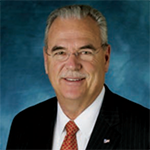
After a career working for hospitals, I am about to retire as president and CEO of the American Hospital Association (AHA), an organization that represents some 5,000 hospitals and health systems. This moment compels me to look at the past—what we have learned and how hospitals have changed—and consider the possibilities the future holds for hospitals and hospitalists.
I have watched as hospitals have triumphed over tragedies, from natural disasters to mass shootings. More recently, I saw hospitalists pour their hearts and souls into preparing for the possibility of Ebola. Time and time again, you have responded through your deep-seated commitment.
I have observed the journey toward operational excellence through a punishing recession, a government shutdown, and burdensome regulations that make day-to-day operations amazingly complicated. Yet costs have moderated in historic ways. In fact, hospitals are tackling the tough problems of quality and safety that have plagued us for generations, from preventable infections to disparities to system fragmentation, with a commitment that says to all: This is not acceptable. This will change. And the results show great improvements.
On a clinical level, we’ve made dramatic advances. New technologies and treatments mean that we routinely cure conditions in patients who would once have been without hope. We can also restore quality of life to patients who previously, after an illness or injury, would have spent the rest of their lives struggling with the tasks of everyday living.
But the most remarkable transformation that has taken place in America’s hospitals over my lifetime is in the culture. The focus on patient-centered care has required a new mindset that empowers patients to make decisions about their own care and pushes healthcare workers to much higher levels of coordination and communication. A significant factor in this has been the introduction, growth, and maturation of the hospitalist specialty.
One result of this transformation is that physicians, nurses, and other clinical staff, who once worked in separate silos, are increasingly working as teams. Hospitalists often lead these teams. Clinical integration is the catalyst for profound improvements in patient care. Team-based care is more efficient; sharing information about a patient lessens the chance of duplication of services and increases the use of protocols shown to improve patient outcomes. Clinical integration also helps hospitals develop and implement best practices, and that is making it possible to achieve dramatic progress in tackling some stubborn problems that have plagued these facilities for years, such as healthcare-associated infections.
Moving forward, hospitals are intensely focused on achieving three critical goals: improving the patient care experience, improving the overall health of the community, and reducing the per capita cost of health care. Accomplishing those goals means accelerating the pace of change even further.
For years, we’ve been moving toward a system that is more integrated, with hospitals, physicians, and post-acute care providers combining forces to make true systems of care available to patients. Payments are more at risk as we move away from the fee-for-service model we’ve had for decades to a system that rewards value and outcomes. Healthcare is also becoming far more accountable and transparent about quality and pricing. Hospitals that tried to do better with less are now trying to do less with less, demanding that expensive procedures lead to better patient outcomes. They are focusing more on prevention and less on intervention.
All of this has established the foundation for the next generation of transition. What will it look like?
Efficient, Value-Based Approaches
The clinical gains we have made in healthcare are associated with tremendous costs for specialized equipment and services. By combining in some fashion, rather than duplicating, these resources, hospitals can continue to provide patients with the most promising advances in treatment. As a result, more hospitals are part of health systems that share multiple resources in order to deliver the best care with the best value. More hospitals employ physicians and other clinicians. And this trend will accelerate.
Every hospital will need to determine the path that makes the best sense for itself and its community. Some hospitals will form strategic alliances with other healthcare providers, merging with or acquiring them to offer patients the best they have to offer. Expect to see more hospitals develop a health insurance function and still more to branch out into areas such as behavioral health, home health, or post-acute, long-term, or ambulatory care. Other hospitals will choose the opposite route—specialization in a single area where they can become a high-performing provider of essential services. Examples are children’s hospitals and rehabilitation centers.
No matter which route your hospital takes, expect to see it become increasingly involved in efforts to improve the health of the community it serves. Hospitals will define themselves less by the walls of their buildings and more by the health of their communities. They will actively seek the perspectives of patients and families on how they operate.
New Ideas Welcome
We have an aging population and a growing number of people of all ages with chronic conditions like diabetes and asthma. There’s a lot of room for improvement that will come about by engaging people in the prevention and management of chronic conditions and the employment of new technologies like telehealth. Some 40% of premature deaths stem from unhealthy behavior. By finding effective ways to help people stay healthy, hospitals can have a huge impact in controlling the growth of healthcare spending. Hospitals will also be working to engage patients and families in making decisions about treating advanced illness, including end-of-life care.
Health information technology and electronic health records, done right, will provide hospitals with new ways to improve the quality of care. With better information, we don’t have to guess. We are collecting, analyzing, and applying information—and transforming it into knowledge about what works, and what doesn’t, for patients. For example, by analyzing race, ethnicity, and language preference data, hospitals can address disparities in outcomes for certain populations. This adjustment is critical at a time when communities are changing and hospitals must change to reflect their needs. Better use of information will also allow hospitals to develop and share more evidence-based practices.
In short, hospitals will undergo nothing short of reformation in the years ahead. The demands are daunting, the excitement is contagious, and the commitment to communities is immense.
It has been a tremendous privilege to spend my career with the women and men of America’s hospitals, good people who are willing and able to do whatever it takes to deliver the highest quality care to the people who rely upon them.
After a career working for hospitals, I am about to retire as president and CEO of the American Hospital Association (AHA), an organization that represents some 5,000 hospitals and health systems. This moment compels me to look at the past—what we have learned and how hospitals have changed—and consider the possibilities the future holds for hospitals and hospitalists.
I have watched as hospitals have triumphed over tragedies, from natural disasters to mass shootings. More recently, I saw hospitalists pour their hearts and souls into preparing for the possibility of Ebola. Time and time again, you have responded through your deep-seated commitment.
I have observed the journey toward operational excellence through a punishing recession, a government shutdown, and burdensome regulations that make day-to-day operations amazingly complicated. Yet costs have moderated in historic ways. In fact, hospitals are tackling the tough problems of quality and safety that have plagued us for generations, from preventable infections to disparities to system fragmentation, with a commitment that says to all: This is not acceptable. This will change. And the results show great improvements.
On a clinical level, we’ve made dramatic advances. New technologies and treatments mean that we routinely cure conditions in patients who would once have been without hope. We can also restore quality of life to patients who previously, after an illness or injury, would have spent the rest of their lives struggling with the tasks of everyday living.
But the most remarkable transformation that has taken place in America’s hospitals over my lifetime is in the culture. The focus on patient-centered care has required a new mindset that empowers patients to make decisions about their own care and pushes healthcare workers to much higher levels of coordination and communication. A significant factor in this has been the introduction, growth, and maturation of the hospitalist specialty.
One result of this transformation is that physicians, nurses, and other clinical staff, who once worked in separate silos, are increasingly working as teams. Hospitalists often lead these teams. Clinical integration is the catalyst for profound improvements in patient care. Team-based care is more efficient; sharing information about a patient lessens the chance of duplication of services and increases the use of protocols shown to improve patient outcomes. Clinical integration also helps hospitals develop and implement best practices, and that is making it possible to achieve dramatic progress in tackling some stubborn problems that have plagued these facilities for years, such as healthcare-associated infections.
Moving forward, hospitals are intensely focused on achieving three critical goals: improving the patient care experience, improving the overall health of the community, and reducing the per capita cost of health care. Accomplishing those goals means accelerating the pace of change even further.
For years, we’ve been moving toward a system that is more integrated, with hospitals, physicians, and post-acute care providers combining forces to make true systems of care available to patients. Payments are more at risk as we move away from the fee-for-service model we’ve had for decades to a system that rewards value and outcomes. Healthcare is also becoming far more accountable and transparent about quality and pricing. Hospitals that tried to do better with less are now trying to do less with less, demanding that expensive procedures lead to better patient outcomes. They are focusing more on prevention and less on intervention.
All of this has established the foundation for the next generation of transition. What will it look like?
Efficient, Value-Based Approaches
The clinical gains we have made in healthcare are associated with tremendous costs for specialized equipment and services. By combining in some fashion, rather than duplicating, these resources, hospitals can continue to provide patients with the most promising advances in treatment. As a result, more hospitals are part of health systems that share multiple resources in order to deliver the best care with the best value. More hospitals employ physicians and other clinicians. And this trend will accelerate.
Every hospital will need to determine the path that makes the best sense for itself and its community. Some hospitals will form strategic alliances with other healthcare providers, merging with or acquiring them to offer patients the best they have to offer. Expect to see more hospitals develop a health insurance function and still more to branch out into areas such as behavioral health, home health, or post-acute, long-term, or ambulatory care. Other hospitals will choose the opposite route—specialization in a single area where they can become a high-performing provider of essential services. Examples are children’s hospitals and rehabilitation centers.
No matter which route your hospital takes, expect to see it become increasingly involved in efforts to improve the health of the community it serves. Hospitals will define themselves less by the walls of their buildings and more by the health of their communities. They will actively seek the perspectives of patients and families on how they operate.
New Ideas Welcome
We have an aging population and a growing number of people of all ages with chronic conditions like diabetes and asthma. There’s a lot of room for improvement that will come about by engaging people in the prevention and management of chronic conditions and the employment of new technologies like telehealth. Some 40% of premature deaths stem from unhealthy behavior. By finding effective ways to help people stay healthy, hospitals can have a huge impact in controlling the growth of healthcare spending. Hospitals will also be working to engage patients and families in making decisions about treating advanced illness, including end-of-life care.
Health information technology and electronic health records, done right, will provide hospitals with new ways to improve the quality of care. With better information, we don’t have to guess. We are collecting, analyzing, and applying information—and transforming it into knowledge about what works, and what doesn’t, for patients. For example, by analyzing race, ethnicity, and language preference data, hospitals can address disparities in outcomes for certain populations. This adjustment is critical at a time when communities are changing and hospitals must change to reflect their needs. Better use of information will also allow hospitals to develop and share more evidence-based practices.
In short, hospitals will undergo nothing short of reformation in the years ahead. The demands are daunting, the excitement is contagious, and the commitment to communities is immense.
It has been a tremendous privilege to spend my career with the women and men of America’s hospitals, good people who are willing and able to do whatever it takes to deliver the highest quality care to the people who rely upon them.