User login
Quality Improvement Initiative Targets Sepsis
A quality improvement (QI) initiative at University Hospital in Salt Lake City aims to save lives and cut hospital costs by reducing inpatient sepsis mortality.
Program co-leaders, hospitalists Devin Horton, MD, and Kencee Graves, MD, of University Hospital, launched the initiative as a pilot program last October. They began by surveying hospital house staff and nurses on their ability to recognize and define six different sepsis syndromes from clinical vignettes. A total of 136 surveyed residents recognized the correct condition only 56% of the time, and 280 surveyed nurses only did so 17% of the time. The hospitalists determined that better education about sepsis was crucial.
“We developed a robust teaching program for nurses and residents using Septris, an online educational game from Stanford University,” Dr. Horton says. The team also developed technology that can recognize worsening vital signs in a patient and automatically trigger an alert to a charge nurse or rapid response team.
The team’s Modified Early Warning System (MEWS) for recognizing sepsis is similar to the Early Warning and Response System (EWRS) system used at the University of Pennsylvania Health System and the University of California San Diego, and draws on other hospitals’ sepsis systems. Dr. Horton says one difference in their system is the involvement of nursing aides who take vital signs, enter them real-time into electronic health records (EHR), and receive prompts from abnormal vital signs to retake all vitals and confirm abnormal results. It also incorporates EHR decision support tools, including links to pre-populated medical order panels, such as for the ordering of tests for lactate and blood cultures.
“Severe sepsis is often quoted as the number one cause of mortality among hospitalized patients, with a rate up to 10 times that of acute myocardial infarction,” Dr. Horton explains. “The one treatment that consistently decreases mortality is timely administration of antibiotics. But, in order for a patient to be given timely antibiotics, the nurse or resident must first recognize that the patient has sepsis.”
“This is one of the biggest and most far-reaching improvement initiatives that has been done at our institution,” says Robert Pendleton, MD, chief quality officer at University Hospital. Dr. Horton says he predicts the program will “save 50 lives and $1 million per year.”
For more information, contact him at: devin.horton@hsc.utah.edu.
A quality improvement (QI) initiative at University Hospital in Salt Lake City aims to save lives and cut hospital costs by reducing inpatient sepsis mortality.
Program co-leaders, hospitalists Devin Horton, MD, and Kencee Graves, MD, of University Hospital, launched the initiative as a pilot program last October. They began by surveying hospital house staff and nurses on their ability to recognize and define six different sepsis syndromes from clinical vignettes. A total of 136 surveyed residents recognized the correct condition only 56% of the time, and 280 surveyed nurses only did so 17% of the time. The hospitalists determined that better education about sepsis was crucial.
“We developed a robust teaching program for nurses and residents using Septris, an online educational game from Stanford University,” Dr. Horton says. The team also developed technology that can recognize worsening vital signs in a patient and automatically trigger an alert to a charge nurse or rapid response team.
The team’s Modified Early Warning System (MEWS) for recognizing sepsis is similar to the Early Warning and Response System (EWRS) system used at the University of Pennsylvania Health System and the University of California San Diego, and draws on other hospitals’ sepsis systems. Dr. Horton says one difference in their system is the involvement of nursing aides who take vital signs, enter them real-time into electronic health records (EHR), and receive prompts from abnormal vital signs to retake all vitals and confirm abnormal results. It also incorporates EHR decision support tools, including links to pre-populated medical order panels, such as for the ordering of tests for lactate and blood cultures.
“Severe sepsis is often quoted as the number one cause of mortality among hospitalized patients, with a rate up to 10 times that of acute myocardial infarction,” Dr. Horton explains. “The one treatment that consistently decreases mortality is timely administration of antibiotics. But, in order for a patient to be given timely antibiotics, the nurse or resident must first recognize that the patient has sepsis.”
“This is one of the biggest and most far-reaching improvement initiatives that has been done at our institution,” says Robert Pendleton, MD, chief quality officer at University Hospital. Dr. Horton says he predicts the program will “save 50 lives and $1 million per year.”
For more information, contact him at: devin.horton@hsc.utah.edu.
A quality improvement (QI) initiative at University Hospital in Salt Lake City aims to save lives and cut hospital costs by reducing inpatient sepsis mortality.
Program co-leaders, hospitalists Devin Horton, MD, and Kencee Graves, MD, of University Hospital, launched the initiative as a pilot program last October. They began by surveying hospital house staff and nurses on their ability to recognize and define six different sepsis syndromes from clinical vignettes. A total of 136 surveyed residents recognized the correct condition only 56% of the time, and 280 surveyed nurses only did so 17% of the time. The hospitalists determined that better education about sepsis was crucial.
“We developed a robust teaching program for nurses and residents using Septris, an online educational game from Stanford University,” Dr. Horton says. The team also developed technology that can recognize worsening vital signs in a patient and automatically trigger an alert to a charge nurse or rapid response team.
The team’s Modified Early Warning System (MEWS) for recognizing sepsis is similar to the Early Warning and Response System (EWRS) system used at the University of Pennsylvania Health System and the University of California San Diego, and draws on other hospitals’ sepsis systems. Dr. Horton says one difference in their system is the involvement of nursing aides who take vital signs, enter them real-time into electronic health records (EHR), and receive prompts from abnormal vital signs to retake all vitals and confirm abnormal results. It also incorporates EHR decision support tools, including links to pre-populated medical order panels, such as for the ordering of tests for lactate and blood cultures.
“Severe sepsis is often quoted as the number one cause of mortality among hospitalized patients, with a rate up to 10 times that of acute myocardial infarction,” Dr. Horton explains. “The one treatment that consistently decreases mortality is timely administration of antibiotics. But, in order for a patient to be given timely antibiotics, the nurse or resident must first recognize that the patient has sepsis.”
“This is one of the biggest and most far-reaching improvement initiatives that has been done at our institution,” says Robert Pendleton, MD, chief quality officer at University Hospital. Dr. Horton says he predicts the program will “save 50 lives and $1 million per year.”
For more information, contact him at: devin.horton@hsc.utah.edu.
Early Mobility Program
“I didn’t get out of bed for 10 days”
—Anonymous patient admitted to a skilled nursing facility post-hospitalization for a COPD exacerbation
Readmission penalties, “Medicare spending per beneficiary” under value-based purchasing, and the move to accountable care are propelling hospitalists to do more to ensure our patients recover well in the least restrictive setting, without returning to the hospital. As we build systems to support patient recovery, we are focused on a medical model, paying attention to managing diseases and reconciling medications. At the same time, there is a growing awareness that functional status and mobility are critical pieces of patient care during and post-hospitalization.
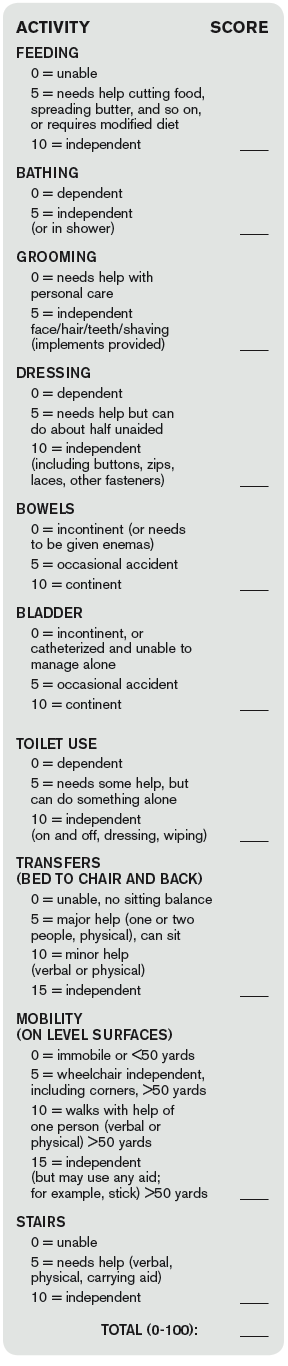
Regardless of principal diagnosis and comorbidities, patients’ functional mobility ultimately determines their trajectory during recovery. To illustrate the importance of functional status and outcomes, one study showed that models predicting readmission based on functional measures outperformed those based on comorbidities.1
The negative effects of hospitalization on patient mobility, and in turn, on recovery, have been recognized for a long time. Immobility is associated with functional decline, which contributes to falls, increased length of stay, delirium, loss of ability to perform activities of daily living, and loss of ambulatory independence. A number of studies have reported successful early mobility programs in critical care and surgical patients.2 Fewer have been reported in general medical patients.3 Taken together, they suggest that a program for mobilizing patients, using a team approach, is an important part of recovery during and after hospitalization.
The purpose of this column is to report the components of one healthcare system’s mobility program for general medical-surgical patients.
Early Mobility: A Case Study
St Luke’s University Health Network (SLUHN) in northeastern Pennsylvania has implemented an early mobility program as part of its broader strategy to reduce readmissions and discharge as many patients home as possible. Although the SLUHN early mobility program depends on nursing, nursing assistants, and the judicious use of therapists, physician leadership during implementation and maintenance of the program has been essential. Moreover, because the program represents a culture shift, especially for nursing, leadership and change management are crucial ingredients for success. Below are the key steps in the SLUHN early mobility program.
Establish baseline functional status. Recording baseline function is an essential first step. For patients admitted through the ED, nurses collect ambulatory status, patient needs for assistance, ambulatory aids/special equipment, and history of falls. They populate an SBAR (situation, background, assessment, recommendation) form with this information and, as part of the handoff, ensure that it is transmitted to the inpatient nurse receiving the patient.
Obtain and document Barthel Index score. SLUHN uses the Barthel Index (see Figure 1) to establish a patient’s degree of independence and need for supervision. The index is scored on a 0-100 scale, with a higher score corresponding to a greater degree of independence. SLUHN created three categories: 0-59, stage 1; 60-84, stage 2; 85-100, stage 3.
Patient mobility plan. Based on the Barthel-derived stage, a patient is assigned a mobility plan.
The role of nursing. The patient’s registered nurse is responsible for implementing the “patient mobility plan.” The nurse initiates an “interdisciplinary plan of care,” in which the mobility stage is written on the SBAR handoff report tool. The report is discussed at change of shift and at multidisciplinary rounds. Nursing also communicates the mobility plan to the nursing assistants and assigns responsibilities for the mobility plan (activities of daily living, out of bed, ambulation, and so on), including verifying documentation of daily activities and assessing the patient’s response to the activity level of the assigned stage.
Further, nursing maintains and revises the mobility status on the SBAR, updates progress toward outcomes on the care plan, consults with the physician and team regarding the discharge plan, and discusses progress with the patient and family.
The role of the nursing/patient care assistant. The nursing assistant is responsible for implementing elements of the plan, such as activities of daily living, getting out of bed, and ambulation, under the guidance of the nurse. The nursing assistant reports patient responses to activity level and reflects mobility goals back to the patient verbally and through white board messaging.
Patient progress in mobility. When a patient sustains progress at one stage for 24 hours, the nurse aims to move the patient to the next stage by reevaluating the Barthel Index and going through the same steps as those followed during the initial scoring. The process moves the patient to higher activity levels, unless there are intervening problems affecting mobility.
In such cases, according to the Barthel Index, the patient may remain at the same—or be moved to a lower—activity level. In practice, patients are assessed each shift, and those with higher function (stage 3) are progressed to unsupervised ambulation.
The role of physical and occupational therapy. Although the role of physical and occupational therapists in the SLUHN mobility program is well codified, it is reserved for patients with complex rehabilitation needs due to the number of patients requiring rehabilitation.
In sum, this patient mobility program–for non-ICU hospitalized patients–relies on:
- Documentation of baseline function;
- Independent scoring using the Barthel Index;
- Creation of clear roles for nursing, nursing assistants, and therapists; and
- Reevaluation of patients at regular intervals based on the Barthel Index, so that they may progress to greater activity levels (or to lower levels in the case of a setback).
A key subsequent step, an evaluation of the program’s performance in terms of readmissions, transfer rates to a skilled nursing facility, and skilled facility length of stay, has shown positive results in all three domains.


References
- Shi SL, Girrard P, Goldstein R, et al. Functional status outperforms comorbidities in predicting acute care readmissions in medically complex patients. J Gen Intern Med. 2015;30(11):1688-1695.
- Dammeyer JA, Baldwin N, Packard D, et al. Mobilizing outcomes: implementation of a nurse-led multidisciplinary mobility program. Crit Care Nurs Q. 2013;36(1):109-119.
- Wood W, Tschannen D, Trotsky A, et al. A mobility program for an inpatient acute care medical unit. Am J Nurs. 2014;114(10):34-40.
- Mahoney FI, Barthel DW. Functional evaluation: the Barthel Index. Md State Med J. 1965;14:61-65.
“I didn’t get out of bed for 10 days”
—Anonymous patient admitted to a skilled nursing facility post-hospitalization for a COPD exacerbation
Readmission penalties, “Medicare spending per beneficiary” under value-based purchasing, and the move to accountable care are propelling hospitalists to do more to ensure our patients recover well in the least restrictive setting, without returning to the hospital. As we build systems to support patient recovery, we are focused on a medical model, paying attention to managing diseases and reconciling medications. At the same time, there is a growing awareness that functional status and mobility are critical pieces of patient care during and post-hospitalization.
Regardless of principal diagnosis and comorbidities, patients’ functional mobility ultimately determines their trajectory during recovery. To illustrate the importance of functional status and outcomes, one study showed that models predicting readmission based on functional measures outperformed those based on comorbidities.1
The negative effects of hospitalization on patient mobility, and in turn, on recovery, have been recognized for a long time. Immobility is associated with functional decline, which contributes to falls, increased length of stay, delirium, loss of ability to perform activities of daily living, and loss of ambulatory independence. A number of studies have reported successful early mobility programs in critical care and surgical patients.2 Fewer have been reported in general medical patients.3 Taken together, they suggest that a program for mobilizing patients, using a team approach, is an important part of recovery during and after hospitalization.
The purpose of this column is to report the components of one healthcare system’s mobility program for general medical-surgical patients.
Early Mobility: A Case Study
St Luke’s University Health Network (SLUHN) in northeastern Pennsylvania has implemented an early mobility program as part of its broader strategy to reduce readmissions and discharge as many patients home as possible. Although the SLUHN early mobility program depends on nursing, nursing assistants, and the judicious use of therapists, physician leadership during implementation and maintenance of the program has been essential. Moreover, because the program represents a culture shift, especially for nursing, leadership and change management are crucial ingredients for success. Below are the key steps in the SLUHN early mobility program.
Establish baseline functional status. Recording baseline function is an essential first step. For patients admitted through the ED, nurses collect ambulatory status, patient needs for assistance, ambulatory aids/special equipment, and history of falls. They populate an SBAR (situation, background, assessment, recommendation) form with this information and, as part of the handoff, ensure that it is transmitted to the inpatient nurse receiving the patient.
Obtain and document Barthel Index score. SLUHN uses the Barthel Index (see Figure 1) to establish a patient’s degree of independence and need for supervision. The index is scored on a 0-100 scale, with a higher score corresponding to a greater degree of independence. SLUHN created three categories: 0-59, stage 1; 60-84, stage 2; 85-100, stage 3.
Patient mobility plan. Based on the Barthel-derived stage, a patient is assigned a mobility plan.
The role of nursing. The patient’s registered nurse is responsible for implementing the “patient mobility plan.” The nurse initiates an “interdisciplinary plan of care,” in which the mobility stage is written on the SBAR handoff report tool. The report is discussed at change of shift and at multidisciplinary rounds. Nursing also communicates the mobility plan to the nursing assistants and assigns responsibilities for the mobility plan (activities of daily living, out of bed, ambulation, and so on), including verifying documentation of daily activities and assessing the patient’s response to the activity level of the assigned stage.
Further, nursing maintains and revises the mobility status on the SBAR, updates progress toward outcomes on the care plan, consults with the physician and team regarding the discharge plan, and discusses progress with the patient and family.
The role of the nursing/patient care assistant. The nursing assistant is responsible for implementing elements of the plan, such as activities of daily living, getting out of bed, and ambulation, under the guidance of the nurse. The nursing assistant reports patient responses to activity level and reflects mobility goals back to the patient verbally and through white board messaging.
Patient progress in mobility. When a patient sustains progress at one stage for 24 hours, the nurse aims to move the patient to the next stage by reevaluating the Barthel Index and going through the same steps as those followed during the initial scoring. The process moves the patient to higher activity levels, unless there are intervening problems affecting mobility.
In such cases, according to the Barthel Index, the patient may remain at the same—or be moved to a lower—activity level. In practice, patients are assessed each shift, and those with higher function (stage 3) are progressed to unsupervised ambulation.
The role of physical and occupational therapy. Although the role of physical and occupational therapists in the SLUHN mobility program is well codified, it is reserved for patients with complex rehabilitation needs due to the number of patients requiring rehabilitation.
In sum, this patient mobility program–for non-ICU hospitalized patients–relies on:
- Documentation of baseline function;
- Independent scoring using the Barthel Index;
- Creation of clear roles for nursing, nursing assistants, and therapists; and
- Reevaluation of patients at regular intervals based on the Barthel Index, so that they may progress to greater activity levels (or to lower levels in the case of a setback).
A key subsequent step, an evaluation of the program’s performance in terms of readmissions, transfer rates to a skilled nursing facility, and skilled facility length of stay, has shown positive results in all three domains.
References
- Shi SL, Girrard P, Goldstein R, et al. Functional status outperforms comorbidities in predicting acute care readmissions in medically complex patients. J Gen Intern Med. 2015;30(11):1688-1695.
- Dammeyer JA, Baldwin N, Packard D, et al. Mobilizing outcomes: implementation of a nurse-led multidisciplinary mobility program. Crit Care Nurs Q. 2013;36(1):109-119.
- Wood W, Tschannen D, Trotsky A, et al. A mobility program for an inpatient acute care medical unit. Am J Nurs. 2014;114(10):34-40.
- Mahoney FI, Barthel DW. Functional evaluation: the Barthel Index. Md State Med J. 1965;14:61-65.
“I didn’t get out of bed for 10 days”
—Anonymous patient admitted to a skilled nursing facility post-hospitalization for a COPD exacerbation
Readmission penalties, “Medicare spending per beneficiary” under value-based purchasing, and the move to accountable care are propelling hospitalists to do more to ensure our patients recover well in the least restrictive setting, without returning to the hospital. As we build systems to support patient recovery, we are focused on a medical model, paying attention to managing diseases and reconciling medications. At the same time, there is a growing awareness that functional status and mobility are critical pieces of patient care during and post-hospitalization.
Regardless of principal diagnosis and comorbidities, patients’ functional mobility ultimately determines their trajectory during recovery. To illustrate the importance of functional status and outcomes, one study showed that models predicting readmission based on functional measures outperformed those based on comorbidities.1
The negative effects of hospitalization on patient mobility, and in turn, on recovery, have been recognized for a long time. Immobility is associated with functional decline, which contributes to falls, increased length of stay, delirium, loss of ability to perform activities of daily living, and loss of ambulatory independence. A number of studies have reported successful early mobility programs in critical care and surgical patients.2 Fewer have been reported in general medical patients.3 Taken together, they suggest that a program for mobilizing patients, using a team approach, is an important part of recovery during and after hospitalization.
The purpose of this column is to report the components of one healthcare system’s mobility program for general medical-surgical patients.
Early Mobility: A Case Study
St Luke’s University Health Network (SLUHN) in northeastern Pennsylvania has implemented an early mobility program as part of its broader strategy to reduce readmissions and discharge as many patients home as possible. Although the SLUHN early mobility program depends on nursing, nursing assistants, and the judicious use of therapists, physician leadership during implementation and maintenance of the program has been essential. Moreover, because the program represents a culture shift, especially for nursing, leadership and change management are crucial ingredients for success. Below are the key steps in the SLUHN early mobility program.
Establish baseline functional status. Recording baseline function is an essential first step. For patients admitted through the ED, nurses collect ambulatory status, patient needs for assistance, ambulatory aids/special equipment, and history of falls. They populate an SBAR (situation, background, assessment, recommendation) form with this information and, as part of the handoff, ensure that it is transmitted to the inpatient nurse receiving the patient.
Obtain and document Barthel Index score. SLUHN uses the Barthel Index (see Figure 1) to establish a patient’s degree of independence and need for supervision. The index is scored on a 0-100 scale, with a higher score corresponding to a greater degree of independence. SLUHN created three categories: 0-59, stage 1; 60-84, stage 2; 85-100, stage 3.
Patient mobility plan. Based on the Barthel-derived stage, a patient is assigned a mobility plan.
The role of nursing. The patient’s registered nurse is responsible for implementing the “patient mobility plan.” The nurse initiates an “interdisciplinary plan of care,” in which the mobility stage is written on the SBAR handoff report tool. The report is discussed at change of shift and at multidisciplinary rounds. Nursing also communicates the mobility plan to the nursing assistants and assigns responsibilities for the mobility plan (activities of daily living, out of bed, ambulation, and so on), including verifying documentation of daily activities and assessing the patient’s response to the activity level of the assigned stage.
Further, nursing maintains and revises the mobility status on the SBAR, updates progress toward outcomes on the care plan, consults with the physician and team regarding the discharge plan, and discusses progress with the patient and family.
The role of the nursing/patient care assistant. The nursing assistant is responsible for implementing elements of the plan, such as activities of daily living, getting out of bed, and ambulation, under the guidance of the nurse. The nursing assistant reports patient responses to activity level and reflects mobility goals back to the patient verbally and through white board messaging.
Patient progress in mobility. When a patient sustains progress at one stage for 24 hours, the nurse aims to move the patient to the next stage by reevaluating the Barthel Index and going through the same steps as those followed during the initial scoring. The process moves the patient to higher activity levels, unless there are intervening problems affecting mobility.
In such cases, according to the Barthel Index, the patient may remain at the same—or be moved to a lower—activity level. In practice, patients are assessed each shift, and those with higher function (stage 3) are progressed to unsupervised ambulation.
The role of physical and occupational therapy. Although the role of physical and occupational therapists in the SLUHN mobility program is well codified, it is reserved for patients with complex rehabilitation needs due to the number of patients requiring rehabilitation.
In sum, this patient mobility program–for non-ICU hospitalized patients–relies on:
- Documentation of baseline function;
- Independent scoring using the Barthel Index;
- Creation of clear roles for nursing, nursing assistants, and therapists; and
- Reevaluation of patients at regular intervals based on the Barthel Index, so that they may progress to greater activity levels (or to lower levels in the case of a setback).
A key subsequent step, an evaluation of the program’s performance in terms of readmissions, transfer rates to a skilled nursing facility, and skilled facility length of stay, has shown positive results in all three domains.
References
- Shi SL, Girrard P, Goldstein R, et al. Functional status outperforms comorbidities in predicting acute care readmissions in medically complex patients. J Gen Intern Med. 2015;30(11):1688-1695.
- Dammeyer JA, Baldwin N, Packard D, et al. Mobilizing outcomes: implementation of a nurse-led multidisciplinary mobility program. Crit Care Nurs Q. 2013;36(1):109-119.
- Wood W, Tschannen D, Trotsky A, et al. A mobility program for an inpatient acute care medical unit. Am J Nurs. 2014;114(10):34-40.
- Mahoney FI, Barthel DW. Functional evaluation: the Barthel Index. Md State Med J. 1965;14:61-65.
Thombosis Management Demands Balanced Approach
The delicate balance involved in providing hospitalized patients with needed anticoagulant, anti-platelet, and thrombolytic therapies for stroke and possible cardiac complications, while minimizing bleed risks, was explored by several speakers at the University of California San Francisco’s annual Management of the Hospitalized Patient conference.
“These are dynamic issues and they’re moving all the time,” said Tracy Minichiello, MD, a former hospitalist who now runs Anticoagulation and Thrombosis Services at the San Francisco VA Medical Center. Dosing and monitoring choices for physicians have grown more complicated with the new oral anticoagulants (apixaban, dabigatran, and rivaroxaban), and Dr. Minichiello said another balancing act is emerging in hospitals trying to avoid unnecessary and wasteful treatments.
“There is interest on both sides of that question,” Dr. Minichiello said, adding that the stakes are high. “We don’t want to miss the diagnosis of pulmonary embolisms, which can be difficult to catch. But now there’s more discussion
of the other side of the issue—overdiagnosis and overtreatment—where we’re also trying to avoid, for example, overuse of CT scans.”

Another major thrust of Dr. Minichiello’s presentations involved bridging therapies, the application of a parenteral, short-acting anticoagulant therapy during the temporary interruption of warfarin anticoagulation for an invasive procedure. Bridging decreases stroke and embolism risk but comes with an increased risk for bleeding.
“Full intensity bridging therapy for anticoagulation potentially can do more harm than good,” she said, noting a dearth of data to support mortality benefits of bridging therapy.
Literature increasingly recommends that hospitalists be more selective about the use of bridging therapies that might have been employed reflexively in the past, Dr. Minichiello noted. “[Hospitalists] must be mindful of the risks and benefits,” she said. Physicians should also think twice about concomitant antiplatelet therapy, like aspirin with anticoagulants. “We need to work collaboratively with our cardiology colleagues when a patient is on two or three of these therapies,” she said. “Recommendations in this area are in evolution.”
Elise Bouchard, MD, an internist at Centre Maria-Chapdelaine in Dolbeau-Mistassini, Québec, attended Dr. Minichiello’s breakout session on challenging cases.
“I learned that we shouldn’t use aspirin with Coumadin or other anticoagulants, except for cases like acute coronary syndrome,”
Dr. Bouchard said. She also explained that a number of her patients with cancer, for example, need anticoagulation treatment and hate getting another injection, so she tries to offer the oral anticoagulants whenever possible.
Dr. Minichiello works with hospitalists at the San Francisco VA who seek consults around performing procedures, choosing anticoagulants, and determining when to restart treatments.
“Most hospitalists don’t have access to a service like ours, although they might be able to call on a hematology consult service [or pharmacist],” she said. She suggested that hospitalists trying to develop their own evidenced-based protocols use websites like the University of Washington’s Anticoagulation Services website, or the American Society of Health System Pharmacists’ Anticoagulation Resource Center.
The delicate balance involved in providing hospitalized patients with needed anticoagulant, anti-platelet, and thrombolytic therapies for stroke and possible cardiac complications, while minimizing bleed risks, was explored by several speakers at the University of California San Francisco’s annual Management of the Hospitalized Patient conference.
“These are dynamic issues and they’re moving all the time,” said Tracy Minichiello, MD, a former hospitalist who now runs Anticoagulation and Thrombosis Services at the San Francisco VA Medical Center. Dosing and monitoring choices for physicians have grown more complicated with the new oral anticoagulants (apixaban, dabigatran, and rivaroxaban), and Dr. Minichiello said another balancing act is emerging in hospitals trying to avoid unnecessary and wasteful treatments.
“There is interest on both sides of that question,” Dr. Minichiello said, adding that the stakes are high. “We don’t want to miss the diagnosis of pulmonary embolisms, which can be difficult to catch. But now there’s more discussion
of the other side of the issue—overdiagnosis and overtreatment—where we’re also trying to avoid, for example, overuse of CT scans.”
Another major thrust of Dr. Minichiello’s presentations involved bridging therapies, the application of a parenteral, short-acting anticoagulant therapy during the temporary interruption of warfarin anticoagulation for an invasive procedure. Bridging decreases stroke and embolism risk but comes with an increased risk for bleeding.
“Full intensity bridging therapy for anticoagulation potentially can do more harm than good,” she said, noting a dearth of data to support mortality benefits of bridging therapy.
Literature increasingly recommends that hospitalists be more selective about the use of bridging therapies that might have been employed reflexively in the past, Dr. Minichiello noted. “[Hospitalists] must be mindful of the risks and benefits,” she said. Physicians should also think twice about concomitant antiplatelet therapy, like aspirin with anticoagulants. “We need to work collaboratively with our cardiology colleagues when a patient is on two or three of these therapies,” she said. “Recommendations in this area are in evolution.”
Elise Bouchard, MD, an internist at Centre Maria-Chapdelaine in Dolbeau-Mistassini, Québec, attended Dr. Minichiello’s breakout session on challenging cases.
“I learned that we shouldn’t use aspirin with Coumadin or other anticoagulants, except for cases like acute coronary syndrome,”
Dr. Bouchard said. She also explained that a number of her patients with cancer, for example, need anticoagulation treatment and hate getting another injection, so she tries to offer the oral anticoagulants whenever possible.
Dr. Minichiello works with hospitalists at the San Francisco VA who seek consults around performing procedures, choosing anticoagulants, and determining when to restart treatments.
“Most hospitalists don’t have access to a service like ours, although they might be able to call on a hematology consult service [or pharmacist],” she said. She suggested that hospitalists trying to develop their own evidenced-based protocols use websites like the University of Washington’s Anticoagulation Services website, or the American Society of Health System Pharmacists’ Anticoagulation Resource Center.
The delicate balance involved in providing hospitalized patients with needed anticoagulant, anti-platelet, and thrombolytic therapies for stroke and possible cardiac complications, while minimizing bleed risks, was explored by several speakers at the University of California San Francisco’s annual Management of the Hospitalized Patient conference.
“These are dynamic issues and they’re moving all the time,” said Tracy Minichiello, MD, a former hospitalist who now runs Anticoagulation and Thrombosis Services at the San Francisco VA Medical Center. Dosing and monitoring choices for physicians have grown more complicated with the new oral anticoagulants (apixaban, dabigatran, and rivaroxaban), and Dr. Minichiello said another balancing act is emerging in hospitals trying to avoid unnecessary and wasteful treatments.
“There is interest on both sides of that question,” Dr. Minichiello said, adding that the stakes are high. “We don’t want to miss the diagnosis of pulmonary embolisms, which can be difficult to catch. But now there’s more discussion
of the other side of the issue—overdiagnosis and overtreatment—where we’re also trying to avoid, for example, overuse of CT scans.”
Another major thrust of Dr. Minichiello’s presentations involved bridging therapies, the application of a parenteral, short-acting anticoagulant therapy during the temporary interruption of warfarin anticoagulation for an invasive procedure. Bridging decreases stroke and embolism risk but comes with an increased risk for bleeding.
“Full intensity bridging therapy for anticoagulation potentially can do more harm than good,” she said, noting a dearth of data to support mortality benefits of bridging therapy.
Literature increasingly recommends that hospitalists be more selective about the use of bridging therapies that might have been employed reflexively in the past, Dr. Minichiello noted. “[Hospitalists] must be mindful of the risks and benefits,” she said. Physicians should also think twice about concomitant antiplatelet therapy, like aspirin with anticoagulants. “We need to work collaboratively with our cardiology colleagues when a patient is on two or three of these therapies,” she said. “Recommendations in this area are in evolution.”
Elise Bouchard, MD, an internist at Centre Maria-Chapdelaine in Dolbeau-Mistassini, Québec, attended Dr. Minichiello’s breakout session on challenging cases.
“I learned that we shouldn’t use aspirin with Coumadin or other anticoagulants, except for cases like acute coronary syndrome,”
Dr. Bouchard said. She also explained that a number of her patients with cancer, for example, need anticoagulation treatment and hate getting another injection, so she tries to offer the oral anticoagulants whenever possible.
Dr. Minichiello works with hospitalists at the San Francisco VA who seek consults around performing procedures, choosing anticoagulants, and determining when to restart treatments.
“Most hospitalists don’t have access to a service like ours, although they might be able to call on a hematology consult service [or pharmacist],” she said. She suggested that hospitalists trying to develop their own evidenced-based protocols use websites like the University of Washington’s Anticoagulation Services website, or the American Society of Health System Pharmacists’ Anticoagulation Resource Center.
Liver Transplant Only Cure for Some Inpatients with Cirrhosis

Bilal Hameed, MD, assistant professor of medicine in the division of gastroenterology at the University of California San Francisco, reviewed a wide range of serious and life-threatening medical complications resulting from cirrhosis during the annual UCSF Management of the Hospitalized Patient conference.
Recurring complications of cirrhosis can include ascites, acute variceal and portal hypertensive bleeds, hepatic encephalopathy, bacterial peritonitis, acute renal failure, sepsis, and a host of other infections. In many cases, options for treatment are limited, because the patient develops decompensated cirrhosis.

Poor prognosis makes it important to urge these patients to get on a liver transplantation list, sooner rather than later, Dr. Hameed told hospitalists attending his small group session.
“Liver transplantation has changed this field,” he said. “Call us to see if your patient might be a candidate.”
Unlike transplant lists for kidneys and some other organs, on which patients must wait for their turn, liver transplants are assigned based on need, as reflected in the patient’s Model for End-Stage Liver Disease (MELD) score, an objective clinical scale derived from blood values.
“Patients do really well on transplants, with 60% survival at 10 years,” he said. He also noted that patients with advanced, decompensated disease who do not find a place on the transplant list might instead be candidates for palliative care or hospice referral.
Many conditions, such as infections, can still be managed with timely treatment, returning the patient back to baseline.
“The risk of infection is very high. Starting antibiotics early can help,” Dr. Hameed said.
And for conditions where fluid volume is an issue, including spontaneous bacterial peritonitis, hypernatremia, or intrinsic renal disease, albumin is recommended as the evidence-based treatment of choice. “Please don’t overtransfuse these patients,” he said.
Jeannie Yip, MD, a nocturnist at Kaiser Foundation Hospital in Oakland, Calif., said that she frequently admits these kinds of patients to her hospital. For her, Dr. Hameed’s albumin recommendation was the most important lesson.
“I was still using IV fluids in patients coming in with volume depletion, to rule out acute renal failure. It’s always a dilemma if you have a hypotensive patient with low sodium and low blood pressure who tells you, ‘I haven’t eaten for a week,’” she explained. “It’s been hard for me not to give them fluids. But after listening to this talk, I see that I should give albumin instead.”
Bilal Hameed, MD, assistant professor of medicine in the division of gastroenterology at the University of California San Francisco, reviewed a wide range of serious and life-threatening medical complications resulting from cirrhosis during the annual UCSF Management of the Hospitalized Patient conference.
Recurring complications of cirrhosis can include ascites, acute variceal and portal hypertensive bleeds, hepatic encephalopathy, bacterial peritonitis, acute renal failure, sepsis, and a host of other infections. In many cases, options for treatment are limited, because the patient develops decompensated cirrhosis.
Poor prognosis makes it important to urge these patients to get on a liver transplantation list, sooner rather than later, Dr. Hameed told hospitalists attending his small group session.
“Liver transplantation has changed this field,” he said. “Call us to see if your patient might be a candidate.”
Unlike transplant lists for kidneys and some other organs, on which patients must wait for their turn, liver transplants are assigned based on need, as reflected in the patient’s Model for End-Stage Liver Disease (MELD) score, an objective clinical scale derived from blood values.
“Patients do really well on transplants, with 60% survival at 10 years,” he said. He also noted that patients with advanced, decompensated disease who do not find a place on the transplant list might instead be candidates for palliative care or hospice referral.
Many conditions, such as infections, can still be managed with timely treatment, returning the patient back to baseline.
“The risk of infection is very high. Starting antibiotics early can help,” Dr. Hameed said.
And for conditions where fluid volume is an issue, including spontaneous bacterial peritonitis, hypernatremia, or intrinsic renal disease, albumin is recommended as the evidence-based treatment of choice. “Please don’t overtransfuse these patients,” he said.
Jeannie Yip, MD, a nocturnist at Kaiser Foundation Hospital in Oakland, Calif., said that she frequently admits these kinds of patients to her hospital. For her, Dr. Hameed’s albumin recommendation was the most important lesson.
“I was still using IV fluids in patients coming in with volume depletion, to rule out acute renal failure. It’s always a dilemma if you have a hypotensive patient with low sodium and low blood pressure who tells you, ‘I haven’t eaten for a week,’” she explained. “It’s been hard for me not to give them fluids. But after listening to this talk, I see that I should give albumin instead.”
Bilal Hameed, MD, assistant professor of medicine in the division of gastroenterology at the University of California San Francisco, reviewed a wide range of serious and life-threatening medical complications resulting from cirrhosis during the annual UCSF Management of the Hospitalized Patient conference.
Recurring complications of cirrhosis can include ascites, acute variceal and portal hypertensive bleeds, hepatic encephalopathy, bacterial peritonitis, acute renal failure, sepsis, and a host of other infections. In many cases, options for treatment are limited, because the patient develops decompensated cirrhosis.
Poor prognosis makes it important to urge these patients to get on a liver transplantation list, sooner rather than later, Dr. Hameed told hospitalists attending his small group session.
“Liver transplantation has changed this field,” he said. “Call us to see if your patient might be a candidate.”
Unlike transplant lists for kidneys and some other organs, on which patients must wait for their turn, liver transplants are assigned based on need, as reflected in the patient’s Model for End-Stage Liver Disease (MELD) score, an objective clinical scale derived from blood values.
“Patients do really well on transplants, with 60% survival at 10 years,” he said. He also noted that patients with advanced, decompensated disease who do not find a place on the transplant list might instead be candidates for palliative care or hospice referral.
Many conditions, such as infections, can still be managed with timely treatment, returning the patient back to baseline.
“The risk of infection is very high. Starting antibiotics early can help,” Dr. Hameed said.
And for conditions where fluid volume is an issue, including spontaneous bacterial peritonitis, hypernatremia, or intrinsic renal disease, albumin is recommended as the evidence-based treatment of choice. “Please don’t overtransfuse these patients,” he said.
Jeannie Yip, MD, a nocturnist at Kaiser Foundation Hospital in Oakland, Calif., said that she frequently admits these kinds of patients to her hospital. For her, Dr. Hameed’s albumin recommendation was the most important lesson.
“I was still using IV fluids in patients coming in with volume depletion, to rule out acute renal failure. It’s always a dilemma if you have a hypotensive patient with low sodium and low blood pressure who tells you, ‘I haven’t eaten for a week,’” she explained. “It’s been hard for me not to give them fluids. But after listening to this talk, I see that I should give albumin instead.”
Quality of Healthcare Systems Depends on People Caring Within
The experience I describe here is an acute illness that my family experienced. Aside from the actual illness, most of the story will not sound surprising or unique to most of you. It is a story about traversing the medical system to get care for my mom, an elderly patient with Alzheimer’s, over the course of three weeks. It is a story about miscommunications and fumbled handoffs, and complex insurance and payments systems that drive decision-making.
In this column, I aim only to describe our experience, which was both predictable and disappointing, within the healthcare system that we all own.
The Background
Sheila is a 76-year-old Caucasian female with a history of well-controlled hypertension and hyperlipidemia and moderate-stage Alzheimer’s disease, diagnosed about six years ago. She has resided in an assisted living facility for about three years and is still relatively independent in her activities of daily living (ADLs). She has remained relatively healthy and active despite her continuously progressive Alzheimer’s.
Her acute illness started when she developed diarrhea that was moderate in volume and frequency. Over the course of several days, the diarrhea significantly affected her sleep and activities, and she became more confused and essentially confined to her room. By day five, she was visibly dehydrated, with dry, cracked lips and skin tenting. Her daughter, Tara, brought her to the ED in the hospital at which her PCP was on staff. During the eight-hour ED stay, Sheila was rehydrated and was able to keep oral fluids down. Her blood work was normal, although the staff were unable to collect a stool sample. Sheila was discharged with instructions to see her PCP within a few days. No one from the ED contacted the PCP, and no one was able to set up a follow-up appointment.
The next day the diarrhea continued, so Tara contacted the PCP. The office staff noted that their next available appointment was in five days. Tara took that appointment and continued to help her mom with symptom management. Over the next several days, the diarrhea continued and the dehydration worsened again, so Tara took her back to the same ED, where they reassured her that the labs were normal, sent a stool sample off for testing, rehydrated her, and sent her home again. On the discharge paperwork, the ED physician noted that they had “set up home health nursing” and instructed a follow-up with Sheila’s PCP.
The next day, Tara contacted the PCP to check on the upcoming appointment, get advice on what to do, and see when the home health nurse would arrive. The PCP office confirmed the upcoming appointment in two days, told her to continue what she was doing, and said they did not know anything of the home health order and that she should contact the ED to clarify. When she contacted the ED, staff there told her the PCP would have to order the home health; Tara then called the PCP again, and he said he could not order home health, given the fact that he had not yet seen Sheila or her ED record. Tara asked a logical question, “But don’t you have the ED records? That is your hospital, right?”
The same cycle ensued over the next few days—now two weeks into the illness—and Sheila started to require increasing assistance with all of her ADLs, including toileting and showering, along with constant supervision to ensure hydration. The family pieced together as much help as possible. Several days later, on a Thursday night, the dehydration was again obvious, so Tara took her to another ED, given the lack of assistance received from the first two ED visits. In this ED, after evaluation, they admitted Sheila for observation. The family again pieced together 24/7 coverage for the hospital stay. The next day, Sheila continued to have diarrhea, now with vomiting. The ED hydrated her and relieved her vomiting and diarrhea with medications.
Because she was in observation, the hospitalist informed the family that he had written a discharge order. The family requested more time, given the fact that she was extremely confused, was hallucinating, and had not kept anything down by mouth; the hospitalist then changed Sheila to inpatient status for ongoing care. By Saturday, the vomiting and diarrhea were much better controlled with medications, but she had not taken anything by mouth other than a few sips of liquid. She was given a regular diet and kept a few bites down. The rounding hospitalist (the third in three days) told Tara he had consulted gastroenterology but that they were no longer needed and Sheila could be discharged. Tara requested that they fulfill the GI consult instead of discharging Sheila, given the length of time of the illness (now almost three weeks), the fact that she was nowhere near her baseline status, and the lack of diagnosis.
In the meantime, when one of the nurses from the assisted living facility called Tara to check on Sheila, she pointed out that she had noticed her mother’s Alzheimer’s medication “looked different” starting about three weeks ago, which coincided with the onset of the diarrhea. With this information, the GI consultant took a good history, looked at the imaging and lab testing, and told the family he strongly suspected the diarrhea had been caused by a change to generic from brand name, a decision that had been made due to the cost of brand name. He recommended stopping the medication, and, if no improvement was seen in the diarrhea within 48 hours, he would expand his workup.
The next day, a Sunday, the same hospitalist rounded early and wrote discharge orders. When Tara’s sister, Michelle, arrived, the nurse told her of the discharge order. Michelle asked another logical question: “But do we know what is wrong with her yet? Has the diarrhea stopped?” The nurse recounted “only a few bowel movements” over the course of the night and no vomiting. Michelle pleaded with the nurse to at least see if her mom could tolerate breakfast before discharge. She then talked to the hospitalist, who recounted that Sheila had told him that morning that she had not had any diarrhea all night. Michelle asked another logical question, “But you know she has Alzheimer’s, right?”
Sheila did well with breakfast, and, after several hours without diarrhea, she was discharged back to her assisted living facility with Michelle. The PCP never called, home health was never ordered, and the low-cost medication was still on her discharge paperwork.
Bottom Line
Throughout all this, my sisters asked me and others so many logical questions during the three-week illness, such as “Don’t they review the medication list before a patient goes home?” and “Why didn’t the ED contact the PCP? He works in the same hospital, right?” Being hundreds of miles away, and knowing both how the system should work and how it does work, I found it sobering to see all the typical breakdowns happening to my own family. I felt disappointed and dismayed, but not the least bit surprised.
The one person who truly made a difference was the nurse at the assisted living facility, who used common sense (“The medication looks different”) and compassion (“Hi, just calling to check on Sheila”) to help us determine what was wrong. She saved us all additional diagnostic tests and unnecessary visits.
As a chief quality officer, I talk incessantly about systems approaches to improving quality and safety, but while I know how impactful reliable systems can be on good outcomes, the system will only ever be as good as the people caring within.

The experience I describe here is an acute illness that my family experienced. Aside from the actual illness, most of the story will not sound surprising or unique to most of you. It is a story about traversing the medical system to get care for my mom, an elderly patient with Alzheimer’s, over the course of three weeks. It is a story about miscommunications and fumbled handoffs, and complex insurance and payments systems that drive decision-making.
In this column, I aim only to describe our experience, which was both predictable and disappointing, within the healthcare system that we all own.
The Background
Sheila is a 76-year-old Caucasian female with a history of well-controlled hypertension and hyperlipidemia and moderate-stage Alzheimer’s disease, diagnosed about six years ago. She has resided in an assisted living facility for about three years and is still relatively independent in her activities of daily living (ADLs). She has remained relatively healthy and active despite her continuously progressive Alzheimer’s.
Her acute illness started when she developed diarrhea that was moderate in volume and frequency. Over the course of several days, the diarrhea significantly affected her sleep and activities, and she became more confused and essentially confined to her room. By day five, she was visibly dehydrated, with dry, cracked lips and skin tenting. Her daughter, Tara, brought her to the ED in the hospital at which her PCP was on staff. During the eight-hour ED stay, Sheila was rehydrated and was able to keep oral fluids down. Her blood work was normal, although the staff were unable to collect a stool sample. Sheila was discharged with instructions to see her PCP within a few days. No one from the ED contacted the PCP, and no one was able to set up a follow-up appointment.
The next day the diarrhea continued, so Tara contacted the PCP. The office staff noted that their next available appointment was in five days. Tara took that appointment and continued to help her mom with symptom management. Over the next several days, the diarrhea continued and the dehydration worsened again, so Tara took her back to the same ED, where they reassured her that the labs were normal, sent a stool sample off for testing, rehydrated her, and sent her home again. On the discharge paperwork, the ED physician noted that they had “set up home health nursing” and instructed a follow-up with Sheila’s PCP.
The next day, Tara contacted the PCP to check on the upcoming appointment, get advice on what to do, and see when the home health nurse would arrive. The PCP office confirmed the upcoming appointment in two days, told her to continue what she was doing, and said they did not know anything of the home health order and that she should contact the ED to clarify. When she contacted the ED, staff there told her the PCP would have to order the home health; Tara then called the PCP again, and he said he could not order home health, given the fact that he had not yet seen Sheila or her ED record. Tara asked a logical question, “But don’t you have the ED records? That is your hospital, right?”
The same cycle ensued over the next few days—now two weeks into the illness—and Sheila started to require increasing assistance with all of her ADLs, including toileting and showering, along with constant supervision to ensure hydration. The family pieced together as much help as possible. Several days later, on a Thursday night, the dehydration was again obvious, so Tara took her to another ED, given the lack of assistance received from the first two ED visits. In this ED, after evaluation, they admitted Sheila for observation. The family again pieced together 24/7 coverage for the hospital stay. The next day, Sheila continued to have diarrhea, now with vomiting. The ED hydrated her and relieved her vomiting and diarrhea with medications.
Because she was in observation, the hospitalist informed the family that he had written a discharge order. The family requested more time, given the fact that she was extremely confused, was hallucinating, and had not kept anything down by mouth; the hospitalist then changed Sheila to inpatient status for ongoing care. By Saturday, the vomiting and diarrhea were much better controlled with medications, but she had not taken anything by mouth other than a few sips of liquid. She was given a regular diet and kept a few bites down. The rounding hospitalist (the third in three days) told Tara he had consulted gastroenterology but that they were no longer needed and Sheila could be discharged. Tara requested that they fulfill the GI consult instead of discharging Sheila, given the length of time of the illness (now almost three weeks), the fact that she was nowhere near her baseline status, and the lack of diagnosis.
In the meantime, when one of the nurses from the assisted living facility called Tara to check on Sheila, she pointed out that she had noticed her mother’s Alzheimer’s medication “looked different” starting about three weeks ago, which coincided with the onset of the diarrhea. With this information, the GI consultant took a good history, looked at the imaging and lab testing, and told the family he strongly suspected the diarrhea had been caused by a change to generic from brand name, a decision that had been made due to the cost of brand name. He recommended stopping the medication, and, if no improvement was seen in the diarrhea within 48 hours, he would expand his workup.
The next day, a Sunday, the same hospitalist rounded early and wrote discharge orders. When Tara’s sister, Michelle, arrived, the nurse told her of the discharge order. Michelle asked another logical question: “But do we know what is wrong with her yet? Has the diarrhea stopped?” The nurse recounted “only a few bowel movements” over the course of the night and no vomiting. Michelle pleaded with the nurse to at least see if her mom could tolerate breakfast before discharge. She then talked to the hospitalist, who recounted that Sheila had told him that morning that she had not had any diarrhea all night. Michelle asked another logical question, “But you know she has Alzheimer’s, right?”
Sheila did well with breakfast, and, after several hours without diarrhea, she was discharged back to her assisted living facility with Michelle. The PCP never called, home health was never ordered, and the low-cost medication was still on her discharge paperwork.
Bottom Line
Throughout all this, my sisters asked me and others so many logical questions during the three-week illness, such as “Don’t they review the medication list before a patient goes home?” and “Why didn’t the ED contact the PCP? He works in the same hospital, right?” Being hundreds of miles away, and knowing both how the system should work and how it does work, I found it sobering to see all the typical breakdowns happening to my own family. I felt disappointed and dismayed, but not the least bit surprised.
The one person who truly made a difference was the nurse at the assisted living facility, who used common sense (“The medication looks different”) and compassion (“Hi, just calling to check on Sheila”) to help us determine what was wrong. She saved us all additional diagnostic tests and unnecessary visits.
As a chief quality officer, I talk incessantly about systems approaches to improving quality and safety, but while I know how impactful reliable systems can be on good outcomes, the system will only ever be as good as the people caring within.
The experience I describe here is an acute illness that my family experienced. Aside from the actual illness, most of the story will not sound surprising or unique to most of you. It is a story about traversing the medical system to get care for my mom, an elderly patient with Alzheimer’s, over the course of three weeks. It is a story about miscommunications and fumbled handoffs, and complex insurance and payments systems that drive decision-making.
In this column, I aim only to describe our experience, which was both predictable and disappointing, within the healthcare system that we all own.
The Background
Sheila is a 76-year-old Caucasian female with a history of well-controlled hypertension and hyperlipidemia and moderate-stage Alzheimer’s disease, diagnosed about six years ago. She has resided in an assisted living facility for about three years and is still relatively independent in her activities of daily living (ADLs). She has remained relatively healthy and active despite her continuously progressive Alzheimer’s.
Her acute illness started when she developed diarrhea that was moderate in volume and frequency. Over the course of several days, the diarrhea significantly affected her sleep and activities, and she became more confused and essentially confined to her room. By day five, she was visibly dehydrated, with dry, cracked lips and skin tenting. Her daughter, Tara, brought her to the ED in the hospital at which her PCP was on staff. During the eight-hour ED stay, Sheila was rehydrated and was able to keep oral fluids down. Her blood work was normal, although the staff were unable to collect a stool sample. Sheila was discharged with instructions to see her PCP within a few days. No one from the ED contacted the PCP, and no one was able to set up a follow-up appointment.
The next day the diarrhea continued, so Tara contacted the PCP. The office staff noted that their next available appointment was in five days. Tara took that appointment and continued to help her mom with symptom management. Over the next several days, the diarrhea continued and the dehydration worsened again, so Tara took her back to the same ED, where they reassured her that the labs were normal, sent a stool sample off for testing, rehydrated her, and sent her home again. On the discharge paperwork, the ED physician noted that they had “set up home health nursing” and instructed a follow-up with Sheila’s PCP.
The next day, Tara contacted the PCP to check on the upcoming appointment, get advice on what to do, and see when the home health nurse would arrive. The PCP office confirmed the upcoming appointment in two days, told her to continue what she was doing, and said they did not know anything of the home health order and that she should contact the ED to clarify. When she contacted the ED, staff there told her the PCP would have to order the home health; Tara then called the PCP again, and he said he could not order home health, given the fact that he had not yet seen Sheila or her ED record. Tara asked a logical question, “But don’t you have the ED records? That is your hospital, right?”
The same cycle ensued over the next few days—now two weeks into the illness—and Sheila started to require increasing assistance with all of her ADLs, including toileting and showering, along with constant supervision to ensure hydration. The family pieced together as much help as possible. Several days later, on a Thursday night, the dehydration was again obvious, so Tara took her to another ED, given the lack of assistance received from the first two ED visits. In this ED, after evaluation, they admitted Sheila for observation. The family again pieced together 24/7 coverage for the hospital stay. The next day, Sheila continued to have diarrhea, now with vomiting. The ED hydrated her and relieved her vomiting and diarrhea with medications.
Because she was in observation, the hospitalist informed the family that he had written a discharge order. The family requested more time, given the fact that she was extremely confused, was hallucinating, and had not kept anything down by mouth; the hospitalist then changed Sheila to inpatient status for ongoing care. By Saturday, the vomiting and diarrhea were much better controlled with medications, but she had not taken anything by mouth other than a few sips of liquid. She was given a regular diet and kept a few bites down. The rounding hospitalist (the third in three days) told Tara he had consulted gastroenterology but that they were no longer needed and Sheila could be discharged. Tara requested that they fulfill the GI consult instead of discharging Sheila, given the length of time of the illness (now almost three weeks), the fact that she was nowhere near her baseline status, and the lack of diagnosis.
In the meantime, when one of the nurses from the assisted living facility called Tara to check on Sheila, she pointed out that she had noticed her mother’s Alzheimer’s medication “looked different” starting about three weeks ago, which coincided with the onset of the diarrhea. With this information, the GI consultant took a good history, looked at the imaging and lab testing, and told the family he strongly suspected the diarrhea had been caused by a change to generic from brand name, a decision that had been made due to the cost of brand name. He recommended stopping the medication, and, if no improvement was seen in the diarrhea within 48 hours, he would expand his workup.
The next day, a Sunday, the same hospitalist rounded early and wrote discharge orders. When Tara’s sister, Michelle, arrived, the nurse told her of the discharge order. Michelle asked another logical question: “But do we know what is wrong with her yet? Has the diarrhea stopped?” The nurse recounted “only a few bowel movements” over the course of the night and no vomiting. Michelle pleaded with the nurse to at least see if her mom could tolerate breakfast before discharge. She then talked to the hospitalist, who recounted that Sheila had told him that morning that she had not had any diarrhea all night. Michelle asked another logical question, “But you know she has Alzheimer’s, right?”
Sheila did well with breakfast, and, after several hours without diarrhea, she was discharged back to her assisted living facility with Michelle. The PCP never called, home health was never ordered, and the low-cost medication was still on her discharge paperwork.
Bottom Line
Throughout all this, my sisters asked me and others so many logical questions during the three-week illness, such as “Don’t they review the medication list before a patient goes home?” and “Why didn’t the ED contact the PCP? He works in the same hospital, right?” Being hundreds of miles away, and knowing both how the system should work and how it does work, I found it sobering to see all the typical breakdowns happening to my own family. I felt disappointed and dismayed, but not the least bit surprised.
The one person who truly made a difference was the nurse at the assisted living facility, who used common sense (“The medication looks different”) and compassion (“Hi, just calling to check on Sheila”) to help us determine what was wrong. She saved us all additional diagnostic tests and unnecessary visits.
As a chief quality officer, I talk incessantly about systems approaches to improving quality and safety, but while I know how impactful reliable systems can be on good outcomes, the system will only ever be as good as the people caring within.
Poor Continuity of Patient Care Increases Work for Hospitalist Groups

I think every hospitalist group should diligently try to maximize hospitalist-patient continuity, but many seem to adopt schedules and other operational practices that erode it. Let’s walk through the issue of continuity, starting with some history.
Inpatient Continuity in Old Healthcare System
Proudly carrying a pager nearly the size of a loaf of bread and wearing a white shirt and pants with Converse All Stars, I served as a hospital orderly in the 1970s. This position involved things like getting patients out of bed, placing Foley catheters, performing chest compressions during codes, and transporting the bodies of the deceased to the morgue. I really enjoyed the work, and the experience serves as one of my historical frames of reference for how hospital care has evolved since then.
The way I remember it, nearly everyone at the hospital worked a predictable schedule. RN staffing was the same each day; it didn’t vary based on census. Each full-time RN worked five shifts a week, eight hours each. Most or all would work alternate weekends and would have two compensatory days off during the following work week. This resulted in terrific continuity between nurse and patient, and the long length of stays meant patients and nurses got to know one another really well.
Continuity Takes a Hit
But things have changed. Nurse-patient continuity seems to have declined significantly as a result of two main forces: the hospital’s efforts to reduce staffing costs by varying nurse staffing to match daily patient volume, and nurses’ desire for a wide variety of work schedules. Asking a bedside nurse in today’s hospital whether the patient’s confusion, diarrhea, or appetite is meaningfully different today than yesterday typically yields the same reply. “This is my first day with the patient; I’ll have to look at the chart.”
I couldn’t find many research articles or editorials regarding hospital nurse-patient continuity from one day to the next. But several researchers seem to have begun studying this issue and have recently published a proposed framework for assessing it, and I found one study showing it wasn’t correlated with rates of pressure ulcers.1,2.
My anecdotal experience tells me continuity between the patient and caregivers of all stripes matters a lot. Research will be valuable in helping us to better understand its most significant costs and benefits, but I’m already convinced “Continuity is King” and should be one of the most important factors in the design of work schedules and patient allocation models for nurses and hospitalists alike.
While some might say we should wait for randomized trials of continuity to determine its importance, I’m inclined to see it like the authors of “Parachute use to prevent death and major trauma related to gravitational challenge: systematic review of randomised controlled trials.” As a ding against those who insist on research data when common sense may be sufficient, they concluded “…that everyone might benefit if the most radical protagonists of evidence-based medicine organised and participated in a double-blind, randomised, placebo-controlled, crossover trial of the parachute.3
Continuity and Hospitalists
On top of what I see as erosion in nurse-patient continuity, the arrival of hospitalists disrupted doctor-patient continuity across the inpatient and outpatient setting. While there was significant concern about this when our field first took off in the 1990s, it seems to be getting a great deal less attention over the last few years. In many hospitalist groups I work with, it is one of the last factors considered when creating a work schedule. Factors that are examined include the following:
- Solely for provider convenience, a group might regularly schedule a provider for only two or three consecutive daytime shifts, or sometimes only single days;
- Groups that use unit-based hospital (a.k.a. “geographic”) staffing might have a patient transfer to a different attending hospitalist solely as a result of moving to a room in a different nursing unit; and
- As part of morning load leveling, some groups reassign existing patients to a new hospitalist.
I think all groups should work hard to avoid doing these things. And while I seem to be a real outlier on this one, I think the benefits of a separate daytime hospitalist admitter shift are not worth the cost of having different doctors always do the admission and first follow-up visit. Most groups should consider moving the admitter into an additional rounder position and allocating daytime admissions across all hospitalists.
One study found that hospitalist discontinuity was not associated with adverse events, and another found it was associated with higher length of stay for selected diagnoses.4,5 But there is too little research to draw hard conclusions. I’m convinced poor continuity increases the possibility of handoff-related errors, likely results in lower patient satisfaction, and increases the overall work of the hospitalist group, because more providers have to take the time to get to know the patient.
Although there will always be some tension between terrific continuity and a sustainable hospitalist lifestyle—a person can work only so many consecutive days before wearing out—every group should thoughtfully consider whether they are doing everything reasonable to maximize continuity. After all, continuity is king.

References
- Stifter J, Yao Y, Lopez KC, Khokhar A, Wilkie DJ, Keenan GM. Proposing a new conceptual model and an exemplar measure using health information technology to examine the impact of relational nurse continuity on hospital-acquired pressure ulcers. ANS Adv Nurs Sci. 2015;38(3):241-251.
- Stifter J, Yao Y, Lodhi MK, et al. Nurse continuity and hospital-acquired pressure ulcers: a comparative analysis using an electronic health record “big data” set. Nurs Res. 2015;64(5):361-371.
- Smith GC, Pell JP. Parachute use to prevent death and major trauma related to gravitational challenge: systematic review of randomised controlled trials. BMJ. 2003;327(7429):1459-1461.
- O’Leary KJ, Turner J, Christensen N, et al. The effect of hospitalist discontinuity on adverse events. J Hosp Med. 2015;10(3):147-151.
- Epstein K, Juarez E, Epstein A, Loya K, Singer A. The impact of fragmentation of hospitalist care on length of stay. J Hosp Med. 2010;5(6):335-338.
I think every hospitalist group should diligently try to maximize hospitalist-patient continuity, but many seem to adopt schedules and other operational practices that erode it. Let’s walk through the issue of continuity, starting with some history.
Inpatient Continuity in Old Healthcare System
Proudly carrying a pager nearly the size of a loaf of bread and wearing a white shirt and pants with Converse All Stars, I served as a hospital orderly in the 1970s. This position involved things like getting patients out of bed, placing Foley catheters, performing chest compressions during codes, and transporting the bodies of the deceased to the morgue. I really enjoyed the work, and the experience serves as one of my historical frames of reference for how hospital care has evolved since then.
The way I remember it, nearly everyone at the hospital worked a predictable schedule. RN staffing was the same each day; it didn’t vary based on census. Each full-time RN worked five shifts a week, eight hours each. Most or all would work alternate weekends and would have two compensatory days off during the following work week. This resulted in terrific continuity between nurse and patient, and the long length of stays meant patients and nurses got to know one another really well.
Continuity Takes a Hit
But things have changed. Nurse-patient continuity seems to have declined significantly as a result of two main forces: the hospital’s efforts to reduce staffing costs by varying nurse staffing to match daily patient volume, and nurses’ desire for a wide variety of work schedules. Asking a bedside nurse in today’s hospital whether the patient’s confusion, diarrhea, or appetite is meaningfully different today than yesterday typically yields the same reply. “This is my first day with the patient; I’ll have to look at the chart.”
I couldn’t find many research articles or editorials regarding hospital nurse-patient continuity from one day to the next. But several researchers seem to have begun studying this issue and have recently published a proposed framework for assessing it, and I found one study showing it wasn’t correlated with rates of pressure ulcers.1,2.
My anecdotal experience tells me continuity between the patient and caregivers of all stripes matters a lot. Research will be valuable in helping us to better understand its most significant costs and benefits, but I’m already convinced “Continuity is King” and should be one of the most important factors in the design of work schedules and patient allocation models for nurses and hospitalists alike.
While some might say we should wait for randomized trials of continuity to determine its importance, I’m inclined to see it like the authors of “Parachute use to prevent death and major trauma related to gravitational challenge: systematic review of randomised controlled trials.” As a ding against those who insist on research data when common sense may be sufficient, they concluded “…that everyone might benefit if the most radical protagonists of evidence-based medicine organised and participated in a double-blind, randomised, placebo-controlled, crossover trial of the parachute.3
Continuity and Hospitalists
On top of what I see as erosion in nurse-patient continuity, the arrival of hospitalists disrupted doctor-patient continuity across the inpatient and outpatient setting. While there was significant concern about this when our field first took off in the 1990s, it seems to be getting a great deal less attention over the last few years. In many hospitalist groups I work with, it is one of the last factors considered when creating a work schedule. Factors that are examined include the following:
- Solely for provider convenience, a group might regularly schedule a provider for only two or three consecutive daytime shifts, or sometimes only single days;
- Groups that use unit-based hospital (a.k.a. “geographic”) staffing might have a patient transfer to a different attending hospitalist solely as a result of moving to a room in a different nursing unit; and
- As part of morning load leveling, some groups reassign existing patients to a new hospitalist.
I think all groups should work hard to avoid doing these things. And while I seem to be a real outlier on this one, I think the benefits of a separate daytime hospitalist admitter shift are not worth the cost of having different doctors always do the admission and first follow-up visit. Most groups should consider moving the admitter into an additional rounder position and allocating daytime admissions across all hospitalists.
One study found that hospitalist discontinuity was not associated with adverse events, and another found it was associated with higher length of stay for selected diagnoses.4,5 But there is too little research to draw hard conclusions. I’m convinced poor continuity increases the possibility of handoff-related errors, likely results in lower patient satisfaction, and increases the overall work of the hospitalist group, because more providers have to take the time to get to know the patient.
Although there will always be some tension between terrific continuity and a sustainable hospitalist lifestyle—a person can work only so many consecutive days before wearing out—every group should thoughtfully consider whether they are doing everything reasonable to maximize continuity. After all, continuity is king.
References
- Stifter J, Yao Y, Lopez KC, Khokhar A, Wilkie DJ, Keenan GM. Proposing a new conceptual model and an exemplar measure using health information technology to examine the impact of relational nurse continuity on hospital-acquired pressure ulcers. ANS Adv Nurs Sci. 2015;38(3):241-251.
- Stifter J, Yao Y, Lodhi MK, et al. Nurse continuity and hospital-acquired pressure ulcers: a comparative analysis using an electronic health record “big data” set. Nurs Res. 2015;64(5):361-371.
- Smith GC, Pell JP. Parachute use to prevent death and major trauma related to gravitational challenge: systematic review of randomised controlled trials. BMJ. 2003;327(7429):1459-1461.
- O’Leary KJ, Turner J, Christensen N, et al. The effect of hospitalist discontinuity on adverse events. J Hosp Med. 2015;10(3):147-151.
- Epstein K, Juarez E, Epstein A, Loya K, Singer A. The impact of fragmentation of hospitalist care on length of stay. J Hosp Med. 2010;5(6):335-338.
I think every hospitalist group should diligently try to maximize hospitalist-patient continuity, but many seem to adopt schedules and other operational practices that erode it. Let’s walk through the issue of continuity, starting with some history.
Inpatient Continuity in Old Healthcare System
Proudly carrying a pager nearly the size of a loaf of bread and wearing a white shirt and pants with Converse All Stars, I served as a hospital orderly in the 1970s. This position involved things like getting patients out of bed, placing Foley catheters, performing chest compressions during codes, and transporting the bodies of the deceased to the morgue. I really enjoyed the work, and the experience serves as one of my historical frames of reference for how hospital care has evolved since then.
The way I remember it, nearly everyone at the hospital worked a predictable schedule. RN staffing was the same each day; it didn’t vary based on census. Each full-time RN worked five shifts a week, eight hours each. Most or all would work alternate weekends and would have two compensatory days off during the following work week. This resulted in terrific continuity between nurse and patient, and the long length of stays meant patients and nurses got to know one another really well.
Continuity Takes a Hit
But things have changed. Nurse-patient continuity seems to have declined significantly as a result of two main forces: the hospital’s efforts to reduce staffing costs by varying nurse staffing to match daily patient volume, and nurses’ desire for a wide variety of work schedules. Asking a bedside nurse in today’s hospital whether the patient’s confusion, diarrhea, or appetite is meaningfully different today than yesterday typically yields the same reply. “This is my first day with the patient; I’ll have to look at the chart.”
I couldn’t find many research articles or editorials regarding hospital nurse-patient continuity from one day to the next. But several researchers seem to have begun studying this issue and have recently published a proposed framework for assessing it, and I found one study showing it wasn’t correlated with rates of pressure ulcers.1,2.
My anecdotal experience tells me continuity between the patient and caregivers of all stripes matters a lot. Research will be valuable in helping us to better understand its most significant costs and benefits, but I’m already convinced “Continuity is King” and should be one of the most important factors in the design of work schedules and patient allocation models for nurses and hospitalists alike.
While some might say we should wait for randomized trials of continuity to determine its importance, I’m inclined to see it like the authors of “Parachute use to prevent death and major trauma related to gravitational challenge: systematic review of randomised controlled trials.” As a ding against those who insist on research data when common sense may be sufficient, they concluded “…that everyone might benefit if the most radical protagonists of evidence-based medicine organised and participated in a double-blind, randomised, placebo-controlled, crossover trial of the parachute.3
Continuity and Hospitalists
On top of what I see as erosion in nurse-patient continuity, the arrival of hospitalists disrupted doctor-patient continuity across the inpatient and outpatient setting. While there was significant concern about this when our field first took off in the 1990s, it seems to be getting a great deal less attention over the last few years. In many hospitalist groups I work with, it is one of the last factors considered when creating a work schedule. Factors that are examined include the following:
- Solely for provider convenience, a group might regularly schedule a provider for only two or three consecutive daytime shifts, or sometimes only single days;
- Groups that use unit-based hospital (a.k.a. “geographic”) staffing might have a patient transfer to a different attending hospitalist solely as a result of moving to a room in a different nursing unit; and
- As part of morning load leveling, some groups reassign existing patients to a new hospitalist.
I think all groups should work hard to avoid doing these things. And while I seem to be a real outlier on this one, I think the benefits of a separate daytime hospitalist admitter shift are not worth the cost of having different doctors always do the admission and first follow-up visit. Most groups should consider moving the admitter into an additional rounder position and allocating daytime admissions across all hospitalists.
One study found that hospitalist discontinuity was not associated with adverse events, and another found it was associated with higher length of stay for selected diagnoses.4,5 But there is too little research to draw hard conclusions. I’m convinced poor continuity increases the possibility of handoff-related errors, likely results in lower patient satisfaction, and increases the overall work of the hospitalist group, because more providers have to take the time to get to know the patient.
Although there will always be some tension between terrific continuity and a sustainable hospitalist lifestyle—a person can work only so many consecutive days before wearing out—every group should thoughtfully consider whether they are doing everything reasonable to maximize continuity. After all, continuity is king.
References
- Stifter J, Yao Y, Lopez KC, Khokhar A, Wilkie DJ, Keenan GM. Proposing a new conceptual model and an exemplar measure using health information technology to examine the impact of relational nurse continuity on hospital-acquired pressure ulcers. ANS Adv Nurs Sci. 2015;38(3):241-251.
- Stifter J, Yao Y, Lodhi MK, et al. Nurse continuity and hospital-acquired pressure ulcers: a comparative analysis using an electronic health record “big data” set. Nurs Res. 2015;64(5):361-371.
- Smith GC, Pell JP. Parachute use to prevent death and major trauma related to gravitational challenge: systematic review of randomised controlled trials. BMJ. 2003;327(7429):1459-1461.
- O’Leary KJ, Turner J, Christensen N, et al. The effect of hospitalist discontinuity on adverse events. J Hosp Med. 2015;10(3):147-151.
- Epstein K, Juarez E, Epstein A, Loya K, Singer A. The impact of fragmentation of hospitalist care on length of stay. J Hosp Med. 2010;5(6):335-338.
Patients Dissatisfied with Medicare Advantage Plans
NEW YORK - Medicare Advantage plans might not be meeting the needs of patients requiring the costliest and most complex levels of care, a new study suggests.
Between 2010 and 2011, such patients were more likely to switch from Medicare Advantage plans to traditional Medicare, rather than vice versa, researchers found.
The results suggest people should carefully consider all the benefits, payments, and quality measures before enrolling in Medicare Advantage plans, said lead author Dr. Momotazur Rahman of Brown University in Providence, R.I.
Unlike traditional Medicare, which is the U.S. health insurance program for the elderly and disabled, Medicare Advantage is offered by private insurance companies. While the plans cover all services provided under traditional Medicare, Advantage plans may also include added services like eye and dental coverage. They may also charge different out-of pocket costs and offer access to different sets of providers.
At the beginning of each month, the government pays Medicare Advantage companies a lump sum to cover enrollees' expenses - with higher sums for high-risk patients.
Rahman and his colleagues write in Health Affairs that lump sums encourage companies to keep healthcare costs low. But there's been some concern that companies were maximizing profits by enrolling healthier people, whereas traditional Medicare is obligated to enroll all comers.
According to the authors of the new study, legislation in 2003 aimed to address those concerns, and research suggests it helped close the gap in deaths and healthcare use and spending between people in the two types of plans.
Other studies, however, have suggested Advantage plans were still overpaid under the new system and switching between plans was limited to those needing the most care.
The researchers analyzed data on more than 36,000 Medicare beneficiaries, about a quarter of whom were enrolled in Medicare Advantage plans, to see how many switched from one type of plan to the other over the course of the year.
Overall, there was little difference, with 4 percent of traditional Medicare beneficiaries switching, compared to 5 percent of those in Medicare Advantage plans.
But there was a difference when the researchers looked at people requiring complex care - with more switching away from Medicare Advantage plans than from traditional Medicare.
For example, 17 percent of people in nursing homes for long stays switched from Medicare Advantage to traditional Medicare between 2010 and 2011, while only 3 percent moved in the opposite direction.
Also, 8 percent of people receiving home healthcare switched from Medicare Advantage during that time, compared to 3 percent switching from traditional Medicare.
The results were more exaggerated for people enrolled in both Medicare and Medicaid. Those people are allowed to switch anytime and usually use increasingly expensive care, Dr. Rahman said.
It's not clear why people needing higher levels of care are more likely to switch out of Medicare Advantage plans, said Dr. Gretchen Jacobson, associate director with the Kaiser Family Foundation's Program on Medicare Policy in Washington, D.C.
For example, it could be due to limited provider networks, unused extra benefits, or prescription drug needs, said Dr. Jacobson, who wasn't involved with the new study.
However, she said, it's important to point out that the vast majority of people remain in their chosen programs.
"Most people are not changing when they make an initial decision about their coverage, but this is an area that's ripe for more research," she said.
A representative of America's Health Insurance Plans (AHIP) also stressed that the study only looked at one point in time, and changes for Medicare Advantage plans were adopted since that period.
"More specifically, enrollment in Medicare Advantage has continued to increase year after year as program continues to offer coordinated care that leads to better outcomes for seniors and those with chronic conditions," said AHIP's Clare Krusing.
"If the type of disenrollment that was highlighted in this study was as pervasive as the authors suggest, there would be much greater evidence that beneficiaries were leaving the program in significant numbers," she said.
NEW YORK - Medicare Advantage plans might not be meeting the needs of patients requiring the costliest and most complex levels of care, a new study suggests.
Between 2010 and 2011, such patients were more likely to switch from Medicare Advantage plans to traditional Medicare, rather than vice versa, researchers found.
The results suggest people should carefully consider all the benefits, payments, and quality measures before enrolling in Medicare Advantage plans, said lead author Dr. Momotazur Rahman of Brown University in Providence, R.I.
Unlike traditional Medicare, which is the U.S. health insurance program for the elderly and disabled, Medicare Advantage is offered by private insurance companies. While the plans cover all services provided under traditional Medicare, Advantage plans may also include added services like eye and dental coverage. They may also charge different out-of pocket costs and offer access to different sets of providers.
At the beginning of each month, the government pays Medicare Advantage companies a lump sum to cover enrollees' expenses - with higher sums for high-risk patients.
Rahman and his colleagues write in Health Affairs that lump sums encourage companies to keep healthcare costs low. But there's been some concern that companies were maximizing profits by enrolling healthier people, whereas traditional Medicare is obligated to enroll all comers.
According to the authors of the new study, legislation in 2003 aimed to address those concerns, and research suggests it helped close the gap in deaths and healthcare use and spending between people in the two types of plans.
Other studies, however, have suggested Advantage plans were still overpaid under the new system and switching between plans was limited to those needing the most care.
The researchers analyzed data on more than 36,000 Medicare beneficiaries, about a quarter of whom were enrolled in Medicare Advantage plans, to see how many switched from one type of plan to the other over the course of the year.
Overall, there was little difference, with 4 percent of traditional Medicare beneficiaries switching, compared to 5 percent of those in Medicare Advantage plans.
But there was a difference when the researchers looked at people requiring complex care - with more switching away from Medicare Advantage plans than from traditional Medicare.
For example, 17 percent of people in nursing homes for long stays switched from Medicare Advantage to traditional Medicare between 2010 and 2011, while only 3 percent moved in the opposite direction.
Also, 8 percent of people receiving home healthcare switched from Medicare Advantage during that time, compared to 3 percent switching from traditional Medicare.
The results were more exaggerated for people enrolled in both Medicare and Medicaid. Those people are allowed to switch anytime and usually use increasingly expensive care, Dr. Rahman said.
It's not clear why people needing higher levels of care are more likely to switch out of Medicare Advantage plans, said Dr. Gretchen Jacobson, associate director with the Kaiser Family Foundation's Program on Medicare Policy in Washington, D.C.
For example, it could be due to limited provider networks, unused extra benefits, or prescription drug needs, said Dr. Jacobson, who wasn't involved with the new study.
However, she said, it's important to point out that the vast majority of people remain in their chosen programs.
"Most people are not changing when they make an initial decision about their coverage, but this is an area that's ripe for more research," she said.
A representative of America's Health Insurance Plans (AHIP) also stressed that the study only looked at one point in time, and changes for Medicare Advantage plans were adopted since that period.
"More specifically, enrollment in Medicare Advantage has continued to increase year after year as program continues to offer coordinated care that leads to better outcomes for seniors and those with chronic conditions," said AHIP's Clare Krusing.
"If the type of disenrollment that was highlighted in this study was as pervasive as the authors suggest, there would be much greater evidence that beneficiaries were leaving the program in significant numbers," she said.
NEW YORK - Medicare Advantage plans might not be meeting the needs of patients requiring the costliest and most complex levels of care, a new study suggests.
Between 2010 and 2011, such patients were more likely to switch from Medicare Advantage plans to traditional Medicare, rather than vice versa, researchers found.
The results suggest people should carefully consider all the benefits, payments, and quality measures before enrolling in Medicare Advantage plans, said lead author Dr. Momotazur Rahman of Brown University in Providence, R.I.
Unlike traditional Medicare, which is the U.S. health insurance program for the elderly and disabled, Medicare Advantage is offered by private insurance companies. While the plans cover all services provided under traditional Medicare, Advantage plans may also include added services like eye and dental coverage. They may also charge different out-of pocket costs and offer access to different sets of providers.
At the beginning of each month, the government pays Medicare Advantage companies a lump sum to cover enrollees' expenses - with higher sums for high-risk patients.
Rahman and his colleagues write in Health Affairs that lump sums encourage companies to keep healthcare costs low. But there's been some concern that companies were maximizing profits by enrolling healthier people, whereas traditional Medicare is obligated to enroll all comers.
According to the authors of the new study, legislation in 2003 aimed to address those concerns, and research suggests it helped close the gap in deaths and healthcare use and spending between people in the two types of plans.
Other studies, however, have suggested Advantage plans were still overpaid under the new system and switching between plans was limited to those needing the most care.
The researchers analyzed data on more than 36,000 Medicare beneficiaries, about a quarter of whom were enrolled in Medicare Advantage plans, to see how many switched from one type of plan to the other over the course of the year.
Overall, there was little difference, with 4 percent of traditional Medicare beneficiaries switching, compared to 5 percent of those in Medicare Advantage plans.
But there was a difference when the researchers looked at people requiring complex care - with more switching away from Medicare Advantage plans than from traditional Medicare.
For example, 17 percent of people in nursing homes for long stays switched from Medicare Advantage to traditional Medicare between 2010 and 2011, while only 3 percent moved in the opposite direction.
Also, 8 percent of people receiving home healthcare switched from Medicare Advantage during that time, compared to 3 percent switching from traditional Medicare.
The results were more exaggerated for people enrolled in both Medicare and Medicaid. Those people are allowed to switch anytime and usually use increasingly expensive care, Dr. Rahman said.
It's not clear why people needing higher levels of care are more likely to switch out of Medicare Advantage plans, said Dr. Gretchen Jacobson, associate director with the Kaiser Family Foundation's Program on Medicare Policy in Washington, D.C.
For example, it could be due to limited provider networks, unused extra benefits, or prescription drug needs, said Dr. Jacobson, who wasn't involved with the new study.
However, she said, it's important to point out that the vast majority of people remain in their chosen programs.
"Most people are not changing when they make an initial decision about their coverage, but this is an area that's ripe for more research," she said.
A representative of America's Health Insurance Plans (AHIP) also stressed that the study only looked at one point in time, and changes for Medicare Advantage plans were adopted since that period.
"More specifically, enrollment in Medicare Advantage has continued to increase year after year as program continues to offer coordinated care that leads to better outcomes for seniors and those with chronic conditions," said AHIP's Clare Krusing.
"If the type of disenrollment that was highlighted in this study was as pervasive as the authors suggest, there would be much greater evidence that beneficiaries were leaving the program in significant numbers," she said.
ICD-10 Under ACP Scrutiny
NEW YORK - While the new International Classification of Diseases, Tenth Revision, Clinical
Modification (ICD-10-CM) codes offer greater diagnostic precision, their implementation will require training of clinicians, coders, and other staff to minimize payment denials or delays from both public and private payers.
Brian Outland and colleagues from the American College of Physicians in Washington, D.C., outline some of the promises and challenges of ICD-10-CM implementation in a report online Sept. 22 in Annals of Internal Medicine.
Although completed and endorsed by the World Health Assembly in 1990, ICD-10-CM's implementation date has repeatedly been delayed, and was scheduled to take effect on Oct. 1.
The authors suggest that "the newer coding system will produce data that will indicate the clinical trajectory and other factors that will enable the data to be used in meaningful ways to better understand complications, design robust algorithms for clinical decision support, and track outcomes. Having these details built into the codes will decrease the need for health care providers to include supporting documentation with claims."
The new ICD-10-CM alphanumeric codes will contain as many as seven characters that specify categories, subcategories, laterality, severity and other features.
The use of codes that are not specific enough can result in payment denials or delays, so practices will need to keep current on payer reimbursement policies to ensure the reporting of ICD-10-CM codes that support reimbursement, the authors note.
The cost for the training of clinicians and staffs will depend on practice size, specialty, the method of training, current documentation quality, and technology readiness and availability.
Dr. Susan H. Fenton from UTHealth School of Biomedical Informatics in Houston, Texas, said by email, "One of the thoughts I cannot get away from is that the U.S. is trying to manage a 21st-century, rapidly evolving healthcare system with a 1970s technology. I can think of little else in healthcare that has remained as static since the 1970s."
"The diagnostic system added lots of codes, but the basic structure is the same," she said.
"Certainly, with more detail such as laterality, as well as first encounter, subsequent encounter, and sequelae, it will be much easier to track care for specific conditions across providers," Dr. Fenton said. "I think the issue of claims denials will have to play out over time."
Resources and tools from the Centers for Medicare & Medicaid Services (CMS) can be found online at www.roadto10.org.
The American College of Physicians also has helpful information available at www.acponline.org/ICD10.
Outland did not respond to a request for comment.
NEW YORK - While the new International Classification of Diseases, Tenth Revision, Clinical
Modification (ICD-10-CM) codes offer greater diagnostic precision, their implementation will require training of clinicians, coders, and other staff to minimize payment denials or delays from both public and private payers.
Brian Outland and colleagues from the American College of Physicians in Washington, D.C., outline some of the promises and challenges of ICD-10-CM implementation in a report online Sept. 22 in Annals of Internal Medicine.
Although completed and endorsed by the World Health Assembly in 1990, ICD-10-CM's implementation date has repeatedly been delayed, and was scheduled to take effect on Oct. 1.
The authors suggest that "the newer coding system will produce data that will indicate the clinical trajectory and other factors that will enable the data to be used in meaningful ways to better understand complications, design robust algorithms for clinical decision support, and track outcomes. Having these details built into the codes will decrease the need for health care providers to include supporting documentation with claims."
The new ICD-10-CM alphanumeric codes will contain as many as seven characters that specify categories, subcategories, laterality, severity and other features.
The use of codes that are not specific enough can result in payment denials or delays, so practices will need to keep current on payer reimbursement policies to ensure the reporting of ICD-10-CM codes that support reimbursement, the authors note.
The cost for the training of clinicians and staffs will depend on practice size, specialty, the method of training, current documentation quality, and technology readiness and availability.
Dr. Susan H. Fenton from UTHealth School of Biomedical Informatics in Houston, Texas, said by email, "One of the thoughts I cannot get away from is that the U.S. is trying to manage a 21st-century, rapidly evolving healthcare system with a 1970s technology. I can think of little else in healthcare that has remained as static since the 1970s."
"The diagnostic system added lots of codes, but the basic structure is the same," she said.
"Certainly, with more detail such as laterality, as well as first encounter, subsequent encounter, and sequelae, it will be much easier to track care for specific conditions across providers," Dr. Fenton said. "I think the issue of claims denials will have to play out over time."
Resources and tools from the Centers for Medicare & Medicaid Services (CMS) can be found online at www.roadto10.org.
The American College of Physicians also has helpful information available at www.acponline.org/ICD10.
Outland did not respond to a request for comment.
NEW YORK - While the new International Classification of Diseases, Tenth Revision, Clinical
Modification (ICD-10-CM) codes offer greater diagnostic precision, their implementation will require training of clinicians, coders, and other staff to minimize payment denials or delays from both public and private payers.
Brian Outland and colleagues from the American College of Physicians in Washington, D.C., outline some of the promises and challenges of ICD-10-CM implementation in a report online Sept. 22 in Annals of Internal Medicine.
Although completed and endorsed by the World Health Assembly in 1990, ICD-10-CM's implementation date has repeatedly been delayed, and was scheduled to take effect on Oct. 1.
The authors suggest that "the newer coding system will produce data that will indicate the clinical trajectory and other factors that will enable the data to be used in meaningful ways to better understand complications, design robust algorithms for clinical decision support, and track outcomes. Having these details built into the codes will decrease the need for health care providers to include supporting documentation with claims."
The new ICD-10-CM alphanumeric codes will contain as many as seven characters that specify categories, subcategories, laterality, severity and other features.
The use of codes that are not specific enough can result in payment denials or delays, so practices will need to keep current on payer reimbursement policies to ensure the reporting of ICD-10-CM codes that support reimbursement, the authors note.
The cost for the training of clinicians and staffs will depend on practice size, specialty, the method of training, current documentation quality, and technology readiness and availability.
Dr. Susan H. Fenton from UTHealth School of Biomedical Informatics in Houston, Texas, said by email, "One of the thoughts I cannot get away from is that the U.S. is trying to manage a 21st-century, rapidly evolving healthcare system with a 1970s technology. I can think of little else in healthcare that has remained as static since the 1970s."
"The diagnostic system added lots of codes, but the basic structure is the same," she said.
"Certainly, with more detail such as laterality, as well as first encounter, subsequent encounter, and sequelae, it will be much easier to track care for specific conditions across providers," Dr. Fenton said. "I think the issue of claims denials will have to play out over time."
Resources and tools from the Centers for Medicare & Medicaid Services (CMS) can be found online at www.roadto10.org.
The American College of Physicians also has helpful information available at www.acponline.org/ICD10.
Outland did not respond to a request for comment.
Elderly Patients with Pneumonia Benefit from ICU Care
NEW YORK - Elderly patients with pneumonia whose need for intensive care unit (ICU) admission is uncertain actually fare better in the ICU than on the general medical ward, a new study suggests.
"Although our results should be confirmed with a randomized trial, clinicians should be aware that many patients who are borderline candidates for ICU admission may benefit from care provided in an ICU," Dr. Colin Cooke, from the University of Michigan, Ann Arbor, said.
To gauge the relationship between ICU admission and outcomes for elderly patients with pneumonia, the researchers took a look back at more than 1.1 million Medicare beneficiaries admitted to nearly 3,000 acute care hospitals with pneumonia from 2010 to 2012.
The team compared 30-day mortality between patients admitted to the ICU and those admitted solely to the hospital ward. They used instrumental variable analysis to account for selection bias inherent in this comparison.
Thirty percent of the cohort was admitted to the ICU. Patients living less than 3.3 miles of a hospital with high ICU admission were more apt to be admitted to the ICU than their peers living farther away, according to a report in the September 22/29 issue of JAMA.
For the 13 percent of patients whose ICU admission was deemed discretionary, ICU admission was associated with a significant reduction in 30-day mortality (14.8 percent for ICU care vs. 20.5 percent for general ward care, p<0.02).
There were no statistically significant differences in total costs or total Medicare payments between groups, "suggesting that ICU admission can save lives for lower-risk patients, and can do so at similar cost," note the authors of a linked editorial.
This study provides "important empirical evidence that ICU admission can benefit low-risk patients," write Dr. Ian J. Barbash and Dr. Jeremy M. Kahn, of the University of Pittsburgh School of Medicine in Pennsylvania.
The findings, they add, "argue against active efforts to reduce ICU admissions through triage guidelines or bed supply reductions, at least for older patients with pneumonia. In the current health care system, more judicious use of the ICU may well lead to higher mortality in some patient populations." Dr. Cooke said, "It would be premature for our study to warrant significant changes in clinical practice. Nevertheless, our results are intriguing and suggest that there indeed is a population of patients with pneumonia who may not be hospitalized in an ICU but who would otherwise benefit from ICU-level care. The sooner we can identify this group of patients clinically, the sooner we can begin the confirmatory studies."
NEW YORK - Elderly patients with pneumonia whose need for intensive care unit (ICU) admission is uncertain actually fare better in the ICU than on the general medical ward, a new study suggests.
"Although our results should be confirmed with a randomized trial, clinicians should be aware that many patients who are borderline candidates for ICU admission may benefit from care provided in an ICU," Dr. Colin Cooke, from the University of Michigan, Ann Arbor, said.
To gauge the relationship between ICU admission and outcomes for elderly patients with pneumonia, the researchers took a look back at more than 1.1 million Medicare beneficiaries admitted to nearly 3,000 acute care hospitals with pneumonia from 2010 to 2012.
The team compared 30-day mortality between patients admitted to the ICU and those admitted solely to the hospital ward. They used instrumental variable analysis to account for selection bias inherent in this comparison.
Thirty percent of the cohort was admitted to the ICU. Patients living less than 3.3 miles of a hospital with high ICU admission were more apt to be admitted to the ICU than their peers living farther away, according to a report in the September 22/29 issue of JAMA.
For the 13 percent of patients whose ICU admission was deemed discretionary, ICU admission was associated with a significant reduction in 30-day mortality (14.8 percent for ICU care vs. 20.5 percent for general ward care, p<0.02).
There were no statistically significant differences in total costs or total Medicare payments between groups, "suggesting that ICU admission can save lives for lower-risk patients, and can do so at similar cost," note the authors of a linked editorial.
This study provides "important empirical evidence that ICU admission can benefit low-risk patients," write Dr. Ian J. Barbash and Dr. Jeremy M. Kahn, of the University of Pittsburgh School of Medicine in Pennsylvania.
The findings, they add, "argue against active efforts to reduce ICU admissions through triage guidelines or bed supply reductions, at least for older patients with pneumonia. In the current health care system, more judicious use of the ICU may well lead to higher mortality in some patient populations." Dr. Cooke said, "It would be premature for our study to warrant significant changes in clinical practice. Nevertheless, our results are intriguing and suggest that there indeed is a population of patients with pneumonia who may not be hospitalized in an ICU but who would otherwise benefit from ICU-level care. The sooner we can identify this group of patients clinically, the sooner we can begin the confirmatory studies."
NEW YORK - Elderly patients with pneumonia whose need for intensive care unit (ICU) admission is uncertain actually fare better in the ICU than on the general medical ward, a new study suggests.
"Although our results should be confirmed with a randomized trial, clinicians should be aware that many patients who are borderline candidates for ICU admission may benefit from care provided in an ICU," Dr. Colin Cooke, from the University of Michigan, Ann Arbor, said.
To gauge the relationship between ICU admission and outcomes for elderly patients with pneumonia, the researchers took a look back at more than 1.1 million Medicare beneficiaries admitted to nearly 3,000 acute care hospitals with pneumonia from 2010 to 2012.
The team compared 30-day mortality between patients admitted to the ICU and those admitted solely to the hospital ward. They used instrumental variable analysis to account for selection bias inherent in this comparison.
Thirty percent of the cohort was admitted to the ICU. Patients living less than 3.3 miles of a hospital with high ICU admission were more apt to be admitted to the ICU than their peers living farther away, according to a report in the September 22/29 issue of JAMA.
For the 13 percent of patients whose ICU admission was deemed discretionary, ICU admission was associated with a significant reduction in 30-day mortality (14.8 percent for ICU care vs. 20.5 percent for general ward care, p<0.02).
There were no statistically significant differences in total costs or total Medicare payments between groups, "suggesting that ICU admission can save lives for lower-risk patients, and can do so at similar cost," note the authors of a linked editorial.
This study provides "important empirical evidence that ICU admission can benefit low-risk patients," write Dr. Ian J. Barbash and Dr. Jeremy M. Kahn, of the University of Pittsburgh School of Medicine in Pennsylvania.
The findings, they add, "argue against active efforts to reduce ICU admissions through triage guidelines or bed supply reductions, at least for older patients with pneumonia. In the current health care system, more judicious use of the ICU may well lead to higher mortality in some patient populations." Dr. Cooke said, "It would be premature for our study to warrant significant changes in clinical practice. Nevertheless, our results are intriguing and suggest that there indeed is a population of patients with pneumonia who may not be hospitalized in an ICU but who would otherwise benefit from ICU-level care. The sooner we can identify this group of patients clinically, the sooner we can begin the confirmatory studies."
Project BOOST Study Is Journal of Hospital Medicine’s Top-Cited Article in 2014
A study that examines Project BOOST’s effectiveness at decreasing rehospitalization rates was the top-cited article from the Journal of Hospital Medicine (JHM) in 2014. Titled “Project BOOST: Effectiveness of a Multihospital Effort to Reduce Rehospitalization,” the study has been cited 33 times since its publication in July 2013. The article concludes that hospitals participating in SHM’s Project BOOST (Better Outcomes for Older adults through Safe Transitions) experienced lower readmission rates.
“Project BOOST showed the effectiveness of physician-mentored implementation at reducing rehospitalization rates by improving the quality of patient care,” the study’s senior author, Mark V. Williams, MD, MHM, of Northwestern University Feinberg School of Medicine in Chicago, writes in an email to The Hospitalist eWire.
While researching the article, Dr. Williams says he knew it would be especially interesting to hospitalists. “I know hospitalists want to do the best job possible and not have patients be forced to return to the hospital because of problems with the hospital discharge process,” he writes. “Also, since hospitalists led this research as a nationwide quality improvement initiative, it is of particular interest to them.”
JHM Editor in Chief Andrew Auerbach, MD, MPH, and his editorial team publish some 30% of the 40-odd submissions they receive on average each month. “It was a very good paper,” Dr. Auerbach says of the Project BOOST study. Because of the importance of Project BOOST transitional care interventions, Dr. Auerbach and his team “knew it was going to be important to the field,” he adds.
In addition to its 33 citations, the Project BOOST article has received significant online attention. With an Altmetric score of 72, it is “one of the highest-scoring articles from [JHM] (#9 of 686),” according to its Altmetric page. This score reflects the article’s mentions in social media, newspapers, policy documents, and other sources.
Other factors such as the “number of tweets and downloads, the number of times people go to our website, those are also things that we look at very carefully to make sure that the journal is providing a service to people who may not be citing the papers but who want to use it just to read and to use in clinical care,” Dr. Auerbach says.
The four other top-cited articles discuss reducing inpatient falls, predicting mortality in ward patients through emergency medical records, detecting delirium to reduce hospitalization of dementia patients, and decreasing the use of non–evidence-based theories in treating bronchiolitis in pediatric patients.
The quality of researched published in JHM has changed since the journal’s debut in 2006, Dr. Auerbach says. “I think the field has developed quite a bit,” he adds. “I think the quality of research that’s happening in the field of hospital medicine is improving quite a bit, which is reflected in the type of papers we’re getting at the journal.”
In addition to 2014’s top-cited articles, the editorial team highlighted JHM’s new impact factor (IF) of 2.304, up from last year’s IF of 2.081. An IF indicates how many times the articles in a journal are cited elsewhere. “It is a very important metric for the journal, it’s very important for our authors, it’s important to our field,” Dr. Auerbach says. “It talks about how important the things we’re publishing are to other researchers.”
This increased IF ranks JHM 37 out of 153 journals in the General and Internal Medicine category of professional, peer-reviewed journals. Dr. Auerbach, whose five-year term will end in 2016, says he is “very happy with the pace of [JHM’s] improvement” and hopeful of the journal’s continued success. “We’re confident in our strategies,” he says. “I think if we keep focusing on really great papers and continue to grow the number of papers that come to the journal, we’ll be on track.”
Visit our website for more information on the Project BOOST study.
A study that examines Project BOOST’s effectiveness at decreasing rehospitalization rates was the top-cited article from the Journal of Hospital Medicine (JHM) in 2014. Titled “Project BOOST: Effectiveness of a Multihospital Effort to Reduce Rehospitalization,” the study has been cited 33 times since its publication in July 2013. The article concludes that hospitals participating in SHM’s Project BOOST (Better Outcomes for Older adults through Safe Transitions) experienced lower readmission rates.
“Project BOOST showed the effectiveness of physician-mentored implementation at reducing rehospitalization rates by improving the quality of patient care,” the study’s senior author, Mark V. Williams, MD, MHM, of Northwestern University Feinberg School of Medicine in Chicago, writes in an email to The Hospitalist eWire.
While researching the article, Dr. Williams says he knew it would be especially interesting to hospitalists. “I know hospitalists want to do the best job possible and not have patients be forced to return to the hospital because of problems with the hospital discharge process,” he writes. “Also, since hospitalists led this research as a nationwide quality improvement initiative, it is of particular interest to them.”
JHM Editor in Chief Andrew Auerbach, MD, MPH, and his editorial team publish some 30% of the 40-odd submissions they receive on average each month. “It was a very good paper,” Dr. Auerbach says of the Project BOOST study. Because of the importance of Project BOOST transitional care interventions, Dr. Auerbach and his team “knew it was going to be important to the field,” he adds.
In addition to its 33 citations, the Project BOOST article has received significant online attention. With an Altmetric score of 72, it is “one of the highest-scoring articles from [JHM] (#9 of 686),” according to its Altmetric page. This score reflects the article’s mentions in social media, newspapers, policy documents, and other sources.
Other factors such as the “number of tweets and downloads, the number of times people go to our website, those are also things that we look at very carefully to make sure that the journal is providing a service to people who may not be citing the papers but who want to use it just to read and to use in clinical care,” Dr. Auerbach says.
The four other top-cited articles discuss reducing inpatient falls, predicting mortality in ward patients through emergency medical records, detecting delirium to reduce hospitalization of dementia patients, and decreasing the use of non–evidence-based theories in treating bronchiolitis in pediatric patients.
The quality of researched published in JHM has changed since the journal’s debut in 2006, Dr. Auerbach says. “I think the field has developed quite a bit,” he adds. “I think the quality of research that’s happening in the field of hospital medicine is improving quite a bit, which is reflected in the type of papers we’re getting at the journal.”
In addition to 2014’s top-cited articles, the editorial team highlighted JHM’s new impact factor (IF) of 2.304, up from last year’s IF of 2.081. An IF indicates how many times the articles in a journal are cited elsewhere. “It is a very important metric for the journal, it’s very important for our authors, it’s important to our field,” Dr. Auerbach says. “It talks about how important the things we’re publishing are to other researchers.”
This increased IF ranks JHM 37 out of 153 journals in the General and Internal Medicine category of professional, peer-reviewed journals. Dr. Auerbach, whose five-year term will end in 2016, says he is “very happy with the pace of [JHM’s] improvement” and hopeful of the journal’s continued success. “We’re confident in our strategies,” he says. “I think if we keep focusing on really great papers and continue to grow the number of papers that come to the journal, we’ll be on track.”
Visit our website for more information on the Project BOOST study.
A study that examines Project BOOST’s effectiveness at decreasing rehospitalization rates was the top-cited article from the Journal of Hospital Medicine (JHM) in 2014. Titled “Project BOOST: Effectiveness of a Multihospital Effort to Reduce Rehospitalization,” the study has been cited 33 times since its publication in July 2013. The article concludes that hospitals participating in SHM’s Project BOOST (Better Outcomes for Older adults through Safe Transitions) experienced lower readmission rates.
“Project BOOST showed the effectiveness of physician-mentored implementation at reducing rehospitalization rates by improving the quality of patient care,” the study’s senior author, Mark V. Williams, MD, MHM, of Northwestern University Feinberg School of Medicine in Chicago, writes in an email to The Hospitalist eWire.
While researching the article, Dr. Williams says he knew it would be especially interesting to hospitalists. “I know hospitalists want to do the best job possible and not have patients be forced to return to the hospital because of problems with the hospital discharge process,” he writes. “Also, since hospitalists led this research as a nationwide quality improvement initiative, it is of particular interest to them.”
JHM Editor in Chief Andrew Auerbach, MD, MPH, and his editorial team publish some 30% of the 40-odd submissions they receive on average each month. “It was a very good paper,” Dr. Auerbach says of the Project BOOST study. Because of the importance of Project BOOST transitional care interventions, Dr. Auerbach and his team “knew it was going to be important to the field,” he adds.
In addition to its 33 citations, the Project BOOST article has received significant online attention. With an Altmetric score of 72, it is “one of the highest-scoring articles from [JHM] (#9 of 686),” according to its Altmetric page. This score reflects the article’s mentions in social media, newspapers, policy documents, and other sources.
Other factors such as the “number of tweets and downloads, the number of times people go to our website, those are also things that we look at very carefully to make sure that the journal is providing a service to people who may not be citing the papers but who want to use it just to read and to use in clinical care,” Dr. Auerbach says.
The four other top-cited articles discuss reducing inpatient falls, predicting mortality in ward patients through emergency medical records, detecting delirium to reduce hospitalization of dementia patients, and decreasing the use of non–evidence-based theories in treating bronchiolitis in pediatric patients.
The quality of researched published in JHM has changed since the journal’s debut in 2006, Dr. Auerbach says. “I think the field has developed quite a bit,” he adds. “I think the quality of research that’s happening in the field of hospital medicine is improving quite a bit, which is reflected in the type of papers we’re getting at the journal.”
In addition to 2014’s top-cited articles, the editorial team highlighted JHM’s new impact factor (IF) of 2.304, up from last year’s IF of 2.081. An IF indicates how many times the articles in a journal are cited elsewhere. “It is a very important metric for the journal, it’s very important for our authors, it’s important to our field,” Dr. Auerbach says. “It talks about how important the things we’re publishing are to other researchers.”
This increased IF ranks JHM 37 out of 153 journals in the General and Internal Medicine category of professional, peer-reviewed journals. Dr. Auerbach, whose five-year term will end in 2016, says he is “very happy with the pace of [JHM’s] improvement” and hopeful of the journal’s continued success. “We’re confident in our strategies,” he says. “I think if we keep focusing on really great papers and continue to grow the number of papers that come to the journal, we’ll be on track.”