User login
Imaging Markers Predict Neuropsychologic Outcome After Pediatric TBI
VANCOUVER—Early reductions in N-acetylaspartate (NAA) after pediatric traumatic brain injury (TBI) predict neuropsychologic outcomes one year later, according to a study presented at the 45th Annual Meeting of the Child Neurology Society.
Researchers at Loma Linda University in California conducted a prospective study that looked at NAA levels. In a separate but related study, they found that hemorrhagic MRI brain lesions after pediatric TBI are associated with neurologic and neuropsychologic outcomes at one year.
NAA Levels
Barbara Holshouser, PhD, Professor of Radiology at Loma Linda University, and colleagues used MR spectroscopic imaging (MRSI) to assess NAA levels in 69 children with TBI. Patients were ages 4 to 18, had a Glasgow Coma Scale (GCS) score of 13 to 15, and had hemorrhage or contusion on imaging. Initial scans to assess NAA levels were conducted an average of 11.5 days after injury. Follow-up scans were conducted at one year. The researchers obtained mean NAA/creatine, NAA/choline, and choline/creatine ratios for each brain region. They also scanned 75 controls with no history of head injury.

Patients in the TBI group (n = 69) had an average age of 11.8, and 19 patients were female. Seventeen patients were injured in motor vehicle accidents, 22 patients were hit by a motor vehicle, and one patient was injured in a fight. The other patients were injured in accidents that involved all-terrain vehicles (six patients), falls (16 patients), sports (six patients), and boating (one patient). Patients in the control group (n = 75) had an average age of 12.5, and 39 were female.
Patients with TBI had significant decreases of NAA/creatine and NAA/choline in all brain regions, compared with controls. Patients with TBI were dichotomized by those with a 12-month Pediatric Cerebral Performance Category Scale (PCPCS) score of 1 (ie, normal) and those with a PCPCS score 2 to 5 (ie, with disability).
A logistic regression analysis using total and regional NAA/creatine ratios predicted dichotomized PCPCS, full-scale IQ, general memory, and general attention scores at one year.
“A reduction of NAA in the subcortical region, consisting of the basal ganglia, corpus callosum, and thalamus, showed the strongest, most significant correlations” with tests of visual spatial processing, attention, general memory, and immediate and delayed visual memory. “At the subacute stage, a reduction of NAA caused by neuronal loss or dysfunction is a sensitive marker of injury that can be used to predict long-term (12-month) neurologic and neuropsychologic outcomes,” the researchers concluded.
Hemorrhagic Lesions
Stephen Ashwal, MD, Professor of Pediatric Neurology at Loma Linda University, and colleagues presented the results of a related study that found that, among children with moderate or severe TBI or complicated mild TBI, hemorrhagic MRI brain lesions are associated with neurologic and neuropsychologic outcomes at one year.
Susceptibility weighted imaging (SWI) has improved the ability of MRI to detect and quantify micro- and macro-hemorrhagic lesions after TBI. Studies in children, however, had not included repeated long-term MRI combined with neurologic and neuropsychologic measures. Dr. Ashwal and colleagues conducted a study to assess the relationship of acute lesions with one-year neurologic and neuropsychologic outcomes.
The researchers included 74 patients with moderate or severe TBI (ie, GCS score of less than 13) or complicated mild TBI (ie, with hemorrhagic intracranial injury on CT). Patients underwent MRI at six to 18 days after injury and at one year to determine the number and volume of hemorrhagic brain lesions.
Patients had an average age of 11.4, and 53 were male. Injury mechanisms were assault (one patient), sports (six patients), falls (20 patients), and vehicular (47 patients). Initial median GCS score was 9. Mean initial SWI lesion number was 84.3, and mean initial SWI lesion volume was 10,810.6 cm3.
Thirty-six patients had severe TBI (ie, GCS score of 3 to 8). Patients with severe TBI had higher mean SWI lesion numbers and volumes and lower scores on neuropsychologic tests at 12 months. SWI lesions correlated with general 12-month outcome scores on the PCPCS, King’s Outcome Scale for Childhood Head Injury, and Barthel Activities of Daily Living Index.
Initial SWI lesions correlated with measures of general memory (Children’s Memory Scale) and attention (Test of Everyday Attention for Children), but not IQ. In addition, SWI lesion volume in the occipital lobe correlated with visual immediate memory and visual delayed memory scores. Lesions in the temporal lobe also correlated with visual delayed memory scores.
Total lesion number and volume decreased by approximately 50% over 12 months regardless of initial GCS score, and improvement in lesions was associated with improved neurologic outcomes, Dr. Ashwal and colleagues said.
—Jake Remaly
VANCOUVER—Early reductions in N-acetylaspartate (NAA) after pediatric traumatic brain injury (TBI) predict neuropsychologic outcomes one year later, according to a study presented at the 45th Annual Meeting of the Child Neurology Society.
Researchers at Loma Linda University in California conducted a prospective study that looked at NAA levels. In a separate but related study, they found that hemorrhagic MRI brain lesions after pediatric TBI are associated with neurologic and neuropsychologic outcomes at one year.
NAA Levels
Barbara Holshouser, PhD, Professor of Radiology at Loma Linda University, and colleagues used MR spectroscopic imaging (MRSI) to assess NAA levels in 69 children with TBI. Patients were ages 4 to 18, had a Glasgow Coma Scale (GCS) score of 13 to 15, and had hemorrhage or contusion on imaging. Initial scans to assess NAA levels were conducted an average of 11.5 days after injury. Follow-up scans were conducted at one year. The researchers obtained mean NAA/creatine, NAA/choline, and choline/creatine ratios for each brain region. They also scanned 75 controls with no history of head injury.
Patients in the TBI group (n = 69) had an average age of 11.8, and 19 patients were female. Seventeen patients were injured in motor vehicle accidents, 22 patients were hit by a motor vehicle, and one patient was injured in a fight. The other patients were injured in accidents that involved all-terrain vehicles (six patients), falls (16 patients), sports (six patients), and boating (one patient). Patients in the control group (n = 75) had an average age of 12.5, and 39 were female.
Patients with TBI had significant decreases of NAA/creatine and NAA/choline in all brain regions, compared with controls. Patients with TBI were dichotomized by those with a 12-month Pediatric Cerebral Performance Category Scale (PCPCS) score of 1 (ie, normal) and those with a PCPCS score 2 to 5 (ie, with disability).
A logistic regression analysis using total and regional NAA/creatine ratios predicted dichotomized PCPCS, full-scale IQ, general memory, and general attention scores at one year.
“A reduction of NAA in the subcortical region, consisting of the basal ganglia, corpus callosum, and thalamus, showed the strongest, most significant correlations” with tests of visual spatial processing, attention, general memory, and immediate and delayed visual memory. “At the subacute stage, a reduction of NAA caused by neuronal loss or dysfunction is a sensitive marker of injury that can be used to predict long-term (12-month) neurologic and neuropsychologic outcomes,” the researchers concluded.
Hemorrhagic Lesions
Stephen Ashwal, MD, Professor of Pediatric Neurology at Loma Linda University, and colleagues presented the results of a related study that found that, among children with moderate or severe TBI or complicated mild TBI, hemorrhagic MRI brain lesions are associated with neurologic and neuropsychologic outcomes at one year.
Susceptibility weighted imaging (SWI) has improved the ability of MRI to detect and quantify micro- and macro-hemorrhagic lesions after TBI. Studies in children, however, had not included repeated long-term MRI combined with neurologic and neuropsychologic measures. Dr. Ashwal and colleagues conducted a study to assess the relationship of acute lesions with one-year neurologic and neuropsychologic outcomes.
The researchers included 74 patients with moderate or severe TBI (ie, GCS score of less than 13) or complicated mild TBI (ie, with hemorrhagic intracranial injury on CT). Patients underwent MRI at six to 18 days after injury and at one year to determine the number and volume of hemorrhagic brain lesions.
Patients had an average age of 11.4, and 53 were male. Injury mechanisms were assault (one patient), sports (six patients), falls (20 patients), and vehicular (47 patients). Initial median GCS score was 9. Mean initial SWI lesion number was 84.3, and mean initial SWI lesion volume was 10,810.6 cm3.
Thirty-six patients had severe TBI (ie, GCS score of 3 to 8). Patients with severe TBI had higher mean SWI lesion numbers and volumes and lower scores on neuropsychologic tests at 12 months. SWI lesions correlated with general 12-month outcome scores on the PCPCS, King’s Outcome Scale for Childhood Head Injury, and Barthel Activities of Daily Living Index.
Initial SWI lesions correlated with measures of general memory (Children’s Memory Scale) and attention (Test of Everyday Attention for Children), but not IQ. In addition, SWI lesion volume in the occipital lobe correlated with visual immediate memory and visual delayed memory scores. Lesions in the temporal lobe also correlated with visual delayed memory scores.
Total lesion number and volume decreased by approximately 50% over 12 months regardless of initial GCS score, and improvement in lesions was associated with improved neurologic outcomes, Dr. Ashwal and colleagues said.
—Jake Remaly
VANCOUVER—Early reductions in N-acetylaspartate (NAA) after pediatric traumatic brain injury (TBI) predict neuropsychologic outcomes one year later, according to a study presented at the 45th Annual Meeting of the Child Neurology Society.
Researchers at Loma Linda University in California conducted a prospective study that looked at NAA levels. In a separate but related study, they found that hemorrhagic MRI brain lesions after pediatric TBI are associated with neurologic and neuropsychologic outcomes at one year.
NAA Levels
Barbara Holshouser, PhD, Professor of Radiology at Loma Linda University, and colleagues used MR spectroscopic imaging (MRSI) to assess NAA levels in 69 children with TBI. Patients were ages 4 to 18, had a Glasgow Coma Scale (GCS) score of 13 to 15, and had hemorrhage or contusion on imaging. Initial scans to assess NAA levels were conducted an average of 11.5 days after injury. Follow-up scans were conducted at one year. The researchers obtained mean NAA/creatine, NAA/choline, and choline/creatine ratios for each brain region. They also scanned 75 controls with no history of head injury.
Patients in the TBI group (n = 69) had an average age of 11.8, and 19 patients were female. Seventeen patients were injured in motor vehicle accidents, 22 patients were hit by a motor vehicle, and one patient was injured in a fight. The other patients were injured in accidents that involved all-terrain vehicles (six patients), falls (16 patients), sports (six patients), and boating (one patient). Patients in the control group (n = 75) had an average age of 12.5, and 39 were female.
Patients with TBI had significant decreases of NAA/creatine and NAA/choline in all brain regions, compared with controls. Patients with TBI were dichotomized by those with a 12-month Pediatric Cerebral Performance Category Scale (PCPCS) score of 1 (ie, normal) and those with a PCPCS score 2 to 5 (ie, with disability).
A logistic regression analysis using total and regional NAA/creatine ratios predicted dichotomized PCPCS, full-scale IQ, general memory, and general attention scores at one year.
“A reduction of NAA in the subcortical region, consisting of the basal ganglia, corpus callosum, and thalamus, showed the strongest, most significant correlations” with tests of visual spatial processing, attention, general memory, and immediate and delayed visual memory. “At the subacute stage, a reduction of NAA caused by neuronal loss or dysfunction is a sensitive marker of injury that can be used to predict long-term (12-month) neurologic and neuropsychologic outcomes,” the researchers concluded.
Hemorrhagic Lesions
Stephen Ashwal, MD, Professor of Pediatric Neurology at Loma Linda University, and colleagues presented the results of a related study that found that, among children with moderate or severe TBI or complicated mild TBI, hemorrhagic MRI brain lesions are associated with neurologic and neuropsychologic outcomes at one year.
Susceptibility weighted imaging (SWI) has improved the ability of MRI to detect and quantify micro- and macro-hemorrhagic lesions after TBI. Studies in children, however, had not included repeated long-term MRI combined with neurologic and neuropsychologic measures. Dr. Ashwal and colleagues conducted a study to assess the relationship of acute lesions with one-year neurologic and neuropsychologic outcomes.
The researchers included 74 patients with moderate or severe TBI (ie, GCS score of less than 13) or complicated mild TBI (ie, with hemorrhagic intracranial injury on CT). Patients underwent MRI at six to 18 days after injury and at one year to determine the number and volume of hemorrhagic brain lesions.
Patients had an average age of 11.4, and 53 were male. Injury mechanisms were assault (one patient), sports (six patients), falls (20 patients), and vehicular (47 patients). Initial median GCS score was 9. Mean initial SWI lesion number was 84.3, and mean initial SWI lesion volume was 10,810.6 cm3.
Thirty-six patients had severe TBI (ie, GCS score of 3 to 8). Patients with severe TBI had higher mean SWI lesion numbers and volumes and lower scores on neuropsychologic tests at 12 months. SWI lesions correlated with general 12-month outcome scores on the PCPCS, King’s Outcome Scale for Childhood Head Injury, and Barthel Activities of Daily Living Index.
Initial SWI lesions correlated with measures of general memory (Children’s Memory Scale) and attention (Test of Everyday Attention for Children), but not IQ. In addition, SWI lesion volume in the occipital lobe correlated with visual immediate memory and visual delayed memory scores. Lesions in the temporal lobe also correlated with visual delayed memory scores.
Total lesion number and volume decreased by approximately 50% over 12 months regardless of initial GCS score, and improvement in lesions was associated with improved neurologic outcomes, Dr. Ashwal and colleagues said.
—Jake Remaly

Hypotension ‘dose’ drives mortality in traumatic brain injury
NEW ORLEANS – The severity and duration of hypotension in traumatic brain injury patients during EMS transport to an emergency department has a tight and essentially linear relationship to their mortality rate during subsequent weeks of recovery, according to an analysis of more than 7,500 brain-injured patients.
For each doubling of the combined severity and duration of hypotension during the prehospital period, when systolic blood pressure was less than 90 mm Hg, patient mortality rose by 19%, Daniel W. Spaite, MD, reported at the American Heart Association scientific sessions.
However, the results do not address whether aggressive treatment of hypotension by EMS technicians in a patient with traumatic brain injury (TBI) leads to reduced mortality. That question is being assessed as part of the primary endpoint of the Excellence in Prehospital Injury Care-Traumatic Brain Injury (EPIC-TBI) study, which should have an answer by the end of 2017, said Dr. Spaite, professor of emergency medicine at the University of Arizona in Tuscon.
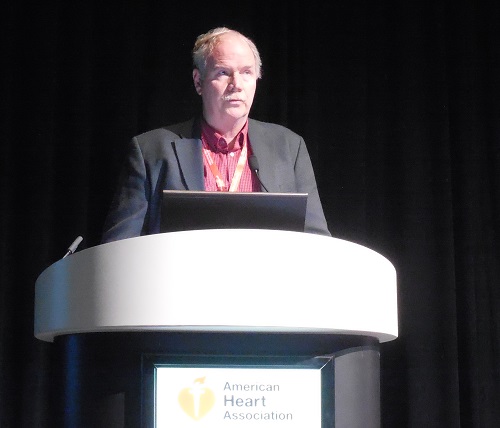
The innovation introduced by Dr. Spaite and his associates in their analysis of the EPIC-TBI data was to drill down into each patient’s hypotensive event, made possible by the 16,711 patients enrolled in EPIC-TBI.
The calculation they performed was limited to patients with EMS records of at least two blood pressure measurements during prehospital transport. These data allowed them to use both the extent to which systolic blood pressure dropped below 90 mm Hg and the amount of time pressure was below this threshold to better define the total hypotension exposure each patient received.
This meant that a TBI patient with a systolic pressure of 80 mm Hg for 10 minutes had twice the hypotension exposure of both a patient with a pressure of 85 mm Hg for 10 minutes, and a patient with a pressure of 80 mm Hg for 5 minutes.
Their analysis also adjusted the relationship of this total hypotensive dose and subsequent mortality based on several baseline demographic and clinical variables, including age, sex, injury severity, trauma type, and head-region severity score. After adjustment, the researchers found a “strikingly linear relationship” between hypotension dose and mortality, Dr. Spaite said, although a clear dose-response relationship was also evident in the unadjusted data.
EPIC-TBI enrolled TBI patients age 10 years or older during 2007-2014 through participation by dozens of EMS providers throughout Arizona. For the current analysis, the researchers identified 7,521 patients from the total group who had at least two blood pressure measurements taken during their prehospital EMS care and also met other inclusion criteria.
The best way to manage hypotension in TBI patients during the prehospital period remains unclear. Simply raising blood pressure with fluid infusion may not necessarily help, because it could exacerbate a patient’s bleeding, Dr. Spaite noted during an interview.
The primary goal of EPIC-TBI is to assess the impact of the third edition of the traumatic brain injury guidelines released in 2007 by the Brain Trauma Foundation. (The fourth edition of these guidelines came out in August 2016.) The new finding by Dr. Spaite and his associates will allow the full EPIC-TBI analysis to correlate patient outcomes with the impact that acute, prehospital treatment had on the hypotension dose received by each patient, he noted.
“What’s remarkable is that the single, prehospital parameter of hypotension for just a few minutes during transport can have such a strong impact on survival, given all the other factors that can influence outcomes” in TBI patients once they reach a hospital and during the period they remain hospitalized, Dr. Spaite said.
mzoler@frontlinemedcom.com On Twitter @mitchelzoler
NEW ORLEANS – The severity and duration of hypotension in traumatic brain injury patients during EMS transport to an emergency department has a tight and essentially linear relationship to their mortality rate during subsequent weeks of recovery, according to an analysis of more than 7,500 brain-injured patients.
For each doubling of the combined severity and duration of hypotension during the prehospital period, when systolic blood pressure was less than 90 mm Hg, patient mortality rose by 19%, Daniel W. Spaite, MD, reported at the American Heart Association scientific sessions.
However, the results do not address whether aggressive treatment of hypotension by EMS technicians in a patient with traumatic brain injury (TBI) leads to reduced mortality. That question is being assessed as part of the primary endpoint of the Excellence in Prehospital Injury Care-Traumatic Brain Injury (EPIC-TBI) study, which should have an answer by the end of 2017, said Dr. Spaite, professor of emergency medicine at the University of Arizona in Tuscon.
The innovation introduced by Dr. Spaite and his associates in their analysis of the EPIC-TBI data was to drill down into each patient’s hypotensive event, made possible by the 16,711 patients enrolled in EPIC-TBI.
The calculation they performed was limited to patients with EMS records of at least two blood pressure measurements during prehospital transport. These data allowed them to use both the extent to which systolic blood pressure dropped below 90 mm Hg and the amount of time pressure was below this threshold to better define the total hypotension exposure each patient received.
This meant that a TBI patient with a systolic pressure of 80 mm Hg for 10 minutes had twice the hypotension exposure of both a patient with a pressure of 85 mm Hg for 10 minutes, and a patient with a pressure of 80 mm Hg for 5 minutes.
Their analysis also adjusted the relationship of this total hypotensive dose and subsequent mortality based on several baseline demographic and clinical variables, including age, sex, injury severity, trauma type, and head-region severity score. After adjustment, the researchers found a “strikingly linear relationship” between hypotension dose and mortality, Dr. Spaite said, although a clear dose-response relationship was also evident in the unadjusted data.
EPIC-TBI enrolled TBI patients age 10 years or older during 2007-2014 through participation by dozens of EMS providers throughout Arizona. For the current analysis, the researchers identified 7,521 patients from the total group who had at least two blood pressure measurements taken during their prehospital EMS care and also met other inclusion criteria.
The best way to manage hypotension in TBI patients during the prehospital period remains unclear. Simply raising blood pressure with fluid infusion may not necessarily help, because it could exacerbate a patient’s bleeding, Dr. Spaite noted during an interview.
The primary goal of EPIC-TBI is to assess the impact of the third edition of the traumatic brain injury guidelines released in 2007 by the Brain Trauma Foundation. (The fourth edition of these guidelines came out in August 2016.) The new finding by Dr. Spaite and his associates will allow the full EPIC-TBI analysis to correlate patient outcomes with the impact that acute, prehospital treatment had on the hypotension dose received by each patient, he noted.
“What’s remarkable is that the single, prehospital parameter of hypotension for just a few minutes during transport can have such a strong impact on survival, given all the other factors that can influence outcomes” in TBI patients once they reach a hospital and during the period they remain hospitalized, Dr. Spaite said.
mzoler@frontlinemedcom.com On Twitter @mitchelzoler
NEW ORLEANS – The severity and duration of hypotension in traumatic brain injury patients during EMS transport to an emergency department has a tight and essentially linear relationship to their mortality rate during subsequent weeks of recovery, according to an analysis of more than 7,500 brain-injured patients.
For each doubling of the combined severity and duration of hypotension during the prehospital period, when systolic blood pressure was less than 90 mm Hg, patient mortality rose by 19%, Daniel W. Spaite, MD, reported at the American Heart Association scientific sessions.
However, the results do not address whether aggressive treatment of hypotension by EMS technicians in a patient with traumatic brain injury (TBI) leads to reduced mortality. That question is being assessed as part of the primary endpoint of the Excellence in Prehospital Injury Care-Traumatic Brain Injury (EPIC-TBI) study, which should have an answer by the end of 2017, said Dr. Spaite, professor of emergency medicine at the University of Arizona in Tuscon.
The innovation introduced by Dr. Spaite and his associates in their analysis of the EPIC-TBI data was to drill down into each patient’s hypotensive event, made possible by the 16,711 patients enrolled in EPIC-TBI.
The calculation they performed was limited to patients with EMS records of at least two blood pressure measurements during prehospital transport. These data allowed them to use both the extent to which systolic blood pressure dropped below 90 mm Hg and the amount of time pressure was below this threshold to better define the total hypotension exposure each patient received.
This meant that a TBI patient with a systolic pressure of 80 mm Hg for 10 minutes had twice the hypotension exposure of both a patient with a pressure of 85 mm Hg for 10 minutes, and a patient with a pressure of 80 mm Hg for 5 minutes.
Their analysis also adjusted the relationship of this total hypotensive dose and subsequent mortality based on several baseline demographic and clinical variables, including age, sex, injury severity, trauma type, and head-region severity score. After adjustment, the researchers found a “strikingly linear relationship” between hypotension dose and mortality, Dr. Spaite said, although a clear dose-response relationship was also evident in the unadjusted data.
EPIC-TBI enrolled TBI patients age 10 years or older during 2007-2014 through participation by dozens of EMS providers throughout Arizona. For the current analysis, the researchers identified 7,521 patients from the total group who had at least two blood pressure measurements taken during their prehospital EMS care and also met other inclusion criteria.
The best way to manage hypotension in TBI patients during the prehospital period remains unclear. Simply raising blood pressure with fluid infusion may not necessarily help, because it could exacerbate a patient’s bleeding, Dr. Spaite noted during an interview.
The primary goal of EPIC-TBI is to assess the impact of the third edition of the traumatic brain injury guidelines released in 2007 by the Brain Trauma Foundation. (The fourth edition of these guidelines came out in August 2016.) The new finding by Dr. Spaite and his associates will allow the full EPIC-TBI analysis to correlate patient outcomes with the impact that acute, prehospital treatment had on the hypotension dose received by each patient, he noted.
“What’s remarkable is that the single, prehospital parameter of hypotension for just a few minutes during transport can have such a strong impact on survival, given all the other factors that can influence outcomes” in TBI patients once they reach a hospital and during the period they remain hospitalized, Dr. Spaite said.
mzoler@frontlinemedcom.com On Twitter @mitchelzoler
Key clinical point:
Major finding: For each doubling of the dose of prehospital hypotension (a function of severity and duration), mortality rose by 19%.
Data source: EPIC-TBI, a multicenter study with 16,711 patients, including 7,521 who met inclusion criteria for the current analysis.
Disclosures: Dr. Spaite had no disclosures.
Ricardo Jorge, MD

Early Administration of Sertraline May Prevent Onset of Depression Following TBI
Sertraline may help to prevent the onset of depressive disorders after a traumatic brain injury (TBI), according to data published online ahead of print September 14 in JAMA Psychiatry.
“Our findings suggest that sertraline given at a low dosage early after TBI is an efficacious strategy to prevent depression after TBI,” said Ricardo E. Jorge, MD, Professor of Psychiatry and Behavioral Sciences at Baylor College of Medicine in Houston.

Every year, there are approximately 1.7 million cases of TBI in the United States. TBI contributes to 30% of all injury deaths and is a major cause of death and disability in the US, according to the Centers for Disease Control and Prevention.
Depressive disorders are common after TBI. In two studies, 58 of 157 patients developed a depressive disorder during the first year following TBI. Dr. Jorge and his colleagues conducted a double-blind, placebo-controlled study to assess the efficacy of sertraline in preventing depressive disorders following TBI. Their main outcome was time to onset of depressive disorder, as defined by the DSM-IV, associated with TBI.
“We hypothesized that the time from baseline to onset of depressive disorders would be greater in a group of patients randomized to receive sertraline treatment versus a group of patients randomized to receive placebo,” said Dr. Jorge. “We also hypothesized that, when compared with patients receiving placebo, patients receiving sertraline would show better performance in a set of neuropsychologic tests after six months of treatment.”
For the study, 94 patients were randomized to receive 100 mg/day of sertraline or placebo once daily for 24 weeks or until the development of a mood disorder. The age of participants ranged between 18 and 85, and patients had mild, moderate, or severe TBI. In addition, participants were required to have complete recovery of posttraumatic amnesia within four weeks of the traumatic episode. Patients with ongoing depression were excluded from the study. Furthermore, patients with mood disorders were required to have been in full remission for at least a year following discontinuation of treatment.
Researchers used the Mini-International Neuropsychiatric Interview and DSM-IV criteria to diagnose depressive disorders. In addition, participants were evaluated at baseline and at two, four, eight, 12, 16, 20, and 24 weeks. A Mini-International Neuropsychiatric Interview was administered via telephone on weeks six, 10, 14, 18, and 22.
The number of patients needed to treat to prevent development of depression after TBI at 24 weeks was 5.9. There were no incident cases of anxiety disorders, and one patient had suicidal ideation. Nearly all patients reported mild or moderate adverse events in the sertraline and placebo groups. Sexual adverse events were mild and did not significantly impact the quality of life of participants. Frequencies of dry mouth and diarrhea were higher among participants who received sertraline.
“The fact that small doses of sertraline are efficacious to prevent depression after TBI stands in sharp contrast to the lack of efficacy of antidepressants to treat depression in the chronic stage of TBI,” said Dr. Jorge.
Limitations of this study include its scarce representation of ethnic and racial minorities, small sample size, and limited follow-up following incident TBI.
—Erica Tricarico
Suggested Reading
Jorge RE, Acion L, Burin DI, Robinson RG. Sertraline for preventing mood disorders following traumatic brain injury. JAMA Psychiatry. 2016 Sep 14 [Epub ahead of print].
Sertraline may help to prevent the onset of depressive disorders after a traumatic brain injury (TBI), according to data published online ahead of print September 14 in JAMA Psychiatry.
“Our findings suggest that sertraline given at a low dosage early after TBI is an efficacious strategy to prevent depression after TBI,” said Ricardo E. Jorge, MD, Professor of Psychiatry and Behavioral Sciences at Baylor College of Medicine in Houston.
Every year, there are approximately 1.7 million cases of TBI in the United States. TBI contributes to 30% of all injury deaths and is a major cause of death and disability in the US, according to the Centers for Disease Control and Prevention.
Depressive disorders are common after TBI. In two studies, 58 of 157 patients developed a depressive disorder during the first year following TBI. Dr. Jorge and his colleagues conducted a double-blind, placebo-controlled study to assess the efficacy of sertraline in preventing depressive disorders following TBI. Their main outcome was time to onset of depressive disorder, as defined by the DSM-IV, associated with TBI.
“We hypothesized that the time from baseline to onset of depressive disorders would be greater in a group of patients randomized to receive sertraline treatment versus a group of patients randomized to receive placebo,” said Dr. Jorge. “We also hypothesized that, when compared with patients receiving placebo, patients receiving sertraline would show better performance in a set of neuropsychologic tests after six months of treatment.”
For the study, 94 patients were randomized to receive 100 mg/day of sertraline or placebo once daily for 24 weeks or until the development of a mood disorder. The age of participants ranged between 18 and 85, and patients had mild, moderate, or severe TBI. In addition, participants were required to have complete recovery of posttraumatic amnesia within four weeks of the traumatic episode. Patients with ongoing depression were excluded from the study. Furthermore, patients with mood disorders were required to have been in full remission for at least a year following discontinuation of treatment.
Researchers used the Mini-International Neuropsychiatric Interview and DSM-IV criteria to diagnose depressive disorders. In addition, participants were evaluated at baseline and at two, four, eight, 12, 16, 20, and 24 weeks. A Mini-International Neuropsychiatric Interview was administered via telephone on weeks six, 10, 14, 18, and 22.
The number of patients needed to treat to prevent development of depression after TBI at 24 weeks was 5.9. There were no incident cases of anxiety disorders, and one patient had suicidal ideation. Nearly all patients reported mild or moderate adverse events in the sertraline and placebo groups. Sexual adverse events were mild and did not significantly impact the quality of life of participants. Frequencies of dry mouth and diarrhea were higher among participants who received sertraline.
“The fact that small doses of sertraline are efficacious to prevent depression after TBI stands in sharp contrast to the lack of efficacy of antidepressants to treat depression in the chronic stage of TBI,” said Dr. Jorge.
Limitations of this study include its scarce representation of ethnic and racial minorities, small sample size, and limited follow-up following incident TBI.
—Erica Tricarico
Suggested Reading
Jorge RE, Acion L, Burin DI, Robinson RG. Sertraline for preventing mood disorders following traumatic brain injury. JAMA Psychiatry. 2016 Sep 14 [Epub ahead of print].
Sertraline may help to prevent the onset of depressive disorders after a traumatic brain injury (TBI), according to data published online ahead of print September 14 in JAMA Psychiatry.
“Our findings suggest that sertraline given at a low dosage early after TBI is an efficacious strategy to prevent depression after TBI,” said Ricardo E. Jorge, MD, Professor of Psychiatry and Behavioral Sciences at Baylor College of Medicine in Houston.
Every year, there are approximately 1.7 million cases of TBI in the United States. TBI contributes to 30% of all injury deaths and is a major cause of death and disability in the US, according to the Centers for Disease Control and Prevention.
Depressive disorders are common after TBI. In two studies, 58 of 157 patients developed a depressive disorder during the first year following TBI. Dr. Jorge and his colleagues conducted a double-blind, placebo-controlled study to assess the efficacy of sertraline in preventing depressive disorders following TBI. Their main outcome was time to onset of depressive disorder, as defined by the DSM-IV, associated with TBI.
“We hypothesized that the time from baseline to onset of depressive disorders would be greater in a group of patients randomized to receive sertraline treatment versus a group of patients randomized to receive placebo,” said Dr. Jorge. “We also hypothesized that, when compared with patients receiving placebo, patients receiving sertraline would show better performance in a set of neuropsychologic tests after six months of treatment.”
For the study, 94 patients were randomized to receive 100 mg/day of sertraline or placebo once daily for 24 weeks or until the development of a mood disorder. The age of participants ranged between 18 and 85, and patients had mild, moderate, or severe TBI. In addition, participants were required to have complete recovery of posttraumatic amnesia within four weeks of the traumatic episode. Patients with ongoing depression were excluded from the study. Furthermore, patients with mood disorders were required to have been in full remission for at least a year following discontinuation of treatment.
Researchers used the Mini-International Neuropsychiatric Interview and DSM-IV criteria to diagnose depressive disorders. In addition, participants were evaluated at baseline and at two, four, eight, 12, 16, 20, and 24 weeks. A Mini-International Neuropsychiatric Interview was administered via telephone on weeks six, 10, 14, 18, and 22.
The number of patients needed to treat to prevent development of depression after TBI at 24 weeks was 5.9. There were no incident cases of anxiety disorders, and one patient had suicidal ideation. Nearly all patients reported mild or moderate adverse events in the sertraline and placebo groups. Sexual adverse events were mild and did not significantly impact the quality of life of participants. Frequencies of dry mouth and diarrhea were higher among participants who received sertraline.
“The fact that small doses of sertraline are efficacious to prevent depression after TBI stands in sharp contrast to the lack of efficacy of antidepressants to treat depression in the chronic stage of TBI,” said Dr. Jorge.
Limitations of this study include its scarce representation of ethnic and racial minorities, small sample size, and limited follow-up following incident TBI.
—Erica Tricarico
Suggested Reading
Jorge RE, Acion L, Burin DI, Robinson RG. Sertraline for preventing mood disorders following traumatic brain injury. JAMA Psychiatry. 2016 Sep 14 [Epub ahead of print].

Choosing Wisely Initiative Helps Physicians Provide Appropriate Care
HILTON HEAD, SC—Physicians sometimes order unnecessary medical tests and procedures for their patients, which results in wasteful spending and inappropriate care. Following medical associations’ practice recommendations, which have been collected by the Choosing Wisely initiative, can help physicians reduce waste in the health care system and provide appropriate treatment for patients, according to an overview presented at the 39th Annual Contemporary Clinical Neurology Symposium.
Avoiding Unnecessary Treatments and Tests
The American Board of Internal Medicine Foundation created the Choosing Wisely website to encourage dialogue between physicians and patients about the overuse of treatments and tests. An additional goal was to empower patients to make informed treatment decisions. More than 70 societies, including the American Academy of Neurology (AAN) and the American Headache Society, submitted recommendations to advise patients and clinicians about proper healthcare. “You can find a list of all the organizations that contributed on the Choosing Wisely website, and each one was asked to contribute five different topics for Choosing Wisely,” said Peter Donofrio, MD, Professor of Neurology at Vanderbilt University in Nashville.

The AAN recommends that clinicians not perform an EEG for headaches. In addition, the organization recommends that physicians not perform imaging of the carotid arteries for simple syncope without other neurologic symptoms. For patients with migraine, opioids or butalbital treatment should be a last resort. The AAN also recommends that doctors not prescribe interferon-beta or glatiramer acetate for patients with disability resulting from progressive, nonrelapsing forms of multiple sclerosis, because the drugs are ineffective. Finally, it advises doctors not to recommend carotid endarterectomy for asymptomatic carotid stenosis unless the complication rate from surgery is less than 3%.
The American Association of Neuromuscular and Electrodiagnostic Medicine recommends that physicians not perform MRI scans of the brain or spine for patients with peripheral neuropathy without signs of cerebral or spinal cord disease. In addition, the association discourages physicians from performing nerve conduction studies (NCSs) without a needle EMG for radiculopathy assessment. It also recommends that physicians not order or perform four-limb EMG/NCS testing for neck or back pain after trauma.
Treating Acute Low Back Pain and Headache
Other medical associations have made recommendations regarding the assessment and treatment of acute low back pain and headache. The North American Spine Society does not recommend advanced imaging of the spine within the first six weeks in patients with nonspecific acute low back pain in the absence of red flags.
The American Headache Society (AHS) recommends that physicians avoid advising prolonged or frequent use of over-the-counter pain medications for headache. The organization also discourages physicians from prescribing opioid or butalbital-containing medications as first-line treatment for recurrent headache disorders. Furthermore, it does not recommend surgical deactivation of migraine trigger points outside of a clinical trial. In addition, the society advises physicians not to perform CT imaging for headache when an MRI is available, except in emergency settings. The society also recommends that physicians should not perform neuroimaging studies for patients with stable headaches that meet migraine criteria.
When CT Scans Are Unnecessary in Children
The American Academy of Pediatrics (AAP) advises that CT scans and MRI scans are not necessary in a child with simple febrile seizure. The AAP also does not recommend CT scans for the immediate evaluation of minor head injuries; clinical observation and Pediatric Emergency Care Applied Research Network (PECARN) criteria should be used to determine whether imaging is indicated.
Treating Insomnia and Sleep Disorders
The American Academy of Sleep Medicine advises doctors not to prescribe medication for childhood insomnia, which usually arises from parent–child interactions and responds to behavioral intervention. In addition, the academy does no
—Erica Tricarico
Suggested Reading
Callaghan BC, De Lott LB, Kerber KA, et al. Neurology Choosing Wisely recommendations: 74 and growing. Neurol Clin Pract. 2015;5(5):439-447.
Langer-Gould AM, Anderson WE, Armstrong MJ, et al. The American Academy of Neurology’s top five choosing wisely recommendations. Neurology. 2013;81(11):1004-1011.
Loder E, Weisenbaum E, Fishberg B, et al. Choosing wisely in headache medicine: the American Headache Society’s list of five things physicians and patients should question. Headache. 2013;53(10):1651-1659.
HILTON HEAD, SC—Physicians sometimes order unnecessary medical tests and procedures for their patients, which results in wasteful spending and inappropriate care. Following medical associations’ practice recommendations, which have been collected by the Choosing Wisely initiative, can help physicians reduce waste in the health care system and provide appropriate treatment for patients, according to an overview presented at the 39th Annual Contemporary Clinical Neurology Symposium.
Avoiding Unnecessary Treatments and Tests
The American Board of Internal Medicine Foundation created the Choosing Wisely website to encourage dialogue between physicians and patients about the overuse of treatments and tests. An additional goal was to empower patients to make informed treatment decisions. More than 70 societies, including the American Academy of Neurology (AAN) and the American Headache Society, submitted recommendations to advise patients and clinicians about proper healthcare. “You can find a list of all the organizations that contributed on the Choosing Wisely website, and each one was asked to contribute five different topics for Choosing Wisely,” said Peter Donofrio, MD, Professor of Neurology at Vanderbilt University in Nashville.
The AAN recommends that clinicians not perform an EEG for headaches. In addition, the organization recommends that physicians not perform imaging of the carotid arteries for simple syncope without other neurologic symptoms. For patients with migraine, opioids or butalbital treatment should be a last resort. The AAN also recommends that doctors not prescribe interferon-beta or glatiramer acetate for patients with disability resulting from progressive, nonrelapsing forms of multiple sclerosis, because the drugs are ineffective. Finally, it advises doctors not to recommend carotid endarterectomy for asymptomatic carotid stenosis unless the complication rate from surgery is less than 3%.
The American Association of Neuromuscular and Electrodiagnostic Medicine recommends that physicians not perform MRI scans of the brain or spine for patients with peripheral neuropathy without signs of cerebral or spinal cord disease. In addition, the association discourages physicians from performing nerve conduction studies (NCSs) without a needle EMG for radiculopathy assessment. It also recommends that physicians not order or perform four-limb EMG/NCS testing for neck or back pain after trauma.
Treating Acute Low Back Pain and Headache
Other medical associations have made recommendations regarding the assessment and treatment of acute low back pain and headache. The North American Spine Society does not recommend advanced imaging of the spine within the first six weeks in patients with nonspecific acute low back pain in the absence of red flags.
The American Headache Society (AHS) recommends that physicians avoid advising prolonged or frequent use of over-the-counter pain medications for headache. The organization also discourages physicians from prescribing opioid or butalbital-containing medications as first-line treatment for recurrent headache disorders. Furthermore, it does not recommend surgical deactivation of migraine trigger points outside of a clinical trial. In addition, the society advises physicians not to perform CT imaging for headache when an MRI is available, except in emergency settings. The society also recommends that physicians should not perform neuroimaging studies for patients with stable headaches that meet migraine criteria.
When CT Scans Are Unnecessary in Children
The American Academy of Pediatrics (AAP) advises that CT scans and MRI scans are not necessary in a child with simple febrile seizure. The AAP also does not recommend CT scans for the immediate evaluation of minor head injuries; clinical observation and Pediatric Emergency Care Applied Research Network (PECARN) criteria should be used to determine whether imaging is indicated.
Treating Insomnia and Sleep Disorders
The American Academy of Sleep Medicine advises doctors not to prescribe medication for childhood insomnia, which usually arises from parent–child interactions and responds to behavioral intervention. In addition, the academy does no
—Erica Tricarico
Suggested Reading
Callaghan BC, De Lott LB, Kerber KA, et al. Neurology Choosing Wisely recommendations: 74 and growing. Neurol Clin Pract. 2015;5(5):439-447.
Langer-Gould AM, Anderson WE, Armstrong MJ, et al. The American Academy of Neurology’s top five choosing wisely recommendations. Neurology. 2013;81(11):1004-1011.
Loder E, Weisenbaum E, Fishberg B, et al. Choosing wisely in headache medicine: the American Headache Society’s list of five things physicians and patients should question. Headache. 2013;53(10):1651-1659.
HILTON HEAD, SC—Physicians sometimes order unnecessary medical tests and procedures for their patients, which results in wasteful spending and inappropriate care. Following medical associations’ practice recommendations, which have been collected by the Choosing Wisely initiative, can help physicians reduce waste in the health care system and provide appropriate treatment for patients, according to an overview presented at the 39th Annual Contemporary Clinical Neurology Symposium.
Avoiding Unnecessary Treatments and Tests
The American Board of Internal Medicine Foundation created the Choosing Wisely website to encourage dialogue between physicians and patients about the overuse of treatments and tests. An additional goal was to empower patients to make informed treatment decisions. More than 70 societies, including the American Academy of Neurology (AAN) and the American Headache Society, submitted recommendations to advise patients and clinicians about proper healthcare. “You can find a list of all the organizations that contributed on the Choosing Wisely website, and each one was asked to contribute five different topics for Choosing Wisely,” said Peter Donofrio, MD, Professor of Neurology at Vanderbilt University in Nashville.
The AAN recommends that clinicians not perform an EEG for headaches. In addition, the organization recommends that physicians not perform imaging of the carotid arteries for simple syncope without other neurologic symptoms. For patients with migraine, opioids or butalbital treatment should be a last resort. The AAN also recommends that doctors not prescribe interferon-beta or glatiramer acetate for patients with disability resulting from progressive, nonrelapsing forms of multiple sclerosis, because the drugs are ineffective. Finally, it advises doctors not to recommend carotid endarterectomy for asymptomatic carotid stenosis unless the complication rate from surgery is less than 3%.
The American Association of Neuromuscular and Electrodiagnostic Medicine recommends that physicians not perform MRI scans of the brain or spine for patients with peripheral neuropathy without signs of cerebral or spinal cord disease. In addition, the association discourages physicians from performing nerve conduction studies (NCSs) without a needle EMG for radiculopathy assessment. It also recommends that physicians not order or perform four-limb EMG/NCS testing for neck or back pain after trauma.
Treating Acute Low Back Pain and Headache
Other medical associations have made recommendations regarding the assessment and treatment of acute low back pain and headache. The North American Spine Society does not recommend advanced imaging of the spine within the first six weeks in patients with nonspecific acute low back pain in the absence of red flags.
The American Headache Society (AHS) recommends that physicians avoid advising prolonged or frequent use of over-the-counter pain medications for headache. The organization also discourages physicians from prescribing opioid or butalbital-containing medications as first-line treatment for recurrent headache disorders. Furthermore, it does not recommend surgical deactivation of migraine trigger points outside of a clinical trial. In addition, the society advises physicians not to perform CT imaging for headache when an MRI is available, except in emergency settings. The society also recommends that physicians should not perform neuroimaging studies for patients with stable headaches that meet migraine criteria.
When CT Scans Are Unnecessary in Children
The American Academy of Pediatrics (AAP) advises that CT scans and MRI scans are not necessary in a child with simple febrile seizure. The AAP also does not recommend CT scans for the immediate evaluation of minor head injuries; clinical observation and Pediatric Emergency Care Applied Research Network (PECARN) criteria should be used to determine whether imaging is indicated.
Treating Insomnia and Sleep Disorders
The American Academy of Sleep Medicine advises doctors not to prescribe medication for childhood insomnia, which usually arises from parent–child interactions and responds to behavioral intervention. In addition, the academy does no
—Erica Tricarico
Suggested Reading
Callaghan BC, De Lott LB, Kerber KA, et al. Neurology Choosing Wisely recommendations: 74 and growing. Neurol Clin Pract. 2015;5(5):439-447.
Langer-Gould AM, Anderson WE, Armstrong MJ, et al. The American Academy of Neurology’s top five choosing wisely recommendations. Neurology. 2013;81(11):1004-1011.
Loder E, Weisenbaum E, Fishberg B, et al. Choosing wisely in headache medicine: the American Headache Society’s list of five things physicians and patients should question. Headache. 2013;53(10):1651-1659.

COMMENTARY—Adding CBT Adds Value If Patients Are Receptive
Increasing numbers of adolescents are presenting to physicians for management of concussions. This is mainly because of much greater awareness of the signs, symptoms, and potential adverse effects. While the majority of concussed teens recover in less than two weeks, 10% to 15% will have prolonged symptoms (greater than one month), which has significant negative impact on their health, mood, social functioning, and academic performance. This is the first study to provide evidence-based guidance for treating these slow-to-recover teens.
I definitely believe there is value in adding CBT to postconcussive therapy for teens. I have seen CBT help a large number of my own patients who are suffering from prolonged postconcussion symptoms, so it is good to see the results of this well-done study support this approach. One caveat with CBT is that its success hinges on the patient's being receptive to the idea of CBT and consistent with applying it in daily life, so it may not work for teens who are not motivated to learn and apply its techniques.
I am not surprised by the results of the study. A large proportion of the adolescents I treat for concussions are referred by their pediatricians because they are suffering from prolonged symptoms. We have anecdotally noted that when a collaborative care model is applied, similar to what was provided for the intervention group in this study, including CBT, patients experience more rapid decrease in symptoms, improved mood, and smoother transition back to baseline functioning, especially in school. I suspect this is because CBT teaches them effective coping skills, and the bonus is that these skills are incredibly useful across one's lifetime, not just for concussion recovery.
Adolescents who are slow to recover from a concussion commonly experience depressive symptoms. This study suggests CBT is a promising treatment for improving mood and facilitating recovery for these teens. However, a larger study is needed with more diverse subject population. This study included only 49 subjects, and the majority of them were white females. A larger study is needed to determine whether CBT is as feasible and effective for other populations of teens with prolonged concussion symptoms. Also, longer-term longitudinal studies are needed to better understand the etiology of persistent postconcussive symptoms and long-term effects 10 to 20 years down the road.
—Cynthia LaBella, MD
Director of the Concussion Program
Ann & Robert H. Lurie Children's Hospital of Chicago
Increasing numbers of adolescents are presenting to physicians for management of concussions. This is mainly because of much greater awareness of the signs, symptoms, and potential adverse effects. While the majority of concussed teens recover in less than two weeks, 10% to 15% will have prolonged symptoms (greater than one month), which has significant negative impact on their health, mood, social functioning, and academic performance. This is the first study to provide evidence-based guidance for treating these slow-to-recover teens.
I definitely believe there is value in adding CBT to postconcussive therapy for teens. I have seen CBT help a large number of my own patients who are suffering from prolonged postconcussion symptoms, so it is good to see the results of this well-done study support this approach. One caveat with CBT is that its success hinges on the patient's being receptive to the idea of CBT and consistent with applying it in daily life, so it may not work for teens who are not motivated to learn and apply its techniques.
I am not surprised by the results of the study. A large proportion of the adolescents I treat for concussions are referred by their pediatricians because they are suffering from prolonged symptoms. We have anecdotally noted that when a collaborative care model is applied, similar to what was provided for the intervention group in this study, including CBT, patients experience more rapid decrease in symptoms, improved mood, and smoother transition back to baseline functioning, especially in school. I suspect this is because CBT teaches them effective coping skills, and the bonus is that these skills are incredibly useful across one's lifetime, not just for concussion recovery.
Adolescents who are slow to recover from a concussion commonly experience depressive symptoms. This study suggests CBT is a promising treatment for improving mood and facilitating recovery for these teens. However, a larger study is needed with more diverse subject population. This study included only 49 subjects, and the majority of them were white females. A larger study is needed to determine whether CBT is as feasible and effective for other populations of teens with prolonged concussion symptoms. Also, longer-term longitudinal studies are needed to better understand the etiology of persistent postconcussive symptoms and long-term effects 10 to 20 years down the road.
—Cynthia LaBella, MD
Director of the Concussion Program
Ann & Robert H. Lurie Children's Hospital of Chicago
Increasing numbers of adolescents are presenting to physicians for management of concussions. This is mainly because of much greater awareness of the signs, symptoms, and potential adverse effects. While the majority of concussed teens recover in less than two weeks, 10% to 15% will have prolonged symptoms (greater than one month), which has significant negative impact on their health, mood, social functioning, and academic performance. This is the first study to provide evidence-based guidance for treating these slow-to-recover teens.
I definitely believe there is value in adding CBT to postconcussive therapy for teens. I have seen CBT help a large number of my own patients who are suffering from prolonged postconcussion symptoms, so it is good to see the results of this well-done study support this approach. One caveat with CBT is that its success hinges on the patient's being receptive to the idea of CBT and consistent with applying it in daily life, so it may not work for teens who are not motivated to learn and apply its techniques.
I am not surprised by the results of the study. A large proportion of the adolescents I treat for concussions are referred by their pediatricians because they are suffering from prolonged symptoms. We have anecdotally noted that when a collaborative care model is applied, similar to what was provided for the intervention group in this study, including CBT, patients experience more rapid decrease in symptoms, improved mood, and smoother transition back to baseline functioning, especially in school. I suspect this is because CBT teaches them effective coping skills, and the bonus is that these skills are incredibly useful across one's lifetime, not just for concussion recovery.
Adolescents who are slow to recover from a concussion commonly experience depressive symptoms. This study suggests CBT is a promising treatment for improving mood and facilitating recovery for these teens. However, a larger study is needed with more diverse subject population. This study included only 49 subjects, and the majority of them were white females. A larger study is needed to determine whether CBT is as feasible and effective for other populations of teens with prolonged concussion symptoms. Also, longer-term longitudinal studies are needed to better understand the etiology of persistent postconcussive symptoms and long-term effects 10 to 20 years down the road.
—Cynthia LaBella, MD
Director of the Concussion Program
Ann & Robert H. Lurie Children's Hospital of Chicago
Glymphatic System May Play Key Role in Removing Brain Waste
SAN DIEGO—A recently discovered system known as the glymphatic system clears waste from the brain. It is most active during sleep and may have implications in headache and in neurodegenerative diseases associated with pathologic protein aggregation, including Parkinson’s disease and Alzheimer’s disease, said Helene Benveniste, MD, PhD, Professor of Anesthesiology and Vice Chair for Research at Stony Brook School of Medicine in New York. Data suggest that sleep, posture, and brain injury may affect this waste removal system.

“We look at the glymphatic pathway as a bit of an overlooked compartment of the vasculature or the perivascular space that is … facilitating solute and waste removal,” Dr. Benveniste said at the 58th Annual Scientific Meeting of the American Headache Society. Although most studies of the glymphatic system so far have been performed in rodents, “data are starting to come out showing that this system is also present in humans,” she said.
A Brainwide Pathway
The glymphatic system, which gets its name from the glial cells and lymphatic system that it mimics, may explain how the brain—one of the most metabolically active organs—clears excess fluids, solutes, and waste products without authentic lymph vessels, Dr. Benveniste said. The system consists of a brainwide pathway that facilitates the exchange of CSF with interstitial fluid to clear interstitial waste from the brain parenchyma. The waste is moved into perivenous pathways and ultimately cleared via cervical lymphatic vessels.
Researchers first described the concept of the glymphatic system in Science Translational Medicine in 2012. They injected fluorescent tracers into the cisterna magna and fluorescent-tagged amyloid beta into brain parenchyma of mice and observed distribution of the tracers along the glymphatic pathway using two-photon imaging. The paper’s senior author, Maiken Nedergaard, MD, DMSc, Professor of Neurosurgery and Translational Neuromedicine at the University of Rochester in New York, contacted Dr. Benveniste to develop a way to visualize the system using MRI, which they accomplished using a 9.4-T system and small molecular weight contrast dye injected via an intrathecal catheter inserted in the cisterna magna.
In 2015, researchers in Norway published a case report in Acta Radiologica Open supporting the existence of a glymphatic system in humans. They administered intrathecal gadobutrol to diagnose a CSF leak in a patient. The patient underwent 3D T1-weighted imaging at one hour and 4.5 hours. The distribution of gadobutrol into the brain was consistent with that observed in rodents and supports the concept of a glymphatic pathway in the human brain, the authors concluded.
Researchers still are evaluating the glymphatic system’s role in maintaining brain health and how it differs in humans and rodents. Aquaporin channels, which are crucial in facilitating CSF transport from the periarterial space and into the interstitial space to drive waste removal via the glymphatic pathway, may be positioned differently in rodents and humans, Dr. Benveniste said. In addition, waste clearance may be orders of magnitude slower in humans due to brain size and complexity, she said.
Factors Affecting Glymphatic Flow
In mice genetically modified to lack aquaporin channels, convective flow and waste removal via the glymphatic pathway are slowed down immensely.
After traumatic brain injury, glymphatic pathway function was reduced by approximately 60% in mice for at least one month, Iliff et al reported in the Journal of Neuroscience in 2014. In mice without aquaporin channels, however, glymphatic pathway dysfunction was further exacerbated, and those animals developed neurofibrillary pathology and neurodegeneration.
One of the most important factors affecting glymphatic flow is interstitial space volume, which increases by 40% to 60% during sleep, Dr. Benveniste said. Natural sleep and certain types of anesthetics dramatically increase interstitial space volume, Xie et al reported in Science in 2013. Likewise, awaking sleeping mice sharply reduces glymphatic flow. The authors concluded, “the restorative function of sleep may be a consequence of the enhanced removal of potentially neurotoxic waste products that accumulate in the awake CNS.”
Injecting a norepinephrine receptor antagonist intrathecally can stimulate intense glymphatic transport in animals in the awake state, indicating that noradrenergic tone may be responsible for the process, Dr. Benveniste said.
She and her colleagues studied glymphatic clearance in mice anesthetized with dexmedetomidine, which induces a state similar to stage 2 sleep, versus the inhalational anesthetic isoflurane. Glymphatic processing was much greater in rodents that received dexmedetomidine.
Sleep Position
Hedok Lee, PhD, Clinical Assistant Professor of Anesthesiology at Stony Brook School of Medicine, Dr. Benveniste, and colleagues studied the effect of body posture on brain glymphatic transport in rats. They found that glymphatic transport and amyloid beta clearance were most efficient in the lateral and supine positions, while the prone position (ie, most upright and mimicking awake posture) resulted in slower clearance.
“Right lateral seems to be the position where you have got the best efflux and influx,” Dr. Benveniste said. The findings suggest that sleep position’s effect on the glymphatic system may be relevant for imaging the system in humans, and ultimately for patient care.
—Jake Remaly
Suggested Reading
Eide PK, Ringstad G. MRI with intrathecal MRI gadolinium contrast medium administration: a possible method to assess glymphatic function in human brain. Acta Radiol Open. 2015;4(11):2058460115609635.
Iliff JJ, Chen MJ, Plog BA, et al. Impairment of glymphatic pathway function promotes tau pathology after traumatic brain injury. J Neurosci. 2014;34(49):16180-16193.
Iliff JJ, Wang M, Liao Y, et al. A paravascular pathway facilitates CSF flow through the brain parenchyma and the clearance of interstitial solutes, including amyloid β. Sci Transl Med. 2012;4(147):147ra111.
Lee H, Xie L, Yu M, et al. The effect of body posture on brain glymphatic transport. J Neurosci. 2015;35(31):11034-11044.
Xie L, Kang H, Xu Q, et al. Sleep drives metabolite clearance from the adult brain. Science. 2013;342(6156):373-377.
SAN DIEGO—A recently discovered system known as the glymphatic system clears waste from the brain. It is most active during sleep and may have implications in headache and in neurodegenerative diseases associated with pathologic protein aggregation, including Parkinson’s disease and Alzheimer’s disease, said Helene Benveniste, MD, PhD, Professor of Anesthesiology and Vice Chair for Research at Stony Brook School of Medicine in New York. Data suggest that sleep, posture, and brain injury may affect this waste removal system.
“We look at the glymphatic pathway as a bit of an overlooked compartment of the vasculature or the perivascular space that is … facilitating solute and waste removal,” Dr. Benveniste said at the 58th Annual Scientific Meeting of the American Headache Society. Although most studies of the glymphatic system so far have been performed in rodents, “data are starting to come out showing that this system is also present in humans,” she said.
A Brainwide Pathway
The glymphatic system, which gets its name from the glial cells and lymphatic system that it mimics, may explain how the brain—one of the most metabolically active organs—clears excess fluids, solutes, and waste products without authentic lymph vessels, Dr. Benveniste said. The system consists of a brainwide pathway that facilitates the exchange of CSF with interstitial fluid to clear interstitial waste from the brain parenchyma. The waste is moved into perivenous pathways and ultimately cleared via cervical lymphatic vessels.
Researchers first described the concept of the glymphatic system in Science Translational Medicine in 2012. They injected fluorescent tracers into the cisterna magna and fluorescent-tagged amyloid beta into brain parenchyma of mice and observed distribution of the tracers along the glymphatic pathway using two-photon imaging. The paper’s senior author, Maiken Nedergaard, MD, DMSc, Professor of Neurosurgery and Translational Neuromedicine at the University of Rochester in New York, contacted Dr. Benveniste to develop a way to visualize the system using MRI, which they accomplished using a 9.4-T system and small molecular weight contrast dye injected via an intrathecal catheter inserted in the cisterna magna.
In 2015, researchers in Norway published a case report in Acta Radiologica Open supporting the existence of a glymphatic system in humans. They administered intrathecal gadobutrol to diagnose a CSF leak in a patient. The patient underwent 3D T1-weighted imaging at one hour and 4.5 hours. The distribution of gadobutrol into the brain was consistent with that observed in rodents and supports the concept of a glymphatic pathway in the human brain, the authors concluded.
Researchers still are evaluating the glymphatic system’s role in maintaining brain health and how it differs in humans and rodents. Aquaporin channels, which are crucial in facilitating CSF transport from the periarterial space and into the interstitial space to drive waste removal via the glymphatic pathway, may be positioned differently in rodents and humans, Dr. Benveniste said. In addition, waste clearance may be orders of magnitude slower in humans due to brain size and complexity, she said.
Factors Affecting Glymphatic Flow
In mice genetically modified to lack aquaporin channels, convective flow and waste removal via the glymphatic pathway are slowed down immensely.
After traumatic brain injury, glymphatic pathway function was reduced by approximately 60% in mice for at least one month, Iliff et al reported in the Journal of Neuroscience in 2014. In mice without aquaporin channels, however, glymphatic pathway dysfunction was further exacerbated, and those animals developed neurofibrillary pathology and neurodegeneration.
One of the most important factors affecting glymphatic flow is interstitial space volume, which increases by 40% to 60% during sleep, Dr. Benveniste said. Natural sleep and certain types of anesthetics dramatically increase interstitial space volume, Xie et al reported in Science in 2013. Likewise, awaking sleeping mice sharply reduces glymphatic flow. The authors concluded, “the restorative function of sleep may be a consequence of the enhanced removal of potentially neurotoxic waste products that accumulate in the awake CNS.”
Injecting a norepinephrine receptor antagonist intrathecally can stimulate intense glymphatic transport in animals in the awake state, indicating that noradrenergic tone may be responsible for the process, Dr. Benveniste said.
She and her colleagues studied glymphatic clearance in mice anesthetized with dexmedetomidine, which induces a state similar to stage 2 sleep, versus the inhalational anesthetic isoflurane. Glymphatic processing was much greater in rodents that received dexmedetomidine.
Sleep Position
Hedok Lee, PhD, Clinical Assistant Professor of Anesthesiology at Stony Brook School of Medicine, Dr. Benveniste, and colleagues studied the effect of body posture on brain glymphatic transport in rats. They found that glymphatic transport and amyloid beta clearance were most efficient in the lateral and supine positions, while the prone position (ie, most upright and mimicking awake posture) resulted in slower clearance.
“Right lateral seems to be the position where you have got the best efflux and influx,” Dr. Benveniste said. The findings suggest that sleep position’s effect on the glymphatic system may be relevant for imaging the system in humans, and ultimately for patient care.
—Jake Remaly
Suggested Reading
Eide PK, Ringstad G. MRI with intrathecal MRI gadolinium contrast medium administration: a possible method to assess glymphatic function in human brain. Acta Radiol Open. 2015;4(11):2058460115609635.
Iliff JJ, Chen MJ, Plog BA, et al. Impairment of glymphatic pathway function promotes tau pathology after traumatic brain injury. J Neurosci. 2014;34(49):16180-16193.
Iliff JJ, Wang M, Liao Y, et al. A paravascular pathway facilitates CSF flow through the brain parenchyma and the clearance of interstitial solutes, including amyloid β. Sci Transl Med. 2012;4(147):147ra111.
Lee H, Xie L, Yu M, et al. The effect of body posture on brain glymphatic transport. J Neurosci. 2015;35(31):11034-11044.
Xie L, Kang H, Xu Q, et al. Sleep drives metabolite clearance from the adult brain. Science. 2013;342(6156):373-377.
SAN DIEGO—A recently discovered system known as the glymphatic system clears waste from the brain. It is most active during sleep and may have implications in headache and in neurodegenerative diseases associated with pathologic protein aggregation, including Parkinson’s disease and Alzheimer’s disease, said Helene Benveniste, MD, PhD, Professor of Anesthesiology and Vice Chair for Research at Stony Brook School of Medicine in New York. Data suggest that sleep, posture, and brain injury may affect this waste removal system.
“We look at the glymphatic pathway as a bit of an overlooked compartment of the vasculature or the perivascular space that is … facilitating solute and waste removal,” Dr. Benveniste said at the 58th Annual Scientific Meeting of the American Headache Society. Although most studies of the glymphatic system so far have been performed in rodents, “data are starting to come out showing that this system is also present in humans,” she said.
A Brainwide Pathway
The glymphatic system, which gets its name from the glial cells and lymphatic system that it mimics, may explain how the brain—one of the most metabolically active organs—clears excess fluids, solutes, and waste products without authentic lymph vessels, Dr. Benveniste said. The system consists of a brainwide pathway that facilitates the exchange of CSF with interstitial fluid to clear interstitial waste from the brain parenchyma. The waste is moved into perivenous pathways and ultimately cleared via cervical lymphatic vessels.
Researchers first described the concept of the glymphatic system in Science Translational Medicine in 2012. They injected fluorescent tracers into the cisterna magna and fluorescent-tagged amyloid beta into brain parenchyma of mice and observed distribution of the tracers along the glymphatic pathway using two-photon imaging. The paper’s senior author, Maiken Nedergaard, MD, DMSc, Professor of Neurosurgery and Translational Neuromedicine at the University of Rochester in New York, contacted Dr. Benveniste to develop a way to visualize the system using MRI, which they accomplished using a 9.4-T system and small molecular weight contrast dye injected via an intrathecal catheter inserted in the cisterna magna.
In 2015, researchers in Norway published a case report in Acta Radiologica Open supporting the existence of a glymphatic system in humans. They administered intrathecal gadobutrol to diagnose a CSF leak in a patient. The patient underwent 3D T1-weighted imaging at one hour and 4.5 hours. The distribution of gadobutrol into the brain was consistent with that observed in rodents and supports the concept of a glymphatic pathway in the human brain, the authors concluded.
Researchers still are evaluating the glymphatic system’s role in maintaining brain health and how it differs in humans and rodents. Aquaporin channels, which are crucial in facilitating CSF transport from the periarterial space and into the interstitial space to drive waste removal via the glymphatic pathway, may be positioned differently in rodents and humans, Dr. Benveniste said. In addition, waste clearance may be orders of magnitude slower in humans due to brain size and complexity, she said.
Factors Affecting Glymphatic Flow
In mice genetically modified to lack aquaporin channels, convective flow and waste removal via the glymphatic pathway are slowed down immensely.
After traumatic brain injury, glymphatic pathway function was reduced by approximately 60% in mice for at least one month, Iliff et al reported in the Journal of Neuroscience in 2014. In mice without aquaporin channels, however, glymphatic pathway dysfunction was further exacerbated, and those animals developed neurofibrillary pathology and neurodegeneration.
One of the most important factors affecting glymphatic flow is interstitial space volume, which increases by 40% to 60% during sleep, Dr. Benveniste said. Natural sleep and certain types of anesthetics dramatically increase interstitial space volume, Xie et al reported in Science in 2013. Likewise, awaking sleeping mice sharply reduces glymphatic flow. The authors concluded, “the restorative function of sleep may be a consequence of the enhanced removal of potentially neurotoxic waste products that accumulate in the awake CNS.”
Injecting a norepinephrine receptor antagonist intrathecally can stimulate intense glymphatic transport in animals in the awake state, indicating that noradrenergic tone may be responsible for the process, Dr. Benveniste said.
She and her colleagues studied glymphatic clearance in mice anesthetized with dexmedetomidine, which induces a state similar to stage 2 sleep, versus the inhalational anesthetic isoflurane. Glymphatic processing was much greater in rodents that received dexmedetomidine.
Sleep Position
Hedok Lee, PhD, Clinical Assistant Professor of Anesthesiology at Stony Brook School of Medicine, Dr. Benveniste, and colleagues studied the effect of body posture on brain glymphatic transport in rats. They found that glymphatic transport and amyloid beta clearance were most efficient in the lateral and supine positions, while the prone position (ie, most upright and mimicking awake posture) resulted in slower clearance.
“Right lateral seems to be the position where you have got the best efflux and influx,” Dr. Benveniste said. The findings suggest that sleep position’s effect on the glymphatic system may be relevant for imaging the system in humans, and ultimately for patient care.
—Jake Remaly
Suggested Reading
Eide PK, Ringstad G. MRI with intrathecal MRI gadolinium contrast medium administration: a possible method to assess glymphatic function in human brain. Acta Radiol Open. 2015;4(11):2058460115609635.
Iliff JJ, Chen MJ, Plog BA, et al. Impairment of glymphatic pathway function promotes tau pathology after traumatic brain injury. J Neurosci. 2014;34(49):16180-16193.
Iliff JJ, Wang M, Liao Y, et al. A paravascular pathway facilitates CSF flow through the brain parenchyma and the clearance of interstitial solutes, including amyloid β. Sci Transl Med. 2012;4(147):147ra111.
Lee H, Xie L, Yu M, et al. The effect of body posture on brain glymphatic transport. J Neurosci. 2015;35(31):11034-11044.
Xie L, Kang H, Xu Q, et al. Sleep drives metabolite clearance from the adult brain. Science. 2013;342(6156):373-377.
Cognitive Behavioral Therapy Eases Postconcussive Symptoms in Teens
Adolescents who underwent cognitive behavioral therapy (CBT) as part of postconcussion care reported significantly lower levels of postconcussive and depressive symptoms, according to the results of a randomized trial published online ahead of print September 12 in Pediatrics.
“Affective symptoms, including depression and anxiety, commonly co-occur with cognitive and somatic symptoms and may prolong recovery from postconcussive symptoms, wrote Carolyn A. McCarty, PhD, Research Associate Professor of Pediatrics and Adjunct Research Associate Professor of Psychology at Seattle Children’s Hospital Center for Child Health Behavior and Development in Seattle, and her colleagues.

“The complexities of managing persistent postconcussive symptoms in conjunction with comorbid psychological symptoms create a significant burden for injured children and adolescents, their families, and schools.”
To determine the impact of CBT on persistent symptoms in adolescents with concussions, the researchers randomized 49 patients, ages 11 to 17, to usual care or a collaborative care plan that included usual care plus CBT.
Concussions were diagnosed by sports medicine or rehabilitative medicine specialists. The patients assigned to CBT received usual care management, CBT, and possible psychopharmacologic consultation. Control patients received usual concussion care, generally defined as an initial visit with a sports medicine physician and assessments at one, three, and six months. Usual care also could include MRI, sleep medication, and subthreshold exercise, depending on the patient. No serious adverse events were reported. The average age of the patients was 15, approximately 65% were girls, and 76% were white.
After six months, approximately 13% of the teens in the CBT group reported high levels of postconcussive symptoms, compared with 42% of controls. In addition, 78% of patients receiving CBT reported a depressive symptom reduction of more than 50%, compared with 46% of controls.
Overall, 83% of the patients receiving CBT and 87% of their parents were “very satisfied” with their care, compared with 46% of patients and 29% of parents in the control group.
“Although patients in both groups showed symptom reduction in the first three months, only those who received collaborative care demonstrated sustained improvements through six months of follow-up,” Dr. McCarty and her colleagues wrote.
The results were limited by several factors, including the small size of the study, the researchers said. However, the findings “prompt more investigation into the role of affective symptoms in perpetuating physical symptoms secondary to prolonged recovery from sports-related concussion” and also suggest that collaborative care can help improve persistent postconcussive symptoms in teens.The Seattle Sports Concussion Research Collaborative supported the study.
—Heidi Splete
Suggested Reading
McCarty CA, Zatzick D, Stein E, et al. Collaborative care for adolescents with persistent postconcussive symptoms: a randomized trial. Pediatrics. 2016 Sept 13 [Epub ahead of print].
Cordingley D, Girardin R, Reimer K, et al. Graded aerobic treadmill testing in pediatric sports-related concussion: safety, clinical use, and patient outcomes. J Neurosurg Pediatr. 2016 September 13 [Epub ahead of print].
Adolescents who underwent cognitive behavioral therapy (CBT) as part of postconcussion care reported significantly lower levels of postconcussive and depressive symptoms, according to the results of a randomized trial published online ahead of print September 12 in Pediatrics.
“Affective symptoms, including depression and anxiety, commonly co-occur with cognitive and somatic symptoms and may prolong recovery from postconcussive symptoms, wrote Carolyn A. McCarty, PhD, Research Associate Professor of Pediatrics and Adjunct Research Associate Professor of Psychology at Seattle Children’s Hospital Center for Child Health Behavior and Development in Seattle, and her colleagues.
“The complexities of managing persistent postconcussive symptoms in conjunction with comorbid psychological symptoms create a significant burden for injured children and adolescents, their families, and schools.”
To determine the impact of CBT on persistent symptoms in adolescents with concussions, the researchers randomized 49 patients, ages 11 to 17, to usual care or a collaborative care plan that included usual care plus CBT.
Concussions were diagnosed by sports medicine or rehabilitative medicine specialists. The patients assigned to CBT received usual care management, CBT, and possible psychopharmacologic consultation. Control patients received usual concussion care, generally defined as an initial visit with a sports medicine physician and assessments at one, three, and six months. Usual care also could include MRI, sleep medication, and subthreshold exercise, depending on the patient. No serious adverse events were reported. The average age of the patients was 15, approximately 65% were girls, and 76% were white.
After six months, approximately 13% of the teens in the CBT group reported high levels of postconcussive symptoms, compared with 42% of controls. In addition, 78% of patients receiving CBT reported a depressive symptom reduction of more than 50%, compared with 46% of controls.
Overall, 83% of the patients receiving CBT and 87% of their parents were “very satisfied” with their care, compared with 46% of patients and 29% of parents in the control group.
“Although patients in both groups showed symptom reduction in the first three months, only those who received collaborative care demonstrated sustained improvements through six months of follow-up,” Dr. McCarty and her colleagues wrote.
The results were limited by several factors, including the small size of the study, the researchers said. However, the findings “prompt more investigation into the role of affective symptoms in perpetuating physical symptoms secondary to prolonged recovery from sports-related concussion” and also suggest that collaborative care can help improve persistent postconcussive symptoms in teens.The Seattle Sports Concussion Research Collaborative supported the study.
—Heidi Splete
Suggested Reading
McCarty CA, Zatzick D, Stein E, et al. Collaborative care for adolescents with persistent postconcussive symptoms: a randomized trial. Pediatrics. 2016 Sept 13 [Epub ahead of print].
Cordingley D, Girardin R, Reimer K, et al. Graded aerobic treadmill testing in pediatric sports-related concussion: safety, clinical use, and patient outcomes. J Neurosurg Pediatr. 2016 September 13 [Epub ahead of print].
Adolescents who underwent cognitive behavioral therapy (CBT) as part of postconcussion care reported significantly lower levels of postconcussive and depressive symptoms, according to the results of a randomized trial published online ahead of print September 12 in Pediatrics.
“Affective symptoms, including depression and anxiety, commonly co-occur with cognitive and somatic symptoms and may prolong recovery from postconcussive symptoms, wrote Carolyn A. McCarty, PhD, Research Associate Professor of Pediatrics and Adjunct Research Associate Professor of Psychology at Seattle Children’s Hospital Center for Child Health Behavior and Development in Seattle, and her colleagues.
“The complexities of managing persistent postconcussive symptoms in conjunction with comorbid psychological symptoms create a significant burden for injured children and adolescents, their families, and schools.”
To determine the impact of CBT on persistent symptoms in adolescents with concussions, the researchers randomized 49 patients, ages 11 to 17, to usual care or a collaborative care plan that included usual care plus CBT.
Concussions were diagnosed by sports medicine or rehabilitative medicine specialists. The patients assigned to CBT received usual care management, CBT, and possible psychopharmacologic consultation. Control patients received usual concussion care, generally defined as an initial visit with a sports medicine physician and assessments at one, three, and six months. Usual care also could include MRI, sleep medication, and subthreshold exercise, depending on the patient. No serious adverse events were reported. The average age of the patients was 15, approximately 65% were girls, and 76% were white.
After six months, approximately 13% of the teens in the CBT group reported high levels of postconcussive symptoms, compared with 42% of controls. In addition, 78% of patients receiving CBT reported a depressive symptom reduction of more than 50%, compared with 46% of controls.
Overall, 83% of the patients receiving CBT and 87% of their parents were “very satisfied” with their care, compared with 46% of patients and 29% of parents in the control group.
“Although patients in both groups showed symptom reduction in the first three months, only those who received collaborative care demonstrated sustained improvements through six months of follow-up,” Dr. McCarty and her colleagues wrote.
The results were limited by several factors, including the small size of the study, the researchers said. However, the findings “prompt more investigation into the role of affective symptoms in perpetuating physical symptoms secondary to prolonged recovery from sports-related concussion” and also suggest that collaborative care can help improve persistent postconcussive symptoms in teens.The Seattle Sports Concussion Research Collaborative supported the study.
—Heidi Splete
Suggested Reading
McCarty CA, Zatzick D, Stein E, et al. Collaborative care for adolescents with persistent postconcussive symptoms: a randomized trial. Pediatrics. 2016 Sept 13 [Epub ahead of print].
Cordingley D, Girardin R, Reimer K, et al. Graded aerobic treadmill testing in pediatric sports-related concussion: safety, clinical use, and patient outcomes. J Neurosurg Pediatr. 2016 September 13 [Epub ahead of print].

When Should Concussed Students Return to Learn and Return to Play?
VANCOUVER—“Concussion is a public health epidemic,” said Amaal Starling, MD. “Neurologists are seeing more and more concussed patients every day.” At the 68th Annual Meeting of the American Academy of Neurology, Dr. Starling, who is an Assistant Professor of Neurology at the Mayo Clinic in Phoenix, provided a framework and a template for evaluating concussion in the outpatient setting.

“Prioritizing these patients into clinic is very important,” Dr. Starling said. She recommended expedited appointments for patients with a suspected concussion. “This will limit symptom exacerbation, provide an avenue for appropriate and quick symptomatic treatment, and prevent premature return to learn and return to play,” which may exacerbate symptoms and prolong recovery.
Outpatient Evaluation of Concussion
The patient history should always include the date of the injury and the injury description, which includes the mechanism of the injury, location of the impact, presence or absence of any whiplash injury, altered mental status or amnesia, as well as symptom progression. “How do the symptoms progress from the time of impact to the time the patient presents in the office?” Dr. Starling asked. “This will help you identify not only those immediate symptoms that occur, but also those delayed symptoms that can occur one to two days later. In addition, it will give you a time course of symptoms to determine if the patient has been worsening, improving, or has stayed about the same.”
Concussion has various symptoms that can be categorized in the following four domains: physical, cognitive, emotional, and sleep. The most frequently reported symptom is headache, followed by dizziness. To capture all of those symptom domains, Dr. Starling recommended using a postconcussion graded symptom checklist. “This can be effective at monitoring symptoms over time.”
It is also important to elicit risk factors for prolonged recovery. “If an individual has a personal history of migraine, they are at risk of having a prolonged recovery after the injury,” Dr. Starling said. “Even if they have no personal history of migraine, but if they have a family history of migraine, those individuals, per studies, have demonstrated a prolonged recovery after a concussion.” Other risk factors for a prolonged recovery include a history of learning disabilities, such as attention deficit disorder or dyslexia, and psychiatric disease, such as premorbid anxiety or depression.
A concussion history is also important because a prior concussion increases the risk of another concussion, as well as the risk of having a prolonged recovery. “Not only do you want to know how many concussions have occurred, but also the symptom duration and recovery course for those concussions.”
Since headache is the most common symptom after a concussion, it is important to evaluate headache when present. “In every headache history, it is important to look for red flags,” said Dr. Starling. She suggested using the mnemonic IFLOP to look for headache red flags in the setting of a concussion. IFLOP stands for Intractable vomiting, Focal neurologic symptoms and signs, changes in Level of awareness, Orthostatic headache, and Progressively worsening headache. When present, headache red flags should signal the need for neuroimaging. “For example, if someone is presenting with an orthostatic headache … I am concerned that they might have a CSF leak and I’ll want to get an MRI of the brain with and without contrast to look for diffuse pachymeningeal enhancement that we can see in that setting,” Dr. Starling said.
Management of a Concussed Patient
According to Dr. Starling, posttraumatic headaches should be treated according to their phenotypes. “If [the headache] has a migraine phenotype, treat it with migraine-specific medications. If it has a more cervicogenic phenotype, treat it that way.” The most common posttraumatic headache phenotype is migraine. That finding has been confirmed in the civilian as well as the military population. “But it is important to screen for other phenotypes that may also occur,” Dr. Starling advised.
Because patients with concussion seem to be at higher risk for medication overuse and medication overuse headache, a pre- and postinjury medication history is also important. “If they are using over-the-counter medications, you’ll want to know what they are using and how much.”
During the initial visit, it is also important to determine whether the patient has had any baseline testing. “If they had any computerized neurocognitive testing, obtain those results, Dr. Starling advised. “If they had a King-Devick test at baseline or pre season, obtain those results. If they have undergone gold-standard neuropsychometric testing or had a baseline neurologic examination or imaging, get those results so that you can compare postinjury [performance] to preinjury [performance].”
Regarding the physical examination in the outpatient setting, vitals are vital, Dr. Starling said. Many concussed athletes have autonomic dysfunction that looks like postural orthostatic tachycardia syndrome (POTS), although the prognosis is typically different. “When getting vitals, it is important to get orthostatic vitals—supine and then standing at one, five, and 10 minutes—to monitor for abnormal changes or an increase in the heart rate with standing.” The physical exam should also look for trigger points or any difficulties with range of motion of the neck. “These [findings] can give you avenues for therapeutic intervention,” Dr. Starling said. Additionally, the Dix–Hallpike maneuver can identify cases of benign paroxysmal positional vertigo, which can be treated with the Epley maneuver.
Mental status should be evaluated as part of a detailed neurologic examination. The Mini-Mental State Exam (MMSE), the Montreal Cognitive Assessment (MoCA), and the Kokmen are well-validated tools for the evaluation of mental status. The Standardized Assessment of Concussion (SAC) is another tool that was developed to assess mental status. The SAC was validated on the sideline and is used by a wide array of health care providers from athletic trainers to the team physicians.
During the cranial nerve examination, Dr. Starling tests for anosmia. “That is concerning for gross structural changes on the inferior surface of the frontal lobe where the olfactory nerve lies.” Abnormalities suggest a need for neuroimaging. A typical pupillary assessment with a swinging pen light test also is an essential part of the evaluation, but Dr. Starling commented that in her patients with mild traumatic brain injury or concussion, she has rarely found any clinically significant abnormalities with that test. “But that’s not true for the evaluation of extraocular movement,” she said. “I look for not only nystagmus, abnormalities of smooth pursuit, and horizontal and vertical saccades, but I also look for near point convergence. Near point convergence of greater than 6 cm is abnormal in the majority of individuals that we will evaluate for concussion.” When it is abnormal, it correlates with oculomotor abnormalities in function. So, these people have more difficulty with oculomotor function in day-to-day life—difficulties with reading and motion sensitivity.
The rest of the cranial nerve examination can also help identify subtle focal deficits. Upper motor neuron exam techniques also can detect subtle changes, and abnormalities can suggest a need for neuroimaging. Dr. Starling also recommended a good screening evaluation of balance, such as the timed tandem gait measure.
The Concussion Toolbox
No biomarkers or tests will yield a 100% accurate diagnosis of concussion. “However, studies have repeatedly demonstrated that if we use the tools that are available, and if we use a combination of them, we are nearing 100% sensitivity and specificity,” Dr. Starling said. In her return-to-play clinic, all patients undergo the King–Devick test, neuropsychologic testing, and objective vestibular testing. If patients report autonomic or orthostatic symptoms, they also undergo autonomic testing. “Unless I’m concerned about a skull fracture, I don’t get a CT scan of the head,” Dr. Starling said. “But we do obtain an MRI of the brain in individuals who have focal neurologic deficits, risk factors for prolonged recovery, or who have had prior concussions.” Dr. Starling recommended susceptibility-weighted imaging and diffusion tensor imaging.
Management priorities for patients with concussion include providing symptomatic treatment and preventing reinjury while the brain is healing. “Multidisciplinary symptoms require multidisciplinary treatment,” Dr. Starling said. “In my assessment, I’ll have a list of symptoms and a list of targeted approaches for each individual symptom.”
Posttraumatic Headache
“It is amazing how often I still see individuals two, four, eight weeks post injury who have never received a medication for posttraumatic headache because they’ve been told that the headache is a result of the concussion and as the concussion gets better, the headache will go away,” Dr. Starling said. Treating posttraumatic headache can relieve suffering and help the patient participate in active rehabilitation. Appropriate treatment can also prevent overuse of over-the-counter combination analgesics, which can complicate the problem. Experts in the headache community also suggest that there is a risk of chronification in untreated posttraumatic headache.
While there is a dearth of randomized, prospective, double-blind trials to guide the treatment of posttraumatic headache, “there still is an approach that you can use,” Dr. Starling said. Look for headache red flags first, then identify the phenotype and establish the headache history. If the patient had frequent migraines pre injury, it may be an indication for early initiation of a preventive medication. Initiating acute treatment early—within days—is also a priority, as is strictly monitoring for medication overuse. Also consider the comorbidities. “You don’t want to make comorbid symptoms worse,” Dr. Starling said. “For example, avoid topiramate in a patient who is having cognitive domain symptoms. Avoid sedating medications in someone who is having a lot of fatigue. Avoid steroids in a patient who is having a lot of emotional lability or difficulty with insomnia. Keep comorbid symptoms in mind when picking medications for posttraumatic headache.”
Return-to-Learn and Return-to-Play Decisions
Dr. Starling recommended symptom-limited cognitive and physical activity in the recovery phase, as opposed to total physical and cognitive rest. “There’s actually been a recent study that was done looking at strict rest,” she said. “The control group had one to two days of rest, followed by return to school and gradual return to activity. The intervention group had five days of strict rest.… The group with strict rest had higher symptom severity scores and had a longer symptom recovery. Exaggerated or extreme rest may not be the answer. Rather, we need to gradually reengage individuals back into life and give them a specific plan for graduated return to life, which includes both cognitive, as well as physical, activity.”
Return-to-learn protocols must be individualized, but there are some common goals. Dr. Starling recommended a short period of brain rest. “Not complete sensory deprivation, but rather symptom-limited brain rest. That should be followed by a brain warm-up phase where we initiate some time-limited and symptom-limited reading time—five to 10 minutes, as tolerated—and gradually increase that over time. After that, we reengage that individual back into school with extensive accommodations, which include the number of hours they are in school, as well as the curriculum, so a higher value on quality rather than quantity, and then a lot of environmental adjustments—perhaps a room that is quieter, a room where the lights are a little dimmer, they are allowed to wear a hat in class or sunglasses in class.” To avoid the sensory stimulation that characterizes school hallways between classes, which can make patients feel worse, Dr. Starling recommended that patients leave class five minutes early, spend the passing period in the nurse’s office, and then go to the next class five minutes late.
The next goal in recovery is full-day school with academic accommodations, and finally a return to learn without any accommodations. This requires an education specialist or a neuropsychologist who can get an individualized history from the patient as to what his or her day entails. A detailed recovery plan is then put into writing and provided to the patient and the school. The plan is then revised every one to two weeks as the patient recovers.
Dr. Starling suggested that physical activity could be initiated even when individuals are still having symptoms, but in a symptom-limited manner. “There have been studies looking at controlled exercise as a therapeutic approach for concussion,” she said. In an initial, nonrandomized pilot study, an exertion protocol seemed to improve symptoms, promote a faster rate of recovery, and normalize cerebral blood flow abnormalities during a cognitive task. “Although more rigorous studies are definitely needed, I think we are in the right paradigm,” Dr. Starling said. “After initial rest, but not complete sensory deprivation, active rehabilitation can be initiated, even in the presence of symptoms, as long as we have subthreshold activity.” This strategy, she said, is recommended to reduce symptom severity, speed recovery, and ensure full recovery.
“With active rehabilitation, we have to be prescriptive about what individual patients do. We want to make sure they are not exacerbating their symptoms.” At the Mayo Clinic, Dr. Starling and her team use written, as well as verbal, instructions. “We set in writing a goal heart rate that we want that individual patient to reach. In the clinical setting, we use a recumbent bike to determine a goal heart rate that is subthreshold to their symptoms. We then ask the patient to engage in activity up to that heart rate every day for the next couple of days. As they tolerate this, they can increase it [by] five to 10 beats per minute every three to seven days, and then we reevaluate this every one to two weeks to determine what the next step is.”
Once the exertion protocol is completed, a more sports-specific return-to-play protocol can be initiated. “During a concussion, the player can become deconditioned from their specific sport, so a sport-specific return to play protocol is important in that setting,” Dr. Starling said.
Recommending retirement from high-risk athletic activity is, of course, an individualized decision in which various components of the history come into play. According to Dr. Starling, the red flags for retirement include reduced threshold for concussion, neuroimaging abnormalities, persistent cognitive impairment, and debilitating refractory headaches.
VANCOUVER—“Concussion is a public health epidemic,” said Amaal Starling, MD. “Neurologists are seeing more and more concussed patients every day.” At the 68th Annual Meeting of the American Academy of Neurology, Dr. Starling, who is an Assistant Professor of Neurology at the Mayo Clinic in Phoenix, provided a framework and a template for evaluating concussion in the outpatient setting.
“Prioritizing these patients into clinic is very important,” Dr. Starling said. She recommended expedited appointments for patients with a suspected concussion. “This will limit symptom exacerbation, provide an avenue for appropriate and quick symptomatic treatment, and prevent premature return to learn and return to play,” which may exacerbate symptoms and prolong recovery.
Outpatient Evaluation of Concussion
The patient history should always include the date of the injury and the injury description, which includes the mechanism of the injury, location of the impact, presence or absence of any whiplash injury, altered mental status or amnesia, as well as symptom progression. “How do the symptoms progress from the time of impact to the time the patient presents in the office?” Dr. Starling asked. “This will help you identify not only those immediate symptoms that occur, but also those delayed symptoms that can occur one to two days later. In addition, it will give you a time course of symptoms to determine if the patient has been worsening, improving, or has stayed about the same.”
Concussion has various symptoms that can be categorized in the following four domains: physical, cognitive, emotional, and sleep. The most frequently reported symptom is headache, followed by dizziness. To capture all of those symptom domains, Dr. Starling recommended using a postconcussion graded symptom checklist. “This can be effective at monitoring symptoms over time.”
It is also important to elicit risk factors for prolonged recovery. “If an individual has a personal history of migraine, they are at risk of having a prolonged recovery after the injury,” Dr. Starling said. “Even if they have no personal history of migraine, but if they have a family history of migraine, those individuals, per studies, have demonstrated a prolonged recovery after a concussion.” Other risk factors for a prolonged recovery include a history of learning disabilities, such as attention deficit disorder or dyslexia, and psychiatric disease, such as premorbid anxiety or depression.
A concussion history is also important because a prior concussion increases the risk of another concussion, as well as the risk of having a prolonged recovery. “Not only do you want to know how many concussions have occurred, but also the symptom duration and recovery course for those concussions.”
Since headache is the most common symptom after a concussion, it is important to evaluate headache when present. “In every headache history, it is important to look for red flags,” said Dr. Starling. She suggested using the mnemonic IFLOP to look for headache red flags in the setting of a concussion. IFLOP stands for Intractable vomiting, Focal neurologic symptoms and signs, changes in Level of awareness, Orthostatic headache, and Progressively worsening headache. When present, headache red flags should signal the need for neuroimaging. “For example, if someone is presenting with an orthostatic headache … I am concerned that they might have a CSF leak and I’ll want to get an MRI of the brain with and without contrast to look for diffuse pachymeningeal enhancement that we can see in that setting,” Dr. Starling said.
Management of a Concussed Patient
According to Dr. Starling, posttraumatic headaches should be treated according to their phenotypes. “If [the headache] has a migraine phenotype, treat it with migraine-specific medications. If it has a more cervicogenic phenotype, treat it that way.” The most common posttraumatic headache phenotype is migraine. That finding has been confirmed in the civilian as well as the military population. “But it is important to screen for other phenotypes that may also occur,” Dr. Starling advised.
Because patients with concussion seem to be at higher risk for medication overuse and medication overuse headache, a pre- and postinjury medication history is also important. “If they are using over-the-counter medications, you’ll want to know what they are using and how much.”
During the initial visit, it is also important to determine whether the patient has had any baseline testing. “If they had any computerized neurocognitive testing, obtain those results, Dr. Starling advised. “If they had a King-Devick test at baseline or pre season, obtain those results. If they have undergone gold-standard neuropsychometric testing or had a baseline neurologic examination or imaging, get those results so that you can compare postinjury [performance] to preinjury [performance].”
Regarding the physical examination in the outpatient setting, vitals are vital, Dr. Starling said. Many concussed athletes have autonomic dysfunction that looks like postural orthostatic tachycardia syndrome (POTS), although the prognosis is typically different. “When getting vitals, it is important to get orthostatic vitals—supine and then standing at one, five, and 10 minutes—to monitor for abnormal changes or an increase in the heart rate with standing.” The physical exam should also look for trigger points or any difficulties with range of motion of the neck. “These [findings] can give you avenues for therapeutic intervention,” Dr. Starling said. Additionally, the Dix–Hallpike maneuver can identify cases of benign paroxysmal positional vertigo, which can be treated with the Epley maneuver.
Mental status should be evaluated as part of a detailed neurologic examination. The Mini-Mental State Exam (MMSE), the Montreal Cognitive Assessment (MoCA), and the Kokmen are well-validated tools for the evaluation of mental status. The Standardized Assessment of Concussion (SAC) is another tool that was developed to assess mental status. The SAC was validated on the sideline and is used by a wide array of health care providers from athletic trainers to the team physicians.
During the cranial nerve examination, Dr. Starling tests for anosmia. “That is concerning for gross structural changes on the inferior surface of the frontal lobe where the olfactory nerve lies.” Abnormalities suggest a need for neuroimaging. A typical pupillary assessment with a swinging pen light test also is an essential part of the evaluation, but Dr. Starling commented that in her patients with mild traumatic brain injury or concussion, she has rarely found any clinically significant abnormalities with that test. “But that’s not true for the evaluation of extraocular movement,” she said. “I look for not only nystagmus, abnormalities of smooth pursuit, and horizontal and vertical saccades, but I also look for near point convergence. Near point convergence of greater than 6 cm is abnormal in the majority of individuals that we will evaluate for concussion.” When it is abnormal, it correlates with oculomotor abnormalities in function. So, these people have more difficulty with oculomotor function in day-to-day life—difficulties with reading and motion sensitivity.
The rest of the cranial nerve examination can also help identify subtle focal deficits. Upper motor neuron exam techniques also can detect subtle changes, and abnormalities can suggest a need for neuroimaging. Dr. Starling also recommended a good screening evaluation of balance, such as the timed tandem gait measure.
The Concussion Toolbox
No biomarkers or tests will yield a 100% accurate diagnosis of concussion. “However, studies have repeatedly demonstrated that if we use the tools that are available, and if we use a combination of them, we are nearing 100% sensitivity and specificity,” Dr. Starling said. In her return-to-play clinic, all patients undergo the King–Devick test, neuropsychologic testing, and objective vestibular testing. If patients report autonomic or orthostatic symptoms, they also undergo autonomic testing. “Unless I’m concerned about a skull fracture, I don’t get a CT scan of the head,” Dr. Starling said. “But we do obtain an MRI of the brain in individuals who have focal neurologic deficits, risk factors for prolonged recovery, or who have had prior concussions.” Dr. Starling recommended susceptibility-weighted imaging and diffusion tensor imaging.
Management priorities for patients with concussion include providing symptomatic treatment and preventing reinjury while the brain is healing. “Multidisciplinary symptoms require multidisciplinary treatment,” Dr. Starling said. “In my assessment, I’ll have a list of symptoms and a list of targeted approaches for each individual symptom.”
Posttraumatic Headache
“It is amazing how often I still see individuals two, four, eight weeks post injury who have never received a medication for posttraumatic headache because they’ve been told that the headache is a result of the concussion and as the concussion gets better, the headache will go away,” Dr. Starling said. Treating posttraumatic headache can relieve suffering and help the patient participate in active rehabilitation. Appropriate treatment can also prevent overuse of over-the-counter combination analgesics, which can complicate the problem. Experts in the headache community also suggest that there is a risk of chronification in untreated posttraumatic headache.
While there is a dearth of randomized, prospective, double-blind trials to guide the treatment of posttraumatic headache, “there still is an approach that you can use,” Dr. Starling said. Look for headache red flags first, then identify the phenotype and establish the headache history. If the patient had frequent migraines pre injury, it may be an indication for early initiation of a preventive medication. Initiating acute treatment early—within days—is also a priority, as is strictly monitoring for medication overuse. Also consider the comorbidities. “You don’t want to make comorbid symptoms worse,” Dr. Starling said. “For example, avoid topiramate in a patient who is having cognitive domain symptoms. Avoid sedating medications in someone who is having a lot of fatigue. Avoid steroids in a patient who is having a lot of emotional lability or difficulty with insomnia. Keep comorbid symptoms in mind when picking medications for posttraumatic headache.”
Return-to-Learn and Return-to-Play Decisions
Dr. Starling recommended symptom-limited cognitive and physical activity in the recovery phase, as opposed to total physical and cognitive rest. “There’s actually been a recent study that was done looking at strict rest,” she said. “The control group had one to two days of rest, followed by return to school and gradual return to activity. The intervention group had five days of strict rest.… The group with strict rest had higher symptom severity scores and had a longer symptom recovery. Exaggerated or extreme rest may not be the answer. Rather, we need to gradually reengage individuals back into life and give them a specific plan for graduated return to life, which includes both cognitive, as well as physical, activity.”
Return-to-learn protocols must be individualized, but there are some common goals. Dr. Starling recommended a short period of brain rest. “Not complete sensory deprivation, but rather symptom-limited brain rest. That should be followed by a brain warm-up phase where we initiate some time-limited and symptom-limited reading time—five to 10 minutes, as tolerated—and gradually increase that over time. After that, we reengage that individual back into school with extensive accommodations, which include the number of hours they are in school, as well as the curriculum, so a higher value on quality rather than quantity, and then a lot of environmental adjustments—perhaps a room that is quieter, a room where the lights are a little dimmer, they are allowed to wear a hat in class or sunglasses in class.” To avoid the sensory stimulation that characterizes school hallways between classes, which can make patients feel worse, Dr. Starling recommended that patients leave class five minutes early, spend the passing period in the nurse’s office, and then go to the next class five minutes late.
The next goal in recovery is full-day school with academic accommodations, and finally a return to learn without any accommodations. This requires an education specialist or a neuropsychologist who can get an individualized history from the patient as to what his or her day entails. A detailed recovery plan is then put into writing and provided to the patient and the school. The plan is then revised every one to two weeks as the patient recovers.
Dr. Starling suggested that physical activity could be initiated even when individuals are still having symptoms, but in a symptom-limited manner. “There have been studies looking at controlled exercise as a therapeutic approach for concussion,” she said. In an initial, nonrandomized pilot study, an exertion protocol seemed to improve symptoms, promote a faster rate of recovery, and normalize cerebral blood flow abnormalities during a cognitive task. “Although more rigorous studies are definitely needed, I think we are in the right paradigm,” Dr. Starling said. “After initial rest, but not complete sensory deprivation, active rehabilitation can be initiated, even in the presence of symptoms, as long as we have subthreshold activity.” This strategy, she said, is recommended to reduce symptom severity, speed recovery, and ensure full recovery.
“With active rehabilitation, we have to be prescriptive about what individual patients do. We want to make sure they are not exacerbating their symptoms.” At the Mayo Clinic, Dr. Starling and her team use written, as well as verbal, instructions. “We set in writing a goal heart rate that we want that individual patient to reach. In the clinical setting, we use a recumbent bike to determine a goal heart rate that is subthreshold to their symptoms. We then ask the patient to engage in activity up to that heart rate every day for the next couple of days. As they tolerate this, they can increase it [by] five to 10 beats per minute every three to seven days, and then we reevaluate this every one to two weeks to determine what the next step is.”
Once the exertion protocol is completed, a more sports-specific return-to-play protocol can be initiated. “During a concussion, the player can become deconditioned from their specific sport, so a sport-specific return to play protocol is important in that setting,” Dr. Starling said.
Recommending retirement from high-risk athletic activity is, of course, an individualized decision in which various components of the history come into play. According to Dr. Starling, the red flags for retirement include reduced threshold for concussion, neuroimaging abnormalities, persistent cognitive impairment, and debilitating refractory headaches.
VANCOUVER—“Concussion is a public health epidemic,” said Amaal Starling, MD. “Neurologists are seeing more and more concussed patients every day.” At the 68th Annual Meeting of the American Academy of Neurology, Dr. Starling, who is an Assistant Professor of Neurology at the Mayo Clinic in Phoenix, provided a framework and a template for evaluating concussion in the outpatient setting.
“Prioritizing these patients into clinic is very important,” Dr. Starling said. She recommended expedited appointments for patients with a suspected concussion. “This will limit symptom exacerbation, provide an avenue for appropriate and quick symptomatic treatment, and prevent premature return to learn and return to play,” which may exacerbate symptoms and prolong recovery.
Outpatient Evaluation of Concussion
The patient history should always include the date of the injury and the injury description, which includes the mechanism of the injury, location of the impact, presence or absence of any whiplash injury, altered mental status or amnesia, as well as symptom progression. “How do the symptoms progress from the time of impact to the time the patient presents in the office?” Dr. Starling asked. “This will help you identify not only those immediate symptoms that occur, but also those delayed symptoms that can occur one to two days later. In addition, it will give you a time course of symptoms to determine if the patient has been worsening, improving, or has stayed about the same.”
Concussion has various symptoms that can be categorized in the following four domains: physical, cognitive, emotional, and sleep. The most frequently reported symptom is headache, followed by dizziness. To capture all of those symptom domains, Dr. Starling recommended using a postconcussion graded symptom checklist. “This can be effective at monitoring symptoms over time.”
It is also important to elicit risk factors for prolonged recovery. “If an individual has a personal history of migraine, they are at risk of having a prolonged recovery after the injury,” Dr. Starling said. “Even if they have no personal history of migraine, but if they have a family history of migraine, those individuals, per studies, have demonstrated a prolonged recovery after a concussion.” Other risk factors for a prolonged recovery include a history of learning disabilities, such as attention deficit disorder or dyslexia, and psychiatric disease, such as premorbid anxiety or depression.
A concussion history is also important because a prior concussion increases the risk of another concussion, as well as the risk of having a prolonged recovery. “Not only do you want to know how many concussions have occurred, but also the symptom duration and recovery course for those concussions.”
Since headache is the most common symptom after a concussion, it is important to evaluate headache when present. “In every headache history, it is important to look for red flags,” said Dr. Starling. She suggested using the mnemonic IFLOP to look for headache red flags in the setting of a concussion. IFLOP stands for Intractable vomiting, Focal neurologic symptoms and signs, changes in Level of awareness, Orthostatic headache, and Progressively worsening headache. When present, headache red flags should signal the need for neuroimaging. “For example, if someone is presenting with an orthostatic headache … I am concerned that they might have a CSF leak and I’ll want to get an MRI of the brain with and without contrast to look for diffuse pachymeningeal enhancement that we can see in that setting,” Dr. Starling said.
Management of a Concussed Patient
According to Dr. Starling, posttraumatic headaches should be treated according to their phenotypes. “If [the headache] has a migraine phenotype, treat it with migraine-specific medications. If it has a more cervicogenic phenotype, treat it that way.” The most common posttraumatic headache phenotype is migraine. That finding has been confirmed in the civilian as well as the military population. “But it is important to screen for other phenotypes that may also occur,” Dr. Starling advised.
Because patients with concussion seem to be at higher risk for medication overuse and medication overuse headache, a pre- and postinjury medication history is also important. “If they are using over-the-counter medications, you’ll want to know what they are using and how much.”
During the initial visit, it is also important to determine whether the patient has had any baseline testing. “If they had any computerized neurocognitive testing, obtain those results, Dr. Starling advised. “If they had a King-Devick test at baseline or pre season, obtain those results. If they have undergone gold-standard neuropsychometric testing or had a baseline neurologic examination or imaging, get those results so that you can compare postinjury [performance] to preinjury [performance].”
Regarding the physical examination in the outpatient setting, vitals are vital, Dr. Starling said. Many concussed athletes have autonomic dysfunction that looks like postural orthostatic tachycardia syndrome (POTS), although the prognosis is typically different. “When getting vitals, it is important to get orthostatic vitals—supine and then standing at one, five, and 10 minutes—to monitor for abnormal changes or an increase in the heart rate with standing.” The physical exam should also look for trigger points or any difficulties with range of motion of the neck. “These [findings] can give you avenues for therapeutic intervention,” Dr. Starling said. Additionally, the Dix–Hallpike maneuver can identify cases of benign paroxysmal positional vertigo, which can be treated with the Epley maneuver.
Mental status should be evaluated as part of a detailed neurologic examination. The Mini-Mental State Exam (MMSE), the Montreal Cognitive Assessment (MoCA), and the Kokmen are well-validated tools for the evaluation of mental status. The Standardized Assessment of Concussion (SAC) is another tool that was developed to assess mental status. The SAC was validated on the sideline and is used by a wide array of health care providers from athletic trainers to the team physicians.
During the cranial nerve examination, Dr. Starling tests for anosmia. “That is concerning for gross structural changes on the inferior surface of the frontal lobe where the olfactory nerve lies.” Abnormalities suggest a need for neuroimaging. A typical pupillary assessment with a swinging pen light test also is an essential part of the evaluation, but Dr. Starling commented that in her patients with mild traumatic brain injury or concussion, she has rarely found any clinically significant abnormalities with that test. “But that’s not true for the evaluation of extraocular movement,” she said. “I look for not only nystagmus, abnormalities of smooth pursuit, and horizontal and vertical saccades, but I also look for near point convergence. Near point convergence of greater than 6 cm is abnormal in the majority of individuals that we will evaluate for concussion.” When it is abnormal, it correlates with oculomotor abnormalities in function. So, these people have more difficulty with oculomotor function in day-to-day life—difficulties with reading and motion sensitivity.
The rest of the cranial nerve examination can also help identify subtle focal deficits. Upper motor neuron exam techniques also can detect subtle changes, and abnormalities can suggest a need for neuroimaging. Dr. Starling also recommended a good screening evaluation of balance, such as the timed tandem gait measure.
The Concussion Toolbox
No biomarkers or tests will yield a 100% accurate diagnosis of concussion. “However, studies have repeatedly demonstrated that if we use the tools that are available, and if we use a combination of them, we are nearing 100% sensitivity and specificity,” Dr. Starling said. In her return-to-play clinic, all patients undergo the King–Devick test, neuropsychologic testing, and objective vestibular testing. If patients report autonomic or orthostatic symptoms, they also undergo autonomic testing. “Unless I’m concerned about a skull fracture, I don’t get a CT scan of the head,” Dr. Starling said. “But we do obtain an MRI of the brain in individuals who have focal neurologic deficits, risk factors for prolonged recovery, or who have had prior concussions.” Dr. Starling recommended susceptibility-weighted imaging and diffusion tensor imaging.
Management priorities for patients with concussion include providing symptomatic treatment and preventing reinjury while the brain is healing. “Multidisciplinary symptoms require multidisciplinary treatment,” Dr. Starling said. “In my assessment, I’ll have a list of symptoms and a list of targeted approaches for each individual symptom.”
Posttraumatic Headache
“It is amazing how often I still see individuals two, four, eight weeks post injury who have never received a medication for posttraumatic headache because they’ve been told that the headache is a result of the concussion and as the concussion gets better, the headache will go away,” Dr. Starling said. Treating posttraumatic headache can relieve suffering and help the patient participate in active rehabilitation. Appropriate treatment can also prevent overuse of over-the-counter combination analgesics, which can complicate the problem. Experts in the headache community also suggest that there is a risk of chronification in untreated posttraumatic headache.
While there is a dearth of randomized, prospective, double-blind trials to guide the treatment of posttraumatic headache, “there still is an approach that you can use,” Dr. Starling said. Look for headache red flags first, then identify the phenotype and establish the headache history. If the patient had frequent migraines pre injury, it may be an indication for early initiation of a preventive medication. Initiating acute treatment early—within days—is also a priority, as is strictly monitoring for medication overuse. Also consider the comorbidities. “You don’t want to make comorbid symptoms worse,” Dr. Starling said. “For example, avoid topiramate in a patient who is having cognitive domain symptoms. Avoid sedating medications in someone who is having a lot of fatigue. Avoid steroids in a patient who is having a lot of emotional lability or difficulty with insomnia. Keep comorbid symptoms in mind when picking medications for posttraumatic headache.”
Return-to-Learn and Return-to-Play Decisions
Dr. Starling recommended symptom-limited cognitive and physical activity in the recovery phase, as opposed to total physical and cognitive rest. “There’s actually been a recent study that was done looking at strict rest,” she said. “The control group had one to two days of rest, followed by return to school and gradual return to activity. The intervention group had five days of strict rest.… The group with strict rest had higher symptom severity scores and had a longer symptom recovery. Exaggerated or extreme rest may not be the answer. Rather, we need to gradually reengage individuals back into life and give them a specific plan for graduated return to life, which includes both cognitive, as well as physical, activity.”
Return-to-learn protocols must be individualized, but there are some common goals. Dr. Starling recommended a short period of brain rest. “Not complete sensory deprivation, but rather symptom-limited brain rest. That should be followed by a brain warm-up phase where we initiate some time-limited and symptom-limited reading time—five to 10 minutes, as tolerated—and gradually increase that over time. After that, we reengage that individual back into school with extensive accommodations, which include the number of hours they are in school, as well as the curriculum, so a higher value on quality rather than quantity, and then a lot of environmental adjustments—perhaps a room that is quieter, a room where the lights are a little dimmer, they are allowed to wear a hat in class or sunglasses in class.” To avoid the sensory stimulation that characterizes school hallways between classes, which can make patients feel worse, Dr. Starling recommended that patients leave class five minutes early, spend the passing period in the nurse’s office, and then go to the next class five minutes late.
The next goal in recovery is full-day school with academic accommodations, and finally a return to learn without any accommodations. This requires an education specialist or a neuropsychologist who can get an individualized history from the patient as to what his or her day entails. A detailed recovery plan is then put into writing and provided to the patient and the school. The plan is then revised every one to two weeks as the patient recovers.
Dr. Starling suggested that physical activity could be initiated even when individuals are still having symptoms, but in a symptom-limited manner. “There have been studies looking at controlled exercise as a therapeutic approach for concussion,” she said. In an initial, nonrandomized pilot study, an exertion protocol seemed to improve symptoms, promote a faster rate of recovery, and normalize cerebral blood flow abnormalities during a cognitive task. “Although more rigorous studies are definitely needed, I think we are in the right paradigm,” Dr. Starling said. “After initial rest, but not complete sensory deprivation, active rehabilitation can be initiated, even in the presence of symptoms, as long as we have subthreshold activity.” This strategy, she said, is recommended to reduce symptom severity, speed recovery, and ensure full recovery.
“With active rehabilitation, we have to be prescriptive about what individual patients do. We want to make sure they are not exacerbating their symptoms.” At the Mayo Clinic, Dr. Starling and her team use written, as well as verbal, instructions. “We set in writing a goal heart rate that we want that individual patient to reach. In the clinical setting, we use a recumbent bike to determine a goal heart rate that is subthreshold to their symptoms. We then ask the patient to engage in activity up to that heart rate every day for the next couple of days. As they tolerate this, they can increase it [by] five to 10 beats per minute every three to seven days, and then we reevaluate this every one to two weeks to determine what the next step is.”
Once the exertion protocol is completed, a more sports-specific return-to-play protocol can be initiated. “During a concussion, the player can become deconditioned from their specific sport, so a sport-specific return to play protocol is important in that setting,” Dr. Starling said.
Recommending retirement from high-risk athletic activity is, of course, an individualized decision in which various components of the history come into play. According to Dr. Starling, the red flags for retirement include reduced threshold for concussion, neuroimaging abnormalities, persistent cognitive impairment, and debilitating refractory headaches.
