User login
VIDEO: Measuring, treating brain hypoxia looks promising for TBI
SAN DIEGO – It’s been possible for over 15 years for neurointensivists to measure the partial pressure of oxygen in the brain of patients following traumatic brain injury.
But the technology has not been widely adopted because there have been no high-quality data showing that it’s useful. As a result, in most hospitals, TBI treatment is guided mostly by intracranial pressure.
The evidence gap is being filled. In a recent phase 2 trial, there was a trend towards benefit when treatment was guided by both intracranial pressure and the brain oxygenation (Crit Care Med. 2017 Nov;45[11]:1907-14). The study was powered for nonfutility, not clinically meaningful change, but the National Institute of Neurological Disorders and Stroke has recently funded a 45-site, phase 3 trial that will definitively answer whether treatment protocols informed by both pressure and oxygen improve neurologic outcomes, said principal investigator Ramon Diaz-Arrastia, MD, PhD, a professor of neurology at the University of Pennsylvania, Philadelphia.
In an interview at the annual meeting of the American Neurological Association, he explained the work, and exactly how paying attention to brain oxygen levels changed treatment in the phase 2 study. It didn’t take anything unusual to maintain oxygen partial pressure above 20 mm Hg.
The video associated with this article is no longer available on this site. Please view all of our videos on the MDedge YouTube channel
SAN DIEGO – It’s been possible for over 15 years for neurointensivists to measure the partial pressure of oxygen in the brain of patients following traumatic brain injury.
But the technology has not been widely adopted because there have been no high-quality data showing that it’s useful. As a result, in most hospitals, TBI treatment is guided mostly by intracranial pressure.
The evidence gap is being filled. In a recent phase 2 trial, there was a trend towards benefit when treatment was guided by both intracranial pressure and the brain oxygenation (Crit Care Med. 2017 Nov;45[11]:1907-14). The study was powered for nonfutility, not clinically meaningful change, but the National Institute of Neurological Disorders and Stroke has recently funded a 45-site, phase 3 trial that will definitively answer whether treatment protocols informed by both pressure and oxygen improve neurologic outcomes, said principal investigator Ramon Diaz-Arrastia, MD, PhD, a professor of neurology at the University of Pennsylvania, Philadelphia.
In an interview at the annual meeting of the American Neurological Association, he explained the work, and exactly how paying attention to brain oxygen levels changed treatment in the phase 2 study. It didn’t take anything unusual to maintain oxygen partial pressure above 20 mm Hg.
The video associated with this article is no longer available on this site. Please view all of our videos on the MDedge YouTube channel
SAN DIEGO – It’s been possible for over 15 years for neurointensivists to measure the partial pressure of oxygen in the brain of patients following traumatic brain injury.
But the technology has not been widely adopted because there have been no high-quality data showing that it’s useful. As a result, in most hospitals, TBI treatment is guided mostly by intracranial pressure.
The evidence gap is being filled. In a recent phase 2 trial, there was a trend towards benefit when treatment was guided by both intracranial pressure and the brain oxygenation (Crit Care Med. 2017 Nov;45[11]:1907-14). The study was powered for nonfutility, not clinically meaningful change, but the National Institute of Neurological Disorders and Stroke has recently funded a 45-site, phase 3 trial that will definitively answer whether treatment protocols informed by both pressure and oxygen improve neurologic outcomes, said principal investigator Ramon Diaz-Arrastia, MD, PhD, a professor of neurology at the University of Pennsylvania, Philadelphia.
In an interview at the annual meeting of the American Neurological Association, he explained the work, and exactly how paying attention to brain oxygen levels changed treatment in the phase 2 study. It didn’t take anything unusual to maintain oxygen partial pressure above 20 mm Hg.
The video associated with this article is no longer available on this site. Please view all of our videos on the MDedge YouTube channel
AT ANA 2017
VIDEO: Sildenafil improves cerebrovascular reactivity in chronic TBI
SAN DIEGO – The healthy brain is a master of autoregulation, continuously adjusting blood flow to meet metabolic demand.
But in traumatic brain injury, cerebrovascular reactivity (CVR) breaks down; blood vessels don’t dilate as they should to deliver nutrients and oxygen, leading to progressive neurologic decline.
Sildenafil (Viagra) – a vasodilator in injured blood vessels – might help, according to ongoing research at the University of Pennsylvania, Philadelphia.
Researchers there gave sildenafil to inpatients with persistent symptoms at least 6 months after traumatic brain injury and measured CVR by a novel MRI technique an hour later. “Sildenafil was able to correct the deficit in CVR in many cases. We are hopeful this could be a useful therapy,” said principal investigator Ramon Diaz-Arrastia, MD, a professor of neurology at the university.
He explained the work in an interview at annual meeting of the American Neurological Association. The next step is to see if sildenafil helps CVR in acute traumatic brain injury, and in people who have had multiple, mild brain traumas, including professional athletes.
SAN DIEGO – The healthy brain is a master of autoregulation, continuously adjusting blood flow to meet metabolic demand.
But in traumatic brain injury, cerebrovascular reactivity (CVR) breaks down; blood vessels don’t dilate as they should to deliver nutrients and oxygen, leading to progressive neurologic decline.
Sildenafil (Viagra) – a vasodilator in injured blood vessels – might help, according to ongoing research at the University of Pennsylvania, Philadelphia.
Researchers there gave sildenafil to inpatients with persistent symptoms at least 6 months after traumatic brain injury and measured CVR by a novel MRI technique an hour later. “Sildenafil was able to correct the deficit in CVR in many cases. We are hopeful this could be a useful therapy,” said principal investigator Ramon Diaz-Arrastia, MD, a professor of neurology at the university.
He explained the work in an interview at annual meeting of the American Neurological Association. The next step is to see if sildenafil helps CVR in acute traumatic brain injury, and in people who have had multiple, mild brain traumas, including professional athletes.
SAN DIEGO – The healthy brain is a master of autoregulation, continuously adjusting blood flow to meet metabolic demand.
But in traumatic brain injury, cerebrovascular reactivity (CVR) breaks down; blood vessels don’t dilate as they should to deliver nutrients and oxygen, leading to progressive neurologic decline.
Sildenafil (Viagra) – a vasodilator in injured blood vessels – might help, according to ongoing research at the University of Pennsylvania, Philadelphia.
Researchers there gave sildenafil to inpatients with persistent symptoms at least 6 months after traumatic brain injury and measured CVR by a novel MRI technique an hour later. “Sildenafil was able to correct the deficit in CVR in many cases. We are hopeful this could be a useful therapy,” said principal investigator Ramon Diaz-Arrastia, MD, a professor of neurology at the university.
He explained the work in an interview at annual meeting of the American Neurological Association. The next step is to see if sildenafil helps CVR in acute traumatic brain injury, and in people who have had multiple, mild brain traumas, including professional athletes.
AT ANA 2017
Study Details CTE in Football Players
In a case series of 202 former football players whose brains were donated for research, 87% of the participants had neuropathologic evidence of chronic traumatic encephalopathy (CTE), according to a study published in the July 25 issue of JAMA. Among 111 players who played in the National Football League (NFL), 99% had CTE. A progressive clinical course was common in players with mild and severe CTE pathology. The results suggest that CTE may be related to prior participation in football, the researchers said.

The report by Jesse Mez, MD, MS, Assistant Professor of Neurology at Boston University, and colleagues describes the largest CTE case series to date. A limitation of the study, however, is that brain donation programs are associated with ascertainment bias. Awareness of a possible link between repetitive head trauma and CTE may have motivated players with signs of brain injury and their families to participate in the study. “Therefore, caution must be used in interpreting the high frequency of CTE in this sample, and estimates of prevalence cannot be concluded or implied from this sample,” Dr. Mez and colleagues said.
Findings From a Brain Bank
CTE is a progressive neurodegenerative disease associated with repetitive head trauma. To study the neuropathology and clinical presentation of brain donors with exposure to repetitive head trauma, investigators in 2008 established the Veterans Affairs–Boston University–Concussion Legacy Foundation Brain Bank.
The present study assessed donors who participated in American football at any level of play. Outcomes included neuropathologic diagnoses of neurodegenerative diseases, including CTE; CTE neuropathologic severity; and informant-reported athletic history and clinical presentation.
Investigators conducted retrospective telephone clinical assessments with informants to determine participants’ clinical presentations, including timelines of behavior, mood, and cognitive symptoms. Neither the researchers nor the informants knew the participants’ neuropathology during the interview. Online questionnaires ascertained participants’ athletic and military histories. Pathologists were blinded to exposure data and clinical information.
Level of Play
Among the 202 former football players (median age at death, 66), CTE was neuropathologically diagnosed in 177 players. Participants with CTE had played football for a mean of 15.1 years.
Investigators diagnosed CTE in three of 14 players (21%) whose highest level of play was at the high school level, 48 of 53 players (91%) who played at the college level, nine of 14 players (64%) who played at the semiprofessional level, seven of eight players (88%) who played in the Canadian Football League, and 110 of 111 players (99%) who played in the NFL. Pathologists did not diagnose CTE in two participants whose highest level of play was before high school.
The three players with CTE whose highest level of play was in high school had mild CTE pathology (ie, stage I or II), whereas the majority of former college, semiprofessional, and professional players had severe pathology (ie, stage III or IV).
Among the 111 CTE cases with standardized informant reports on clinical symptoms, a progressive clinical course was reported in 85% of participants with mild CTE pathology and in 100% of participants with severe CTE pathology.
Among the 27 players with mild CTE pathology, 96% had behavioral or mood symptoms or both, 85% had cognitive symptoms, and 33% had signs of dementia. Among the 84 players with severe CTE pathology, 89% had behavioral or mood symptoms or both, 95% had cognitive symptoms, and 85% had signs of dementia.
“Nearly all of the former NFL players in this study had CTE pathology, and this pathology was frequently severe,” Dr. Mez and colleagues said. “These findings suggest that CTE may be related to prior participation in football and that a high level of play may be related to substantial disease burden.”
Future studies should assess how factors such as age at first exposure to football, duration of play, player position, cumulative hits, and linear and rotational acceleration of hits may influence outcomes, the researchers said.
Opportunities for Symptomatic Treatment
The rate of symptomatic CTE may be lower in an unselected population of former football players, said Gil D. Rabinovici, MD, Professor of Neurology at the University of California, San Francisco, in an accompanying editorial.
“The prevalence of cognitive and behavioral symptoms in the autopsy cohort was 88% and 95%, respectively,” he said. “In contrast, questionnaire-based ascertainment of neuropsychiatric symptoms among retired NFL players found that the prevalence of memory symptoms and depression was 5% to 20%. Acknowledging that questionnaires are an insensitive method for detecting neurodegenerative disease, the large discrepancy suggests that the rates of symptomatic CTE may be lower in an unselected cohort of former players.”
In addition, this study and prior studies suggest that there may be opportunities to improve care of patients with CTE. “Potentially treatable contributing factors are found in many patients, including high rates of substance abuse, affective disorders, headaches, and sleep disturbances,” Dr. Rabinovici said. “Thus, at-risk patients may benefit from a multidisciplinary medical team to optimize symptomatic treatment and maximize patient function and quality of life.”
—Jake Remaly
Suggested Reading
Mez J, Daneshvar DH, Kiernan PT, et al. Clinicopathological evaluation of chronic traumatic encephalopathy in players of American football. JAMA. 2017;318(4):360-370.
Rabinovici GD. Advances and gaps in understanding chronic traumatic encephalopathy: From pugilists to American football players. JAMA. 2017;318(4):338-340.
In a case series of 202 former football players whose brains were donated for research, 87% of the participants had neuropathologic evidence of chronic traumatic encephalopathy (CTE), according to a study published in the July 25 issue of JAMA. Among 111 players who played in the National Football League (NFL), 99% had CTE. A progressive clinical course was common in players with mild and severe CTE pathology. The results suggest that CTE may be related to prior participation in football, the researchers said.
The report by Jesse Mez, MD, MS, Assistant Professor of Neurology at Boston University, and colleagues describes the largest CTE case series to date. A limitation of the study, however, is that brain donation programs are associated with ascertainment bias. Awareness of a possible link between repetitive head trauma and CTE may have motivated players with signs of brain injury and their families to participate in the study. “Therefore, caution must be used in interpreting the high frequency of CTE in this sample, and estimates of prevalence cannot be concluded or implied from this sample,” Dr. Mez and colleagues said.
Findings From a Brain Bank
CTE is a progressive neurodegenerative disease associated with repetitive head trauma. To study the neuropathology and clinical presentation of brain donors with exposure to repetitive head trauma, investigators in 2008 established the Veterans Affairs–Boston University–Concussion Legacy Foundation Brain Bank.
The present study assessed donors who participated in American football at any level of play. Outcomes included neuropathologic diagnoses of neurodegenerative diseases, including CTE; CTE neuropathologic severity; and informant-reported athletic history and clinical presentation.
Investigators conducted retrospective telephone clinical assessments with informants to determine participants’ clinical presentations, including timelines of behavior, mood, and cognitive symptoms. Neither the researchers nor the informants knew the participants’ neuropathology during the interview. Online questionnaires ascertained participants’ athletic and military histories. Pathologists were blinded to exposure data and clinical information.
Level of Play
Among the 202 former football players (median age at death, 66), CTE was neuropathologically diagnosed in 177 players. Participants with CTE had played football for a mean of 15.1 years.
Investigators diagnosed CTE in three of 14 players (21%) whose highest level of play was at the high school level, 48 of 53 players (91%) who played at the college level, nine of 14 players (64%) who played at the semiprofessional level, seven of eight players (88%) who played in the Canadian Football League, and 110 of 111 players (99%) who played in the NFL. Pathologists did not diagnose CTE in two participants whose highest level of play was before high school.
The three players with CTE whose highest level of play was in high school had mild CTE pathology (ie, stage I or II), whereas the majority of former college, semiprofessional, and professional players had severe pathology (ie, stage III or IV).
Among the 111 CTE cases with standardized informant reports on clinical symptoms, a progressive clinical course was reported in 85% of participants with mild CTE pathology and in 100% of participants with severe CTE pathology.
Among the 27 players with mild CTE pathology, 96% had behavioral or mood symptoms or both, 85% had cognitive symptoms, and 33% had signs of dementia. Among the 84 players with severe CTE pathology, 89% had behavioral or mood symptoms or both, 95% had cognitive symptoms, and 85% had signs of dementia.
“Nearly all of the former NFL players in this study had CTE pathology, and this pathology was frequently severe,” Dr. Mez and colleagues said. “These findings suggest that CTE may be related to prior participation in football and that a high level of play may be related to substantial disease burden.”
Future studies should assess how factors such as age at first exposure to football, duration of play, player position, cumulative hits, and linear and rotational acceleration of hits may influence outcomes, the researchers said.
Opportunities for Symptomatic Treatment
The rate of symptomatic CTE may be lower in an unselected population of former football players, said Gil D. Rabinovici, MD, Professor of Neurology at the University of California, San Francisco, in an accompanying editorial.
“The prevalence of cognitive and behavioral symptoms in the autopsy cohort was 88% and 95%, respectively,” he said. “In contrast, questionnaire-based ascertainment of neuropsychiatric symptoms among retired NFL players found that the prevalence of memory symptoms and depression was 5% to 20%. Acknowledging that questionnaires are an insensitive method for detecting neurodegenerative disease, the large discrepancy suggests that the rates of symptomatic CTE may be lower in an unselected cohort of former players.”
In addition, this study and prior studies suggest that there may be opportunities to improve care of patients with CTE. “Potentially treatable contributing factors are found in many patients, including high rates of substance abuse, affective disorders, headaches, and sleep disturbances,” Dr. Rabinovici said. “Thus, at-risk patients may benefit from a multidisciplinary medical team to optimize symptomatic treatment and maximize patient function and quality of life.”
—Jake Remaly
Suggested Reading
Mez J, Daneshvar DH, Kiernan PT, et al. Clinicopathological evaluation of chronic traumatic encephalopathy in players of American football. JAMA. 2017;318(4):360-370.
Rabinovici GD. Advances and gaps in understanding chronic traumatic encephalopathy: From pugilists to American football players. JAMA. 2017;318(4):338-340.
In a case series of 202 former football players whose brains were donated for research, 87% of the participants had neuropathologic evidence of chronic traumatic encephalopathy (CTE), according to a study published in the July 25 issue of JAMA. Among 111 players who played in the National Football League (NFL), 99% had CTE. A progressive clinical course was common in players with mild and severe CTE pathology. The results suggest that CTE may be related to prior participation in football, the researchers said.
The report by Jesse Mez, MD, MS, Assistant Professor of Neurology at Boston University, and colleagues describes the largest CTE case series to date. A limitation of the study, however, is that brain donation programs are associated with ascertainment bias. Awareness of a possible link between repetitive head trauma and CTE may have motivated players with signs of brain injury and their families to participate in the study. “Therefore, caution must be used in interpreting the high frequency of CTE in this sample, and estimates of prevalence cannot be concluded or implied from this sample,” Dr. Mez and colleagues said.
Findings From a Brain Bank
CTE is a progressive neurodegenerative disease associated with repetitive head trauma. To study the neuropathology and clinical presentation of brain donors with exposure to repetitive head trauma, investigators in 2008 established the Veterans Affairs–Boston University–Concussion Legacy Foundation Brain Bank.
The present study assessed donors who participated in American football at any level of play. Outcomes included neuropathologic diagnoses of neurodegenerative diseases, including CTE; CTE neuropathologic severity; and informant-reported athletic history and clinical presentation.
Investigators conducted retrospective telephone clinical assessments with informants to determine participants’ clinical presentations, including timelines of behavior, mood, and cognitive symptoms. Neither the researchers nor the informants knew the participants’ neuropathology during the interview. Online questionnaires ascertained participants’ athletic and military histories. Pathologists were blinded to exposure data and clinical information.
Level of Play
Among the 202 former football players (median age at death, 66), CTE was neuropathologically diagnosed in 177 players. Participants with CTE had played football for a mean of 15.1 years.
Investigators diagnosed CTE in three of 14 players (21%) whose highest level of play was at the high school level, 48 of 53 players (91%) who played at the college level, nine of 14 players (64%) who played at the semiprofessional level, seven of eight players (88%) who played in the Canadian Football League, and 110 of 111 players (99%) who played in the NFL. Pathologists did not diagnose CTE in two participants whose highest level of play was before high school.
The three players with CTE whose highest level of play was in high school had mild CTE pathology (ie, stage I or II), whereas the majority of former college, semiprofessional, and professional players had severe pathology (ie, stage III or IV).
Among the 111 CTE cases with standardized informant reports on clinical symptoms, a progressive clinical course was reported in 85% of participants with mild CTE pathology and in 100% of participants with severe CTE pathology.
Among the 27 players with mild CTE pathology, 96% had behavioral or mood symptoms or both, 85% had cognitive symptoms, and 33% had signs of dementia. Among the 84 players with severe CTE pathology, 89% had behavioral or mood symptoms or both, 95% had cognitive symptoms, and 85% had signs of dementia.
“Nearly all of the former NFL players in this study had CTE pathology, and this pathology was frequently severe,” Dr. Mez and colleagues said. “These findings suggest that CTE may be related to prior participation in football and that a high level of play may be related to substantial disease burden.”
Future studies should assess how factors such as age at first exposure to football, duration of play, player position, cumulative hits, and linear and rotational acceleration of hits may influence outcomes, the researchers said.
Opportunities for Symptomatic Treatment
The rate of symptomatic CTE may be lower in an unselected population of former football players, said Gil D. Rabinovici, MD, Professor of Neurology at the University of California, San Francisco, in an accompanying editorial.
“The prevalence of cognitive and behavioral symptoms in the autopsy cohort was 88% and 95%, respectively,” he said. “In contrast, questionnaire-based ascertainment of neuropsychiatric symptoms among retired NFL players found that the prevalence of memory symptoms and depression was 5% to 20%. Acknowledging that questionnaires are an insensitive method for detecting neurodegenerative disease, the large discrepancy suggests that the rates of symptomatic CTE may be lower in an unselected cohort of former players.”
In addition, this study and prior studies suggest that there may be opportunities to improve care of patients with CTE. “Potentially treatable contributing factors are found in many patients, including high rates of substance abuse, affective disorders, headaches, and sleep disturbances,” Dr. Rabinovici said. “Thus, at-risk patients may benefit from a multidisciplinary medical team to optimize symptomatic treatment and maximize patient function and quality of life.”
—Jake Remaly
Suggested Reading
Mez J, Daneshvar DH, Kiernan PT, et al. Clinicopathological evaluation of chronic traumatic encephalopathy in players of American football. JAMA. 2017;318(4):360-370.
Rabinovici GD. Advances and gaps in understanding chronic traumatic encephalopathy: From pugilists to American football players. JAMA. 2017;318(4):338-340.
New Center of Excellence to Lead Research of “Signature Wounds”
Take a brand-new research facility, then add a neighboring U.S. Army base with one of the largest veteran populations of any health care network and a world-class team of researchers—that’s a “recipe for success,” says Dr. Michael Russell, director of the VA Center of Excellence for Research on Returning War Veterans in Waco, Texas.
The 53,000-square-foot center is designed to conduct state-of-the-art research on mental health problems associated with PTSD and TBI, “signature wounds” of conflicts in Afghanistan and the Middle East. The flagship study is named Project MAVEREX. Researchers will examine whether the inability of the regions in injured brains to communicate with one another worsens behavior outcomes. Using “cutting-edge data analysis techniques,” they hope to characterize the effects of TBI on brain structure and function “with very high precision,” says Dr. Evan Gordon, a cognitive neuroscientist working on MAVEREX.
The Center of Excellence is on the campus of the historic Doris Miller VAMC. The facility has space for 75 staff members and faculty as well as 25 trainees. It features multiple examination rooms, observation rooms, electrocardiography, electroencephalography, a 3 Tesla MRI, a transcranial magnetic stimulation suite, and a custom-built laboratory wing.
Take a brand-new research facility, then add a neighboring U.S. Army base with one of the largest veteran populations of any health care network and a world-class team of researchers—that’s a “recipe for success,” says Dr. Michael Russell, director of the VA Center of Excellence for Research on Returning War Veterans in Waco, Texas.
The 53,000-square-foot center is designed to conduct state-of-the-art research on mental health problems associated with PTSD and TBI, “signature wounds” of conflicts in Afghanistan and the Middle East. The flagship study is named Project MAVEREX. Researchers will examine whether the inability of the regions in injured brains to communicate with one another worsens behavior outcomes. Using “cutting-edge data analysis techniques,” they hope to characterize the effects of TBI on brain structure and function “with very high precision,” says Dr. Evan Gordon, a cognitive neuroscientist working on MAVEREX.
The Center of Excellence is on the campus of the historic Doris Miller VAMC. The facility has space for 75 staff members and faculty as well as 25 trainees. It features multiple examination rooms, observation rooms, electrocardiography, electroencephalography, a 3 Tesla MRI, a transcranial magnetic stimulation suite, and a custom-built laboratory wing.
Take a brand-new research facility, then add a neighboring U.S. Army base with one of the largest veteran populations of any health care network and a world-class team of researchers—that’s a “recipe for success,” says Dr. Michael Russell, director of the VA Center of Excellence for Research on Returning War Veterans in Waco, Texas.
The 53,000-square-foot center is designed to conduct state-of-the-art research on mental health problems associated with PTSD and TBI, “signature wounds” of conflicts in Afghanistan and the Middle East. The flagship study is named Project MAVEREX. Researchers will examine whether the inability of the regions in injured brains to communicate with one another worsens behavior outcomes. Using “cutting-edge data analysis techniques,” they hope to characterize the effects of TBI on brain structure and function “with very high precision,” says Dr. Evan Gordon, a cognitive neuroscientist working on MAVEREX.
The Center of Excellence is on the campus of the historic Doris Miller VAMC. The facility has space for 75 staff members and faculty as well as 25 trainees. It features multiple examination rooms, observation rooms, electrocardiography, electroencephalography, a 3 Tesla MRI, a transcranial magnetic stimulation suite, and a custom-built laboratory wing.
Noninvasive Eye Tracking May Help to Assess the Physiologic Impact of Elevated Intracranial Pressure
Eye tracking is a noninvasive technique that may help to assess two key physiologic signs of concussion, intracranial pressure (ICP) and ocular motility dysfunction, according to a study published online ahead of print June 2 in the Journal of Neurosurgery. This technique does not require a trained examiner, pupil dilation, imaging studies, or an invasive procedure such as lumbar or ventricular puncture, the authors noted.
“With these data, we are presenting a new application for eye-tracking technology, as well as a new mechanism for assessment of elevated ICP that is noninvasive, automatable, and could potentially be performed and analyzed remotely,” said Uzma Samadani, MD, PhD, Associate Professor of Neurosurgery at the University of Minnesota in Minneapolis, and colleagues.

The boundaries of normal and elevated intracranial pressure vary between patients, said the authors. People with elevated intracranial pressure can develop abnormalities in global cerebral functioning. Elevated ICP can also affect the function of cranial nerves, which may contribute to ocular dysmotility. Dr. Samadani and colleagues assessed the impact of elevated ICP on eye-tracking sessions performed while patients watched a short film clip.
Eligible participants ranged in age from 18 to 70, were admitted to the Bellevue Hospital neurosurgical intensive care unit in New York City with vision correctable to within 20/500 bilaterally, and had denied a history of ocular dysmotility. In addition, these patients were conscious and able to communicate and to provide an ophthalmologic, medical, and neurologic history, as well as medications, drugs, and alcohol consumed within 24 hours prior to eye tracking.
Awake patients who required placement of an ICP monitor for clinical purposes underwent eye tracking while watching a 220-second continuously playing video. The investigators recorded pupil position at 500 Hz and calculated metrics associated with each eye individually and both eyes together. In addition, the researchers performed linear regression with generalized estimating equations to test the association of eye-tracking metrics with changes in ICP.
The investigators performed eye tracking at ICP levels ranging from –3 mm Hg to 30 mm Hg in 23 patients (12 women, mean age 46.8) on 55 occasions. Eye-tracking measures correlating with cranial nerve function decreased linearly with increasing ICP.
Researchers also found that measures for cranial nerve VI were the most prominently affected. The area under the curve for eye-tracking metrics to discriminate between an ICP <12 mm Hg and one of ≥12 mm Hg was 0.798. To discriminate between an ICP <15 mm Hg and one of ≥15 mm Hg, the area under the curve was 0.833. Finally, to discriminate between an ICP <20 mm Hg and ≥20 mm Hg, the area under the curve was 0.889.
Overall, increasingly elevated ICP was associated with increasingly abnormal eye tracking detected while patients were watching the short film. The “technology has clinical applications for assessment of shunt malfunction, pseudotumor cerebri, concussion, and prevention of second-impact syndrome,” said Dr. Samadani and colleagues.
The major limitation of this study was the lack of continuous data in patients with higher ICP recordings, the authors said. Few patients with elevated ICP could open their eyes long enough to undergo eye tracking.
—Erica Tricarico
Suggested Reading
Kolecki R, Dammavalam V, Zahid A, et al. Elevated intracranial pressure and reversible eye-tracking changes detected while viewing a film clip. J Neurosurg. 2017 Jun 2 [Epub ahead of print].
Eye tracking is a noninvasive technique that may help to assess two key physiologic signs of concussion, intracranial pressure (ICP) and ocular motility dysfunction, according to a study published online ahead of print June 2 in the Journal of Neurosurgery. This technique does not require a trained examiner, pupil dilation, imaging studies, or an invasive procedure such as lumbar or ventricular puncture, the authors noted.
“With these data, we are presenting a new application for eye-tracking technology, as well as a new mechanism for assessment of elevated ICP that is noninvasive, automatable, and could potentially be performed and analyzed remotely,” said Uzma Samadani, MD, PhD, Associate Professor of Neurosurgery at the University of Minnesota in Minneapolis, and colleagues.
The boundaries of normal and elevated intracranial pressure vary between patients, said the authors. People with elevated intracranial pressure can develop abnormalities in global cerebral functioning. Elevated ICP can also affect the function of cranial nerves, which may contribute to ocular dysmotility. Dr. Samadani and colleagues assessed the impact of elevated ICP on eye-tracking sessions performed while patients watched a short film clip.
Eligible participants ranged in age from 18 to 70, were admitted to the Bellevue Hospital neurosurgical intensive care unit in New York City with vision correctable to within 20/500 bilaterally, and had denied a history of ocular dysmotility. In addition, these patients were conscious and able to communicate and to provide an ophthalmologic, medical, and neurologic history, as well as medications, drugs, and alcohol consumed within 24 hours prior to eye tracking.
Awake patients who required placement of an ICP monitor for clinical purposes underwent eye tracking while watching a 220-second continuously playing video. The investigators recorded pupil position at 500 Hz and calculated metrics associated with each eye individually and both eyes together. In addition, the researchers performed linear regression with generalized estimating equations to test the association of eye-tracking metrics with changes in ICP.
The investigators performed eye tracking at ICP levels ranging from –3 mm Hg to 30 mm Hg in 23 patients (12 women, mean age 46.8) on 55 occasions. Eye-tracking measures correlating with cranial nerve function decreased linearly with increasing ICP.
Researchers also found that measures for cranial nerve VI were the most prominently affected. The area under the curve for eye-tracking metrics to discriminate between an ICP <12 mm Hg and one of ≥12 mm Hg was 0.798. To discriminate between an ICP <15 mm Hg and one of ≥15 mm Hg, the area under the curve was 0.833. Finally, to discriminate between an ICP <20 mm Hg and ≥20 mm Hg, the area under the curve was 0.889.
Overall, increasingly elevated ICP was associated with increasingly abnormal eye tracking detected while patients were watching the short film. The “technology has clinical applications for assessment of shunt malfunction, pseudotumor cerebri, concussion, and prevention of second-impact syndrome,” said Dr. Samadani and colleagues.
The major limitation of this study was the lack of continuous data in patients with higher ICP recordings, the authors said. Few patients with elevated ICP could open their eyes long enough to undergo eye tracking.
—Erica Tricarico
Suggested Reading
Kolecki R, Dammavalam V, Zahid A, et al. Elevated intracranial pressure and reversible eye-tracking changes detected while viewing a film clip. J Neurosurg. 2017 Jun 2 [Epub ahead of print].
Eye tracking is a noninvasive technique that may help to assess two key physiologic signs of concussion, intracranial pressure (ICP) and ocular motility dysfunction, according to a study published online ahead of print June 2 in the Journal of Neurosurgery. This technique does not require a trained examiner, pupil dilation, imaging studies, or an invasive procedure such as lumbar or ventricular puncture, the authors noted.
“With these data, we are presenting a new application for eye-tracking technology, as well as a new mechanism for assessment of elevated ICP that is noninvasive, automatable, and could potentially be performed and analyzed remotely,” said Uzma Samadani, MD, PhD, Associate Professor of Neurosurgery at the University of Minnesota in Minneapolis, and colleagues.
The boundaries of normal and elevated intracranial pressure vary between patients, said the authors. People with elevated intracranial pressure can develop abnormalities in global cerebral functioning. Elevated ICP can also affect the function of cranial nerves, which may contribute to ocular dysmotility. Dr. Samadani and colleagues assessed the impact of elevated ICP on eye-tracking sessions performed while patients watched a short film clip.
Eligible participants ranged in age from 18 to 70, were admitted to the Bellevue Hospital neurosurgical intensive care unit in New York City with vision correctable to within 20/500 bilaterally, and had denied a history of ocular dysmotility. In addition, these patients were conscious and able to communicate and to provide an ophthalmologic, medical, and neurologic history, as well as medications, drugs, and alcohol consumed within 24 hours prior to eye tracking.
Awake patients who required placement of an ICP monitor for clinical purposes underwent eye tracking while watching a 220-second continuously playing video. The investigators recorded pupil position at 500 Hz and calculated metrics associated with each eye individually and both eyes together. In addition, the researchers performed linear regression with generalized estimating equations to test the association of eye-tracking metrics with changes in ICP.
The investigators performed eye tracking at ICP levels ranging from –3 mm Hg to 30 mm Hg in 23 patients (12 women, mean age 46.8) on 55 occasions. Eye-tracking measures correlating with cranial nerve function decreased linearly with increasing ICP.
Researchers also found that measures for cranial nerve VI were the most prominently affected. The area under the curve for eye-tracking metrics to discriminate between an ICP <12 mm Hg and one of ≥12 mm Hg was 0.798. To discriminate between an ICP <15 mm Hg and one of ≥15 mm Hg, the area under the curve was 0.833. Finally, to discriminate between an ICP <20 mm Hg and ≥20 mm Hg, the area under the curve was 0.889.
Overall, increasingly elevated ICP was associated with increasingly abnormal eye tracking detected while patients were watching the short film. The “technology has clinical applications for assessment of shunt malfunction, pseudotumor cerebri, concussion, and prevention of second-impact syndrome,” said Dr. Samadani and colleagues.
The major limitation of this study was the lack of continuous data in patients with higher ICP recordings, the authors said. Few patients with elevated ICP could open their eyes long enough to undergo eye tracking.
—Erica Tricarico
Suggested Reading
Kolecki R, Dammavalam V, Zahid A, et al. Elevated intracranial pressure and reversible eye-tracking changes detected while viewing a film clip. J Neurosurg. 2017 Jun 2 [Epub ahead of print].
Treating Traumatic Injuries and the Issues They Cause
In the Madigan Intrepid Spirit Transitions (MIST) program, holistic treatment for traumatic brain injuries (TBIs) includes traditional and nontraditional therapies as well as a little help from friends.
MIST is a 6-week intensive outpatient group for service members who have TBIs and other traumatic injuries, along with coexisting conditions, such as chronic pain or posttraumatic stress. Coexisting conditions can make cases more complex, said U.S. Army Colonel Beverly Scott, medical and program director of Madigan Army Medical Center’s Traumatic Brain Injury Program and Intrepid Spirit Program in an interview with Health.mil News. But she adds, “It’s never too late to help [patients] address a number of issues they may be having following a traumatic brain injury, dealing with pain, dealing with behavior health issues.”
Related: Let’s Dance: A Holistic Approach to Treating Veterans With Posttraumatic Stress Disorder
The MIST program serves only active-duty service members with referral from their primary care managers and other specialty services at Madigan or throughout the Regional Health Command-Pacific. Commanders must sign memoranda of understanding that patients will be off duty rosters for the duration of the program. “They’re making a commitment to help that service member get better,” Scott said.
The MIST program enrolls 8 to 12 service members at a time. The holistic focus allows patients to address chronic pain, insomnia, and cognitive issues through traditional means as well as less traditional means that include mindfulness training; art; such as creating symbolic masks; and yoga. The variety of approaches lets them “cherry pick the methods they believe will help them the most,” the Health.mil News article reports, or what one member called “customizing their own multitool.”
Participants are encouraged to continue individual care within the TBI/Intrepid Spirit program. The MIST program aims to introduce them to the resources they can use going forward. Giving them tools they can use after they complete the program is an acknowledgment that the recovery process is ongoing. “We recognize it is a transition,” Scott said.
Related: Ideas for Helping TBI Patients
The MIST program has graduated 2 groups. Scott says, “We’ve seen incredible success,” both in wellness and in other areas, such as improved interpersonal relationships. Some of the credit goes to the peer support that MIST promotes. The curriculum is evidence based, but Scott says some “significant success is clearly related to soldiers helping soldiers.”
In the Madigan Intrepid Spirit Transitions (MIST) program, holistic treatment for traumatic brain injuries (TBIs) includes traditional and nontraditional therapies as well as a little help from friends.
MIST is a 6-week intensive outpatient group for service members who have TBIs and other traumatic injuries, along with coexisting conditions, such as chronic pain or posttraumatic stress. Coexisting conditions can make cases more complex, said U.S. Army Colonel Beverly Scott, medical and program director of Madigan Army Medical Center’s Traumatic Brain Injury Program and Intrepid Spirit Program in an interview with Health.mil News. But she adds, “It’s never too late to help [patients] address a number of issues they may be having following a traumatic brain injury, dealing with pain, dealing with behavior health issues.”
Related: Let’s Dance: A Holistic Approach to Treating Veterans With Posttraumatic Stress Disorder
The MIST program serves only active-duty service members with referral from their primary care managers and other specialty services at Madigan or throughout the Regional Health Command-Pacific. Commanders must sign memoranda of understanding that patients will be off duty rosters for the duration of the program. “They’re making a commitment to help that service member get better,” Scott said.
The MIST program enrolls 8 to 12 service members at a time. The holistic focus allows patients to address chronic pain, insomnia, and cognitive issues through traditional means as well as less traditional means that include mindfulness training; art; such as creating symbolic masks; and yoga. The variety of approaches lets them “cherry pick the methods they believe will help them the most,” the Health.mil News article reports, or what one member called “customizing their own multitool.”
Participants are encouraged to continue individual care within the TBI/Intrepid Spirit program. The MIST program aims to introduce them to the resources they can use going forward. Giving them tools they can use after they complete the program is an acknowledgment that the recovery process is ongoing. “We recognize it is a transition,” Scott said.
Related: Ideas for Helping TBI Patients
The MIST program has graduated 2 groups. Scott says, “We’ve seen incredible success,” both in wellness and in other areas, such as improved interpersonal relationships. Some of the credit goes to the peer support that MIST promotes. The curriculum is evidence based, but Scott says some “significant success is clearly related to soldiers helping soldiers.”
In the Madigan Intrepid Spirit Transitions (MIST) program, holistic treatment for traumatic brain injuries (TBIs) includes traditional and nontraditional therapies as well as a little help from friends.
MIST is a 6-week intensive outpatient group for service members who have TBIs and other traumatic injuries, along with coexisting conditions, such as chronic pain or posttraumatic stress. Coexisting conditions can make cases more complex, said U.S. Army Colonel Beverly Scott, medical and program director of Madigan Army Medical Center’s Traumatic Brain Injury Program and Intrepid Spirit Program in an interview with Health.mil News. But she adds, “It’s never too late to help [patients] address a number of issues they may be having following a traumatic brain injury, dealing with pain, dealing with behavior health issues.”
Related: Let’s Dance: A Holistic Approach to Treating Veterans With Posttraumatic Stress Disorder
The MIST program serves only active-duty service members with referral from their primary care managers and other specialty services at Madigan or throughout the Regional Health Command-Pacific. Commanders must sign memoranda of understanding that patients will be off duty rosters for the duration of the program. “They’re making a commitment to help that service member get better,” Scott said.
The MIST program enrolls 8 to 12 service members at a time. The holistic focus allows patients to address chronic pain, insomnia, and cognitive issues through traditional means as well as less traditional means that include mindfulness training; art; such as creating symbolic masks; and yoga. The variety of approaches lets them “cherry pick the methods they believe will help them the most,” the Health.mil News article reports, or what one member called “customizing their own multitool.”
Participants are encouraged to continue individual care within the TBI/Intrepid Spirit program. The MIST program aims to introduce them to the resources they can use going forward. Giving them tools they can use after they complete the program is an acknowledgment that the recovery process is ongoing. “We recognize it is a transition,” Scott said.
Related: Ideas for Helping TBI Patients
The MIST program has graduated 2 groups. Scott says, “We’ve seen incredible success,” both in wellness and in other areas, such as improved interpersonal relationships. Some of the credit goes to the peer support that MIST promotes. The curriculum is evidence based, but Scott says some “significant success is clearly related to soldiers helping soldiers.”
Long-Term Effects of Concussive TBI
What are the long-term clinical effects of wartime traumatic brain injuries (TBIs)? Most are mild, but in general all are incompletely described, say researchers from University of Washington in Seattle and Washington University in St. Louis, Missouri. However, their own study found that service members with even mild concussive TBI often “experienced evolution, not resolution” of symptoms.
The researchers compared the results of 1-year and 5-year clinical evaluations of 50 active-duty U.S. military with acute to subacute concussive blast injury and 44 deployed but uninjured service members. The evaluations included neurobehavioral and neuropsychological performance and mental health burden.
At 5 years, global disability, satisfaction with life, neurobehavioral symptom severity, psychiatric symptom severity, and sleep impairment were significantly worse in patients with concussive blast TBI. Of the patients with concussive blast TBI, 36 (72%) showed decline, compared with only 5 of the combat-deployed group (11%). The researchers also found symptoms of PTSD and depression worsened in the concussive TBI patients. Performance on cognitive measures was no different between the 2 groups. A combination of factors, including neurobehavioral symptom severity, walking ability, and verbal fluency at 1 year after injury, was highly predictive of poor outcomes 5 years later.
“This is one of the first studies to connect the dots from injury to longer term outcomes and it shows that even mild concussions can lead to long-term impairment and continued decline in satisfaction with life,” said lead author Christine L. Mac Donald, PhD. “Most physicians believe that patients will stabilize 6 to 12 months postinjury, but this study challenges that.”
What are the long-term clinical effects of wartime traumatic brain injuries (TBIs)? Most are mild, but in general all are incompletely described, say researchers from University of Washington in Seattle and Washington University in St. Louis, Missouri. However, their own study found that service members with even mild concussive TBI often “experienced evolution, not resolution” of symptoms.
The researchers compared the results of 1-year and 5-year clinical evaluations of 50 active-duty U.S. military with acute to subacute concussive blast injury and 44 deployed but uninjured service members. The evaluations included neurobehavioral and neuropsychological performance and mental health burden.
At 5 years, global disability, satisfaction with life, neurobehavioral symptom severity, psychiatric symptom severity, and sleep impairment were significantly worse in patients with concussive blast TBI. Of the patients with concussive blast TBI, 36 (72%) showed decline, compared with only 5 of the combat-deployed group (11%). The researchers also found symptoms of PTSD and depression worsened in the concussive TBI patients. Performance on cognitive measures was no different between the 2 groups. A combination of factors, including neurobehavioral symptom severity, walking ability, and verbal fluency at 1 year after injury, was highly predictive of poor outcomes 5 years later.
“This is one of the first studies to connect the dots from injury to longer term outcomes and it shows that even mild concussions can lead to long-term impairment and continued decline in satisfaction with life,” said lead author Christine L. Mac Donald, PhD. “Most physicians believe that patients will stabilize 6 to 12 months postinjury, but this study challenges that.”
What are the long-term clinical effects of wartime traumatic brain injuries (TBIs)? Most are mild, but in general all are incompletely described, say researchers from University of Washington in Seattle and Washington University in St. Louis, Missouri. However, their own study found that service members with even mild concussive TBI often “experienced evolution, not resolution” of symptoms.
The researchers compared the results of 1-year and 5-year clinical evaluations of 50 active-duty U.S. military with acute to subacute concussive blast injury and 44 deployed but uninjured service members. The evaluations included neurobehavioral and neuropsychological performance and mental health burden.
At 5 years, global disability, satisfaction with life, neurobehavioral symptom severity, psychiatric symptom severity, and sleep impairment were significantly worse in patients with concussive blast TBI. Of the patients with concussive blast TBI, 36 (72%) showed decline, compared with only 5 of the combat-deployed group (11%). The researchers also found symptoms of PTSD and depression worsened in the concussive TBI patients. Performance on cognitive measures was no different between the 2 groups. A combination of factors, including neurobehavioral symptom severity, walking ability, and verbal fluency at 1 year after injury, was highly predictive of poor outcomes 5 years later.
“This is one of the first studies to connect the dots from injury to longer term outcomes and it shows that even mild concussions can lead to long-term impairment and continued decline in satisfaction with life,” said lead author Christine L. Mac Donald, PhD. “Most physicians believe that patients will stabilize 6 to 12 months postinjury, but this study challenges that.”
Tips for Recovering From Concussion
Click here to download the PDF. 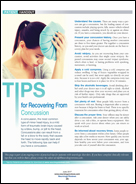
Click here to download the PDF.
Click here to download the PDF.

Are Women Athletes More Susceptible to Concussion?
BOSTON—Women athletes are 50% more likely to have a sports-related concussion than male athletes, according to research presented at the 69th Annual Meeting of the American Academy of Neurology.
“The findings from this study highlight the need for more research on the gender differences in concussion,” said James Noble, MD, Assistant Professor of Clinical Neurology at Columbia University in New York.

Little is known about the occurrence, severity, and recovery of sports-related concussion, especially among female athletes, since previous studies typically focused on male athletes. Gender-balanced studies have been limited by small sample size, incomplete or variable follow-up, or referral bias to tertiary concussion care centers. As a result, Dr. Noble and colleagues sought to determine gender differences in the incidence, symptomatology, neuropsychologic testing, and return-to-play length of sports-related concussion in collegiate varsity athletes.
For the study, Dr. Noble and colleagues followed 1,203 athletes at Columbia University from 2000 to 2014. In all, 822 of the participants were men, and 381 participants were women. All participants played sports such as soccer, basketball, and football.
Researchers assessed participants’ thinking skills and processing speed before and after a concussion. In addition, investigators tracked symptoms and when participants returned to play after a concussion.
A total of 228 athletes had at least one concussion, including 23% of the women (n = 88) and 17% of the men (n = 140). In addition, women who played soccer and basketball were more likely to have a concussion than their male counterparts. Finally, athletes who had had a previous concussion were three times more likely to have another concussion, compared with athletes who had never had a concussion.
The investigators also noted that women recovered from concussion about as quickly as men. Both men and women had a median return-to-play time of 10 days. Concussion symptoms were similar for men and women, although amnesia occurred more frequently in men (44% vs 31%), and insomnia occurred more frequently in women (42% vs 29%).
BOSTON—Women athletes are 50% more likely to have a sports-related concussion than male athletes, according to research presented at the 69th Annual Meeting of the American Academy of Neurology.
“The findings from this study highlight the need for more research on the gender differences in concussion,” said James Noble, MD, Assistant Professor of Clinical Neurology at Columbia University in New York.
Little is known about the occurrence, severity, and recovery of sports-related concussion, especially among female athletes, since previous studies typically focused on male athletes. Gender-balanced studies have been limited by small sample size, incomplete or variable follow-up, or referral bias to tertiary concussion care centers. As a result, Dr. Noble and colleagues sought to determine gender differences in the incidence, symptomatology, neuropsychologic testing, and return-to-play length of sports-related concussion in collegiate varsity athletes.
For the study, Dr. Noble and colleagues followed 1,203 athletes at Columbia University from 2000 to 2014. In all, 822 of the participants were men, and 381 participants were women. All participants played sports such as soccer, basketball, and football.
Researchers assessed participants’ thinking skills and processing speed before and after a concussion. In addition, investigators tracked symptoms and when participants returned to play after a concussion.
A total of 228 athletes had at least one concussion, including 23% of the women (n = 88) and 17% of the men (n = 140). In addition, women who played soccer and basketball were more likely to have a concussion than their male counterparts. Finally, athletes who had had a previous concussion were three times more likely to have another concussion, compared with athletes who had never had a concussion.
The investigators also noted that women recovered from concussion about as quickly as men. Both men and women had a median return-to-play time of 10 days. Concussion symptoms were similar for men and women, although amnesia occurred more frequently in men (44% vs 31%), and insomnia occurred more frequently in women (42% vs 29%).
BOSTON—Women athletes are 50% more likely to have a sports-related concussion than male athletes, according to research presented at the 69th Annual Meeting of the American Academy of Neurology.
“The findings from this study highlight the need for more research on the gender differences in concussion,” said James Noble, MD, Assistant Professor of Clinical Neurology at Columbia University in New York.
Little is known about the occurrence, severity, and recovery of sports-related concussion, especially among female athletes, since previous studies typically focused on male athletes. Gender-balanced studies have been limited by small sample size, incomplete or variable follow-up, or referral bias to tertiary concussion care centers. As a result, Dr. Noble and colleagues sought to determine gender differences in the incidence, symptomatology, neuropsychologic testing, and return-to-play length of sports-related concussion in collegiate varsity athletes.
For the study, Dr. Noble and colleagues followed 1,203 athletes at Columbia University from 2000 to 2014. In all, 822 of the participants were men, and 381 participants were women. All participants played sports such as soccer, basketball, and football.
Researchers assessed participants’ thinking skills and processing speed before and after a concussion. In addition, investigators tracked symptoms and when participants returned to play after a concussion.
A total of 228 athletes had at least one concussion, including 23% of the women (n = 88) and 17% of the men (n = 140). In addition, women who played soccer and basketball were more likely to have a concussion than their male counterparts. Finally, athletes who had had a previous concussion were three times more likely to have another concussion, compared with athletes who had never had a concussion.
The investigators also noted that women recovered from concussion about as quickly as men. Both men and women had a median return-to-play time of 10 days. Concussion symptoms were similar for men and women, although amnesia occurred more frequently in men (44% vs 31%), and insomnia occurred more frequently in women (42% vs 29%).
How Can Neurologists Diagnose Traumatic Encephalopathy Syndrome?
BOSTON—Proposed diagnostic criteria for probable or possible chronic traumatic encephalopathy (CTE), a progressive neurodegenerative disease associated with repetitive brain trauma, include a history of head impacts and various core clinical and supportive features.

The preliminary criteria, which were presented by Andrew Budson, MD, Professor of Neurology at Boston University School of Medicine, at the 69th Annual Meeting of the American Academy of Neurology, primarily were designed for research purposes, but can serve as a guide for neurologists for the diagnosis of traumatic encephalopathy syndrome. CTE is a neuropathologic diagnosis, whereas traumatic encephalopathy syndrome is a clinical diagnosis. In addition to presenting the general criteria, Dr. Budson shared diagnostic subtypes, potential biomarkers, and treatment options.
General Criteria
There are five general criteria that patients must meet to receive a diagnosis of traumatic encephalopathy syndrome, said Dr. Budson. First, there must be a history of impacts to the head based on types of injuries (eg, mild or severe traumatic brain injury, concussions, or subconcussive trauma) and sources of exposure, such as military service or involvement in contact sports for a minimum of six years, including at least two years at the college level or higher.
Second, patients must not have another neurologic disorder that likely accounts for the clinical features. Third, clinical features must be present for at least 12 months. The fourth requirement is that at least one core clinical feature (ie, cognitive, behavioral, or mood features) must be present and considered a change from baseline. Finally, at least two of nine supportive features must be present.
Core Clinical and Supportive Features
Of the core clinical features, difficulties in cognition must be reported by the patient, an informant, or a clinician and substantiated by standardized tests. Core behavioral clinical features include emotionally explosive behavior or physical and verbal abuse. Core mood clinical features include feeling overly sad, depressed, or hopeless.
In addition to core clinical features, two of the following supportive features must be present: impulsivity, anxiety, apathy, paranoia, suicidality, headache, motor signs (eg, dysarthria, dysgraphia, or other features of parkinsonism), documented decline for at least a year, or delayed onset of clinical features after a significant head impact exposure (usually at least two years).
Syndrome Subtypes
Patients may have one of four possible traumatic encephalopathy syndrome diagnostic subtypes. A behavioral/mood variant is more common among younger patients, whereas a cognitive variant is more common in older populations, said Dr. Budson. Patients also may have a mixed variant or dementia. Patients with the dementia subtype must have a progressive course of cognitive core clinical features, with or without behavior or mood features. In addition, patients with dementia must have cognitive impairment that interferes with their ability to function independently during normal daily activities.
Biomarkers and Treatment
Cavum septum pellucidum, cavum vergae, or fenestrations on neuroimaging are potential CTE biomarkers, said Dr. Budson. Normal beta amyloid CSF levels, elevated CSF p-tau/tau ratio, negative amyloid imaging, as well as cortical atrophy beyond that expected for age could also be signs of CTE. Potential experimental biomarkers include positive tau imaging and cortical thinning based on MRI.
Once physicians have made a diagnosis of probable or possible CTE, there are several treatments that may benefit patients, although no medications are approved for the treatment of CTE. Cholinesterase inhibitors may help to treat memory impairment, said Dr. Budson. For patients with depression and anxiety, selective serotonin reuptake inhibitors may be helpful. For patients with violent or explosive behavior, atypical neuroleptics may be efficacious. Memantine may benefit patients with moderate or severe dementia. Finally, to manage agitation, a combination of dextromethorphan and quinidine may be a treatment option.
—Erica Tricarico
Suggested Reading
Montenigro PH, Baugh CM, Daneshvar DH, et al. Clinical subtypes of chronic traumatic encephalopathy: literature review and proposed research diagnostic criteria for traumatic encephalopathy syndrome. Alzheimers Res Ther. 2014;6(5):68.
BOSTON—Proposed diagnostic criteria for probable or possible chronic traumatic encephalopathy (CTE), a progressive neurodegenerative disease associated with repetitive brain trauma, include a history of head impacts and various core clinical and supportive features.
The preliminary criteria, which were presented by Andrew Budson, MD, Professor of Neurology at Boston University School of Medicine, at the 69th Annual Meeting of the American Academy of Neurology, primarily were designed for research purposes, but can serve as a guide for neurologists for the diagnosis of traumatic encephalopathy syndrome. CTE is a neuropathologic diagnosis, whereas traumatic encephalopathy syndrome is a clinical diagnosis. In addition to presenting the general criteria, Dr. Budson shared diagnostic subtypes, potential biomarkers, and treatment options.
General Criteria
There are five general criteria that patients must meet to receive a diagnosis of traumatic encephalopathy syndrome, said Dr. Budson. First, there must be a history of impacts to the head based on types of injuries (eg, mild or severe traumatic brain injury, concussions, or subconcussive trauma) and sources of exposure, such as military service or involvement in contact sports for a minimum of six years, including at least two years at the college level or higher.
Second, patients must not have another neurologic disorder that likely accounts for the clinical features. Third, clinical features must be present for at least 12 months. The fourth requirement is that at least one core clinical feature (ie, cognitive, behavioral, or mood features) must be present and considered a change from baseline. Finally, at least two of nine supportive features must be present.
Core Clinical and Supportive Features
Of the core clinical features, difficulties in cognition must be reported by the patient, an informant, or a clinician and substantiated by standardized tests. Core behavioral clinical features include emotionally explosive behavior or physical and verbal abuse. Core mood clinical features include feeling overly sad, depressed, or hopeless.
In addition to core clinical features, two of the following supportive features must be present: impulsivity, anxiety, apathy, paranoia, suicidality, headache, motor signs (eg, dysarthria, dysgraphia, or other features of parkinsonism), documented decline for at least a year, or delayed onset of clinical features after a significant head impact exposure (usually at least two years).
Syndrome Subtypes
Patients may have one of four possible traumatic encephalopathy syndrome diagnostic subtypes. A behavioral/mood variant is more common among younger patients, whereas a cognitive variant is more common in older populations, said Dr. Budson. Patients also may have a mixed variant or dementia. Patients with the dementia subtype must have a progressive course of cognitive core clinical features, with or without behavior or mood features. In addition, patients with dementia must have cognitive impairment that interferes with their ability to function independently during normal daily activities.
Biomarkers and Treatment
Cavum septum pellucidum, cavum vergae, or fenestrations on neuroimaging are potential CTE biomarkers, said Dr. Budson. Normal beta amyloid CSF levels, elevated CSF p-tau/tau ratio, negative amyloid imaging, as well as cortical atrophy beyond that expected for age could also be signs of CTE. Potential experimental biomarkers include positive tau imaging and cortical thinning based on MRI.
Once physicians have made a diagnosis of probable or possible CTE, there are several treatments that may benefit patients, although no medications are approved for the treatment of CTE. Cholinesterase inhibitors may help to treat memory impairment, said Dr. Budson. For patients with depression and anxiety, selective serotonin reuptake inhibitors may be helpful. For patients with violent or explosive behavior, atypical neuroleptics may be efficacious. Memantine may benefit patients with moderate or severe dementia. Finally, to manage agitation, a combination of dextromethorphan and quinidine may be a treatment option.
—Erica Tricarico
Suggested Reading
Montenigro PH, Baugh CM, Daneshvar DH, et al. Clinical subtypes of chronic traumatic encephalopathy: literature review and proposed research diagnostic criteria for traumatic encephalopathy syndrome. Alzheimers Res Ther. 2014;6(5):68.
BOSTON—Proposed diagnostic criteria for probable or possible chronic traumatic encephalopathy (CTE), a progressive neurodegenerative disease associated with repetitive brain trauma, include a history of head impacts and various core clinical and supportive features.
The preliminary criteria, which were presented by Andrew Budson, MD, Professor of Neurology at Boston University School of Medicine, at the 69th Annual Meeting of the American Academy of Neurology, primarily were designed for research purposes, but can serve as a guide for neurologists for the diagnosis of traumatic encephalopathy syndrome. CTE is a neuropathologic diagnosis, whereas traumatic encephalopathy syndrome is a clinical diagnosis. In addition to presenting the general criteria, Dr. Budson shared diagnostic subtypes, potential biomarkers, and treatment options.
General Criteria
There are five general criteria that patients must meet to receive a diagnosis of traumatic encephalopathy syndrome, said Dr. Budson. First, there must be a history of impacts to the head based on types of injuries (eg, mild or severe traumatic brain injury, concussions, or subconcussive trauma) and sources of exposure, such as military service or involvement in contact sports for a minimum of six years, including at least two years at the college level or higher.
Second, patients must not have another neurologic disorder that likely accounts for the clinical features. Third, clinical features must be present for at least 12 months. The fourth requirement is that at least one core clinical feature (ie, cognitive, behavioral, or mood features) must be present and considered a change from baseline. Finally, at least two of nine supportive features must be present.
Core Clinical and Supportive Features
Of the core clinical features, difficulties in cognition must be reported by the patient, an informant, or a clinician and substantiated by standardized tests. Core behavioral clinical features include emotionally explosive behavior or physical and verbal abuse. Core mood clinical features include feeling overly sad, depressed, or hopeless.
In addition to core clinical features, two of the following supportive features must be present: impulsivity, anxiety, apathy, paranoia, suicidality, headache, motor signs (eg, dysarthria, dysgraphia, or other features of parkinsonism), documented decline for at least a year, or delayed onset of clinical features after a significant head impact exposure (usually at least two years).
Syndrome Subtypes
Patients may have one of four possible traumatic encephalopathy syndrome diagnostic subtypes. A behavioral/mood variant is more common among younger patients, whereas a cognitive variant is more common in older populations, said Dr. Budson. Patients also may have a mixed variant or dementia. Patients with the dementia subtype must have a progressive course of cognitive core clinical features, with or without behavior or mood features. In addition, patients with dementia must have cognitive impairment that interferes with their ability to function independently during normal daily activities.
Biomarkers and Treatment
Cavum septum pellucidum, cavum vergae, or fenestrations on neuroimaging are potential CTE biomarkers, said Dr. Budson. Normal beta amyloid CSF levels, elevated CSF p-tau/tau ratio, negative amyloid imaging, as well as cortical atrophy beyond that expected for age could also be signs of CTE. Potential experimental biomarkers include positive tau imaging and cortical thinning based on MRI.
Once physicians have made a diagnosis of probable or possible CTE, there are several treatments that may benefit patients, although no medications are approved for the treatment of CTE. Cholinesterase inhibitors may help to treat memory impairment, said Dr. Budson. For patients with depression and anxiety, selective serotonin reuptake inhibitors may be helpful. For patients with violent or explosive behavior, atypical neuroleptics may be efficacious. Memantine may benefit patients with moderate or severe dementia. Finally, to manage agitation, a combination of dextromethorphan and quinidine may be a treatment option.
—Erica Tricarico
Suggested Reading
Montenigro PH, Baugh CM, Daneshvar DH, et al. Clinical subtypes of chronic traumatic encephalopathy: literature review and proposed research diagnostic criteria for traumatic encephalopathy syndrome. Alzheimers Res Ther. 2014;6(5):68.
