User login
FDA approves CML drug for home administration

The US Food and Drug Administration (FDA) has expanded the approval of omacetaxine mepesuccinate (Synribo) to include home administration.
The drug is already FDA-approved to treat adults with chronic or accelerated phase chronic myeloid leukemia (CML) who do not respond to or cannot tolerate 2 or more tyrosine kinase inhibitors.
The new approval allows CML patients to self-administer subcutaneous injections of omacetaxine mepesuccinate at home.
“It had been necessary for adults living with chronic or accelerated phase CML who are prescribed Synribo to travel to their doctor’s office twice a day for 2 weeks, which can be extremely burdensome and inconvenient to both patients and their caregivers,” said Meir Wetzler, MD, FACP, Chief of the Leukemia Section at Roswell Park Cancer Institute in Buffalo, New York.
“Now, physicians can decide if their patients are candidates for self-administration and, if so, provide their patients with guidance on how to properly administer reconstituted Synribo in the home.”
The drug’s maker, Teva Pharmaceutical Industries, Ltd., is working to finalize a pharmacy support program that will help facilitate successful home administration of omacetaxine mepesuccinate. The program is expected to “go live” this month or next.
About omacetaxine mepesuccinate
Omacetaxine mepesuccinate is a protein synthesis inhibitor. Although the drug’s mechanism of action is not fully understood, it is known to prevent the production of Bcr-Abl and Mcl-1, which help drive CML.
In October 2012, the FDA granted omacetaxine mepesuccinate accelerated approval for the treatment of adult patients with chronic or accelerated phase CML with resistance and/or intolerance to 2 or more tyrosine kinase inhibitors. Omacetaxine mepesuccinate gained full FDA approval in February.
The drug has been associated with severe and fatal myelosuppression, including thrombocytopenia, neutropenia, and anemia in some patients. So healthcare professionals should monitor patients’ complete blood counts weekly during induction and initial maintenance cycles and every 2 weeks during later maintenance cycles, as clinically indicated.
Omacetaxine mepesuccinate has been known to cause severe thrombocytopenia, which increases the risk of hemorrhage. Fatalities from cerebral hemorrhage have occurred. And severe, non-fatal gastrointestinal hemorrhages have occurred.
So healthcare professionals should monitor platelet counts as part of the complete blood count as recommended. Patients should not receive anticoagulants, aspirin, or non-steroidal anti-inflammatory drugs when their platelet counts are <50,000/μL, as these drugs may increase the risk of bleeding.
Omacetaxine mepesuccinate can induce glucose intolerance as well. So healthcare professionals should monitor blood glucose levels frequently, especially in patients with diabetes or risk factors for diabetes. Patients with poorly controlled diabetes mellitus should not receive omacetaxine mepesuccinate until good glycemic control has been established.
Omacetaxine mepesuccinate can cause fetal harm when administered to a pregnant woman. So women should be advised to avoid becoming pregnant while using the drug.
For more details on omacetaxine mepesuccinate, see the full prescribing information. 
The US Food and Drug Administration (FDA) has expanded the approval of omacetaxine mepesuccinate (Synribo) to include home administration.
The drug is already FDA-approved to treat adults with chronic or accelerated phase chronic myeloid leukemia (CML) who do not respond to or cannot tolerate 2 or more tyrosine kinase inhibitors.
The new approval allows CML patients to self-administer subcutaneous injections of omacetaxine mepesuccinate at home.
“It had been necessary for adults living with chronic or accelerated phase CML who are prescribed Synribo to travel to their doctor’s office twice a day for 2 weeks, which can be extremely burdensome and inconvenient to both patients and their caregivers,” said Meir Wetzler, MD, FACP, Chief of the Leukemia Section at Roswell Park Cancer Institute in Buffalo, New York.
“Now, physicians can decide if their patients are candidates for self-administration and, if so, provide their patients with guidance on how to properly administer reconstituted Synribo in the home.”
The drug’s maker, Teva Pharmaceutical Industries, Ltd., is working to finalize a pharmacy support program that will help facilitate successful home administration of omacetaxine mepesuccinate. The program is expected to “go live” this month or next.
About omacetaxine mepesuccinate
Omacetaxine mepesuccinate is a protein synthesis inhibitor. Although the drug’s mechanism of action is not fully understood, it is known to prevent the production of Bcr-Abl and Mcl-1, which help drive CML.
In October 2012, the FDA granted omacetaxine mepesuccinate accelerated approval for the treatment of adult patients with chronic or accelerated phase CML with resistance and/or intolerance to 2 or more tyrosine kinase inhibitors. Omacetaxine mepesuccinate gained full FDA approval in February.
The drug has been associated with severe and fatal myelosuppression, including thrombocytopenia, neutropenia, and anemia in some patients. So healthcare professionals should monitor patients’ complete blood counts weekly during induction and initial maintenance cycles and every 2 weeks during later maintenance cycles, as clinically indicated.
Omacetaxine mepesuccinate has been known to cause severe thrombocytopenia, which increases the risk of hemorrhage. Fatalities from cerebral hemorrhage have occurred. And severe, non-fatal gastrointestinal hemorrhages have occurred.
So healthcare professionals should monitor platelet counts as part of the complete blood count as recommended. Patients should not receive anticoagulants, aspirin, or non-steroidal anti-inflammatory drugs when their platelet counts are <50,000/μL, as these drugs may increase the risk of bleeding.
Omacetaxine mepesuccinate can induce glucose intolerance as well. So healthcare professionals should monitor blood glucose levels frequently, especially in patients with diabetes or risk factors for diabetes. Patients with poorly controlled diabetes mellitus should not receive omacetaxine mepesuccinate until good glycemic control has been established.
Omacetaxine mepesuccinate can cause fetal harm when administered to a pregnant woman. So women should be advised to avoid becoming pregnant while using the drug.
For more details on omacetaxine mepesuccinate, see the full prescribing information.
The US Food and Drug Administration (FDA) has expanded the approval of omacetaxine mepesuccinate (Synribo) to include home administration.
The drug is already FDA-approved to treat adults with chronic or accelerated phase chronic myeloid leukemia (CML) who do not respond to or cannot tolerate 2 or more tyrosine kinase inhibitors.
The new approval allows CML patients to self-administer subcutaneous injections of omacetaxine mepesuccinate at home.
“It had been necessary for adults living with chronic or accelerated phase CML who are prescribed Synribo to travel to their doctor’s office twice a day for 2 weeks, which can be extremely burdensome and inconvenient to both patients and their caregivers,” said Meir Wetzler, MD, FACP, Chief of the Leukemia Section at Roswell Park Cancer Institute in Buffalo, New York.
“Now, physicians can decide if their patients are candidates for self-administration and, if so, provide their patients with guidance on how to properly administer reconstituted Synribo in the home.”
The drug’s maker, Teva Pharmaceutical Industries, Ltd., is working to finalize a pharmacy support program that will help facilitate successful home administration of omacetaxine mepesuccinate. The program is expected to “go live” this month or next.
About omacetaxine mepesuccinate
Omacetaxine mepesuccinate is a protein synthesis inhibitor. Although the drug’s mechanism of action is not fully understood, it is known to prevent the production of Bcr-Abl and Mcl-1, which help drive CML.
In October 2012, the FDA granted omacetaxine mepesuccinate accelerated approval for the treatment of adult patients with chronic or accelerated phase CML with resistance and/or intolerance to 2 or more tyrosine kinase inhibitors. Omacetaxine mepesuccinate gained full FDA approval in February.
The drug has been associated with severe and fatal myelosuppression, including thrombocytopenia, neutropenia, and anemia in some patients. So healthcare professionals should monitor patients’ complete blood counts weekly during induction and initial maintenance cycles and every 2 weeks during later maintenance cycles, as clinically indicated.
Omacetaxine mepesuccinate has been known to cause severe thrombocytopenia, which increases the risk of hemorrhage. Fatalities from cerebral hemorrhage have occurred. And severe, non-fatal gastrointestinal hemorrhages have occurred.
So healthcare professionals should monitor platelet counts as part of the complete blood count as recommended. Patients should not receive anticoagulants, aspirin, or non-steroidal anti-inflammatory drugs when their platelet counts are <50,000/μL, as these drugs may increase the risk of bleeding.
Omacetaxine mepesuccinate can induce glucose intolerance as well. So healthcare professionals should monitor blood glucose levels frequently, especially in patients with diabetes or risk factors for diabetes. Patients with poorly controlled diabetes mellitus should not receive omacetaxine mepesuccinate until good glycemic control has been established.
Omacetaxine mepesuccinate can cause fetal harm when administered to a pregnant woman. So women should be advised to avoid becoming pregnant while using the drug.
For more details on omacetaxine mepesuccinate, see the full prescribing information.
Hospira announces device correction for infusion pump docking station

Credit: CDC
Hospira, Inc., has announced a medical device correction for the GemStar Docking Station (list number 13075), used in conjunction with the GemStar infusion pump.
The correction follows customer reports of 2 malfunctions that may occur with the docking station.
The company is not recalling the product but is notifying US customers of the potential malfunctions and providing instructions for overriding these errors.
The errors could potentially cause delays or interruptions in therapy. And this might result in serious adverse events or death, but there have been no such events reported to date.
Potential malfunctions
The GemStar Docking Station is an accessory to the GemStar infusion pump (sold separately) and provides an alternate power source to the GemStar pump.
When the docking station is used in conjunction with a GemStar Phase 3 pump (List 13000, 13100 or 13150), there is a risk that the GemStar Phase 3 pump may fail to power up while connected to the docking station.
When a GemStar Phase 3 (List 13000, 13100 or 13150) or GemStar Phase 4 pump (List 13086, 13087 or 13088) is used in conjunction with both a docking station and an external battery pack accessory (List 13073), the GemStar pump may display error code 11/003 and give an audible alarm, indicating excessive input voltage from the external sources.
If the GemStar pump detects what is perceived to be more than 3.6 volts, as measured on the external voltage input, the pump will stop the infusion. This will trigger an audible alarm, and the device will display alarm code 11/003.
If a GemStar fails to power up or the 11/003 error code stops an infusion, a patient’s therapy might be delayed or interrupted. This could result in significant injury or death, although there have been no reports of death or serious injury associated with these malfunctions to date.
The products impacted by these issues have been in distribution since February 2002.
Responding to/preventing malfunctions
Hospira is advising that healthcare professionals weigh the risk/benefit to patients associated with the use of the docking station when administering critical therapies. Clinicians should consider the use of an alternative pump, particularly in patients for whom a delay or interruption of therapy could result in serious injury or death.
However, the company says there is no need to return the GemStar Docking Station at this time. Instead, Hospira recommends that users take the following actions.
To avoid a failure to power up, turn on the pump before connecting it with the docking station. This will prevent the failure to power up.
To mitigate the potential for an 11/003 error code, remove the external battery pack accessory (List 13073) from the docking station and pump prior to installing the pump in the docking station.
In addition, clinicians should stop using a docking station in conjunction with an external battery pack accessory (List 13073). Contact Hospira to discuss an appropriate alternative option.
Docking station users who experience a failure to power up or an 11/003 error code should report the issue to Hospira by calling 1-800-441-4100 (M-F, 8am-5pm CT) or emailing ProductComplaintsPP@hospira.com.
For additional assistance or to obtain a copy of the Urgent Medical Device Correction letter and/or a reply form, contact Stericycle at 1-866-792-5451 (M-F, 8am-5pm ET).
On May 1, 2013, Hospira announced that it would begin the process of retiring the GemStar family of infusion devices in accordance with the company’s global device strategy. As of July 31, 2015, Hospira will consider the products within the GemStar Infusion System family retired and will no longer support them.
Adverse reactions or quality problems related to the GemStar Docking Station can be reported to the US Food and Drug Administration’s MedWatch Program.
Credit: CDC
Hospira, Inc., has announced a medical device correction for the GemStar Docking Station (list number 13075), used in conjunction with the GemStar infusion pump.
The correction follows customer reports of 2 malfunctions that may occur with the docking station.
The company is not recalling the product but is notifying US customers of the potential malfunctions and providing instructions for overriding these errors.
The errors could potentially cause delays or interruptions in therapy. And this might result in serious adverse events or death, but there have been no such events reported to date.
Potential malfunctions
The GemStar Docking Station is an accessory to the GemStar infusion pump (sold separately) and provides an alternate power source to the GemStar pump.
When the docking station is used in conjunction with a GemStar Phase 3 pump (List 13000, 13100 or 13150), there is a risk that the GemStar Phase 3 pump may fail to power up while connected to the docking station.
When a GemStar Phase 3 (List 13000, 13100 or 13150) or GemStar Phase 4 pump (List 13086, 13087 or 13088) is used in conjunction with both a docking station and an external battery pack accessory (List 13073), the GemStar pump may display error code 11/003 and give an audible alarm, indicating excessive input voltage from the external sources.
If the GemStar pump detects what is perceived to be more than 3.6 volts, as measured on the external voltage input, the pump will stop the infusion. This will trigger an audible alarm, and the device will display alarm code 11/003.
If a GemStar fails to power up or the 11/003 error code stops an infusion, a patient’s therapy might be delayed or interrupted. This could result in significant injury or death, although there have been no reports of death or serious injury associated with these malfunctions to date.
The products impacted by these issues have been in distribution since February 2002.
Responding to/preventing malfunctions
Hospira is advising that healthcare professionals weigh the risk/benefit to patients associated with the use of the docking station when administering critical therapies. Clinicians should consider the use of an alternative pump, particularly in patients for whom a delay or interruption of therapy could result in serious injury or death.
However, the company says there is no need to return the GemStar Docking Station at this time. Instead, Hospira recommends that users take the following actions.
To avoid a failure to power up, turn on the pump before connecting it with the docking station. This will prevent the failure to power up.
To mitigate the potential for an 11/003 error code, remove the external battery pack accessory (List 13073) from the docking station and pump prior to installing the pump in the docking station.
In addition, clinicians should stop using a docking station in conjunction with an external battery pack accessory (List 13073). Contact Hospira to discuss an appropriate alternative option.
Docking station users who experience a failure to power up or an 11/003 error code should report the issue to Hospira by calling 1-800-441-4100 (M-F, 8am-5pm CT) or emailing ProductComplaintsPP@hospira.com.
For additional assistance or to obtain a copy of the Urgent Medical Device Correction letter and/or a reply form, contact Stericycle at 1-866-792-5451 (M-F, 8am-5pm ET).
On May 1, 2013, Hospira announced that it would begin the process of retiring the GemStar family of infusion devices in accordance with the company’s global device strategy. As of July 31, 2015, Hospira will consider the products within the GemStar Infusion System family retired and will no longer support them.
Adverse reactions or quality problems related to the GemStar Docking Station can be reported to the US Food and Drug Administration’s MedWatch Program.
Credit: CDC
Hospira, Inc., has announced a medical device correction for the GemStar Docking Station (list number 13075), used in conjunction with the GemStar infusion pump.
The correction follows customer reports of 2 malfunctions that may occur with the docking station.
The company is not recalling the product but is notifying US customers of the potential malfunctions and providing instructions for overriding these errors.
The errors could potentially cause delays or interruptions in therapy. And this might result in serious adverse events or death, but there have been no such events reported to date.
Potential malfunctions
The GemStar Docking Station is an accessory to the GemStar infusion pump (sold separately) and provides an alternate power source to the GemStar pump.
When the docking station is used in conjunction with a GemStar Phase 3 pump (List 13000, 13100 or 13150), there is a risk that the GemStar Phase 3 pump may fail to power up while connected to the docking station.
When a GemStar Phase 3 (List 13000, 13100 or 13150) or GemStar Phase 4 pump (List 13086, 13087 or 13088) is used in conjunction with both a docking station and an external battery pack accessory (List 13073), the GemStar pump may display error code 11/003 and give an audible alarm, indicating excessive input voltage from the external sources.
If the GemStar pump detects what is perceived to be more than 3.6 volts, as measured on the external voltage input, the pump will stop the infusion. This will trigger an audible alarm, and the device will display alarm code 11/003.
If a GemStar fails to power up or the 11/003 error code stops an infusion, a patient’s therapy might be delayed or interrupted. This could result in significant injury or death, although there have been no reports of death or serious injury associated with these malfunctions to date.
The products impacted by these issues have been in distribution since February 2002.
Responding to/preventing malfunctions
Hospira is advising that healthcare professionals weigh the risk/benefit to patients associated with the use of the docking station when administering critical therapies. Clinicians should consider the use of an alternative pump, particularly in patients for whom a delay or interruption of therapy could result in serious injury or death.
However, the company says there is no need to return the GemStar Docking Station at this time. Instead, Hospira recommends that users take the following actions.
To avoid a failure to power up, turn on the pump before connecting it with the docking station. This will prevent the failure to power up.
To mitigate the potential for an 11/003 error code, remove the external battery pack accessory (List 13073) from the docking station and pump prior to installing the pump in the docking station.
In addition, clinicians should stop using a docking station in conjunction with an external battery pack accessory (List 13073). Contact Hospira to discuss an appropriate alternative option.
Docking station users who experience a failure to power up or an 11/003 error code should report the issue to Hospira by calling 1-800-441-4100 (M-F, 8am-5pm CT) or emailing ProductComplaintsPP@hospira.com.
For additional assistance or to obtain a copy of the Urgent Medical Device Correction letter and/or a reply form, contact Stericycle at 1-866-792-5451 (M-F, 8am-5pm ET).
On May 1, 2013, Hospira announced that it would begin the process of retiring the GemStar family of infusion devices in accordance with the company’s global device strategy. As of July 31, 2015, Hospira will consider the products within the GemStar Infusion System family retired and will no longer support them.
Adverse reactions or quality problems related to the GemStar Docking Station can be reported to the US Food and Drug Administration’s MedWatch Program.
Baxter issues Class I recall of infusion pumps

of chemotherapy drugs
Credit: Bill Branson
Baxter Healthcare Corporation is recalling some of its infusion pumps after receiving more than 3500 reports of the pumps malfunctioning.
According to the US Food and Drug Administration (FDA), the malfunctioning pumps have resulted in 9 severe adverse events but no deaths.
This Class I recall includes Sigma Spectrum Infusion Pumps with Master Drug Library Model No. 35700BAX and 35700ABB.
The pumps were made between July 1, 2005, and January 15, 2014. They were distributed between February 20, 2013, and January 15, 2014.
The Sigma Spectrum infusion pumps are intended to deliver controlled amounts of medicines, blood, blood products, and other intravenous fluids.
The FDA said there have been more than 3500 reports of these pumps malfunctioning—specifically, reports of System Error 322 “Link Switch Error (low).” This error occurs when the pump detects that the door is open even though it is closed. A System Error 322 may lead to an interruption or delay in therapy.
When this error occurs, the Sigma Spectrum infusion pump stops the infusion, an alarm sounds, and a light flashes (a visual “322” alarm). This requires a clinician to reset the alarm, reprogram the pump, and confirm the infusion is running properly.
The use of affected pumps may cause serious adverse health consequences, including death; hence, the Class I recall.
Customers who encounter a System Error 322 should turn off the pump by pressing the ON/OFF key, then turn the pump back on by pressing the ON/OFF key to clear the alarm.
Clinicians will need to reprogram the infusion after the pump is turned back on. If the alarm cannot be cleared using these instructions, the device should be removed from use and sent to the facility’s biomedical engineering department.
If the System Error 322 reoccurs, the pump may need to be inspected and serviced by Baxter Healthcare. To contact Baxter, call 1-800-356-3454 (choose option 1) Monday through Friday, 7 am to 7 pm, Eastern Time.
Adverse reactions or quality problems related to these pumps can be reported to the FDA’s MedWatch Program.
of chemotherapy drugs
Credit: Bill Branson
Baxter Healthcare Corporation is recalling some of its infusion pumps after receiving more than 3500 reports of the pumps malfunctioning.
According to the US Food and Drug Administration (FDA), the malfunctioning pumps have resulted in 9 severe adverse events but no deaths.
This Class I recall includes Sigma Spectrum Infusion Pumps with Master Drug Library Model No. 35700BAX and 35700ABB.
The pumps were made between July 1, 2005, and January 15, 2014. They were distributed between February 20, 2013, and January 15, 2014.
The Sigma Spectrum infusion pumps are intended to deliver controlled amounts of medicines, blood, blood products, and other intravenous fluids.
The FDA said there have been more than 3500 reports of these pumps malfunctioning—specifically, reports of System Error 322 “Link Switch Error (low).” This error occurs when the pump detects that the door is open even though it is closed. A System Error 322 may lead to an interruption or delay in therapy.
When this error occurs, the Sigma Spectrum infusion pump stops the infusion, an alarm sounds, and a light flashes (a visual “322” alarm). This requires a clinician to reset the alarm, reprogram the pump, and confirm the infusion is running properly.
The use of affected pumps may cause serious adverse health consequences, including death; hence, the Class I recall.
Customers who encounter a System Error 322 should turn off the pump by pressing the ON/OFF key, then turn the pump back on by pressing the ON/OFF key to clear the alarm.
Clinicians will need to reprogram the infusion after the pump is turned back on. If the alarm cannot be cleared using these instructions, the device should be removed from use and sent to the facility’s biomedical engineering department.
If the System Error 322 reoccurs, the pump may need to be inspected and serviced by Baxter Healthcare. To contact Baxter, call 1-800-356-3454 (choose option 1) Monday through Friday, 7 am to 7 pm, Eastern Time.
Adverse reactions or quality problems related to these pumps can be reported to the FDA’s MedWatch Program.
of chemotherapy drugs
Credit: Bill Branson
Baxter Healthcare Corporation is recalling some of its infusion pumps after receiving more than 3500 reports of the pumps malfunctioning.
According to the US Food and Drug Administration (FDA), the malfunctioning pumps have resulted in 9 severe adverse events but no deaths.
This Class I recall includes Sigma Spectrum Infusion Pumps with Master Drug Library Model No. 35700BAX and 35700ABB.
The pumps were made between July 1, 2005, and January 15, 2014. They were distributed between February 20, 2013, and January 15, 2014.
The Sigma Spectrum infusion pumps are intended to deliver controlled amounts of medicines, blood, blood products, and other intravenous fluids.
The FDA said there have been more than 3500 reports of these pumps malfunctioning—specifically, reports of System Error 322 “Link Switch Error (low).” This error occurs when the pump detects that the door is open even though it is closed. A System Error 322 may lead to an interruption or delay in therapy.
When this error occurs, the Sigma Spectrum infusion pump stops the infusion, an alarm sounds, and a light flashes (a visual “322” alarm). This requires a clinician to reset the alarm, reprogram the pump, and confirm the infusion is running properly.
The use of affected pumps may cause serious adverse health consequences, including death; hence, the Class I recall.
Customers who encounter a System Error 322 should turn off the pump by pressing the ON/OFF key, then turn the pump back on by pressing the ON/OFF key to clear the alarm.
Clinicians will need to reprogram the infusion after the pump is turned back on. If the alarm cannot be cleared using these instructions, the device should be removed from use and sent to the facility’s biomedical engineering department.
If the System Error 322 reoccurs, the pump may need to be inspected and serviced by Baxter Healthcare. To contact Baxter, call 1-800-356-3454 (choose option 1) Monday through Friday, 7 am to 7 pm, Eastern Time.
Adverse reactions or quality problems related to these pumps can be reported to the FDA’s MedWatch Program.
FDA wants more information on cangrelor

Credit: Kevin MacKenzie
The US Food and Drug Administration (FDA) has issued a Complete Response Letter to The Medicines Company regarding its new drug application for the antiplatelet agent cangrelor.
The company applied for approval of cangrelor to treat patients undergoing percutaneous coronary intervention (PCI) and those who require bridging from oral antiplatelet therapy to surgery.
The new drug application filing was based on the results of a development program that included 4 randomized trials.
These trials—BRIDGE, CHAMPION PHOENIX, CHAMPION PLATFORM, and CHAMPION PCI—included 25,567 patients with coronary artery disease.
In the Complete Response Letter, the FDA said it cannot approve cangrelor for the PCI indication without additional information.
The agency suggested The Medicines Company conduct a series of clinical data analyses of the CHAMPION PHOENIX study, review certain processes regarding data management, and provide bioequivalence information on the clopidogrel clinical supplies for the CHAMPION trials.
For the bridge indication, the FDA said a prospective, adequate, and well-controlled trial, in which outcomes such as bleeding are studied, is needed. Such a trial could provide the clinical data necessary to assess the benefit-risk relationship of cangrelor in this indication.
The FDA provided additional comments for the company to address, which could affect product labeling, but the company did not disclose them.
“We are grateful for the agency’s review, comments, and suggestions,” said Clive Meanwell, Chairman and Chief Executive Officer of The Medicines Company. “The next steps of review will focus on additional analyses in response to the FDA.”
Cangrelor is an investigational agent not approved for commercial use in any market. The product is a bioavailable, quickly reversible, intravenous antiplatelet agent. It is in development to prevent platelet activation and aggregation that leads to thrombosis in the acute care setting.
Credit: Kevin MacKenzie
The US Food and Drug Administration (FDA) has issued a Complete Response Letter to The Medicines Company regarding its new drug application for the antiplatelet agent cangrelor.
The company applied for approval of cangrelor to treat patients undergoing percutaneous coronary intervention (PCI) and those who require bridging from oral antiplatelet therapy to surgery.
The new drug application filing was based on the results of a development program that included 4 randomized trials.
These trials—BRIDGE, CHAMPION PHOENIX, CHAMPION PLATFORM, and CHAMPION PCI—included 25,567 patients with coronary artery disease.
In the Complete Response Letter, the FDA said it cannot approve cangrelor for the PCI indication without additional information.
The agency suggested The Medicines Company conduct a series of clinical data analyses of the CHAMPION PHOENIX study, review certain processes regarding data management, and provide bioequivalence information on the clopidogrel clinical supplies for the CHAMPION trials.
For the bridge indication, the FDA said a prospective, adequate, and well-controlled trial, in which outcomes such as bleeding are studied, is needed. Such a trial could provide the clinical data necessary to assess the benefit-risk relationship of cangrelor in this indication.
The FDA provided additional comments for the company to address, which could affect product labeling, but the company did not disclose them.
“We are grateful for the agency’s review, comments, and suggestions,” said Clive Meanwell, Chairman and Chief Executive Officer of The Medicines Company. “The next steps of review will focus on additional analyses in response to the FDA.”
Cangrelor is an investigational agent not approved for commercial use in any market. The product is a bioavailable, quickly reversible, intravenous antiplatelet agent. It is in development to prevent platelet activation and aggregation that leads to thrombosis in the acute care setting.
Credit: Kevin MacKenzie
The US Food and Drug Administration (FDA) has issued a Complete Response Letter to The Medicines Company regarding its new drug application for the antiplatelet agent cangrelor.
The company applied for approval of cangrelor to treat patients undergoing percutaneous coronary intervention (PCI) and those who require bridging from oral antiplatelet therapy to surgery.
The new drug application filing was based on the results of a development program that included 4 randomized trials.
These trials—BRIDGE, CHAMPION PHOENIX, CHAMPION PLATFORM, and CHAMPION PCI—included 25,567 patients with coronary artery disease.
In the Complete Response Letter, the FDA said it cannot approve cangrelor for the PCI indication without additional information.
The agency suggested The Medicines Company conduct a series of clinical data analyses of the CHAMPION PHOENIX study, review certain processes regarding data management, and provide bioequivalence information on the clopidogrel clinical supplies for the CHAMPION trials.
For the bridge indication, the FDA said a prospective, adequate, and well-controlled trial, in which outcomes such as bleeding are studied, is needed. Such a trial could provide the clinical data necessary to assess the benefit-risk relationship of cangrelor in this indication.
The FDA provided additional comments for the company to address, which could affect product labeling, but the company did not disclose them.
“We are grateful for the agency’s review, comments, and suggestions,” said Clive Meanwell, Chairman and Chief Executive Officer of The Medicines Company. “The next steps of review will focus on additional analyses in response to the FDA.”
Cangrelor is an investigational agent not approved for commercial use in any market. The product is a bioavailable, quickly reversible, intravenous antiplatelet agent. It is in development to prevent platelet activation and aggregation that leads to thrombosis in the acute care setting.
FDA allows importation of more saline
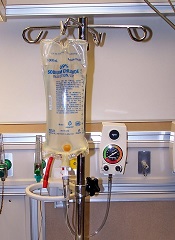
In response to the ongoing shortage of normal saline (0.9% sodium chloride injection), the US Food and Drug Administration (FDA) is allowing a company to import product manufactured in Spain.
Baxter Healthcare Corp. will be allowed to temporarily distribute sodium chloride 0.9% injection solution for intravenous infusion in VIAFLO
non-polyvinyl chloride containers, which is manufactured at the company’s Bieffe Medital, Sabinanigo, Spain facility.
This is the second time in recent months that the FDA has allowed the importation of saline. Last month, the agency announced it would allow Fresenius Kabi USA to import saline products manufactured in Norway.
As with the Norway plant, the FDA has inspected Baxter’s Spain facility to ensure it meets FDA standards.
Baxter will import sodium chloride 0.9% intravenous infusion in VIAFLO containers in the following volumes and quantities: 250 mL (30 bags per carton), 500 mL (20 bags per carton), and 1 L (10 bags per carton).
The FDA is asking that healthcare professionals contact Baxter directly to obtain the product. To place an order, contact Baxter’s Center for Service at 1-888-229-0001.
For more information on the products, see Baxter’s “Dear Healthcare Professional” letter, visit the company’s website, or contact Baxter’s Medical Information Service at 1-800-933-0303.
In addition to the imported saline, US-based manufacturers—B.Braun Medical Inc., Hospira Inc., and Baxter Healthcare Corp.—are producing and releasing normal saline. (Baxter’s saline product from Spain will be distributed in addition to Baxter’s FDA-approved version that is manufactured in the US.)
The FDA noted that, although the aforementioned shipments will help reduce current disruptions, they will not resolve the shortage of 0.9% sodium chloride injection. So the agency will continue working to alleviate the shortage.
In response to the ongoing shortage of normal saline (0.9% sodium chloride injection), the US Food and Drug Administration (FDA) is allowing a company to import product manufactured in Spain.
Baxter Healthcare Corp. will be allowed to temporarily distribute sodium chloride 0.9% injection solution for intravenous infusion in VIAFLO
non-polyvinyl chloride containers, which is manufactured at the company’s Bieffe Medital, Sabinanigo, Spain facility.
This is the second time in recent months that the FDA has allowed the importation of saline. Last month, the agency announced it would allow Fresenius Kabi USA to import saline products manufactured in Norway.
As with the Norway plant, the FDA has inspected Baxter’s Spain facility to ensure it meets FDA standards.
Baxter will import sodium chloride 0.9% intravenous infusion in VIAFLO containers in the following volumes and quantities: 250 mL (30 bags per carton), 500 mL (20 bags per carton), and 1 L (10 bags per carton).
The FDA is asking that healthcare professionals contact Baxter directly to obtain the product. To place an order, contact Baxter’s Center for Service at 1-888-229-0001.
For more information on the products, see Baxter’s “Dear Healthcare Professional” letter, visit the company’s website, or contact Baxter’s Medical Information Service at 1-800-933-0303.
In addition to the imported saline, US-based manufacturers—B.Braun Medical Inc., Hospira Inc., and Baxter Healthcare Corp.—are producing and releasing normal saline. (Baxter’s saline product from Spain will be distributed in addition to Baxter’s FDA-approved version that is manufactured in the US.)
The FDA noted that, although the aforementioned shipments will help reduce current disruptions, they will not resolve the shortage of 0.9% sodium chloride injection. So the agency will continue working to alleviate the shortage.
In response to the ongoing shortage of normal saline (0.9% sodium chloride injection), the US Food and Drug Administration (FDA) is allowing a company to import product manufactured in Spain.
Baxter Healthcare Corp. will be allowed to temporarily distribute sodium chloride 0.9% injection solution for intravenous infusion in VIAFLO
non-polyvinyl chloride containers, which is manufactured at the company’s Bieffe Medital, Sabinanigo, Spain facility.
This is the second time in recent months that the FDA has allowed the importation of saline. Last month, the agency announced it would allow Fresenius Kabi USA to import saline products manufactured in Norway.
As with the Norway plant, the FDA has inspected Baxter’s Spain facility to ensure it meets FDA standards.
Baxter will import sodium chloride 0.9% intravenous infusion in VIAFLO containers in the following volumes and quantities: 250 mL (30 bags per carton), 500 mL (20 bags per carton), and 1 L (10 bags per carton).
The FDA is asking that healthcare professionals contact Baxter directly to obtain the product. To place an order, contact Baxter’s Center for Service at 1-888-229-0001.
For more information on the products, see Baxter’s “Dear Healthcare Professional” letter, visit the company’s website, or contact Baxter’s Medical Information Service at 1-800-933-0303.
In addition to the imported saline, US-based manufacturers—B.Braun Medical Inc., Hospira Inc., and Baxter Healthcare Corp.—are producing and releasing normal saline. (Baxter’s saline product from Spain will be distributed in addition to Baxter’s FDA-approved version that is manufactured in the US.)
The FDA noted that, although the aforementioned shipments will help reduce current disruptions, they will not resolve the shortage of 0.9% sodium chloride injection. So the agency will continue working to alleviate the shortage.
FDA approves new formulation of mercaptopurine

Credit: Bill Branson
The US Food and Drug Administration (FDA) has approved an oral suspension of mercaptopurine (Purixan), a drug used in combination therapy to treat patients with acute lymphoblastic leukemia (ALL).
Mercaptopurine will now be available as a 20 mg/mL oral suspension.
The drug was originally approved as a 50 mg tablet in 1953 and, since that time, has only been commercially available in this form.
Unfortunately, a 50 mg tablet is not ideal because of the age and weight range of children with ALL.
The tablet does not allow for easy body-surface-area dosing and dose adjustments. In addition, tablets can be difficult to administer to children younger than 6 years of age.
To overcome these issues, physicians have used ad hoc local formulations of mercaptopurine compounded in pharmacies or recommended splitting tablets to provide children with the desired dose.
According to the FDA, offering mercaptopurine as a suspension will allow for more accurate delivery of the desired dose to children with a wide range of weights. And a commercially produced suspension is likely to provide a more consistent dose of 6-mercaptopurine than ad hoc compounded formulations.
The FDA’s approval of mercaptopurine as a 20 mg/mL oral suspension is based on results of a clinical pharmacology study. The goal of the study was to assess the bioequivalence of mercaptopurine from a tablet with that of the mercaptopurine oral suspension in a healthy adult population.
The starting dose of mercaptopurine in multi-agent combination chemotherapy maintenance regimens is 1.5 mg/kg to 2.5 mg/kg (50 mg/m2 to 75 mg/m2) as a single, daily dose.
After initiating mercaptopurine, continuation of appropriate dosing requires periodic monitoring of absolute neutrophil counts and platelet counts to assure sufficient drug exposure and to adjust for excessive hematologic toxicity.
Mercaptopurine is distributed by Rare Disease Therapeutics, Inc., in Nashville, Tennessee. For more details on the drug, see the prescribing information.
Credit: Bill Branson
The US Food and Drug Administration (FDA) has approved an oral suspension of mercaptopurine (Purixan), a drug used in combination therapy to treat patients with acute lymphoblastic leukemia (ALL).
Mercaptopurine will now be available as a 20 mg/mL oral suspension.
The drug was originally approved as a 50 mg tablet in 1953 and, since that time, has only been commercially available in this form.
Unfortunately, a 50 mg tablet is not ideal because of the age and weight range of children with ALL.
The tablet does not allow for easy body-surface-area dosing and dose adjustments. In addition, tablets can be difficult to administer to children younger than 6 years of age.
To overcome these issues, physicians have used ad hoc local formulations of mercaptopurine compounded in pharmacies or recommended splitting tablets to provide children with the desired dose.
According to the FDA, offering mercaptopurine as a suspension will allow for more accurate delivery of the desired dose to children with a wide range of weights. And a commercially produced suspension is likely to provide a more consistent dose of 6-mercaptopurine than ad hoc compounded formulations.
The FDA’s approval of mercaptopurine as a 20 mg/mL oral suspension is based on results of a clinical pharmacology study. The goal of the study was to assess the bioequivalence of mercaptopurine from a tablet with that of the mercaptopurine oral suspension in a healthy adult population.
The starting dose of mercaptopurine in multi-agent combination chemotherapy maintenance regimens is 1.5 mg/kg to 2.5 mg/kg (50 mg/m2 to 75 mg/m2) as a single, daily dose.
After initiating mercaptopurine, continuation of appropriate dosing requires periodic monitoring of absolute neutrophil counts and platelet counts to assure sufficient drug exposure and to adjust for excessive hematologic toxicity.
Mercaptopurine is distributed by Rare Disease Therapeutics, Inc., in Nashville, Tennessee. For more details on the drug, see the prescribing information.
Credit: Bill Branson
The US Food and Drug Administration (FDA) has approved an oral suspension of mercaptopurine (Purixan), a drug used in combination therapy to treat patients with acute lymphoblastic leukemia (ALL).
Mercaptopurine will now be available as a 20 mg/mL oral suspension.
The drug was originally approved as a 50 mg tablet in 1953 and, since that time, has only been commercially available in this form.
Unfortunately, a 50 mg tablet is not ideal because of the age and weight range of children with ALL.
The tablet does not allow for easy body-surface-area dosing and dose adjustments. In addition, tablets can be difficult to administer to children younger than 6 years of age.
To overcome these issues, physicians have used ad hoc local formulations of mercaptopurine compounded in pharmacies or recommended splitting tablets to provide children with the desired dose.
According to the FDA, offering mercaptopurine as a suspension will allow for more accurate delivery of the desired dose to children with a wide range of weights. And a commercially produced suspension is likely to provide a more consistent dose of 6-mercaptopurine than ad hoc compounded formulations.
The FDA’s approval of mercaptopurine as a 20 mg/mL oral suspension is based on results of a clinical pharmacology study. The goal of the study was to assess the bioequivalence of mercaptopurine from a tablet with that of the mercaptopurine oral suspension in a healthy adult population.
The starting dose of mercaptopurine in multi-agent combination chemotherapy maintenance regimens is 1.5 mg/kg to 2.5 mg/kg (50 mg/m2 to 75 mg/m2) as a single, daily dose.
After initiating mercaptopurine, continuation of appropriate dosing requires periodic monitoring of absolute neutrophil counts and platelet counts to assure sufficient drug exposure and to adjust for excessive hematologic toxicity.
Mercaptopurine is distributed by Rare Disease Therapeutics, Inc., in Nashville, Tennessee. For more details on the drug, see the prescribing information.
Bortezomib available for newly diagnosed MM patients

Credit: CDC
Patients with newly diagnosed multiple myeloma (MM) will now be guaranteed access to bortezomib (Velcade) through the National Health Service (NHS), according to the UK’s National Institute for Health and Care Excellence (NICE).
NICE has issued a guidance recommending bortezomib (given with dexamethasone or dexamethasone and thalidomide) as induction treatment for adults with newly diagnosed MM who are eligible for high-dose chemotherapy and stem cell transplant.
Bortezomib should be available on the NHS within 3 months.
The current standard induction therapy for MM patients in the UK is the combination of cyclophosphamide, thalidomide, and dexamethasone.
“We are pleased to recommend bortezomib as a first treatment for people with multiple myeloma before bone marrow transplant,” said Carole Longson, director of the NICE center for health technology evaluation.
“The evidence presented to our independent committee showed that having bortezomib at this stage will help more patients go on to a bone marrow transplant and, consequently, prevent the disease from progressing for longer.”
The committee concluded that, although there was uncertainty in the magnitude of overall survival gain associated with bortezomib, it was plausible that bortezomib’s impact on induction response could be associated with improved overall survival.
The cost of bortezomib is £762.38 per 3.5-mg vial. The average cost of a course of bortezomib given with dexamethasone is estimated to be £12,260.91. And the average cost of a course of bortezomib given with dexamethasone and thalidomide is estimated to be £24,840.10.
The cost of bortezomib, thalidomide, and dexamethasone compared with thalidomide and dexamethasone was likely to be below £30,000 per quality-adjusted life-year gained.
The same was true for bortezomib and dexamethasone compared with cyclophosphamide, thalidomide, and dexamethasone or with vincristine, doxorubicin, and dexamethasone. Therefore, bortezomib was considered an acceptable use of NHS resources.
NICE already recommends bortezomib monotherapy to treat progressive MM in patients at first relapse who have undergone, or are unsuitable for, stem cell transplant.
Credit: CDC
Patients with newly diagnosed multiple myeloma (MM) will now be guaranteed access to bortezomib (Velcade) through the National Health Service (NHS), according to the UK’s National Institute for Health and Care Excellence (NICE).
NICE has issued a guidance recommending bortezomib (given with dexamethasone or dexamethasone and thalidomide) as induction treatment for adults with newly diagnosed MM who are eligible for high-dose chemotherapy and stem cell transplant.
Bortezomib should be available on the NHS within 3 months.
The current standard induction therapy for MM patients in the UK is the combination of cyclophosphamide, thalidomide, and dexamethasone.
“We are pleased to recommend bortezomib as a first treatment for people with multiple myeloma before bone marrow transplant,” said Carole Longson, director of the NICE center for health technology evaluation.
“The evidence presented to our independent committee showed that having bortezomib at this stage will help more patients go on to a bone marrow transplant and, consequently, prevent the disease from progressing for longer.”
The committee concluded that, although there was uncertainty in the magnitude of overall survival gain associated with bortezomib, it was plausible that bortezomib’s impact on induction response could be associated with improved overall survival.
The cost of bortezomib is £762.38 per 3.5-mg vial. The average cost of a course of bortezomib given with dexamethasone is estimated to be £12,260.91. And the average cost of a course of bortezomib given with dexamethasone and thalidomide is estimated to be £24,840.10.
The cost of bortezomib, thalidomide, and dexamethasone compared with thalidomide and dexamethasone was likely to be below £30,000 per quality-adjusted life-year gained.
The same was true for bortezomib and dexamethasone compared with cyclophosphamide, thalidomide, and dexamethasone or with vincristine, doxorubicin, and dexamethasone. Therefore, bortezomib was considered an acceptable use of NHS resources.
NICE already recommends bortezomib monotherapy to treat progressive MM in patients at first relapse who have undergone, or are unsuitable for, stem cell transplant.
Credit: CDC
Patients with newly diagnosed multiple myeloma (MM) will now be guaranteed access to bortezomib (Velcade) through the National Health Service (NHS), according to the UK’s National Institute for Health and Care Excellence (NICE).
NICE has issued a guidance recommending bortezomib (given with dexamethasone or dexamethasone and thalidomide) as induction treatment for adults with newly diagnosed MM who are eligible for high-dose chemotherapy and stem cell transplant.
Bortezomib should be available on the NHS within 3 months.
The current standard induction therapy for MM patients in the UK is the combination of cyclophosphamide, thalidomide, and dexamethasone.
“We are pleased to recommend bortezomib as a first treatment for people with multiple myeloma before bone marrow transplant,” said Carole Longson, director of the NICE center for health technology evaluation.
“The evidence presented to our independent committee showed that having bortezomib at this stage will help more patients go on to a bone marrow transplant and, consequently, prevent the disease from progressing for longer.”
The committee concluded that, although there was uncertainty in the magnitude of overall survival gain associated with bortezomib, it was plausible that bortezomib’s impact on induction response could be associated with improved overall survival.
The cost of bortezomib is £762.38 per 3.5-mg vial. The average cost of a course of bortezomib given with dexamethasone is estimated to be £12,260.91. And the average cost of a course of bortezomib given with dexamethasone and thalidomide is estimated to be £24,840.10.
The cost of bortezomib, thalidomide, and dexamethasone compared with thalidomide and dexamethasone was likely to be below £30,000 per quality-adjusted life-year gained.
The same was true for bortezomib and dexamethasone compared with cyclophosphamide, thalidomide, and dexamethasone or with vincristine, doxorubicin, and dexamethasone. Therefore, bortezomib was considered an acceptable use of NHS resources.
NICE already recommends bortezomib monotherapy to treat progressive MM in patients at first relapse who have undergone, or are unsuitable for, stem cell transplant.
FDA approves first drug for multicentric Castleman’s disease
Credit: Janssen Biotech, Inc.
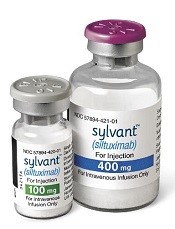
The US Food and Drug Administration (FDA) has authorized marketing of siltuximab (Sylvant), the first drug approved to treat patients with multicentric Castleman’s disease (MCD) who are negative for human immunodeficiency virus (HIV) and human herpes virus 8 (HHV-8).
Siltuximab is a chimeric monoclonal antibody that binds to interleukin-6 (IL-6). Dysregulated overproduction of IL-6 has been implicated in the pathogenesis of MCD.
Siltuximab has not been studied in MCD patients who are HIV- or HHV-8 positive because the drug did not bind to virally produced IL-6 in a nonclinical study.
MCD is a rare blood disorder in which lymphocytes are overproduced, leading to enlarged lymph nodes. MCD can also affect lymphoid tissue of internal organs, causing enlargement of the liver, spleen, or other organs.
Patients with MCD have a high risk of death. Infections, multisystem organ failure, and malignancies such as lymphoma are common causes of death in patients with MCD.
“There has been a serious need for treatment options for patients with MCD,” said Frits van Rhee, MD, PhD, a professor at the University of Arkansas for Medical Sciences and lead investigator of the MCD2001 study.
“MCD is a complex disease, and, up until this point, physicians have tried to reduce lymph node masses and put the disease in remission through a combination of treatments, but MCD often returns. [The approval of siltuximab] gives physicians a long-awaited treatment option for [patients] suffering with this chronic, serious, and debilitating disease.”
The FDA reviewed siltuximab under its priority review program, which provides an expedited review for drugs that demonstrate the potential to be a significant improvement in safety or effectiveness in the treatment of a serious condition. The drug was also granted orphan designation, as it is intended to treat a rare disease.
MCD2001: A phase 2 study of siltuximab
The FDA approval of siltuximab is based on results of the phase 2 MCD2001 trial. This randomized, double-blind, placebo-controlled study enrolled 79 patients with symptomatic MCD that was HIV- and HHV-8 negative.
Fifty-three patients were randomized to receive siltuximab at a dose of 11 mg/kg, plus best supportive care. The remaining 26 patients were randomized to receive placebo plus best supportive care.
The researchers defined a durable response as a tumor and symptomatic response that persisted for a minimum of 18 weeks without treatment failure. Thirty-four percent of patients in the siltuximab arm achieved this endpoint, but none of the patients in the placebo arm did (P=0.0012).
On the other hand, 4% of patients in the placebo arm experienced a tumor response, as did 38% of patients in the siltuximab arm (P<0.05).
The median time to treatment failure was not reached for patients in the siltuximab arm. But patients in the placebo arm experienced treatment failure at a median of 134 days (P<0.05).
The most frequent adverse events in siltuximab-treated patients (greater than 10% compared to placebo) were rash (28%), pruritus (28%), upper respiratory tract infection (26%), weight gain (19%), and hyperuricemia (11%).
Results of this study were presented at the 2013 ASH Annual Meeting and published in Blood. The study was sponsored by Janssen Research & Development, the company developing siltuximab.
Access to siltuximab
Siltuximab is marketed as Sylvant by Janssen Biotech Inc., which is based in Horsham, Pennsylvania. To promote access to the drug, Janssen has created the SylvantOne™ Support program.
The program offers services for providers and patients that can help assess insurance coverage and identify cost support options, such as the SylvantOne™ Patient Rebate Program for eligible commercial patients, as well as a potential option for those who are uninsured.
Patients and providers can contact SylvantOne™ Support by calling 1-855-299-8844.
Siltuximab is available in a 100-mg, single-use vial of lyophilized powder and a 400-mg, single-use vial of lyophilized powder. The recommended dose of siltuximab is 11 mg/kg given over 1 hour, via intravenous infusion, every 3 weeks.
For more information on siltuximab, see the full prescribing information.
Credit: Janssen Biotech, Inc.
The US Food and Drug Administration (FDA) has authorized marketing of siltuximab (Sylvant), the first drug approved to treat patients with multicentric Castleman’s disease (MCD) who are negative for human immunodeficiency virus (HIV) and human herpes virus 8 (HHV-8).
Siltuximab is a chimeric monoclonal antibody that binds to interleukin-6 (IL-6). Dysregulated overproduction of IL-6 has been implicated in the pathogenesis of MCD.
Siltuximab has not been studied in MCD patients who are HIV- or HHV-8 positive because the drug did not bind to virally produced IL-6 in a nonclinical study.
MCD is a rare blood disorder in which lymphocytes are overproduced, leading to enlarged lymph nodes. MCD can also affect lymphoid tissue of internal organs, causing enlargement of the liver, spleen, or other organs.
Patients with MCD have a high risk of death. Infections, multisystem organ failure, and malignancies such as lymphoma are common causes of death in patients with MCD.
“There has been a serious need for treatment options for patients with MCD,” said Frits van Rhee, MD, PhD, a professor at the University of Arkansas for Medical Sciences and lead investigator of the MCD2001 study.
“MCD is a complex disease, and, up until this point, physicians have tried to reduce lymph node masses and put the disease in remission through a combination of treatments, but MCD often returns. [The approval of siltuximab] gives physicians a long-awaited treatment option for [patients] suffering with this chronic, serious, and debilitating disease.”
The FDA reviewed siltuximab under its priority review program, which provides an expedited review for drugs that demonstrate the potential to be a significant improvement in safety or effectiveness in the treatment of a serious condition. The drug was also granted orphan designation, as it is intended to treat a rare disease.
MCD2001: A phase 2 study of siltuximab
The FDA approval of siltuximab is based on results of the phase 2 MCD2001 trial. This randomized, double-blind, placebo-controlled study enrolled 79 patients with symptomatic MCD that was HIV- and HHV-8 negative.
Fifty-three patients were randomized to receive siltuximab at a dose of 11 mg/kg, plus best supportive care. The remaining 26 patients were randomized to receive placebo plus best supportive care.
The researchers defined a durable response as a tumor and symptomatic response that persisted for a minimum of 18 weeks without treatment failure. Thirty-four percent of patients in the siltuximab arm achieved this endpoint, but none of the patients in the placebo arm did (P=0.0012).
On the other hand, 4% of patients in the placebo arm experienced a tumor response, as did 38% of patients in the siltuximab arm (P<0.05).
The median time to treatment failure was not reached for patients in the siltuximab arm. But patients in the placebo arm experienced treatment failure at a median of 134 days (P<0.05).
The most frequent adverse events in siltuximab-treated patients (greater than 10% compared to placebo) were rash (28%), pruritus (28%), upper respiratory tract infection (26%), weight gain (19%), and hyperuricemia (11%).
Results of this study were presented at the 2013 ASH Annual Meeting and published in Blood. The study was sponsored by Janssen Research & Development, the company developing siltuximab.
Access to siltuximab
Siltuximab is marketed as Sylvant by Janssen Biotech Inc., which is based in Horsham, Pennsylvania. To promote access to the drug, Janssen has created the SylvantOne™ Support program.
The program offers services for providers and patients that can help assess insurance coverage and identify cost support options, such as the SylvantOne™ Patient Rebate Program for eligible commercial patients, as well as a potential option for those who are uninsured.
Patients and providers can contact SylvantOne™ Support by calling 1-855-299-8844.
Siltuximab is available in a 100-mg, single-use vial of lyophilized powder and a 400-mg, single-use vial of lyophilized powder. The recommended dose of siltuximab is 11 mg/kg given over 1 hour, via intravenous infusion, every 3 weeks.
For more information on siltuximab, see the full prescribing information.
Credit: Janssen Biotech, Inc.
The US Food and Drug Administration (FDA) has authorized marketing of siltuximab (Sylvant), the first drug approved to treat patients with multicentric Castleman’s disease (MCD) who are negative for human immunodeficiency virus (HIV) and human herpes virus 8 (HHV-8).
Siltuximab is a chimeric monoclonal antibody that binds to interleukin-6 (IL-6). Dysregulated overproduction of IL-6 has been implicated in the pathogenesis of MCD.
Siltuximab has not been studied in MCD patients who are HIV- or HHV-8 positive because the drug did not bind to virally produced IL-6 in a nonclinical study.
MCD is a rare blood disorder in which lymphocytes are overproduced, leading to enlarged lymph nodes. MCD can also affect lymphoid tissue of internal organs, causing enlargement of the liver, spleen, or other organs.
Patients with MCD have a high risk of death. Infections, multisystem organ failure, and malignancies such as lymphoma are common causes of death in patients with MCD.
“There has been a serious need for treatment options for patients with MCD,” said Frits van Rhee, MD, PhD, a professor at the University of Arkansas for Medical Sciences and lead investigator of the MCD2001 study.
“MCD is a complex disease, and, up until this point, physicians have tried to reduce lymph node masses and put the disease in remission through a combination of treatments, but MCD often returns. [The approval of siltuximab] gives physicians a long-awaited treatment option for [patients] suffering with this chronic, serious, and debilitating disease.”
The FDA reviewed siltuximab under its priority review program, which provides an expedited review for drugs that demonstrate the potential to be a significant improvement in safety or effectiveness in the treatment of a serious condition. The drug was also granted orphan designation, as it is intended to treat a rare disease.
MCD2001: A phase 2 study of siltuximab
The FDA approval of siltuximab is based on results of the phase 2 MCD2001 trial. This randomized, double-blind, placebo-controlled study enrolled 79 patients with symptomatic MCD that was HIV- and HHV-8 negative.
Fifty-three patients were randomized to receive siltuximab at a dose of 11 mg/kg, plus best supportive care. The remaining 26 patients were randomized to receive placebo plus best supportive care.
The researchers defined a durable response as a tumor and symptomatic response that persisted for a minimum of 18 weeks without treatment failure. Thirty-four percent of patients in the siltuximab arm achieved this endpoint, but none of the patients in the placebo arm did (P=0.0012).
On the other hand, 4% of patients in the placebo arm experienced a tumor response, as did 38% of patients in the siltuximab arm (P<0.05).
The median time to treatment failure was not reached for patients in the siltuximab arm. But patients in the placebo arm experienced treatment failure at a median of 134 days (P<0.05).
The most frequent adverse events in siltuximab-treated patients (greater than 10% compared to placebo) were rash (28%), pruritus (28%), upper respiratory tract infection (26%), weight gain (19%), and hyperuricemia (11%).
Results of this study were presented at the 2013 ASH Annual Meeting and published in Blood. The study was sponsored by Janssen Research & Development, the company developing siltuximab.
Access to siltuximab
Siltuximab is marketed as Sylvant by Janssen Biotech Inc., which is based in Horsham, Pennsylvania. To promote access to the drug, Janssen has created the SylvantOne™ Support program.
The program offers services for providers and patients that can help assess insurance coverage and identify cost support options, such as the SylvantOne™ Patient Rebate Program for eligible commercial patients, as well as a potential option for those who are uninsured.
Patients and providers can contact SylvantOne™ Support by calling 1-855-299-8844.
Siltuximab is available in a 100-mg, single-use vial of lyophilized powder and a 400-mg, single-use vial of lyophilized powder. The recommended dose of siltuximab is 11 mg/kg given over 1 hour, via intravenous infusion, every 3 weeks.
For more information on siltuximab, see the full prescribing information.
Drug gets orphan designation for AML

Credit: NIH
The US Food and Drug Administration and the European Commission have granted volasertib orphan designation for the treatment of acute myeloid leukemia (AML).
Volasertib, an investigational inhibitor of polo-like kinase 1 (Plk1), works by arresting the cell cycle and inducing apoptosis.
The drug is under evaluation as a potential treatment for patients aged 65 or older with previously untreated AML who are ineligible for intensive remission induction therapy.
In both the US and the European Union, orphan designation is awarded for drugs intended to treat rare conditions for which no authorized treatment exists. The designation gives the company developing volasertib, Boehringer Ingelheim, regulatory support and incentives to help the development and authorization process.
Volasertib has already been tested in a phase 1/2 trial of patients with newly diagnosed AML who were considered ineligible for intensive remission induction therapy. The results were presented at the 2012 ASH Annual Meeting as abstract 411.
In this study, volasertib in combination with low-dose cytarabine (LDAC) elicited higher rates of objective response and an improvement in event-free survival, when compared to LDAC alone.
Eighty-seven AML patients were assigned to receive volasertib + LDAC (n=42) or LDAC alone (n=45). Patient characteristics were similar between the 2 groups.
The objective response rate was 31% among patients who received volasertib + LDAC and 11.1% in those who received LDAC alone. The complete response rates were 16.7% and 6.7%, respectively.
The median event-free survival was 169 days for patients who received volasertib + LDAC and 69 days for patients who received LDAC alone.
Grade 3 or higher adverse events were more common in the volasertib + LDAC arm than the LDAC-alone arm—95.2% vs 68.9%.
The most frequent adverse events of any grade occurring in the volasertib + LDAC arm were febrile neutropenia (50%), constipation (45.2%), nausea (40.5%), and anemia (40.5%).
In the LDAC-alone arm, the most common adverse events were nausea (33.3%), anemia (28.9%), pyrexia (28.9%), constipation (26.7%), asthenia (26.7%), and diarrhea (26.7%).
Based on these results, researchers initiated a phase 3 study, called POLO-AML-2, comparing volasertib plus LDAC to LDAC plus placebo in older AML patients.
Credit: NIH
The US Food and Drug Administration and the European Commission have granted volasertib orphan designation for the treatment of acute myeloid leukemia (AML).
Volasertib, an investigational inhibitor of polo-like kinase 1 (Plk1), works by arresting the cell cycle and inducing apoptosis.
The drug is under evaluation as a potential treatment for patients aged 65 or older with previously untreated AML who are ineligible for intensive remission induction therapy.
In both the US and the European Union, orphan designation is awarded for drugs intended to treat rare conditions for which no authorized treatment exists. The designation gives the company developing volasertib, Boehringer Ingelheim, regulatory support and incentives to help the development and authorization process.
Volasertib has already been tested in a phase 1/2 trial of patients with newly diagnosed AML who were considered ineligible for intensive remission induction therapy. The results were presented at the 2012 ASH Annual Meeting as abstract 411.
In this study, volasertib in combination with low-dose cytarabine (LDAC) elicited higher rates of objective response and an improvement in event-free survival, when compared to LDAC alone.
Eighty-seven AML patients were assigned to receive volasertib + LDAC (n=42) or LDAC alone (n=45). Patient characteristics were similar between the 2 groups.
The objective response rate was 31% among patients who received volasertib + LDAC and 11.1% in those who received LDAC alone. The complete response rates were 16.7% and 6.7%, respectively.
The median event-free survival was 169 days for patients who received volasertib + LDAC and 69 days for patients who received LDAC alone.
Grade 3 or higher adverse events were more common in the volasertib + LDAC arm than the LDAC-alone arm—95.2% vs 68.9%.
The most frequent adverse events of any grade occurring in the volasertib + LDAC arm were febrile neutropenia (50%), constipation (45.2%), nausea (40.5%), and anemia (40.5%).
In the LDAC-alone arm, the most common adverse events were nausea (33.3%), anemia (28.9%), pyrexia (28.9%), constipation (26.7%), asthenia (26.7%), and diarrhea (26.7%).
Based on these results, researchers initiated a phase 3 study, called POLO-AML-2, comparing volasertib plus LDAC to LDAC plus placebo in older AML patients.
Credit: NIH
The US Food and Drug Administration and the European Commission have granted volasertib orphan designation for the treatment of acute myeloid leukemia (AML).
Volasertib, an investigational inhibitor of polo-like kinase 1 (Plk1), works by arresting the cell cycle and inducing apoptosis.
The drug is under evaluation as a potential treatment for patients aged 65 or older with previously untreated AML who are ineligible for intensive remission induction therapy.
In both the US and the European Union, orphan designation is awarded for drugs intended to treat rare conditions for which no authorized treatment exists. The designation gives the company developing volasertib, Boehringer Ingelheim, regulatory support and incentives to help the development and authorization process.
Volasertib has already been tested in a phase 1/2 trial of patients with newly diagnosed AML who were considered ineligible for intensive remission induction therapy. The results were presented at the 2012 ASH Annual Meeting as abstract 411.
In this study, volasertib in combination with low-dose cytarabine (LDAC) elicited higher rates of objective response and an improvement in event-free survival, when compared to LDAC alone.
Eighty-seven AML patients were assigned to receive volasertib + LDAC (n=42) or LDAC alone (n=45). Patient characteristics were similar between the 2 groups.
The objective response rate was 31% among patients who received volasertib + LDAC and 11.1% in those who received LDAC alone. The complete response rates were 16.7% and 6.7%, respectively.
The median event-free survival was 169 days for patients who received volasertib + LDAC and 69 days for patients who received LDAC alone.
Grade 3 or higher adverse events were more common in the volasertib + LDAC arm than the LDAC-alone arm—95.2% vs 68.9%.
The most frequent adverse events of any grade occurring in the volasertib + LDAC arm were febrile neutropenia (50%), constipation (45.2%), nausea (40.5%), and anemia (40.5%).
In the LDAC-alone arm, the most common adverse events were nausea (33.3%), anemia (28.9%), pyrexia (28.9%), constipation (26.7%), asthenia (26.7%), and diarrhea (26.7%).
Based on these results, researchers initiated a phase 3 study, called POLO-AML-2, comparing volasertib plus LDAC to LDAC plus placebo in older AML patients.
FDA approves ofatumumab in combination for CLL

Credit: Linda Bartlett
The US Food and Drug Administration (FDA) has approved ofatumumab (Arzerra) in combination with chlorambucil for previously untreated patients with chronic lymphocytic leukemia (CLL) who should not receive fludarabine-based therapy.
Ofatumumab, a CD20-directed monoclonal antibody, is already FDA-approved as monotherapy for CLL patients who are refractory to fludarabine and alemtuzumab.
The latest approval was based on results of the phase 3 COMPLEMENT 1 trial.
In this randomized trial, researchers compared single-agent chlorambucil to chlorambucil plus ofatumumab. They enrolled 447 patients for whom fludarabine-based therapy was considered inappropriate (due to factors such as advanced age or comorbidities).
In the overall trial population, the median age was 69 years (range, 35 to 92). Seventy-two percent of patients had 2 or more comorbidities, and 48% of patients had a creatinine clearance of less than 70 mL/min.
The researchers randomized 221 patients to receive chlorambucil plus ofatumumab and 226 patients to receive chlorambucil alone.
Patients in the ofatumumab arm received the drug as an intravenous infusion according to the following schedule: 300 mg in cycle 1 on day 1, 1000 mg in cycle 1 on day 8, and 1000 mg administered on day 1 of all subsequent 28-day cycles.
In both arms, patients received chlorambucil at a dose of 10 mg/m2 orally on days 1 to 7, every 28 days.
Prior to each infusion of ofatumumab, patients received acetaminophen, an antihistamine, and a glucocorticoid.
The primary endpoint of the trial was progression-free survival, as assessed by a blinded independent review committee using the 2008 International Workshop on Chronic Lymphocytic Leukemia update of the National Cancer Institute Working Group guidelines.
The median progression-free survival was 22.4 months for patients receiving ofatumumab and chlorambucil, compared to 13.1 months for patients receiving chlorambucil alone. The hazard ratio was 0.57 (P<0.001).
The most common adverse reactions observed in patients receiving ofatumumab and chlorambucil (at least 2% more than in the control arm) were infusion reactions, neutropenia, asthenia, headache, leukopenia, herpes simplex, lower respiratory tract infection, arthralgia, and upper abdominal pain.
Overall, 67% of patients who received ofatumumab experienced 1 or more symptoms of infusion reaction. Ten percent of patients experienced a grade 3 or greater infusion reaction.
The drug’s label carries a boxed warning detailing the risk of hepatitis B virus reactivation—which can result in fulminant hepatitis, hepatic failure, and death—as well as the risk of progressive multifocal leukoencephalopathy—which can result in death.
The recommended dose and schedule for ofatumumab in previously untreated CLL is 300 mg on day 1, followed 1 week later by 1000 mg on day 8 (cycle 1), followed by 1000 mg on day 1 of subsequent 28-day cycles, for a minimum of 3 cycles until best response or a maximum of 12 cycles.
Ofatumumab is under development by GlaxoSmithKline and GenMab. For more details on the drug, see the full prescribing information.
Credit: Linda Bartlett
The US Food and Drug Administration (FDA) has approved ofatumumab (Arzerra) in combination with chlorambucil for previously untreated patients with chronic lymphocytic leukemia (CLL) who should not receive fludarabine-based therapy.
Ofatumumab, a CD20-directed monoclonal antibody, is already FDA-approved as monotherapy for CLL patients who are refractory to fludarabine and alemtuzumab.
The latest approval was based on results of the phase 3 COMPLEMENT 1 trial.
In this randomized trial, researchers compared single-agent chlorambucil to chlorambucil plus ofatumumab. They enrolled 447 patients for whom fludarabine-based therapy was considered inappropriate (due to factors such as advanced age or comorbidities).
In the overall trial population, the median age was 69 years (range, 35 to 92). Seventy-two percent of patients had 2 or more comorbidities, and 48% of patients had a creatinine clearance of less than 70 mL/min.
The researchers randomized 221 patients to receive chlorambucil plus ofatumumab and 226 patients to receive chlorambucil alone.
Patients in the ofatumumab arm received the drug as an intravenous infusion according to the following schedule: 300 mg in cycle 1 on day 1, 1000 mg in cycle 1 on day 8, and 1000 mg administered on day 1 of all subsequent 28-day cycles.
In both arms, patients received chlorambucil at a dose of 10 mg/m2 orally on days 1 to 7, every 28 days.
Prior to each infusion of ofatumumab, patients received acetaminophen, an antihistamine, and a glucocorticoid.
The primary endpoint of the trial was progression-free survival, as assessed by a blinded independent review committee using the 2008 International Workshop on Chronic Lymphocytic Leukemia update of the National Cancer Institute Working Group guidelines.
The median progression-free survival was 22.4 months for patients receiving ofatumumab and chlorambucil, compared to 13.1 months for patients receiving chlorambucil alone. The hazard ratio was 0.57 (P<0.001).
The most common adverse reactions observed in patients receiving ofatumumab and chlorambucil (at least 2% more than in the control arm) were infusion reactions, neutropenia, asthenia, headache, leukopenia, herpes simplex, lower respiratory tract infection, arthralgia, and upper abdominal pain.
Overall, 67% of patients who received ofatumumab experienced 1 or more symptoms of infusion reaction. Ten percent of patients experienced a grade 3 or greater infusion reaction.
The drug’s label carries a boxed warning detailing the risk of hepatitis B virus reactivation—which can result in fulminant hepatitis, hepatic failure, and death—as well as the risk of progressive multifocal leukoencephalopathy—which can result in death.
The recommended dose and schedule for ofatumumab in previously untreated CLL is 300 mg on day 1, followed 1 week later by 1000 mg on day 8 (cycle 1), followed by 1000 mg on day 1 of subsequent 28-day cycles, for a minimum of 3 cycles until best response or a maximum of 12 cycles.
Ofatumumab is under development by GlaxoSmithKline and GenMab. For more details on the drug, see the full prescribing information.
Credit: Linda Bartlett
The US Food and Drug Administration (FDA) has approved ofatumumab (Arzerra) in combination with chlorambucil for previously untreated patients with chronic lymphocytic leukemia (CLL) who should not receive fludarabine-based therapy.
Ofatumumab, a CD20-directed monoclonal antibody, is already FDA-approved as monotherapy for CLL patients who are refractory to fludarabine and alemtuzumab.
The latest approval was based on results of the phase 3 COMPLEMENT 1 trial.
In this randomized trial, researchers compared single-agent chlorambucil to chlorambucil plus ofatumumab. They enrolled 447 patients for whom fludarabine-based therapy was considered inappropriate (due to factors such as advanced age or comorbidities).
In the overall trial population, the median age was 69 years (range, 35 to 92). Seventy-two percent of patients had 2 or more comorbidities, and 48% of patients had a creatinine clearance of less than 70 mL/min.
The researchers randomized 221 patients to receive chlorambucil plus ofatumumab and 226 patients to receive chlorambucil alone.
Patients in the ofatumumab arm received the drug as an intravenous infusion according to the following schedule: 300 mg in cycle 1 on day 1, 1000 mg in cycle 1 on day 8, and 1000 mg administered on day 1 of all subsequent 28-day cycles.
In both arms, patients received chlorambucil at a dose of 10 mg/m2 orally on days 1 to 7, every 28 days.
Prior to each infusion of ofatumumab, patients received acetaminophen, an antihistamine, and a glucocorticoid.
The primary endpoint of the trial was progression-free survival, as assessed by a blinded independent review committee using the 2008 International Workshop on Chronic Lymphocytic Leukemia update of the National Cancer Institute Working Group guidelines.
The median progression-free survival was 22.4 months for patients receiving ofatumumab and chlorambucil, compared to 13.1 months for patients receiving chlorambucil alone. The hazard ratio was 0.57 (P<0.001).
The most common adverse reactions observed in patients receiving ofatumumab and chlorambucil (at least 2% more than in the control arm) were infusion reactions, neutropenia, asthenia, headache, leukopenia, herpes simplex, lower respiratory tract infection, arthralgia, and upper abdominal pain.
Overall, 67% of patients who received ofatumumab experienced 1 or more symptoms of infusion reaction. Ten percent of patients experienced a grade 3 or greater infusion reaction.
The drug’s label carries a boxed warning detailing the risk of hepatitis B virus reactivation—which can result in fulminant hepatitis, hepatic failure, and death—as well as the risk of progressive multifocal leukoencephalopathy—which can result in death.
The recommended dose and schedule for ofatumumab in previously untreated CLL is 300 mg on day 1, followed 1 week later by 1000 mg on day 8 (cycle 1), followed by 1000 mg on day 1 of subsequent 28-day cycles, for a minimum of 3 cycles until best response or a maximum of 12 cycles.
Ofatumumab is under development by GlaxoSmithKline and GenMab. For more details on the drug, see the full prescribing information.