User login
FDA approves generic decitabine for MDS

Credit: Bill Branson
The US Food and Drug Administration (FDA) has approved decitabine for injection, a generic version of Dacogen, to treat patients with myelodysplastic syndromes (MDS).
Decitabine is indicated for previously treated and untreated patients with de novo and secondary MDS of all French-American-British subtypes—refractory anemia, refractory anemia with ringed sideroblasts, refractory anemia with excess blasts, refractory anemia with excess blasts in transformation, and chronic myelomonocytic leukemia—as well as intermediate-1, intermediate-2, and high-risk International Prognostic Scoring System groups.
Decitabine will be marketed in 20 mL single-dose glass vials containing 50 mg decitabine—the same size and strength as the brand name drug. The dosing regimen is identical as well.
InnoPharma developed the generic formulation of decitabine and entered into an agreement with Sandoz Inc. Sandoz will sell, market, and distribute decitabine in the US. InnoPharma is set to be acquired by Pfizer Inc., but the transaction is subject to US regulatory approval.
The FDA approved another generic form of decitabine for the treatment of MDS in July 2013. That drug is a product of Dr Reddy’s Laboratories Limited.
Dacogen has been FDA-approved to treat MDS since May 2006. Dacogen is a registered trademark used by Eisai Inc. under license from Astex Pharmaceuticals Inc. 
Credit: Bill Branson
The US Food and Drug Administration (FDA) has approved decitabine for injection, a generic version of Dacogen, to treat patients with myelodysplastic syndromes (MDS).
Decitabine is indicated for previously treated and untreated patients with de novo and secondary MDS of all French-American-British subtypes—refractory anemia, refractory anemia with ringed sideroblasts, refractory anemia with excess blasts, refractory anemia with excess blasts in transformation, and chronic myelomonocytic leukemia—as well as intermediate-1, intermediate-2, and high-risk International Prognostic Scoring System groups.
Decitabine will be marketed in 20 mL single-dose glass vials containing 50 mg decitabine—the same size and strength as the brand name drug. The dosing regimen is identical as well.
InnoPharma developed the generic formulation of decitabine and entered into an agreement with Sandoz Inc. Sandoz will sell, market, and distribute decitabine in the US. InnoPharma is set to be acquired by Pfizer Inc., but the transaction is subject to US regulatory approval.
The FDA approved another generic form of decitabine for the treatment of MDS in July 2013. That drug is a product of Dr Reddy’s Laboratories Limited.
Dacogen has been FDA-approved to treat MDS since May 2006. Dacogen is a registered trademark used by Eisai Inc. under license from Astex Pharmaceuticals Inc.
Credit: Bill Branson
The US Food and Drug Administration (FDA) has approved decitabine for injection, a generic version of Dacogen, to treat patients with myelodysplastic syndromes (MDS).
Decitabine is indicated for previously treated and untreated patients with de novo and secondary MDS of all French-American-British subtypes—refractory anemia, refractory anemia with ringed sideroblasts, refractory anemia with excess blasts, refractory anemia with excess blasts in transformation, and chronic myelomonocytic leukemia—as well as intermediate-1, intermediate-2, and high-risk International Prognostic Scoring System groups.
Decitabine will be marketed in 20 mL single-dose glass vials containing 50 mg decitabine—the same size and strength as the brand name drug. The dosing regimen is identical as well.
InnoPharma developed the generic formulation of decitabine and entered into an agreement with Sandoz Inc. Sandoz will sell, market, and distribute decitabine in the US. InnoPharma is set to be acquired by Pfizer Inc., but the transaction is subject to US regulatory approval.
The FDA approved another generic form of decitabine for the treatment of MDS in July 2013. That drug is a product of Dr Reddy’s Laboratories Limited.
Dacogen has been FDA-approved to treat MDS since May 2006. Dacogen is a registered trademark used by Eisai Inc. under license from Astex Pharmaceuticals Inc.
Drug granted orphan status for PNH in EU

A novel compound has received orphan status in the Europe Union to treat paroxysmal nocturnal hemoglobinuria (PNH), a life-threatening disease that causes severe anemia and confers a high risk of thrombosis.
The compound, AMY-101, works by inhibiting C3, a central component of the complement immune system.
AMY-101 was developed by John Lambris, PhD, of the University of Pennsylvania, and subsequently licensed to Amyndas Pharmaceuticals.
AMY-101’s orphan status provides Amyndas with benefits such as tax incentives, market exclusivity for 10 years, possibilities for additional research funding, and additional guidance from the European Medicines Agency during clinical development.
How AMY-101 works
PNH is caused by the defective expression of regulatory proteins on the surface of blood cells, which leaves them vulnerable to complement attack. This can lead to hemolysis, which results in severe anemia and contributes to a high risk of thrombosis.
The monoclonal antibody eculizumab is often successful in treating PNH, but roughly a third of patients do not respond well to the drug and still require blood transfusions to manage their anemia.
Research has suggested this lack of response is due to fragments of complement C3 proteins on the surface of the patients’ red blood cells, which are eventually attacked by immune cells.
In an attempt to overcome this problem, Dr Lambris and his colleagues developed AMY-101. The drug is designed to inhibit the complement cascade, thereby preventing hemolysis and immune cell recognition.
The researchers have investigated the effects of AMY-101 on self-attack and the resulting hemolysis in human PNH cells and found the drug to be active.
These results have not been published, but the group has published results with a C3 inhibitor known as Cp40, and AMY-101 is based on Cp40.
The researchers reported in Blood that Cp40 and its long-acting form, PEG-Cp40, effectively inhibited hemolysis and efficiently prevented the deposition of C3 fragments on red blood cells from patients with PNH.
A novel compound has received orphan status in the Europe Union to treat paroxysmal nocturnal hemoglobinuria (PNH), a life-threatening disease that causes severe anemia and confers a high risk of thrombosis.
The compound, AMY-101, works by inhibiting C3, a central component of the complement immune system.
AMY-101 was developed by John Lambris, PhD, of the University of Pennsylvania, and subsequently licensed to Amyndas Pharmaceuticals.
AMY-101’s orphan status provides Amyndas with benefits such as tax incentives, market exclusivity for 10 years, possibilities for additional research funding, and additional guidance from the European Medicines Agency during clinical development.
How AMY-101 works
PNH is caused by the defective expression of regulatory proteins on the surface of blood cells, which leaves them vulnerable to complement attack. This can lead to hemolysis, which results in severe anemia and contributes to a high risk of thrombosis.
The monoclonal antibody eculizumab is often successful in treating PNH, but roughly a third of patients do not respond well to the drug and still require blood transfusions to manage their anemia.
Research has suggested this lack of response is due to fragments of complement C3 proteins on the surface of the patients’ red blood cells, which are eventually attacked by immune cells.
In an attempt to overcome this problem, Dr Lambris and his colleagues developed AMY-101. The drug is designed to inhibit the complement cascade, thereby preventing hemolysis and immune cell recognition.
The researchers have investigated the effects of AMY-101 on self-attack and the resulting hemolysis in human PNH cells and found the drug to be active.
These results have not been published, but the group has published results with a C3 inhibitor known as Cp40, and AMY-101 is based on Cp40.
The researchers reported in Blood that Cp40 and its long-acting form, PEG-Cp40, effectively inhibited hemolysis and efficiently prevented the deposition of C3 fragments on red blood cells from patients with PNH.
A novel compound has received orphan status in the Europe Union to treat paroxysmal nocturnal hemoglobinuria (PNH), a life-threatening disease that causes severe anemia and confers a high risk of thrombosis.
The compound, AMY-101, works by inhibiting C3, a central component of the complement immune system.
AMY-101 was developed by John Lambris, PhD, of the University of Pennsylvania, and subsequently licensed to Amyndas Pharmaceuticals.
AMY-101’s orphan status provides Amyndas with benefits such as tax incentives, market exclusivity for 10 years, possibilities for additional research funding, and additional guidance from the European Medicines Agency during clinical development.
How AMY-101 works
PNH is caused by the defective expression of regulatory proteins on the surface of blood cells, which leaves them vulnerable to complement attack. This can lead to hemolysis, which results in severe anemia and contributes to a high risk of thrombosis.
The monoclonal antibody eculizumab is often successful in treating PNH, but roughly a third of patients do not respond well to the drug and still require blood transfusions to manage their anemia.
Research has suggested this lack of response is due to fragments of complement C3 proteins on the surface of the patients’ red blood cells, which are eventually attacked by immune cells.
In an attempt to overcome this problem, Dr Lambris and his colleagues developed AMY-101. The drug is designed to inhibit the complement cascade, thereby preventing hemolysis and immune cell recognition.
The researchers have investigated the effects of AMY-101 on self-attack and the resulting hemolysis in human PNH cells and found the drug to be active.
These results have not been published, but the group has published results with a C3 inhibitor known as Cp40, and AMY-101 is based on Cp40.
The researchers reported in Blood that Cp40 and its long-acting form, PEG-Cp40, effectively inhibited hemolysis and efficiently prevented the deposition of C3 fragments on red blood cells from patients with PNH.
FDA approves eltrombopag for SAA
The US Food and Drug Administration (FDA) has approved eltrombopag (Promacta) for use in patients with severe aplastic anemia (SAA) who have had an insufficient response to immunosuppressive therapy (IST).
Eltrombopag is an oral thrombopoietin receptor agonist that helps to induce the proliferation and differentiation of hematopoietic stem cells to increase blood cell production.
Eltrombopag is already FDA approved to treat patients with chronic immune thrombocytopenia who have had an insufficient response to corticosteroids, immunoglobulins, or splenectomy.
The drug is also approved to treat thrombocytopenia in patients with chronic hepatitis C to allow for the initiation and maintenance of interferon-based therapy.
The latest FDA approval is based on results from an investigator-sponsored phase 2 study (09-H-0154) conducted by the National Heart, Lung and Blood Institute. Results of this trial were previously published in The New England Journal of Medicine.
Eltrombopag in SAA: Latest trial results
In this study, researchers evaluated eltrombopag in 43 SAA patients who had an insufficient response to at least 1 prior IST and a platelet count of 30 x 109/L or less.
At baseline, the median platelet count was 20 x 109/L, hemoglobin was 8.4 g/dL, the absolute neutrophil count was 0.58 x 10⁹/L, and absolute reticulocyte count was 24.3 x 10⁹/L.
Patients had a median age of 45 years (range, 17 to 77 years), and 56% were male. The majority of patients (84%) received at least 2 prior ISTs.
Patients received eltrombopag at an initial dose of 50 mg once daily for 2 weeks. The dose increased over 2-week periods to a maximum of 150 mg once daily.
The study’s primary endpoint was hematologic response, which was initially assessed after 12 weeks of treatment. Treatment was discontinued after 16 weeks in patients who did not exhibit a hematologic response.
Forty percent of patients (N=17) experienced a hematologic response in at least one lineage—platelets, red blood cells (RBCs), or white blood cells—after week 12.
In the extension phase of the study, 8 patients achieved a multilineage response. Four of these patients subsequently tapered off treatment and maintained the response. The median follow up was 8.1 months (range, 7.2 to 10.6 months).
Ninety-one percent of patients were platelet-transfusion-dependent at baseline. Patients who responded to eltrombopag did not require platelet transfusions for a median of 200 days (range, 8 to 1096 days).
Eighty-six percent of patients were RBC-transfusion-dependent at baseline. Patients who responded to eltrombopag did not require RBC transfusions for a median of 208 days (range, 15 to 1082 days).
The most common adverse events (≥20%) associated with eltrombopag were nausea (33%), fatigue (28%), cough (23%), diarrhea (21%), and headache (21%).
Patients also had bone marrow aspirates evaluated for cytogenetic abnormalities. Eight patients had a new cytogenetic abnormality after treatment, including 5 patients who had complex changes in chromosome 7.
Patients who develop new cytogenetic abnormalities while on eltrombopag may need to be taken off treatment.
Eltrombopag is marketed by GlaxoSmithKline under the brand name Promacta in the US and Revolade in most other countries. For more information on eltrombopag, see the prescribing information.
The US Food and Drug Administration (FDA) has approved eltrombopag (Promacta) for use in patients with severe aplastic anemia (SAA) who have had an insufficient response to immunosuppressive therapy (IST).
Eltrombopag is an oral thrombopoietin receptor agonist that helps to induce the proliferation and differentiation of hematopoietic stem cells to increase blood cell production.
Eltrombopag is already FDA approved to treat patients with chronic immune thrombocytopenia who have had an insufficient response to corticosteroids, immunoglobulins, or splenectomy.
The drug is also approved to treat thrombocytopenia in patients with chronic hepatitis C to allow for the initiation and maintenance of interferon-based therapy.
The latest FDA approval is based on results from an investigator-sponsored phase 2 study (09-H-0154) conducted by the National Heart, Lung and Blood Institute. Results of this trial were previously published in The New England Journal of Medicine.
Eltrombopag in SAA: Latest trial results
In this study, researchers evaluated eltrombopag in 43 SAA patients who had an insufficient response to at least 1 prior IST and a platelet count of 30 x 109/L or less.
At baseline, the median platelet count was 20 x 109/L, hemoglobin was 8.4 g/dL, the absolute neutrophil count was 0.58 x 10⁹/L, and absolute reticulocyte count was 24.3 x 10⁹/L.
Patients had a median age of 45 years (range, 17 to 77 years), and 56% were male. The majority of patients (84%) received at least 2 prior ISTs.
Patients received eltrombopag at an initial dose of 50 mg once daily for 2 weeks. The dose increased over 2-week periods to a maximum of 150 mg once daily.
The study’s primary endpoint was hematologic response, which was initially assessed after 12 weeks of treatment. Treatment was discontinued after 16 weeks in patients who did not exhibit a hematologic response.
Forty percent of patients (N=17) experienced a hematologic response in at least one lineage—platelets, red blood cells (RBCs), or white blood cells—after week 12.
In the extension phase of the study, 8 patients achieved a multilineage response. Four of these patients subsequently tapered off treatment and maintained the response. The median follow up was 8.1 months (range, 7.2 to 10.6 months).
Ninety-one percent of patients were platelet-transfusion-dependent at baseline. Patients who responded to eltrombopag did not require platelet transfusions for a median of 200 days (range, 8 to 1096 days).
Eighty-six percent of patients were RBC-transfusion-dependent at baseline. Patients who responded to eltrombopag did not require RBC transfusions for a median of 208 days (range, 15 to 1082 days).
The most common adverse events (≥20%) associated with eltrombopag were nausea (33%), fatigue (28%), cough (23%), diarrhea (21%), and headache (21%).
Patients also had bone marrow aspirates evaluated for cytogenetic abnormalities. Eight patients had a new cytogenetic abnormality after treatment, including 5 patients who had complex changes in chromosome 7.
Patients who develop new cytogenetic abnormalities while on eltrombopag may need to be taken off treatment.
Eltrombopag is marketed by GlaxoSmithKline under the brand name Promacta in the US and Revolade in most other countries. For more information on eltrombopag, see the prescribing information.
The US Food and Drug Administration (FDA) has approved eltrombopag (Promacta) for use in patients with severe aplastic anemia (SAA) who have had an insufficient response to immunosuppressive therapy (IST).
Eltrombopag is an oral thrombopoietin receptor agonist that helps to induce the proliferation and differentiation of hematopoietic stem cells to increase blood cell production.
Eltrombopag is already FDA approved to treat patients with chronic immune thrombocytopenia who have had an insufficient response to corticosteroids, immunoglobulins, or splenectomy.
The drug is also approved to treat thrombocytopenia in patients with chronic hepatitis C to allow for the initiation and maintenance of interferon-based therapy.
The latest FDA approval is based on results from an investigator-sponsored phase 2 study (09-H-0154) conducted by the National Heart, Lung and Blood Institute. Results of this trial were previously published in The New England Journal of Medicine.
Eltrombopag in SAA: Latest trial results
In this study, researchers evaluated eltrombopag in 43 SAA patients who had an insufficient response to at least 1 prior IST and a platelet count of 30 x 109/L or less.
At baseline, the median platelet count was 20 x 109/L, hemoglobin was 8.4 g/dL, the absolute neutrophil count was 0.58 x 10⁹/L, and absolute reticulocyte count was 24.3 x 10⁹/L.
Patients had a median age of 45 years (range, 17 to 77 years), and 56% were male. The majority of patients (84%) received at least 2 prior ISTs.
Patients received eltrombopag at an initial dose of 50 mg once daily for 2 weeks. The dose increased over 2-week periods to a maximum of 150 mg once daily.
The study’s primary endpoint was hematologic response, which was initially assessed after 12 weeks of treatment. Treatment was discontinued after 16 weeks in patients who did not exhibit a hematologic response.
Forty percent of patients (N=17) experienced a hematologic response in at least one lineage—platelets, red blood cells (RBCs), or white blood cells—after week 12.
In the extension phase of the study, 8 patients achieved a multilineage response. Four of these patients subsequently tapered off treatment and maintained the response. The median follow up was 8.1 months (range, 7.2 to 10.6 months).
Ninety-one percent of patients were platelet-transfusion-dependent at baseline. Patients who responded to eltrombopag did not require platelet transfusions for a median of 200 days (range, 8 to 1096 days).
Eighty-six percent of patients were RBC-transfusion-dependent at baseline. Patients who responded to eltrombopag did not require RBC transfusions for a median of 208 days (range, 15 to 1082 days).
The most common adverse events (≥20%) associated with eltrombopag were nausea (33%), fatigue (28%), cough (23%), diarrhea (21%), and headache (21%).
Patients also had bone marrow aspirates evaluated for cytogenetic abnormalities. Eight patients had a new cytogenetic abnormality after treatment, including 5 patients who had complex changes in chromosome 7.
Patients who develop new cytogenetic abnormalities while on eltrombopag may need to be taken off treatment.
Eltrombopag is marketed by GlaxoSmithKline under the brand name Promacta in the US and Revolade in most other countries. For more information on eltrombopag, see the prescribing information.
Enrollment terminated in anticoagulant trial

Credit: Andre E.X. Brown
Regado Biosciences, Inc., has permanently terminated enrollment in the phase 3 REGULATE-PCI trial due to serious allergic reactions in patients treated with the Revolixys Kit (also known as REG-1).
The kit is a 2-component system consisting of pegnivacogin, an anticoagulant aptamer specifically targeting coagulation factor IXa, and its complementary oligonucleotide active control agent, anivamersen.
The REGULATE-PCI trial is a comparison of the Revolixys Kit and bivilarudin in patients undergoing percutaneous coronary intervention.
A data and safety monitoring board analyzed data from the roughly 3250 patients initially enrolled in the trial and discovered serious allergic reactions in patients treated with Revolixys.
“The [board] indicated that the level of serious allergic adverse events associated with Revolixys was of a frequency and severity such that they recommended that we do not enroll any further patients in the REGULATE-PCI trial,” said David J. Mazzo, PhD, CEO of Regado.
“We will now undertake a complete review of the unblinded database from REGULATE-PCI, which we expect will take several months to complete.”
Dr Mazzo did not provide details as to the type of allergic reactions patients experienced or the incidence of these events. He did say the exact cause of the reactions is unknown, but the data review and investigation should reveal that information.
The review should also provide information that will help Regado decide how to move forward with its development of Revolixys (REG-1) and a related system known as REG-2.
For more information on REG-1 and REG-2, visit Regado’s website. For more information on REGULATE-PCI, visit clinicaltrials.gov.
Credit: Andre E.X. Brown
Regado Biosciences, Inc., has permanently terminated enrollment in the phase 3 REGULATE-PCI trial due to serious allergic reactions in patients treated with the Revolixys Kit (also known as REG-1).
The kit is a 2-component system consisting of pegnivacogin, an anticoagulant aptamer specifically targeting coagulation factor IXa, and its complementary oligonucleotide active control agent, anivamersen.
The REGULATE-PCI trial is a comparison of the Revolixys Kit and bivilarudin in patients undergoing percutaneous coronary intervention.
A data and safety monitoring board analyzed data from the roughly 3250 patients initially enrolled in the trial and discovered serious allergic reactions in patients treated with Revolixys.
“The [board] indicated that the level of serious allergic adverse events associated with Revolixys was of a frequency and severity such that they recommended that we do not enroll any further patients in the REGULATE-PCI trial,” said David J. Mazzo, PhD, CEO of Regado.
“We will now undertake a complete review of the unblinded database from REGULATE-PCI, which we expect will take several months to complete.”
Dr Mazzo did not provide details as to the type of allergic reactions patients experienced or the incidence of these events. He did say the exact cause of the reactions is unknown, but the data review and investigation should reveal that information.
The review should also provide information that will help Regado decide how to move forward with its development of Revolixys (REG-1) and a related system known as REG-2.
For more information on REG-1 and REG-2, visit Regado’s website. For more information on REGULATE-PCI, visit clinicaltrials.gov.
Credit: Andre E.X. Brown
Regado Biosciences, Inc., has permanently terminated enrollment in the phase 3 REGULATE-PCI trial due to serious allergic reactions in patients treated with the Revolixys Kit (also known as REG-1).
The kit is a 2-component system consisting of pegnivacogin, an anticoagulant aptamer specifically targeting coagulation factor IXa, and its complementary oligonucleotide active control agent, anivamersen.
The REGULATE-PCI trial is a comparison of the Revolixys Kit and bivilarudin in patients undergoing percutaneous coronary intervention.
A data and safety monitoring board analyzed data from the roughly 3250 patients initially enrolled in the trial and discovered serious allergic reactions in patients treated with Revolixys.
“The [board] indicated that the level of serious allergic adverse events associated with Revolixys was of a frequency and severity such that they recommended that we do not enroll any further patients in the REGULATE-PCI trial,” said David J. Mazzo, PhD, CEO of Regado.
“We will now undertake a complete review of the unblinded database from REGULATE-PCI, which we expect will take several months to complete.”
Dr Mazzo did not provide details as to the type of allergic reactions patients experienced or the incidence of these events. He did say the exact cause of the reactions is unknown, but the data review and investigation should reveal that information.
The review should also provide information that will help Regado decide how to move forward with its development of Revolixys (REG-1) and a related system known as REG-2.
For more information on REG-1 and REG-2, visit Regado’s website. For more information on REGULATE-PCI, visit clinicaltrials.gov.
Product prevents bleeding in hemophilia A, company says

A recombinant factor VIII (rFVIII) product known as BAX 855 can prevent bleeding in hemophilia A patients, according to Baxter International, the company developing the product.
BAX 855 is a pegylated version of ADVATE, a full-length rFVIII product already approved to treat hemophilia A.
In a phase 3 study, BAX 855 met the primary endpoint of reducing annualized bleed rates (ABRs) among hemophilia A patients when used as prophylaxis rather than on-demand treatment.
The trial included 138 patients age 12 and older with previously treated hemophilia A. The patients received BAX 855 either twice weekly (45 IU/kg) or on-demand and were followed for 6 months.
The primary objective was to show that BAX 855 prophylaxis can reduce ABRs compared to on-demand treatment. The researchers’ other objectives were to evaluate the safety and immunogenicity of the compound when administered as prophylaxis or on-demand.
BAX 855 met its primary endpoint in the control and prevention of bleeding, routine prophylaxis, and perioperative management.
Patients in the twice-weekly prophylaxis arm experienced a 95% reduction in median ABR compared to those in the on-demand arm (1.9% vs 41.5%, respectively). BAX 855 was also effective in treating bleeding episodes, 96% of which were controlled with 1 or 2 infusions.
The half-life of BAX 855 was 1.4 to 1.5 times that of ADVATE, which is consistent with the findings from a phase 1 study.
No patients developed inhibitors to BAX 855 and no treatment-related serious adverse events, including hypersensitivity, were reported. The most common treatment-related adverse event was headache, which occurred in 3 patients.
Baxter said it expects to submit a biologics license application for BAX 855 to the US Food and Drug Administration before the end of 2014 and to present additional trial data in the coming months.
In addition to an ongoing continuation study for patients who have completed the pivotal trial, the company is starting a phase 3 study to evaluate the safety and efficacy of BAX 855 among 60 previously treated hemophilia A patients younger than 12 years of age.
Consistent with guidelines published by the European Medicines Agency that require a study in children less than 12 years of age prior to filing, Baxter expects to file a marketing authorization application with the agency upon the completing the pediatric study.
A recombinant factor VIII (rFVIII) product known as BAX 855 can prevent bleeding in hemophilia A patients, according to Baxter International, the company developing the product.
BAX 855 is a pegylated version of ADVATE, a full-length rFVIII product already approved to treat hemophilia A.
In a phase 3 study, BAX 855 met the primary endpoint of reducing annualized bleed rates (ABRs) among hemophilia A patients when used as prophylaxis rather than on-demand treatment.
The trial included 138 patients age 12 and older with previously treated hemophilia A. The patients received BAX 855 either twice weekly (45 IU/kg) or on-demand and were followed for 6 months.
The primary objective was to show that BAX 855 prophylaxis can reduce ABRs compared to on-demand treatment. The researchers’ other objectives were to evaluate the safety and immunogenicity of the compound when administered as prophylaxis or on-demand.
BAX 855 met its primary endpoint in the control and prevention of bleeding, routine prophylaxis, and perioperative management.
Patients in the twice-weekly prophylaxis arm experienced a 95% reduction in median ABR compared to those in the on-demand arm (1.9% vs 41.5%, respectively). BAX 855 was also effective in treating bleeding episodes, 96% of which were controlled with 1 or 2 infusions.
The half-life of BAX 855 was 1.4 to 1.5 times that of ADVATE, which is consistent with the findings from a phase 1 study.
No patients developed inhibitors to BAX 855 and no treatment-related serious adverse events, including hypersensitivity, were reported. The most common treatment-related adverse event was headache, which occurred in 3 patients.
Baxter said it expects to submit a biologics license application for BAX 855 to the US Food and Drug Administration before the end of 2014 and to present additional trial data in the coming months.
In addition to an ongoing continuation study for patients who have completed the pivotal trial, the company is starting a phase 3 study to evaluate the safety and efficacy of BAX 855 among 60 previously treated hemophilia A patients younger than 12 years of age.
Consistent with guidelines published by the European Medicines Agency that require a study in children less than 12 years of age prior to filing, Baxter expects to file a marketing authorization application with the agency upon the completing the pediatric study.
A recombinant factor VIII (rFVIII) product known as BAX 855 can prevent bleeding in hemophilia A patients, according to Baxter International, the company developing the product.
BAX 855 is a pegylated version of ADVATE, a full-length rFVIII product already approved to treat hemophilia A.
In a phase 3 study, BAX 855 met the primary endpoint of reducing annualized bleed rates (ABRs) among hemophilia A patients when used as prophylaxis rather than on-demand treatment.
The trial included 138 patients age 12 and older with previously treated hemophilia A. The patients received BAX 855 either twice weekly (45 IU/kg) or on-demand and were followed for 6 months.
The primary objective was to show that BAX 855 prophylaxis can reduce ABRs compared to on-demand treatment. The researchers’ other objectives were to evaluate the safety and immunogenicity of the compound when administered as prophylaxis or on-demand.
BAX 855 met its primary endpoint in the control and prevention of bleeding, routine prophylaxis, and perioperative management.
Patients in the twice-weekly prophylaxis arm experienced a 95% reduction in median ABR compared to those in the on-demand arm (1.9% vs 41.5%, respectively). BAX 855 was also effective in treating bleeding episodes, 96% of which were controlled with 1 or 2 infusions.
The half-life of BAX 855 was 1.4 to 1.5 times that of ADVATE, which is consistent with the findings from a phase 1 study.
No patients developed inhibitors to BAX 855 and no treatment-related serious adverse events, including hypersensitivity, were reported. The most common treatment-related adverse event was headache, which occurred in 3 patients.
Baxter said it expects to submit a biologics license application for BAX 855 to the US Food and Drug Administration before the end of 2014 and to present additional trial data in the coming months.
In addition to an ongoing continuation study for patients who have completed the pivotal trial, the company is starting a phase 3 study to evaluate the safety and efficacy of BAX 855 among 60 previously treated hemophilia A patients younger than 12 years of age.
Consistent with guidelines published by the European Medicines Agency that require a study in children less than 12 years of age prior to filing, Baxter expects to file a marketing authorization application with the agency upon the completing the pediatric study.
Path to drug development often not straightforward, study shows

Credit: Rhoda Baer
An analysis of university discoveries licensed to biotechnology firms has revealed early bottlenecks in the drug development process.
Typically, universities do most of the basic research and then license a discovery to a small biotech firm that advances the research. The small firm will then sublicense the discovery to a large firm that can run clinical trials.
But an analysis published in Science Translational Medicine suggests the process rarely follows this straightforward path.
Instead, it often zigzags across biotech firms and between research areas before a drug is finally commercialized.
“The timeline for commercialization is much longer than most people think,” said study author Jerry Thursby, PhD, of the Georgia Institute of Technology in Atlanta.
To study the path of drug development, Dr Thursby and his colleagues built a database of 835 patents in 342 university licenses with biotech firms.
They then traced the path of patents to document whether the inventions were sublicensed to another firm for testing in a new disease category or whether the sublicense was to a large firm for clinical trials or marketing.
In all, 27% of inventions appeared in a second license (sublicense). The average time between invention and first license was 5.5 years, and the average time between first and second license was 3.5 years.
This time span is substantial, the researchers said, given that the average time from discovery to drug approval in the US is 13 years.
The team also found that sublicensing often resets the development timeline because a drug must be tested for an entirely new indication or several new indications.
The disease categories in the licenses analyzed spanned 20 distinct indications, and individual licenses included up to 5 indications. But the categories were very broad, such as “cancer” or “infectious diseases.”
Nevertheless, the researchers saw substantial changes in disease indications from the first license to the second. Only 19% of the inventions remained completely unchanged between the first and second license.
For 44% of inventions, none of the first-license indications remained in the second license. Twenty-eight percent of inventions had indications added between the first and second license, and 9% had indications subtracted.
The researchers said these results suggest a need for policies and initiatives that enhance early translation by more efficiently driving more inventions into multiple disease pipelines.
One option might be the formation of an open-source translational research database that complements clinicaltrials.gov, where patents and licenses for biomedical research thought to be destined for eventual therapeutic use would be logged and shared.
Credit: Rhoda Baer
An analysis of university discoveries licensed to biotechnology firms has revealed early bottlenecks in the drug development process.
Typically, universities do most of the basic research and then license a discovery to a small biotech firm that advances the research. The small firm will then sublicense the discovery to a large firm that can run clinical trials.
But an analysis published in Science Translational Medicine suggests the process rarely follows this straightforward path.
Instead, it often zigzags across biotech firms and between research areas before a drug is finally commercialized.
“The timeline for commercialization is much longer than most people think,” said study author Jerry Thursby, PhD, of the Georgia Institute of Technology in Atlanta.
To study the path of drug development, Dr Thursby and his colleagues built a database of 835 patents in 342 university licenses with biotech firms.
They then traced the path of patents to document whether the inventions were sublicensed to another firm for testing in a new disease category or whether the sublicense was to a large firm for clinical trials or marketing.
In all, 27% of inventions appeared in a second license (sublicense). The average time between invention and first license was 5.5 years, and the average time between first and second license was 3.5 years.
This time span is substantial, the researchers said, given that the average time from discovery to drug approval in the US is 13 years.
The team also found that sublicensing often resets the development timeline because a drug must be tested for an entirely new indication or several new indications.
The disease categories in the licenses analyzed spanned 20 distinct indications, and individual licenses included up to 5 indications. But the categories were very broad, such as “cancer” or “infectious diseases.”
Nevertheless, the researchers saw substantial changes in disease indications from the first license to the second. Only 19% of the inventions remained completely unchanged between the first and second license.
For 44% of inventions, none of the first-license indications remained in the second license. Twenty-eight percent of inventions had indications added between the first and second license, and 9% had indications subtracted.
The researchers said these results suggest a need for policies and initiatives that enhance early translation by more efficiently driving more inventions into multiple disease pipelines.
One option might be the formation of an open-source translational research database that complements clinicaltrials.gov, where patents and licenses for biomedical research thought to be destined for eventual therapeutic use would be logged and shared.
Credit: Rhoda Baer
An analysis of university discoveries licensed to biotechnology firms has revealed early bottlenecks in the drug development process.
Typically, universities do most of the basic research and then license a discovery to a small biotech firm that advances the research. The small firm will then sublicense the discovery to a large firm that can run clinical trials.
But an analysis published in Science Translational Medicine suggests the process rarely follows this straightforward path.
Instead, it often zigzags across biotech firms and between research areas before a drug is finally commercialized.
“The timeline for commercialization is much longer than most people think,” said study author Jerry Thursby, PhD, of the Georgia Institute of Technology in Atlanta.
To study the path of drug development, Dr Thursby and his colleagues built a database of 835 patents in 342 university licenses with biotech firms.
They then traced the path of patents to document whether the inventions were sublicensed to another firm for testing in a new disease category or whether the sublicense was to a large firm for clinical trials or marketing.
In all, 27% of inventions appeared in a second license (sublicense). The average time between invention and first license was 5.5 years, and the average time between first and second license was 3.5 years.
This time span is substantial, the researchers said, given that the average time from discovery to drug approval in the US is 13 years.
The team also found that sublicensing often resets the development timeline because a drug must be tested for an entirely new indication or several new indications.
The disease categories in the licenses analyzed spanned 20 distinct indications, and individual licenses included up to 5 indications. But the categories were very broad, such as “cancer” or “infectious diseases.”
Nevertheless, the researchers saw substantial changes in disease indications from the first license to the second. Only 19% of the inventions remained completely unchanged between the first and second license.
For 44% of inventions, none of the first-license indications remained in the second license. Twenty-eight percent of inventions had indications added between the first and second license, and 9% had indications subtracted.
The researchers said these results suggest a need for policies and initiatives that enhance early translation by more efficiently driving more inventions into multiple disease pipelines.
One option might be the formation of an open-source translational research database that complements clinicaltrials.gov, where patents and licenses for biomedical research thought to be destined for eventual therapeutic use would be logged and shared.
FDA expands indication for apixaban

Credit: Kevin MacKenzie
The US Food and Drug Administration (FDA) has approved apixaban (Eliquis) to treat venous thromboembolism (VTE) and prevent recurrent VTE after initial therapy.
Apixaban is an oral selective factor Xa inhibitor that is already FDA approved to reduce the risk of stroke and systemic embolism in patients with nonvalvular atrial fibrillation and to prevent VTE in patients who have undergone hip or knee replacement surgery.
Apixaban’s latest FDA approval was based on results of the AMPLIFY and AMPLIFY-EXT studies.
The AMPLIFY trial
AMPLIFY included 5395 patients with confirmed, symptomatic deep vein thrombosis (DVT) or pulmonary embolism (PE) who required treatment for 6 months. They had a mean age of 56.9 years, and 89.8% of randomized patients had unprovoked VTE.
About half of patients (n=2691) were randomized to receive apixaban at 10 mg twice daily for 7 days, followed by 5 mg twice daily for 6 months.
The other half (n=2704) were randomized to the standard of care—enoxaparin at 1 mg/kg twice daily for at least 5 days until they had an INR ≥ 2 and warfarin (target INR range 2.0-3.0) for 6 months.
Apixaban proved noninferior to standard therapy in the combined primary endpoint of recurrent, symptomatic VTE (nonfatal DVT or PE) or VTE-related death. This outcome occurred in 2.3% of patients in the apixaban arm and 2.7% of patients in the standard-therapy arm (P<0.0001 for noninferiority).
Apixaban also proved superior to standard therapy with regard to bleeding. The composite endpoint of major bleeding and clinically relevant, nonmajor bleeding occurred in 4.3% of patients in the apixaban arm and 9.7% of patients in the standard-therapy arm (P<0.001).
The AMPLIFY-EXT trial
AMPLIFY-EXT included 2486 patients who had completed 6 to 12 months of anticoagulation treatment for DVT or PE. Their mean age was 56.7 years, and 91.7% of randomized patients had unprovoked VTE.
Patients were randomized to receive apixaban at 2.5 mg (n=842), apixaban at 5 mg (n=815), or placebo (n=829).
Both apixaban doses were significantly superior to placebo (P<0.001) with regard to the primary efficacy endpoint, which was recurrent VTE or all-cause death.
During the 12-month active study period, these events occurred in 3.8% of patients in the 2.5 mg arm, 4.2% of patients in the 5 mg arm, and 11.6% of patients in the placebo arm.
The primary safety endpoint was the incidence of major bleeding, and there was no significant difference among the treatment arms. Major bleeding occurred in 0.2% of patients in the 2.5 mg arm, 0.1% of patients in the 5 mg arm, and 0.5% of patients in the placebo arm.
Nevertheless, apixaban has been shown to increase the risk of bleeding and can cause serious, potentially fatal, bleeding.
Apixaban’s label includes boxed warnings detailing the increased risk of thrombotic events in patients who prematurely discontinue the drug, as well as the increased risk of epidural or spinal hematoma, which may cause long-term or permanent paralysis, in patients undergoing spinal epidural anesthesia or spinal puncture.
For more information, visit eliquis.com. The drug is under joint development by Pfizer and Bristol-Myers Squibb.
Credit: Kevin MacKenzie
The US Food and Drug Administration (FDA) has approved apixaban (Eliquis) to treat venous thromboembolism (VTE) and prevent recurrent VTE after initial therapy.
Apixaban is an oral selective factor Xa inhibitor that is already FDA approved to reduce the risk of stroke and systemic embolism in patients with nonvalvular atrial fibrillation and to prevent VTE in patients who have undergone hip or knee replacement surgery.
Apixaban’s latest FDA approval was based on results of the AMPLIFY and AMPLIFY-EXT studies.
The AMPLIFY trial
AMPLIFY included 5395 patients with confirmed, symptomatic deep vein thrombosis (DVT) or pulmonary embolism (PE) who required treatment for 6 months. They had a mean age of 56.9 years, and 89.8% of randomized patients had unprovoked VTE.
About half of patients (n=2691) were randomized to receive apixaban at 10 mg twice daily for 7 days, followed by 5 mg twice daily for 6 months.
The other half (n=2704) were randomized to the standard of care—enoxaparin at 1 mg/kg twice daily for at least 5 days until they had an INR ≥ 2 and warfarin (target INR range 2.0-3.0) for 6 months.
Apixaban proved noninferior to standard therapy in the combined primary endpoint of recurrent, symptomatic VTE (nonfatal DVT or PE) or VTE-related death. This outcome occurred in 2.3% of patients in the apixaban arm and 2.7% of patients in the standard-therapy arm (P<0.0001 for noninferiority).
Apixaban also proved superior to standard therapy with regard to bleeding. The composite endpoint of major bleeding and clinically relevant, nonmajor bleeding occurred in 4.3% of patients in the apixaban arm and 9.7% of patients in the standard-therapy arm (P<0.001).
The AMPLIFY-EXT trial
AMPLIFY-EXT included 2486 patients who had completed 6 to 12 months of anticoagulation treatment for DVT or PE. Their mean age was 56.7 years, and 91.7% of randomized patients had unprovoked VTE.
Patients were randomized to receive apixaban at 2.5 mg (n=842), apixaban at 5 mg (n=815), or placebo (n=829).
Both apixaban doses were significantly superior to placebo (P<0.001) with regard to the primary efficacy endpoint, which was recurrent VTE or all-cause death.
During the 12-month active study period, these events occurred in 3.8% of patients in the 2.5 mg arm, 4.2% of patients in the 5 mg arm, and 11.6% of patients in the placebo arm.
The primary safety endpoint was the incidence of major bleeding, and there was no significant difference among the treatment arms. Major bleeding occurred in 0.2% of patients in the 2.5 mg arm, 0.1% of patients in the 5 mg arm, and 0.5% of patients in the placebo arm.
Nevertheless, apixaban has been shown to increase the risk of bleeding and can cause serious, potentially fatal, bleeding.
Apixaban’s label includes boxed warnings detailing the increased risk of thrombotic events in patients who prematurely discontinue the drug, as well as the increased risk of epidural or spinal hematoma, which may cause long-term or permanent paralysis, in patients undergoing spinal epidural anesthesia or spinal puncture.
For more information, visit eliquis.com. The drug is under joint development by Pfizer and Bristol-Myers Squibb.
Credit: Kevin MacKenzie
The US Food and Drug Administration (FDA) has approved apixaban (Eliquis) to treat venous thromboembolism (VTE) and prevent recurrent VTE after initial therapy.
Apixaban is an oral selective factor Xa inhibitor that is already FDA approved to reduce the risk of stroke and systemic embolism in patients with nonvalvular atrial fibrillation and to prevent VTE in patients who have undergone hip or knee replacement surgery.
Apixaban’s latest FDA approval was based on results of the AMPLIFY and AMPLIFY-EXT studies.
The AMPLIFY trial
AMPLIFY included 5395 patients with confirmed, symptomatic deep vein thrombosis (DVT) or pulmonary embolism (PE) who required treatment for 6 months. They had a mean age of 56.9 years, and 89.8% of randomized patients had unprovoked VTE.
About half of patients (n=2691) were randomized to receive apixaban at 10 mg twice daily for 7 days, followed by 5 mg twice daily for 6 months.
The other half (n=2704) were randomized to the standard of care—enoxaparin at 1 mg/kg twice daily for at least 5 days until they had an INR ≥ 2 and warfarin (target INR range 2.0-3.0) for 6 months.
Apixaban proved noninferior to standard therapy in the combined primary endpoint of recurrent, symptomatic VTE (nonfatal DVT or PE) or VTE-related death. This outcome occurred in 2.3% of patients in the apixaban arm and 2.7% of patients in the standard-therapy arm (P<0.0001 for noninferiority).
Apixaban also proved superior to standard therapy with regard to bleeding. The composite endpoint of major bleeding and clinically relevant, nonmajor bleeding occurred in 4.3% of patients in the apixaban arm and 9.7% of patients in the standard-therapy arm (P<0.001).
The AMPLIFY-EXT trial
AMPLIFY-EXT included 2486 patients who had completed 6 to 12 months of anticoagulation treatment for DVT or PE. Their mean age was 56.7 years, and 91.7% of randomized patients had unprovoked VTE.
Patients were randomized to receive apixaban at 2.5 mg (n=842), apixaban at 5 mg (n=815), or placebo (n=829).
Both apixaban doses were significantly superior to placebo (P<0.001) with regard to the primary efficacy endpoint, which was recurrent VTE or all-cause death.
During the 12-month active study period, these events occurred in 3.8% of patients in the 2.5 mg arm, 4.2% of patients in the 5 mg arm, and 11.6% of patients in the placebo arm.
The primary safety endpoint was the incidence of major bleeding, and there was no significant difference among the treatment arms. Major bleeding occurred in 0.2% of patients in the 2.5 mg arm, 0.1% of patients in the 5 mg arm, and 0.5% of patients in the placebo arm.
Nevertheless, apixaban has been shown to increase the risk of bleeding and can cause serious, potentially fatal, bleeding.
Apixaban’s label includes boxed warnings detailing the increased risk of thrombotic events in patients who prematurely discontinue the drug, as well as the increased risk of epidural or spinal hematoma, which may cause long-term or permanent paralysis, in patients undergoing spinal epidural anesthesia or spinal puncture.
For more information, visit eliquis.com. The drug is under joint development by Pfizer and Bristol-Myers Squibb.
NICE supports lenalidomide for MDS
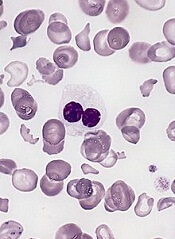
The UK’s National Institute for Health and Care Excellence (NICE) has issued a final draft guidance recommending lenalidomide (Revlimid) as an option for treating myelodysplastic syndromes (MDS) characterized by 5q deletion.
Lenalidomide is approved in the European Union to treat transfusion-dependent anemia caused by low- or intermediate-1 risk MDS characterized by 5q deletion when other therapeutic options are insufficient or inadequate.
However, the main treatment option for this patient population in the UK is best supportive care, which involves regular red blood cell transfusions.
In earlier draft guidances, NICE did not support lenalidomide use in MDS patients with 5q deletion. Although data suggested the drug is effective for these patients, a NICE advisory committee was not convinced the drug provided a survival benefit.
But now, the committee has concluded that lenalidomide is a clinically effective treatment for these patients because it is associated with a statistically significant improvement in transfusion independence and health-related quality of life compared with placebo.
Furthermore, the committee said it is plausible that lenalidomide can indirectly improve overall survival by improving transfusion independence.
“The committee heard from clinical experts that lenalidomide is an effective therapy,” said Sir Andrew Dillon, NICE chief executive.
“Celgene–who market lenalidomide–worked with us to provide enough evidence to make it possible for us to recommend it for this group of people. Celgene provided a revised analysis and further information on their proposal for a reduction in the cost of the drug to the NHS [National Health Service].”
This patient access scheme involves the NHS paying for lenalidomide treatment for up to 26 monthly cycles. And Celgene will provide the drug free of charge for those people who receive more than 26 monthly cycles.
Lenalidomide is available in 21-day packs of 10 mg and 5 mg capsules at net prices of £3780 and £3570, respectively. The cost of a 28-day cycle of treatment with 10 mg of lenalidomide (excluding value-added tax) is £3780.
The committee noted that the incremental cost-effectiveness ratio for lenalidomide compared with best supportive care is uncertain because the proportion of people who might need treatment beyond 26 cycles is uncertain.
However, the committee accepted that a commitment from Celgene to publish data on the proportion of people receiving treatment beyond 26 cycles would provide reassurance that lenalidomide is a cost-effective use of NHS resources in MDS patients with 5q deletion.
NICE’s final draft guidance is now with consultees, who have the opportunity to appeal against it. Until NICE issues a final guidance, NHS bodies should make decisions locally on the funding of specific treatments.
The UK’s National Institute for Health and Care Excellence (NICE) has issued a final draft guidance recommending lenalidomide (Revlimid) as an option for treating myelodysplastic syndromes (MDS) characterized by 5q deletion.
Lenalidomide is approved in the European Union to treat transfusion-dependent anemia caused by low- or intermediate-1 risk MDS characterized by 5q deletion when other therapeutic options are insufficient or inadequate.
However, the main treatment option for this patient population in the UK is best supportive care, which involves regular red blood cell transfusions.
In earlier draft guidances, NICE did not support lenalidomide use in MDS patients with 5q deletion. Although data suggested the drug is effective for these patients, a NICE advisory committee was not convinced the drug provided a survival benefit.
But now, the committee has concluded that lenalidomide is a clinically effective treatment for these patients because it is associated with a statistically significant improvement in transfusion independence and health-related quality of life compared with placebo.
Furthermore, the committee said it is plausible that lenalidomide can indirectly improve overall survival by improving transfusion independence.
“The committee heard from clinical experts that lenalidomide is an effective therapy,” said Sir Andrew Dillon, NICE chief executive.
“Celgene–who market lenalidomide–worked with us to provide enough evidence to make it possible for us to recommend it for this group of people. Celgene provided a revised analysis and further information on their proposal for a reduction in the cost of the drug to the NHS [National Health Service].”
This patient access scheme involves the NHS paying for lenalidomide treatment for up to 26 monthly cycles. And Celgene will provide the drug free of charge for those people who receive more than 26 monthly cycles.
Lenalidomide is available in 21-day packs of 10 mg and 5 mg capsules at net prices of £3780 and £3570, respectively. The cost of a 28-day cycle of treatment with 10 mg of lenalidomide (excluding value-added tax) is £3780.
The committee noted that the incremental cost-effectiveness ratio for lenalidomide compared with best supportive care is uncertain because the proportion of people who might need treatment beyond 26 cycles is uncertain.
However, the committee accepted that a commitment from Celgene to publish data on the proportion of people receiving treatment beyond 26 cycles would provide reassurance that lenalidomide is a cost-effective use of NHS resources in MDS patients with 5q deletion.
NICE’s final draft guidance is now with consultees, who have the opportunity to appeal against it. Until NICE issues a final guidance, NHS bodies should make decisions locally on the funding of specific treatments.
The UK’s National Institute for Health and Care Excellence (NICE) has issued a final draft guidance recommending lenalidomide (Revlimid) as an option for treating myelodysplastic syndromes (MDS) characterized by 5q deletion.
Lenalidomide is approved in the European Union to treat transfusion-dependent anemia caused by low- or intermediate-1 risk MDS characterized by 5q deletion when other therapeutic options are insufficient or inadequate.
However, the main treatment option for this patient population in the UK is best supportive care, which involves regular red blood cell transfusions.
In earlier draft guidances, NICE did not support lenalidomide use in MDS patients with 5q deletion. Although data suggested the drug is effective for these patients, a NICE advisory committee was not convinced the drug provided a survival benefit.
But now, the committee has concluded that lenalidomide is a clinically effective treatment for these patients because it is associated with a statistically significant improvement in transfusion independence and health-related quality of life compared with placebo.
Furthermore, the committee said it is plausible that lenalidomide can indirectly improve overall survival by improving transfusion independence.
“The committee heard from clinical experts that lenalidomide is an effective therapy,” said Sir Andrew Dillon, NICE chief executive.
“Celgene–who market lenalidomide–worked with us to provide enough evidence to make it possible for us to recommend it for this group of people. Celgene provided a revised analysis and further information on their proposal for a reduction in the cost of the drug to the NHS [National Health Service].”
This patient access scheme involves the NHS paying for lenalidomide treatment for up to 26 monthly cycles. And Celgene will provide the drug free of charge for those people who receive more than 26 monthly cycles.
Lenalidomide is available in 21-day packs of 10 mg and 5 mg capsules at net prices of £3780 and £3570, respectively. The cost of a 28-day cycle of treatment with 10 mg of lenalidomide (excluding value-added tax) is £3780.
The committee noted that the incremental cost-effectiveness ratio for lenalidomide compared with best supportive care is uncertain because the proportion of people who might need treatment beyond 26 cycles is uncertain.
However, the committee accepted that a commitment from Celgene to publish data on the proportion of people receiving treatment beyond 26 cycles would provide reassurance that lenalidomide is a cost-effective use of NHS resources in MDS patients with 5q deletion.
NICE’s final draft guidance is now with consultees, who have the opportunity to appeal against it. Until NICE issues a final guidance, NHS bodies should make decisions locally on the funding of specific treatments.
Rise of new anticoagulants means higher costs

Credit: CDC
A new study suggests the use of novel oral anticoagulants (NOACs) has surpassed warfarin use in the last few years, but the cost burden for NOACs is much higher than that of warfarin.
By mid-2013, the NOACs dabigatran, rivaroxaban, and apixaban accounted for 62% of all new anticoagulant prescriptions included in the study, but this represented 98% of the total anticoagulant costs.
These findings and a related commentary appear in The American Journal of Medicine.
NOAC use on the rise
To better understand NOAC use, researchers analyzed medical and prescription claims data from the insurance company Aetna. They identified 6893 patients with atrial fibrillation (AF) who were prescribed an oral anticoagulant from 2010 to 2013.
During that time, 45,472 anticoagulant prescriptions were filled—26,253 (57.7%) for warfarin, 14,922 (32.8%) for dabigatran, 4241 (9.3%) for rivaroxaban, and 56 (0.1%) for apixaban.
The researchers noted that the US Food and Drug Administration (FDA) approved dabigatran for use in AF patients in October 2010. And by October 2011, patients were as likely to receive dabigatran as warfarin.
Rivaroxaban was FDA-approved for AF in November 2011, and, by June 2013, the drug had overtaken both warfarin and dabigatran. Apixaban use increased the least, as the drug gained FDA approval for AF in December 2012.
Though NOACs appeared to be on the rise overall, the researchers found NOAC use was significantly less likely for women, patients living in lower income areas, and patients with higher CHADS2, CHA2DS2-VASC, and HAS-BLED scores (P<0.001 for each variable).
The team said this finding is significant because, in the clinical trials supporting NOAC approvals, most patients had CHADS2/CHA2DS2-VASC scores in the higher ranges.
“The greatest absolute benefit from novel anticoagulants has been shown in clinical trials to be among patients at highest baseline risk for stroke or systemic embolization,” said lead investigator Niteesh K. Choudhry, MD, PhD, of Brigham and Women’s Hospital in Boston.
“[This] is at odds with our observation of [physicians selecting] seemingly lower-risk patients for these drugs. Such a finding may reflect provider conservatism for new drug adoption, particularly given longitudinal experience with warfarin.”
Higher costs
Dr Choudhry and his colleagues also found that NOACs confer high healthcare cost consequences. The data revealed that NOACs represented 98% of the total dollars spent on anticoagulants from 2010 to 2013.
Over the first 6 months, the average combined patient and insurer cost associated with starting a NOAC was $900 greater than the cost of starting warfarin.
“Average patient out-of-pocket and insurance spending was more than 5-fold and 15-fold higher, respectively, for novel anticoagulants as compared with warfarin,” Dr Choudhry said. “A 6-month difference in total costs of $900 in our cohort translates into billions of dollars at a national level.”
Taking their findings together, the researchers said this study suggests more information may be needed to fully understand the implications of rising NOAC prescriptions.
“These findings point to the need to conduct ongoing surveillance of the adoption of new agents into clinical practice,” Dr Choudhry said, “as well as the need for robust, real-world comparative-effectiveness analyses of these medications, to enable patients and providers to make informed decisions about their relative benefit, safety, and cost-effectiveness.”
Credit: CDC
A new study suggests the use of novel oral anticoagulants (NOACs) has surpassed warfarin use in the last few years, but the cost burden for NOACs is much higher than that of warfarin.
By mid-2013, the NOACs dabigatran, rivaroxaban, and apixaban accounted for 62% of all new anticoagulant prescriptions included in the study, but this represented 98% of the total anticoagulant costs.
These findings and a related commentary appear in The American Journal of Medicine.
NOAC use on the rise
To better understand NOAC use, researchers analyzed medical and prescription claims data from the insurance company Aetna. They identified 6893 patients with atrial fibrillation (AF) who were prescribed an oral anticoagulant from 2010 to 2013.
During that time, 45,472 anticoagulant prescriptions were filled—26,253 (57.7%) for warfarin, 14,922 (32.8%) for dabigatran, 4241 (9.3%) for rivaroxaban, and 56 (0.1%) for apixaban.
The researchers noted that the US Food and Drug Administration (FDA) approved dabigatran for use in AF patients in October 2010. And by October 2011, patients were as likely to receive dabigatran as warfarin.
Rivaroxaban was FDA-approved for AF in November 2011, and, by June 2013, the drug had overtaken both warfarin and dabigatran. Apixaban use increased the least, as the drug gained FDA approval for AF in December 2012.
Though NOACs appeared to be on the rise overall, the researchers found NOAC use was significantly less likely for women, patients living in lower income areas, and patients with higher CHADS2, CHA2DS2-VASC, and HAS-BLED scores (P<0.001 for each variable).
The team said this finding is significant because, in the clinical trials supporting NOAC approvals, most patients had CHADS2/CHA2DS2-VASC scores in the higher ranges.
“The greatest absolute benefit from novel anticoagulants has been shown in clinical trials to be among patients at highest baseline risk for stroke or systemic embolization,” said lead investigator Niteesh K. Choudhry, MD, PhD, of Brigham and Women’s Hospital in Boston.
“[This] is at odds with our observation of [physicians selecting] seemingly lower-risk patients for these drugs. Such a finding may reflect provider conservatism for new drug adoption, particularly given longitudinal experience with warfarin.”
Higher costs
Dr Choudhry and his colleagues also found that NOACs confer high healthcare cost consequences. The data revealed that NOACs represented 98% of the total dollars spent on anticoagulants from 2010 to 2013.
Over the first 6 months, the average combined patient and insurer cost associated with starting a NOAC was $900 greater than the cost of starting warfarin.
“Average patient out-of-pocket and insurance spending was more than 5-fold and 15-fold higher, respectively, for novel anticoagulants as compared with warfarin,” Dr Choudhry said. “A 6-month difference in total costs of $900 in our cohort translates into billions of dollars at a national level.”
Taking their findings together, the researchers said this study suggests more information may be needed to fully understand the implications of rising NOAC prescriptions.
“These findings point to the need to conduct ongoing surveillance of the adoption of new agents into clinical practice,” Dr Choudhry said, “as well as the need for robust, real-world comparative-effectiveness analyses of these medications, to enable patients and providers to make informed decisions about their relative benefit, safety, and cost-effectiveness.”
Credit: CDC
A new study suggests the use of novel oral anticoagulants (NOACs) has surpassed warfarin use in the last few years, but the cost burden for NOACs is much higher than that of warfarin.
By mid-2013, the NOACs dabigatran, rivaroxaban, and apixaban accounted for 62% of all new anticoagulant prescriptions included in the study, but this represented 98% of the total anticoagulant costs.
These findings and a related commentary appear in The American Journal of Medicine.
NOAC use on the rise
To better understand NOAC use, researchers analyzed medical and prescription claims data from the insurance company Aetna. They identified 6893 patients with atrial fibrillation (AF) who were prescribed an oral anticoagulant from 2010 to 2013.
During that time, 45,472 anticoagulant prescriptions were filled—26,253 (57.7%) for warfarin, 14,922 (32.8%) for dabigatran, 4241 (9.3%) for rivaroxaban, and 56 (0.1%) for apixaban.
The researchers noted that the US Food and Drug Administration (FDA) approved dabigatran for use in AF patients in October 2010. And by October 2011, patients were as likely to receive dabigatran as warfarin.
Rivaroxaban was FDA-approved for AF in November 2011, and, by June 2013, the drug had overtaken both warfarin and dabigatran. Apixaban use increased the least, as the drug gained FDA approval for AF in December 2012.
Though NOACs appeared to be on the rise overall, the researchers found NOAC use was significantly less likely for women, patients living in lower income areas, and patients with higher CHADS2, CHA2DS2-VASC, and HAS-BLED scores (P<0.001 for each variable).
The team said this finding is significant because, in the clinical trials supporting NOAC approvals, most patients had CHADS2/CHA2DS2-VASC scores in the higher ranges.
“The greatest absolute benefit from novel anticoagulants has been shown in clinical trials to be among patients at highest baseline risk for stroke or systemic embolization,” said lead investigator Niteesh K. Choudhry, MD, PhD, of Brigham and Women’s Hospital in Boston.
“[This] is at odds with our observation of [physicians selecting] seemingly lower-risk patients for these drugs. Such a finding may reflect provider conservatism for new drug adoption, particularly given longitudinal experience with warfarin.”
Higher costs
Dr Choudhry and his colleagues also found that NOACs confer high healthcare cost consequences. The data revealed that NOACs represented 98% of the total dollars spent on anticoagulants from 2010 to 2013.
Over the first 6 months, the average combined patient and insurer cost associated with starting a NOAC was $900 greater than the cost of starting warfarin.
“Average patient out-of-pocket and insurance spending was more than 5-fold and 15-fold higher, respectively, for novel anticoagulants as compared with warfarin,” Dr Choudhry said. “A 6-month difference in total costs of $900 in our cohort translates into billions of dollars at a national level.”
Taking their findings together, the researchers said this study suggests more information may be needed to fully understand the implications of rising NOAC prescriptions.
“These findings point to the need to conduct ongoing surveillance of the adoption of new agents into clinical practice,” Dr Choudhry said, “as well as the need for robust, real-world comparative-effectiveness analyses of these medications, to enable patients and providers to make informed decisions about their relative benefit, safety, and cost-effectiveness.”
DOJ closes investigation of PLATO trial

Credit: AstraZeneca
The US Department of Justice (DOJ) is closing its investigation of PLATO, a clinical trial of the antiplatelet agent ticagrelor (Brilinta), according to the drug’s developer, AstraZeneca.
The company also said the government is not planning any further action.
The DOJ began its investigation in October 2013, issuing a civil investigative demand requiring AstraZeneca to provide the department with documents and information related to the PLATO trial.
The trial compared ticagrelor to the antiplatelet agent clopidogrel in 18,624 patients with acute coronary syndromes (ACS), with or without ST-segment elevation.
The results suggested that ticagrelor significantly reduced the rate of myocardial infarction and death from any cause, although it did not decrease the risk of stroke. Ticagrelor did not increase the rate of overall bleeding, but it did increase the rate of bleeding not related to procedures.
These results led to ticagrelor’s approval in the US and more than 100 other countries. But members of the medical community questioned PLATO’s results, with some even suggesting the possibility of trial misconduct.
So the DOJ launched its investigation. The details of the inquiry are unclear, but AstraZeneca said it “focused on questions that have been raised previously in public about the trial.”
Many of those questions have been raised in the International Journal of Cardiology, in articles by Victor Serebruany, MD, PhD, of HeartDrug Research Laboratories in Towson, Maryland, and James DiNicolantonio, PharmD, of Wegmans Pharmacy in Ithaca, New York.
In the years since PLATO’s results were first published, Drs DiNicolantonio and Serebruany have pointed out differences between trial data published in the NEJM paper and FDA reviews of the data, noted the geographic discrepancies in results observed with ticagrelor, and raised questions about site monitoring, blinding practices, and patient deaths, among other issues.
PLATO investigators addressed these questions and allegations in an article of their own, which appeared in the International Journal of Cardiology in December 2013. The overall message was that PLATO’s results are valid.
“We have always had absolute confidence in the integrity of the PLATO trial, and we are proud of the important benefit [ticagrelor] offers to patients around the world suffering from acute coronary syndrome,” said Pascal Soriot, AstraZeneca’s Chief Executive Officer.
As for the future of ticagrelor, AstraZeneca recently announced the start of the SOCRATES trial, a study of the drug for patients with acute ischemic stroke or transient ischemic attack, and the THEMIS study in patients with type 2 diabetes and coronary atherosclerosis.
These studies form part of PARTHENON, a trial program involving more than 80,000 patients worldwide. The program also includes 2 trials that have recently completed recruitment—EUCLID, a study of patients with peripheral artery disease and PEGASUS, a study of ticagrelor for secondary prevention in patients with previous myocardial infarction.
AstraZeneca expects headline results from PEGASUS to be available in the first quarter of 2015.
Credit: AstraZeneca
The US Department of Justice (DOJ) is closing its investigation of PLATO, a clinical trial of the antiplatelet agent ticagrelor (Brilinta), according to the drug’s developer, AstraZeneca.
The company also said the government is not planning any further action.
The DOJ began its investigation in October 2013, issuing a civil investigative demand requiring AstraZeneca to provide the department with documents and information related to the PLATO trial.
The trial compared ticagrelor to the antiplatelet agent clopidogrel in 18,624 patients with acute coronary syndromes (ACS), with or without ST-segment elevation.
The results suggested that ticagrelor significantly reduced the rate of myocardial infarction and death from any cause, although it did not decrease the risk of stroke. Ticagrelor did not increase the rate of overall bleeding, but it did increase the rate of bleeding not related to procedures.
These results led to ticagrelor’s approval in the US and more than 100 other countries. But members of the medical community questioned PLATO’s results, with some even suggesting the possibility of trial misconduct.
So the DOJ launched its investigation. The details of the inquiry are unclear, but AstraZeneca said it “focused on questions that have been raised previously in public about the trial.”
Many of those questions have been raised in the International Journal of Cardiology, in articles by Victor Serebruany, MD, PhD, of HeartDrug Research Laboratories in Towson, Maryland, and James DiNicolantonio, PharmD, of Wegmans Pharmacy in Ithaca, New York.
In the years since PLATO’s results were first published, Drs DiNicolantonio and Serebruany have pointed out differences between trial data published in the NEJM paper and FDA reviews of the data, noted the geographic discrepancies in results observed with ticagrelor, and raised questions about site monitoring, blinding practices, and patient deaths, among other issues.
PLATO investigators addressed these questions and allegations in an article of their own, which appeared in the International Journal of Cardiology in December 2013. The overall message was that PLATO’s results are valid.
“We have always had absolute confidence in the integrity of the PLATO trial, and we are proud of the important benefit [ticagrelor] offers to patients around the world suffering from acute coronary syndrome,” said Pascal Soriot, AstraZeneca’s Chief Executive Officer.
As for the future of ticagrelor, AstraZeneca recently announced the start of the SOCRATES trial, a study of the drug for patients with acute ischemic stroke or transient ischemic attack, and the THEMIS study in patients with type 2 diabetes and coronary atherosclerosis.
These studies form part of PARTHENON, a trial program involving more than 80,000 patients worldwide. The program also includes 2 trials that have recently completed recruitment—EUCLID, a study of patients with peripheral artery disease and PEGASUS, a study of ticagrelor for secondary prevention in patients with previous myocardial infarction.
AstraZeneca expects headline results from PEGASUS to be available in the first quarter of 2015.
Credit: AstraZeneca
The US Department of Justice (DOJ) is closing its investigation of PLATO, a clinical trial of the antiplatelet agent ticagrelor (Brilinta), according to the drug’s developer, AstraZeneca.
The company also said the government is not planning any further action.
The DOJ began its investigation in October 2013, issuing a civil investigative demand requiring AstraZeneca to provide the department with documents and information related to the PLATO trial.
The trial compared ticagrelor to the antiplatelet agent clopidogrel in 18,624 patients with acute coronary syndromes (ACS), with or without ST-segment elevation.
The results suggested that ticagrelor significantly reduced the rate of myocardial infarction and death from any cause, although it did not decrease the risk of stroke. Ticagrelor did not increase the rate of overall bleeding, but it did increase the rate of bleeding not related to procedures.
These results led to ticagrelor’s approval in the US and more than 100 other countries. But members of the medical community questioned PLATO’s results, with some even suggesting the possibility of trial misconduct.
So the DOJ launched its investigation. The details of the inquiry are unclear, but AstraZeneca said it “focused on questions that have been raised previously in public about the trial.”
Many of those questions have been raised in the International Journal of Cardiology, in articles by Victor Serebruany, MD, PhD, of HeartDrug Research Laboratories in Towson, Maryland, and James DiNicolantonio, PharmD, of Wegmans Pharmacy in Ithaca, New York.
In the years since PLATO’s results were first published, Drs DiNicolantonio and Serebruany have pointed out differences between trial data published in the NEJM paper and FDA reviews of the data, noted the geographic discrepancies in results observed with ticagrelor, and raised questions about site monitoring, blinding practices, and patient deaths, among other issues.
PLATO investigators addressed these questions and allegations in an article of their own, which appeared in the International Journal of Cardiology in December 2013. The overall message was that PLATO’s results are valid.
“We have always had absolute confidence in the integrity of the PLATO trial, and we are proud of the important benefit [ticagrelor] offers to patients around the world suffering from acute coronary syndrome,” said Pascal Soriot, AstraZeneca’s Chief Executive Officer.
As for the future of ticagrelor, AstraZeneca recently announced the start of the SOCRATES trial, a study of the drug for patients with acute ischemic stroke or transient ischemic attack, and the THEMIS study in patients with type 2 diabetes and coronary atherosclerosis.
These studies form part of PARTHENON, a trial program involving more than 80,000 patients worldwide. The program also includes 2 trials that have recently completed recruitment—EUCLID, a study of patients with peripheral artery disease and PEGASUS, a study of ticagrelor for secondary prevention in patients with previous myocardial infarction.
AstraZeneca expects headline results from PEGASUS to be available in the first quarter of 2015.