User login
EC expands indication for lenalidomide in MM
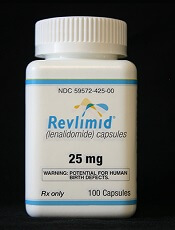
Photo courtesy of Celgene
The European Commission (EC) has expanded the marketing authorization for lenalidomide (Revlimid), just 2 days after the US Food and Drug Administration did the same.
Lenalidomide is now approved in the European Union (EU) to treat adults with previously untreated multiple myeloma (MM) who are not eligible for hematopoietic stem cell transplant. These patients can receive the drug continuously until
disease progression.
Lenalidomide was already approved in the EU for use in combination with dexamethasone to treat adults with MM who have received at least 1 prior therapy.
Lenalidomide is also approved in the EU to treat patients with transfusion-dependent anemia due to low- or intermediate-1-risk myelodysplastic syndromes associated with 5q deletion when other therapeutic options are insufficient or inadequate.
“Having a new treatment option now available for patients newly diagnosed with multiple myeloma is a real step forward,” said Thierry Facon, MD, of CHRU Lille in France.
“Treating patients continuously until disease progression is supported by several clinical studies and will have an important impact on how we manage the disease over the long-term.”
The EC’s decision to extend the approved use of lenalidomide was based on the results of 2 studies: MM-015 and MM-020, also known as FIRST.
The FIRST trial
In the phase 3 FIRST trial, researchers enrolled 1623 patients who were newly diagnosed with MM and not eligible for transplant.
Patients were randomized to receive lenalidomide and dexamethasone (Rd) in 28-day cycles until disease progression (n=535), 18 cycles of lenalidomide and dexamethasone (Rd18) for 72 weeks (n=541), or melphalan, prednisone, and thalidomide (MPT) for 72 weeks (n=547).
Response rates were significantly better with continuous Rd (75%) and Rd18 (73%) than with MPT (62%, P<0.001 for both comparisons). Complete response rates were 15%, 14%, and 9%, respectively.
The median progression-free survival was 25.5 months with continuous Rd, 20.7 months with Rd18, and 21.2 months with MPT.
This resulted in a 28% reduction in the risk of progression or death for patients treated with continuous Rd compared with those treated with MPT (hazard ratio[HR]=0.72, P<0.001) and a 30% reduction compared with Rd18 (HR=0.70, P<0.001).
The pre-planned interim analysis of overall survival showed a 22% reduction in the risk of death for continuous Rd vs MPT (HR=0.78, P=0.02), but the difference did not cross the pre-specified superiority boundary (P<0.0096).
Adverse events reported in 20% or more of patients in the continuous Rd, Rd18, or MPT arms included diarrhea (45.5%, 38.5%, 16.5%), anemia (43.8%, 35.7%, 42.3%), neutropenia (35.0%, 33.0%, 60.6%), fatigue (32.5%, 32.8%, 28.5%), back pain (32.0%, 26.9%, 21.4%), insomnia (27.6%, 23.5%, 9.8%), asthenia (28.2%, 22.8%, 22.9%), rash (26.1%, 28.0%, 19.4%), decreased appetite (23.1%, 21.3%, 13.3%), cough (22.7%, 17.4%, 12.6%), pyrexia (21.4%, 18.9%, 14.0%), muscle spasms (20.5%, 18.9%, 11.3%), and abdominal pain (20.5%, 14.4%, 11.1%).
The incidence of invasive second primary malignancies was 3% in patients taking continuous Rd, 6% in patients taking Rd18, and 5% in those taking MPT. The overall incidence of solid tumors was identical in the continuous Rd and MPT arms (3%) and 5% in the Rd18 arm.
The MM-015 trial
In the phase 3 MM-015 study, researchers enrolled 459 patients who were 65 or older and newly diagnosed with MM.
The team compared melphalan-prednisone-lenalidomide induction followed by lenalidomide maintenance (MPR-R) with melphalan-prednisone-lenalidomide (MPR) or melphalan-prednisone (MP) followed by placebo maintenance.
Patients who received MPR-R or MPR had significantly better response rates than patients who received MP, at 77%, 68%, and 50%, respectively (P<0.001 and P=0.002, respectively, for the comparison with MP).
And the median progression-free survival was significantly longer with MPR-R (31 months) than with MPR (14 months, HR=0.49, P<0.001) or MP (13 months, HR=0.40, P<0.001).
During induction, the most frequent adverse events were hematologic. Grade 4 neutropenia occurred in 35% of patients in the MPR-R arm, 32% in the MPR arm, and 8% in the MP arm. The 3-year rate of second primary malignancies was 7%, 7%, and 3%, respectively. 
Photo courtesy of Celgene
The European Commission (EC) has expanded the marketing authorization for lenalidomide (Revlimid), just 2 days after the US Food and Drug Administration did the same.
Lenalidomide is now approved in the European Union (EU) to treat adults with previously untreated multiple myeloma (MM) who are not eligible for hematopoietic stem cell transplant. These patients can receive the drug continuously until
disease progression.
Lenalidomide was already approved in the EU for use in combination with dexamethasone to treat adults with MM who have received at least 1 prior therapy.
Lenalidomide is also approved in the EU to treat patients with transfusion-dependent anemia due to low- or intermediate-1-risk myelodysplastic syndromes associated with 5q deletion when other therapeutic options are insufficient or inadequate.
“Having a new treatment option now available for patients newly diagnosed with multiple myeloma is a real step forward,” said Thierry Facon, MD, of CHRU Lille in France.
“Treating patients continuously until disease progression is supported by several clinical studies and will have an important impact on how we manage the disease over the long-term.”
The EC’s decision to extend the approved use of lenalidomide was based on the results of 2 studies: MM-015 and MM-020, also known as FIRST.
The FIRST trial
In the phase 3 FIRST trial, researchers enrolled 1623 patients who were newly diagnosed with MM and not eligible for transplant.
Patients were randomized to receive lenalidomide and dexamethasone (Rd) in 28-day cycles until disease progression (n=535), 18 cycles of lenalidomide and dexamethasone (Rd18) for 72 weeks (n=541), or melphalan, prednisone, and thalidomide (MPT) for 72 weeks (n=547).
Response rates were significantly better with continuous Rd (75%) and Rd18 (73%) than with MPT (62%, P<0.001 for both comparisons). Complete response rates were 15%, 14%, and 9%, respectively.
The median progression-free survival was 25.5 months with continuous Rd, 20.7 months with Rd18, and 21.2 months with MPT.
This resulted in a 28% reduction in the risk of progression or death for patients treated with continuous Rd compared with those treated with MPT (hazard ratio[HR]=0.72, P<0.001) and a 30% reduction compared with Rd18 (HR=0.70, P<0.001).
The pre-planned interim analysis of overall survival showed a 22% reduction in the risk of death for continuous Rd vs MPT (HR=0.78, P=0.02), but the difference did not cross the pre-specified superiority boundary (P<0.0096).
Adverse events reported in 20% or more of patients in the continuous Rd, Rd18, or MPT arms included diarrhea (45.5%, 38.5%, 16.5%), anemia (43.8%, 35.7%, 42.3%), neutropenia (35.0%, 33.0%, 60.6%), fatigue (32.5%, 32.8%, 28.5%), back pain (32.0%, 26.9%, 21.4%), insomnia (27.6%, 23.5%, 9.8%), asthenia (28.2%, 22.8%, 22.9%), rash (26.1%, 28.0%, 19.4%), decreased appetite (23.1%, 21.3%, 13.3%), cough (22.7%, 17.4%, 12.6%), pyrexia (21.4%, 18.9%, 14.0%), muscle spasms (20.5%, 18.9%, 11.3%), and abdominal pain (20.5%, 14.4%, 11.1%).
The incidence of invasive second primary malignancies was 3% in patients taking continuous Rd, 6% in patients taking Rd18, and 5% in those taking MPT. The overall incidence of solid tumors was identical in the continuous Rd and MPT arms (3%) and 5% in the Rd18 arm.
The MM-015 trial
In the phase 3 MM-015 study, researchers enrolled 459 patients who were 65 or older and newly diagnosed with MM.
The team compared melphalan-prednisone-lenalidomide induction followed by lenalidomide maintenance (MPR-R) with melphalan-prednisone-lenalidomide (MPR) or melphalan-prednisone (MP) followed by placebo maintenance.
Patients who received MPR-R or MPR had significantly better response rates than patients who received MP, at 77%, 68%, and 50%, respectively (P<0.001 and P=0.002, respectively, for the comparison with MP).
And the median progression-free survival was significantly longer with MPR-R (31 months) than with MPR (14 months, HR=0.49, P<0.001) or MP (13 months, HR=0.40, P<0.001).
During induction, the most frequent adverse events were hematologic. Grade 4 neutropenia occurred in 35% of patients in the MPR-R arm, 32% in the MPR arm, and 8% in the MP arm. The 3-year rate of second primary malignancies was 7%, 7%, and 3%, respectively.
Photo courtesy of Celgene
The European Commission (EC) has expanded the marketing authorization for lenalidomide (Revlimid), just 2 days after the US Food and Drug Administration did the same.
Lenalidomide is now approved in the European Union (EU) to treat adults with previously untreated multiple myeloma (MM) who are not eligible for hematopoietic stem cell transplant. These patients can receive the drug continuously until
disease progression.
Lenalidomide was already approved in the EU for use in combination with dexamethasone to treat adults with MM who have received at least 1 prior therapy.
Lenalidomide is also approved in the EU to treat patients with transfusion-dependent anemia due to low- or intermediate-1-risk myelodysplastic syndromes associated with 5q deletion when other therapeutic options are insufficient or inadequate.
“Having a new treatment option now available for patients newly diagnosed with multiple myeloma is a real step forward,” said Thierry Facon, MD, of CHRU Lille in France.
“Treating patients continuously until disease progression is supported by several clinical studies and will have an important impact on how we manage the disease over the long-term.”
The EC’s decision to extend the approved use of lenalidomide was based on the results of 2 studies: MM-015 and MM-020, also known as FIRST.
The FIRST trial
In the phase 3 FIRST trial, researchers enrolled 1623 patients who were newly diagnosed with MM and not eligible for transplant.
Patients were randomized to receive lenalidomide and dexamethasone (Rd) in 28-day cycles until disease progression (n=535), 18 cycles of lenalidomide and dexamethasone (Rd18) for 72 weeks (n=541), or melphalan, prednisone, and thalidomide (MPT) for 72 weeks (n=547).
Response rates were significantly better with continuous Rd (75%) and Rd18 (73%) than with MPT (62%, P<0.001 for both comparisons). Complete response rates were 15%, 14%, and 9%, respectively.
The median progression-free survival was 25.5 months with continuous Rd, 20.7 months with Rd18, and 21.2 months with MPT.
This resulted in a 28% reduction in the risk of progression or death for patients treated with continuous Rd compared with those treated with MPT (hazard ratio[HR]=0.72, P<0.001) and a 30% reduction compared with Rd18 (HR=0.70, P<0.001).
The pre-planned interim analysis of overall survival showed a 22% reduction in the risk of death for continuous Rd vs MPT (HR=0.78, P=0.02), but the difference did not cross the pre-specified superiority boundary (P<0.0096).
Adverse events reported in 20% or more of patients in the continuous Rd, Rd18, or MPT arms included diarrhea (45.5%, 38.5%, 16.5%), anemia (43.8%, 35.7%, 42.3%), neutropenia (35.0%, 33.0%, 60.6%), fatigue (32.5%, 32.8%, 28.5%), back pain (32.0%, 26.9%, 21.4%), insomnia (27.6%, 23.5%, 9.8%), asthenia (28.2%, 22.8%, 22.9%), rash (26.1%, 28.0%, 19.4%), decreased appetite (23.1%, 21.3%, 13.3%), cough (22.7%, 17.4%, 12.6%), pyrexia (21.4%, 18.9%, 14.0%), muscle spasms (20.5%, 18.9%, 11.3%), and abdominal pain (20.5%, 14.4%, 11.1%).
The incidence of invasive second primary malignancies was 3% in patients taking continuous Rd, 6% in patients taking Rd18, and 5% in those taking MPT. The overall incidence of solid tumors was identical in the continuous Rd and MPT arms (3%) and 5% in the Rd18 arm.
The MM-015 trial
In the phase 3 MM-015 study, researchers enrolled 459 patients who were 65 or older and newly diagnosed with MM.
The team compared melphalan-prednisone-lenalidomide induction followed by lenalidomide maintenance (MPR-R) with melphalan-prednisone-lenalidomide (MPR) or melphalan-prednisone (MP) followed by placebo maintenance.
Patients who received MPR-R or MPR had significantly better response rates than patients who received MP, at 77%, 68%, and 50%, respectively (P<0.001 and P=0.002, respectively, for the comparison with MP).
And the median progression-free survival was significantly longer with MPR-R (31 months) than with MPR (14 months, HR=0.49, P<0.001) or MP (13 months, HR=0.40, P<0.001).
During induction, the most frequent adverse events were hematologic. Grade 4 neutropenia occurred in 35% of patients in the MPR-R arm, 32% in the MPR arm, and 8% in the MP arm. The 3-year rate of second primary malignancies was 7%, 7%, and 3%, respectively.
Generic enoxaparin launched in US

Image by Kevin MacKenzie
Teva Pharmaceutical Industries Ltd. has launched the generic equivalent of the low-molecular-weight heparin Lovenox (enoxaparin sodium injection) in 7 dosage strengths in the US.
Enoxaparin can be used to prevent deep vein thrombosis (DVT) in patients undergoing abdominal surgery, those receiving a hip or knee replacement, and patients at risk of thromboembolic complications due to severely restricted mobility during acute illness.
When administered with warfarin, enoxaparin can be used for inpatient treatment of acute DVT, with or without pulmonary embolism (PE). Enoxaparin given in conjunction with warfarin may also be used for outpatient treatment of acute DVT without PE.
When given concurrently with aspirin, enoxaparin can be used to prevent ischemic complications of unstable angina and non-Q-wave myocardial infarction. Enoxaparin may also be used to treat acute ST-segment elevation myocardial infarction that is managed medically or with subsequent percutaneous coronary intervention.
Teva’s Enoxaparin Sodium Injection USP is available in the following doses:
- 30 mg/0.3 mL syringe, 10 x 0.3 mL
- 40 mg/0.4 mL syringe, 10 x 0.4 mL
- 60 mg/0.6 mL syringe, 10 x 0.6 mL
- 80 mg/0.8 mL syringe, 10 x 0.8 mL
- 100 mg/mL syringe, 10 x 1 mL
- 120 mg/0.8 mL syringe, 10 x 0.8 mL
- 150 mg/mL syringe, 10 x 1 mL.
Safety information
Enoxaparin’s label contains a boxed warning detailing the risk of epidural or spinal hematomas that can occur in patients who are anticoagulated with low-molecular-weight heparins or heparinoids and are receiving neuraxial anesthesia or undergoing spinal puncture. The hematomas may result in long-term or permanent paralysis.
Enoxaparin is contraindicated in patients with active major bleeding, thrombocytopenia with a positive in vitro test for antiplatelet antibody in the presence of enoxaparin, or known hypersensitivity to enoxaparin, heparin, or pork products.
Serious adverse reactions reported with enoxaparin include increased risk of hemorrhage and thrombocytopenia.
Enoxaparin should be used with extreme caution in patients who have conditions with an increased risk of hemorrhage or in patients treated concomitantly with platelet inhibitors. Major hemorrhages, including retroperitoneal and intracranial bleeding, have been reported with enoxaparin. Some of these cases have been fatal.
Bleeding can occur at any site during enoxaparin treatment. The drug should be used with care in patients with a bleeding diathesis, uncontrolled arterial hypertension, or a history of recent gastrointestinal ulceration, diabetic retinopathy, renal dysfunction, and hemorrhage.
In clinical trials, the most common adverse reactions associated with enoxaparin (occurring in more than 1% of patients) were bleeding, anemia, thrombocytopenia, elevation of serum aminotransferase, diarrhea, and nausea. Mild local irritation, pain, hematoma, ecchymosis, and erythema may follow subcutaneous injection.
For additional information on enoxaparin, see the full prescribing information.
Image by Kevin MacKenzie
Teva Pharmaceutical Industries Ltd. has launched the generic equivalent of the low-molecular-weight heparin Lovenox (enoxaparin sodium injection) in 7 dosage strengths in the US.
Enoxaparin can be used to prevent deep vein thrombosis (DVT) in patients undergoing abdominal surgery, those receiving a hip or knee replacement, and patients at risk of thromboembolic complications due to severely restricted mobility during acute illness.
When administered with warfarin, enoxaparin can be used for inpatient treatment of acute DVT, with or without pulmonary embolism (PE). Enoxaparin given in conjunction with warfarin may also be used for outpatient treatment of acute DVT without PE.
When given concurrently with aspirin, enoxaparin can be used to prevent ischemic complications of unstable angina and non-Q-wave myocardial infarction. Enoxaparin may also be used to treat acute ST-segment elevation myocardial infarction that is managed medically or with subsequent percutaneous coronary intervention.
Teva’s Enoxaparin Sodium Injection USP is available in the following doses:
- 30 mg/0.3 mL syringe, 10 x 0.3 mL
- 40 mg/0.4 mL syringe, 10 x 0.4 mL
- 60 mg/0.6 mL syringe, 10 x 0.6 mL
- 80 mg/0.8 mL syringe, 10 x 0.8 mL
- 100 mg/mL syringe, 10 x 1 mL
- 120 mg/0.8 mL syringe, 10 x 0.8 mL
- 150 mg/mL syringe, 10 x 1 mL.
Safety information
Enoxaparin’s label contains a boxed warning detailing the risk of epidural or spinal hematomas that can occur in patients who are anticoagulated with low-molecular-weight heparins or heparinoids and are receiving neuraxial anesthesia or undergoing spinal puncture. The hematomas may result in long-term or permanent paralysis.
Enoxaparin is contraindicated in patients with active major bleeding, thrombocytopenia with a positive in vitro test for antiplatelet antibody in the presence of enoxaparin, or known hypersensitivity to enoxaparin, heparin, or pork products.
Serious adverse reactions reported with enoxaparin include increased risk of hemorrhage and thrombocytopenia.
Enoxaparin should be used with extreme caution in patients who have conditions with an increased risk of hemorrhage or in patients treated concomitantly with platelet inhibitors. Major hemorrhages, including retroperitoneal and intracranial bleeding, have been reported with enoxaparin. Some of these cases have been fatal.
Bleeding can occur at any site during enoxaparin treatment. The drug should be used with care in patients with a bleeding diathesis, uncontrolled arterial hypertension, or a history of recent gastrointestinal ulceration, diabetic retinopathy, renal dysfunction, and hemorrhage.
In clinical trials, the most common adverse reactions associated with enoxaparin (occurring in more than 1% of patients) were bleeding, anemia, thrombocytopenia, elevation of serum aminotransferase, diarrhea, and nausea. Mild local irritation, pain, hematoma, ecchymosis, and erythema may follow subcutaneous injection.
For additional information on enoxaparin, see the full prescribing information.
Image by Kevin MacKenzie
Teva Pharmaceutical Industries Ltd. has launched the generic equivalent of the low-molecular-weight heparin Lovenox (enoxaparin sodium injection) in 7 dosage strengths in the US.
Enoxaparin can be used to prevent deep vein thrombosis (DVT) in patients undergoing abdominal surgery, those receiving a hip or knee replacement, and patients at risk of thromboembolic complications due to severely restricted mobility during acute illness.
When administered with warfarin, enoxaparin can be used for inpatient treatment of acute DVT, with or without pulmonary embolism (PE). Enoxaparin given in conjunction with warfarin may also be used for outpatient treatment of acute DVT without PE.
When given concurrently with aspirin, enoxaparin can be used to prevent ischemic complications of unstable angina and non-Q-wave myocardial infarction. Enoxaparin may also be used to treat acute ST-segment elevation myocardial infarction that is managed medically or with subsequent percutaneous coronary intervention.
Teva’s Enoxaparin Sodium Injection USP is available in the following doses:
- 30 mg/0.3 mL syringe, 10 x 0.3 mL
- 40 mg/0.4 mL syringe, 10 x 0.4 mL
- 60 mg/0.6 mL syringe, 10 x 0.6 mL
- 80 mg/0.8 mL syringe, 10 x 0.8 mL
- 100 mg/mL syringe, 10 x 1 mL
- 120 mg/0.8 mL syringe, 10 x 0.8 mL
- 150 mg/mL syringe, 10 x 1 mL.
Safety information
Enoxaparin’s label contains a boxed warning detailing the risk of epidural or spinal hematomas that can occur in patients who are anticoagulated with low-molecular-weight heparins or heparinoids and are receiving neuraxial anesthesia or undergoing spinal puncture. The hematomas may result in long-term or permanent paralysis.
Enoxaparin is contraindicated in patients with active major bleeding, thrombocytopenia with a positive in vitro test for antiplatelet antibody in the presence of enoxaparin, or known hypersensitivity to enoxaparin, heparin, or pork products.
Serious adverse reactions reported with enoxaparin include increased risk of hemorrhage and thrombocytopenia.
Enoxaparin should be used with extreme caution in patients who have conditions with an increased risk of hemorrhage or in patients treated concomitantly with platelet inhibitors. Major hemorrhages, including retroperitoneal and intracranial bleeding, have been reported with enoxaparin. Some of these cases have been fatal.
Bleeding can occur at any site during enoxaparin treatment. The drug should be used with care in patients with a bleeding diathesis, uncontrolled arterial hypertension, or a history of recent gastrointestinal ulceration, diabetic retinopathy, renal dysfunction, and hemorrhage.
In clinical trials, the most common adverse reactions associated with enoxaparin (occurring in more than 1% of patients) were bleeding, anemia, thrombocytopenia, elevation of serum aminotransferase, diarrhea, and nausea. Mild local irritation, pain, hematoma, ecchymosis, and erythema may follow subcutaneous injection.
For additional information on enoxaparin, see the full prescribing information.
FDA approves drug for newly diagnosed MM
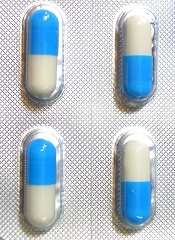
The US Food and Drug Administration (FDA) has expanded the existing indication for lenalidomide (Revlimid)—in combination with dexamethasone—to include patients with newly diagnosed multiple myeloma (MM).
The FDA previously approved lenalidomide in combination with dexamethasone to treat MM patients who had received at least 1 prior therapy.
Lenalidomide is also FDA-approved to treat mantle cell lymphoma patients who have failed 2 prior therapies, including bortezomib.
And the drug is approved to treat patients with transfusion-dependent anemia due to low- or intermediate-1-risk myelodysplastic syndromes associated with 5q deletion, with or without additional cytogenetic abnormalities.
“The approval of Revlimid as an option for use in all patients with multiple myeloma represents a new paradigm in the management of this disease,” said Kenneth Anderson, MD, of Dana-Farber/Brigham and Women’s Cancer Center in Boston, Massachusetts.
“We now have clinical evidence demonstrating that starting and keeping newly diagnosed multiple myeloma patients on Revlimid significantly improves progression-free survival.”
The FDA’s latest approval of lenalidomide was based on safety and efficacy results from phase 3 studies, particularly the FIRST trial.
The FIRST trial
In this phase 3 trial, researchers enrolled 1623 patients who were newly diagnosed with MM and not eligible for stem cell transplant.
Patients were randomized to receive lenalidomide and dexamethasone (Rd) in 28-day cycles until disease progression (n=535), 18 cycles of lenalidomide and dexamethasone (Rd18) for 72 weeks (n=541), or melphalan, prednisone, and thalidomide (MPT) for 72 weeks (n=547).
Response rates were significantly better with continuous Rd (75%) and Rd18 (73%) than with MPT (62%, P<0.001 for both comparisons). Complete response rates were 15%, 14%, and 9%, respectively.
The median progression-free survival was 25.5 months with continuous Rd, 20.7 months with Rd18, and 21.2 months with MPT.
This resulted in a 28% reduction in the risk of progression or death for patients treated with continuous Rd compared with those treated with MPT (hazard ratio[HR]=0.72, P<0.001) and a 30% reduction compared with Rd18 (HR=0.70, P<0.001).
The pre-planned interim analysis of overall survival showed a 22% reduction in the risk of death for continuous Rd vs MPT (HR=0.78, P=0.02), but the difference did not cross the pre-specified superiority boundary (P<0.0096).
Adverse events reported in 20% or more of patients in the continuous Rd, Rd18, or MPT arms included diarrhea (45.5%, 38.5%, 16.5%), anemia (43.8%, 35.7%, 42.3%), neutropenia (35.0%, 33.0%, 60.6%), fatigue (32.5%, 32.8%, 28.5%), back pain (32.0%, 26.9%, 21.4%), insomnia (27.6%, 23.5%, 9.8%), asthenia (28.2%, 22.8%, 22.9%), rash (26.1%, 28.0%, 19.4%), decreased appetite (23.1%, 21.3%, 13.3%), cough (22.7%, 17.4%, 12.6%), pyrexia (21.4%, 18.9%, 14.0%), muscle spasms (20.5%, 18.9%, 11.3%) and abdominal pain (20.5%, 14.4%, 11.1%).
The most frequently reported grade 3/4 events in the continuous Rd arm (until disease progression) were neutropenia (27.8%), anemia (18.2%), thrombocytopenia (8.3%), pneumonia (11.3%), asthenia (7.7%), fatigue (7.3%), back pain (7%), hypokalemia (6.6%), rash (7.3%), cataract (5.8%), dyspnea (5.6%), deep vein thrombosis (5.6%), and hyperglycemia (5.3%).
The incidence of invasive second primary malignancies was 3% in the continuous Rd arm, 6% in the Rd18 arm, and 5% in the MPT arm. The overall incidence of solid tumors was identical in the continuous Rd and MPT arms (3%) and 5% in the Rd18 arm.
The US Food and Drug Administration (FDA) has expanded the existing indication for lenalidomide (Revlimid)—in combination with dexamethasone—to include patients with newly diagnosed multiple myeloma (MM).
The FDA previously approved lenalidomide in combination with dexamethasone to treat MM patients who had received at least 1 prior therapy.
Lenalidomide is also FDA-approved to treat mantle cell lymphoma patients who have failed 2 prior therapies, including bortezomib.
And the drug is approved to treat patients with transfusion-dependent anemia due to low- or intermediate-1-risk myelodysplastic syndromes associated with 5q deletion, with or without additional cytogenetic abnormalities.
“The approval of Revlimid as an option for use in all patients with multiple myeloma represents a new paradigm in the management of this disease,” said Kenneth Anderson, MD, of Dana-Farber/Brigham and Women’s Cancer Center in Boston, Massachusetts.
“We now have clinical evidence demonstrating that starting and keeping newly diagnosed multiple myeloma patients on Revlimid significantly improves progression-free survival.”
The FDA’s latest approval of lenalidomide was based on safety and efficacy results from phase 3 studies, particularly the FIRST trial.
The FIRST trial
In this phase 3 trial, researchers enrolled 1623 patients who were newly diagnosed with MM and not eligible for stem cell transplant.
Patients were randomized to receive lenalidomide and dexamethasone (Rd) in 28-day cycles until disease progression (n=535), 18 cycles of lenalidomide and dexamethasone (Rd18) for 72 weeks (n=541), or melphalan, prednisone, and thalidomide (MPT) for 72 weeks (n=547).
Response rates were significantly better with continuous Rd (75%) and Rd18 (73%) than with MPT (62%, P<0.001 for both comparisons). Complete response rates were 15%, 14%, and 9%, respectively.
The median progression-free survival was 25.5 months with continuous Rd, 20.7 months with Rd18, and 21.2 months with MPT.
This resulted in a 28% reduction in the risk of progression or death for patients treated with continuous Rd compared with those treated with MPT (hazard ratio[HR]=0.72, P<0.001) and a 30% reduction compared with Rd18 (HR=0.70, P<0.001).
The pre-planned interim analysis of overall survival showed a 22% reduction in the risk of death for continuous Rd vs MPT (HR=0.78, P=0.02), but the difference did not cross the pre-specified superiority boundary (P<0.0096).
Adverse events reported in 20% or more of patients in the continuous Rd, Rd18, or MPT arms included diarrhea (45.5%, 38.5%, 16.5%), anemia (43.8%, 35.7%, 42.3%), neutropenia (35.0%, 33.0%, 60.6%), fatigue (32.5%, 32.8%, 28.5%), back pain (32.0%, 26.9%, 21.4%), insomnia (27.6%, 23.5%, 9.8%), asthenia (28.2%, 22.8%, 22.9%), rash (26.1%, 28.0%, 19.4%), decreased appetite (23.1%, 21.3%, 13.3%), cough (22.7%, 17.4%, 12.6%), pyrexia (21.4%, 18.9%, 14.0%), muscle spasms (20.5%, 18.9%, 11.3%) and abdominal pain (20.5%, 14.4%, 11.1%).
The most frequently reported grade 3/4 events in the continuous Rd arm (until disease progression) were neutropenia (27.8%), anemia (18.2%), thrombocytopenia (8.3%), pneumonia (11.3%), asthenia (7.7%), fatigue (7.3%), back pain (7%), hypokalemia (6.6%), rash (7.3%), cataract (5.8%), dyspnea (5.6%), deep vein thrombosis (5.6%), and hyperglycemia (5.3%).
The incidence of invasive second primary malignancies was 3% in the continuous Rd arm, 6% in the Rd18 arm, and 5% in the MPT arm. The overall incidence of solid tumors was identical in the continuous Rd and MPT arms (3%) and 5% in the Rd18 arm.
The US Food and Drug Administration (FDA) has expanded the existing indication for lenalidomide (Revlimid)—in combination with dexamethasone—to include patients with newly diagnosed multiple myeloma (MM).
The FDA previously approved lenalidomide in combination with dexamethasone to treat MM patients who had received at least 1 prior therapy.
Lenalidomide is also FDA-approved to treat mantle cell lymphoma patients who have failed 2 prior therapies, including bortezomib.
And the drug is approved to treat patients with transfusion-dependent anemia due to low- or intermediate-1-risk myelodysplastic syndromes associated with 5q deletion, with or without additional cytogenetic abnormalities.
“The approval of Revlimid as an option for use in all patients with multiple myeloma represents a new paradigm in the management of this disease,” said Kenneth Anderson, MD, of Dana-Farber/Brigham and Women’s Cancer Center in Boston, Massachusetts.
“We now have clinical evidence demonstrating that starting and keeping newly diagnosed multiple myeloma patients on Revlimid significantly improves progression-free survival.”
The FDA’s latest approval of lenalidomide was based on safety and efficacy results from phase 3 studies, particularly the FIRST trial.
The FIRST trial
In this phase 3 trial, researchers enrolled 1623 patients who were newly diagnosed with MM and not eligible for stem cell transplant.
Patients were randomized to receive lenalidomide and dexamethasone (Rd) in 28-day cycles until disease progression (n=535), 18 cycles of lenalidomide and dexamethasone (Rd18) for 72 weeks (n=541), or melphalan, prednisone, and thalidomide (MPT) for 72 weeks (n=547).
Response rates were significantly better with continuous Rd (75%) and Rd18 (73%) than with MPT (62%, P<0.001 for both comparisons). Complete response rates were 15%, 14%, and 9%, respectively.
The median progression-free survival was 25.5 months with continuous Rd, 20.7 months with Rd18, and 21.2 months with MPT.
This resulted in a 28% reduction in the risk of progression or death for patients treated with continuous Rd compared with those treated with MPT (hazard ratio[HR]=0.72, P<0.001) and a 30% reduction compared with Rd18 (HR=0.70, P<0.001).
The pre-planned interim analysis of overall survival showed a 22% reduction in the risk of death for continuous Rd vs MPT (HR=0.78, P=0.02), but the difference did not cross the pre-specified superiority boundary (P<0.0096).
Adverse events reported in 20% or more of patients in the continuous Rd, Rd18, or MPT arms included diarrhea (45.5%, 38.5%, 16.5%), anemia (43.8%, 35.7%, 42.3%), neutropenia (35.0%, 33.0%, 60.6%), fatigue (32.5%, 32.8%, 28.5%), back pain (32.0%, 26.9%, 21.4%), insomnia (27.6%, 23.5%, 9.8%), asthenia (28.2%, 22.8%, 22.9%), rash (26.1%, 28.0%, 19.4%), decreased appetite (23.1%, 21.3%, 13.3%), cough (22.7%, 17.4%, 12.6%), pyrexia (21.4%, 18.9%, 14.0%), muscle spasms (20.5%, 18.9%, 11.3%) and abdominal pain (20.5%, 14.4%, 11.1%).
The most frequently reported grade 3/4 events in the continuous Rd arm (until disease progression) were neutropenia (27.8%), anemia (18.2%), thrombocytopenia (8.3%), pneumonia (11.3%), asthenia (7.7%), fatigue (7.3%), back pain (7%), hypokalemia (6.6%), rash (7.3%), cataract (5.8%), dyspnea (5.6%), deep vein thrombosis (5.6%), and hyperglycemia (5.3%).
The incidence of invasive second primary malignancies was 3% in the continuous Rd arm, 6% in the Rd18 arm, and 5% in the MPT arm. The overall incidence of solid tumors was identical in the continuous Rd and MPT arms (3%) and 5% in the Rd18 arm.
FDA issues documents on drug compounding

Photo by Rhoda Baer
The US Food and Drug Administration (FDA) has issued 5 draft documents related to drug compounding and repackaging that aim to help entities comply with public health provisions.
The agency said these draft documents are applicable to pharmacies, federal facilities, outsourcing facilities, and physicians.
The new category of outsourcing facilities was created under the Drug Quality and Security Act (DQSA), which was enacted by Congress in November 2013.
It was enacted in response to a deadly fungal meningitis outbreak that was linked to contaminated sterile compounded drug products.
Drugs compounded in an outsourcing facility that meet certain conditions may be entitled to exemptions from certain provisions of the Federal Food, Drug, and Cosmetic Act (FD&C Act), including the new drug approval requirements and the requirement to label drug products with adequate directions for use.
Outsourcing facilities are subject to current good manufacturing practice requirements and inspections by the FDA according to a risk-based schedule.
Drugs produced by compounders that are not registered as outsourcing facilities must meet certain other conditions described in the FD&C Act, or they will be subject to all of the requirements applicable to drugs produced by conventional drug manufacturers.
“The draft guidance documents provide information to pharmacies, outsourcing facilities, healthcare entities, and others about these FDA-proposed policies, which are critical to protecting the public health,” said Janet Woodcock, MD, director of the FDA’s Center for Drug Evaluation and Research.
Descriptions of these documents follow.
This draft guidance provides an entity considering whether to register with the FDA as an outsourcing facility with information about the regulatory impact of registering.
For example, it explains that a facility engaged in only certain activities, including repackaging human drugs and compounding non-sterile drugs, should not register as an outsourcing facility because its drug products will not qualify for the exemptions provided in section 503B, including the exemption from the new drug approval requirements.
This draft guidance describes the conditions under which the FDA does not intend to take action for certain violations of the law when state-licensed pharmacies, federal facilities, or outsourcing facilities repackage certain drug products.
Repackaged drug products are generally not exempt from any of the provisions of the FD&C Act related to the production of drugs, and the compounding provisions of the FD&C Act do not address repackaging. Therefore, the FDA is issuing guidance to describe how it intends to address repackaging when done in a state-licensed pharmacy, federal facility, or outsourcing facility.
This draft guidance describes the conditions under which the FDA does not intend to take action for violations of certain sections of the Public Health Service Act (PHS Act) and the FD&C Act when state-licensed pharmacies, federal facilities, or outsourcing facilities mix, dilute, or repackage specific biological products without an approved BLA, or when such facilities or physicians prepare prescription sets of allergenic extracts without an approved BLA.
The draft guidance notes that a biological product that is mixed, diluted, or repackaged outside the scope of an approved BLA is an unlicensed biological product under section 351 of the PHS Act and may not be legally marketed without an approved BLA.
Additionally, the compounding provisions of the FD&C Act do not address biological products subject to licensure under section 351 of the PHS Act. Therefore, the FDA is issuing the guidance to describe how it intends to address these practices.
Entities registered as outsourcing facilities are required to report adverse events to the FDA. This draft guidance explains adverse event reporting for such facilities.
The draft memorandum of understanding (MOU) under section 503A of the FD&C Act describes the responsibilities of a state that chooses to sign the MOU in investigating and responding to complaints related to compounded human drug products distributed outside the state, and in addressing the interstate distribution of “inordinate amounts” of compounded human drug products.
These documents are the latest in a series of policy documents related to FDA oversight of drugs produced by state-licensed pharmacies, federal facilities, and outsourcing facilities.
The draft guidance documents are available for public comment for 90 days. The public has 120 days to comment on the draft MOU between the states and the FDA.
Photo by Rhoda Baer
The US Food and Drug Administration (FDA) has issued 5 draft documents related to drug compounding and repackaging that aim to help entities comply with public health provisions.
The agency said these draft documents are applicable to pharmacies, federal facilities, outsourcing facilities, and physicians.
The new category of outsourcing facilities was created under the Drug Quality and Security Act (DQSA), which was enacted by Congress in November 2013.
It was enacted in response to a deadly fungal meningitis outbreak that was linked to contaminated sterile compounded drug products.
Drugs compounded in an outsourcing facility that meet certain conditions may be entitled to exemptions from certain provisions of the Federal Food, Drug, and Cosmetic Act (FD&C Act), including the new drug approval requirements and the requirement to label drug products with adequate directions for use.
Outsourcing facilities are subject to current good manufacturing practice requirements and inspections by the FDA according to a risk-based schedule.
Drugs produced by compounders that are not registered as outsourcing facilities must meet certain other conditions described in the FD&C Act, or they will be subject to all of the requirements applicable to drugs produced by conventional drug manufacturers.
“The draft guidance documents provide information to pharmacies, outsourcing facilities, healthcare entities, and others about these FDA-proposed policies, which are critical to protecting the public health,” said Janet Woodcock, MD, director of the FDA’s Center for Drug Evaluation and Research.
Descriptions of these documents follow.
This draft guidance provides an entity considering whether to register with the FDA as an outsourcing facility with information about the regulatory impact of registering.
For example, it explains that a facility engaged in only certain activities, including repackaging human drugs and compounding non-sterile drugs, should not register as an outsourcing facility because its drug products will not qualify for the exemptions provided in section 503B, including the exemption from the new drug approval requirements.
This draft guidance describes the conditions under which the FDA does not intend to take action for certain violations of the law when state-licensed pharmacies, federal facilities, or outsourcing facilities repackage certain drug products.
Repackaged drug products are generally not exempt from any of the provisions of the FD&C Act related to the production of drugs, and the compounding provisions of the FD&C Act do not address repackaging. Therefore, the FDA is issuing guidance to describe how it intends to address repackaging when done in a state-licensed pharmacy, federal facility, or outsourcing facility.
This draft guidance describes the conditions under which the FDA does not intend to take action for violations of certain sections of the Public Health Service Act (PHS Act) and the FD&C Act when state-licensed pharmacies, federal facilities, or outsourcing facilities mix, dilute, or repackage specific biological products without an approved BLA, or when such facilities or physicians prepare prescription sets of allergenic extracts without an approved BLA.
The draft guidance notes that a biological product that is mixed, diluted, or repackaged outside the scope of an approved BLA is an unlicensed biological product under section 351 of the PHS Act and may not be legally marketed without an approved BLA.
Additionally, the compounding provisions of the FD&C Act do not address biological products subject to licensure under section 351 of the PHS Act. Therefore, the FDA is issuing the guidance to describe how it intends to address these practices.
Entities registered as outsourcing facilities are required to report adverse events to the FDA. This draft guidance explains adverse event reporting for such facilities.
The draft memorandum of understanding (MOU) under section 503A of the FD&C Act describes the responsibilities of a state that chooses to sign the MOU in investigating and responding to complaints related to compounded human drug products distributed outside the state, and in addressing the interstate distribution of “inordinate amounts” of compounded human drug products.
These documents are the latest in a series of policy documents related to FDA oversight of drugs produced by state-licensed pharmacies, federal facilities, and outsourcing facilities.
The draft guidance documents are available for public comment for 90 days. The public has 120 days to comment on the draft MOU between the states and the FDA.
Photo by Rhoda Baer
The US Food and Drug Administration (FDA) has issued 5 draft documents related to drug compounding and repackaging that aim to help entities comply with public health provisions.
The agency said these draft documents are applicable to pharmacies, federal facilities, outsourcing facilities, and physicians.
The new category of outsourcing facilities was created under the Drug Quality and Security Act (DQSA), which was enacted by Congress in November 2013.
It was enacted in response to a deadly fungal meningitis outbreak that was linked to contaminated sterile compounded drug products.
Drugs compounded in an outsourcing facility that meet certain conditions may be entitled to exemptions from certain provisions of the Federal Food, Drug, and Cosmetic Act (FD&C Act), including the new drug approval requirements and the requirement to label drug products with adequate directions for use.
Outsourcing facilities are subject to current good manufacturing practice requirements and inspections by the FDA according to a risk-based schedule.
Drugs produced by compounders that are not registered as outsourcing facilities must meet certain other conditions described in the FD&C Act, or they will be subject to all of the requirements applicable to drugs produced by conventional drug manufacturers.
“The draft guidance documents provide information to pharmacies, outsourcing facilities, healthcare entities, and others about these FDA-proposed policies, which are critical to protecting the public health,” said Janet Woodcock, MD, director of the FDA’s Center for Drug Evaluation and Research.
Descriptions of these documents follow.
This draft guidance provides an entity considering whether to register with the FDA as an outsourcing facility with information about the regulatory impact of registering.
For example, it explains that a facility engaged in only certain activities, including repackaging human drugs and compounding non-sterile drugs, should not register as an outsourcing facility because its drug products will not qualify for the exemptions provided in section 503B, including the exemption from the new drug approval requirements.
This draft guidance describes the conditions under which the FDA does not intend to take action for certain violations of the law when state-licensed pharmacies, federal facilities, or outsourcing facilities repackage certain drug products.
Repackaged drug products are generally not exempt from any of the provisions of the FD&C Act related to the production of drugs, and the compounding provisions of the FD&C Act do not address repackaging. Therefore, the FDA is issuing guidance to describe how it intends to address repackaging when done in a state-licensed pharmacy, federal facility, or outsourcing facility.
This draft guidance describes the conditions under which the FDA does not intend to take action for violations of certain sections of the Public Health Service Act (PHS Act) and the FD&C Act when state-licensed pharmacies, federal facilities, or outsourcing facilities mix, dilute, or repackage specific biological products without an approved BLA, or when such facilities or physicians prepare prescription sets of allergenic extracts without an approved BLA.
The draft guidance notes that a biological product that is mixed, diluted, or repackaged outside the scope of an approved BLA is an unlicensed biological product under section 351 of the PHS Act and may not be legally marketed without an approved BLA.
Additionally, the compounding provisions of the FD&C Act do not address biological products subject to licensure under section 351 of the PHS Act. Therefore, the FDA is issuing the guidance to describe how it intends to address these practices.
Entities registered as outsourcing facilities are required to report adverse events to the FDA. This draft guidance explains adverse event reporting for such facilities.
The draft memorandum of understanding (MOU) under section 503A of the FD&C Act describes the responsibilities of a state that chooses to sign the MOU in investigating and responding to complaints related to compounded human drug products distributed outside the state, and in addressing the interstate distribution of “inordinate amounts” of compounded human drug products.
These documents are the latest in a series of policy documents related to FDA oversight of drugs produced by state-licensed pharmacies, federal facilities, and outsourcing facilities.
The draft guidance documents are available for public comment for 90 days. The public has 120 days to comment on the draft MOU between the states and the FDA.
NICE rejects pomalidomide as MM treatment
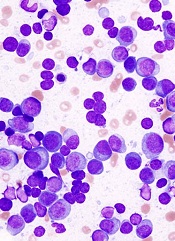
In a final draft guidance, the UK’s National Institute for Health and Care Excellence (NICE) has said it cannot recommend pomalidomide (Imnovid) for the treatment of multiple myeloma (MM).
NICE recommends thalidomide for most MM patients as a first-line treatment and bortezomib for patients who are unable to receive thalidomide and those who fail first-line treatment.
For patients who have received 2 prior therapies, the agency recommends lenalidomide.
NICE considered pomalidomide for use in MM patients after their third or subsequent relapse.
The agency said it could not recommend pomalidomide, in combination with dexamethasone, within its marketing authorization, which is to treat adults with relapsed and refractory MM who have had at least 2 prior treatments, including lenalidomide and bortezomib, and whose disease has progressed on their last therapy.
“Unfortunately, we cannot recommend pomalidomide, as the analyses from Celgene, the company that markets pomalidomide, showed that the drug does not offer enough benefit to justify its high price,” said Sir Andrew Dillon, NICE chief executive.
NICE’s final draft guidance is now with consultees, who have the opportunity to appeal against it. Until NICE issues its final guidance, National Health Service (NHS) bodies should make decisions locally on the funding of specific treatments.
This draft guidance does not mean that patients currently taking pomalidomide will stop receiving it. They have the option to continue treatment until they and their clinicians consider it appropriate to stop.
And pomalidomide is recommended for use within NHS Scotland.
Insufficient evidence
The committee advising NICE was not able to judge with any confidence how much more effective pomalidomide was compared with current treatment options based on the evidence provided by Celgene before and after consultation.
However, bearing in mind the magnitude of the differences in the overall survival estimates between pomalidomide and high-dose dexamethasone in the phase 3 MM-003 trial, and all data presented to the committee for comparators, the committee was persuaded that pomalidomide extends life for at least 3 months, on average, when compared with standard NHS care.
Nevertheless, considering the incremental cost-effectiveness ratios, the committee concluded that, even with the end-of-life criteria met, the weighting that would have to be placed on the quality-adjusted life-years (QALYs) gained would be too high to consider pomalidomide a cost-effective use of NHS resources.
Also, the committee concluded that the uncertainty in the relative effectiveness of pomalidomide compared with established NHS practice would affect any weighting that could be placed on the QALYs gained.
All cost-per-QALY figures presented by Celgene were over £50,000 compared with bortezomib and over £70,000 compared with bendamustine plus thalidomide and dexamethasone. And the figures would further increase when a number of more realistic assumptions were included in the model, the committee said.
A pack of pomalidomide (21 tablets of 1 mg, 2 mg, 3 mg, or 4 mg) costs £8884. The recommended dosage of the drug is 4 mg once daily, taken on days 1 to 21 of repeated 28 day cycles. Treatment should continue until disease progression.
In a final draft guidance, the UK’s National Institute for Health and Care Excellence (NICE) has said it cannot recommend pomalidomide (Imnovid) for the treatment of multiple myeloma (MM).
NICE recommends thalidomide for most MM patients as a first-line treatment and bortezomib for patients who are unable to receive thalidomide and those who fail first-line treatment.
For patients who have received 2 prior therapies, the agency recommends lenalidomide.
NICE considered pomalidomide for use in MM patients after their third or subsequent relapse.
The agency said it could not recommend pomalidomide, in combination with dexamethasone, within its marketing authorization, which is to treat adults with relapsed and refractory MM who have had at least 2 prior treatments, including lenalidomide and bortezomib, and whose disease has progressed on their last therapy.
“Unfortunately, we cannot recommend pomalidomide, as the analyses from Celgene, the company that markets pomalidomide, showed that the drug does not offer enough benefit to justify its high price,” said Sir Andrew Dillon, NICE chief executive.
NICE’s final draft guidance is now with consultees, who have the opportunity to appeal against it. Until NICE issues its final guidance, National Health Service (NHS) bodies should make decisions locally on the funding of specific treatments.
This draft guidance does not mean that patients currently taking pomalidomide will stop receiving it. They have the option to continue treatment until they and their clinicians consider it appropriate to stop.
And pomalidomide is recommended for use within NHS Scotland.
Insufficient evidence
The committee advising NICE was not able to judge with any confidence how much more effective pomalidomide was compared with current treatment options based on the evidence provided by Celgene before and after consultation.
However, bearing in mind the magnitude of the differences in the overall survival estimates between pomalidomide and high-dose dexamethasone in the phase 3 MM-003 trial, and all data presented to the committee for comparators, the committee was persuaded that pomalidomide extends life for at least 3 months, on average, when compared with standard NHS care.
Nevertheless, considering the incremental cost-effectiveness ratios, the committee concluded that, even with the end-of-life criteria met, the weighting that would have to be placed on the quality-adjusted life-years (QALYs) gained would be too high to consider pomalidomide a cost-effective use of NHS resources.
Also, the committee concluded that the uncertainty in the relative effectiveness of pomalidomide compared with established NHS practice would affect any weighting that could be placed on the QALYs gained.
All cost-per-QALY figures presented by Celgene were over £50,000 compared with bortezomib and over £70,000 compared with bendamustine plus thalidomide and dexamethasone. And the figures would further increase when a number of more realistic assumptions were included in the model, the committee said.
A pack of pomalidomide (21 tablets of 1 mg, 2 mg, 3 mg, or 4 mg) costs £8884. The recommended dosage of the drug is 4 mg once daily, taken on days 1 to 21 of repeated 28 day cycles. Treatment should continue until disease progression.
In a final draft guidance, the UK’s National Institute for Health and Care Excellence (NICE) has said it cannot recommend pomalidomide (Imnovid) for the treatment of multiple myeloma (MM).
NICE recommends thalidomide for most MM patients as a first-line treatment and bortezomib for patients who are unable to receive thalidomide and those who fail first-line treatment.
For patients who have received 2 prior therapies, the agency recommends lenalidomide.
NICE considered pomalidomide for use in MM patients after their third or subsequent relapse.
The agency said it could not recommend pomalidomide, in combination with dexamethasone, within its marketing authorization, which is to treat adults with relapsed and refractory MM who have had at least 2 prior treatments, including lenalidomide and bortezomib, and whose disease has progressed on their last therapy.
“Unfortunately, we cannot recommend pomalidomide, as the analyses from Celgene, the company that markets pomalidomide, showed that the drug does not offer enough benefit to justify its high price,” said Sir Andrew Dillon, NICE chief executive.
NICE’s final draft guidance is now with consultees, who have the opportunity to appeal against it. Until NICE issues its final guidance, National Health Service (NHS) bodies should make decisions locally on the funding of specific treatments.
This draft guidance does not mean that patients currently taking pomalidomide will stop receiving it. They have the option to continue treatment until they and their clinicians consider it appropriate to stop.
And pomalidomide is recommended for use within NHS Scotland.
Insufficient evidence
The committee advising NICE was not able to judge with any confidence how much more effective pomalidomide was compared with current treatment options based on the evidence provided by Celgene before and after consultation.
However, bearing in mind the magnitude of the differences in the overall survival estimates between pomalidomide and high-dose dexamethasone in the phase 3 MM-003 trial, and all data presented to the committee for comparators, the committee was persuaded that pomalidomide extends life for at least 3 months, on average, when compared with standard NHS care.
Nevertheless, considering the incremental cost-effectiveness ratios, the committee concluded that, even with the end-of-life criteria met, the weighting that would have to be placed on the quality-adjusted life-years (QALYs) gained would be too high to consider pomalidomide a cost-effective use of NHS resources.
Also, the committee concluded that the uncertainty in the relative effectiveness of pomalidomide compared with established NHS practice would affect any weighting that could be placed on the QALYs gained.
All cost-per-QALY figures presented by Celgene were over £50,000 compared with bortezomib and over £70,000 compared with bendamustine plus thalidomide and dexamethasone. And the figures would further increase when a number of more realistic assumptions were included in the model, the committee said.
A pack of pomalidomide (21 tablets of 1 mg, 2 mg, 3 mg, or 4 mg) costs £8884. The recommended dosage of the drug is 4 mg once daily, taken on days 1 to 21 of repeated 28 day cycles. Treatment should continue until disease progression.
Anticoagulant now available in US pharmacies

Photo by Rhoda Baer
The oral factor Xa inhibitor edoxaban (Savaysa) is now available in US pharmacies, according to Daiichi Sankyo Company, Limited, the company developing the drug.
Savaysa is approved by the US Food and Drug Administration to reduce the risk of stroke and systemic embolism (SE) in patients with non-valvular atrial fibrillation (NVAF), as well as for the treatment of deep vein thrombosis and pulmonary embolism following 5 to 10 days of initial therapy with a parenteral anticoagulant.
According to Savaysa’s label, it should not be used in NVAF patients with creatinine clearance levels greater than 95 mL/min because, in that population, there is an increased risk of ischemic stroke with the drug compared to warfarin.
Daiichi Sankyo has developed resources for physicians and patients to help ensure patients can begin and/or remain on Savaysa per physician instructions.
The Savaysa Savings Plus program will include a reimbursement hotline to assist patients and prescribers who request help understanding a patient’s available coverage. Eligible patients who are prescribed Savaysa can enroll in a copay savings program and pay $4 per month through the Savaysa Savings Card.
Vouchers will also be available to provide patients and doctors with a way to try Savaysa at no cost to see if it is right for the patient.
In addition, the Savaysa Patient Assistance Program will offer assistance to qualified individuals, providing free product to eligible patients who are prescribed Savaysa, are uninsured, and are unable to identify alternative payment sources.
The approval of Savaysa in the US is based on data from the ENGAGE AF-TIMI 48 trial and the Hokusai-VTE trial.
Photo by Rhoda Baer
The oral factor Xa inhibitor edoxaban (Savaysa) is now available in US pharmacies, according to Daiichi Sankyo Company, Limited, the company developing the drug.
Savaysa is approved by the US Food and Drug Administration to reduce the risk of stroke and systemic embolism (SE) in patients with non-valvular atrial fibrillation (NVAF), as well as for the treatment of deep vein thrombosis and pulmonary embolism following 5 to 10 days of initial therapy with a parenteral anticoagulant.
According to Savaysa’s label, it should not be used in NVAF patients with creatinine clearance levels greater than 95 mL/min because, in that population, there is an increased risk of ischemic stroke with the drug compared to warfarin.
Daiichi Sankyo has developed resources for physicians and patients to help ensure patients can begin and/or remain on Savaysa per physician instructions.
The Savaysa Savings Plus program will include a reimbursement hotline to assist patients and prescribers who request help understanding a patient’s available coverage. Eligible patients who are prescribed Savaysa can enroll in a copay savings program and pay $4 per month through the Savaysa Savings Card.
Vouchers will also be available to provide patients and doctors with a way to try Savaysa at no cost to see if it is right for the patient.
In addition, the Savaysa Patient Assistance Program will offer assistance to qualified individuals, providing free product to eligible patients who are prescribed Savaysa, are uninsured, and are unable to identify alternative payment sources.
The approval of Savaysa in the US is based on data from the ENGAGE AF-TIMI 48 trial and the Hokusai-VTE trial.
Photo by Rhoda Baer
The oral factor Xa inhibitor edoxaban (Savaysa) is now available in US pharmacies, according to Daiichi Sankyo Company, Limited, the company developing the drug.
Savaysa is approved by the US Food and Drug Administration to reduce the risk of stroke and systemic embolism (SE) in patients with non-valvular atrial fibrillation (NVAF), as well as for the treatment of deep vein thrombosis and pulmonary embolism following 5 to 10 days of initial therapy with a parenteral anticoagulant.
According to Savaysa’s label, it should not be used in NVAF patients with creatinine clearance levels greater than 95 mL/min because, in that population, there is an increased risk of ischemic stroke with the drug compared to warfarin.
Daiichi Sankyo has developed resources for physicians and patients to help ensure patients can begin and/or remain on Savaysa per physician instructions.
The Savaysa Savings Plus program will include a reimbursement hotline to assist patients and prescribers who request help understanding a patient’s available coverage. Eligible patients who are prescribed Savaysa can enroll in a copay savings program and pay $4 per month through the Savaysa Savings Card.
Vouchers will also be available to provide patients and doctors with a way to try Savaysa at no cost to see if it is right for the patient.
In addition, the Savaysa Patient Assistance Program will offer assistance to qualified individuals, providing free product to eligible patients who are prescribed Savaysa, are uninsured, and are unable to identify alternative payment sources.
The approval of Savaysa in the US is based on data from the ENGAGE AF-TIMI 48 trial and the Hokusai-VTE trial.
Though costly, blood cancer drugs appear cost-effective

Photo by Bill Branson
A new analysis indicates that certain high-cost therapies for hematologic malignancies provide reasonable value for money spent.
Most cost-effectiveness ratios were lower than thresholds commonly used to establish cost-effectiveness in the US—$50,000 or $100,000 per quality-adjusted life year (QALY) gained.
The median cost-effectiveness ratio was highest for chronic myeloid leukemia (CML), at $55,000/QALY, and lowest for non-Hodgkin lymphoma (NHL), at $21,500/QALY.
Researchers presented these data in Blood.
“Given the increased discussion about the high cost of these treatments, we were somewhat surprised to discover that their cost-effectiveness ratios were lower than expected,” said study author Peter J. Neumann, ScD, of Tufts Medical Center in Boston.
“Our analysis had a small sample size and included both industry- and non-industry-funded studies. In addition, cost-effectiveness ratios may have changed over time as associated costs or benefits have changed. However, the study underscores that debates in healthcare should consider the value of breakthrough drugs and not just costs.”
With that issue in mind, Dr Neumann and his colleagues had conducted a systematic review of studies published between 1996 and 2012 that examined the cost utility of agents for hematologic malignancies. The cost utility of a drug was depicted as a ratio of a drug’s total cost per patient QALY gained.
The researchers identified 29 studies, 22 of which were industry-funded. Nine studies were conducted from a US perspective, 6 from the UK, 3 from Norway, 3 from Sweden, 2 from France, 1 from Canada, 1 from Finland, and 4 from “other” countries.
The team grouped studies according to malignancy—CML, chronic lymphocytic leukemia (CLL), NHL, and multiple myeloma (MM)—as well as by treatment—α interferon, alemtuzumab, bendamustine, bortezomib, dasatinib, imatinib, lenalidomide, rituximab alone or in combination, and thalidomide.
The studies reported 44 cost-effectiveness ratios, most concerning interventions for NHL (41%) or CML (30%). Most ratios pertained to rituximab (43%), α interferon (18%), or imatinib (16%), and the most common intervention-disease combination was rituximab (alone or in combination) for NHL (36%).
The median cost-effectiveness ratios fluctuated over time, rising from $35,000/QALY (1996-2002) to $52,000/QALY (2003-2006), then falling to $22,000/QALY (2007-2012).
The median cost-effectiveness ratio reported by industry-funded studies was lower ($26,000/QALY) than for non-industry-funded studies ($33,000/QALY).
Four cost-effectiveness ratios, 1 from an industry-funded study, exceeded $100,000/QALY. This included 2 studies of bortezomib in MM, 1 of α interferon in CML, and 1 of imatinib in CML.
The researchers said these results suggest that many new treatments for hematologic malignancies may confer reasonable value for money spent. The distribution of cost-effectiveness ratios is comparable to those for cancers overall and for other healthcare fields, they said.
This study was funded by internal resources at the Center for the Evaluation of Value and Risk in Health. The center receives funding from federal, private foundation, and pharmaceutical industry sources.
Photo by Bill Branson
A new analysis indicates that certain high-cost therapies for hematologic malignancies provide reasonable value for money spent.
Most cost-effectiveness ratios were lower than thresholds commonly used to establish cost-effectiveness in the US—$50,000 or $100,000 per quality-adjusted life year (QALY) gained.
The median cost-effectiveness ratio was highest for chronic myeloid leukemia (CML), at $55,000/QALY, and lowest for non-Hodgkin lymphoma (NHL), at $21,500/QALY.
Researchers presented these data in Blood.
“Given the increased discussion about the high cost of these treatments, we were somewhat surprised to discover that their cost-effectiveness ratios were lower than expected,” said study author Peter J. Neumann, ScD, of Tufts Medical Center in Boston.
“Our analysis had a small sample size and included both industry- and non-industry-funded studies. In addition, cost-effectiveness ratios may have changed over time as associated costs or benefits have changed. However, the study underscores that debates in healthcare should consider the value of breakthrough drugs and not just costs.”
With that issue in mind, Dr Neumann and his colleagues had conducted a systematic review of studies published between 1996 and 2012 that examined the cost utility of agents for hematologic malignancies. The cost utility of a drug was depicted as a ratio of a drug’s total cost per patient QALY gained.
The researchers identified 29 studies, 22 of which were industry-funded. Nine studies were conducted from a US perspective, 6 from the UK, 3 from Norway, 3 from Sweden, 2 from France, 1 from Canada, 1 from Finland, and 4 from “other” countries.
The team grouped studies according to malignancy—CML, chronic lymphocytic leukemia (CLL), NHL, and multiple myeloma (MM)—as well as by treatment—α interferon, alemtuzumab, bendamustine, bortezomib, dasatinib, imatinib, lenalidomide, rituximab alone or in combination, and thalidomide.
The studies reported 44 cost-effectiveness ratios, most concerning interventions for NHL (41%) or CML (30%). Most ratios pertained to rituximab (43%), α interferon (18%), or imatinib (16%), and the most common intervention-disease combination was rituximab (alone or in combination) for NHL (36%).
The median cost-effectiveness ratios fluctuated over time, rising from $35,000/QALY (1996-2002) to $52,000/QALY (2003-2006), then falling to $22,000/QALY (2007-2012).
The median cost-effectiveness ratio reported by industry-funded studies was lower ($26,000/QALY) than for non-industry-funded studies ($33,000/QALY).
Four cost-effectiveness ratios, 1 from an industry-funded study, exceeded $100,000/QALY. This included 2 studies of bortezomib in MM, 1 of α interferon in CML, and 1 of imatinib in CML.
The researchers said these results suggest that many new treatments for hematologic malignancies may confer reasonable value for money spent. The distribution of cost-effectiveness ratios is comparable to those for cancers overall and for other healthcare fields, they said.
This study was funded by internal resources at the Center for the Evaluation of Value and Risk in Health. The center receives funding from federal, private foundation, and pharmaceutical industry sources.
Photo by Bill Branson
A new analysis indicates that certain high-cost therapies for hematologic malignancies provide reasonable value for money spent.
Most cost-effectiveness ratios were lower than thresholds commonly used to establish cost-effectiveness in the US—$50,000 or $100,000 per quality-adjusted life year (QALY) gained.
The median cost-effectiveness ratio was highest for chronic myeloid leukemia (CML), at $55,000/QALY, and lowest for non-Hodgkin lymphoma (NHL), at $21,500/QALY.
Researchers presented these data in Blood.
“Given the increased discussion about the high cost of these treatments, we were somewhat surprised to discover that their cost-effectiveness ratios were lower than expected,” said study author Peter J. Neumann, ScD, of Tufts Medical Center in Boston.
“Our analysis had a small sample size and included both industry- and non-industry-funded studies. In addition, cost-effectiveness ratios may have changed over time as associated costs or benefits have changed. However, the study underscores that debates in healthcare should consider the value of breakthrough drugs and not just costs.”
With that issue in mind, Dr Neumann and his colleagues had conducted a systematic review of studies published between 1996 and 2012 that examined the cost utility of agents for hematologic malignancies. The cost utility of a drug was depicted as a ratio of a drug’s total cost per patient QALY gained.
The researchers identified 29 studies, 22 of which were industry-funded. Nine studies were conducted from a US perspective, 6 from the UK, 3 from Norway, 3 from Sweden, 2 from France, 1 from Canada, 1 from Finland, and 4 from “other” countries.
The team grouped studies according to malignancy—CML, chronic lymphocytic leukemia (CLL), NHL, and multiple myeloma (MM)—as well as by treatment—α interferon, alemtuzumab, bendamustine, bortezomib, dasatinib, imatinib, lenalidomide, rituximab alone or in combination, and thalidomide.
The studies reported 44 cost-effectiveness ratios, most concerning interventions for NHL (41%) or CML (30%). Most ratios pertained to rituximab (43%), α interferon (18%), or imatinib (16%), and the most common intervention-disease combination was rituximab (alone or in combination) for NHL (36%).
The median cost-effectiveness ratios fluctuated over time, rising from $35,000/QALY (1996-2002) to $52,000/QALY (2003-2006), then falling to $22,000/QALY (2007-2012).
The median cost-effectiveness ratio reported by industry-funded studies was lower ($26,000/QALY) than for non-industry-funded studies ($33,000/QALY).
Four cost-effectiveness ratios, 1 from an industry-funded study, exceeded $100,000/QALY. This included 2 studies of bortezomib in MM, 1 of α interferon in CML, and 1 of imatinib in CML.
The researchers said these results suggest that many new treatments for hematologic malignancies may confer reasonable value for money spent. The distribution of cost-effectiveness ratios is comparable to those for cancers overall and for other healthcare fields, they said.
This study was funded by internal resources at the Center for the Evaluation of Value and Risk in Health. The center receives funding from federal, private foundation, and pharmaceutical industry sources.
EC approves bortezomib for MCL
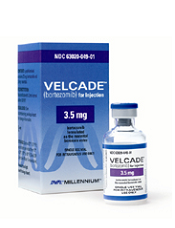
Photo courtesy of Millennium
The European Commission (EC) has approved bortezomib (Velcade) in combination with rituximab, cyclophosphamide, doxorubicin, and prednisone (VR-CAP) to treat adults with previously untreated mantle cell lymphoma (MCL) in whom hematopoietic stem cell transplant (HSCT) is considered unsuitable.
Now, bortezomib can be marketed for this indication in all 28 countries of the European Union (EU).
Bortezomib is already approved in the EU to treat multiple myeloma (MM), either as monotherapy or in combination with other agents.
The EC’s approval of bortezomib in MCL is based on data from a phase 3 study known as LYM-3002.
This randomized trial included 487 patients with newly diagnosed MCL who were ineligible, or not considered, for HSCT. Patients were randomized to receive VR-CAP or R-CHOP (rituximab, cyclophosphamide, doxorubicin, vincristine, and prednisone).
The VR-CAP regimen significantly improved progression-free survival (PFS), the primary endpoint, when compared to R-CHOP.
According to an independent review committee, there was a 59% improvement in PFS for the VR-CAP arm compared to the R-CHOP arm, with median times of 24.7 months and 14.4 months, respectively (hazard ratio=0.63; P<0.001).
Study investigators reported a 96% increase in PFS with VR-CAP compared to R-CHOP, with median times of 30.7 months and 16.1 months, respectively (hazard ratio=0.51, P<0.001).
VR-CAP was associated with additional, but manageable, toxicity when compared to R-CHOP. Serious adverse events (AEs) were reported in 38% and 30% of patients, respectively. And grade 3 or higher AEs were reported in 93% and 85% of patients, respectively.
Treatment discontinuation due to AEs occurred in 9% of patients in the VR-CAP arm and 7% in the R-CHOP arm. On-treatment, drug-related deaths occurred in 2% and 3% of patients, respectively.
About bortezomib
Bortezomib works by reversibly interrupting the normal working of cell proteasomes, inducing cancerous cells to stop growing and die.
In addition to the new MCL indication, the drug is approved in the EU to treat various stages of MM. It’s approved in combination with melphalan and prednisone to treat previously untreated adults with MM who are unsuitable for high-dose chemotherapy with HSCT.
Bortezomib is also approved in combination with dexamethasone, or with dexamethasone plus thalidomide, to treat previously untreated MM patients set to receive high-dose chemotherapy followed by HSCT.
And the drug is approved as monotherapy or in combination with pegylated liposomal doxorubicin or dexamethasone to treat adults with MM whose disease has progressed after at least one other treatment and who have already had, or cannot undergo, HSCT.
Bortezomib is approved in more than 90 countries and has been used to treat more than 550,000 patients worldwide.
The product is co-developed by Millennium, the Takeda Oncology Company, a wholly owned subsidiary of Takeda Pharmaceutical Company Limited, and Janssen Pharmaceutical Companies.
Millennium is responsible for commercialization in the US. Janssen Pharmaceutical Companies are responsible for commercialization in Europe and the rest of the world. Takeda Pharmaceutical Company Limited and Janssen Pharmaceutical K.K. co-promote the drug in Japan.
Photo courtesy of Millennium
The European Commission (EC) has approved bortezomib (Velcade) in combination with rituximab, cyclophosphamide, doxorubicin, and prednisone (VR-CAP) to treat adults with previously untreated mantle cell lymphoma (MCL) in whom hematopoietic stem cell transplant (HSCT) is considered unsuitable.
Now, bortezomib can be marketed for this indication in all 28 countries of the European Union (EU).
Bortezomib is already approved in the EU to treat multiple myeloma (MM), either as monotherapy or in combination with other agents.
The EC’s approval of bortezomib in MCL is based on data from a phase 3 study known as LYM-3002.
This randomized trial included 487 patients with newly diagnosed MCL who were ineligible, or not considered, for HSCT. Patients were randomized to receive VR-CAP or R-CHOP (rituximab, cyclophosphamide, doxorubicin, vincristine, and prednisone).
The VR-CAP regimen significantly improved progression-free survival (PFS), the primary endpoint, when compared to R-CHOP.
According to an independent review committee, there was a 59% improvement in PFS for the VR-CAP arm compared to the R-CHOP arm, with median times of 24.7 months and 14.4 months, respectively (hazard ratio=0.63; P<0.001).
Study investigators reported a 96% increase in PFS with VR-CAP compared to R-CHOP, with median times of 30.7 months and 16.1 months, respectively (hazard ratio=0.51, P<0.001).
VR-CAP was associated with additional, but manageable, toxicity when compared to R-CHOP. Serious adverse events (AEs) were reported in 38% and 30% of patients, respectively. And grade 3 or higher AEs were reported in 93% and 85% of patients, respectively.
Treatment discontinuation due to AEs occurred in 9% of patients in the VR-CAP arm and 7% in the R-CHOP arm. On-treatment, drug-related deaths occurred in 2% and 3% of patients, respectively.
About bortezomib
Bortezomib works by reversibly interrupting the normal working of cell proteasomes, inducing cancerous cells to stop growing and die.
In addition to the new MCL indication, the drug is approved in the EU to treat various stages of MM. It’s approved in combination with melphalan and prednisone to treat previously untreated adults with MM who are unsuitable for high-dose chemotherapy with HSCT.
Bortezomib is also approved in combination with dexamethasone, or with dexamethasone plus thalidomide, to treat previously untreated MM patients set to receive high-dose chemotherapy followed by HSCT.
And the drug is approved as monotherapy or in combination with pegylated liposomal doxorubicin or dexamethasone to treat adults with MM whose disease has progressed after at least one other treatment and who have already had, or cannot undergo, HSCT.
Bortezomib is approved in more than 90 countries and has been used to treat more than 550,000 patients worldwide.
The product is co-developed by Millennium, the Takeda Oncology Company, a wholly owned subsidiary of Takeda Pharmaceutical Company Limited, and Janssen Pharmaceutical Companies.
Millennium is responsible for commercialization in the US. Janssen Pharmaceutical Companies are responsible for commercialization in Europe and the rest of the world. Takeda Pharmaceutical Company Limited and Janssen Pharmaceutical K.K. co-promote the drug in Japan.
Photo courtesy of Millennium
The European Commission (EC) has approved bortezomib (Velcade) in combination with rituximab, cyclophosphamide, doxorubicin, and prednisone (VR-CAP) to treat adults with previously untreated mantle cell lymphoma (MCL) in whom hematopoietic stem cell transplant (HSCT) is considered unsuitable.
Now, bortezomib can be marketed for this indication in all 28 countries of the European Union (EU).
Bortezomib is already approved in the EU to treat multiple myeloma (MM), either as monotherapy or in combination with other agents.
The EC’s approval of bortezomib in MCL is based on data from a phase 3 study known as LYM-3002.
This randomized trial included 487 patients with newly diagnosed MCL who were ineligible, or not considered, for HSCT. Patients were randomized to receive VR-CAP or R-CHOP (rituximab, cyclophosphamide, doxorubicin, vincristine, and prednisone).
The VR-CAP regimen significantly improved progression-free survival (PFS), the primary endpoint, when compared to R-CHOP.
According to an independent review committee, there was a 59% improvement in PFS for the VR-CAP arm compared to the R-CHOP arm, with median times of 24.7 months and 14.4 months, respectively (hazard ratio=0.63; P<0.001).
Study investigators reported a 96% increase in PFS with VR-CAP compared to R-CHOP, with median times of 30.7 months and 16.1 months, respectively (hazard ratio=0.51, P<0.001).
VR-CAP was associated with additional, but manageable, toxicity when compared to R-CHOP. Serious adverse events (AEs) were reported in 38% and 30% of patients, respectively. And grade 3 or higher AEs were reported in 93% and 85% of patients, respectively.
Treatment discontinuation due to AEs occurred in 9% of patients in the VR-CAP arm and 7% in the R-CHOP arm. On-treatment, drug-related deaths occurred in 2% and 3% of patients, respectively.
About bortezomib
Bortezomib works by reversibly interrupting the normal working of cell proteasomes, inducing cancerous cells to stop growing and die.
In addition to the new MCL indication, the drug is approved in the EU to treat various stages of MM. It’s approved in combination with melphalan and prednisone to treat previously untreated adults with MM who are unsuitable for high-dose chemotherapy with HSCT.
Bortezomib is also approved in combination with dexamethasone, or with dexamethasone plus thalidomide, to treat previously untreated MM patients set to receive high-dose chemotherapy followed by HSCT.
And the drug is approved as monotherapy or in combination with pegylated liposomal doxorubicin or dexamethasone to treat adults with MM whose disease has progressed after at least one other treatment and who have already had, or cannot undergo, HSCT.
Bortezomib is approved in more than 90 countries and has been used to treat more than 550,000 patients worldwide.
The product is co-developed by Millennium, the Takeda Oncology Company, a wholly owned subsidiary of Takeda Pharmaceutical Company Limited, and Janssen Pharmaceutical Companies.
Millennium is responsible for commercialization in the US. Janssen Pharmaceutical Companies are responsible for commercialization in Europe and the rest of the world. Takeda Pharmaceutical Company Limited and Janssen Pharmaceutical K.K. co-promote the drug in Japan.
Vaccine gets orphan designation for ATLL
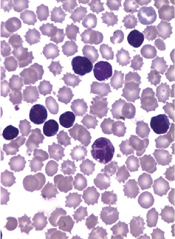
The European Medicines Agency (EMA) has granted orphan drug designation for a therapeutic vaccine candidate known as THV02 to treat adult T-cell leukemia/lymphoma (ATLL).
THV02 is an experimental treatment composed of 2 lentiviral vectors to be used in a prime/boost regimen in ATLL patients infected by the HTLV-1 virus.
Both investigational drugs encode the same antigens, derived from 4 proteins of the HTLV-1 virus.
THV02 is intended to induce an immune response against HTLV antigens born by ATLL with the aim of enabling the patients’ immune system to fight leukemic cells.
Preclinical evaluation has suggested that THV02 is safe, and the vaccine has presented an “unprecedented” immunogenicity profile in several models, according to THERAVECTYS, the company developing THV02.
“Preclinical immunogenicity results obtained to date are very promising, and we are really excited by the prospect of bringing a safe and better-tolerated alternative to patients who are desperately in need of a treatment,” said Déborah Revaud, the senior scientist in charge of developing THV02.
The EMA grants orphan designation to drugs in development intended for the treatment, prevention, or diagnosis of life-threatening or chronically debilitating diseases occurring in fewer than 5 in 10,000 people.
The designation allows sponsors to benefit from an accelerated development process, financial incentives, and a 10-year period of market exclusivity once the drug is on the market.
“We are extremely pleased that the European Medicines Agency has granted an orphan drug status to our vaccine candidate against ATLL,” said Emmanuelle Sabbah-Petrover, PhD, head of regulatory affairs at THERAVECTYS.
“We expect to recruit our first patients towards the end of Q3 2015 in Europe and advance further developments in the US and in Japan in 2016.”
Should THV02 demonstrate a convincing safety and efficacy profile during its development against ATLL, THERAVECTYS said it will consider developing the vaccine for HTLV-related infections as treatment and possibly as prophylaxis.
The European Medicines Agency (EMA) has granted orphan drug designation for a therapeutic vaccine candidate known as THV02 to treat adult T-cell leukemia/lymphoma (ATLL).
THV02 is an experimental treatment composed of 2 lentiviral vectors to be used in a prime/boost regimen in ATLL patients infected by the HTLV-1 virus.
Both investigational drugs encode the same antigens, derived from 4 proteins of the HTLV-1 virus.
THV02 is intended to induce an immune response against HTLV antigens born by ATLL with the aim of enabling the patients’ immune system to fight leukemic cells.
Preclinical evaluation has suggested that THV02 is safe, and the vaccine has presented an “unprecedented” immunogenicity profile in several models, according to THERAVECTYS, the company developing THV02.
“Preclinical immunogenicity results obtained to date are very promising, and we are really excited by the prospect of bringing a safe and better-tolerated alternative to patients who are desperately in need of a treatment,” said Déborah Revaud, the senior scientist in charge of developing THV02.
The EMA grants orphan designation to drugs in development intended for the treatment, prevention, or diagnosis of life-threatening or chronically debilitating diseases occurring in fewer than 5 in 10,000 people.
The designation allows sponsors to benefit from an accelerated development process, financial incentives, and a 10-year period of market exclusivity once the drug is on the market.
“We are extremely pleased that the European Medicines Agency has granted an orphan drug status to our vaccine candidate against ATLL,” said Emmanuelle Sabbah-Petrover, PhD, head of regulatory affairs at THERAVECTYS.
“We expect to recruit our first patients towards the end of Q3 2015 in Europe and advance further developments in the US and in Japan in 2016.”
Should THV02 demonstrate a convincing safety and efficacy profile during its development against ATLL, THERAVECTYS said it will consider developing the vaccine for HTLV-related infections as treatment and possibly as prophylaxis.
The European Medicines Agency (EMA) has granted orphan drug designation for a therapeutic vaccine candidate known as THV02 to treat adult T-cell leukemia/lymphoma (ATLL).
THV02 is an experimental treatment composed of 2 lentiviral vectors to be used in a prime/boost regimen in ATLL patients infected by the HTLV-1 virus.
Both investigational drugs encode the same antigens, derived from 4 proteins of the HTLV-1 virus.
THV02 is intended to induce an immune response against HTLV antigens born by ATLL with the aim of enabling the patients’ immune system to fight leukemic cells.
Preclinical evaluation has suggested that THV02 is safe, and the vaccine has presented an “unprecedented” immunogenicity profile in several models, according to THERAVECTYS, the company developing THV02.
“Preclinical immunogenicity results obtained to date are very promising, and we are really excited by the prospect of bringing a safe and better-tolerated alternative to patients who are desperately in need of a treatment,” said Déborah Revaud, the senior scientist in charge of developing THV02.
The EMA grants orphan designation to drugs in development intended for the treatment, prevention, or diagnosis of life-threatening or chronically debilitating diseases occurring in fewer than 5 in 10,000 people.
The designation allows sponsors to benefit from an accelerated development process, financial incentives, and a 10-year period of market exclusivity once the drug is on the market.
“We are extremely pleased that the European Medicines Agency has granted an orphan drug status to our vaccine candidate against ATLL,” said Emmanuelle Sabbah-Petrover, PhD, head of regulatory affairs at THERAVECTYS.
“We expect to recruit our first patients towards the end of Q3 2015 in Europe and advance further developments in the US and in Japan in 2016.”
Should THV02 demonstrate a convincing safety and efficacy profile during its development against ATLL, THERAVECTYS said it will consider developing the vaccine for HTLV-related infections as treatment and possibly as prophylaxis.
Product deemed breakthrough for beta-thalassemia major
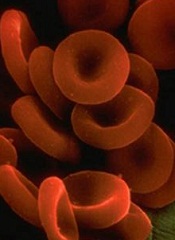
The US Food and Drug Administration (FDA) has granted breakthrough therapy designation to LentiGlobin® BB305 for the treatment of transfusion-dependent patients with beta-thalassemia major.
The product is created by inserting a functional human beta-globin gene into a patient’s hematopoietic stem cells ex vivo. The cells are returned to the patient via transplant.
The product is intended to treat sickle cell disease as well as beta-thalassemia major.
“The FDA’s breakthrough designation of LentiGlobin highlights that new therapies are needed for the treatment of patients with beta-thalassemia major, especially treatments with the potential to meaningfully reduce or liberate patients from transfusion dependence,” said David Davidson, MD, chief medical officer of bluebird bio, the company developing LentiGlobin.
“Our early clinical data investigating the use of LentiGlobin in patients with multiple genotypes of beta-thalassemia major . . . are very encouraging, and we remain on track to complete enrollment in the Northstar and HGB-205 studies in 2015.”
Early study results
The breakthrough designation is supported by data from the ongoing phase 1/2 Northstar (HGB-204) and HGB-205 studies. Findings in 8 subjects from both studies were presented at the 2014 ASH Annual Meeting.
As of December 1, five subjects with beta-thalassemia major had received LentiGlobin in the Northstar Study. The first 2 subjects were producing steadily increasing amounts of beta-T87Q-globin and were free of the need for transfusion for 5 months and 3 months, respectively.
Three additional subjects have received LentiGlobin as well, but researchers said it is too early to draw any meaningful conclusions on clinical efficacy.
As of December 1, two subjects with beta-thalassemia major received LentiGlobin as part of the HGB-205 study. Both achieved rapid transfusion independence with near-normal hemoglobin levels. And they were free from the need for transfusions for 12 months and 9 months, respectively.
The third treated subject, the first individual with sickle cell disease ever to be treated with gene therapy, has achieved neutrophil engraftment. But researchers said it is too early to draw any meaningful conclusions on clinical efficacy.
About breakthrough designation
The FDA’s breakthrough therapy designation is intended to expedite the development and review of a drug candidate intended to treat a serious or life-threatening condition.
For a drug to gain the designation, preliminary clinical evidence must suggest the drug could offer substantial improvement over existing therapies on one or more clinically significant endpoints.
The benefits of breakthrough designation include the same benefits as fast track designation (priority review, rolling review, etc.), plus an organizational commitment involving the FDA’s senior managers with more intensive guidance from the FDA.
Breakthrough therapy designation does not change the standards for approval.
The US Food and Drug Administration (FDA) has granted breakthrough therapy designation to LentiGlobin® BB305 for the treatment of transfusion-dependent patients with beta-thalassemia major.
The product is created by inserting a functional human beta-globin gene into a patient’s hematopoietic stem cells ex vivo. The cells are returned to the patient via transplant.
The product is intended to treat sickle cell disease as well as beta-thalassemia major.
“The FDA’s breakthrough designation of LentiGlobin highlights that new therapies are needed for the treatment of patients with beta-thalassemia major, especially treatments with the potential to meaningfully reduce or liberate patients from transfusion dependence,” said David Davidson, MD, chief medical officer of bluebird bio, the company developing LentiGlobin.
“Our early clinical data investigating the use of LentiGlobin in patients with multiple genotypes of beta-thalassemia major . . . are very encouraging, and we remain on track to complete enrollment in the Northstar and HGB-205 studies in 2015.”
Early study results
The breakthrough designation is supported by data from the ongoing phase 1/2 Northstar (HGB-204) and HGB-205 studies. Findings in 8 subjects from both studies were presented at the 2014 ASH Annual Meeting.
As of December 1, five subjects with beta-thalassemia major had received LentiGlobin in the Northstar Study. The first 2 subjects were producing steadily increasing amounts of beta-T87Q-globin and were free of the need for transfusion for 5 months and 3 months, respectively.
Three additional subjects have received LentiGlobin as well, but researchers said it is too early to draw any meaningful conclusions on clinical efficacy.
As of December 1, two subjects with beta-thalassemia major received LentiGlobin as part of the HGB-205 study. Both achieved rapid transfusion independence with near-normal hemoglobin levels. And they were free from the need for transfusions for 12 months and 9 months, respectively.
The third treated subject, the first individual with sickle cell disease ever to be treated with gene therapy, has achieved neutrophil engraftment. But researchers said it is too early to draw any meaningful conclusions on clinical efficacy.
About breakthrough designation
The FDA’s breakthrough therapy designation is intended to expedite the development and review of a drug candidate intended to treat a serious or life-threatening condition.
For a drug to gain the designation, preliminary clinical evidence must suggest the drug could offer substantial improvement over existing therapies on one or more clinically significant endpoints.
The benefits of breakthrough designation include the same benefits as fast track designation (priority review, rolling review, etc.), plus an organizational commitment involving the FDA’s senior managers with more intensive guidance from the FDA.
Breakthrough therapy designation does not change the standards for approval.
The US Food and Drug Administration (FDA) has granted breakthrough therapy designation to LentiGlobin® BB305 for the treatment of transfusion-dependent patients with beta-thalassemia major.
The product is created by inserting a functional human beta-globin gene into a patient’s hematopoietic stem cells ex vivo. The cells are returned to the patient via transplant.
The product is intended to treat sickle cell disease as well as beta-thalassemia major.
“The FDA’s breakthrough designation of LentiGlobin highlights that new therapies are needed for the treatment of patients with beta-thalassemia major, especially treatments with the potential to meaningfully reduce or liberate patients from transfusion dependence,” said David Davidson, MD, chief medical officer of bluebird bio, the company developing LentiGlobin.
“Our early clinical data investigating the use of LentiGlobin in patients with multiple genotypes of beta-thalassemia major . . . are very encouraging, and we remain on track to complete enrollment in the Northstar and HGB-205 studies in 2015.”
Early study results
The breakthrough designation is supported by data from the ongoing phase 1/2 Northstar (HGB-204) and HGB-205 studies. Findings in 8 subjects from both studies were presented at the 2014 ASH Annual Meeting.
As of December 1, five subjects with beta-thalassemia major had received LentiGlobin in the Northstar Study. The first 2 subjects were producing steadily increasing amounts of beta-T87Q-globin and were free of the need for transfusion for 5 months and 3 months, respectively.
Three additional subjects have received LentiGlobin as well, but researchers said it is too early to draw any meaningful conclusions on clinical efficacy.
As of December 1, two subjects with beta-thalassemia major received LentiGlobin as part of the HGB-205 study. Both achieved rapid transfusion independence with near-normal hemoglobin levels. And they were free from the need for transfusions for 12 months and 9 months, respectively.
The third treated subject, the first individual with sickle cell disease ever to be treated with gene therapy, has achieved neutrophil engraftment. But researchers said it is too early to draw any meaningful conclusions on clinical efficacy.
About breakthrough designation
The FDA’s breakthrough therapy designation is intended to expedite the development and review of a drug candidate intended to treat a serious or life-threatening condition.
For a drug to gain the designation, preliminary clinical evidence must suggest the drug could offer substantial improvement over existing therapies on one or more clinically significant endpoints.
The benefits of breakthrough designation include the same benefits as fast track designation (priority review, rolling review, etc.), plus an organizational commitment involving the FDA’s senior managers with more intensive guidance from the FDA.
Breakthrough therapy designation does not change the standards for approval.