User login
Alzheimer’s disease raises risk for recurrent seizures
LOS ANGELES – Seizures are not uncommon among patients with Alzheimer’s disease – particularly as patients live longer with the disease – and are often associated with worse cognitive and functional performance, according to research findings presented at the Alzheimer’s Association International Conference.
Jonathan Vöglein, MD, of the German Center for Neurodegenerative Diseases and Ludwig-Maximilian University in Munich presented results from a cohort of 9,127 patients with Alzheimer’s disease (AD), of whom 287 had experienced a seizure, and more than 10,000 non-AD control subjects recruited at clinics during 2005-2016.
Dr. Vöglein and colleagues found that seizure risk increased with duration of disease, from 1.5% of patients at 4.8 years with the disease to 5.4% at 11 years, with likelihood of a seizure increasing steadily over time.
Moreover, 70% of AD patients who experienced a seizure had a second one within 7.5 months. People who had seizures fared worse on cognitive and functional tests: a mean 16.6 on the Mini Mental State Examination, compared with 19.6 for patients without seizures. On a severity rating scale, the Clinical Dementia Rating Sum of Boxes, patients with seizures also fared worse, with scores of 9.3, compared with 6.8 for patients without seizures (P less than .0001 for all, with results adjusted for age and disease duration).
“The data of our study show that there’s an association of seizures with worse cognitive and functional performance,” Dr. Vöglein said in an interview.
“It’s important for clinicians to know that Alzheimer’s patients are at an increased risk for seizures,” Dr. Vöglein said. “In my clinical care experience, seizures are rarely the main complaint of patients with Alzheimer’s disease.” Detailed interviews with the patient and a proxy are important, he added, because patients with Alzheimer’s disease may not always remember events that could be a seizure.
Dr. Vöglein noted that, to his knowledge, there are no reliable data showing that treating seizures with antiepileptic drugs slows cognitive decline. “The results of our study suggest that an antiepileptic treatment after a first seizure in patients with Alzheimer’s dementia may be considered,” he said.
Also at the conference, researcher Ruby Castilla-Puentes, MD, DrPH, of Janssen Pharmaceuticals in Hopewell, N.J., along with Miguel Habeych, MD, MPH, of the University of Cincinnati presented findings on dementia and seizure risk from a large U.S. national managed care database of nearly 3 million people aged 60 years and older, of whom 56% were women.
The researchers analyzed this cohort during 2005-2014 and identified 80,000 people (2.8% of the cohort) as having any dementia diagnosis. The overall incidence of new-onset seizures in patients with dementia was 12.3% per year. In general, all subtypes of seizures and epileptic disorders (partial, generalized, or undifferentiated) occurred more frequently in patients with dementia, compared against patients without dementia (P less than .0001).
People with dementia had more than six times greater risk for experiencing recurring epileptic seizures than did people without dementia (95% confidence interval, 4.4-9.5). They were at six times higher risk for partial seizures (95% CI, 5.5-6.6); fivefold higher risk for generalized (95% CI, 4.9-5.5) and undifferentiated epilepsy (95% CI, 4.8-5.2); and 4.75 times higher risk for generalized seizures (95% CI, 4.5-5.0) and partial epilepsy (95% CI, 4.4-5.1).
“Although there are limitations with the use of administrative claims databases to calculate incidence rates, this analysis suggests that patients of 60 years of age or older have higher risks of new-onset seizures associated with a dementia diagnosis,” Dr. Castilla-Puentes commented.
The findings, she said, reinforce the need for clinicians to monitor for seizures to ensure that patients with dementia receive appropriate treatment.
Dr. Vöglein disclosed no financial conflicts of interest. Dr. Castilla-Puentes disclosed being an employee of Janssen, which funded her study.
LOS ANGELES – Seizures are not uncommon among patients with Alzheimer’s disease – particularly as patients live longer with the disease – and are often associated with worse cognitive and functional performance, according to research findings presented at the Alzheimer’s Association International Conference.
Jonathan Vöglein, MD, of the German Center for Neurodegenerative Diseases and Ludwig-Maximilian University in Munich presented results from a cohort of 9,127 patients with Alzheimer’s disease (AD), of whom 287 had experienced a seizure, and more than 10,000 non-AD control subjects recruited at clinics during 2005-2016.
Dr. Vöglein and colleagues found that seizure risk increased with duration of disease, from 1.5% of patients at 4.8 years with the disease to 5.4% at 11 years, with likelihood of a seizure increasing steadily over time.
Moreover, 70% of AD patients who experienced a seizure had a second one within 7.5 months. People who had seizures fared worse on cognitive and functional tests: a mean 16.6 on the Mini Mental State Examination, compared with 19.6 for patients without seizures. On a severity rating scale, the Clinical Dementia Rating Sum of Boxes, patients with seizures also fared worse, with scores of 9.3, compared with 6.8 for patients without seizures (P less than .0001 for all, with results adjusted for age and disease duration).
“The data of our study show that there’s an association of seizures with worse cognitive and functional performance,” Dr. Vöglein said in an interview.
“It’s important for clinicians to know that Alzheimer’s patients are at an increased risk for seizures,” Dr. Vöglein said. “In my clinical care experience, seizures are rarely the main complaint of patients with Alzheimer’s disease.” Detailed interviews with the patient and a proxy are important, he added, because patients with Alzheimer’s disease may not always remember events that could be a seizure.
Dr. Vöglein noted that, to his knowledge, there are no reliable data showing that treating seizures with antiepileptic drugs slows cognitive decline. “The results of our study suggest that an antiepileptic treatment after a first seizure in patients with Alzheimer’s dementia may be considered,” he said.
Also at the conference, researcher Ruby Castilla-Puentes, MD, DrPH, of Janssen Pharmaceuticals in Hopewell, N.J., along with Miguel Habeych, MD, MPH, of the University of Cincinnati presented findings on dementia and seizure risk from a large U.S. national managed care database of nearly 3 million people aged 60 years and older, of whom 56% were women.
The researchers analyzed this cohort during 2005-2014 and identified 80,000 people (2.8% of the cohort) as having any dementia diagnosis. The overall incidence of new-onset seizures in patients with dementia was 12.3% per year. In general, all subtypes of seizures and epileptic disorders (partial, generalized, or undifferentiated) occurred more frequently in patients with dementia, compared against patients without dementia (P less than .0001).
People with dementia had more than six times greater risk for experiencing recurring epileptic seizures than did people without dementia (95% confidence interval, 4.4-9.5). They were at six times higher risk for partial seizures (95% CI, 5.5-6.6); fivefold higher risk for generalized (95% CI, 4.9-5.5) and undifferentiated epilepsy (95% CI, 4.8-5.2); and 4.75 times higher risk for generalized seizures (95% CI, 4.5-5.0) and partial epilepsy (95% CI, 4.4-5.1).
“Although there are limitations with the use of administrative claims databases to calculate incidence rates, this analysis suggests that patients of 60 years of age or older have higher risks of new-onset seizures associated with a dementia diagnosis,” Dr. Castilla-Puentes commented.
The findings, she said, reinforce the need for clinicians to monitor for seizures to ensure that patients with dementia receive appropriate treatment.
Dr. Vöglein disclosed no financial conflicts of interest. Dr. Castilla-Puentes disclosed being an employee of Janssen, which funded her study.
LOS ANGELES – Seizures are not uncommon among patients with Alzheimer’s disease – particularly as patients live longer with the disease – and are often associated with worse cognitive and functional performance, according to research findings presented at the Alzheimer’s Association International Conference.
Jonathan Vöglein, MD, of the German Center for Neurodegenerative Diseases and Ludwig-Maximilian University in Munich presented results from a cohort of 9,127 patients with Alzheimer’s disease (AD), of whom 287 had experienced a seizure, and more than 10,000 non-AD control subjects recruited at clinics during 2005-2016.
Dr. Vöglein and colleagues found that seizure risk increased with duration of disease, from 1.5% of patients at 4.8 years with the disease to 5.4% at 11 years, with likelihood of a seizure increasing steadily over time.
Moreover, 70% of AD patients who experienced a seizure had a second one within 7.5 months. People who had seizures fared worse on cognitive and functional tests: a mean 16.6 on the Mini Mental State Examination, compared with 19.6 for patients without seizures. On a severity rating scale, the Clinical Dementia Rating Sum of Boxes, patients with seizures also fared worse, with scores of 9.3, compared with 6.8 for patients without seizures (P less than .0001 for all, with results adjusted for age and disease duration).
“The data of our study show that there’s an association of seizures with worse cognitive and functional performance,” Dr. Vöglein said in an interview.
“It’s important for clinicians to know that Alzheimer’s patients are at an increased risk for seizures,” Dr. Vöglein said. “In my clinical care experience, seizures are rarely the main complaint of patients with Alzheimer’s disease.” Detailed interviews with the patient and a proxy are important, he added, because patients with Alzheimer’s disease may not always remember events that could be a seizure.
Dr. Vöglein noted that, to his knowledge, there are no reliable data showing that treating seizures with antiepileptic drugs slows cognitive decline. “The results of our study suggest that an antiepileptic treatment after a first seizure in patients with Alzheimer’s dementia may be considered,” he said.
Also at the conference, researcher Ruby Castilla-Puentes, MD, DrPH, of Janssen Pharmaceuticals in Hopewell, N.J., along with Miguel Habeych, MD, MPH, of the University of Cincinnati presented findings on dementia and seizure risk from a large U.S. national managed care database of nearly 3 million people aged 60 years and older, of whom 56% were women.
The researchers analyzed this cohort during 2005-2014 and identified 80,000 people (2.8% of the cohort) as having any dementia diagnosis. The overall incidence of new-onset seizures in patients with dementia was 12.3% per year. In general, all subtypes of seizures and epileptic disorders (partial, generalized, or undifferentiated) occurred more frequently in patients with dementia, compared against patients without dementia (P less than .0001).
People with dementia had more than six times greater risk for experiencing recurring epileptic seizures than did people without dementia (95% confidence interval, 4.4-9.5). They were at six times higher risk for partial seizures (95% CI, 5.5-6.6); fivefold higher risk for generalized (95% CI, 4.9-5.5) and undifferentiated epilepsy (95% CI, 4.8-5.2); and 4.75 times higher risk for generalized seizures (95% CI, 4.5-5.0) and partial epilepsy (95% CI, 4.4-5.1).
“Although there are limitations with the use of administrative claims databases to calculate incidence rates, this analysis suggests that patients of 60 years of age or older have higher risks of new-onset seizures associated with a dementia diagnosis,” Dr. Castilla-Puentes commented.
The findings, she said, reinforce the need for clinicians to monitor for seizures to ensure that patients with dementia receive appropriate treatment.
Dr. Vöglein disclosed no financial conflicts of interest. Dr. Castilla-Puentes disclosed being an employee of Janssen, which funded her study.
REPORTING FROM AAIC 2019
Changes in sleep-wake timing accompany cerebral glucose hypometabolism and cognitive function
LOS ANGELES – Dysregulated sleep-wake cycles may be linked to cerebral glucose hypometabolism and subtle cognitive changes, both of which are early signs of Alzheimer’s disease–like neurodegeneration, according to a 2-year study of older Korean adults.

The association was particularly strong in subjects who experienced delayed acrophase, the peak of the normal sleep-wake cycle, So-Yeon Jeon, MD, said at the Alzheimer’s Association International Conference. It’s not yet clear whether the changes are a risk factor for dementia or a prodromal sign of neurodegeneration, but even without full elucidation, the findings could have value as a signal of impending neurodegeneration, said Dr. Jeon of Seoul (South Korea) National University.
“Our findings suggest that delayed acrophase may be used as a predictor for the progression of Alzheimer’s-type neurodegeneration and cognitive decline in the near future in old individuals with diverse cognitive status,” she said. “But the relationship between circadian phases and neurodegeneration is complex and not yet well understood.”
The 24-month study comprised 215 elderly adults enrolled in the Korean Brain Aging Study for the Early Diagnosis and Prediction of Alzheimer’s Disease (KBASE). They were a mean of 70 years old at baseline; 143 were cognitively normal, 40 had mild cognitive impairment, and 32 had Alzheimer’s dementia. Both at baseline and 2 years, everyone underwent a comprehensive neuropsychological assessment, amyloid PET brain imaging with Pittsburgh compound B, and an [18F]-fluorodeoxyglucose PET scan to determine brain glucose metabolic rate.
Before each assessment, the investigators measured sleep and circadian rhythms with 8 days of actigraphy. This assessed sleep variables (total sleep time, sleep latency, sleep efficiency, and wakefulness after sleep); rest-activity rhythm variables (midline estimated statistic of rhythm, amplitude, and acrophase), and some nonparametric values including interdaily stability, intradaily variability, and relative amplitude of sleep cycles. Subjects also completed sleep diaries during these periods.
The study’s main outcomes were 2-year changes in the Mini Mental State Exam (MMSE) score and in Alzheimer’s imaging biomarkers, including glucose metabolism and amyloid deposition. All analyses controlled for age, sex, Clinical Dementia Rating score, apolipoprotein E allele status, and baseline cognition.
At baseline, lower total sleep time was significantly associated with hypometabolism in areas associated with Alzheimer’s pathology as well as lower mean MMSE scores. Circadian variables showed no significant associations with these characteristics. However, the relative amplitude of circadian rhythm was significantly associated with hypometabolism and with lower MMSE score. There were no associations with brain amyloid load.
At 2 years, acrophase was associated with declines in cerebral glucose metabolism and further changes in the MMSE, even after the researchers controlled for the potential confounders. Delayed acrophase, although not associated with either metabolic rate or cognition at baseline, did significantly influence both at 2 years, suggesting a rapidly eroding clinical picture.
“Neurodegeneration over 2 years means the disease is progressing rapidly and subjects are likely to have tauopathies or other proteinopathy,” Dr. Jeon said. “These pathologies may either be resulting in delayed acrophase followed by neurodegeneration, or they may be prodromal symptoms of impending neurodegeneration. Whether they are early symptoms or early risk factors is not currently known, however. Two years is too short of a follow-up to determine these questions.”
Dr. Jeon had no financial declarations.
SOURCE: Jeon SY et al. AAIC 2019, abstract 33543.
LOS ANGELES – Dysregulated sleep-wake cycles may be linked to cerebral glucose hypometabolism and subtle cognitive changes, both of which are early signs of Alzheimer’s disease–like neurodegeneration, according to a 2-year study of older Korean adults.
The association was particularly strong in subjects who experienced delayed acrophase, the peak of the normal sleep-wake cycle, So-Yeon Jeon, MD, said at the Alzheimer’s Association International Conference. It’s not yet clear whether the changes are a risk factor for dementia or a prodromal sign of neurodegeneration, but even without full elucidation, the findings could have value as a signal of impending neurodegeneration, said Dr. Jeon of Seoul (South Korea) National University.
“Our findings suggest that delayed acrophase may be used as a predictor for the progression of Alzheimer’s-type neurodegeneration and cognitive decline in the near future in old individuals with diverse cognitive status,” she said. “But the relationship between circadian phases and neurodegeneration is complex and not yet well understood.”
The 24-month study comprised 215 elderly adults enrolled in the Korean Brain Aging Study for the Early Diagnosis and Prediction of Alzheimer’s Disease (KBASE). They were a mean of 70 years old at baseline; 143 were cognitively normal, 40 had mild cognitive impairment, and 32 had Alzheimer’s dementia. Both at baseline and 2 years, everyone underwent a comprehensive neuropsychological assessment, amyloid PET brain imaging with Pittsburgh compound B, and an [18F]-fluorodeoxyglucose PET scan to determine brain glucose metabolic rate.
Before each assessment, the investigators measured sleep and circadian rhythms with 8 days of actigraphy. This assessed sleep variables (total sleep time, sleep latency, sleep efficiency, and wakefulness after sleep); rest-activity rhythm variables (midline estimated statistic of rhythm, amplitude, and acrophase), and some nonparametric values including interdaily stability, intradaily variability, and relative amplitude of sleep cycles. Subjects also completed sleep diaries during these periods.
The study’s main outcomes were 2-year changes in the Mini Mental State Exam (MMSE) score and in Alzheimer’s imaging biomarkers, including glucose metabolism and amyloid deposition. All analyses controlled for age, sex, Clinical Dementia Rating score, apolipoprotein E allele status, and baseline cognition.
At baseline, lower total sleep time was significantly associated with hypometabolism in areas associated with Alzheimer’s pathology as well as lower mean MMSE scores. Circadian variables showed no significant associations with these characteristics. However, the relative amplitude of circadian rhythm was significantly associated with hypometabolism and with lower MMSE score. There were no associations with brain amyloid load.
At 2 years, acrophase was associated with declines in cerebral glucose metabolism and further changes in the MMSE, even after the researchers controlled for the potential confounders. Delayed acrophase, although not associated with either metabolic rate or cognition at baseline, did significantly influence both at 2 years, suggesting a rapidly eroding clinical picture.
“Neurodegeneration over 2 years means the disease is progressing rapidly and subjects are likely to have tauopathies or other proteinopathy,” Dr. Jeon said. “These pathologies may either be resulting in delayed acrophase followed by neurodegeneration, or they may be prodromal symptoms of impending neurodegeneration. Whether they are early symptoms or early risk factors is not currently known, however. Two years is too short of a follow-up to determine these questions.”
Dr. Jeon had no financial declarations.
SOURCE: Jeon SY et al. AAIC 2019, abstract 33543.
LOS ANGELES – Dysregulated sleep-wake cycles may be linked to cerebral glucose hypometabolism and subtle cognitive changes, both of which are early signs of Alzheimer’s disease–like neurodegeneration, according to a 2-year study of older Korean adults.
The association was particularly strong in subjects who experienced delayed acrophase, the peak of the normal sleep-wake cycle, So-Yeon Jeon, MD, said at the Alzheimer’s Association International Conference. It’s not yet clear whether the changes are a risk factor for dementia or a prodromal sign of neurodegeneration, but even without full elucidation, the findings could have value as a signal of impending neurodegeneration, said Dr. Jeon of Seoul (South Korea) National University.
“Our findings suggest that delayed acrophase may be used as a predictor for the progression of Alzheimer’s-type neurodegeneration and cognitive decline in the near future in old individuals with diverse cognitive status,” she said. “But the relationship between circadian phases and neurodegeneration is complex and not yet well understood.”
The 24-month study comprised 215 elderly adults enrolled in the Korean Brain Aging Study for the Early Diagnosis and Prediction of Alzheimer’s Disease (KBASE). They were a mean of 70 years old at baseline; 143 were cognitively normal, 40 had mild cognitive impairment, and 32 had Alzheimer’s dementia. Both at baseline and 2 years, everyone underwent a comprehensive neuropsychological assessment, amyloid PET brain imaging with Pittsburgh compound B, and an [18F]-fluorodeoxyglucose PET scan to determine brain glucose metabolic rate.
Before each assessment, the investigators measured sleep and circadian rhythms with 8 days of actigraphy. This assessed sleep variables (total sleep time, sleep latency, sleep efficiency, and wakefulness after sleep); rest-activity rhythm variables (midline estimated statistic of rhythm, amplitude, and acrophase), and some nonparametric values including interdaily stability, intradaily variability, and relative amplitude of sleep cycles. Subjects also completed sleep diaries during these periods.
The study’s main outcomes were 2-year changes in the Mini Mental State Exam (MMSE) score and in Alzheimer’s imaging biomarkers, including glucose metabolism and amyloid deposition. All analyses controlled for age, sex, Clinical Dementia Rating score, apolipoprotein E allele status, and baseline cognition.
At baseline, lower total sleep time was significantly associated with hypometabolism in areas associated with Alzheimer’s pathology as well as lower mean MMSE scores. Circadian variables showed no significant associations with these characteristics. However, the relative amplitude of circadian rhythm was significantly associated with hypometabolism and with lower MMSE score. There were no associations with brain amyloid load.
At 2 years, acrophase was associated with declines in cerebral glucose metabolism and further changes in the MMSE, even after the researchers controlled for the potential confounders. Delayed acrophase, although not associated with either metabolic rate or cognition at baseline, did significantly influence both at 2 years, suggesting a rapidly eroding clinical picture.
“Neurodegeneration over 2 years means the disease is progressing rapidly and subjects are likely to have tauopathies or other proteinopathy,” Dr. Jeon said. “These pathologies may either be resulting in delayed acrophase followed by neurodegeneration, or they may be prodromal symptoms of impending neurodegeneration. Whether they are early symptoms or early risk factors is not currently known, however. Two years is too short of a follow-up to determine these questions.”
Dr. Jeon had no financial declarations.
SOURCE: Jeon SY et al. AAIC 2019, abstract 33543.
REPORTING FROM AAIC 2019

Obesity tied to relapse in young patients with multiple sclerosis
, results of a recent large, single-center study show. The rate of switching to second-line disease-modifying therapy was consequently about 50% higher among the obese children in the study, which included a total of 453 pediatric patients.
The link between obesity and treatment response suggests that the management of these younger patients with MS could be improved through weight loss or body mass index (BMI)-adjusted dosing, according to Peter Huppke, MD, of Georg August University in Göttingen, Germany, and co-investigators.
“The findings do not indicate that obesity promotes greater disease activity, but pharmacokinetic factors are more likely associated with treatment response,” Dr. Huppke and co-authors said in a report on their study, which was published online ahead of print July 15 in JAMA Neurology.
This is believed to be the first-ever study to find an association between BMI and treatment response in pediatric patients with MS, according to the authors, who said they also confirmed a link between obesity and MS.
Specifically, obesity increased MS susceptibility by two-fold as compared with healthy controls, a finding that they said adds to a small but growing body of evidence that high BMI is associated with increased risk of the disease in these younger individuals.
This retrospective study included 453 pediatric patients with MS treated at the Center for MS in Childhood and Adolescence in Göttingen, Germany between 1990 and 2016. About two-thirds were female and the mean age at MS diagnosis was about 14 years.
Of those patients, 126 (27.8%) were classified as obese based on a BMI greater than the 90th percentile, according to the report.
Dr. Huppke and co-investigators found that high BMI was linked to a significantly increased odds of pediatric MS, with odds ratios of 2.19 (95% CI, 1.5-3.1; P < 0.001) in girls and 2.14 (95% CI, 1.3-3.5; P = 0.003) in boys.
A total of 277 of these pediatric patients received a first-line disease-modifying therapy for 6 months or longer, including 249 treated with interferon beta and 51 treated with glatiramer.
Relapses were more common in obese patients, according to the report. with an annualized relapse rate of 1.29, compared to just 0.72 for those who were not overweight (P < 0.001).
Consequently, likelihood of receiving a second-line treatment was about 1.5 times higher in the obese or extremely obese patients, investigators said.
“A healthy weight may potentially optimize treatment outcomes and reduce disease-related burden and health care costs,” they concluded in the report, adding that BMI-adjusted dosing may “increase the value” of first-line disease-modifying therapies.
Dr. Huppke reported disclosures related to Bayer Health Care, Merck Serono, and Novartis not associated with the current study.
SOURCE: Huppke B, et al. JAMA Neurol. 2019 Jul 15. doi: 10.1001/jamaneurol.2019.1997
, results of a recent large, single-center study show. The rate of switching to second-line disease-modifying therapy was consequently about 50% higher among the obese children in the study, which included a total of 453 pediatric patients.
The link between obesity and treatment response suggests that the management of these younger patients with MS could be improved through weight loss or body mass index (BMI)-adjusted dosing, according to Peter Huppke, MD, of Georg August University in Göttingen, Germany, and co-investigators.
“The findings do not indicate that obesity promotes greater disease activity, but pharmacokinetic factors are more likely associated with treatment response,” Dr. Huppke and co-authors said in a report on their study, which was published online ahead of print July 15 in JAMA Neurology.
This is believed to be the first-ever study to find an association between BMI and treatment response in pediatric patients with MS, according to the authors, who said they also confirmed a link between obesity and MS.
Specifically, obesity increased MS susceptibility by two-fold as compared with healthy controls, a finding that they said adds to a small but growing body of evidence that high BMI is associated with increased risk of the disease in these younger individuals.
This retrospective study included 453 pediatric patients with MS treated at the Center for MS in Childhood and Adolescence in Göttingen, Germany between 1990 and 2016. About two-thirds were female and the mean age at MS diagnosis was about 14 years.
Of those patients, 126 (27.8%) were classified as obese based on a BMI greater than the 90th percentile, according to the report.
Dr. Huppke and co-investigators found that high BMI was linked to a significantly increased odds of pediatric MS, with odds ratios of 2.19 (95% CI, 1.5-3.1; P < 0.001) in girls and 2.14 (95% CI, 1.3-3.5; P = 0.003) in boys.
A total of 277 of these pediatric patients received a first-line disease-modifying therapy for 6 months or longer, including 249 treated with interferon beta and 51 treated with glatiramer.
Relapses were more common in obese patients, according to the report. with an annualized relapse rate of 1.29, compared to just 0.72 for those who were not overweight (P < 0.001).
Consequently, likelihood of receiving a second-line treatment was about 1.5 times higher in the obese or extremely obese patients, investigators said.
“A healthy weight may potentially optimize treatment outcomes and reduce disease-related burden and health care costs,” they concluded in the report, adding that BMI-adjusted dosing may “increase the value” of first-line disease-modifying therapies.
Dr. Huppke reported disclosures related to Bayer Health Care, Merck Serono, and Novartis not associated with the current study.
SOURCE: Huppke B, et al. JAMA Neurol. 2019 Jul 15. doi: 10.1001/jamaneurol.2019.1997
, results of a recent large, single-center study show. The rate of switching to second-line disease-modifying therapy was consequently about 50% higher among the obese children in the study, which included a total of 453 pediatric patients.
The link between obesity and treatment response suggests that the management of these younger patients with MS could be improved through weight loss or body mass index (BMI)-adjusted dosing, according to Peter Huppke, MD, of Georg August University in Göttingen, Germany, and co-investigators.
“The findings do not indicate that obesity promotes greater disease activity, but pharmacokinetic factors are more likely associated with treatment response,” Dr. Huppke and co-authors said in a report on their study, which was published online ahead of print July 15 in JAMA Neurology.
This is believed to be the first-ever study to find an association between BMI and treatment response in pediatric patients with MS, according to the authors, who said they also confirmed a link between obesity and MS.
Specifically, obesity increased MS susceptibility by two-fold as compared with healthy controls, a finding that they said adds to a small but growing body of evidence that high BMI is associated with increased risk of the disease in these younger individuals.
This retrospective study included 453 pediatric patients with MS treated at the Center for MS in Childhood and Adolescence in Göttingen, Germany between 1990 and 2016. About two-thirds were female and the mean age at MS diagnosis was about 14 years.
Of those patients, 126 (27.8%) were classified as obese based on a BMI greater than the 90th percentile, according to the report.
Dr. Huppke and co-investigators found that high BMI was linked to a significantly increased odds of pediatric MS, with odds ratios of 2.19 (95% CI, 1.5-3.1; P < 0.001) in girls and 2.14 (95% CI, 1.3-3.5; P = 0.003) in boys.
A total of 277 of these pediatric patients received a first-line disease-modifying therapy for 6 months or longer, including 249 treated with interferon beta and 51 treated with glatiramer.
Relapses were more common in obese patients, according to the report. with an annualized relapse rate of 1.29, compared to just 0.72 for those who were not overweight (P < 0.001).
Consequently, likelihood of receiving a second-line treatment was about 1.5 times higher in the obese or extremely obese patients, investigators said.
“A healthy weight may potentially optimize treatment outcomes and reduce disease-related burden and health care costs,” they concluded in the report, adding that BMI-adjusted dosing may “increase the value” of first-line disease-modifying therapies.
Dr. Huppke reported disclosures related to Bayer Health Care, Merck Serono, and Novartis not associated with the current study.
SOURCE: Huppke B, et al. JAMA Neurol. 2019 Jul 15. doi: 10.1001/jamaneurol.2019.1997
FROM JAMA NEUROLOGY
Key clinical point: Obese children and adolescents with MS had about twice as many relapses on first-line treatment as compared with their non-obese counterparts.
Major finding: The annualized relapse rate was 1.29 for obese pediatric patients, compared to 0.72 for those who were not overweight (P < 0.001).
Study details: Retrospective study including 453 patients with pediatric MS treated at a center in Göttingen, Germany between 1990 and 2016.
Disclosures: The senior author reported disclosures related to Bayer Health Care, Merck Serono, and Novartis unrelated to the this study.
Source: Huppke B, et al. JAMA Neurol. 2019 Jul 15.
Can mindfulness-based cognitive therapy treat migraine?
PHILADELPHIA – , according to randomized clinical trial results.
“The fact that people can improve how they live their daily life even with the same amount of headache days and the same pain intensity is remarkable,” said study investigator Elizabeth K. Seng, PhD, associate professor of psychology at Yeshiva University and research associate professor of neurology at Albert Einstein College of Medicine, both in New York. “I think this gives us a little bit of a clue about when to use these kinds of treatments.”
Dr. Seng presented findings from the phase 2b pilot trial at the annual meeting of the American Headache Society.
To study the efficacy of mindfulness-based cognitive therapy for migraine, Dr. Seng and her research colleagues recruited participants with migraine in the New York City area between 2015 and 2018. In all, 60 patients were randomized to receive 8 weekly individual 75-minute mindfulness-based cognitive therapy for migraine sessions or 8 weeks on a wait list with treatment as usual.
Primary outcomes were Month 0 to Month 4 changes in perceived disability, measured using the Henry Ford Disability Inventory (HDI) and functional disability measured using the Migraine Disability Assessment Scale (MIDAS). Secondary outcomes included changes in headache days per 30 days and headache pain intensity.
Participants had a mean age of about 40 years, about 92% were women, and approximately half of the patients had chronic migraine. Participants had an average baseline HDI of 51.4, and 83.3% had MIDAS scores indicating severe disability. Patients averaged 10.4 headache attack days per month, and mean headache attack severity on a 0-10 scale was 6.2. Attrition did not significantly differ between the mindfulness-based cognitive therapy and control groups.
Patients who received mindfulness-based cognitive therapy for migraine experienced an approximately 15-point reduction on the HDI scale at 4 months, whereas wait-listed patients did not experience much of a change, Dr. Seng said. The difference between groups was statistically significant.
At 4 months, a smaller proportion of patients in the mindfulness-based cognitive therapy group had a MIDAS score of 21 or greater, but the difference between groups was not statistically significant. The data indicate a large effect that the study was underpowered to detect, Dr. Seng said.
A planned subgroup analysis found that mindfulness-based cognitive therapy produced changes in disability that were greater in patients with episodic migraine, compared with patients with chronic migraine. A reduction in MIDAS scores was statistically significant among patients with episodic migraine.
During the trial, one patient experienced increased headache frequency and intensity and changed their preventive treatment regimen, which investigators considered unrelated to mindfulness-based cognitive therapy. In addition, one patient experienced flooding – a vivid recollection of a traumatic event – which is an expected effect of meditation and relaxation therapy, Dr. Seng said. The patient completed the study and was satisfied with the mindfulness-based cognitive therapy training, she said.
“Preliminary evidence suggests that mindfulness-based cognitive therapy could be recommended to reduce headache-related disability in people with episodic migraine or people who have some kind of effective prevention on board, but they are still experiencing high levels of disability,” Dr. Seng said.
Although flooding may occur in patients with a trauma history who use meditation and relaxation, the techniques still may be useful, Dr. Seng said. “In the VA setting, we use meditation and relaxation all the time. But it helps to forewarn patients that they might experience distressful flooding and [to provide] techniques that they can use to reduce the impact of that.”
PHILADELPHIA – , according to randomized clinical trial results.
“The fact that people can improve how they live their daily life even with the same amount of headache days and the same pain intensity is remarkable,” said study investigator Elizabeth K. Seng, PhD, associate professor of psychology at Yeshiva University and research associate professor of neurology at Albert Einstein College of Medicine, both in New York. “I think this gives us a little bit of a clue about when to use these kinds of treatments.”
Dr. Seng presented findings from the phase 2b pilot trial at the annual meeting of the American Headache Society.
To study the efficacy of mindfulness-based cognitive therapy for migraine, Dr. Seng and her research colleagues recruited participants with migraine in the New York City area between 2015 and 2018. In all, 60 patients were randomized to receive 8 weekly individual 75-minute mindfulness-based cognitive therapy for migraine sessions or 8 weeks on a wait list with treatment as usual.
Primary outcomes were Month 0 to Month 4 changes in perceived disability, measured using the Henry Ford Disability Inventory (HDI) and functional disability measured using the Migraine Disability Assessment Scale (MIDAS). Secondary outcomes included changes in headache days per 30 days and headache pain intensity.
Participants had a mean age of about 40 years, about 92% were women, and approximately half of the patients had chronic migraine. Participants had an average baseline HDI of 51.4, and 83.3% had MIDAS scores indicating severe disability. Patients averaged 10.4 headache attack days per month, and mean headache attack severity on a 0-10 scale was 6.2. Attrition did not significantly differ between the mindfulness-based cognitive therapy and control groups.
Patients who received mindfulness-based cognitive therapy for migraine experienced an approximately 15-point reduction on the HDI scale at 4 months, whereas wait-listed patients did not experience much of a change, Dr. Seng said. The difference between groups was statistically significant.
At 4 months, a smaller proportion of patients in the mindfulness-based cognitive therapy group had a MIDAS score of 21 or greater, but the difference between groups was not statistically significant. The data indicate a large effect that the study was underpowered to detect, Dr. Seng said.
A planned subgroup analysis found that mindfulness-based cognitive therapy produced changes in disability that were greater in patients with episodic migraine, compared with patients with chronic migraine. A reduction in MIDAS scores was statistically significant among patients with episodic migraine.
During the trial, one patient experienced increased headache frequency and intensity and changed their preventive treatment regimen, which investigators considered unrelated to mindfulness-based cognitive therapy. In addition, one patient experienced flooding – a vivid recollection of a traumatic event – which is an expected effect of meditation and relaxation therapy, Dr. Seng said. The patient completed the study and was satisfied with the mindfulness-based cognitive therapy training, she said.
“Preliminary evidence suggests that mindfulness-based cognitive therapy could be recommended to reduce headache-related disability in people with episodic migraine or people who have some kind of effective prevention on board, but they are still experiencing high levels of disability,” Dr. Seng said.
Although flooding may occur in patients with a trauma history who use meditation and relaxation, the techniques still may be useful, Dr. Seng said. “In the VA setting, we use meditation and relaxation all the time. But it helps to forewarn patients that they might experience distressful flooding and [to provide] techniques that they can use to reduce the impact of that.”
PHILADELPHIA – , according to randomized clinical trial results.
“The fact that people can improve how they live their daily life even with the same amount of headache days and the same pain intensity is remarkable,” said study investigator Elizabeth K. Seng, PhD, associate professor of psychology at Yeshiva University and research associate professor of neurology at Albert Einstein College of Medicine, both in New York. “I think this gives us a little bit of a clue about when to use these kinds of treatments.”
Dr. Seng presented findings from the phase 2b pilot trial at the annual meeting of the American Headache Society.
To study the efficacy of mindfulness-based cognitive therapy for migraine, Dr. Seng and her research colleagues recruited participants with migraine in the New York City area between 2015 and 2018. In all, 60 patients were randomized to receive 8 weekly individual 75-minute mindfulness-based cognitive therapy for migraine sessions or 8 weeks on a wait list with treatment as usual.
Primary outcomes were Month 0 to Month 4 changes in perceived disability, measured using the Henry Ford Disability Inventory (HDI) and functional disability measured using the Migraine Disability Assessment Scale (MIDAS). Secondary outcomes included changes in headache days per 30 days and headache pain intensity.
Participants had a mean age of about 40 years, about 92% were women, and approximately half of the patients had chronic migraine. Participants had an average baseline HDI of 51.4, and 83.3% had MIDAS scores indicating severe disability. Patients averaged 10.4 headache attack days per month, and mean headache attack severity on a 0-10 scale was 6.2. Attrition did not significantly differ between the mindfulness-based cognitive therapy and control groups.
Patients who received mindfulness-based cognitive therapy for migraine experienced an approximately 15-point reduction on the HDI scale at 4 months, whereas wait-listed patients did not experience much of a change, Dr. Seng said. The difference between groups was statistically significant.
At 4 months, a smaller proportion of patients in the mindfulness-based cognitive therapy group had a MIDAS score of 21 or greater, but the difference between groups was not statistically significant. The data indicate a large effect that the study was underpowered to detect, Dr. Seng said.
A planned subgroup analysis found that mindfulness-based cognitive therapy produced changes in disability that were greater in patients with episodic migraine, compared with patients with chronic migraine. A reduction in MIDAS scores was statistically significant among patients with episodic migraine.
During the trial, one patient experienced increased headache frequency and intensity and changed their preventive treatment regimen, which investigators considered unrelated to mindfulness-based cognitive therapy. In addition, one patient experienced flooding – a vivid recollection of a traumatic event – which is an expected effect of meditation and relaxation therapy, Dr. Seng said. The patient completed the study and was satisfied with the mindfulness-based cognitive therapy training, she said.
“Preliminary evidence suggests that mindfulness-based cognitive therapy could be recommended to reduce headache-related disability in people with episodic migraine or people who have some kind of effective prevention on board, but they are still experiencing high levels of disability,” Dr. Seng said.
Although flooding may occur in patients with a trauma history who use meditation and relaxation, the techniques still may be useful, Dr. Seng said. “In the VA setting, we use meditation and relaxation all the time. But it helps to forewarn patients that they might experience distressful flooding and [to provide] techniques that they can use to reduce the impact of that.”
EXPERT ANALYSIS FROM AHS 2019
Opioid use is common among migraineurs who take prescription medication
PHILADELPHIA – , according to a study presented at the annual meeting of the American Headache Society. Opioid use among migraineurs is associated with indicators of poor health, such as high body mass index (BMI), high pain scores, and cardiovascular comorbidities. Some variables associated with opioid use are modifiable.

Medical associations do not recommend opioid use for migraine because it may increase the risks of dependence, suboptimal outcomes, and new-onset chronic migraine. Richard B. Lipton, MD, Edwin S. Lowe Chair in neurology at Albert Einstein College of Medicine in Bronx, New York, and colleagues analyzed data from the Chronic Migraine Epidemiology and Outcomes (CaMEO) study to identify variables associated with opioid use among patients who treat their headaches with acute prescription medications.
Using a web panel that was demographically similar to the U.S. population, CaMEO identified people with migraine, based on the criteria of the International Classification of Headache Disorders, 3rd Edition. Dr. Lipton and colleagues examined participants who reported currently using or having on hand acute prescription pain medication to treat headaches. The researchers compared the features (e.g., demographics, attack frequency, treatment choices, headache-related disability, and comorbidity) of self-reported opioid users with those of nonusers. They created nested, multivariable, binary logistic regression models to evaluate opioid use or nonuse as the outcome. Dr. Lipton and colleagues entered covariates in blocks (i.e., sociodemographics, headache and respondent characteristics, psychiatric comorbidities, emergency facility use for headache in the preceding 6 months, and one or more cardiovascular [CV] comorbidity) and removed nonsignificant sociodemographic variables from the model.
The researchers identified 2,388 respondents with migraine who currently used acute prescription medications for headache. Of this group, 867 (36.3%) used opioids. Compared with opioid nonusers, opioid users had significant increases in monthly headache days; frequency of emergency care use for headache within the past 6 months; medication overuse frequency; presence of allodynia, depression, anxiety, and CV comorbidity; Total Pain Index (TPI) scores; and diabetes diagnoses.
Factors significantly associated with opioid use included male sex (odds ratio [OR], 1.74); increasing body mass index BMI (OR, 1.02); allodynia (OR, 1.39); increasing monthly headache day frequency; increasing TPI scores excluding the head, face, and neck (1.32); anxiety (OR, 1.37); depression (OR, 1.50); one or more CV comorbidity (OR, 1.56); and emergency facility use for headache in the past 6 months (OR, 1.73). The OR of opioid use was 1.37 in patients with a monthly headache frequency of 10-14 days and 1.62 in patients with a frequency of 15 or more days, compared with patients with a monthly headache frequency of 0-4 days.
Receiving a diagnosis of migraine or chronic migraine was associated with a significantly lower likelihood of opioid use (OR, 0.38).
Allergan funded the CaMEO study and paid Dr. Lipton for consulting services.
SOURCE: Lipton R et al. AHS 2019. Abstract 629332.
PHILADELPHIA – , according to a study presented at the annual meeting of the American Headache Society. Opioid use among migraineurs is associated with indicators of poor health, such as high body mass index (BMI), high pain scores, and cardiovascular comorbidities. Some variables associated with opioid use are modifiable.
Medical associations do not recommend opioid use for migraine because it may increase the risks of dependence, suboptimal outcomes, and new-onset chronic migraine. Richard B. Lipton, MD, Edwin S. Lowe Chair in neurology at Albert Einstein College of Medicine in Bronx, New York, and colleagues analyzed data from the Chronic Migraine Epidemiology and Outcomes (CaMEO) study to identify variables associated with opioid use among patients who treat their headaches with acute prescription medications.
Using a web panel that was demographically similar to the U.S. population, CaMEO identified people with migraine, based on the criteria of the International Classification of Headache Disorders, 3rd Edition. Dr. Lipton and colleagues examined participants who reported currently using or having on hand acute prescription pain medication to treat headaches. The researchers compared the features (e.g., demographics, attack frequency, treatment choices, headache-related disability, and comorbidity) of self-reported opioid users with those of nonusers. They created nested, multivariable, binary logistic regression models to evaluate opioid use or nonuse as the outcome. Dr. Lipton and colleagues entered covariates in blocks (i.e., sociodemographics, headache and respondent characteristics, psychiatric comorbidities, emergency facility use for headache in the preceding 6 months, and one or more cardiovascular [CV] comorbidity) and removed nonsignificant sociodemographic variables from the model.
The researchers identified 2,388 respondents with migraine who currently used acute prescription medications for headache. Of this group, 867 (36.3%) used opioids. Compared with opioid nonusers, opioid users had significant increases in monthly headache days; frequency of emergency care use for headache within the past 6 months; medication overuse frequency; presence of allodynia, depression, anxiety, and CV comorbidity; Total Pain Index (TPI) scores; and diabetes diagnoses.
Factors significantly associated with opioid use included male sex (odds ratio [OR], 1.74); increasing body mass index BMI (OR, 1.02); allodynia (OR, 1.39); increasing monthly headache day frequency; increasing TPI scores excluding the head, face, and neck (1.32); anxiety (OR, 1.37); depression (OR, 1.50); one or more CV comorbidity (OR, 1.56); and emergency facility use for headache in the past 6 months (OR, 1.73). The OR of opioid use was 1.37 in patients with a monthly headache frequency of 10-14 days and 1.62 in patients with a frequency of 15 or more days, compared with patients with a monthly headache frequency of 0-4 days.
Receiving a diagnosis of migraine or chronic migraine was associated with a significantly lower likelihood of opioid use (OR, 0.38).
Allergan funded the CaMEO study and paid Dr. Lipton for consulting services.
SOURCE: Lipton R et al. AHS 2019. Abstract 629332.
PHILADELPHIA – , according to a study presented at the annual meeting of the American Headache Society. Opioid use among migraineurs is associated with indicators of poor health, such as high body mass index (BMI), high pain scores, and cardiovascular comorbidities. Some variables associated with opioid use are modifiable.
Medical associations do not recommend opioid use for migraine because it may increase the risks of dependence, suboptimal outcomes, and new-onset chronic migraine. Richard B. Lipton, MD, Edwin S. Lowe Chair in neurology at Albert Einstein College of Medicine in Bronx, New York, and colleagues analyzed data from the Chronic Migraine Epidemiology and Outcomes (CaMEO) study to identify variables associated with opioid use among patients who treat their headaches with acute prescription medications.
Using a web panel that was demographically similar to the U.S. population, CaMEO identified people with migraine, based on the criteria of the International Classification of Headache Disorders, 3rd Edition. Dr. Lipton and colleagues examined participants who reported currently using or having on hand acute prescription pain medication to treat headaches. The researchers compared the features (e.g., demographics, attack frequency, treatment choices, headache-related disability, and comorbidity) of self-reported opioid users with those of nonusers. They created nested, multivariable, binary logistic regression models to evaluate opioid use or nonuse as the outcome. Dr. Lipton and colleagues entered covariates in blocks (i.e., sociodemographics, headache and respondent characteristics, psychiatric comorbidities, emergency facility use for headache in the preceding 6 months, and one or more cardiovascular [CV] comorbidity) and removed nonsignificant sociodemographic variables from the model.
The researchers identified 2,388 respondents with migraine who currently used acute prescription medications for headache. Of this group, 867 (36.3%) used opioids. Compared with opioid nonusers, opioid users had significant increases in monthly headache days; frequency of emergency care use for headache within the past 6 months; medication overuse frequency; presence of allodynia, depression, anxiety, and CV comorbidity; Total Pain Index (TPI) scores; and diabetes diagnoses.
Factors significantly associated with opioid use included male sex (odds ratio [OR], 1.74); increasing body mass index BMI (OR, 1.02); allodynia (OR, 1.39); increasing monthly headache day frequency; increasing TPI scores excluding the head, face, and neck (1.32); anxiety (OR, 1.37); depression (OR, 1.50); one or more CV comorbidity (OR, 1.56); and emergency facility use for headache in the past 6 months (OR, 1.73). The OR of opioid use was 1.37 in patients with a monthly headache frequency of 10-14 days and 1.62 in patients with a frequency of 15 or more days, compared with patients with a monthly headache frequency of 0-4 days.
Receiving a diagnosis of migraine or chronic migraine was associated with a significantly lower likelihood of opioid use (OR, 0.38).
Allergan funded the CaMEO study and paid Dr. Lipton for consulting services.
SOURCE: Lipton R et al. AHS 2019. Abstract 629332.
REPORTING FROM AHS 2019
Thelarche and menarche are associated with increased prevalence of migraine
PHILADELPHIA – , according to research presented at the annual meeting of the American Headache Society. The results suggest that earlier exposure to estrogen increases the risk for migraine in adolescent girls, said Vincent Martin, MD, director of the Headache and Facial Pain Center at the University of Cincinnati Gardner Neuroscience Institute.
Previous studies observed an association between earlier onset of menarche and greater prevalence of migraine in adolescent girls, but no investigators had examined the relationship between earlier stages of pubertal development, such as thelarche and pubarche, and migraine.
Dr. Martin and colleagues included participants in the Breast Cancer and Environment Research Program puberty cohort in their study. Physicians examined the girls every 6 to 12 months from the time that they were aged 6-8 years to the time of late adolescence. During the last examination, participants responded to a validated questionnaire to determine whether they met International Classification of Headache Disorders–3 criteria for a diagnosis of migraine. Dr. Martin and colleagues performed logistic regression to examine whether age at thelarche, pubarche, or menarche predicted migraine.
Of 761 girls included in this study, 85 (11.2%) received a diagnosis of migraine. The mean age at which the questionnaire was administered was 15.6 years. After adjusting the data for potential confounders, the researchers found that an earlier age of onset of thelarche and menarche was associated with a higher prevalence of migraine. A 1-year decrease in the age of onset of thelarche or menarche was associated with a 32.8% or 33.8% increase in the odds of migraine headache, respectively. Pubarche was not associated with migraine.
Dr. Martin had no relevant disclosures.
PHILADELPHIA – , according to research presented at the annual meeting of the American Headache Society. The results suggest that earlier exposure to estrogen increases the risk for migraine in adolescent girls, said Vincent Martin, MD, director of the Headache and Facial Pain Center at the University of Cincinnati Gardner Neuroscience Institute.
Previous studies observed an association between earlier onset of menarche and greater prevalence of migraine in adolescent girls, but no investigators had examined the relationship between earlier stages of pubertal development, such as thelarche and pubarche, and migraine.
Dr. Martin and colleagues included participants in the Breast Cancer and Environment Research Program puberty cohort in their study. Physicians examined the girls every 6 to 12 months from the time that they were aged 6-8 years to the time of late adolescence. During the last examination, participants responded to a validated questionnaire to determine whether they met International Classification of Headache Disorders–3 criteria for a diagnosis of migraine. Dr. Martin and colleagues performed logistic regression to examine whether age at thelarche, pubarche, or menarche predicted migraine.
Of 761 girls included in this study, 85 (11.2%) received a diagnosis of migraine. The mean age at which the questionnaire was administered was 15.6 years. After adjusting the data for potential confounders, the researchers found that an earlier age of onset of thelarche and menarche was associated with a higher prevalence of migraine. A 1-year decrease in the age of onset of thelarche or menarche was associated with a 32.8% or 33.8% increase in the odds of migraine headache, respectively. Pubarche was not associated with migraine.
Dr. Martin had no relevant disclosures.
PHILADELPHIA – , according to research presented at the annual meeting of the American Headache Society. The results suggest that earlier exposure to estrogen increases the risk for migraine in adolescent girls, said Vincent Martin, MD, director of the Headache and Facial Pain Center at the University of Cincinnati Gardner Neuroscience Institute.
Previous studies observed an association between earlier onset of menarche and greater prevalence of migraine in adolescent girls, but no investigators had examined the relationship between earlier stages of pubertal development, such as thelarche and pubarche, and migraine.
Dr. Martin and colleagues included participants in the Breast Cancer and Environment Research Program puberty cohort in their study. Physicians examined the girls every 6 to 12 months from the time that they were aged 6-8 years to the time of late adolescence. During the last examination, participants responded to a validated questionnaire to determine whether they met International Classification of Headache Disorders–3 criteria for a diagnosis of migraine. Dr. Martin and colleagues performed logistic regression to examine whether age at thelarche, pubarche, or menarche predicted migraine.
Of 761 girls included in this study, 85 (11.2%) received a diagnosis of migraine. The mean age at which the questionnaire was administered was 15.6 years. After adjusting the data for potential confounders, the researchers found that an earlier age of onset of thelarche and menarche was associated with a higher prevalence of migraine. A 1-year decrease in the age of onset of thelarche or menarche was associated with a 32.8% or 33.8% increase in the odds of migraine headache, respectively. Pubarche was not associated with migraine.
Dr. Martin had no relevant disclosures.
EXPERT ANALYSIS FROM AHS 2019

Nerve transfer improves function after spinal cord injury
according to research published online July 4 ahead of print in the Lancet. Combining nerve transfer with tendon transfer may maximize the functional benefit of surgery.
The loss of upper extremity function after cervical spinal cord injury can reduce independence and social and vocational engagement. People with tetraplegia rank improvement in hand function as their most important goal. Tendon transfers have been the traditional method of restoring function, but interest in nerve transfers has been increasing with the publication of successful results. Nerve transfers can reanimate several muscles at once and require a smaller incision and shorter immobilization, compared with tendon transfers.
Injury had occurred less than 18 months previously
Natasha van Zyl, MBBS, a plastic and reconstructive surgeon at Austin Health in Melbourne, and colleagues conducted a prospective case series to examine the clinical and functional outcomes of nerve transfer surgery for the reanimation of upper limb function in patients with tetraplegia. The investigators also sought to compare these outcomes with published outcomes for tendon transfer surgery.
Between April 14, 2014, and Nov. 22, 2018, Dr. van Zyl and colleagues recruited consecutive patients of any age with early cervical spinal cord injury of motor level C5 and below. Injury was required to have occurred fewer than 18 months before enrollment. Eligible participants had been referred to a single center for upper extremity reanimation and were considered candidates for nerve transfer.
Every participant underwent single or multiple nerve transfers in one or both upper limbs, and some participants also underwent tendon transfers. The goal of surgery was the restoration of elbow extension, grasp, pinch, and hand opening. An independent assessor evaluated participants at baseline and at 12 months and 24 months after surgery. The primary outcome measures were the action research arm test (ARAT), the grasp release test (GRT), and the spinal cord independence measure (SCIM).
Grasp function improved significantly
Dr. van Zyl and colleagues recruited 16 participants with traumatic spinal cord injury who underwent 59 nerve transfers. Ten participants also underwent tendon transfers. The population’s mean age at time of injury was 27.3 years. Three patients were female. Motor vehicle accidents were the most common cause of injury (31%). Follow-up data at 24 months were unavailable for three patients.
Participants’ median ARAT total score significantly improved from 16.5 at baseline to 34.0 at 24 months. Median GRT total score significantly improved from 35.0 at baseline to 125.2 at 24 months. The population’s mean total SCIM score and mobility in the room and toilet SCIM score improved by more than the minimal detectable change and the minimal clinically important difference. The mean self-care SCIM score improved by more than the minimal detectable change between baseline and 24 months.
The researchers observed six adverse events related to the surgery, but none had sustained functional consequences. No patients had an increase in musculoskeletal or neuropathic pain. Four of the 50 nerve transfers with 24-month follow-up failed.
A novel technique
“This project is the first to comprehensively examine outcomes for early, multiple nerve transfer surgery in the upper limbs of people with tetraplegia following traumatic spinal cord injury and is the largest prospective series of nerve transfers reported in this population to date,” said Dr. van Zyl and colleagues. Study limitations included the small sample size, the high variability of spinal cord injury patterns, and the potential for the multiple procedures that each participant underwent to confound data analysis.
Future research could explore whether nerve transfers are beneficial at more than 24 months after spinal cord injury, wrote the authors. In addition, it is unclear whether function and strength continue to improve beyond 24 months after surgery.
The study was funded by the Institute for Safety, Compensation, and Recovery Research in Australia. The authors had no competing interests.
SOURCE: van Zyl N et al. Lancet. 2019 Jul 4. doi: 10.1016/S0140-6736(19)31143-2.
The data from van Zyl et al. suggest that nerve transfers restore more natural movement and finer motor control than tendon transfers do, said Elspeth J.R. Hill, MD, PhD, and Ida K. Fox, MD, plastic and reconstructive surgeons at Washington University in St. Louis, in an accompanying editorial. Patients can engage in light activity immediately after surgery, and cortical plasticity enables function to improve over time. Two disadvantages of nerve transfers, however, are that it takes months before new motion can be observed, and years before full strength can be regained.
The heterogeneity of cervical spinal cord injury requires an individualized approach to surgical assessment and management, they continued. Physicians and patients should make treatment decisions collaboratively. “We envisage a role for nerve transfers in settings where the intensive therapy and immobilization required to optimize complementary tendon transfers are unavailable,” wrote Dr. Hill and Dr. Fox.
Continuing research will be necessary to improve surgical technique and outcomes. “This research should include efforts to compare nerve transfer with tendon transfer, find the optimal timing of such surgeries, and determine which approach produces the greatest functional improvement,” they wrote. “Detailed study of the reasons for nerve transfer failure is also required, as is improving our understanding of the effects of biopsychosocial factors, including access to information and care, psychological readiness, and social support, on patient decision making and outcomes.”
Nerve transfers are a “huge advance” in the restoration of function after spinal cord injury, the authors added. “Surgeons who integrate nerve transfers into their spinal cord injury practice should take a careful and measured approach and rigorously study and disseminate their outcomes to advance this growing field,” they concluded.
The data from van Zyl et al. suggest that nerve transfers restore more natural movement and finer motor control than tendon transfers do, said Elspeth J.R. Hill, MD, PhD, and Ida K. Fox, MD, plastic and reconstructive surgeons at Washington University in St. Louis, in an accompanying editorial. Patients can engage in light activity immediately after surgery, and cortical plasticity enables function to improve over time. Two disadvantages of nerve transfers, however, are that it takes months before new motion can be observed, and years before full strength can be regained.
The heterogeneity of cervical spinal cord injury requires an individualized approach to surgical assessment and management, they continued. Physicians and patients should make treatment decisions collaboratively. “We envisage a role for nerve transfers in settings where the intensive therapy and immobilization required to optimize complementary tendon transfers are unavailable,” wrote Dr. Hill and Dr. Fox.
Continuing research will be necessary to improve surgical technique and outcomes. “This research should include efforts to compare nerve transfer with tendon transfer, find the optimal timing of such surgeries, and determine which approach produces the greatest functional improvement,” they wrote. “Detailed study of the reasons for nerve transfer failure is also required, as is improving our understanding of the effects of biopsychosocial factors, including access to information and care, psychological readiness, and social support, on patient decision making and outcomes.”
Nerve transfers are a “huge advance” in the restoration of function after spinal cord injury, the authors added. “Surgeons who integrate nerve transfers into their spinal cord injury practice should take a careful and measured approach and rigorously study and disseminate their outcomes to advance this growing field,” they concluded.
The data from van Zyl et al. suggest that nerve transfers restore more natural movement and finer motor control than tendon transfers do, said Elspeth J.R. Hill, MD, PhD, and Ida K. Fox, MD, plastic and reconstructive surgeons at Washington University in St. Louis, in an accompanying editorial. Patients can engage in light activity immediately after surgery, and cortical plasticity enables function to improve over time. Two disadvantages of nerve transfers, however, are that it takes months before new motion can be observed, and years before full strength can be regained.
The heterogeneity of cervical spinal cord injury requires an individualized approach to surgical assessment and management, they continued. Physicians and patients should make treatment decisions collaboratively. “We envisage a role for nerve transfers in settings where the intensive therapy and immobilization required to optimize complementary tendon transfers are unavailable,” wrote Dr. Hill and Dr. Fox.
Continuing research will be necessary to improve surgical technique and outcomes. “This research should include efforts to compare nerve transfer with tendon transfer, find the optimal timing of such surgeries, and determine which approach produces the greatest functional improvement,” they wrote. “Detailed study of the reasons for nerve transfer failure is also required, as is improving our understanding of the effects of biopsychosocial factors, including access to information and care, psychological readiness, and social support, on patient decision making and outcomes.”
Nerve transfers are a “huge advance” in the restoration of function after spinal cord injury, the authors added. “Surgeons who integrate nerve transfers into their spinal cord injury practice should take a careful and measured approach and rigorously study and disseminate their outcomes to advance this growing field,” they concluded.
according to research published online July 4 ahead of print in the Lancet. Combining nerve transfer with tendon transfer may maximize the functional benefit of surgery.
The loss of upper extremity function after cervical spinal cord injury can reduce independence and social and vocational engagement. People with tetraplegia rank improvement in hand function as their most important goal. Tendon transfers have been the traditional method of restoring function, but interest in nerve transfers has been increasing with the publication of successful results. Nerve transfers can reanimate several muscles at once and require a smaller incision and shorter immobilization, compared with tendon transfers.
Injury had occurred less than 18 months previously
Natasha van Zyl, MBBS, a plastic and reconstructive surgeon at Austin Health in Melbourne, and colleagues conducted a prospective case series to examine the clinical and functional outcomes of nerve transfer surgery for the reanimation of upper limb function in patients with tetraplegia. The investigators also sought to compare these outcomes with published outcomes for tendon transfer surgery.
Between April 14, 2014, and Nov. 22, 2018, Dr. van Zyl and colleagues recruited consecutive patients of any age with early cervical spinal cord injury of motor level C5 and below. Injury was required to have occurred fewer than 18 months before enrollment. Eligible participants had been referred to a single center for upper extremity reanimation and were considered candidates for nerve transfer.
Every participant underwent single or multiple nerve transfers in one or both upper limbs, and some participants also underwent tendon transfers. The goal of surgery was the restoration of elbow extension, grasp, pinch, and hand opening. An independent assessor evaluated participants at baseline and at 12 months and 24 months after surgery. The primary outcome measures were the action research arm test (ARAT), the grasp release test (GRT), and the spinal cord independence measure (SCIM).
Grasp function improved significantly
Dr. van Zyl and colleagues recruited 16 participants with traumatic spinal cord injury who underwent 59 nerve transfers. Ten participants also underwent tendon transfers. The population’s mean age at time of injury was 27.3 years. Three patients were female. Motor vehicle accidents were the most common cause of injury (31%). Follow-up data at 24 months were unavailable for three patients.
Participants’ median ARAT total score significantly improved from 16.5 at baseline to 34.0 at 24 months. Median GRT total score significantly improved from 35.0 at baseline to 125.2 at 24 months. The population’s mean total SCIM score and mobility in the room and toilet SCIM score improved by more than the minimal detectable change and the minimal clinically important difference. The mean self-care SCIM score improved by more than the minimal detectable change between baseline and 24 months.
The researchers observed six adverse events related to the surgery, but none had sustained functional consequences. No patients had an increase in musculoskeletal or neuropathic pain. Four of the 50 nerve transfers with 24-month follow-up failed.
A novel technique
“This project is the first to comprehensively examine outcomes for early, multiple nerve transfer surgery in the upper limbs of people with tetraplegia following traumatic spinal cord injury and is the largest prospective series of nerve transfers reported in this population to date,” said Dr. van Zyl and colleagues. Study limitations included the small sample size, the high variability of spinal cord injury patterns, and the potential for the multiple procedures that each participant underwent to confound data analysis.
Future research could explore whether nerve transfers are beneficial at more than 24 months after spinal cord injury, wrote the authors. In addition, it is unclear whether function and strength continue to improve beyond 24 months after surgery.
The study was funded by the Institute for Safety, Compensation, and Recovery Research in Australia. The authors had no competing interests.
SOURCE: van Zyl N et al. Lancet. 2019 Jul 4. doi: 10.1016/S0140-6736(19)31143-2.
according to research published online July 4 ahead of print in the Lancet. Combining nerve transfer with tendon transfer may maximize the functional benefit of surgery.
The loss of upper extremity function after cervical spinal cord injury can reduce independence and social and vocational engagement. People with tetraplegia rank improvement in hand function as their most important goal. Tendon transfers have been the traditional method of restoring function, but interest in nerve transfers has been increasing with the publication of successful results. Nerve transfers can reanimate several muscles at once and require a smaller incision and shorter immobilization, compared with tendon transfers.
Injury had occurred less than 18 months previously
Natasha van Zyl, MBBS, a plastic and reconstructive surgeon at Austin Health in Melbourne, and colleagues conducted a prospective case series to examine the clinical and functional outcomes of nerve transfer surgery for the reanimation of upper limb function in patients with tetraplegia. The investigators also sought to compare these outcomes with published outcomes for tendon transfer surgery.
Between April 14, 2014, and Nov. 22, 2018, Dr. van Zyl and colleagues recruited consecutive patients of any age with early cervical spinal cord injury of motor level C5 and below. Injury was required to have occurred fewer than 18 months before enrollment. Eligible participants had been referred to a single center for upper extremity reanimation and were considered candidates for nerve transfer.
Every participant underwent single or multiple nerve transfers in one or both upper limbs, and some participants also underwent tendon transfers. The goal of surgery was the restoration of elbow extension, grasp, pinch, and hand opening. An independent assessor evaluated participants at baseline and at 12 months and 24 months after surgery. The primary outcome measures were the action research arm test (ARAT), the grasp release test (GRT), and the spinal cord independence measure (SCIM).
Grasp function improved significantly
Dr. van Zyl and colleagues recruited 16 participants with traumatic spinal cord injury who underwent 59 nerve transfers. Ten participants also underwent tendon transfers. The population’s mean age at time of injury was 27.3 years. Three patients were female. Motor vehicle accidents were the most common cause of injury (31%). Follow-up data at 24 months were unavailable for three patients.
Participants’ median ARAT total score significantly improved from 16.5 at baseline to 34.0 at 24 months. Median GRT total score significantly improved from 35.0 at baseline to 125.2 at 24 months. The population’s mean total SCIM score and mobility in the room and toilet SCIM score improved by more than the minimal detectable change and the minimal clinically important difference. The mean self-care SCIM score improved by more than the minimal detectable change between baseline and 24 months.
The researchers observed six adverse events related to the surgery, but none had sustained functional consequences. No patients had an increase in musculoskeletal or neuropathic pain. Four of the 50 nerve transfers with 24-month follow-up failed.
A novel technique
“This project is the first to comprehensively examine outcomes for early, multiple nerve transfer surgery in the upper limbs of people with tetraplegia following traumatic spinal cord injury and is the largest prospective series of nerve transfers reported in this population to date,” said Dr. van Zyl and colleagues. Study limitations included the small sample size, the high variability of spinal cord injury patterns, and the potential for the multiple procedures that each participant underwent to confound data analysis.
Future research could explore whether nerve transfers are beneficial at more than 24 months after spinal cord injury, wrote the authors. In addition, it is unclear whether function and strength continue to improve beyond 24 months after surgery.
The study was funded by the Institute for Safety, Compensation, and Recovery Research in Australia. The authors had no competing interests.
SOURCE: van Zyl N et al. Lancet. 2019 Jul 4. doi: 10.1016/S0140-6736(19)31143-2.
FROM LANCET
Maternal migraine is associated with infant colic
PHILADELPHIA – , according to research presented at the annual meeting of the American Headache Society. Fathers with migraine are not more likely to have children with colic, however. These findings may have implications for the care of mothers with migraine and their children, said Amy Gelfand, MD, associate professor of neurology at the University of California, San Francisco.
Smaller studies have suggested associations between migraine and colic. To examine this relationship in a large, national sample, Dr. Gelfand and her research colleagues conducted a cross-sectional survey of biological parents of 4- to 8-week-olds in the United States. The researchers analyzed data from 1,419 participants – 827 mothers and 592 fathers – who completed online surveys in 2017 and 2018.
Parents provided information about their and their infants’ health. The investigators identified migraineurs using modified International Classification of Headache Disorders 3rd edition criteria and determined infant colic by response to the question, “Has your baby cried for at least 3 hours on at least 3 days in the last week?”
In all, 33.5% of the mothers had migraine or probable migraine, and 20.8% of the fathers had migraine or probable migraine. Maternal migraine was associated with increased odds of infant colic (odds ratio, 1.7). Among mothers with migraine and headache frequency of 15 or more days per month, the likelihood of having an infant with colic was even greater (OR, 2.5).
“The cause of colic is unknown, yet colic is common, and these frequent bouts of intense crying or fussiness can be particularly frustrating for parents, creating family stress and anxiety,” Dr. Gelfand said in a news release. “New moms who are armed with knowledge of the connection between their own history of migraine and infant colic can be better prepared for these often difficult first months of a baby and new mother’s journey.”
PHILADELPHIA – , according to research presented at the annual meeting of the American Headache Society. Fathers with migraine are not more likely to have children with colic, however. These findings may have implications for the care of mothers with migraine and their children, said Amy Gelfand, MD, associate professor of neurology at the University of California, San Francisco.
Smaller studies have suggested associations between migraine and colic. To examine this relationship in a large, national sample, Dr. Gelfand and her research colleagues conducted a cross-sectional survey of biological parents of 4- to 8-week-olds in the United States. The researchers analyzed data from 1,419 participants – 827 mothers and 592 fathers – who completed online surveys in 2017 and 2018.
Parents provided information about their and their infants’ health. The investigators identified migraineurs using modified International Classification of Headache Disorders 3rd edition criteria and determined infant colic by response to the question, “Has your baby cried for at least 3 hours on at least 3 days in the last week?”
In all, 33.5% of the mothers had migraine or probable migraine, and 20.8% of the fathers had migraine or probable migraine. Maternal migraine was associated with increased odds of infant colic (odds ratio, 1.7). Among mothers with migraine and headache frequency of 15 or more days per month, the likelihood of having an infant with colic was even greater (OR, 2.5).
“The cause of colic is unknown, yet colic is common, and these frequent bouts of intense crying or fussiness can be particularly frustrating for parents, creating family stress and anxiety,” Dr. Gelfand said in a news release. “New moms who are armed with knowledge of the connection between their own history of migraine and infant colic can be better prepared for these often difficult first months of a baby and new mother’s journey.”
PHILADELPHIA – , according to research presented at the annual meeting of the American Headache Society. Fathers with migraine are not more likely to have children with colic, however. These findings may have implications for the care of mothers with migraine and their children, said Amy Gelfand, MD, associate professor of neurology at the University of California, San Francisco.
Smaller studies have suggested associations between migraine and colic. To examine this relationship in a large, national sample, Dr. Gelfand and her research colleagues conducted a cross-sectional survey of biological parents of 4- to 8-week-olds in the United States. The researchers analyzed data from 1,419 participants – 827 mothers and 592 fathers – who completed online surveys in 2017 and 2018.
Parents provided information about their and their infants’ health. The investigators identified migraineurs using modified International Classification of Headache Disorders 3rd edition criteria and determined infant colic by response to the question, “Has your baby cried for at least 3 hours on at least 3 days in the last week?”
In all, 33.5% of the mothers had migraine or probable migraine, and 20.8% of the fathers had migraine or probable migraine. Maternal migraine was associated with increased odds of infant colic (odds ratio, 1.7). Among mothers with migraine and headache frequency of 15 or more days per month, the likelihood of having an infant with colic was even greater (OR, 2.5).
“The cause of colic is unknown, yet colic is common, and these frequent bouts of intense crying or fussiness can be particularly frustrating for parents, creating family stress and anxiety,” Dr. Gelfand said in a news release. “New moms who are armed with knowledge of the connection between their own history of migraine and infant colic can be better prepared for these often difficult first months of a baby and new mother’s journey.”
EXPERT ANALYSIS FROM AHS 2019

Migraine comorbidities rise with increased headache days
PHILADELPHIA – The more days per month a person reported experiencing migraine headaches the greater their prevalence of various comorbidities associated with migraine headaches, including insomnia, depression, anxiety, and gastric ulcer disease, according to results from a survey of more than 92,000 U.S. residents.

“Increasing monthly headache day [MHD] frequency was associated with an increased risk of other health conditions in people with migraine,” Richard B. Lipton, MD, and his associates reported in a poster at the annual meeting of the American Headache Society. “The findings may be due to direct causality, reverse causality, shared risk factors, or detection bias.”
Additional analysis of the association with gastric ulcer disease (GUD) showed that it also linked with the number of days per month when a person with migraine used an NSAID. Migraineurs who self-reported having GUD averaged 10.5 days a month using an NSAID, compared with an average NSAID usage of just over 6 days a month among migraineurs without GUD, Dr. Lipton, a professor and vice-chair of neurology at Albert Einstein College of Medicine, New York, reported in a separate poster at the meeting.
The Migraine in America Symptoms and Treatment (MAST) study enrolled more than 90,000 U.S. residents starting in 2016. Using a validated diagnostic screening tool, the MAST researchers identified 15,133 of these people as having at least one day with a migraine headache during the 3 months prior to the survey and 77,453 who reported no migraine history (Headache. 2018 Oct;58[9]: 1408-26). The people with migraine averaged 43 years old, compared with an average of 52 years for those without migraine; 73% of the migraineurs were women.
Analysis of the prevalence of various self-reported, physician-diagnosed comorbidities showed a strong correlation between the relative odds of having a comorbidity and the self-reported number of MHDs. For example, the odds ratio for having insomnia, compared with the people without migraine, was nearly 200% among people reporting 1-4 MHDs, more than 300% higher among those reporting 5-9 MHDs, 500% higher with MHDs of 10-14, and nearly 700% higher among people reporting 20 or more MHDs. The researchers saw roughly similar patterns of rising comorbidity prevalence with higher numbers of MHDs for depression, anxiety, and GUD. The prevalence of a history of stroke or transient ischemic attack also increased with increasing numbers of MHDs but less steeply than for the other comorbidities. And while the prevalence of peripheral artery disease and epilepsy was consistently more than 100% greater among the migraineurs, compared with those with no recent migraine history, the prevalence of each of these two comorbidities showed no clear pattern of increasing prevalence as MHDs increased.
The analysis looked specifically at the relationship between GUD and NSAID use among people reporting migraine. Overall, the migraineurs had a greater than 200% increased prevalence of GUD than those without migraine. The odds ratio for GUD among migraineurs with 1-4 MHDs was 2.6, compared with those without migraine, and the odds ratio steadily rose with increasing MHDs to a peak of 490% higher among those who averaged 21 or more MHDs.
This link between the number of MHDs and prevalence of GUD may have some relationship to oral NSAID use, as overall NSAID use was higher among people with recent migraines than in those without migraines. However, the number of days per month of oral NSAID use appeared to plateau at an average of about 19 days once people reported having at least 10 MHDs, the researchers said. Even when people reported having more than twice as many MHDs their NSAID use remained at an average of about 19 days per month.
MAST was sponsored by Dr. Reddy’s Laboratories. Dr. Lipton had been a consultant to Dr. Reddy’s and to several other companies.
SOURCE: Lipton RB et al. Headache. 2019 June;59[S1]:1-208, P54.
PHILADELPHIA – The more days per month a person reported experiencing migraine headaches the greater their prevalence of various comorbidities associated with migraine headaches, including insomnia, depression, anxiety, and gastric ulcer disease, according to results from a survey of more than 92,000 U.S. residents.
“Increasing monthly headache day [MHD] frequency was associated with an increased risk of other health conditions in people with migraine,” Richard B. Lipton, MD, and his associates reported in a poster at the annual meeting of the American Headache Society. “The findings may be due to direct causality, reverse causality, shared risk factors, or detection bias.”
Additional analysis of the association with gastric ulcer disease (GUD) showed that it also linked with the number of days per month when a person with migraine used an NSAID. Migraineurs who self-reported having GUD averaged 10.5 days a month using an NSAID, compared with an average NSAID usage of just over 6 days a month among migraineurs without GUD, Dr. Lipton, a professor and vice-chair of neurology at Albert Einstein College of Medicine, New York, reported in a separate poster at the meeting.
The Migraine in America Symptoms and Treatment (MAST) study enrolled more than 90,000 U.S. residents starting in 2016. Using a validated diagnostic screening tool, the MAST researchers identified 15,133 of these people as having at least one day with a migraine headache during the 3 months prior to the survey and 77,453 who reported no migraine history (Headache. 2018 Oct;58[9]: 1408-26). The people with migraine averaged 43 years old, compared with an average of 52 years for those without migraine; 73% of the migraineurs were women.
Analysis of the prevalence of various self-reported, physician-diagnosed comorbidities showed a strong correlation between the relative odds of having a comorbidity and the self-reported number of MHDs. For example, the odds ratio for having insomnia, compared with the people without migraine, was nearly 200% among people reporting 1-4 MHDs, more than 300% higher among those reporting 5-9 MHDs, 500% higher with MHDs of 10-14, and nearly 700% higher among people reporting 20 or more MHDs. The researchers saw roughly similar patterns of rising comorbidity prevalence with higher numbers of MHDs for depression, anxiety, and GUD. The prevalence of a history of stroke or transient ischemic attack also increased with increasing numbers of MHDs but less steeply than for the other comorbidities. And while the prevalence of peripheral artery disease and epilepsy was consistently more than 100% greater among the migraineurs, compared with those with no recent migraine history, the prevalence of each of these two comorbidities showed no clear pattern of increasing prevalence as MHDs increased.
The analysis looked specifically at the relationship between GUD and NSAID use among people reporting migraine. Overall, the migraineurs had a greater than 200% increased prevalence of GUD than those without migraine. The odds ratio for GUD among migraineurs with 1-4 MHDs was 2.6, compared with those without migraine, and the odds ratio steadily rose with increasing MHDs to a peak of 490% higher among those who averaged 21 or more MHDs.
This link between the number of MHDs and prevalence of GUD may have some relationship to oral NSAID use, as overall NSAID use was higher among people with recent migraines than in those without migraines. However, the number of days per month of oral NSAID use appeared to plateau at an average of about 19 days once people reported having at least 10 MHDs, the researchers said. Even when people reported having more than twice as many MHDs their NSAID use remained at an average of about 19 days per month.
MAST was sponsored by Dr. Reddy’s Laboratories. Dr. Lipton had been a consultant to Dr. Reddy’s and to several other companies.
SOURCE: Lipton RB et al. Headache. 2019 June;59[S1]:1-208, P54.
PHILADELPHIA – The more days per month a person reported experiencing migraine headaches the greater their prevalence of various comorbidities associated with migraine headaches, including insomnia, depression, anxiety, and gastric ulcer disease, according to results from a survey of more than 92,000 U.S. residents.
“Increasing monthly headache day [MHD] frequency was associated with an increased risk of other health conditions in people with migraine,” Richard B. Lipton, MD, and his associates reported in a poster at the annual meeting of the American Headache Society. “The findings may be due to direct causality, reverse causality, shared risk factors, or detection bias.”
Additional analysis of the association with gastric ulcer disease (GUD) showed that it also linked with the number of days per month when a person with migraine used an NSAID. Migraineurs who self-reported having GUD averaged 10.5 days a month using an NSAID, compared with an average NSAID usage of just over 6 days a month among migraineurs without GUD, Dr. Lipton, a professor and vice-chair of neurology at Albert Einstein College of Medicine, New York, reported in a separate poster at the meeting.
The Migraine in America Symptoms and Treatment (MAST) study enrolled more than 90,000 U.S. residents starting in 2016. Using a validated diagnostic screening tool, the MAST researchers identified 15,133 of these people as having at least one day with a migraine headache during the 3 months prior to the survey and 77,453 who reported no migraine history (Headache. 2018 Oct;58[9]: 1408-26). The people with migraine averaged 43 years old, compared with an average of 52 years for those without migraine; 73% of the migraineurs were women.
Analysis of the prevalence of various self-reported, physician-diagnosed comorbidities showed a strong correlation between the relative odds of having a comorbidity and the self-reported number of MHDs. For example, the odds ratio for having insomnia, compared with the people without migraine, was nearly 200% among people reporting 1-4 MHDs, more than 300% higher among those reporting 5-9 MHDs, 500% higher with MHDs of 10-14, and nearly 700% higher among people reporting 20 or more MHDs. The researchers saw roughly similar patterns of rising comorbidity prevalence with higher numbers of MHDs for depression, anxiety, and GUD. The prevalence of a history of stroke or transient ischemic attack also increased with increasing numbers of MHDs but less steeply than for the other comorbidities. And while the prevalence of peripheral artery disease and epilepsy was consistently more than 100% greater among the migraineurs, compared with those with no recent migraine history, the prevalence of each of these two comorbidities showed no clear pattern of increasing prevalence as MHDs increased.
The analysis looked specifically at the relationship between GUD and NSAID use among people reporting migraine. Overall, the migraineurs had a greater than 200% increased prevalence of GUD than those without migraine. The odds ratio for GUD among migraineurs with 1-4 MHDs was 2.6, compared with those without migraine, and the odds ratio steadily rose with increasing MHDs to a peak of 490% higher among those who averaged 21 or more MHDs.
This link between the number of MHDs and prevalence of GUD may have some relationship to oral NSAID use, as overall NSAID use was higher among people with recent migraines than in those without migraines. However, the number of days per month of oral NSAID use appeared to plateau at an average of about 19 days once people reported having at least 10 MHDs, the researchers said. Even when people reported having more than twice as many MHDs their NSAID use remained at an average of about 19 days per month.
MAST was sponsored by Dr. Reddy’s Laboratories. Dr. Lipton had been a consultant to Dr. Reddy’s and to several other companies.
SOURCE: Lipton RB et al. Headache. 2019 June;59[S1]:1-208, P54.
REPORTING FROM AHS 2019
Osteoporosis, osteoarthritis risk high among cerebral palsy patients
compared with adults without the disorder, according to a study published in Bone.
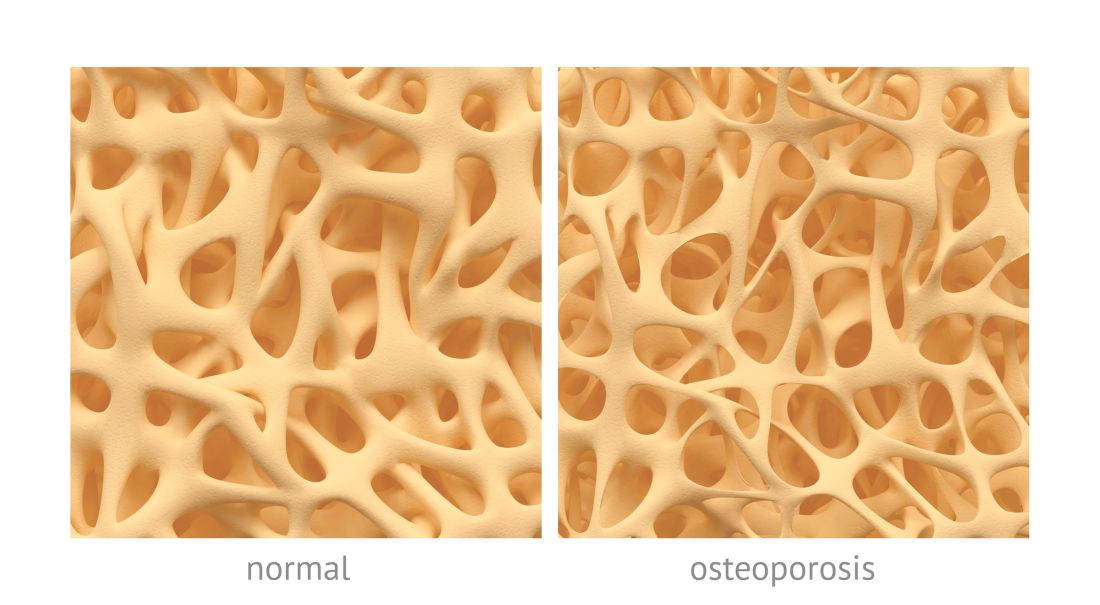
Neil E. O’Connell, PhD, of Brunel University London, and colleagues assessed the risks of osteoporosis, osteoarthritis, and inflammatory musculoskeletal diseases in a population-based cohort study that used data collected by the U.K. Clinical Practice Research Datalink during 1987-2015. The study included 1,705 patients with CP and 5,115 patients matched for age, sex, and general practices; data on smoking status and alcohol consumption for many of the patients also were gathered.
After adjustment for smoking status, alcohol consumption, and mean yearly general practice visits, investigators found evidence of significantly increased risk for osteoarthritis (hazard ratio, 1.54; 95% confidence interval, 1.17-2.02; P = .002) and osteoporosis (HR, 6.19; 95% CI, 3.37-11.39; P less than .001); they did not see increased risk for inflammatory musculoskeletal diseases (HR, 0.89; 95% CI, 0.45-1.75; P = .731).
One limitation of the study is the risk for residual confounding given the investigators could not account for mobility status or physical activity. Other limitations include potential incompleteness of diagnostic code lists, how identification of cases is depending on quality of original recording in the database, and that data regarding smoking status and alcohol consumption were missing for a substantial proportion of patients.
“Despite previous studies identifying a high prevalence of joint pain and functional deterioration among people with CP, there is a dearth of literature on the burden of musculoskeletal disorders in this population,” they wrote. “Further research is required into effective management of these conditions in adults with CP.”
This study was supported by an interdisciplinary award from Brunel University London’s Research Catalyst Fund. The authors declared no competing interests.
SOURCE: O’Connell NE et al. Bone. 2019 Aug;125:30-5.
compared with adults without the disorder, according to a study published in Bone.
Neil E. O’Connell, PhD, of Brunel University London, and colleagues assessed the risks of osteoporosis, osteoarthritis, and inflammatory musculoskeletal diseases in a population-based cohort study that used data collected by the U.K. Clinical Practice Research Datalink during 1987-2015. The study included 1,705 patients with CP and 5,115 patients matched for age, sex, and general practices; data on smoking status and alcohol consumption for many of the patients also were gathered.
After adjustment for smoking status, alcohol consumption, and mean yearly general practice visits, investigators found evidence of significantly increased risk for osteoarthritis (hazard ratio, 1.54; 95% confidence interval, 1.17-2.02; P = .002) and osteoporosis (HR, 6.19; 95% CI, 3.37-11.39; P less than .001); they did not see increased risk for inflammatory musculoskeletal diseases (HR, 0.89; 95% CI, 0.45-1.75; P = .731).
One limitation of the study is the risk for residual confounding given the investigators could not account for mobility status or physical activity. Other limitations include potential incompleteness of diagnostic code lists, how identification of cases is depending on quality of original recording in the database, and that data regarding smoking status and alcohol consumption were missing for a substantial proportion of patients.
“Despite previous studies identifying a high prevalence of joint pain and functional deterioration among people with CP, there is a dearth of literature on the burden of musculoskeletal disorders in this population,” they wrote. “Further research is required into effective management of these conditions in adults with CP.”
This study was supported by an interdisciplinary award from Brunel University London’s Research Catalyst Fund. The authors declared no competing interests.
SOURCE: O’Connell NE et al. Bone. 2019 Aug;125:30-5.
compared with adults without the disorder, according to a study published in Bone.
Neil E. O’Connell, PhD, of Brunel University London, and colleagues assessed the risks of osteoporosis, osteoarthritis, and inflammatory musculoskeletal diseases in a population-based cohort study that used data collected by the U.K. Clinical Practice Research Datalink during 1987-2015. The study included 1,705 patients with CP and 5,115 patients matched for age, sex, and general practices; data on smoking status and alcohol consumption for many of the patients also were gathered.
After adjustment for smoking status, alcohol consumption, and mean yearly general practice visits, investigators found evidence of significantly increased risk for osteoarthritis (hazard ratio, 1.54; 95% confidence interval, 1.17-2.02; P = .002) and osteoporosis (HR, 6.19; 95% CI, 3.37-11.39; P less than .001); they did not see increased risk for inflammatory musculoskeletal diseases (HR, 0.89; 95% CI, 0.45-1.75; P = .731).
One limitation of the study is the risk for residual confounding given the investigators could not account for mobility status or physical activity. Other limitations include potential incompleteness of diagnostic code lists, how identification of cases is depending on quality of original recording in the database, and that data regarding smoking status and alcohol consumption were missing for a substantial proportion of patients.
“Despite previous studies identifying a high prevalence of joint pain and functional deterioration among people with CP, there is a dearth of literature on the burden of musculoskeletal disorders in this population,” they wrote. “Further research is required into effective management of these conditions in adults with CP.”
This study was supported by an interdisciplinary award from Brunel University London’s Research Catalyst Fund. The authors declared no competing interests.
SOURCE: O’Connell NE et al. Bone. 2019 Aug;125:30-5.
FROM BONE