User login
Protein inhibition confers radioprotective effects
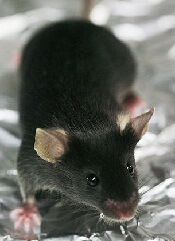
Researchers believe they may have discovered a method for treating and preventing radiation-induced gastrointestinal toxicity.
The investigators found that inhibiting prolyl hydroxylase domain (PHD) proteins in mice could help protect them from radiation-induced toxicity and prolong their life spans.
“We were very surprised by the amount of protection the animals received,” said Amato Giaccia, PhD, of the Stanford University School of Medicine in California.
“The important thing to note is that we didn’t change the amount of damage the intestinal cells sustained as a result of the radiation. We simply changed the physiology of that tissue and how it responded to that damage.”
Dr Giaccia and his colleagues described this research in Science Translational Medicine.
The study began with an interest in hypoxia-inducible factor (HIF) proteins, which are known to help cells survive stressful conditions.
“Previous studies from our group and others have suggested that the HIF proteins are important in protecting cells from many types of stress,” Dr Giaccia said. “So we wondered whether stabilizing HIF proteins, and therefore increasing their levels within the cells, could also protect the intestine from the effects of radiation.”
The researchers inhibited the degradation of HIF proteins in 2 ways. In the first experiment, they engineered mice that were unable to express PHD isoforms, a group of 3 proteins that tag HIF proteins for destruction.
In another experiment, the investigators treated unmodified mice with a small molecule called dimethyloxyallyl glycine (DMOG), which also inhibits the activity of PHD proteins.
In both cases, the levels of HIF1 and HIF2 proteins increased significantly in the manipulated mice, as compared to controls.
In addition, 70% of the genetically modified mice lived for at least 30 days after receiving a normally lethal dose of abdominal radiation, and 27% survived at least 30 days after a normally lethal dose of whole-body radiation.
Sixty-seven percent of DMOG-treated mice survived for at least 60 days after receiving a normally lethal dose of abdominal radiation, and 40% lived for at least 30 days after a normally lethal dose of whole-body radiation.
The control mice in both experiments did not survive longer than 10 days after either type of radiation exposure.
Elucidating the mechanism
Further experiments showed that HIF2, rather than HIF1, is responsible for the radioprotection the researchers observed.
To determine the cause of the treated animals’ prolonged survival, the investigators looked directly at the epithelial cells lining the intestines.
Treated mice exhibited lower levels of cell death in response to abdominal radiation exposure and improved survival of crypts, which host the rapidly dividing stem cells necessary to accommodate the intestines’ need for repeated cell turnover.
The treated animals also experienced less diarrhea and fewer imbalances in fluid and electrolyte levels than untreated animals exposed to the same dose of radiation. And they quickly gained back the weight they had lost as a result of the exposure.
Treatment after radiation exposure
“The animals that survived the abdominal radiation have a life span that is similar to unexposed animals, which was very exciting to us,” Dr Giaccia said. “However, we realized it would be impossible to pretreat humans unexpectedly exposed to large amounts of radiation like at Chernobyl or Fukushima because those exposures are, by nature, unpredictable.”
So Dr Giaccia and his colleagues experimented with treating the mice with DMOG after abdominal radiation exposure. They found that, although the protective qualities of the molecule were diminished, it did help.
When DMOG was given 4 hours after radiation exposure, 45% of the treated mice, but no untreated mice, survived at least 10 days.
After 24 hours, the effect was more subtle. DMOG treatment showed little benefit at higher doses of radiation. But at a lower dose, 75% of the treated animals lived for at least 30 days, compared to 18.2% of the untreated animals.
“We found we were still able to rescue a significant proportion of the animals,” Dr Giaccia said.
Finally, the researchers tested the effect of DMOG treatment 24 hours after total-body irradiation.
They found that 37.5% of the treated mice survived for at least 30 days, but only if the mice were also given a bone marrow transplant to restore blood and immune stem cells killed by the radiation. None of the untreated mice lived beyond 10 days.
The investigators pointed out that, although this study suggests a possible way to mitigate the effects of therapeutic radiation exposure, more work remains. But the next steps are clear.
“There are a number of drug molecules that act in a manner similar to DMOG that are already in clinical trials for unrelated conditions,” Dr Giaccia said. “Our next step will be to test some of these molecules to see if they also offer radioprotection.”
Stanford University has filed a patent application, “Use of Prolyl Hydroxylase Inhibitors as a Radioprotective Drug for the Lower Gastrointestinal Tract” (international application No. PCT/US2012/052232), based on the results of this study. 
Researchers believe they may have discovered a method for treating and preventing radiation-induced gastrointestinal toxicity.
The investigators found that inhibiting prolyl hydroxylase domain (PHD) proteins in mice could help protect them from radiation-induced toxicity and prolong their life spans.
“We were very surprised by the amount of protection the animals received,” said Amato Giaccia, PhD, of the Stanford University School of Medicine in California.
“The important thing to note is that we didn’t change the amount of damage the intestinal cells sustained as a result of the radiation. We simply changed the physiology of that tissue and how it responded to that damage.”
Dr Giaccia and his colleagues described this research in Science Translational Medicine.
The study began with an interest in hypoxia-inducible factor (HIF) proteins, which are known to help cells survive stressful conditions.
“Previous studies from our group and others have suggested that the HIF proteins are important in protecting cells from many types of stress,” Dr Giaccia said. “So we wondered whether stabilizing HIF proteins, and therefore increasing their levels within the cells, could also protect the intestine from the effects of radiation.”
The researchers inhibited the degradation of HIF proteins in 2 ways. In the first experiment, they engineered mice that were unable to express PHD isoforms, a group of 3 proteins that tag HIF proteins for destruction.
In another experiment, the investigators treated unmodified mice with a small molecule called dimethyloxyallyl glycine (DMOG), which also inhibits the activity of PHD proteins.
In both cases, the levels of HIF1 and HIF2 proteins increased significantly in the manipulated mice, as compared to controls.
In addition, 70% of the genetically modified mice lived for at least 30 days after receiving a normally lethal dose of abdominal radiation, and 27% survived at least 30 days after a normally lethal dose of whole-body radiation.
Sixty-seven percent of DMOG-treated mice survived for at least 60 days after receiving a normally lethal dose of abdominal radiation, and 40% lived for at least 30 days after a normally lethal dose of whole-body radiation.
The control mice in both experiments did not survive longer than 10 days after either type of radiation exposure.
Elucidating the mechanism
Further experiments showed that HIF2, rather than HIF1, is responsible for the radioprotection the researchers observed.
To determine the cause of the treated animals’ prolonged survival, the investigators looked directly at the epithelial cells lining the intestines.
Treated mice exhibited lower levels of cell death in response to abdominal radiation exposure and improved survival of crypts, which host the rapidly dividing stem cells necessary to accommodate the intestines’ need for repeated cell turnover.
The treated animals also experienced less diarrhea and fewer imbalances in fluid and electrolyte levels than untreated animals exposed to the same dose of radiation. And they quickly gained back the weight they had lost as a result of the exposure.
Treatment after radiation exposure
“The animals that survived the abdominal radiation have a life span that is similar to unexposed animals, which was very exciting to us,” Dr Giaccia said. “However, we realized it would be impossible to pretreat humans unexpectedly exposed to large amounts of radiation like at Chernobyl or Fukushima because those exposures are, by nature, unpredictable.”
So Dr Giaccia and his colleagues experimented with treating the mice with DMOG after abdominal radiation exposure. They found that, although the protective qualities of the molecule were diminished, it did help.
When DMOG was given 4 hours after radiation exposure, 45% of the treated mice, but no untreated mice, survived at least 10 days.
After 24 hours, the effect was more subtle. DMOG treatment showed little benefit at higher doses of radiation. But at a lower dose, 75% of the treated animals lived for at least 30 days, compared to 18.2% of the untreated animals.
“We found we were still able to rescue a significant proportion of the animals,” Dr Giaccia said.
Finally, the researchers tested the effect of DMOG treatment 24 hours after total-body irradiation.
They found that 37.5% of the treated mice survived for at least 30 days, but only if the mice were also given a bone marrow transplant to restore blood and immune stem cells killed by the radiation. None of the untreated mice lived beyond 10 days.
The investigators pointed out that, although this study suggests a possible way to mitigate the effects of therapeutic radiation exposure, more work remains. But the next steps are clear.
“There are a number of drug molecules that act in a manner similar to DMOG that are already in clinical trials for unrelated conditions,” Dr Giaccia said. “Our next step will be to test some of these molecules to see if they also offer radioprotection.”
Stanford University has filed a patent application, “Use of Prolyl Hydroxylase Inhibitors as a Radioprotective Drug for the Lower Gastrointestinal Tract” (international application No. PCT/US2012/052232), based on the results of this study.
Researchers believe they may have discovered a method for treating and preventing radiation-induced gastrointestinal toxicity.
The investigators found that inhibiting prolyl hydroxylase domain (PHD) proteins in mice could help protect them from radiation-induced toxicity and prolong their life spans.
“We were very surprised by the amount of protection the animals received,” said Amato Giaccia, PhD, of the Stanford University School of Medicine in California.
“The important thing to note is that we didn’t change the amount of damage the intestinal cells sustained as a result of the radiation. We simply changed the physiology of that tissue and how it responded to that damage.”
Dr Giaccia and his colleagues described this research in Science Translational Medicine.
The study began with an interest in hypoxia-inducible factor (HIF) proteins, which are known to help cells survive stressful conditions.
“Previous studies from our group and others have suggested that the HIF proteins are important in protecting cells from many types of stress,” Dr Giaccia said. “So we wondered whether stabilizing HIF proteins, and therefore increasing their levels within the cells, could also protect the intestine from the effects of radiation.”
The researchers inhibited the degradation of HIF proteins in 2 ways. In the first experiment, they engineered mice that were unable to express PHD isoforms, a group of 3 proteins that tag HIF proteins for destruction.
In another experiment, the investigators treated unmodified mice with a small molecule called dimethyloxyallyl glycine (DMOG), which also inhibits the activity of PHD proteins.
In both cases, the levels of HIF1 and HIF2 proteins increased significantly in the manipulated mice, as compared to controls.
In addition, 70% of the genetically modified mice lived for at least 30 days after receiving a normally lethal dose of abdominal radiation, and 27% survived at least 30 days after a normally lethal dose of whole-body radiation.
Sixty-seven percent of DMOG-treated mice survived for at least 60 days after receiving a normally lethal dose of abdominal radiation, and 40% lived for at least 30 days after a normally lethal dose of whole-body radiation.
The control mice in both experiments did not survive longer than 10 days after either type of radiation exposure.
Elucidating the mechanism
Further experiments showed that HIF2, rather than HIF1, is responsible for the radioprotection the researchers observed.
To determine the cause of the treated animals’ prolonged survival, the investigators looked directly at the epithelial cells lining the intestines.
Treated mice exhibited lower levels of cell death in response to abdominal radiation exposure and improved survival of crypts, which host the rapidly dividing stem cells necessary to accommodate the intestines’ need for repeated cell turnover.
The treated animals also experienced less diarrhea and fewer imbalances in fluid and electrolyte levels than untreated animals exposed to the same dose of radiation. And they quickly gained back the weight they had lost as a result of the exposure.
Treatment after radiation exposure
“The animals that survived the abdominal radiation have a life span that is similar to unexposed animals, which was very exciting to us,” Dr Giaccia said. “However, we realized it would be impossible to pretreat humans unexpectedly exposed to large amounts of radiation like at Chernobyl or Fukushima because those exposures are, by nature, unpredictable.”
So Dr Giaccia and his colleagues experimented with treating the mice with DMOG after abdominal radiation exposure. They found that, although the protective qualities of the molecule were diminished, it did help.
When DMOG was given 4 hours after radiation exposure, 45% of the treated mice, but no untreated mice, survived at least 10 days.
After 24 hours, the effect was more subtle. DMOG treatment showed little benefit at higher doses of radiation. But at a lower dose, 75% of the treated animals lived for at least 30 days, compared to 18.2% of the untreated animals.
“We found we were still able to rescue a significant proportion of the animals,” Dr Giaccia said.
Finally, the researchers tested the effect of DMOG treatment 24 hours after total-body irradiation.
They found that 37.5% of the treated mice survived for at least 30 days, but only if the mice were also given a bone marrow transplant to restore blood and immune stem cells killed by the radiation. None of the untreated mice lived beyond 10 days.
The investigators pointed out that, although this study suggests a possible way to mitigate the effects of therapeutic radiation exposure, more work remains. But the next steps are clear.
“There are a number of drug molecules that act in a manner similar to DMOG that are already in clinical trials for unrelated conditions,” Dr Giaccia said. “Our next step will be to test some of these molecules to see if they also offer radioprotection.”
Stanford University has filed a patent application, “Use of Prolyl Hydroxylase Inhibitors as a Radioprotective Drug for the Lower Gastrointestinal Tract” (international application No. PCT/US2012/052232), based on the results of this study.
Virotherapy shows activity against MM

Credit: CDC
Results of a proof-of-principle study suggest virotherapy can be effective against multiple myeloma (MM).
The study included 2 MM patients who each received a single dose of a measles virus engineered to target myeloma plasma cells (MV-NIS).
Both patients responded to the treatment, with initial reductions in M protein and complete resolution of bone marrow plasmacytosis. One of the patients achieved a complete remission that lasted 9 months.
The patients did experience adverse effects associated with MV-NIS, but all were resolved with appropriate treatment.
“This is the first study to establish the feasibility of systemic oncolytic virotherapy for disseminated cancer,” said Stephen Russell, MD, PhD, of the Mayo Clinic in Rochester, Minnesota.
“These patients were not responsive to other therapies and had experienced several recurrences of their disease.”
Dr Russell and his colleagues described this research in Mayo Clinic Proceedings.
Patient characteristics, treatment
The researchers explained that the 2 patients described in this report were the first to receive MV-NIS at the highest possible dose. They both received the virus at a dose of 1011 TCID50, infused into a superficial arm vein in 100 mL of normal saline over 60 minutes.
Both patients had limited previous exposure to measles (and therefore fewer antibodies to the virus) and essentially no remaining treatment options.
The first patient was a 49-year-old woman with heavily pretreated, light chain MM. Her last relapse was 9 months after her second autologous stem cell transplant, while she was not receiving therapy.
The second patient was a 65-year-old woman with relapsing IgA k MM that was refractory to all approved antimyeloma drugs. Her disease had progressed while she was receiving carfilzomib, pomalidomide, and dexamethasone therapy.
Adverse events
Patient 1 experienced a number of adverse effects related to MV-NIS, including a severe headache during treatment that required clinicians to temporarily stop her infusion.
This was followed by fever, tachycardia, hypotension, severe nausea and vomiting, and a superficial venous thrombosis extending from the wrist to the upper humerus. But all of these events responded to treatment.
Patient 2 also experienced adverse effects related to MV-NIS, including fever, tachycardia, hypotension, and headache. She responded to treatment for these events, and her recurring fever resolved spontaneously after a few hours.
Treatment response
Both patients’ disease responded to MV-NIS. They experienced initial reductions in M protein and complete resolution of bone marrow plasmacytosis at 6 weeks after treatment.
Patient 1 achieved a complete remission that lasted 9 months. A scan at 6 weeks showed the patient had experienced substantial improvement in all 5 of her previously identified lesions.
Although patient 2 initially responded to treatment, her plasmacytomas were progressing at the 6-week mark, and her free light chain level was increasing. Her 6-week scan revealed increased size and FDG uptake in most soft tissue lesions, although a few lesions did show varying degrees of improvement.
Credit: CDC
Results of a proof-of-principle study suggest virotherapy can be effective against multiple myeloma (MM).
The study included 2 MM patients who each received a single dose of a measles virus engineered to target myeloma plasma cells (MV-NIS).
Both patients responded to the treatment, with initial reductions in M protein and complete resolution of bone marrow plasmacytosis. One of the patients achieved a complete remission that lasted 9 months.
The patients did experience adverse effects associated with MV-NIS, but all were resolved with appropriate treatment.
“This is the first study to establish the feasibility of systemic oncolytic virotherapy for disseminated cancer,” said Stephen Russell, MD, PhD, of the Mayo Clinic in Rochester, Minnesota.
“These patients were not responsive to other therapies and had experienced several recurrences of their disease.”
Dr Russell and his colleagues described this research in Mayo Clinic Proceedings.
Patient characteristics, treatment
The researchers explained that the 2 patients described in this report were the first to receive MV-NIS at the highest possible dose. They both received the virus at a dose of 1011 TCID50, infused into a superficial arm vein in 100 mL of normal saline over 60 minutes.
Both patients had limited previous exposure to measles (and therefore fewer antibodies to the virus) and essentially no remaining treatment options.
The first patient was a 49-year-old woman with heavily pretreated, light chain MM. Her last relapse was 9 months after her second autologous stem cell transplant, while she was not receiving therapy.
The second patient was a 65-year-old woman with relapsing IgA k MM that was refractory to all approved antimyeloma drugs. Her disease had progressed while she was receiving carfilzomib, pomalidomide, and dexamethasone therapy.
Adverse events
Patient 1 experienced a number of adverse effects related to MV-NIS, including a severe headache during treatment that required clinicians to temporarily stop her infusion.
This was followed by fever, tachycardia, hypotension, severe nausea and vomiting, and a superficial venous thrombosis extending from the wrist to the upper humerus. But all of these events responded to treatment.
Patient 2 also experienced adverse effects related to MV-NIS, including fever, tachycardia, hypotension, and headache. She responded to treatment for these events, and her recurring fever resolved spontaneously after a few hours.
Treatment response
Both patients’ disease responded to MV-NIS. They experienced initial reductions in M protein and complete resolution of bone marrow plasmacytosis at 6 weeks after treatment.
Patient 1 achieved a complete remission that lasted 9 months. A scan at 6 weeks showed the patient had experienced substantial improvement in all 5 of her previously identified lesions.
Although patient 2 initially responded to treatment, her plasmacytomas were progressing at the 6-week mark, and her free light chain level was increasing. Her 6-week scan revealed increased size and FDG uptake in most soft tissue lesions, although a few lesions did show varying degrees of improvement.
Credit: CDC
Results of a proof-of-principle study suggest virotherapy can be effective against multiple myeloma (MM).
The study included 2 MM patients who each received a single dose of a measles virus engineered to target myeloma plasma cells (MV-NIS).
Both patients responded to the treatment, with initial reductions in M protein and complete resolution of bone marrow plasmacytosis. One of the patients achieved a complete remission that lasted 9 months.
The patients did experience adverse effects associated with MV-NIS, but all were resolved with appropriate treatment.
“This is the first study to establish the feasibility of systemic oncolytic virotherapy for disseminated cancer,” said Stephen Russell, MD, PhD, of the Mayo Clinic in Rochester, Minnesota.
“These patients were not responsive to other therapies and had experienced several recurrences of their disease.”
Dr Russell and his colleagues described this research in Mayo Clinic Proceedings.
Patient characteristics, treatment
The researchers explained that the 2 patients described in this report were the first to receive MV-NIS at the highest possible dose. They both received the virus at a dose of 1011 TCID50, infused into a superficial arm vein in 100 mL of normal saline over 60 minutes.
Both patients had limited previous exposure to measles (and therefore fewer antibodies to the virus) and essentially no remaining treatment options.
The first patient was a 49-year-old woman with heavily pretreated, light chain MM. Her last relapse was 9 months after her second autologous stem cell transplant, while she was not receiving therapy.
The second patient was a 65-year-old woman with relapsing IgA k MM that was refractory to all approved antimyeloma drugs. Her disease had progressed while she was receiving carfilzomib, pomalidomide, and dexamethasone therapy.
Adverse events
Patient 1 experienced a number of adverse effects related to MV-NIS, including a severe headache during treatment that required clinicians to temporarily stop her infusion.
This was followed by fever, tachycardia, hypotension, severe nausea and vomiting, and a superficial venous thrombosis extending from the wrist to the upper humerus. But all of these events responded to treatment.
Patient 2 also experienced adverse effects related to MV-NIS, including fever, tachycardia, hypotension, and headache. She responded to treatment for these events, and her recurring fever resolved spontaneously after a few hours.
Treatment response
Both patients’ disease responded to MV-NIS. They experienced initial reductions in M protein and complete resolution of bone marrow plasmacytosis at 6 weeks after treatment.
Patient 1 achieved a complete remission that lasted 9 months. A scan at 6 weeks showed the patient had experienced substantial improvement in all 5 of her previously identified lesions.
Although patient 2 initially responded to treatment, her plasmacytomas were progressing at the 6-week mark, and her free light chain level was increasing. Her 6-week scan revealed increased size and FDG uptake in most soft tissue lesions, although a few lesions did show varying degrees of improvement.
Team says antioxidant has no effect on cancer risk, overall health

Contrary to previous findings, a new study suggests the antioxidant resveratrol is not associated with improvements in health, including reducing the risk of cancer.
Researchers found that Italians who consumed a diet rich in resveratrol—a compound in red wine, dark chocolate, and berries—lived no longer than and were just as likely to develop cardiovascular disease or cancer as Italians who consumed smaller amounts of the antioxidant.
However, the investigators said unknown compounds in these foods and drinks may still confer health benefits.
“The story of resveratrol turns out to be another case where you get a lot of hype about health benefits that doesn’t stand the test of time,” said study author Richard D. Semba, MD, MPH, of the Johns Hopkins University School of Medicine in Baltimore, Maryland.
“The thinking was that certain foods are good for you because they contain resveratrol. We didn’t find that at all.”
Dr Semba and his colleagues recounted their findings in JAMA Internal Medicine.
Their study included 783 subjects, all of whom were older than 65 years of age. Participants were part of the Aging in the Chianti Region study, conducted from 1998 to 2009 in 2 Italian villages where supplement use is uncommon and the consumption of red wine is the norm. The subjects were not on any prescribed diet.
The researchers wanted to determine if diet-related resveratrol levels were associated with inflammation, cancer, cardiovascular disease, and death. So they collected urine samples from study participants and used advanced mass spectrometry to analyze the samples for metabolites of resveratrol.
After accounting for such factors as age and gender, the investigators found that subjects with the highest concentration of resveratrol metabolites were no less likely to have died of any cause than subjects with the lowest levels of resveratrol in their urine.
Likewise, the concentration of resveratrol was not associated with inflammatory markers (serum CRP, IL-6, IL-1β,TNF), cardiovascular disease, or cancer rates.
During 9 years of follow-up, 268 participants (34.3%) died. From the lowest to the highest quartile of baseline total urinary resveratrol metabolites, the proportion of subjects who died from all causes was 34.4%, 31.6%, 33.5%, and 37.4%, respectively (P=0.67).
Of the 734 participants who were free of cancer at enrollment, 34 (4.6%) developed cancer during follow-up. The proportions of subjects with incident cancer from the lowest to the highest quartiles of resveratrol were 4.4%, 4.9%, 5.0%, and 4.3%, respectively (P=0.98).
Of the 639 subjects who were free of cardiovascular disease at enrollment, 174 (27.2%) developed cardiovascular disease during follow-up. The proportions of participants with incident cardiovascular disease from the lowest to the highest quartiles of resveratrol were 22.3%, 29.6%, 28.4%, and 28.0%, respectively (P=0.44).
Despite these negative results, Dr Semba noted that studies have shown the consumption of red wine, dark chocolate, and berries does reduce inflammation in some people and still appears to protect the heart.
“It’s just that the benefits, if they are there, must come from other polyphenols or substances found in those foodstuffs,” he said. “These are complex foods, and all we really know from our study is that the benefits are probably not due to resveratrol.”
Contrary to previous findings, a new study suggests the antioxidant resveratrol is not associated with improvements in health, including reducing the risk of cancer.
Researchers found that Italians who consumed a diet rich in resveratrol—a compound in red wine, dark chocolate, and berries—lived no longer than and were just as likely to develop cardiovascular disease or cancer as Italians who consumed smaller amounts of the antioxidant.
However, the investigators said unknown compounds in these foods and drinks may still confer health benefits.
“The story of resveratrol turns out to be another case where you get a lot of hype about health benefits that doesn’t stand the test of time,” said study author Richard D. Semba, MD, MPH, of the Johns Hopkins University School of Medicine in Baltimore, Maryland.
“The thinking was that certain foods are good for you because they contain resveratrol. We didn’t find that at all.”
Dr Semba and his colleagues recounted their findings in JAMA Internal Medicine.
Their study included 783 subjects, all of whom were older than 65 years of age. Participants were part of the Aging in the Chianti Region study, conducted from 1998 to 2009 in 2 Italian villages where supplement use is uncommon and the consumption of red wine is the norm. The subjects were not on any prescribed diet.
The researchers wanted to determine if diet-related resveratrol levels were associated with inflammation, cancer, cardiovascular disease, and death. So they collected urine samples from study participants and used advanced mass spectrometry to analyze the samples for metabolites of resveratrol.
After accounting for such factors as age and gender, the investigators found that subjects with the highest concentration of resveratrol metabolites were no less likely to have died of any cause than subjects with the lowest levels of resveratrol in their urine.
Likewise, the concentration of resveratrol was not associated with inflammatory markers (serum CRP, IL-6, IL-1β,TNF), cardiovascular disease, or cancer rates.
During 9 years of follow-up, 268 participants (34.3%) died. From the lowest to the highest quartile of baseline total urinary resveratrol metabolites, the proportion of subjects who died from all causes was 34.4%, 31.6%, 33.5%, and 37.4%, respectively (P=0.67).
Of the 734 participants who were free of cancer at enrollment, 34 (4.6%) developed cancer during follow-up. The proportions of subjects with incident cancer from the lowest to the highest quartiles of resveratrol were 4.4%, 4.9%, 5.0%, and 4.3%, respectively (P=0.98).
Of the 639 subjects who were free of cardiovascular disease at enrollment, 174 (27.2%) developed cardiovascular disease during follow-up. The proportions of participants with incident cardiovascular disease from the lowest to the highest quartiles of resveratrol were 22.3%, 29.6%, 28.4%, and 28.0%, respectively (P=0.44).
Despite these negative results, Dr Semba noted that studies have shown the consumption of red wine, dark chocolate, and berries does reduce inflammation in some people and still appears to protect the heart.
“It’s just that the benefits, if they are there, must come from other polyphenols or substances found in those foodstuffs,” he said. “These are complex foods, and all we really know from our study is that the benefits are probably not due to resveratrol.”
Contrary to previous findings, a new study suggests the antioxidant resveratrol is not associated with improvements in health, including reducing the risk of cancer.
Researchers found that Italians who consumed a diet rich in resveratrol—a compound in red wine, dark chocolate, and berries—lived no longer than and were just as likely to develop cardiovascular disease or cancer as Italians who consumed smaller amounts of the antioxidant.
However, the investigators said unknown compounds in these foods and drinks may still confer health benefits.
“The story of resveratrol turns out to be another case where you get a lot of hype about health benefits that doesn’t stand the test of time,” said study author Richard D. Semba, MD, MPH, of the Johns Hopkins University School of Medicine in Baltimore, Maryland.
“The thinking was that certain foods are good for you because they contain resveratrol. We didn’t find that at all.”
Dr Semba and his colleagues recounted their findings in JAMA Internal Medicine.
Their study included 783 subjects, all of whom were older than 65 years of age. Participants were part of the Aging in the Chianti Region study, conducted from 1998 to 2009 in 2 Italian villages where supplement use is uncommon and the consumption of red wine is the norm. The subjects were not on any prescribed diet.
The researchers wanted to determine if diet-related resveratrol levels were associated with inflammation, cancer, cardiovascular disease, and death. So they collected urine samples from study participants and used advanced mass spectrometry to analyze the samples for metabolites of resveratrol.
After accounting for such factors as age and gender, the investigators found that subjects with the highest concentration of resveratrol metabolites were no less likely to have died of any cause than subjects with the lowest levels of resveratrol in their urine.
Likewise, the concentration of resveratrol was not associated with inflammatory markers (serum CRP, IL-6, IL-1β,TNF), cardiovascular disease, or cancer rates.
During 9 years of follow-up, 268 participants (34.3%) died. From the lowest to the highest quartile of baseline total urinary resveratrol metabolites, the proportion of subjects who died from all causes was 34.4%, 31.6%, 33.5%, and 37.4%, respectively (P=0.67).
Of the 734 participants who were free of cancer at enrollment, 34 (4.6%) developed cancer during follow-up. The proportions of subjects with incident cancer from the lowest to the highest quartiles of resveratrol were 4.4%, 4.9%, 5.0%, and 4.3%, respectively (P=0.98).
Of the 639 subjects who were free of cardiovascular disease at enrollment, 174 (27.2%) developed cardiovascular disease during follow-up. The proportions of participants with incident cardiovascular disease from the lowest to the highest quartiles of resveratrol were 22.3%, 29.6%, 28.4%, and 28.0%, respectively (P=0.44).
Despite these negative results, Dr Semba noted that studies have shown the consumption of red wine, dark chocolate, and berries does reduce inflammation in some people and still appears to protect the heart.
“It’s just that the benefits, if they are there, must come from other polyphenols or substances found in those foodstuffs,” he said. “These are complex foods, and all we really know from our study is that the benefits are probably not due to resveratrol.”
Group finds CAR T-cell therapy can fight MM
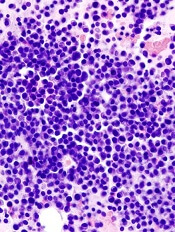
showing multiple myeloma
Results of preclinical research indicate chimeric antigen receptor (CAR) T cells are effective against multiple myeloma (MM).
Researchers generated CAR T cells that target CS1, a molecule found on more than 95% of MM cells.
When injected in mice, these T cells could locate and destroy MM cells.
Jianhua Yu, PhD, of The Ohio State University Comprehensive Cancer Center in Columbus, and his colleagues reported these results in Clinical Cancer Research.
“[O]ur study shows that we can modify T lymphocytes to target CS1 and that these cells efficiently destroy human multiple myeloma cells,” Dr Yu said.
“An important possible advantage to this approach is that these therapeutic T cells have the potential to replicate in the body, and, therefore, they might suppress tumor growth and prevent relapse for a prolonged period.”
Dr Yu and his colleagues used cell lines and cells from MM patients to produce CAR T cells targeting CS1. These cells could be expanded in the lab, and they efficiently recognized and eradicated MM cells in vitro and in vivo.
Compared to control T cells, the CAR T cells better recognized MM cells that overexpressed CS1, and they became more activated following the recognition.
In mice, the CAR T cells greatly reduced the tumor burden and prolonged overall survival. All mice that received CAR T cells were alive 44 days after treatment, compared to 29% and 17% of the mice in the study’s 2 control groups.
“Despite current drugs and use of bone marrow transplantation, multiple myeloma is still incurable, and almost all patients eventually relapse,” said study author Craig Hofmeister, MD, MPH, also of The Ohio State University Comprehensive Cancer Center.
“This study presents a novel strategy for treating multiple myeloma, and we hope to bring it to patients as part of a phase 1 clinical trial as soon as possible.”
showing multiple myeloma
Results of preclinical research indicate chimeric antigen receptor (CAR) T cells are effective against multiple myeloma (MM).
Researchers generated CAR T cells that target CS1, a molecule found on more than 95% of MM cells.
When injected in mice, these T cells could locate and destroy MM cells.
Jianhua Yu, PhD, of The Ohio State University Comprehensive Cancer Center in Columbus, and his colleagues reported these results in Clinical Cancer Research.
“[O]ur study shows that we can modify T lymphocytes to target CS1 and that these cells efficiently destroy human multiple myeloma cells,” Dr Yu said.
“An important possible advantage to this approach is that these therapeutic T cells have the potential to replicate in the body, and, therefore, they might suppress tumor growth and prevent relapse for a prolonged period.”
Dr Yu and his colleagues used cell lines and cells from MM patients to produce CAR T cells targeting CS1. These cells could be expanded in the lab, and they efficiently recognized and eradicated MM cells in vitro and in vivo.
Compared to control T cells, the CAR T cells better recognized MM cells that overexpressed CS1, and they became more activated following the recognition.
In mice, the CAR T cells greatly reduced the tumor burden and prolonged overall survival. All mice that received CAR T cells were alive 44 days after treatment, compared to 29% and 17% of the mice in the study’s 2 control groups.
“Despite current drugs and use of bone marrow transplantation, multiple myeloma is still incurable, and almost all patients eventually relapse,” said study author Craig Hofmeister, MD, MPH, also of The Ohio State University Comprehensive Cancer Center.
“This study presents a novel strategy for treating multiple myeloma, and we hope to bring it to patients as part of a phase 1 clinical trial as soon as possible.”
showing multiple myeloma
Results of preclinical research indicate chimeric antigen receptor (CAR) T cells are effective against multiple myeloma (MM).
Researchers generated CAR T cells that target CS1, a molecule found on more than 95% of MM cells.
When injected in mice, these T cells could locate and destroy MM cells.
Jianhua Yu, PhD, of The Ohio State University Comprehensive Cancer Center in Columbus, and his colleagues reported these results in Clinical Cancer Research.
“[O]ur study shows that we can modify T lymphocytes to target CS1 and that these cells efficiently destroy human multiple myeloma cells,” Dr Yu said.
“An important possible advantage to this approach is that these therapeutic T cells have the potential to replicate in the body, and, therefore, they might suppress tumor growth and prevent relapse for a prolonged period.”
Dr Yu and his colleagues used cell lines and cells from MM patients to produce CAR T cells targeting CS1. These cells could be expanded in the lab, and they efficiently recognized and eradicated MM cells in vitro and in vivo.
Compared to control T cells, the CAR T cells better recognized MM cells that overexpressed CS1, and they became more activated following the recognition.
In mice, the CAR T cells greatly reduced the tumor burden and prolonged overall survival. All mice that received CAR T cells were alive 44 days after treatment, compared to 29% and 17% of the mice in the study’s 2 control groups.
“Despite current drugs and use of bone marrow transplantation, multiple myeloma is still incurable, and almost all patients eventually relapse,” said study author Craig Hofmeister, MD, MPH, also of The Ohio State University Comprehensive Cancer Center.
“This study presents a novel strategy for treating multiple myeloma, and we hope to bring it to patients as part of a phase 1 clinical trial as soon as possible.”
Drug delivery vehicle has antimyeloma effects
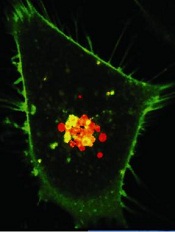
Credit: PNAS
Researchers have discovered that a solvent used as a drug delivery vehicle has antimyeloma properties.
The team found that N-methyl-2-pyrrolidone (NMP)—long-regarded a basic, stable, and inactive solvent—affects the growth and survival of multiple myeloma (MM) cells and stimulates the immune system to kill these tumors.
Jake Shortt, MBChB, PhD, of the Peter MacCallum Cancer Centre in Melbourne, Australia, described these findings in Cell Reports.
“[W]e found NMP effectively ‘reprograms’ myeloma cells by targeting a class of gene-regulating proteins,” Dr Shortt said. “This reprogramming reawakens thousands of genes that have been silenced in the cancer cells, immediately stopping the myeloma cells from growing, while activating the immune system to respond to the cancer.”
The researchers were surprised by this discovery because they had been using NMP as a vehicle to deliver drugs in mouse models of MM.
“In a routine experiment in 2010, Dr Shortt noticed our preclinical models of myeloma were responding to the control dose of NMP, which was surprising, as this control dose contained none of the novel cancer agents we were actually testing,” said study author Ricky Johnstone, PhD, also of the Peter MacCallum Cancer Centre.
Specifically, the researchers were using NMP as a drug delivery vehicle in mice transplanted with Vk*MYC MM tumors. And they consistently observed antitumor activity in vehicle-only control mice.
The team saw responses to NMP in mice transplanted with multiple, independently derived myelomas; namely, delayed paraprotein progression and improved survival in aggressive clones and sustained regressions in more indolent disease.
Further investigation revealed that NMP is an acetylated lysine mimetic and bromodomain ligand. And NMP shares molecular targets with lenalidomide, including cMYC and IRF4.
Unlike lenalidomide, NMP showed CRBN-independent activity. NMP induced similar growth arrest in CRBN-knockdown MM cells and lenalidomide-resistant MM cells.
Based on these findings, the researchers are planning a phase 1 trial of NMP, which is due to start later this year. The team noted that, because safe levels of NMP in humans are already well-established, the study is in the advanced planning stage.
“We’re at an advantage with this trial because we can immediately start at dosage levels within those recommended under occupational health and safety guidelines,” said David Ritchie, MBChB, PhD, a professor at the Peter MacCallum Cancer Centre and chief investigator of the phase 1 trial.
“It is extremely exciting to have this new insight into NMP, which is comparatively cost-effective and plentiful, compared to novel treatments developed by pharmaceutical companies, and hopefully holds promise for new or improved treatments in other cancer types.”
Credit: PNAS
Researchers have discovered that a solvent used as a drug delivery vehicle has antimyeloma properties.
The team found that N-methyl-2-pyrrolidone (NMP)—long-regarded a basic, stable, and inactive solvent—affects the growth and survival of multiple myeloma (MM) cells and stimulates the immune system to kill these tumors.
Jake Shortt, MBChB, PhD, of the Peter MacCallum Cancer Centre in Melbourne, Australia, described these findings in Cell Reports.
“[W]e found NMP effectively ‘reprograms’ myeloma cells by targeting a class of gene-regulating proteins,” Dr Shortt said. “This reprogramming reawakens thousands of genes that have been silenced in the cancer cells, immediately stopping the myeloma cells from growing, while activating the immune system to respond to the cancer.”
The researchers were surprised by this discovery because they had been using NMP as a vehicle to deliver drugs in mouse models of MM.
“In a routine experiment in 2010, Dr Shortt noticed our preclinical models of myeloma were responding to the control dose of NMP, which was surprising, as this control dose contained none of the novel cancer agents we were actually testing,” said study author Ricky Johnstone, PhD, also of the Peter MacCallum Cancer Centre.
Specifically, the researchers were using NMP as a drug delivery vehicle in mice transplanted with Vk*MYC MM tumors. And they consistently observed antitumor activity in vehicle-only control mice.
The team saw responses to NMP in mice transplanted with multiple, independently derived myelomas; namely, delayed paraprotein progression and improved survival in aggressive clones and sustained regressions in more indolent disease.
Further investigation revealed that NMP is an acetylated lysine mimetic and bromodomain ligand. And NMP shares molecular targets with lenalidomide, including cMYC and IRF4.
Unlike lenalidomide, NMP showed CRBN-independent activity. NMP induced similar growth arrest in CRBN-knockdown MM cells and lenalidomide-resistant MM cells.
Based on these findings, the researchers are planning a phase 1 trial of NMP, which is due to start later this year. The team noted that, because safe levels of NMP in humans are already well-established, the study is in the advanced planning stage.
“We’re at an advantage with this trial because we can immediately start at dosage levels within those recommended under occupational health and safety guidelines,” said David Ritchie, MBChB, PhD, a professor at the Peter MacCallum Cancer Centre and chief investigator of the phase 1 trial.
“It is extremely exciting to have this new insight into NMP, which is comparatively cost-effective and plentiful, compared to novel treatments developed by pharmaceutical companies, and hopefully holds promise for new or improved treatments in other cancer types.”
Credit: PNAS
Researchers have discovered that a solvent used as a drug delivery vehicle has antimyeloma properties.
The team found that N-methyl-2-pyrrolidone (NMP)—long-regarded a basic, stable, and inactive solvent—affects the growth and survival of multiple myeloma (MM) cells and stimulates the immune system to kill these tumors.
Jake Shortt, MBChB, PhD, of the Peter MacCallum Cancer Centre in Melbourne, Australia, described these findings in Cell Reports.
“[W]e found NMP effectively ‘reprograms’ myeloma cells by targeting a class of gene-regulating proteins,” Dr Shortt said. “This reprogramming reawakens thousands of genes that have been silenced in the cancer cells, immediately stopping the myeloma cells from growing, while activating the immune system to respond to the cancer.”
The researchers were surprised by this discovery because they had been using NMP as a vehicle to deliver drugs in mouse models of MM.
“In a routine experiment in 2010, Dr Shortt noticed our preclinical models of myeloma were responding to the control dose of NMP, which was surprising, as this control dose contained none of the novel cancer agents we were actually testing,” said study author Ricky Johnstone, PhD, also of the Peter MacCallum Cancer Centre.
Specifically, the researchers were using NMP as a drug delivery vehicle in mice transplanted with Vk*MYC MM tumors. And they consistently observed antitumor activity in vehicle-only control mice.
The team saw responses to NMP in mice transplanted with multiple, independently derived myelomas; namely, delayed paraprotein progression and improved survival in aggressive clones and sustained regressions in more indolent disease.
Further investigation revealed that NMP is an acetylated lysine mimetic and bromodomain ligand. And NMP shares molecular targets with lenalidomide, including cMYC and IRF4.
Unlike lenalidomide, NMP showed CRBN-independent activity. NMP induced similar growth arrest in CRBN-knockdown MM cells and lenalidomide-resistant MM cells.
Based on these findings, the researchers are planning a phase 1 trial of NMP, which is due to start later this year. The team noted that, because safe levels of NMP in humans are already well-established, the study is in the advanced planning stage.
“We’re at an advantage with this trial because we can immediately start at dosage levels within those recommended under occupational health and safety guidelines,” said David Ritchie, MBChB, PhD, a professor at the Peter MacCallum Cancer Centre and chief investigator of the phase 1 trial.
“It is extremely exciting to have this new insight into NMP, which is comparatively cost-effective and plentiful, compared to novel treatments developed by pharmaceutical companies, and hopefully holds promise for new or improved treatments in other cancer types.”
Method can track circulating cancer cells

Investigators have developed a technique that allowed them to track single tumor circulating in the blood of mice.
The method, described in Chemistry & Biology, involves photoswitchable fluorescent proteins that change color in response to light.
When one laser light hits the circulating tumor cells, they appear to be fluorescent green. A second laser makes the cells appear fluorescent red.
To label cells, the investigators use a violet laser beam aimed at small blood vessels.
The fluorescence from each cell is collected, detected, and reproduced on a computer monitor as real-time signal traces, allowing the team to count and track individual cells in the bloodstream.
“This technology allows for the labeling of just one circulating pathological cell among billions of other normal blood cells by ultrafast changing color of photosensitive proteins inside the cell in response to laser light,” said study author Ekaterina Galanzha, PhD, of the University of Arkansas for Medical Sciences in Little Rock.
In tumor-bearing mice, the investigators could monitor the real-time dynamics of circulating cancer cells released from a primary tumor.
They could also image the various final destinations of individual circulating cells and observe how these cells travel through circulation and colonize healthy tissue, existing sites of metastasis, or the site of the primary tumor.
“Therefore, the approach may give oncologists knowledge on how to intervene and stop circulating cancer cell dissemination that might prevent the development of metastasis,” Dr Galanzha said.
The investigators believe the approach might also prove useful for other areas of medicine—for example, tracking bacteria during infections or immune-related cells during the development of autoimmune disease.
Investigators have developed a technique that allowed them to track single tumor circulating in the blood of mice.
The method, described in Chemistry & Biology, involves photoswitchable fluorescent proteins that change color in response to light.
When one laser light hits the circulating tumor cells, they appear to be fluorescent green. A second laser makes the cells appear fluorescent red.
To label cells, the investigators use a violet laser beam aimed at small blood vessels.
The fluorescence from each cell is collected, detected, and reproduced on a computer monitor as real-time signal traces, allowing the team to count and track individual cells in the bloodstream.
“This technology allows for the labeling of just one circulating pathological cell among billions of other normal blood cells by ultrafast changing color of photosensitive proteins inside the cell in response to laser light,” said study author Ekaterina Galanzha, PhD, of the University of Arkansas for Medical Sciences in Little Rock.
In tumor-bearing mice, the investigators could monitor the real-time dynamics of circulating cancer cells released from a primary tumor.
They could also image the various final destinations of individual circulating cells and observe how these cells travel through circulation and colonize healthy tissue, existing sites of metastasis, or the site of the primary tumor.
“Therefore, the approach may give oncologists knowledge on how to intervene and stop circulating cancer cell dissemination that might prevent the development of metastasis,” Dr Galanzha said.
The investigators believe the approach might also prove useful for other areas of medicine—for example, tracking bacteria during infections or immune-related cells during the development of autoimmune disease.
Investigators have developed a technique that allowed them to track single tumor circulating in the blood of mice.
The method, described in Chemistry & Biology, involves photoswitchable fluorescent proteins that change color in response to light.
When one laser light hits the circulating tumor cells, they appear to be fluorescent green. A second laser makes the cells appear fluorescent red.
To label cells, the investigators use a violet laser beam aimed at small blood vessels.
The fluorescence from each cell is collected, detected, and reproduced on a computer monitor as real-time signal traces, allowing the team to count and track individual cells in the bloodstream.
“This technology allows for the labeling of just one circulating pathological cell among billions of other normal blood cells by ultrafast changing color of photosensitive proteins inside the cell in response to laser light,” said study author Ekaterina Galanzha, PhD, of the University of Arkansas for Medical Sciences in Little Rock.
In tumor-bearing mice, the investigators could monitor the real-time dynamics of circulating cancer cells released from a primary tumor.
They could also image the various final destinations of individual circulating cells and observe how these cells travel through circulation and colonize healthy tissue, existing sites of metastasis, or the site of the primary tumor.
“Therefore, the approach may give oncologists knowledge on how to intervene and stop circulating cancer cell dissemination that might prevent the development of metastasis,” Dr Galanzha said.
The investigators believe the approach might also prove useful for other areas of medicine—for example, tracking bacteria during infections or immune-related cells during the development of autoimmune disease.
Team describes protein’s antimyeloma effects

Researchers say they’ve discovered how a lack of the protein adiponectin promotes disease progression in patients with multiple myeloma (MM).
Obesity is known to increase the risk of developing MM, and obese individuals have lower-than-normal levels of adiponectin.
So the researchers set out to characterize the relationship between adiponectin and MM.
They found evidence to suggest the protein induces apoptosis in MM cells by suppressing lipogenesis. And this points to new treatment avenues for MM.
Edward Medina, MD, PhD, of University of Texas Health Science Center at San Antonio, and his colleagues described this research in Leukemia.
The team noted that adiponectin plays several roles in preserving health, including killing cancer cells. And, as levels of adiponectin are reduced in obese individuals, the protein has been implicated in MM progression.
Furthermore, adipocytes in obese individuals produce more fatty acids, and it’s likely that MM cells feed on these fatty acids.
“Synthesizing fatty acids is important for myeloma cells to build vital structures, including cell membranes, that enable them to keep on growing,” Dr Medina said.
With this in mind, he and his colleagues set out to determine how prolonged exposure to adiponectin affects MM cell survival and to describe exactly how the protein works.
Their experiments revealed that adiponectin activates protein kinase A (PKA). This leads to a decrease in AKT activity and an increase in AMP-activated protein kinase (AMPK) activation. Then, AMPK induces cell-cycle arrest and apoptosis.
The researchers said this apoptosis may be mediated, at least partly, by a decline in the expression of acetyl-CoA-carboxylase (ACC), which is essential to lipogenesis.
So the team introduced palmitic acid, the preliminary end product of fatty acid synthesis, to the MM cells and found it prevented adiponectin-induced apoptosis.
In addition, the ACC inhibitor 5-(tetradecyloxy)-2-furancarboxylic acid had an antiproliferative effect on MM cells. But an increase in fatty acids inhibited that effect.
The researchers said this new understanding of the pathways adiponectin uses to kill MM cells might lead to the development of drugs that would function in the same way.
“If we could pharmacologically suppress these fatty acid levels in obese myeloma patients, we could boost the effects of the chemotherapy that targets PKA or fatty acid synthesis and potentially decrease the chemotherapeutic dose,” Dr Medina said. “Also, it would give your own body’s protective measures more of a chance to work against the cancer.”
Researchers say they’ve discovered how a lack of the protein adiponectin promotes disease progression in patients with multiple myeloma (MM).
Obesity is known to increase the risk of developing MM, and obese individuals have lower-than-normal levels of adiponectin.
So the researchers set out to characterize the relationship between adiponectin and MM.
They found evidence to suggest the protein induces apoptosis in MM cells by suppressing lipogenesis. And this points to new treatment avenues for MM.
Edward Medina, MD, PhD, of University of Texas Health Science Center at San Antonio, and his colleagues described this research in Leukemia.
The team noted that adiponectin plays several roles in preserving health, including killing cancer cells. And, as levels of adiponectin are reduced in obese individuals, the protein has been implicated in MM progression.
Furthermore, adipocytes in obese individuals produce more fatty acids, and it’s likely that MM cells feed on these fatty acids.
“Synthesizing fatty acids is important for myeloma cells to build vital structures, including cell membranes, that enable them to keep on growing,” Dr Medina said.
With this in mind, he and his colleagues set out to determine how prolonged exposure to adiponectin affects MM cell survival and to describe exactly how the protein works.
Their experiments revealed that adiponectin activates protein kinase A (PKA). This leads to a decrease in AKT activity and an increase in AMP-activated protein kinase (AMPK) activation. Then, AMPK induces cell-cycle arrest and apoptosis.
The researchers said this apoptosis may be mediated, at least partly, by a decline in the expression of acetyl-CoA-carboxylase (ACC), which is essential to lipogenesis.
So the team introduced palmitic acid, the preliminary end product of fatty acid synthesis, to the MM cells and found it prevented adiponectin-induced apoptosis.
In addition, the ACC inhibitor 5-(tetradecyloxy)-2-furancarboxylic acid had an antiproliferative effect on MM cells. But an increase in fatty acids inhibited that effect.
The researchers said this new understanding of the pathways adiponectin uses to kill MM cells might lead to the development of drugs that would function in the same way.
“If we could pharmacologically suppress these fatty acid levels in obese myeloma patients, we could boost the effects of the chemotherapy that targets PKA or fatty acid synthesis and potentially decrease the chemotherapeutic dose,” Dr Medina said. “Also, it would give your own body’s protective measures more of a chance to work against the cancer.”
Researchers say they’ve discovered how a lack of the protein adiponectin promotes disease progression in patients with multiple myeloma (MM).
Obesity is known to increase the risk of developing MM, and obese individuals have lower-than-normal levels of adiponectin.
So the researchers set out to characterize the relationship between adiponectin and MM.
They found evidence to suggest the protein induces apoptosis in MM cells by suppressing lipogenesis. And this points to new treatment avenues for MM.
Edward Medina, MD, PhD, of University of Texas Health Science Center at San Antonio, and his colleagues described this research in Leukemia.
The team noted that adiponectin plays several roles in preserving health, including killing cancer cells. And, as levels of adiponectin are reduced in obese individuals, the protein has been implicated in MM progression.
Furthermore, adipocytes in obese individuals produce more fatty acids, and it’s likely that MM cells feed on these fatty acids.
“Synthesizing fatty acids is important for myeloma cells to build vital structures, including cell membranes, that enable them to keep on growing,” Dr Medina said.
With this in mind, he and his colleagues set out to determine how prolonged exposure to adiponectin affects MM cell survival and to describe exactly how the protein works.
Their experiments revealed that adiponectin activates protein kinase A (PKA). This leads to a decrease in AKT activity and an increase in AMP-activated protein kinase (AMPK) activation. Then, AMPK induces cell-cycle arrest and apoptosis.
The researchers said this apoptosis may be mediated, at least partly, by a decline in the expression of acetyl-CoA-carboxylase (ACC), which is essential to lipogenesis.
So the team introduced palmitic acid, the preliminary end product of fatty acid synthesis, to the MM cells and found it prevented adiponectin-induced apoptosis.
In addition, the ACC inhibitor 5-(tetradecyloxy)-2-furancarboxylic acid had an antiproliferative effect on MM cells. But an increase in fatty acids inhibited that effect.
The researchers said this new understanding of the pathways adiponectin uses to kill MM cells might lead to the development of drugs that would function in the same way.
“If we could pharmacologically suppress these fatty acid levels in obese myeloma patients, we could boost the effects of the chemotherapy that targets PKA or fatty acid synthesis and potentially decrease the chemotherapeutic dose,” Dr Medina said. “Also, it would give your own body’s protective measures more of a chance to work against the cancer.”
Combo can overcome resistance in MM
Credit: PNAS
A 2-drug combination can overcome Mcl-1-dependent treatment resistance in multiple myeloma (MM), preclinical research suggests.
The therapy consists of the Chk1 inhibitor CEP3891 and the MEK1/2 inhibitor PD184352.
Chk1 inhibitors prevent cells from arresting in stages of the cell cycle that facilitate DNA repair. And MEK inhibitors prevent cells from activating proteins that regulate DNA repair, while promoting the accumulation of pro-apoptotic proteins.
Researchers recounted their results with the 2 inhibitors in PLOS ONE.
The team noted that, although several drugs are effective against MM, the cancer cells can often survive treatment by increasing production of Mcl-1. This protein regulates processes that promote cell survival and has been implicated in resistance to bortezomib and other anti-myeloma drugs that were initially effective.
With their experiments, the researchers discovered that CEP3891 and PD184352 can reduce Mcl-1 expression and disrupt its interactions with other proteins to effectively kill MM cells.
“This research builds on our previous studies that showed exposing multiple myeloma and leukemia cells to Chk1 inhibitors activated a protective response through the Ras/MEK/ERK signaling pathway,” said Xin-Yan Pei, MD, PhD, of Virginia Commonwealth University and the Massey Cancer Center in Richmond.
“By combining a Chk1 inhibitor with a MEK inhibitor, we have developed one of only a limited number of strategies shown to circumvent therapeutic resistance caused by high expressions of Mcl-1.”
The team began this research by forcing overexpression of Mcl-1 in human MM cells. This caused the cells to become highly resistant to bortezomib, but it failed to protect them from CEP3891 and PD184352.
Furthermore, CEP3891 and PD184352 completely overcame resistance due to microenvironmental factors associated with increased expression of Mcl-1.
“Not only was the combination therapy effective against multiple myeloma cells, it notably did not harm normal bone marrow cells, raising the possibility of therapeutic selectivity,” said study author Steven Grant, MD, also of Virginia Commonwealth University and the Massey Cancer Center.
“We are hopeful that this research will lead to better therapies for multiple myeloma and help make current therapies more effective by overcoming resistance caused by Mcl-1.”
The researchers have started initial discussions with clinical investigators and drug manufacturers about a clinical trial testing a combination of Chk1 and MEK inhibitors in patients with refractory MM.
Credit: PNAS
A 2-drug combination can overcome Mcl-1-dependent treatment resistance in multiple myeloma (MM), preclinical research suggests.
The therapy consists of the Chk1 inhibitor CEP3891 and the MEK1/2 inhibitor PD184352.
Chk1 inhibitors prevent cells from arresting in stages of the cell cycle that facilitate DNA repair. And MEK inhibitors prevent cells from activating proteins that regulate DNA repair, while promoting the accumulation of pro-apoptotic proteins.
Researchers recounted their results with the 2 inhibitors in PLOS ONE.
The team noted that, although several drugs are effective against MM, the cancer cells can often survive treatment by increasing production of Mcl-1. This protein regulates processes that promote cell survival and has been implicated in resistance to bortezomib and other anti-myeloma drugs that were initially effective.
With their experiments, the researchers discovered that CEP3891 and PD184352 can reduce Mcl-1 expression and disrupt its interactions with other proteins to effectively kill MM cells.
“This research builds on our previous studies that showed exposing multiple myeloma and leukemia cells to Chk1 inhibitors activated a protective response through the Ras/MEK/ERK signaling pathway,” said Xin-Yan Pei, MD, PhD, of Virginia Commonwealth University and the Massey Cancer Center in Richmond.
“By combining a Chk1 inhibitor with a MEK inhibitor, we have developed one of only a limited number of strategies shown to circumvent therapeutic resistance caused by high expressions of Mcl-1.”
The team began this research by forcing overexpression of Mcl-1 in human MM cells. This caused the cells to become highly resistant to bortezomib, but it failed to protect them from CEP3891 and PD184352.
Furthermore, CEP3891 and PD184352 completely overcame resistance due to microenvironmental factors associated with increased expression of Mcl-1.
“Not only was the combination therapy effective against multiple myeloma cells, it notably did not harm normal bone marrow cells, raising the possibility of therapeutic selectivity,” said study author Steven Grant, MD, also of Virginia Commonwealth University and the Massey Cancer Center.
“We are hopeful that this research will lead to better therapies for multiple myeloma and help make current therapies more effective by overcoming resistance caused by Mcl-1.”
The researchers have started initial discussions with clinical investigators and drug manufacturers about a clinical trial testing a combination of Chk1 and MEK inhibitors in patients with refractory MM.
Credit: PNAS
A 2-drug combination can overcome Mcl-1-dependent treatment resistance in multiple myeloma (MM), preclinical research suggests.
The therapy consists of the Chk1 inhibitor CEP3891 and the MEK1/2 inhibitor PD184352.
Chk1 inhibitors prevent cells from arresting in stages of the cell cycle that facilitate DNA repair. And MEK inhibitors prevent cells from activating proteins that regulate DNA repair, while promoting the accumulation of pro-apoptotic proteins.
Researchers recounted their results with the 2 inhibitors in PLOS ONE.
The team noted that, although several drugs are effective against MM, the cancer cells can often survive treatment by increasing production of Mcl-1. This protein regulates processes that promote cell survival and has been implicated in resistance to bortezomib and other anti-myeloma drugs that were initially effective.
With their experiments, the researchers discovered that CEP3891 and PD184352 can reduce Mcl-1 expression and disrupt its interactions with other proteins to effectively kill MM cells.
“This research builds on our previous studies that showed exposing multiple myeloma and leukemia cells to Chk1 inhibitors activated a protective response through the Ras/MEK/ERK signaling pathway,” said Xin-Yan Pei, MD, PhD, of Virginia Commonwealth University and the Massey Cancer Center in Richmond.
“By combining a Chk1 inhibitor with a MEK inhibitor, we have developed one of only a limited number of strategies shown to circumvent therapeutic resistance caused by high expressions of Mcl-1.”
The team began this research by forcing overexpression of Mcl-1 in human MM cells. This caused the cells to become highly resistant to bortezomib, but it failed to protect them from CEP3891 and PD184352.
Furthermore, CEP3891 and PD184352 completely overcame resistance due to microenvironmental factors associated with increased expression of Mcl-1.
“Not only was the combination therapy effective against multiple myeloma cells, it notably did not harm normal bone marrow cells, raising the possibility of therapeutic selectivity,” said study author Steven Grant, MD, also of Virginia Commonwealth University and the Massey Cancer Center.
“We are hopeful that this research will lead to better therapies for multiple myeloma and help make current therapies more effective by overcoming resistance caused by Mcl-1.”
The researchers have started initial discussions with clinical investigators and drug manufacturers about a clinical trial testing a combination of Chk1 and MEK inhibitors in patients with refractory MM.
Protein is key to HSC recovery after chemo, radiation

in the bone marrow
The protein beta-catenin plays a critical role in promoting the recovery of hematopoietic stem cells (HSCs) after exposure to radiation or chemotherapy, according to preclinical research published in Genes & Development.
The study provides new insight into the impact of radiation and chemotherapy on cellular and molecular processes.
And it points to possibilities for improving HSC regeneration in cancer patients who have undergone these treatments.
Study investigators first used mouse models to show that exposure to radiation triggers activation of the Wnt signaling pathway in hematopoietic stem and progenitor cells.
“The Wnt pathway and its key mediator, beta catenin, are critical for embryonic development and establishment of the body plan,” explained Tannishtha Reya, PhD, of the University of California, San Diego.
“In addition, the Wnt pathway is activated in stem cells from many tissues and is needed for their continued maintenance.”
Dr Reya and her colleagues then found that mice deficient in beta-catenin lacked the ability to activate canonical Wnt signaling. They also suffered from impaired HSC regeneration and bone marrow recovery after radiation or chemotherapy.
Mouse HSCs without beta-catenin could not suppress the production of reactive oxygen species or resolve DNA double-strand breaks. As a result, they could not recover effectively after radiation exposure or treatment with the chemotherapeutic agent fluorouracil.
“Our work shows that Wnt signaling is important in the mammalian hematopoietic system and is critical for recovery from chemotherapy and radiation,” Dr Reya said. “There are 2 major reasons why accelerating regeneration is important clinically.”
“One is that, after cancer patients are irradiated and transplanted with stem cells, the rate and extent of recovery is often not sufficient to protect the patient from anemia or infections . . . . Identifying signals that can boost regeneration after the bone marrow is severely damaged may help improve outcomes after transplantation.”
“Second, doses of chemotherapy and radiation used to treat cancer are often limited by the collateral damage they cause to normal tissues. If we can improve and accelerate recovery, we might be able to use higher doses of radiation or chemotherapy and reduce the risk of cancer relapse.”
Dr Reya added that this research suggests HSC regeneration could be accelerated by modulating the Wnt pathway, either by delivering additional Wnt proteins directly to patients or through drugs that activate the pathway.
in the bone marrow
The protein beta-catenin plays a critical role in promoting the recovery of hematopoietic stem cells (HSCs) after exposure to radiation or chemotherapy, according to preclinical research published in Genes & Development.
The study provides new insight into the impact of radiation and chemotherapy on cellular and molecular processes.
And it points to possibilities for improving HSC regeneration in cancer patients who have undergone these treatments.
Study investigators first used mouse models to show that exposure to radiation triggers activation of the Wnt signaling pathway in hematopoietic stem and progenitor cells.
“The Wnt pathway and its key mediator, beta catenin, are critical for embryonic development and establishment of the body plan,” explained Tannishtha Reya, PhD, of the University of California, San Diego.
“In addition, the Wnt pathway is activated in stem cells from many tissues and is needed for their continued maintenance.”
Dr Reya and her colleagues then found that mice deficient in beta-catenin lacked the ability to activate canonical Wnt signaling. They also suffered from impaired HSC regeneration and bone marrow recovery after radiation or chemotherapy.
Mouse HSCs without beta-catenin could not suppress the production of reactive oxygen species or resolve DNA double-strand breaks. As a result, they could not recover effectively after radiation exposure or treatment with the chemotherapeutic agent fluorouracil.
“Our work shows that Wnt signaling is important in the mammalian hematopoietic system and is critical for recovery from chemotherapy and radiation,” Dr Reya said. “There are 2 major reasons why accelerating regeneration is important clinically.”
“One is that, after cancer patients are irradiated and transplanted with stem cells, the rate and extent of recovery is often not sufficient to protect the patient from anemia or infections . . . . Identifying signals that can boost regeneration after the bone marrow is severely damaged may help improve outcomes after transplantation.”
“Second, doses of chemotherapy and radiation used to treat cancer are often limited by the collateral damage they cause to normal tissues. If we can improve and accelerate recovery, we might be able to use higher doses of radiation or chemotherapy and reduce the risk of cancer relapse.”
Dr Reya added that this research suggests HSC regeneration could be accelerated by modulating the Wnt pathway, either by delivering additional Wnt proteins directly to patients or through drugs that activate the pathway.
in the bone marrow
The protein beta-catenin plays a critical role in promoting the recovery of hematopoietic stem cells (HSCs) after exposure to radiation or chemotherapy, according to preclinical research published in Genes & Development.
The study provides new insight into the impact of radiation and chemotherapy on cellular and molecular processes.
And it points to possibilities for improving HSC regeneration in cancer patients who have undergone these treatments.
Study investigators first used mouse models to show that exposure to radiation triggers activation of the Wnt signaling pathway in hematopoietic stem and progenitor cells.
“The Wnt pathway and its key mediator, beta catenin, are critical for embryonic development and establishment of the body plan,” explained Tannishtha Reya, PhD, of the University of California, San Diego.
“In addition, the Wnt pathway is activated in stem cells from many tissues and is needed for their continued maintenance.”
Dr Reya and her colleagues then found that mice deficient in beta-catenin lacked the ability to activate canonical Wnt signaling. They also suffered from impaired HSC regeneration and bone marrow recovery after radiation or chemotherapy.
Mouse HSCs without beta-catenin could not suppress the production of reactive oxygen species or resolve DNA double-strand breaks. As a result, they could not recover effectively after radiation exposure or treatment with the chemotherapeutic agent fluorouracil.
“Our work shows that Wnt signaling is important in the mammalian hematopoietic system and is critical for recovery from chemotherapy and radiation,” Dr Reya said. “There are 2 major reasons why accelerating regeneration is important clinically.”
“One is that, after cancer patients are irradiated and transplanted with stem cells, the rate and extent of recovery is often not sufficient to protect the patient from anemia or infections . . . . Identifying signals that can boost regeneration after the bone marrow is severely damaged may help improve outcomes after transplantation.”
“Second, doses of chemotherapy and radiation used to treat cancer are often limited by the collateral damage they cause to normal tissues. If we can improve and accelerate recovery, we might be able to use higher doses of radiation or chemotherapy and reduce the risk of cancer relapse.”
Dr Reya added that this research suggests HSC regeneration could be accelerated by modulating the Wnt pathway, either by delivering additional Wnt proteins directly to patients or through drugs that activate the pathway.
Stats show increase in cancer survival rates

Credit: NIH
New statistics suggest 10-year survival rates for cancer patients in England and Wales have more than doubled over a 40-year period.
And rates increased substantially for those with hematologic malignancies.
From 1971 to 2011, 10-year survival rates increased nearly 7-fold for patients with multiple myeloma and almost 6-fold for leukemia patients.
Rates nearly tripled for non-Hodgkin lymphoma patients and almost doubled for those with Hodgkin lymphoma.
These statistics were released by Cancer Research UK.
“These results come from detailed analysis of the survival of more than 7 million cancer patients diagnosed in England and Wales since the 1970s,” said Michel Coleman, BM BCh, head of Cancer Research UK’s Cancer Survival Group at the London School of Hygiene and Tropical Medicine.
“They show just how far we’ve come in improving cancer survival, but they also shine a spotlight on areas where much more needs to be done.”
The statistics include all adults (aged 15 to 99) diagnosed with cancer in England and Wales.
An analysis of the figures showed that, in 1971-1972, 24% of all cancer patients survived 10 years. By 2010-2011, that figure had increased to 50%.
For leukemia patients, 10-year survival increased from 8% in 1970-1971 to 46% in 2010-2011. For patients with multiple myeloma, it rose from 5% to 33%.
For patients with Hodgkin lymphoma, 10-year survival increased from 49% to 80%. And for non-Hodgkin lymphoma patients, it increased from 22% to 63%.
There were substantial increases in shorter-term survival rates (1-year and 5-year) as well. For details, see the Cancer Research UK website.
Credit: NIH
New statistics suggest 10-year survival rates for cancer patients in England and Wales have more than doubled over a 40-year period.
And rates increased substantially for those with hematologic malignancies.
From 1971 to 2011, 10-year survival rates increased nearly 7-fold for patients with multiple myeloma and almost 6-fold for leukemia patients.
Rates nearly tripled for non-Hodgkin lymphoma patients and almost doubled for those with Hodgkin lymphoma.
These statistics were released by Cancer Research UK.
“These results come from detailed analysis of the survival of more than 7 million cancer patients diagnosed in England and Wales since the 1970s,” said Michel Coleman, BM BCh, head of Cancer Research UK’s Cancer Survival Group at the London School of Hygiene and Tropical Medicine.
“They show just how far we’ve come in improving cancer survival, but they also shine a spotlight on areas where much more needs to be done.”
The statistics include all adults (aged 15 to 99) diagnosed with cancer in England and Wales.
An analysis of the figures showed that, in 1971-1972, 24% of all cancer patients survived 10 years. By 2010-2011, that figure had increased to 50%.
For leukemia patients, 10-year survival increased from 8% in 1970-1971 to 46% in 2010-2011. For patients with multiple myeloma, it rose from 5% to 33%.
For patients with Hodgkin lymphoma, 10-year survival increased from 49% to 80%. And for non-Hodgkin lymphoma patients, it increased from 22% to 63%.
There were substantial increases in shorter-term survival rates (1-year and 5-year) as well. For details, see the Cancer Research UK website.
Credit: NIH
New statistics suggest 10-year survival rates for cancer patients in England and Wales have more than doubled over a 40-year period.
And rates increased substantially for those with hematologic malignancies.
From 1971 to 2011, 10-year survival rates increased nearly 7-fold for patients with multiple myeloma and almost 6-fold for leukemia patients.
Rates nearly tripled for non-Hodgkin lymphoma patients and almost doubled for those with Hodgkin lymphoma.
These statistics were released by Cancer Research UK.
“These results come from detailed analysis of the survival of more than 7 million cancer patients diagnosed in England and Wales since the 1970s,” said Michel Coleman, BM BCh, head of Cancer Research UK’s Cancer Survival Group at the London School of Hygiene and Tropical Medicine.
“They show just how far we’ve come in improving cancer survival, but they also shine a spotlight on areas where much more needs to be done.”
The statistics include all adults (aged 15 to 99) diagnosed with cancer in England and Wales.
An analysis of the figures showed that, in 1971-1972, 24% of all cancer patients survived 10 years. By 2010-2011, that figure had increased to 50%.
For leukemia patients, 10-year survival increased from 8% in 1970-1971 to 46% in 2010-2011. For patients with multiple myeloma, it rose from 5% to 33%.
For patients with Hodgkin lymphoma, 10-year survival increased from 49% to 80%. And for non-Hodgkin lymphoma patients, it increased from 22% to 63%.
There were substantial increases in shorter-term survival rates (1-year and 5-year) as well. For details, see the Cancer Research UK website.