User login
Stress, depression during pregnancy can harm child
New evidence points to the importance of helping mothers with their mental health during pregnancy.
Researchers from the National Institutes of Health in Bethesda, Md., have found that feelings of stress or depression while pregnant are linked to changes in the placenta where the child is growing. The findings, published in Epigenomics, show these changes could alter gene activity.
Stress and depression are not uncommon among expectant women, with depression affecting an estimated 1 in 10 pregnancies, according to the American College of Obstetricians and Gynecologists.
And current evidence already suggests that depression during pregnancy can negatively affect a child later in life. For instance, one study found that depression during pregnancy was linked to behavioral and emotional disorders during childhood, and another found that it raised the risk of depression at age 18.
To investigate stress and depression during pregnancy, the NIH investigators evaluated 301 pregnant women from 12 clinics in the United States who had taken part in an earlier clinical study. The group was ethnically diverse, with 34% identifying as Hispanic, 26% as non-Hispanic White, 24% as non-Hispanic Black, and 17% as Asian or Pacific Islander.
At the start of the study, the women were asked to complete questionnaires routinely used to screen for stress and depression. They completed the questionnaire five more times during their pregnancies. Shortly after each woman gave birth, researchers took tissue samples from the placenta and analyzed the genetics.
The purpose of studying the placenta, according to lead researcher Markos Tesfaye, MD, a postdoctoral fellow at the NIH, is that chemical changes can regulate whether a nearby gene can be activated.
There is evidence that chemical modifications in the placenta can lead to changes in fetal tissues, such as the brain, he said. And the placenta is known for making neurotransmitters, which are needed for fetal brain development.
The team found 16 areas where changes to the exterior of placental DNA were linked to depression in the second or third trimester. They also found two areas where these changes were associated with stress in the third trimester.
“Maternal depression leaves signals in the placenta at genes critical for fetal brain programming,” said study author Fasil Tekola-Ayele, PhD, from the NIH’s Eunice Kennedy Shriver National Institute of Child Health and Human Development.
Two of the chemical changes linked to depression were near genes that are known to be involved with fetal brain development and neurologic and psychiatric illnesses.
“The findings illustrate that the developing fetus is sensitive to the mother›s condition during pregnancy, including maternal symptoms of low mood and perceived stress,” said Thalia K. Robakis, MD, from the women’s mental health program at Icahn School of Medicine at Mount Sinai, New York, who was not involved in the study.
But Dr. Robakis cautioned that no clinical outcomes were measured among the babies born, meaning that the study could not document any effects of maternal depression and stress on fetal development. Rather, the work contributes to figuring out what mechanisms are involved.
“Pregnant women should continue to focus on optimizing their own physical and mental health,” Dr. Robakis said. “And they should know that a happy, healthy mother is the most important factor supporting the development of a happy, healthy baby.”
A version of this article first appeared on WebMD.com.
New evidence points to the importance of helping mothers with their mental health during pregnancy.
Researchers from the National Institutes of Health in Bethesda, Md., have found that feelings of stress or depression while pregnant are linked to changes in the placenta where the child is growing. The findings, published in Epigenomics, show these changes could alter gene activity.
Stress and depression are not uncommon among expectant women, with depression affecting an estimated 1 in 10 pregnancies, according to the American College of Obstetricians and Gynecologists.
And current evidence already suggests that depression during pregnancy can negatively affect a child later in life. For instance, one study found that depression during pregnancy was linked to behavioral and emotional disorders during childhood, and another found that it raised the risk of depression at age 18.
To investigate stress and depression during pregnancy, the NIH investigators evaluated 301 pregnant women from 12 clinics in the United States who had taken part in an earlier clinical study. The group was ethnically diverse, with 34% identifying as Hispanic, 26% as non-Hispanic White, 24% as non-Hispanic Black, and 17% as Asian or Pacific Islander.
At the start of the study, the women were asked to complete questionnaires routinely used to screen for stress and depression. They completed the questionnaire five more times during their pregnancies. Shortly after each woman gave birth, researchers took tissue samples from the placenta and analyzed the genetics.
The purpose of studying the placenta, according to lead researcher Markos Tesfaye, MD, a postdoctoral fellow at the NIH, is that chemical changes can regulate whether a nearby gene can be activated.
There is evidence that chemical modifications in the placenta can lead to changes in fetal tissues, such as the brain, he said. And the placenta is known for making neurotransmitters, which are needed for fetal brain development.
The team found 16 areas where changes to the exterior of placental DNA were linked to depression in the second or third trimester. They also found two areas where these changes were associated with stress in the third trimester.
“Maternal depression leaves signals in the placenta at genes critical for fetal brain programming,” said study author Fasil Tekola-Ayele, PhD, from the NIH’s Eunice Kennedy Shriver National Institute of Child Health and Human Development.
Two of the chemical changes linked to depression were near genes that are known to be involved with fetal brain development and neurologic and psychiatric illnesses.
“The findings illustrate that the developing fetus is sensitive to the mother›s condition during pregnancy, including maternal symptoms of low mood and perceived stress,” said Thalia K. Robakis, MD, from the women’s mental health program at Icahn School of Medicine at Mount Sinai, New York, who was not involved in the study.
But Dr. Robakis cautioned that no clinical outcomes were measured among the babies born, meaning that the study could not document any effects of maternal depression and stress on fetal development. Rather, the work contributes to figuring out what mechanisms are involved.
“Pregnant women should continue to focus on optimizing their own physical and mental health,” Dr. Robakis said. “And they should know that a happy, healthy mother is the most important factor supporting the development of a happy, healthy baby.”
A version of this article first appeared on WebMD.com.
New evidence points to the importance of helping mothers with their mental health during pregnancy.
Researchers from the National Institutes of Health in Bethesda, Md., have found that feelings of stress or depression while pregnant are linked to changes in the placenta where the child is growing. The findings, published in Epigenomics, show these changes could alter gene activity.
Stress and depression are not uncommon among expectant women, with depression affecting an estimated 1 in 10 pregnancies, according to the American College of Obstetricians and Gynecologists.
And current evidence already suggests that depression during pregnancy can negatively affect a child later in life. For instance, one study found that depression during pregnancy was linked to behavioral and emotional disorders during childhood, and another found that it raised the risk of depression at age 18.
To investigate stress and depression during pregnancy, the NIH investigators evaluated 301 pregnant women from 12 clinics in the United States who had taken part in an earlier clinical study. The group was ethnically diverse, with 34% identifying as Hispanic, 26% as non-Hispanic White, 24% as non-Hispanic Black, and 17% as Asian or Pacific Islander.
At the start of the study, the women were asked to complete questionnaires routinely used to screen for stress and depression. They completed the questionnaire five more times during their pregnancies. Shortly after each woman gave birth, researchers took tissue samples from the placenta and analyzed the genetics.
The purpose of studying the placenta, according to lead researcher Markos Tesfaye, MD, a postdoctoral fellow at the NIH, is that chemical changes can regulate whether a nearby gene can be activated.
There is evidence that chemical modifications in the placenta can lead to changes in fetal tissues, such as the brain, he said. And the placenta is known for making neurotransmitters, which are needed for fetal brain development.
The team found 16 areas where changes to the exterior of placental DNA were linked to depression in the second or third trimester. They also found two areas where these changes were associated with stress in the third trimester.
“Maternal depression leaves signals in the placenta at genes critical for fetal brain programming,” said study author Fasil Tekola-Ayele, PhD, from the NIH’s Eunice Kennedy Shriver National Institute of Child Health and Human Development.
Two of the chemical changes linked to depression were near genes that are known to be involved with fetal brain development and neurologic and psychiatric illnesses.
“The findings illustrate that the developing fetus is sensitive to the mother›s condition during pregnancy, including maternal symptoms of low mood and perceived stress,” said Thalia K. Robakis, MD, from the women’s mental health program at Icahn School of Medicine at Mount Sinai, New York, who was not involved in the study.
But Dr. Robakis cautioned that no clinical outcomes were measured among the babies born, meaning that the study could not document any effects of maternal depression and stress on fetal development. Rather, the work contributes to figuring out what mechanisms are involved.
“Pregnant women should continue to focus on optimizing their own physical and mental health,” Dr. Robakis said. “And they should know that a happy, healthy mother is the most important factor supporting the development of a happy, healthy baby.”
A version of this article first appeared on WebMD.com.
Chatbots can improve mental health in vulnerable populations
In this modern age of health care where telemedicine rules, conversational agents (CAs) that use text messaging systems are becoming a major mode of communication.

Many people are familiar with voice-enabled agents, such as Apple’s Siri, Google Now, and Microsoft’s Cortana. However, CAs come in different forms of complexity, ranging from a short message service–based texting platform to an embodied conversational agent (ECA).
ECAs allow participants to interact with a physical or graphical figure that simulates a person in appearance, behavior, and dialect. These are essentially virtual humans, or avatars, who talk with participants. By taking greater advantage of these automated agents, some have projected there may be $11 billion in combined cost savings across a variety of business sectors by 2023.1 The health care field is one sector in which CAs can play an important role. Because of their accessibility, CAs have the potential to improve mental health by combating health care inequities and stigma, encouraging disclosure from participants, and serving as companions during the COVID-19 pandemic.
CAs provide accessible health care for rural, low socioeconomic status (SES), and minority communities in a variety of advantageous ways. For example, one study found that long-term use of a text-based agent that combines motivational interviewing and cognitive-behavioral therapy (CBT) can support smoking cessation in adolescents of low SES.2
CAs can help vulnerable participants advocate for themselves and proactively maintain their mental health through access to health care resources. In specific cases, these agents equalize health care treatment for different populations. Even though some participants live in secluded areas or are blocked by barriers, these text-based agents can still provide self-help intervention for them at any time on an individual basis, regardless of their location or socioeconomic status. Furthermore, they serve as highly cost-effective mental health promotion tools for large populations, some of which might not otherwise be reached by mental health care.
In combating mental illnesses such as depression and anxiety, studies have found that CAs are great treatment tools. For example, participants in an experimental group who received a self-help program based on CBT from a text-based CA named Woebot experienced significantly reduced depression symptoms when compared to the control group of participants, who received only information from a self-help electronic book.3 As a result, CAs might prove successful in treating younger populations who find online tools more feasible and accessible. Often, this population self-identifies depressive and anxiety symptoms without consulting a health care professional. Thus, this tool would prove useful to those who are bothered by the stigma of seeing a mental health professional.
Virtual human–based CAs also encourage participants to disclose more information in a nonjudgmental manner, especially among people with diseases with stigma. CAs use neutral languages, which may be helpful when dealing with stigmatized issues such as HIV, family planning, and abortion care because this heightens confidentiality and privacy. When participants believe that the agent does not “judge” or evaluate their capabilities, this elicits more sensitive information from them. For example, one study found that military service members who believed that they were interacting with a computer rather than a human operator reported lower fear of self-disclosure, displayed more sadness, and were rated by observers as more willing to disclose posttraumatic stress disorder symptoms.4 Additional findings show that participants prefer CAs when topics are highly sensitive and more likely to evoke negative self-admissions.
In what we hope will soon be a post–COVID-19 landscape of medicine, CAs are fast being used on the front lines of health care technology. Empathetic CAs can combat adverse effects of social exclusion during these pressing times. Etsuko Ishii, a researcher affiliated with the Hong Kong University of Science and Technology, and associates demonstrated that a virtual CA was as effective as a COVID-19 companion because it uses natural language processing (NLP) and nonverbal facial expressions to give users the feeling that they are being treated with empathy.5 While minimizing the number of in-person interactions that could potentially spread COVID-19, these agents promote virtual companionship that mirrors natural conversations and provide emotional support with psychological safety as participants express their pent-up thoughts. Not only do these agents help recover mood quickly, but they also have the power to overcome geographic barriers, be constantly available, and alleviate the high demand for mental health care. As a result, CAs have the potential to facilitate better communication and sustain social interactions within the isolated environment the pandemic has created.
CAs can predict, detect, and determine treatment solutions for mental health conditions based on behavioral insights. These agents’ natural language processing also allows them to be powerful therapeutic agents that can serve different communities, particularly for populations with limited access to medical resources. As the use of CAs becomes more integrated into telemedicine, their utility will continue to grow as their proven versatility in many situations expands the boundaries of health care technology.
Ms. Wong, a medical student at New York Institute of Technology College of Osteopathic Medicine in Old Westbury, conducts research related to mental health care services. She disclosed writing a telemental health software platform called Orchid. Dr. Vo, a board-certified psychiatrist, is the medical director of telehealth for the department of child and adolescent psychiatry and behavioral sciences at Children’s Hospital of Philadelphia. She is a faculty member of the University of Pennsylvania, also in Philadelphia. Dr. Vo conducts digital health research focused on using automation and artificial intelligence for suicide risk screening and connecting patients to mental health care services. She disclosed serving as cofounder of Orchid.
References
1. Chatbots: Vendor opportunities & market forecasts 2020-2024. Juniper Research, 2020.
2. Simon P et al. On using chatbots to promote smoking cessation among adolescents of low socioeconomic status, Artificial Intelligence and Work: Association for the Advancement of Artificial Intelligence (AAAI) 2019 Fall Symposium, 2019.
3. Fitzpatrick KK et al. JMIR Mental Health. 2017;4(2):e19.
4. Lucas GM et al. Front Robot AI. 2017 Oct 12. doi: 10.3389/frobt.2017.00051.
5. Ishii E et al. ERICA: An empathetic android companion for COVID-19 quarantine. arXiv preprint arXiv:2106.02325.
In this modern age of health care where telemedicine rules, conversational agents (CAs) that use text messaging systems are becoming a major mode of communication.
Many people are familiar with voice-enabled agents, such as Apple’s Siri, Google Now, and Microsoft’s Cortana. However, CAs come in different forms of complexity, ranging from a short message service–based texting platform to an embodied conversational agent (ECA).
ECAs allow participants to interact with a physical or graphical figure that simulates a person in appearance, behavior, and dialect. These are essentially virtual humans, or avatars, who talk with participants. By taking greater advantage of these automated agents, some have projected there may be $11 billion in combined cost savings across a variety of business sectors by 2023.1 The health care field is one sector in which CAs can play an important role. Because of their accessibility, CAs have the potential to improve mental health by combating health care inequities and stigma, encouraging disclosure from participants, and serving as companions during the COVID-19 pandemic.
CAs provide accessible health care for rural, low socioeconomic status (SES), and minority communities in a variety of advantageous ways. For example, one study found that long-term use of a text-based agent that combines motivational interviewing and cognitive-behavioral therapy (CBT) can support smoking cessation in adolescents of low SES.2
CAs can help vulnerable participants advocate for themselves and proactively maintain their mental health through access to health care resources. In specific cases, these agents equalize health care treatment for different populations. Even though some participants live in secluded areas or are blocked by barriers, these text-based agents can still provide self-help intervention for them at any time on an individual basis, regardless of their location or socioeconomic status. Furthermore, they serve as highly cost-effective mental health promotion tools for large populations, some of which might not otherwise be reached by mental health care.
In combating mental illnesses such as depression and anxiety, studies have found that CAs are great treatment tools. For example, participants in an experimental group who received a self-help program based on CBT from a text-based CA named Woebot experienced significantly reduced depression symptoms when compared to the control group of participants, who received only information from a self-help electronic book.3 As a result, CAs might prove successful in treating younger populations who find online tools more feasible and accessible. Often, this population self-identifies depressive and anxiety symptoms without consulting a health care professional. Thus, this tool would prove useful to those who are bothered by the stigma of seeing a mental health professional.
Virtual human–based CAs also encourage participants to disclose more information in a nonjudgmental manner, especially among people with diseases with stigma. CAs use neutral languages, which may be helpful when dealing with stigmatized issues such as HIV, family planning, and abortion care because this heightens confidentiality and privacy. When participants believe that the agent does not “judge” or evaluate their capabilities, this elicits more sensitive information from them. For example, one study found that military service members who believed that they were interacting with a computer rather than a human operator reported lower fear of self-disclosure, displayed more sadness, and were rated by observers as more willing to disclose posttraumatic stress disorder symptoms.4 Additional findings show that participants prefer CAs when topics are highly sensitive and more likely to evoke negative self-admissions.
In what we hope will soon be a post–COVID-19 landscape of medicine, CAs are fast being used on the front lines of health care technology. Empathetic CAs can combat adverse effects of social exclusion during these pressing times. Etsuko Ishii, a researcher affiliated with the Hong Kong University of Science and Technology, and associates demonstrated that a virtual CA was as effective as a COVID-19 companion because it uses natural language processing (NLP) and nonverbal facial expressions to give users the feeling that they are being treated with empathy.5 While minimizing the number of in-person interactions that could potentially spread COVID-19, these agents promote virtual companionship that mirrors natural conversations and provide emotional support with psychological safety as participants express their pent-up thoughts. Not only do these agents help recover mood quickly, but they also have the power to overcome geographic barriers, be constantly available, and alleviate the high demand for mental health care. As a result, CAs have the potential to facilitate better communication and sustain social interactions within the isolated environment the pandemic has created.
CAs can predict, detect, and determine treatment solutions for mental health conditions based on behavioral insights. These agents’ natural language processing also allows them to be powerful therapeutic agents that can serve different communities, particularly for populations with limited access to medical resources. As the use of CAs becomes more integrated into telemedicine, their utility will continue to grow as their proven versatility in many situations expands the boundaries of health care technology.
Ms. Wong, a medical student at New York Institute of Technology College of Osteopathic Medicine in Old Westbury, conducts research related to mental health care services. She disclosed writing a telemental health software platform called Orchid. Dr. Vo, a board-certified psychiatrist, is the medical director of telehealth for the department of child and adolescent psychiatry and behavioral sciences at Children’s Hospital of Philadelphia. She is a faculty member of the University of Pennsylvania, also in Philadelphia. Dr. Vo conducts digital health research focused on using automation and artificial intelligence for suicide risk screening and connecting patients to mental health care services. She disclosed serving as cofounder of Orchid.
References
1. Chatbots: Vendor opportunities & market forecasts 2020-2024. Juniper Research, 2020.
2. Simon P et al. On using chatbots to promote smoking cessation among adolescents of low socioeconomic status, Artificial Intelligence and Work: Association for the Advancement of Artificial Intelligence (AAAI) 2019 Fall Symposium, 2019.
3. Fitzpatrick KK et al. JMIR Mental Health. 2017;4(2):e19.
4. Lucas GM et al. Front Robot AI. 2017 Oct 12. doi: 10.3389/frobt.2017.00051.
5. Ishii E et al. ERICA: An empathetic android companion for COVID-19 quarantine. arXiv preprint arXiv:2106.02325.
In this modern age of health care where telemedicine rules, conversational agents (CAs) that use text messaging systems are becoming a major mode of communication.
Many people are familiar with voice-enabled agents, such as Apple’s Siri, Google Now, and Microsoft’s Cortana. However, CAs come in different forms of complexity, ranging from a short message service–based texting platform to an embodied conversational agent (ECA).
ECAs allow participants to interact with a physical or graphical figure that simulates a person in appearance, behavior, and dialect. These are essentially virtual humans, or avatars, who talk with participants. By taking greater advantage of these automated agents, some have projected there may be $11 billion in combined cost savings across a variety of business sectors by 2023.1 The health care field is one sector in which CAs can play an important role. Because of their accessibility, CAs have the potential to improve mental health by combating health care inequities and stigma, encouraging disclosure from participants, and serving as companions during the COVID-19 pandemic.
CAs provide accessible health care for rural, low socioeconomic status (SES), and minority communities in a variety of advantageous ways. For example, one study found that long-term use of a text-based agent that combines motivational interviewing and cognitive-behavioral therapy (CBT) can support smoking cessation in adolescents of low SES.2
CAs can help vulnerable participants advocate for themselves and proactively maintain their mental health through access to health care resources. In specific cases, these agents equalize health care treatment for different populations. Even though some participants live in secluded areas or are blocked by barriers, these text-based agents can still provide self-help intervention for them at any time on an individual basis, regardless of their location or socioeconomic status. Furthermore, they serve as highly cost-effective mental health promotion tools for large populations, some of which might not otherwise be reached by mental health care.
In combating mental illnesses such as depression and anxiety, studies have found that CAs are great treatment tools. For example, participants in an experimental group who received a self-help program based on CBT from a text-based CA named Woebot experienced significantly reduced depression symptoms when compared to the control group of participants, who received only information from a self-help electronic book.3 As a result, CAs might prove successful in treating younger populations who find online tools more feasible and accessible. Often, this population self-identifies depressive and anxiety symptoms without consulting a health care professional. Thus, this tool would prove useful to those who are bothered by the stigma of seeing a mental health professional.
Virtual human–based CAs also encourage participants to disclose more information in a nonjudgmental manner, especially among people with diseases with stigma. CAs use neutral languages, which may be helpful when dealing with stigmatized issues such as HIV, family planning, and abortion care because this heightens confidentiality and privacy. When participants believe that the agent does not “judge” or evaluate their capabilities, this elicits more sensitive information from them. For example, one study found that military service members who believed that they were interacting with a computer rather than a human operator reported lower fear of self-disclosure, displayed more sadness, and were rated by observers as more willing to disclose posttraumatic stress disorder symptoms.4 Additional findings show that participants prefer CAs when topics are highly sensitive and more likely to evoke negative self-admissions.
In what we hope will soon be a post–COVID-19 landscape of medicine, CAs are fast being used on the front lines of health care technology. Empathetic CAs can combat adverse effects of social exclusion during these pressing times. Etsuko Ishii, a researcher affiliated with the Hong Kong University of Science and Technology, and associates demonstrated that a virtual CA was as effective as a COVID-19 companion because it uses natural language processing (NLP) and nonverbal facial expressions to give users the feeling that they are being treated with empathy.5 While minimizing the number of in-person interactions that could potentially spread COVID-19, these agents promote virtual companionship that mirrors natural conversations and provide emotional support with psychological safety as participants express their pent-up thoughts. Not only do these agents help recover mood quickly, but they also have the power to overcome geographic barriers, be constantly available, and alleviate the high demand for mental health care. As a result, CAs have the potential to facilitate better communication and sustain social interactions within the isolated environment the pandemic has created.
CAs can predict, detect, and determine treatment solutions for mental health conditions based on behavioral insights. These agents’ natural language processing also allows them to be powerful therapeutic agents that can serve different communities, particularly for populations with limited access to medical resources. As the use of CAs becomes more integrated into telemedicine, their utility will continue to grow as their proven versatility in many situations expands the boundaries of health care technology.
Ms. Wong, a medical student at New York Institute of Technology College of Osteopathic Medicine in Old Westbury, conducts research related to mental health care services. She disclosed writing a telemental health software platform called Orchid. Dr. Vo, a board-certified psychiatrist, is the medical director of telehealth for the department of child and adolescent psychiatry and behavioral sciences at Children’s Hospital of Philadelphia. She is a faculty member of the University of Pennsylvania, also in Philadelphia. Dr. Vo conducts digital health research focused on using automation and artificial intelligence for suicide risk screening and connecting patients to mental health care services. She disclosed serving as cofounder of Orchid.
References
1. Chatbots: Vendor opportunities & market forecasts 2020-2024. Juniper Research, 2020.
2. Simon P et al. On using chatbots to promote smoking cessation among adolescents of low socioeconomic status, Artificial Intelligence and Work: Association for the Advancement of Artificial Intelligence (AAAI) 2019 Fall Symposium, 2019.
3. Fitzpatrick KK et al. JMIR Mental Health. 2017;4(2):e19.
4. Lucas GM et al. Front Robot AI. 2017 Oct 12. doi: 10.3389/frobt.2017.00051.
5. Ishii E et al. ERICA: An empathetic android companion for COVID-19 quarantine. arXiv preprint arXiv:2106.02325.
Spiders, dogs, and PTSD: A virtual treatment for phobias and fear
At Wayne State University’s Stress, Trauma, and Anxiety Research Clinic (STARC) in Michigan, researchers are developing novel interventions for treating some very ancient phobias hardwired into the human brain. By using augmented reality as means of conducting exposure therapy, STARC researchers – including Shantanu Madaboosi, Rakesh Ramaswamy, and Lana Grasser – and STARC director Arash Javanbakht, MD, have produced compelling evidence that they can free patients of their often debilitating fears of spiders, dogs, and snakes. Yet their work doesn’t stop there, and research into treating anxiety and posttraumatic stress disorder among first responders and others with high-stress occupations is ongoing.
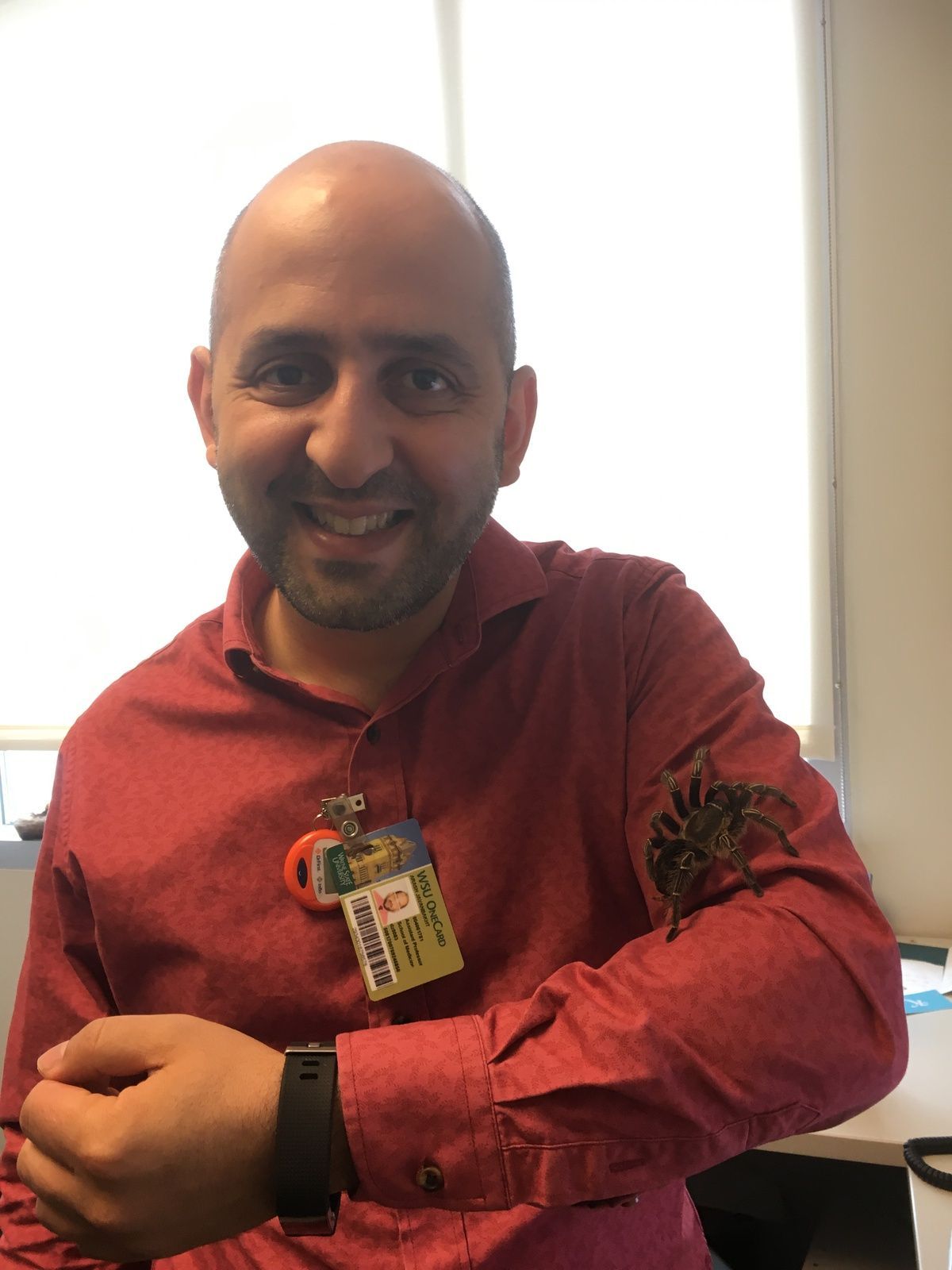
This news organization spoke with Dr. Javanbakht, a psychiatrist, about the technological advances that have made this work possible; the future of remote-based psychiatry; and his tarantula colleague, Tony.
Augmenting exposure therapy
How did you begin using artificial intelligence as a way of delivering exposure therapy?
Exposure therapy is a very effective treatment for phobias, obsessive-compulsive disorder, and PTSD. But the problem we had is that, if someone comes to me and says they’re afraid of dogs, snakes, or spiders, I don’t have those in my office. Or, if its social phobia, I can’t create those scenarios. So, despite being such an effective treatment, it’s not utilized as much as it should be.
Several years ago, I saw a TED talk by the CEO of an augmented reality company who happened to be a neuroscientist. I thought the concept was amazing, because it offered a way to overcome those limitations.
Mixed augmented reality allows us to bring all those feared objects to the clinic. I can bring my Labrador to the office for someone who’s afraid of dogs, and they can get the exposure to that one dog. But we know good exposure therapy needs to be generalizable, with as many different breeds of dogs as possible, and is context dependent. If the patient sees a dog in their neighborhood, their fear response may come back. Doing it in a real-life context, and offering as many contexts as possible, makes it more effective.
Augmented reality allows all of these options because you can have as many different types of virtual objects as you want, and the difference between augmented reality and virtual reality is that augmented reality happens in a real-life context. You wear the goggles and you can walk around the environment and track the object, so the context is more realistic.
When did you begin researching augmented reality as a clinical tool?
I became a faculty member here in 2015, right out of my residency training, and I think it was around 2016 or 2017 that we began this work.
I’m very much involved in exposure therapy, utilize it myself, train others, and research how it works and changes the brain. I knew the ins and outs and what would make a better exposure therapy, based on my knowledge of neuroscience.
We spend time thinking about how we can apply these neuroscientific principles in software that can also be easily used by a not very technologically savvy therapist. Because that has been a big barrier when it comes to technology and human use in medicine.
Initially, we had a company create the software for us, but we’ve since brought all the programming inside.
The cool thing about these augmented reality devices is that they have excellent surface mapping. As soon as the person wears the goggles, it automatically maps the surfaces and provides a 3D view of the patient’s environment on the therapist’s computer. Say you’re treating a patient with a fear of spiders. Through drop-down menus, the therapist can choose what type of spider, its color and size, where it should be placed, and the motion. I can choose to move the spider from 6 feet away on the floor to the walls to the ceiling.
Virtual phobias, real fear
A big question for a lot of people was if the spiders are virtual, will they be scary, because it has to be realistic enough to create a fear response for the therapy to work. We use a couple of wires that you can put on a person’s finger and hook them up to a tablet or a cell phone. This provides an online measure of a person’s autonomic sympathetic response.
Like a lie detector test?
Exactly. We put that on their fingers and exposed them to a real-life tarantula and to our virtual tarantulas, and the fear response was no different. That means these do create an objective fear reaction in the body.
We also had people who said, “I know this is not real. I won’t be scared.” And when we started the therapy, it was with a tiny spider 5 meters away from them, and they’d lift their legs off the floor.
With the treatment, we’d come to one room and start with a very little spider, far from them. Then gradually we move them up to bigger, more diverse types of spiders, which are moving around. The patient comes near and tries to touch them.
Then at some point, I’d put a spiderweb on the door, put a few spiders on that, open the door, and have the patient walk through it. They kept walking through this spiderweb.
When they were desensitized to these spiders in this context – and as I said, context is important – we’d go to another room. This was darker, more like a basement, and we’d continue the same thing. That would actually take much less time because they already had desensitized a lot.
In our field, sense of control is very important, especially for when a patient goes home. So at the end, I’d leave the room and talk to the patient via a baby monitor. The patient was surrounded by 20 tarantulas, without the prompt moving around the environment.
Now that they’re desensitized to my virtual spiders, the question is, how would that apply to a real spider? So, we had a real live tarantula, whose name was Tony Stark, because we’re the STARC lab. We’d put Tony at the end of a long hallway before the treatment and see how close the patients could get to him.
It was only one treatment session; nobody’s was longer than 1 hour, and the average treatment time was 38 minutes.
That’s pretty effective.
It’s pretty good, compared with other studies. And I believe this is because of all the components I mentioned: being able to use your real environment; combining it with the real tarantula; the variety of the types of the feared objects; and, of course, giving the patient a sense of autonomy at the end.
Then we had to see how prolonged the effects are. We had them come in 1 week and 1 month after the treatment. I’d remind them of the principles of good exposure therapy and ask them to keep practicing at home between the sessions, looking at pictures and videos. But we never tested who did or did not do it.
After 1 week and 1 month, the effects were either the same or better. A larger number of people at 1 month were able to touch the tarantula than right after treatment.
Treating PTSD in first responders
Did you start with spiders and dogs because those are common fears?
We started with spiders because that worked with the initial goal of creating a prototype. Spiders’ behavior is simple enough for the programming, which takes a lot of time. Another reason for choosing spiders was that we had a lot of other studies of real and virtual reality exposure therapy to compare against.
I think another reason for our success is that, when you do real exposure therapy, you have just one scared tarantula in the corner of their tank, and they don’t listen to you. But my spiders listen to me and do exactly what I tell them.
After our initial success, we obtained more funds to expand it to other phobias. The cool thing is that we don’t need separate software for different phobias. You can choose dogs or snakes, add it to the person’s environment, and decide their behaviors.
We just started a clinical trial using dogs, and another group in Turkey is running a clinical trial with dogs. Eastern Michigan University is working with spiders. And a clinic at the University of Nebraska Medical Center is going to start using them in real-world clinics, not for research.
We have another project whose goal is helping reduce the impact of trauma and also treating PTSD in first responders, who are exposed to a lot of horrible things. Rates of PTSD are around 20%-30% among cops, firefighters, and EMS personnel.
They commonly find it very painful being in crowds because the fight-or-flight instinct in the brain is constantly screening for any sign of threat in their environment. We’re working on them walking into an empty room wearing the goggles, and then their therapist can scale the stimulus up and down.
There’ll be two people in front of you talking to each other, and then another group comes in, and people get louder. People can look at you and talk to you. There’s kids running, Fourth of July fireworks, and other things that might bother someone who’s been involved in gun- or explosion-related traumas. You gradually scale up when the person is next to their therapist.
Another thing we’re doing is related to cardiopulmonary resuscitation. If a young person dies in a CPR situation, that is really painful and traumatic. So, for exposure therapy to that, we’re creating a difficult CPR scenario when that person may die. The responder wears the goggles and basically watches a group of people doing CPR while standing next to a therapist who can help them navigate it and then scale it off.
Another goal is combining this with telemedicine, where the person can do it in their real-life environment. Imagine a person with military trauma. You can put them back in the barracks, connected with their psychiatrists via telemedicine. Then we would put humans in military fatigues near them and have them interact with them to feel comfortable with that situation.
What else is next for you and your group?
The next biggest challenge that we’re tackling is PTSD, because of course creating human-encounter scenarios is much more complicated than spiders and dogs. We’re in the midst of developing this so we can basically bring it to people’s homes.
We’ve been working with some military personnel to see if we can basically give a device to a veteran with PTSD, so they can go home and practice on their own.
There’s another possibility for training. Let’s take the example of a police force, which can have a lot of difficulties and mistakes because of lack of exposure and training. They can wear these goggles, get fully geared up, and be placed in encounters with people of different backgrounds, of different severity, with people who could be severely mentally ill or present different challenges for the officers.
Those situations can teach them a lot. I’m the creator of this thing, but even I’m often surprised by how realistic this technology can be. I find myself interacting with avatars the same way I would if they were real humans. I actually had one of my colleagues, when we started launching the programming with the dogs, immediately jump back. It’s just like the animal brain reacts to them.
Last question: Do you actually interact with Tony, the tarantula?
Oh, Tony is my friend. Unfortunately, he’s not with our lab at this moment. He’s on a sabbatical at Eastern Michigan University for their clinical trials. But yes, I’ve held him. He’s very friendly.
A version of this article first appeared on Medscape.com.
At Wayne State University’s Stress, Trauma, and Anxiety Research Clinic (STARC) in Michigan, researchers are developing novel interventions for treating some very ancient phobias hardwired into the human brain. By using augmented reality as means of conducting exposure therapy, STARC researchers – including Shantanu Madaboosi, Rakesh Ramaswamy, and Lana Grasser – and STARC director Arash Javanbakht, MD, have produced compelling evidence that they can free patients of their often debilitating fears of spiders, dogs, and snakes. Yet their work doesn’t stop there, and research into treating anxiety and posttraumatic stress disorder among first responders and others with high-stress occupations is ongoing.
This news organization spoke with Dr. Javanbakht, a psychiatrist, about the technological advances that have made this work possible; the future of remote-based psychiatry; and his tarantula colleague, Tony.
Augmenting exposure therapy
How did you begin using artificial intelligence as a way of delivering exposure therapy?
Exposure therapy is a very effective treatment for phobias, obsessive-compulsive disorder, and PTSD. But the problem we had is that, if someone comes to me and says they’re afraid of dogs, snakes, or spiders, I don’t have those in my office. Or, if its social phobia, I can’t create those scenarios. So, despite being such an effective treatment, it’s not utilized as much as it should be.
Several years ago, I saw a TED talk by the CEO of an augmented reality company who happened to be a neuroscientist. I thought the concept was amazing, because it offered a way to overcome those limitations.
Mixed augmented reality allows us to bring all those feared objects to the clinic. I can bring my Labrador to the office for someone who’s afraid of dogs, and they can get the exposure to that one dog. But we know good exposure therapy needs to be generalizable, with as many different breeds of dogs as possible, and is context dependent. If the patient sees a dog in their neighborhood, their fear response may come back. Doing it in a real-life context, and offering as many contexts as possible, makes it more effective.
Augmented reality allows all of these options because you can have as many different types of virtual objects as you want, and the difference between augmented reality and virtual reality is that augmented reality happens in a real-life context. You wear the goggles and you can walk around the environment and track the object, so the context is more realistic.
When did you begin researching augmented reality as a clinical tool?
I became a faculty member here in 2015, right out of my residency training, and I think it was around 2016 or 2017 that we began this work.
I’m very much involved in exposure therapy, utilize it myself, train others, and research how it works and changes the brain. I knew the ins and outs and what would make a better exposure therapy, based on my knowledge of neuroscience.
We spend time thinking about how we can apply these neuroscientific principles in software that can also be easily used by a not very technologically savvy therapist. Because that has been a big barrier when it comes to technology and human use in medicine.
Initially, we had a company create the software for us, but we’ve since brought all the programming inside.
The cool thing about these augmented reality devices is that they have excellent surface mapping. As soon as the person wears the goggles, it automatically maps the surfaces and provides a 3D view of the patient’s environment on the therapist’s computer. Say you’re treating a patient with a fear of spiders. Through drop-down menus, the therapist can choose what type of spider, its color and size, where it should be placed, and the motion. I can choose to move the spider from 6 feet away on the floor to the walls to the ceiling.
Virtual phobias, real fear
A big question for a lot of people was if the spiders are virtual, will they be scary, because it has to be realistic enough to create a fear response for the therapy to work. We use a couple of wires that you can put on a person’s finger and hook them up to a tablet or a cell phone. This provides an online measure of a person’s autonomic sympathetic response.
Like a lie detector test?
Exactly. We put that on their fingers and exposed them to a real-life tarantula and to our virtual tarantulas, and the fear response was no different. That means these do create an objective fear reaction in the body.
We also had people who said, “I know this is not real. I won’t be scared.” And when we started the therapy, it was with a tiny spider 5 meters away from them, and they’d lift their legs off the floor.
With the treatment, we’d come to one room and start with a very little spider, far from them. Then gradually we move them up to bigger, more diverse types of spiders, which are moving around. The patient comes near and tries to touch them.
Then at some point, I’d put a spiderweb on the door, put a few spiders on that, open the door, and have the patient walk through it. They kept walking through this spiderweb.
When they were desensitized to these spiders in this context – and as I said, context is important – we’d go to another room. This was darker, more like a basement, and we’d continue the same thing. That would actually take much less time because they already had desensitized a lot.
In our field, sense of control is very important, especially for when a patient goes home. So at the end, I’d leave the room and talk to the patient via a baby monitor. The patient was surrounded by 20 tarantulas, without the prompt moving around the environment.
Now that they’re desensitized to my virtual spiders, the question is, how would that apply to a real spider? So, we had a real live tarantula, whose name was Tony Stark, because we’re the STARC lab. We’d put Tony at the end of a long hallway before the treatment and see how close the patients could get to him.
It was only one treatment session; nobody’s was longer than 1 hour, and the average treatment time was 38 minutes.
That’s pretty effective.
It’s pretty good, compared with other studies. And I believe this is because of all the components I mentioned: being able to use your real environment; combining it with the real tarantula; the variety of the types of the feared objects; and, of course, giving the patient a sense of autonomy at the end.
Then we had to see how prolonged the effects are. We had them come in 1 week and 1 month after the treatment. I’d remind them of the principles of good exposure therapy and ask them to keep practicing at home between the sessions, looking at pictures and videos. But we never tested who did or did not do it.
After 1 week and 1 month, the effects were either the same or better. A larger number of people at 1 month were able to touch the tarantula than right after treatment.
Treating PTSD in first responders
Did you start with spiders and dogs because those are common fears?
We started with spiders because that worked with the initial goal of creating a prototype. Spiders’ behavior is simple enough for the programming, which takes a lot of time. Another reason for choosing spiders was that we had a lot of other studies of real and virtual reality exposure therapy to compare against.
I think another reason for our success is that, when you do real exposure therapy, you have just one scared tarantula in the corner of their tank, and they don’t listen to you. But my spiders listen to me and do exactly what I tell them.
After our initial success, we obtained more funds to expand it to other phobias. The cool thing is that we don’t need separate software for different phobias. You can choose dogs or snakes, add it to the person’s environment, and decide their behaviors.
We just started a clinical trial using dogs, and another group in Turkey is running a clinical trial with dogs. Eastern Michigan University is working with spiders. And a clinic at the University of Nebraska Medical Center is going to start using them in real-world clinics, not for research.
We have another project whose goal is helping reduce the impact of trauma and also treating PTSD in first responders, who are exposed to a lot of horrible things. Rates of PTSD are around 20%-30% among cops, firefighters, and EMS personnel.
They commonly find it very painful being in crowds because the fight-or-flight instinct in the brain is constantly screening for any sign of threat in their environment. We’re working on them walking into an empty room wearing the goggles, and then their therapist can scale the stimulus up and down.
There’ll be two people in front of you talking to each other, and then another group comes in, and people get louder. People can look at you and talk to you. There’s kids running, Fourth of July fireworks, and other things that might bother someone who’s been involved in gun- or explosion-related traumas. You gradually scale up when the person is next to their therapist.
Another thing we’re doing is related to cardiopulmonary resuscitation. If a young person dies in a CPR situation, that is really painful and traumatic. So, for exposure therapy to that, we’re creating a difficult CPR scenario when that person may die. The responder wears the goggles and basically watches a group of people doing CPR while standing next to a therapist who can help them navigate it and then scale it off.
Another goal is combining this with telemedicine, where the person can do it in their real-life environment. Imagine a person with military trauma. You can put them back in the barracks, connected with their psychiatrists via telemedicine. Then we would put humans in military fatigues near them and have them interact with them to feel comfortable with that situation.
What else is next for you and your group?
The next biggest challenge that we’re tackling is PTSD, because of course creating human-encounter scenarios is much more complicated than spiders and dogs. We’re in the midst of developing this so we can basically bring it to people’s homes.
We’ve been working with some military personnel to see if we can basically give a device to a veteran with PTSD, so they can go home and practice on their own.
There’s another possibility for training. Let’s take the example of a police force, which can have a lot of difficulties and mistakes because of lack of exposure and training. They can wear these goggles, get fully geared up, and be placed in encounters with people of different backgrounds, of different severity, with people who could be severely mentally ill or present different challenges for the officers.
Those situations can teach them a lot. I’m the creator of this thing, but even I’m often surprised by how realistic this technology can be. I find myself interacting with avatars the same way I would if they were real humans. I actually had one of my colleagues, when we started launching the programming with the dogs, immediately jump back. It’s just like the animal brain reacts to them.
Last question: Do you actually interact with Tony, the tarantula?
Oh, Tony is my friend. Unfortunately, he’s not with our lab at this moment. He’s on a sabbatical at Eastern Michigan University for their clinical trials. But yes, I’ve held him. He’s very friendly.
A version of this article first appeared on Medscape.com.
At Wayne State University’s Stress, Trauma, and Anxiety Research Clinic (STARC) in Michigan, researchers are developing novel interventions for treating some very ancient phobias hardwired into the human brain. By using augmented reality as means of conducting exposure therapy, STARC researchers – including Shantanu Madaboosi, Rakesh Ramaswamy, and Lana Grasser – and STARC director Arash Javanbakht, MD, have produced compelling evidence that they can free patients of their often debilitating fears of spiders, dogs, and snakes. Yet their work doesn’t stop there, and research into treating anxiety and posttraumatic stress disorder among first responders and others with high-stress occupations is ongoing.
This news organization spoke with Dr. Javanbakht, a psychiatrist, about the technological advances that have made this work possible; the future of remote-based psychiatry; and his tarantula colleague, Tony.
Augmenting exposure therapy
How did you begin using artificial intelligence as a way of delivering exposure therapy?
Exposure therapy is a very effective treatment for phobias, obsessive-compulsive disorder, and PTSD. But the problem we had is that, if someone comes to me and says they’re afraid of dogs, snakes, or spiders, I don’t have those in my office. Or, if its social phobia, I can’t create those scenarios. So, despite being such an effective treatment, it’s not utilized as much as it should be.
Several years ago, I saw a TED talk by the CEO of an augmented reality company who happened to be a neuroscientist. I thought the concept was amazing, because it offered a way to overcome those limitations.
Mixed augmented reality allows us to bring all those feared objects to the clinic. I can bring my Labrador to the office for someone who’s afraid of dogs, and they can get the exposure to that one dog. But we know good exposure therapy needs to be generalizable, with as many different breeds of dogs as possible, and is context dependent. If the patient sees a dog in their neighborhood, their fear response may come back. Doing it in a real-life context, and offering as many contexts as possible, makes it more effective.
Augmented reality allows all of these options because you can have as many different types of virtual objects as you want, and the difference between augmented reality and virtual reality is that augmented reality happens in a real-life context. You wear the goggles and you can walk around the environment and track the object, so the context is more realistic.
When did you begin researching augmented reality as a clinical tool?
I became a faculty member here in 2015, right out of my residency training, and I think it was around 2016 or 2017 that we began this work.
I’m very much involved in exposure therapy, utilize it myself, train others, and research how it works and changes the brain. I knew the ins and outs and what would make a better exposure therapy, based on my knowledge of neuroscience.
We spend time thinking about how we can apply these neuroscientific principles in software that can also be easily used by a not very technologically savvy therapist. Because that has been a big barrier when it comes to technology and human use in medicine.
Initially, we had a company create the software for us, but we’ve since brought all the programming inside.
The cool thing about these augmented reality devices is that they have excellent surface mapping. As soon as the person wears the goggles, it automatically maps the surfaces and provides a 3D view of the patient’s environment on the therapist’s computer. Say you’re treating a patient with a fear of spiders. Through drop-down menus, the therapist can choose what type of spider, its color and size, where it should be placed, and the motion. I can choose to move the spider from 6 feet away on the floor to the walls to the ceiling.
Virtual phobias, real fear
A big question for a lot of people was if the spiders are virtual, will they be scary, because it has to be realistic enough to create a fear response for the therapy to work. We use a couple of wires that you can put on a person’s finger and hook them up to a tablet or a cell phone. This provides an online measure of a person’s autonomic sympathetic response.
Like a lie detector test?
Exactly. We put that on their fingers and exposed them to a real-life tarantula and to our virtual tarantulas, and the fear response was no different. That means these do create an objective fear reaction in the body.
We also had people who said, “I know this is not real. I won’t be scared.” And when we started the therapy, it was with a tiny spider 5 meters away from them, and they’d lift their legs off the floor.
With the treatment, we’d come to one room and start with a very little spider, far from them. Then gradually we move them up to bigger, more diverse types of spiders, which are moving around. The patient comes near and tries to touch them.
Then at some point, I’d put a spiderweb on the door, put a few spiders on that, open the door, and have the patient walk through it. They kept walking through this spiderweb.
When they were desensitized to these spiders in this context – and as I said, context is important – we’d go to another room. This was darker, more like a basement, and we’d continue the same thing. That would actually take much less time because they already had desensitized a lot.
In our field, sense of control is very important, especially for when a patient goes home. So at the end, I’d leave the room and talk to the patient via a baby monitor. The patient was surrounded by 20 tarantulas, without the prompt moving around the environment.
Now that they’re desensitized to my virtual spiders, the question is, how would that apply to a real spider? So, we had a real live tarantula, whose name was Tony Stark, because we’re the STARC lab. We’d put Tony at the end of a long hallway before the treatment and see how close the patients could get to him.
It was only one treatment session; nobody’s was longer than 1 hour, and the average treatment time was 38 minutes.
That’s pretty effective.
It’s pretty good, compared with other studies. And I believe this is because of all the components I mentioned: being able to use your real environment; combining it with the real tarantula; the variety of the types of the feared objects; and, of course, giving the patient a sense of autonomy at the end.
Then we had to see how prolonged the effects are. We had them come in 1 week and 1 month after the treatment. I’d remind them of the principles of good exposure therapy and ask them to keep practicing at home between the sessions, looking at pictures and videos. But we never tested who did or did not do it.
After 1 week and 1 month, the effects were either the same or better. A larger number of people at 1 month were able to touch the tarantula than right after treatment.
Treating PTSD in first responders
Did you start with spiders and dogs because those are common fears?
We started with spiders because that worked with the initial goal of creating a prototype. Spiders’ behavior is simple enough for the programming, which takes a lot of time. Another reason for choosing spiders was that we had a lot of other studies of real and virtual reality exposure therapy to compare against.
I think another reason for our success is that, when you do real exposure therapy, you have just one scared tarantula in the corner of their tank, and they don’t listen to you. But my spiders listen to me and do exactly what I tell them.
After our initial success, we obtained more funds to expand it to other phobias. The cool thing is that we don’t need separate software for different phobias. You can choose dogs or snakes, add it to the person’s environment, and decide their behaviors.
We just started a clinical trial using dogs, and another group in Turkey is running a clinical trial with dogs. Eastern Michigan University is working with spiders. And a clinic at the University of Nebraska Medical Center is going to start using them in real-world clinics, not for research.
We have another project whose goal is helping reduce the impact of trauma and also treating PTSD in first responders, who are exposed to a lot of horrible things. Rates of PTSD are around 20%-30% among cops, firefighters, and EMS personnel.
They commonly find it very painful being in crowds because the fight-or-flight instinct in the brain is constantly screening for any sign of threat in their environment. We’re working on them walking into an empty room wearing the goggles, and then their therapist can scale the stimulus up and down.
There’ll be two people in front of you talking to each other, and then another group comes in, and people get louder. People can look at you and talk to you. There’s kids running, Fourth of July fireworks, and other things that might bother someone who’s been involved in gun- or explosion-related traumas. You gradually scale up when the person is next to their therapist.
Another thing we’re doing is related to cardiopulmonary resuscitation. If a young person dies in a CPR situation, that is really painful and traumatic. So, for exposure therapy to that, we’re creating a difficult CPR scenario when that person may die. The responder wears the goggles and basically watches a group of people doing CPR while standing next to a therapist who can help them navigate it and then scale it off.
Another goal is combining this with telemedicine, where the person can do it in their real-life environment. Imagine a person with military trauma. You can put them back in the barracks, connected with their psychiatrists via telemedicine. Then we would put humans in military fatigues near them and have them interact with them to feel comfortable with that situation.
What else is next for you and your group?
The next biggest challenge that we’re tackling is PTSD, because of course creating human-encounter scenarios is much more complicated than spiders and dogs. We’re in the midst of developing this so we can basically bring it to people’s homes.
We’ve been working with some military personnel to see if we can basically give a device to a veteran with PTSD, so they can go home and practice on their own.
There’s another possibility for training. Let’s take the example of a police force, which can have a lot of difficulties and mistakes because of lack of exposure and training. They can wear these goggles, get fully geared up, and be placed in encounters with people of different backgrounds, of different severity, with people who could be severely mentally ill or present different challenges for the officers.
Those situations can teach them a lot. I’m the creator of this thing, but even I’m often surprised by how realistic this technology can be. I find myself interacting with avatars the same way I would if they were real humans. I actually had one of my colleagues, when we started launching the programming with the dogs, immediately jump back. It’s just like the animal brain reacts to them.
Last question: Do you actually interact with Tony, the tarantula?
Oh, Tony is my friend. Unfortunately, he’s not with our lab at this moment. He’s on a sabbatical at Eastern Michigan University for their clinical trials. But yes, I’ve held him. He’s very friendly.
A version of this article first appeared on Medscape.com.
Good news, bad news for buprenorphine in opioid use disorder
Misuse of buprenorphine in the United States by patients with opioid use disorder (OUD) dropped sharply between 2015 and 2019, new research shows.
Analyses of data from the National Survey on Drug Use and Health also showed that about 50% of the patients with OUD were not receiving substance use treatment – and that some may be misusing buprenorphine in an effort to self-treat their addiction.
Interestingly, there was no association between buprenorphine misuse and income among those with OUD or with race, ethnicity, or insurance status regardless of OUD status, which bucks commonly held perceptions of those with the disorder.
Overall, the findings “underscore the need to pursue actions that expand access to buprenorphine-based OUD treatment, to develop strategies to monitor and reduce buprenorphine misuse, and to address associated conditions,” the investigators, led by Beth Han, MD, PhD, National Institute on Drug Abuse (NIDA), write.
The study was published online October 15 in JAMA Network Open.
Opioid deaths
Centers for Disease Control and Prevention data Of those deaths, 69,710 involved opioids.
Buprenorphine, a medication approved by the U.S. Food and Drug Administration to treat OUD, has been shown to reduce opioid cravings and withdrawal symptoms and lower overdose risk.
The new survey included responses from 214,505 adults. Of these, 51.7% were women, 45.5% were age 50 years or older, and 63.9% were non-Hispanic White.
Responses were collected between 2015-2019 as part of an annual survey administered annually by the Substance Abuse and Mental Health Services Administration.
Misuse was defined as any use outside the prescribed amount, frequency, duration, or indication.
In 2019, hydrocodone, oxycodone, codeine, and tramadol were the most misused prescription opioid products. An estimated 2.4 million adults used buprenorphine, with 1.7 million reporting no misuse in the past 12 months.
While buprenorphine misuse was stable between 2015 and 2019 among individuals without OUD, misuse declined significantly among those with OUD – from 20.5% in 2015 to 15.9% in 2019 (P = .04).
A different picture of misuse
The demographic data reveals a picture of buprenorphine misuse that researchers note is quite different from common perceptions about people with substance use.
Those with OUD who misused buprenorphine were more likely to be non-Hispanic White (82.9% vs. 73.6%, respectively) and less likely to live in large metropolitan areas (47.7% vs. 58.1%).
Among participants with OUD, buprenorphine misuse was significantly associated with age, especially in those between 24 and 34 years (adjusted odds ratio [aOR], 2.9; 95% confidence interval, 1.4-5.8) and between 35 and 49 years (aOR, 2.3; 95% CI, 1.2-4.5).
It was also significantly associated with living in nonmetropolitan areas (aOR, 1.8; 95% CI, 1.0-3.0) and having past-year polysubstance use and use disorders (aOR, 3.9; 95% CI, 1.3-11.2); but negatively associated with past-year treatment for illicit drug use–only treatment (aOR, 0.4; 95% CI, 0.3-0.7).
There was no significant association between buprenorphine misuse and income in participants with OUD or with race, ethnicity, or insurance status, regardless of OUD status.
“Perceptions that persons of racial and ethnic minority groups and people living in poverty are more likely to misuse their medication are incorrect,” the researchers write.
“Nevertheless, these factors have been found to be important factors associated with opioid harms and receipt of buprenorphine treatment,” they add.
Between 2015 and 2017, the largest increase in opioid-related drug overdose deaths was among Black people aged 25 to 34, and the largest increase involving synthetic opioids was among Hispanic individuals aged 45 to 54. At the same time, White people were more likely to receive buprenorphine treatment for OUD.
‘Don’t exaggerate concerns’
Among survey participants with OUD, 57% of those who had misused buprenorphine in the past year had received no substance use treatment. Among those with OUD who had not misused the drug in the past year, 49% had received no treatment for their addiction.
The most common reason for buprenorphine misuse cited by those with OUD was “because I am hooked” (27.3%), which researchers said suggests people may be taking buprenorphine without a prescription to self-treat their OUD.
The investigators note that although buprenorphine is inexpensive and effective, clinicians currently must receive a federal waiver to prescribe it to more than 30 patients at a time.
Concern over potential misuse may be one reason some clinicians have been reluctant to complete the training process. However, the study results showed misuse rates of other opioids, including oxycodone and hydrocodone, were higher than those reported for buprenorphine.
“Many other prescription opioids are misused at much higher rates,” co-investigator Wilson Compton, MD, MPE, deputy director of NIDA, told this news organization.
“While there are concerns about all of them, we want to make sure that people don’t exaggerate the concerns – and understanding that oxycodone and hydrocodone are so much more frequently misused is important,” added Dr. Compton.
Symptom of inadequate access?
Commenting on the research, Bobby Mukkamala, MD, chair of the American Medical Association Board of Trustees, said individuals who misuse buprenorphine “commonly do so to alleviate uncontrolled pain or symptoms of withdrawal.”
“So-called misuse of buprenorphine is a symptom of inadequate access to physicians to treat opioid use disorder,” said Dr. Mukkamala, who also chairs the AMA Substance Use and Pain Care Task Force.
A 2020 study from the U.S. Department of Health & Human Services showed 40% of U.S. counties have no clinicians with a federal waiver permitting them to prescribe buprenorphine in an office setting.
In April, the HHS released new practice guidelines that allow certain practitioners licensed under state law who have a valid Drug Enforcement Administration registration to treat up to 30 patients with buprenorphine without having to complete requirements related to training, counseling, and other ancillary services known as an “X-waiver.”
The move was welcomed by many in the field, but Dr. Mukkamala said the agency did not go far enough.
“The AMA supports removing the federal X-waiver requirement to help destigmatize the provision of buprenorphine as well as remove the many administrative barriers that come with the federal requirement,” he said.
The study was funded by the National Institute on Drug Abuse. The study authors have disclosed no relevant financial relationships.
A version of this article first appeared on Medscape.com.
Misuse of buprenorphine in the United States by patients with opioid use disorder (OUD) dropped sharply between 2015 and 2019, new research shows.
Analyses of data from the National Survey on Drug Use and Health also showed that about 50% of the patients with OUD were not receiving substance use treatment – and that some may be misusing buprenorphine in an effort to self-treat their addiction.
Interestingly, there was no association between buprenorphine misuse and income among those with OUD or with race, ethnicity, or insurance status regardless of OUD status, which bucks commonly held perceptions of those with the disorder.
Overall, the findings “underscore the need to pursue actions that expand access to buprenorphine-based OUD treatment, to develop strategies to monitor and reduce buprenorphine misuse, and to address associated conditions,” the investigators, led by Beth Han, MD, PhD, National Institute on Drug Abuse (NIDA), write.
The study was published online October 15 in JAMA Network Open.
Opioid deaths
Centers for Disease Control and Prevention data Of those deaths, 69,710 involved opioids.
Buprenorphine, a medication approved by the U.S. Food and Drug Administration to treat OUD, has been shown to reduce opioid cravings and withdrawal symptoms and lower overdose risk.
The new survey included responses from 214,505 adults. Of these, 51.7% were women, 45.5% were age 50 years or older, and 63.9% were non-Hispanic White.
Responses were collected between 2015-2019 as part of an annual survey administered annually by the Substance Abuse and Mental Health Services Administration.
Misuse was defined as any use outside the prescribed amount, frequency, duration, or indication.
In 2019, hydrocodone, oxycodone, codeine, and tramadol were the most misused prescription opioid products. An estimated 2.4 million adults used buprenorphine, with 1.7 million reporting no misuse in the past 12 months.
While buprenorphine misuse was stable between 2015 and 2019 among individuals without OUD, misuse declined significantly among those with OUD – from 20.5% in 2015 to 15.9% in 2019 (P = .04).
A different picture of misuse
The demographic data reveals a picture of buprenorphine misuse that researchers note is quite different from common perceptions about people with substance use.
Those with OUD who misused buprenorphine were more likely to be non-Hispanic White (82.9% vs. 73.6%, respectively) and less likely to live in large metropolitan areas (47.7% vs. 58.1%).
Among participants with OUD, buprenorphine misuse was significantly associated with age, especially in those between 24 and 34 years (adjusted odds ratio [aOR], 2.9; 95% confidence interval, 1.4-5.8) and between 35 and 49 years (aOR, 2.3; 95% CI, 1.2-4.5).
It was also significantly associated with living in nonmetropolitan areas (aOR, 1.8; 95% CI, 1.0-3.0) and having past-year polysubstance use and use disorders (aOR, 3.9; 95% CI, 1.3-11.2); but negatively associated with past-year treatment for illicit drug use–only treatment (aOR, 0.4; 95% CI, 0.3-0.7).
There was no significant association between buprenorphine misuse and income in participants with OUD or with race, ethnicity, or insurance status, regardless of OUD status.
“Perceptions that persons of racial and ethnic minority groups and people living in poverty are more likely to misuse their medication are incorrect,” the researchers write.
“Nevertheless, these factors have been found to be important factors associated with opioid harms and receipt of buprenorphine treatment,” they add.
Between 2015 and 2017, the largest increase in opioid-related drug overdose deaths was among Black people aged 25 to 34, and the largest increase involving synthetic opioids was among Hispanic individuals aged 45 to 54. At the same time, White people were more likely to receive buprenorphine treatment for OUD.
‘Don’t exaggerate concerns’
Among survey participants with OUD, 57% of those who had misused buprenorphine in the past year had received no substance use treatment. Among those with OUD who had not misused the drug in the past year, 49% had received no treatment for their addiction.
The most common reason for buprenorphine misuse cited by those with OUD was “because I am hooked” (27.3%), which researchers said suggests people may be taking buprenorphine without a prescription to self-treat their OUD.
The investigators note that although buprenorphine is inexpensive and effective, clinicians currently must receive a federal waiver to prescribe it to more than 30 patients at a time.
Concern over potential misuse may be one reason some clinicians have been reluctant to complete the training process. However, the study results showed misuse rates of other opioids, including oxycodone and hydrocodone, were higher than those reported for buprenorphine.
“Many other prescription opioids are misused at much higher rates,” co-investigator Wilson Compton, MD, MPE, deputy director of NIDA, told this news organization.
“While there are concerns about all of them, we want to make sure that people don’t exaggerate the concerns – and understanding that oxycodone and hydrocodone are so much more frequently misused is important,” added Dr. Compton.
Symptom of inadequate access?
Commenting on the research, Bobby Mukkamala, MD, chair of the American Medical Association Board of Trustees, said individuals who misuse buprenorphine “commonly do so to alleviate uncontrolled pain or symptoms of withdrawal.”
“So-called misuse of buprenorphine is a symptom of inadequate access to physicians to treat opioid use disorder,” said Dr. Mukkamala, who also chairs the AMA Substance Use and Pain Care Task Force.
A 2020 study from the U.S. Department of Health & Human Services showed 40% of U.S. counties have no clinicians with a federal waiver permitting them to prescribe buprenorphine in an office setting.
In April, the HHS released new practice guidelines that allow certain practitioners licensed under state law who have a valid Drug Enforcement Administration registration to treat up to 30 patients with buprenorphine without having to complete requirements related to training, counseling, and other ancillary services known as an “X-waiver.”
The move was welcomed by many in the field, but Dr. Mukkamala said the agency did not go far enough.
“The AMA supports removing the federal X-waiver requirement to help destigmatize the provision of buprenorphine as well as remove the many administrative barriers that come with the federal requirement,” he said.
The study was funded by the National Institute on Drug Abuse. The study authors have disclosed no relevant financial relationships.
A version of this article first appeared on Medscape.com.
Misuse of buprenorphine in the United States by patients with opioid use disorder (OUD) dropped sharply between 2015 and 2019, new research shows.
Analyses of data from the National Survey on Drug Use and Health also showed that about 50% of the patients with OUD were not receiving substance use treatment – and that some may be misusing buprenorphine in an effort to self-treat their addiction.
Interestingly, there was no association between buprenorphine misuse and income among those with OUD or with race, ethnicity, or insurance status regardless of OUD status, which bucks commonly held perceptions of those with the disorder.
Overall, the findings “underscore the need to pursue actions that expand access to buprenorphine-based OUD treatment, to develop strategies to monitor and reduce buprenorphine misuse, and to address associated conditions,” the investigators, led by Beth Han, MD, PhD, National Institute on Drug Abuse (NIDA), write.
The study was published online October 15 in JAMA Network Open.
Opioid deaths
Centers for Disease Control and Prevention data Of those deaths, 69,710 involved opioids.
Buprenorphine, a medication approved by the U.S. Food and Drug Administration to treat OUD, has been shown to reduce opioid cravings and withdrawal symptoms and lower overdose risk.
The new survey included responses from 214,505 adults. Of these, 51.7% were women, 45.5% were age 50 years or older, and 63.9% were non-Hispanic White.
Responses were collected between 2015-2019 as part of an annual survey administered annually by the Substance Abuse and Mental Health Services Administration.
Misuse was defined as any use outside the prescribed amount, frequency, duration, or indication.
In 2019, hydrocodone, oxycodone, codeine, and tramadol were the most misused prescription opioid products. An estimated 2.4 million adults used buprenorphine, with 1.7 million reporting no misuse in the past 12 months.
While buprenorphine misuse was stable between 2015 and 2019 among individuals without OUD, misuse declined significantly among those with OUD – from 20.5% in 2015 to 15.9% in 2019 (P = .04).
A different picture of misuse
The demographic data reveals a picture of buprenorphine misuse that researchers note is quite different from common perceptions about people with substance use.
Those with OUD who misused buprenorphine were more likely to be non-Hispanic White (82.9% vs. 73.6%, respectively) and less likely to live in large metropolitan areas (47.7% vs. 58.1%).
Among participants with OUD, buprenorphine misuse was significantly associated with age, especially in those between 24 and 34 years (adjusted odds ratio [aOR], 2.9; 95% confidence interval, 1.4-5.8) and between 35 and 49 years (aOR, 2.3; 95% CI, 1.2-4.5).
It was also significantly associated with living in nonmetropolitan areas (aOR, 1.8; 95% CI, 1.0-3.0) and having past-year polysubstance use and use disorders (aOR, 3.9; 95% CI, 1.3-11.2); but negatively associated with past-year treatment for illicit drug use–only treatment (aOR, 0.4; 95% CI, 0.3-0.7).
There was no significant association between buprenorphine misuse and income in participants with OUD or with race, ethnicity, or insurance status, regardless of OUD status.
“Perceptions that persons of racial and ethnic minority groups and people living in poverty are more likely to misuse their medication are incorrect,” the researchers write.
“Nevertheless, these factors have been found to be important factors associated with opioid harms and receipt of buprenorphine treatment,” they add.
Between 2015 and 2017, the largest increase in opioid-related drug overdose deaths was among Black people aged 25 to 34, and the largest increase involving synthetic opioids was among Hispanic individuals aged 45 to 54. At the same time, White people were more likely to receive buprenorphine treatment for OUD.
‘Don’t exaggerate concerns’
Among survey participants with OUD, 57% of those who had misused buprenorphine in the past year had received no substance use treatment. Among those with OUD who had not misused the drug in the past year, 49% had received no treatment for their addiction.
The most common reason for buprenorphine misuse cited by those with OUD was “because I am hooked” (27.3%), which researchers said suggests people may be taking buprenorphine without a prescription to self-treat their OUD.
The investigators note that although buprenorphine is inexpensive and effective, clinicians currently must receive a federal waiver to prescribe it to more than 30 patients at a time.
Concern over potential misuse may be one reason some clinicians have been reluctant to complete the training process. However, the study results showed misuse rates of other opioids, including oxycodone and hydrocodone, were higher than those reported for buprenorphine.
“Many other prescription opioids are misused at much higher rates,” co-investigator Wilson Compton, MD, MPE, deputy director of NIDA, told this news organization.
“While there are concerns about all of them, we want to make sure that people don’t exaggerate the concerns – and understanding that oxycodone and hydrocodone are so much more frequently misused is important,” added Dr. Compton.
Symptom of inadequate access?
Commenting on the research, Bobby Mukkamala, MD, chair of the American Medical Association Board of Trustees, said individuals who misuse buprenorphine “commonly do so to alleviate uncontrolled pain or symptoms of withdrawal.”
“So-called misuse of buprenorphine is a symptom of inadequate access to physicians to treat opioid use disorder,” said Dr. Mukkamala, who also chairs the AMA Substance Use and Pain Care Task Force.
A 2020 study from the U.S. Department of Health & Human Services showed 40% of U.S. counties have no clinicians with a federal waiver permitting them to prescribe buprenorphine in an office setting.
In April, the HHS released new practice guidelines that allow certain practitioners licensed under state law who have a valid Drug Enforcement Administration registration to treat up to 30 patients with buprenorphine without having to complete requirements related to training, counseling, and other ancillary services known as an “X-waiver.”
The move was welcomed by many in the field, but Dr. Mukkamala said the agency did not go far enough.
“The AMA supports removing the federal X-waiver requirement to help destigmatize the provision of buprenorphine as well as remove the many administrative barriers that come with the federal requirement,” he said.
The study was funded by the National Institute on Drug Abuse. The study authors have disclosed no relevant financial relationships.
A version of this article first appeared on Medscape.com.
How can doctors help kids recover from COVID-19 school disruptions?
Physicians may be able to help students get back on track after the pandemic derailed normal schooling, a developmental and behavioral pediatrician suggests.
The disruptions especially affected vulnerable students, such as those with disabilities and those affected by poverty. But academic setbacks occurred across grades and demographics.
“What we know is that, if it was bad before COVID, things are much worse now,” Eric Tridas, MD, said at the annual meeting of the American Academy of Pediatrics. “The pandemic disproportionately affected vulnerable populations. It exacerbated their learning and mental health problems to a high degree.”
In an effort to help kids catch up, pediatricians can provide information to parents about approaches to accelerated academic instruction, Dr. Tridas suggested. They also can monitor for depression and anxiety, and provide appropriate referrals and, if needed, medication, said Dr. Tridas, who is a member of the National Joint Committee on Learning Disabilities.
Doctors also can collaborate with educators to establish schoolwide plans to address mental health problems, he said.
Dr. Tridas focused on vulnerable populations, including students with neurodevelopmental disorders, as well as students of color, English language learners, and Indigenous populations. But other research presented at the AAP meeting focused on challenges that college students in general encountered during the pandemic.
Nelson Chow, a research intern at Cohen Children’s Medical Center in New Hyde Park, N.Y., and colleagues surveyed college students in June 2020 about academic barriers when their schools switched to virtual learning.
Nearly 80% of the 307 respondents had difficulties concentrating. Many students also agreed that responsibilities at home (57.6%), mental health issues (46.3%), family relationships (37.8%), financial hardships (31.5%), and limited Internet access (25.1%) were among the factors that posed academic barriers.
A larger proportion of Hispanic students reported that responsibilities at home were a challenge, compared with non-Hispanic students, the researchers found.
“It is especially important to have a particular awareness of the cultural and socioeconomic factors that may impact students’ outcomes,” Mr. Chow said in a news release highlighting the research.
Although studies indicate that the pandemic led to academic losses across the board in terms of students not learning as much as usual, these setbacks were more pronounced for vulnerable populations, Dr. Tridas said.
What can busy pediatricians do? “We can at least inquire about how the kids are doing educationally, and with mental health. That’s it. If we do that, we are doing an awful lot.”
Education
Dr. Tridas pointed meeting attendees to a report from the National Center for Learning Disabilities, “Promising Practices to Accelerate Learning for Students with Disabilities During COVID-19 and Beyond,” that he said could be a helpful resource for pediatricians, parents, and educators who want to learn more about accelerated learning approaches.
Research indicates that these strategies “may help in a situation like this,” Dr. Tridas said.
Accelerated approaches typically simplify the curriculum to focus on essential reading, writing, and math skills that most students should acquire by third grade, while capitalizing on students’ strengths and interests.
Despite vulnerable students having fallen farther behind academically, they likely are doing the same thing in school that they were doing before COVID-19, “which was not working to begin with,” he said. “That is why I try to provide parents and pediatricians with ways of ... recognizing when appropriate instruction is being provided.”
Sharing this information does not necessarily mean that schools will implement those strategies, or that schools are not applying them already. Still, making parents aware of these approaches can help, he said.
Emotional health
Social isolation, loss of routine and structure, more screen time, and changes in sleeping and eating patterns during the pandemic are factors that may have exacerbated mental health problems in students.
Vulnerable populations are at higher risk for these issues, and it will be important to monitor these kids for suicidal ideation and depression, especially in middle school and high school, Dr. Tridas said.
Doctors should establish alliances with mental health providers in their communities if they are not able to provide cognitive-behavioral therapy or medication management in their own practices.
And at home and at school, children should have structure and consistency, positive enforcement of appropriate conduct, and a safe environment that allows them to fail and try again, Dr. Tridas said.
Dr. Tridas and Mr. Chow had no relevant financial disclosures.
Physicians may be able to help students get back on track after the pandemic derailed normal schooling, a developmental and behavioral pediatrician suggests.
The disruptions especially affected vulnerable students, such as those with disabilities and those affected by poverty. But academic setbacks occurred across grades and demographics.
“What we know is that, if it was bad before COVID, things are much worse now,” Eric Tridas, MD, said at the annual meeting of the American Academy of Pediatrics. “The pandemic disproportionately affected vulnerable populations. It exacerbated their learning and mental health problems to a high degree.”
In an effort to help kids catch up, pediatricians can provide information to parents about approaches to accelerated academic instruction, Dr. Tridas suggested. They also can monitor for depression and anxiety, and provide appropriate referrals and, if needed, medication, said Dr. Tridas, who is a member of the National Joint Committee on Learning Disabilities.
Doctors also can collaborate with educators to establish schoolwide plans to address mental health problems, he said.
Dr. Tridas focused on vulnerable populations, including students with neurodevelopmental disorders, as well as students of color, English language learners, and Indigenous populations. But other research presented at the AAP meeting focused on challenges that college students in general encountered during the pandemic.
Nelson Chow, a research intern at Cohen Children’s Medical Center in New Hyde Park, N.Y., and colleagues surveyed college students in June 2020 about academic barriers when their schools switched to virtual learning.
Nearly 80% of the 307 respondents had difficulties concentrating. Many students also agreed that responsibilities at home (57.6%), mental health issues (46.3%), family relationships (37.8%), financial hardships (31.5%), and limited Internet access (25.1%) were among the factors that posed academic barriers.
A larger proportion of Hispanic students reported that responsibilities at home were a challenge, compared with non-Hispanic students, the researchers found.
“It is especially important to have a particular awareness of the cultural and socioeconomic factors that may impact students’ outcomes,” Mr. Chow said in a news release highlighting the research.
Although studies indicate that the pandemic led to academic losses across the board in terms of students not learning as much as usual, these setbacks were more pronounced for vulnerable populations, Dr. Tridas said.
What can busy pediatricians do? “We can at least inquire about how the kids are doing educationally, and with mental health. That’s it. If we do that, we are doing an awful lot.”
Education
Dr. Tridas pointed meeting attendees to a report from the National Center for Learning Disabilities, “Promising Practices to Accelerate Learning for Students with Disabilities During COVID-19 and Beyond,” that he said could be a helpful resource for pediatricians, parents, and educators who want to learn more about accelerated learning approaches.
Research indicates that these strategies “may help in a situation like this,” Dr. Tridas said.
Accelerated approaches typically simplify the curriculum to focus on essential reading, writing, and math skills that most students should acquire by third grade, while capitalizing on students’ strengths and interests.
Despite vulnerable students having fallen farther behind academically, they likely are doing the same thing in school that they were doing before COVID-19, “which was not working to begin with,” he said. “That is why I try to provide parents and pediatricians with ways of ... recognizing when appropriate instruction is being provided.”
Sharing this information does not necessarily mean that schools will implement those strategies, or that schools are not applying them already. Still, making parents aware of these approaches can help, he said.
Emotional health
Social isolation, loss of routine and structure, more screen time, and changes in sleeping and eating patterns during the pandemic are factors that may have exacerbated mental health problems in students.
Vulnerable populations are at higher risk for these issues, and it will be important to monitor these kids for suicidal ideation and depression, especially in middle school and high school, Dr. Tridas said.
Doctors should establish alliances with mental health providers in their communities if they are not able to provide cognitive-behavioral therapy or medication management in their own practices.
And at home and at school, children should have structure and consistency, positive enforcement of appropriate conduct, and a safe environment that allows them to fail and try again, Dr. Tridas said.
Dr. Tridas and Mr. Chow had no relevant financial disclosures.
Physicians may be able to help students get back on track after the pandemic derailed normal schooling, a developmental and behavioral pediatrician suggests.
The disruptions especially affected vulnerable students, such as those with disabilities and those affected by poverty. But academic setbacks occurred across grades and demographics.
“What we know is that, if it was bad before COVID, things are much worse now,” Eric Tridas, MD, said at the annual meeting of the American Academy of Pediatrics. “The pandemic disproportionately affected vulnerable populations. It exacerbated their learning and mental health problems to a high degree.”
In an effort to help kids catch up, pediatricians can provide information to parents about approaches to accelerated academic instruction, Dr. Tridas suggested. They also can monitor for depression and anxiety, and provide appropriate referrals and, if needed, medication, said Dr. Tridas, who is a member of the National Joint Committee on Learning Disabilities.
Doctors also can collaborate with educators to establish schoolwide plans to address mental health problems, he said.
Dr. Tridas focused on vulnerable populations, including students with neurodevelopmental disorders, as well as students of color, English language learners, and Indigenous populations. But other research presented at the AAP meeting focused on challenges that college students in general encountered during the pandemic.
Nelson Chow, a research intern at Cohen Children’s Medical Center in New Hyde Park, N.Y., and colleagues surveyed college students in June 2020 about academic barriers when their schools switched to virtual learning.
Nearly 80% of the 307 respondents had difficulties concentrating. Many students also agreed that responsibilities at home (57.6%), mental health issues (46.3%), family relationships (37.8%), financial hardships (31.5%), and limited Internet access (25.1%) were among the factors that posed academic barriers.
A larger proportion of Hispanic students reported that responsibilities at home were a challenge, compared with non-Hispanic students, the researchers found.
“It is especially important to have a particular awareness of the cultural and socioeconomic factors that may impact students’ outcomes,” Mr. Chow said in a news release highlighting the research.
Although studies indicate that the pandemic led to academic losses across the board in terms of students not learning as much as usual, these setbacks were more pronounced for vulnerable populations, Dr. Tridas said.
What can busy pediatricians do? “We can at least inquire about how the kids are doing educationally, and with mental health. That’s it. If we do that, we are doing an awful lot.”
Education
Dr. Tridas pointed meeting attendees to a report from the National Center for Learning Disabilities, “Promising Practices to Accelerate Learning for Students with Disabilities During COVID-19 and Beyond,” that he said could be a helpful resource for pediatricians, parents, and educators who want to learn more about accelerated learning approaches.
Research indicates that these strategies “may help in a situation like this,” Dr. Tridas said.
Accelerated approaches typically simplify the curriculum to focus on essential reading, writing, and math skills that most students should acquire by third grade, while capitalizing on students’ strengths and interests.
Despite vulnerable students having fallen farther behind academically, they likely are doing the same thing in school that they were doing before COVID-19, “which was not working to begin with,” he said. “That is why I try to provide parents and pediatricians with ways of ... recognizing when appropriate instruction is being provided.”
Sharing this information does not necessarily mean that schools will implement those strategies, or that schools are not applying them already. Still, making parents aware of these approaches can help, he said.
Emotional health
Social isolation, loss of routine and structure, more screen time, and changes in sleeping and eating patterns during the pandemic are factors that may have exacerbated mental health problems in students.
Vulnerable populations are at higher risk for these issues, and it will be important to monitor these kids for suicidal ideation and depression, especially in middle school and high school, Dr. Tridas said.
Doctors should establish alliances with mental health providers in their communities if they are not able to provide cognitive-behavioral therapy or medication management in their own practices.
And at home and at school, children should have structure and consistency, positive enforcement of appropriate conduct, and a safe environment that allows them to fail and try again, Dr. Tridas said.
Dr. Tridas and Mr. Chow had no relevant financial disclosures.
FROM AAP 2021
Pandemic drives uptick in need for mental health services
In 2020, amid the COVID-19 pandemic, about 1 in 5 (20.3%) U.S. adults received mental health treatment, up slightly from 19.2% in 2019, new data from the U.S. Centers for Disease Control and Prevention show.
Compared with 2019, the pandemic year of 2020 also saw an uptick in adults receiving prescription medication for a mental health problem (from 15.8% to 16.5%) or counseling or therapy from a mental health professional (from 9.5% to 10.1%), the CDC says.
The percentage of adults who had received mental health treatment in the prior year decreased with age, from 20.9% among people aged 18-44 to 20.5% among those aged 45-64 to 18.7% among those aged 65 and older.
Women were more likely than men to have received any mental health treatment (25.6% vs 14.6%), according to an analysis of 2020 data from the National Health Interview Survey (NHIS).
This is consistent with their higher prevalence of common mental health conditions, including anxiety and depression, and their greater willingness to seek out mental health care, Emily Terlizzi, MPH, and Tina Norris, PhD, with the CDC’s National Center for Health Statistics (NCHS), note in their data brief published online Oct. 20.
Non-Hispanic White adults (24.4%) were more likely than non-Hispanic Black (15.3%), Hispanic (12.65) and non-Hispanic Asian (7.7%) adults to be treated with a mental health issue.
The percentage of adults treated for a mental health problem increased as their place of residence became more rural, from 19.3% for those living in large urban areas to 21.7% among those residing in nonmetropolitan areas.
Social and emotional support
Despite rising mental health care needs, period of July to Dec. 2020, also based on NHIS data.
Social and emotional support is associated with well-being and a reduced risk of early death, NCHS researchers Peter Boersma, MPH, and Anjel Vahratian, PhD, MPH, note in their data brief.
However, social and emotional support varies by age and race/ethnicity.
Groups with lower levels of social and emotional support are Hispanic, non-Hispanic Black, and non-Hispanic Asian adults; adults neither married nor living with a partner; adults without another adult in the home; adults with less than a high school education; and adults with disabilities.
“While most adults always or usually had the emotional support they needed, 1 in 10 adults rarely or never received the social and emotional support they needed,” the authors report.
As reported by this news organization, 2020 data from the National Academies of Sciences, Engineering, and Medicine (NAS) show social isolation in older adults is a major public health concern that contributes to heart disease, depression, and premature death.
The report urged health care systems to take urgent action to address social isolation and loneliness in older adults and proposed a series of recommendations for addressing social isolation.
One recommendation was to improve awareness by including measures of social isolation and loneliness in health surveys, such as the NHIS, which began asking about perceived social and emotional support in July 2020.
A version of this article first appeared on Medscape.com.
In 2020, amid the COVID-19 pandemic, about 1 in 5 (20.3%) U.S. adults received mental health treatment, up slightly from 19.2% in 2019, new data from the U.S. Centers for Disease Control and Prevention show.
Compared with 2019, the pandemic year of 2020 also saw an uptick in adults receiving prescription medication for a mental health problem (from 15.8% to 16.5%) or counseling or therapy from a mental health professional (from 9.5% to 10.1%), the CDC says.
The percentage of adults who had received mental health treatment in the prior year decreased with age, from 20.9% among people aged 18-44 to 20.5% among those aged 45-64 to 18.7% among those aged 65 and older.
Women were more likely than men to have received any mental health treatment (25.6% vs 14.6%), according to an analysis of 2020 data from the National Health Interview Survey (NHIS).
This is consistent with their higher prevalence of common mental health conditions, including anxiety and depression, and their greater willingness to seek out mental health care, Emily Terlizzi, MPH, and Tina Norris, PhD, with the CDC’s National Center for Health Statistics (NCHS), note in their data brief published online Oct. 20.
Non-Hispanic White adults (24.4%) were more likely than non-Hispanic Black (15.3%), Hispanic (12.65) and non-Hispanic Asian (7.7%) adults to be treated with a mental health issue.
The percentage of adults treated for a mental health problem increased as their place of residence became more rural, from 19.3% for those living in large urban areas to 21.7% among those residing in nonmetropolitan areas.
Social and emotional support
Despite rising mental health care needs, period of July to Dec. 2020, also based on NHIS data.
Social and emotional support is associated with well-being and a reduced risk of early death, NCHS researchers Peter Boersma, MPH, and Anjel Vahratian, PhD, MPH, note in their data brief.
However, social and emotional support varies by age and race/ethnicity.
Groups with lower levels of social and emotional support are Hispanic, non-Hispanic Black, and non-Hispanic Asian adults; adults neither married nor living with a partner; adults without another adult in the home; adults with less than a high school education; and adults with disabilities.
“While most adults always or usually had the emotional support they needed, 1 in 10 adults rarely or never received the social and emotional support they needed,” the authors report.
As reported by this news organization, 2020 data from the National Academies of Sciences, Engineering, and Medicine (NAS) show social isolation in older adults is a major public health concern that contributes to heart disease, depression, and premature death.
The report urged health care systems to take urgent action to address social isolation and loneliness in older adults and proposed a series of recommendations for addressing social isolation.
One recommendation was to improve awareness by including measures of social isolation and loneliness in health surveys, such as the NHIS, which began asking about perceived social and emotional support in July 2020.
A version of this article first appeared on Medscape.com.
In 2020, amid the COVID-19 pandemic, about 1 in 5 (20.3%) U.S. adults received mental health treatment, up slightly from 19.2% in 2019, new data from the U.S. Centers for Disease Control and Prevention show.
Compared with 2019, the pandemic year of 2020 also saw an uptick in adults receiving prescription medication for a mental health problem (from 15.8% to 16.5%) or counseling or therapy from a mental health professional (from 9.5% to 10.1%), the CDC says.
The percentage of adults who had received mental health treatment in the prior year decreased with age, from 20.9% among people aged 18-44 to 20.5% among those aged 45-64 to 18.7% among those aged 65 and older.
Women were more likely than men to have received any mental health treatment (25.6% vs 14.6%), according to an analysis of 2020 data from the National Health Interview Survey (NHIS).
This is consistent with their higher prevalence of common mental health conditions, including anxiety and depression, and their greater willingness to seek out mental health care, Emily Terlizzi, MPH, and Tina Norris, PhD, with the CDC’s National Center for Health Statistics (NCHS), note in their data brief published online Oct. 20.
Non-Hispanic White adults (24.4%) were more likely than non-Hispanic Black (15.3%), Hispanic (12.65) and non-Hispanic Asian (7.7%) adults to be treated with a mental health issue.
The percentage of adults treated for a mental health problem increased as their place of residence became more rural, from 19.3% for those living in large urban areas to 21.7% among those residing in nonmetropolitan areas.
Social and emotional support
Despite rising mental health care needs, period of July to Dec. 2020, also based on NHIS data.
Social and emotional support is associated with well-being and a reduced risk of early death, NCHS researchers Peter Boersma, MPH, and Anjel Vahratian, PhD, MPH, note in their data brief.
However, social and emotional support varies by age and race/ethnicity.
Groups with lower levels of social and emotional support are Hispanic, non-Hispanic Black, and non-Hispanic Asian adults; adults neither married nor living with a partner; adults without another adult in the home; adults with less than a high school education; and adults with disabilities.
“While most adults always or usually had the emotional support they needed, 1 in 10 adults rarely or never received the social and emotional support they needed,” the authors report.
As reported by this news organization, 2020 data from the National Academies of Sciences, Engineering, and Medicine (NAS) show social isolation in older adults is a major public health concern that contributes to heart disease, depression, and premature death.
The report urged health care systems to take urgent action to address social isolation and loneliness in older adults and proposed a series of recommendations for addressing social isolation.
One recommendation was to improve awareness by including measures of social isolation and loneliness in health surveys, such as the NHIS, which began asking about perceived social and emotional support in July 2020.
A version of this article first appeared on Medscape.com.
To meme or not to meme: The likability and ‘virability’ of memes
As the famous saying goes, “laughter is the best medicine.”

So it’s no surprise that humor is a great way to connect with different people and across various groups.
Memes are usually conveyed as images and texts that communicate ideas or thoughts. A meme, or “imitated thing” (translation from the Greek mimeme), was reappropriated from Richard Dawkins in his book The Selfish Gene;
I am a big fan of memes. In fact, I can confidently say that one-third of my camera roll is dedicated to saved memes from Facebook, Instagram, and friends. Shameless to say, I’m also part of a few online groups dedicated to memes. They are relatable, as well as quick and fun ways to make light of an otherwise dull or upsetting situation.
Memes are contagious. From the moment they are created, they can be shared from one person to another, be edited or changed to adapt to the current situation, and become viral. They can be used to augment a conversation or replace the need for text communication entirely – in a sense, they are an entire language in and of themselves. They are constantly undergoing selection, repacking, and filtration. As a result, the most popular, successful, and, usually, relatable meme comes out on top, whereas the others fall behind and become “extinct.”
Memes generally adopt a form of word- or image-play that resonates well with people. The type of content varies from general lighthearted harmless animal humor to wry political and/or social commentary. They can be nearly universal or target specific groups (for example, students).
The popularity of memes depends on two factors: likability and “viralability.” Likability refers to how stimulating or engaging the content is, whereas “viralability” refers to the ability of the content to create a similar effect of user engagement across multiple people. Both factors are dynamic and can be quantified on the basis of the number of likes, shares, and/or comments.
In a content analysis of 1,000 memes on Facebook, researchers found that affiliative and aggressive humor styles were the most prevalent. Affiliative humor refers to a style of banter or joke that portrays others in a positive light, whereas aggressive humor achieves the opposite (that is, portrays others in a negative light). Interestingly, the type of humor that achieved the average most likes and shares was self-defeating humor (that is, disparaging one’s own situation in a negative perspective).
Self-defeating memes are suggested to have higher meme fitness. Meme fitness refers to the replicability of a meme. In this context, self-defeating memes have a unique ability to resonate with peoples’ thoughts and feelings in a sarcastic way and create laughter in contexts of general hardships (for example, failed relationships, academic hardships, or general life weaknesses). In a way, I’ve found that self-defeating memes offer a branch of support; to know that I am not going through certain problems alone, and that others can understand these difficulties, is comforting.
Memes can target emotional pain, neutralize the threat, and turn discomfort into a discourse of playfulness and warmth. Especially during times of great uncertainty, a bit of banter and wry humor may be just what we need to make light of difficult situations.
Leanna M.W. Lui, HBSc, completed an HBSc global health specialist degree at the University of Toronto, where she is now an MSc student.
A version of this article first appeared on Medscape.com.
As the famous saying goes, “laughter is the best medicine.”
So it’s no surprise that humor is a great way to connect with different people and across various groups.
Memes are usually conveyed as images and texts that communicate ideas or thoughts. A meme, or “imitated thing” (translation from the Greek mimeme), was reappropriated from Richard Dawkins in his book The Selfish Gene;
I am a big fan of memes. In fact, I can confidently say that one-third of my camera roll is dedicated to saved memes from Facebook, Instagram, and friends. Shameless to say, I’m also part of a few online groups dedicated to memes. They are relatable, as well as quick and fun ways to make light of an otherwise dull or upsetting situation.
Memes are contagious. From the moment they are created, they can be shared from one person to another, be edited or changed to adapt to the current situation, and become viral. They can be used to augment a conversation or replace the need for text communication entirely – in a sense, they are an entire language in and of themselves. They are constantly undergoing selection, repacking, and filtration. As a result, the most popular, successful, and, usually, relatable meme comes out on top, whereas the others fall behind and become “extinct.”
Memes generally adopt a form of word- or image-play that resonates well with people. The type of content varies from general lighthearted harmless animal humor to wry political and/or social commentary. They can be nearly universal or target specific groups (for example, students).
The popularity of memes depends on two factors: likability and “viralability.” Likability refers to how stimulating or engaging the content is, whereas “viralability” refers to the ability of the content to create a similar effect of user engagement across multiple people. Both factors are dynamic and can be quantified on the basis of the number of likes, shares, and/or comments.
In a content analysis of 1,000 memes on Facebook, researchers found that affiliative and aggressive humor styles were the most prevalent. Affiliative humor refers to a style of banter or joke that portrays others in a positive light, whereas aggressive humor achieves the opposite (that is, portrays others in a negative light). Interestingly, the type of humor that achieved the average most likes and shares was self-defeating humor (that is, disparaging one’s own situation in a negative perspective).
Self-defeating memes are suggested to have higher meme fitness. Meme fitness refers to the replicability of a meme. In this context, self-defeating memes have a unique ability to resonate with peoples’ thoughts and feelings in a sarcastic way and create laughter in contexts of general hardships (for example, failed relationships, academic hardships, or general life weaknesses). In a way, I’ve found that self-defeating memes offer a branch of support; to know that I am not going through certain problems alone, and that others can understand these difficulties, is comforting.
Memes can target emotional pain, neutralize the threat, and turn discomfort into a discourse of playfulness and warmth. Especially during times of great uncertainty, a bit of banter and wry humor may be just what we need to make light of difficult situations.
Leanna M.W. Lui, HBSc, completed an HBSc global health specialist degree at the University of Toronto, where she is now an MSc student.
A version of this article first appeared on Medscape.com.
As the famous saying goes, “laughter is the best medicine.”
So it’s no surprise that humor is a great way to connect with different people and across various groups.
Memes are usually conveyed as images and texts that communicate ideas or thoughts. A meme, or “imitated thing” (translation from the Greek mimeme), was reappropriated from Richard Dawkins in his book The Selfish Gene;
I am a big fan of memes. In fact, I can confidently say that one-third of my camera roll is dedicated to saved memes from Facebook, Instagram, and friends. Shameless to say, I’m also part of a few online groups dedicated to memes. They are relatable, as well as quick and fun ways to make light of an otherwise dull or upsetting situation.
Memes are contagious. From the moment they are created, they can be shared from one person to another, be edited or changed to adapt to the current situation, and become viral. They can be used to augment a conversation or replace the need for text communication entirely – in a sense, they are an entire language in and of themselves. They are constantly undergoing selection, repacking, and filtration. As a result, the most popular, successful, and, usually, relatable meme comes out on top, whereas the others fall behind and become “extinct.”
Memes generally adopt a form of word- or image-play that resonates well with people. The type of content varies from general lighthearted harmless animal humor to wry political and/or social commentary. They can be nearly universal or target specific groups (for example, students).
The popularity of memes depends on two factors: likability and “viralability.” Likability refers to how stimulating or engaging the content is, whereas “viralability” refers to the ability of the content to create a similar effect of user engagement across multiple people. Both factors are dynamic and can be quantified on the basis of the number of likes, shares, and/or comments.
In a content analysis of 1,000 memes on Facebook, researchers found that affiliative and aggressive humor styles were the most prevalent. Affiliative humor refers to a style of banter or joke that portrays others in a positive light, whereas aggressive humor achieves the opposite (that is, portrays others in a negative light). Interestingly, the type of humor that achieved the average most likes and shares was self-defeating humor (that is, disparaging one’s own situation in a negative perspective).
Self-defeating memes are suggested to have higher meme fitness. Meme fitness refers to the replicability of a meme. In this context, self-defeating memes have a unique ability to resonate with peoples’ thoughts and feelings in a sarcastic way and create laughter in contexts of general hardships (for example, failed relationships, academic hardships, or general life weaknesses). In a way, I’ve found that self-defeating memes offer a branch of support; to know that I am not going through certain problems alone, and that others can understand these difficulties, is comforting.
Memes can target emotional pain, neutralize the threat, and turn discomfort into a discourse of playfulness and warmth. Especially during times of great uncertainty, a bit of banter and wry humor may be just what we need to make light of difficult situations.
Leanna M.W. Lui, HBSc, completed an HBSc global health specialist degree at the University of Toronto, where she is now an MSc student.
A version of this article first appeared on Medscape.com.
Guidelines for dementia and age-related cognitive changes
It is estimated that by the year 2060, 13.9 million Americans over the age of 65 will be diagnosed with dementia. Few good treatments are currently available.
Earlier this year, the American Psychological Association (APA) Task Force issued clinical guidelines “for the Evaluation of Dementia and Age-Related Cognitive Change.” While these 16 guidelines are aimed at psychologists, primary care doctors are often the first ones to evaluate a patient who may have dementia. As a family physician, I find having these guidelines especially helpful.
Neuropsychiatric testing and defining severity and type
This new guidance places emphasis on neuropsychiatric testing and defining the severity and type of dementia present.
Over the past 2 decades, diagnoses of mild neurocognitive disorders have increased, and this, in part, is due to diagnosing these problems earlier and with greater precision. It is also important to know that biomarkers are being increasingly researched, and it is imperative that we stay current with this research.
Cognitive decline may also occur with the coexistence of other mental health disorders, such as depression, so it is important that we screen for these as well. This is often difficult given the behavioral changes that can arise in dementia, but, as primary care doctors, we must differentiate these to treat our patients appropriately.
Informed consent
Informed consent can become an issue with patients with dementia. It must be assessed whether the patient has the capacity to make an informed decision and can competently communicate that decision.
The diagnosis of dementia alone does not preclude a patient from giving informed consent. A patient’s mental capacity must be determined, and if they are not capable of making an informed decision, the person legally responsible for giving informed consent on behalf of the patient must be identified.
Patients with dementia often have other medical comorbidities and take several medications. It is imperative to keep accurate medical records and medication lists. Sometimes, patients with dementia cannot provide this information. If that is the case, every attempt should be made to obtain records from every possible source.
Cultural competence
The guidelines also stress that there may be cultural differences when applying neuropsychiatric tests. It is our duty to maintain cultural competence and understand these differences. We all need to work to ensure we control our biases, and it is suggested that we review relevant evidence-based literature.
While ageism is common in our society, it shouldn’t be in our practices. For these reasons, outreach in at-risk populations is very important.
Pertinent data
The guidelines also suggest obtaining all possible information in our evaluation, especially when the patient is unable to give it to us.
Often, as primary care physicians, we refer these patients to other providers, and we should be providing all pertinent data to those we are referring these patients to. If all information is not available at the time of evaluation, follow-up visits should be scheduled.
If possible, family members should be present at the time of visit. They often provide valuable information regarding the extent and progression of the decline. Also, they know how the patient is functioning in the home setting and how much assistance they need with activities of daily living.
Caretaker support
Another important factor to consider is caretaker burnout. Caretakers are often under a lot of stress and have high rates of depression. It is important to provide them with education and support, as well as resources that may be available to them. For some, accepting the diagnosis that their loved one has dementia may be a struggle.
As doctors treating dementia patients, we need to know the resources that are available to assist dementia patients and their families. There are many local organizations that can help.
Also, research into dementia is ongoing and we need to stay current. The diagnosis of dementia should be made as early as possible using appropriate screening tools. The sooner the diagnosis is made, the quicker interventions can be started and the family members, as well as the patient, can come to accept the diagnosis.
As the population ages, we can expect the demands of dementia to rise as well. Primary care doctors are in a unique position to diagnose dementia once it starts to appear.
Dr. Girgis practices family medicine in South River, N.J., and is a clinical assistant professor of family medicine at Robert Wood Johnson Medical School, New Brunswick, N.J. You can contact her at fpnews@mdedge.com.
It is estimated that by the year 2060, 13.9 million Americans over the age of 65 will be diagnosed with dementia. Few good treatments are currently available.
Earlier this year, the American Psychological Association (APA) Task Force issued clinical guidelines “for the Evaluation of Dementia and Age-Related Cognitive Change.” While these 16 guidelines are aimed at psychologists, primary care doctors are often the first ones to evaluate a patient who may have dementia. As a family physician, I find having these guidelines especially helpful.
Neuropsychiatric testing and defining severity and type
This new guidance places emphasis on neuropsychiatric testing and defining the severity and type of dementia present.
Over the past 2 decades, diagnoses of mild neurocognitive disorders have increased, and this, in part, is due to diagnosing these problems earlier and with greater precision. It is also important to know that biomarkers are being increasingly researched, and it is imperative that we stay current with this research.
Cognitive decline may also occur with the coexistence of other mental health disorders, such as depression, so it is important that we screen for these as well. This is often difficult given the behavioral changes that can arise in dementia, but, as primary care doctors, we must differentiate these to treat our patients appropriately.
Informed consent
Informed consent can become an issue with patients with dementia. It must be assessed whether the patient has the capacity to make an informed decision and can competently communicate that decision.
The diagnosis of dementia alone does not preclude a patient from giving informed consent. A patient’s mental capacity must be determined, and if they are not capable of making an informed decision, the person legally responsible for giving informed consent on behalf of the patient must be identified.
Patients with dementia often have other medical comorbidities and take several medications. It is imperative to keep accurate medical records and medication lists. Sometimes, patients with dementia cannot provide this information. If that is the case, every attempt should be made to obtain records from every possible source.
Cultural competence
The guidelines also stress that there may be cultural differences when applying neuropsychiatric tests. It is our duty to maintain cultural competence and understand these differences. We all need to work to ensure we control our biases, and it is suggested that we review relevant evidence-based literature.
While ageism is common in our society, it shouldn’t be in our practices. For these reasons, outreach in at-risk populations is very important.
Pertinent data
The guidelines also suggest obtaining all possible information in our evaluation, especially when the patient is unable to give it to us.
Often, as primary care physicians, we refer these patients to other providers, and we should be providing all pertinent data to those we are referring these patients to. If all information is not available at the time of evaluation, follow-up visits should be scheduled.
If possible, family members should be present at the time of visit. They often provide valuable information regarding the extent and progression of the decline. Also, they know how the patient is functioning in the home setting and how much assistance they need with activities of daily living.
Caretaker support
Another important factor to consider is caretaker burnout. Caretakers are often under a lot of stress and have high rates of depression. It is important to provide them with education and support, as well as resources that may be available to them. For some, accepting the diagnosis that their loved one has dementia may be a struggle.
As doctors treating dementia patients, we need to know the resources that are available to assist dementia patients and their families. There are many local organizations that can help.
Also, research into dementia is ongoing and we need to stay current. The diagnosis of dementia should be made as early as possible using appropriate screening tools. The sooner the diagnosis is made, the quicker interventions can be started and the family members, as well as the patient, can come to accept the diagnosis.
As the population ages, we can expect the demands of dementia to rise as well. Primary care doctors are in a unique position to diagnose dementia once it starts to appear.
Dr. Girgis practices family medicine in South River, N.J., and is a clinical assistant professor of family medicine at Robert Wood Johnson Medical School, New Brunswick, N.J. You can contact her at fpnews@mdedge.com.
It is estimated that by the year 2060, 13.9 million Americans over the age of 65 will be diagnosed with dementia. Few good treatments are currently available.
Earlier this year, the American Psychological Association (APA) Task Force issued clinical guidelines “for the Evaluation of Dementia and Age-Related Cognitive Change.” While these 16 guidelines are aimed at psychologists, primary care doctors are often the first ones to evaluate a patient who may have dementia. As a family physician, I find having these guidelines especially helpful.
Neuropsychiatric testing and defining severity and type
This new guidance places emphasis on neuropsychiatric testing and defining the severity and type of dementia present.
Over the past 2 decades, diagnoses of mild neurocognitive disorders have increased, and this, in part, is due to diagnosing these problems earlier and with greater precision. It is also important to know that biomarkers are being increasingly researched, and it is imperative that we stay current with this research.
Cognitive decline may also occur with the coexistence of other mental health disorders, such as depression, so it is important that we screen for these as well. This is often difficult given the behavioral changes that can arise in dementia, but, as primary care doctors, we must differentiate these to treat our patients appropriately.
Informed consent
Informed consent can become an issue with patients with dementia. It must be assessed whether the patient has the capacity to make an informed decision and can competently communicate that decision.
The diagnosis of dementia alone does not preclude a patient from giving informed consent. A patient’s mental capacity must be determined, and if they are not capable of making an informed decision, the person legally responsible for giving informed consent on behalf of the patient must be identified.
Patients with dementia often have other medical comorbidities and take several medications. It is imperative to keep accurate medical records and medication lists. Sometimes, patients with dementia cannot provide this information. If that is the case, every attempt should be made to obtain records from every possible source.
Cultural competence
The guidelines also stress that there may be cultural differences when applying neuropsychiatric tests. It is our duty to maintain cultural competence and understand these differences. We all need to work to ensure we control our biases, and it is suggested that we review relevant evidence-based literature.
While ageism is common in our society, it shouldn’t be in our practices. For these reasons, outreach in at-risk populations is very important.
Pertinent data
The guidelines also suggest obtaining all possible information in our evaluation, especially when the patient is unable to give it to us.
Often, as primary care physicians, we refer these patients to other providers, and we should be providing all pertinent data to those we are referring these patients to. If all information is not available at the time of evaluation, follow-up visits should be scheduled.
If possible, family members should be present at the time of visit. They often provide valuable information regarding the extent and progression of the decline. Also, they know how the patient is functioning in the home setting and how much assistance they need with activities of daily living.
Caretaker support
Another important factor to consider is caretaker burnout. Caretakers are often under a lot of stress and have high rates of depression. It is important to provide them with education and support, as well as resources that may be available to them. For some, accepting the diagnosis that their loved one has dementia may be a struggle.
As doctors treating dementia patients, we need to know the resources that are available to assist dementia patients and their families. There are many local organizations that can help.
Also, research into dementia is ongoing and we need to stay current. The diagnosis of dementia should be made as early as possible using appropriate screening tools. The sooner the diagnosis is made, the quicker interventions can be started and the family members, as well as the patient, can come to accept the diagnosis.
As the population ages, we can expect the demands of dementia to rise as well. Primary care doctors are in a unique position to diagnose dementia once it starts to appear.
Dr. Girgis practices family medicine in South River, N.J., and is a clinical assistant professor of family medicine at Robert Wood Johnson Medical School, New Brunswick, N.J. You can contact her at fpnews@mdedge.com.
Pediatric organizations declare national emergency in mental health
The American Academy of Pediatrics (AAP), the American Academy of Child and Adolescent Psychiatry (AACAP) and Children’s Hospital Association have declared a national emergency in children’s mental health.
COVID-19 has taken a serious toll, the organizations say, on top of already mounting challenges. Policy changes are urgently needed, they say.
“Today’s declaration is an urgent call to policymakers at all levels of government – we must treat this mental health crisis like the emergency it is,” AAP President Lee Savio Beers, MD, said in a statement.
The Centers for Disease Control and Prevention found that between March and October 2020, emergency department visits for mental health emergencies rose by 24% for children ages 5-11 years and 31% for children ages 12-17 years. ED visits for suspected suicide attempts increased nearly 51% among girls ages 12-17 years of age in early 2021 compared to the same period in 2019.
Recent data in Pediatrics also show a marked increase in loss of a caregiver and sharp disparities by race and ethnicity.
“We found that from April 1, 2020, through June 30, 2021, over 140,000 children in the U.S. experienced the death of a parent or grandparent caregiver. The risk of such loss was 1.1 to 4.5 times higher among children of racial and ethnic minorities, compared to non-Hispanic White children,” researchers wrote.
“We are caring for young people with soaring rates of depression, anxiety, trauma, loneliness, and suicidality that will have lasting impacts on them, their families, their communities, and all of our futures,” said AACAP President Gabrielle A. Carlson, MD.
Among the actions the groups are calling for are the following:
- Increase federal funding to ensure all families can access mental health services.
- Improve access to telemedicine.
- Accelerate integration of mental health care in pediatric primary care.
- Fully fund community-based systems of care that connect families to evidence-based interventions.
- Promote and pay for trauma-informed care services.
- Address workforce challenges so that children can access mental health services wherever they live.
The organizations represent more than 77,000 physician members and more than 200 children’s hospitals.
Jenna Triana, MD, a child and adolescent psychiatrist at the University of Minnesota, Minneapolis, said in an interview that while specific institutions such as the University of Colorado have declared emergencies in pediatric mental health, declaring a national emergency is important.

She said the timing is important because fall is typically a heavy time for pediatric psychiatry with children and adolescents returning to school, and it is especially pronounced with the pandemic.
The usual diagnoses providers are seeing “are all worse,” she said.
“The bar for getting admission to the hospital has been raised because we’re such a limited resource. We’ve had to be so thoughtful about who truly, truly needs admission and who can come up with some kind of safe plan for outside of the hospital,” Dr. Triana said.
“The patients I’m seeing in the hospital – the level of illness I’m seeing is much higher than it was a couple of years ago,” she said.
Now, Dr. Triana said, patients who are depressed and suicidal are seeking help outside the hospital in day-treatment programs or intensive outpatient therapy.
At the hospital, she said, “our wait list is usually around 20 kids sitting in the ER waiting for a patient bed. Kids wait either in the ER or a medical bed sometimes a week or more waiting for inpatient psychiatry.”
She said while she thinks all of the proposed recommendations are good, “I think what’s difficult is the speed at which any of this can happen."
“We’re in crisis now and we’ve been in crisis for months,” she added.
She said the key will be using what’s already in place – telehealth options to ease the burdens and training more primary care providers in mental health triage.
Joanna Quigley, MD, a child and adolescent psychiatrist at the University of Michigan in Ann Arbor, said in an interview, “It’s very powerful that these three groups came together and made a joint effort and statement to really highlight how serious this problem is across the country.”
She said she sees all of the challenges the leaders of the organizations describe.
At Michigan, she said, as elsewhere, specialists are seeing a large increase in the number of children presenting to the children’s psychiatric ED and the children’s ED and increased demand for outpatient services.
Children in need are waiting “several months” to see either therapists or psychiatrists, she said.
Dr. Quigley said primary care offices are seeing more children and children with higher levels of anxiety and depression as well as self-harm and suicidal thoughts in the pandemic.
She noted that it’s challenging to find providers who are accepting new patients and hard to find providers who take certain kinds of insurance, particularly Medicaid, she said.
Change will take strengthening all the areas of support the organizations’ leaders are calling for, she said.
“School-based interventions are so vital, especially for these children who have been away from an in-person setting and were without services for the time that schools were shut down,” she said.
Dr. Quigley and Dr. Triana report no relevant financial relationships.
The American Academy of Pediatrics (AAP), the American Academy of Child and Adolescent Psychiatry (AACAP) and Children’s Hospital Association have declared a national emergency in children’s mental health.
COVID-19 has taken a serious toll, the organizations say, on top of already mounting challenges. Policy changes are urgently needed, they say.
“Today’s declaration is an urgent call to policymakers at all levels of government – we must treat this mental health crisis like the emergency it is,” AAP President Lee Savio Beers, MD, said in a statement.
The Centers for Disease Control and Prevention found that between March and October 2020, emergency department visits for mental health emergencies rose by 24% for children ages 5-11 years and 31% for children ages 12-17 years. ED visits for suspected suicide attempts increased nearly 51% among girls ages 12-17 years of age in early 2021 compared to the same period in 2019.
Recent data in Pediatrics also show a marked increase in loss of a caregiver and sharp disparities by race and ethnicity.
“We found that from April 1, 2020, through June 30, 2021, over 140,000 children in the U.S. experienced the death of a parent or grandparent caregiver. The risk of such loss was 1.1 to 4.5 times higher among children of racial and ethnic minorities, compared to non-Hispanic White children,” researchers wrote.
“We are caring for young people with soaring rates of depression, anxiety, trauma, loneliness, and suicidality that will have lasting impacts on them, their families, their communities, and all of our futures,” said AACAP President Gabrielle A. Carlson, MD.
Among the actions the groups are calling for are the following:
- Increase federal funding to ensure all families can access mental health services.
- Improve access to telemedicine.
- Accelerate integration of mental health care in pediatric primary care.
- Fully fund community-based systems of care that connect families to evidence-based interventions.
- Promote and pay for trauma-informed care services.
- Address workforce challenges so that children can access mental health services wherever they live.
The organizations represent more than 77,000 physician members and more than 200 children’s hospitals.
Jenna Triana, MD, a child and adolescent psychiatrist at the University of Minnesota, Minneapolis, said in an interview that while specific institutions such as the University of Colorado have declared emergencies in pediatric mental health, declaring a national emergency is important.
She said the timing is important because fall is typically a heavy time for pediatric psychiatry with children and adolescents returning to school, and it is especially pronounced with the pandemic.
The usual diagnoses providers are seeing “are all worse,” she said.
“The bar for getting admission to the hospital has been raised because we’re such a limited resource. We’ve had to be so thoughtful about who truly, truly needs admission and who can come up with some kind of safe plan for outside of the hospital,” Dr. Triana said.
“The patients I’m seeing in the hospital – the level of illness I’m seeing is much higher than it was a couple of years ago,” she said.
Now, Dr. Triana said, patients who are depressed and suicidal are seeking help outside the hospital in day-treatment programs or intensive outpatient therapy.
At the hospital, she said, “our wait list is usually around 20 kids sitting in the ER waiting for a patient bed. Kids wait either in the ER or a medical bed sometimes a week or more waiting for inpatient psychiatry.”
She said while she thinks all of the proposed recommendations are good, “I think what’s difficult is the speed at which any of this can happen."
“We’re in crisis now and we’ve been in crisis for months,” she added.
She said the key will be using what’s already in place – telehealth options to ease the burdens and training more primary care providers in mental health triage.
Joanna Quigley, MD, a child and adolescent psychiatrist at the University of Michigan in Ann Arbor, said in an interview, “It’s very powerful that these three groups came together and made a joint effort and statement to really highlight how serious this problem is across the country.”
She said she sees all of the challenges the leaders of the organizations describe.
At Michigan, she said, as elsewhere, specialists are seeing a large increase in the number of children presenting to the children’s psychiatric ED and the children’s ED and increased demand for outpatient services.
Children in need are waiting “several months” to see either therapists or psychiatrists, she said.
Dr. Quigley said primary care offices are seeing more children and children with higher levels of anxiety and depression as well as self-harm and suicidal thoughts in the pandemic.
She noted that it’s challenging to find providers who are accepting new patients and hard to find providers who take certain kinds of insurance, particularly Medicaid, she said.
Change will take strengthening all the areas of support the organizations’ leaders are calling for, she said.
“School-based interventions are so vital, especially for these children who have been away from an in-person setting and were without services for the time that schools were shut down,” she said.
Dr. Quigley and Dr. Triana report no relevant financial relationships.
The American Academy of Pediatrics (AAP), the American Academy of Child and Adolescent Psychiatry (AACAP) and Children’s Hospital Association have declared a national emergency in children’s mental health.
COVID-19 has taken a serious toll, the organizations say, on top of already mounting challenges. Policy changes are urgently needed, they say.
“Today’s declaration is an urgent call to policymakers at all levels of government – we must treat this mental health crisis like the emergency it is,” AAP President Lee Savio Beers, MD, said in a statement.
The Centers for Disease Control and Prevention found that between March and October 2020, emergency department visits for mental health emergencies rose by 24% for children ages 5-11 years and 31% for children ages 12-17 years. ED visits for suspected suicide attempts increased nearly 51% among girls ages 12-17 years of age in early 2021 compared to the same period in 2019.
Recent data in Pediatrics also show a marked increase in loss of a caregiver and sharp disparities by race and ethnicity.
“We found that from April 1, 2020, through June 30, 2021, over 140,000 children in the U.S. experienced the death of a parent or grandparent caregiver. The risk of such loss was 1.1 to 4.5 times higher among children of racial and ethnic minorities, compared to non-Hispanic White children,” researchers wrote.
“We are caring for young people with soaring rates of depression, anxiety, trauma, loneliness, and suicidality that will have lasting impacts on them, their families, their communities, and all of our futures,” said AACAP President Gabrielle A. Carlson, MD.
Among the actions the groups are calling for are the following:
- Increase federal funding to ensure all families can access mental health services.
- Improve access to telemedicine.
- Accelerate integration of mental health care in pediatric primary care.
- Fully fund community-based systems of care that connect families to evidence-based interventions.
- Promote and pay for trauma-informed care services.
- Address workforce challenges so that children can access mental health services wherever they live.
The organizations represent more than 77,000 physician members and more than 200 children’s hospitals.
Jenna Triana, MD, a child and adolescent psychiatrist at the University of Minnesota, Minneapolis, said in an interview that while specific institutions such as the University of Colorado have declared emergencies in pediatric mental health, declaring a national emergency is important.
She said the timing is important because fall is typically a heavy time for pediatric psychiatry with children and adolescents returning to school, and it is especially pronounced with the pandemic.
The usual diagnoses providers are seeing “are all worse,” she said.
“The bar for getting admission to the hospital has been raised because we’re such a limited resource. We’ve had to be so thoughtful about who truly, truly needs admission and who can come up with some kind of safe plan for outside of the hospital,” Dr. Triana said.
“The patients I’m seeing in the hospital – the level of illness I’m seeing is much higher than it was a couple of years ago,” she said.
Now, Dr. Triana said, patients who are depressed and suicidal are seeking help outside the hospital in day-treatment programs or intensive outpatient therapy.
At the hospital, she said, “our wait list is usually around 20 kids sitting in the ER waiting for a patient bed. Kids wait either in the ER or a medical bed sometimes a week or more waiting for inpatient psychiatry.”
She said while she thinks all of the proposed recommendations are good, “I think what’s difficult is the speed at which any of this can happen."
“We’re in crisis now and we’ve been in crisis for months,” she added.
She said the key will be using what’s already in place – telehealth options to ease the burdens and training more primary care providers in mental health triage.
Joanna Quigley, MD, a child and adolescent psychiatrist at the University of Michigan in Ann Arbor, said in an interview, “It’s very powerful that these three groups came together and made a joint effort and statement to really highlight how serious this problem is across the country.”
She said she sees all of the challenges the leaders of the organizations describe.
At Michigan, she said, as elsewhere, specialists are seeing a large increase in the number of children presenting to the children’s psychiatric ED and the children’s ED and increased demand for outpatient services.
Children in need are waiting “several months” to see either therapists or psychiatrists, she said.
Dr. Quigley said primary care offices are seeing more children and children with higher levels of anxiety and depression as well as self-harm and suicidal thoughts in the pandemic.
She noted that it’s challenging to find providers who are accepting new patients and hard to find providers who take certain kinds of insurance, particularly Medicaid, she said.
Change will take strengthening all the areas of support the organizations’ leaders are calling for, she said.
“School-based interventions are so vital, especially for these children who have been away from an in-person setting and were without services for the time that schools were shut down,” she said.
Dr. Quigley and Dr. Triana report no relevant financial relationships.
Sleep apnea has many faces
Fortunately her problem stemmed from sleep apnea, and resolved with continuous positive airway pressure (CPAP) therapy.

Wallace and Bucks performed a meta analysis of 42 studies of memory in patients with sleep apnea and found sleep apnea patients were impaired when compared to healthy controls on verbal episodic memory (immediate recall, delayed recall, learning, and recognition) and visuospatial episodic memory (immediate and delayed recall).1 A meta-analysis by Olaithe and associates found an improvement in executive function in patients with sleep apnea who were treated with CPAP.2 I think this is worth considering especially in your patients who have subjective memory disturbances and do not appear to have a mild cognitive impairment or dementia.
About 15 years ago I saw a 74-year-old man for nocturia. He had seen two urologists and had a transurethral resection of the prostate (TURP) without any real change in his nocturia. I trialed him on all sorts of medications, and he seemed to improve temporarily a little on trazodone (went from seven episodes a night to four).
Eventually, after several years, I sent him for a sleep study. He had severe sleep apnea (Apnea Hypopnea Index, 65; O2 saturations as low as 60%). With treatment, his nocturia resolved. He went from seven episodes to two each night.
Zhou and colleagues performed a meta-analysis of 13 studies looking at the association of sleep apnea with nocturia.3 They found that men with sleep apnea have a high incidence of nocturia.
Miyazato and colleagues looked at the effect of CPAP treatment on nighttime urine production in patients with obstructive sleep apnea.4 In this small study of 40 patients, mean nighttime voiding episodes decreased from 2.1 to 1.2 (P < .01).
I have seen several patients with night sweats who ended up having sleep apnea. These patients have had a resolution of their night sweats with sleep apnea treatment.
Arnardottir and colleagues found that obstructive sleep apnea was associated with frequent nocturnal sweating.5 They found that 31% of men and 33% of women with OSA had nocturnal sweating, compared with about 10% of the general population.
When the OSA patients were treated with positive airway pressure, the prevalence of nocturnal sweating decreased to 11.5%, which is similar to general population numbers. Given how common both sleep apnea and night sweats are, this is an important consideration as you evaluate night sweats.
I have seen many patients who have had atrial fibrillation and sleep apnea. Shapira-Daniels and colleagues did a prospective study of 188 patients with atrial fibrillation without a history of sleep apnea who were referred for ablation.6 All patients had home sleep studies, and testing was consistent with sleep apnea in 82% of patients.
Kanagala and associates found that patients with untreated sleep apnea had a greater chance of recurrent atrial fibrillation after cardioversion.7 Recurrence of atrial fibrillation at 12 months was 82% in untreated OSA patients, higher than the 42% recurrence in the treated OSA group (P = .013) and the 53% recurrence in control patients.
I think sleep apnea evaluation should be strongly considered in patients with atrial fibrillation and should be done before referral for ablations.
Pearl: Consider sleep apnea as a possible cause of or contributing factor to the common primary care problems of cognitive concerns, nocturia, night sweats, and atrial fibrillation.
Dr. Paauw is professor of medicine in the division of general internal medicine at the University of Washington, Seattle, and serves as 3rd-year medical student clerkship director at the University of Washington. He is a member of the editorial advisory board of Internal Medicine News. Dr. Paauw has no conflicts to disclose. Contact him at imnews@mdedge.com.
References
1. Wallace A and Bucks RS. Memory and obstructive sleep apnea: a meta-analysis. Sleep. 2013;36(2):203. Epub 2013 Feb 1.
2. Olaithe M and Bucks RS. Executive dysfunction in OSA before and after treatment: a meta-analysis. Sleep. 2013;36(9):1297. Epub 2013 Sep 1.
3. Zhou J et al. Association between obstructive sleep apnea syndrome and nocturia: a meta-analysis. Sleep Breath. 2020 Dec;24(4):1293-8.
4. Miyauchi Y et al. Effect of the continuous positive airway pressure on the nocturnal urine volume or night-time frequency in patients with obstructive sleep apnea syndrome. Urology 2015;85:333.
5. Arnardottir ES et al. Nocturnal sweating–a common symptom of obstructive sleep apnoea: the Icelandic sleep apnoea cohort. BMJ Open. 2013 May 14;3(5):e002795. BMJ Open 2013;3:e002795
6. Shapira-Daniels A et al. Prevalence of undiagnosed sleep apnea in patients with atrial fibrillation and its impact on therapy. JACC Clin Electrophysiol. 2020;6(12):1499. Epub 2020 Aug 12.
7. Kanagala R et al. Obstructive sleep apnea and the recurrence of atrial fibrillation. Circulation. 2003;107(20):2589. Epub 2003 May 12.
Fortunately her problem stemmed from sleep apnea, and resolved with continuous positive airway pressure (CPAP) therapy.
Wallace and Bucks performed a meta analysis of 42 studies of memory in patients with sleep apnea and found sleep apnea patients were impaired when compared to healthy controls on verbal episodic memory (immediate recall, delayed recall, learning, and recognition) and visuospatial episodic memory (immediate and delayed recall).1 A meta-analysis by Olaithe and associates found an improvement in executive function in patients with sleep apnea who were treated with CPAP.2 I think this is worth considering especially in your patients who have subjective memory disturbances and do not appear to have a mild cognitive impairment or dementia.
About 15 years ago I saw a 74-year-old man for nocturia. He had seen two urologists and had a transurethral resection of the prostate (TURP) without any real change in his nocturia. I trialed him on all sorts of medications, and he seemed to improve temporarily a little on trazodone (went from seven episodes a night to four).
Eventually, after several years, I sent him for a sleep study. He had severe sleep apnea (Apnea Hypopnea Index, 65; O2 saturations as low as 60%). With treatment, his nocturia resolved. He went from seven episodes to two each night.
Zhou and colleagues performed a meta-analysis of 13 studies looking at the association of sleep apnea with nocturia.3 They found that men with sleep apnea have a high incidence of nocturia.
Miyazato and colleagues looked at the effect of CPAP treatment on nighttime urine production in patients with obstructive sleep apnea.4 In this small study of 40 patients, mean nighttime voiding episodes decreased from 2.1 to 1.2 (P < .01).
I have seen several patients with night sweats who ended up having sleep apnea. These patients have had a resolution of their night sweats with sleep apnea treatment.
Arnardottir and colleagues found that obstructive sleep apnea was associated with frequent nocturnal sweating.5 They found that 31% of men and 33% of women with OSA had nocturnal sweating, compared with about 10% of the general population.
When the OSA patients were treated with positive airway pressure, the prevalence of nocturnal sweating decreased to 11.5%, which is similar to general population numbers. Given how common both sleep apnea and night sweats are, this is an important consideration as you evaluate night sweats.
I have seen many patients who have had atrial fibrillation and sleep apnea. Shapira-Daniels and colleagues did a prospective study of 188 patients with atrial fibrillation without a history of sleep apnea who were referred for ablation.6 All patients had home sleep studies, and testing was consistent with sleep apnea in 82% of patients.
Kanagala and associates found that patients with untreated sleep apnea had a greater chance of recurrent atrial fibrillation after cardioversion.7 Recurrence of atrial fibrillation at 12 months was 82% in untreated OSA patients, higher than the 42% recurrence in the treated OSA group (P = .013) and the 53% recurrence in control patients.
I think sleep apnea evaluation should be strongly considered in patients with atrial fibrillation and should be done before referral for ablations.
Pearl: Consider sleep apnea as a possible cause of or contributing factor to the common primary care problems of cognitive concerns, nocturia, night sweats, and atrial fibrillation.
Dr. Paauw is professor of medicine in the division of general internal medicine at the University of Washington, Seattle, and serves as 3rd-year medical student clerkship director at the University of Washington. He is a member of the editorial advisory board of Internal Medicine News. Dr. Paauw has no conflicts to disclose. Contact him at imnews@mdedge.com.
References
1. Wallace A and Bucks RS. Memory and obstructive sleep apnea: a meta-analysis. Sleep. 2013;36(2):203. Epub 2013 Feb 1.
2. Olaithe M and Bucks RS. Executive dysfunction in OSA before and after treatment: a meta-analysis. Sleep. 2013;36(9):1297. Epub 2013 Sep 1.
3. Zhou J et al. Association between obstructive sleep apnea syndrome and nocturia: a meta-analysis. Sleep Breath. 2020 Dec;24(4):1293-8.
4. Miyauchi Y et al. Effect of the continuous positive airway pressure on the nocturnal urine volume or night-time frequency in patients with obstructive sleep apnea syndrome. Urology 2015;85:333.
5. Arnardottir ES et al. Nocturnal sweating–a common symptom of obstructive sleep apnoea: the Icelandic sleep apnoea cohort. BMJ Open. 2013 May 14;3(5):e002795. BMJ Open 2013;3:e002795
6. Shapira-Daniels A et al. Prevalence of undiagnosed sleep apnea in patients with atrial fibrillation and its impact on therapy. JACC Clin Electrophysiol. 2020;6(12):1499. Epub 2020 Aug 12.
7. Kanagala R et al. Obstructive sleep apnea and the recurrence of atrial fibrillation. Circulation. 2003;107(20):2589. Epub 2003 May 12.
Fortunately her problem stemmed from sleep apnea, and resolved with continuous positive airway pressure (CPAP) therapy.
Wallace and Bucks performed a meta analysis of 42 studies of memory in patients with sleep apnea and found sleep apnea patients were impaired when compared to healthy controls on verbal episodic memory (immediate recall, delayed recall, learning, and recognition) and visuospatial episodic memory (immediate and delayed recall).1 A meta-analysis by Olaithe and associates found an improvement in executive function in patients with sleep apnea who were treated with CPAP.2 I think this is worth considering especially in your patients who have subjective memory disturbances and do not appear to have a mild cognitive impairment or dementia.
About 15 years ago I saw a 74-year-old man for nocturia. He had seen two urologists and had a transurethral resection of the prostate (TURP) without any real change in his nocturia. I trialed him on all sorts of medications, and he seemed to improve temporarily a little on trazodone (went from seven episodes a night to four).
Eventually, after several years, I sent him for a sleep study. He had severe sleep apnea (Apnea Hypopnea Index, 65; O2 saturations as low as 60%). With treatment, his nocturia resolved. He went from seven episodes to two each night.
Zhou and colleagues performed a meta-analysis of 13 studies looking at the association of sleep apnea with nocturia.3 They found that men with sleep apnea have a high incidence of nocturia.
Miyazato and colleagues looked at the effect of CPAP treatment on nighttime urine production in patients with obstructive sleep apnea.4 In this small study of 40 patients, mean nighttime voiding episodes decreased from 2.1 to 1.2 (P < .01).
I have seen several patients with night sweats who ended up having sleep apnea. These patients have had a resolution of their night sweats with sleep apnea treatment.
Arnardottir and colleagues found that obstructive sleep apnea was associated with frequent nocturnal sweating.5 They found that 31% of men and 33% of women with OSA had nocturnal sweating, compared with about 10% of the general population.
When the OSA patients were treated with positive airway pressure, the prevalence of nocturnal sweating decreased to 11.5%, which is similar to general population numbers. Given how common both sleep apnea and night sweats are, this is an important consideration as you evaluate night sweats.
I have seen many patients who have had atrial fibrillation and sleep apnea. Shapira-Daniels and colleagues did a prospective study of 188 patients with atrial fibrillation without a history of sleep apnea who were referred for ablation.6 All patients had home sleep studies, and testing was consistent with sleep apnea in 82% of patients.
Kanagala and associates found that patients with untreated sleep apnea had a greater chance of recurrent atrial fibrillation after cardioversion.7 Recurrence of atrial fibrillation at 12 months was 82% in untreated OSA patients, higher than the 42% recurrence in the treated OSA group (P = .013) and the 53% recurrence in control patients.
I think sleep apnea evaluation should be strongly considered in patients with atrial fibrillation and should be done before referral for ablations.
Pearl: Consider sleep apnea as a possible cause of or contributing factor to the common primary care problems of cognitive concerns, nocturia, night sweats, and atrial fibrillation.
Dr. Paauw is professor of medicine in the division of general internal medicine at the University of Washington, Seattle, and serves as 3rd-year medical student clerkship director at the University of Washington. He is a member of the editorial advisory board of Internal Medicine News. Dr. Paauw has no conflicts to disclose. Contact him at imnews@mdedge.com.
References
1. Wallace A and Bucks RS. Memory and obstructive sleep apnea: a meta-analysis. Sleep. 2013;36(2):203. Epub 2013 Feb 1.
2. Olaithe M and Bucks RS. Executive dysfunction in OSA before and after treatment: a meta-analysis. Sleep. 2013;36(9):1297. Epub 2013 Sep 1.
3. Zhou J et al. Association between obstructive sleep apnea syndrome and nocturia: a meta-analysis. Sleep Breath. 2020 Dec;24(4):1293-8.
4. Miyauchi Y et al. Effect of the continuous positive airway pressure on the nocturnal urine volume or night-time frequency in patients with obstructive sleep apnea syndrome. Urology 2015;85:333.
5. Arnardottir ES et al. Nocturnal sweating–a common symptom of obstructive sleep apnoea: the Icelandic sleep apnoea cohort. BMJ Open. 2013 May 14;3(5):e002795. BMJ Open 2013;3:e002795
6. Shapira-Daniels A et al. Prevalence of undiagnosed sleep apnea in patients with atrial fibrillation and its impact on therapy. JACC Clin Electrophysiol. 2020;6(12):1499. Epub 2020 Aug 12.
7. Kanagala R et al. Obstructive sleep apnea and the recurrence of atrial fibrillation. Circulation. 2003;107(20):2589. Epub 2003 May 12.