User login
Histone discovery may have implications for blood cancers
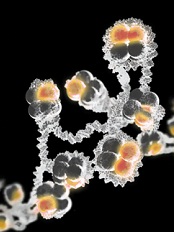
Credit: Eric Smith
Investigators have uncovered an unanticipated mechanism underlying trimethylation of a histone that activates gene expression.
And this finding could have implications for the treatment of leukemias and lymphomas.
Ali Shilatifard, PhD, of the Stowers Institute for Medical Research in Kansas City, Missouri, and his colleagues described the discovery in Genes & Development.
Histones, which come in 4 subtypes—H2A, H2B, H3, and H4—can either coil DNA into inaccessible, silent regions or untwist it to allow gene expression. And small chemical flags, such as methyl groups, affect whether histones silence or activate genes.
Among activator histones is a form of H3 decorated at a precise location with 3 methyl groups, known as H3K4me3.
Previous research showed that the presence of H2B exhibiting a single ubiquitin molecule stimulated the methylase that modifies H3K4, thereby increasing H3K4me3 levels.
But how the methylase’s activity was directed toward the appropriate targets was unclear.
Now, Dr Shilatifard and his colleagues have discovered a mechanism underlying H3K4 trimethylation. Their research explains why H3K4me3 is deposited adjacent to a target gene promoter rather than haphazardly across the entire gene.
The team said this finding is significant because mutations in the human gene encoding the methylase responsible for H3K4me3 are associated with leukemias, lymphomas, and other malignancies.
The methylase in question, named SET1 in yeast and MLL in mammals, is part of a protein aggregate called COMPASS (COMplex of Proteins ASsociated with Set1). Dr Shilatifard was the first to define the role of COMPASS in chromatin modification.
“Over a decade ago, our lab used yeast to show that COMPASS was an H3 methylase,” he said. “Since these fundamental systems are highly conserved from yeast to Drosophila to humans, we took advantage of the awesome power of yeast genetics to identify what regulates H3K4 methylation activity.”
Part of his group’s latest paper addresses SET1/MLL regulation by different proteins within yeast COMPASS.
The investigators knew that if more than half of SET1’s front end was removed, levels of DNA-bound trimethylated H3K4 in cells harboring the remaining “stub” were equal to those in cells containing the full-length protein when analyzed in bulk.
This finding led some researchers to presume that the entire front end of SET1/MLL, as well as factors that interact with it, must not be needed to regulate H3K4me3 activity.
But Dr Shilatifard and his colleagues found evidence suggesting this presumption is incorrect.
The team first employed biochemical methods to capture every piece of DNA bound to H3K4me3 in the genome of yeast harboring either full-length SET1 or the stub missing the front end. They then sequenced all of those DNA fragments and mapped their position in the yeast genome.
Results showed that even though H3K4me3 levels in bulk were equivalent in normal and mutant cells, H3K4me3 was differentially distributed throughout the genome.
In normal cells, H3K4me3 complexes sat primarily on DNA promoter regions. By contrast, the DNA of cells harboring the stub exhibited DNA-binding H3K4me3 complexes in the middle of or between genes.
The work shows that COMPASS factors that bind to the SET1/MLL front end limit H3K4me3 deposition to the correct genomic sites (the promoter regions), while factors that bind the SET1/MLL stub increase the protein’s half-life.
The investigators also discovered how H2B ubiquitin modification machineries stimulate the entire process.
The team said understanding COMPASS regulation is essential, as genes encoding factors in the complex are mutant in numerous cancers. 
Credit: Eric Smith
Investigators have uncovered an unanticipated mechanism underlying trimethylation of a histone that activates gene expression.
And this finding could have implications for the treatment of leukemias and lymphomas.
Ali Shilatifard, PhD, of the Stowers Institute for Medical Research in Kansas City, Missouri, and his colleagues described the discovery in Genes & Development.
Histones, which come in 4 subtypes—H2A, H2B, H3, and H4—can either coil DNA into inaccessible, silent regions or untwist it to allow gene expression. And small chemical flags, such as methyl groups, affect whether histones silence or activate genes.
Among activator histones is a form of H3 decorated at a precise location with 3 methyl groups, known as H3K4me3.
Previous research showed that the presence of H2B exhibiting a single ubiquitin molecule stimulated the methylase that modifies H3K4, thereby increasing H3K4me3 levels.
But how the methylase’s activity was directed toward the appropriate targets was unclear.
Now, Dr Shilatifard and his colleagues have discovered a mechanism underlying H3K4 trimethylation. Their research explains why H3K4me3 is deposited adjacent to a target gene promoter rather than haphazardly across the entire gene.
The team said this finding is significant because mutations in the human gene encoding the methylase responsible for H3K4me3 are associated with leukemias, lymphomas, and other malignancies.
The methylase in question, named SET1 in yeast and MLL in mammals, is part of a protein aggregate called COMPASS (COMplex of Proteins ASsociated with Set1). Dr Shilatifard was the first to define the role of COMPASS in chromatin modification.
“Over a decade ago, our lab used yeast to show that COMPASS was an H3 methylase,” he said. “Since these fundamental systems are highly conserved from yeast to Drosophila to humans, we took advantage of the awesome power of yeast genetics to identify what regulates H3K4 methylation activity.”
Part of his group’s latest paper addresses SET1/MLL regulation by different proteins within yeast COMPASS.
The investigators knew that if more than half of SET1’s front end was removed, levels of DNA-bound trimethylated H3K4 in cells harboring the remaining “stub” were equal to those in cells containing the full-length protein when analyzed in bulk.
This finding led some researchers to presume that the entire front end of SET1/MLL, as well as factors that interact with it, must not be needed to regulate H3K4me3 activity.
But Dr Shilatifard and his colleagues found evidence suggesting this presumption is incorrect.
The team first employed biochemical methods to capture every piece of DNA bound to H3K4me3 in the genome of yeast harboring either full-length SET1 or the stub missing the front end. They then sequenced all of those DNA fragments and mapped their position in the yeast genome.
Results showed that even though H3K4me3 levels in bulk were equivalent in normal and mutant cells, H3K4me3 was differentially distributed throughout the genome.
In normal cells, H3K4me3 complexes sat primarily on DNA promoter regions. By contrast, the DNA of cells harboring the stub exhibited DNA-binding H3K4me3 complexes in the middle of or between genes.
The work shows that COMPASS factors that bind to the SET1/MLL front end limit H3K4me3 deposition to the correct genomic sites (the promoter regions), while factors that bind the SET1/MLL stub increase the protein’s half-life.
The investigators also discovered how H2B ubiquitin modification machineries stimulate the entire process.
The team said understanding COMPASS regulation is essential, as genes encoding factors in the complex are mutant in numerous cancers.
Credit: Eric Smith
Investigators have uncovered an unanticipated mechanism underlying trimethylation of a histone that activates gene expression.
And this finding could have implications for the treatment of leukemias and lymphomas.
Ali Shilatifard, PhD, of the Stowers Institute for Medical Research in Kansas City, Missouri, and his colleagues described the discovery in Genes & Development.
Histones, which come in 4 subtypes—H2A, H2B, H3, and H4—can either coil DNA into inaccessible, silent regions or untwist it to allow gene expression. And small chemical flags, such as methyl groups, affect whether histones silence or activate genes.
Among activator histones is a form of H3 decorated at a precise location with 3 methyl groups, known as H3K4me3.
Previous research showed that the presence of H2B exhibiting a single ubiquitin molecule stimulated the methylase that modifies H3K4, thereby increasing H3K4me3 levels.
But how the methylase’s activity was directed toward the appropriate targets was unclear.
Now, Dr Shilatifard and his colleagues have discovered a mechanism underlying H3K4 trimethylation. Their research explains why H3K4me3 is deposited adjacent to a target gene promoter rather than haphazardly across the entire gene.
The team said this finding is significant because mutations in the human gene encoding the methylase responsible for H3K4me3 are associated with leukemias, lymphomas, and other malignancies.
The methylase in question, named SET1 in yeast and MLL in mammals, is part of a protein aggregate called COMPASS (COMplex of Proteins ASsociated with Set1). Dr Shilatifard was the first to define the role of COMPASS in chromatin modification.
“Over a decade ago, our lab used yeast to show that COMPASS was an H3 methylase,” he said. “Since these fundamental systems are highly conserved from yeast to Drosophila to humans, we took advantage of the awesome power of yeast genetics to identify what regulates H3K4 methylation activity.”
Part of his group’s latest paper addresses SET1/MLL regulation by different proteins within yeast COMPASS.
The investigators knew that if more than half of SET1’s front end was removed, levels of DNA-bound trimethylated H3K4 in cells harboring the remaining “stub” were equal to those in cells containing the full-length protein when analyzed in bulk.
This finding led some researchers to presume that the entire front end of SET1/MLL, as well as factors that interact with it, must not be needed to regulate H3K4me3 activity.
But Dr Shilatifard and his colleagues found evidence suggesting this presumption is incorrect.
The team first employed biochemical methods to capture every piece of DNA bound to H3K4me3 in the genome of yeast harboring either full-length SET1 or the stub missing the front end. They then sequenced all of those DNA fragments and mapped their position in the yeast genome.
Results showed that even though H3K4me3 levels in bulk were equivalent in normal and mutant cells, H3K4me3 was differentially distributed throughout the genome.
In normal cells, H3K4me3 complexes sat primarily on DNA promoter regions. By contrast, the DNA of cells harboring the stub exhibited DNA-binding H3K4me3 complexes in the middle of or between genes.
The work shows that COMPASS factors that bind to the SET1/MLL front end limit H3K4me3 deposition to the correct genomic sites (the promoter regions), while factors that bind the SET1/MLL stub increase the protein’s half-life.
The investigators also discovered how H2B ubiquitin modification machineries stimulate the entire process.
The team said understanding COMPASS regulation is essential, as genes encoding factors in the complex are mutant in numerous cancers.
Inhibitor attacks PEL in vitro and in vivo
Credit: Aaron Logan
A small molecule targeting sphingosine kinase (SPHK) demonstrates considerable activity against virus-associated lymphoma, according to preclinical research published in Molecular Cancer Therapeutics.
The research focused on primary effusion lymphoma (PEL), a variant of diffuse large B-cell lymphoma etiologically linked to Kaposi’s sarcoma-associated herpesvirus (KSHV).
Investigators found that SPHK generates biologically active sphingolipids that keep PEL cells alive.
“It is still early in our understanding of how these special lipids contribute to viral cancers, but this is a major potential advance,” said senior study author Christopher Parsons, MD, of Louisiana State University Health Sciences Center in New Orleans.
“There are no therapies available to fight viral tumors by selectively blocking these pathways, all while not harming normal, uninfected cells.”
So the researchers decided to test ABC294640, a novel small molecule that selectively targets SPHK, in cells from PEL patients and mouse models of PEL.
ABC294640 induced dose-dependent apoptosis in a number of KSHV+ PEL cell lines: KSHV+/EBV- BCBL-1 cells, KSHV+/EBV+ BC-1 cells, KSHV+/EBV- BC-3 cells, and KSHV+/EBV- BCP-1 cells. But the drug showed little to no activity in KSHV-/EBV- BL-41 cells.
Further analyses revealed that ABC294640 induces apoptosis through suppression of KSHV-associated signal transduction.
The investigators observed dose-dependent suppression of ERK, Akt, and NF-kB p65 phosphorylation, as well as cleavage of caspase-3 and caspase-9, in BCBL-1 cells exposed to the drug. But the same effects did not occur in drug-resistant BL-41 cells.
Overexpression of either ERK or p65 in BCBL-1 cells partially suppressed apoptosis induced by ABC294640. And when the researchers used RNAi to target SPHK2, PEL cells exhibited reduced activation of ERK, Akt, and p65 phosphorylation, as well as a 5- to 6-fold increase in apoptosis.
Additionally, the team found that ABC294640 suppressed PEL progression and induced regression of PEL tumors in vivo.
The investigators injected BCL-1 cells into NOD/SCID mice and observed PEL expansion within 3 to 4 weeks. However, when they administered ABC294640 within 24 hours of PEL cell injections, they observed significant reductions in tumor expansion.
The researchers also evaluated ABC294640 activity after PEL tumors had been established. And treated mice showed significant tumor regression compared to untreated mice.
The investigators said these results suggest ABC294640 should be evaluated in clinical trials of KSHV-associated lymphoma.
“Our research thus far indicates that this molecule is safe, with the potential to stand alone as a single, orally administered drug,” Dr Parsons said.
Credit: Aaron Logan
A small molecule targeting sphingosine kinase (SPHK) demonstrates considerable activity against virus-associated lymphoma, according to preclinical research published in Molecular Cancer Therapeutics.
The research focused on primary effusion lymphoma (PEL), a variant of diffuse large B-cell lymphoma etiologically linked to Kaposi’s sarcoma-associated herpesvirus (KSHV).
Investigators found that SPHK generates biologically active sphingolipids that keep PEL cells alive.
“It is still early in our understanding of how these special lipids contribute to viral cancers, but this is a major potential advance,” said senior study author Christopher Parsons, MD, of Louisiana State University Health Sciences Center in New Orleans.
“There are no therapies available to fight viral tumors by selectively blocking these pathways, all while not harming normal, uninfected cells.”
So the researchers decided to test ABC294640, a novel small molecule that selectively targets SPHK, in cells from PEL patients and mouse models of PEL.
ABC294640 induced dose-dependent apoptosis in a number of KSHV+ PEL cell lines: KSHV+/EBV- BCBL-1 cells, KSHV+/EBV+ BC-1 cells, KSHV+/EBV- BC-3 cells, and KSHV+/EBV- BCP-1 cells. But the drug showed little to no activity in KSHV-/EBV- BL-41 cells.
Further analyses revealed that ABC294640 induces apoptosis through suppression of KSHV-associated signal transduction.
The investigators observed dose-dependent suppression of ERK, Akt, and NF-kB p65 phosphorylation, as well as cleavage of caspase-3 and caspase-9, in BCBL-1 cells exposed to the drug. But the same effects did not occur in drug-resistant BL-41 cells.
Overexpression of either ERK or p65 in BCBL-1 cells partially suppressed apoptosis induced by ABC294640. And when the researchers used RNAi to target SPHK2, PEL cells exhibited reduced activation of ERK, Akt, and p65 phosphorylation, as well as a 5- to 6-fold increase in apoptosis.
Additionally, the team found that ABC294640 suppressed PEL progression and induced regression of PEL tumors in vivo.
The investigators injected BCL-1 cells into NOD/SCID mice and observed PEL expansion within 3 to 4 weeks. However, when they administered ABC294640 within 24 hours of PEL cell injections, they observed significant reductions in tumor expansion.
The researchers also evaluated ABC294640 activity after PEL tumors had been established. And treated mice showed significant tumor regression compared to untreated mice.
The investigators said these results suggest ABC294640 should be evaluated in clinical trials of KSHV-associated lymphoma.
“Our research thus far indicates that this molecule is safe, with the potential to stand alone as a single, orally administered drug,” Dr Parsons said.
Credit: Aaron Logan
A small molecule targeting sphingosine kinase (SPHK) demonstrates considerable activity against virus-associated lymphoma, according to preclinical research published in Molecular Cancer Therapeutics.
The research focused on primary effusion lymphoma (PEL), a variant of diffuse large B-cell lymphoma etiologically linked to Kaposi’s sarcoma-associated herpesvirus (KSHV).
Investigators found that SPHK generates biologically active sphingolipids that keep PEL cells alive.
“It is still early in our understanding of how these special lipids contribute to viral cancers, but this is a major potential advance,” said senior study author Christopher Parsons, MD, of Louisiana State University Health Sciences Center in New Orleans.
“There are no therapies available to fight viral tumors by selectively blocking these pathways, all while not harming normal, uninfected cells.”
So the researchers decided to test ABC294640, a novel small molecule that selectively targets SPHK, in cells from PEL patients and mouse models of PEL.
ABC294640 induced dose-dependent apoptosis in a number of KSHV+ PEL cell lines: KSHV+/EBV- BCBL-1 cells, KSHV+/EBV+ BC-1 cells, KSHV+/EBV- BC-3 cells, and KSHV+/EBV- BCP-1 cells. But the drug showed little to no activity in KSHV-/EBV- BL-41 cells.
Further analyses revealed that ABC294640 induces apoptosis through suppression of KSHV-associated signal transduction.
The investigators observed dose-dependent suppression of ERK, Akt, and NF-kB p65 phosphorylation, as well as cleavage of caspase-3 and caspase-9, in BCBL-1 cells exposed to the drug. But the same effects did not occur in drug-resistant BL-41 cells.
Overexpression of either ERK or p65 in BCBL-1 cells partially suppressed apoptosis induced by ABC294640. And when the researchers used RNAi to target SPHK2, PEL cells exhibited reduced activation of ERK, Akt, and p65 phosphorylation, as well as a 5- to 6-fold increase in apoptosis.
Additionally, the team found that ABC294640 suppressed PEL progression and induced regression of PEL tumors in vivo.
The investigators injected BCL-1 cells into NOD/SCID mice and observed PEL expansion within 3 to 4 weeks. However, when they administered ABC294640 within 24 hours of PEL cell injections, they observed significant reductions in tumor expansion.
The researchers also evaluated ABC294640 activity after PEL tumors had been established. And treated mice showed significant tumor regression compared to untreated mice.
The investigators said these results suggest ABC294640 should be evaluated in clinical trials of KSHV-associated lymphoma.
“Our research thus far indicates that this molecule is safe, with the potential to stand alone as a single, orally administered drug,” Dr Parsons said.
Interventions can ease insomnia in cancer patients

Credit: RelaxingMusic
A new study suggests cancer patients struggling with insomnia can choose between 2 behavioral interventions to obtain relief: cognitive behavioral therapy for insomnia (CBT-I) and mindfulness-based stress reduction (MBSR).
CBT-I is the gold standard of care, but the research showed that MBSR can also help improve sleep for cancer patients.
CBT-I involves stimulus control, sleep restriction, cognitive therapy, and relaxation training. When combined, these strategies target and reduce sleep-related physiologic and cognitive arousal to re-establish restorative sleep.
MBSR provides patients with psychoeducation on the relationship between stress and health. It also employs meditation techniques and gentle yoga to support mindful awareness and help patients respond better to stress.
Previous research has shown that MBSR can reduce distress and improve psychological well-being in patients with cancer. But this is the first study to directly compare MBSR to CBT-I in cancer patients.
The results are published in the Journal of Clinical Oncology.
“Insomnia and disturbed sleep are significant problems that can affect approximately half of all cancer patients,” said lead study author Sheila Garland, PhD, of Abramson Cancer Center at the University of Pennsylvania in Philadelphia.
“If not properly addressed, sleep disturbances can negatively influence therapeutic and supportive care measures for these patients, so it’s critical that clinicians can offer patients reliable, effective, and tailored interventions.”
With this in mind, Dr Garland and her colleagues tested behavioral interventions for insomnia in 111 patients recruited from a cancer center in Calgary, Alberta, Canada. Patients were randomized to either a CBT-I program (n=47) or an MBSR program (n=64) for 8 weeks.
Thirty-two patients completed the CBT-I program, and 40 completed the MBSR program. The researchers assessed patients immediately after program completion (at 2 months) and at 5 months from baseline.
Immediately after completion, MBSR was less effective than CBT-I at improving insomnia severity (P=0.35). But at the 5-month follow-up point, MBSR proved noninferior to CBT-I (P=0.02).
Patients in the CBT-I group showed greater overall improvement in subjectively measured sleep onset latency, sleep efficiency, sleep quality, and dysfunctional sleep beliefs than patients in the MBSR group.
But both groups showed progressive improvement over time when it came to subjectively measured total sleep time, wake after sleep onset, stress, and mood disturbance.
“That MBSR can produce similar improvements to CBT-I and that both [interventions] can effectively reduce stress and mood disturbance expands the available treatment options for insomnia in cancer patients,” Dr Garland said.
“This study suggests that we should not apply a ‘one-size-fits-all model’ to the treatment of insomnia and emphasizes the need to individualize treatment based on patient characteristics and preferences.”
Credit: RelaxingMusic
A new study suggests cancer patients struggling with insomnia can choose between 2 behavioral interventions to obtain relief: cognitive behavioral therapy for insomnia (CBT-I) and mindfulness-based stress reduction (MBSR).
CBT-I is the gold standard of care, but the research showed that MBSR can also help improve sleep for cancer patients.
CBT-I involves stimulus control, sleep restriction, cognitive therapy, and relaxation training. When combined, these strategies target and reduce sleep-related physiologic and cognitive arousal to re-establish restorative sleep.
MBSR provides patients with psychoeducation on the relationship between stress and health. It also employs meditation techniques and gentle yoga to support mindful awareness and help patients respond better to stress.
Previous research has shown that MBSR can reduce distress and improve psychological well-being in patients with cancer. But this is the first study to directly compare MBSR to CBT-I in cancer patients.
The results are published in the Journal of Clinical Oncology.
“Insomnia and disturbed sleep are significant problems that can affect approximately half of all cancer patients,” said lead study author Sheila Garland, PhD, of Abramson Cancer Center at the University of Pennsylvania in Philadelphia.
“If not properly addressed, sleep disturbances can negatively influence therapeutic and supportive care measures for these patients, so it’s critical that clinicians can offer patients reliable, effective, and tailored interventions.”
With this in mind, Dr Garland and her colleagues tested behavioral interventions for insomnia in 111 patients recruited from a cancer center in Calgary, Alberta, Canada. Patients were randomized to either a CBT-I program (n=47) or an MBSR program (n=64) for 8 weeks.
Thirty-two patients completed the CBT-I program, and 40 completed the MBSR program. The researchers assessed patients immediately after program completion (at 2 months) and at 5 months from baseline.
Immediately after completion, MBSR was less effective than CBT-I at improving insomnia severity (P=0.35). But at the 5-month follow-up point, MBSR proved noninferior to CBT-I (P=0.02).
Patients in the CBT-I group showed greater overall improvement in subjectively measured sleep onset latency, sleep efficiency, sleep quality, and dysfunctional sleep beliefs than patients in the MBSR group.
But both groups showed progressive improvement over time when it came to subjectively measured total sleep time, wake after sleep onset, stress, and mood disturbance.
“That MBSR can produce similar improvements to CBT-I and that both [interventions] can effectively reduce stress and mood disturbance expands the available treatment options for insomnia in cancer patients,” Dr Garland said.
“This study suggests that we should not apply a ‘one-size-fits-all model’ to the treatment of insomnia and emphasizes the need to individualize treatment based on patient characteristics and preferences.”
Credit: RelaxingMusic
A new study suggests cancer patients struggling with insomnia can choose between 2 behavioral interventions to obtain relief: cognitive behavioral therapy for insomnia (CBT-I) and mindfulness-based stress reduction (MBSR).
CBT-I is the gold standard of care, but the research showed that MBSR can also help improve sleep for cancer patients.
CBT-I involves stimulus control, sleep restriction, cognitive therapy, and relaxation training. When combined, these strategies target and reduce sleep-related physiologic and cognitive arousal to re-establish restorative sleep.
MBSR provides patients with psychoeducation on the relationship between stress and health. It also employs meditation techniques and gentle yoga to support mindful awareness and help patients respond better to stress.
Previous research has shown that MBSR can reduce distress and improve psychological well-being in patients with cancer. But this is the first study to directly compare MBSR to CBT-I in cancer patients.
The results are published in the Journal of Clinical Oncology.
“Insomnia and disturbed sleep are significant problems that can affect approximately half of all cancer patients,” said lead study author Sheila Garland, PhD, of Abramson Cancer Center at the University of Pennsylvania in Philadelphia.
“If not properly addressed, sleep disturbances can negatively influence therapeutic and supportive care measures for these patients, so it’s critical that clinicians can offer patients reliable, effective, and tailored interventions.”
With this in mind, Dr Garland and her colleagues tested behavioral interventions for insomnia in 111 patients recruited from a cancer center in Calgary, Alberta, Canada. Patients were randomized to either a CBT-I program (n=47) or an MBSR program (n=64) for 8 weeks.
Thirty-two patients completed the CBT-I program, and 40 completed the MBSR program. The researchers assessed patients immediately after program completion (at 2 months) and at 5 months from baseline.
Immediately after completion, MBSR was less effective than CBT-I at improving insomnia severity (P=0.35). But at the 5-month follow-up point, MBSR proved noninferior to CBT-I (P=0.02).
Patients in the CBT-I group showed greater overall improvement in subjectively measured sleep onset latency, sleep efficiency, sleep quality, and dysfunctional sleep beliefs than patients in the MBSR group.
But both groups showed progressive improvement over time when it came to subjectively measured total sleep time, wake after sleep onset, stress, and mood disturbance.
“That MBSR can produce similar improvements to CBT-I and that both [interventions] can effectively reduce stress and mood disturbance expands the available treatment options for insomnia in cancer patients,” Dr Garland said.
“This study suggests that we should not apply a ‘one-size-fits-all model’ to the treatment of insomnia and emphasizes the need to individualize treatment based on patient characteristics and preferences.”
Deaths from leukemia, NHL declining in the UK

Credit: National Cancer
Institute-Mathews Media Group
Deaths from leukemia and non-Hodgkin lymphoma (NHL) are on the decline in the UK, but these malignancies are still among the leading causes of cancer death, a new analysis suggests.
Leukemia and NHL are among the 10 most common causes of cancer death for men and women in the UK, according to data from 2011.
But deaths from these malignancies have decreased from the number of deaths seen in the early 2000s.
These findings, published on the Cancer Research UK website, are similar to the results of a recent report on cancer deaths in the US.
The Cancer Research UK analysis showed that the death rate from cancer has dropped by more than a fifth since the 1990s.
In 1990, 220 in every 100,000 people died of cancer. But by 2011, the death rate had fallen 22%—to 170 per 100,000 people. The cancer mortality rate fell by 20% for women and 26% for men.
“Today, cancer is not the death sentence people once believed it to be,” said Harpal Kumar, Cancer Research UK chief executive.
“As these new figures show, mortality rates from this much-feared disease are dropping significantly . . . . But while we’re heading in the right direction, too many lives are still being lost to the disease, highlighting how much more work there is to do.”
NHL and leukemia stats
The analysis showed that, in men, the 3-year mortality rate for NHL decreased by 16% from 2000-2002 to 2009-2012. And the 3-year mortality rate for leukemia decreased by 6%.
In women, the 3-year mortality rate for NHL decreased by 18% from 2000-2002 to 2009-2012. And the 3-year mortality rate for leukemia decreased by 9%.
But the 2011 data showed that both types of cancer are among the 10 most common causes of cancer death in both men and women.
Among women, 2156 patients died of NHL (7th leading cause of cancer death), and 1994 patients died of leukemia (8th leading cause).
Among men, 2609 patients died of leukemia (8th leading cause of cancer death), and 2490 died of NHL (10th leading cause).
For more details on cancer mortality, including projections up to the year 2030, visit the Cancer Research UK website.
Credit: National Cancer
Institute-Mathews Media Group
Deaths from leukemia and non-Hodgkin lymphoma (NHL) are on the decline in the UK, but these malignancies are still among the leading causes of cancer death, a new analysis suggests.
Leukemia and NHL are among the 10 most common causes of cancer death for men and women in the UK, according to data from 2011.
But deaths from these malignancies have decreased from the number of deaths seen in the early 2000s.
These findings, published on the Cancer Research UK website, are similar to the results of a recent report on cancer deaths in the US.
The Cancer Research UK analysis showed that the death rate from cancer has dropped by more than a fifth since the 1990s.
In 1990, 220 in every 100,000 people died of cancer. But by 2011, the death rate had fallen 22%—to 170 per 100,000 people. The cancer mortality rate fell by 20% for women and 26% for men.
“Today, cancer is not the death sentence people once believed it to be,” said Harpal Kumar, Cancer Research UK chief executive.
“As these new figures show, mortality rates from this much-feared disease are dropping significantly . . . . But while we’re heading in the right direction, too many lives are still being lost to the disease, highlighting how much more work there is to do.”
NHL and leukemia stats
The analysis showed that, in men, the 3-year mortality rate for NHL decreased by 16% from 2000-2002 to 2009-2012. And the 3-year mortality rate for leukemia decreased by 6%.
In women, the 3-year mortality rate for NHL decreased by 18% from 2000-2002 to 2009-2012. And the 3-year mortality rate for leukemia decreased by 9%.
But the 2011 data showed that both types of cancer are among the 10 most common causes of cancer death in both men and women.
Among women, 2156 patients died of NHL (7th leading cause of cancer death), and 1994 patients died of leukemia (8th leading cause).
Among men, 2609 patients died of leukemia (8th leading cause of cancer death), and 2490 died of NHL (10th leading cause).
For more details on cancer mortality, including projections up to the year 2030, visit the Cancer Research UK website.
Credit: National Cancer
Institute-Mathews Media Group
Deaths from leukemia and non-Hodgkin lymphoma (NHL) are on the decline in the UK, but these malignancies are still among the leading causes of cancer death, a new analysis suggests.
Leukemia and NHL are among the 10 most common causes of cancer death for men and women in the UK, according to data from 2011.
But deaths from these malignancies have decreased from the number of deaths seen in the early 2000s.
These findings, published on the Cancer Research UK website, are similar to the results of a recent report on cancer deaths in the US.
The Cancer Research UK analysis showed that the death rate from cancer has dropped by more than a fifth since the 1990s.
In 1990, 220 in every 100,000 people died of cancer. But by 2011, the death rate had fallen 22%—to 170 per 100,000 people. The cancer mortality rate fell by 20% for women and 26% for men.
“Today, cancer is not the death sentence people once believed it to be,” said Harpal Kumar, Cancer Research UK chief executive.
“As these new figures show, mortality rates from this much-feared disease are dropping significantly . . . . But while we’re heading in the right direction, too many lives are still being lost to the disease, highlighting how much more work there is to do.”
NHL and leukemia stats
The analysis showed that, in men, the 3-year mortality rate for NHL decreased by 16% from 2000-2002 to 2009-2012. And the 3-year mortality rate for leukemia decreased by 6%.
In women, the 3-year mortality rate for NHL decreased by 18% from 2000-2002 to 2009-2012. And the 3-year mortality rate for leukemia decreased by 9%.
But the 2011 data showed that both types of cancer are among the 10 most common causes of cancer death in both men and women.
Among women, 2156 patients died of NHL (7th leading cause of cancer death), and 1994 patients died of leukemia (8th leading cause).
Among men, 2609 patients died of leukemia (8th leading cause of cancer death), and 2490 died of NHL (10th leading cause).
For more details on cancer mortality, including projections up to the year 2030, visit the Cancer Research UK website.
Team identifies mutations that may drive FL
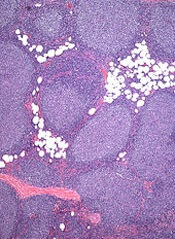
Genetic profiling has provided a clearer picture of follicular lymphoma (FL) development and progression, according to research published in Nature Genetics.
Investigators performed whole-genome and whole-exome sequencing of samples from FL patients and found a number of mutations that appeared to be responsible for disease onset.
The team also identified mutations that seemed to drive FL toward a more aggressive form.
They said these findings provide a number of new therapeutic targets that may stop FL from becoming aggressive or developing resistance to treatment.
“Resistance to treatment is a major problem for follicular lymphoma patients, as they often respond well to treatment and later relapse,” said study author Jude Fitzgibbon, PhD, of Barts Cancer Institute in London, England.
“[This] gives the cancer multiple opportunities to evolve into a more aggressive and more difficult-to-treat form of the disease. We’ve been able to chronicle the chain of genetic events that leads to aggressive forms of the disease. If we can develop treatments to prevent some of these changes from taking place, we should be able to stop the cancer in its tracks.”
Dr Fitzgibbon and his colleagues performed whole-genome or whole-exome sequencing of sequential FL and transformed FL pairs and matched germline samples from 10 FL cases with deep-targeted sequencing of 28 genes in an extension cohort.
Among the 10 cases, the researchers identified 1560 protein-altering variants affecting 908 genes, including missense changes (84.8%), short indels (8.9%), and nonsense mutations (6.3%).
Patterns of evolution
The investigators constructed phylogenetic trees for the 10 FL cases and discovered a common progenitor clone (CPC), as well as 2 patterns of evolution.
Eight of the cases exhibited evolution through a “rich” ancestral CPC, showing high clonal semblance between the FL and transformed-FL tumors. The other 2 cases showed evolution through a “sparse” CPC, with only 4 nonsynonymous mutations shared by the FL and transformed-FL samples.
These 2 patterns of evolution shared mutations in 3 genes—KMT2D, TNFRSF14, and CREBBP. According to the researchers, this suggests tumor dependency on these alterations during lymphomagenesis and progression.
Mutation prevalence, timing
The investigators then set out to determine the prevalence of the mutations they identified in the 10 cases. They performed deep-targeted resequencing of 28 candidate genes in an extension cohort of 100 independent FL biopsies and 32 paired FL-transformed FL cases (including the 10 index cases).
More than 70% of cases had concurrent mutations in at least 2 of the histone-modifying enzymes screened (CREBBP, EZH2, MEF2B, and KMT2D).
Twenty-eight percent of cases had mutations affecting at least one histone H1 gene. HIST1H1C and HIST1H1E were the most frequently mutated.
The researchers also saw frequent mutations in components of the JAK-STAT signaling pathway, including STAT6 (12%) and SOCS1 (8%).
They found mutually exclusive mutations in the NF-κB signaling pathway in a third of FLs, including CARD11 (11%) and TNFAIP3 (11%).
And 17% of cases had mutations in genes important for B-cell development, including Ebf1.
Finally, the investigators set out to differentiate early genetic events from late ones. They found that mutations in histone-modifying genes—KMT2D, CREBBP, and EZH2—as well as mutations in STAT6 and TNFRSF14 were predominantly clonal events.
On the other hand, mutations in EBF1 and regulators of NF-κB signaling—MYD88 and TNFAIP3—were gained at transformation.
“This study has uncovered some of the key molecular changes taking place [in FL] and offers new targets for treating the disease,” said Nell Barrie, of Cancer Research UK, the organization that funded this study.
“Research into the genetics that underpin cancer is helping us to better know the enemy and find new ways in which we might beat it.”
Genetic profiling has provided a clearer picture of follicular lymphoma (FL) development and progression, according to research published in Nature Genetics.
Investigators performed whole-genome and whole-exome sequencing of samples from FL patients and found a number of mutations that appeared to be responsible for disease onset.
The team also identified mutations that seemed to drive FL toward a more aggressive form.
They said these findings provide a number of new therapeutic targets that may stop FL from becoming aggressive or developing resistance to treatment.
“Resistance to treatment is a major problem for follicular lymphoma patients, as they often respond well to treatment and later relapse,” said study author Jude Fitzgibbon, PhD, of Barts Cancer Institute in London, England.
“[This] gives the cancer multiple opportunities to evolve into a more aggressive and more difficult-to-treat form of the disease. We’ve been able to chronicle the chain of genetic events that leads to aggressive forms of the disease. If we can develop treatments to prevent some of these changes from taking place, we should be able to stop the cancer in its tracks.”
Dr Fitzgibbon and his colleagues performed whole-genome or whole-exome sequencing of sequential FL and transformed FL pairs and matched germline samples from 10 FL cases with deep-targeted sequencing of 28 genes in an extension cohort.
Among the 10 cases, the researchers identified 1560 protein-altering variants affecting 908 genes, including missense changes (84.8%), short indels (8.9%), and nonsense mutations (6.3%).
Patterns of evolution
The investigators constructed phylogenetic trees for the 10 FL cases and discovered a common progenitor clone (CPC), as well as 2 patterns of evolution.
Eight of the cases exhibited evolution through a “rich” ancestral CPC, showing high clonal semblance between the FL and transformed-FL tumors. The other 2 cases showed evolution through a “sparse” CPC, with only 4 nonsynonymous mutations shared by the FL and transformed-FL samples.
These 2 patterns of evolution shared mutations in 3 genes—KMT2D, TNFRSF14, and CREBBP. According to the researchers, this suggests tumor dependency on these alterations during lymphomagenesis and progression.
Mutation prevalence, timing
The investigators then set out to determine the prevalence of the mutations they identified in the 10 cases. They performed deep-targeted resequencing of 28 candidate genes in an extension cohort of 100 independent FL biopsies and 32 paired FL-transformed FL cases (including the 10 index cases).
More than 70% of cases had concurrent mutations in at least 2 of the histone-modifying enzymes screened (CREBBP, EZH2, MEF2B, and KMT2D).
Twenty-eight percent of cases had mutations affecting at least one histone H1 gene. HIST1H1C and HIST1H1E were the most frequently mutated.
The researchers also saw frequent mutations in components of the JAK-STAT signaling pathway, including STAT6 (12%) and SOCS1 (8%).
They found mutually exclusive mutations in the NF-κB signaling pathway in a third of FLs, including CARD11 (11%) and TNFAIP3 (11%).
And 17% of cases had mutations in genes important for B-cell development, including Ebf1.
Finally, the investigators set out to differentiate early genetic events from late ones. They found that mutations in histone-modifying genes—KMT2D, CREBBP, and EZH2—as well as mutations in STAT6 and TNFRSF14 were predominantly clonal events.
On the other hand, mutations in EBF1 and regulators of NF-κB signaling—MYD88 and TNFAIP3—were gained at transformation.
“This study has uncovered some of the key molecular changes taking place [in FL] and offers new targets for treating the disease,” said Nell Barrie, of Cancer Research UK, the organization that funded this study.
“Research into the genetics that underpin cancer is helping us to better know the enemy and find new ways in which we might beat it.”
Genetic profiling has provided a clearer picture of follicular lymphoma (FL) development and progression, according to research published in Nature Genetics.
Investigators performed whole-genome and whole-exome sequencing of samples from FL patients and found a number of mutations that appeared to be responsible for disease onset.
The team also identified mutations that seemed to drive FL toward a more aggressive form.
They said these findings provide a number of new therapeutic targets that may stop FL from becoming aggressive or developing resistance to treatment.
“Resistance to treatment is a major problem for follicular lymphoma patients, as they often respond well to treatment and later relapse,” said study author Jude Fitzgibbon, PhD, of Barts Cancer Institute in London, England.
“[This] gives the cancer multiple opportunities to evolve into a more aggressive and more difficult-to-treat form of the disease. We’ve been able to chronicle the chain of genetic events that leads to aggressive forms of the disease. If we can develop treatments to prevent some of these changes from taking place, we should be able to stop the cancer in its tracks.”
Dr Fitzgibbon and his colleagues performed whole-genome or whole-exome sequencing of sequential FL and transformed FL pairs and matched germline samples from 10 FL cases with deep-targeted sequencing of 28 genes in an extension cohort.
Among the 10 cases, the researchers identified 1560 protein-altering variants affecting 908 genes, including missense changes (84.8%), short indels (8.9%), and nonsense mutations (6.3%).
Patterns of evolution
The investigators constructed phylogenetic trees for the 10 FL cases and discovered a common progenitor clone (CPC), as well as 2 patterns of evolution.
Eight of the cases exhibited evolution through a “rich” ancestral CPC, showing high clonal semblance between the FL and transformed-FL tumors. The other 2 cases showed evolution through a “sparse” CPC, with only 4 nonsynonymous mutations shared by the FL and transformed-FL samples.
These 2 patterns of evolution shared mutations in 3 genes—KMT2D, TNFRSF14, and CREBBP. According to the researchers, this suggests tumor dependency on these alterations during lymphomagenesis and progression.
Mutation prevalence, timing
The investigators then set out to determine the prevalence of the mutations they identified in the 10 cases. They performed deep-targeted resequencing of 28 candidate genes in an extension cohort of 100 independent FL biopsies and 32 paired FL-transformed FL cases (including the 10 index cases).
More than 70% of cases had concurrent mutations in at least 2 of the histone-modifying enzymes screened (CREBBP, EZH2, MEF2B, and KMT2D).
Twenty-eight percent of cases had mutations affecting at least one histone H1 gene. HIST1H1C and HIST1H1E were the most frequently mutated.
The researchers also saw frequent mutations in components of the JAK-STAT signaling pathway, including STAT6 (12%) and SOCS1 (8%).
They found mutually exclusive mutations in the NF-κB signaling pathway in a third of FLs, including CARD11 (11%) and TNFAIP3 (11%).
And 17% of cases had mutations in genes important for B-cell development, including Ebf1.
Finally, the investigators set out to differentiate early genetic events from late ones. They found that mutations in histone-modifying genes—KMT2D, CREBBP, and EZH2—as well as mutations in STAT6 and TNFRSF14 were predominantly clonal events.
On the other hand, mutations in EBF1 and regulators of NF-κB signaling—MYD88 and TNFAIP3—were gained at transformation.
“This study has uncovered some of the key molecular changes taking place [in FL] and offers new targets for treating the disease,” said Nell Barrie, of Cancer Research UK, the organization that funded this study.
“Research into the genetics that underpin cancer is helping us to better know the enemy and find new ways in which we might beat it.”
MCL-1 proves critical in MYC-driven lymphomas

Walter and Eliza Hall Institute
Results of preclinical research suggest the prosurvival protein MCL-1 is the BCL-2 family member most important for the growth and survival of MYC-driven lymphomas.
Investigators found that MYC-driven lymphoma growth in mice and human cell lines was significantly more dependent upon MCL-1 than BCL-XL.
And mutations in p53 could diminish but not counteract this dependency.
The team described this research is Genes & Development.
The work built on more than 3 decades of research into how MYC drives cancer development, according to study author Gemma Kelly, PhD, of the Walter and Eliza Hall Institute in Victoria, Australia.
“For many years, we have known that proteins from the BCL-2 protein family enhance cell survival and cooperate with MYC to accelerate the development of cancer,” she said. “Until now, it was not known which specific BCL-2 family protein was most important for the survival and growth of MYC-driven cancers.”
To investigate, Dr Kelly and her colleagues first generated mice in which they could delete Mcl-1 or Bcl-x in c-MYC-driven lymphoma cells.
The researchers found that homozygous loss of Bcl-x slightly impaired lymphoma growth. Four percent of Bcl-x-deleted mice had complete lymphoma regression. The rest experienced a modest delay in tumor expansion and slightly prolonged survival compared to controls (P=0.0367).
On the other hand, homozygous Mcl-1 deletion prompted complete lymphoma regression in 30% of mice, and it significantly improved overall survival compared to controls (P<0.0001). Even heterozygous Mcl-1 deletion substantially impaired lymphoma growth.
The investigators also conducted experiments on human Burkitt lymphoma cell lines. And they found evidence suggesting the survival and growth of Burkitt lymphoma cells is largely dependent on MCL-1. In fact, sustained growth and survival may not depend on BCL-XL at all.
Finally, the researchers investigated the role p53 mutations play in MCL-1 dependency. The results showed that mutations in p53 can reduce but not ablate lymphomas’ dependency on MCL-1.
These findings suggest MCL-1 could be an attractive therapeutic target for MYC-driven cancers, the investigators said, particularly because the loss of a single Mcl-1 allele is well-tolerated in healthy tissues.
“Anticancer agents that target the protein BCL-2, which is closely related to MCL-1, are already showing promise in clinical trials . . . ,” said study author Andreas Strasser, PhD, of the Walter and Eliza Hall Institute.
“We are hopeful that inhibitors of MCL-1 will soon become available for clinical testing. We will be very interested in determining whether these compounds could be used to treat MYC-driven cancers.”
Walter and Eliza Hall Institute
Results of preclinical research suggest the prosurvival protein MCL-1 is the BCL-2 family member most important for the growth and survival of MYC-driven lymphomas.
Investigators found that MYC-driven lymphoma growth in mice and human cell lines was significantly more dependent upon MCL-1 than BCL-XL.
And mutations in p53 could diminish but not counteract this dependency.
The team described this research is Genes & Development.
The work built on more than 3 decades of research into how MYC drives cancer development, according to study author Gemma Kelly, PhD, of the Walter and Eliza Hall Institute in Victoria, Australia.
“For many years, we have known that proteins from the BCL-2 protein family enhance cell survival and cooperate with MYC to accelerate the development of cancer,” she said. “Until now, it was not known which specific BCL-2 family protein was most important for the survival and growth of MYC-driven cancers.”
To investigate, Dr Kelly and her colleagues first generated mice in which they could delete Mcl-1 or Bcl-x in c-MYC-driven lymphoma cells.
The researchers found that homozygous loss of Bcl-x slightly impaired lymphoma growth. Four percent of Bcl-x-deleted mice had complete lymphoma regression. The rest experienced a modest delay in tumor expansion and slightly prolonged survival compared to controls (P=0.0367).
On the other hand, homozygous Mcl-1 deletion prompted complete lymphoma regression in 30% of mice, and it significantly improved overall survival compared to controls (P<0.0001). Even heterozygous Mcl-1 deletion substantially impaired lymphoma growth.
The investigators also conducted experiments on human Burkitt lymphoma cell lines. And they found evidence suggesting the survival and growth of Burkitt lymphoma cells is largely dependent on MCL-1. In fact, sustained growth and survival may not depend on BCL-XL at all.
Finally, the researchers investigated the role p53 mutations play in MCL-1 dependency. The results showed that mutations in p53 can reduce but not ablate lymphomas’ dependency on MCL-1.
These findings suggest MCL-1 could be an attractive therapeutic target for MYC-driven cancers, the investigators said, particularly because the loss of a single Mcl-1 allele is well-tolerated in healthy tissues.
“Anticancer agents that target the protein BCL-2, which is closely related to MCL-1, are already showing promise in clinical trials . . . ,” said study author Andreas Strasser, PhD, of the Walter and Eliza Hall Institute.
“We are hopeful that inhibitors of MCL-1 will soon become available for clinical testing. We will be very interested in determining whether these compounds could be used to treat MYC-driven cancers.”
Walter and Eliza Hall Institute
Results of preclinical research suggest the prosurvival protein MCL-1 is the BCL-2 family member most important for the growth and survival of MYC-driven lymphomas.
Investigators found that MYC-driven lymphoma growth in mice and human cell lines was significantly more dependent upon MCL-1 than BCL-XL.
And mutations in p53 could diminish but not counteract this dependency.
The team described this research is Genes & Development.
The work built on more than 3 decades of research into how MYC drives cancer development, according to study author Gemma Kelly, PhD, of the Walter and Eliza Hall Institute in Victoria, Australia.
“For many years, we have known that proteins from the BCL-2 protein family enhance cell survival and cooperate with MYC to accelerate the development of cancer,” she said. “Until now, it was not known which specific BCL-2 family protein was most important for the survival and growth of MYC-driven cancers.”
To investigate, Dr Kelly and her colleagues first generated mice in which they could delete Mcl-1 or Bcl-x in c-MYC-driven lymphoma cells.
The researchers found that homozygous loss of Bcl-x slightly impaired lymphoma growth. Four percent of Bcl-x-deleted mice had complete lymphoma regression. The rest experienced a modest delay in tumor expansion and slightly prolonged survival compared to controls (P=0.0367).
On the other hand, homozygous Mcl-1 deletion prompted complete lymphoma regression in 30% of mice, and it significantly improved overall survival compared to controls (P<0.0001). Even heterozygous Mcl-1 deletion substantially impaired lymphoma growth.
The investigators also conducted experiments on human Burkitt lymphoma cell lines. And they found evidence suggesting the survival and growth of Burkitt lymphoma cells is largely dependent on MCL-1. In fact, sustained growth and survival may not depend on BCL-XL at all.
Finally, the researchers investigated the role p53 mutations play in MCL-1 dependency. The results showed that mutations in p53 can reduce but not ablate lymphomas’ dependency on MCL-1.
These findings suggest MCL-1 could be an attractive therapeutic target for MYC-driven cancers, the investigators said, particularly because the loss of a single Mcl-1 allele is well-tolerated in healthy tissues.
“Anticancer agents that target the protein BCL-2, which is closely related to MCL-1, are already showing promise in clinical trials . . . ,” said study author Andreas Strasser, PhD, of the Walter and Eliza Hall Institute.
“We are hopeful that inhibitors of MCL-1 will soon become available for clinical testing. We will be very interested in determining whether these compounds could be used to treat MYC-driven cancers.”
Leukemia is leading cause of cancer death among young Americans

receiving chemotherapy
Credit: Rhoda Baer
Leukemia is the leading cause of cancer death in the US for men under 40 and women aged 20 and younger, according to a report by the American Cancer Society.
Non-Hodgkin lymphoma (NHL) is also among the 5 leading causes of cancer death for men under 40 and for women age 80 and older.
These data appear in “Cancer Statistics, 2014,” a report published in CA: A Cancer Journal for Clinicians.
The report includes statistics on cancer incidence and death from 1975 to 2010, as well as projections for 2014.
In the latest data (from 2010), NHL was the fifth leading cause of cancer death for men under 20 and for women over 79. It was the fourth leading cause of cancer death for men ages 20 to 39.
And leukemia was the third leading cause of cancer death for women ages 20 to 39, in addition to being the leading cause of cancer death for women under 21 and men under 40.
However, of all cancer types, leukemia and NHL have seen the largest improvements in survival, according to data comparing 5-year survival rates between 1975-1977 and 2003-2009.
Five-year survival rates for leukemia were 34% for 1975-1977 and 59% for 2003-2009 (P<0.05). For NHL, 5-year survival rates were 47% for 1975-1977 and 71% for 2003-2009 (P<0.05).
Projections for 2014
The report authors took past data into account to make estimates on cancer incidence and death for 2014. They projected that 1,665,540 patients will be diagnosed with cancer this year, and 585,720 patients will die of cancer.
Roughly 79,990 patients will be diagnosed with lymphoma—9190 with Hodgkin lymphoma and 70,800 with NHL. Approximately 18,990 patients will die of NHL, and 1180 will die of Hodgkin lymphoma.
There will be 24,050 new cases of myeloma in 2014 and 11,090 myeloma deaths, the authors said.
This year will see 52,380 patients diagnosed with leukemias—6020 with acute lymphocytic leukemia (ALL), 15,720 with chronic lymphocytic leukemia (CLL), 18,860 with acute myeloid leukemia (AML), 5980 with chronic myeloid leukemia (CML), and 5800 with other types of leukemia.
And there will be 24,090 leukemia deaths—1440 from ALL, 4600 from CLL, 10,460 from AML, 810 from CML, and 6780 from other leukemias.
For more information, see the complete report.
receiving chemotherapy
Credit: Rhoda Baer
Leukemia is the leading cause of cancer death in the US for men under 40 and women aged 20 and younger, according to a report by the American Cancer Society.
Non-Hodgkin lymphoma (NHL) is also among the 5 leading causes of cancer death for men under 40 and for women age 80 and older.
These data appear in “Cancer Statistics, 2014,” a report published in CA: A Cancer Journal for Clinicians.
The report includes statistics on cancer incidence and death from 1975 to 2010, as well as projections for 2014.
In the latest data (from 2010), NHL was the fifth leading cause of cancer death for men under 20 and for women over 79. It was the fourth leading cause of cancer death for men ages 20 to 39.
And leukemia was the third leading cause of cancer death for women ages 20 to 39, in addition to being the leading cause of cancer death for women under 21 and men under 40.
However, of all cancer types, leukemia and NHL have seen the largest improvements in survival, according to data comparing 5-year survival rates between 1975-1977 and 2003-2009.
Five-year survival rates for leukemia were 34% for 1975-1977 and 59% for 2003-2009 (P<0.05). For NHL, 5-year survival rates were 47% for 1975-1977 and 71% for 2003-2009 (P<0.05).
Projections for 2014
The report authors took past data into account to make estimates on cancer incidence and death for 2014. They projected that 1,665,540 patients will be diagnosed with cancer this year, and 585,720 patients will die of cancer.
Roughly 79,990 patients will be diagnosed with lymphoma—9190 with Hodgkin lymphoma and 70,800 with NHL. Approximately 18,990 patients will die of NHL, and 1180 will die of Hodgkin lymphoma.
There will be 24,050 new cases of myeloma in 2014 and 11,090 myeloma deaths, the authors said.
This year will see 52,380 patients diagnosed with leukemias—6020 with acute lymphocytic leukemia (ALL), 15,720 with chronic lymphocytic leukemia (CLL), 18,860 with acute myeloid leukemia (AML), 5980 with chronic myeloid leukemia (CML), and 5800 with other types of leukemia.
And there will be 24,090 leukemia deaths—1440 from ALL, 4600 from CLL, 10,460 from AML, 810 from CML, and 6780 from other leukemias.
For more information, see the complete report.
receiving chemotherapy
Credit: Rhoda Baer
Leukemia is the leading cause of cancer death in the US for men under 40 and women aged 20 and younger, according to a report by the American Cancer Society.
Non-Hodgkin lymphoma (NHL) is also among the 5 leading causes of cancer death for men under 40 and for women age 80 and older.
These data appear in “Cancer Statistics, 2014,” a report published in CA: A Cancer Journal for Clinicians.
The report includes statistics on cancer incidence and death from 1975 to 2010, as well as projections for 2014.
In the latest data (from 2010), NHL was the fifth leading cause of cancer death for men under 20 and for women over 79. It was the fourth leading cause of cancer death for men ages 20 to 39.
And leukemia was the third leading cause of cancer death for women ages 20 to 39, in addition to being the leading cause of cancer death for women under 21 and men under 40.
However, of all cancer types, leukemia and NHL have seen the largest improvements in survival, according to data comparing 5-year survival rates between 1975-1977 and 2003-2009.
Five-year survival rates for leukemia were 34% for 1975-1977 and 59% for 2003-2009 (P<0.05). For NHL, 5-year survival rates were 47% for 1975-1977 and 71% for 2003-2009 (P<0.05).
Projections for 2014
The report authors took past data into account to make estimates on cancer incidence and death for 2014. They projected that 1,665,540 patients will be diagnosed with cancer this year, and 585,720 patients will die of cancer.
Roughly 79,990 patients will be diagnosed with lymphoma—9190 with Hodgkin lymphoma and 70,800 with NHL. Approximately 18,990 patients will die of NHL, and 1180 will die of Hodgkin lymphoma.
There will be 24,050 new cases of myeloma in 2014 and 11,090 myeloma deaths, the authors said.
This year will see 52,380 patients diagnosed with leukemias—6020 with acute lymphocytic leukemia (ALL), 15,720 with chronic lymphocytic leukemia (CLL), 18,860 with acute myeloid leukemia (AML), 5980 with chronic myeloid leukemia (CML), and 5800 with other types of leukemia.
And there will be 24,090 leukemia deaths—1440 from ALL, 4600 from CLL, 10,460 from AML, 810 from CML, and 6780 from other leukemias.
For more information, see the complete report.
Internists may be ill-equipped to care for childhood cancer survivors

Credit: CDC
A survey of general internists suggests a few obstacles may prevent these physicians from providing optimal care for childhood cancer survivors.
Most of the internists surveyed were unfamiliar with surveillance guidelines, felt “somewhat uncomfortable” caring for childhood cancer survivors, and would prefer to follow patients in collaboration with a cancer center.
Nevertheless, about half of the survey respondents had recently cared for at least 1 childhood cancer survivor.
And a majority of these physicians said they never received a summary of their patients’ cancer treatment.
Eugene Suh, MD, of Loyola University Medical Center in Maywood, Illinois, and his colleagues reported these findings in Annals of Internal Medicine.
The researchers surveyed 1110 general internists, gauging their care preferences, comfort levels with caring for childhood cancer survivors, and knowledge of surveillance guidelines.
Only 36.9% of respondents said they were “somewhat comfortable” or “comfortable” caring for survivors of Hodgkin lymphoma. Twenty-seven percent felt the same about survivors of acute lymphoblastic leukemia. And 25% felt that way about osteosarcoma survivors.
In all, 51.1% of respondents had cared for at least 1 childhood cancer survivor in the 5 years preceding the survey. But 72% of these physicians had never received treatment summaries for these patients.
Eighty-four percent of respondents said they would prefer to treat childhood cancer survivors in collaboration with a physician based at a cancer center or a long-term follow-up clinic. And 10.5% said they would refer survivors to a cancer center-based physician, long-term follow-up clinic, or another primary care physician.
Only 12% of respondents said they felt at least “somewhat familiar” with surveillance guidelines. And the internists’ responses to a vignette case supported this answer.
The survey included questions about surveillance for a hypothetical 16-year-old Hodgkin lymphoma survivor who had received mantle radiation and anthracycline chemotherapy.
Ninety-one percent of respondents failed to recommend appropriate breast cancer surveillance for this patient, 85% did not recommend appropriate cardiac surveillance, and 24% failed to recommend appropriate thyroid surveillance.
Dr Suh and his colleagues said these results suggest a need for improved education among general internists but also the need for better collaboration between oncologists and primary care physicians.
A related editorial includes suggestions for educational initiatives.
Credit: CDC
A survey of general internists suggests a few obstacles may prevent these physicians from providing optimal care for childhood cancer survivors.
Most of the internists surveyed were unfamiliar with surveillance guidelines, felt “somewhat uncomfortable” caring for childhood cancer survivors, and would prefer to follow patients in collaboration with a cancer center.
Nevertheless, about half of the survey respondents had recently cared for at least 1 childhood cancer survivor.
And a majority of these physicians said they never received a summary of their patients’ cancer treatment.
Eugene Suh, MD, of Loyola University Medical Center in Maywood, Illinois, and his colleagues reported these findings in Annals of Internal Medicine.
The researchers surveyed 1110 general internists, gauging their care preferences, comfort levels with caring for childhood cancer survivors, and knowledge of surveillance guidelines.
Only 36.9% of respondents said they were “somewhat comfortable” or “comfortable” caring for survivors of Hodgkin lymphoma. Twenty-seven percent felt the same about survivors of acute lymphoblastic leukemia. And 25% felt that way about osteosarcoma survivors.
In all, 51.1% of respondents had cared for at least 1 childhood cancer survivor in the 5 years preceding the survey. But 72% of these physicians had never received treatment summaries for these patients.
Eighty-four percent of respondents said they would prefer to treat childhood cancer survivors in collaboration with a physician based at a cancer center or a long-term follow-up clinic. And 10.5% said they would refer survivors to a cancer center-based physician, long-term follow-up clinic, or another primary care physician.
Only 12% of respondents said they felt at least “somewhat familiar” with surveillance guidelines. And the internists’ responses to a vignette case supported this answer.
The survey included questions about surveillance for a hypothetical 16-year-old Hodgkin lymphoma survivor who had received mantle radiation and anthracycline chemotherapy.
Ninety-one percent of respondents failed to recommend appropriate breast cancer surveillance for this patient, 85% did not recommend appropriate cardiac surveillance, and 24% failed to recommend appropriate thyroid surveillance.
Dr Suh and his colleagues said these results suggest a need for improved education among general internists but also the need for better collaboration between oncologists and primary care physicians.
A related editorial includes suggestions for educational initiatives.
Credit: CDC
A survey of general internists suggests a few obstacles may prevent these physicians from providing optimal care for childhood cancer survivors.
Most of the internists surveyed were unfamiliar with surveillance guidelines, felt “somewhat uncomfortable” caring for childhood cancer survivors, and would prefer to follow patients in collaboration with a cancer center.
Nevertheless, about half of the survey respondents had recently cared for at least 1 childhood cancer survivor.
And a majority of these physicians said they never received a summary of their patients’ cancer treatment.
Eugene Suh, MD, of Loyola University Medical Center in Maywood, Illinois, and his colleagues reported these findings in Annals of Internal Medicine.
The researchers surveyed 1110 general internists, gauging their care preferences, comfort levels with caring for childhood cancer survivors, and knowledge of surveillance guidelines.
Only 36.9% of respondents said they were “somewhat comfortable” or “comfortable” caring for survivors of Hodgkin lymphoma. Twenty-seven percent felt the same about survivors of acute lymphoblastic leukemia. And 25% felt that way about osteosarcoma survivors.
In all, 51.1% of respondents had cared for at least 1 childhood cancer survivor in the 5 years preceding the survey. But 72% of these physicians had never received treatment summaries for these patients.
Eighty-four percent of respondents said they would prefer to treat childhood cancer survivors in collaboration with a physician based at a cancer center or a long-term follow-up clinic. And 10.5% said they would refer survivors to a cancer center-based physician, long-term follow-up clinic, or another primary care physician.
Only 12% of respondents said they felt at least “somewhat familiar” with surveillance guidelines. And the internists’ responses to a vignette case supported this answer.
The survey included questions about surveillance for a hypothetical 16-year-old Hodgkin lymphoma survivor who had received mantle radiation and anthracycline chemotherapy.
Ninety-one percent of respondents failed to recommend appropriate breast cancer surveillance for this patient, 85% did not recommend appropriate cardiac surveillance, and 24% failed to recommend appropriate thyroid surveillance.
Dr Suh and his colleagues said these results suggest a need for improved education among general internists but also the need for better collaboration between oncologists and primary care physicians.
A related editorial includes suggestions for educational initiatives.
NICE recommends pixantrone for NHL

Credit: Bill Branson
Counter to its previous recommendations, the UK’s National Institute for Health and Care Excellence (NICE) is now supporting the use of pixantrone for certain patients with non-Hodgkin lymphoma (NHL).
In prior draft guidance documents, NICE said it could not recommend the antineoplastic agent for patients with relapsed or refractory NHL, due to concerns about efficacy and cost.
But now, in its final draft guidance, the agency has said pixantrone should be funded by the National Health Service to treat certain patients with B-cell NHL.
NICE is recommending pixantrone for patients with relapsed or refractory disease who have already received rituximab and are receiving their third- or fourth-line treatment.
The NICE guidance also says pixantrone can only be funded if the manufacturer, Cell Therapeutics, provides the drug at a discounted rate, as agreed between the manufacturer and the Department of Health.
“We are pleased that the manufacturer was able to provide a patient access scheme,” said Carole Longson, NICE Health Technology Evaluation Centre Director. “Pixantrone will be a useful addition to the treatment options available.”
Consultees now have until January 23, 2014, to appeal the draft recommendation. If no appeals are lodged, the final guidance should be published in February.
Clinical effectiveness
NICE’s current recommendations are based on the opinion of an independent appraisal committee. The committee considered data from the EXTEND PIX301 clinical trial. The committee said there are a number of uncertainties associated with this trial.
However, the group also said there was limited evidence suggesting that pixantrone works better than other available treatments for patients who had previously received rituximab and patients receiving third- or fourth-line treatment.
The EXTEND PIX301 trial enrolled 140 patients with aggressive B-cell lymphoma. Half of the patients were randomized to receive pixantrone and the other half to their physicians’ choice of treatment.
At the end of treatment, confirmed and unconfirmed response rates for the intent-to-treat population were significantly higher in the pixantrone arm than the comparator arm—20% and 5.7%, respectively (P=0.021). The same was true after 18 months of follow-up—24.3% and 7.1%, respectively (P=0.009).
The median progression-free survival was significantly longer in the pixantrone arm than the comparator arm—5.3 months and 2.6 months, respectively (P=0.005). But there was no significant difference in median overall survival—10.2 months and 7.6 months, respectively (P=0.251).
Cell Therapeutics also submitted results observed in 4 subgroups of patients with aggressive disease and in patients who had previously received rituximab. For detailed data from the trial, see pages 3 through 13 of the final draft guidance.
Cost-effectiveness
The appraisal committee said the manufacturer’s patient access scheme (the details of which are commercial-in-confidence) improved the cost-effectiveness of pixantrone.
The treatment would be cost-effective for patients who had previously received rituximab and patients receiving their third- or fourth-line treatment. The drug’s incremental cost-effectiveness ratio was estimated to be under £22,000 per quality adjusted life year gained for both groups.
According to the manufacturer, pixantrone costs £553.50 per 20 mL vial, excluding tax. The estimated cost of a course of treatment is £19,926.
The costs were calculated over 4 cycles using an average of 3 vials per dose and were based on the median length of treatment in the EXTEND PIX301 trial. Costs may vary in different settings because of negotiated discounts.
Marketing authorization
Pixantrone has conditional marketing authorization in the European Union as monotherapy for adults with relapsed or refractory NHL who have received at least 2 previous lines of treatment. However, the European Medicine’s Agency has noted that it is unclear whether pixantrone is effective as fifth-line or greater treatment in refractory patients.
The drug’s marketing authorization is linked to results of the phase 3 PIX306 trial, which is investigating pixantrone plus rituximab versus gemcitabine plus rituximab in patients with relapsed or refractory B-cell NHL who have previously received a rituximab-containing regimen.
Credit: Bill Branson
Counter to its previous recommendations, the UK’s National Institute for Health and Care Excellence (NICE) is now supporting the use of pixantrone for certain patients with non-Hodgkin lymphoma (NHL).
In prior draft guidance documents, NICE said it could not recommend the antineoplastic agent for patients with relapsed or refractory NHL, due to concerns about efficacy and cost.
But now, in its final draft guidance, the agency has said pixantrone should be funded by the National Health Service to treat certain patients with B-cell NHL.
NICE is recommending pixantrone for patients with relapsed or refractory disease who have already received rituximab and are receiving their third- or fourth-line treatment.
The NICE guidance also says pixantrone can only be funded if the manufacturer, Cell Therapeutics, provides the drug at a discounted rate, as agreed between the manufacturer and the Department of Health.
“We are pleased that the manufacturer was able to provide a patient access scheme,” said Carole Longson, NICE Health Technology Evaluation Centre Director. “Pixantrone will be a useful addition to the treatment options available.”
Consultees now have until January 23, 2014, to appeal the draft recommendation. If no appeals are lodged, the final guidance should be published in February.
Clinical effectiveness
NICE’s current recommendations are based on the opinion of an independent appraisal committee. The committee considered data from the EXTEND PIX301 clinical trial. The committee said there are a number of uncertainties associated with this trial.
However, the group also said there was limited evidence suggesting that pixantrone works better than other available treatments for patients who had previously received rituximab and patients receiving third- or fourth-line treatment.
The EXTEND PIX301 trial enrolled 140 patients with aggressive B-cell lymphoma. Half of the patients were randomized to receive pixantrone and the other half to their physicians’ choice of treatment.
At the end of treatment, confirmed and unconfirmed response rates for the intent-to-treat population were significantly higher in the pixantrone arm than the comparator arm—20% and 5.7%, respectively (P=0.021). The same was true after 18 months of follow-up—24.3% and 7.1%, respectively (P=0.009).
The median progression-free survival was significantly longer in the pixantrone arm than the comparator arm—5.3 months and 2.6 months, respectively (P=0.005). But there was no significant difference in median overall survival—10.2 months and 7.6 months, respectively (P=0.251).
Cell Therapeutics also submitted results observed in 4 subgroups of patients with aggressive disease and in patients who had previously received rituximab. For detailed data from the trial, see pages 3 through 13 of the final draft guidance.
Cost-effectiveness
The appraisal committee said the manufacturer’s patient access scheme (the details of which are commercial-in-confidence) improved the cost-effectiveness of pixantrone.
The treatment would be cost-effective for patients who had previously received rituximab and patients receiving their third- or fourth-line treatment. The drug’s incremental cost-effectiveness ratio was estimated to be under £22,000 per quality adjusted life year gained for both groups.
According to the manufacturer, pixantrone costs £553.50 per 20 mL vial, excluding tax. The estimated cost of a course of treatment is £19,926.
The costs were calculated over 4 cycles using an average of 3 vials per dose and were based on the median length of treatment in the EXTEND PIX301 trial. Costs may vary in different settings because of negotiated discounts.
Marketing authorization
Pixantrone has conditional marketing authorization in the European Union as monotherapy for adults with relapsed or refractory NHL who have received at least 2 previous lines of treatment. However, the European Medicine’s Agency has noted that it is unclear whether pixantrone is effective as fifth-line or greater treatment in refractory patients.
The drug’s marketing authorization is linked to results of the phase 3 PIX306 trial, which is investigating pixantrone plus rituximab versus gemcitabine plus rituximab in patients with relapsed or refractory B-cell NHL who have previously received a rituximab-containing regimen.
Credit: Bill Branson
Counter to its previous recommendations, the UK’s National Institute for Health and Care Excellence (NICE) is now supporting the use of pixantrone for certain patients with non-Hodgkin lymphoma (NHL).
In prior draft guidance documents, NICE said it could not recommend the antineoplastic agent for patients with relapsed or refractory NHL, due to concerns about efficacy and cost.
But now, in its final draft guidance, the agency has said pixantrone should be funded by the National Health Service to treat certain patients with B-cell NHL.
NICE is recommending pixantrone for patients with relapsed or refractory disease who have already received rituximab and are receiving their third- or fourth-line treatment.
The NICE guidance also says pixantrone can only be funded if the manufacturer, Cell Therapeutics, provides the drug at a discounted rate, as agreed between the manufacturer and the Department of Health.
“We are pleased that the manufacturer was able to provide a patient access scheme,” said Carole Longson, NICE Health Technology Evaluation Centre Director. “Pixantrone will be a useful addition to the treatment options available.”
Consultees now have until January 23, 2014, to appeal the draft recommendation. If no appeals are lodged, the final guidance should be published in February.
Clinical effectiveness
NICE’s current recommendations are based on the opinion of an independent appraisal committee. The committee considered data from the EXTEND PIX301 clinical trial. The committee said there are a number of uncertainties associated with this trial.
However, the group also said there was limited evidence suggesting that pixantrone works better than other available treatments for patients who had previously received rituximab and patients receiving third- or fourth-line treatment.
The EXTEND PIX301 trial enrolled 140 patients with aggressive B-cell lymphoma. Half of the patients were randomized to receive pixantrone and the other half to their physicians’ choice of treatment.
At the end of treatment, confirmed and unconfirmed response rates for the intent-to-treat population were significantly higher in the pixantrone arm than the comparator arm—20% and 5.7%, respectively (P=0.021). The same was true after 18 months of follow-up—24.3% and 7.1%, respectively (P=0.009).
The median progression-free survival was significantly longer in the pixantrone arm than the comparator arm—5.3 months and 2.6 months, respectively (P=0.005). But there was no significant difference in median overall survival—10.2 months and 7.6 months, respectively (P=0.251).
Cell Therapeutics also submitted results observed in 4 subgroups of patients with aggressive disease and in patients who had previously received rituximab. For detailed data from the trial, see pages 3 through 13 of the final draft guidance.
Cost-effectiveness
The appraisal committee said the manufacturer’s patient access scheme (the details of which are commercial-in-confidence) improved the cost-effectiveness of pixantrone.
The treatment would be cost-effective for patients who had previously received rituximab and patients receiving their third- or fourth-line treatment. The drug’s incremental cost-effectiveness ratio was estimated to be under £22,000 per quality adjusted life year gained for both groups.
According to the manufacturer, pixantrone costs £553.50 per 20 mL vial, excluding tax. The estimated cost of a course of treatment is £19,926.
The costs were calculated over 4 cycles using an average of 3 vials per dose and were based on the median length of treatment in the EXTEND PIX301 trial. Costs may vary in different settings because of negotiated discounts.
Marketing authorization
Pixantrone has conditional marketing authorization in the European Union as monotherapy for adults with relapsed or refractory NHL who have received at least 2 previous lines of treatment. However, the European Medicine’s Agency has noted that it is unclear whether pixantrone is effective as fifth-line or greater treatment in refractory patients.
The drug’s marketing authorization is linked to results of the phase 3 PIX306 trial, which is investigating pixantrone plus rituximab versus gemcitabine plus rituximab in patients with relapsed or refractory B-cell NHL who have previously received a rituximab-containing regimen.
Brentuximab vedotin proves active in DLBCL

Credit: Linda Bartlett
NEW ORLEANS—Brentuximab vedotin has demonstrated “compelling” antitumor activity in patients with relapsed or refractory diffuse large B-cell lymphoma (DLBCL), according to researchers.
The investigators were also surprised
to find that the activity of this anti-CD30 monoclonal antibody
conjugate did not seem to
correlate with a patient’s level of CD30 expression.
In fact, some of
the patients with the weakest CD30 expression had the best responses to
the drug.
Eric Jacobsen, MD, of the Dana-Farber Cancer Institute in Boston, Massachusetts, and his colleagues presented these results at the 2013 ASH Annual Meeting as abstract 848.
Thus far, the researchers have enrolled 62 patients with B-cell lymphomas, including 44 with DLBCL, on this phase 2 study.
Sixty-five percent of patients had primary refractory disease, 76% were refractory to their most recent prior therapy, and 23% had never responded to any treatment.
However, 40% of the 43 evaluable DLBCL patients had an objective response to brentuximab vedotin. The median response duration was 36 weeks, and some responses lasted more than 8 months.
Seven patients had complete remissions, and 10 had partial remissions. In the other B-cell lymphoma patients, 22 had an objective response.
The researchers called this compelling antitumor activity in a highly refractory population.
“[Brentuximab vedotin] was more active than many expected,” Dr Jacobsen said. “In my opinion, these results are encouraging enough to take the drug forward in diffuse large B-cell lymphoma.”
The researchers said the drug’s safety profile was consistent with previous results. Six patients stopped treatment due to adverse events, including 2 who developed peripheral neuropathy.
Treatment-emergent adverse events included fatigue (40%), nausea (37%), neutropenia (37%), fever (32%), diarrhea (31%), peripheral sensory neuropathy (26%), vomiting (23%), anemia (21%), and constipation (21%).
Role of CD30
Brentuximab vedotin is a monoclonal antibody that binds to CD30. This molecule’s expression varies, but researchers have estimated that CD30 is present in a quarter to a third of B-cell non-Hodgkin lymphoma cells.
In this study, some of the patients’ lymphoma cells strongly expressed CD30. But, in other patients, the investigators were unable to detect any CD30 expression at all. And the patients’ level of CD30 expression bore no relationship to how they responded to the drug.
“In fact, although the trend was not statistically significant, there was almost an inverse correlation,” Dr Jacobsen said. “Some patients with the weakest CD30 expression had the most positive responses.”
One possible explanation for this is that the drug bound to another target, but preclinical tests suggested this was not the case. Other possibilities are that brentuximab vedotin binds more effectively to CD30 than the antibody used to detect CD30 in the lab or that different cells have differing abilities to ingest brentuximab once the antibody binds to the cell.
There is no clear answer from the study, Dr Jacobsen said, but lab tests are ongoing. He and his colleagues are beginning to evaluate the drug’s activity in a cohort of patients whose lymphomas have no measurable CD30 expression.
This study was supported by Seattle Genetics.
Credit: Linda Bartlett
NEW ORLEANS—Brentuximab vedotin has demonstrated “compelling” antitumor activity in patients with relapsed or refractory diffuse large B-cell lymphoma (DLBCL), according to researchers.
The investigators were also surprised
to find that the activity of this anti-CD30 monoclonal antibody
conjugate did not seem to
correlate with a patient’s level of CD30 expression.
In fact, some of
the patients with the weakest CD30 expression had the best responses to
the drug.
Eric Jacobsen, MD, of the Dana-Farber Cancer Institute in Boston, Massachusetts, and his colleagues presented these results at the 2013 ASH Annual Meeting as abstract 848.
Thus far, the researchers have enrolled 62 patients with B-cell lymphomas, including 44 with DLBCL, on this phase 2 study.
Sixty-five percent of patients had primary refractory disease, 76% were refractory to their most recent prior therapy, and 23% had never responded to any treatment.
However, 40% of the 43 evaluable DLBCL patients had an objective response to brentuximab vedotin. The median response duration was 36 weeks, and some responses lasted more than 8 months.
Seven patients had complete remissions, and 10 had partial remissions. In the other B-cell lymphoma patients, 22 had an objective response.
The researchers called this compelling antitumor activity in a highly refractory population.
“[Brentuximab vedotin] was more active than many expected,” Dr Jacobsen said. “In my opinion, these results are encouraging enough to take the drug forward in diffuse large B-cell lymphoma.”
The researchers said the drug’s safety profile was consistent with previous results. Six patients stopped treatment due to adverse events, including 2 who developed peripheral neuropathy.
Treatment-emergent adverse events included fatigue (40%), nausea (37%), neutropenia (37%), fever (32%), diarrhea (31%), peripheral sensory neuropathy (26%), vomiting (23%), anemia (21%), and constipation (21%).
Role of CD30
Brentuximab vedotin is a monoclonal antibody that binds to CD30. This molecule’s expression varies, but researchers have estimated that CD30 is present in a quarter to a third of B-cell non-Hodgkin lymphoma cells.
In this study, some of the patients’ lymphoma cells strongly expressed CD30. But, in other patients, the investigators were unable to detect any CD30 expression at all. And the patients’ level of CD30 expression bore no relationship to how they responded to the drug.
“In fact, although the trend was not statistically significant, there was almost an inverse correlation,” Dr Jacobsen said. “Some patients with the weakest CD30 expression had the most positive responses.”
One possible explanation for this is that the drug bound to another target, but preclinical tests suggested this was not the case. Other possibilities are that brentuximab vedotin binds more effectively to CD30 than the antibody used to detect CD30 in the lab or that different cells have differing abilities to ingest brentuximab once the antibody binds to the cell.
There is no clear answer from the study, Dr Jacobsen said, but lab tests are ongoing. He and his colleagues are beginning to evaluate the drug’s activity in a cohort of patients whose lymphomas have no measurable CD30 expression.
This study was supported by Seattle Genetics.
Credit: Linda Bartlett
NEW ORLEANS—Brentuximab vedotin has demonstrated “compelling” antitumor activity in patients with relapsed or refractory diffuse large B-cell lymphoma (DLBCL), according to researchers.
The investigators were also surprised
to find that the activity of this anti-CD30 monoclonal antibody
conjugate did not seem to
correlate with a patient’s level of CD30 expression.
In fact, some of
the patients with the weakest CD30 expression had the best responses to
the drug.
Eric Jacobsen, MD, of the Dana-Farber Cancer Institute in Boston, Massachusetts, and his colleagues presented these results at the 2013 ASH Annual Meeting as abstract 848.
Thus far, the researchers have enrolled 62 patients with B-cell lymphomas, including 44 with DLBCL, on this phase 2 study.
Sixty-five percent of patients had primary refractory disease, 76% were refractory to their most recent prior therapy, and 23% had never responded to any treatment.
However, 40% of the 43 evaluable DLBCL patients had an objective response to brentuximab vedotin. The median response duration was 36 weeks, and some responses lasted more than 8 months.
Seven patients had complete remissions, and 10 had partial remissions. In the other B-cell lymphoma patients, 22 had an objective response.
The researchers called this compelling antitumor activity in a highly refractory population.
“[Brentuximab vedotin] was more active than many expected,” Dr Jacobsen said. “In my opinion, these results are encouraging enough to take the drug forward in diffuse large B-cell lymphoma.”
The researchers said the drug’s safety profile was consistent with previous results. Six patients stopped treatment due to adverse events, including 2 who developed peripheral neuropathy.
Treatment-emergent adverse events included fatigue (40%), nausea (37%), neutropenia (37%), fever (32%), diarrhea (31%), peripheral sensory neuropathy (26%), vomiting (23%), anemia (21%), and constipation (21%).
Role of CD30
Brentuximab vedotin is a monoclonal antibody that binds to CD30. This molecule’s expression varies, but researchers have estimated that CD30 is present in a quarter to a third of B-cell non-Hodgkin lymphoma cells.
In this study, some of the patients’ lymphoma cells strongly expressed CD30. But, in other patients, the investigators were unable to detect any CD30 expression at all. And the patients’ level of CD30 expression bore no relationship to how they responded to the drug.
“In fact, although the trend was not statistically significant, there was almost an inverse correlation,” Dr Jacobsen said. “Some patients with the weakest CD30 expression had the most positive responses.”
One possible explanation for this is that the drug bound to another target, but preclinical tests suggested this was not the case. Other possibilities are that brentuximab vedotin binds more effectively to CD30 than the antibody used to detect CD30 in the lab or that different cells have differing abilities to ingest brentuximab once the antibody binds to the cell.
There is no clear answer from the study, Dr Jacobsen said, but lab tests are ongoing. He and his colleagues are beginning to evaluate the drug’s activity in a cohort of patients whose lymphomas have no measurable CD30 expression.
This study was supported by Seattle Genetics.