User login
The push for smaller, smarter cancer trials
The American Society of Clinical Oncology is pressing cancer researchers to rethink the design of future clinical trials to achieve larger gains in four common cancers.
The final recommendations, which come after months of deliberations and public comment, try to hit the sweet spot between proposing guidelines that are not obtainable, and thus ignored, and having ambitious yet realistic goals.
For pancreatic cancer, for example, the experts recommended that clinical trials seek to improve median overall survival by 50%, or 4-5 months, for patients eligible for FOLFIRINOX (leucovorin, fluorouracil, irinotecan, and oxaliplatin) and by 3-4 months for those eligible for gemcitabine (Gemzar) with or without nab-paclitaxel (Abraxane).
Overall survival (OS) was selected over progression-free survival as the primary endpoint, although it was acknowledged that OS poses challenges such as the need for longer follow-up, the potential confounding effect of post-study therapies, and use of second-line therapies for secondary mutations identified after progression during first-line targeted therapy.
Ultimately, an improvement in median OS of 2.5-6 months, depending on the setting, was identified as the minimum incremental improvement over standard therapy that would define a clinically meaningful outcome.
The recommendations, published March 17 in the Journal of Clinical Oncology (J. Clin. Oncol. 2014 Mar. 17 [doi:10.1200/JCO.2013.53.8009]), also note that incremental improvements should be accompanied by little to no added toxicity over current treatments, and that a highly toxic regimen should produce the greatest OS gains to be considered clinically meaningful.
"We expect that sponsors will appreciate the need for raising the bar with regard to clinical trial goals, but that they will be conservative in their adoption of the recommendations," Dr. Lee M. Ellis, committee chair and professor of surgery at the University of Texas M.D. Anderson Cancer Center, Houston, said in an interview. "Trials designed with less ambitious goals may still be of benefit to individual patients if trial endpoints are met and if we can develop methods to identify patients most likely to benefit from the intervention."
Achieving the "smaller and smarter" trials envisioned by the committee rests on the ability to select patients for targeted therapy based on the molecular drivers of their tumors, rather than enrolling all comers. Unfortunately, in many cases, targeted agents continue to be developed without complete understanding of the drug target and, therefore, companion diagnostics to aid in patient selection, the experts observed.
"It is difficult to hit a target when it is not certain where it is or if it is valid," agreed Dr. David M. Dilts, codirector of the Center for Management Research in Healthcare, Oregon Health & Science University, Portland, in an accompanying editorial (J. Clin. Oncol. 2014 Mar. 17 [doi:10.1200/JCO.2013.54.5277]). "This, not insubstantial risk, should be ameliorated in the near future as major clinical research organizations are banking specimens, some of which are highly annotated, and as technology to analyze such specimens becomes faster, better, and cheaper."
To further this goal, the expert committee calls on trial sponsors to develop comprehensive biospecimen banks for each trial.
"Obstacles to developing these banks include cost and the willingness and ability of trial sponsors to foot the bill," Dr. Ellis said. "However, we believe the investment will pay off in increasing our ability to understand the molecular drivers of cancer and, as a result, more appropriate targeted therapies for people with cancer."
QOL
Though quality of life was a common theme that arose in all working group discussions, the recommendations lack hard targets in this area. Instead, the working groups cited the 2011 approval of the Janus kinase 1 and 2 inhibitor ruxolitinib (Jakavi) for myelofibrosis as an example of how serial assessment of specific cancer-related symptoms can define a clinically meaningful outcome for patients.
"It is not enough to just mention how important quality of life is. A clinical trial must be designed with a suite of thoughtful, feasible, validated patient-reported outcome measures that capture clinical benefit," Ms. Musa Mayer, a long-time advocate for patients with metastatic breast cancer, said in an interview. "Observed adverse events can never fully account for the lived experience of a given treatment."
Breast cancer
For breast cancer, the committee selected metastatic triple-negative breast cancer that was previously untreated for metastatic disease. They recommend clinical trials aim for an increase in OS of 4.5-6 months, although it was noted that consensus was not achieved by the breast cancer group on the magnitude of the benefit that would be considered clinically meaningful. The current median overall survival in this poor-prognosis population is 18 months.
Lung cancer
The committee addressed two lung cancer populations: nonsquamous cell carcinoma and squamous cell carcinoma. They recommend clinical trials seek to improve OS by 3.25-4 months and by 2.5-3 months, respectively. Current baseline median OS in these groups is 13 and 10 months.
Colon cancer
The recommendations for colon cancer target patients with disease progression with all prior therapies, or who are not candidates for standard second- or third-line options. Here, the goal is to improve OS by 3-5 months over the current baseline median OS of 4-6 months.
Notably, the cost of delivering the recommended targets for all four cancers was not addressed by the committee. The ASCO Value of Cancer Care Task Force, however, is already tasked with evaluating the efficacy, toxicity, and cost of specific oncology treatments.
"The working group provided thoughtful recommendations for the topics considered, although the specific recommendations were limited," Ms. Patricia Haugen, breast cancer survivor and current member and previous chair of the Department of Defense Congressionally Directed Breast Cancer Research Program Integration Panel, said in an interview.
She is hopeful that the new recommendations will be followed, but said there needs to be broad support and commitment to changes that produce more meaningful clinical benefit. "That commitment must be real and must come from all parties involved in the clinical trials process, so that clinical trials that do not meet a high bar are not considered, funded, nor implemented," she said.
Editorialist Dr. Dilts agreed that advocates from many areas are needed if the recommended goals are to be reached and suggested what might be required is "a more DARPA [Defense Advanced Research Projects Agency] approach, where answering high-risk questions are fostered and supported."
Dr. Ellis reported a consultant/advisory role with Genentech, Roche, Imclone, Eli Lilly, and Amgen. Ms. Mayer, Ms. Haugen, and Dr. Dilts reported no potential conflicts of interest.
The American Society of Clinical Oncology is pressing cancer researchers to rethink the design of future clinical trials to achieve larger gains in four common cancers.
The final recommendations, which come after months of deliberations and public comment, try to hit the sweet spot between proposing guidelines that are not obtainable, and thus ignored, and having ambitious yet realistic goals.
For pancreatic cancer, for example, the experts recommended that clinical trials seek to improve median overall survival by 50%, or 4-5 months, for patients eligible for FOLFIRINOX (leucovorin, fluorouracil, irinotecan, and oxaliplatin) and by 3-4 months for those eligible for gemcitabine (Gemzar) with or without nab-paclitaxel (Abraxane).
Overall survival (OS) was selected over progression-free survival as the primary endpoint, although it was acknowledged that OS poses challenges such as the need for longer follow-up, the potential confounding effect of post-study therapies, and use of second-line therapies for secondary mutations identified after progression during first-line targeted therapy.
Ultimately, an improvement in median OS of 2.5-6 months, depending on the setting, was identified as the minimum incremental improvement over standard therapy that would define a clinically meaningful outcome.
The recommendations, published March 17 in the Journal of Clinical Oncology (J. Clin. Oncol. 2014 Mar. 17 [doi:10.1200/JCO.2013.53.8009]), also note that incremental improvements should be accompanied by little to no added toxicity over current treatments, and that a highly toxic regimen should produce the greatest OS gains to be considered clinically meaningful.
"We expect that sponsors will appreciate the need for raising the bar with regard to clinical trial goals, but that they will be conservative in their adoption of the recommendations," Dr. Lee M. Ellis, committee chair and professor of surgery at the University of Texas M.D. Anderson Cancer Center, Houston, said in an interview. "Trials designed with less ambitious goals may still be of benefit to individual patients if trial endpoints are met and if we can develop methods to identify patients most likely to benefit from the intervention."
Achieving the "smaller and smarter" trials envisioned by the committee rests on the ability to select patients for targeted therapy based on the molecular drivers of their tumors, rather than enrolling all comers. Unfortunately, in many cases, targeted agents continue to be developed without complete understanding of the drug target and, therefore, companion diagnostics to aid in patient selection, the experts observed.
"It is difficult to hit a target when it is not certain where it is or if it is valid," agreed Dr. David M. Dilts, codirector of the Center for Management Research in Healthcare, Oregon Health & Science University, Portland, in an accompanying editorial (J. Clin. Oncol. 2014 Mar. 17 [doi:10.1200/JCO.2013.54.5277]). "This, not insubstantial risk, should be ameliorated in the near future as major clinical research organizations are banking specimens, some of which are highly annotated, and as technology to analyze such specimens becomes faster, better, and cheaper."
To further this goal, the expert committee calls on trial sponsors to develop comprehensive biospecimen banks for each trial.
"Obstacles to developing these banks include cost and the willingness and ability of trial sponsors to foot the bill," Dr. Ellis said. "However, we believe the investment will pay off in increasing our ability to understand the molecular drivers of cancer and, as a result, more appropriate targeted therapies for people with cancer."
QOL
Though quality of life was a common theme that arose in all working group discussions, the recommendations lack hard targets in this area. Instead, the working groups cited the 2011 approval of the Janus kinase 1 and 2 inhibitor ruxolitinib (Jakavi) for myelofibrosis as an example of how serial assessment of specific cancer-related symptoms can define a clinically meaningful outcome for patients.
"It is not enough to just mention how important quality of life is. A clinical trial must be designed with a suite of thoughtful, feasible, validated patient-reported outcome measures that capture clinical benefit," Ms. Musa Mayer, a long-time advocate for patients with metastatic breast cancer, said in an interview. "Observed adverse events can never fully account for the lived experience of a given treatment."
Breast cancer
For breast cancer, the committee selected metastatic triple-negative breast cancer that was previously untreated for metastatic disease. They recommend clinical trials aim for an increase in OS of 4.5-6 months, although it was noted that consensus was not achieved by the breast cancer group on the magnitude of the benefit that would be considered clinically meaningful. The current median overall survival in this poor-prognosis population is 18 months.
Lung cancer
The committee addressed two lung cancer populations: nonsquamous cell carcinoma and squamous cell carcinoma. They recommend clinical trials seek to improve OS by 3.25-4 months and by 2.5-3 months, respectively. Current baseline median OS in these groups is 13 and 10 months.
Colon cancer
The recommendations for colon cancer target patients with disease progression with all prior therapies, or who are not candidates for standard second- or third-line options. Here, the goal is to improve OS by 3-5 months over the current baseline median OS of 4-6 months.
Notably, the cost of delivering the recommended targets for all four cancers was not addressed by the committee. The ASCO Value of Cancer Care Task Force, however, is already tasked with evaluating the efficacy, toxicity, and cost of specific oncology treatments.
"The working group provided thoughtful recommendations for the topics considered, although the specific recommendations were limited," Ms. Patricia Haugen, breast cancer survivor and current member and previous chair of the Department of Defense Congressionally Directed Breast Cancer Research Program Integration Panel, said in an interview.
She is hopeful that the new recommendations will be followed, but said there needs to be broad support and commitment to changes that produce more meaningful clinical benefit. "That commitment must be real and must come from all parties involved in the clinical trials process, so that clinical trials that do not meet a high bar are not considered, funded, nor implemented," she said.
Editorialist Dr. Dilts agreed that advocates from many areas are needed if the recommended goals are to be reached and suggested what might be required is "a more DARPA [Defense Advanced Research Projects Agency] approach, where answering high-risk questions are fostered and supported."
Dr. Ellis reported a consultant/advisory role with Genentech, Roche, Imclone, Eli Lilly, and Amgen. Ms. Mayer, Ms. Haugen, and Dr. Dilts reported no potential conflicts of interest.
The American Society of Clinical Oncology is pressing cancer researchers to rethink the design of future clinical trials to achieve larger gains in four common cancers.
The final recommendations, which come after months of deliberations and public comment, try to hit the sweet spot between proposing guidelines that are not obtainable, and thus ignored, and having ambitious yet realistic goals.
For pancreatic cancer, for example, the experts recommended that clinical trials seek to improve median overall survival by 50%, or 4-5 months, for patients eligible for FOLFIRINOX (leucovorin, fluorouracil, irinotecan, and oxaliplatin) and by 3-4 months for those eligible for gemcitabine (Gemzar) with or without nab-paclitaxel (Abraxane).
Overall survival (OS) was selected over progression-free survival as the primary endpoint, although it was acknowledged that OS poses challenges such as the need for longer follow-up, the potential confounding effect of post-study therapies, and use of second-line therapies for secondary mutations identified after progression during first-line targeted therapy.
Ultimately, an improvement in median OS of 2.5-6 months, depending on the setting, was identified as the minimum incremental improvement over standard therapy that would define a clinically meaningful outcome.
The recommendations, published March 17 in the Journal of Clinical Oncology (J. Clin. Oncol. 2014 Mar. 17 [doi:10.1200/JCO.2013.53.8009]), also note that incremental improvements should be accompanied by little to no added toxicity over current treatments, and that a highly toxic regimen should produce the greatest OS gains to be considered clinically meaningful.
"We expect that sponsors will appreciate the need for raising the bar with regard to clinical trial goals, but that they will be conservative in their adoption of the recommendations," Dr. Lee M. Ellis, committee chair and professor of surgery at the University of Texas M.D. Anderson Cancer Center, Houston, said in an interview. "Trials designed with less ambitious goals may still be of benefit to individual patients if trial endpoints are met and if we can develop methods to identify patients most likely to benefit from the intervention."
Achieving the "smaller and smarter" trials envisioned by the committee rests on the ability to select patients for targeted therapy based on the molecular drivers of their tumors, rather than enrolling all comers. Unfortunately, in many cases, targeted agents continue to be developed without complete understanding of the drug target and, therefore, companion diagnostics to aid in patient selection, the experts observed.
"It is difficult to hit a target when it is not certain where it is or if it is valid," agreed Dr. David M. Dilts, codirector of the Center for Management Research in Healthcare, Oregon Health & Science University, Portland, in an accompanying editorial (J. Clin. Oncol. 2014 Mar. 17 [doi:10.1200/JCO.2013.54.5277]). "This, not insubstantial risk, should be ameliorated in the near future as major clinical research organizations are banking specimens, some of which are highly annotated, and as technology to analyze such specimens becomes faster, better, and cheaper."
To further this goal, the expert committee calls on trial sponsors to develop comprehensive biospecimen banks for each trial.
"Obstacles to developing these banks include cost and the willingness and ability of trial sponsors to foot the bill," Dr. Ellis said. "However, we believe the investment will pay off in increasing our ability to understand the molecular drivers of cancer and, as a result, more appropriate targeted therapies for people with cancer."
QOL
Though quality of life was a common theme that arose in all working group discussions, the recommendations lack hard targets in this area. Instead, the working groups cited the 2011 approval of the Janus kinase 1 and 2 inhibitor ruxolitinib (Jakavi) for myelofibrosis as an example of how serial assessment of specific cancer-related symptoms can define a clinically meaningful outcome for patients.
"It is not enough to just mention how important quality of life is. A clinical trial must be designed with a suite of thoughtful, feasible, validated patient-reported outcome measures that capture clinical benefit," Ms. Musa Mayer, a long-time advocate for patients with metastatic breast cancer, said in an interview. "Observed adverse events can never fully account for the lived experience of a given treatment."
Breast cancer
For breast cancer, the committee selected metastatic triple-negative breast cancer that was previously untreated for metastatic disease. They recommend clinical trials aim for an increase in OS of 4.5-6 months, although it was noted that consensus was not achieved by the breast cancer group on the magnitude of the benefit that would be considered clinically meaningful. The current median overall survival in this poor-prognosis population is 18 months.
Lung cancer
The committee addressed two lung cancer populations: nonsquamous cell carcinoma and squamous cell carcinoma. They recommend clinical trials seek to improve OS by 3.25-4 months and by 2.5-3 months, respectively. Current baseline median OS in these groups is 13 and 10 months.
Colon cancer
The recommendations for colon cancer target patients with disease progression with all prior therapies, or who are not candidates for standard second- or third-line options. Here, the goal is to improve OS by 3-5 months over the current baseline median OS of 4-6 months.
Notably, the cost of delivering the recommended targets for all four cancers was not addressed by the committee. The ASCO Value of Cancer Care Task Force, however, is already tasked with evaluating the efficacy, toxicity, and cost of specific oncology treatments.
"The working group provided thoughtful recommendations for the topics considered, although the specific recommendations were limited," Ms. Patricia Haugen, breast cancer survivor and current member and previous chair of the Department of Defense Congressionally Directed Breast Cancer Research Program Integration Panel, said in an interview.
She is hopeful that the new recommendations will be followed, but said there needs to be broad support and commitment to changes that produce more meaningful clinical benefit. "That commitment must be real and must come from all parties involved in the clinical trials process, so that clinical trials that do not meet a high bar are not considered, funded, nor implemented," she said.
Editorialist Dr. Dilts agreed that advocates from many areas are needed if the recommended goals are to be reached and suggested what might be required is "a more DARPA [Defense Advanced Research Projects Agency] approach, where answering high-risk questions are fostered and supported."
Dr. Ellis reported a consultant/advisory role with Genentech, Roche, Imclone, Eli Lilly, and Amgen. Ms. Mayer, Ms. Haugen, and Dr. Dilts reported no potential conflicts of interest.
FROM THE JOURNAL OF CLINICAL ONCOLOGY
Cell adherence linked to treatment resistance in CML
Credit: UC San Diego
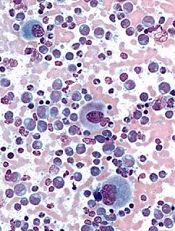
Preclinical research in chronic myeloid leukemia (CML) has pointed to a relationship between cell adherence and treatment resistance.
Investigators found that a population of plastic-adherent K562 cells with increased expression of BCR-ABL exhibited greater resistance to the tyrosine kinase inhibitor imatinib than nonadherent K562 cells.
“Previous studies have linked high levels of the BCR-ABL mutation with drug resistance,” said Richard Byers, PhD, of The University of Manchester in the UK.
“We wanted to see how expression of BCR-ABL differed across groups of CML cells and, in particular, whether there were differences between adherent and nonadherent populations.”
Dr Byers and his colleagues described this investigation in Experimental Hematology.
The researchers evaluated the heterogeneity of BCR-ABL expression at DNA, messenger RNA, and protein levels, using the CML-derived K562 cell line.
They grew cells in suspension and found that some cells adhered to the plastic dish. The investigators then separated the plastic-adherent and nonadherent cell populations and studied them as single cells and in bulk.
The first discovery was that adherent and nonadherent cells had similar BCR-ABL fusion gene copy numbers.
In bulk-cell analysis, the mean relative normalized ratio for genomic ABL DNA copy number was 47.73 for adherent cells and 53.40 for nonadherent cells (P=0.11). In single-cell analysis, the mean copy numbers were 13.83 and 14.22, respectively (P=0.63).
On the other hand, there was a significant difference in BCR-ABL messenger RNA expression between adherent and nonadherent cells.
In bulk cells, the level of BCR-ABL messenger RNA transcripts was 11-fold higher in adherent cells than in nondherent cells (P=0.022). And single-cell analysis revealed the mean BCR-ABL copy number was 53.11 for adherent cells and 14.06 for nonadherent cells (P=0.0013).
Adherent cells also exhibited significantly upregulated phosphorylation of BCR protein compared to nonadherent cells.
Flow cytometry showed that a mean of 61.9% of adherent cells were positive for phosphor-BCR, compared to 14.5% of nonadherent cells (P=0.0074). And single-cell analysis revealed a mean signal number per cell of 8.23 among adherent cells and 3.02 among nonadherent cells (P<0.0001).
In addition, whole-genome microRNA profiling showed that adherent and nonadherent cell populations expressed significantly different microRNA species.
Finally, the researchers found that treatment with imatinib reduced cell viability more rapidly in nonadherent cells than in adherent cells (P<0.005). The adherent cells showed a decrease in cell viability at 24 hours, compared to 4 hours for nonadherent cells.
The investigators said this research suggests that CML patients may have a similar adherent cell population that mediates resistance to imatinib. And the study highlights the importance of single-cell analysis.
“The small number of cells that show high levels of BCR-ABL may not be detectable through bulk analysis of large samples,” Dr Byers said. “It looks like it is important to look at protein levels in single cells.”
“In future, it may be possible to measure BCR-ABL levels in individual cells in the clinic. This will help us identify the resistant, high-BCR-ABL cells and better understand how patients develop resistance to imatinib treatment, with the aim of combating this resistance to make response more durable and the treatment more effective.” 
Credit: UC San Diego
Preclinical research in chronic myeloid leukemia (CML) has pointed to a relationship between cell adherence and treatment resistance.
Investigators found that a population of plastic-adherent K562 cells with increased expression of BCR-ABL exhibited greater resistance to the tyrosine kinase inhibitor imatinib than nonadherent K562 cells.
“Previous studies have linked high levels of the BCR-ABL mutation with drug resistance,” said Richard Byers, PhD, of The University of Manchester in the UK.
“We wanted to see how expression of BCR-ABL differed across groups of CML cells and, in particular, whether there were differences between adherent and nonadherent populations.”
Dr Byers and his colleagues described this investigation in Experimental Hematology.
The researchers evaluated the heterogeneity of BCR-ABL expression at DNA, messenger RNA, and protein levels, using the CML-derived K562 cell line.
They grew cells in suspension and found that some cells adhered to the plastic dish. The investigators then separated the plastic-adherent and nonadherent cell populations and studied them as single cells and in bulk.
The first discovery was that adherent and nonadherent cells had similar BCR-ABL fusion gene copy numbers.
In bulk-cell analysis, the mean relative normalized ratio for genomic ABL DNA copy number was 47.73 for adherent cells and 53.40 for nonadherent cells (P=0.11). In single-cell analysis, the mean copy numbers were 13.83 and 14.22, respectively (P=0.63).
On the other hand, there was a significant difference in BCR-ABL messenger RNA expression between adherent and nonadherent cells.
In bulk cells, the level of BCR-ABL messenger RNA transcripts was 11-fold higher in adherent cells than in nondherent cells (P=0.022). And single-cell analysis revealed the mean BCR-ABL copy number was 53.11 for adherent cells and 14.06 for nonadherent cells (P=0.0013).
Adherent cells also exhibited significantly upregulated phosphorylation of BCR protein compared to nonadherent cells.
Flow cytometry showed that a mean of 61.9% of adherent cells were positive for phosphor-BCR, compared to 14.5% of nonadherent cells (P=0.0074). And single-cell analysis revealed a mean signal number per cell of 8.23 among adherent cells and 3.02 among nonadherent cells (P<0.0001).
In addition, whole-genome microRNA profiling showed that adherent and nonadherent cell populations expressed significantly different microRNA species.
Finally, the researchers found that treatment with imatinib reduced cell viability more rapidly in nonadherent cells than in adherent cells (P<0.005). The adherent cells showed a decrease in cell viability at 24 hours, compared to 4 hours for nonadherent cells.
The investigators said this research suggests that CML patients may have a similar adherent cell population that mediates resistance to imatinib. And the study highlights the importance of single-cell analysis.
“The small number of cells that show high levels of BCR-ABL may not be detectable through bulk analysis of large samples,” Dr Byers said. “It looks like it is important to look at protein levels in single cells.”
“In future, it may be possible to measure BCR-ABL levels in individual cells in the clinic. This will help us identify the resistant, high-BCR-ABL cells and better understand how patients develop resistance to imatinib treatment, with the aim of combating this resistance to make response more durable and the treatment more effective.”
Credit: UC San Diego
Preclinical research in chronic myeloid leukemia (CML) has pointed to a relationship between cell adherence and treatment resistance.
Investigators found that a population of plastic-adherent K562 cells with increased expression of BCR-ABL exhibited greater resistance to the tyrosine kinase inhibitor imatinib than nonadherent K562 cells.
“Previous studies have linked high levels of the BCR-ABL mutation with drug resistance,” said Richard Byers, PhD, of The University of Manchester in the UK.
“We wanted to see how expression of BCR-ABL differed across groups of CML cells and, in particular, whether there were differences between adherent and nonadherent populations.”
Dr Byers and his colleagues described this investigation in Experimental Hematology.
The researchers evaluated the heterogeneity of BCR-ABL expression at DNA, messenger RNA, and protein levels, using the CML-derived K562 cell line.
They grew cells in suspension and found that some cells adhered to the plastic dish. The investigators then separated the plastic-adherent and nonadherent cell populations and studied them as single cells and in bulk.
The first discovery was that adherent and nonadherent cells had similar BCR-ABL fusion gene copy numbers.
In bulk-cell analysis, the mean relative normalized ratio for genomic ABL DNA copy number was 47.73 for adherent cells and 53.40 for nonadherent cells (P=0.11). In single-cell analysis, the mean copy numbers were 13.83 and 14.22, respectively (P=0.63).
On the other hand, there was a significant difference in BCR-ABL messenger RNA expression between adherent and nonadherent cells.
In bulk cells, the level of BCR-ABL messenger RNA transcripts was 11-fold higher in adherent cells than in nondherent cells (P=0.022). And single-cell analysis revealed the mean BCR-ABL copy number was 53.11 for adherent cells and 14.06 for nonadherent cells (P=0.0013).
Adherent cells also exhibited significantly upregulated phosphorylation of BCR protein compared to nonadherent cells.
Flow cytometry showed that a mean of 61.9% of adherent cells were positive for phosphor-BCR, compared to 14.5% of nonadherent cells (P=0.0074). And single-cell analysis revealed a mean signal number per cell of 8.23 among adherent cells and 3.02 among nonadherent cells (P<0.0001).
In addition, whole-genome microRNA profiling showed that adherent and nonadherent cell populations expressed significantly different microRNA species.
Finally, the researchers found that treatment with imatinib reduced cell viability more rapidly in nonadherent cells than in adherent cells (P<0.005). The adherent cells showed a decrease in cell viability at 24 hours, compared to 4 hours for nonadherent cells.
The investigators said this research suggests that CML patients may have a similar adherent cell population that mediates resistance to imatinib. And the study highlights the importance of single-cell analysis.
“The small number of cells that show high levels of BCR-ABL may not be detectable through bulk analysis of large samples,” Dr Byers said. “It looks like it is important to look at protein levels in single cells.”
“In future, it may be possible to measure BCR-ABL levels in individual cells in the clinic. This will help us identify the resistant, high-BCR-ABL cells and better understand how patients develop resistance to imatinib treatment, with the aim of combating this resistance to make response more durable and the treatment more effective.”
ALL maintenance phase still stressful, studies show

Credit: Bill Branson
The stress and lifestyle changes mothers experience after a child’s leukemia diagnosis do not disappear once the disease is in the maintenance phase, new research suggests.
One study showed that mothers of patients with acute lymphoblastic leukemia (ALL) continued to exhibit signs of stress, anxiety, and depression when their child’s disease was in the maintenance phase.
And another study showed that a family’s daily schedule and sleeping arrangements did not return to the way they were before the child’s diagnosis.
“Even though these mothers were in the maintenance phase of their child’s illness, and the prognosis was good, we heard them say over and over that things could never go back to what they were before,” said study author Madalynn Neu, PhD, RN, of the Colorado University College of Nursing.
Stress, depression, and anxiety
In the Journal of Pediatric Oncology Nursing, Dr Neu and her colleagues reported their analysis of stress, anxiety, and depression among the mothers of patients with ALL. The team evaluated 26 mothers of ALL patients and 26 mothers of healthy children, who were matched according to the child’s age and gender.
To assess anxiety, the researchers collected salivary cortisol from the mothers 4 times a day for 3 consecutive days. The mothers also completed questionnaires—the Hospital Anxiety and Depression Scale and the Perceived Stress Scale.
More mothers in the ALL group had questionnaire scores indicating clinical anxiety (46%) and depressive symptoms (27%). And there was a trend toward increased stress in the mothers of ALL patients.
However, the researchers were surprised to find that the mothers’ anxiety levels—as measured by salivary cortisol—were similar to the mothers of well children.
“This may have been affected by the fact that even the control group wasn’t without anxiety,” said study author Ellen Matthews, PhD, RN, of the Colorado University College of Nursing.
“Financial, marital, social, and career concerns mean that parents of young children experience anxiety even without ALL.”
The sleep-wake experience
In the Journal of Pediatric Nursing, the researchers described their assessment of the sleep-wake experience for mothers of ALL patients. The team conducted interviews with 20 mothers, using open-ended, semi-structured questions, and the answers were transcribed verbatim.
Two main themes emerged during these interviews. The first was dubbed, “It’s a whole new cancer world” and contained 4 subthemes: losing normality, being off-balance/insecure, juggling duties, and making transitions.
“Many [of the mothers] had lost their normal lives—lost jobs, houses, friends,” Dr Matthews said. “Some were juggling their time around their child’s needs, and they had fears about many things—fear of recurrence, fear of making a mistake with medication, fear their kids might get sick with an infection.”
The second theme that emerged in interviews was, “I don’t remember what it’s like to have sleep.” This also contained 4 subthemes: sleeping trouble before and after ALL, the child feeling sick at night, worrying, and coping with exhaustion.
The mothers also noted that once sleep arrangements had changed, they often did not return to their pretreatment “normal.”
“Mothers talked about the difficulty of sleep while giving steroid medication,” Dr Neu said. “And if the ill child got to stay up late watching movies, the siblings wanted to stay up too.”
“The same was true of sleeping in a parent’s room. If an ill child wanted to sleep close to a parent (or if a parent wanted to sleep close to an ill child), siblings tended to move in as well. Sleep can be challenging for parents of well children, and our studies show it’s even more so for parents of children who have experienced ALL.”
The researchers hope these studies increase awareness of maternal concerns after a child’s leukemia diagnosis and that leads to interventions to help mothers manage these lifestyle issues.
Credit: Bill Branson
The stress and lifestyle changes mothers experience after a child’s leukemia diagnosis do not disappear once the disease is in the maintenance phase, new research suggests.
One study showed that mothers of patients with acute lymphoblastic leukemia (ALL) continued to exhibit signs of stress, anxiety, and depression when their child’s disease was in the maintenance phase.
And another study showed that a family’s daily schedule and sleeping arrangements did not return to the way they were before the child’s diagnosis.
“Even though these mothers were in the maintenance phase of their child’s illness, and the prognosis was good, we heard them say over and over that things could never go back to what they were before,” said study author Madalynn Neu, PhD, RN, of the Colorado University College of Nursing.
Stress, depression, and anxiety
In the Journal of Pediatric Oncology Nursing, Dr Neu and her colleagues reported their analysis of stress, anxiety, and depression among the mothers of patients with ALL. The team evaluated 26 mothers of ALL patients and 26 mothers of healthy children, who were matched according to the child’s age and gender.
To assess anxiety, the researchers collected salivary cortisol from the mothers 4 times a day for 3 consecutive days. The mothers also completed questionnaires—the Hospital Anxiety and Depression Scale and the Perceived Stress Scale.
More mothers in the ALL group had questionnaire scores indicating clinical anxiety (46%) and depressive symptoms (27%). And there was a trend toward increased stress in the mothers of ALL patients.
However, the researchers were surprised to find that the mothers’ anxiety levels—as measured by salivary cortisol—were similar to the mothers of well children.
“This may have been affected by the fact that even the control group wasn’t without anxiety,” said study author Ellen Matthews, PhD, RN, of the Colorado University College of Nursing.
“Financial, marital, social, and career concerns mean that parents of young children experience anxiety even without ALL.”
The sleep-wake experience
In the Journal of Pediatric Nursing, the researchers described their assessment of the sleep-wake experience for mothers of ALL patients. The team conducted interviews with 20 mothers, using open-ended, semi-structured questions, and the answers were transcribed verbatim.
Two main themes emerged during these interviews. The first was dubbed, “It’s a whole new cancer world” and contained 4 subthemes: losing normality, being off-balance/insecure, juggling duties, and making transitions.
“Many [of the mothers] had lost their normal lives—lost jobs, houses, friends,” Dr Matthews said. “Some were juggling their time around their child’s needs, and they had fears about many things—fear of recurrence, fear of making a mistake with medication, fear their kids might get sick with an infection.”
The second theme that emerged in interviews was, “I don’t remember what it’s like to have sleep.” This also contained 4 subthemes: sleeping trouble before and after ALL, the child feeling sick at night, worrying, and coping with exhaustion.
The mothers also noted that once sleep arrangements had changed, they often did not return to their pretreatment “normal.”
“Mothers talked about the difficulty of sleep while giving steroid medication,” Dr Neu said. “And if the ill child got to stay up late watching movies, the siblings wanted to stay up too.”
“The same was true of sleeping in a parent’s room. If an ill child wanted to sleep close to a parent (or if a parent wanted to sleep close to an ill child), siblings tended to move in as well. Sleep can be challenging for parents of well children, and our studies show it’s even more so for parents of children who have experienced ALL.”
The researchers hope these studies increase awareness of maternal concerns after a child’s leukemia diagnosis and that leads to interventions to help mothers manage these lifestyle issues.
Credit: Bill Branson
The stress and lifestyle changes mothers experience after a child’s leukemia diagnosis do not disappear once the disease is in the maintenance phase, new research suggests.
One study showed that mothers of patients with acute lymphoblastic leukemia (ALL) continued to exhibit signs of stress, anxiety, and depression when their child’s disease was in the maintenance phase.
And another study showed that a family’s daily schedule and sleeping arrangements did not return to the way they were before the child’s diagnosis.
“Even though these mothers were in the maintenance phase of their child’s illness, and the prognosis was good, we heard them say over and over that things could never go back to what they were before,” said study author Madalynn Neu, PhD, RN, of the Colorado University College of Nursing.
Stress, depression, and anxiety
In the Journal of Pediatric Oncology Nursing, Dr Neu and her colleagues reported their analysis of stress, anxiety, and depression among the mothers of patients with ALL. The team evaluated 26 mothers of ALL patients and 26 mothers of healthy children, who were matched according to the child’s age and gender.
To assess anxiety, the researchers collected salivary cortisol from the mothers 4 times a day for 3 consecutive days. The mothers also completed questionnaires—the Hospital Anxiety and Depression Scale and the Perceived Stress Scale.
More mothers in the ALL group had questionnaire scores indicating clinical anxiety (46%) and depressive symptoms (27%). And there was a trend toward increased stress in the mothers of ALL patients.
However, the researchers were surprised to find that the mothers’ anxiety levels—as measured by salivary cortisol—were similar to the mothers of well children.
“This may have been affected by the fact that even the control group wasn’t without anxiety,” said study author Ellen Matthews, PhD, RN, of the Colorado University College of Nursing.
“Financial, marital, social, and career concerns mean that parents of young children experience anxiety even without ALL.”
The sleep-wake experience
In the Journal of Pediatric Nursing, the researchers described their assessment of the sleep-wake experience for mothers of ALL patients. The team conducted interviews with 20 mothers, using open-ended, semi-structured questions, and the answers were transcribed verbatim.
Two main themes emerged during these interviews. The first was dubbed, “It’s a whole new cancer world” and contained 4 subthemes: losing normality, being off-balance/insecure, juggling duties, and making transitions.
“Many [of the mothers] had lost their normal lives—lost jobs, houses, friends,” Dr Matthews said. “Some were juggling their time around their child’s needs, and they had fears about many things—fear of recurrence, fear of making a mistake with medication, fear their kids might get sick with an infection.”
The second theme that emerged in interviews was, “I don’t remember what it’s like to have sleep.” This also contained 4 subthemes: sleeping trouble before and after ALL, the child feeling sick at night, worrying, and coping with exhaustion.
The mothers also noted that once sleep arrangements had changed, they often did not return to their pretreatment “normal.”
“Mothers talked about the difficulty of sleep while giving steroid medication,” Dr Neu said. “And if the ill child got to stay up late watching movies, the siblings wanted to stay up too.”
“The same was true of sleeping in a parent’s room. If an ill child wanted to sleep close to a parent (or if a parent wanted to sleep close to an ill child), siblings tended to move in as well. Sleep can be challenging for parents of well children, and our studies show it’s even more so for parents of children who have experienced ALL.”
The researchers hope these studies increase awareness of maternal concerns after a child’s leukemia diagnosis and that leads to interventions to help mothers manage these lifestyle issues.
CRP levels signal cytokine storm in CAR therapy
C-reactive protein levels can serve as a reliable indicator for severe cytokine release syndrome in patients receiving chimeric antigen receptor T-cell therapy, according to additional analyses from a phase I trial.
"We have found that daily monitoring of CRP [C-reactive protein] in combination with simple clinical parameters allows us to identify patients in need of intensive medical monitoring and potentially pharmacologic management," reported Dr. Marco Davila in Science Translational Medicine.
The observations were based on analysis of clinical data and serum cytokine levels over the first 21 days after infusing CD19-targeted 19-28z chimeric antigen receptor (CAR) T cells into 16 patients with relapsed or refractory B-cell acute lymphoblastic leukemia (B-ALL) (Sci. Transl. Med. 2014;6:1-9).
CAR therapy has demonstrated activity against several treatment-refractory leukemias, but in some patients has induced cytokine release syndrome (CRS), a clinical syndrome of fevers, hypotension, hypoxia, and neurologic changes including seizures.
Patients with CRS typically have fevers that start about 24 hours after infusion with 19-28z CAR T cells and can persist for several days. These fevers, however, aren’t always the harbinger for more clinically relevant toxicities, and premature intervention to curb the CRS can diminish T-cell persistence or efficacy, explained Dr. Davila of Memorial Sloan-Kettering Cancer Center in New York.
In an effort to distinguish between patients whose fevers would spontaneously resolve and those with clinically meaningful or severe CRS, the investigators retrospectively analyzed cytokine increases in serum samples from all 16 patients on the phase I trial. Of the 39 cytokines screened, 7 inflammatory cytokines correlated with pretreatment tumor burden and severe CRS. They are interferon-gamma, interleukin-5, IL-6, IL-10, Flt-3L, granulocyte-macrophage colony-stimulating factor, and fractalkine.
In addition, patients requiring intensive medical intervention had a 75-fold increase over pretreatment baseline levels in two of the seven cytokines, and universally exhibited at least one clinical sign of toxicity such as hypotension, hypoxia, or neurologic disorders.
"Thus, on the basis of the combined clinical and cytokine data, we could accurately define a severe CRS in those patients with the triad of persistent fevers (38° C) for more than 3 days, selected cytokine elevations, and additional clinical evidence of toxicity," Dr. Davila reported.
CRP as a surrogate
Cytokine monitoring, however, is unlikely to be performed daily because of cost and time constraints. CRP was selected as a surrogate for cytokine elevation based on the well-known association between CRP levels and IL-6 and the clinical amelioration of severe CRS afforded by IL-6 receptor blockade.
"We observed a clear difference between the CRP levels of patients with a severe CRS vs. patients classified as having either mild or no CRS," he noted.
Only those patients who met the criteria for severe CRS had a CRP level of 20 mg/dL or more. Patients whose CRP exceeded this threshold were at particularly high risk for CRS (sensitivity, 86%; specificity, 100%).
"CRP, a routinely available lab test, can serve as a surrogate for predicting development of the CRS," coauthor and colleague Dr. Renier J. Brentjens said in an interview. "This allows for sensitive day-to-day assessment of cytokine release in treated patients, which will allow for better management of CRS in CAR T-cell-treated patients," said Dr. Brentjens, director of cellular therapeutics at Memorial Sloan-Kettering Cancer Center.
Dr. David L. Porter, director of blood and marrow transplantation at the University of Pennsylvania Hospital, Philadelphia, said they too have found that CRP tracks with severity of CRS. However, at least at this point, while it may help predict which patients have a more severe reaction, it does not allow for early or different intervention.
"It remains completely unknown whether early intervention for CRS will inhibit the T-cell activity," he said in an interview. "We have developed a grading system for CRS that was designed to help determine when patients require intervention for CRS based on clinical criteria rather than laboratory values. But ultimately, if CRP or other measurements predict when intervention is appropriate, this will be a very useful assay."
CRS intervention
Treating severe CRS with high-dose steroids resulted in rapid reversal of fevers, cytokines, and other clinical symptoms, but abrogated T-cell expansion and persistence, whereas IL-6 receptor blockade with tocilizumab (Actemra) did not, Dr. Avila reported. Indeed, two patients demonstrated an almost 7,000-fold expansion after first-line tocilizumab.
In addition, the manner of treating severe CRS may affect clinical outcomes. All three patients treated with high-dose steroids relapsed despite previously achieving a complete molecular remission whereas untreated patients or those treated with tocilizumab alone had no evidence of recurrent disease after achieving a complete molecular remission.
Efficacy
The complete response rate in the study was 88%, with 12 of these 14 patients further classified as having minimal residual disease. Seven (44%) patients were successfully bridged to allogeneic stem cell transplantation. This is "especially meaningful" when compared with the historic low of just 5% of relapsed/refractory adult B-ALL patients transitioning to transplant after salvage chemotherapy, Dr. Davila noted.
Still, the persistence of the 19-28z CAR T cells was about 3 months, compared with several months to even more than one year in at least one B-ALL patient and several CLL patients reported by the University of Pennsylvania researchers. Dr. Davila and his colleagues hypothesize that the longer persistence of CD19-targeted CARs incorporating a 4-1BB moiety, rather than CD28, may be due, in part, to antigen-independent signaling through the 4-1BB CAR, as previously shown in preclinical studies. They are also currently developing a human anti-mouse antibody assay to determine whether immune-mediated rejection might be a contributing factor to the limited persistence of the 19-28z CAR T cells.
Dr. Porter said it’s not known why their T cells persist longer, but agreed it may have to do with the novel signal domain of their CAR (4-1BB). "This may be important for high levels of expansion, but may also provide a survival signal to the T cells allowing for longer persistence," he said.
The study was supported by MSKCC. Dr. Davila reported having no financial disclosures. Dr. Brentjens holds a patent that covers the 19-28z receptor and is a cofounder of Juno Therapeutics, which holds the license.
C-reactive protein levels can serve as a reliable indicator for severe cytokine release syndrome in patients receiving chimeric antigen receptor T-cell therapy, according to additional analyses from a phase I trial.
"We have found that daily monitoring of CRP [C-reactive protein] in combination with simple clinical parameters allows us to identify patients in need of intensive medical monitoring and potentially pharmacologic management," reported Dr. Marco Davila in Science Translational Medicine.
The observations were based on analysis of clinical data and serum cytokine levels over the first 21 days after infusing CD19-targeted 19-28z chimeric antigen receptor (CAR) T cells into 16 patients with relapsed or refractory B-cell acute lymphoblastic leukemia (B-ALL) (Sci. Transl. Med. 2014;6:1-9).
CAR therapy has demonstrated activity against several treatment-refractory leukemias, but in some patients has induced cytokine release syndrome (CRS), a clinical syndrome of fevers, hypotension, hypoxia, and neurologic changes including seizures.
Patients with CRS typically have fevers that start about 24 hours after infusion with 19-28z CAR T cells and can persist for several days. These fevers, however, aren’t always the harbinger for more clinically relevant toxicities, and premature intervention to curb the CRS can diminish T-cell persistence or efficacy, explained Dr. Davila of Memorial Sloan-Kettering Cancer Center in New York.
In an effort to distinguish between patients whose fevers would spontaneously resolve and those with clinically meaningful or severe CRS, the investigators retrospectively analyzed cytokine increases in serum samples from all 16 patients on the phase I trial. Of the 39 cytokines screened, 7 inflammatory cytokines correlated with pretreatment tumor burden and severe CRS. They are interferon-gamma, interleukin-5, IL-6, IL-10, Flt-3L, granulocyte-macrophage colony-stimulating factor, and fractalkine.
In addition, patients requiring intensive medical intervention had a 75-fold increase over pretreatment baseline levels in two of the seven cytokines, and universally exhibited at least one clinical sign of toxicity such as hypotension, hypoxia, or neurologic disorders.
"Thus, on the basis of the combined clinical and cytokine data, we could accurately define a severe CRS in those patients with the triad of persistent fevers (38° C) for more than 3 days, selected cytokine elevations, and additional clinical evidence of toxicity," Dr. Davila reported.
CRP as a surrogate
Cytokine monitoring, however, is unlikely to be performed daily because of cost and time constraints. CRP was selected as a surrogate for cytokine elevation based on the well-known association between CRP levels and IL-6 and the clinical amelioration of severe CRS afforded by IL-6 receptor blockade.
"We observed a clear difference between the CRP levels of patients with a severe CRS vs. patients classified as having either mild or no CRS," he noted.
Only those patients who met the criteria for severe CRS had a CRP level of 20 mg/dL or more. Patients whose CRP exceeded this threshold were at particularly high risk for CRS (sensitivity, 86%; specificity, 100%).
"CRP, a routinely available lab test, can serve as a surrogate for predicting development of the CRS," coauthor and colleague Dr. Renier J. Brentjens said in an interview. "This allows for sensitive day-to-day assessment of cytokine release in treated patients, which will allow for better management of CRS in CAR T-cell-treated patients," said Dr. Brentjens, director of cellular therapeutics at Memorial Sloan-Kettering Cancer Center.
Dr. David L. Porter, director of blood and marrow transplantation at the University of Pennsylvania Hospital, Philadelphia, said they too have found that CRP tracks with severity of CRS. However, at least at this point, while it may help predict which patients have a more severe reaction, it does not allow for early or different intervention.
"It remains completely unknown whether early intervention for CRS will inhibit the T-cell activity," he said in an interview. "We have developed a grading system for CRS that was designed to help determine when patients require intervention for CRS based on clinical criteria rather than laboratory values. But ultimately, if CRP or other measurements predict when intervention is appropriate, this will be a very useful assay."
CRS intervention
Treating severe CRS with high-dose steroids resulted in rapid reversal of fevers, cytokines, and other clinical symptoms, but abrogated T-cell expansion and persistence, whereas IL-6 receptor blockade with tocilizumab (Actemra) did not, Dr. Avila reported. Indeed, two patients demonstrated an almost 7,000-fold expansion after first-line tocilizumab.
In addition, the manner of treating severe CRS may affect clinical outcomes. All three patients treated with high-dose steroids relapsed despite previously achieving a complete molecular remission whereas untreated patients or those treated with tocilizumab alone had no evidence of recurrent disease after achieving a complete molecular remission.
Efficacy
The complete response rate in the study was 88%, with 12 of these 14 patients further classified as having minimal residual disease. Seven (44%) patients were successfully bridged to allogeneic stem cell transplantation. This is "especially meaningful" when compared with the historic low of just 5% of relapsed/refractory adult B-ALL patients transitioning to transplant after salvage chemotherapy, Dr. Davila noted.
Still, the persistence of the 19-28z CAR T cells was about 3 months, compared with several months to even more than one year in at least one B-ALL patient and several CLL patients reported by the University of Pennsylvania researchers. Dr. Davila and his colleagues hypothesize that the longer persistence of CD19-targeted CARs incorporating a 4-1BB moiety, rather than CD28, may be due, in part, to antigen-independent signaling through the 4-1BB CAR, as previously shown in preclinical studies. They are also currently developing a human anti-mouse antibody assay to determine whether immune-mediated rejection might be a contributing factor to the limited persistence of the 19-28z CAR T cells.
Dr. Porter said it’s not known why their T cells persist longer, but agreed it may have to do with the novel signal domain of their CAR (4-1BB). "This may be important for high levels of expansion, but may also provide a survival signal to the T cells allowing for longer persistence," he said.
The study was supported by MSKCC. Dr. Davila reported having no financial disclosures. Dr. Brentjens holds a patent that covers the 19-28z receptor and is a cofounder of Juno Therapeutics, which holds the license.
C-reactive protein levels can serve as a reliable indicator for severe cytokine release syndrome in patients receiving chimeric antigen receptor T-cell therapy, according to additional analyses from a phase I trial.
"We have found that daily monitoring of CRP [C-reactive protein] in combination with simple clinical parameters allows us to identify patients in need of intensive medical monitoring and potentially pharmacologic management," reported Dr. Marco Davila in Science Translational Medicine.
The observations were based on analysis of clinical data and serum cytokine levels over the first 21 days after infusing CD19-targeted 19-28z chimeric antigen receptor (CAR) T cells into 16 patients with relapsed or refractory B-cell acute lymphoblastic leukemia (B-ALL) (Sci. Transl. Med. 2014;6:1-9).
CAR therapy has demonstrated activity against several treatment-refractory leukemias, but in some patients has induced cytokine release syndrome (CRS), a clinical syndrome of fevers, hypotension, hypoxia, and neurologic changes including seizures.
Patients with CRS typically have fevers that start about 24 hours after infusion with 19-28z CAR T cells and can persist for several days. These fevers, however, aren’t always the harbinger for more clinically relevant toxicities, and premature intervention to curb the CRS can diminish T-cell persistence or efficacy, explained Dr. Davila of Memorial Sloan-Kettering Cancer Center in New York.
In an effort to distinguish between patients whose fevers would spontaneously resolve and those with clinically meaningful or severe CRS, the investigators retrospectively analyzed cytokine increases in serum samples from all 16 patients on the phase I trial. Of the 39 cytokines screened, 7 inflammatory cytokines correlated with pretreatment tumor burden and severe CRS. They are interferon-gamma, interleukin-5, IL-6, IL-10, Flt-3L, granulocyte-macrophage colony-stimulating factor, and fractalkine.
In addition, patients requiring intensive medical intervention had a 75-fold increase over pretreatment baseline levels in two of the seven cytokines, and universally exhibited at least one clinical sign of toxicity such as hypotension, hypoxia, or neurologic disorders.
"Thus, on the basis of the combined clinical and cytokine data, we could accurately define a severe CRS in those patients with the triad of persistent fevers (38° C) for more than 3 days, selected cytokine elevations, and additional clinical evidence of toxicity," Dr. Davila reported.
CRP as a surrogate
Cytokine monitoring, however, is unlikely to be performed daily because of cost and time constraints. CRP was selected as a surrogate for cytokine elevation based on the well-known association between CRP levels and IL-6 and the clinical amelioration of severe CRS afforded by IL-6 receptor blockade.
"We observed a clear difference between the CRP levels of patients with a severe CRS vs. patients classified as having either mild or no CRS," he noted.
Only those patients who met the criteria for severe CRS had a CRP level of 20 mg/dL or more. Patients whose CRP exceeded this threshold were at particularly high risk for CRS (sensitivity, 86%; specificity, 100%).
"CRP, a routinely available lab test, can serve as a surrogate for predicting development of the CRS," coauthor and colleague Dr. Renier J. Brentjens said in an interview. "This allows for sensitive day-to-day assessment of cytokine release in treated patients, which will allow for better management of CRS in CAR T-cell-treated patients," said Dr. Brentjens, director of cellular therapeutics at Memorial Sloan-Kettering Cancer Center.
Dr. David L. Porter, director of blood and marrow transplantation at the University of Pennsylvania Hospital, Philadelphia, said they too have found that CRP tracks with severity of CRS. However, at least at this point, while it may help predict which patients have a more severe reaction, it does not allow for early or different intervention.
"It remains completely unknown whether early intervention for CRS will inhibit the T-cell activity," he said in an interview. "We have developed a grading system for CRS that was designed to help determine when patients require intervention for CRS based on clinical criteria rather than laboratory values. But ultimately, if CRP or other measurements predict when intervention is appropriate, this will be a very useful assay."
CRS intervention
Treating severe CRS with high-dose steroids resulted in rapid reversal of fevers, cytokines, and other clinical symptoms, but abrogated T-cell expansion and persistence, whereas IL-6 receptor blockade with tocilizumab (Actemra) did not, Dr. Avila reported. Indeed, two patients demonstrated an almost 7,000-fold expansion after first-line tocilizumab.
In addition, the manner of treating severe CRS may affect clinical outcomes. All three patients treated with high-dose steroids relapsed despite previously achieving a complete molecular remission whereas untreated patients or those treated with tocilizumab alone had no evidence of recurrent disease after achieving a complete molecular remission.
Efficacy
The complete response rate in the study was 88%, with 12 of these 14 patients further classified as having minimal residual disease. Seven (44%) patients were successfully bridged to allogeneic stem cell transplantation. This is "especially meaningful" when compared with the historic low of just 5% of relapsed/refractory adult B-ALL patients transitioning to transplant after salvage chemotherapy, Dr. Davila noted.
Still, the persistence of the 19-28z CAR T cells was about 3 months, compared with several months to even more than one year in at least one B-ALL patient and several CLL patients reported by the University of Pennsylvania researchers. Dr. Davila and his colleagues hypothesize that the longer persistence of CD19-targeted CARs incorporating a 4-1BB moiety, rather than CD28, may be due, in part, to antigen-independent signaling through the 4-1BB CAR, as previously shown in preclinical studies. They are also currently developing a human anti-mouse antibody assay to determine whether immune-mediated rejection might be a contributing factor to the limited persistence of the 19-28z CAR T cells.
Dr. Porter said it’s not known why their T cells persist longer, but agreed it may have to do with the novel signal domain of their CAR (4-1BB). "This may be important for high levels of expansion, but may also provide a survival signal to the T cells allowing for longer persistence," he said.
The study was supported by MSKCC. Dr. Davila reported having no financial disclosures. Dr. Brentjens holds a patent that covers the 19-28z receptor and is a cofounder of Juno Therapeutics, which holds the license.
FROM SCIENCE TRANSLATIONAL MEDICINE
Major finding: CRP levels of at least 20 mg/dL had a sensitivity and specificity to predict severe CRS of 86% and 100%, respectively.
Data source: A retrospective study of 16 patients with relapsed or refractory B-cell acute lymphoblastic leukemia.
Disclosures: The study was supported by MSKCC. Dr. Davila reported having no financial disclosures. Dr. Brentjens holds a patent that covers the 19-28z receptor and is a cofounder of Juno Therapeutics, which holds the license.
Order of Cy, TBI doesn’t impact HSCT outcome
GRAPEVINE, TEXAS—The order in which patients receive cyclophosphamide (Cy) and total body irradiation (TBI) does not affect the outcome of hematopoietic stem cell transplant (HSCT), researchers have reported.
In a large, retrospective study, the rates of relapse, survival, chronic graft-vs-host disease (GVHD), and other complications were similar whether patients received Cy-TBI or TBI-Cy.
However, receiving Cy-TBI was associated with a slight decrease in the risk of grade 2-4 acute GVHD.
Jennifer L. Holter-Chakrabarty, MD, of the University of Oklahoma in Oklahoma City, presented these findings at the 2014 BMT Tandem Meetings as abstract 13.
She noted that other researchers have investigated the impact of TBI/Cy order, but the results have not provided definitive answers.
“Mouse models show that TBI-Cy is superior, with reduced lung toxicity and increased incidence of bone marrow damage,” Dr Holter-Chakrabarty said.
“Cy-TBI, however, in a retrospective study, showed improved anti-leukemic effect, as well as increased incidence of sinusoidal obstructive syndrome. So for this reason, we wanted to look at the CIBMTR database and compare the order of cyclophosphamide and TBI.”
She and her colleagues analyzed data from 1769 HSCT recipients who were younger than 60 years of age and had been reported to the CIBMTR from 2003 to 2010. Patients had been diagnosed with acute myeloid leukemia (AML, n=945) or acute lymphoblastic leukemia (ALL, n=824) and were in their first or second remission.
They had received TBI doses of at least 1200 cGy, followed by related or unrelated bone marrow or peripheral blood stem cell grafts. Patients who had received cord blood, haploidentical, or T-cell-depleted grafts were excluded.
In all, 948 patients received Cy-TBI, and 821 received TBI-Cy. The 2 cohorts had comparable patient-, disease- and transplant-related characteristics.
The sequence of TBI and Cy did not significantly affect the rates of relapse, leukemia-free survival, or overall survival. And it had no significant impact on transplant-related complications, with the exception of acute grade 2-4 GVHD.
At 100 days, the rate of grade 2-4 acute GVHD was 39% in the Cy-TBI group and 45% in the TBI-Cy group (P=0.01). But the rates of grade 3-4 acute GVHD were 16% and 15%, respectively (P=0.62).
At 100 days, the incidence of veno-occlusive disease and sinusoidal obstructive syndrome was 4% in the Cy-TBI group and 6% in the TBI-Cy group (P=0.082). At 1 year, the incidence of interstitial pneumonia syndrome was 6% and 5%, respectively (P=0.370).
At 3 years, the relapse rate was 27% in the Cy-TBI group and 29% in the TBI-Cy group (P=0.34). Leukemia-free survival was 48% and 49%, respectively (P=0.27). And overall survival was 53% and 52%, respectively (P=0.62).
Transplant-related mortality at 3 years was 24% and 23%, respectively (P=0.67). And the rate of chronic GVHD was 45% and 47%, respectively (P=0.39).
“So, in this population, we see no difference,” Dr Holter-Chakrabarty said. “Cy-TBI or TBI-Cy—it seems to not make a difference either way in relapse, treatment-related mortality, [chronic] graft-vs-host disease, acute 3 and 4 [GVHD], and survival. However, it does give us an idea that 2-4 acute GVHD may be lower in Cy-TBI.”
GRAPEVINE, TEXAS—The order in which patients receive cyclophosphamide (Cy) and total body irradiation (TBI) does not affect the outcome of hematopoietic stem cell transplant (HSCT), researchers have reported.
In a large, retrospective study, the rates of relapse, survival, chronic graft-vs-host disease (GVHD), and other complications were similar whether patients received Cy-TBI or TBI-Cy.
However, receiving Cy-TBI was associated with a slight decrease in the risk of grade 2-4 acute GVHD.
Jennifer L. Holter-Chakrabarty, MD, of the University of Oklahoma in Oklahoma City, presented these findings at the 2014 BMT Tandem Meetings as abstract 13.
She noted that other researchers have investigated the impact of TBI/Cy order, but the results have not provided definitive answers.
“Mouse models show that TBI-Cy is superior, with reduced lung toxicity and increased incidence of bone marrow damage,” Dr Holter-Chakrabarty said.
“Cy-TBI, however, in a retrospective study, showed improved anti-leukemic effect, as well as increased incidence of sinusoidal obstructive syndrome. So for this reason, we wanted to look at the CIBMTR database and compare the order of cyclophosphamide and TBI.”
She and her colleagues analyzed data from 1769 HSCT recipients who were younger than 60 years of age and had been reported to the CIBMTR from 2003 to 2010. Patients had been diagnosed with acute myeloid leukemia (AML, n=945) or acute lymphoblastic leukemia (ALL, n=824) and were in their first or second remission.
They had received TBI doses of at least 1200 cGy, followed by related or unrelated bone marrow or peripheral blood stem cell grafts. Patients who had received cord blood, haploidentical, or T-cell-depleted grafts were excluded.
In all, 948 patients received Cy-TBI, and 821 received TBI-Cy. The 2 cohorts had comparable patient-, disease- and transplant-related characteristics.
The sequence of TBI and Cy did not significantly affect the rates of relapse, leukemia-free survival, or overall survival. And it had no significant impact on transplant-related complications, with the exception of acute grade 2-4 GVHD.
At 100 days, the rate of grade 2-4 acute GVHD was 39% in the Cy-TBI group and 45% in the TBI-Cy group (P=0.01). But the rates of grade 3-4 acute GVHD were 16% and 15%, respectively (P=0.62).
At 100 days, the incidence of veno-occlusive disease and sinusoidal obstructive syndrome was 4% in the Cy-TBI group and 6% in the TBI-Cy group (P=0.082). At 1 year, the incidence of interstitial pneumonia syndrome was 6% and 5%, respectively (P=0.370).
At 3 years, the relapse rate was 27% in the Cy-TBI group and 29% in the TBI-Cy group (P=0.34). Leukemia-free survival was 48% and 49%, respectively (P=0.27). And overall survival was 53% and 52%, respectively (P=0.62).
Transplant-related mortality at 3 years was 24% and 23%, respectively (P=0.67). And the rate of chronic GVHD was 45% and 47%, respectively (P=0.39).
“So, in this population, we see no difference,” Dr Holter-Chakrabarty said. “Cy-TBI or TBI-Cy—it seems to not make a difference either way in relapse, treatment-related mortality, [chronic] graft-vs-host disease, acute 3 and 4 [GVHD], and survival. However, it does give us an idea that 2-4 acute GVHD may be lower in Cy-TBI.”
GRAPEVINE, TEXAS—The order in which patients receive cyclophosphamide (Cy) and total body irradiation (TBI) does not affect the outcome of hematopoietic stem cell transplant (HSCT), researchers have reported.
In a large, retrospective study, the rates of relapse, survival, chronic graft-vs-host disease (GVHD), and other complications were similar whether patients received Cy-TBI or TBI-Cy.
However, receiving Cy-TBI was associated with a slight decrease in the risk of grade 2-4 acute GVHD.
Jennifer L. Holter-Chakrabarty, MD, of the University of Oklahoma in Oklahoma City, presented these findings at the 2014 BMT Tandem Meetings as abstract 13.
She noted that other researchers have investigated the impact of TBI/Cy order, but the results have not provided definitive answers.
“Mouse models show that TBI-Cy is superior, with reduced lung toxicity and increased incidence of bone marrow damage,” Dr Holter-Chakrabarty said.
“Cy-TBI, however, in a retrospective study, showed improved anti-leukemic effect, as well as increased incidence of sinusoidal obstructive syndrome. So for this reason, we wanted to look at the CIBMTR database and compare the order of cyclophosphamide and TBI.”
She and her colleagues analyzed data from 1769 HSCT recipients who were younger than 60 years of age and had been reported to the CIBMTR from 2003 to 2010. Patients had been diagnosed with acute myeloid leukemia (AML, n=945) or acute lymphoblastic leukemia (ALL, n=824) and were in their first or second remission.
They had received TBI doses of at least 1200 cGy, followed by related or unrelated bone marrow or peripheral blood stem cell grafts. Patients who had received cord blood, haploidentical, or T-cell-depleted grafts were excluded.
In all, 948 patients received Cy-TBI, and 821 received TBI-Cy. The 2 cohorts had comparable patient-, disease- and transplant-related characteristics.
The sequence of TBI and Cy did not significantly affect the rates of relapse, leukemia-free survival, or overall survival. And it had no significant impact on transplant-related complications, with the exception of acute grade 2-4 GVHD.
At 100 days, the rate of grade 2-4 acute GVHD was 39% in the Cy-TBI group and 45% in the TBI-Cy group (P=0.01). But the rates of grade 3-4 acute GVHD were 16% and 15%, respectively (P=0.62).
At 100 days, the incidence of veno-occlusive disease and sinusoidal obstructive syndrome was 4% in the Cy-TBI group and 6% in the TBI-Cy group (P=0.082). At 1 year, the incidence of interstitial pneumonia syndrome was 6% and 5%, respectively (P=0.370).
At 3 years, the relapse rate was 27% in the Cy-TBI group and 29% in the TBI-Cy group (P=0.34). Leukemia-free survival was 48% and 49%, respectively (P=0.27). And overall survival was 53% and 52%, respectively (P=0.62).
Transplant-related mortality at 3 years was 24% and 23%, respectively (P=0.67). And the rate of chronic GVHD was 45% and 47%, respectively (P=0.39).
“So, in this population, we see no difference,” Dr Holter-Chakrabarty said. “Cy-TBI or TBI-Cy—it seems to not make a difference either way in relapse, treatment-related mortality, [chronic] graft-vs-host disease, acute 3 and 4 [GVHD], and survival. However, it does give us an idea that 2-4 acute GVHD may be lower in Cy-TBI.”
Idelalisib more effective in CLL, iNHL than MCL

Credit: FDA
Results of a phase 1 study suggest the PI3K delta inhibitor idelalisib can produce durable responses in certain patients with relapsed or refractory disease.
The drug elicited a response rate of 72% in patients with chronic lymphocytic leukemia (CLL), 47% in indolent non-Hodgkin lymphoma (iNHL), and 40% in mantle cell lymphoma(MCL).
The median duration of response was 16.2 months among CLL patients, 18.4 months among iNHL patients, and 2.7 months among those with MCL.
“Considering the high number of previous therapies that these patients had received, higher than we sometimes see in comparable studies, the efficacy of idelalisib that we observed was remarkable,” said study author Ian Flinn, MD, PhD, of the Sarah Cannon Research Institute in Nashville, Tennessee.
In 3 papers published in Blood, Dr Flinn and his colleagues presented data from this phase 1 study of idelalisib. After an initial study involving all trial participants, the patients were separated into CLL, iNHL, and MCL disease cohorts.
Solid survival rates in CLL
The researchers evaluated idelalisib in 54 patients with relapsed or refractory CLL. The patients had received a median of 5 prior treatments (range, 2-14).
They had a median age of 63 years (range 37-82), 80% had bulky lymphadenopathy, 70% had treatment-refractory disease, 91% had unmutated IGHV, and 24% had del17p and/or TP53 mutation.
In the primary study, the patients received idelalisib at doses ranging from 50 mg to 350 mg once or twice daily for 48 weeks. If they continued to derive clinical benefit, patients could continue treatment on an extension study.
Fifty-four percent of patients discontinued treatment during the primary study period. Twenty-eight percent stopped because of disease progression, 9% due to adverse events (AEs), and 6% due to early deaths resulting from AEs.
Grade 3 or higher AEs included pneumonia (20%), neutropenic fever (11%), diarrhea (6%), pyrexia (4%), cough (4%), and fatigue (2%). Common grade 3 or higher lab abnormalities included neutropenia (43%), anemia (11%), and thrombocytopenia (17%).
The overall response rate was 72%, with 39% of patients meeting the criteria for partial response per IWCLL 2008 criteria and 33% meeting the criteria of partial response in the presence of treatment-induced lymphocytosis.
The median duration of response was 16.2 months, the median progression-free survival (PFS) was 15.8 months, and the median overall survival was not reached.
Longer response duration in iNHL
The researchers evaluated idelalisib in 64 patients with iNHL. Lymphoma types included follicular lymphoma (59%), small lymphocytic lymphoma (17%), marginal zone lymphoma (9%), and lymphoplasmacytic lymphoma (14%).
Patients had a median age of 64 years (range, 32-91), 53% had bulky disease, and 58% had refractory disease. They had received a median of 4 prior therapies (range, 1-10).
The patients received idelalisib at doses ranging from 50 mg to 350 mg once or twice daily. After 48 weeks, patients still benefitting from treatment (30%) were enrolled in an extension study.
The remaining 70% of patients discontinued treatment during the primary study. Nineteen percent of these patients discontinued due to AEs.
Grade 3 or higher AEs included pneumonia (17%), diarrhea (9%), peripheral edema (3%), fatigue (3%), rash (3%), pyrexia (3%), nausea (2%), and cough (2%). Grade 3 or higher lab abnormalities included AST elevation (20%), ALT elevation (23%), neutropenia (23%), thrombocytopenia (11%), and anemia (5%).
The overall response rate was 47%, with 1 patient (1.6%) achieving a complete response. The median duration of response was 18.4 months, and the median PFS was 7.6 months.
Short response, survival duration in MCL
The researchers evaluated idelalisib in 40 patients with relapsed or refractory MCL. The median age was 69 years (range, 52-83). Patients had received a median of 4 prior therapies (range, 1-14), and 43% were refractory to their most recent treatment.
Patients received idelalisib at doses ranging from 50 mg to 350 mg once or twice daily for a median of 3.5 months (range, 0.7-30.7). Six patients (15%) continued treatment for more than 48 weeks, although only 1 patient remains on treatment at present.
The 34 patients who discontinued the primary study did so because of progressive disease (60%), AEs (20%), withdrawn consent (3%), or investigator request (3%). Of the 6 patients who entered the extension trial, 4 ultimately discontinued due to progressive disease and 1 due to AEs.
Grade 3 or higher AEs included diarrhea (18%), decreased appetite (15%), pneumonia (10%), nausea (5%), fatigue (3%), and rash (3%). Grade 3 or higher lab abnormalities included ALT/AST elevations (20%), neutropenia (10%), thrombocytopenia (5%), and anemia (3%).
The overall response rate was 40%, with 5% of patients achieving a complete response. The median duration of response was 2.7 months, and the median PFS was 3.7 months.
Despite the modest duration of survival observed in these patients, the researchers believe the strong initial response to idelalisib suggests the drug could still prove useful in patients with MCL.
“[I]delalisib is unlikely to receive designation as a single-agent therapy in mantle cell lymphoma due to the short duration of response,” said study author Brad S. Kahl, MD, of the University of Wisconsin Carbone Cancer Center in Madison.
“The path forward will likely include administering it in combination with other agents or developing second-generation PI3 kinase inhibitors.”
Credit: FDA
Results of a phase 1 study suggest the PI3K delta inhibitor idelalisib can produce durable responses in certain patients with relapsed or refractory disease.
The drug elicited a response rate of 72% in patients with chronic lymphocytic leukemia (CLL), 47% in indolent non-Hodgkin lymphoma (iNHL), and 40% in mantle cell lymphoma(MCL).
The median duration of response was 16.2 months among CLL patients, 18.4 months among iNHL patients, and 2.7 months among those with MCL.
“Considering the high number of previous therapies that these patients had received, higher than we sometimes see in comparable studies, the efficacy of idelalisib that we observed was remarkable,” said study author Ian Flinn, MD, PhD, of the Sarah Cannon Research Institute in Nashville, Tennessee.
In 3 papers published in Blood, Dr Flinn and his colleagues presented data from this phase 1 study of idelalisib. After an initial study involving all trial participants, the patients were separated into CLL, iNHL, and MCL disease cohorts.
Solid survival rates in CLL
The researchers evaluated idelalisib in 54 patients with relapsed or refractory CLL. The patients had received a median of 5 prior treatments (range, 2-14).
They had a median age of 63 years (range 37-82), 80% had bulky lymphadenopathy, 70% had treatment-refractory disease, 91% had unmutated IGHV, and 24% had del17p and/or TP53 mutation.
In the primary study, the patients received idelalisib at doses ranging from 50 mg to 350 mg once or twice daily for 48 weeks. If they continued to derive clinical benefit, patients could continue treatment on an extension study.
Fifty-four percent of patients discontinued treatment during the primary study period. Twenty-eight percent stopped because of disease progression, 9% due to adverse events (AEs), and 6% due to early deaths resulting from AEs.
Grade 3 or higher AEs included pneumonia (20%), neutropenic fever (11%), diarrhea (6%), pyrexia (4%), cough (4%), and fatigue (2%). Common grade 3 or higher lab abnormalities included neutropenia (43%), anemia (11%), and thrombocytopenia (17%).
The overall response rate was 72%, with 39% of patients meeting the criteria for partial response per IWCLL 2008 criteria and 33% meeting the criteria of partial response in the presence of treatment-induced lymphocytosis.
The median duration of response was 16.2 months, the median progression-free survival (PFS) was 15.8 months, and the median overall survival was not reached.
Longer response duration in iNHL
The researchers evaluated idelalisib in 64 patients with iNHL. Lymphoma types included follicular lymphoma (59%), small lymphocytic lymphoma (17%), marginal zone lymphoma (9%), and lymphoplasmacytic lymphoma (14%).
Patients had a median age of 64 years (range, 32-91), 53% had bulky disease, and 58% had refractory disease. They had received a median of 4 prior therapies (range, 1-10).
The patients received idelalisib at doses ranging from 50 mg to 350 mg once or twice daily. After 48 weeks, patients still benefitting from treatment (30%) were enrolled in an extension study.
The remaining 70% of patients discontinued treatment during the primary study. Nineteen percent of these patients discontinued due to AEs.
Grade 3 or higher AEs included pneumonia (17%), diarrhea (9%), peripheral edema (3%), fatigue (3%), rash (3%), pyrexia (3%), nausea (2%), and cough (2%). Grade 3 or higher lab abnormalities included AST elevation (20%), ALT elevation (23%), neutropenia (23%), thrombocytopenia (11%), and anemia (5%).
The overall response rate was 47%, with 1 patient (1.6%) achieving a complete response. The median duration of response was 18.4 months, and the median PFS was 7.6 months.
Short response, survival duration in MCL
The researchers evaluated idelalisib in 40 patients with relapsed or refractory MCL. The median age was 69 years (range, 52-83). Patients had received a median of 4 prior therapies (range, 1-14), and 43% were refractory to their most recent treatment.
Patients received idelalisib at doses ranging from 50 mg to 350 mg once or twice daily for a median of 3.5 months (range, 0.7-30.7). Six patients (15%) continued treatment for more than 48 weeks, although only 1 patient remains on treatment at present.
The 34 patients who discontinued the primary study did so because of progressive disease (60%), AEs (20%), withdrawn consent (3%), or investigator request (3%). Of the 6 patients who entered the extension trial, 4 ultimately discontinued due to progressive disease and 1 due to AEs.
Grade 3 or higher AEs included diarrhea (18%), decreased appetite (15%), pneumonia (10%), nausea (5%), fatigue (3%), and rash (3%). Grade 3 or higher lab abnormalities included ALT/AST elevations (20%), neutropenia (10%), thrombocytopenia (5%), and anemia (3%).
The overall response rate was 40%, with 5% of patients achieving a complete response. The median duration of response was 2.7 months, and the median PFS was 3.7 months.
Despite the modest duration of survival observed in these patients, the researchers believe the strong initial response to idelalisib suggests the drug could still prove useful in patients with MCL.
“[I]delalisib is unlikely to receive designation as a single-agent therapy in mantle cell lymphoma due to the short duration of response,” said study author Brad S. Kahl, MD, of the University of Wisconsin Carbone Cancer Center in Madison.
“The path forward will likely include administering it in combination with other agents or developing second-generation PI3 kinase inhibitors.”
Credit: FDA
Results of a phase 1 study suggest the PI3K delta inhibitor idelalisib can produce durable responses in certain patients with relapsed or refractory disease.
The drug elicited a response rate of 72% in patients with chronic lymphocytic leukemia (CLL), 47% in indolent non-Hodgkin lymphoma (iNHL), and 40% in mantle cell lymphoma(MCL).
The median duration of response was 16.2 months among CLL patients, 18.4 months among iNHL patients, and 2.7 months among those with MCL.
“Considering the high number of previous therapies that these patients had received, higher than we sometimes see in comparable studies, the efficacy of idelalisib that we observed was remarkable,” said study author Ian Flinn, MD, PhD, of the Sarah Cannon Research Institute in Nashville, Tennessee.
In 3 papers published in Blood, Dr Flinn and his colleagues presented data from this phase 1 study of idelalisib. After an initial study involving all trial participants, the patients were separated into CLL, iNHL, and MCL disease cohorts.
Solid survival rates in CLL
The researchers evaluated idelalisib in 54 patients with relapsed or refractory CLL. The patients had received a median of 5 prior treatments (range, 2-14).
They had a median age of 63 years (range 37-82), 80% had bulky lymphadenopathy, 70% had treatment-refractory disease, 91% had unmutated IGHV, and 24% had del17p and/or TP53 mutation.
In the primary study, the patients received idelalisib at doses ranging from 50 mg to 350 mg once or twice daily for 48 weeks. If they continued to derive clinical benefit, patients could continue treatment on an extension study.
Fifty-four percent of patients discontinued treatment during the primary study period. Twenty-eight percent stopped because of disease progression, 9% due to adverse events (AEs), and 6% due to early deaths resulting from AEs.
Grade 3 or higher AEs included pneumonia (20%), neutropenic fever (11%), diarrhea (6%), pyrexia (4%), cough (4%), and fatigue (2%). Common grade 3 or higher lab abnormalities included neutropenia (43%), anemia (11%), and thrombocytopenia (17%).
The overall response rate was 72%, with 39% of patients meeting the criteria for partial response per IWCLL 2008 criteria and 33% meeting the criteria of partial response in the presence of treatment-induced lymphocytosis.
The median duration of response was 16.2 months, the median progression-free survival (PFS) was 15.8 months, and the median overall survival was not reached.
Longer response duration in iNHL
The researchers evaluated idelalisib in 64 patients with iNHL. Lymphoma types included follicular lymphoma (59%), small lymphocytic lymphoma (17%), marginal zone lymphoma (9%), and lymphoplasmacytic lymphoma (14%).
Patients had a median age of 64 years (range, 32-91), 53% had bulky disease, and 58% had refractory disease. They had received a median of 4 prior therapies (range, 1-10).
The patients received idelalisib at doses ranging from 50 mg to 350 mg once or twice daily. After 48 weeks, patients still benefitting from treatment (30%) were enrolled in an extension study.
The remaining 70% of patients discontinued treatment during the primary study. Nineteen percent of these patients discontinued due to AEs.
Grade 3 or higher AEs included pneumonia (17%), diarrhea (9%), peripheral edema (3%), fatigue (3%), rash (3%), pyrexia (3%), nausea (2%), and cough (2%). Grade 3 or higher lab abnormalities included AST elevation (20%), ALT elevation (23%), neutropenia (23%), thrombocytopenia (11%), and anemia (5%).
The overall response rate was 47%, with 1 patient (1.6%) achieving a complete response. The median duration of response was 18.4 months, and the median PFS was 7.6 months.
Short response, survival duration in MCL
The researchers evaluated idelalisib in 40 patients with relapsed or refractory MCL. The median age was 69 years (range, 52-83). Patients had received a median of 4 prior therapies (range, 1-14), and 43% were refractory to their most recent treatment.
Patients received idelalisib at doses ranging from 50 mg to 350 mg once or twice daily for a median of 3.5 months (range, 0.7-30.7). Six patients (15%) continued treatment for more than 48 weeks, although only 1 patient remains on treatment at present.
The 34 patients who discontinued the primary study did so because of progressive disease (60%), AEs (20%), withdrawn consent (3%), or investigator request (3%). Of the 6 patients who entered the extension trial, 4 ultimately discontinued due to progressive disease and 1 due to AEs.
Grade 3 or higher AEs included diarrhea (18%), decreased appetite (15%), pneumonia (10%), nausea (5%), fatigue (3%), and rash (3%). Grade 3 or higher lab abnormalities included ALT/AST elevations (20%), neutropenia (10%), thrombocytopenia (5%), and anemia (3%).
The overall response rate was 40%, with 5% of patients achieving a complete response. The median duration of response was 2.7 months, and the median PFS was 3.7 months.
Despite the modest duration of survival observed in these patients, the researchers believe the strong initial response to idelalisib suggests the drug could still prove useful in patients with MCL.
“[I]delalisib is unlikely to receive designation as a single-agent therapy in mantle cell lymphoma due to the short duration of response,” said study author Brad S. Kahl, MD, of the University of Wisconsin Carbone Cancer Center in Madison.
“The path forward will likely include administering it in combination with other agents or developing second-generation PI3 kinase inhibitors.”
Rate of protein synthesis affects HSC function, study suggests

in the bone marrow
Hematopoietic stem cells (HSCs) require a highly regulated rate of protein synthesis to function properly, according to research published in Nature.
Experiments showed that a ribosomal mutation decreases protein synthesis in HSCs, and deletion of a tumor suppressor gene increases protein synthesis.
But both changes result in impaired HSC function.
In mouse models, the mutation counteracted the effects of the deletion, which restored normal HSC function and delayed leukemogenesis.
“We unveiled new areas of cellular biology that no one has seen before,” said study author Sean Morrison, PhD, of the University of Texas Southwestern Medical Center in Dallas.
“This finding not only tells us something new about stem cell regulation but opens up the ability to study differences in protein synthesis between many kinds of cells in the body. We believe there is an undiscovered world of biology that allows different kinds of cells to synthesize protein at different rates and in different ways, and that those differences are important for cellular survival.”
In a previous study, researchers discovered that, by modifying the antibiotic puromycin, they could measure protein synthesis in rare cells in vivo.
Dr Morrison and his colleagues realized they could adapt this reagent to measure protein synthesis in HSCs and other cells in the hematopoietic system.
Their analyses showed that different types of blood cells produced vastly different amounts of protein per hour. And HSCs, in particular, synthesized much less protein than other hematopoietic progenitors.
“This result suggests that blood-forming stem cells require a lower rate of protein synthesis as compared to other blood-forming cells,” Dr Morrison said.
He and his colleagues then generated mice with a mutation in a component of the ribosome (Rpl24Bst/+ mice). HSCs in these mice had a 30% lower rate of protein production than controls.
The researchers observed the opposite effect when they deleted the tumor suppressor gene Pten in mouse HSCs. These mice saw a roughly 30% increase in protein production relative to controls.
However, as in the Rpl24Bst/+ mice, HSC function was noticeably impaired in these animals.
Together, these observations suggest that HSCs require a highly regulated rate of protein synthesis, such that increases or decreases in that rate impair HSC function.
“Amazingly, when the ribosomal mutant mice and the Pten mutant mice were bred together, stem cell function returned to normal, and we greatly delayed, and in some instances entirely blocked, the development of leukemia,” Dr Morrison said.
“All of this happened because protein production in stem cells was returned to normal. It was as if two wrongs made a right.”
in the bone marrow
Hematopoietic stem cells (HSCs) require a highly regulated rate of protein synthesis to function properly, according to research published in Nature.
Experiments showed that a ribosomal mutation decreases protein synthesis in HSCs, and deletion of a tumor suppressor gene increases protein synthesis.
But both changes result in impaired HSC function.
In mouse models, the mutation counteracted the effects of the deletion, which restored normal HSC function and delayed leukemogenesis.
“We unveiled new areas of cellular biology that no one has seen before,” said study author Sean Morrison, PhD, of the University of Texas Southwestern Medical Center in Dallas.
“This finding not only tells us something new about stem cell regulation but opens up the ability to study differences in protein synthesis between many kinds of cells in the body. We believe there is an undiscovered world of biology that allows different kinds of cells to synthesize protein at different rates and in different ways, and that those differences are important for cellular survival.”
In a previous study, researchers discovered that, by modifying the antibiotic puromycin, they could measure protein synthesis in rare cells in vivo.
Dr Morrison and his colleagues realized they could adapt this reagent to measure protein synthesis in HSCs and other cells in the hematopoietic system.
Their analyses showed that different types of blood cells produced vastly different amounts of protein per hour. And HSCs, in particular, synthesized much less protein than other hematopoietic progenitors.
“This result suggests that blood-forming stem cells require a lower rate of protein synthesis as compared to other blood-forming cells,” Dr Morrison said.
He and his colleagues then generated mice with a mutation in a component of the ribosome (Rpl24Bst/+ mice). HSCs in these mice had a 30% lower rate of protein production than controls.
The researchers observed the opposite effect when they deleted the tumor suppressor gene Pten in mouse HSCs. These mice saw a roughly 30% increase in protein production relative to controls.
However, as in the Rpl24Bst/+ mice, HSC function was noticeably impaired in these animals.
Together, these observations suggest that HSCs require a highly regulated rate of protein synthesis, such that increases or decreases in that rate impair HSC function.
“Amazingly, when the ribosomal mutant mice and the Pten mutant mice were bred together, stem cell function returned to normal, and we greatly delayed, and in some instances entirely blocked, the development of leukemia,” Dr Morrison said.
“All of this happened because protein production in stem cells was returned to normal. It was as if two wrongs made a right.”
in the bone marrow
Hematopoietic stem cells (HSCs) require a highly regulated rate of protein synthesis to function properly, according to research published in Nature.
Experiments showed that a ribosomal mutation decreases protein synthesis in HSCs, and deletion of a tumor suppressor gene increases protein synthesis.
But both changes result in impaired HSC function.
In mouse models, the mutation counteracted the effects of the deletion, which restored normal HSC function and delayed leukemogenesis.
“We unveiled new areas of cellular biology that no one has seen before,” said study author Sean Morrison, PhD, of the University of Texas Southwestern Medical Center in Dallas.
“This finding not only tells us something new about stem cell regulation but opens up the ability to study differences in protein synthesis between many kinds of cells in the body. We believe there is an undiscovered world of biology that allows different kinds of cells to synthesize protein at different rates and in different ways, and that those differences are important for cellular survival.”
In a previous study, researchers discovered that, by modifying the antibiotic puromycin, they could measure protein synthesis in rare cells in vivo.
Dr Morrison and his colleagues realized they could adapt this reagent to measure protein synthesis in HSCs and other cells in the hematopoietic system.
Their analyses showed that different types of blood cells produced vastly different amounts of protein per hour. And HSCs, in particular, synthesized much less protein than other hematopoietic progenitors.
“This result suggests that blood-forming stem cells require a lower rate of protein synthesis as compared to other blood-forming cells,” Dr Morrison said.
He and his colleagues then generated mice with a mutation in a component of the ribosome (Rpl24Bst/+ mice). HSCs in these mice had a 30% lower rate of protein production than controls.
The researchers observed the opposite effect when they deleted the tumor suppressor gene Pten in mouse HSCs. These mice saw a roughly 30% increase in protein production relative to controls.
However, as in the Rpl24Bst/+ mice, HSC function was noticeably impaired in these animals.
Together, these observations suggest that HSCs require a highly regulated rate of protein synthesis, such that increases or decreases in that rate impair HSC function.
“Amazingly, when the ribosomal mutant mice and the Pten mutant mice were bred together, stem cell function returned to normal, and we greatly delayed, and in some instances entirely blocked, the development of leukemia,” Dr Morrison said.
“All of this happened because protein production in stem cells was returned to normal. It was as if two wrongs made a right.”
Mutant B-cell progenitor causes leukemia, group finds
Credit: Aaron Logan
Researchers have identified a cell that appears to be responsible for a particularly aggressive type of leukemia in mice.
The cell is a renin-expressing B-cell progenitor found in the bone marrow.
Renin cells, which are also present in the kidney, have traditionally been associated with the control of blood pressure and fluid balance in the body.
But investigators discovered renin progenitors in the bone marrow of mice with aggressive B-cell leukemia.
And they found evidence to suggest the leukemia originated from a mutation in these renin progenitors—specifically, deletion of RBP-J.
“We would now like to see if this is a relevant model of human disease,” said study author Brian C. Belyea, MD, of the University of Virginia (UVA) School of Medicine in Charlottesville.
“Our long-term goal is to identify cells at increased risk for leukemia in humans and, ultimately, develop strategies to monitor and eliminate these cells.”
Dr Belyea and his colleagues described their initial steps toward this goal in Nature Communications.
In a previous study, the researchers were investigating the effects of RBP-J deletion in mice. And they were surprised to find that, as the mice aged beyond 6 months, they developed signs of an aggressive form of precursor B-lymphoblastic leukemia.
So with the current study, the team wanted to characterize this leukemia. They set out to identify which cells in the bone marrow are capable of producing renin under normal circumstances and whether those cells might be the origin of the leukemia.
The investigators found that renin is expressed by a subset of B-cell progenitors in the mouse bone marrow, and these cells need RBP-J to differentiate.
Deleting RBP-J restrains lymphocyte differentiation, and the mutant cells undergo neoplastic transformation. The mice develop a B-cell leukemia characterized by multi-organ infiltration and resulting in early death.
Experiments showed the leukemia to be particularly hardy. The researchers placed the leukemic cells in a lab dish and found they continued to survive, and even thrive, without any assistance.
“People have been trying to grow leukemia cells in culture, even from patients, and they require other factors to survive, but not these,” said study author Maria Luisa S. Sequeira-Lopez, MD, of UVA.
“These are extremely aggressive in that they have developed a system to grow and survive no matter what,” added author Ariel Gomez, MD, also of UVA. “They have immortalized themselves.”
The researchers now want to determine if these findings will translate to humans. They believe it’s possible, as they were able to identify RBP-J mutations in 10 patients (of 44 screened) with hematologic malignancies. In fact, 5 of the patients had the same frameshift deletion.
Credit: Aaron Logan
Researchers have identified a cell that appears to be responsible for a particularly aggressive type of leukemia in mice.
The cell is a renin-expressing B-cell progenitor found in the bone marrow.
Renin cells, which are also present in the kidney, have traditionally been associated with the control of blood pressure and fluid balance in the body.
But investigators discovered renin progenitors in the bone marrow of mice with aggressive B-cell leukemia.
And they found evidence to suggest the leukemia originated from a mutation in these renin progenitors—specifically, deletion of RBP-J.
“We would now like to see if this is a relevant model of human disease,” said study author Brian C. Belyea, MD, of the University of Virginia (UVA) School of Medicine in Charlottesville.
“Our long-term goal is to identify cells at increased risk for leukemia in humans and, ultimately, develop strategies to monitor and eliminate these cells.”
Dr Belyea and his colleagues described their initial steps toward this goal in Nature Communications.
In a previous study, the researchers were investigating the effects of RBP-J deletion in mice. And they were surprised to find that, as the mice aged beyond 6 months, they developed signs of an aggressive form of precursor B-lymphoblastic leukemia.
So with the current study, the team wanted to characterize this leukemia. They set out to identify which cells in the bone marrow are capable of producing renin under normal circumstances and whether those cells might be the origin of the leukemia.
The investigators found that renin is expressed by a subset of B-cell progenitors in the mouse bone marrow, and these cells need RBP-J to differentiate.
Deleting RBP-J restrains lymphocyte differentiation, and the mutant cells undergo neoplastic transformation. The mice develop a B-cell leukemia characterized by multi-organ infiltration and resulting in early death.
Experiments showed the leukemia to be particularly hardy. The researchers placed the leukemic cells in a lab dish and found they continued to survive, and even thrive, without any assistance.
“People have been trying to grow leukemia cells in culture, even from patients, and they require other factors to survive, but not these,” said study author Maria Luisa S. Sequeira-Lopez, MD, of UVA.
“These are extremely aggressive in that they have developed a system to grow and survive no matter what,” added author Ariel Gomez, MD, also of UVA. “They have immortalized themselves.”
The researchers now want to determine if these findings will translate to humans. They believe it’s possible, as they were able to identify RBP-J mutations in 10 patients (of 44 screened) with hematologic malignancies. In fact, 5 of the patients had the same frameshift deletion.
Credit: Aaron Logan
Researchers have identified a cell that appears to be responsible for a particularly aggressive type of leukemia in mice.
The cell is a renin-expressing B-cell progenitor found in the bone marrow.
Renin cells, which are also present in the kidney, have traditionally been associated with the control of blood pressure and fluid balance in the body.
But investigators discovered renin progenitors in the bone marrow of mice with aggressive B-cell leukemia.
And they found evidence to suggest the leukemia originated from a mutation in these renin progenitors—specifically, deletion of RBP-J.
“We would now like to see if this is a relevant model of human disease,” said study author Brian C. Belyea, MD, of the University of Virginia (UVA) School of Medicine in Charlottesville.
“Our long-term goal is to identify cells at increased risk for leukemia in humans and, ultimately, develop strategies to monitor and eliminate these cells.”
Dr Belyea and his colleagues described their initial steps toward this goal in Nature Communications.
In a previous study, the researchers were investigating the effects of RBP-J deletion in mice. And they were surprised to find that, as the mice aged beyond 6 months, they developed signs of an aggressive form of precursor B-lymphoblastic leukemia.
So with the current study, the team wanted to characterize this leukemia. They set out to identify which cells in the bone marrow are capable of producing renin under normal circumstances and whether those cells might be the origin of the leukemia.
The investigators found that renin is expressed by a subset of B-cell progenitors in the mouse bone marrow, and these cells need RBP-J to differentiate.
Deleting RBP-J restrains lymphocyte differentiation, and the mutant cells undergo neoplastic transformation. The mice develop a B-cell leukemia characterized by multi-organ infiltration and resulting in early death.
Experiments showed the leukemia to be particularly hardy. The researchers placed the leukemic cells in a lab dish and found they continued to survive, and even thrive, without any assistance.
“People have been trying to grow leukemia cells in culture, even from patients, and they require other factors to survive, but not these,” said study author Maria Luisa S. Sequeira-Lopez, MD, of UVA.
“These are extremely aggressive in that they have developed a system to grow and survive no matter what,” added author Ariel Gomez, MD, also of UVA. “They have immortalized themselves.”
The researchers now want to determine if these findings will translate to humans. They believe it’s possible, as they were able to identify RBP-J mutations in 10 patients (of 44 screened) with hematologic malignancies. In fact, 5 of the patients had the same frameshift deletion.
Early dasatinib response predicted long-term survival in imatinib-resistant chronic phase chronic myeloid leukemia
Early response to dasatinib predicted better long-term survival in adults with chronic phase chronic myeloid leukemia who had failed imatinib treatment, investigators reported online Feb. 25 in Blood.
Dr. Neil P. Shah of the University of California, San Francisco, Helen Diller Family Comprehensive Cancer Center, and his associates followed 670 patients with chronic phase chronic myeloid leukemia from a phase III randomized dose-optimization study of dasatinib. Patients were resistant to or could not tolerate imatinib.
Patients received dasatinib at 100 mg daily, 140 mg daily, 50 mg b.i.d., or 70 mg b.i.d (Blood 2014 [doi: 10.1182/blood-2013-10-532341]).
At 6 years, the 100-mg group had an overall survival of 71% and a progression-free survival of 49.3%, with the lowest rates of discontinuation because of toxicity.
A BCR-ABL transcript level of 10% or less at 3 months was a "particularly strong predictor" of survival, researchers reported.
Patients who achieved this level had 6-year progression-free survival rates of 58% to 68%, compared with 26% for other patients.
A major cytogenetic response at 3 and 6 months also predicted better progression-free and overall survival.
Dr. Shah and nine of his associates reported receiving support from or serving as consultants to Bristol-Myers Squibb, who funded the study, and three other associates reported being employees of Bristol-Myers Squibb.
Early response to dasatinib predicted better long-term survival in adults with chronic phase chronic myeloid leukemia who had failed imatinib treatment, investigators reported online Feb. 25 in Blood.
Dr. Neil P. Shah of the University of California, San Francisco, Helen Diller Family Comprehensive Cancer Center, and his associates followed 670 patients with chronic phase chronic myeloid leukemia from a phase III randomized dose-optimization study of dasatinib. Patients were resistant to or could not tolerate imatinib.
Patients received dasatinib at 100 mg daily, 140 mg daily, 50 mg b.i.d., or 70 mg b.i.d (Blood 2014 [doi: 10.1182/blood-2013-10-532341]).
At 6 years, the 100-mg group had an overall survival of 71% and a progression-free survival of 49.3%, with the lowest rates of discontinuation because of toxicity.
A BCR-ABL transcript level of 10% or less at 3 months was a "particularly strong predictor" of survival, researchers reported.
Patients who achieved this level had 6-year progression-free survival rates of 58% to 68%, compared with 26% for other patients.
A major cytogenetic response at 3 and 6 months also predicted better progression-free and overall survival.
Dr. Shah and nine of his associates reported receiving support from or serving as consultants to Bristol-Myers Squibb, who funded the study, and three other associates reported being employees of Bristol-Myers Squibb.
Early response to dasatinib predicted better long-term survival in adults with chronic phase chronic myeloid leukemia who had failed imatinib treatment, investigators reported online Feb. 25 in Blood.
Dr. Neil P. Shah of the University of California, San Francisco, Helen Diller Family Comprehensive Cancer Center, and his associates followed 670 patients with chronic phase chronic myeloid leukemia from a phase III randomized dose-optimization study of dasatinib. Patients were resistant to or could not tolerate imatinib.
Patients received dasatinib at 100 mg daily, 140 mg daily, 50 mg b.i.d., or 70 mg b.i.d (Blood 2014 [doi: 10.1182/blood-2013-10-532341]).
At 6 years, the 100-mg group had an overall survival of 71% and a progression-free survival of 49.3%, with the lowest rates of discontinuation because of toxicity.
A BCR-ABL transcript level of 10% or less at 3 months was a "particularly strong predictor" of survival, researchers reported.
Patients who achieved this level had 6-year progression-free survival rates of 58% to 68%, compared with 26% for other patients.
A major cytogenetic response at 3 and 6 months also predicted better progression-free and overall survival.
Dr. Shah and nine of his associates reported receiving support from or serving as consultants to Bristol-Myers Squibb, who funded the study, and three other associates reported being employees of Bristol-Myers Squibb.
FROM BLOOD
Major finding: At 6 years of follow-up, patients receiving 100 mg dasatinib daily had an overall survival of 71% and progression-free survival of 49.3%. A BCR-ABL transcript level of 10% or less predicted improved survival.
Data source: Follow-up analysis of 670 adults with chronic phase chronic myeloid leukemia treated in a phase III randomized, open-label, dose-optimization study of dasatinib.
Disclosures: The study was sponsored by Bristol-Myers Squibb. Dr. Shah and nine of his associates reported receiving support from or serving as consultants to Bristol-Myers Squibb, and three other associates reported being employees of Bristol-Myers Squibb.
Pathway may drive treatment resistance in T-ALL

Experiments in zebrafish have revealed a mechanism that may drive relapse in human T-cell acute lymphoblastic leukemia (T-ALL).
Researchers identified a subset of T-ALL cells that spontaneously acquired activation of the Akt pathway.
This increased the frequency of leukemia-propagating cells (LPCs) and mediated resistance to treatment with dexamethasone. However, adding an Akt inhibitor to treatment overcame this resistance.
“The Akt pathway appears to be a major driver of treatment resistance,” said study author David Langenau, PhD, of the Harvard Stem Cell Institute in Boston.
“We also show that this same pathway increases overall growth of leukemic cells and increases the fraction of cells capable of driving relapse.”
Dr Langenau and his colleagues described these findings in Cancer Cell.
Previous research had shown that, if LPCs are retained following treatment, they will initiate disease relapse. And LPC frequency can increase over time. However, it was not clear if this was the result of continued clonal evolution or if a clone with high LPC frequency out-competed other cells.
So Dr Langenau and his colleagues used zebrafish models to study T-ALL clones. The team observed functional variation within individual clones and identified clones that enhanced growth rate and leukemia-propagating potential with time.
A subset of these clones acquired Akt pathway activation, which increased the number of LPCs by activating mTORC1. The cells also exhibited an elevated growth rate, which may have resulted from stabilizing the Myc protein.
Furthermore, the LPCs proved resistant to treatment with dexamethasone. But the researchers were able to reverse this resistance by combining dexamethasone with the Akt inhibitor MK2206. This approach proved effective both in zebrafish models and in human T-ALL cells.
“Our work will likely help in identifying patients that are prone to relapse and would benefit from co-treatment with inhibitors of the Akt pathway and typical front-line cancer therapy,” said Jessica Blackburn, PhD, a member of Dr Langenau’s lab.
She and her colleagues are now hoping to identify other mutations that lead to relapse, thereby pinpointing potential drug targets for patients with aggressive leukemia.
Experiments in zebrafish have revealed a mechanism that may drive relapse in human T-cell acute lymphoblastic leukemia (T-ALL).
Researchers identified a subset of T-ALL cells that spontaneously acquired activation of the Akt pathway.
This increased the frequency of leukemia-propagating cells (LPCs) and mediated resistance to treatment with dexamethasone. However, adding an Akt inhibitor to treatment overcame this resistance.
“The Akt pathway appears to be a major driver of treatment resistance,” said study author David Langenau, PhD, of the Harvard Stem Cell Institute in Boston.
“We also show that this same pathway increases overall growth of leukemic cells and increases the fraction of cells capable of driving relapse.”
Dr Langenau and his colleagues described these findings in Cancer Cell.
Previous research had shown that, if LPCs are retained following treatment, they will initiate disease relapse. And LPC frequency can increase over time. However, it was not clear if this was the result of continued clonal evolution or if a clone with high LPC frequency out-competed other cells.
So Dr Langenau and his colleagues used zebrafish models to study T-ALL clones. The team observed functional variation within individual clones and identified clones that enhanced growth rate and leukemia-propagating potential with time.
A subset of these clones acquired Akt pathway activation, which increased the number of LPCs by activating mTORC1. The cells also exhibited an elevated growth rate, which may have resulted from stabilizing the Myc protein.
Furthermore, the LPCs proved resistant to treatment with dexamethasone. But the researchers were able to reverse this resistance by combining dexamethasone with the Akt inhibitor MK2206. This approach proved effective both in zebrafish models and in human T-ALL cells.
“Our work will likely help in identifying patients that are prone to relapse and would benefit from co-treatment with inhibitors of the Akt pathway and typical front-line cancer therapy,” said Jessica Blackburn, PhD, a member of Dr Langenau’s lab.
She and her colleagues are now hoping to identify other mutations that lead to relapse, thereby pinpointing potential drug targets for patients with aggressive leukemia.
Experiments in zebrafish have revealed a mechanism that may drive relapse in human T-cell acute lymphoblastic leukemia (T-ALL).
Researchers identified a subset of T-ALL cells that spontaneously acquired activation of the Akt pathway.
This increased the frequency of leukemia-propagating cells (LPCs) and mediated resistance to treatment with dexamethasone. However, adding an Akt inhibitor to treatment overcame this resistance.
“The Akt pathway appears to be a major driver of treatment resistance,” said study author David Langenau, PhD, of the Harvard Stem Cell Institute in Boston.
“We also show that this same pathway increases overall growth of leukemic cells and increases the fraction of cells capable of driving relapse.”
Dr Langenau and his colleagues described these findings in Cancer Cell.
Previous research had shown that, if LPCs are retained following treatment, they will initiate disease relapse. And LPC frequency can increase over time. However, it was not clear if this was the result of continued clonal evolution or if a clone with high LPC frequency out-competed other cells.
So Dr Langenau and his colleagues used zebrafish models to study T-ALL clones. The team observed functional variation within individual clones and identified clones that enhanced growth rate and leukemia-propagating potential with time.
A subset of these clones acquired Akt pathway activation, which increased the number of LPCs by activating mTORC1. The cells also exhibited an elevated growth rate, which may have resulted from stabilizing the Myc protein.
Furthermore, the LPCs proved resistant to treatment with dexamethasone. But the researchers were able to reverse this resistance by combining dexamethasone with the Akt inhibitor MK2206. This approach proved effective both in zebrafish models and in human T-ALL cells.
“Our work will likely help in identifying patients that are prone to relapse and would benefit from co-treatment with inhibitors of the Akt pathway and typical front-line cancer therapy,” said Jessica Blackburn, PhD, a member of Dr Langenau’s lab.
She and her colleagues are now hoping to identify other mutations that lead to relapse, thereby pinpointing potential drug targets for patients with aggressive leukemia.