User login
Fremanezumab cut headache days in migraine patients vs. placebo
PHILADELPHIA – , according to a poster presented at the annual meeting of the American Academy of Neurology.

To assess the efficacy of fremanezumab in patients with migraine who had not received relief from trying at least one prior preventive migraine medication, Peter McAllister, MD and colleagues analyzed data from 2 phase 3 trials (HALO EM and HALO CM). Trial participants had either episodic or chronic migraine, confirmed during a 28-day pretreatment baseline period, then received subcutaneous fremanezumab quarterly (675 mg at baseline and placebo at weeks 4 and 8), monthly (for chronic migraine: 675 mg at baseline and 225 mg at weeks 4 and 8; for episodic migraine: 225 mg at baseline and weeks 4 and 8), or placebo (at baseline and weeks 4 and 8).
The present analysis included data from 186 patients with episodic migraine and 407 patients with chronic migraine, which represents the subgroup of study participants in the larger HALO trials who had failed at least one prior preventive migraine medication. Dr. McAllister, who is cofounder and chief medical officer at the New England Institute for Clinical Research in Stamford, Connecticut, and his colleagues, assessed mean changes from baseline in the monthly average number of headache days of at least moderate severity or the monthly average number of migraine days during the 12-week treatment period.
In patients with chronic migraine, fremanezumab yielded greater reductions in the number of headache days of at least moderate severity (quarterly [least-squares mean change]: –4.0, P less than 0.0001; monthly: –4.5, P less than 0.0001) compared with placebo (–1.8). There were similar reductions in the number of migraine days (quarterly: –4.1, P = 0.0027; monthly: –4.8, P less than 0.0001) compared with placebo (–2.3).
In patients with episodic migraine, fremanezumab yielded greater reductions in the number of headache days of at least moderate severity (quarterly: –3.1, P less than 0.0001; monthly: –3.2, P less than 0.0001) compared with placebo (–0.8). There were similar reductions in the number of migraine days (quarterly: –3.3, P = 0.0015; monthly: –3.7, P less than 0.0001) compared with placebo (–1.3).
“The phase 3 HALO CM and HALO EM trials showed that fremanezumab is efficacious in patients who failed one or more prior preventive medication, a potentially difficult-to-treat population,” Dr. McAllister and colleagues said in their poster.
“Effect sizes in this subgroup were greater than those in the overall trial population,” they said. In addition, “both quarterly and monthly fremanezumab were well-tolerated in this subgroup.”
This study was funded by Teva Pharmaceuticals, Petach Tikva, Israel.
SOURCE: McAllister P et al. AAN 2019. P1.10-011.
PHILADELPHIA – , according to a poster presented at the annual meeting of the American Academy of Neurology.
To assess the efficacy of fremanezumab in patients with migraine who had not received relief from trying at least one prior preventive migraine medication, Peter McAllister, MD and colleagues analyzed data from 2 phase 3 trials (HALO EM and HALO CM). Trial participants had either episodic or chronic migraine, confirmed during a 28-day pretreatment baseline period, then received subcutaneous fremanezumab quarterly (675 mg at baseline and placebo at weeks 4 and 8), monthly (for chronic migraine: 675 mg at baseline and 225 mg at weeks 4 and 8; for episodic migraine: 225 mg at baseline and weeks 4 and 8), or placebo (at baseline and weeks 4 and 8).
The present analysis included data from 186 patients with episodic migraine and 407 patients with chronic migraine, which represents the subgroup of study participants in the larger HALO trials who had failed at least one prior preventive migraine medication. Dr. McAllister, who is cofounder and chief medical officer at the New England Institute for Clinical Research in Stamford, Connecticut, and his colleagues, assessed mean changes from baseline in the monthly average number of headache days of at least moderate severity or the monthly average number of migraine days during the 12-week treatment period.
In patients with chronic migraine, fremanezumab yielded greater reductions in the number of headache days of at least moderate severity (quarterly [least-squares mean change]: –4.0, P less than 0.0001; monthly: –4.5, P less than 0.0001) compared with placebo (–1.8). There were similar reductions in the number of migraine days (quarterly: –4.1, P = 0.0027; monthly: –4.8, P less than 0.0001) compared with placebo (–2.3).
In patients with episodic migraine, fremanezumab yielded greater reductions in the number of headache days of at least moderate severity (quarterly: –3.1, P less than 0.0001; monthly: –3.2, P less than 0.0001) compared with placebo (–0.8). There were similar reductions in the number of migraine days (quarterly: –3.3, P = 0.0015; monthly: –3.7, P less than 0.0001) compared with placebo (–1.3).
“The phase 3 HALO CM and HALO EM trials showed that fremanezumab is efficacious in patients who failed one or more prior preventive medication, a potentially difficult-to-treat population,” Dr. McAllister and colleagues said in their poster.
“Effect sizes in this subgroup were greater than those in the overall trial population,” they said. In addition, “both quarterly and monthly fremanezumab were well-tolerated in this subgroup.”
This study was funded by Teva Pharmaceuticals, Petach Tikva, Israel.
SOURCE: McAllister P et al. AAN 2019. P1.10-011.
PHILADELPHIA – , according to a poster presented at the annual meeting of the American Academy of Neurology.
To assess the efficacy of fremanezumab in patients with migraine who had not received relief from trying at least one prior preventive migraine medication, Peter McAllister, MD and colleagues analyzed data from 2 phase 3 trials (HALO EM and HALO CM). Trial participants had either episodic or chronic migraine, confirmed during a 28-day pretreatment baseline period, then received subcutaneous fremanezumab quarterly (675 mg at baseline and placebo at weeks 4 and 8), monthly (for chronic migraine: 675 mg at baseline and 225 mg at weeks 4 and 8; for episodic migraine: 225 mg at baseline and weeks 4 and 8), or placebo (at baseline and weeks 4 and 8).
The present analysis included data from 186 patients with episodic migraine and 407 patients with chronic migraine, which represents the subgroup of study participants in the larger HALO trials who had failed at least one prior preventive migraine medication. Dr. McAllister, who is cofounder and chief medical officer at the New England Institute for Clinical Research in Stamford, Connecticut, and his colleagues, assessed mean changes from baseline in the monthly average number of headache days of at least moderate severity or the monthly average number of migraine days during the 12-week treatment period.
In patients with chronic migraine, fremanezumab yielded greater reductions in the number of headache days of at least moderate severity (quarterly [least-squares mean change]: –4.0, P less than 0.0001; monthly: –4.5, P less than 0.0001) compared with placebo (–1.8). There were similar reductions in the number of migraine days (quarterly: –4.1, P = 0.0027; monthly: –4.8, P less than 0.0001) compared with placebo (–2.3).
In patients with episodic migraine, fremanezumab yielded greater reductions in the number of headache days of at least moderate severity (quarterly: –3.1, P less than 0.0001; monthly: –3.2, P less than 0.0001) compared with placebo (–0.8). There were similar reductions in the number of migraine days (quarterly: –3.3, P = 0.0015; monthly: –3.7, P less than 0.0001) compared with placebo (–1.3).
“The phase 3 HALO CM and HALO EM trials showed that fremanezumab is efficacious in patients who failed one or more prior preventive medication, a potentially difficult-to-treat population,” Dr. McAllister and colleagues said in their poster.
“Effect sizes in this subgroup were greater than those in the overall trial population,” they said. In addition, “both quarterly and monthly fremanezumab were well-tolerated in this subgroup.”
This study was funded by Teva Pharmaceuticals, Petach Tikva, Israel.
SOURCE: McAllister P et al. AAN 2019. P1.10-011.
REPORTING FROM AAN 2019
Key clinical point: Fremanezumab reduced headache days in patients with chronic or episodic migraine.
Major finding: In patients with chronic migraine, fremanezumab reduced the number of headache days (least-squares mean change = -4.0) compared with placebo (-1.8).
Study details: Subgroup analysis of data from two phase 3 studies - HALO EM and HALO CM - including 186 patients with episodic migraine and 407 patients with chronic migraine.
Disclosures: This study was funded by Teva Pharmaceuticals, Petach Tikva, Israel.
Source: McAllister P et al. AAN 2019. P1.10-011.
What do patients want in a migraine preventive?
, according to the results of a study published in Headache. When offered hypothetical preventive migraine medicines with a wide array of attributes, patients leaned toward those with a reduction in migraine days and an avoidance of weight gain, according to an analysis of responses to a discrete-choice experiment survey.
“We found that respondents had a significant willingness to pay for medicines with higher efficacy and less-severe adverse events,” wrote Carol Mansfield, PhD, of RTI Health Solutions in North Carolina, and coauthors.
To evaluate patient preferences for theoretical migraine medicine, the researchers conducted a discrete-choice experiment via a web-based survey. Respondents met eligibility criteria if they were adults aged 18 years or older who self-reported 6 or more migraine days per month and completed the survey in full. They were asked to choose between options defined by six attributes: reduction in headache days per month, frequency of limitations with physical activities, cognition problems, weight gain, how the medicine is taken, and monthly out-of-pocket cost.
Of the 300 respondents included in the analysis, 72% indicated that migraines make physical activities difficult all or most of the time, and 81% had taken a prescription migraine preventive in the last 6 months. Respondents reported, on average, approximately 16 headache days per month. Among noncost attributes, respondents valued a change from a 10% reduction in migraine days to a 50% reduction more highly than avoiding the worst levels of adverse events – defined as memory problems and 10% weight gain – but were willing to trade off efficacy for less-severe adverse events. Avoiding memory problems was more important than avoiding thinking problems. Avoiding a 10% weight gain was more important than avoiding thinking and memory problems. Respondents preferred a once-monthly injection or daily pill to twice-monthly injections. Respondents, on average, were willing to pay $116 per month for an improvement from 10% to 50% in reduced headache days (95% confidence interval [CI], $91-$141) and $43 for an improvement from 10% to 25% (95% CI, $34-$53). They were also willing to pay $84 per month to avoid a 10% weight gain (95% CI, $64-$103), $59 per month to avoid memory problems (95% CI, $42-$76), and $32 per month to avoid thinking problems (95% CI, $18-$46).
The coauthors acknowledged their study’s limitations, including all migraine diagnoses being self-reported and the study sample not necessarily being representative of patients with migraine overall. In addition, though the potential medicinal attributes used were prominent in clinical literature and focus groups, they could choose only a limited amount and so their analysis “did not address other attributes that may be important to patients.”
Given their findings, the researchers recommended that “clinicians should work with patients to select treatments that meet each patient’s needs.”
Amgen and Novartis funded the study. The authors reported numerous conflicts of interest, including receiving grants, consulting fees, and royalties from pharmaceutical companies and organizations. During the study, three of the authors were employed at RTI Health Solutions, a non-for-profit organization that conducts research with pharmaceutical companies such as the study’s sponsor.
SOURCE: Mansfield C et al. Headache. 2019 May;59(5):715-26. doi: 10.1111/head.13498.
, according to the results of a study published in Headache. When offered hypothetical preventive migraine medicines with a wide array of attributes, patients leaned toward those with a reduction in migraine days and an avoidance of weight gain, according to an analysis of responses to a discrete-choice experiment survey.
“We found that respondents had a significant willingness to pay for medicines with higher efficacy and less-severe adverse events,” wrote Carol Mansfield, PhD, of RTI Health Solutions in North Carolina, and coauthors.
To evaluate patient preferences for theoretical migraine medicine, the researchers conducted a discrete-choice experiment via a web-based survey. Respondents met eligibility criteria if they were adults aged 18 years or older who self-reported 6 or more migraine days per month and completed the survey in full. They were asked to choose between options defined by six attributes: reduction in headache days per month, frequency of limitations with physical activities, cognition problems, weight gain, how the medicine is taken, and monthly out-of-pocket cost.
Of the 300 respondents included in the analysis, 72% indicated that migraines make physical activities difficult all or most of the time, and 81% had taken a prescription migraine preventive in the last 6 months. Respondents reported, on average, approximately 16 headache days per month. Among noncost attributes, respondents valued a change from a 10% reduction in migraine days to a 50% reduction more highly than avoiding the worst levels of adverse events – defined as memory problems and 10% weight gain – but were willing to trade off efficacy for less-severe adverse events. Avoiding memory problems was more important than avoiding thinking problems. Avoiding a 10% weight gain was more important than avoiding thinking and memory problems. Respondents preferred a once-monthly injection or daily pill to twice-monthly injections. Respondents, on average, were willing to pay $116 per month for an improvement from 10% to 50% in reduced headache days (95% confidence interval [CI], $91-$141) and $43 for an improvement from 10% to 25% (95% CI, $34-$53). They were also willing to pay $84 per month to avoid a 10% weight gain (95% CI, $64-$103), $59 per month to avoid memory problems (95% CI, $42-$76), and $32 per month to avoid thinking problems (95% CI, $18-$46).
The coauthors acknowledged their study’s limitations, including all migraine diagnoses being self-reported and the study sample not necessarily being representative of patients with migraine overall. In addition, though the potential medicinal attributes used were prominent in clinical literature and focus groups, they could choose only a limited amount and so their analysis “did not address other attributes that may be important to patients.”
Given their findings, the researchers recommended that “clinicians should work with patients to select treatments that meet each patient’s needs.”
Amgen and Novartis funded the study. The authors reported numerous conflicts of interest, including receiving grants, consulting fees, and royalties from pharmaceutical companies and organizations. During the study, three of the authors were employed at RTI Health Solutions, a non-for-profit organization that conducts research with pharmaceutical companies such as the study’s sponsor.
SOURCE: Mansfield C et al. Headache. 2019 May;59(5):715-26. doi: 10.1111/head.13498.
, according to the results of a study published in Headache. When offered hypothetical preventive migraine medicines with a wide array of attributes, patients leaned toward those with a reduction in migraine days and an avoidance of weight gain, according to an analysis of responses to a discrete-choice experiment survey.
“We found that respondents had a significant willingness to pay for medicines with higher efficacy and less-severe adverse events,” wrote Carol Mansfield, PhD, of RTI Health Solutions in North Carolina, and coauthors.
To evaluate patient preferences for theoretical migraine medicine, the researchers conducted a discrete-choice experiment via a web-based survey. Respondents met eligibility criteria if they were adults aged 18 years or older who self-reported 6 or more migraine days per month and completed the survey in full. They were asked to choose between options defined by six attributes: reduction in headache days per month, frequency of limitations with physical activities, cognition problems, weight gain, how the medicine is taken, and monthly out-of-pocket cost.
Of the 300 respondents included in the analysis, 72% indicated that migraines make physical activities difficult all or most of the time, and 81% had taken a prescription migraine preventive in the last 6 months. Respondents reported, on average, approximately 16 headache days per month. Among noncost attributes, respondents valued a change from a 10% reduction in migraine days to a 50% reduction more highly than avoiding the worst levels of adverse events – defined as memory problems and 10% weight gain – but were willing to trade off efficacy for less-severe adverse events. Avoiding memory problems was more important than avoiding thinking problems. Avoiding a 10% weight gain was more important than avoiding thinking and memory problems. Respondents preferred a once-monthly injection or daily pill to twice-monthly injections. Respondents, on average, were willing to pay $116 per month for an improvement from 10% to 50% in reduced headache days (95% confidence interval [CI], $91-$141) and $43 for an improvement from 10% to 25% (95% CI, $34-$53). They were also willing to pay $84 per month to avoid a 10% weight gain (95% CI, $64-$103), $59 per month to avoid memory problems (95% CI, $42-$76), and $32 per month to avoid thinking problems (95% CI, $18-$46).
The coauthors acknowledged their study’s limitations, including all migraine diagnoses being self-reported and the study sample not necessarily being representative of patients with migraine overall. In addition, though the potential medicinal attributes used were prominent in clinical literature and focus groups, they could choose only a limited amount and so their analysis “did not address other attributes that may be important to patients.”
Given their findings, the researchers recommended that “clinicians should work with patients to select treatments that meet each patient’s needs.”
Amgen and Novartis funded the study. The authors reported numerous conflicts of interest, including receiving grants, consulting fees, and royalties from pharmaceutical companies and organizations. During the study, three of the authors were employed at RTI Health Solutions, a non-for-profit organization that conducts research with pharmaceutical companies such as the study’s sponsor.
SOURCE: Mansfield C et al. Headache. 2019 May;59(5):715-26. doi: 10.1111/head.13498.
FROM HEADACHE
Cluster headache is associated with increased suicidality
Short- and long-term cluster headache disease burden, as well as depressive symptoms, contributes to suicidality, according to research published online Cephalalgia. Development of treatments that reduce the headache-related burden and prevent future bouts could reduce suicidality, said the researchers.
Although cluster headache has been called the “suicide headache,” few studies have examined suicidality in patients with cluster headache. Research by Rozen et al. found that the rate of suicidal attempt among patients was similar to that among the general population. The results have not been replicated, however, and the investigators did not examine whether suicidality varied according to the phases of the disorder.
A prospective, multicenter study
Mi Ji Lee, MD, PhD, clinical assistant professor of neurology at Samsung Medical Center in Seoul, South Korea, and colleagues conducted a prospective study to investigate the suicidality associated with cluster headache and the factors associated with increased suicidality in that disorder. The researchers enrolled 193 consecutive patients with cluster headache between September 2016 and August 2018 at 15 hospitals. They examined the patients and used the Patient Health Questionnaire–9 (PHQ-9) and the General Anxiety Disorder–7 item scale (GAD-7) screening tools. During the ictal and interictal phases, the researchers asked the patients whether they had had passive suicidal ideation, active suicidal ideation, suicidal planning, or suicidal attempt. Dr. Ji Lee and colleagues performed univariable and multivariable logistic regression analyses to evaluate the factors associated with high ictal suicidality, which was defined as two or more positive responses during the ictal phase. Participants were followed up during the between-bout phase.
The researchers excluded 18 patients from analysis because they were between bouts at enrollment. The mean age of the remaining 175 patients was 38.4 years. Mean age at onset was 29.9 years. About 85% of the patients were male. The diagnosis was definite cluster headache for 87.4% of the sample and probable cluster headache for 12.6%. In addition, 88% of the population had episodic cluster headache.
Suicidal ideation increased during the ictal phase
During the ictal phase, 64.2% of participants reported passive suicidal ideation, and 35.8% reported active suicidal ideation. Furthermore, 5.8% of patients had a suicidal plan, and 2.3% attempted suicide. In the interictal phase, 4.0% of patients reported passive suicidal ideation, and 3.5% reported active suicidal ideation. Interictal suicidal planning was reported by 2.9% of participants, and 1.2% of participants attempted suicide interictally. The results were similar between patients with definite and probable cluster headache.
The ictal phase increased the odds of passive suicidal ideation (odds ratio [OR], 42.46), active suicidal ideation (OR, 15.55), suicidal planning (OR, 2.06), and suicidal attempt (OR, 2.02), compared with the interictal phase. The differences in suicidal planning and suicidal attempt between the ictal and interictal phases, however, were not statistically significant.
Longer disease duration, higher attack intensity, higher Headache Impact Test–6 (HIT-6) score, GAD-7 score, and PHQ-9 score were associated with high ictal suicidality. Disease duration, HIT-6, and PHQ-9 remained significantly associated with high ictal suicidality in the multivariate analysis. Younger age at onset, longer disease duration, total number of lifetime bouts, and higher GAD-7 and PHQ-9 scores were significantly associated with interictal suicidality in the univariable analysis. The total number of lifetime bouts and the PHQ-9 scores remained significant in the multivariable analysis.
In all, 54 patients were followed up between bouts. None reported passive suicidal ideation, 1.9% reported active suicidal ideation, 1.9% reported suicidal planning, and none reported suicidal attempt. Compared with the between-bouts period, the ictal phase was associated with significantly higher odds of active suicidal ideation (OR, 37.32) and nonsignificantly increased suicidal planning (OR, 3.20).
Patients need a disease-modifying treatment
Taken together, the study results underscore the importance of proper management of cluster headache to reduce its burden, said the authors. “Given that greater headache-related impact was independently associated with ictal suicidality, an intensive treatment to reduce the headache-related impact might be beneficial to prevent suicide in cluster headache patients,” they said. In addition to reducing headache-related impact and headache intensity, “a disease-modifying treatment to prevent further bouts is warranted to decrease suicidality in cluster headache patients.”
Although patients with cluster headache had increased suicidality in the ictal and interictal phases, they had lower suicidality between bouts, compared with the general population. This result suggests that patients remain mentally healthy when the bouts are over, and that “a strategy to shorten the length of bout is warranted,” said Dr. Ji Lee and colleagues. Furthermore, the fact that suicidality did not differ significantly between patients with definite cluster headache and those with probable cluster headache “prompts clinicians for an increased identification and intensive treatment strategy for probable cluster headache.”
The current study is the first prospective investigation of suicidality in the various phases of cluster headache, according to the investigators. It nevertheless has several limitations. The prevalence of chronic cluster headache was low in the study population, and not all patients presented for follow-up during the period between bouts. In addition, the data were obtained from recall, and consequently may be less accurate than those gained from prospective recording. Finally, Dr. Ji Lee and colleagues did not gather information on personality disorders, insomnia, substance abuse, or addiction, even though these factors can influence suicidality in patients with chronic pain.
The investigators reported no conflicts of interest related to their research. The study was supported by a grant from the Korean Neurological Association.
SOURCE: Ji Lee M et al. Cephalalgia. 2019 Apr 24. doi: 10.1177/0333102419845660.
Short- and long-term cluster headache disease burden, as well as depressive symptoms, contributes to suicidality, according to research published online Cephalalgia. Development of treatments that reduce the headache-related burden and prevent future bouts could reduce suicidality, said the researchers.
Although cluster headache has been called the “suicide headache,” few studies have examined suicidality in patients with cluster headache. Research by Rozen et al. found that the rate of suicidal attempt among patients was similar to that among the general population. The results have not been replicated, however, and the investigators did not examine whether suicidality varied according to the phases of the disorder.
A prospective, multicenter study
Mi Ji Lee, MD, PhD, clinical assistant professor of neurology at Samsung Medical Center in Seoul, South Korea, and colleagues conducted a prospective study to investigate the suicidality associated with cluster headache and the factors associated with increased suicidality in that disorder. The researchers enrolled 193 consecutive patients with cluster headache between September 2016 and August 2018 at 15 hospitals. They examined the patients and used the Patient Health Questionnaire–9 (PHQ-9) and the General Anxiety Disorder–7 item scale (GAD-7) screening tools. During the ictal and interictal phases, the researchers asked the patients whether they had had passive suicidal ideation, active suicidal ideation, suicidal planning, or suicidal attempt. Dr. Ji Lee and colleagues performed univariable and multivariable logistic regression analyses to evaluate the factors associated with high ictal suicidality, which was defined as two or more positive responses during the ictal phase. Participants were followed up during the between-bout phase.
The researchers excluded 18 patients from analysis because they were between bouts at enrollment. The mean age of the remaining 175 patients was 38.4 years. Mean age at onset was 29.9 years. About 85% of the patients were male. The diagnosis was definite cluster headache for 87.4% of the sample and probable cluster headache for 12.6%. In addition, 88% of the population had episodic cluster headache.
Suicidal ideation increased during the ictal phase
During the ictal phase, 64.2% of participants reported passive suicidal ideation, and 35.8% reported active suicidal ideation. Furthermore, 5.8% of patients had a suicidal plan, and 2.3% attempted suicide. In the interictal phase, 4.0% of patients reported passive suicidal ideation, and 3.5% reported active suicidal ideation. Interictal suicidal planning was reported by 2.9% of participants, and 1.2% of participants attempted suicide interictally. The results were similar between patients with definite and probable cluster headache.
The ictal phase increased the odds of passive suicidal ideation (odds ratio [OR], 42.46), active suicidal ideation (OR, 15.55), suicidal planning (OR, 2.06), and suicidal attempt (OR, 2.02), compared with the interictal phase. The differences in suicidal planning and suicidal attempt between the ictal and interictal phases, however, were not statistically significant.
Longer disease duration, higher attack intensity, higher Headache Impact Test–6 (HIT-6) score, GAD-7 score, and PHQ-9 score were associated with high ictal suicidality. Disease duration, HIT-6, and PHQ-9 remained significantly associated with high ictal suicidality in the multivariate analysis. Younger age at onset, longer disease duration, total number of lifetime bouts, and higher GAD-7 and PHQ-9 scores were significantly associated with interictal suicidality in the univariable analysis. The total number of lifetime bouts and the PHQ-9 scores remained significant in the multivariable analysis.
In all, 54 patients were followed up between bouts. None reported passive suicidal ideation, 1.9% reported active suicidal ideation, 1.9% reported suicidal planning, and none reported suicidal attempt. Compared with the between-bouts period, the ictal phase was associated with significantly higher odds of active suicidal ideation (OR, 37.32) and nonsignificantly increased suicidal planning (OR, 3.20).
Patients need a disease-modifying treatment
Taken together, the study results underscore the importance of proper management of cluster headache to reduce its burden, said the authors. “Given that greater headache-related impact was independently associated with ictal suicidality, an intensive treatment to reduce the headache-related impact might be beneficial to prevent suicide in cluster headache patients,” they said. In addition to reducing headache-related impact and headache intensity, “a disease-modifying treatment to prevent further bouts is warranted to decrease suicidality in cluster headache patients.”
Although patients with cluster headache had increased suicidality in the ictal and interictal phases, they had lower suicidality between bouts, compared with the general population. This result suggests that patients remain mentally healthy when the bouts are over, and that “a strategy to shorten the length of bout is warranted,” said Dr. Ji Lee and colleagues. Furthermore, the fact that suicidality did not differ significantly between patients with definite cluster headache and those with probable cluster headache “prompts clinicians for an increased identification and intensive treatment strategy for probable cluster headache.”
The current study is the first prospective investigation of suicidality in the various phases of cluster headache, according to the investigators. It nevertheless has several limitations. The prevalence of chronic cluster headache was low in the study population, and not all patients presented for follow-up during the period between bouts. In addition, the data were obtained from recall, and consequently may be less accurate than those gained from prospective recording. Finally, Dr. Ji Lee and colleagues did not gather information on personality disorders, insomnia, substance abuse, or addiction, even though these factors can influence suicidality in patients with chronic pain.
The investigators reported no conflicts of interest related to their research. The study was supported by a grant from the Korean Neurological Association.
SOURCE: Ji Lee M et al. Cephalalgia. 2019 Apr 24. doi: 10.1177/0333102419845660.
Short- and long-term cluster headache disease burden, as well as depressive symptoms, contributes to suicidality, according to research published online Cephalalgia. Development of treatments that reduce the headache-related burden and prevent future bouts could reduce suicidality, said the researchers.
Although cluster headache has been called the “suicide headache,” few studies have examined suicidality in patients with cluster headache. Research by Rozen et al. found that the rate of suicidal attempt among patients was similar to that among the general population. The results have not been replicated, however, and the investigators did not examine whether suicidality varied according to the phases of the disorder.
A prospective, multicenter study
Mi Ji Lee, MD, PhD, clinical assistant professor of neurology at Samsung Medical Center in Seoul, South Korea, and colleagues conducted a prospective study to investigate the suicidality associated with cluster headache and the factors associated with increased suicidality in that disorder. The researchers enrolled 193 consecutive patients with cluster headache between September 2016 and August 2018 at 15 hospitals. They examined the patients and used the Patient Health Questionnaire–9 (PHQ-9) and the General Anxiety Disorder–7 item scale (GAD-7) screening tools. During the ictal and interictal phases, the researchers asked the patients whether they had had passive suicidal ideation, active suicidal ideation, suicidal planning, or suicidal attempt. Dr. Ji Lee and colleagues performed univariable and multivariable logistic regression analyses to evaluate the factors associated with high ictal suicidality, which was defined as two or more positive responses during the ictal phase. Participants were followed up during the between-bout phase.
The researchers excluded 18 patients from analysis because they were between bouts at enrollment. The mean age of the remaining 175 patients was 38.4 years. Mean age at onset was 29.9 years. About 85% of the patients were male. The diagnosis was definite cluster headache for 87.4% of the sample and probable cluster headache for 12.6%. In addition, 88% of the population had episodic cluster headache.
Suicidal ideation increased during the ictal phase
During the ictal phase, 64.2% of participants reported passive suicidal ideation, and 35.8% reported active suicidal ideation. Furthermore, 5.8% of patients had a suicidal plan, and 2.3% attempted suicide. In the interictal phase, 4.0% of patients reported passive suicidal ideation, and 3.5% reported active suicidal ideation. Interictal suicidal planning was reported by 2.9% of participants, and 1.2% of participants attempted suicide interictally. The results were similar between patients with definite and probable cluster headache.
The ictal phase increased the odds of passive suicidal ideation (odds ratio [OR], 42.46), active suicidal ideation (OR, 15.55), suicidal planning (OR, 2.06), and suicidal attempt (OR, 2.02), compared with the interictal phase. The differences in suicidal planning and suicidal attempt between the ictal and interictal phases, however, were not statistically significant.
Longer disease duration, higher attack intensity, higher Headache Impact Test–6 (HIT-6) score, GAD-7 score, and PHQ-9 score were associated with high ictal suicidality. Disease duration, HIT-6, and PHQ-9 remained significantly associated with high ictal suicidality in the multivariate analysis. Younger age at onset, longer disease duration, total number of lifetime bouts, and higher GAD-7 and PHQ-9 scores were significantly associated with interictal suicidality in the univariable analysis. The total number of lifetime bouts and the PHQ-9 scores remained significant in the multivariable analysis.
In all, 54 patients were followed up between bouts. None reported passive suicidal ideation, 1.9% reported active suicidal ideation, 1.9% reported suicidal planning, and none reported suicidal attempt. Compared with the between-bouts period, the ictal phase was associated with significantly higher odds of active suicidal ideation (OR, 37.32) and nonsignificantly increased suicidal planning (OR, 3.20).
Patients need a disease-modifying treatment
Taken together, the study results underscore the importance of proper management of cluster headache to reduce its burden, said the authors. “Given that greater headache-related impact was independently associated with ictal suicidality, an intensive treatment to reduce the headache-related impact might be beneficial to prevent suicide in cluster headache patients,” they said. In addition to reducing headache-related impact and headache intensity, “a disease-modifying treatment to prevent further bouts is warranted to decrease suicidality in cluster headache patients.”
Although patients with cluster headache had increased suicidality in the ictal and interictal phases, they had lower suicidality between bouts, compared with the general population. This result suggests that patients remain mentally healthy when the bouts are over, and that “a strategy to shorten the length of bout is warranted,” said Dr. Ji Lee and colleagues. Furthermore, the fact that suicidality did not differ significantly between patients with definite cluster headache and those with probable cluster headache “prompts clinicians for an increased identification and intensive treatment strategy for probable cluster headache.”
The current study is the first prospective investigation of suicidality in the various phases of cluster headache, according to the investigators. It nevertheless has several limitations. The prevalence of chronic cluster headache was low in the study population, and not all patients presented for follow-up during the period between bouts. In addition, the data were obtained from recall, and consequently may be less accurate than those gained from prospective recording. Finally, Dr. Ji Lee and colleagues did not gather information on personality disorders, insomnia, substance abuse, or addiction, even though these factors can influence suicidality in patients with chronic pain.
The investigators reported no conflicts of interest related to their research. The study was supported by a grant from the Korean Neurological Association.
SOURCE: Ji Lee M et al. Cephalalgia. 2019 Apr 24. doi: 10.1177/0333102419845660.
FROM CEPHALAGIA
Key clinical point: Cluster headache is associated with increased suicidality during attacks and within the active period.
Major finding: Cluster headache attacks increased the risk of active suicidal ideation (odds ratio, 15.55).
Study details: A prospective, multicenter study of 175 patients with cluster headache.
Disclosures: The study was supported by a grant from the Korean Neurological Association.
Source: Ji Lee M et al. Cephalalgia. 2019 Apr 24. doi: 10.1177/0333102419845660.
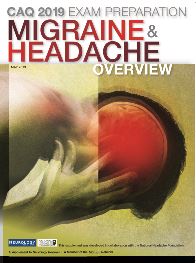
2019 CAQ Exam Preparation: Migraine & Headache Overview
The National Headache Foundation is offering a Certificate in Added Qualification (CAQ) exam in Headache Medicine from September 16 through October 1, 2019. In preparation for the CAQ, this supplement to Neurology Reviews walks readers through pertinent topics in migraine and headache that will be covered in the exam.

Benefits of completing the CAQ exam include:
- Validation of a level in expertise in headache medicine
- Possibility of more patient referrals
- Enhanced credibility and satisfaction of providing your patients with the best possible care
- Recognition of skills when dealing with managed care and government agencies
Click here to read the supplement and learn more about CAQ exam enrollment.
The National Headache Foundation is offering a Certificate in Added Qualification (CAQ) exam in Headache Medicine from September 16 through October 1, 2019. In preparation for the CAQ, this supplement to Neurology Reviews walks readers through pertinent topics in migraine and headache that will be covered in the exam.
Benefits of completing the CAQ exam include:
- Validation of a level in expertise in headache medicine
- Possibility of more patient referrals
- Enhanced credibility and satisfaction of providing your patients with the best possible care
- Recognition of skills when dealing with managed care and government agencies
Click here to read the supplement and learn more about CAQ exam enrollment.
The National Headache Foundation is offering a Certificate in Added Qualification (CAQ) exam in Headache Medicine from September 16 through October 1, 2019. In preparation for the CAQ, this supplement to Neurology Reviews walks readers through pertinent topics in migraine and headache that will be covered in the exam.
Benefits of completing the CAQ exam include:
- Validation of a level in expertise in headache medicine
- Possibility of more patient referrals
- Enhanced credibility and satisfaction of providing your patients with the best possible care
- Recognition of skills when dealing with managed care and government agencies
Click here to read the supplement and learn more about CAQ exam enrollment.
Plasma Metabolome Analysis in Migraine
In a large-scale plasma metabolome analysis, metabolic profiling of plasma yielded alterations in high-density lipoprotein (HDL) metabolism in patients with migraine and decreased omega-3 fatty acids only in male migraineurs, a new study found. Researchers sought to identify a plasma metabolomic biomarker signature for migraine. Plasma samples from 8 Dutch cohorts (n=10,153: 2800 migraine patients and 7353 controls) were profiled on a H-NMR-based metabolomics platform to quantify 146 individual metabolites and 79 metabolite ratios. Metabolite measures associated with migraine were obtained after single-metabolite logistic regression combined with random-effects meta-analysis performed in a nonstratified and sex-stratified manner. Among the findings:
- Decreases in the level of apolipoprotein A1 and free cholesterol total lipid ratio present in small HDL subspecies were associated with migraine status.
- A decreased level of omega-3 fatty acids was associated with migraine in male participants only.
- Global test analysis supported that HDL traits were associated with migraine status.
Onderwater GLJ, Ligthart L, Bot M, et al. Large-scale metabolome analysis reveals alterations in HDL metabolism in migraine. [Published online ahead of print April 3, 2019]. Neurology. doi:10.1212/WNL.0000000000007313.
In a large-scale plasma metabolome analysis, metabolic profiling of plasma yielded alterations in high-density lipoprotein (HDL) metabolism in patients with migraine and decreased omega-3 fatty acids only in male migraineurs, a new study found. Researchers sought to identify a plasma metabolomic biomarker signature for migraine. Plasma samples from 8 Dutch cohorts (n=10,153: 2800 migraine patients and 7353 controls) were profiled on a H-NMR-based metabolomics platform to quantify 146 individual metabolites and 79 metabolite ratios. Metabolite measures associated with migraine were obtained after single-metabolite logistic regression combined with random-effects meta-analysis performed in a nonstratified and sex-stratified manner. Among the findings:
- Decreases in the level of apolipoprotein A1 and free cholesterol total lipid ratio present in small HDL subspecies were associated with migraine status.
- A decreased level of omega-3 fatty acids was associated with migraine in male participants only.
- Global test analysis supported that HDL traits were associated with migraine status.
Onderwater GLJ, Ligthart L, Bot M, et al. Large-scale metabolome analysis reveals alterations in HDL metabolism in migraine. [Published online ahead of print April 3, 2019]. Neurology. doi:10.1212/WNL.0000000000007313.
In a large-scale plasma metabolome analysis, metabolic profiling of plasma yielded alterations in high-density lipoprotein (HDL) metabolism in patients with migraine and decreased omega-3 fatty acids only in male migraineurs, a new study found. Researchers sought to identify a plasma metabolomic biomarker signature for migraine. Plasma samples from 8 Dutch cohorts (n=10,153: 2800 migraine patients and 7353 controls) were profiled on a H-NMR-based metabolomics platform to quantify 146 individual metabolites and 79 metabolite ratios. Metabolite measures associated with migraine were obtained after single-metabolite logistic regression combined with random-effects meta-analysis performed in a nonstratified and sex-stratified manner. Among the findings:
- Decreases in the level of apolipoprotein A1 and free cholesterol total lipid ratio present in small HDL subspecies were associated with migraine status.
- A decreased level of omega-3 fatty acids was associated with migraine in male participants only.
- Global test analysis supported that HDL traits were associated with migraine status.
Onderwater GLJ, Ligthart L, Bot M, et al. Large-scale metabolome analysis reveals alterations in HDL metabolism in migraine. [Published online ahead of print April 3, 2019]. Neurology. doi:10.1212/WNL.0000000000007313.
Impact of Spinal Manipulation on Migraine Pain
A recent systematic review and meta-analysis found that spinal manipulation may be an effective therapeutic technique to reduce migraine days and pain intensity. Researchers identified 6 randomized clinical trials (pooled n=677; range of n=42-218) eligible for meta-analysis and evaluated spinal manipulation and migraine-related outcomes through 2017. They found:
- Intervention duration ranged from 2 to 6 months; outcomes included measures of migraine days (primary), migraine pain/intensity, and migraine disability.
- Methodological quality varied across the studies.
- Spinal manipulation reduced migraine days with an overall small effect size, as well as migraine pain/intensity.
Rist PM, Hernandez A, Bernstein C, et al. The impact of spinal manipulation on migraine pain and disability: A systematic review and meta-analysis. Headache. 2019;59(4):532-542. doi:10.1111/head.13501.
A recent systematic review and meta-analysis found that spinal manipulation may be an effective therapeutic technique to reduce migraine days and pain intensity. Researchers identified 6 randomized clinical trials (pooled n=677; range of n=42-218) eligible for meta-analysis and evaluated spinal manipulation and migraine-related outcomes through 2017. They found:
- Intervention duration ranged from 2 to 6 months; outcomes included measures of migraine days (primary), migraine pain/intensity, and migraine disability.
- Methodological quality varied across the studies.
- Spinal manipulation reduced migraine days with an overall small effect size, as well as migraine pain/intensity.
Rist PM, Hernandez A, Bernstein C, et al. The impact of spinal manipulation on migraine pain and disability: A systematic review and meta-analysis. Headache. 2019;59(4):532-542. doi:10.1111/head.13501.
A recent systematic review and meta-analysis found that spinal manipulation may be an effective therapeutic technique to reduce migraine days and pain intensity. Researchers identified 6 randomized clinical trials (pooled n=677; range of n=42-218) eligible for meta-analysis and evaluated spinal manipulation and migraine-related outcomes through 2017. They found:
- Intervention duration ranged from 2 to 6 months; outcomes included measures of migraine days (primary), migraine pain/intensity, and migraine disability.
- Methodological quality varied across the studies.
- Spinal manipulation reduced migraine days with an overall small effect size, as well as migraine pain/intensity.
Rist PM, Hernandez A, Bernstein C, et al. The impact of spinal manipulation on migraine pain and disability: A systematic review and meta-analysis. Headache. 2019;59(4):532-542. doi:10.1111/head.13501.
Familial Hemiplegic Migraines & Neuropsychological Testing
In individuals with familial hemiplegic migraines (FHM), baseline and serial neuropsychological testing may help identify the potential progression and course of cognitive impairment associated with this condition. This according to a single-case study involving a male aged 24 years who recently endured an atypical, prolonged FHM episode. Researchers found:
- The patient’s overall neuropsychological functioning was intact with low average semantic fluency and processing speed.
- The patient also exhibited mild indication of executive dysfunction.
Trahan EM, Mercado JM. Familial hemiplegic migraines and baseline neuropsychological testing: A case report. [Published online ahead of print March 14, 2019]. Headache. doi:10.1111/head.13505.
In individuals with familial hemiplegic migraines (FHM), baseline and serial neuropsychological testing may help identify the potential progression and course of cognitive impairment associated with this condition. This according to a single-case study involving a male aged 24 years who recently endured an atypical, prolonged FHM episode. Researchers found:
- The patient’s overall neuropsychological functioning was intact with low average semantic fluency and processing speed.
- The patient also exhibited mild indication of executive dysfunction.
Trahan EM, Mercado JM. Familial hemiplegic migraines and baseline neuropsychological testing: A case report. [Published online ahead of print March 14, 2019]. Headache. doi:10.1111/head.13505.
In individuals with familial hemiplegic migraines (FHM), baseline and serial neuropsychological testing may help identify the potential progression and course of cognitive impairment associated with this condition. This according to a single-case study involving a male aged 24 years who recently endured an atypical, prolonged FHM episode. Researchers found:
- The patient’s overall neuropsychological functioning was intact with low average semantic fluency and processing speed.
- The patient also exhibited mild indication of executive dysfunction.
Trahan EM, Mercado JM. Familial hemiplegic migraines and baseline neuropsychological testing: A case report. [Published online ahead of print March 14, 2019]. Headache. doi:10.1111/head.13505.
Twitter Activity and Impact at AHS Meetings
In a study that analyzed Twitter data from 5 American Headache Society (AHS) conferences held from 2014 to 2016 using their respective hashtags, AHS conference discussions featured a small group of accounts creating the bulk of the content, with individual medical professionals and host organizations generating the largest shares of tweets and mentions while host organizations and other individuals produced the most impressions. Researchers gathered data on numbers of tweets, impressions, participants, and mentions during a 10-day period surrounding each conference, as well as samples of Twitter accounts participating. They found:
- 19,936 tweets were generated across the 5 conferences.
- 58% of tweets were created by the top 10 participating accounts in each conference, which were primarily individual medical professionals and host organizations.
- 75% of impressions generated across the 5 conferences came from the top 10 participants in each.
- An average of 331 accounts participated in each conference.
- #migraine usage during conferences showed a significant increase from baseline in number of tweets.
Callister MN, Robbins MS, Callister NR, Vargas BB. Tweeting the headache meetings: Cross-sectional analysis of Twitter activity surrounding American Headache Society conferences. [Published online ahead of print March 20, 2019]. Headache. doi:10.1111/head.13500.
In a study that analyzed Twitter data from 5 American Headache Society (AHS) conferences held from 2014 to 2016 using their respective hashtags, AHS conference discussions featured a small group of accounts creating the bulk of the content, with individual medical professionals and host organizations generating the largest shares of tweets and mentions while host organizations and other individuals produced the most impressions. Researchers gathered data on numbers of tweets, impressions, participants, and mentions during a 10-day period surrounding each conference, as well as samples of Twitter accounts participating. They found:
- 19,936 tweets were generated across the 5 conferences.
- 58% of tweets were created by the top 10 participating accounts in each conference, which were primarily individual medical professionals and host organizations.
- 75% of impressions generated across the 5 conferences came from the top 10 participants in each.
- An average of 331 accounts participated in each conference.
- #migraine usage during conferences showed a significant increase from baseline in number of tweets.
Callister MN, Robbins MS, Callister NR, Vargas BB. Tweeting the headache meetings: Cross-sectional analysis of Twitter activity surrounding American Headache Society conferences. [Published online ahead of print March 20, 2019]. Headache. doi:10.1111/head.13500.
In a study that analyzed Twitter data from 5 American Headache Society (AHS) conferences held from 2014 to 2016 using their respective hashtags, AHS conference discussions featured a small group of accounts creating the bulk of the content, with individual medical professionals and host organizations generating the largest shares of tweets and mentions while host organizations and other individuals produced the most impressions. Researchers gathered data on numbers of tweets, impressions, participants, and mentions during a 10-day period surrounding each conference, as well as samples of Twitter accounts participating. They found:
- 19,936 tweets were generated across the 5 conferences.
- 58% of tweets were created by the top 10 participating accounts in each conference, which were primarily individual medical professionals and host organizations.
- 75% of impressions generated across the 5 conferences came from the top 10 participants in each.
- An average of 331 accounts participated in each conference.
- #migraine usage during conferences showed a significant increase from baseline in number of tweets.
Callister MN, Robbins MS, Callister NR, Vargas BB. Tweeting the headache meetings: Cross-sectional analysis of Twitter activity surrounding American Headache Society conferences. [Published online ahead of print March 20, 2019]. Headache. doi:10.1111/head.13500.
Evaluating the Functional Impact of Migraine
The Migraine Specific Quality-of-Life Questionnaire Version 2.1 (MSQv2.1) electronic patient-reported outcome (ePRO) Role Function-Restrictive (RFR) domain has sufficient reliability, validity, responsiveness, and appropriate interpretation standards for use in episodic migraine (EM) and chronic migraine (CM) clinical trials to assess the functional impact of migraine, a new study suggests. The 7-item MSQv2.1 ePRO RFR measures the functional impact of migraine on relationships with family and friends, leisure time, work or daily activities, productivity, concentration, tiredness, and energy. Measurement properties of the RFR were assessed using data from 2 EM (CGAG [n=851] and CGAH [n=909]) and 1 CM (CGAI [n=1090]) phase 3 clinical trial. Researchers found:
- Cronbach’s alpha values for internal consistency reliability were 0.93, 0.92, and 0.92 for CGAG, CGAH, and CGAI, respectively.
- Test-retest reliability intra-class correlation coefficients were 0.82 and 0.84 for CGAG and CGAH, and 0.85 for CGAI in stable patients.
- Convergent validity was supported by moderate to strong correlations between the RFR and both the Migraine Disability Assessment (MIDAS) and the Patient Global Impression of Severity (PGI-S).
Speck RM, Shalhoub H, Wyrwich KW, et al. Psychometric validation of the role function restrictive domain of the Migraine Specific Quality-of-Life Questionnaire Version 2.1 electronic patient-reported outcome in patients with episodic and chronic migraine. [Published online ahead of print March 12, 2019]. Headache. doi:10.1111/head.13497.
The Migraine Specific Quality-of-Life Questionnaire Version 2.1 (MSQv2.1) electronic patient-reported outcome (ePRO) Role Function-Restrictive (RFR) domain has sufficient reliability, validity, responsiveness, and appropriate interpretation standards for use in episodic migraine (EM) and chronic migraine (CM) clinical trials to assess the functional impact of migraine, a new study suggests. The 7-item MSQv2.1 ePRO RFR measures the functional impact of migraine on relationships with family and friends, leisure time, work or daily activities, productivity, concentration, tiredness, and energy. Measurement properties of the RFR were assessed using data from 2 EM (CGAG [n=851] and CGAH [n=909]) and 1 CM (CGAI [n=1090]) phase 3 clinical trial. Researchers found:
- Cronbach’s alpha values for internal consistency reliability were 0.93, 0.92, and 0.92 for CGAG, CGAH, and CGAI, respectively.
- Test-retest reliability intra-class correlation coefficients were 0.82 and 0.84 for CGAG and CGAH, and 0.85 for CGAI in stable patients.
- Convergent validity was supported by moderate to strong correlations between the RFR and both the Migraine Disability Assessment (MIDAS) and the Patient Global Impression of Severity (PGI-S).
Speck RM, Shalhoub H, Wyrwich KW, et al. Psychometric validation of the role function restrictive domain of the Migraine Specific Quality-of-Life Questionnaire Version 2.1 electronic patient-reported outcome in patients with episodic and chronic migraine. [Published online ahead of print March 12, 2019]. Headache. doi:10.1111/head.13497.
The Migraine Specific Quality-of-Life Questionnaire Version 2.1 (MSQv2.1) electronic patient-reported outcome (ePRO) Role Function-Restrictive (RFR) domain has sufficient reliability, validity, responsiveness, and appropriate interpretation standards for use in episodic migraine (EM) and chronic migraine (CM) clinical trials to assess the functional impact of migraine, a new study suggests. The 7-item MSQv2.1 ePRO RFR measures the functional impact of migraine on relationships with family and friends, leisure time, work or daily activities, productivity, concentration, tiredness, and energy. Measurement properties of the RFR were assessed using data from 2 EM (CGAG [n=851] and CGAH [n=909]) and 1 CM (CGAI [n=1090]) phase 3 clinical trial. Researchers found:
- Cronbach’s alpha values for internal consistency reliability were 0.93, 0.92, and 0.92 for CGAG, CGAH, and CGAI, respectively.
- Test-retest reliability intra-class correlation coefficients were 0.82 and 0.84 for CGAG and CGAH, and 0.85 for CGAI in stable patients.
- Convergent validity was supported by moderate to strong correlations between the RFR and both the Migraine Disability Assessment (MIDAS) and the Patient Global Impression of Severity (PGI-S).
Speck RM, Shalhoub H, Wyrwich KW, et al. Psychometric validation of the role function restrictive domain of the Migraine Specific Quality-of-Life Questionnaire Version 2.1 electronic patient-reported outcome in patients with episodic and chronic migraine. [Published online ahead of print March 12, 2019]. Headache. doi:10.1111/head.13497.
Visual Snow Syndrome in Migraine
In a recent observational study, the loss of habituation and lower threshold for occipital cortex excitability were demonstrated electrophysiologically in patients with visual snow syndrome (VS). While statistically significant loss of habituation was seen in both VS patients with or without migraine in the right eye, statistically significant loss of habituation in the left eye and decreased threshold of left occipital cortex excitability was seen in patients who had VS with migraine. Researchers investigated the role of neurophysiological assessments of the occipital cortex in VS patients with (VSm) or without migraine (VSwom) and in healthy control (HC). They found:
- Twenty-nine volunteers were recruited for the study; the VSm (n=10), the VSwom (n=7), and the HC group (n=12) did not differ demographically.
- Flickering and floaters were reported in all VS patients and flickering in the dark was the most distressing symptomology in both VS groups.
- Higher visual analogue scale (VAS) scores for palinopsia, photophobia, and concentration difficulty were more frequent in VSm patients.
- In the post hoc analysis, the VS patients did not differ according to the presence of migraine from right or left eye stimulations.
Yildiz FG, Turkyilmaz U, Unal-Cevik I. The clinical characteristics and neurophysiological assessments of the occipital cortex in visual snow syndrome with or without migraine. [Published online ahead of print March 8, 2019]. Headache. doi:10.1111/head.13494.
In a recent observational study, the loss of habituation and lower threshold for occipital cortex excitability were demonstrated electrophysiologically in patients with visual snow syndrome (VS). While statistically significant loss of habituation was seen in both VS patients with or without migraine in the right eye, statistically significant loss of habituation in the left eye and decreased threshold of left occipital cortex excitability was seen in patients who had VS with migraine. Researchers investigated the role of neurophysiological assessments of the occipital cortex in VS patients with (VSm) or without migraine (VSwom) and in healthy control (HC). They found:
- Twenty-nine volunteers were recruited for the study; the VSm (n=10), the VSwom (n=7), and the HC group (n=12) did not differ demographically.
- Flickering and floaters were reported in all VS patients and flickering in the dark was the most distressing symptomology in both VS groups.
- Higher visual analogue scale (VAS) scores for palinopsia, photophobia, and concentration difficulty were more frequent in VSm patients.
- In the post hoc analysis, the VS patients did not differ according to the presence of migraine from right or left eye stimulations.
Yildiz FG, Turkyilmaz U, Unal-Cevik I. The clinical characteristics and neurophysiological assessments of the occipital cortex in visual snow syndrome with or without migraine. [Published online ahead of print March 8, 2019]. Headache. doi:10.1111/head.13494.
In a recent observational study, the loss of habituation and lower threshold for occipital cortex excitability were demonstrated electrophysiologically in patients with visual snow syndrome (VS). While statistically significant loss of habituation was seen in both VS patients with or without migraine in the right eye, statistically significant loss of habituation in the left eye and decreased threshold of left occipital cortex excitability was seen in patients who had VS with migraine. Researchers investigated the role of neurophysiological assessments of the occipital cortex in VS patients with (VSm) or without migraine (VSwom) and in healthy control (HC). They found:
- Twenty-nine volunteers were recruited for the study; the VSm (n=10), the VSwom (n=7), and the HC group (n=12) did not differ demographically.
- Flickering and floaters were reported in all VS patients and flickering in the dark was the most distressing symptomology in both VS groups.
- Higher visual analogue scale (VAS) scores for palinopsia, photophobia, and concentration difficulty were more frequent in VSm patients.
- In the post hoc analysis, the VS patients did not differ according to the presence of migraine from right or left eye stimulations.
Yildiz FG, Turkyilmaz U, Unal-Cevik I. The clinical characteristics and neurophysiological assessments of the occipital cortex in visual snow syndrome with or without migraine. [Published online ahead of print March 8, 2019]. Headache. doi:10.1111/head.13494.