User login
Mechanical circulatory support in PCI needs clearer guidance
PHILADELPHIA – Use of the Impella ventricular-assist device in patients with cardiogenic shock having percutaneous coronary interventions (PCI) has increased rapidly since its approval in 2008, but two studies comparing it with intra-aortic balloon pumps in PCI patients have raised questions about the safety, effectiveness, and cost of the ventricular-assist device, according to results of two studies presented at the American Heart Association scientific sessions.
The results of an observational analysis of 48,306 patients and a national real-world study of 28,304 patients may not be telling the complete story of the utility of ventricular assist in patients requiring mechanical circulatory support (MCS), one interventional cardiologist said in an interview. “It’s concerning; it’s sobering,” said Ranya N. Sweis, MD, of Northwestern University, Chicago. However, the data didn’t parse out patients who would have been routed to palliative care and otherwise wouldn’t have been candidates for PCI without MCS.
“What I take from it is that we need to get more randomized data,” she said. “Who are the patients that were doing worse? Who are the patients who really needed the Impella support for the PCI after cardiogenic shock?”

In the observational study, Amit P. Amin, MD, of Washington University, St. Louis, said that the use of MCS devices increased steadily to 32% of all PCI patients receiving MCS from 2008 to 2016 while use of intra-aortic balloon pump (IABP) declined, but that Impella was less likely to be used in critically ill patients. The study analyzed patients in the Premier Healthcare Database who had PCI with MCS at 432 hospitals from 2004 to 2016.
Outcomes in what Dr. Amin called “the Impella era,” showed significantly higher risks for death, acute kidney injury, and stroke, with odds ratios of 1.17, 1.91 and 3.34, respectively (P less than .001 for all). In the patient-level comparison of Impella versus IABP, Impella had a 24% higher risk of death (P less than .0001), 10% for bleeding (P = .0445), 8% for acute kidney injury (P = .0521) and 34% for stroke (P less than .0001). The findings were published simultaneously with the presentation (Circulation. 2019 Nov 17. doi: 10.1161/CIRCULATIONAHA.119.044007)
“The total length of stay, as well as the ICU length of stay, were actually lower with Impella use, by approximately a half day to 1 day,” Dr. Amin said. “Despite that, the total costs were approximately $15,000.”
Yet, the study found wide variation in the use of Impella among hospitals, some doing no cases with the device and others all of them, Dr. Amin said. The risk analysis also found wide variations in outcomes across hospitals using Impella. “We saw a 2.5-fold variation in bleeding across hospitals and a 1.5-fold variation in acute kidney injury, stroke and death,” he noted. The study found less variation in hospital stays and total cost of Impella, “perhaps related to the uniformly high device acquisition costs.”
“These data underscore the need for defining the appropriate use of mechanical circulatory support in patients undergoing PCI,” Dr. Amin said.
Dr. Sweis wasn’t surprised by the cost findings. “New technology is going to cost more,” she said in an interview. “I’m actually surprised that the cost wasn’t more significantly different just knowing the cost of some of these devices.
Patients who require MCS represent a small portion of PCI cases: 2%, according to Dr. Sweis. “It’s not like all PCI has increased because of MCS, and there’s a potential improvement in the length of stay so there are going to be cost savings that way.”
The national real-world study that Sanket S. Dhruva, MD, MHS, of the University of California San Francisco, reported on focused on Impella and IABP in PCI patients with acute MI complicated by cardiogenic shock (CS). The study used outcomes of patients with AMI-CS who had PCI from October 2015 to December 2017 in the National Cardiovascular Data Registry’s CathPCI and Chest Pain–MI registries. An estimated 4%-12% of AMIs present with CS.
Most patients in the study population had medical therapy only, but this study focused on the 1,768 who had Impella only and the 8,471 who had IABP only. The rates of in-hospital death and bleeding were 34.1% 16% in the IABP group, and 45% and 31.3% in the Impella group, Dr. Dhruva said. In this study population, the rate of Impella use increased from 3.5% in 2015 to 8.7% by the end of 2017 (P less than .001).
Dr. Dhruva acknowledged a number of limitations to the study findings, including residual confounding. However, the “robust propensity match” of 95% of the Impella-only patients and the results were consistent across multiple sensitivity analyses. “There may have been questions about the clinical severity of AMI-CS patients in the NCDR Registry,” he said. “However, the registry definition is similar to that used in the trials.”
The trial also failed to distinguish between the different types of Impella devices, but the results mostly pertain to the Impella 2.5 and CP because the 5.0 device requires a surgical cutdown, and the study excluded patients who received multiple devices.
“Better evidence and guidance are needed regarding the optimal management of patients with AMI-CS as well as the role of mechanical circulatory support devices in general and Impella in particular,” he said, adding that Impella has been on the U.S. market since 2008, but with limited randomized clinical trial evidence in cardiogenic shock.
The study population of patient’s with CS is “only a piece of the puzzle,” Dr. Sweis said. “We know that there are sick hearts that aren’t in shock right now, but you’re going to do triple-vessel intervention and use atherectomy. Those patients would not do very well during the procedure itself and it may not even be offered to them if there weren’t support.”
Impella is not going away, Dr. Sweis said. “It provides an option that a patient wouldn’t otherwise have. This is really stressing to me that we need to get rid of that variability in the safety related to these devices.”
Dr. Amin disclosed financial relationships with Terumo and GE Healthcare. Dr. Dhruva had no financial relationships to disclose. The study was supported in part by a Center of Excellence in Regulatory Science and Innovation grant from the Food and Drug Administration and the American College of Cardiology’s National Cardiovascular Data Registry.
PHILADELPHIA – Use of the Impella ventricular-assist device in patients with cardiogenic shock having percutaneous coronary interventions (PCI) has increased rapidly since its approval in 2008, but two studies comparing it with intra-aortic balloon pumps in PCI patients have raised questions about the safety, effectiveness, and cost of the ventricular-assist device, according to results of two studies presented at the American Heart Association scientific sessions.
The results of an observational analysis of 48,306 patients and a national real-world study of 28,304 patients may not be telling the complete story of the utility of ventricular assist in patients requiring mechanical circulatory support (MCS), one interventional cardiologist said in an interview. “It’s concerning; it’s sobering,” said Ranya N. Sweis, MD, of Northwestern University, Chicago. However, the data didn’t parse out patients who would have been routed to palliative care and otherwise wouldn’t have been candidates for PCI without MCS.
“What I take from it is that we need to get more randomized data,” she said. “Who are the patients that were doing worse? Who are the patients who really needed the Impella support for the PCI after cardiogenic shock?”
In the observational study, Amit P. Amin, MD, of Washington University, St. Louis, said that the use of MCS devices increased steadily to 32% of all PCI patients receiving MCS from 2008 to 2016 while use of intra-aortic balloon pump (IABP) declined, but that Impella was less likely to be used in critically ill patients. The study analyzed patients in the Premier Healthcare Database who had PCI with MCS at 432 hospitals from 2004 to 2016.
Outcomes in what Dr. Amin called “the Impella era,” showed significantly higher risks for death, acute kidney injury, and stroke, with odds ratios of 1.17, 1.91 and 3.34, respectively (P less than .001 for all). In the patient-level comparison of Impella versus IABP, Impella had a 24% higher risk of death (P less than .0001), 10% for bleeding (P = .0445), 8% for acute kidney injury (P = .0521) and 34% for stroke (P less than .0001). The findings were published simultaneously with the presentation (Circulation. 2019 Nov 17. doi: 10.1161/CIRCULATIONAHA.119.044007)
“The total length of stay, as well as the ICU length of stay, were actually lower with Impella use, by approximately a half day to 1 day,” Dr. Amin said. “Despite that, the total costs were approximately $15,000.”
Yet, the study found wide variation in the use of Impella among hospitals, some doing no cases with the device and others all of them, Dr. Amin said. The risk analysis also found wide variations in outcomes across hospitals using Impella. “We saw a 2.5-fold variation in bleeding across hospitals and a 1.5-fold variation in acute kidney injury, stroke and death,” he noted. The study found less variation in hospital stays and total cost of Impella, “perhaps related to the uniformly high device acquisition costs.”
“These data underscore the need for defining the appropriate use of mechanical circulatory support in patients undergoing PCI,” Dr. Amin said.
Dr. Sweis wasn’t surprised by the cost findings. “New technology is going to cost more,” she said in an interview. “I’m actually surprised that the cost wasn’t more significantly different just knowing the cost of some of these devices.
Patients who require MCS represent a small portion of PCI cases: 2%, according to Dr. Sweis. “It’s not like all PCI has increased because of MCS, and there’s a potential improvement in the length of stay so there are going to be cost savings that way.”
The national real-world study that Sanket S. Dhruva, MD, MHS, of the University of California San Francisco, reported on focused on Impella and IABP in PCI patients with acute MI complicated by cardiogenic shock (CS). The study used outcomes of patients with AMI-CS who had PCI from October 2015 to December 2017 in the National Cardiovascular Data Registry’s CathPCI and Chest Pain–MI registries. An estimated 4%-12% of AMIs present with CS.
Most patients in the study population had medical therapy only, but this study focused on the 1,768 who had Impella only and the 8,471 who had IABP only. The rates of in-hospital death and bleeding were 34.1% 16% in the IABP group, and 45% and 31.3% in the Impella group, Dr. Dhruva said. In this study population, the rate of Impella use increased from 3.5% in 2015 to 8.7% by the end of 2017 (P less than .001).
Dr. Dhruva acknowledged a number of limitations to the study findings, including residual confounding. However, the “robust propensity match” of 95% of the Impella-only patients and the results were consistent across multiple sensitivity analyses. “There may have been questions about the clinical severity of AMI-CS patients in the NCDR Registry,” he said. “However, the registry definition is similar to that used in the trials.”
The trial also failed to distinguish between the different types of Impella devices, but the results mostly pertain to the Impella 2.5 and CP because the 5.0 device requires a surgical cutdown, and the study excluded patients who received multiple devices.
“Better evidence and guidance are needed regarding the optimal management of patients with AMI-CS as well as the role of mechanical circulatory support devices in general and Impella in particular,” he said, adding that Impella has been on the U.S. market since 2008, but with limited randomized clinical trial evidence in cardiogenic shock.
The study population of patient’s with CS is “only a piece of the puzzle,” Dr. Sweis said. “We know that there are sick hearts that aren’t in shock right now, but you’re going to do triple-vessel intervention and use atherectomy. Those patients would not do very well during the procedure itself and it may not even be offered to them if there weren’t support.”
Impella is not going away, Dr. Sweis said. “It provides an option that a patient wouldn’t otherwise have. This is really stressing to me that we need to get rid of that variability in the safety related to these devices.”
Dr. Amin disclosed financial relationships with Terumo and GE Healthcare. Dr. Dhruva had no financial relationships to disclose. The study was supported in part by a Center of Excellence in Regulatory Science and Innovation grant from the Food and Drug Administration and the American College of Cardiology’s National Cardiovascular Data Registry.
PHILADELPHIA – Use of the Impella ventricular-assist device in patients with cardiogenic shock having percutaneous coronary interventions (PCI) has increased rapidly since its approval in 2008, but two studies comparing it with intra-aortic balloon pumps in PCI patients have raised questions about the safety, effectiveness, and cost of the ventricular-assist device, according to results of two studies presented at the American Heart Association scientific sessions.
The results of an observational analysis of 48,306 patients and a national real-world study of 28,304 patients may not be telling the complete story of the utility of ventricular assist in patients requiring mechanical circulatory support (MCS), one interventional cardiologist said in an interview. “It’s concerning; it’s sobering,” said Ranya N. Sweis, MD, of Northwestern University, Chicago. However, the data didn’t parse out patients who would have been routed to palliative care and otherwise wouldn’t have been candidates for PCI without MCS.
“What I take from it is that we need to get more randomized data,” she said. “Who are the patients that were doing worse? Who are the patients who really needed the Impella support for the PCI after cardiogenic shock?”
In the observational study, Amit P. Amin, MD, of Washington University, St. Louis, said that the use of MCS devices increased steadily to 32% of all PCI patients receiving MCS from 2008 to 2016 while use of intra-aortic balloon pump (IABP) declined, but that Impella was less likely to be used in critically ill patients. The study analyzed patients in the Premier Healthcare Database who had PCI with MCS at 432 hospitals from 2004 to 2016.
Outcomes in what Dr. Amin called “the Impella era,” showed significantly higher risks for death, acute kidney injury, and stroke, with odds ratios of 1.17, 1.91 and 3.34, respectively (P less than .001 for all). In the patient-level comparison of Impella versus IABP, Impella had a 24% higher risk of death (P less than .0001), 10% for bleeding (P = .0445), 8% for acute kidney injury (P = .0521) and 34% for stroke (P less than .0001). The findings were published simultaneously with the presentation (Circulation. 2019 Nov 17. doi: 10.1161/CIRCULATIONAHA.119.044007)
“The total length of stay, as well as the ICU length of stay, were actually lower with Impella use, by approximately a half day to 1 day,” Dr. Amin said. “Despite that, the total costs were approximately $15,000.”
Yet, the study found wide variation in the use of Impella among hospitals, some doing no cases with the device and others all of them, Dr. Amin said. The risk analysis also found wide variations in outcomes across hospitals using Impella. “We saw a 2.5-fold variation in bleeding across hospitals and a 1.5-fold variation in acute kidney injury, stroke and death,” he noted. The study found less variation in hospital stays and total cost of Impella, “perhaps related to the uniformly high device acquisition costs.”
“These data underscore the need for defining the appropriate use of mechanical circulatory support in patients undergoing PCI,” Dr. Amin said.
Dr. Sweis wasn’t surprised by the cost findings. “New technology is going to cost more,” she said in an interview. “I’m actually surprised that the cost wasn’t more significantly different just knowing the cost of some of these devices.
Patients who require MCS represent a small portion of PCI cases: 2%, according to Dr. Sweis. “It’s not like all PCI has increased because of MCS, and there’s a potential improvement in the length of stay so there are going to be cost savings that way.”
The national real-world study that Sanket S. Dhruva, MD, MHS, of the University of California San Francisco, reported on focused on Impella and IABP in PCI patients with acute MI complicated by cardiogenic shock (CS). The study used outcomes of patients with AMI-CS who had PCI from October 2015 to December 2017 in the National Cardiovascular Data Registry’s CathPCI and Chest Pain–MI registries. An estimated 4%-12% of AMIs present with CS.
Most patients in the study population had medical therapy only, but this study focused on the 1,768 who had Impella only and the 8,471 who had IABP only. The rates of in-hospital death and bleeding were 34.1% 16% in the IABP group, and 45% and 31.3% in the Impella group, Dr. Dhruva said. In this study population, the rate of Impella use increased from 3.5% in 2015 to 8.7% by the end of 2017 (P less than .001).
Dr. Dhruva acknowledged a number of limitations to the study findings, including residual confounding. However, the “robust propensity match” of 95% of the Impella-only patients and the results were consistent across multiple sensitivity analyses. “There may have been questions about the clinical severity of AMI-CS patients in the NCDR Registry,” he said. “However, the registry definition is similar to that used in the trials.”
The trial also failed to distinguish between the different types of Impella devices, but the results mostly pertain to the Impella 2.5 and CP because the 5.0 device requires a surgical cutdown, and the study excluded patients who received multiple devices.
“Better evidence and guidance are needed regarding the optimal management of patients with AMI-CS as well as the role of mechanical circulatory support devices in general and Impella in particular,” he said, adding that Impella has been on the U.S. market since 2008, but with limited randomized clinical trial evidence in cardiogenic shock.
The study population of patient’s with CS is “only a piece of the puzzle,” Dr. Sweis said. “We know that there are sick hearts that aren’t in shock right now, but you’re going to do triple-vessel intervention and use atherectomy. Those patients would not do very well during the procedure itself and it may not even be offered to them if there weren’t support.”
Impella is not going away, Dr. Sweis said. “It provides an option that a patient wouldn’t otherwise have. This is really stressing to me that we need to get rid of that variability in the safety related to these devices.”
Dr. Amin disclosed financial relationships with Terumo and GE Healthcare. Dr. Dhruva had no financial relationships to disclose. The study was supported in part by a Center of Excellence in Regulatory Science and Innovation grant from the Food and Drug Administration and the American College of Cardiology’s National Cardiovascular Data Registry.
REPORTING FROM AHA 2019
End ‘therapeutic nihilism’ in care of older diabetic patients, says expert
LOS ANGELES – In the opinion of Richard Pratley, MD, it’s time for diabetes treatment guidelines to evolve in light of accumulating data from cardiovascular outcome trials in type 2 diabetes.

“They have evolved for the general patient population, and this should apply to older individuals as well,” Dr. Pratley said at the World Congress on Insulin Resistance, Diabetes & Cardiovascular Disease. “My fear is, there is therapeutic nihilism, the idea that by the time someone is 75 years old, the horse is out of the barn and you’re not going to be able to impact outcomes with directed therapy. I don’t think that’s true. Our current treatment guidelines for the treatment of diabetes in older individuals remain focused on glycemic control. It’s not hyperglycemia that’s killing people; it’s heart disease and renal disease.”
According to data from the United Nations, about 12% of the global population is older than 60. By 2050, that number is expected to reach 20%, which will continue to drive an epidemic of diabetes in the near future. Dr. Pratley, medical director of AdventHealth Diabetes Institute in Orlando, pointed out that diabetes in older individuals is not a homogeneous condition. “There are many people in my clinic who had type 1 diabetes diagnosed as kids, but I also have patients who have adult-onset type 1 diabetes,” he said. “We also have type 2 patients who can be diagnosed in their 20s, 30s, or 40s, and there are people who are diagnosed in their 70s and 80s. Now we are learning that there are different subtypes of diabetes; so even type 2 diabetes is not a homogeneous condition. There are people who are more insulin resistant or have more of an insulin secretory defect, and there’s a special type of older-onset type 2 diabetes. When you consider all this in talking about diabetes treatments, about 30% of patients in the United States are diagnosed [when they are] over the age of 60, so this is an ongoing issue.”
Older adults with diabetes may have longstanding diabetes with associated microvascular and macrovascular complications, he continued, or they may have newly diagnosed diabetes with evidence of end organ complications at the time of presentation. Or, they may have newly diagnosed diabetes without evidence of complications. “Does this matter? It does,” Dr. Pratley said. “The things we worry about with all patients with diabetes are the microvascular complications, but I would argue that the macrovascular complications, particularly diabetic nephropathy, are things we should have a laser focus on, because they have high morbidity and mortality, especially in older individuals.”
There are more than 28 cardiovascular outcomes trials in patients with type 2 diabetes ongoing or completed, and involving eight classes of medications, with more than 200,000 planned participants, Dr. Pratley said. Of those participants, 90,000 are older than 65 years, and 30,000 are older than 75 years. “This is great,” he said. “Not only do these cardiovascular outcome studies give us a lot of information about the safety and efficacy of these drugs in the general population, we can now dig in to this specific patient population.” For example, in cardiovascular outcomes trials with dipeptidyl peptidase–4 (DPP-4) inhibitors, the mean age of patients was 65. About half of the patients were older than 65, and 10%-14% were older than 75.
Investigators in the SAVOR-TIMI 53 trial examined age in one of their subgroup analyses (Diabetes Care. 2015;38:1145-53). In that study with saxagliptin, among people older than 65 who received the study drug, the hazard ratio for major adverse cardiac events (MACE) was 0.92, compared with 1.15 for those younger than 65 (P value for interaction = .058). “So older people did great [on this drug],” Dr. Pratley said. “In fact, they had a bit of a decreased risk.” A similar association was seen in adults aged 75 years and older (HR, 1.01 in those younger than 75 years, vs. 0.95 in those aged 75 years and older; P value for interaction = .673). “This is telling us that saxagliptin is safe in the older population.”
In the EXAMINE trial, in which patients with type 2 diabetes who had had a recent acute coronary syndrome received either alogliptin or placebo, researchers conducted an analysis of patients older and younger than 65 (N Engl J Med. 2013;369:1327-35). They observed no significant interactions on the primary composite cardiovascular outcome in those younger than 65 (HR, 0.91) and those aged 65 and older (HR, 0.98).
Dr. Pratley noted that in cardiovascular outcome trials with sodium-glucose transporter 2 (SGLT2) inhibitors, the mean age of patients was 64, and 48%-50% of them were older than 65. In the EMPA-REG OUTCOME trial of empagliflozin, the hazard ratio for the primary cardiovascular outcome was 1.04 in patients younger than 65 and 0.71 in those aged 65 and older (P = .01; N Engl J Med, 2015;373:2117-28). “That was a significant interaction,” he said. In addition, the hazard ratio for cardiovascular death was 0.72 in those younger than 65, and 0.54 in those aged 65 and older (P = .21). “There was not a significant interaction here, but clearly there was some trending in the older patient population,” Dr. Pratley said.
In the LEADER study of liraglutide in patients with diabetes, the hazard ratio for the primary composite cardiovascular outcome was 0.87 in the overall population, 0.78 in patients younger than 60, and 0.90 in those aged 60 and older (P = 0.27; N Engl J Med. 2016;375:311-22). In a post hoc analysis that stratified LEADER patients into younger than 75 and 75 and older, the researchers observed a 31% reduction in the 75 and older population, compared with a 10% reduction in the younger population (P for interaction = .09; Ann Intern Med. 2019;170[6]:423-6). “This was driven largely by a decrease in nonfatal [myocardial infarction],” said Dr. Pratley, who was one of the study investigators. “But in patients who were 75 years and older, there was a 30% reduction in all-cause mortality in those treated with liraglutide, compared with 12% in those younger than 75 (P for interaction = .22). That interaction is not significant, but the theme here is that older populations do quite well.”
Based on such evidence, he said, In particular, SGLT2 inhibitors and certain GLP-1 receptor agonists may be associated with an additional benefit in older individuals with cardiovascular disease, “perhaps because they’re the ones at highest risk,” Dr. Pratley said. “But we need further studies to better identify those older individuals who may be at highest risk of adverse cardiovascular complications from diabetes and who might benefit from targeted therapies.”
Many questions remain unanswered in efforts to provide optimal care to older adults with diabetes. “One of the problems is being inclusive in the older patient population,” Dr. Pratley said. “We tried to do a study of frail older individuals looking at different treatments and policies. It was difficult to recruit frail older individuals, even though they routinely are treated with the drugs we study in healthier populations. We need to know how to enroll patients, and which investigators are going to do these trials. Who is going to support these trials? Pharma? The NIH?”
Then there’s the question of what appropriate outcomes are in older individuals. “I think we can agree that hemoglobin A1c is a surrogate of microvascular complications,” he said. “Do we need to be looking at outcomes like MACE, hospitalization for heart failure, death, progression of [chronic kidney disease], and perhaps cognitive function, physical function, sarcopenia, and quality of life?”
Dr. Pratley called for the development of a personalized approach to diabetes management that takes into account heterogeneity in disease pathogenesis, comorbidities, and patient preference.
“We need to change the focus to patient-important outcomes: dying, heart attack, strokes, and avoid therapeutic nihilism, which is still pervasive among many practitioners,” he said. “We also need to partner with primary care, because they take care of the majority of older individuals, and they need to understand how we’re evolving the goals of therapy. We need to educate them about the new guidelines and try to get them on board with some of the latest data that will help improve outcomes in our patients. We also need to understand the cost of diabetes and the cost effectiveness of interventions.”
He also recommends the development of a comprehensive evidence base for the use of drugs in older individuals. “I suggest pooled analyses within clinical development programs,” he said. “That’s been done for most development programs, but the phase 3 studies tend to enroll younger, healthier individuals. It would be good to do a meta-analysis across CVOTs [cardiovascular outcome trials] within different classes of medications.”
Dr. Pratley disclosed that all honoraria and fees he receives are directed to AdventHealth. These include serving on the advisory board or as consultant to AstraZeneca, GlaxoSmithKline, Glytec, Janssen, Ligand, Lilly, Merck, Mundipharma, Novo Nordisk, and Sanofi. He also has served as a speaker for AstraZeneca and Novo Nordisk, and has received research support from Lexicon, Ligand, Lilly, Merck, Novo Nordisk, and Sanofi. He receives no direct or indirect compensation.
LOS ANGELES – In the opinion of Richard Pratley, MD, it’s time for diabetes treatment guidelines to evolve in light of accumulating data from cardiovascular outcome trials in type 2 diabetes.
“They have evolved for the general patient population, and this should apply to older individuals as well,” Dr. Pratley said at the World Congress on Insulin Resistance, Diabetes & Cardiovascular Disease. “My fear is, there is therapeutic nihilism, the idea that by the time someone is 75 years old, the horse is out of the barn and you’re not going to be able to impact outcomes with directed therapy. I don’t think that’s true. Our current treatment guidelines for the treatment of diabetes in older individuals remain focused on glycemic control. It’s not hyperglycemia that’s killing people; it’s heart disease and renal disease.”
According to data from the United Nations, about 12% of the global population is older than 60. By 2050, that number is expected to reach 20%, which will continue to drive an epidemic of diabetes in the near future. Dr. Pratley, medical director of AdventHealth Diabetes Institute in Orlando, pointed out that diabetes in older individuals is not a homogeneous condition. “There are many people in my clinic who had type 1 diabetes diagnosed as kids, but I also have patients who have adult-onset type 1 diabetes,” he said. “We also have type 2 patients who can be diagnosed in their 20s, 30s, or 40s, and there are people who are diagnosed in their 70s and 80s. Now we are learning that there are different subtypes of diabetes; so even type 2 diabetes is not a homogeneous condition. There are people who are more insulin resistant or have more of an insulin secretory defect, and there’s a special type of older-onset type 2 diabetes. When you consider all this in talking about diabetes treatments, about 30% of patients in the United States are diagnosed [when they are] over the age of 60, so this is an ongoing issue.”
Older adults with diabetes may have longstanding diabetes with associated microvascular and macrovascular complications, he continued, or they may have newly diagnosed diabetes with evidence of end organ complications at the time of presentation. Or, they may have newly diagnosed diabetes without evidence of complications. “Does this matter? It does,” Dr. Pratley said. “The things we worry about with all patients with diabetes are the microvascular complications, but I would argue that the macrovascular complications, particularly diabetic nephropathy, are things we should have a laser focus on, because they have high morbidity and mortality, especially in older individuals.”
There are more than 28 cardiovascular outcomes trials in patients with type 2 diabetes ongoing or completed, and involving eight classes of medications, with more than 200,000 planned participants, Dr. Pratley said. Of those participants, 90,000 are older than 65 years, and 30,000 are older than 75 years. “This is great,” he said. “Not only do these cardiovascular outcome studies give us a lot of information about the safety and efficacy of these drugs in the general population, we can now dig in to this specific patient population.” For example, in cardiovascular outcomes trials with dipeptidyl peptidase–4 (DPP-4) inhibitors, the mean age of patients was 65. About half of the patients were older than 65, and 10%-14% were older than 75.
Investigators in the SAVOR-TIMI 53 trial examined age in one of their subgroup analyses (Diabetes Care. 2015;38:1145-53). In that study with saxagliptin, among people older than 65 who received the study drug, the hazard ratio for major adverse cardiac events (MACE) was 0.92, compared with 1.15 for those younger than 65 (P value for interaction = .058). “So older people did great [on this drug],” Dr. Pratley said. “In fact, they had a bit of a decreased risk.” A similar association was seen in adults aged 75 years and older (HR, 1.01 in those younger than 75 years, vs. 0.95 in those aged 75 years and older; P value for interaction = .673). “This is telling us that saxagliptin is safe in the older population.”
In the EXAMINE trial, in which patients with type 2 diabetes who had had a recent acute coronary syndrome received either alogliptin or placebo, researchers conducted an analysis of patients older and younger than 65 (N Engl J Med. 2013;369:1327-35). They observed no significant interactions on the primary composite cardiovascular outcome in those younger than 65 (HR, 0.91) and those aged 65 and older (HR, 0.98).
Dr. Pratley noted that in cardiovascular outcome trials with sodium-glucose transporter 2 (SGLT2) inhibitors, the mean age of patients was 64, and 48%-50% of them were older than 65. In the EMPA-REG OUTCOME trial of empagliflozin, the hazard ratio for the primary cardiovascular outcome was 1.04 in patients younger than 65 and 0.71 in those aged 65 and older (P = .01; N Engl J Med, 2015;373:2117-28). “That was a significant interaction,” he said. In addition, the hazard ratio for cardiovascular death was 0.72 in those younger than 65, and 0.54 in those aged 65 and older (P = .21). “There was not a significant interaction here, but clearly there was some trending in the older patient population,” Dr. Pratley said.
In the LEADER study of liraglutide in patients with diabetes, the hazard ratio for the primary composite cardiovascular outcome was 0.87 in the overall population, 0.78 in patients younger than 60, and 0.90 in those aged 60 and older (P = 0.27; N Engl J Med. 2016;375:311-22). In a post hoc analysis that stratified LEADER patients into younger than 75 and 75 and older, the researchers observed a 31% reduction in the 75 and older population, compared with a 10% reduction in the younger population (P for interaction = .09; Ann Intern Med. 2019;170[6]:423-6). “This was driven largely by a decrease in nonfatal [myocardial infarction],” said Dr. Pratley, who was one of the study investigators. “But in patients who were 75 years and older, there was a 30% reduction in all-cause mortality in those treated with liraglutide, compared with 12% in those younger than 75 (P for interaction = .22). That interaction is not significant, but the theme here is that older populations do quite well.”
Based on such evidence, he said, In particular, SGLT2 inhibitors and certain GLP-1 receptor agonists may be associated with an additional benefit in older individuals with cardiovascular disease, “perhaps because they’re the ones at highest risk,” Dr. Pratley said. “But we need further studies to better identify those older individuals who may be at highest risk of adverse cardiovascular complications from diabetes and who might benefit from targeted therapies.”
Many questions remain unanswered in efforts to provide optimal care to older adults with diabetes. “One of the problems is being inclusive in the older patient population,” Dr. Pratley said. “We tried to do a study of frail older individuals looking at different treatments and policies. It was difficult to recruit frail older individuals, even though they routinely are treated with the drugs we study in healthier populations. We need to know how to enroll patients, and which investigators are going to do these trials. Who is going to support these trials? Pharma? The NIH?”
Then there’s the question of what appropriate outcomes are in older individuals. “I think we can agree that hemoglobin A1c is a surrogate of microvascular complications,” he said. “Do we need to be looking at outcomes like MACE, hospitalization for heart failure, death, progression of [chronic kidney disease], and perhaps cognitive function, physical function, sarcopenia, and quality of life?”
Dr. Pratley called for the development of a personalized approach to diabetes management that takes into account heterogeneity in disease pathogenesis, comorbidities, and patient preference.
“We need to change the focus to patient-important outcomes: dying, heart attack, strokes, and avoid therapeutic nihilism, which is still pervasive among many practitioners,” he said. “We also need to partner with primary care, because they take care of the majority of older individuals, and they need to understand how we’re evolving the goals of therapy. We need to educate them about the new guidelines and try to get them on board with some of the latest data that will help improve outcomes in our patients. We also need to understand the cost of diabetes and the cost effectiveness of interventions.”
He also recommends the development of a comprehensive evidence base for the use of drugs in older individuals. “I suggest pooled analyses within clinical development programs,” he said. “That’s been done for most development programs, but the phase 3 studies tend to enroll younger, healthier individuals. It would be good to do a meta-analysis across CVOTs [cardiovascular outcome trials] within different classes of medications.”
Dr. Pratley disclosed that all honoraria and fees he receives are directed to AdventHealth. These include serving on the advisory board or as consultant to AstraZeneca, GlaxoSmithKline, Glytec, Janssen, Ligand, Lilly, Merck, Mundipharma, Novo Nordisk, and Sanofi. He also has served as a speaker for AstraZeneca and Novo Nordisk, and has received research support from Lexicon, Ligand, Lilly, Merck, Novo Nordisk, and Sanofi. He receives no direct or indirect compensation.
LOS ANGELES – In the opinion of Richard Pratley, MD, it’s time for diabetes treatment guidelines to evolve in light of accumulating data from cardiovascular outcome trials in type 2 diabetes.
“They have evolved for the general patient population, and this should apply to older individuals as well,” Dr. Pratley said at the World Congress on Insulin Resistance, Diabetes & Cardiovascular Disease. “My fear is, there is therapeutic nihilism, the idea that by the time someone is 75 years old, the horse is out of the barn and you’re not going to be able to impact outcomes with directed therapy. I don’t think that’s true. Our current treatment guidelines for the treatment of diabetes in older individuals remain focused on glycemic control. It’s not hyperglycemia that’s killing people; it’s heart disease and renal disease.”
According to data from the United Nations, about 12% of the global population is older than 60. By 2050, that number is expected to reach 20%, which will continue to drive an epidemic of diabetes in the near future. Dr. Pratley, medical director of AdventHealth Diabetes Institute in Orlando, pointed out that diabetes in older individuals is not a homogeneous condition. “There are many people in my clinic who had type 1 diabetes diagnosed as kids, but I also have patients who have adult-onset type 1 diabetes,” he said. “We also have type 2 patients who can be diagnosed in their 20s, 30s, or 40s, and there are people who are diagnosed in their 70s and 80s. Now we are learning that there are different subtypes of diabetes; so even type 2 diabetes is not a homogeneous condition. There are people who are more insulin resistant or have more of an insulin secretory defect, and there’s a special type of older-onset type 2 diabetes. When you consider all this in talking about diabetes treatments, about 30% of patients in the United States are diagnosed [when they are] over the age of 60, so this is an ongoing issue.”
Older adults with diabetes may have longstanding diabetes with associated microvascular and macrovascular complications, he continued, or they may have newly diagnosed diabetes with evidence of end organ complications at the time of presentation. Or, they may have newly diagnosed diabetes without evidence of complications. “Does this matter? It does,” Dr. Pratley said. “The things we worry about with all patients with diabetes are the microvascular complications, but I would argue that the macrovascular complications, particularly diabetic nephropathy, are things we should have a laser focus on, because they have high morbidity and mortality, especially in older individuals.”
There are more than 28 cardiovascular outcomes trials in patients with type 2 diabetes ongoing or completed, and involving eight classes of medications, with more than 200,000 planned participants, Dr. Pratley said. Of those participants, 90,000 are older than 65 years, and 30,000 are older than 75 years. “This is great,” he said. “Not only do these cardiovascular outcome studies give us a lot of information about the safety and efficacy of these drugs in the general population, we can now dig in to this specific patient population.” For example, in cardiovascular outcomes trials with dipeptidyl peptidase–4 (DPP-4) inhibitors, the mean age of patients was 65. About half of the patients were older than 65, and 10%-14% were older than 75.
Investigators in the SAVOR-TIMI 53 trial examined age in one of their subgroup analyses (Diabetes Care. 2015;38:1145-53). In that study with saxagliptin, among people older than 65 who received the study drug, the hazard ratio for major adverse cardiac events (MACE) was 0.92, compared with 1.15 for those younger than 65 (P value for interaction = .058). “So older people did great [on this drug],” Dr. Pratley said. “In fact, they had a bit of a decreased risk.” A similar association was seen in adults aged 75 years and older (HR, 1.01 in those younger than 75 years, vs. 0.95 in those aged 75 years and older; P value for interaction = .673). “This is telling us that saxagliptin is safe in the older population.”
In the EXAMINE trial, in which patients with type 2 diabetes who had had a recent acute coronary syndrome received either alogliptin or placebo, researchers conducted an analysis of patients older and younger than 65 (N Engl J Med. 2013;369:1327-35). They observed no significant interactions on the primary composite cardiovascular outcome in those younger than 65 (HR, 0.91) and those aged 65 and older (HR, 0.98).
Dr. Pratley noted that in cardiovascular outcome trials with sodium-glucose transporter 2 (SGLT2) inhibitors, the mean age of patients was 64, and 48%-50% of them were older than 65. In the EMPA-REG OUTCOME trial of empagliflozin, the hazard ratio for the primary cardiovascular outcome was 1.04 in patients younger than 65 and 0.71 in those aged 65 and older (P = .01; N Engl J Med, 2015;373:2117-28). “That was a significant interaction,” he said. In addition, the hazard ratio for cardiovascular death was 0.72 in those younger than 65, and 0.54 in those aged 65 and older (P = .21). “There was not a significant interaction here, but clearly there was some trending in the older patient population,” Dr. Pratley said.
In the LEADER study of liraglutide in patients with diabetes, the hazard ratio for the primary composite cardiovascular outcome was 0.87 in the overall population, 0.78 in patients younger than 60, and 0.90 in those aged 60 and older (P = 0.27; N Engl J Med. 2016;375:311-22). In a post hoc analysis that stratified LEADER patients into younger than 75 and 75 and older, the researchers observed a 31% reduction in the 75 and older population, compared with a 10% reduction in the younger population (P for interaction = .09; Ann Intern Med. 2019;170[6]:423-6). “This was driven largely by a decrease in nonfatal [myocardial infarction],” said Dr. Pratley, who was one of the study investigators. “But in patients who were 75 years and older, there was a 30% reduction in all-cause mortality in those treated with liraglutide, compared with 12% in those younger than 75 (P for interaction = .22). That interaction is not significant, but the theme here is that older populations do quite well.”
Based on such evidence, he said, In particular, SGLT2 inhibitors and certain GLP-1 receptor agonists may be associated with an additional benefit in older individuals with cardiovascular disease, “perhaps because they’re the ones at highest risk,” Dr. Pratley said. “But we need further studies to better identify those older individuals who may be at highest risk of adverse cardiovascular complications from diabetes and who might benefit from targeted therapies.”
Many questions remain unanswered in efforts to provide optimal care to older adults with diabetes. “One of the problems is being inclusive in the older patient population,” Dr. Pratley said. “We tried to do a study of frail older individuals looking at different treatments and policies. It was difficult to recruit frail older individuals, even though they routinely are treated with the drugs we study in healthier populations. We need to know how to enroll patients, and which investigators are going to do these trials. Who is going to support these trials? Pharma? The NIH?”
Then there’s the question of what appropriate outcomes are in older individuals. “I think we can agree that hemoglobin A1c is a surrogate of microvascular complications,” he said. “Do we need to be looking at outcomes like MACE, hospitalization for heart failure, death, progression of [chronic kidney disease], and perhaps cognitive function, physical function, sarcopenia, and quality of life?”
Dr. Pratley called for the development of a personalized approach to diabetes management that takes into account heterogeneity in disease pathogenesis, comorbidities, and patient preference.
“We need to change the focus to patient-important outcomes: dying, heart attack, strokes, and avoid therapeutic nihilism, which is still pervasive among many practitioners,” he said. “We also need to partner with primary care, because they take care of the majority of older individuals, and they need to understand how we’re evolving the goals of therapy. We need to educate them about the new guidelines and try to get them on board with some of the latest data that will help improve outcomes in our patients. We also need to understand the cost of diabetes and the cost effectiveness of interventions.”
He also recommends the development of a comprehensive evidence base for the use of drugs in older individuals. “I suggest pooled analyses within clinical development programs,” he said. “That’s been done for most development programs, but the phase 3 studies tend to enroll younger, healthier individuals. It would be good to do a meta-analysis across CVOTs [cardiovascular outcome trials] within different classes of medications.”
Dr. Pratley disclosed that all honoraria and fees he receives are directed to AdventHealth. These include serving on the advisory board or as consultant to AstraZeneca, GlaxoSmithKline, Glytec, Janssen, Ligand, Lilly, Merck, Mundipharma, Novo Nordisk, and Sanofi. He also has served as a speaker for AstraZeneca and Novo Nordisk, and has received research support from Lexicon, Ligand, Lilly, Merck, Novo Nordisk, and Sanofi. He receives no direct or indirect compensation.
EXPERT ANALYSIS FROM WCIRDC 2019
ENGAGE AF-TIMI: Insulin linked to greater risk for stroke, CV death, bleeding
LOS ANGELES – Patients with diabetes had significantly higher adjusted risk of bleeding, cardiovascular-related death, and poorer net outcomes, particularly those treated with insulin, a subanalysis of the ENGAGE AF-TIMI 48 trial has shown.

In addition, the pharmacokinetic and pharmacodynamic profile of the study drug, edoxaban – a novel oral anticoagulant drug and a direct factor Xa inhibitor – was generally similar in patients with and without diabetes.
“We know that atrial fibrillation is associated with a fivefold increased risk of stroke,” Anna Plitt, MD, said at the World Congress on Insulin Resistance, Diabetes & Cardiovascular Disease. “Type 2 diabetes is associated with a twofold increased risk of stroke, and longer duration of diabetes is associated with even higher ischemic event rates. The coexistence of [atrial fibrillation] and type 2 diabetes further increases thromboembolic risk.”
Dr. Plitt, a cardiology fellow at Mount Sinai Hospital, New York, noted that, although type 2 diabetes is characterized by a prothrombotic and inflammatory state, the mechanism of action by which hyperglycemia and/or insulin resistance leads to the development of atrial fibrillation (AFib) remains unknown. “Given the complex clinical interactions between AFib and type 2 diabetes, care for these patients remains challenging,” she said. “Recommendations for anticoagulation managements vary based on the presence of additional risk factors and which guidelines are followed.”
In the ENGAGE AF-TIMI 48 trial, 21,105 patients with documented AFib within the previous 12 months were randomized to standard-care warfarin or high-dose edoxaban (60 mg daily) or low-dose edoxaban (30 mg daily). The edoxaban dose was reduced by 50% if creatinine clearance reached 30-50 mL/min, patient weight reached 60 kg or less, or there was concomitant use of a P-glycoprotein inhibitor (N Engl J Med. 2013;369:2093-104). The median follow-up was 2.8 years, and the primary efficacy endpoint was stroke or systemic embolic events (SEEs). The primary safety endpoint was major bleeding, as defined by the International Society on Thrombosis and Haemostasis criteria.
The findings showed that edoxaban was noninferior to warfarin in preventing stroke/SEEs. It also significantly reduced major bleeding, cardiovascular death, and net outcomes. “Therefore, the higher dose of edoxaban was approved globally for treating patients with AFib,” Dr. Plitt said. “The lower-dose regimen was not approved because there was less protection from ischemic stroke, compared with warfarin.”
For the current subanalysis, Dr. Plitt and colleagues set out to further evaluate outcomes of patients enrolled in the ENGAGE AF-TIMI 48 trial, excluding those who were in the low-dose edoxaban group. The presence or absence of diabetes was determined by the local investigator at randomization. The investigators further stratified patients into insulin-treated and non–insulin treated groups and used multivariate Cox regression models to adjust for baseline characteristics across the groups stratified by diabetes status. Next, they analyzed edoxaban concentration, anti–factor Xa activity, and international normalized ratio data and compared outcomes of high-dose edoxaban with those of warfarin.
The primary endpoint and the primary safety endpoint of interest were the same as in the main ENGAGE AF-TIMI 48 trial. Key secondary endpoints included in the subanalysis were cardiovascular death, stroke/SEE, major adverse cardiovascular events (MACE, a composite of myocardial infarction, stroke, SEE, or death because of cardiovascular cause or bleeding), and all-cause death.
In all, 7,624 of the 21,105 patients in the ENGAGE AF-TIMI 48 trial had diabetes, for a rate of 36%. Most of the patients with diabetes did not require insulin (30%), while 6% did. There were fewer female patients with diabetes than without (37% vs. 39%, respectively). Of note was that history of prior stroke/transient ischemic attack was higher in the no-diabetes group than in the diabetes group (33% vs. 21%), as was congestive heart failure (63% vs. 48%).
The mean CHA2DS2-VASc score for predicting thromboembolic risk (0, low risk; greater than 1, high risk) was 4.6 in the diabetes group and 4.2 in the no-diabetes group. When diabetes was not included in the score, the mean CHA2DS2-VASc score was 3.6 in the diabetes group. “Because the trial entry criteria required a minimum CHADS2 score of 2, patients without diabetes were enriched with stroke risk factors other than diabetes,” Dr. Plitt said.
Adjusted outcomes from the subanalysis showed that the risk of stroke/SEE was similar between patients with and without diabetes (hazard ratio, 1.08). However, patients with diabetes were at higher adjusted risk for cardiovascular death than patients without diabetes (HR, 1.29), MACE (HR, 1.28), major bleed (HR, 1.28), and the net outcome of stroke, SEE, major bleed, or all-cause death (HR, 1.25).
The researchers also analyzed the pharmacodynamic and pharmacokinetic data of high-dose edoxaban, stratified by diabetes status. They found that the parameters were generally similar between patients with and without diabetes, including trough concentrations of edoxaban (34.3 and 37.2 ng/mL, respectively; P = .04), trough exogenous anti–factor Xa activity (0.59 and 0.68 IU/mL; P = .11), and the percentage change from baseline in the peak endogenous anti–factor Xa activity (P = .66). The percentage changes from baseline of the trough endogenous anti–factor Xa activity was slightly lower in patients with diabetes, compared with patients without diabetes (P less than .001). “However, these modest differences between the two groups are of unclear clinical significance,” Dr. Plitt said.
Results from the main ENGAGE AF-TIMI 48 showed that the rates of stroke/SEE were reduced by 13% on high-dose edoxaban. However, the subanalysis found no significant effect modification in the reduction in stroke/SEE with edoxaban, compared with warfarin, when stratified by diabetes status (reductions of 16% vs. 7% in the no-diabetes and diabetes groups, respectively; P for interaction = .54). The researchers also observed similar reductions with edoxaban in the risks of secondary outcomes when patients were stratified by diabetes status.
In another finding, patients with diabetes who were treated with insulin were at a higher adjusted risk for all outcomes, compared with those with diabetes who were not treated with insulin. This included stroke/SEE (HR, 1.44), cardiovascular-related death (HR, 1.83), MACE (HR, 1.78), major bleed (HR, 1.31), and net outcome (HR, 1.57).
Next, the researchers compared the study endpoints of high-dose edoxaban and warfarin, with and without insulin. “None of the efficacy, safety, or net outcomes demonstrated evidence of treatment effect modification related to the use of insulin among [patients with diabetes],” she said.
Dr. Plitt disclosed having received honoraria for educational activities from Bristol-Myers Squibb.
LOS ANGELES – Patients with diabetes had significantly higher adjusted risk of bleeding, cardiovascular-related death, and poorer net outcomes, particularly those treated with insulin, a subanalysis of the ENGAGE AF-TIMI 48 trial has shown.
In addition, the pharmacokinetic and pharmacodynamic profile of the study drug, edoxaban – a novel oral anticoagulant drug and a direct factor Xa inhibitor – was generally similar in patients with and without diabetes.
“We know that atrial fibrillation is associated with a fivefold increased risk of stroke,” Anna Plitt, MD, said at the World Congress on Insulin Resistance, Diabetes & Cardiovascular Disease. “Type 2 diabetes is associated with a twofold increased risk of stroke, and longer duration of diabetes is associated with even higher ischemic event rates. The coexistence of [atrial fibrillation] and type 2 diabetes further increases thromboembolic risk.”
Dr. Plitt, a cardiology fellow at Mount Sinai Hospital, New York, noted that, although type 2 diabetes is characterized by a prothrombotic and inflammatory state, the mechanism of action by which hyperglycemia and/or insulin resistance leads to the development of atrial fibrillation (AFib) remains unknown. “Given the complex clinical interactions between AFib and type 2 diabetes, care for these patients remains challenging,” she said. “Recommendations for anticoagulation managements vary based on the presence of additional risk factors and which guidelines are followed.”
In the ENGAGE AF-TIMI 48 trial, 21,105 patients with documented AFib within the previous 12 months were randomized to standard-care warfarin or high-dose edoxaban (60 mg daily) or low-dose edoxaban (30 mg daily). The edoxaban dose was reduced by 50% if creatinine clearance reached 30-50 mL/min, patient weight reached 60 kg or less, or there was concomitant use of a P-glycoprotein inhibitor (N Engl J Med. 2013;369:2093-104). The median follow-up was 2.8 years, and the primary efficacy endpoint was stroke or systemic embolic events (SEEs). The primary safety endpoint was major bleeding, as defined by the International Society on Thrombosis and Haemostasis criteria.
The findings showed that edoxaban was noninferior to warfarin in preventing stroke/SEEs. It also significantly reduced major bleeding, cardiovascular death, and net outcomes. “Therefore, the higher dose of edoxaban was approved globally for treating patients with AFib,” Dr. Plitt said. “The lower-dose regimen was not approved because there was less protection from ischemic stroke, compared with warfarin.”
For the current subanalysis, Dr. Plitt and colleagues set out to further evaluate outcomes of patients enrolled in the ENGAGE AF-TIMI 48 trial, excluding those who were in the low-dose edoxaban group. The presence or absence of diabetes was determined by the local investigator at randomization. The investigators further stratified patients into insulin-treated and non–insulin treated groups and used multivariate Cox regression models to adjust for baseline characteristics across the groups stratified by diabetes status. Next, they analyzed edoxaban concentration, anti–factor Xa activity, and international normalized ratio data and compared outcomes of high-dose edoxaban with those of warfarin.
The primary endpoint and the primary safety endpoint of interest were the same as in the main ENGAGE AF-TIMI 48 trial. Key secondary endpoints included in the subanalysis were cardiovascular death, stroke/SEE, major adverse cardiovascular events (MACE, a composite of myocardial infarction, stroke, SEE, or death because of cardiovascular cause or bleeding), and all-cause death.
In all, 7,624 of the 21,105 patients in the ENGAGE AF-TIMI 48 trial had diabetes, for a rate of 36%. Most of the patients with diabetes did not require insulin (30%), while 6% did. There were fewer female patients with diabetes than without (37% vs. 39%, respectively). Of note was that history of prior stroke/transient ischemic attack was higher in the no-diabetes group than in the diabetes group (33% vs. 21%), as was congestive heart failure (63% vs. 48%).
The mean CHA2DS2-VASc score for predicting thromboembolic risk (0, low risk; greater than 1, high risk) was 4.6 in the diabetes group and 4.2 in the no-diabetes group. When diabetes was not included in the score, the mean CHA2DS2-VASc score was 3.6 in the diabetes group. “Because the trial entry criteria required a minimum CHADS2 score of 2, patients without diabetes were enriched with stroke risk factors other than diabetes,” Dr. Plitt said.
Adjusted outcomes from the subanalysis showed that the risk of stroke/SEE was similar between patients with and without diabetes (hazard ratio, 1.08). However, patients with diabetes were at higher adjusted risk for cardiovascular death than patients without diabetes (HR, 1.29), MACE (HR, 1.28), major bleed (HR, 1.28), and the net outcome of stroke, SEE, major bleed, or all-cause death (HR, 1.25).
The researchers also analyzed the pharmacodynamic and pharmacokinetic data of high-dose edoxaban, stratified by diabetes status. They found that the parameters were generally similar between patients with and without diabetes, including trough concentrations of edoxaban (34.3 and 37.2 ng/mL, respectively; P = .04), trough exogenous anti–factor Xa activity (0.59 and 0.68 IU/mL; P = .11), and the percentage change from baseline in the peak endogenous anti–factor Xa activity (P = .66). The percentage changes from baseline of the trough endogenous anti–factor Xa activity was slightly lower in patients with diabetes, compared with patients without diabetes (P less than .001). “However, these modest differences between the two groups are of unclear clinical significance,” Dr. Plitt said.
Results from the main ENGAGE AF-TIMI 48 showed that the rates of stroke/SEE were reduced by 13% on high-dose edoxaban. However, the subanalysis found no significant effect modification in the reduction in stroke/SEE with edoxaban, compared with warfarin, when stratified by diabetes status (reductions of 16% vs. 7% in the no-diabetes and diabetes groups, respectively; P for interaction = .54). The researchers also observed similar reductions with edoxaban in the risks of secondary outcomes when patients were stratified by diabetes status.
In another finding, patients with diabetes who were treated with insulin were at a higher adjusted risk for all outcomes, compared with those with diabetes who were not treated with insulin. This included stroke/SEE (HR, 1.44), cardiovascular-related death (HR, 1.83), MACE (HR, 1.78), major bleed (HR, 1.31), and net outcome (HR, 1.57).
Next, the researchers compared the study endpoints of high-dose edoxaban and warfarin, with and without insulin. “None of the efficacy, safety, or net outcomes demonstrated evidence of treatment effect modification related to the use of insulin among [patients with diabetes],” she said.
Dr. Plitt disclosed having received honoraria for educational activities from Bristol-Myers Squibb.
LOS ANGELES – Patients with diabetes had significantly higher adjusted risk of bleeding, cardiovascular-related death, and poorer net outcomes, particularly those treated with insulin, a subanalysis of the ENGAGE AF-TIMI 48 trial has shown.
In addition, the pharmacokinetic and pharmacodynamic profile of the study drug, edoxaban – a novel oral anticoagulant drug and a direct factor Xa inhibitor – was generally similar in patients with and without diabetes.
“We know that atrial fibrillation is associated with a fivefold increased risk of stroke,” Anna Plitt, MD, said at the World Congress on Insulin Resistance, Diabetes & Cardiovascular Disease. “Type 2 diabetes is associated with a twofold increased risk of stroke, and longer duration of diabetes is associated with even higher ischemic event rates. The coexistence of [atrial fibrillation] and type 2 diabetes further increases thromboembolic risk.”
Dr. Plitt, a cardiology fellow at Mount Sinai Hospital, New York, noted that, although type 2 diabetes is characterized by a prothrombotic and inflammatory state, the mechanism of action by which hyperglycemia and/or insulin resistance leads to the development of atrial fibrillation (AFib) remains unknown. “Given the complex clinical interactions between AFib and type 2 diabetes, care for these patients remains challenging,” she said. “Recommendations for anticoagulation managements vary based on the presence of additional risk factors and which guidelines are followed.”
In the ENGAGE AF-TIMI 48 trial, 21,105 patients with documented AFib within the previous 12 months were randomized to standard-care warfarin or high-dose edoxaban (60 mg daily) or low-dose edoxaban (30 mg daily). The edoxaban dose was reduced by 50% if creatinine clearance reached 30-50 mL/min, patient weight reached 60 kg or less, or there was concomitant use of a P-glycoprotein inhibitor (N Engl J Med. 2013;369:2093-104). The median follow-up was 2.8 years, and the primary efficacy endpoint was stroke or systemic embolic events (SEEs). The primary safety endpoint was major bleeding, as defined by the International Society on Thrombosis and Haemostasis criteria.
The findings showed that edoxaban was noninferior to warfarin in preventing stroke/SEEs. It also significantly reduced major bleeding, cardiovascular death, and net outcomes. “Therefore, the higher dose of edoxaban was approved globally for treating patients with AFib,” Dr. Plitt said. “The lower-dose regimen was not approved because there was less protection from ischemic stroke, compared with warfarin.”
For the current subanalysis, Dr. Plitt and colleagues set out to further evaluate outcomes of patients enrolled in the ENGAGE AF-TIMI 48 trial, excluding those who were in the low-dose edoxaban group. The presence or absence of diabetes was determined by the local investigator at randomization. The investigators further stratified patients into insulin-treated and non–insulin treated groups and used multivariate Cox regression models to adjust for baseline characteristics across the groups stratified by diabetes status. Next, they analyzed edoxaban concentration, anti–factor Xa activity, and international normalized ratio data and compared outcomes of high-dose edoxaban with those of warfarin.
The primary endpoint and the primary safety endpoint of interest were the same as in the main ENGAGE AF-TIMI 48 trial. Key secondary endpoints included in the subanalysis were cardiovascular death, stroke/SEE, major adverse cardiovascular events (MACE, a composite of myocardial infarction, stroke, SEE, or death because of cardiovascular cause or bleeding), and all-cause death.
In all, 7,624 of the 21,105 patients in the ENGAGE AF-TIMI 48 trial had diabetes, for a rate of 36%. Most of the patients with diabetes did not require insulin (30%), while 6% did. There were fewer female patients with diabetes than without (37% vs. 39%, respectively). Of note was that history of prior stroke/transient ischemic attack was higher in the no-diabetes group than in the diabetes group (33% vs. 21%), as was congestive heart failure (63% vs. 48%).
The mean CHA2DS2-VASc score for predicting thromboembolic risk (0, low risk; greater than 1, high risk) was 4.6 in the diabetes group and 4.2 in the no-diabetes group. When diabetes was not included in the score, the mean CHA2DS2-VASc score was 3.6 in the diabetes group. “Because the trial entry criteria required a minimum CHADS2 score of 2, patients without diabetes were enriched with stroke risk factors other than diabetes,” Dr. Plitt said.
Adjusted outcomes from the subanalysis showed that the risk of stroke/SEE was similar between patients with and without diabetes (hazard ratio, 1.08). However, patients with diabetes were at higher adjusted risk for cardiovascular death than patients without diabetes (HR, 1.29), MACE (HR, 1.28), major bleed (HR, 1.28), and the net outcome of stroke, SEE, major bleed, or all-cause death (HR, 1.25).
The researchers also analyzed the pharmacodynamic and pharmacokinetic data of high-dose edoxaban, stratified by diabetes status. They found that the parameters were generally similar between patients with and without diabetes, including trough concentrations of edoxaban (34.3 and 37.2 ng/mL, respectively; P = .04), trough exogenous anti–factor Xa activity (0.59 and 0.68 IU/mL; P = .11), and the percentage change from baseline in the peak endogenous anti–factor Xa activity (P = .66). The percentage changes from baseline of the trough endogenous anti–factor Xa activity was slightly lower in patients with diabetes, compared with patients without diabetes (P less than .001). “However, these modest differences between the two groups are of unclear clinical significance,” Dr. Plitt said.
Results from the main ENGAGE AF-TIMI 48 showed that the rates of stroke/SEE were reduced by 13% on high-dose edoxaban. However, the subanalysis found no significant effect modification in the reduction in stroke/SEE with edoxaban, compared with warfarin, when stratified by diabetes status (reductions of 16% vs. 7% in the no-diabetes and diabetes groups, respectively; P for interaction = .54). The researchers also observed similar reductions with edoxaban in the risks of secondary outcomes when patients were stratified by diabetes status.
In another finding, patients with diabetes who were treated with insulin were at a higher adjusted risk for all outcomes, compared with those with diabetes who were not treated with insulin. This included stroke/SEE (HR, 1.44), cardiovascular-related death (HR, 1.83), MACE (HR, 1.78), major bleed (HR, 1.31), and net outcome (HR, 1.57).
Next, the researchers compared the study endpoints of high-dose edoxaban and warfarin, with and without insulin. “None of the efficacy, safety, or net outcomes demonstrated evidence of treatment effect modification related to the use of insulin among [patients with diabetes],” she said.
Dr. Plitt disclosed having received honoraria for educational activities from Bristol-Myers Squibb.
REPORTING FROM THE WCIRDC 2019
CvLPRIT: Complete revascularization benefits persist long term
The greater reduction in major adverse cardiovascular events with complete revascularization for ST-segment elevation myocardial infarction, compared with target-lesion only, persists for many years after the procedure, a study has found.

In the Journal of the American College of Cardiology, researchers report the outcomes of long-term follow-up of 272 patients admitted with ST-segment elevation myocardial infarction, who were enrolled in CvLPRIT (Complete Versus Lesion-Only Primary PCI Trial).
The trial randomized patients to complete revascularization or infarct-related artery revascularization only, with a median follow-up of 5.6 years after randomization.
Anthony H. Gershlick, MD, from the University of Leicester (England) and NIHR Leicester Biomedical Research Centre, and coauthors highlighted conflicting evidence on the relative benefit of complete revascularization, compared with revascularization focused on the culprit artery only.
“The aim of this study was, for the first time, to determine if there is a sustained benefit in favor of multivessel percutaneous coronary intervention [PCI] in the longer term,” they wrote.
In the group of patients who underwent complete revascularization, the composite major adverse cardiovascular event rate at 5.6 years was 43% lower than in the infarct-related artery revascularization group (24.0 vs. 37.7%; P = .0079), according to the intention-to-treat analysis.
The complete revascularization group also showed a significantly lower rate of the secondary composite endpoint of death or MI, which was 10% in the complete revascularization group and 18.5% in the target lesion group (hazard ratio, 0.47; P = .0175).
“Our data suggest that total revascularization, known to have benefits in various cohorts with coronary artery disease, should now probably be considered the standard of care in suitable patients with STEMI with multivessel disease,” they wrote.
However they did find that the rates of ischemia-driven revascularization were not significantly different between the two groups at the long-term follow-up.
The authors also did an analysis of outcomes from the end of the original 12-month study to the final follow-up point. This showed a nonsignificant trend toward a lower rate of major adverse cardiovascular events in the group who underwent complete revascularization; 17.1%, compared with 23.3% in the infarct-related artery revascularization group. The rates of the individual components of that primary endpoint also trended toward lower rates in individuals with complete revascularization.
Similarly, the rates of ischemia-driven revascularization were similar in both groups when analyzed after the 12-month mark, and the authors noted that the need for ischemia-driven revascularization was equally spread between infarct-related arteries and non–infarct-related arteries.
The authors commented that the event rate curves for the two groups remained separated even to the median follow-up point of 5.6 years, showing that the highly significant difference in major adverse cardiovascular event rates between the two groups persists.
“All of these data suggest that lower rates of events seen within 12 months do translate into longer-term benefit, predominantly through nonattenuation of benefit,” they wrote.
They speculated that the longer-term benefit of early complete revascularization could be the result of improvement in blood flow to areas around the original site of ischemia, and because it managed lesions in nontarget vessels in patients with disease in multiple arteries.
“Certainly, given that both the MRI and nuclear medicine substudies of CvLPRIT showed no difference between the groups in infarct size (at 1 week) and no difference in ischemic burden at 6 weeks, the benefit we have demonstrated does not appear to be explained simply in terms of ischemic burden being dealt with prophylactically in the complete group,” they wrote.
Commenting on the study’s limitations, the authors noted that the overall numbers of patients were small, and that the use of all-cause mortality rather than cardiovascular mortality may affect the interpretation of results.
The CvLPRIT study was funded by the British Heart Foundation, with support from the National Institute for Health Research Comprehensive Local Research Networks. No conflicts of interest were declared.
SOURCE: Gershlick A et al. J Am Coll Cardiol. 2019 Dec 16;74:3083-9.
Multivessel coronary artery disease is present in around half of all patients presenting with STEMI and is associated with worse outcomes. However the decision about whether to revascularize beyond the culprit lesions – including lesions that may be asymptomatic and cause no ischemia – has been a matter of debate.
This longer-term follow-up from the CvLPRIT trial, along with evidence from other studies, has confirmed that complete revascularization should be considered in STEMI patients with multivessel disease. However, we suggest an individualized approach, rather than one-size-fits-all. This should also take into account factors such as the patient’s age and comorbidities, to avoid futile complex procedures in very old or frail patients. It is also important not to underestimate the importance of revascularization of the target lesion only.
There also remain questions about the best timing for complete revascularization and how to select the nonculprit lesions for revascularization.
Guillaume Cayla, MD, and Benoit Lattuca, MD, are from the Service de cardiologie, CHU de Nimes, ACTION Study Group at the Université de Montpellier, Nimes, France. These comments are adapted from an accompanying editorial (J Am Coll Cardiol. 2019; 74:3095-8. doi. org/10.1016/j.jacc.2019.10.037). Both authors declared research grants and lecture or consultancy fees from the pharmaceutical sector.
Multivessel coronary artery disease is present in around half of all patients presenting with STEMI and is associated with worse outcomes. However the decision about whether to revascularize beyond the culprit lesions – including lesions that may be asymptomatic and cause no ischemia – has been a matter of debate.
This longer-term follow-up from the CvLPRIT trial, along with evidence from other studies, has confirmed that complete revascularization should be considered in STEMI patients with multivessel disease. However, we suggest an individualized approach, rather than one-size-fits-all. This should also take into account factors such as the patient’s age and comorbidities, to avoid futile complex procedures in very old or frail patients. It is also important not to underestimate the importance of revascularization of the target lesion only.
There also remain questions about the best timing for complete revascularization and how to select the nonculprit lesions for revascularization.
Guillaume Cayla, MD, and Benoit Lattuca, MD, are from the Service de cardiologie, CHU de Nimes, ACTION Study Group at the Université de Montpellier, Nimes, France. These comments are adapted from an accompanying editorial (J Am Coll Cardiol. 2019; 74:3095-8. doi. org/10.1016/j.jacc.2019.10.037). Both authors declared research grants and lecture or consultancy fees from the pharmaceutical sector.
Multivessel coronary artery disease is present in around half of all patients presenting with STEMI and is associated with worse outcomes. However the decision about whether to revascularize beyond the culprit lesions – including lesions that may be asymptomatic and cause no ischemia – has been a matter of debate.
This longer-term follow-up from the CvLPRIT trial, along with evidence from other studies, has confirmed that complete revascularization should be considered in STEMI patients with multivessel disease. However, we suggest an individualized approach, rather than one-size-fits-all. This should also take into account factors such as the patient’s age and comorbidities, to avoid futile complex procedures in very old or frail patients. It is also important not to underestimate the importance of revascularization of the target lesion only.
There also remain questions about the best timing for complete revascularization and how to select the nonculprit lesions for revascularization.
Guillaume Cayla, MD, and Benoit Lattuca, MD, are from the Service de cardiologie, CHU de Nimes, ACTION Study Group at the Université de Montpellier, Nimes, France. These comments are adapted from an accompanying editorial (J Am Coll Cardiol. 2019; 74:3095-8. doi. org/10.1016/j.jacc.2019.10.037). Both authors declared research grants and lecture or consultancy fees from the pharmaceutical sector.
The greater reduction in major adverse cardiovascular events with complete revascularization for ST-segment elevation myocardial infarction, compared with target-lesion only, persists for many years after the procedure, a study has found.
In the Journal of the American College of Cardiology, researchers report the outcomes of long-term follow-up of 272 patients admitted with ST-segment elevation myocardial infarction, who were enrolled in CvLPRIT (Complete Versus Lesion-Only Primary PCI Trial).
The trial randomized patients to complete revascularization or infarct-related artery revascularization only, with a median follow-up of 5.6 years after randomization.
Anthony H. Gershlick, MD, from the University of Leicester (England) and NIHR Leicester Biomedical Research Centre, and coauthors highlighted conflicting evidence on the relative benefit of complete revascularization, compared with revascularization focused on the culprit artery only.
“The aim of this study was, for the first time, to determine if there is a sustained benefit in favor of multivessel percutaneous coronary intervention [PCI] in the longer term,” they wrote.
In the group of patients who underwent complete revascularization, the composite major adverse cardiovascular event rate at 5.6 years was 43% lower than in the infarct-related artery revascularization group (24.0 vs. 37.7%; P = .0079), according to the intention-to-treat analysis.
The complete revascularization group also showed a significantly lower rate of the secondary composite endpoint of death or MI, which was 10% in the complete revascularization group and 18.5% in the target lesion group (hazard ratio, 0.47; P = .0175).
“Our data suggest that total revascularization, known to have benefits in various cohorts with coronary artery disease, should now probably be considered the standard of care in suitable patients with STEMI with multivessel disease,” they wrote.
However they did find that the rates of ischemia-driven revascularization were not significantly different between the two groups at the long-term follow-up.
The authors also did an analysis of outcomes from the end of the original 12-month study to the final follow-up point. This showed a nonsignificant trend toward a lower rate of major adverse cardiovascular events in the group who underwent complete revascularization; 17.1%, compared with 23.3% in the infarct-related artery revascularization group. The rates of the individual components of that primary endpoint also trended toward lower rates in individuals with complete revascularization.
Similarly, the rates of ischemia-driven revascularization were similar in both groups when analyzed after the 12-month mark, and the authors noted that the need for ischemia-driven revascularization was equally spread between infarct-related arteries and non–infarct-related arteries.
The authors commented that the event rate curves for the two groups remained separated even to the median follow-up point of 5.6 years, showing that the highly significant difference in major adverse cardiovascular event rates between the two groups persists.
“All of these data suggest that lower rates of events seen within 12 months do translate into longer-term benefit, predominantly through nonattenuation of benefit,” they wrote.
They speculated that the longer-term benefit of early complete revascularization could be the result of improvement in blood flow to areas around the original site of ischemia, and because it managed lesions in nontarget vessels in patients with disease in multiple arteries.
“Certainly, given that both the MRI and nuclear medicine substudies of CvLPRIT showed no difference between the groups in infarct size (at 1 week) and no difference in ischemic burden at 6 weeks, the benefit we have demonstrated does not appear to be explained simply in terms of ischemic burden being dealt with prophylactically in the complete group,” they wrote.
Commenting on the study’s limitations, the authors noted that the overall numbers of patients were small, and that the use of all-cause mortality rather than cardiovascular mortality may affect the interpretation of results.
The CvLPRIT study was funded by the British Heart Foundation, with support from the National Institute for Health Research Comprehensive Local Research Networks. No conflicts of interest were declared.
SOURCE: Gershlick A et al. J Am Coll Cardiol. 2019 Dec 16;74:3083-9.
The greater reduction in major adverse cardiovascular events with complete revascularization for ST-segment elevation myocardial infarction, compared with target-lesion only, persists for many years after the procedure, a study has found.
In the Journal of the American College of Cardiology, researchers report the outcomes of long-term follow-up of 272 patients admitted with ST-segment elevation myocardial infarction, who were enrolled in CvLPRIT (Complete Versus Lesion-Only Primary PCI Trial).
The trial randomized patients to complete revascularization or infarct-related artery revascularization only, with a median follow-up of 5.6 years after randomization.
Anthony H. Gershlick, MD, from the University of Leicester (England) and NIHR Leicester Biomedical Research Centre, and coauthors highlighted conflicting evidence on the relative benefit of complete revascularization, compared with revascularization focused on the culprit artery only.
“The aim of this study was, for the first time, to determine if there is a sustained benefit in favor of multivessel percutaneous coronary intervention [PCI] in the longer term,” they wrote.
In the group of patients who underwent complete revascularization, the composite major adverse cardiovascular event rate at 5.6 years was 43% lower than in the infarct-related artery revascularization group (24.0 vs. 37.7%; P = .0079), according to the intention-to-treat analysis.
The complete revascularization group also showed a significantly lower rate of the secondary composite endpoint of death or MI, which was 10% in the complete revascularization group and 18.5% in the target lesion group (hazard ratio, 0.47; P = .0175).
“Our data suggest that total revascularization, known to have benefits in various cohorts with coronary artery disease, should now probably be considered the standard of care in suitable patients with STEMI with multivessel disease,” they wrote.
However they did find that the rates of ischemia-driven revascularization were not significantly different between the two groups at the long-term follow-up.
The authors also did an analysis of outcomes from the end of the original 12-month study to the final follow-up point. This showed a nonsignificant trend toward a lower rate of major adverse cardiovascular events in the group who underwent complete revascularization; 17.1%, compared with 23.3% in the infarct-related artery revascularization group. The rates of the individual components of that primary endpoint also trended toward lower rates in individuals with complete revascularization.
Similarly, the rates of ischemia-driven revascularization were similar in both groups when analyzed after the 12-month mark, and the authors noted that the need for ischemia-driven revascularization was equally spread between infarct-related arteries and non–infarct-related arteries.
The authors commented that the event rate curves for the two groups remained separated even to the median follow-up point of 5.6 years, showing that the highly significant difference in major adverse cardiovascular event rates between the two groups persists.
“All of these data suggest that lower rates of events seen within 12 months do translate into longer-term benefit, predominantly through nonattenuation of benefit,” they wrote.
They speculated that the longer-term benefit of early complete revascularization could be the result of improvement in blood flow to areas around the original site of ischemia, and because it managed lesions in nontarget vessels in patients with disease in multiple arteries.
“Certainly, given that both the MRI and nuclear medicine substudies of CvLPRIT showed no difference between the groups in infarct size (at 1 week) and no difference in ischemic burden at 6 weeks, the benefit we have demonstrated does not appear to be explained simply in terms of ischemic burden being dealt with prophylactically in the complete group,” they wrote.
Commenting on the study’s limitations, the authors noted that the overall numbers of patients were small, and that the use of all-cause mortality rather than cardiovascular mortality may affect the interpretation of results.
The CvLPRIT study was funded by the British Heart Foundation, with support from the National Institute for Health Research Comprehensive Local Research Networks. No conflicts of interest were declared.
SOURCE: Gershlick A et al. J Am Coll Cardiol. 2019 Dec 16;74:3083-9.
FROM THE JOURNAL OF THE AMERICAN COLLEGE OF CARDIOLOGY
Minimum transcatheter mitral valve intervention case load recommended
U.S. sites that perform transcatheter mitral valve interventions should treat a minimum of 20 such patients each year or at least 40 every 2 years, according to revised recommendations and requirements released on Dec. 16, 2019, by several U.S. cardiology and cardiac surgery societies.

The revised recommendations also for the first time address patient selection for using transcatheter mitral valve (MV) intervention in patients with mitral regurgitation (MR) secondary to heart failure and a left ventricular ejection fraction of 21%-49%, a patient target for transcatheter interventions approved by the Food and Drug Administration in March 2019. The FDA first approved the same transcatheter MV intervention system (MitraClip) in 2013 for patients with primary MR caused by an abnormality of the MV and a prohibitive risk for surgical MV repair or replacement, and the same societies had previously issued their recommendations based on that approval (J Am Coll Cardiol. 2014 Oct; 64[14]:1515-26).
The need for updated recommendations on the delivery of transcatheter MV interventions including the personnel and facilities required for a valid U.S. program was driven by “new transcatheter technology, new trial results, and the new FDA-approved indication” of secondary MR. “We did the update for patients with secondary MR,” said Robert O. Bonow, MD, professor of medicine at Northwestern University, Chicago, and chair of the committee that wrote the revised recommendations.
“Primary and secondary MR are like two different diseases. Primary MR is a disease of the MV leaflets. Secondary MR is a disease of heart failure, left ventricular dysfunction, and left ventricular enlargement.” That makes secondary MR an indication with a potentially huge upside, given how many patients have heart failure today, plus projections for steadily increasing numbers of patients as the geriatric population grows.
“Heart failure is a huge issue, and the numbers are growing, which is why we felt it was important to say which heart failure patients should be candidates. We did not endorse this for all patients, although MR is very common in heart failure,” with estimated prevalence rates as high as two-thirds of all heart failure patients, Dr. Bonow said.
The new recommendations spell out an approach to patient selection that aims to apply transcatheter MV intervention to patients who match those enrolled in the COAPT (Cardiovascular Outcomes Assessment of the MitraClip Percutaneous Therapy for Heart Failure Patients With Functional Mitral Regurgitation) trial, which randomized 614 patients with MR secondary to heart failure and found for that MV intervention cut the rate of heart failure hospitalization by about half during 2 years of follow-up, a statistically significant effect for the study’s primary endpoint (N Engl J Med. 2018 Dec 13;379[24]:2307-18). The new recommendations provide “a way to replicate the COAPT trial” in routine practice, Dr. Bonow said in an interview.”We thought it was important to try to replicate the COAPT results,” and a key step toward trying to accomplish that is to apply the multidisciplinary team concept to evaluating patients and determining their management strategy. Dr. Bonow coauthored a commentary that discussed how the COAPT results should influence routine practice (N Engl J Med. 2018 Dec 13;379[24]:2374-6).
“In this case, perhaps the most important member of the multidisciplinary team is the heart failure specialist, because secondary MR is a disease of heart failure and it’s important to also optimize medical therapy to reduce MR and prolong life,” he said. Treatment optimization before undertaking a transcatheter MV intervention involves not only drug treatment but also treatment with indicated devices, such as biventricular pacing, to optimize left ventricular size and function. The 2019 FDA approval of the transcatheter approach for treating MV disease specified that eligible patients had to continue to have significant MR despite receiving optimal drug and device treatment.
Treatment decisions for patients with MR must be highly individualized, and unlike transcatheter aortic valve replacement (TAVR), which occurs against a background of “really good results” for surgical aortic valve replacement, surgical treatment of MR “has never been shown to prolong life, although it can improve function,” Dr. Bonow said. In addition, open surgical repair or replacement of a faulty MV “is much better than the MitraClip for elimination a MV leak; usually with transcatheter intervention there is some residual leak. And other etiologies of MR, such as atrial fibrillation causing atrial enlargement and dilatation of the mitral annulus, generally have much better results with surgery than with a transcatheter intervention. For both primary and secondary MR, deciding when to use surgery and when to do a transcatheter intervention is very individualized,” concluded Dr. Bonow, and a fact that distinguishes transcatheter MV interventions from TAVR, which has been shown to have efficacy that’s comparable with surgical aortic valve replacement. The MitraClip system is currently the only device with U.S. marketing approval for transcatheter MV intervention, although other devices are in development.
Case volume requirements
The designation of a minimum transcatheter MV intervention case load of 20 procedures a year or 40 every 2 years reflected a “consensus among interventional cardiologists and cardiac surgeons of what the experience had to be for MV repair,” Dr. Bonow said. This number contrasts with a minimum case volume of 50 procedures/year or 100 every 2 years to maintain a TAVR program proposed in 2018 by a similar expert panel organized by U.S. cardiology and cardiac surgery societies (J Am Coll of Cardiol. 2019 Jan;73[3]:340-74). The new MV recommendations “follow a similar template [as the TAVR recommendations], but the numbers are what we thought would be best for optimal transcatheter MV expertise. MV interventions will likely increase, and we felt it would be best to define the transcatheter operators and are the right patients; the volume is unclear. There are a lot of heart failure patients, but we know from COAPT that not everyone is a candidate. The existing MV device does not fit all settings. We thought the numbers we selected were most appropriate, at least when we are starting.”
Dr. Bonow and coauthors who wrote the new recommendations will rely on payers, particularly the Centers for Medicare & Medicaid Services, to adopt the societal recommendations as part of their criteria for reimbursement and thereby give them teeth. In June 2019, CMS announced its Medicare coverage determination for TAVR, which included procedure minimums of 20 per year or 40 over 2 years for TAVR programs, a number that fell substantially below the 50 per year or 100 over 2 years that had been proposed by the societies. “We hope CMS will use our MV recommendations as a starting point,” but the final CMS coverage decision for transcatheter MV intervention could again differ from what the societies proposed, Dr. Bonow acknowledged.
In addition to strongly promoting a multidisciplinary team approach (and spelling out the members of the team) and shared decision making involvement of the patient with the team, the new recommendations also endorse participation of MV intervention programs in the Transcatheter Valve Therapy U.S. patient registry that’s maintained by two of the societies that helped organize the writing committee. The recommendations discuss the need to collect 30-day (and longer) outcomes data from transcatheter MV intervention programs through the registry as is now done for TAVR programs (N Engl J Med. 2019 Jun 27;380[26]:2541-50). Dr. Bonow declined to predict when 30-day outcomes data may start appearing for programs performing transcatheter MV interventions.
Dr. Bonow had no disclosures. The COAPT study was funded by Abbott, the company that markets the MitrClip clip delivery system.
SOURCE: Bonow RO et al. J Am Coll Cardiol. 2019 Dec 16. doi: 10.1016/j.jacc.2019.12.002.
U.S. sites that perform transcatheter mitral valve interventions should treat a minimum of 20 such patients each year or at least 40 every 2 years, according to revised recommendations and requirements released on Dec. 16, 2019, by several U.S. cardiology and cardiac surgery societies.
The revised recommendations also for the first time address patient selection for using transcatheter mitral valve (MV) intervention in patients with mitral regurgitation (MR) secondary to heart failure and a left ventricular ejection fraction of 21%-49%, a patient target for transcatheter interventions approved by the Food and Drug Administration in March 2019. The FDA first approved the same transcatheter MV intervention system (MitraClip) in 2013 for patients with primary MR caused by an abnormality of the MV and a prohibitive risk for surgical MV repair or replacement, and the same societies had previously issued their recommendations based on that approval (J Am Coll Cardiol. 2014 Oct; 64[14]:1515-26).
The need for updated recommendations on the delivery of transcatheter MV interventions including the personnel and facilities required for a valid U.S. program was driven by “new transcatheter technology, new trial results, and the new FDA-approved indication” of secondary MR. “We did the update for patients with secondary MR,” said Robert O. Bonow, MD, professor of medicine at Northwestern University, Chicago, and chair of the committee that wrote the revised recommendations.
“Primary and secondary MR are like two different diseases. Primary MR is a disease of the MV leaflets. Secondary MR is a disease of heart failure, left ventricular dysfunction, and left ventricular enlargement.” That makes secondary MR an indication with a potentially huge upside, given how many patients have heart failure today, plus projections for steadily increasing numbers of patients as the geriatric population grows.
“Heart failure is a huge issue, and the numbers are growing, which is why we felt it was important to say which heart failure patients should be candidates. We did not endorse this for all patients, although MR is very common in heart failure,” with estimated prevalence rates as high as two-thirds of all heart failure patients, Dr. Bonow said.
The new recommendations spell out an approach to patient selection that aims to apply transcatheter MV intervention to patients who match those enrolled in the COAPT (Cardiovascular Outcomes Assessment of the MitraClip Percutaneous Therapy for Heart Failure Patients With Functional Mitral Regurgitation) trial, which randomized 614 patients with MR secondary to heart failure and found for that MV intervention cut the rate of heart failure hospitalization by about half during 2 years of follow-up, a statistically significant effect for the study’s primary endpoint (N Engl J Med. 2018 Dec 13;379[24]:2307-18). The new recommendations provide “a way to replicate the COAPT trial” in routine practice, Dr. Bonow said in an interview.”We thought it was important to try to replicate the COAPT results,” and a key step toward trying to accomplish that is to apply the multidisciplinary team concept to evaluating patients and determining their management strategy. Dr. Bonow coauthored a commentary that discussed how the COAPT results should influence routine practice (N Engl J Med. 2018 Dec 13;379[24]:2374-6).
“In this case, perhaps the most important member of the multidisciplinary team is the heart failure specialist, because secondary MR is a disease of heart failure and it’s important to also optimize medical therapy to reduce MR and prolong life,” he said. Treatment optimization before undertaking a transcatheter MV intervention involves not only drug treatment but also treatment with indicated devices, such as biventricular pacing, to optimize left ventricular size and function. The 2019 FDA approval of the transcatheter approach for treating MV disease specified that eligible patients had to continue to have significant MR despite receiving optimal drug and device treatment.
Treatment decisions for patients with MR must be highly individualized, and unlike transcatheter aortic valve replacement (TAVR), which occurs against a background of “really good results” for surgical aortic valve replacement, surgical treatment of MR “has never been shown to prolong life, although it can improve function,” Dr. Bonow said. In addition, open surgical repair or replacement of a faulty MV “is much better than the MitraClip for elimination a MV leak; usually with transcatheter intervention there is some residual leak. And other etiologies of MR, such as atrial fibrillation causing atrial enlargement and dilatation of the mitral annulus, generally have much better results with surgery than with a transcatheter intervention. For both primary and secondary MR, deciding when to use surgery and when to do a transcatheter intervention is very individualized,” concluded Dr. Bonow, and a fact that distinguishes transcatheter MV interventions from TAVR, which has been shown to have efficacy that’s comparable with surgical aortic valve replacement. The MitraClip system is currently the only device with U.S. marketing approval for transcatheter MV intervention, although other devices are in development.
Case volume requirements
The designation of a minimum transcatheter MV intervention case load of 20 procedures a year or 40 every 2 years reflected a “consensus among interventional cardiologists and cardiac surgeons of what the experience had to be for MV repair,” Dr. Bonow said. This number contrasts with a minimum case volume of 50 procedures/year or 100 every 2 years to maintain a TAVR program proposed in 2018 by a similar expert panel organized by U.S. cardiology and cardiac surgery societies (J Am Coll of Cardiol. 2019 Jan;73[3]:340-74). The new MV recommendations “follow a similar template [as the TAVR recommendations], but the numbers are what we thought would be best for optimal transcatheter MV expertise. MV interventions will likely increase, and we felt it would be best to define the transcatheter operators and are the right patients; the volume is unclear. There are a lot of heart failure patients, but we know from COAPT that not everyone is a candidate. The existing MV device does not fit all settings. We thought the numbers we selected were most appropriate, at least when we are starting.”
Dr. Bonow and coauthors who wrote the new recommendations will rely on payers, particularly the Centers for Medicare & Medicaid Services, to adopt the societal recommendations as part of their criteria for reimbursement and thereby give them teeth. In June 2019, CMS announced its Medicare coverage determination for TAVR, which included procedure minimums of 20 per year or 40 over 2 years for TAVR programs, a number that fell substantially below the 50 per year or 100 over 2 years that had been proposed by the societies. “We hope CMS will use our MV recommendations as a starting point,” but the final CMS coverage decision for transcatheter MV intervention could again differ from what the societies proposed, Dr. Bonow acknowledged.
In addition to strongly promoting a multidisciplinary team approach (and spelling out the members of the team) and shared decision making involvement of the patient with the team, the new recommendations also endorse participation of MV intervention programs in the Transcatheter Valve Therapy U.S. patient registry that’s maintained by two of the societies that helped organize the writing committee. The recommendations discuss the need to collect 30-day (and longer) outcomes data from transcatheter MV intervention programs through the registry as is now done for TAVR programs (N Engl J Med. 2019 Jun 27;380[26]:2541-50). Dr. Bonow declined to predict when 30-day outcomes data may start appearing for programs performing transcatheter MV interventions.
Dr. Bonow had no disclosures. The COAPT study was funded by Abbott, the company that markets the MitrClip clip delivery system.
SOURCE: Bonow RO et al. J Am Coll Cardiol. 2019 Dec 16. doi: 10.1016/j.jacc.2019.12.002.
U.S. sites that perform transcatheter mitral valve interventions should treat a minimum of 20 such patients each year or at least 40 every 2 years, according to revised recommendations and requirements released on Dec. 16, 2019, by several U.S. cardiology and cardiac surgery societies.
The revised recommendations also for the first time address patient selection for using transcatheter mitral valve (MV) intervention in patients with mitral regurgitation (MR) secondary to heart failure and a left ventricular ejection fraction of 21%-49%, a patient target for transcatheter interventions approved by the Food and Drug Administration in March 2019. The FDA first approved the same transcatheter MV intervention system (MitraClip) in 2013 for patients with primary MR caused by an abnormality of the MV and a prohibitive risk for surgical MV repair or replacement, and the same societies had previously issued their recommendations based on that approval (J Am Coll Cardiol. 2014 Oct; 64[14]:1515-26).
The need for updated recommendations on the delivery of transcatheter MV interventions including the personnel and facilities required for a valid U.S. program was driven by “new transcatheter technology, new trial results, and the new FDA-approved indication” of secondary MR. “We did the update for patients with secondary MR,” said Robert O. Bonow, MD, professor of medicine at Northwestern University, Chicago, and chair of the committee that wrote the revised recommendations.
“Primary and secondary MR are like two different diseases. Primary MR is a disease of the MV leaflets. Secondary MR is a disease of heart failure, left ventricular dysfunction, and left ventricular enlargement.” That makes secondary MR an indication with a potentially huge upside, given how many patients have heart failure today, plus projections for steadily increasing numbers of patients as the geriatric population grows.
“Heart failure is a huge issue, and the numbers are growing, which is why we felt it was important to say which heart failure patients should be candidates. We did not endorse this for all patients, although MR is very common in heart failure,” with estimated prevalence rates as high as two-thirds of all heart failure patients, Dr. Bonow said.
The new recommendations spell out an approach to patient selection that aims to apply transcatheter MV intervention to patients who match those enrolled in the COAPT (Cardiovascular Outcomes Assessment of the MitraClip Percutaneous Therapy for Heart Failure Patients With Functional Mitral Regurgitation) trial, which randomized 614 patients with MR secondary to heart failure and found for that MV intervention cut the rate of heart failure hospitalization by about half during 2 years of follow-up, a statistically significant effect for the study’s primary endpoint (N Engl J Med. 2018 Dec 13;379[24]:2307-18). The new recommendations provide “a way to replicate the COAPT trial” in routine practice, Dr. Bonow said in an interview.”We thought it was important to try to replicate the COAPT results,” and a key step toward trying to accomplish that is to apply the multidisciplinary team concept to evaluating patients and determining their management strategy. Dr. Bonow coauthored a commentary that discussed how the COAPT results should influence routine practice (N Engl J Med. 2018 Dec 13;379[24]:2374-6).
“In this case, perhaps the most important member of the multidisciplinary team is the heart failure specialist, because secondary MR is a disease of heart failure and it’s important to also optimize medical therapy to reduce MR and prolong life,” he said. Treatment optimization before undertaking a transcatheter MV intervention involves not only drug treatment but also treatment with indicated devices, such as biventricular pacing, to optimize left ventricular size and function. The 2019 FDA approval of the transcatheter approach for treating MV disease specified that eligible patients had to continue to have significant MR despite receiving optimal drug and device treatment.
Treatment decisions for patients with MR must be highly individualized, and unlike transcatheter aortic valve replacement (TAVR), which occurs against a background of “really good results” for surgical aortic valve replacement, surgical treatment of MR “has never been shown to prolong life, although it can improve function,” Dr. Bonow said. In addition, open surgical repair or replacement of a faulty MV “is much better than the MitraClip for elimination a MV leak; usually with transcatheter intervention there is some residual leak. And other etiologies of MR, such as atrial fibrillation causing atrial enlargement and dilatation of the mitral annulus, generally have much better results with surgery than with a transcatheter intervention. For both primary and secondary MR, deciding when to use surgery and when to do a transcatheter intervention is very individualized,” concluded Dr. Bonow, and a fact that distinguishes transcatheter MV interventions from TAVR, which has been shown to have efficacy that’s comparable with surgical aortic valve replacement. The MitraClip system is currently the only device with U.S. marketing approval for transcatheter MV intervention, although other devices are in development.
Case volume requirements
The designation of a minimum transcatheter MV intervention case load of 20 procedures a year or 40 every 2 years reflected a “consensus among interventional cardiologists and cardiac surgeons of what the experience had to be for MV repair,” Dr. Bonow said. This number contrasts with a minimum case volume of 50 procedures/year or 100 every 2 years to maintain a TAVR program proposed in 2018 by a similar expert panel organized by U.S. cardiology and cardiac surgery societies (J Am Coll of Cardiol. 2019 Jan;73[3]:340-74). The new MV recommendations “follow a similar template [as the TAVR recommendations], but the numbers are what we thought would be best for optimal transcatheter MV expertise. MV interventions will likely increase, and we felt it would be best to define the transcatheter operators and are the right patients; the volume is unclear. There are a lot of heart failure patients, but we know from COAPT that not everyone is a candidate. The existing MV device does not fit all settings. We thought the numbers we selected were most appropriate, at least when we are starting.”
Dr. Bonow and coauthors who wrote the new recommendations will rely on payers, particularly the Centers for Medicare & Medicaid Services, to adopt the societal recommendations as part of their criteria for reimbursement and thereby give them teeth. In June 2019, CMS announced its Medicare coverage determination for TAVR, which included procedure minimums of 20 per year or 40 over 2 years for TAVR programs, a number that fell substantially below the 50 per year or 100 over 2 years that had been proposed by the societies. “We hope CMS will use our MV recommendations as a starting point,” but the final CMS coverage decision for transcatheter MV intervention could again differ from what the societies proposed, Dr. Bonow acknowledged.
In addition to strongly promoting a multidisciplinary team approach (and spelling out the members of the team) and shared decision making involvement of the patient with the team, the new recommendations also endorse participation of MV intervention programs in the Transcatheter Valve Therapy U.S. patient registry that’s maintained by two of the societies that helped organize the writing committee. The recommendations discuss the need to collect 30-day (and longer) outcomes data from transcatheter MV intervention programs through the registry as is now done for TAVR programs (N Engl J Med. 2019 Jun 27;380[26]:2541-50). Dr. Bonow declined to predict when 30-day outcomes data may start appearing for programs performing transcatheter MV interventions.
Dr. Bonow had no disclosures. The COAPT study was funded by Abbott, the company that markets the MitrClip clip delivery system.
SOURCE: Bonow RO et al. J Am Coll Cardiol. 2019 Dec 16. doi: 10.1016/j.jacc.2019.12.002.
SZC passes extension test for hyperkalemia
Treatment with sodium zirconium cyclosilicate (SZC) led to lasting improvement of hyperkalemia, according to results from an 11-month open-label extension study of the HARMONIZE randomized clinical trial.
SZC selectively binds potassium ions in the colon, reducing absorption and promoting excretion. In the original study, 248 patients with mild hyperkalemia were randomized to SZC or placebo. Within 48 hours, the drug returned potassium to normal and maintained those levels out to 4 weeks.
In the extension study, 123 patients with measured potassium levels of 3.5-6.2 mmol/L, 48 of whom had previously been assigned to placebo, received a 5- to 10-g dose of SZC once per day for up to 337 days. Median daily dose was 10 g, with a dose range of 2.5-15 g (Am J Nephrol. 2019;50[6]:473-480).
Just under 65% of patients completed the 11 months of the open-label extension study, with 88.3% of those achieving the primary endpoint of mean serum potassium levels of 5.1 mmol/L or lower, according to Simon D. Roger, MD, a nephrologist based in Gosford, Australia, and colleagues.
Most patients (83) were taking renin–angiotensin–aldosterone system inhibitors at baseline of the extension study; 78.3% continued a stable dose throughout the open-label phase, 8.4% increased the dose, and 3.6% discontinued.
Two-thirds of patients reported adverse events, most commonly gastrointestinal disorders (18.7%). Constipation was the most frequent (5.7%), followed by nausea, vomiting, and diarrhea (3.3% each).
Adverse events that occurred in 5% or more of participants included hypertension (12.2%), urinary tract infection (8.9%), and peripheral edema (8.1%). Hypertension severity was either mild (46.7%) or moderate (53.3%), and only one case was believed to be associated with the study medication. Thirteen percent of participants reported a total of 17 SMQ edema events. Eleven of the 16 patients had baseline risk factors for edema, leading the authors to conclude that causality between SZC and edema could not be established.
Serious adverse events occurred in 19.5% of participants, and 4.9% of participants discontinued SZC as a result.
SZC is approved for the treatment of hyperkalemia in the United States and Europe. The study was funded by AstraZeneca.
SOURCE: Roger S et al. Am J Nephrol;2019:50(6):473-80.
Treatment with sodium zirconium cyclosilicate (SZC) led to lasting improvement of hyperkalemia, according to results from an 11-month open-label extension study of the HARMONIZE randomized clinical trial.
SZC selectively binds potassium ions in the colon, reducing absorption and promoting excretion. In the original study, 248 patients with mild hyperkalemia were randomized to SZC or placebo. Within 48 hours, the drug returned potassium to normal and maintained those levels out to 4 weeks.
In the extension study, 123 patients with measured potassium levels of 3.5-6.2 mmol/L, 48 of whom had previously been assigned to placebo, received a 5- to 10-g dose of SZC once per day for up to 337 days. Median daily dose was 10 g, with a dose range of 2.5-15 g (Am J Nephrol. 2019;50[6]:473-480).
Just under 65% of patients completed the 11 months of the open-label extension study, with 88.3% of those achieving the primary endpoint of mean serum potassium levels of 5.1 mmol/L or lower, according to Simon D. Roger, MD, a nephrologist based in Gosford, Australia, and colleagues.
Most patients (83) were taking renin–angiotensin–aldosterone system inhibitors at baseline of the extension study; 78.3% continued a stable dose throughout the open-label phase, 8.4% increased the dose, and 3.6% discontinued.
Two-thirds of patients reported adverse events, most commonly gastrointestinal disorders (18.7%). Constipation was the most frequent (5.7%), followed by nausea, vomiting, and diarrhea (3.3% each).
Adverse events that occurred in 5% or more of participants included hypertension (12.2%), urinary tract infection (8.9%), and peripheral edema (8.1%). Hypertension severity was either mild (46.7%) or moderate (53.3%), and only one case was believed to be associated with the study medication. Thirteen percent of participants reported a total of 17 SMQ edema events. Eleven of the 16 patients had baseline risk factors for edema, leading the authors to conclude that causality between SZC and edema could not be established.
Serious adverse events occurred in 19.5% of participants, and 4.9% of participants discontinued SZC as a result.
SZC is approved for the treatment of hyperkalemia in the United States and Europe. The study was funded by AstraZeneca.
SOURCE: Roger S et al. Am J Nephrol;2019:50(6):473-80.
Treatment with sodium zirconium cyclosilicate (SZC) led to lasting improvement of hyperkalemia, according to results from an 11-month open-label extension study of the HARMONIZE randomized clinical trial.
SZC selectively binds potassium ions in the colon, reducing absorption and promoting excretion. In the original study, 248 patients with mild hyperkalemia were randomized to SZC or placebo. Within 48 hours, the drug returned potassium to normal and maintained those levels out to 4 weeks.
In the extension study, 123 patients with measured potassium levels of 3.5-6.2 mmol/L, 48 of whom had previously been assigned to placebo, received a 5- to 10-g dose of SZC once per day for up to 337 days. Median daily dose was 10 g, with a dose range of 2.5-15 g (Am J Nephrol. 2019;50[6]:473-480).
Just under 65% of patients completed the 11 months of the open-label extension study, with 88.3% of those achieving the primary endpoint of mean serum potassium levels of 5.1 mmol/L or lower, according to Simon D. Roger, MD, a nephrologist based in Gosford, Australia, and colleagues.
Most patients (83) were taking renin–angiotensin–aldosterone system inhibitors at baseline of the extension study; 78.3% continued a stable dose throughout the open-label phase, 8.4% increased the dose, and 3.6% discontinued.
Two-thirds of patients reported adverse events, most commonly gastrointestinal disorders (18.7%). Constipation was the most frequent (5.7%), followed by nausea, vomiting, and diarrhea (3.3% each).
Adverse events that occurred in 5% or more of participants included hypertension (12.2%), urinary tract infection (8.9%), and peripheral edema (8.1%). Hypertension severity was either mild (46.7%) or moderate (53.3%), and only one case was believed to be associated with the study medication. Thirteen percent of participants reported a total of 17 SMQ edema events. Eleven of the 16 patients had baseline risk factors for edema, leading the authors to conclude that causality between SZC and edema could not be established.
Serious adverse events occurred in 19.5% of participants, and 4.9% of participants discontinued SZC as a result.
SZC is approved for the treatment of hyperkalemia in the United States and Europe. The study was funded by AstraZeneca.
SOURCE: Roger S et al. Am J Nephrol;2019:50(6):473-80.
FROM AMERICAN JOURNAL OF NEPHROLOGY
Icosapent ethyl approved for cardiovascular risk reduction
Icosapent ethyl (Vascepa) has gained an indication from the Food and Drug Administration for reduction of cardiovascular events in patients with high triglycerides who are at high risk for cardiovascular events. 
as an add-on to maximally tolerated statin therapy,” the agency said in an announcement.
The decision, announced on Dec. 13, was based primarily on results of REDUCE-IT (Reduction of Cardiovascular Events with Icosapent Ethyl-Intervention Trial), which tested icosapent ethyl in 8,179 patients with either established cardiovascular disease or diabetes and at least one additional cardiovascular disease risk factor. It showed that patients who received icosapent ethyl had a statistically significant 25% relative risk reduction in the trial’s primary, composite endpoint (N Engl J Med. 2019 Jan 3;380[1]:11-22).
In a November meeting, the FDA’s Endocrinologic and Metabolic Drugs Advisory Committee voted unanimously for approval.
The agency notes that, in clinical trials, icosapent ethyl was linked to an increased risk of atrial fibrillation or atrial flutter requiring hospitalization, especially in patients with a history of either condition. The highly purified form of the ethyl ester of eicosapentaenoic acid was also associated with an increased risk of bleeding events, particularly in those taking blood-thinning drugs that increase the risk of bleeding, such as aspirin, clopidogrel, or warfarin.
The most common side effects reported in the clinical trials for icosapent ethyl were musculoskeletal pain, peripheral edema, atrial fibrillation, and arthralgia.
The complete indication is “as an adjunct to maximally tolerated statin therapy to reduce the risk of myocardial infarction, stroke, coronary revascularization, and unstable angina requiring hospitalization in adult patients with elevated triglyceride levels (at least 150 mg/dL) and established cardiovascular disease or diabetes mellitus and two or more additional risk factors for cardiovascular disease,” according to a statement from Amalin, which markets Vascepa.
The drug was approved in 2012 for the indication of cutting triglyceride levels once they reached at least 500 mg/dL.
Icosapent ethyl (Vascepa) has gained an indication from the Food and Drug Administration for reduction of cardiovascular events in patients with high triglycerides who are at high risk for cardiovascular events.
as an add-on to maximally tolerated statin therapy,” the agency said in an announcement.
The decision, announced on Dec. 13, was based primarily on results of REDUCE-IT (Reduction of Cardiovascular Events with Icosapent Ethyl-Intervention Trial), which tested icosapent ethyl in 8,179 patients with either established cardiovascular disease or diabetes and at least one additional cardiovascular disease risk factor. It showed that patients who received icosapent ethyl had a statistically significant 25% relative risk reduction in the trial’s primary, composite endpoint (N Engl J Med. 2019 Jan 3;380[1]:11-22).
In a November meeting, the FDA’s Endocrinologic and Metabolic Drugs Advisory Committee voted unanimously for approval.
The agency notes that, in clinical trials, icosapent ethyl was linked to an increased risk of atrial fibrillation or atrial flutter requiring hospitalization, especially in patients with a history of either condition. The highly purified form of the ethyl ester of eicosapentaenoic acid was also associated with an increased risk of bleeding events, particularly in those taking blood-thinning drugs that increase the risk of bleeding, such as aspirin, clopidogrel, or warfarin.
The most common side effects reported in the clinical trials for icosapent ethyl were musculoskeletal pain, peripheral edema, atrial fibrillation, and arthralgia.
The complete indication is “as an adjunct to maximally tolerated statin therapy to reduce the risk of myocardial infarction, stroke, coronary revascularization, and unstable angina requiring hospitalization in adult patients with elevated triglyceride levels (at least 150 mg/dL) and established cardiovascular disease or diabetes mellitus and two or more additional risk factors for cardiovascular disease,” according to a statement from Amalin, which markets Vascepa.
The drug was approved in 2012 for the indication of cutting triglyceride levels once they reached at least 500 mg/dL.
Icosapent ethyl (Vascepa) has gained an indication from the Food and Drug Administration for reduction of cardiovascular events in patients with high triglycerides who are at high risk for cardiovascular events.
as an add-on to maximally tolerated statin therapy,” the agency said in an announcement.
The decision, announced on Dec. 13, was based primarily on results of REDUCE-IT (Reduction of Cardiovascular Events with Icosapent Ethyl-Intervention Trial), which tested icosapent ethyl in 8,179 patients with either established cardiovascular disease or diabetes and at least one additional cardiovascular disease risk factor. It showed that patients who received icosapent ethyl had a statistically significant 25% relative risk reduction in the trial’s primary, composite endpoint (N Engl J Med. 2019 Jan 3;380[1]:11-22).
In a November meeting, the FDA’s Endocrinologic and Metabolic Drugs Advisory Committee voted unanimously for approval.
The agency notes that, in clinical trials, icosapent ethyl was linked to an increased risk of atrial fibrillation or atrial flutter requiring hospitalization, especially in patients with a history of either condition. The highly purified form of the ethyl ester of eicosapentaenoic acid was also associated with an increased risk of bleeding events, particularly in those taking blood-thinning drugs that increase the risk of bleeding, such as aspirin, clopidogrel, or warfarin.
The most common side effects reported in the clinical trials for icosapent ethyl were musculoskeletal pain, peripheral edema, atrial fibrillation, and arthralgia.
The complete indication is “as an adjunct to maximally tolerated statin therapy to reduce the risk of myocardial infarction, stroke, coronary revascularization, and unstable angina requiring hospitalization in adult patients with elevated triglyceride levels (at least 150 mg/dL) and established cardiovascular disease or diabetes mellitus and two or more additional risk factors for cardiovascular disease,” according to a statement from Amalin, which markets Vascepa.
The drug was approved in 2012 for the indication of cutting triglyceride levels once they reached at least 500 mg/dL.
ASH releases guidelines on managing cardiopulmonary and kidney disease in SCD
ORLANDO – It is good practice to consult with a pulmonary hypertension (PH) expert before referring a patient with sickle cell disease (SCD) for right-heart catheterization or PH evaluation, according to new American Society of Hematology guidelines for the screening and management of cardiopulmonary and kidney disease in patients with SCD.

That “Good Practice” recommendation is one of several included in the evidence-based guidelines published Dec. 10 in Blood Advances and highlighted during a Special Education Session at the annual ASH meeting.
The guidelines provide 10 main recommendations intended to “support patients, clinicians, and other health care professionals in their decisions about screening, diagnosis, and management of cardiopulmonary and renal complications of SCD,” wrote Robert I. Liem, MD, of Ann & Robert H. Lurie Children’s Hospital of Chicago and colleagues.
The recommendations, agreed upon by a multidisciplinary guideline panel, relate to screening, diagnosis, and management of PH, pulmonary arterial hypertension (PAH), hypertension, proteinuria and chronic kidney disease, and venous thromboembolism (VTE). Most are “conditional,” as opposed to “strong,” because of a paucity of direct, high-quality outcomes data, and they are accompanied by the Good Practice Statements, descriptive remarks and caveats based on the available data, as well as suggestions for future research.
At the special ASH session, Ankit A. Desai, MD, highlighted some of the recommendations and discussed considerations for their practical application.
The Good Practice Statement on consulting a specialist before referring a patient for PH relates specifically to Recommendations 2a and 2b on the management of abnormal echocardiography, explained Dr. Desai of Indiana University, Indianapolis.
For asymptomatic children and adults with SCD and an isolated peak tricuspid regurgitant jet velocity (TRJV) of at least 2.5-2.9 m/s on echocardiography, the panel recommends against right-heart catheterization (Recommendation 2a, conditional), he said.
For children and adults with SCD and a peak TRJV of at least 2.5 m/s who also have a reduced 6-minute walk distance (6MWD) and/or elevated N-terminal proB-type natriuretic peptide (NT-proBNP), the panel supports right-heart catheterization (Recommendation 2b, conditional).
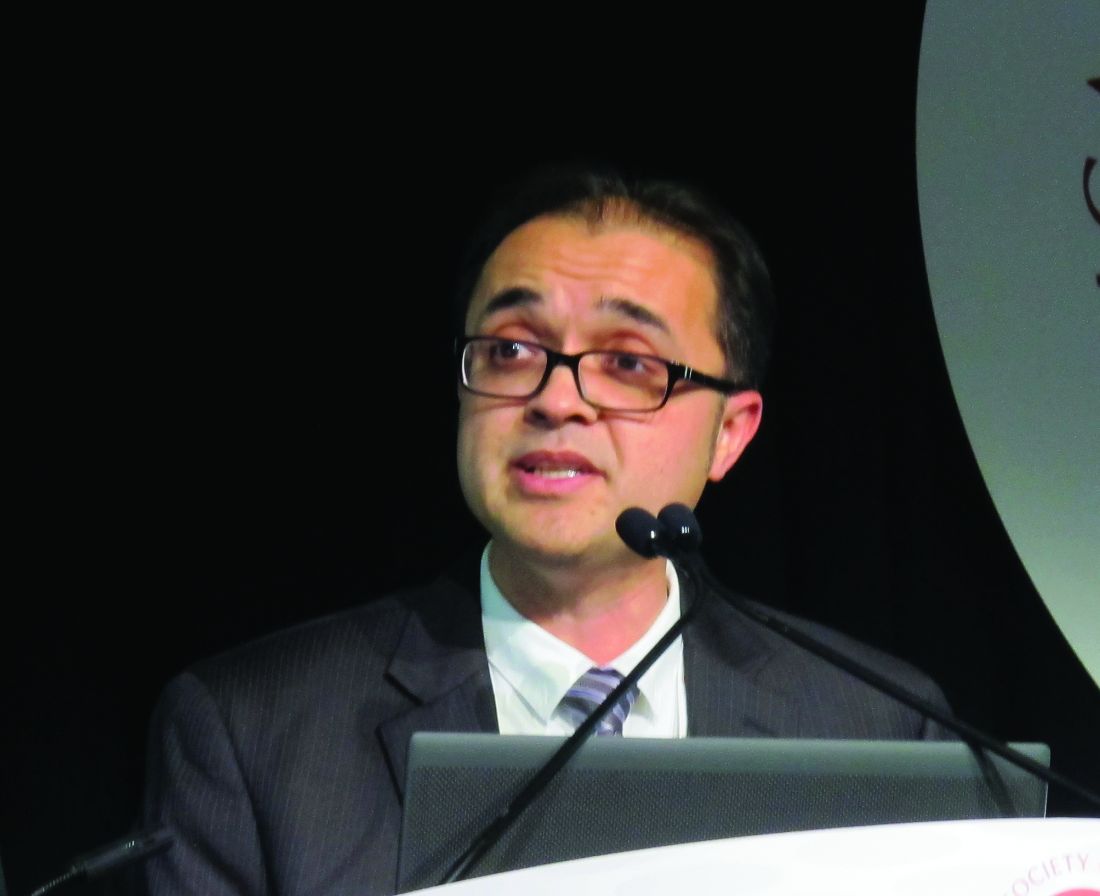
Dr. Desai noted that the 2.5 m/s threshold was found to be suboptimal when used as the sole criteria for right-heart catheterization. Using that threshold alone is associated with “moderate to large” harms, such as starting inappropriate PH-specific therapies and/or performing unnecessary right-heart catheterization. However, when used in combination with 6MWD, the predictive capacity improved significantly, and the risk for potential harm was low, he explained.
Another Good Practice Statement included in the guidelines, and relevant to these recommendations on managing abnormal echocardiography, addresses the importance of basing decisions about the need for right-heart catheterization on echocardiograms obtained at steady state rather than during acute illness, such as during hospitalization for pain or acute chest syndrome.
This is in part because of technical factors, Dr. Desai said.
“We know that repeating [echocardiography] is something that should be considered in patients because ... results vary – sometimes quite a bit – from study to study,” he said.
As for the cutoff values for 6MWD and NT-proBNP, “a decent amount of literature” suggests that less than 333 m and less than 160 pg/ml, respectively, are good thresholds, he said.
“Importantly, this should all be taken in the context of good clinical judgment ... along with discussion with a PH expert,” he added.
The full guidelines are available, along with additional ASH guidelines on immune thrombocytopenia and prevention of venous thromboembolism in surgical hospitalized patients, at the ASH publications website.
Of note, the SCD guidelines on cardiopulmonary disease and kidney disease are one of five sets of SCD guidelines that have been in development; these are the first of those to be published. The remaining four sets of guidelines will address pain, cerebrovascular complications, transfusion, and hematopoietic stem cell transplant. All will be published in Blood Advances, and according to Dr. Liem, the transfusion medicine guidelines have been accepted and should be published in January 2020, followed by those for cerebrovascular complications. Publication of the pain and transplant guidelines are anticipated later in 2020.
Dr. Liem and Dr. Desai reported having no conflicts of interest.
ORLANDO – It is good practice to consult with a pulmonary hypertension (PH) expert before referring a patient with sickle cell disease (SCD) for right-heart catheterization or PH evaluation, according to new American Society of Hematology guidelines for the screening and management of cardiopulmonary and kidney disease in patients with SCD.
That “Good Practice” recommendation is one of several included in the evidence-based guidelines published Dec. 10 in Blood Advances and highlighted during a Special Education Session at the annual ASH meeting.
The guidelines provide 10 main recommendations intended to “support patients, clinicians, and other health care professionals in their decisions about screening, diagnosis, and management of cardiopulmonary and renal complications of SCD,” wrote Robert I. Liem, MD, of Ann & Robert H. Lurie Children’s Hospital of Chicago and colleagues.
The recommendations, agreed upon by a multidisciplinary guideline panel, relate to screening, diagnosis, and management of PH, pulmonary arterial hypertension (PAH), hypertension, proteinuria and chronic kidney disease, and venous thromboembolism (VTE). Most are “conditional,” as opposed to “strong,” because of a paucity of direct, high-quality outcomes data, and they are accompanied by the Good Practice Statements, descriptive remarks and caveats based on the available data, as well as suggestions for future research.
At the special ASH session, Ankit A. Desai, MD, highlighted some of the recommendations and discussed considerations for their practical application.
The Good Practice Statement on consulting a specialist before referring a patient for PH relates specifically to Recommendations 2a and 2b on the management of abnormal echocardiography, explained Dr. Desai of Indiana University, Indianapolis.
For asymptomatic children and adults with SCD and an isolated peak tricuspid regurgitant jet velocity (TRJV) of at least 2.5-2.9 m/s on echocardiography, the panel recommends against right-heart catheterization (Recommendation 2a, conditional), he said.
For children and adults with SCD and a peak TRJV of at least 2.5 m/s who also have a reduced 6-minute walk distance (6MWD) and/or elevated N-terminal proB-type natriuretic peptide (NT-proBNP), the panel supports right-heart catheterization (Recommendation 2b, conditional).
Dr. Desai noted that the 2.5 m/s threshold was found to be suboptimal when used as the sole criteria for right-heart catheterization. Using that threshold alone is associated with “moderate to large” harms, such as starting inappropriate PH-specific therapies and/or performing unnecessary right-heart catheterization. However, when used in combination with 6MWD, the predictive capacity improved significantly, and the risk for potential harm was low, he explained.
Another Good Practice Statement included in the guidelines, and relevant to these recommendations on managing abnormal echocardiography, addresses the importance of basing decisions about the need for right-heart catheterization on echocardiograms obtained at steady state rather than during acute illness, such as during hospitalization for pain or acute chest syndrome.
This is in part because of technical factors, Dr. Desai said.
“We know that repeating [echocardiography] is something that should be considered in patients because ... results vary – sometimes quite a bit – from study to study,” he said.
As for the cutoff values for 6MWD and NT-proBNP, “a decent amount of literature” suggests that less than 333 m and less than 160 pg/ml, respectively, are good thresholds, he said.
“Importantly, this should all be taken in the context of good clinical judgment ... along with discussion with a PH expert,” he added.
The full guidelines are available, along with additional ASH guidelines on immune thrombocytopenia and prevention of venous thromboembolism in surgical hospitalized patients, at the ASH publications website.
Of note, the SCD guidelines on cardiopulmonary disease and kidney disease are one of five sets of SCD guidelines that have been in development; these are the first of those to be published. The remaining four sets of guidelines will address pain, cerebrovascular complications, transfusion, and hematopoietic stem cell transplant. All will be published in Blood Advances, and according to Dr. Liem, the transfusion medicine guidelines have been accepted and should be published in January 2020, followed by those for cerebrovascular complications. Publication of the pain and transplant guidelines are anticipated later in 2020.
Dr. Liem and Dr. Desai reported having no conflicts of interest.
ORLANDO – It is good practice to consult with a pulmonary hypertension (PH) expert before referring a patient with sickle cell disease (SCD) for right-heart catheterization or PH evaluation, according to new American Society of Hematology guidelines for the screening and management of cardiopulmonary and kidney disease in patients with SCD.
That “Good Practice” recommendation is one of several included in the evidence-based guidelines published Dec. 10 in Blood Advances and highlighted during a Special Education Session at the annual ASH meeting.
The guidelines provide 10 main recommendations intended to “support patients, clinicians, and other health care professionals in their decisions about screening, diagnosis, and management of cardiopulmonary and renal complications of SCD,” wrote Robert I. Liem, MD, of Ann & Robert H. Lurie Children’s Hospital of Chicago and colleagues.
The recommendations, agreed upon by a multidisciplinary guideline panel, relate to screening, diagnosis, and management of PH, pulmonary arterial hypertension (PAH), hypertension, proteinuria and chronic kidney disease, and venous thromboembolism (VTE). Most are “conditional,” as opposed to “strong,” because of a paucity of direct, high-quality outcomes data, and they are accompanied by the Good Practice Statements, descriptive remarks and caveats based on the available data, as well as suggestions for future research.
At the special ASH session, Ankit A. Desai, MD, highlighted some of the recommendations and discussed considerations for their practical application.
The Good Practice Statement on consulting a specialist before referring a patient for PH relates specifically to Recommendations 2a and 2b on the management of abnormal echocardiography, explained Dr. Desai of Indiana University, Indianapolis.
For asymptomatic children and adults with SCD and an isolated peak tricuspid regurgitant jet velocity (TRJV) of at least 2.5-2.9 m/s on echocardiography, the panel recommends against right-heart catheterization (Recommendation 2a, conditional), he said.
For children and adults with SCD and a peak TRJV of at least 2.5 m/s who also have a reduced 6-minute walk distance (6MWD) and/or elevated N-terminal proB-type natriuretic peptide (NT-proBNP), the panel supports right-heart catheterization (Recommendation 2b, conditional).
Dr. Desai noted that the 2.5 m/s threshold was found to be suboptimal when used as the sole criteria for right-heart catheterization. Using that threshold alone is associated with “moderate to large” harms, such as starting inappropriate PH-specific therapies and/or performing unnecessary right-heart catheterization. However, when used in combination with 6MWD, the predictive capacity improved significantly, and the risk for potential harm was low, he explained.
Another Good Practice Statement included in the guidelines, and relevant to these recommendations on managing abnormal echocardiography, addresses the importance of basing decisions about the need for right-heart catheterization on echocardiograms obtained at steady state rather than during acute illness, such as during hospitalization for pain or acute chest syndrome.
This is in part because of technical factors, Dr. Desai said.
“We know that repeating [echocardiography] is something that should be considered in patients because ... results vary – sometimes quite a bit – from study to study,” he said.
As for the cutoff values for 6MWD and NT-proBNP, “a decent amount of literature” suggests that less than 333 m and less than 160 pg/ml, respectively, are good thresholds, he said.
“Importantly, this should all be taken in the context of good clinical judgment ... along with discussion with a PH expert,” he added.
The full guidelines are available, along with additional ASH guidelines on immune thrombocytopenia and prevention of venous thromboembolism in surgical hospitalized patients, at the ASH publications website.
Of note, the SCD guidelines on cardiopulmonary disease and kidney disease are one of five sets of SCD guidelines that have been in development; these are the first of those to be published. The remaining four sets of guidelines will address pain, cerebrovascular complications, transfusion, and hematopoietic stem cell transplant. All will be published in Blood Advances, and according to Dr. Liem, the transfusion medicine guidelines have been accepted and should be published in January 2020, followed by those for cerebrovascular complications. Publication of the pain and transplant guidelines are anticipated later in 2020.
Dr. Liem and Dr. Desai reported having no conflicts of interest.
EXPERT ANALYSIS FROM ASH 2019
Do women with diabetes need more CVD risk reduction than men?
BUSAN, SOUTH KOREA – Whether cardiovascular disease risk reduction efforts should be more aggressive in women than men with diabetes depends on how you interpret the data.
Two experts came to different conclusions on this question during a heated, but jovial, debate last week here at the International Diabetes Federation 2019 Congress.
Endocrinologist David Simmons, MB, BChir, Western Sydney University, Campbelltown, Australia, argued that diabetes erases the well-described life expectancy advantage of 4-7 years that women experience over men in the general population.
He also highlighted the fact that the heightened risk is of particular concern in both younger women and those with prior gestational diabetes.
But Timothy Davis, BMedSc, MB, BS, DPhil, an endocrinologist and general physician at Fremantle (Australia) Hospital, countered that the data only show the diabetes-attributable excess cardiovascular risk is higher in women than men, but that the absolute risk is actually greater in men.
Moreover, he argued, at least in type 1 diabetes, there is no evidence that more aggressive cardiovascular risk factor management improves outcomes.
Yes: Diabetes eliminates female CVD protection
Dr. Simmons began by pointing out that, although on average women die at an older age than men, it has been known for over 40 years that this “female protection” is lost in insulin-treated women, particularly as a result of their increased risk for cardiovascular disease.
In a 2015 meta-analysis of 26 studies, women with type 1 diabetes were found to have about a 37% greater risk of all-cause mortality, compared with men with the condition when mortality is contrasted with that of the general population, and twice the risk of both fatal and nonfatal vascular events.
The risk appeared to be greater in women who were younger at the time of diabetes diagnosis. “This is a really important point – the time we would want to intervene,” Dr. Simmons said.
In another meta-analysis of 30 studies including 2,307,694 individuals with type 2 diabetes and 252,491 deaths, the pooled women-to-men ratio of the standardized mortality ratio for all-cause mortality was 1.14.
In those with versus without type 2 diabetes, the pooled standardized mortality ratio in women was 2.30 and in men was 1.94, both significant, compared with those without diabetes.
And in a 2006 meta-analysis of 22 studies involving individuals with type 2 diabetes, the pooled data showed a 46% excess relative risk using standardized mortality ratios in women versus men for fatal coronary artery disease.
Meanwhile, in a 2018 meta-analysis of 68 studies involving nearly 1 million adults examining differences in occlusive vascular disease, after controlling for major vascular risk factors, diabetes roughly doubled the risk for occlusive vascular mortality in men (relative risk, 2.10), but tripled it in women (3.00).
Women with diabetes aged 35-59 years had the highest relative risk for death over follow-up across all age and sex groups: They had 5.5 times the excess risk, compared with those without diabetes, while the excess risk for men of that age was 2.3-fold.
“So very clearly, it’s these young women who are most at risk, “emphasized Dr. Simmons, who is an investigator for Novo Nordisk and a speaker for Medtronic, Novo Nordisk, and Sanofi.
Are disparities because of differences in cvd risk factor management?
The question has arisen whether the female/male differences might be because of differences in cardiovascular risk factor management, Simmons noted.
A 2015 American Heart Association statement laid out the evidence for lower prescribing of statins, aspirin, beta-blockers, and ACE inhibitors in women, compared with men, Dr. Simmons said.
And some studies suggest medication adherence is lower in women than men.
In terms of medications, fenofibrate appears to produce better outcomes in women than men, but there is no evidence of gender differences in the effects of statins, ACE inhibitors, or aspirin, Simmons said.
He also outlined the results of a 2008 study of 78,254 patients with acute myocardial infarction from 420 U.S. hospitals in 2001-2006.
Women were older, had more comorbidities, less often presented with ST-elevation myocardial infarction (STEMI), and had a higher rate of unadjusted in-hospital death (8.2% vs. 5.7%; P less than .0001) than men. Of the participants, 33% of women had diabetes, compared with 28% of men.
The in-hospital mortality difference disappeared after multivariable adjustment, but women with STEMI still had higher adjusted mortality rates than men.
“The underuse of evidence-based treatments and delayed reperfusion in women represent potential opportunities for reducing sex disparities in care and outcome after acute myocardial infarction,” the authors concluded.
“It’s very clear amongst our cardiology colleagues that something needs to be done and that we need more aggressive cardiological risk reduction in women,” Dr. Simmons said.
“The AHA has already decided this. It’s already a policy. So why are we having this debate?” he wondered.
He also pointed out that women with prior gestational diabetes are an exceptionally high–risk group, with a twofold excess risk for cardiovascular disease within the first 10 years post partum.
“We need to do something about this particularly high-risk group, independent of debates about gender,” Dr. Simmons emphasized. “Clearly, women with diabetes warrant more aggressive cardiovascular risk reduction than men with diabetes, especially at those younger ages,” he concluded.
No: Confusion about relative risk within each sex and absolute risk
Dr. Davis began his counterargument by stating that estimation of absolute vascular risk is an established part of strategies to prevent cardiovascular disease, including in diabetes.
And that risk, he stressed, is actually higher in men.
“Male sex is a consistent adverse risk factor in cardiovascular disease event prediction equations in type 2 diabetes. Identifying absolute risk is important,” he said, noting risk calculators include male sex, such as the risk engine derived from the United Kingdom Prospective Diabetes Trial.
And in the Australian population-based Fremantle study, of which Dr. Davis is an author, the absolute 5-year incidence rates for all outcomes – including myocardial infarction, stroke, heart failure, lower extremity amputation, cardiovascular mortality, and all-cause mortality – were consistently higher in men versus women in the first phase, which began in the 1990s and included 1,426 individuals with diabetes (91% had type 2 diabetes).
In the ongoing second phase, which began in 2008 with 1,732 participants, overall rates of those outcomes are lower and the discrepancy between men and women has narrowed, Dr. Davis noted.
Overall, the Fremantle study data “suggest that women with type 2 diabetes do not need more aggressive cardiovascular reduction than men with type 2 diabetes because they are not at increased absolute vascular risk,” he stressed.
And in a “sensitivity analysis” of two areas in Finland, the authors concluded that the stronger effect of type 2 diabetes on the risk of congenital heart disease (CHD) in women, compared with men was in part explained by a heavier risk factor burden and a greater effect of blood pressure and atherogenic dyslipidemia in women with diabetes, he explained.
The Finnish authors wrote, “In terms of absolute risk of CHD death or a major CHD event, diabetes almost completely abolished the female protection from CHD.”
But, Dr. Davis emphasized, rates were not higher in females.
So then, “why is there the view that women with type 2 diabetes need more aggressive cardiovascular risk reduction than men with diabetes?
“It probably comes back to confusion based on absolute risk versus a comparison of relative risk within each sex,” he asserted.
ADA Standards of Medical Care 2019 don’t mention gender
Lastly, in a meta-analysis published just in July this year involving more than 5 million participants, compared with men with diabetes, women with diabetes had a 58% and 13% greater risk of CHD and all-cause mortality, respectively.
“This points to an urgent need to develop sex- and gender-specific risk assessment strategies and therapeutic interventions that target diabetes management in the context of CHD prevention,” the authors concluded.
But, Dr. Davis noted, “It is not absolute vascular risk. It’s a relative risk compared across the two genders. In the paper, there is no mention of absolute vascular risk.
“Greater CVD mortality in women with and without diabetes, versus men, doesn’t mean there’s also an absolute vascular increase in women versus men with diabetes,” he said.
Moreover, Dr. Davis pointed out that in an editorial accompanying the 2015 meta-analysis in type 1 diabetes, Simmons had actually stated that absolute mortality rates are highest in men.
“I don’t know what happened to his epidemiology knowledge in the last 4 years but it seems to have gone backwards,” he joked to his debate opponent.
And, Dr. Davis asserted, even if there were a higher risk in women with type 1 diabetes, there is no evidence that cardiovascular risk reduction measures affect endpoints in that patient population. Only about 8% of people with diabetes in statin trials had type 1 diabetes.
Indeed, he noted, in the American Diabetes Association Standards of Medical Care in Diabetes – 2019, the treatment goals for individual cardiovascular risk factors do not mention gender.
What’s more, Dr. David said, there is evidence that women are significantly less likely than men to take prescribed statins and are more likely to have an eating disorder and underdose insulin, “suggesting significant issues with compliance. ... So, trying to get more intensive risk reduction in women may be a challenge.”
“Women with diabetes do not need more aggressive cardiovascular risk reduction than men with diabetes, irrespective of type,” he concluded.
A version of this story originally appeared on medscape.com.
BUSAN, SOUTH KOREA – Whether cardiovascular disease risk reduction efforts should be more aggressive in women than men with diabetes depends on how you interpret the data.
Two experts came to different conclusions on this question during a heated, but jovial, debate last week here at the International Diabetes Federation 2019 Congress.
Endocrinologist David Simmons, MB, BChir, Western Sydney University, Campbelltown, Australia, argued that diabetes erases the well-described life expectancy advantage of 4-7 years that women experience over men in the general population.
He also highlighted the fact that the heightened risk is of particular concern in both younger women and those with prior gestational diabetes.
But Timothy Davis, BMedSc, MB, BS, DPhil, an endocrinologist and general physician at Fremantle (Australia) Hospital, countered that the data only show the diabetes-attributable excess cardiovascular risk is higher in women than men, but that the absolute risk is actually greater in men.
Moreover, he argued, at least in type 1 diabetes, there is no evidence that more aggressive cardiovascular risk factor management improves outcomes.
Yes: Diabetes eliminates female CVD protection
Dr. Simmons began by pointing out that, although on average women die at an older age than men, it has been known for over 40 years that this “female protection” is lost in insulin-treated women, particularly as a result of their increased risk for cardiovascular disease.
In a 2015 meta-analysis of 26 studies, women with type 1 diabetes were found to have about a 37% greater risk of all-cause mortality, compared with men with the condition when mortality is contrasted with that of the general population, and twice the risk of both fatal and nonfatal vascular events.
The risk appeared to be greater in women who were younger at the time of diabetes diagnosis. “This is a really important point – the time we would want to intervene,” Dr. Simmons said.
In another meta-analysis of 30 studies including 2,307,694 individuals with type 2 diabetes and 252,491 deaths, the pooled women-to-men ratio of the standardized mortality ratio for all-cause mortality was 1.14.
In those with versus without type 2 diabetes, the pooled standardized mortality ratio in women was 2.30 and in men was 1.94, both significant, compared with those without diabetes.
And in a 2006 meta-analysis of 22 studies involving individuals with type 2 diabetes, the pooled data showed a 46% excess relative risk using standardized mortality ratios in women versus men for fatal coronary artery disease.
Meanwhile, in a 2018 meta-analysis of 68 studies involving nearly 1 million adults examining differences in occlusive vascular disease, after controlling for major vascular risk factors, diabetes roughly doubled the risk for occlusive vascular mortality in men (relative risk, 2.10), but tripled it in women (3.00).
Women with diabetes aged 35-59 years had the highest relative risk for death over follow-up across all age and sex groups: They had 5.5 times the excess risk, compared with those without diabetes, while the excess risk for men of that age was 2.3-fold.
“So very clearly, it’s these young women who are most at risk, “emphasized Dr. Simmons, who is an investigator for Novo Nordisk and a speaker for Medtronic, Novo Nordisk, and Sanofi.
Are disparities because of differences in cvd risk factor management?
The question has arisen whether the female/male differences might be because of differences in cardiovascular risk factor management, Simmons noted.
A 2015 American Heart Association statement laid out the evidence for lower prescribing of statins, aspirin, beta-blockers, and ACE inhibitors in women, compared with men, Dr. Simmons said.
And some studies suggest medication adherence is lower in women than men.
In terms of medications, fenofibrate appears to produce better outcomes in women than men, but there is no evidence of gender differences in the effects of statins, ACE inhibitors, or aspirin, Simmons said.
He also outlined the results of a 2008 study of 78,254 patients with acute myocardial infarction from 420 U.S. hospitals in 2001-2006.
Women were older, had more comorbidities, less often presented with ST-elevation myocardial infarction (STEMI), and had a higher rate of unadjusted in-hospital death (8.2% vs. 5.7%; P less than .0001) than men. Of the participants, 33% of women had diabetes, compared with 28% of men.
The in-hospital mortality difference disappeared after multivariable adjustment, but women with STEMI still had higher adjusted mortality rates than men.
“The underuse of evidence-based treatments and delayed reperfusion in women represent potential opportunities for reducing sex disparities in care and outcome after acute myocardial infarction,” the authors concluded.
“It’s very clear amongst our cardiology colleagues that something needs to be done and that we need more aggressive cardiological risk reduction in women,” Dr. Simmons said.
“The AHA has already decided this. It’s already a policy. So why are we having this debate?” he wondered.
He also pointed out that women with prior gestational diabetes are an exceptionally high–risk group, with a twofold excess risk for cardiovascular disease within the first 10 years post partum.
“We need to do something about this particularly high-risk group, independent of debates about gender,” Dr. Simmons emphasized. “Clearly, women with diabetes warrant more aggressive cardiovascular risk reduction than men with diabetes, especially at those younger ages,” he concluded.
No: Confusion about relative risk within each sex and absolute risk
Dr. Davis began his counterargument by stating that estimation of absolute vascular risk is an established part of strategies to prevent cardiovascular disease, including in diabetes.
And that risk, he stressed, is actually higher in men.
“Male sex is a consistent adverse risk factor in cardiovascular disease event prediction equations in type 2 diabetes. Identifying absolute risk is important,” he said, noting risk calculators include male sex, such as the risk engine derived from the United Kingdom Prospective Diabetes Trial.
And in the Australian population-based Fremantle study, of which Dr. Davis is an author, the absolute 5-year incidence rates for all outcomes – including myocardial infarction, stroke, heart failure, lower extremity amputation, cardiovascular mortality, and all-cause mortality – were consistently higher in men versus women in the first phase, which began in the 1990s and included 1,426 individuals with diabetes (91% had type 2 diabetes).
In the ongoing second phase, which began in 2008 with 1,732 participants, overall rates of those outcomes are lower and the discrepancy between men and women has narrowed, Dr. Davis noted.
Overall, the Fremantle study data “suggest that women with type 2 diabetes do not need more aggressive cardiovascular reduction than men with type 2 diabetes because they are not at increased absolute vascular risk,” he stressed.
And in a “sensitivity analysis” of two areas in Finland, the authors concluded that the stronger effect of type 2 diabetes on the risk of congenital heart disease (CHD) in women, compared with men was in part explained by a heavier risk factor burden and a greater effect of blood pressure and atherogenic dyslipidemia in women with diabetes, he explained.
The Finnish authors wrote, “In terms of absolute risk of CHD death or a major CHD event, diabetes almost completely abolished the female protection from CHD.”
But, Dr. Davis emphasized, rates were not higher in females.
So then, “why is there the view that women with type 2 diabetes need more aggressive cardiovascular risk reduction than men with diabetes?
“It probably comes back to confusion based on absolute risk versus a comparison of relative risk within each sex,” he asserted.
ADA Standards of Medical Care 2019 don’t mention gender
Lastly, in a meta-analysis published just in July this year involving more than 5 million participants, compared with men with diabetes, women with diabetes had a 58% and 13% greater risk of CHD and all-cause mortality, respectively.
“This points to an urgent need to develop sex- and gender-specific risk assessment strategies and therapeutic interventions that target diabetes management in the context of CHD prevention,” the authors concluded.
But, Dr. Davis noted, “It is not absolute vascular risk. It’s a relative risk compared across the two genders. In the paper, there is no mention of absolute vascular risk.
“Greater CVD mortality in women with and without diabetes, versus men, doesn’t mean there’s also an absolute vascular increase in women versus men with diabetes,” he said.
Moreover, Dr. Davis pointed out that in an editorial accompanying the 2015 meta-analysis in type 1 diabetes, Simmons had actually stated that absolute mortality rates are highest in men.
“I don’t know what happened to his epidemiology knowledge in the last 4 years but it seems to have gone backwards,” he joked to his debate opponent.
And, Dr. Davis asserted, even if there were a higher risk in women with type 1 diabetes, there is no evidence that cardiovascular risk reduction measures affect endpoints in that patient population. Only about 8% of people with diabetes in statin trials had type 1 diabetes.
Indeed, he noted, in the American Diabetes Association Standards of Medical Care in Diabetes – 2019, the treatment goals for individual cardiovascular risk factors do not mention gender.
What’s more, Dr. David said, there is evidence that women are significantly less likely than men to take prescribed statins and are more likely to have an eating disorder and underdose insulin, “suggesting significant issues with compliance. ... So, trying to get more intensive risk reduction in women may be a challenge.”
“Women with diabetes do not need more aggressive cardiovascular risk reduction than men with diabetes, irrespective of type,” he concluded.
A version of this story originally appeared on medscape.com.
BUSAN, SOUTH KOREA – Whether cardiovascular disease risk reduction efforts should be more aggressive in women than men with diabetes depends on how you interpret the data.
Two experts came to different conclusions on this question during a heated, but jovial, debate last week here at the International Diabetes Federation 2019 Congress.
Endocrinologist David Simmons, MB, BChir, Western Sydney University, Campbelltown, Australia, argued that diabetes erases the well-described life expectancy advantage of 4-7 years that women experience over men in the general population.
He also highlighted the fact that the heightened risk is of particular concern in both younger women and those with prior gestational diabetes.
But Timothy Davis, BMedSc, MB, BS, DPhil, an endocrinologist and general physician at Fremantle (Australia) Hospital, countered that the data only show the diabetes-attributable excess cardiovascular risk is higher in women than men, but that the absolute risk is actually greater in men.
Moreover, he argued, at least in type 1 diabetes, there is no evidence that more aggressive cardiovascular risk factor management improves outcomes.
Yes: Diabetes eliminates female CVD protection
Dr. Simmons began by pointing out that, although on average women die at an older age than men, it has been known for over 40 years that this “female protection” is lost in insulin-treated women, particularly as a result of their increased risk for cardiovascular disease.
In a 2015 meta-analysis of 26 studies, women with type 1 diabetes were found to have about a 37% greater risk of all-cause mortality, compared with men with the condition when mortality is contrasted with that of the general population, and twice the risk of both fatal and nonfatal vascular events.
The risk appeared to be greater in women who were younger at the time of diabetes diagnosis. “This is a really important point – the time we would want to intervene,” Dr. Simmons said.
In another meta-analysis of 30 studies including 2,307,694 individuals with type 2 diabetes and 252,491 deaths, the pooled women-to-men ratio of the standardized mortality ratio for all-cause mortality was 1.14.
In those with versus without type 2 diabetes, the pooled standardized mortality ratio in women was 2.30 and in men was 1.94, both significant, compared with those without diabetes.
And in a 2006 meta-analysis of 22 studies involving individuals with type 2 diabetes, the pooled data showed a 46% excess relative risk using standardized mortality ratios in women versus men for fatal coronary artery disease.
Meanwhile, in a 2018 meta-analysis of 68 studies involving nearly 1 million adults examining differences in occlusive vascular disease, after controlling for major vascular risk factors, diabetes roughly doubled the risk for occlusive vascular mortality in men (relative risk, 2.10), but tripled it in women (3.00).
Women with diabetes aged 35-59 years had the highest relative risk for death over follow-up across all age and sex groups: They had 5.5 times the excess risk, compared with those without diabetes, while the excess risk for men of that age was 2.3-fold.
“So very clearly, it’s these young women who are most at risk, “emphasized Dr. Simmons, who is an investigator for Novo Nordisk and a speaker for Medtronic, Novo Nordisk, and Sanofi.
Are disparities because of differences in cvd risk factor management?
The question has arisen whether the female/male differences might be because of differences in cardiovascular risk factor management, Simmons noted.
A 2015 American Heart Association statement laid out the evidence for lower prescribing of statins, aspirin, beta-blockers, and ACE inhibitors in women, compared with men, Dr. Simmons said.
And some studies suggest medication adherence is lower in women than men.
In terms of medications, fenofibrate appears to produce better outcomes in women than men, but there is no evidence of gender differences in the effects of statins, ACE inhibitors, or aspirin, Simmons said.
He also outlined the results of a 2008 study of 78,254 patients with acute myocardial infarction from 420 U.S. hospitals in 2001-2006.
Women were older, had more comorbidities, less often presented with ST-elevation myocardial infarction (STEMI), and had a higher rate of unadjusted in-hospital death (8.2% vs. 5.7%; P less than .0001) than men. Of the participants, 33% of women had diabetes, compared with 28% of men.
The in-hospital mortality difference disappeared after multivariable adjustment, but women with STEMI still had higher adjusted mortality rates than men.
“The underuse of evidence-based treatments and delayed reperfusion in women represent potential opportunities for reducing sex disparities in care and outcome after acute myocardial infarction,” the authors concluded.
“It’s very clear amongst our cardiology colleagues that something needs to be done and that we need more aggressive cardiological risk reduction in women,” Dr. Simmons said.
“The AHA has already decided this. It’s already a policy. So why are we having this debate?” he wondered.
He also pointed out that women with prior gestational diabetes are an exceptionally high–risk group, with a twofold excess risk for cardiovascular disease within the first 10 years post partum.
“We need to do something about this particularly high-risk group, independent of debates about gender,” Dr. Simmons emphasized. “Clearly, women with diabetes warrant more aggressive cardiovascular risk reduction than men with diabetes, especially at those younger ages,” he concluded.
No: Confusion about relative risk within each sex and absolute risk
Dr. Davis began his counterargument by stating that estimation of absolute vascular risk is an established part of strategies to prevent cardiovascular disease, including in diabetes.
And that risk, he stressed, is actually higher in men.
“Male sex is a consistent adverse risk factor in cardiovascular disease event prediction equations in type 2 diabetes. Identifying absolute risk is important,” he said, noting risk calculators include male sex, such as the risk engine derived from the United Kingdom Prospective Diabetes Trial.
And in the Australian population-based Fremantle study, of which Dr. Davis is an author, the absolute 5-year incidence rates for all outcomes – including myocardial infarction, stroke, heart failure, lower extremity amputation, cardiovascular mortality, and all-cause mortality – were consistently higher in men versus women in the first phase, which began in the 1990s and included 1,426 individuals with diabetes (91% had type 2 diabetes).
In the ongoing second phase, which began in 2008 with 1,732 participants, overall rates of those outcomes are lower and the discrepancy between men and women has narrowed, Dr. Davis noted.
Overall, the Fremantle study data “suggest that women with type 2 diabetes do not need more aggressive cardiovascular reduction than men with type 2 diabetes because they are not at increased absolute vascular risk,” he stressed.
And in a “sensitivity analysis” of two areas in Finland, the authors concluded that the stronger effect of type 2 diabetes on the risk of congenital heart disease (CHD) in women, compared with men was in part explained by a heavier risk factor burden and a greater effect of blood pressure and atherogenic dyslipidemia in women with diabetes, he explained.
The Finnish authors wrote, “In terms of absolute risk of CHD death or a major CHD event, diabetes almost completely abolished the female protection from CHD.”
But, Dr. Davis emphasized, rates were not higher in females.
So then, “why is there the view that women with type 2 diabetes need more aggressive cardiovascular risk reduction than men with diabetes?
“It probably comes back to confusion based on absolute risk versus a comparison of relative risk within each sex,” he asserted.
ADA Standards of Medical Care 2019 don’t mention gender
Lastly, in a meta-analysis published just in July this year involving more than 5 million participants, compared with men with diabetes, women with diabetes had a 58% and 13% greater risk of CHD and all-cause mortality, respectively.
“This points to an urgent need to develop sex- and gender-specific risk assessment strategies and therapeutic interventions that target diabetes management in the context of CHD prevention,” the authors concluded.
But, Dr. Davis noted, “It is not absolute vascular risk. It’s a relative risk compared across the two genders. In the paper, there is no mention of absolute vascular risk.
“Greater CVD mortality in women with and without diabetes, versus men, doesn’t mean there’s also an absolute vascular increase in women versus men with diabetes,” he said.
Moreover, Dr. Davis pointed out that in an editorial accompanying the 2015 meta-analysis in type 1 diabetes, Simmons had actually stated that absolute mortality rates are highest in men.
“I don’t know what happened to his epidemiology knowledge in the last 4 years but it seems to have gone backwards,” he joked to his debate opponent.
And, Dr. Davis asserted, even if there were a higher risk in women with type 1 diabetes, there is no evidence that cardiovascular risk reduction measures affect endpoints in that patient population. Only about 8% of people with diabetes in statin trials had type 1 diabetes.
Indeed, he noted, in the American Diabetes Association Standards of Medical Care in Diabetes – 2019, the treatment goals for individual cardiovascular risk factors do not mention gender.
What’s more, Dr. David said, there is evidence that women are significantly less likely than men to take prescribed statins and are more likely to have an eating disorder and underdose insulin, “suggesting significant issues with compliance. ... So, trying to get more intensive risk reduction in women may be a challenge.”
“Women with diabetes do not need more aggressive cardiovascular risk reduction than men with diabetes, irrespective of type,” he concluded.
A version of this story originally appeared on medscape.com.
New ASH guideline: VTE prophylaxis after major surgery
ORLANDO – The latest American Society of Hematology guideline on venous thromboembolism (VTE) tackles 30 key questions regarding prophylaxis in hospitalized patients undergoing surgery, according to the chair of the guideline panel, who highlighted 9 of those questions during a special session at the society’s annual meeting.

The clinical practice guideline, published just about a week before the annual meeting of the American Society of Hematology, focuses mainly on pharmacologic prophylaxis in specific surgical settings, said David R. Anderson, MD, dean of the faculty of medicine of Dalhousie University, Halifax, N.S.
“Our guidelines focused upon clinically important symptomatic outcomes, with less emphasis being placed on asymptomatic deep vein thrombosis detected by screening tests,” Dr. Anderson said.
At the special education session, Dr. Anderson highlighted several specific recommendations on prophylaxis in surgical patients.
Pharmacologic prophylaxis is not recommended for patients experiencing major trauma deemed to be at high risk of bleeding. Its use does reduce risk of symptomatic pulmonary embolism (PE) and deep vein thrombosis (DVT) by about 10 events per 1,000 patients treated; however, Dr. Anderson said, the panel’s opinion was that this benefit was outweighed by increased risk of major bleeding, at 24 events per 1,000 patients treated.
“We do recommend, however that this risk of bleeding must be reevaluated over the course of recovery of patients, and this may change the decision around this intervention over time,” Dr. Anderson told attendees at the special session.
That’s because pharmacologic prophylaxis is recommended in surgical patients at low to moderate risk of bleeding. In this scenario, the incremental risk of major bleeding (14 events per 1,000 patients treated) is outweighed by the benefit of the reduction of symptomatic VTE events, according to Dr. Anderson.
When pharmacologic prophylaxis is used, the panel recommends combined prophylaxis – mechanical prophylaxis in addition to pharmacologic prophylaxis – especially in those patients at high or very high risk of VTE. Evidence shows that the combination approach significantly reduces risk of PE, and strongly suggests it may also reduce risk of symptomatic proximal DVT, Dr. Anderson said.
In surgical patients not receiving pharmacologic prophylaxis, mechanical prophylaxis is recommended over no mechanical prophylaxis, he added. Moreover, in those patients receiving mechanical prophylaxis, the ASH panel recommends use of intermittent compression devices over graduated compression stockings.
The panel comes out against prophylactic inferior vena cava (IVC) filter insertion in the guidelines. Dr. Anderson said that the “small reduction” in PE risk seen in observational studies is outweighed by increased risk of DVT, and a resulting trend for increased mortality, associated with insertion of the devices.
“We did not consider other risks of IVC filters such as filter embolization or perforation, which again would be complications that would support our recommendation against routine use of these devices in patients undergoing major surgery,” he said.
In terms of the type of pharmacologic prophylaxis to use, the panel said low-molecular-weight heparin or unfractionated heparin would be reasonable choices in this setting. Available data do not demonstrate any significant differences between these choices for major clinical outcomes, Dr. Anderson added.
The guideline also addresses duration of pharmacologic prophylaxis, stating that extended prophylaxis – of at least 3 weeks – is favored over short-term prophylaxis, or up to 2 weeks of treatment. The extended approach significantly reduces risk of symptomatic PE and proximal DVT, though most of the supporting data come from studies of major joint arthroplasty and major general surgical procedures for patients with cancer. “We need more studies in other clinical areas to examine this particular question,” Dr. Anderson said.
The guideline on prophylaxis in surgical patients was published in Blood Advances (2019 Dec 3;3[23]:3898-944). Six other ASH VTE guidelines, all published in 2018, covered prophylaxis in medical patients, diagnosis, VTE in pregnancy, optimal anticoagulation, heparin-induced thrombocytopenia, and pediatric considerations. The guidelines are available on the ASH website.
Dr. Anderson reported having no relevant conflicts of interest.
ORLANDO – The latest American Society of Hematology guideline on venous thromboembolism (VTE) tackles 30 key questions regarding prophylaxis in hospitalized patients undergoing surgery, according to the chair of the guideline panel, who highlighted 9 of those questions during a special session at the society’s annual meeting.
The clinical practice guideline, published just about a week before the annual meeting of the American Society of Hematology, focuses mainly on pharmacologic prophylaxis in specific surgical settings, said David R. Anderson, MD, dean of the faculty of medicine of Dalhousie University, Halifax, N.S.
“Our guidelines focused upon clinically important symptomatic outcomes, with less emphasis being placed on asymptomatic deep vein thrombosis detected by screening tests,” Dr. Anderson said.
At the special education session, Dr. Anderson highlighted several specific recommendations on prophylaxis in surgical patients.
Pharmacologic prophylaxis is not recommended for patients experiencing major trauma deemed to be at high risk of bleeding. Its use does reduce risk of symptomatic pulmonary embolism (PE) and deep vein thrombosis (DVT) by about 10 events per 1,000 patients treated; however, Dr. Anderson said, the panel’s opinion was that this benefit was outweighed by increased risk of major bleeding, at 24 events per 1,000 patients treated.
“We do recommend, however that this risk of bleeding must be reevaluated over the course of recovery of patients, and this may change the decision around this intervention over time,” Dr. Anderson told attendees at the special session.
That’s because pharmacologic prophylaxis is recommended in surgical patients at low to moderate risk of bleeding. In this scenario, the incremental risk of major bleeding (14 events per 1,000 patients treated) is outweighed by the benefit of the reduction of symptomatic VTE events, according to Dr. Anderson.
When pharmacologic prophylaxis is used, the panel recommends combined prophylaxis – mechanical prophylaxis in addition to pharmacologic prophylaxis – especially in those patients at high or very high risk of VTE. Evidence shows that the combination approach significantly reduces risk of PE, and strongly suggests it may also reduce risk of symptomatic proximal DVT, Dr. Anderson said.
In surgical patients not receiving pharmacologic prophylaxis, mechanical prophylaxis is recommended over no mechanical prophylaxis, he added. Moreover, in those patients receiving mechanical prophylaxis, the ASH panel recommends use of intermittent compression devices over graduated compression stockings.
The panel comes out against prophylactic inferior vena cava (IVC) filter insertion in the guidelines. Dr. Anderson said that the “small reduction” in PE risk seen in observational studies is outweighed by increased risk of DVT, and a resulting trend for increased mortality, associated with insertion of the devices.
“We did not consider other risks of IVC filters such as filter embolization or perforation, which again would be complications that would support our recommendation against routine use of these devices in patients undergoing major surgery,” he said.
In terms of the type of pharmacologic prophylaxis to use, the panel said low-molecular-weight heparin or unfractionated heparin would be reasonable choices in this setting. Available data do not demonstrate any significant differences between these choices for major clinical outcomes, Dr. Anderson added.
The guideline also addresses duration of pharmacologic prophylaxis, stating that extended prophylaxis – of at least 3 weeks – is favored over short-term prophylaxis, or up to 2 weeks of treatment. The extended approach significantly reduces risk of symptomatic PE and proximal DVT, though most of the supporting data come from studies of major joint arthroplasty and major general surgical procedures for patients with cancer. “We need more studies in other clinical areas to examine this particular question,” Dr. Anderson said.
The guideline on prophylaxis in surgical patients was published in Blood Advances (2019 Dec 3;3[23]:3898-944). Six other ASH VTE guidelines, all published in 2018, covered prophylaxis in medical patients, diagnosis, VTE in pregnancy, optimal anticoagulation, heparin-induced thrombocytopenia, and pediatric considerations. The guidelines are available on the ASH website.
Dr. Anderson reported having no relevant conflicts of interest.
ORLANDO – The latest American Society of Hematology guideline on venous thromboembolism (VTE) tackles 30 key questions regarding prophylaxis in hospitalized patients undergoing surgery, according to the chair of the guideline panel, who highlighted 9 of those questions during a special session at the society’s annual meeting.
The clinical practice guideline, published just about a week before the annual meeting of the American Society of Hematology, focuses mainly on pharmacologic prophylaxis in specific surgical settings, said David R. Anderson, MD, dean of the faculty of medicine of Dalhousie University, Halifax, N.S.
“Our guidelines focused upon clinically important symptomatic outcomes, with less emphasis being placed on asymptomatic deep vein thrombosis detected by screening tests,” Dr. Anderson said.
At the special education session, Dr. Anderson highlighted several specific recommendations on prophylaxis in surgical patients.
Pharmacologic prophylaxis is not recommended for patients experiencing major trauma deemed to be at high risk of bleeding. Its use does reduce risk of symptomatic pulmonary embolism (PE) and deep vein thrombosis (DVT) by about 10 events per 1,000 patients treated; however, Dr. Anderson said, the panel’s opinion was that this benefit was outweighed by increased risk of major bleeding, at 24 events per 1,000 patients treated.
“We do recommend, however that this risk of bleeding must be reevaluated over the course of recovery of patients, and this may change the decision around this intervention over time,” Dr. Anderson told attendees at the special session.
That’s because pharmacologic prophylaxis is recommended in surgical patients at low to moderate risk of bleeding. In this scenario, the incremental risk of major bleeding (14 events per 1,000 patients treated) is outweighed by the benefit of the reduction of symptomatic VTE events, according to Dr. Anderson.
When pharmacologic prophylaxis is used, the panel recommends combined prophylaxis – mechanical prophylaxis in addition to pharmacologic prophylaxis – especially in those patients at high or very high risk of VTE. Evidence shows that the combination approach significantly reduces risk of PE, and strongly suggests it may also reduce risk of symptomatic proximal DVT, Dr. Anderson said.
In surgical patients not receiving pharmacologic prophylaxis, mechanical prophylaxis is recommended over no mechanical prophylaxis, he added. Moreover, in those patients receiving mechanical prophylaxis, the ASH panel recommends use of intermittent compression devices over graduated compression stockings.
The panel comes out against prophylactic inferior vena cava (IVC) filter insertion in the guidelines. Dr. Anderson said that the “small reduction” in PE risk seen in observational studies is outweighed by increased risk of DVT, and a resulting trend for increased mortality, associated with insertion of the devices.
“We did not consider other risks of IVC filters such as filter embolization or perforation, which again would be complications that would support our recommendation against routine use of these devices in patients undergoing major surgery,” he said.
In terms of the type of pharmacologic prophylaxis to use, the panel said low-molecular-weight heparin or unfractionated heparin would be reasonable choices in this setting. Available data do not demonstrate any significant differences between these choices for major clinical outcomes, Dr. Anderson added.
The guideline also addresses duration of pharmacologic prophylaxis, stating that extended prophylaxis – of at least 3 weeks – is favored over short-term prophylaxis, or up to 2 weeks of treatment. The extended approach significantly reduces risk of symptomatic PE and proximal DVT, though most of the supporting data come from studies of major joint arthroplasty and major general surgical procedures for patients with cancer. “We need more studies in other clinical areas to examine this particular question,” Dr. Anderson said.
The guideline on prophylaxis in surgical patients was published in Blood Advances (2019 Dec 3;3[23]:3898-944). Six other ASH VTE guidelines, all published in 2018, covered prophylaxis in medical patients, diagnosis, VTE in pregnancy, optimal anticoagulation, heparin-induced thrombocytopenia, and pediatric considerations. The guidelines are available on the ASH website.
Dr. Anderson reported having no relevant conflicts of interest.
EXPERT ANALYSIS FROM ASH 2019