User login
AI-induced symptoms don’t predict survival
Vasomotor and musculoskeletal symptoms associated with aromatase inhibitor adjuvant therapy do not signal a more intense treatment response and thus do not predict better survival in women with breast cancer, according to a report published online Dec. 15 in Journal of Clinical Oncology.
Even though several retrospective exploratory analyses have suggested that treatment-emergent symptoms may be associated with improved survival in this patient population, this secondary analysis of data in a large international prospective randomized clinical trial argues otherwise. “It is premature to counsel patients on whether to continue or change their adjuvant AI therapy based on symptoms,” said Dr. Vered Stearns of the Kimmel Cancer Center, Johns Hopkins University, Baltimore, and her associates.
To investigate whether adverse effects might be useful in informing treatment decisions, the investigators analyzed data from the NCIC Clinical Trials Group MA.27 trial – an open-label phase III study conducted in 2003-2008 and involving 7,567 postmenopausal women who had hormone receptor–positive breast cancer. After completing their initial treatment and a washout period to allow for any adverse effects related to it, these participants were randomly assigned to receive adjuvant therapy with either anastrozole (3,787 women) or exemestane (3,789 women) and followed for a median of 4 years. To collect treatment-related symptoms in a standardized manner, they completed Common Terminology Criteria for Adverse Events questionnaires at baseline and at regular intervals afterward.
A relatively high number of these participants (34%) reported already having such symptoms at baseline, which may reflect rebound symptoms from hormone therapy withdrawal during the washout period. For women who had no symptoms at baseline, 25% reported them at 6 months and 52% reported them by 12 months.
At 3-month follow-up, 96 of the 403 women with severe symptoms discontinued treatment; the rate of treatment discontinuation was 12% at 6 months and 10% at 12 months. The most common reason cited for discontinuation was joint pain.
The emergence of new or worsening vasomotor and musculoskeletal symptoms showed no association with recurrence-free survival. There was no correlation between recurrence-free survival and symptoms at baseline or symptoms induced by AI therapy at 3 months, 6 months, or 12 months in the overall study population or in any subgroup of patients, Dr. Stearns and her associates said (J. Clin. Oncol. 2014 Dec. 15 [doi:10.1200;JCO.2014.57.6926]).
These findings indicate that treatment-emergent symptoms should be managed as effectively as possible but not held up as evidence that adjuvant therapy is working. “Women should be supported through treatment and encouraged to remain on their AI regardless of their symptoms,” the investigators added.
The notion that toxicity related to treatment can be a surrogate for treatment efficacy has long been embedded in the psyche of patients. Oncologists also can mistakenly believe that with cancer, which warrants the most aggressive possible therapy, the strength of a treatment is reflected in the adverse effects it produces.

|
Dr. William J. Gradishar |
But toxicity must not be considered an automatic surrogate measure of clinical benefit. Much of cancer treatments’ toxicity results from collateral damage: nontargeted effects to normal tissue that may or may not share features of the target cancer cell.
Dr. William J. Gradishar is at Northwestern University, Chicago. His financial disclosures are available at www.jco.org. Dr. Gradishar made these remarks in an editorial accompanying Dr. Stearns’s report (J. Clin. Oncol. 2014 Dec. 15 [doi:10.1200/JCO.2014.59.0919]).
The notion that toxicity related to treatment can be a surrogate for treatment efficacy has long been embedded in the psyche of patients. Oncologists also can mistakenly believe that with cancer, which warrants the most aggressive possible therapy, the strength of a treatment is reflected in the adverse effects it produces.
|
|
Dr. William J. Gradishar |
But toxicity must not be considered an automatic surrogate measure of clinical benefit. Much of cancer treatments’ toxicity results from collateral damage: nontargeted effects to normal tissue that may or may not share features of the target cancer cell.
Dr. William J. Gradishar is at Northwestern University, Chicago. His financial disclosures are available at www.jco.org. Dr. Gradishar made these remarks in an editorial accompanying Dr. Stearns’s report (J. Clin. Oncol. 2014 Dec. 15 [doi:10.1200/JCO.2014.59.0919]).
The notion that toxicity related to treatment can be a surrogate for treatment efficacy has long been embedded in the psyche of patients. Oncologists also can mistakenly believe that with cancer, which warrants the most aggressive possible therapy, the strength of a treatment is reflected in the adverse effects it produces.
|
|
Dr. William J. Gradishar |
But toxicity must not be considered an automatic surrogate measure of clinical benefit. Much of cancer treatments’ toxicity results from collateral damage: nontargeted effects to normal tissue that may or may not share features of the target cancer cell.
Dr. William J. Gradishar is at Northwestern University, Chicago. His financial disclosures are available at www.jco.org. Dr. Gradishar made these remarks in an editorial accompanying Dr. Stearns’s report (J. Clin. Oncol. 2014 Dec. 15 [doi:10.1200/JCO.2014.59.0919]).
Vasomotor and musculoskeletal symptoms associated with aromatase inhibitor adjuvant therapy do not signal a more intense treatment response and thus do not predict better survival in women with breast cancer, according to a report published online Dec. 15 in Journal of Clinical Oncology.
Even though several retrospective exploratory analyses have suggested that treatment-emergent symptoms may be associated with improved survival in this patient population, this secondary analysis of data in a large international prospective randomized clinical trial argues otherwise. “It is premature to counsel patients on whether to continue or change their adjuvant AI therapy based on symptoms,” said Dr. Vered Stearns of the Kimmel Cancer Center, Johns Hopkins University, Baltimore, and her associates.
To investigate whether adverse effects might be useful in informing treatment decisions, the investigators analyzed data from the NCIC Clinical Trials Group MA.27 trial – an open-label phase III study conducted in 2003-2008 and involving 7,567 postmenopausal women who had hormone receptor–positive breast cancer. After completing their initial treatment and a washout period to allow for any adverse effects related to it, these participants were randomly assigned to receive adjuvant therapy with either anastrozole (3,787 women) or exemestane (3,789 women) and followed for a median of 4 years. To collect treatment-related symptoms in a standardized manner, they completed Common Terminology Criteria for Adverse Events questionnaires at baseline and at regular intervals afterward.
A relatively high number of these participants (34%) reported already having such symptoms at baseline, which may reflect rebound symptoms from hormone therapy withdrawal during the washout period. For women who had no symptoms at baseline, 25% reported them at 6 months and 52% reported them by 12 months.
At 3-month follow-up, 96 of the 403 women with severe symptoms discontinued treatment; the rate of treatment discontinuation was 12% at 6 months and 10% at 12 months. The most common reason cited for discontinuation was joint pain.
The emergence of new or worsening vasomotor and musculoskeletal symptoms showed no association with recurrence-free survival. There was no correlation between recurrence-free survival and symptoms at baseline or symptoms induced by AI therapy at 3 months, 6 months, or 12 months in the overall study population or in any subgroup of patients, Dr. Stearns and her associates said (J. Clin. Oncol. 2014 Dec. 15 [doi:10.1200;JCO.2014.57.6926]).
These findings indicate that treatment-emergent symptoms should be managed as effectively as possible but not held up as evidence that adjuvant therapy is working. “Women should be supported through treatment and encouraged to remain on their AI regardless of their symptoms,” the investigators added.
Vasomotor and musculoskeletal symptoms associated with aromatase inhibitor adjuvant therapy do not signal a more intense treatment response and thus do not predict better survival in women with breast cancer, according to a report published online Dec. 15 in Journal of Clinical Oncology.
Even though several retrospective exploratory analyses have suggested that treatment-emergent symptoms may be associated with improved survival in this patient population, this secondary analysis of data in a large international prospective randomized clinical trial argues otherwise. “It is premature to counsel patients on whether to continue or change their adjuvant AI therapy based on symptoms,” said Dr. Vered Stearns of the Kimmel Cancer Center, Johns Hopkins University, Baltimore, and her associates.
To investigate whether adverse effects might be useful in informing treatment decisions, the investigators analyzed data from the NCIC Clinical Trials Group MA.27 trial – an open-label phase III study conducted in 2003-2008 and involving 7,567 postmenopausal women who had hormone receptor–positive breast cancer. After completing their initial treatment and a washout period to allow for any adverse effects related to it, these participants were randomly assigned to receive adjuvant therapy with either anastrozole (3,787 women) or exemestane (3,789 women) and followed for a median of 4 years. To collect treatment-related symptoms in a standardized manner, they completed Common Terminology Criteria for Adverse Events questionnaires at baseline and at regular intervals afterward.
A relatively high number of these participants (34%) reported already having such symptoms at baseline, which may reflect rebound symptoms from hormone therapy withdrawal during the washout period. For women who had no symptoms at baseline, 25% reported them at 6 months and 52% reported them by 12 months.
At 3-month follow-up, 96 of the 403 women with severe symptoms discontinued treatment; the rate of treatment discontinuation was 12% at 6 months and 10% at 12 months. The most common reason cited for discontinuation was joint pain.
The emergence of new or worsening vasomotor and musculoskeletal symptoms showed no association with recurrence-free survival. There was no correlation between recurrence-free survival and symptoms at baseline or symptoms induced by AI therapy at 3 months, 6 months, or 12 months in the overall study population or in any subgroup of patients, Dr. Stearns and her associates said (J. Clin. Oncol. 2014 Dec. 15 [doi:10.1200;JCO.2014.57.6926]).
These findings indicate that treatment-emergent symptoms should be managed as effectively as possible but not held up as evidence that adjuvant therapy is working. “Women should be supported through treatment and encouraged to remain on their AI regardless of their symptoms,” the investigators added.
Key clinical point: Vasomotor and musculoskeletal symptoms induced by aromatase inhibitors do not signal a more-intense treatment response or improved survival in breast cancer.
Major finding:There was no correlation between recurrence-free survival and symptoms at baseline or symptoms induced by AI therapy at 3 months, 6 months, or 12 months in the overall study population or in any subgroup of patients.
Data source: A secondary analysis of data in a large international randomized phase III clinical trial involving 7,576 postmenopausal women with hormone receptor–positive breast cancer who were followed for a median of 4 years.
Disclosures: This study was supported by the NCIC Clinical Trials Group, Canada; the Canadian Cancer Society Research Institute; the U.S. National Cancer Institute; the International Breast Cancer Study Group; Pfizer; the Susan G. Komen for the Cure; and the Avon Foundation, New York. Dr. Stearns reported receiving research funding from AbbVie, Celgene, Merck, Novartis, Pfizer, MedImmune, and Puma, and her associates reported ties to numerous industry sources.

VIDEO: What have we learned about prevention of breast cancer from IBIS-1?
SAN ANTONIO – An analysis from 2 decades of follow-up in women who took tamoxifen or placebo for breast cancer prevention showed the benefit in prevention persists, but no benefit in survival has yet to emerge.
Dr. Erica Mayer of the Dana-Farber Cancer Institute, Boston, discusses IBIS-1 results in an interview and details what those results will mean in the clinic, at the San Antonio Breast Cancer Symposium.
The video associated with this article is no longer available on this site. Please view all of our videos on the MDedge YouTube channel
On Twitter @alz_gal
SAN ANTONIO – An analysis from 2 decades of follow-up in women who took tamoxifen or placebo for breast cancer prevention showed the benefit in prevention persists, but no benefit in survival has yet to emerge.
Dr. Erica Mayer of the Dana-Farber Cancer Institute, Boston, discusses IBIS-1 results in an interview and details what those results will mean in the clinic, at the San Antonio Breast Cancer Symposium.
The video associated with this article is no longer available on this site. Please view all of our videos on the MDedge YouTube channel
On Twitter @alz_gal
SAN ANTONIO – An analysis from 2 decades of follow-up in women who took tamoxifen or placebo for breast cancer prevention showed the benefit in prevention persists, but no benefit in survival has yet to emerge.
Dr. Erica Mayer of the Dana-Farber Cancer Institute, Boston, discusses IBIS-1 results in an interview and details what those results will mean in the clinic, at the San Antonio Breast Cancer Symposium.
The video associated with this article is no longer available on this site. Please view all of our videos on the MDedge YouTube channel
On Twitter @alz_gal
AT SABCS 2014

20 years after initiating preventive tamoxifen, less breast cancer but no survival benefit
SAN ANTONIO – Five years of tamoxifen provided 20 years of breast cancer prevention to some at-risk women who took it prophylactically.
However, their 20-year all-cause mortality was no different from those taking placebo (182 vs. 166 deaths), nor was their mortality from breast cancer (31 vs. 26, respectively), Jack Cuzick, Ph.D., said at the San Antonio Breast Cancer Symposium.

“While we saw clear, lasting benefits of tamoxifen in reducing breast cancer incidence, uncertainty with respect to mortality remains,” said Dr. Cuzick, the John Snow professor of epidemiology at Wolfson Institute of Preventive Medicine at Queen Mary University, London.
He suggested that, in light of the small number of deaths, the study was not sufficiently powered to detect any significant survival difference. But women in the IBIS-1 trial will continue to be observed, and future analyses could clarify the issue, he added.
“Although 20 years seems like a long follow-up time, it is actually too early to make any clear statement about mortality,” he said. “However, we are concerned about an excess emergence of ER-negative tumors, which we saw after 10 years.”
The study was simultaneously published on Dec. 13 in Lancet Oncology
IBIS-1 randomized 7,154 healthy pre- and postmenopausal women to 5 years of either 20 mg daily tamoxifen or placebo. These women were aged 35-70 years at baseline and presented with an increased breast cancer risk attributable to a family history.
IBIS-1 was first reported in 2002, when 4-year follow-up found a 32% reduction in breast cancer risk associated with tamoxifen. But it also found a significant increase in deaths among that group (25 vs.11 in placebo), many of which were attributable to more endometrial cancer (11 vs. 5).
In 2007, the investigators published the trial’s 8-10 year findings. At that time, tamoxifen was associated with a 27% decreased risk of any breast cancer, and a 34% decreased risk of developing an ER-positive cancer. It found a consistent prophylactic benefit for tamoxifen; most of the risk reduction, however, occurred in the 5-year active treatment phase.
The significant increase in death had continued (25 vs. 11), although that report indicated that no specific cause, including endometrial cancer, drove that finding.
At the meeting, Dr. Cuzick discussed the latest findings of IBIS-1, which has now followed the cohort for up to 20 years (median, 16 years).
“We have seen a continued separation of the cancer incidence curves, with a 20-year incidence of 7.8% vs. 12.3%,” Dr. Cuzick said. “We saw that the 30% overall reduction was maintained; the number needed to treat to prevent one breast cancer was 22, which is very favorable when compared to prevention strategies for other diseases.”
The incidence of ER-positive tumors was reduced, compared with placebo, he added (4.9% vs. 8.3%), with a number needed to treat of 29. However, Dr. Cuzick said, there was a slight increase in the incidence of ER-negative tumors after 10 years.
“This is likely because these are tumors that would have appeared earlier as ER-positive tumors, but under tamoxifen, they were held back for some time and eventually broke out as ER-negative tumors.”
Hormone therapy was allowed in IBIS-1, and about 50% of women were taking hormones during at least part of the study. They did not experience the same level of benefit form tamoxifen as those who were not taking hormone therapy (12% vs. 38%). “This is very clear evidence that the benefits are substantially greater in those who are not using concurrent [hormone therapy] when on tamoxifen,” he said.
However, tamoxifen was associated with side effects and risks, including an increased risk of developing other cancers. Most concerning was the 45% increase in the risk of endometrial cancer, which accounted for five deaths in the treatment group; there were no deaths from endometrial cancer in the placebo group.
“We had hoped that endometrial cancer might not translate into such a large morality increase as there were no deaths due to this in the 8-year follow-up. We do need to be aware of this.”
Recurrent breast cancer was the single largest cause of death, but the between-group difference was not significant (26 vs. 31). Cardiovascular deaths were similar between the groups, and all that did occur, did so during the treatment period.
Nonmelanoma skin cancers were 39% more likely in the tamoxifen group, although they caused no deaths. “This was a very large increase and a surprise; we really don’t understand it,” Dr. Cuzick said.
There were 12 fewer colorectal cancers in the tamoxifen group. “That there was a slight reduction here is of some interest, as we did not see at all with placebo.”
The tamoxifen-associated risk of any other cancers was nonsignificant.
The IBIS-I trial was supported by Cancer Research UK. Dr. Cuzick has received funding for other trials from AstraZeneca and is a consultant for AstraZeneca. The company also provided both the study drug and placebo.
On Twitter @alz_gal
SAN ANTONIO – Five years of tamoxifen provided 20 years of breast cancer prevention to some at-risk women who took it prophylactically.
However, their 20-year all-cause mortality was no different from those taking placebo (182 vs. 166 deaths), nor was their mortality from breast cancer (31 vs. 26, respectively), Jack Cuzick, Ph.D., said at the San Antonio Breast Cancer Symposium.
“While we saw clear, lasting benefits of tamoxifen in reducing breast cancer incidence, uncertainty with respect to mortality remains,” said Dr. Cuzick, the John Snow professor of epidemiology at Wolfson Institute of Preventive Medicine at Queen Mary University, London.
He suggested that, in light of the small number of deaths, the study was not sufficiently powered to detect any significant survival difference. But women in the IBIS-1 trial will continue to be observed, and future analyses could clarify the issue, he added.
“Although 20 years seems like a long follow-up time, it is actually too early to make any clear statement about mortality,” he said. “However, we are concerned about an excess emergence of ER-negative tumors, which we saw after 10 years.”
The study was simultaneously published on Dec. 13 in Lancet Oncology
IBIS-1 randomized 7,154 healthy pre- and postmenopausal women to 5 years of either 20 mg daily tamoxifen or placebo. These women were aged 35-70 years at baseline and presented with an increased breast cancer risk attributable to a family history.
IBIS-1 was first reported in 2002, when 4-year follow-up found a 32% reduction in breast cancer risk associated with tamoxifen. But it also found a significant increase in deaths among that group (25 vs.11 in placebo), many of which were attributable to more endometrial cancer (11 vs. 5).
In 2007, the investigators published the trial’s 8-10 year findings. At that time, tamoxifen was associated with a 27% decreased risk of any breast cancer, and a 34% decreased risk of developing an ER-positive cancer. It found a consistent prophylactic benefit for tamoxifen; most of the risk reduction, however, occurred in the 5-year active treatment phase.
The significant increase in death had continued (25 vs. 11), although that report indicated that no specific cause, including endometrial cancer, drove that finding.
At the meeting, Dr. Cuzick discussed the latest findings of IBIS-1, which has now followed the cohort for up to 20 years (median, 16 years).
“We have seen a continued separation of the cancer incidence curves, with a 20-year incidence of 7.8% vs. 12.3%,” Dr. Cuzick said. “We saw that the 30% overall reduction was maintained; the number needed to treat to prevent one breast cancer was 22, which is very favorable when compared to prevention strategies for other diseases.”
The incidence of ER-positive tumors was reduced, compared with placebo, he added (4.9% vs. 8.3%), with a number needed to treat of 29. However, Dr. Cuzick said, there was a slight increase in the incidence of ER-negative tumors after 10 years.
“This is likely because these are tumors that would have appeared earlier as ER-positive tumors, but under tamoxifen, they were held back for some time and eventually broke out as ER-negative tumors.”
Hormone therapy was allowed in IBIS-1, and about 50% of women were taking hormones during at least part of the study. They did not experience the same level of benefit form tamoxifen as those who were not taking hormone therapy (12% vs. 38%). “This is very clear evidence that the benefits are substantially greater in those who are not using concurrent [hormone therapy] when on tamoxifen,” he said.
However, tamoxifen was associated with side effects and risks, including an increased risk of developing other cancers. Most concerning was the 45% increase in the risk of endometrial cancer, which accounted for five deaths in the treatment group; there were no deaths from endometrial cancer in the placebo group.
“We had hoped that endometrial cancer might not translate into such a large morality increase as there were no deaths due to this in the 8-year follow-up. We do need to be aware of this.”
Recurrent breast cancer was the single largest cause of death, but the between-group difference was not significant (26 vs. 31). Cardiovascular deaths were similar between the groups, and all that did occur, did so during the treatment period.
Nonmelanoma skin cancers were 39% more likely in the tamoxifen group, although they caused no deaths. “This was a very large increase and a surprise; we really don’t understand it,” Dr. Cuzick said.
There were 12 fewer colorectal cancers in the tamoxifen group. “That there was a slight reduction here is of some interest, as we did not see at all with placebo.”
The tamoxifen-associated risk of any other cancers was nonsignificant.
The IBIS-I trial was supported by Cancer Research UK. Dr. Cuzick has received funding for other trials from AstraZeneca and is a consultant for AstraZeneca. The company also provided both the study drug and placebo.
On Twitter @alz_gal
SAN ANTONIO – Five years of tamoxifen provided 20 years of breast cancer prevention to some at-risk women who took it prophylactically.
However, their 20-year all-cause mortality was no different from those taking placebo (182 vs. 166 deaths), nor was their mortality from breast cancer (31 vs. 26, respectively), Jack Cuzick, Ph.D., said at the San Antonio Breast Cancer Symposium.
“While we saw clear, lasting benefits of tamoxifen in reducing breast cancer incidence, uncertainty with respect to mortality remains,” said Dr. Cuzick, the John Snow professor of epidemiology at Wolfson Institute of Preventive Medicine at Queen Mary University, London.
He suggested that, in light of the small number of deaths, the study was not sufficiently powered to detect any significant survival difference. But women in the IBIS-1 trial will continue to be observed, and future analyses could clarify the issue, he added.
“Although 20 years seems like a long follow-up time, it is actually too early to make any clear statement about mortality,” he said. “However, we are concerned about an excess emergence of ER-negative tumors, which we saw after 10 years.”
The study was simultaneously published on Dec. 13 in Lancet Oncology
IBIS-1 randomized 7,154 healthy pre- and postmenopausal women to 5 years of either 20 mg daily tamoxifen or placebo. These women were aged 35-70 years at baseline and presented with an increased breast cancer risk attributable to a family history.
IBIS-1 was first reported in 2002, when 4-year follow-up found a 32% reduction in breast cancer risk associated with tamoxifen. But it also found a significant increase in deaths among that group (25 vs.11 in placebo), many of which were attributable to more endometrial cancer (11 vs. 5).
In 2007, the investigators published the trial’s 8-10 year findings. At that time, tamoxifen was associated with a 27% decreased risk of any breast cancer, and a 34% decreased risk of developing an ER-positive cancer. It found a consistent prophylactic benefit for tamoxifen; most of the risk reduction, however, occurred in the 5-year active treatment phase.
The significant increase in death had continued (25 vs. 11), although that report indicated that no specific cause, including endometrial cancer, drove that finding.
At the meeting, Dr. Cuzick discussed the latest findings of IBIS-1, which has now followed the cohort for up to 20 years (median, 16 years).
“We have seen a continued separation of the cancer incidence curves, with a 20-year incidence of 7.8% vs. 12.3%,” Dr. Cuzick said. “We saw that the 30% overall reduction was maintained; the number needed to treat to prevent one breast cancer was 22, which is very favorable when compared to prevention strategies for other diseases.”
The incidence of ER-positive tumors was reduced, compared with placebo, he added (4.9% vs. 8.3%), with a number needed to treat of 29. However, Dr. Cuzick said, there was a slight increase in the incidence of ER-negative tumors after 10 years.
“This is likely because these are tumors that would have appeared earlier as ER-positive tumors, but under tamoxifen, they were held back for some time and eventually broke out as ER-negative tumors.”
Hormone therapy was allowed in IBIS-1, and about 50% of women were taking hormones during at least part of the study. They did not experience the same level of benefit form tamoxifen as those who were not taking hormone therapy (12% vs. 38%). “This is very clear evidence that the benefits are substantially greater in those who are not using concurrent [hormone therapy] when on tamoxifen,” he said.
However, tamoxifen was associated with side effects and risks, including an increased risk of developing other cancers. Most concerning was the 45% increase in the risk of endometrial cancer, which accounted for five deaths in the treatment group; there were no deaths from endometrial cancer in the placebo group.
“We had hoped that endometrial cancer might not translate into such a large morality increase as there were no deaths due to this in the 8-year follow-up. We do need to be aware of this.”
Recurrent breast cancer was the single largest cause of death, but the between-group difference was not significant (26 vs. 31). Cardiovascular deaths were similar between the groups, and all that did occur, did so during the treatment period.
Nonmelanoma skin cancers were 39% more likely in the tamoxifen group, although they caused no deaths. “This was a very large increase and a surprise; we really don’t understand it,” Dr. Cuzick said.
There were 12 fewer colorectal cancers in the tamoxifen group. “That there was a slight reduction here is of some interest, as we did not see at all with placebo.”
The tamoxifen-associated risk of any other cancers was nonsignificant.
The IBIS-I trial was supported by Cancer Research UK. Dr. Cuzick has received funding for other trials from AstraZeneca and is a consultant for AstraZeneca. The company also provided both the study drug and placebo.
On Twitter @alz_gal
AT SABCS 2014
Key clinical point: Prophylactic tamoxifen reduced breast cancers in vulnerable women, compared with placebo, but didn’t affect overall mortality.
Major finding: Five years of tamoxifen treatment translated into a 30% decrease in the incidence of breast cancers among at-risk women, but there was no survival benefit at 20 years of follow-up.
Data source: The IBIS-1 trial randomized more than 7,000 women to 5 years of either tamoxifen or placebo.
Disclosures: The IBIS-I trial was supported by Cancer Research UK. Dr. Cuzick has received funding for other trials from AstraZeneca and is a consultant for AstraZeneca. The company also provided both the study drug and placebo.

VIDEO: What was the most interesting thing you learned at the meeting?
SAN ANTONIO – Our reporter Michele Sullivan asked selected attendees at the San Antonio Breast Cancer Symposium to identify the most interesting or practice-changing study presented at the meeting. The answer was the same across the board - the Suppression of Ovarian Function Trial (SOFT), which showed that selective ovarian suppression reduces disease recurrence in women with early breast cancer.
In our video interview clinicians respond to the implications of the data in their practice.
The video associated with this article is no longer available on this site. Please view all of our videos on the MDedge YouTube channel
SAN ANTONIO – Our reporter Michele Sullivan asked selected attendees at the San Antonio Breast Cancer Symposium to identify the most interesting or practice-changing study presented at the meeting. The answer was the same across the board - the Suppression of Ovarian Function Trial (SOFT), which showed that selective ovarian suppression reduces disease recurrence in women with early breast cancer.
In our video interview clinicians respond to the implications of the data in their practice.
The video associated with this article is no longer available on this site. Please view all of our videos on the MDedge YouTube channel
SAN ANTONIO – Our reporter Michele Sullivan asked selected attendees at the San Antonio Breast Cancer Symposium to identify the most interesting or practice-changing study presented at the meeting. The answer was the same across the board - the Suppression of Ovarian Function Trial (SOFT), which showed that selective ovarian suppression reduces disease recurrence in women with early breast cancer.
In our video interview clinicians respond to the implications of the data in their practice.
The video associated with this article is no longer available on this site. Please view all of our videos on the MDedge YouTube channel
AT SABCS 2014
VIDEO: Dr. Prudence Francis describes how SOFT results will change practice
SAN ANTONIO – Adding ovarian suppression to 5 years of either tamoxifen or exemestane following chemotherapy, in women with hormone receptor-positive early breast cancer, provided a markedly greater reduction in breast cancer recurrence compared with standard therapy with tamoxifen alone, Dr. Prudence Francis reported at the San Antonio Breast Cancer Symposium.
However, not all premenopausal patients obtained benefit from ovarian suppression. Those who didn’t receive chemotherapy had excellent outcomes with 5 years of tamoxifen alone, with a 95.8% disease-free survival at 5 years. Dr. Francis, who is head of breast medical oncology at the Peter MacCallum Cancer Center, Melbourne, discusses in an interview how these key findings of SOFT (the Suppression of Ovarian Function Trial) should change practice in the clinic next week.
The video associated with this article is no longer available on this site. Please view all of our videos on the MDedge YouTube channel
SAN ANTONIO – Adding ovarian suppression to 5 years of either tamoxifen or exemestane following chemotherapy, in women with hormone receptor-positive early breast cancer, provided a markedly greater reduction in breast cancer recurrence compared with standard therapy with tamoxifen alone, Dr. Prudence Francis reported at the San Antonio Breast Cancer Symposium.
However, not all premenopausal patients obtained benefit from ovarian suppression. Those who didn’t receive chemotherapy had excellent outcomes with 5 years of tamoxifen alone, with a 95.8% disease-free survival at 5 years. Dr. Francis, who is head of breast medical oncology at the Peter MacCallum Cancer Center, Melbourne, discusses in an interview how these key findings of SOFT (the Suppression of Ovarian Function Trial) should change practice in the clinic next week.
The video associated with this article is no longer available on this site. Please view all of our videos on the MDedge YouTube channel
SAN ANTONIO – Adding ovarian suppression to 5 years of either tamoxifen or exemestane following chemotherapy, in women with hormone receptor-positive early breast cancer, provided a markedly greater reduction in breast cancer recurrence compared with standard therapy with tamoxifen alone, Dr. Prudence Francis reported at the San Antonio Breast Cancer Symposium.
However, not all premenopausal patients obtained benefit from ovarian suppression. Those who didn’t receive chemotherapy had excellent outcomes with 5 years of tamoxifen alone, with a 95.8% disease-free survival at 5 years. Dr. Francis, who is head of breast medical oncology at the Peter MacCallum Cancer Center, Melbourne, discusses in an interview how these key findings of SOFT (the Suppression of Ovarian Function Trial) should change practice in the clinic next week.
The video associated with this article is no longer available on this site. Please view all of our videos on the MDedge YouTube channel
AT SABCS 2014
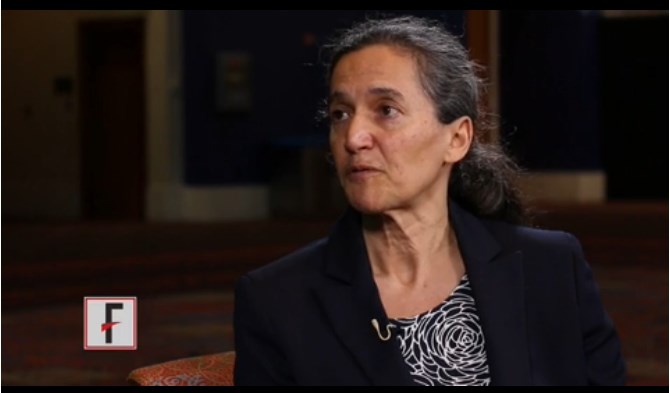
SOFT trial endorses selective ovarian suppression in early breast cancer
SAN ANTONIO – Adding ovarian suppression to 5 years of tamoxifen in women with hormone receptor–positive early breast cancer who remain premenopausal following chemotherapy provides a markedly greater reduction in breast cancer recurrence, compared with standard adjuvant therapy with tamoxifen alone – and combining ovarian suppression with an aromatase inhibitor instead of tamoxifen further improves outcomes, Dr. Prudence Francis reported at the San Antonio Breast Cancer Symposium.
This was a key finding of SOFT (Suppression of Ovarian Function Trial), a randomized comparison of adjuvant tamoxifen or exemestane plus ovarian suppression versus tamoxifen alone in 3,047 patients in 25 countries, making this the largest randomized trial ever conducted in premenopausal women with hormone receptor–positive breast cancer.
The other key finding in SOFT was that not all premenopausal patients obtained benefit from ovarian suppression. Those who didn’t receive chemotherapy based upon a decision made with their physician had excellent outcomes with 5 years of tamoxifen alone, with a 95.8% disease-free survival at 5 years. In these patients, who were typically closer to the age of natural menopause onset and had cancers with a more favorable pathology than women who underwent chemotherapy, adding ovarian suppression offered no further advantage over tamoxifen alone, added Dr. Francis, who is head of breast medical oncology at the Peter MacCallum Cancer Center, Melbourne, Australia.
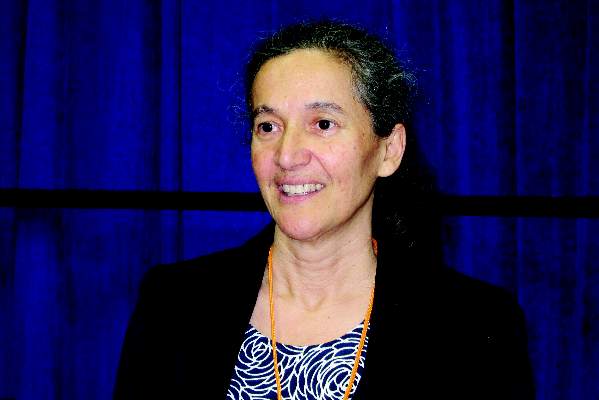
She called the SOFT results practice changing, and other experts agreed.
“For me, when I go back to my practice on Monday and I see a woman under age 35 with a hormone-sensitive breast cancer, I will now know what to advise that woman,” Dr. Francis said. “The strength of my recommendation for exemestane plus ovarian function suppression following chemotherapy will be greater in that woman; I’ll feel like maybe I should be recommending it rather than discussing it, because the advantage is so great. And when I see a premenopausal woman who is 48 and who’s got a small, screen-detected, nonaggressive breast cancer, I will feel very comfortable that she can do quite well with tamoxifen alone.”
The SOFT trial was unique in that it mandated that only women with documented recovery of ovarian function within 8 months of completing chemotherapy were eligible for enrollment.
At a median follow-up of 5.6 years, the 5-year disease-free survival rate was 84.7% in patients randomized to tamoxifen alone and not significantly different at 86.6% in those assigned to tamoxifen combined with ovarian function suppression. But the study design included two distinct populations – 53% who received chemotherapy and 47% who didn’t – and their outcomes were distinctly different.
The group who had undergone chemotherapy tended to have a higher baseline recurrence risk. They were younger – average age 40 – and typically had larger, higher-grade tumors and were more likely to be node positive. Their 5-year rate of freedom from breast cancer recurrence was 78% with tamoxifen alone, 82.5% with tamoxifen and ovarian suppression, and 85.7% with exemestane combined with ovarian suppression. That translates to a 22% decrease in the relative risk of recurrence in women on tamoxifen plus ovarian suppression. The absolute 7.7% difference in freedom from recurrent breast cancer at 5 years between women on exemestane plus ovarian suppression, compared with tamoxifen alone equated to a 35% relative risk reduction.
The advantage of ovarian suppression was most dramatic in the 350 study participants under age 35. Their 5-year rate of freedom from recurrent breast cancer was 67.7% with tamoxifen alone, 78.9% with tamoxifen combined with ovarian suppression, and 83.4% with exemestane and ovarian suppression, for a hefty absolute difference of 15.7%, compared with tamoxifen only.
Prior studies suggested that women diagnosed with hormone receptor–positive breast cancer before age 35 are at particularly high risk of disease recurrence. This was borne out in SOFT. One in three women under age 35 assigned to tamoxifen alone had further breast cancer within 5 years, compared with just one in six on exemestane plus ovarian suppression, Dr. Francis reported.
Systematic assessment of quality of life and treatment toxicities featured prominently in the SOFT trial. Add-on ovarian suppression was associated with increased rates of menopausal symptoms, insomnia, hypertension, diabetes, osteoporosis, and depression. The endocrine toxicities became less pronounced after 2 years. Patient reports of sexual dysfunction were more prominent and longer lasting in the exemestane group. Fifteen percent of women stopped ovarian suppression by 2 years, and 22% by 3 years.
Discussant Dr. Hope S. Rugo noted that while only 4.7% of breast cancers are diagnosed in women under age 40, that still adds up to roughly 11,000 new cases per year in the United States alone.
The SOFT results inspired Dr. Rugo to propose a new treatment algorithm for women with premenopausal hormone receptor–positive early-stage breast cancer. Patients who receive chemotherapy for high-risk disease – that is, women who are younger and especially those under age 35, with larger, grade 3 tumors, and/or node-positive disease – should subsequently undergo ovarian suppression combined with either exemestane or tamoxifen, with the choice being individualized based upon drug side effect profiles and tolerance. Those with low-risk disease not treated with adjuvant chemotherapy can be well treated with tamoxifen alone for at least 5 years.
The SOFT trial didn’t provide guidance regarding management of premenopausal women with intermediate-risk disease – those with low-grade but larger and/or node-positive tumors – but other evidence suggests ovarian suppression combined with exemestane or tamoxifen is a reasonable strategy there, too, said Dr. Rugo, professor of medicine at the University of California, San Francisco.
American Association for Cancer Research President Dr. Carlos L. Arteaga said he suspects a substantial number of premenopausal women who have undergone chemotherapy for high-risk hormone receptor–positive breast cancer and have embarked on a planned 10 years of adjuvant tamoxifen which they’re not looking forward to will be interested in the shorter SOFT alternative consisting of 5 years of exemestane plus ovarian suppression.
Simultaneous with Dr. Francis’ presentation in San Antonio, the SOFT results were published online in the New England Journal of Medicine (doi:10.1056/NEJMoa1412379).
The trial was conducted by the International Breast Cancer Study Group and funded by the National Cancer Institute and Pfizer. Dr. Francis reported having no financial conflicts.
SAN ANTONIO – Adding ovarian suppression to 5 years of tamoxifen in women with hormone receptor–positive early breast cancer who remain premenopausal following chemotherapy provides a markedly greater reduction in breast cancer recurrence, compared with standard adjuvant therapy with tamoxifen alone – and combining ovarian suppression with an aromatase inhibitor instead of tamoxifen further improves outcomes, Dr. Prudence Francis reported at the San Antonio Breast Cancer Symposium.
This was a key finding of SOFT (Suppression of Ovarian Function Trial), a randomized comparison of adjuvant tamoxifen or exemestane plus ovarian suppression versus tamoxifen alone in 3,047 patients in 25 countries, making this the largest randomized trial ever conducted in premenopausal women with hormone receptor–positive breast cancer.
The other key finding in SOFT was that not all premenopausal patients obtained benefit from ovarian suppression. Those who didn’t receive chemotherapy based upon a decision made with their physician had excellent outcomes with 5 years of tamoxifen alone, with a 95.8% disease-free survival at 5 years. In these patients, who were typically closer to the age of natural menopause onset and had cancers with a more favorable pathology than women who underwent chemotherapy, adding ovarian suppression offered no further advantage over tamoxifen alone, added Dr. Francis, who is head of breast medical oncology at the Peter MacCallum Cancer Center, Melbourne, Australia.
She called the SOFT results practice changing, and other experts agreed.
“For me, when I go back to my practice on Monday and I see a woman under age 35 with a hormone-sensitive breast cancer, I will now know what to advise that woman,” Dr. Francis said. “The strength of my recommendation for exemestane plus ovarian function suppression following chemotherapy will be greater in that woman; I’ll feel like maybe I should be recommending it rather than discussing it, because the advantage is so great. And when I see a premenopausal woman who is 48 and who’s got a small, screen-detected, nonaggressive breast cancer, I will feel very comfortable that she can do quite well with tamoxifen alone.”
The SOFT trial was unique in that it mandated that only women with documented recovery of ovarian function within 8 months of completing chemotherapy were eligible for enrollment.
At a median follow-up of 5.6 years, the 5-year disease-free survival rate was 84.7% in patients randomized to tamoxifen alone and not significantly different at 86.6% in those assigned to tamoxifen combined with ovarian function suppression. But the study design included two distinct populations – 53% who received chemotherapy and 47% who didn’t – and their outcomes were distinctly different.
The group who had undergone chemotherapy tended to have a higher baseline recurrence risk. They were younger – average age 40 – and typically had larger, higher-grade tumors and were more likely to be node positive. Their 5-year rate of freedom from breast cancer recurrence was 78% with tamoxifen alone, 82.5% with tamoxifen and ovarian suppression, and 85.7% with exemestane combined with ovarian suppression. That translates to a 22% decrease in the relative risk of recurrence in women on tamoxifen plus ovarian suppression. The absolute 7.7% difference in freedom from recurrent breast cancer at 5 years between women on exemestane plus ovarian suppression, compared with tamoxifen alone equated to a 35% relative risk reduction.
The advantage of ovarian suppression was most dramatic in the 350 study participants under age 35. Their 5-year rate of freedom from recurrent breast cancer was 67.7% with tamoxifen alone, 78.9% with tamoxifen combined with ovarian suppression, and 83.4% with exemestane and ovarian suppression, for a hefty absolute difference of 15.7%, compared with tamoxifen only.
Prior studies suggested that women diagnosed with hormone receptor–positive breast cancer before age 35 are at particularly high risk of disease recurrence. This was borne out in SOFT. One in three women under age 35 assigned to tamoxifen alone had further breast cancer within 5 years, compared with just one in six on exemestane plus ovarian suppression, Dr. Francis reported.
Systematic assessment of quality of life and treatment toxicities featured prominently in the SOFT trial. Add-on ovarian suppression was associated with increased rates of menopausal symptoms, insomnia, hypertension, diabetes, osteoporosis, and depression. The endocrine toxicities became less pronounced after 2 years. Patient reports of sexual dysfunction were more prominent and longer lasting in the exemestane group. Fifteen percent of women stopped ovarian suppression by 2 years, and 22% by 3 years.
Discussant Dr. Hope S. Rugo noted that while only 4.7% of breast cancers are diagnosed in women under age 40, that still adds up to roughly 11,000 new cases per year in the United States alone.
The SOFT results inspired Dr. Rugo to propose a new treatment algorithm for women with premenopausal hormone receptor–positive early-stage breast cancer. Patients who receive chemotherapy for high-risk disease – that is, women who are younger and especially those under age 35, with larger, grade 3 tumors, and/or node-positive disease – should subsequently undergo ovarian suppression combined with either exemestane or tamoxifen, with the choice being individualized based upon drug side effect profiles and tolerance. Those with low-risk disease not treated with adjuvant chemotherapy can be well treated with tamoxifen alone for at least 5 years.
The SOFT trial didn’t provide guidance regarding management of premenopausal women with intermediate-risk disease – those with low-grade but larger and/or node-positive tumors – but other evidence suggests ovarian suppression combined with exemestane or tamoxifen is a reasonable strategy there, too, said Dr. Rugo, professor of medicine at the University of California, San Francisco.
American Association for Cancer Research President Dr. Carlos L. Arteaga said he suspects a substantial number of premenopausal women who have undergone chemotherapy for high-risk hormone receptor–positive breast cancer and have embarked on a planned 10 years of adjuvant tamoxifen which they’re not looking forward to will be interested in the shorter SOFT alternative consisting of 5 years of exemestane plus ovarian suppression.
Simultaneous with Dr. Francis’ presentation in San Antonio, the SOFT results were published online in the New England Journal of Medicine (doi:10.1056/NEJMoa1412379).
The trial was conducted by the International Breast Cancer Study Group and funded by the National Cancer Institute and Pfizer. Dr. Francis reported having no financial conflicts.
SAN ANTONIO – Adding ovarian suppression to 5 years of tamoxifen in women with hormone receptor–positive early breast cancer who remain premenopausal following chemotherapy provides a markedly greater reduction in breast cancer recurrence, compared with standard adjuvant therapy with tamoxifen alone – and combining ovarian suppression with an aromatase inhibitor instead of tamoxifen further improves outcomes, Dr. Prudence Francis reported at the San Antonio Breast Cancer Symposium.
This was a key finding of SOFT (Suppression of Ovarian Function Trial), a randomized comparison of adjuvant tamoxifen or exemestane plus ovarian suppression versus tamoxifen alone in 3,047 patients in 25 countries, making this the largest randomized trial ever conducted in premenopausal women with hormone receptor–positive breast cancer.
The other key finding in SOFT was that not all premenopausal patients obtained benefit from ovarian suppression. Those who didn’t receive chemotherapy based upon a decision made with their physician had excellent outcomes with 5 years of tamoxifen alone, with a 95.8% disease-free survival at 5 years. In these patients, who were typically closer to the age of natural menopause onset and had cancers with a more favorable pathology than women who underwent chemotherapy, adding ovarian suppression offered no further advantage over tamoxifen alone, added Dr. Francis, who is head of breast medical oncology at the Peter MacCallum Cancer Center, Melbourne, Australia.
She called the SOFT results practice changing, and other experts agreed.
“For me, when I go back to my practice on Monday and I see a woman under age 35 with a hormone-sensitive breast cancer, I will now know what to advise that woman,” Dr. Francis said. “The strength of my recommendation for exemestane plus ovarian function suppression following chemotherapy will be greater in that woman; I’ll feel like maybe I should be recommending it rather than discussing it, because the advantage is so great. And when I see a premenopausal woman who is 48 and who’s got a small, screen-detected, nonaggressive breast cancer, I will feel very comfortable that she can do quite well with tamoxifen alone.”
The SOFT trial was unique in that it mandated that only women with documented recovery of ovarian function within 8 months of completing chemotherapy were eligible for enrollment.
At a median follow-up of 5.6 years, the 5-year disease-free survival rate was 84.7% in patients randomized to tamoxifen alone and not significantly different at 86.6% in those assigned to tamoxifen combined with ovarian function suppression. But the study design included two distinct populations – 53% who received chemotherapy and 47% who didn’t – and their outcomes were distinctly different.
The group who had undergone chemotherapy tended to have a higher baseline recurrence risk. They were younger – average age 40 – and typically had larger, higher-grade tumors and were more likely to be node positive. Their 5-year rate of freedom from breast cancer recurrence was 78% with tamoxifen alone, 82.5% with tamoxifen and ovarian suppression, and 85.7% with exemestane combined with ovarian suppression. That translates to a 22% decrease in the relative risk of recurrence in women on tamoxifen plus ovarian suppression. The absolute 7.7% difference in freedom from recurrent breast cancer at 5 years between women on exemestane plus ovarian suppression, compared with tamoxifen alone equated to a 35% relative risk reduction.
The advantage of ovarian suppression was most dramatic in the 350 study participants under age 35. Their 5-year rate of freedom from recurrent breast cancer was 67.7% with tamoxifen alone, 78.9% with tamoxifen combined with ovarian suppression, and 83.4% with exemestane and ovarian suppression, for a hefty absolute difference of 15.7%, compared with tamoxifen only.
Prior studies suggested that women diagnosed with hormone receptor–positive breast cancer before age 35 are at particularly high risk of disease recurrence. This was borne out in SOFT. One in three women under age 35 assigned to tamoxifen alone had further breast cancer within 5 years, compared with just one in six on exemestane plus ovarian suppression, Dr. Francis reported.
Systematic assessment of quality of life and treatment toxicities featured prominently in the SOFT trial. Add-on ovarian suppression was associated with increased rates of menopausal symptoms, insomnia, hypertension, diabetes, osteoporosis, and depression. The endocrine toxicities became less pronounced after 2 years. Patient reports of sexual dysfunction were more prominent and longer lasting in the exemestane group. Fifteen percent of women stopped ovarian suppression by 2 years, and 22% by 3 years.
Discussant Dr. Hope S. Rugo noted that while only 4.7% of breast cancers are diagnosed in women under age 40, that still adds up to roughly 11,000 new cases per year in the United States alone.
The SOFT results inspired Dr. Rugo to propose a new treatment algorithm for women with premenopausal hormone receptor–positive early-stage breast cancer. Patients who receive chemotherapy for high-risk disease – that is, women who are younger and especially those under age 35, with larger, grade 3 tumors, and/or node-positive disease – should subsequently undergo ovarian suppression combined with either exemestane or tamoxifen, with the choice being individualized based upon drug side effect profiles and tolerance. Those with low-risk disease not treated with adjuvant chemotherapy can be well treated with tamoxifen alone for at least 5 years.
The SOFT trial didn’t provide guidance regarding management of premenopausal women with intermediate-risk disease – those with low-grade but larger and/or node-positive tumors – but other evidence suggests ovarian suppression combined with exemestane or tamoxifen is a reasonable strategy there, too, said Dr. Rugo, professor of medicine at the University of California, San Francisco.
American Association for Cancer Research President Dr. Carlos L. Arteaga said he suspects a substantial number of premenopausal women who have undergone chemotherapy for high-risk hormone receptor–positive breast cancer and have embarked on a planned 10 years of adjuvant tamoxifen which they’re not looking forward to will be interested in the shorter SOFT alternative consisting of 5 years of exemestane plus ovarian suppression.
Simultaneous with Dr. Francis’ presentation in San Antonio, the SOFT results were published online in the New England Journal of Medicine (doi:10.1056/NEJMoa1412379).
The trial was conducted by the International Breast Cancer Study Group and funded by the National Cancer Institute and Pfizer. Dr. Francis reported having no financial conflicts.
Key clinical point: Ovarian function suppression plus adjuvant exemestane is the best therapy for women with hormone receptor–positive early breast cancer who are premenopausal after chemotherapy.
Major finding: There was an absolute 7.7% difference in the rate of freedom from recurrent breast cancer at 5 years between women managed in this way and those on standard therapy with tamoxifen only.
Data source: The SOFT study was a randomized, prospective trial involving 3,047 premenopausal women with hormone receptor–positive early-stage breast cancer in 25 countries.
Disclosures: The trial was conducted by the International Breast Cancer Study Group and funded by the National Cancer Institute and Pfizer. The presenter reported having no financial conflicts.
VIDEO: Multidisciplinary panel addresses role of anesthesia, analgesics in patient outcomes
SAN ANTONIO – As follow-up to “Does choice of anesthesia set up your patient for metastasis?” published in the September issue, the Oncology Report brought together an anesthesiologist, a breast surgeon, a medical oncologist, and a patient advocate at the San Antonio Breast Cancer Symposium to further discuss the topic. The issue was first raised following publication of a retrospective study in 2006, which showed a 40% reduction in recurrence in women given a type of regional anesthesia, with general anesthesia, rather than general anesthesia and postoperative morphine anesthesia during primary breast cancer surgery.
Dr. William J. Gradishar, Betsy Bramsen Professor of Breast Oncology at Northwestern University, Chicago, moderated the discussion with Dr. Juan Cata, assistant professor in the department of anesthesiology and perioperative medicine at the University of Texas MD Anderson Cancer Center, Dr. Susan Love, breast surgeon, and president and medical director of the Dr. Susan Love Research Foundation, and Musa Mayer, author and patient advocate.
The panel addressed the impact of surgery alone, anesthesia during surgery, and perioperative analgesics on patients’ immune functioning and ultimately disease outcomes. The state of the evidence in breast cancer and other tumor types, and an ongoing prospective trial with breast cancer patients, were also discussed.
The video associated with this article is no longer available on this site. Please view all of our videos on the MDedge YouTube channel
lnikolaides@frontlinemedcom.com
On Twitter @nikolaideslaura
SAN ANTONIO – As follow-up to “Does choice of anesthesia set up your patient for metastasis?” published in the September issue, the Oncology Report brought together an anesthesiologist, a breast surgeon, a medical oncologist, and a patient advocate at the San Antonio Breast Cancer Symposium to further discuss the topic. The issue was first raised following publication of a retrospective study in 2006, which showed a 40% reduction in recurrence in women given a type of regional anesthesia, with general anesthesia, rather than general anesthesia and postoperative morphine anesthesia during primary breast cancer surgery.
Dr. William J. Gradishar, Betsy Bramsen Professor of Breast Oncology at Northwestern University, Chicago, moderated the discussion with Dr. Juan Cata, assistant professor in the department of anesthesiology and perioperative medicine at the University of Texas MD Anderson Cancer Center, Dr. Susan Love, breast surgeon, and president and medical director of the Dr. Susan Love Research Foundation, and Musa Mayer, author and patient advocate.
The panel addressed the impact of surgery alone, anesthesia during surgery, and perioperative analgesics on patients’ immune functioning and ultimately disease outcomes. The state of the evidence in breast cancer and other tumor types, and an ongoing prospective trial with breast cancer patients, were also discussed.
The video associated with this article is no longer available on this site. Please view all of our videos on the MDedge YouTube channel
lnikolaides@frontlinemedcom.com
On Twitter @nikolaideslaura
SAN ANTONIO – As follow-up to “Does choice of anesthesia set up your patient for metastasis?” published in the September issue, the Oncology Report brought together an anesthesiologist, a breast surgeon, a medical oncologist, and a patient advocate at the San Antonio Breast Cancer Symposium to further discuss the topic. The issue was first raised following publication of a retrospective study in 2006, which showed a 40% reduction in recurrence in women given a type of regional anesthesia, with general anesthesia, rather than general anesthesia and postoperative morphine anesthesia during primary breast cancer surgery.
Dr. William J. Gradishar, Betsy Bramsen Professor of Breast Oncology at Northwestern University, Chicago, moderated the discussion with Dr. Juan Cata, assistant professor in the department of anesthesiology and perioperative medicine at the University of Texas MD Anderson Cancer Center, Dr. Susan Love, breast surgeon, and president and medical director of the Dr. Susan Love Research Foundation, and Musa Mayer, author and patient advocate.
The panel addressed the impact of surgery alone, anesthesia during surgery, and perioperative analgesics on patients’ immune functioning and ultimately disease outcomes. The state of the evidence in breast cancer and other tumor types, and an ongoing prospective trial with breast cancer patients, were also discussed.
The video associated with this article is no longer available on this site. Please view all of our videos on the MDedge YouTube channel
lnikolaides@frontlinemedcom.com
On Twitter @nikolaideslaura
AT SABCS 2014

VIDEO: First report of immune checkpoint inhibitor treatment for breast cancer
SAN ANTONIO– Roughly one in five women with heavily pretreated, advanced triple-negative breast cancer experienced a response to monotherapy using the novel immune checkpoint inhibitor pembrolizumab in KEYNOTE-012, a small proof-of-concept study.
In a video interview at the San Antonio Breast Cancer Symposium, Dr. Rita Nanda, who presented the results, describes the long duration of that response, more than 40 weeks in most of the women, all of whom had received multiple lines of chemotherapy. Dr. Nanda of the University of Chicago also commented on the possible study of pembrolizumab against other subtypes of breast cancer and on possible combination regimens.
The video associated with this article is no longer available on this site. Please view all of our videos on the MDedge YouTube channel
SAN ANTONIO– Roughly one in five women with heavily pretreated, advanced triple-negative breast cancer experienced a response to monotherapy using the novel immune checkpoint inhibitor pembrolizumab in KEYNOTE-012, a small proof-of-concept study.
In a video interview at the San Antonio Breast Cancer Symposium, Dr. Rita Nanda, who presented the results, describes the long duration of that response, more than 40 weeks in most of the women, all of whom had received multiple lines of chemotherapy. Dr. Nanda of the University of Chicago also commented on the possible study of pembrolizumab against other subtypes of breast cancer and on possible combination regimens.
The video associated with this article is no longer available on this site. Please view all of our videos on the MDedge YouTube channel
SAN ANTONIO– Roughly one in five women with heavily pretreated, advanced triple-negative breast cancer experienced a response to monotherapy using the novel immune checkpoint inhibitor pembrolizumab in KEYNOTE-012, a small proof-of-concept study.
In a video interview at the San Antonio Breast Cancer Symposium, Dr. Rita Nanda, who presented the results, describes the long duration of that response, more than 40 weeks in most of the women, all of whom had received multiple lines of chemotherapy. Dr. Nanda of the University of Chicago also commented on the possible study of pembrolizumab against other subtypes of breast cancer and on possible combination regimens.
The video associated with this article is no longer available on this site. Please view all of our videos on the MDedge YouTube channel
AT SABCS 2014
Adjuvant capecitabine adds no advantage to bisphosphonate in elderly breast cancer patients
SAN ANTONIO – The combination of capecitabine plus the bisphosphonate ibandronate didn’t improve disease-free survival in elderly women with moderate- or high-risk breast cancers.
After 5 years, there was an absolute – but nonsignificant – difference of 3.8% in favor of the combination treatment, Dr. Gunter von Minckwitz said at the San Antonio Breast Cancer Symposium. “But thereafter, the survival curves crossed and there was no statistically significant difference between the groups.”
But the results of the 5-year Ibandronate with or without Capecitabine for Elderly Patients with Early Breast Cancer (ICE) trial do suggest that women older than 65 years can tolerate a complete chemotherapy regimen quite well, and shouldn’t be denied the chance to receive such treatment, Dr. von Minckwitz, chair of the German Breast Group , said during his presentation.

“We still see a large fraction of elderly patients who are not getting appropriate treatment. These women were about 71 years old at the beginning of this study, and after 5 years, 90% are still surviving. This shows us that the life expectancy of these patients is long. This is important information when treatment decisions are being made in these patients, who have perhaps not been considered fit enough to receive adjuvant chemotherapy, including endocrine treatment,” he said.
Investigators randomized 1,358 women aged 65 years or older to either ibandronate alone or ibandronate plus capecitabine. In each arm, patients and their physicians could decide on the ibandronate delivery mode – either 50 mg daily or 6 mg intravenously, delivered every 4 weeks. Capecitabine was delivered in six cycles of 2,000 mg/m2 daily on days 1 and 4, followed by thrice weekly for six cycles in conjunction with the preferred ibandronate schedule. Both treatments continued for 2 years.
The patients were a mean of 71 years, with 25% being at least 75 years. About 10% had a Charlson comorbidity score of at least 2. About 20% of the tumors were HER2-positive, and 15%, triple negative. Most (80%) were hormone-receptor positive. About 3/4 of the cohort had only been treated with an aromatase inhibitor.
At 3 years, there was no difference in disease-free survival, with an 85% rate in the combination group and 84% in the ibandronate-only group. At 5 years, disease-free survival was 79% and 75%, respectively. Nor was there any difference in overall survival at 3 years; in fact, survival was quite good, Dr. von Minckwitz said, with 95% still alive in the combination group and 94% in the ibandronate-only group. At 5 years, patients continued to do very well, with an overall survival of 90% in the combination group and 88% in the ibandronate-only group.
There were no significant between-group differences in any subgroup analyzed, including separation by age; pN status; hormone-receptor status; hemoglobin, albumin, and creatinine clearance; comorbidity status; or body mass index.
Adverse events of grades 3 or 4 were significantly more common in the combination group (31% vs. 9%). Two individual events drove that finding – gastrointestinal problems (6.7% vs. 1%), and skin disorders, especially hand-foot syndrome (14.6% vs. 0.6%).
Other adverse events more common in the combination group included blood and lymphatic disorders (1.2% vs 0.7%); neuropathy and dizziness (2.5% vs. 0.7%) arrhythmias and cardiac ischemia (1.8% vs. 0.4%); and thromboembolic events (2.8% vs.1.3%).
Ibandronate completion was virtually identical – about 76% in each group. Most patients in the combination group (83%) also completed the treatment.
A quarter of patients in each group experienced a bone-related adverse event, excluding metastasis. These included fractures, surgery, and new osteoporosis. Because these were so frequent, Dr. von Minckwitz suggested that bisphosphonates should be part of any treatment regimen for this population.
The ICE survival curves are so good, Dr. Minckwitz said, that they raise a bit of a question, which only time can answer. “Due to the excellent survival data, we need longer follow-up to observe any potential late effect of capecitabine.”
He had no relevant financial disclosures. The German Breast Group has no financial ties with any pharmaceutical company.
On Twitter @alz_gal
SAN ANTONIO – The combination of capecitabine plus the bisphosphonate ibandronate didn’t improve disease-free survival in elderly women with moderate- or high-risk breast cancers.
After 5 years, there was an absolute – but nonsignificant – difference of 3.8% in favor of the combination treatment, Dr. Gunter von Minckwitz said at the San Antonio Breast Cancer Symposium. “But thereafter, the survival curves crossed and there was no statistically significant difference between the groups.”
But the results of the 5-year Ibandronate with or without Capecitabine for Elderly Patients with Early Breast Cancer (ICE) trial do suggest that women older than 65 years can tolerate a complete chemotherapy regimen quite well, and shouldn’t be denied the chance to receive such treatment, Dr. von Minckwitz, chair of the German Breast Group , said during his presentation.
“We still see a large fraction of elderly patients who are not getting appropriate treatment. These women were about 71 years old at the beginning of this study, and after 5 years, 90% are still surviving. This shows us that the life expectancy of these patients is long. This is important information when treatment decisions are being made in these patients, who have perhaps not been considered fit enough to receive adjuvant chemotherapy, including endocrine treatment,” he said.
Investigators randomized 1,358 women aged 65 years or older to either ibandronate alone or ibandronate plus capecitabine. In each arm, patients and their physicians could decide on the ibandronate delivery mode – either 50 mg daily or 6 mg intravenously, delivered every 4 weeks. Capecitabine was delivered in six cycles of 2,000 mg/m2 daily on days 1 and 4, followed by thrice weekly for six cycles in conjunction with the preferred ibandronate schedule. Both treatments continued for 2 years.
The patients were a mean of 71 years, with 25% being at least 75 years. About 10% had a Charlson comorbidity score of at least 2. About 20% of the tumors were HER2-positive, and 15%, triple negative. Most (80%) were hormone-receptor positive. About 3/4 of the cohort had only been treated with an aromatase inhibitor.
At 3 years, there was no difference in disease-free survival, with an 85% rate in the combination group and 84% in the ibandronate-only group. At 5 years, disease-free survival was 79% and 75%, respectively. Nor was there any difference in overall survival at 3 years; in fact, survival was quite good, Dr. von Minckwitz said, with 95% still alive in the combination group and 94% in the ibandronate-only group. At 5 years, patients continued to do very well, with an overall survival of 90% in the combination group and 88% in the ibandronate-only group.
There were no significant between-group differences in any subgroup analyzed, including separation by age; pN status; hormone-receptor status; hemoglobin, albumin, and creatinine clearance; comorbidity status; or body mass index.
Adverse events of grades 3 or 4 were significantly more common in the combination group (31% vs. 9%). Two individual events drove that finding – gastrointestinal problems (6.7% vs. 1%), and skin disorders, especially hand-foot syndrome (14.6% vs. 0.6%).
Other adverse events more common in the combination group included blood and lymphatic disorders (1.2% vs 0.7%); neuropathy and dizziness (2.5% vs. 0.7%) arrhythmias and cardiac ischemia (1.8% vs. 0.4%); and thromboembolic events (2.8% vs.1.3%).
Ibandronate completion was virtually identical – about 76% in each group. Most patients in the combination group (83%) also completed the treatment.
A quarter of patients in each group experienced a bone-related adverse event, excluding metastasis. These included fractures, surgery, and new osteoporosis. Because these were so frequent, Dr. von Minckwitz suggested that bisphosphonates should be part of any treatment regimen for this population.
The ICE survival curves are so good, Dr. Minckwitz said, that they raise a bit of a question, which only time can answer. “Due to the excellent survival data, we need longer follow-up to observe any potential late effect of capecitabine.”
He had no relevant financial disclosures. The German Breast Group has no financial ties with any pharmaceutical company.
On Twitter @alz_gal
SAN ANTONIO – The combination of capecitabine plus the bisphosphonate ibandronate didn’t improve disease-free survival in elderly women with moderate- or high-risk breast cancers.
After 5 years, there was an absolute – but nonsignificant – difference of 3.8% in favor of the combination treatment, Dr. Gunter von Minckwitz said at the San Antonio Breast Cancer Symposium. “But thereafter, the survival curves crossed and there was no statistically significant difference between the groups.”
But the results of the 5-year Ibandronate with or without Capecitabine for Elderly Patients with Early Breast Cancer (ICE) trial do suggest that women older than 65 years can tolerate a complete chemotherapy regimen quite well, and shouldn’t be denied the chance to receive such treatment, Dr. von Minckwitz, chair of the German Breast Group , said during his presentation.
“We still see a large fraction of elderly patients who are not getting appropriate treatment. These women were about 71 years old at the beginning of this study, and after 5 years, 90% are still surviving. This shows us that the life expectancy of these patients is long. This is important information when treatment decisions are being made in these patients, who have perhaps not been considered fit enough to receive adjuvant chemotherapy, including endocrine treatment,” he said.
Investigators randomized 1,358 women aged 65 years or older to either ibandronate alone or ibandronate plus capecitabine. In each arm, patients and their physicians could decide on the ibandronate delivery mode – either 50 mg daily or 6 mg intravenously, delivered every 4 weeks. Capecitabine was delivered in six cycles of 2,000 mg/m2 daily on days 1 and 4, followed by thrice weekly for six cycles in conjunction with the preferred ibandronate schedule. Both treatments continued for 2 years.
The patients were a mean of 71 years, with 25% being at least 75 years. About 10% had a Charlson comorbidity score of at least 2. About 20% of the tumors were HER2-positive, and 15%, triple negative. Most (80%) were hormone-receptor positive. About 3/4 of the cohort had only been treated with an aromatase inhibitor.
At 3 years, there was no difference in disease-free survival, with an 85% rate in the combination group and 84% in the ibandronate-only group. At 5 years, disease-free survival was 79% and 75%, respectively. Nor was there any difference in overall survival at 3 years; in fact, survival was quite good, Dr. von Minckwitz said, with 95% still alive in the combination group and 94% in the ibandronate-only group. At 5 years, patients continued to do very well, with an overall survival of 90% in the combination group and 88% in the ibandronate-only group.
There were no significant between-group differences in any subgroup analyzed, including separation by age; pN status; hormone-receptor status; hemoglobin, albumin, and creatinine clearance; comorbidity status; or body mass index.
Adverse events of grades 3 or 4 were significantly more common in the combination group (31% vs. 9%). Two individual events drove that finding – gastrointestinal problems (6.7% vs. 1%), and skin disorders, especially hand-foot syndrome (14.6% vs. 0.6%).
Other adverse events more common in the combination group included blood and lymphatic disorders (1.2% vs 0.7%); neuropathy and dizziness (2.5% vs. 0.7%) arrhythmias and cardiac ischemia (1.8% vs. 0.4%); and thromboembolic events (2.8% vs.1.3%).
Ibandronate completion was virtually identical – about 76% in each group. Most patients in the combination group (83%) also completed the treatment.
A quarter of patients in each group experienced a bone-related adverse event, excluding metastasis. These included fractures, surgery, and new osteoporosis. Because these were so frequent, Dr. von Minckwitz suggested that bisphosphonates should be part of any treatment regimen for this population.
The ICE survival curves are so good, Dr. Minckwitz said, that they raise a bit of a question, which only time can answer. “Due to the excellent survival data, we need longer follow-up to observe any potential late effect of capecitabine.”
He had no relevant financial disclosures. The German Breast Group has no financial ties with any pharmaceutical company.
On Twitter @alz_gal
AT SABCS 2014
Key clinical point: For elderly breast cancer patients, the combination of ibandronate and adjuvant capecitabine confers no additional progression- free or overall survival advantage over ibandronate alone.
Major finding: At 5 years, progression-free survival was 79% in the combination group and 75% in the ibandronate group, but was not statistically significant. Overall survival as 90% and 88%, respctively, also not statistically significant.
Data source: The phase III ICE study, which randomized 1,358 women 65 or older to either iabndronate alone or ibadronate pluc capecitabine.
Disclosures: Dr. von Minckwitz had no relevant financial disclosures. The German Breast Group has no financial ties with any pharmaceutical company.

North America has highest rate of obesity-related cancers
For those cancers in which risk is associated with high body mass index, North America has the highest percentage of cancer incidence attributable to obesity, according to a population-based study in the Lancet Oncology.
The investigators considered “only cancers reported by the World Cancer Research Fund as having sufficient evidence to be associated with high BMI”: colon, rectum, pancreas, kidney, esophageal adenocarcinoma, postmenopausal breast, endometrial, ovary, and gallbladder (women only) (Lancet Oncol. 2014 Nov. 26 [doi:10.1016/S1470-2045(14)71123-4]).
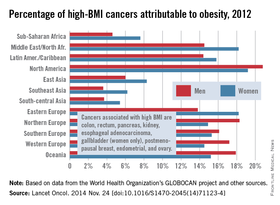
The study took into account the time lag between the exposure (high BMI) and outcomes (cancer incidence) by estimating the global population attributable fraction (PAF) of cancer incidence in 2012 attributable to high BMI in 2002. The investigators calculated PAFs using a formula and approach suggested by the Comparative Risk Assessment Collaborative Group.
Of all new cancer cases diagnosed worldwide in 2012, 3.6% or 481,000 of the cases were attributable to obesity, reported Melina Arnold, Ph.D., of the International Agency for Research on Cancer, Lyon, France, and her associates. In North America, 20.8% of high-BMI cancers in men and 19.2% in women were attributable to obesity, Dr. Arnold and her associates estimated. The next-highest of the 12 regions in the study were Northern Europe for men (18.3%) and Eastern Europe and the Middle East/North Africa for women (both 18.2%),
The regions with the lowest estimated rates were Southeast Asia and South-central Asia for both men (3.6% and 3.7%, respectively) and women (6.2% and 5.4%, respectively), according to calculations based on data from the World Health Organization’s GLOBOCAN project and several other sources.
The investigators said that they had no conflicts of interest. The study was funded by the World Cancer Research Fund International.
For those cancers in which risk is associated with high body mass index, North America has the highest percentage of cancer incidence attributable to obesity, according to a population-based study in the Lancet Oncology.
The investigators considered “only cancers reported by the World Cancer Research Fund as having sufficient evidence to be associated with high BMI”: colon, rectum, pancreas, kidney, esophageal adenocarcinoma, postmenopausal breast, endometrial, ovary, and gallbladder (women only) (Lancet Oncol. 2014 Nov. 26 [doi:10.1016/S1470-2045(14)71123-4]).
The study took into account the time lag between the exposure (high BMI) and outcomes (cancer incidence) by estimating the global population attributable fraction (PAF) of cancer incidence in 2012 attributable to high BMI in 2002. The investigators calculated PAFs using a formula and approach suggested by the Comparative Risk Assessment Collaborative Group.
Of all new cancer cases diagnosed worldwide in 2012, 3.6% or 481,000 of the cases were attributable to obesity, reported Melina Arnold, Ph.D., of the International Agency for Research on Cancer, Lyon, France, and her associates. In North America, 20.8% of high-BMI cancers in men and 19.2% in women were attributable to obesity, Dr. Arnold and her associates estimated. The next-highest of the 12 regions in the study were Northern Europe for men (18.3%) and Eastern Europe and the Middle East/North Africa for women (both 18.2%),
The regions with the lowest estimated rates were Southeast Asia and South-central Asia for both men (3.6% and 3.7%, respectively) and women (6.2% and 5.4%, respectively), according to calculations based on data from the World Health Organization’s GLOBOCAN project and several other sources.
The investigators said that they had no conflicts of interest. The study was funded by the World Cancer Research Fund International.
For those cancers in which risk is associated with high body mass index, North America has the highest percentage of cancer incidence attributable to obesity, according to a population-based study in the Lancet Oncology.
The investigators considered “only cancers reported by the World Cancer Research Fund as having sufficient evidence to be associated with high BMI”: colon, rectum, pancreas, kidney, esophageal adenocarcinoma, postmenopausal breast, endometrial, ovary, and gallbladder (women only) (Lancet Oncol. 2014 Nov. 26 [doi:10.1016/S1470-2045(14)71123-4]).
The study took into account the time lag between the exposure (high BMI) and outcomes (cancer incidence) by estimating the global population attributable fraction (PAF) of cancer incidence in 2012 attributable to high BMI in 2002. The investigators calculated PAFs using a formula and approach suggested by the Comparative Risk Assessment Collaborative Group.
Of all new cancer cases diagnosed worldwide in 2012, 3.6% or 481,000 of the cases were attributable to obesity, reported Melina Arnold, Ph.D., of the International Agency for Research on Cancer, Lyon, France, and her associates. In North America, 20.8% of high-BMI cancers in men and 19.2% in women were attributable to obesity, Dr. Arnold and her associates estimated. The next-highest of the 12 regions in the study were Northern Europe for men (18.3%) and Eastern Europe and the Middle East/North Africa for women (both 18.2%),
The regions with the lowest estimated rates were Southeast Asia and South-central Asia for both men (3.6% and 3.7%, respectively) and women (6.2% and 5.4%, respectively), according to calculations based on data from the World Health Organization’s GLOBOCAN project and several other sources.
The investigators said that they had no conflicts of interest. The study was funded by the World Cancer Research Fund International.
FROM THE LANCET ONCOLOGY
