User login
Breast cancer info on centers’ sites leaves room for improvement
ORLANDO – Women with breast cancer who look for well-rounded information about treatment on the websites of prominent U.S. cancer centers are likely to come up short, suggests a study presented at a symposium on quality care sponsored by the American Society of Clinical Oncology.
Research has shown that nearly all women with breast cancer search the Internet for information about its treatment, and two-thirds report that what they find has a strong influence on their decision-making process (J Cancer Educ. 2013;28[4]:662-8).
But the analysis of content on the websites of 63 National Cancer Institute–designated comprehensive cancer centers or clinical cancer centers found that, on average, they addressed only 21% of a set of key concepts that women need to understand to make informed decisions about surgery, radiation therapy, chemotherapy, hormone therapy, and breast reconstruction. This contrasted starkly with 85% for the National Cancer Institute’s own website (cancer.gov) and 88% for the Susan G. Komen Foundation’s website (komen.org).
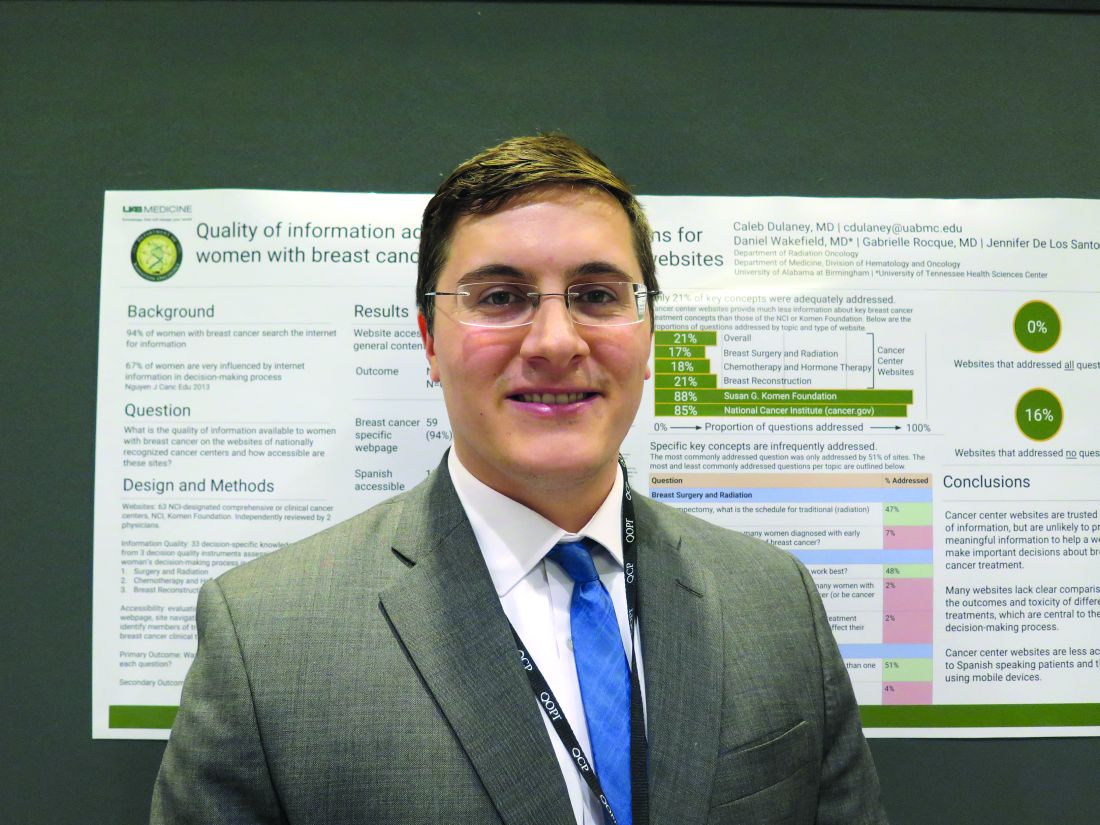
“These are websites that we think are reliable, cancer center websites, and these are the most prominent cancer centers in the country,” first author Caleb Dulaney, MD, a resident in radiation oncology at the University of Alabama at Birmingham, said in an interview. “This is where a lot of people receive their care, so they should be very reliable as to the information they provide.
“A lot of websites just had information from the NCI basically integrated into their website or a link to the NCI website,” he acknowledged. “Is it really the goal of the cancer center’s website to provide information? It may not be. But you have to take responsibility for being a trusted source of information. So if you are not going to provide it, you should at least direct people to very accurate, reliable information, and it can also kind of inform what you talk about in clinic.”
All of the investigators evaluating sites in the study were medical professionals, so the team has initiated a new study in which patients will instead perform the evaluations.
“We found that for a few websites, one person found a lot of information and another found no information. So the information may technically be there, but is it transmitted to the patient? Can they find it, and do they understand it?” Dr. Dulaney said. “So it will be interesting when we use patients to evaluate these websites. I’ll be curious to see how many questions they are able to find answers to.”
Study details
For the study, the investigators developed a list of 33 decision-specific knowledge questions about breast cancer treatment by drawing on decision quality instruments that assess how informed a woman’s decision-making process is. The primary outcome was whether the website provided sufficient information to answer each question. The researchers assessed seven measures of accessibility as secondary outcomes.
Results showed that websites contained sufficient content to address only 21% of the decision-specific knowledge questions, Dr. Dulaney reported in a poster session. The value was 17% for questions pertaining to breast surgery and radiation therapy, 18% for those pertaining to chemotherapy and hormone therapy, and 21% for those pertaining to breast reconstruction.
In addition, “a lot of websites put the information in silos,” he noted. “You can read about mastectomy, you can read about lumpectomy, you can read about chemo. But you can’t really get the big picture, which is how do these compare to each other, and which treatment is best for me.”
Even the most commonly addressed single question – what type of reconstruction is most likely to require more than one surgery or procedure – was addressed by only 51% of sites. Proportions were similar for questions pertaining to the type of tumors against which hormone therapy works best (48%) and the schedule for radiation therapy after lumpectomy (47%).
At the other extreme, however, very small proportions of sites addressed questions pertaining to how many women with treated early breast cancer will die from the disease (7%), how many undergoing breast reconstruction will experience complications requiring hospitalization or an unplanned procedure (4%), how skipping chemotherapy and hormone therapy influences risk of death (2%), and whether waiting several weeks to decide about those therapies affects survival (2%). These topics are more negative, Dr. Dulaney observed, “but these are things women need to know.”
None of the websites provided sufficient information to answer all 33 knowledge questions. But perhaps more worrisome, 16% did not provide sufficient information to answer any of them, he said.
When it came to accessibility of information, 94% of sites clearly had a breast cancer–specific page, 87% had information about breast cancer–specific trials, and 86% showed members of the center’s breast cancer team. But only 59% were mobile device friendly as assessed with a Google tool, and merely 24% had obvious links to view information in Spanish.
“A lot of minorities and people of lower socioeconomic status exclusively access the Internet via mobile devices, so they may not have a computer or [other] access to the Internet. But they have a cell phone that is probably a smartphone, and they can get online and search for information that way,” Dr. Dulaney said.
Many oncologists may not have had any say regarding the content and accessibility features of their institution’s website, he acknowledged.
“So we should maybe, number one, try to have more involvement in what information goes on to the website, and two, take a look at our own websites to see what’s on there, because patients are going to look for you, and they are going to associate this information with you,” he said. “If you are at a big institution and you really can’t make a change on your website, you can use alternatives such as social media platforms, things like that, to try and get information out to people.”
From a larger perspective, oncologists have often simply counseled patients that they can’t rely on information they have found online, according to Dr. Dulaney.
“But in this day and age, that can’t really be an answer,” he concluded. “Information on the web is ubiquitous, and there is good information out there. We need to do a better job of speaking up in the conversation. We have the answers to a lot of these questions, we just need to make our voices heard and also direct patients to reliable sources of information.”
ORLANDO – Women with breast cancer who look for well-rounded information about treatment on the websites of prominent U.S. cancer centers are likely to come up short, suggests a study presented at a symposium on quality care sponsored by the American Society of Clinical Oncology.
Research has shown that nearly all women with breast cancer search the Internet for information about its treatment, and two-thirds report that what they find has a strong influence on their decision-making process (J Cancer Educ. 2013;28[4]:662-8).
But the analysis of content on the websites of 63 National Cancer Institute–designated comprehensive cancer centers or clinical cancer centers found that, on average, they addressed only 21% of a set of key concepts that women need to understand to make informed decisions about surgery, radiation therapy, chemotherapy, hormone therapy, and breast reconstruction. This contrasted starkly with 85% for the National Cancer Institute’s own website (cancer.gov) and 88% for the Susan G. Komen Foundation’s website (komen.org).
“These are websites that we think are reliable, cancer center websites, and these are the most prominent cancer centers in the country,” first author Caleb Dulaney, MD, a resident in radiation oncology at the University of Alabama at Birmingham, said in an interview. “This is where a lot of people receive their care, so they should be very reliable as to the information they provide.
“A lot of websites just had information from the NCI basically integrated into their website or a link to the NCI website,” he acknowledged. “Is it really the goal of the cancer center’s website to provide information? It may not be. But you have to take responsibility for being a trusted source of information. So if you are not going to provide it, you should at least direct people to very accurate, reliable information, and it can also kind of inform what you talk about in clinic.”
All of the investigators evaluating sites in the study were medical professionals, so the team has initiated a new study in which patients will instead perform the evaluations.
“We found that for a few websites, one person found a lot of information and another found no information. So the information may technically be there, but is it transmitted to the patient? Can they find it, and do they understand it?” Dr. Dulaney said. “So it will be interesting when we use patients to evaluate these websites. I’ll be curious to see how many questions they are able to find answers to.”
Study details
For the study, the investigators developed a list of 33 decision-specific knowledge questions about breast cancer treatment by drawing on decision quality instruments that assess how informed a woman’s decision-making process is. The primary outcome was whether the website provided sufficient information to answer each question. The researchers assessed seven measures of accessibility as secondary outcomes.
Results showed that websites contained sufficient content to address only 21% of the decision-specific knowledge questions, Dr. Dulaney reported in a poster session. The value was 17% for questions pertaining to breast surgery and radiation therapy, 18% for those pertaining to chemotherapy and hormone therapy, and 21% for those pertaining to breast reconstruction.
In addition, “a lot of websites put the information in silos,” he noted. “You can read about mastectomy, you can read about lumpectomy, you can read about chemo. But you can’t really get the big picture, which is how do these compare to each other, and which treatment is best for me.”
Even the most commonly addressed single question – what type of reconstruction is most likely to require more than one surgery or procedure – was addressed by only 51% of sites. Proportions were similar for questions pertaining to the type of tumors against which hormone therapy works best (48%) and the schedule for radiation therapy after lumpectomy (47%).
At the other extreme, however, very small proportions of sites addressed questions pertaining to how many women with treated early breast cancer will die from the disease (7%), how many undergoing breast reconstruction will experience complications requiring hospitalization or an unplanned procedure (4%), how skipping chemotherapy and hormone therapy influences risk of death (2%), and whether waiting several weeks to decide about those therapies affects survival (2%). These topics are more negative, Dr. Dulaney observed, “but these are things women need to know.”
None of the websites provided sufficient information to answer all 33 knowledge questions. But perhaps more worrisome, 16% did not provide sufficient information to answer any of them, he said.
When it came to accessibility of information, 94% of sites clearly had a breast cancer–specific page, 87% had information about breast cancer–specific trials, and 86% showed members of the center’s breast cancer team. But only 59% were mobile device friendly as assessed with a Google tool, and merely 24% had obvious links to view information in Spanish.
“A lot of minorities and people of lower socioeconomic status exclusively access the Internet via mobile devices, so they may not have a computer or [other] access to the Internet. But they have a cell phone that is probably a smartphone, and they can get online and search for information that way,” Dr. Dulaney said.
Many oncologists may not have had any say regarding the content and accessibility features of their institution’s website, he acknowledged.
“So we should maybe, number one, try to have more involvement in what information goes on to the website, and two, take a look at our own websites to see what’s on there, because patients are going to look for you, and they are going to associate this information with you,” he said. “If you are at a big institution and you really can’t make a change on your website, you can use alternatives such as social media platforms, things like that, to try and get information out to people.”
From a larger perspective, oncologists have often simply counseled patients that they can’t rely on information they have found online, according to Dr. Dulaney.
“But in this day and age, that can’t really be an answer,” he concluded. “Information on the web is ubiquitous, and there is good information out there. We need to do a better job of speaking up in the conversation. We have the answers to a lot of these questions, we just need to make our voices heard and also direct patients to reliable sources of information.”
ORLANDO – Women with breast cancer who look for well-rounded information about treatment on the websites of prominent U.S. cancer centers are likely to come up short, suggests a study presented at a symposium on quality care sponsored by the American Society of Clinical Oncology.
Research has shown that nearly all women with breast cancer search the Internet for information about its treatment, and two-thirds report that what they find has a strong influence on their decision-making process (J Cancer Educ. 2013;28[4]:662-8).
But the analysis of content on the websites of 63 National Cancer Institute–designated comprehensive cancer centers or clinical cancer centers found that, on average, they addressed only 21% of a set of key concepts that women need to understand to make informed decisions about surgery, radiation therapy, chemotherapy, hormone therapy, and breast reconstruction. This contrasted starkly with 85% for the National Cancer Institute’s own website (cancer.gov) and 88% for the Susan G. Komen Foundation’s website (komen.org).
“These are websites that we think are reliable, cancer center websites, and these are the most prominent cancer centers in the country,” first author Caleb Dulaney, MD, a resident in radiation oncology at the University of Alabama at Birmingham, said in an interview. “This is where a lot of people receive their care, so they should be very reliable as to the information they provide.
“A lot of websites just had information from the NCI basically integrated into their website or a link to the NCI website,” he acknowledged. “Is it really the goal of the cancer center’s website to provide information? It may not be. But you have to take responsibility for being a trusted source of information. So if you are not going to provide it, you should at least direct people to very accurate, reliable information, and it can also kind of inform what you talk about in clinic.”
All of the investigators evaluating sites in the study were medical professionals, so the team has initiated a new study in which patients will instead perform the evaluations.
“We found that for a few websites, one person found a lot of information and another found no information. So the information may technically be there, but is it transmitted to the patient? Can they find it, and do they understand it?” Dr. Dulaney said. “So it will be interesting when we use patients to evaluate these websites. I’ll be curious to see how many questions they are able to find answers to.”
Study details
For the study, the investigators developed a list of 33 decision-specific knowledge questions about breast cancer treatment by drawing on decision quality instruments that assess how informed a woman’s decision-making process is. The primary outcome was whether the website provided sufficient information to answer each question. The researchers assessed seven measures of accessibility as secondary outcomes.
Results showed that websites contained sufficient content to address only 21% of the decision-specific knowledge questions, Dr. Dulaney reported in a poster session. The value was 17% for questions pertaining to breast surgery and radiation therapy, 18% for those pertaining to chemotherapy and hormone therapy, and 21% for those pertaining to breast reconstruction.
In addition, “a lot of websites put the information in silos,” he noted. “You can read about mastectomy, you can read about lumpectomy, you can read about chemo. But you can’t really get the big picture, which is how do these compare to each other, and which treatment is best for me.”
Even the most commonly addressed single question – what type of reconstruction is most likely to require more than one surgery or procedure – was addressed by only 51% of sites. Proportions were similar for questions pertaining to the type of tumors against which hormone therapy works best (48%) and the schedule for radiation therapy after lumpectomy (47%).
At the other extreme, however, very small proportions of sites addressed questions pertaining to how many women with treated early breast cancer will die from the disease (7%), how many undergoing breast reconstruction will experience complications requiring hospitalization or an unplanned procedure (4%), how skipping chemotherapy and hormone therapy influences risk of death (2%), and whether waiting several weeks to decide about those therapies affects survival (2%). These topics are more negative, Dr. Dulaney observed, “but these are things women need to know.”
None of the websites provided sufficient information to answer all 33 knowledge questions. But perhaps more worrisome, 16% did not provide sufficient information to answer any of them, he said.
When it came to accessibility of information, 94% of sites clearly had a breast cancer–specific page, 87% had information about breast cancer–specific trials, and 86% showed members of the center’s breast cancer team. But only 59% were mobile device friendly as assessed with a Google tool, and merely 24% had obvious links to view information in Spanish.
“A lot of minorities and people of lower socioeconomic status exclusively access the Internet via mobile devices, so they may not have a computer or [other] access to the Internet. But they have a cell phone that is probably a smartphone, and they can get online and search for information that way,” Dr. Dulaney said.
Many oncologists may not have had any say regarding the content and accessibility features of their institution’s website, he acknowledged.
“So we should maybe, number one, try to have more involvement in what information goes on to the website, and two, take a look at our own websites to see what’s on there, because patients are going to look for you, and they are going to associate this information with you,” he said. “If you are at a big institution and you really can’t make a change on your website, you can use alternatives such as social media platforms, things like that, to try and get information out to people.”
From a larger perspective, oncologists have often simply counseled patients that they can’t rely on information they have found online, according to Dr. Dulaney.
“But in this day and age, that can’t really be an answer,” he concluded. “Information on the web is ubiquitous, and there is good information out there. We need to do a better job of speaking up in the conversation. We have the answers to a lot of these questions, we just need to make our voices heard and also direct patients to reliable sources of information.”
AT THE QUALITY CARE SYMPOSIUM
Key clinical point:
Major finding: On average, the sites addressed 21% of 33 key concepts needed to make informed decisions about treatment.
Data source: An analysis of breast cancer information on the websites of 63 NCI-designated comprehensive cancer centers or clinical cancer centers.
Disclosures: Dr. Dulaney disclosed that he had no relevant conflicts of interest.
FDA approves ribociclib for HR+, HER2– advanced breast cancer
The Food and Drug Administration has approved ribociclib, a cyclin-dependent kinase (CDK) 4/6 inhibitor, in combination with an aromatase inhibitor as initial endocrine-based therapy for the treatment of postmenopausal women with hormone receptor (HR)-positive, human epidermal growth factor receptor 2 (HER2)-negative advanced or metastatic breast cancer.
Overall survival data is immature but approval was based on improvement in progression-free survival (PFS) among 334 women randomized to receive ribociclib plus letrozole compared to 334 women randomized to receive placebo plus letrozole in phase III MONALEESA-2 (hazard ratio, 0.556; 95% CI: 0.429, 0.720; P less than .0001).

Ribociclib 600 mg or placebo was administered orally once daily for 21 consecutive days, followed by 7 days off, with letrozole 2.5 mg administered orally once daily for 28 days. All patients were postmenopausal women with HR-positive, HER2-negative advanced or metastatic breast cancer who received no prior therapy for advanced disease. Treatment continued until disease progression or unacceptable toxicity,
The most common adverse reactions in patients taking ribociclib were neutropenia, nausea, fatigue, diarrhea, leukopenia, alopecia, vomiting, constipation, headache, and back pain. The most common grade 3 or 4 adverse reactions were neutropenia, leukopenia, abnormal liver function tests, lymphopenia, and vomiting. Ribociclib has been shown to prolong the QT interval in a concentration-dependent manner, the FDA warns.
Ribociclib is the second CDK4/6 inhibitor to receive approval for advanced breast cancer, following the accelerated approval of palbociclib (Ibrance) plus letrozole (Femara) as a first-line treatment for postmenopausal women with ER-postive, HER2-negative metastatic breast cancer in 2015. The FDA expanded the indication for fulvestrant to include use in combination with palbociclib in 2016.
Phase II trial data indicating activity of a third CDK 4/6 inhibitor, abemaciclib, in this patient population was presented at the 2016 ASCO Annual Meeting.
The recommended starting dose of ribociclib is 600 mg orally (three 200-mg tablets) taken once daily with or without food for 21 consecutive days followed by 7 days off treatment.
Full prescribing information for ribociclib is available here.
Ribociclib is being marketed as Kisqali by Novartis Pharmaceuticals Corp.
The Food and Drug Administration has approved ribociclib, a cyclin-dependent kinase (CDK) 4/6 inhibitor, in combination with an aromatase inhibitor as initial endocrine-based therapy for the treatment of postmenopausal women with hormone receptor (HR)-positive, human epidermal growth factor receptor 2 (HER2)-negative advanced or metastatic breast cancer.
Overall survival data is immature but approval was based on improvement in progression-free survival (PFS) among 334 women randomized to receive ribociclib plus letrozole compared to 334 women randomized to receive placebo plus letrozole in phase III MONALEESA-2 (hazard ratio, 0.556; 95% CI: 0.429, 0.720; P less than .0001).
Ribociclib 600 mg or placebo was administered orally once daily for 21 consecutive days, followed by 7 days off, with letrozole 2.5 mg administered orally once daily for 28 days. All patients were postmenopausal women with HR-positive, HER2-negative advanced or metastatic breast cancer who received no prior therapy for advanced disease. Treatment continued until disease progression or unacceptable toxicity,
The most common adverse reactions in patients taking ribociclib were neutropenia, nausea, fatigue, diarrhea, leukopenia, alopecia, vomiting, constipation, headache, and back pain. The most common grade 3 or 4 adverse reactions were neutropenia, leukopenia, abnormal liver function tests, lymphopenia, and vomiting. Ribociclib has been shown to prolong the QT interval in a concentration-dependent manner, the FDA warns.
Ribociclib is the second CDK4/6 inhibitor to receive approval for advanced breast cancer, following the accelerated approval of palbociclib (Ibrance) plus letrozole (Femara) as a first-line treatment for postmenopausal women with ER-postive, HER2-negative metastatic breast cancer in 2015. The FDA expanded the indication for fulvestrant to include use in combination with palbociclib in 2016.
Phase II trial data indicating activity of a third CDK 4/6 inhibitor, abemaciclib, in this patient population was presented at the 2016 ASCO Annual Meeting.
The recommended starting dose of ribociclib is 600 mg orally (three 200-mg tablets) taken once daily with or without food for 21 consecutive days followed by 7 days off treatment.
Full prescribing information for ribociclib is available here.
Ribociclib is being marketed as Kisqali by Novartis Pharmaceuticals Corp.
The Food and Drug Administration has approved ribociclib, a cyclin-dependent kinase (CDK) 4/6 inhibitor, in combination with an aromatase inhibitor as initial endocrine-based therapy for the treatment of postmenopausal women with hormone receptor (HR)-positive, human epidermal growth factor receptor 2 (HER2)-negative advanced or metastatic breast cancer.
Overall survival data is immature but approval was based on improvement in progression-free survival (PFS) among 334 women randomized to receive ribociclib plus letrozole compared to 334 women randomized to receive placebo plus letrozole in phase III MONALEESA-2 (hazard ratio, 0.556; 95% CI: 0.429, 0.720; P less than .0001).
Ribociclib 600 mg or placebo was administered orally once daily for 21 consecutive days, followed by 7 days off, with letrozole 2.5 mg administered orally once daily for 28 days. All patients were postmenopausal women with HR-positive, HER2-negative advanced or metastatic breast cancer who received no prior therapy for advanced disease. Treatment continued until disease progression or unacceptable toxicity,
The most common adverse reactions in patients taking ribociclib were neutropenia, nausea, fatigue, diarrhea, leukopenia, alopecia, vomiting, constipation, headache, and back pain. The most common grade 3 or 4 adverse reactions were neutropenia, leukopenia, abnormal liver function tests, lymphopenia, and vomiting. Ribociclib has been shown to prolong the QT interval in a concentration-dependent manner, the FDA warns.
Ribociclib is the second CDK4/6 inhibitor to receive approval for advanced breast cancer, following the accelerated approval of palbociclib (Ibrance) plus letrozole (Femara) as a first-line treatment for postmenopausal women with ER-postive, HER2-negative metastatic breast cancer in 2015. The FDA expanded the indication for fulvestrant to include use in combination with palbociclib in 2016.
Phase II trial data indicating activity of a third CDK 4/6 inhibitor, abemaciclib, in this patient population was presented at the 2016 ASCO Annual Meeting.
The recommended starting dose of ribociclib is 600 mg orally (three 200-mg tablets) taken once daily with or without food for 21 consecutive days followed by 7 days off treatment.
Full prescribing information for ribociclib is available here.
Ribociclib is being marketed as Kisqali by Novartis Pharmaceuticals Corp.
VIDEO: Sexuality, fertility are focus of cancer education website
MIAMI BEACH – Often people living with cancer hesitate to ask their providers about sensitive and important issues surrounding sexuality and fertility. At the same time, some clinicians remain uncomfortable raising questions regarding sexual function or simply lack the time to appropriately address the issues during a patient encounter.
A new online resource aims to solve both problems simultaneously, giving both patients and providers the tools to meaningfully address sexuality and fertility issues, Leslie R. Schover, PhD, said in a video interview at the annual Miami Breast Cancer Conference, held by Physicians’ Education Resource.
The Will2love.com site features first-person patient account videos from women and men who faced similar concerns, said Dr. Schover, founder of the Will2Love digital health company based in Houston. In addition, vignettes with actors inform patients and also model how oncologists, oncology nurses, and other staff could effectively communicate with concerned patients. A professional portal offers online skills training for clinicians.
The video associated with this article is no longer available on this site. Please view all of our videos on the MDedge YouTube channel
MIAMI BEACH – Often people living with cancer hesitate to ask their providers about sensitive and important issues surrounding sexuality and fertility. At the same time, some clinicians remain uncomfortable raising questions regarding sexual function or simply lack the time to appropriately address the issues during a patient encounter.
A new online resource aims to solve both problems simultaneously, giving both patients and providers the tools to meaningfully address sexuality and fertility issues, Leslie R. Schover, PhD, said in a video interview at the annual Miami Breast Cancer Conference, held by Physicians’ Education Resource.
The Will2love.com site features first-person patient account videos from women and men who faced similar concerns, said Dr. Schover, founder of the Will2Love digital health company based in Houston. In addition, vignettes with actors inform patients and also model how oncologists, oncology nurses, and other staff could effectively communicate with concerned patients. A professional portal offers online skills training for clinicians.
The video associated with this article is no longer available on this site. Please view all of our videos on the MDedge YouTube channel
MIAMI BEACH – Often people living with cancer hesitate to ask their providers about sensitive and important issues surrounding sexuality and fertility. At the same time, some clinicians remain uncomfortable raising questions regarding sexual function or simply lack the time to appropriately address the issues during a patient encounter.
A new online resource aims to solve both problems simultaneously, giving both patients and providers the tools to meaningfully address sexuality and fertility issues, Leslie R. Schover, PhD, said in a video interview at the annual Miami Breast Cancer Conference, held by Physicians’ Education Resource.
The Will2love.com site features first-person patient account videos from women and men who faced similar concerns, said Dr. Schover, founder of the Will2Love digital health company based in Houston. In addition, vignettes with actors inform patients and also model how oncologists, oncology nurses, and other staff could effectively communicate with concerned patients. A professional portal offers online skills training for clinicians.
The video associated with this article is no longer available on this site. Please view all of our videos on the MDedge YouTube channel
VIDEO: Residual cancer burden may be better outcome measure than pCR
MIAMI BEACH – The Food and Drug Administration has accepted pathological complete response rate (pCR) as a surrogate endpoint for disease-free and overall survival in clinical trials for neoadjuvant therapy of breast cancer.
Yet the specimen collection and histopathologic methods used to measure pCR have differed considerably across major neoadjuvant trials for breast cancer, said Michael F. Press, MD, PhD, of the USC/Norris Comprehensive Cancer Center at the University of California, Los Angeles.
In a video interview conducted at the annual Miami Breast Cancer Conference, held by Physicians’ Education Resource, Dr. Press outlined the problems associated with a lack of standardization of outcomes measures, and described how residual cancer burden may be a more effective, validated measures for comparing outcomes across clinical trials.
The video associated with this article is no longer available on this site. Please view all of our videos on the MDedge YouTube channel
Dr. Press disclosed grant/research support from Cepheid, and consulting with Cepheid, Karyopharm Therapeutics, Eli Lilly, Puma Biotechnology, Halozyme Therapeutics, Biocartis SA, and ADC Therapeutics.
MIAMI BEACH – The Food and Drug Administration has accepted pathological complete response rate (pCR) as a surrogate endpoint for disease-free and overall survival in clinical trials for neoadjuvant therapy of breast cancer.
Yet the specimen collection and histopathologic methods used to measure pCR have differed considerably across major neoadjuvant trials for breast cancer, said Michael F. Press, MD, PhD, of the USC/Norris Comprehensive Cancer Center at the University of California, Los Angeles.
In a video interview conducted at the annual Miami Breast Cancer Conference, held by Physicians’ Education Resource, Dr. Press outlined the problems associated with a lack of standardization of outcomes measures, and described how residual cancer burden may be a more effective, validated measures for comparing outcomes across clinical trials.
The video associated with this article is no longer available on this site. Please view all of our videos on the MDedge YouTube channel
Dr. Press disclosed grant/research support from Cepheid, and consulting with Cepheid, Karyopharm Therapeutics, Eli Lilly, Puma Biotechnology, Halozyme Therapeutics, Biocartis SA, and ADC Therapeutics.
MIAMI BEACH – The Food and Drug Administration has accepted pathological complete response rate (pCR) as a surrogate endpoint for disease-free and overall survival in clinical trials for neoadjuvant therapy of breast cancer.
Yet the specimen collection and histopathologic methods used to measure pCR have differed considerably across major neoadjuvant trials for breast cancer, said Michael F. Press, MD, PhD, of the USC/Norris Comprehensive Cancer Center at the University of California, Los Angeles.
In a video interview conducted at the annual Miami Breast Cancer Conference, held by Physicians’ Education Resource, Dr. Press outlined the problems associated with a lack of standardization of outcomes measures, and described how residual cancer burden may be a more effective, validated measures for comparing outcomes across clinical trials.
The video associated with this article is no longer available on this site. Please view all of our videos on the MDedge YouTube channel
Dr. Press disclosed grant/research support from Cepheid, and consulting with Cepheid, Karyopharm Therapeutics, Eli Lilly, Puma Biotechnology, Halozyme Therapeutics, Biocartis SA, and ADC Therapeutics.
AT MBCC

VIDEO: Genomics, other advances further highlight how breast cancer differs in men
MIAMI BEACH – Growing evidence continues to point to a widening separation between female and male breast cancers, particularly with discoveries suggesting different pathways to disease and important genetic distinctions.
Therefore, the traditional practice of extrapolating findings from female breast cancer research to men with breast cancer no longer makes sense, Patrick I. Borgen, MD, said at the annual Miami Breast Cancer Conference, held by Physicians’ Education Resource.
The incidence of male breast cancer is increasing. At the same time, fewer men with breast cancer get referred for and undergo genetic testing for their disease, said Dr. Borgen, chair of the department of surgery at Maimonides Medical Center in Brooklyn, N.Y.
Dr. Borgen explained in a video interview that both maternal and paternal inheritance of breast cancer are important, and they tie the lineage into a hypothesis for why BRCA mutations – which can predispose people to worse survival – have persisted through generations.
The video associated with this article is no longer available on this site. Please view all of our videos on the MDedge YouTube channel
Dr. Borgen is a member of the speakers bureau for Genomic Health Inc., NanoString Technologies, Genentech, and Pacira Inc.
MIAMI BEACH – Growing evidence continues to point to a widening separation between female and male breast cancers, particularly with discoveries suggesting different pathways to disease and important genetic distinctions.
Therefore, the traditional practice of extrapolating findings from female breast cancer research to men with breast cancer no longer makes sense, Patrick I. Borgen, MD, said at the annual Miami Breast Cancer Conference, held by Physicians’ Education Resource.
The incidence of male breast cancer is increasing. At the same time, fewer men with breast cancer get referred for and undergo genetic testing for their disease, said Dr. Borgen, chair of the department of surgery at Maimonides Medical Center in Brooklyn, N.Y.
Dr. Borgen explained in a video interview that both maternal and paternal inheritance of breast cancer are important, and they tie the lineage into a hypothesis for why BRCA mutations – which can predispose people to worse survival – have persisted through generations.
The video associated with this article is no longer available on this site. Please view all of our videos on the MDedge YouTube channel
Dr. Borgen is a member of the speakers bureau for Genomic Health Inc., NanoString Technologies, Genentech, and Pacira Inc.
MIAMI BEACH – Growing evidence continues to point to a widening separation between female and male breast cancers, particularly with discoveries suggesting different pathways to disease and important genetic distinctions.
Therefore, the traditional practice of extrapolating findings from female breast cancer research to men with breast cancer no longer makes sense, Patrick I. Borgen, MD, said at the annual Miami Breast Cancer Conference, held by Physicians’ Education Resource.
The incidence of male breast cancer is increasing. At the same time, fewer men with breast cancer get referred for and undergo genetic testing for their disease, said Dr. Borgen, chair of the department of surgery at Maimonides Medical Center in Brooklyn, N.Y.
Dr. Borgen explained in a video interview that both maternal and paternal inheritance of breast cancer are important, and they tie the lineage into a hypothesis for why BRCA mutations – which can predispose people to worse survival – have persisted through generations.
The video associated with this article is no longer available on this site. Please view all of our videos on the MDedge YouTube channel
Dr. Borgen is a member of the speakers bureau for Genomic Health Inc., NanoString Technologies, Genentech, and Pacira Inc.
AT MBCC

VIDEO: It’s too early to give up on immunotherapy for breast cancer
MIAMI BEACH – The remarkable progress seen with immune checkpoint inhibitors in metastatic melanoma, non–small-cell lung cancer, and other tumors has yet to be replicated in breast cancer, but it’s early days yet, and breast cancer researchers need more time before the ultimate clinical benefits of immunotherapy in breast cancer can be ascertained, said Adam M. Brufsky, MD, PhD, of the University of Pittsburgh.
Early studies with inhibitors of programmed death-1 (PD-1) and its ligand PD-L1 in patients with advanced triple-negative breast cancer have yielded only minimal response rates to date, but it it’s far too early to give up on the concept, Dr. Brufsky cautioned at the annual Miami Breast Cancer Conference, held by Physicians’ Education Resource.
In a video interview, he discussed the challenges of treating breast cancers, which may be less immunogenic and have a lower tumor mutational burden than other malignancies that respond more readily to PD-1 inhibition. Several large, phase III clinical trials of checkpoint inhibitors combined with cytotoxic chemotherapy are underway, he said, and those eventual findings may shed light on the optimal approach to using immunotherapy to treat patients with refractory metastatic breast cancers.
The video associated with this article is no longer available on this site. Please view all of our videos on the MDedge YouTube channel
Dr. Brufsky disclosed consulting with Novartis, Eisai, Celgene, Lilly, Pfizer, Agendia, Genomic Health, NanoString Technologies and Biotheranostics.
MIAMI BEACH – The remarkable progress seen with immune checkpoint inhibitors in metastatic melanoma, non–small-cell lung cancer, and other tumors has yet to be replicated in breast cancer, but it’s early days yet, and breast cancer researchers need more time before the ultimate clinical benefits of immunotherapy in breast cancer can be ascertained, said Adam M. Brufsky, MD, PhD, of the University of Pittsburgh.
Early studies with inhibitors of programmed death-1 (PD-1) and its ligand PD-L1 in patients with advanced triple-negative breast cancer have yielded only minimal response rates to date, but it it’s far too early to give up on the concept, Dr. Brufsky cautioned at the annual Miami Breast Cancer Conference, held by Physicians’ Education Resource.
In a video interview, he discussed the challenges of treating breast cancers, which may be less immunogenic and have a lower tumor mutational burden than other malignancies that respond more readily to PD-1 inhibition. Several large, phase III clinical trials of checkpoint inhibitors combined with cytotoxic chemotherapy are underway, he said, and those eventual findings may shed light on the optimal approach to using immunotherapy to treat patients with refractory metastatic breast cancers.
The video associated with this article is no longer available on this site. Please view all of our videos on the MDedge YouTube channel
Dr. Brufsky disclosed consulting with Novartis, Eisai, Celgene, Lilly, Pfizer, Agendia, Genomic Health, NanoString Technologies and Biotheranostics.
MIAMI BEACH – The remarkable progress seen with immune checkpoint inhibitors in metastatic melanoma, non–small-cell lung cancer, and other tumors has yet to be replicated in breast cancer, but it’s early days yet, and breast cancer researchers need more time before the ultimate clinical benefits of immunotherapy in breast cancer can be ascertained, said Adam M. Brufsky, MD, PhD, of the University of Pittsburgh.
Early studies with inhibitors of programmed death-1 (PD-1) and its ligand PD-L1 in patients with advanced triple-negative breast cancer have yielded only minimal response rates to date, but it it’s far too early to give up on the concept, Dr. Brufsky cautioned at the annual Miami Breast Cancer Conference, held by Physicians’ Education Resource.
In a video interview, he discussed the challenges of treating breast cancers, which may be less immunogenic and have a lower tumor mutational burden than other malignancies that respond more readily to PD-1 inhibition. Several large, phase III clinical trials of checkpoint inhibitors combined with cytotoxic chemotherapy are underway, he said, and those eventual findings may shed light on the optimal approach to using immunotherapy to treat patients with refractory metastatic breast cancers.
The video associated with this article is no longer available on this site. Please view all of our videos on the MDedge YouTube channel
Dr. Brufsky disclosed consulting with Novartis, Eisai, Celgene, Lilly, Pfizer, Agendia, Genomic Health, NanoString Technologies and Biotheranostics.
AT MBCC

VIDEO: Multiple PARP inhibitors show promise in breast cancer treatment
MIAMI BEACH – Driven by efficacy demonstrated in ovarian cancer, a number of PARP inhibitors are in development and hold promise for treatment of breast cancer as well, including patients positive for the BRCA mutation.
Interestingly, early evidence suggests these agents could also treat BRCA-negative women, potentially expanding their future clinical utility, Kimberly L. Blackwell, MD, said in a video interview at the annual Miami Breast Cancer Conference, held by Physicians’ Education Resource.
The video associated with this article is no longer available on this site. Please view all of our videos on the MDedge YouTube channel
Although it’s early, PARP inhibitors potentially could also be combined with standard platinum-based chemotherapy agents, although toxicity and the optimal timing of the regimens need further evaluation, said Dr. Blackwell, professor of medicine and assistant professor of radiation oncology at Duke University Medical Center, Durham, N.C.
Approval of the first PARP inhibitor indicated for breast cancer is expected in 2017, she said.
Dr. Blackwell received institutional grant support from AstraZeneca and Pfizer.
MIAMI BEACH – Driven by efficacy demonstrated in ovarian cancer, a number of PARP inhibitors are in development and hold promise for treatment of breast cancer as well, including patients positive for the BRCA mutation.
Interestingly, early evidence suggests these agents could also treat BRCA-negative women, potentially expanding their future clinical utility, Kimberly L. Blackwell, MD, said in a video interview at the annual Miami Breast Cancer Conference, held by Physicians’ Education Resource.
The video associated with this article is no longer available on this site. Please view all of our videos on the MDedge YouTube channel
Although it’s early, PARP inhibitors potentially could also be combined with standard platinum-based chemotherapy agents, although toxicity and the optimal timing of the regimens need further evaluation, said Dr. Blackwell, professor of medicine and assistant professor of radiation oncology at Duke University Medical Center, Durham, N.C.
Approval of the first PARP inhibitor indicated for breast cancer is expected in 2017, she said.
Dr. Blackwell received institutional grant support from AstraZeneca and Pfizer.
MIAMI BEACH – Driven by efficacy demonstrated in ovarian cancer, a number of PARP inhibitors are in development and hold promise for treatment of breast cancer as well, including patients positive for the BRCA mutation.
Interestingly, early evidence suggests these agents could also treat BRCA-negative women, potentially expanding their future clinical utility, Kimberly L. Blackwell, MD, said in a video interview at the annual Miami Breast Cancer Conference, held by Physicians’ Education Resource.
The video associated with this article is no longer available on this site. Please view all of our videos on the MDedge YouTube channel
Although it’s early, PARP inhibitors potentially could also be combined with standard platinum-based chemotherapy agents, although toxicity and the optimal timing of the regimens need further evaluation, said Dr. Blackwell, professor of medicine and assistant professor of radiation oncology at Duke University Medical Center, Durham, N.C.
Approval of the first PARP inhibitor indicated for breast cancer is expected in 2017, she said.
Dr. Blackwell received institutional grant support from AstraZeneca and Pfizer.
AT MBCC
VIDEO: What’s new with HER2-neu inhibition
MIAMI BEACH – Breast tumors positive for the human epidermal growth factor receptor-2 (HER2) comprise only about 20% of all breast cancers, but for patients with HER2-positive disease, neoadjuvant therapy with trastuzumab (Herceptin) was and is a game changer, improving pathological complete response rates and long-term disease-free and overall survival rates, Debu Tripathy, MD, said at the annual Miami Breast Cancer Conference, held by Physicians’ Education Resource.
In the nearly 2 decades that have passed since the approval of trastuzumab, clinicians have learned how best to use HER2 inhibitors, how to weigh the relative risks and benefits of anti-HER2 therapy in patients who may be at risk for cardiotoxicities such as heart failure, and what combination regimens work best with HER2 inhibitors in early-stage disease.
In a video interview, Dr. Tripathy, professor and chair of the department of breast medical oncology at the University of Texas MD Anderson Cancer Center in Houston, discusses current clinical considerations for the use of trastuzumab and pertuzumab (Perjeta) in the neoadjuvant and adjuvant settings, investigational targeted therapies and immunotherapeutic strategies, and recently released clinical trial data showing a significant increase in disease-free survival for patients treated with dual HER2-blockade compared with HER2 monotherapy.
The video associated with this article is no longer available on this site. Please view all of our videos on the MDedge YouTube channel
Dr. Tripathy disclosed research/grant support from Novartis, and consulting for Nektar, Novartis, and Puma Biotechnology.
MIAMI BEACH – Breast tumors positive for the human epidermal growth factor receptor-2 (HER2) comprise only about 20% of all breast cancers, but for patients with HER2-positive disease, neoadjuvant therapy with trastuzumab (Herceptin) was and is a game changer, improving pathological complete response rates and long-term disease-free and overall survival rates, Debu Tripathy, MD, said at the annual Miami Breast Cancer Conference, held by Physicians’ Education Resource.
In the nearly 2 decades that have passed since the approval of trastuzumab, clinicians have learned how best to use HER2 inhibitors, how to weigh the relative risks and benefits of anti-HER2 therapy in patients who may be at risk for cardiotoxicities such as heart failure, and what combination regimens work best with HER2 inhibitors in early-stage disease.
In a video interview, Dr. Tripathy, professor and chair of the department of breast medical oncology at the University of Texas MD Anderson Cancer Center in Houston, discusses current clinical considerations for the use of trastuzumab and pertuzumab (Perjeta) in the neoadjuvant and adjuvant settings, investigational targeted therapies and immunotherapeutic strategies, and recently released clinical trial data showing a significant increase in disease-free survival for patients treated with dual HER2-blockade compared with HER2 monotherapy.
The video associated with this article is no longer available on this site. Please view all of our videos on the MDedge YouTube channel
Dr. Tripathy disclosed research/grant support from Novartis, and consulting for Nektar, Novartis, and Puma Biotechnology.
MIAMI BEACH – Breast tumors positive for the human epidermal growth factor receptor-2 (HER2) comprise only about 20% of all breast cancers, but for patients with HER2-positive disease, neoadjuvant therapy with trastuzumab (Herceptin) was and is a game changer, improving pathological complete response rates and long-term disease-free and overall survival rates, Debu Tripathy, MD, said at the annual Miami Breast Cancer Conference, held by Physicians’ Education Resource.
In the nearly 2 decades that have passed since the approval of trastuzumab, clinicians have learned how best to use HER2 inhibitors, how to weigh the relative risks and benefits of anti-HER2 therapy in patients who may be at risk for cardiotoxicities such as heart failure, and what combination regimens work best with HER2 inhibitors in early-stage disease.
In a video interview, Dr. Tripathy, professor and chair of the department of breast medical oncology at the University of Texas MD Anderson Cancer Center in Houston, discusses current clinical considerations for the use of trastuzumab and pertuzumab (Perjeta) in the neoadjuvant and adjuvant settings, investigational targeted therapies and immunotherapeutic strategies, and recently released clinical trial data showing a significant increase in disease-free survival for patients treated with dual HER2-blockade compared with HER2 monotherapy.
The video associated with this article is no longer available on this site. Please view all of our videos on the MDedge YouTube channel
Dr. Tripathy disclosed research/grant support from Novartis, and consulting for Nektar, Novartis, and Puma Biotechnology.
AT MBCC

VIDEO: Vaccines, combination therapy hold most promise for optimizing immunotherapy in breast cancer
MIAMI BEACH – Promising strategies in development each aim to optimize an individual patient’s ability to respond to immunotherapy in advance.
Augmenting infiltration of T cells into the breast so their levels will be high enough to mount a formidable response is one tactic. In addition, preimmunotherapy radiation or cryoimmunotherapy to release neoantigens – so the immune system has something to which to respond – are additional avenues being explored, Elizabeth A. Mittendorf, MD, PhD, said in a video interview at the annual Miami Breast Cancer Conference, held by Physicians’ Education Resource.
The video associated with this article is no longer available on this site. Please view all of our videos on the MDedge YouTube channel
Even as individual agents in development show promise, including peptide vaccines, the future of immunotherapy in breast cancer is likely combination treatment, said Dr. Mittendorf, associate professor in Breast Surgical Oncology at MD Anderson Cancer Center in Houston.
Dr. Mittendorf’s institution receives funding to support vaccine clinical trials from Galena Biopharma, Antigen Express, Genentech, AstraZeneca and EMD-Serono.
MIAMI BEACH – Promising strategies in development each aim to optimize an individual patient’s ability to respond to immunotherapy in advance.
Augmenting infiltration of T cells into the breast so their levels will be high enough to mount a formidable response is one tactic. In addition, preimmunotherapy radiation or cryoimmunotherapy to release neoantigens – so the immune system has something to which to respond – are additional avenues being explored, Elizabeth A. Mittendorf, MD, PhD, said in a video interview at the annual Miami Breast Cancer Conference, held by Physicians’ Education Resource.
The video associated with this article is no longer available on this site. Please view all of our videos on the MDedge YouTube channel
Even as individual agents in development show promise, including peptide vaccines, the future of immunotherapy in breast cancer is likely combination treatment, said Dr. Mittendorf, associate professor in Breast Surgical Oncology at MD Anderson Cancer Center in Houston.
Dr. Mittendorf’s institution receives funding to support vaccine clinical trials from Galena Biopharma, Antigen Express, Genentech, AstraZeneca and EMD-Serono.
MIAMI BEACH – Promising strategies in development each aim to optimize an individual patient’s ability to respond to immunotherapy in advance.
Augmenting infiltration of T cells into the breast so their levels will be high enough to mount a formidable response is one tactic. In addition, preimmunotherapy radiation or cryoimmunotherapy to release neoantigens – so the immune system has something to which to respond – are additional avenues being explored, Elizabeth A. Mittendorf, MD, PhD, said in a video interview at the annual Miami Breast Cancer Conference, held by Physicians’ Education Resource.
The video associated with this article is no longer available on this site. Please view all of our videos on the MDedge YouTube channel
Even as individual agents in development show promise, including peptide vaccines, the future of immunotherapy in breast cancer is likely combination treatment, said Dr. Mittendorf, associate professor in Breast Surgical Oncology at MD Anderson Cancer Center in Houston.
Dr. Mittendorf’s institution receives funding to support vaccine clinical trials from Galena Biopharma, Antigen Express, Genentech, AstraZeneca and EMD-Serono.
AT MBCC
VIDEO: Registry studies reflect real patients in the real world
MIAMI BEACH – Randomized clinical trials are the gold standard for evidence-based medicine, but only about 5% of patients are enrolled. The majority of patients who are being treated for diseases such as breast cancer are ineligible for trials due to advanced age, poor performance, comorbidities, or other factors, noted Mohammad Jahanzeb, MD, professor of hematology/oncology at the University of Miami.
In contrast, studies using data from prospective registries provide valuable insights for investigators into diseases of real patients in real-world settings. Registry studies serve as a “living laboratory” that can help inform clinical practice, generate new clinical questions, and optimize clinical trial designs, he said at the annual Miami Breast Cancer Conference, held by Physicians’ Education Resource.
In a video interview, Dr. Jahanzeb described the benefits of large patient registries and studies based on their data, including the registerHER and SystHERs observational registries of women with human epidermal growth factor receptor 2 (HER2)-positive metastatic breast cancer.
The video associated with this article is no longer available on this site. Please view all of our videos on the MDedge YouTube channel
The two registries are just a few years apart, but the data derived from them reflect the substantial changes that have occurred in breast cancer therapy over the last decade, he said.
The registerHER and SystHERs registries are sponsored by Genentech. Dr. Jahanzeb disclosed grant/research support from Lilly, AbbVie, Genentech, and Novartis, and consulting with Novartis and Genentech.
MIAMI BEACH – Randomized clinical trials are the gold standard for evidence-based medicine, but only about 5% of patients are enrolled. The majority of patients who are being treated for diseases such as breast cancer are ineligible for trials due to advanced age, poor performance, comorbidities, or other factors, noted Mohammad Jahanzeb, MD, professor of hematology/oncology at the University of Miami.
In contrast, studies using data from prospective registries provide valuable insights for investigators into diseases of real patients in real-world settings. Registry studies serve as a “living laboratory” that can help inform clinical practice, generate new clinical questions, and optimize clinical trial designs, he said at the annual Miami Breast Cancer Conference, held by Physicians’ Education Resource.
In a video interview, Dr. Jahanzeb described the benefits of large patient registries and studies based on their data, including the registerHER and SystHERs observational registries of women with human epidermal growth factor receptor 2 (HER2)-positive metastatic breast cancer.
The video associated with this article is no longer available on this site. Please view all of our videos on the MDedge YouTube channel
The two registries are just a few years apart, but the data derived from them reflect the substantial changes that have occurred in breast cancer therapy over the last decade, he said.
The registerHER and SystHERs registries are sponsored by Genentech. Dr. Jahanzeb disclosed grant/research support from Lilly, AbbVie, Genentech, and Novartis, and consulting with Novartis and Genentech.
MIAMI BEACH – Randomized clinical trials are the gold standard for evidence-based medicine, but only about 5% of patients are enrolled. The majority of patients who are being treated for diseases such as breast cancer are ineligible for trials due to advanced age, poor performance, comorbidities, or other factors, noted Mohammad Jahanzeb, MD, professor of hematology/oncology at the University of Miami.
In contrast, studies using data from prospective registries provide valuable insights for investigators into diseases of real patients in real-world settings. Registry studies serve as a “living laboratory” that can help inform clinical practice, generate new clinical questions, and optimize clinical trial designs, he said at the annual Miami Breast Cancer Conference, held by Physicians’ Education Resource.
In a video interview, Dr. Jahanzeb described the benefits of large patient registries and studies based on their data, including the registerHER and SystHERs observational registries of women with human epidermal growth factor receptor 2 (HER2)-positive metastatic breast cancer.
The video associated with this article is no longer available on this site. Please view all of our videos on the MDedge YouTube channel
The two registries are just a few years apart, but the data derived from them reflect the substantial changes that have occurred in breast cancer therapy over the last decade, he said.
The registerHER and SystHERs registries are sponsored by Genentech. Dr. Jahanzeb disclosed grant/research support from Lilly, AbbVie, Genentech, and Novartis, and consulting with Novartis and Genentech.
AT MBCC