User login
ALTTO follow-up: Dual HER2 blockade may benefit HER2+/HR- tumors
CHICAGO – HER2-positive/HR-negative breast tumors may have a different biology than HER2+/HR+ tumors and may derive more benefit from dual HER2 blockade, according to 5-year results from the phase III ALTTO trial comparing 1 year of adjuvant anti-HER2 therapy with lapatinib and trastuzumab alone, sequentially, or in combination in patients with HER2-positive early breast cancer.
The hazard ratios for this preplanned updated analysis at a median of 6.9 years of follow-up (when all patients had reached 5 years of follow-up) are similar to those from the primary analysis reported at the 2014 ASCO annual meeting and published in the Journal of Clinical Oncology in 2015 (J Clin Oncol. 2015;34:1034-42) at a median clinical follow-up of 4.5 years, Alvaro Moreno-Aspitia, MD, reported at the annual meeting of the American Society of Clinical Oncology.
In the current analysis, the rate of disease-free survival was 85% with combined lapatinib and trastuzumab (L+T), 84% for sequential trastuzumab and lapatinib (T–L), and 82% with T (hazard ratio for disease-free survival was 0.86 for L+T vs. T and 0.93 for T–L vs. T alone,) said Dr. Moreno-Aspitia of Mayo Clinic, Jacksonville, Fla.
“So, at this time, as noted in the primary analysis, there’s no benefit on the primary endpoint in regard to dual HER2 blockade as provided in this clinical trial,” he said.
There also were no significant differences seen in disease-free survival based on chemotherapy timing, he said.
Notably, disease-free survival was similar across treatment groups among patients with HER2+/HR+ tumors (85% for L+T, 85% to T–L, and 83% for T; HRs, 0.91 and 0.90 vs. T, respectively), but, among those with HER2+/HR– tumors, the 6-year disease-free survival difference for L+T (84%) vs. T (80%) was slightly greater (HR, 0.80).
“This is a hypothesis generating observation that also holds that possibly these patients with hormone receptor–negative tumors may derive benefit from dual HER2 blockade,” Dr. Moreno-Aspitia said, noting that this has also been observed in several other trials.
The 6-year overall survival in ALTTO was 93%, 92%, and 91% for L+T, T–L, and T, respectively (HRs for overall survival, 0.86 for L+T vs. T and 0.88 for T–L).
“At this time, there is absolutely no [overall survival] benefit on dual HER2 blockade over single agent trastuzumab. However, it is very rewarding to see that over 90% of the patients who participated in this trial are alive at this longer-term follow-up,” he said.
As for cardiac events, the numbers remained low as in the primary ALTTO analysis, and no new safety signals had emerged.
ALTTO study subjects were 8,381 patients randomized from 946 sites in 44 countries between June 2007 and July 2011. Those in the L+T group received both agents together for 52 weeks; those in the sequential treatment group received T for 12 weeks followed by a 6-week wash-out period, followed by lapatinib for 34 weeks; and those in the trastuzumab arm (the control arm) and the lapatinib arm each received treatment for 52 weeks. In 2011 the lapatinib arm was closed because of futility, and results for that arm are not included in this analysis.
Long-term follow up of participants continues, a large number of correlative studies are ongoing, and final results will be reported when all patients have been followed for at least 10 years, Dr. Moreno-Aspitia said.
The ALTTO trial was sponsored by GlaxoSmithKline and Novartis. Dr. Moreno-Aspitia reported having no disclosures.
CHICAGO – HER2-positive/HR-negative breast tumors may have a different biology than HER2+/HR+ tumors and may derive more benefit from dual HER2 blockade, according to 5-year results from the phase III ALTTO trial comparing 1 year of adjuvant anti-HER2 therapy with lapatinib and trastuzumab alone, sequentially, or in combination in patients with HER2-positive early breast cancer.
The hazard ratios for this preplanned updated analysis at a median of 6.9 years of follow-up (when all patients had reached 5 years of follow-up) are similar to those from the primary analysis reported at the 2014 ASCO annual meeting and published in the Journal of Clinical Oncology in 2015 (J Clin Oncol. 2015;34:1034-42) at a median clinical follow-up of 4.5 years, Alvaro Moreno-Aspitia, MD, reported at the annual meeting of the American Society of Clinical Oncology.
In the current analysis, the rate of disease-free survival was 85% with combined lapatinib and trastuzumab (L+T), 84% for sequential trastuzumab and lapatinib (T–L), and 82% with T (hazard ratio for disease-free survival was 0.86 for L+T vs. T and 0.93 for T–L vs. T alone,) said Dr. Moreno-Aspitia of Mayo Clinic, Jacksonville, Fla.
“So, at this time, as noted in the primary analysis, there’s no benefit on the primary endpoint in regard to dual HER2 blockade as provided in this clinical trial,” he said.
There also were no significant differences seen in disease-free survival based on chemotherapy timing, he said.
Notably, disease-free survival was similar across treatment groups among patients with HER2+/HR+ tumors (85% for L+T, 85% to T–L, and 83% for T; HRs, 0.91 and 0.90 vs. T, respectively), but, among those with HER2+/HR– tumors, the 6-year disease-free survival difference for L+T (84%) vs. T (80%) was slightly greater (HR, 0.80).
“This is a hypothesis generating observation that also holds that possibly these patients with hormone receptor–negative tumors may derive benefit from dual HER2 blockade,” Dr. Moreno-Aspitia said, noting that this has also been observed in several other trials.
The 6-year overall survival in ALTTO was 93%, 92%, and 91% for L+T, T–L, and T, respectively (HRs for overall survival, 0.86 for L+T vs. T and 0.88 for T–L).
“At this time, there is absolutely no [overall survival] benefit on dual HER2 blockade over single agent trastuzumab. However, it is very rewarding to see that over 90% of the patients who participated in this trial are alive at this longer-term follow-up,” he said.
As for cardiac events, the numbers remained low as in the primary ALTTO analysis, and no new safety signals had emerged.
ALTTO study subjects were 8,381 patients randomized from 946 sites in 44 countries between June 2007 and July 2011. Those in the L+T group received both agents together for 52 weeks; those in the sequential treatment group received T for 12 weeks followed by a 6-week wash-out period, followed by lapatinib for 34 weeks; and those in the trastuzumab arm (the control arm) and the lapatinib arm each received treatment for 52 weeks. In 2011 the lapatinib arm was closed because of futility, and results for that arm are not included in this analysis.
Long-term follow up of participants continues, a large number of correlative studies are ongoing, and final results will be reported when all patients have been followed for at least 10 years, Dr. Moreno-Aspitia said.
The ALTTO trial was sponsored by GlaxoSmithKline and Novartis. Dr. Moreno-Aspitia reported having no disclosures.
CHICAGO – HER2-positive/HR-negative breast tumors may have a different biology than HER2+/HR+ tumors and may derive more benefit from dual HER2 blockade, according to 5-year results from the phase III ALTTO trial comparing 1 year of adjuvant anti-HER2 therapy with lapatinib and trastuzumab alone, sequentially, or in combination in patients with HER2-positive early breast cancer.
The hazard ratios for this preplanned updated analysis at a median of 6.9 years of follow-up (when all patients had reached 5 years of follow-up) are similar to those from the primary analysis reported at the 2014 ASCO annual meeting and published in the Journal of Clinical Oncology in 2015 (J Clin Oncol. 2015;34:1034-42) at a median clinical follow-up of 4.5 years, Alvaro Moreno-Aspitia, MD, reported at the annual meeting of the American Society of Clinical Oncology.
In the current analysis, the rate of disease-free survival was 85% with combined lapatinib and trastuzumab (L+T), 84% for sequential trastuzumab and lapatinib (T–L), and 82% with T (hazard ratio for disease-free survival was 0.86 for L+T vs. T and 0.93 for T–L vs. T alone,) said Dr. Moreno-Aspitia of Mayo Clinic, Jacksonville, Fla.
“So, at this time, as noted in the primary analysis, there’s no benefit on the primary endpoint in regard to dual HER2 blockade as provided in this clinical trial,” he said.
There also were no significant differences seen in disease-free survival based on chemotherapy timing, he said.
Notably, disease-free survival was similar across treatment groups among patients with HER2+/HR+ tumors (85% for L+T, 85% to T–L, and 83% for T; HRs, 0.91 and 0.90 vs. T, respectively), but, among those with HER2+/HR– tumors, the 6-year disease-free survival difference for L+T (84%) vs. T (80%) was slightly greater (HR, 0.80).
“This is a hypothesis generating observation that also holds that possibly these patients with hormone receptor–negative tumors may derive benefit from dual HER2 blockade,” Dr. Moreno-Aspitia said, noting that this has also been observed in several other trials.
The 6-year overall survival in ALTTO was 93%, 92%, and 91% for L+T, T–L, and T, respectively (HRs for overall survival, 0.86 for L+T vs. T and 0.88 for T–L).
“At this time, there is absolutely no [overall survival] benefit on dual HER2 blockade over single agent trastuzumab. However, it is very rewarding to see that over 90% of the patients who participated in this trial are alive at this longer-term follow-up,” he said.
As for cardiac events, the numbers remained low as in the primary ALTTO analysis, and no new safety signals had emerged.
ALTTO study subjects were 8,381 patients randomized from 946 sites in 44 countries between June 2007 and July 2011. Those in the L+T group received both agents together for 52 weeks; those in the sequential treatment group received T for 12 weeks followed by a 6-week wash-out period, followed by lapatinib for 34 weeks; and those in the trastuzumab arm (the control arm) and the lapatinib arm each received treatment for 52 weeks. In 2011 the lapatinib arm was closed because of futility, and results for that arm are not included in this analysis.
Long-term follow up of participants continues, a large number of correlative studies are ongoing, and final results will be reported when all patients have been followed for at least 10 years, Dr. Moreno-Aspitia said.
The ALTTO trial was sponsored by GlaxoSmithKline and Novartis. Dr. Moreno-Aspitia reported having no disclosures.
AT ASCO 2017
Key clinical point:
Major finding: DFS differed slightly between lapatinib plus trastuzumab and trastuzumab alone (84% vs. 80%; HR, 0.80) among those with HER2+/HR-negative tumors but not among those with HER2+/HR+ tumors.
Data source: The phase III ALTTO trial of 8,381 patients.
Disclosures: The ALTTO trial was sponsored by GlaxoSmithKline and Novartis. Dr. Moreno-Aspitia reported having no disclosures.
ACOG recommends women start mammography between ages 40 and 50 years
Woman at average risk for breast cancer should be offered their first screening mammogram at age 40, with initiation of screening beginning no later than age 50, according to new recommendations from the American College of Obstetricians and Gynecologists.
ACOG suggested a screening interval of 1-2 years based on patient values and preferences.

Screening should continue until at least age 75 years. Past that age, continuation should be considered in terms of the patient’s overall health and expected lifespan, according to the Practice Bulletin.

That’s a welcome approach, according to Ritu Salani, MD, a gynecologic oncologist at the Ohio State University, Columbus. “I do believe the ACOG guidelines have the most flexibility and are probably the most comprehensive for average-risk patients,” said Dr. Salani, MD, who was not involved in the drafting of the guidelines.
The recommendations are based in part on a review of existing recommendations from the U.S. Preventive Services Task Force, the American Cancer Society, and the National Comprehensive Cancer Network.
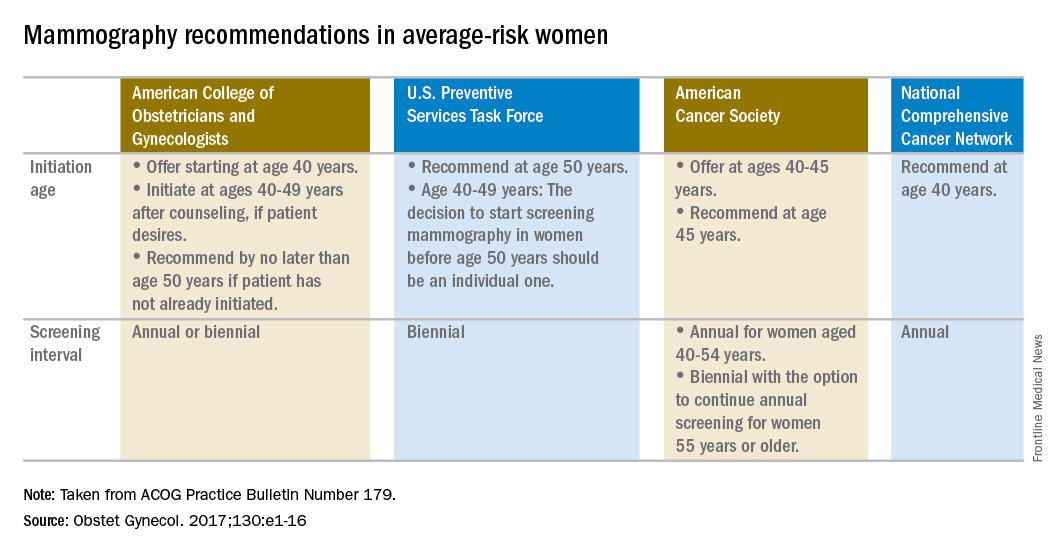
“For patients anxious about developing cancer, maybe every year would be appropriate. When you talk to patients, you have a sense of what would be beneficial for them,” said Dr. Salani, who applauded the flexibility built into the new ACOG guidelines, which says the screening interval can be annual or biennial. “It caters to shared decision-making, and that’s a nice way to frame it.”
The ACOG guidelines recommend against breast self examination because this practice carries the risk of false positives and lacks supporting evidence of benefit. But, ACOG encourages “breast self-awareness,” which means being “attuned to noticing a change or potential problem with her breasts” but without the routine examination.
Women who are asymptomatic and at average risk can be offered clinical breast examination as a screening tool, but clinicians should explain the “uncertainty of additional benefits and the possibility of adverse consequences of clinical breast examination beyond screening mammography.” If performed, ACOG recommends intervals of 1-3 years for women aged 25-39 years and annually for women aged 40 years and over.
The recommendations apply to average-risk women. To help determine risk, the Practice Bulletin also lays out a series of breast cancer risk factors that should be considered, including family history of cancer, known germline mutations, prior biopsy findings, early menarche, late menopause, breast density, and a range of lifestyle and other factors.
Woman at average risk for breast cancer should be offered their first screening mammogram at age 40, with initiation of screening beginning no later than age 50, according to new recommendations from the American College of Obstetricians and Gynecologists.
ACOG suggested a screening interval of 1-2 years based on patient values and preferences.
Screening should continue until at least age 75 years. Past that age, continuation should be considered in terms of the patient’s overall health and expected lifespan, according to the Practice Bulletin.
That’s a welcome approach, according to Ritu Salani, MD, a gynecologic oncologist at the Ohio State University, Columbus. “I do believe the ACOG guidelines have the most flexibility and are probably the most comprehensive for average-risk patients,” said Dr. Salani, MD, who was not involved in the drafting of the guidelines.
The recommendations are based in part on a review of existing recommendations from the U.S. Preventive Services Task Force, the American Cancer Society, and the National Comprehensive Cancer Network.
“For patients anxious about developing cancer, maybe every year would be appropriate. When you talk to patients, you have a sense of what would be beneficial for them,” said Dr. Salani, who applauded the flexibility built into the new ACOG guidelines, which says the screening interval can be annual or biennial. “It caters to shared decision-making, and that’s a nice way to frame it.”
The ACOG guidelines recommend against breast self examination because this practice carries the risk of false positives and lacks supporting evidence of benefit. But, ACOG encourages “breast self-awareness,” which means being “attuned to noticing a change or potential problem with her breasts” but without the routine examination.
Women who are asymptomatic and at average risk can be offered clinical breast examination as a screening tool, but clinicians should explain the “uncertainty of additional benefits and the possibility of adverse consequences of clinical breast examination beyond screening mammography.” If performed, ACOG recommends intervals of 1-3 years for women aged 25-39 years and annually for women aged 40 years and over.
The recommendations apply to average-risk women. To help determine risk, the Practice Bulletin also lays out a series of breast cancer risk factors that should be considered, including family history of cancer, known germline mutations, prior biopsy findings, early menarche, late menopause, breast density, and a range of lifestyle and other factors.
Woman at average risk for breast cancer should be offered their first screening mammogram at age 40, with initiation of screening beginning no later than age 50, according to new recommendations from the American College of Obstetricians and Gynecologists.
ACOG suggested a screening interval of 1-2 years based on patient values and preferences.
Screening should continue until at least age 75 years. Past that age, continuation should be considered in terms of the patient’s overall health and expected lifespan, according to the Practice Bulletin.
That’s a welcome approach, according to Ritu Salani, MD, a gynecologic oncologist at the Ohio State University, Columbus. “I do believe the ACOG guidelines have the most flexibility and are probably the most comprehensive for average-risk patients,” said Dr. Salani, MD, who was not involved in the drafting of the guidelines.
The recommendations are based in part on a review of existing recommendations from the U.S. Preventive Services Task Force, the American Cancer Society, and the National Comprehensive Cancer Network.
“For patients anxious about developing cancer, maybe every year would be appropriate. When you talk to patients, you have a sense of what would be beneficial for them,” said Dr. Salani, who applauded the flexibility built into the new ACOG guidelines, which says the screening interval can be annual or biennial. “It caters to shared decision-making, and that’s a nice way to frame it.”
The ACOG guidelines recommend against breast self examination because this practice carries the risk of false positives and lacks supporting evidence of benefit. But, ACOG encourages “breast self-awareness,” which means being “attuned to noticing a change or potential problem with her breasts” but without the routine examination.
Women who are asymptomatic and at average risk can be offered clinical breast examination as a screening tool, but clinicians should explain the “uncertainty of additional benefits and the possibility of adverse consequences of clinical breast examination beyond screening mammography.” If performed, ACOG recommends intervals of 1-3 years for women aged 25-39 years and annually for women aged 40 years and over.
The recommendations apply to average-risk women. To help determine risk, the Practice Bulletin also lays out a series of breast cancer risk factors that should be considered, including family history of cancer, known germline mutations, prior biopsy findings, early menarche, late menopause, breast density, and a range of lifestyle and other factors.
VIDEO: Dr. William J. Gradishar shares breast cancer take-aways from ASCO 2017
CHICAGO – William J. Gradishar, MD, outlines key research on breast cancer treatment presented at the annual meeting of the American Society of Clinical Oncology.
In a video interview, Dr. Gradishar, the Betsy Bramsen Professor of Breast Oncology at Northwestern University, Chicago, discusses the take-home messages on pertuzumab for HER2+ breast cancer, PARP inhibitors for BRCA-mutated breast cancer, and CDK4/6 inhibitors for ER+ breast cancers.
In another video interview, Katherine O’Brien of the Metastatic Breast Cancer Network provides the patient advocate view on this years’ meeting.
The video associated with this article is no longer available on this site. Please view all of our videos on the MDedge YouTube channel
CHICAGO – William J. Gradishar, MD, outlines key research on breast cancer treatment presented at the annual meeting of the American Society of Clinical Oncology.
In a video interview, Dr. Gradishar, the Betsy Bramsen Professor of Breast Oncology at Northwestern University, Chicago, discusses the take-home messages on pertuzumab for HER2+ breast cancer, PARP inhibitors for BRCA-mutated breast cancer, and CDK4/6 inhibitors for ER+ breast cancers.
In another video interview, Katherine O’Brien of the Metastatic Breast Cancer Network provides the patient advocate view on this years’ meeting.
The video associated with this article is no longer available on this site. Please view all of our videos on the MDedge YouTube channel
CHICAGO – William J. Gradishar, MD, outlines key research on breast cancer treatment presented at the annual meeting of the American Society of Clinical Oncology.
In a video interview, Dr. Gradishar, the Betsy Bramsen Professor of Breast Oncology at Northwestern University, Chicago, discusses the take-home messages on pertuzumab for HER2+ breast cancer, PARP inhibitors for BRCA-mutated breast cancer, and CDK4/6 inhibitors for ER+ breast cancers.
In another video interview, Katherine O’Brien of the Metastatic Breast Cancer Network provides the patient advocate view on this years’ meeting.
The video associated with this article is no longer available on this site. Please view all of our videos on the MDedge YouTube channel
EXPERT ANALYSIS FROM ASCO 2017

Short-HER trial: DFS is similar, cardiac toxicity lower with short trastuzumab course
CHICAGO – Nine weeks of treatment with trastuzumab resulted in comparable disease-free and overall survival to that seen with the standard 12 months of trastuzumab – with about one-third of the rate of severe cardiac toxicity – in patients with HER2-positive early breast cancer in the Italian phase III multicenter Short-HER study.
The 5-year disease-free survival rate in 626 patients who received 9 weeks of trastuzumab was 87.5%, compared with 85.4% in 627 patients who received 1 year of trastuzumab therapy (hazard ratio, 1.15), Pier F. Conte, MD, reported at the annual meeting of the American Society of Clinical Oncology.
The upper limit of the 90% confidence interval (0.91-1.46) crossed the noninferiority margin set at 1.29 for this frequentist analysis, Dr. Conte of the University of Padova, Italy, said, noting that a subgroup analysis showed that patients with stage III disease and those with four or more positive lymph nodes – who together represented about 15% of the study population – had a disease-free survival advantage with longer treatment (HR, 2.30 and 2.25, respectively), and an interaction test was statistically significant.
However, a preplanned Bayesian analysis showed a 78% probability that the shorter treatment is not inferior to longer treatment for disease-free survival, he said.
The secondary endpoint of overall survival was also similar in the two groups (95.1% vs. 95.0%; HR, 1.06).
As for the secondary endpoint of cardiac events, the rate was 5.1% with shorter treatment vs. 14.4% with longer treatment. Grade 2 cardiac events occurred in 11.2% vs. 3.5% of patients in the treatment arms, respectively, and the grade 3 cardiac vents occurred in 2.7% vs. 1.1%, respectively. The rate of grade 4 events was 0.5% in both groups.
The overall difference between the groups with respect to cardiac events was highly statistically significant in favor of shorter treatment (HR, 0.32), Dr. Conte said.
Multiple studies have demonstrated the superiority of combining trastuzumab and adjuvant chemotherapy for HER2+ early breast cancer, and, following the release of some of those findings at the ASCO annual meeting in 2005, the agent was granted accelerated approval for this indication, Dr. Conte said.
“It was, however, clear that there were a number of reasons to believe that further investigation was appropriate on the optimal duration of trastuzumab duration,” he said, explaining that the same magnitude of benefit was reported by the small FinHER study with 9 weeks of trastuzumab and that clinical data suggest synergism of trastuzumab with chemotherapy.
“Finally, in the real world, there are patients at lower risk of relapse (more node-negative, more small tumors) and at higher risk of cardiac toxicity because of age or comorbidities,” he said. “So, the hypotheses behind the Short-HER [study] was that a shorter duration of trastuzumab administered concomitantly with chemotherapy might produce comparable efficacy with significantly lower toxicities and, of course, costs.”
Short-HER study subjects, who had a mean age of 55 years, had either HER2-positive, node-positive, or high-risk node-negative disease and were randomized to receive either the shorter treatment, including three courses of docetaxel given three times weekly plus trastuzumab given weekly for 9 doses, followed by three courses of 5-fluorouracil/epirubicin/cyclophosphamide, or standard 12-month treatment with four courses of anthracycline-based chemotherapy followed by four courses of docetaxel in combination with trastuzumab given three times weekly, followed by 14 additional courses of trastuzumab given three times weekly (for a total of 18 3-times-weekly doses). Radiation therapy was administered when indicated after chemotherapy, and hormonal therapy was started after completion of chemotherapy in patients with hormone-receptor–positive tumors.
Based on the frequentist analysis, noninferiority of the shorter treatment approach cannot be claimed, but, according to the preplanned Bayesian analysis, noninferiority is likely, Dr. Conte said.
“One year of trastuzumab is still standard. The Short-Her trial, however, reinforces the hypothesis that treatment deescalation retains efficacy with less toxicity. A shorter treatment might be an option for patients at low risk of relapse and/or higher risk of cardiac toxicity,” he said. “Moreover, these results might facilitate trastuzumab to patients in low/middle income countries.”
Individual patient meta-analysis with other trials testing different durations of trastuzumab administration is ongoing, he noted.
The Short-HER study was funded by the Italian Drug Agency, and drugs and insurance coverage were supplied by the National Health System. The study was sponsored by the University of Modena & Regio Emilia and the University of Padova. Dr. Conte has served on the speakers’ bureau for AstraZeneca, Lilly, Novartis, and Roche/Genentech and has received research funding and/or travel or other expenses from AstraZeneca, Celgene, and Novartis.
CHICAGO – Nine weeks of treatment with trastuzumab resulted in comparable disease-free and overall survival to that seen with the standard 12 months of trastuzumab – with about one-third of the rate of severe cardiac toxicity – in patients with HER2-positive early breast cancer in the Italian phase III multicenter Short-HER study.
The 5-year disease-free survival rate in 626 patients who received 9 weeks of trastuzumab was 87.5%, compared with 85.4% in 627 patients who received 1 year of trastuzumab therapy (hazard ratio, 1.15), Pier F. Conte, MD, reported at the annual meeting of the American Society of Clinical Oncology.
The upper limit of the 90% confidence interval (0.91-1.46) crossed the noninferiority margin set at 1.29 for this frequentist analysis, Dr. Conte of the University of Padova, Italy, said, noting that a subgroup analysis showed that patients with stage III disease and those with four or more positive lymph nodes – who together represented about 15% of the study population – had a disease-free survival advantage with longer treatment (HR, 2.30 and 2.25, respectively), and an interaction test was statistically significant.
However, a preplanned Bayesian analysis showed a 78% probability that the shorter treatment is not inferior to longer treatment for disease-free survival, he said.
The secondary endpoint of overall survival was also similar in the two groups (95.1% vs. 95.0%; HR, 1.06).
As for the secondary endpoint of cardiac events, the rate was 5.1% with shorter treatment vs. 14.4% with longer treatment. Grade 2 cardiac events occurred in 11.2% vs. 3.5% of patients in the treatment arms, respectively, and the grade 3 cardiac vents occurred in 2.7% vs. 1.1%, respectively. The rate of grade 4 events was 0.5% in both groups.
The overall difference between the groups with respect to cardiac events was highly statistically significant in favor of shorter treatment (HR, 0.32), Dr. Conte said.
Multiple studies have demonstrated the superiority of combining trastuzumab and adjuvant chemotherapy for HER2+ early breast cancer, and, following the release of some of those findings at the ASCO annual meeting in 2005, the agent was granted accelerated approval for this indication, Dr. Conte said.
“It was, however, clear that there were a number of reasons to believe that further investigation was appropriate on the optimal duration of trastuzumab duration,” he said, explaining that the same magnitude of benefit was reported by the small FinHER study with 9 weeks of trastuzumab and that clinical data suggest synergism of trastuzumab with chemotherapy.
“Finally, in the real world, there are patients at lower risk of relapse (more node-negative, more small tumors) and at higher risk of cardiac toxicity because of age or comorbidities,” he said. “So, the hypotheses behind the Short-HER [study] was that a shorter duration of trastuzumab administered concomitantly with chemotherapy might produce comparable efficacy with significantly lower toxicities and, of course, costs.”
Short-HER study subjects, who had a mean age of 55 years, had either HER2-positive, node-positive, or high-risk node-negative disease and were randomized to receive either the shorter treatment, including three courses of docetaxel given three times weekly plus trastuzumab given weekly for 9 doses, followed by three courses of 5-fluorouracil/epirubicin/cyclophosphamide, or standard 12-month treatment with four courses of anthracycline-based chemotherapy followed by four courses of docetaxel in combination with trastuzumab given three times weekly, followed by 14 additional courses of trastuzumab given three times weekly (for a total of 18 3-times-weekly doses). Radiation therapy was administered when indicated after chemotherapy, and hormonal therapy was started after completion of chemotherapy in patients with hormone-receptor–positive tumors.
Based on the frequentist analysis, noninferiority of the shorter treatment approach cannot be claimed, but, according to the preplanned Bayesian analysis, noninferiority is likely, Dr. Conte said.
“One year of trastuzumab is still standard. The Short-Her trial, however, reinforces the hypothesis that treatment deescalation retains efficacy with less toxicity. A shorter treatment might be an option for patients at low risk of relapse and/or higher risk of cardiac toxicity,” he said. “Moreover, these results might facilitate trastuzumab to patients in low/middle income countries.”
Individual patient meta-analysis with other trials testing different durations of trastuzumab administration is ongoing, he noted.
The Short-HER study was funded by the Italian Drug Agency, and drugs and insurance coverage were supplied by the National Health System. The study was sponsored by the University of Modena & Regio Emilia and the University of Padova. Dr. Conte has served on the speakers’ bureau for AstraZeneca, Lilly, Novartis, and Roche/Genentech and has received research funding and/or travel or other expenses from AstraZeneca, Celgene, and Novartis.
CHICAGO – Nine weeks of treatment with trastuzumab resulted in comparable disease-free and overall survival to that seen with the standard 12 months of trastuzumab – with about one-third of the rate of severe cardiac toxicity – in patients with HER2-positive early breast cancer in the Italian phase III multicenter Short-HER study.
The 5-year disease-free survival rate in 626 patients who received 9 weeks of trastuzumab was 87.5%, compared with 85.4% in 627 patients who received 1 year of trastuzumab therapy (hazard ratio, 1.15), Pier F. Conte, MD, reported at the annual meeting of the American Society of Clinical Oncology.
The upper limit of the 90% confidence interval (0.91-1.46) crossed the noninferiority margin set at 1.29 for this frequentist analysis, Dr. Conte of the University of Padova, Italy, said, noting that a subgroup analysis showed that patients with stage III disease and those with four or more positive lymph nodes – who together represented about 15% of the study population – had a disease-free survival advantage with longer treatment (HR, 2.30 and 2.25, respectively), and an interaction test was statistically significant.
However, a preplanned Bayesian analysis showed a 78% probability that the shorter treatment is not inferior to longer treatment for disease-free survival, he said.
The secondary endpoint of overall survival was also similar in the two groups (95.1% vs. 95.0%; HR, 1.06).
As for the secondary endpoint of cardiac events, the rate was 5.1% with shorter treatment vs. 14.4% with longer treatment. Grade 2 cardiac events occurred in 11.2% vs. 3.5% of patients in the treatment arms, respectively, and the grade 3 cardiac vents occurred in 2.7% vs. 1.1%, respectively. The rate of grade 4 events was 0.5% in both groups.
The overall difference between the groups with respect to cardiac events was highly statistically significant in favor of shorter treatment (HR, 0.32), Dr. Conte said.
Multiple studies have demonstrated the superiority of combining trastuzumab and adjuvant chemotherapy for HER2+ early breast cancer, and, following the release of some of those findings at the ASCO annual meeting in 2005, the agent was granted accelerated approval for this indication, Dr. Conte said.
“It was, however, clear that there were a number of reasons to believe that further investigation was appropriate on the optimal duration of trastuzumab duration,” he said, explaining that the same magnitude of benefit was reported by the small FinHER study with 9 weeks of trastuzumab and that clinical data suggest synergism of trastuzumab with chemotherapy.
“Finally, in the real world, there are patients at lower risk of relapse (more node-negative, more small tumors) and at higher risk of cardiac toxicity because of age or comorbidities,” he said. “So, the hypotheses behind the Short-HER [study] was that a shorter duration of trastuzumab administered concomitantly with chemotherapy might produce comparable efficacy with significantly lower toxicities and, of course, costs.”
Short-HER study subjects, who had a mean age of 55 years, had either HER2-positive, node-positive, or high-risk node-negative disease and were randomized to receive either the shorter treatment, including three courses of docetaxel given three times weekly plus trastuzumab given weekly for 9 doses, followed by three courses of 5-fluorouracil/epirubicin/cyclophosphamide, or standard 12-month treatment with four courses of anthracycline-based chemotherapy followed by four courses of docetaxel in combination with trastuzumab given three times weekly, followed by 14 additional courses of trastuzumab given three times weekly (for a total of 18 3-times-weekly doses). Radiation therapy was administered when indicated after chemotherapy, and hormonal therapy was started after completion of chemotherapy in patients with hormone-receptor–positive tumors.
Based on the frequentist analysis, noninferiority of the shorter treatment approach cannot be claimed, but, according to the preplanned Bayesian analysis, noninferiority is likely, Dr. Conte said.
“One year of trastuzumab is still standard. The Short-Her trial, however, reinforces the hypothesis that treatment deescalation retains efficacy with less toxicity. A shorter treatment might be an option for patients at low risk of relapse and/or higher risk of cardiac toxicity,” he said. “Moreover, these results might facilitate trastuzumab to patients in low/middle income countries.”
Individual patient meta-analysis with other trials testing different durations of trastuzumab administration is ongoing, he noted.
The Short-HER study was funded by the Italian Drug Agency, and drugs and insurance coverage were supplied by the National Health System. The study was sponsored by the University of Modena & Regio Emilia and the University of Padova. Dr. Conte has served on the speakers’ bureau for AstraZeneca, Lilly, Novartis, and Roche/Genentech and has received research funding and/or travel or other expenses from AstraZeneca, Celgene, and Novartis.
AT ASCO 2017
Key clinical point:
Major finding: The 5-year disease-free survival rates were 87.5% and 85.4% with 9 weeks, vs. 1 year, of trastuzumab (HR, 1.15).
Data source: The phase III Short-HER study of 1,253 patients.
Disclosures: The Short-HER study was funded by the Italian Drug Agency, and drugs and insurance coverage were supplied by the National Health System. The study was sponsored by the University of Modena & Regio Emilia and the University of Padova. Dr. Conte has served on the speakers’ bureau for AstraZeneca, Lilly, Novartis, and Roche/Genentech and has received research funding and/or travel or other expenses from AstraZeneca, Celgene, and Novartis.
VIDEO: NCI estimation of MBC numbers a start, but more is needed
CHICAGO – After Shirley A. Mertz, JD, was diagnosed with metastatic breast cancer, she was surprised to learn the government wasn’t counting people like her in data gathered on the disease. Only a minority of women with the disease – those diagnosed de novo – are included in Surveillance, Epidemiology and End Results (SEER) data, she said in a video interview at the annual meeting of the American Society of Clinical Oncology.
A recently published report by a National Cancer Institute mathematician and her associates estimates that about 155,000 women are living with metastatic breast cancer and that three-quarters of those women were initially diagnosed with lower-stage disease that progressed to stage IV. Ms. Mertz, president of the Metastatic Breast Cancer Network, says the estimate is a good start, but it’s important to go further and include those diagnosed with a metastatic recurrence in SEER data to get an accurate view.
“If we are not counted, then it appears we don’t matter, and how can we know if we are doing better if we don’t know how many of us are out there,” she said.
The video associated with this article is no longer available on this site. Please view all of our videos on the MDedge YouTube channel
CHICAGO – After Shirley A. Mertz, JD, was diagnosed with metastatic breast cancer, she was surprised to learn the government wasn’t counting people like her in data gathered on the disease. Only a minority of women with the disease – those diagnosed de novo – are included in Surveillance, Epidemiology and End Results (SEER) data, she said in a video interview at the annual meeting of the American Society of Clinical Oncology.
A recently published report by a National Cancer Institute mathematician and her associates estimates that about 155,000 women are living with metastatic breast cancer and that three-quarters of those women were initially diagnosed with lower-stage disease that progressed to stage IV. Ms. Mertz, president of the Metastatic Breast Cancer Network, says the estimate is a good start, but it’s important to go further and include those diagnosed with a metastatic recurrence in SEER data to get an accurate view.
“If we are not counted, then it appears we don’t matter, and how can we know if we are doing better if we don’t know how many of us are out there,” she said.
The video associated with this article is no longer available on this site. Please view all of our videos on the MDedge YouTube channel
CHICAGO – After Shirley A. Mertz, JD, was diagnosed with metastatic breast cancer, she was surprised to learn the government wasn’t counting people like her in data gathered on the disease. Only a minority of women with the disease – those diagnosed de novo – are included in Surveillance, Epidemiology and End Results (SEER) data, she said in a video interview at the annual meeting of the American Society of Clinical Oncology.
A recently published report by a National Cancer Institute mathematician and her associates estimates that about 155,000 women are living with metastatic breast cancer and that three-quarters of those women were initially diagnosed with lower-stage disease that progressed to stage IV. Ms. Mertz, president of the Metastatic Breast Cancer Network, says the estimate is a good start, but it’s important to go further and include those diagnosed with a metastatic recurrence in SEER data to get an accurate view.
“If we are not counted, then it appears we don’t matter, and how can we know if we are doing better if we don’t know how many of us are out there,” she said.
The video associated with this article is no longer available on this site. Please view all of our videos on the MDedge YouTube channel
AT ASCO 2017

VIDEO: Metastatic Trial Search links MBC patients to relevant trials
CHICAGO – Metastatic Trial Search was launched in 2015 by ClinicalTrials.org to make it easier for patients with metastatic breast cancer to consider clinical trials as a routine option as they are making treatment decisions with their physicians.
In a video interview, Shirley A. Mertz, JD, president of the Metastatic Breast Cancer Network, describes the tool, the mixed response from physicians, the barriers to trial participation still faced by patients, and the tweaked version 2.0 of the search tool, expected to launch by the end of this year.
The video associated with this article is no longer available on this site. Please view all of our videos on the MDedge YouTube channel
CHICAGO – Metastatic Trial Search was launched in 2015 by ClinicalTrials.org to make it easier for patients with metastatic breast cancer to consider clinical trials as a routine option as they are making treatment decisions with their physicians.
In a video interview, Shirley A. Mertz, JD, president of the Metastatic Breast Cancer Network, describes the tool, the mixed response from physicians, the barriers to trial participation still faced by patients, and the tweaked version 2.0 of the search tool, expected to launch by the end of this year.
The video associated with this article is no longer available on this site. Please view all of our videos on the MDedge YouTube channel
CHICAGO – Metastatic Trial Search was launched in 2015 by ClinicalTrials.org to make it easier for patients with metastatic breast cancer to consider clinical trials as a routine option as they are making treatment decisions with their physicians.
In a video interview, Shirley A. Mertz, JD, president of the Metastatic Breast Cancer Network, describes the tool, the mixed response from physicians, the barriers to trial participation still faced by patients, and the tweaked version 2.0 of the search tool, expected to launch by the end of this year.
The video associated with this article is no longer available on this site. Please view all of our videos on the MDedge YouTube channel
AT ASCO 2017

OlympiAD’s positive results spell good news for olaparib in breast cancer
CHICAGO – The oral PARP inhibitor olaparib likely offers a new treatment option for patients with BRCA-related HER2-negative metastatic breast cancer, according to results of the randomized phase III OlympiAD trial reported at the annual meeting of the American Society of Clinical Oncology.
Inhibitors of PARP, or poly(ADP-ribose) polymerase, exploit defective DNA repair due to BRCA mutations, lead author Mark E. Robson, MD, clinic director of the clinical genetics service and medical oncologist at Memorial Sloan Kettering Cancer Center in New York, noted in a press briefing.
“PARP inhibitors have already been approved for the treatment of ovarian cancer in patients with mutations of BRCA1 or BRCA2, and recently in other circumstances. And there have been a couple of small studies that have suggested that breast cancer in BRCA mutation carriers could also be responsive to PARP inhibitors,” he said.

“This is the first phase III study that’s shown an advantage of a PARP inhibitor over standard-of-care chemotherapy in breast cancer patients with BRCA mutations,” Dr. Robson commented. “It was generally well tolerated, with less than 5% of patients discontinuing treatment for toxicity, and a lower rate of grade 3 or worse side effects.”
“It is our opinion that olaparib could be an effective treatment option for women with BRCA mutations who have metastatic HER2-negative breast cancer, including importantly women with BRCA mutations in triple-negative disease,” he concluded.
Findings going forward
Although the trial was positive, the absolute difference in progression-free survival was just 2.8 months, and the curves converged over time, raising questions about potentially more efficacious PARP inhibitors or strategies for getting greater benefit out of olaparib.
“There are three PARP inhibitors in the developmental stage in breast cancer, and there are noncomparative trials and no really good ways to make a decision about which one is better,” Dr. Robson commented.
Several strategies are being explored for enhancing the benefit of these drugs, he continued. “One is combining it with a conventional chemotherapy agent, which is hard to do because of overlapping bone marrow toxicity, so it’s tough to get full doses of chemotherapy and full doses of PARP inhibitor in. Another is to combine it with other targeted agents that interact with components of the DNA damage repair pathway … and there are certainly combination therapy trials that are underway. And then third is … a combination of olaparib with an immuno-oncology agent.”
Additionally, some studies are evaluating expansion of PARP inhibitors to populations such as patients with triple-negative breast cancer who do not have an identifiable BRCA mutation, on the assumption that they have similar, somatic DNA defects that might be susceptible to this class of agents, according to Dr. Robson.
“The studies have been small and at least the initial ones have not been particularly encouraging,” he said. “But as mentioned, combination approaches now are being evaluated as a way to potentially ‘soup up’ the effect in a broader group of patients.”
Expert perspective
The OlympiAD trial represents a “major step forward in breast cancer” in terms of both translational medicine and precision medicine, according to ASCO President Daniel F. Hayes, MD, FACP, FASCO.

Trials moving olaparib into earlier metastatic settings and possibly even the adjuvant setting will likely be conducted in the next year or 2, speculated Dr. Hayes, who is also clinical director of the breast oncology program and Stuart B. Padnos Professor in Breast Cancer Research at the University of Michigan Comprehensive Cancer Center in Ann Arbor.
Potential issues of long-term toxicity, such as secondary leukemias, will need to be kept in mind, especially if olaparib is moved to the curative treatment setting, he cautioned. And a better understanding of resistance (as suggested by the converging progression-free survival curves) and how to overcome it will be key. “That goes back to using it in different ways, clever ways, perhaps combining it with other sorts of therapies,” he said.
Study details
OlympiAD, which was funded by AstraZeneca, enrolled patients with HER2-negative metastatic breast cancer and a centrally confirmed germline (inherited) BRCA mutation who had received anthracyclines and taxanes, and up to two lines of chemotherapy for metastases.
They were randomized 2:1 to open-label treatment with either olaparib (300 mg., twice daily) or single-agent chemotherapy of the treating physician’s choice among three options (capecitabine, eribulin, or vinorelbine). A tablet formulation and dose of olaparib were used that differ from the currently approved capsule formulation and dose to reduce pill burden, Dr. Robson noted.
The patients were about equally split between BRCA1 and BRCA2 mutations, and between hormone receptor–positive disease and triple-negative disease, he reported. The majority (71%) had received chemotherapy for metastases, and a sizable minority (28%) had received prior platinum in the (neo)adjuvant or metastatic setting.
With a median follow-up of about 14.5 months, median progression-free survival assessed by central radiologic review was 7.0 months with olaparib and 4.2 months with chemotherapy (hazard ratio, 0.58; P = .0009).
The median time to investigator-reported second progression or death was also longer with olaparib (13.2 vs. 9.3 months; HR, 0.57; P = .0033).
Median overall survival was about 19-20 months in each group and not significantly different in an interim analysis.
The olaparib group had lower rates of grade 3 or worse adverse events (36.6% vs. 50.5%) and treatment discontinuation because of adverse events (4.9% vs. 7.7%).
The main adverse event of any grade with olaparib was nausea, which was usually mild; only about a quarter of affected patients required antiemetics, according to Dr. Robson. Patients also commonly experienced anemia, requiring transfusion in some cases, and fatigue.
Dr. Robson disclosed that he has a consulting or advisory role with McKesson and AstraZeneca; receives honoraria, travel, accommodations, and/or expenses from AstraZeneca; rand receives research funding (institutional) from AstraZeneca, Abbvie, Myriad Genetics, Biomarin, Medivation, and Tesaro.
The video associated with this article is no longer available on this site. Please view all of our videos on the MDedge YouTube channel
Dr. William J. Gradishar is the Betsy Bramsen Professor of Breast Oncology at Northwestern University, Chicago.
The video associated with this article is no longer available on this site. Please view all of our videos on the MDedge YouTube channel
Dr. William J. Gradishar is the Betsy Bramsen Professor of Breast Oncology at Northwestern University, Chicago.
The video associated with this article is no longer available on this site. Please view all of our videos on the MDedge YouTube channel
Dr. William J. Gradishar is the Betsy Bramsen Professor of Breast Oncology at Northwestern University, Chicago.
CHICAGO – The oral PARP inhibitor olaparib likely offers a new treatment option for patients with BRCA-related HER2-negative metastatic breast cancer, according to results of the randomized phase III OlympiAD trial reported at the annual meeting of the American Society of Clinical Oncology.
Inhibitors of PARP, or poly(ADP-ribose) polymerase, exploit defective DNA repair due to BRCA mutations, lead author Mark E. Robson, MD, clinic director of the clinical genetics service and medical oncologist at Memorial Sloan Kettering Cancer Center in New York, noted in a press briefing.
“PARP inhibitors have already been approved for the treatment of ovarian cancer in patients with mutations of BRCA1 or BRCA2, and recently in other circumstances. And there have been a couple of small studies that have suggested that breast cancer in BRCA mutation carriers could also be responsive to PARP inhibitors,” he said.
“This is the first phase III study that’s shown an advantage of a PARP inhibitor over standard-of-care chemotherapy in breast cancer patients with BRCA mutations,” Dr. Robson commented. “It was generally well tolerated, with less than 5% of patients discontinuing treatment for toxicity, and a lower rate of grade 3 or worse side effects.”
“It is our opinion that olaparib could be an effective treatment option for women with BRCA mutations who have metastatic HER2-negative breast cancer, including importantly women with BRCA mutations in triple-negative disease,” he concluded.
Findings going forward
Although the trial was positive, the absolute difference in progression-free survival was just 2.8 months, and the curves converged over time, raising questions about potentially more efficacious PARP inhibitors or strategies for getting greater benefit out of olaparib.
“There are three PARP inhibitors in the developmental stage in breast cancer, and there are noncomparative trials and no really good ways to make a decision about which one is better,” Dr. Robson commented.
Several strategies are being explored for enhancing the benefit of these drugs, he continued. “One is combining it with a conventional chemotherapy agent, which is hard to do because of overlapping bone marrow toxicity, so it’s tough to get full doses of chemotherapy and full doses of PARP inhibitor in. Another is to combine it with other targeted agents that interact with components of the DNA damage repair pathway … and there are certainly combination therapy trials that are underway. And then third is … a combination of olaparib with an immuno-oncology agent.”
Additionally, some studies are evaluating expansion of PARP inhibitors to populations such as patients with triple-negative breast cancer who do not have an identifiable BRCA mutation, on the assumption that they have similar, somatic DNA defects that might be susceptible to this class of agents, according to Dr. Robson.
“The studies have been small and at least the initial ones have not been particularly encouraging,” he said. “But as mentioned, combination approaches now are being evaluated as a way to potentially ‘soup up’ the effect in a broader group of patients.”
Expert perspective
The OlympiAD trial represents a “major step forward in breast cancer” in terms of both translational medicine and precision medicine, according to ASCO President Daniel F. Hayes, MD, FACP, FASCO.
Trials moving olaparib into earlier metastatic settings and possibly even the adjuvant setting will likely be conducted in the next year or 2, speculated Dr. Hayes, who is also clinical director of the breast oncology program and Stuart B. Padnos Professor in Breast Cancer Research at the University of Michigan Comprehensive Cancer Center in Ann Arbor.
Potential issues of long-term toxicity, such as secondary leukemias, will need to be kept in mind, especially if olaparib is moved to the curative treatment setting, he cautioned. And a better understanding of resistance (as suggested by the converging progression-free survival curves) and how to overcome it will be key. “That goes back to using it in different ways, clever ways, perhaps combining it with other sorts of therapies,” he said.
Study details
OlympiAD, which was funded by AstraZeneca, enrolled patients with HER2-negative metastatic breast cancer and a centrally confirmed germline (inherited) BRCA mutation who had received anthracyclines and taxanes, and up to two lines of chemotherapy for metastases.
They were randomized 2:1 to open-label treatment with either olaparib (300 mg., twice daily) or single-agent chemotherapy of the treating physician’s choice among three options (capecitabine, eribulin, or vinorelbine). A tablet formulation and dose of olaparib were used that differ from the currently approved capsule formulation and dose to reduce pill burden, Dr. Robson noted.
The patients were about equally split between BRCA1 and BRCA2 mutations, and between hormone receptor–positive disease and triple-negative disease, he reported. The majority (71%) had received chemotherapy for metastases, and a sizable minority (28%) had received prior platinum in the (neo)adjuvant or metastatic setting.
With a median follow-up of about 14.5 months, median progression-free survival assessed by central radiologic review was 7.0 months with olaparib and 4.2 months with chemotherapy (hazard ratio, 0.58; P = .0009).
The median time to investigator-reported second progression or death was also longer with olaparib (13.2 vs. 9.3 months; HR, 0.57; P = .0033).
Median overall survival was about 19-20 months in each group and not significantly different in an interim analysis.
The olaparib group had lower rates of grade 3 or worse adverse events (36.6% vs. 50.5%) and treatment discontinuation because of adverse events (4.9% vs. 7.7%).
The main adverse event of any grade with olaparib was nausea, which was usually mild; only about a quarter of affected patients required antiemetics, according to Dr. Robson. Patients also commonly experienced anemia, requiring transfusion in some cases, and fatigue.
Dr. Robson disclosed that he has a consulting or advisory role with McKesson and AstraZeneca; receives honoraria, travel, accommodations, and/or expenses from AstraZeneca; rand receives research funding (institutional) from AstraZeneca, Abbvie, Myriad Genetics, Biomarin, Medivation, and Tesaro.
CHICAGO – The oral PARP inhibitor olaparib likely offers a new treatment option for patients with BRCA-related HER2-negative metastatic breast cancer, according to results of the randomized phase III OlympiAD trial reported at the annual meeting of the American Society of Clinical Oncology.
Inhibitors of PARP, or poly(ADP-ribose) polymerase, exploit defective DNA repair due to BRCA mutations, lead author Mark E. Robson, MD, clinic director of the clinical genetics service and medical oncologist at Memorial Sloan Kettering Cancer Center in New York, noted in a press briefing.
“PARP inhibitors have already been approved for the treatment of ovarian cancer in patients with mutations of BRCA1 or BRCA2, and recently in other circumstances. And there have been a couple of small studies that have suggested that breast cancer in BRCA mutation carriers could also be responsive to PARP inhibitors,” he said.
“This is the first phase III study that’s shown an advantage of a PARP inhibitor over standard-of-care chemotherapy in breast cancer patients with BRCA mutations,” Dr. Robson commented. “It was generally well tolerated, with less than 5% of patients discontinuing treatment for toxicity, and a lower rate of grade 3 or worse side effects.”
“It is our opinion that olaparib could be an effective treatment option for women with BRCA mutations who have metastatic HER2-negative breast cancer, including importantly women with BRCA mutations in triple-negative disease,” he concluded.
Findings going forward
Although the trial was positive, the absolute difference in progression-free survival was just 2.8 months, and the curves converged over time, raising questions about potentially more efficacious PARP inhibitors or strategies for getting greater benefit out of olaparib.
“There are three PARP inhibitors in the developmental stage in breast cancer, and there are noncomparative trials and no really good ways to make a decision about which one is better,” Dr. Robson commented.
Several strategies are being explored for enhancing the benefit of these drugs, he continued. “One is combining it with a conventional chemotherapy agent, which is hard to do because of overlapping bone marrow toxicity, so it’s tough to get full doses of chemotherapy and full doses of PARP inhibitor in. Another is to combine it with other targeted agents that interact with components of the DNA damage repair pathway … and there are certainly combination therapy trials that are underway. And then third is … a combination of olaparib with an immuno-oncology agent.”
Additionally, some studies are evaluating expansion of PARP inhibitors to populations such as patients with triple-negative breast cancer who do not have an identifiable BRCA mutation, on the assumption that they have similar, somatic DNA defects that might be susceptible to this class of agents, according to Dr. Robson.
“The studies have been small and at least the initial ones have not been particularly encouraging,” he said. “But as mentioned, combination approaches now are being evaluated as a way to potentially ‘soup up’ the effect in a broader group of patients.”
Expert perspective
The OlympiAD trial represents a “major step forward in breast cancer” in terms of both translational medicine and precision medicine, according to ASCO President Daniel F. Hayes, MD, FACP, FASCO.
Trials moving olaparib into earlier metastatic settings and possibly even the adjuvant setting will likely be conducted in the next year or 2, speculated Dr. Hayes, who is also clinical director of the breast oncology program and Stuart B. Padnos Professor in Breast Cancer Research at the University of Michigan Comprehensive Cancer Center in Ann Arbor.
Potential issues of long-term toxicity, such as secondary leukemias, will need to be kept in mind, especially if olaparib is moved to the curative treatment setting, he cautioned. And a better understanding of resistance (as suggested by the converging progression-free survival curves) and how to overcome it will be key. “That goes back to using it in different ways, clever ways, perhaps combining it with other sorts of therapies,” he said.
Study details
OlympiAD, which was funded by AstraZeneca, enrolled patients with HER2-negative metastatic breast cancer and a centrally confirmed germline (inherited) BRCA mutation who had received anthracyclines and taxanes, and up to two lines of chemotherapy for metastases.
They were randomized 2:1 to open-label treatment with either olaparib (300 mg., twice daily) or single-agent chemotherapy of the treating physician’s choice among three options (capecitabine, eribulin, or vinorelbine). A tablet formulation and dose of olaparib were used that differ from the currently approved capsule formulation and dose to reduce pill burden, Dr. Robson noted.
The patients were about equally split between BRCA1 and BRCA2 mutations, and between hormone receptor–positive disease and triple-negative disease, he reported. The majority (71%) had received chemotherapy for metastases, and a sizable minority (28%) had received prior platinum in the (neo)adjuvant or metastatic setting.
With a median follow-up of about 14.5 months, median progression-free survival assessed by central radiologic review was 7.0 months with olaparib and 4.2 months with chemotherapy (hazard ratio, 0.58; P = .0009).
The median time to investigator-reported second progression or death was also longer with olaparib (13.2 vs. 9.3 months; HR, 0.57; P = .0033).
Median overall survival was about 19-20 months in each group and not significantly different in an interim analysis.
The olaparib group had lower rates of grade 3 or worse adverse events (36.6% vs. 50.5%) and treatment discontinuation because of adverse events (4.9% vs. 7.7%).
The main adverse event of any grade with olaparib was nausea, which was usually mild; only about a quarter of affected patients required antiemetics, according to Dr. Robson. Patients also commonly experienced anemia, requiring transfusion in some cases, and fatigue.
Dr. Robson disclosed that he has a consulting or advisory role with McKesson and AstraZeneca; receives honoraria, travel, accommodations, and/or expenses from AstraZeneca; rand receives research funding (institutional) from AstraZeneca, Abbvie, Myriad Genetics, Biomarin, Medivation, and Tesaro.
AT ASCO 2017
Key clinical point:
Major finding: Progression-free survival was superior with olaparib as compared with standard single-agent chemotherapy (7.0 vs. 4.2 months; hazard ratio, 0.58; P = .0009).
Data source: An open-label randomized phase III trial among 302 patients with HER2-negative metastatic breast cancer and a germline BRCA mutation (OlympiAD trial).
Disclosures: Dr. Robson disclosed that he has a consulting or advisory role with McKesson and AstraZeneca; receives honoraria, travel, accommodations, and/or expenses from AstraZeneca; and receives research funding (institutional) from AstraZeneca, AbbVie, Myriad Genetics, Biomarin, Medivation, and Tesaro. The trial was funded by AstraZeneca.
VIDEO: Pertuzumab prolongs disease-free survival in HER2+ early breast cancer
CHICAGO –
At a median follow-up of 45.4 months, invasive disease-free survival (IDFS) events occurred in 171 of 2,400 patients (7.1%) who received pertuzumab, compared with 210 of 2,405 patients (8.7%) who received placebo (hazard ratio, 0.81). This 19% reduction in risk of an IDFS event was statistically significant, Gunter von Minckwitz, MD, PhD, reported at the annual meeting of the American Society of Clinical Oncology.
The estimated IDFS rate at 3 years was 94.1% in the pertuzumab arm, and 93.2% in the placebo arm, said Dr. von Minckwitz of the German Breast Group, Neu-Isenburg.
Study subjects were patients with adequately excised HER2-positive, pT1-3 early breast cancer. Patients were randomized to receive adjuvant chemotherapy plus 1 year of either trastuzumab plus pertuzumab, or trastuzumab plus placebo.
In a video interview, Dr. von Minckwitz discusses the study results, including outcomes in node-positive vs. node-negative patients, early overall survival findings, and safety.
“We are using pertuzumab right now in many countries for the neoadjuvant setting,” he said, explaining that existing approvals were granted conditionally in the absence of evidence regarding long-term benefits. “With the APHINITY study ... use of pertuzumab either in the neoadjuvant setting or in the higher-risk adjuvant setting is something that is supported now with evidence.”
The video associated with this article is no longer available on this site. Please view all of our videos on the MDedge YouTube channel
CHICAGO –
At a median follow-up of 45.4 months, invasive disease-free survival (IDFS) events occurred in 171 of 2,400 patients (7.1%) who received pertuzumab, compared with 210 of 2,405 patients (8.7%) who received placebo (hazard ratio, 0.81). This 19% reduction in risk of an IDFS event was statistically significant, Gunter von Minckwitz, MD, PhD, reported at the annual meeting of the American Society of Clinical Oncology.
The estimated IDFS rate at 3 years was 94.1% in the pertuzumab arm, and 93.2% in the placebo arm, said Dr. von Minckwitz of the German Breast Group, Neu-Isenburg.
Study subjects were patients with adequately excised HER2-positive, pT1-3 early breast cancer. Patients were randomized to receive adjuvant chemotherapy plus 1 year of either trastuzumab plus pertuzumab, or trastuzumab plus placebo.
In a video interview, Dr. von Minckwitz discusses the study results, including outcomes in node-positive vs. node-negative patients, early overall survival findings, and safety.
“We are using pertuzumab right now in many countries for the neoadjuvant setting,” he said, explaining that existing approvals were granted conditionally in the absence of evidence regarding long-term benefits. “With the APHINITY study ... use of pertuzumab either in the neoadjuvant setting or in the higher-risk adjuvant setting is something that is supported now with evidence.”
The video associated with this article is no longer available on this site. Please view all of our videos on the MDedge YouTube channel
CHICAGO –
At a median follow-up of 45.4 months, invasive disease-free survival (IDFS) events occurred in 171 of 2,400 patients (7.1%) who received pertuzumab, compared with 210 of 2,405 patients (8.7%) who received placebo (hazard ratio, 0.81). This 19% reduction in risk of an IDFS event was statistically significant, Gunter von Minckwitz, MD, PhD, reported at the annual meeting of the American Society of Clinical Oncology.
The estimated IDFS rate at 3 years was 94.1% in the pertuzumab arm, and 93.2% in the placebo arm, said Dr. von Minckwitz of the German Breast Group, Neu-Isenburg.
Study subjects were patients with adequately excised HER2-positive, pT1-3 early breast cancer. Patients were randomized to receive adjuvant chemotherapy plus 1 year of either trastuzumab plus pertuzumab, or trastuzumab plus placebo.
In a video interview, Dr. von Minckwitz discusses the study results, including outcomes in node-positive vs. node-negative patients, early overall survival findings, and safety.
“We are using pertuzumab right now in many countries for the neoadjuvant setting,” he said, explaining that existing approvals were granted conditionally in the absence of evidence regarding long-term benefits. “With the APHINITY study ... use of pertuzumab either in the neoadjuvant setting or in the higher-risk adjuvant setting is something that is supported now with evidence.”
The video associated with this article is no longer available on this site. Please view all of our videos on the MDedge YouTube channel
AT ASCO 2017

VIDEO: Survival improves when cancer patients self-report symptoms
CHICAGO – Patients with metastatic cancer who self-reported symptoms during routine cancer treatment experienced a number of benefits, including a statistically significant improvement in overall survival, according to findings from a randomized, controlled clinical trial.
The median overall survival among 441 patients receiving treatment for metastatic breast, lung, genitourinary, or gynecologic cancer who were randomized to the intervention arm was more than 5 months longer – a nearly 20% increase – than in 325 patients who received standard care (31.2 vs. 26 months), Ethan Basch, MD, reported at the annual meeting of the American Society of Clinical Oncology.
Additionally, 31% of patients in the intervention arm had better quality of life/physical functioning, compared with those in the control arm, and 7% fewer patients in the intervention arm visited an emergency room during the course of the study. The duration of potentially life-prolonging chemotherapy was increased by an average of 2 months in the intervention arm, he said.
The findings were simultaneously published online in a research letter in JAMA (2017 Jun 4. doi: 10.1001/jama.2017.7156).
Symptoms such as nausea, pain, and fatigue are common among patients with metastatic cancer, Dr. Basch said. “Unfortunately, they often go undetected by doctors and nurses until they become severe and physically debilitating,” he added, explaining that patients are often hesitant to call the office to report symptoms between visits.
Even at office visits, competing topics can interfere with communication about symptoms, he noted.
He and his colleagues hypothesized that self-reporting of patient symptoms between visits or prior to a visit while in the clinic waiting area would prompt earlier intervention and improve symptom control and outcomes.
Study subjects were patients at Memorial Sloan Kettering Cancer Center who had advanced solid genitourinary, gynecologic, breast, or lung tumors and who were receiving outpatient chemotherapy. Those assigned to the intervention group used tablet computers and an online web survey system to report on 12 symptoms commonly experienced during chemotherapy. The system triggers an alert to a nurse when a severe or worsening symptom is reported. Patients in the usual care group discussed symptoms during office visits and were encouraged to call the office between visits if they experienced concerning symptoms.
Patients remained on the study until discontinuation of all cancer treatment, hospice, or death.
One possible explanation for the findings is that this self-reporting approach prompts clinicians to manage symptoms before they cause serious downstream complications, Dr. Basch said.
The approach may also keep patients more physically functional, which is known from prior studies to have a strong association with better survival, and the approach may also improve management of chemotherapy side effects, enabling longer duration of beneficial cancer treatment, he said, explaining that, “in oncology, we often are limited in our ability to give life-prolonging treatment because people don’t tolerate it well.”
“This approach should be considered for inclusion in standard symptoms management as a component of high quality cancer care,” he concluded, noting that efforts are underway to test the next generation of systems to improve communication between patients and care teams and to figure out how best to integrate these tools into oncology practice.
The system used in the this study was designed for research, but a number of companies have tools currently available for patient-reported outcomes, and others are being developed, Dr. Basch said, noting that a National Cancer Institute questionnaire – the PRO-CTCAE – is publicly available and could be loaded into patients’ electronic health records for this purpose as well.
ASCO’s chief medical officer, Richard L. Schilsky, MD, said the findings demonstrate that “these frequent touches between the patient and their health care providers obviously can make a huge difference in their outcomes.”
Additionally, ASCO expert Harold J. Burstein, MD, of Dana-Farber Cancer Institute, Boston, said this “exciting and compelling study” validates the feeling among many clinicians that patient-focused, team-based care can improve outcomes in a meaningful way for patients. In a video interview, he further discusses the challenges with implementing a system like this and particularly with obtaining funding to support implementation.
“If this was a drug, if it was iPad-olizumab, it would be worth tens, if not hundreds of thousands, of dollars per year to have something that improved overall survival. We don’t have those same kinds of dollars to help implement these into our electronic health records or our systems. We need to find ways to support that and make it happen,” he said.
This study was supported by the National Institutes of Health and the Conquer Cancer Foundation of the American Society of Clinical Oncology. Dr. Basch and Dr. Burstein each reported having no disclosures.
The video associated with this article is no longer available on this site. Please view all of our videos on the MDedge YouTube channel
The video associated with this article is no longer available on this site. Please view all of our videos on the MDedge YouTube channel
The video associated with this article is no longer available on this site. Please view all of our videos on the MDedge YouTube channel
CHICAGO – Patients with metastatic cancer who self-reported symptoms during routine cancer treatment experienced a number of benefits, including a statistically significant improvement in overall survival, according to findings from a randomized, controlled clinical trial.
The median overall survival among 441 patients receiving treatment for metastatic breast, lung, genitourinary, or gynecologic cancer who were randomized to the intervention arm was more than 5 months longer – a nearly 20% increase – than in 325 patients who received standard care (31.2 vs. 26 months), Ethan Basch, MD, reported at the annual meeting of the American Society of Clinical Oncology.
Additionally, 31% of patients in the intervention arm had better quality of life/physical functioning, compared with those in the control arm, and 7% fewer patients in the intervention arm visited an emergency room during the course of the study. The duration of potentially life-prolonging chemotherapy was increased by an average of 2 months in the intervention arm, he said.
The findings were simultaneously published online in a research letter in JAMA (2017 Jun 4. doi: 10.1001/jama.2017.7156).
Symptoms such as nausea, pain, and fatigue are common among patients with metastatic cancer, Dr. Basch said. “Unfortunately, they often go undetected by doctors and nurses until they become severe and physically debilitating,” he added, explaining that patients are often hesitant to call the office to report symptoms between visits.
Even at office visits, competing topics can interfere with communication about symptoms, he noted.
He and his colleagues hypothesized that self-reporting of patient symptoms between visits or prior to a visit while in the clinic waiting area would prompt earlier intervention and improve symptom control and outcomes.
Study subjects were patients at Memorial Sloan Kettering Cancer Center who had advanced solid genitourinary, gynecologic, breast, or lung tumors and who were receiving outpatient chemotherapy. Those assigned to the intervention group used tablet computers and an online web survey system to report on 12 symptoms commonly experienced during chemotherapy. The system triggers an alert to a nurse when a severe or worsening symptom is reported. Patients in the usual care group discussed symptoms during office visits and were encouraged to call the office between visits if they experienced concerning symptoms.
Patients remained on the study until discontinuation of all cancer treatment, hospice, or death.
One possible explanation for the findings is that this self-reporting approach prompts clinicians to manage symptoms before they cause serious downstream complications, Dr. Basch said.
The approach may also keep patients more physically functional, which is known from prior studies to have a strong association with better survival, and the approach may also improve management of chemotherapy side effects, enabling longer duration of beneficial cancer treatment, he said, explaining that, “in oncology, we often are limited in our ability to give life-prolonging treatment because people don’t tolerate it well.”
“This approach should be considered for inclusion in standard symptoms management as a component of high quality cancer care,” he concluded, noting that efforts are underway to test the next generation of systems to improve communication between patients and care teams and to figure out how best to integrate these tools into oncology practice.
The system used in the this study was designed for research, but a number of companies have tools currently available for patient-reported outcomes, and others are being developed, Dr. Basch said, noting that a National Cancer Institute questionnaire – the PRO-CTCAE – is publicly available and could be loaded into patients’ electronic health records for this purpose as well.
ASCO’s chief medical officer, Richard L. Schilsky, MD, said the findings demonstrate that “these frequent touches between the patient and their health care providers obviously can make a huge difference in their outcomes.”
Additionally, ASCO expert Harold J. Burstein, MD, of Dana-Farber Cancer Institute, Boston, said this “exciting and compelling study” validates the feeling among many clinicians that patient-focused, team-based care can improve outcomes in a meaningful way for patients. In a video interview, he further discusses the challenges with implementing a system like this and particularly with obtaining funding to support implementation.
“If this was a drug, if it was iPad-olizumab, it would be worth tens, if not hundreds of thousands, of dollars per year to have something that improved overall survival. We don’t have those same kinds of dollars to help implement these into our electronic health records or our systems. We need to find ways to support that and make it happen,” he said.
This study was supported by the National Institutes of Health and the Conquer Cancer Foundation of the American Society of Clinical Oncology. Dr. Basch and Dr. Burstein each reported having no disclosures.
CHICAGO – Patients with metastatic cancer who self-reported symptoms during routine cancer treatment experienced a number of benefits, including a statistically significant improvement in overall survival, according to findings from a randomized, controlled clinical trial.
The median overall survival among 441 patients receiving treatment for metastatic breast, lung, genitourinary, or gynecologic cancer who were randomized to the intervention arm was more than 5 months longer – a nearly 20% increase – than in 325 patients who received standard care (31.2 vs. 26 months), Ethan Basch, MD, reported at the annual meeting of the American Society of Clinical Oncology.
Additionally, 31% of patients in the intervention arm had better quality of life/physical functioning, compared with those in the control arm, and 7% fewer patients in the intervention arm visited an emergency room during the course of the study. The duration of potentially life-prolonging chemotherapy was increased by an average of 2 months in the intervention arm, he said.
The findings were simultaneously published online in a research letter in JAMA (2017 Jun 4. doi: 10.1001/jama.2017.7156).
Symptoms such as nausea, pain, and fatigue are common among patients with metastatic cancer, Dr. Basch said. “Unfortunately, they often go undetected by doctors and nurses until they become severe and physically debilitating,” he added, explaining that patients are often hesitant to call the office to report symptoms between visits.
Even at office visits, competing topics can interfere with communication about symptoms, he noted.
He and his colleagues hypothesized that self-reporting of patient symptoms between visits or prior to a visit while in the clinic waiting area would prompt earlier intervention and improve symptom control and outcomes.
Study subjects were patients at Memorial Sloan Kettering Cancer Center who had advanced solid genitourinary, gynecologic, breast, or lung tumors and who were receiving outpatient chemotherapy. Those assigned to the intervention group used tablet computers and an online web survey system to report on 12 symptoms commonly experienced during chemotherapy. The system triggers an alert to a nurse when a severe or worsening symptom is reported. Patients in the usual care group discussed symptoms during office visits and were encouraged to call the office between visits if they experienced concerning symptoms.
Patients remained on the study until discontinuation of all cancer treatment, hospice, or death.
One possible explanation for the findings is that this self-reporting approach prompts clinicians to manage symptoms before they cause serious downstream complications, Dr. Basch said.
The approach may also keep patients more physically functional, which is known from prior studies to have a strong association with better survival, and the approach may also improve management of chemotherapy side effects, enabling longer duration of beneficial cancer treatment, he said, explaining that, “in oncology, we often are limited in our ability to give life-prolonging treatment because people don’t tolerate it well.”
“This approach should be considered for inclusion in standard symptoms management as a component of high quality cancer care,” he concluded, noting that efforts are underway to test the next generation of systems to improve communication between patients and care teams and to figure out how best to integrate these tools into oncology practice.
The system used in the this study was designed for research, but a number of companies have tools currently available for patient-reported outcomes, and others are being developed, Dr. Basch said, noting that a National Cancer Institute questionnaire – the PRO-CTCAE – is publicly available and could be loaded into patients’ electronic health records for this purpose as well.
ASCO’s chief medical officer, Richard L. Schilsky, MD, said the findings demonstrate that “these frequent touches between the patient and their health care providers obviously can make a huge difference in their outcomes.”
Additionally, ASCO expert Harold J. Burstein, MD, of Dana-Farber Cancer Institute, Boston, said this “exciting and compelling study” validates the feeling among many clinicians that patient-focused, team-based care can improve outcomes in a meaningful way for patients. In a video interview, he further discusses the challenges with implementing a system like this and particularly with obtaining funding to support implementation.
“If this was a drug, if it was iPad-olizumab, it would be worth tens, if not hundreds of thousands, of dollars per year to have something that improved overall survival. We don’t have those same kinds of dollars to help implement these into our electronic health records or our systems. We need to find ways to support that and make it happen,” he said.
This study was supported by the National Institutes of Health and the Conquer Cancer Foundation of the American Society of Clinical Oncology. Dr. Basch and Dr. Burstein each reported having no disclosures.
AT THE 2017 ASCO ANNUAL MEETING
Key clinical point:
Major finding: Median overall survival was 31.2, vs. 26 months, with self-reporting of symptoms, vs. usual care.
Data source: A randomized controlled clinical trial of 766 patients.
Disclosures: This study was supported by the National Institutes of Health and the Conquer Cancer Foundation of the American Society of Clinical Oncology. Dr. Basch and Dr. Burstein each reported having no disclosures.

VIDEO: Routine genomic testing identifies actionable alterations in 52% of tumors
CHICAGO –
Molecular profiling, including genetic sequencing and copy number variation analysis, was performed in 1944 tumors from patients with advanced tumors enrolled in the profiLER study. Of the tumors screened, mutations deemed actionable were identified in 1,004 (52%), with 394 patients having two or more actionable targets, and the remainder having one identified targeted treatment. A molecular targeted treatment was recommended for 676 patients (35% of those tested).
“We showed that the patients who did receive the molecular targeted agents were doing better in terms of overall survival,” said Olivier Tredan, MD, PhD, the study’s lead investigator. Noting that these are trends as the trial was not randomized, he reported that the overall survival (OS) for those receiving targeted treatments was 53.7% at 3 years, compared with 46.1% for those who did not receive targeted treatment. The trend continued out to 5 years, with the OS for the targeted treatment group at 34.8%, compared with 28.1% OS for those who did not receive targeted treatment, he said at the annual meeting of the American Society of Clinical Oncology.
The video associated with this article is no longer available on this site. Please view all of our videos on the MDedge YouTube channel
Many patients either were too sick to receive the recommended treatment or died before they could be treated, Dr. Tredan said in a video interview.
Of the patients who did receive targeted treatment, over 60% received mTOR inhibitors. The next most common therapies were multitarget tyrosine kinase receptor (TKR)–inhibiting/antiangiogenic therapies, received by about one-third of patients. Fewer than one in five patients received any other therapies. Tumor types were colorectal, gynecological, breast, head and neck carcinomas, sarcomas, and brain tumors.
A new randomized clinical study, profiLER 2, is planned. The new study will pit a 315-gene commercial test against the 69-gene test used in profiLER 1, to see whether casting a wider net yields more targets for therapy.
Still, knowing that a treatment might help is useful only if the patient can actually receive the drug, said Dr. Tredan. “What we want is more molecular targeted agent initiation, so we need to have larger screening programs, but we need also to have access to novel targeted agents.”
Dr. Tredan reported financial relationships with Bayer, GlaxoSmithKline, and Novartis.
koakes@frontlinemedcom.com
On Twitter @karioakes
CHICAGO –
Molecular profiling, including genetic sequencing and copy number variation analysis, was performed in 1944 tumors from patients with advanced tumors enrolled in the profiLER study. Of the tumors screened, mutations deemed actionable were identified in 1,004 (52%), with 394 patients having two or more actionable targets, and the remainder having one identified targeted treatment. A molecular targeted treatment was recommended for 676 patients (35% of those tested).
“We showed that the patients who did receive the molecular targeted agents were doing better in terms of overall survival,” said Olivier Tredan, MD, PhD, the study’s lead investigator. Noting that these are trends as the trial was not randomized, he reported that the overall survival (OS) for those receiving targeted treatments was 53.7% at 3 years, compared with 46.1% for those who did not receive targeted treatment. The trend continued out to 5 years, with the OS for the targeted treatment group at 34.8%, compared with 28.1% OS for those who did not receive targeted treatment, he said at the annual meeting of the American Society of Clinical Oncology.
The video associated with this article is no longer available on this site. Please view all of our videos on the MDedge YouTube channel
Many patients either were too sick to receive the recommended treatment or died before they could be treated, Dr. Tredan said in a video interview.
Of the patients who did receive targeted treatment, over 60% received mTOR inhibitors. The next most common therapies were multitarget tyrosine kinase receptor (TKR)–inhibiting/antiangiogenic therapies, received by about one-third of patients. Fewer than one in five patients received any other therapies. Tumor types were colorectal, gynecological, breast, head and neck carcinomas, sarcomas, and brain tumors.
A new randomized clinical study, profiLER 2, is planned. The new study will pit a 315-gene commercial test against the 69-gene test used in profiLER 1, to see whether casting a wider net yields more targets for therapy.
Still, knowing that a treatment might help is useful only if the patient can actually receive the drug, said Dr. Tredan. “What we want is more molecular targeted agent initiation, so we need to have larger screening programs, but we need also to have access to novel targeted agents.”
Dr. Tredan reported financial relationships with Bayer, GlaxoSmithKline, and Novartis.
koakes@frontlinemedcom.com
On Twitter @karioakes
CHICAGO –
Molecular profiling, including genetic sequencing and copy number variation analysis, was performed in 1944 tumors from patients with advanced tumors enrolled in the profiLER study. Of the tumors screened, mutations deemed actionable were identified in 1,004 (52%), with 394 patients having two or more actionable targets, and the remainder having one identified targeted treatment. A molecular targeted treatment was recommended for 676 patients (35% of those tested).
“We showed that the patients who did receive the molecular targeted agents were doing better in terms of overall survival,” said Olivier Tredan, MD, PhD, the study’s lead investigator. Noting that these are trends as the trial was not randomized, he reported that the overall survival (OS) for those receiving targeted treatments was 53.7% at 3 years, compared with 46.1% for those who did not receive targeted treatment. The trend continued out to 5 years, with the OS for the targeted treatment group at 34.8%, compared with 28.1% OS for those who did not receive targeted treatment, he said at the annual meeting of the American Society of Clinical Oncology.
The video associated with this article is no longer available on this site. Please view all of our videos on the MDedge YouTube channel
Many patients either were too sick to receive the recommended treatment or died before they could be treated, Dr. Tredan said in a video interview.
Of the patients who did receive targeted treatment, over 60% received mTOR inhibitors. The next most common therapies were multitarget tyrosine kinase receptor (TKR)–inhibiting/antiangiogenic therapies, received by about one-third of patients. Fewer than one in five patients received any other therapies. Tumor types were colorectal, gynecological, breast, head and neck carcinomas, sarcomas, and brain tumors.
A new randomized clinical study, profiLER 2, is planned. The new study will pit a 315-gene commercial test against the 69-gene test used in profiLER 1, to see whether casting a wider net yields more targets for therapy.
Still, knowing that a treatment might help is useful only if the patient can actually receive the drug, said Dr. Tredan. “What we want is more molecular targeted agent initiation, so we need to have larger screening programs, but we need also to have access to novel targeted agents.”
Dr. Tredan reported financial relationships with Bayer, GlaxoSmithKline, and Novartis.
koakes@frontlinemedcom.com
On Twitter @karioakes
AT ASCO 2017