User login
Bringing you the latest news, research and reviews, exclusive interviews, podcasts, quizzes, and more.
Powered by CHEST Physician, Clinician Reviews, MDedge Family Medicine, Internal Medicine News, and The Journal of Clinical Outcomes Management.
Fever, cough, and hypoxia in a pregnant woman
- Don’t overestimate the value of a rapid influenza test. The sensitivity of these tests ranges between 10% and 70% in 2009 H1N1 influenza infection.
- Provide chemoprophylaxis for pregnant women who have close contacts with suspected or confirmed influenza infection.
- Consider longer courses of oseltamivir (beyond the standard 75 mg twice daily for 5 days) among hospitalized patients.
CASE: A 28-year-old woman (G6P1) at 33 weeks’ gestation was transferred from an outside hospital with worsening tachypnea, increasing oxygen requirement, and worsening infiltrates on chest radiograph.
A week earlier she had presented to a local emergency department (ED) with a 1-day history of nonproductive cough, fever, congestion, and decreased fetal movement. She also complained of vomiting. Examination was notable for an oxygen saturation of 99% on room air, heart rate of 126 bpm, temperature of 37.9°C (100.2°F), and blood pressure (BP) of 104/70 mm Hg. Rapid influenza A/B nasopharyngeal swab and group A Streptococcus direct probe were both negative. She was transferred to labor and delivery for fetal monitoring and discharged later that day.
Later in the week she returned to 2 other hospitals due to continued symptoms. She was diagnosed with right upper lobe pneumonia on her third ED visit and transferred to our facility, with increasing respiratory distress. Her examination was notable for a temperature of 36.8°C (98.2°F), pulse of 103 bpm, BP of 98/56 mm Hg, respiratory rate of 27 breaths per minute, and oxygen saturation of 94%. The patient had ulcerations on her tongue, dry mucous membranes, and lower extremity edema; on lung exam she had right lower lobe crackles and occasional wheezes.
Lab results were notable for a serum hemoglobin of 9.3 g/dL and platelet count of 75,000/mm3. The leukocyte count was 8.3×10⁹/L, with differential remarkable for 24% bands. Potassium was 3.3 mEq/L and bicarbonate was 19 mEq/L; the basic metabolic panel was otherwise normal. Lactic acid was elevated at 2.4 mg/dL. Coagulation levels were normal. Urinalysis was negative. Chest radiograph (FIGURE) was read as “right upper lobe pneumonia and probable small bilateral pleural effusions with lower lung airspace disease, which may relate to atelectasis; however, superimposed multi-focal pneumonia is not excluded.”
Overnight, she had an increasing oxygen requirement of up to 15 liters, axillary temperature 40.8°C (105.6°F), and heart rate in the 140s; fetal heart rate was in the 200s. The next day, a chest x-ray revealed worsening pulmonary infiltrates. The patient was tachypneic, with a BP of 99/50 mm Hg. She continued to worsen and required intubation for hypoxic respiratory distress.
FIGURE
Right upper lobe pneumonia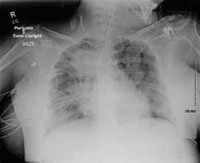
WHAT IS THE MOST LIKELY EXPLANATION FOR HER CONDITION?
H1N1 pneumonia
The patient’s physician initiated broad-spectrum antibiotics and oseltamivir for a presumptive diagnosis of 2009 H1N1 pneumonia and possible aspiration pneumonia. Although the patient had negative rapid influenza tests, the sensitivity of these tests is 10% to 70% in 2009 H1N1 influenza infection.1
Pregnant women and those in the first 2 weeks postpartum (or who have experienced a pregnancy loss) are considered to be at high risk for complications of influenza infection.1 Influenza A infection in pregnancy is associated with preterm labor, preterm birth, pneumonia, acute respiratory distress syndrome, and death.2 Although many pregnant patients may present with mild or moderate symptoms, the clinical progression with 2009 H1N1 appears to be more rapid than what has been seen with previous seasonal influenza outbreaks.3
According to 1 study, hospital admission rates during the first month of the outbreak were higher for pregnant women compared with the general population: 0.32 vs 0.076 per 100,000.4 The Centers for Disease Control and Prevention (CDC) indicates that while 1% of the population is pregnant at any given time, 6% of confirmed deaths from H1N1 in the United States in 2009 were pregnant women.5 Two prospective observational studies published in the Journal of the American Medical Association revealed the percentages of critically ill H1N1 patients who were pregnant. In Canada, 7.7% of critically ill patients with H1N1 were pregnant. In California, 10% were pregnant, and 6% of fatal cases in patients over age 18 were pregnant women.6,7
Why are pregnant women more susceptible to flu complications?
The immune system changes that make pregnant women more susceptible to complications of influenza infection are not well understood. Normal physiologic changes to the respiratory system during pregnancy may be a contributing factor. These include increased minute ventilation in the first trimester due to an increase in progesterone levels, increased tidal volume, decreased residual volume and functional residual capacity due to the mechanical effect of a gravid uterus, and increased oxygen consumption and basal metabolic rate due to increased demand.8
What can be done to decrease their risk?
The first step is preventing infection. For the 2009-2010 season, vaccination against seasonal and 2009 H1N1 influenza is strongly recommended for all pregnant women. Only the intramuscular injection is approved for pregnant women. Patients can receive the seasonal influenza vaccine at the same time as the H1N1 vaccine using an alternate injection site.
Maternal immunization against seasonal influenza benefits mothers and has also been shown to lower infection rates in infants. A study published in The New England Journal of Medicine showed that the seasonal influenza vaccination given to pregnant women reduced influenza-like illness in their infants younger than 6 months of age by 63%.9 Also important is providing chemoprophylaxis for pregnant women who have close contacts with suspected or confirmed influenza infection. For 2009 H1N1 chemoprophylaxis, a 10-day course of once-daily oseltamivir or zanamivir is acceptable. Zanamivir is an inhaled medication and should not be prescribed to patients with asthma or other respiratory conditions.
Confirmed case? Tx for the pregnant patient
The 2009 H1N1 virus is susceptible to oseltamivir and zanamivir.1 Both antivirals are Category C in pregnancy. The CDC recommends that patients with suspected or confirmed 2009 H1N1 infection who are in high-risk groups (which includes pregnant women) be treated with oseltamivir.
Antiviral medications such as oseltamivir and zanamivir act at the viral replication stage, which peaks at 24 to 72 hours in influenza.10 This helps explain evidence that the earlier treatment of influenza is initiated—within the first 48 hours—the more effective it is in reducing fever, relieving symptoms, and decreasing time to return to baseline activity.11 A study of pregnant women in California with severe 2009 H1N1 infection found that later treatment (>2 days after symptom onset) was associated with 4 times the risk of admission and death.3 For these reasons, treatment should not be delayed while test results are pending.
That said, in hospitalized patients with seasonal influenza, initiating treatment after 48 hours of symptom onset has been shown to provide some benefit in some observational studies.1,12 Consequently, the CDC recommends initiating treatment of high-risk patients who seek care more than 48 hours after symptom onset.1
The standard course of oseltamivir is 75 mg twice daily for 5 days. Longer courses may be beneficial in hospitalized patients.1 Oseltamivir and zanamivir can also be continued while breastfeeding.13
Our patient’s outcome
The patient received a 10-day course of oseltamivir (rather than the standard 5-day course), as well as empiric broad-spectrum antibiotic coverage for community-acquired pneumonia and aspiration pneumonia, including coverage for Streptococcus pneumoniae (the most common bacterial cause of secondary pneumonia in influenza14).
The cultures come back. Nasopharyngeal cultures were negative × 2 for type A influenza. Blood cultures were negative throughout the admission. Sputum cultures were negative, as well. Bronchoscopy cultures, however, were positive for type A influenza and negative for bacterial and fungal pathogens, confirming a diagnosis of primary pneumonia from 2009 H1N1 infection.
The patient was extubated 1 week after her arrival at our hospital and continued to recover during the rest of her hospital stay. She was discharged in stable condition. Several weeks later, she delivered a full-term infant with average weight and normal Apgar scores.
CORRESPONDENCE: Christopher Bernheisel, MD, Director, Family Medicine Inpatient Service, The University of Cincinnati, 2123 Auburn Ave., Suite 340, Cincinnati, OH 45219; bernheiseljfp@me.com
1. Centers for Disease Control and Prevention. Updated interim recommendations for obstetric health care providers related to use of antiviral medications in the treatment and prevention of influenza for the 2009-2010 season. Available at: http://www.cdc.gov/H1N1flu/pregnancy/antiviral_messages.htm. Accessed January 9, 2010.
2. Saleeby E, Chapman J, Morse J, et al. H1N1 Influenza in pregnancy: cause for concern. Obstet Gynecol. 2009;114:885-891.
3. Louie J, Acosta M, Jamieson D, et al. Severe 2009 H1N1 influenza in pregnant and postpartum women in California. N Engl J Med. 2010;362:27-35.
4. Jamieson DJ, Honein MA, Rasmussen SA, et al. H1N1 2009 influenza virus infection during pregnancy in the USA. Lancet. 2009;374:451-458.
5. Centers for Disease Control and Prevention. 2009 H1N1 influenza vaccine and pregnant women: information for healthcare providers. Available at: http://www.cdc.gov/h1n1flu/vaccination/providers_qa.htm. Accessed January 9, 2010.
6. Kumar A, Zarychanski R, Pinto R, et al. Critically ill patients with 2009 influenza A (H1N1) infection in Canada. JAMA. 2009;302:1872-1879.
7. Louie JK, Acosta M, Winter K, et al. Factors associated with death or hospitalization due to pandemic 2009 influenza A (H1N1) infection in California. JAMA. 2009;302:1896-1902.
8. Ratcliffe SD, Baxley EG, Cline MK, et al. Family Medicine Obstetrics. 3rd ed. Philadelphia, Pa: Mosby/Elsevier; 2008:203.
9. Zaman K, Roy E, Arifeen S, et al. Effectiveness of maternal influenza immunization in mothers and infants. N Engl J Med. 2008;359:1555-1564.
10. Moscana A. Neuraminidase inhibitors for influenza. N Engl J Med. 2005;353:1363-1373.
11. Aoki FY, Macleod MD, Paggiaro P, et al. Early administration of oral oseltamivir increases the benefits of influenza treatment. J Antimicrob Chemother. 2003;51:123-129.
12. Uyeki T. Antiviral treatment for patients hospitalized with 2009 pandemic influenza A (H1N1). N Engl J Med. 2009;361:e110.-
13. United States National Library of Medicine. LactMed: drugs and lactation database. Available at: http://toxnet.nlm.nih.gov/cgi-bin/sis/htmlgen?LACT. Accessed December 2, 2009.
14. Centers for Disease Control and Prevention. Severe methicillin-resistant Staphylococcus aureus community-acquired pneumonia associated with influenza—Louisiana and Georgia, December 2006-January 2007. MMWR Morb Mortal Wkly Rep. 2007;56:325-329.
- Don’t overestimate the value of a rapid influenza test. The sensitivity of these tests ranges between 10% and 70% in 2009 H1N1 influenza infection.
- Provide chemoprophylaxis for pregnant women who have close contacts with suspected or confirmed influenza infection.
- Consider longer courses of oseltamivir (beyond the standard 75 mg twice daily for 5 days) among hospitalized patients.
CASE: A 28-year-old woman (G6P1) at 33 weeks’ gestation was transferred from an outside hospital with worsening tachypnea, increasing oxygen requirement, and worsening infiltrates on chest radiograph.
A week earlier she had presented to a local emergency department (ED) with a 1-day history of nonproductive cough, fever, congestion, and decreased fetal movement. She also complained of vomiting. Examination was notable for an oxygen saturation of 99% on room air, heart rate of 126 bpm, temperature of 37.9°C (100.2°F), and blood pressure (BP) of 104/70 mm Hg. Rapid influenza A/B nasopharyngeal swab and group A Streptococcus direct probe were both negative. She was transferred to labor and delivery for fetal monitoring and discharged later that day.
Later in the week she returned to 2 other hospitals due to continued symptoms. She was diagnosed with right upper lobe pneumonia on her third ED visit and transferred to our facility, with increasing respiratory distress. Her examination was notable for a temperature of 36.8°C (98.2°F), pulse of 103 bpm, BP of 98/56 mm Hg, respiratory rate of 27 breaths per minute, and oxygen saturation of 94%. The patient had ulcerations on her tongue, dry mucous membranes, and lower extremity edema; on lung exam she had right lower lobe crackles and occasional wheezes.
Lab results were notable for a serum hemoglobin of 9.3 g/dL and platelet count of 75,000/mm3. The leukocyte count was 8.3×10⁹/L, with differential remarkable for 24% bands. Potassium was 3.3 mEq/L and bicarbonate was 19 mEq/L; the basic metabolic panel was otherwise normal. Lactic acid was elevated at 2.4 mg/dL. Coagulation levels were normal. Urinalysis was negative. Chest radiograph (FIGURE) was read as “right upper lobe pneumonia and probable small bilateral pleural effusions with lower lung airspace disease, which may relate to atelectasis; however, superimposed multi-focal pneumonia is not excluded.”
Overnight, she had an increasing oxygen requirement of up to 15 liters, axillary temperature 40.8°C (105.6°F), and heart rate in the 140s; fetal heart rate was in the 200s. The next day, a chest x-ray revealed worsening pulmonary infiltrates. The patient was tachypneic, with a BP of 99/50 mm Hg. She continued to worsen and required intubation for hypoxic respiratory distress.
FIGURE
Right upper lobe pneumonia
WHAT IS THE MOST LIKELY EXPLANATION FOR HER CONDITION?
H1N1 pneumonia
The patient’s physician initiated broad-spectrum antibiotics and oseltamivir for a presumptive diagnosis of 2009 H1N1 pneumonia and possible aspiration pneumonia. Although the patient had negative rapid influenza tests, the sensitivity of these tests is 10% to 70% in 2009 H1N1 influenza infection.1
Pregnant women and those in the first 2 weeks postpartum (or who have experienced a pregnancy loss) are considered to be at high risk for complications of influenza infection.1 Influenza A infection in pregnancy is associated with preterm labor, preterm birth, pneumonia, acute respiratory distress syndrome, and death.2 Although many pregnant patients may present with mild or moderate symptoms, the clinical progression with 2009 H1N1 appears to be more rapid than what has been seen with previous seasonal influenza outbreaks.3
According to 1 study, hospital admission rates during the first month of the outbreak were higher for pregnant women compared with the general population: 0.32 vs 0.076 per 100,000.4 The Centers for Disease Control and Prevention (CDC) indicates that while 1% of the population is pregnant at any given time, 6% of confirmed deaths from H1N1 in the United States in 2009 were pregnant women.5 Two prospective observational studies published in the Journal of the American Medical Association revealed the percentages of critically ill H1N1 patients who were pregnant. In Canada, 7.7% of critically ill patients with H1N1 were pregnant. In California, 10% were pregnant, and 6% of fatal cases in patients over age 18 were pregnant women.6,7
Why are pregnant women more susceptible to flu complications?
The immune system changes that make pregnant women more susceptible to complications of influenza infection are not well understood. Normal physiologic changes to the respiratory system during pregnancy may be a contributing factor. These include increased minute ventilation in the first trimester due to an increase in progesterone levels, increased tidal volume, decreased residual volume and functional residual capacity due to the mechanical effect of a gravid uterus, and increased oxygen consumption and basal metabolic rate due to increased demand.8
What can be done to decrease their risk?
The first step is preventing infection. For the 2009-2010 season, vaccination against seasonal and 2009 H1N1 influenza is strongly recommended for all pregnant women. Only the intramuscular injection is approved for pregnant women. Patients can receive the seasonal influenza vaccine at the same time as the H1N1 vaccine using an alternate injection site.
Maternal immunization against seasonal influenza benefits mothers and has also been shown to lower infection rates in infants. A study published in The New England Journal of Medicine showed that the seasonal influenza vaccination given to pregnant women reduced influenza-like illness in their infants younger than 6 months of age by 63%.9 Also important is providing chemoprophylaxis for pregnant women who have close contacts with suspected or confirmed influenza infection. For 2009 H1N1 chemoprophylaxis, a 10-day course of once-daily oseltamivir or zanamivir is acceptable. Zanamivir is an inhaled medication and should not be prescribed to patients with asthma or other respiratory conditions.
Confirmed case? Tx for the pregnant patient
The 2009 H1N1 virus is susceptible to oseltamivir and zanamivir.1 Both antivirals are Category C in pregnancy. The CDC recommends that patients with suspected or confirmed 2009 H1N1 infection who are in high-risk groups (which includes pregnant women) be treated with oseltamivir.
Antiviral medications such as oseltamivir and zanamivir act at the viral replication stage, which peaks at 24 to 72 hours in influenza.10 This helps explain evidence that the earlier treatment of influenza is initiated—within the first 48 hours—the more effective it is in reducing fever, relieving symptoms, and decreasing time to return to baseline activity.11 A study of pregnant women in California with severe 2009 H1N1 infection found that later treatment (>2 days after symptom onset) was associated with 4 times the risk of admission and death.3 For these reasons, treatment should not be delayed while test results are pending.
That said, in hospitalized patients with seasonal influenza, initiating treatment after 48 hours of symptom onset has been shown to provide some benefit in some observational studies.1,12 Consequently, the CDC recommends initiating treatment of high-risk patients who seek care more than 48 hours after symptom onset.1
The standard course of oseltamivir is 75 mg twice daily for 5 days. Longer courses may be beneficial in hospitalized patients.1 Oseltamivir and zanamivir can also be continued while breastfeeding.13
Our patient’s outcome
The patient received a 10-day course of oseltamivir (rather than the standard 5-day course), as well as empiric broad-spectrum antibiotic coverage for community-acquired pneumonia and aspiration pneumonia, including coverage for Streptococcus pneumoniae (the most common bacterial cause of secondary pneumonia in influenza14).
The cultures come back. Nasopharyngeal cultures were negative × 2 for type A influenza. Blood cultures were negative throughout the admission. Sputum cultures were negative, as well. Bronchoscopy cultures, however, were positive for type A influenza and negative for bacterial and fungal pathogens, confirming a diagnosis of primary pneumonia from 2009 H1N1 infection.
The patient was extubated 1 week after her arrival at our hospital and continued to recover during the rest of her hospital stay. She was discharged in stable condition. Several weeks later, she delivered a full-term infant with average weight and normal Apgar scores.
CORRESPONDENCE: Christopher Bernheisel, MD, Director, Family Medicine Inpatient Service, The University of Cincinnati, 2123 Auburn Ave., Suite 340, Cincinnati, OH 45219; bernheiseljfp@me.com
- Don’t overestimate the value of a rapid influenza test. The sensitivity of these tests ranges between 10% and 70% in 2009 H1N1 influenza infection.
- Provide chemoprophylaxis for pregnant women who have close contacts with suspected or confirmed influenza infection.
- Consider longer courses of oseltamivir (beyond the standard 75 mg twice daily for 5 days) among hospitalized patients.
CASE: A 28-year-old woman (G6P1) at 33 weeks’ gestation was transferred from an outside hospital with worsening tachypnea, increasing oxygen requirement, and worsening infiltrates on chest radiograph.
A week earlier she had presented to a local emergency department (ED) with a 1-day history of nonproductive cough, fever, congestion, and decreased fetal movement. She also complained of vomiting. Examination was notable for an oxygen saturation of 99% on room air, heart rate of 126 bpm, temperature of 37.9°C (100.2°F), and blood pressure (BP) of 104/70 mm Hg. Rapid influenza A/B nasopharyngeal swab and group A Streptococcus direct probe were both negative. She was transferred to labor and delivery for fetal monitoring and discharged later that day.
Later in the week she returned to 2 other hospitals due to continued symptoms. She was diagnosed with right upper lobe pneumonia on her third ED visit and transferred to our facility, with increasing respiratory distress. Her examination was notable for a temperature of 36.8°C (98.2°F), pulse of 103 bpm, BP of 98/56 mm Hg, respiratory rate of 27 breaths per minute, and oxygen saturation of 94%. The patient had ulcerations on her tongue, dry mucous membranes, and lower extremity edema; on lung exam she had right lower lobe crackles and occasional wheezes.
Lab results were notable for a serum hemoglobin of 9.3 g/dL and platelet count of 75,000/mm3. The leukocyte count was 8.3×10⁹/L, with differential remarkable for 24% bands. Potassium was 3.3 mEq/L and bicarbonate was 19 mEq/L; the basic metabolic panel was otherwise normal. Lactic acid was elevated at 2.4 mg/dL. Coagulation levels were normal. Urinalysis was negative. Chest radiograph (FIGURE) was read as “right upper lobe pneumonia and probable small bilateral pleural effusions with lower lung airspace disease, which may relate to atelectasis; however, superimposed multi-focal pneumonia is not excluded.”
Overnight, she had an increasing oxygen requirement of up to 15 liters, axillary temperature 40.8°C (105.6°F), and heart rate in the 140s; fetal heart rate was in the 200s. The next day, a chest x-ray revealed worsening pulmonary infiltrates. The patient was tachypneic, with a BP of 99/50 mm Hg. She continued to worsen and required intubation for hypoxic respiratory distress.
FIGURE
Right upper lobe pneumonia
WHAT IS THE MOST LIKELY EXPLANATION FOR HER CONDITION?
H1N1 pneumonia
The patient’s physician initiated broad-spectrum antibiotics and oseltamivir for a presumptive diagnosis of 2009 H1N1 pneumonia and possible aspiration pneumonia. Although the patient had negative rapid influenza tests, the sensitivity of these tests is 10% to 70% in 2009 H1N1 influenza infection.1
Pregnant women and those in the first 2 weeks postpartum (or who have experienced a pregnancy loss) are considered to be at high risk for complications of influenza infection.1 Influenza A infection in pregnancy is associated with preterm labor, preterm birth, pneumonia, acute respiratory distress syndrome, and death.2 Although many pregnant patients may present with mild or moderate symptoms, the clinical progression with 2009 H1N1 appears to be more rapid than what has been seen with previous seasonal influenza outbreaks.3
According to 1 study, hospital admission rates during the first month of the outbreak were higher for pregnant women compared with the general population: 0.32 vs 0.076 per 100,000.4 The Centers for Disease Control and Prevention (CDC) indicates that while 1% of the population is pregnant at any given time, 6% of confirmed deaths from H1N1 in the United States in 2009 were pregnant women.5 Two prospective observational studies published in the Journal of the American Medical Association revealed the percentages of critically ill H1N1 patients who were pregnant. In Canada, 7.7% of critically ill patients with H1N1 were pregnant. In California, 10% were pregnant, and 6% of fatal cases in patients over age 18 were pregnant women.6,7
Why are pregnant women more susceptible to flu complications?
The immune system changes that make pregnant women more susceptible to complications of influenza infection are not well understood. Normal physiologic changes to the respiratory system during pregnancy may be a contributing factor. These include increased minute ventilation in the first trimester due to an increase in progesterone levels, increased tidal volume, decreased residual volume and functional residual capacity due to the mechanical effect of a gravid uterus, and increased oxygen consumption and basal metabolic rate due to increased demand.8
What can be done to decrease their risk?
The first step is preventing infection. For the 2009-2010 season, vaccination against seasonal and 2009 H1N1 influenza is strongly recommended for all pregnant women. Only the intramuscular injection is approved for pregnant women. Patients can receive the seasonal influenza vaccine at the same time as the H1N1 vaccine using an alternate injection site.
Maternal immunization against seasonal influenza benefits mothers and has also been shown to lower infection rates in infants. A study published in The New England Journal of Medicine showed that the seasonal influenza vaccination given to pregnant women reduced influenza-like illness in their infants younger than 6 months of age by 63%.9 Also important is providing chemoprophylaxis for pregnant women who have close contacts with suspected or confirmed influenza infection. For 2009 H1N1 chemoprophylaxis, a 10-day course of once-daily oseltamivir or zanamivir is acceptable. Zanamivir is an inhaled medication and should not be prescribed to patients with asthma or other respiratory conditions.
Confirmed case? Tx for the pregnant patient
The 2009 H1N1 virus is susceptible to oseltamivir and zanamivir.1 Both antivirals are Category C in pregnancy. The CDC recommends that patients with suspected or confirmed 2009 H1N1 infection who are in high-risk groups (which includes pregnant women) be treated with oseltamivir.
Antiviral medications such as oseltamivir and zanamivir act at the viral replication stage, which peaks at 24 to 72 hours in influenza.10 This helps explain evidence that the earlier treatment of influenza is initiated—within the first 48 hours—the more effective it is in reducing fever, relieving symptoms, and decreasing time to return to baseline activity.11 A study of pregnant women in California with severe 2009 H1N1 infection found that later treatment (>2 days after symptom onset) was associated with 4 times the risk of admission and death.3 For these reasons, treatment should not be delayed while test results are pending.
That said, in hospitalized patients with seasonal influenza, initiating treatment after 48 hours of symptom onset has been shown to provide some benefit in some observational studies.1,12 Consequently, the CDC recommends initiating treatment of high-risk patients who seek care more than 48 hours after symptom onset.1
The standard course of oseltamivir is 75 mg twice daily for 5 days. Longer courses may be beneficial in hospitalized patients.1 Oseltamivir and zanamivir can also be continued while breastfeeding.13
Our patient’s outcome
The patient received a 10-day course of oseltamivir (rather than the standard 5-day course), as well as empiric broad-spectrum antibiotic coverage for community-acquired pneumonia and aspiration pneumonia, including coverage for Streptococcus pneumoniae (the most common bacterial cause of secondary pneumonia in influenza14).
The cultures come back. Nasopharyngeal cultures were negative × 2 for type A influenza. Blood cultures were negative throughout the admission. Sputum cultures were negative, as well. Bronchoscopy cultures, however, were positive for type A influenza and negative for bacterial and fungal pathogens, confirming a diagnosis of primary pneumonia from 2009 H1N1 infection.
The patient was extubated 1 week after her arrival at our hospital and continued to recover during the rest of her hospital stay. She was discharged in stable condition. Several weeks later, she delivered a full-term infant with average weight and normal Apgar scores.
CORRESPONDENCE: Christopher Bernheisel, MD, Director, Family Medicine Inpatient Service, The University of Cincinnati, 2123 Auburn Ave., Suite 340, Cincinnati, OH 45219; bernheiseljfp@me.com
1. Centers for Disease Control and Prevention. Updated interim recommendations for obstetric health care providers related to use of antiviral medications in the treatment and prevention of influenza for the 2009-2010 season. Available at: http://www.cdc.gov/H1N1flu/pregnancy/antiviral_messages.htm. Accessed January 9, 2010.
2. Saleeby E, Chapman J, Morse J, et al. H1N1 Influenza in pregnancy: cause for concern. Obstet Gynecol. 2009;114:885-891.
3. Louie J, Acosta M, Jamieson D, et al. Severe 2009 H1N1 influenza in pregnant and postpartum women in California. N Engl J Med. 2010;362:27-35.
4. Jamieson DJ, Honein MA, Rasmussen SA, et al. H1N1 2009 influenza virus infection during pregnancy in the USA. Lancet. 2009;374:451-458.
5. Centers for Disease Control and Prevention. 2009 H1N1 influenza vaccine and pregnant women: information for healthcare providers. Available at: http://www.cdc.gov/h1n1flu/vaccination/providers_qa.htm. Accessed January 9, 2010.
6. Kumar A, Zarychanski R, Pinto R, et al. Critically ill patients with 2009 influenza A (H1N1) infection in Canada. JAMA. 2009;302:1872-1879.
7. Louie JK, Acosta M, Winter K, et al. Factors associated with death or hospitalization due to pandemic 2009 influenza A (H1N1) infection in California. JAMA. 2009;302:1896-1902.
8. Ratcliffe SD, Baxley EG, Cline MK, et al. Family Medicine Obstetrics. 3rd ed. Philadelphia, Pa: Mosby/Elsevier; 2008:203.
9. Zaman K, Roy E, Arifeen S, et al. Effectiveness of maternal influenza immunization in mothers and infants. N Engl J Med. 2008;359:1555-1564.
10. Moscana A. Neuraminidase inhibitors for influenza. N Engl J Med. 2005;353:1363-1373.
11. Aoki FY, Macleod MD, Paggiaro P, et al. Early administration of oral oseltamivir increases the benefits of influenza treatment. J Antimicrob Chemother. 2003;51:123-129.
12. Uyeki T. Antiviral treatment for patients hospitalized with 2009 pandemic influenza A (H1N1). N Engl J Med. 2009;361:e110.-
13. United States National Library of Medicine. LactMed: drugs and lactation database. Available at: http://toxnet.nlm.nih.gov/cgi-bin/sis/htmlgen?LACT. Accessed December 2, 2009.
14. Centers for Disease Control and Prevention. Severe methicillin-resistant Staphylococcus aureus community-acquired pneumonia associated with influenza—Louisiana and Georgia, December 2006-January 2007. MMWR Morb Mortal Wkly Rep. 2007;56:325-329.
1. Centers for Disease Control and Prevention. Updated interim recommendations for obstetric health care providers related to use of antiviral medications in the treatment and prevention of influenza for the 2009-2010 season. Available at: http://www.cdc.gov/H1N1flu/pregnancy/antiviral_messages.htm. Accessed January 9, 2010.
2. Saleeby E, Chapman J, Morse J, et al. H1N1 Influenza in pregnancy: cause for concern. Obstet Gynecol. 2009;114:885-891.
3. Louie J, Acosta M, Jamieson D, et al. Severe 2009 H1N1 influenza in pregnant and postpartum women in California. N Engl J Med. 2010;362:27-35.
4. Jamieson DJ, Honein MA, Rasmussen SA, et al. H1N1 2009 influenza virus infection during pregnancy in the USA. Lancet. 2009;374:451-458.
5. Centers for Disease Control and Prevention. 2009 H1N1 influenza vaccine and pregnant women: information for healthcare providers. Available at: http://www.cdc.gov/h1n1flu/vaccination/providers_qa.htm. Accessed January 9, 2010.
6. Kumar A, Zarychanski R, Pinto R, et al. Critically ill patients with 2009 influenza A (H1N1) infection in Canada. JAMA. 2009;302:1872-1879.
7. Louie JK, Acosta M, Winter K, et al. Factors associated with death or hospitalization due to pandemic 2009 influenza A (H1N1) infection in California. JAMA. 2009;302:1896-1902.
8. Ratcliffe SD, Baxley EG, Cline MK, et al. Family Medicine Obstetrics. 3rd ed. Philadelphia, Pa: Mosby/Elsevier; 2008:203.
9. Zaman K, Roy E, Arifeen S, et al. Effectiveness of maternal influenza immunization in mothers and infants. N Engl J Med. 2008;359:1555-1564.
10. Moscana A. Neuraminidase inhibitors for influenza. N Engl J Med. 2005;353:1363-1373.
11. Aoki FY, Macleod MD, Paggiaro P, et al. Early administration of oral oseltamivir increases the benefits of influenza treatment. J Antimicrob Chemother. 2003;51:123-129.
12. Uyeki T. Antiviral treatment for patients hospitalized with 2009 pandemic influenza A (H1N1). N Engl J Med. 2009;361:e110.-
13. United States National Library of Medicine. LactMed: drugs and lactation database. Available at: http://toxnet.nlm.nih.gov/cgi-bin/sis/htmlgen?LACT. Accessed December 2, 2009.
14. Centers for Disease Control and Prevention. Severe methicillin-resistant Staphylococcus aureus community-acquired pneumonia associated with influenza—Louisiana and Georgia, December 2006-January 2007. MMWR Morb Mortal Wkly Rep. 2007;56:325-329.
Stubborn pneumonia turns out to be cancer ... Iodine contrast media kills man with known shellfish allergy...more
Stubborn pneumonia turns out to be cancer
AFTER RECEIVING ANTIBIOTICS FOR PNEUMONIA, a 37-year-old man improved but didn’t fully recover; his radiographs didn’t return to normal. He’d never smoked cigarettes.
During the several months after the pneumonia, the patient’s doctor ordered repeat radiographs and prescribed antibiotics and pain medication. When the patient’s spine collapsed, the doctor diagnosed metastatic lung cancer. The patient received palliative treatment and ultimately died.
PLAINTIFF’S CLAIM The doctor was negligent in failing to change the patient’s treatment after 2 or 3 months and failing to order a computed tomography (CT) scan or refer the patient to a pulmonologist.
THE DEFENSE No information about the doctor’s defense is available.
VERDICT $1.25 million Washington settlement.
COMMENT I’d like a nickel for every case of delayed diagnosis of lung cancer based on clearly abnormal chest radiographs. We can argue about whether diagnosis would make a difference, but we need to follow up assiduously on abnormal radiographs and document our actions.
Rapidly raised serum sodium leads to osmotic demyelination
A 60-YEAR-OLD WOMAN went to her local medical center complaining of a cough for the previous 2 weeks, decreased appetite and oral intake, and generalized body aches. She first went to urgent care, where laboratory studies showed critically low levels of sodium and potassium. Based on these results, the woman was told to go to the facility’s emergency department (ED).
In the ED, she reported feeling very weak and tired and having body aches and pain. When laboratory tests showed that her sodium and potassium levels had fallen further, she was admitted to the intensive care unit (ICU).
The doctor who saw the patient in the ICU ordered intravenous fluids with normal saline and potassium supplements. He then had the patient admitted to the ICU at another hospital. The physician at that hospital continued to prescribe IV sodium and potassium until the patient was discharged with diagnoses that included hyponatremia and hypokalemia.
Ten days later, the patient returned to the ED complaining of slurred speech for the previous 2 days. A CT scan of her head showed a possible basilar tip aneurysm. Subsequent magnetic resonance imaging with and without contrast and intracranial magnetic resonance angiography confirmed a basilar tip aneurysm and showed findings suggestive of osmotic demyelination. Neurologic examination revealed dysarthria, right upper extremity weakness without spasticity, and periods of confusion interspersed with lucid intervals.
A subsequent neurologic consultation confirmed osmotic demyelination syndrome (formerly known as central pontine myelinolysis). Neurologic examination at that time found continued mild dysarthria, problems standing, inability to walk unsupported, mild oral and pharyngeal dysphagia, and language and writing deficits.
PLAINTIFF’S CLAIM The patient’s sodium level was increased at an inappropriately rapid rate, which caused neurologically devastating osmotic demyelination. Serum sodium should have been monitored every 4 hours during the first 24 hours of treatment. The plaintiff also alleged negligence in continuing normal saline after the patient’s serum sodium was measured at 112 mEq/L.
THE DEFENSE The treatment provided was appropriate.
VERDICT $550,000 California settlement.
COMMENT Avoiding osmotic demyelination syndrome requires careful treatment and monitoring. I have independently reviewed several allegations of malpractice involving this uncommon, but devastating condition. Two recent articles summarize the treatment of this disorder: Sterns RH, Silver S, Klein-schmidt-DeMasters BK, et al. Current perspectives in the management of hyponatremia: prevention of CPM. Expert Rev Neurother. 2007;7:1791-1797; and Lien YH, Shapiro JI. Hyponatremia: clinical diagnosis and management. Am J Med. 2007;120:653-658.
Iodine contrast media kills man with known shellfish allergy
A 41-YEAR-OLD MAN WITH CHEST PAIN was admitted to his local hospital, where he received a diagnosis of acute coronary syndrome. After treatment in the emergency department, the patient was admitted to the telemetry unit by an internist, the partner of the patient’s primary care physician. The patient’s admission records noted that he had an allergy to shellfish.
The next morning, a cardiologist was called in. The cardiologist then called in an interventional cardiologist, who scheduled a cardiac catheterization. The interventional cardiologist ordered 1 dose of steroids, followed a few minutes later by contrast iodine. The patient immediately suffered a severe allergic reaction and died.
PLAINTIFF’S CLAIM The internist who admitted the patient to the telemetry unit took an incomplete history regarding the patient’s allergies (although the admission records contained that information). No information about the claims against the 2 cardiologists is available.
THE DEFENSE No information about the defense is available.
VERDICT $4.7 million gross verdict in Florida.
COMMENT In addition to considering the risk of dye loads and carefully checking renal function, remember to assess for allergy when administering contrast agents. Failure to do so in this case led to the death of the patient and a multimillion-dollar verdict.
Stubborn pneumonia turns out to be cancer
AFTER RECEIVING ANTIBIOTICS FOR PNEUMONIA, a 37-year-old man improved but didn’t fully recover; his radiographs didn’t return to normal. He’d never smoked cigarettes.
During the several months after the pneumonia, the patient’s doctor ordered repeat radiographs and prescribed antibiotics and pain medication. When the patient’s spine collapsed, the doctor diagnosed metastatic lung cancer. The patient received palliative treatment and ultimately died.
PLAINTIFF’S CLAIM The doctor was negligent in failing to change the patient’s treatment after 2 or 3 months and failing to order a computed tomography (CT) scan or refer the patient to a pulmonologist.
THE DEFENSE No information about the doctor’s defense is available.
VERDICT $1.25 million Washington settlement.
COMMENT I’d like a nickel for every case of delayed diagnosis of lung cancer based on clearly abnormal chest radiographs. We can argue about whether diagnosis would make a difference, but we need to follow up assiduously on abnormal radiographs and document our actions.
Rapidly raised serum sodium leads to osmotic demyelination
A 60-YEAR-OLD WOMAN went to her local medical center complaining of a cough for the previous 2 weeks, decreased appetite and oral intake, and generalized body aches. She first went to urgent care, where laboratory studies showed critically low levels of sodium and potassium. Based on these results, the woman was told to go to the facility’s emergency department (ED).
In the ED, she reported feeling very weak and tired and having body aches and pain. When laboratory tests showed that her sodium and potassium levels had fallen further, she was admitted to the intensive care unit (ICU).
The doctor who saw the patient in the ICU ordered intravenous fluids with normal saline and potassium supplements. He then had the patient admitted to the ICU at another hospital. The physician at that hospital continued to prescribe IV sodium and potassium until the patient was discharged with diagnoses that included hyponatremia and hypokalemia.
Ten days later, the patient returned to the ED complaining of slurred speech for the previous 2 days. A CT scan of her head showed a possible basilar tip aneurysm. Subsequent magnetic resonance imaging with and without contrast and intracranial magnetic resonance angiography confirmed a basilar tip aneurysm and showed findings suggestive of osmotic demyelination. Neurologic examination revealed dysarthria, right upper extremity weakness without spasticity, and periods of confusion interspersed with lucid intervals.
A subsequent neurologic consultation confirmed osmotic demyelination syndrome (formerly known as central pontine myelinolysis). Neurologic examination at that time found continued mild dysarthria, problems standing, inability to walk unsupported, mild oral and pharyngeal dysphagia, and language and writing deficits.
PLAINTIFF’S CLAIM The patient’s sodium level was increased at an inappropriately rapid rate, which caused neurologically devastating osmotic demyelination. Serum sodium should have been monitored every 4 hours during the first 24 hours of treatment. The plaintiff also alleged negligence in continuing normal saline after the patient’s serum sodium was measured at 112 mEq/L.
THE DEFENSE The treatment provided was appropriate.
VERDICT $550,000 California settlement.
COMMENT Avoiding osmotic demyelination syndrome requires careful treatment and monitoring. I have independently reviewed several allegations of malpractice involving this uncommon, but devastating condition. Two recent articles summarize the treatment of this disorder: Sterns RH, Silver S, Klein-schmidt-DeMasters BK, et al. Current perspectives in the management of hyponatremia: prevention of CPM. Expert Rev Neurother. 2007;7:1791-1797; and Lien YH, Shapiro JI. Hyponatremia: clinical diagnosis and management. Am J Med. 2007;120:653-658.
Iodine contrast media kills man with known shellfish allergy
A 41-YEAR-OLD MAN WITH CHEST PAIN was admitted to his local hospital, where he received a diagnosis of acute coronary syndrome. After treatment in the emergency department, the patient was admitted to the telemetry unit by an internist, the partner of the patient’s primary care physician. The patient’s admission records noted that he had an allergy to shellfish.
The next morning, a cardiologist was called in. The cardiologist then called in an interventional cardiologist, who scheduled a cardiac catheterization. The interventional cardiologist ordered 1 dose of steroids, followed a few minutes later by contrast iodine. The patient immediately suffered a severe allergic reaction and died.
PLAINTIFF’S CLAIM The internist who admitted the patient to the telemetry unit took an incomplete history regarding the patient’s allergies (although the admission records contained that information). No information about the claims against the 2 cardiologists is available.
THE DEFENSE No information about the defense is available.
VERDICT $4.7 million gross verdict in Florida.
COMMENT In addition to considering the risk of dye loads and carefully checking renal function, remember to assess for allergy when administering contrast agents. Failure to do so in this case led to the death of the patient and a multimillion-dollar verdict.
Stubborn pneumonia turns out to be cancer
AFTER RECEIVING ANTIBIOTICS FOR PNEUMONIA, a 37-year-old man improved but didn’t fully recover; his radiographs didn’t return to normal. He’d never smoked cigarettes.
During the several months after the pneumonia, the patient’s doctor ordered repeat radiographs and prescribed antibiotics and pain medication. When the patient’s spine collapsed, the doctor diagnosed metastatic lung cancer. The patient received palliative treatment and ultimately died.
PLAINTIFF’S CLAIM The doctor was negligent in failing to change the patient’s treatment after 2 or 3 months and failing to order a computed tomography (CT) scan or refer the patient to a pulmonologist.
THE DEFENSE No information about the doctor’s defense is available.
VERDICT $1.25 million Washington settlement.
COMMENT I’d like a nickel for every case of delayed diagnosis of lung cancer based on clearly abnormal chest radiographs. We can argue about whether diagnosis would make a difference, but we need to follow up assiduously on abnormal radiographs and document our actions.
Rapidly raised serum sodium leads to osmotic demyelination
A 60-YEAR-OLD WOMAN went to her local medical center complaining of a cough for the previous 2 weeks, decreased appetite and oral intake, and generalized body aches. She first went to urgent care, where laboratory studies showed critically low levels of sodium and potassium. Based on these results, the woman was told to go to the facility’s emergency department (ED).
In the ED, she reported feeling very weak and tired and having body aches and pain. When laboratory tests showed that her sodium and potassium levels had fallen further, she was admitted to the intensive care unit (ICU).
The doctor who saw the patient in the ICU ordered intravenous fluids with normal saline and potassium supplements. He then had the patient admitted to the ICU at another hospital. The physician at that hospital continued to prescribe IV sodium and potassium until the patient was discharged with diagnoses that included hyponatremia and hypokalemia.
Ten days later, the patient returned to the ED complaining of slurred speech for the previous 2 days. A CT scan of her head showed a possible basilar tip aneurysm. Subsequent magnetic resonance imaging with and without contrast and intracranial magnetic resonance angiography confirmed a basilar tip aneurysm and showed findings suggestive of osmotic demyelination. Neurologic examination revealed dysarthria, right upper extremity weakness without spasticity, and periods of confusion interspersed with lucid intervals.
A subsequent neurologic consultation confirmed osmotic demyelination syndrome (formerly known as central pontine myelinolysis). Neurologic examination at that time found continued mild dysarthria, problems standing, inability to walk unsupported, mild oral and pharyngeal dysphagia, and language and writing deficits.
PLAINTIFF’S CLAIM The patient’s sodium level was increased at an inappropriately rapid rate, which caused neurologically devastating osmotic demyelination. Serum sodium should have been monitored every 4 hours during the first 24 hours of treatment. The plaintiff also alleged negligence in continuing normal saline after the patient’s serum sodium was measured at 112 mEq/L.
THE DEFENSE The treatment provided was appropriate.
VERDICT $550,000 California settlement.
COMMENT Avoiding osmotic demyelination syndrome requires careful treatment and monitoring. I have independently reviewed several allegations of malpractice involving this uncommon, but devastating condition. Two recent articles summarize the treatment of this disorder: Sterns RH, Silver S, Klein-schmidt-DeMasters BK, et al. Current perspectives in the management of hyponatremia: prevention of CPM. Expert Rev Neurother. 2007;7:1791-1797; and Lien YH, Shapiro JI. Hyponatremia: clinical diagnosis and management. Am J Med. 2007;120:653-658.
Iodine contrast media kills man with known shellfish allergy
A 41-YEAR-OLD MAN WITH CHEST PAIN was admitted to his local hospital, where he received a diagnosis of acute coronary syndrome. After treatment in the emergency department, the patient was admitted to the telemetry unit by an internist, the partner of the patient’s primary care physician. The patient’s admission records noted that he had an allergy to shellfish.
The next morning, a cardiologist was called in. The cardiologist then called in an interventional cardiologist, who scheduled a cardiac catheterization. The interventional cardiologist ordered 1 dose of steroids, followed a few minutes later by contrast iodine. The patient immediately suffered a severe allergic reaction and died.
PLAINTIFF’S CLAIM The internist who admitted the patient to the telemetry unit took an incomplete history regarding the patient’s allergies (although the admission records contained that information). No information about the claims against the 2 cardiologists is available.
THE DEFENSE No information about the defense is available.
VERDICT $4.7 million gross verdict in Florida.
COMMENT In addition to considering the risk of dye loads and carefully checking renal function, remember to assess for allergy when administering contrast agents. Failure to do so in this case led to the death of the patient and a multimillion-dollar verdict.
New Guidelines Are Issued for Four Nonmotor PD Symptoms
Nonmotor symptoms of Parkinson's disease remain underdiagnosed despite their widespread occurrence—which is the impetus behind new treatment guidelines from the American Academy of Neurology.
“Nonmotor symptoms are an integral part of this syndrome. These symptoms can be as troublesome as motor symptoms and impact activities of daily living, though they are often underrecognized by health care professionals,” wrote Dr. Theresa A. Zesiewicz, lead author of the guidelines and professor of neurology at the University of South Florida, Tampa (Neurology 2010;74:924-31).
Treatment of depression, dementia, and psychosis in Parkinson's disease (PD) has been addressed in a previous guideline (Neurology 2006;66:996-1002), as has treatment of PD-related sialorrhea with botulinum toxin (Neurology 2008;70:1707-14).
However, there are many other nonmotor symptoms for which there is a paucity of research concerning treatment, wrote Dr. Zesiewicz and her colleagues wrote.
“The disease process of PD certainly contributes to many nonmotor symptoms, including autonomic dysfunction (orthostatic hypotension, gastrointestinal symptoms), depression, sexual dysfunction, and sleep dysfunction,” said Dr. Zesiewicz in an interview. “However, medications used to treat PD can contribute to other nonmotor symptoms. For example, the use of some PD medications can contribute to excessive daytime sleepiness, while others can cause insomnia.”
In general, treatment of most nonmotor PD symptoms should mirror the treatments given to non-PD patients, because “research is not currently available to support or refute their use specifically in PD patients,” Dr. Zesiewicz said.
However, the new guidelines provide evidence-based recommendations for treating four conditions: erectile dysfunction, constipation, restless legs syndrome, and fatigue.
A wide range of nonmotor symptoms were reviewed for the guidelines, including autonomic dysfunction such as gastrointestinal disorders, orthostatic hypotension, sexual dysfunction, and urinary incontinence; sleep disorders, such as restless legs syndrome, periodic limb movements of sleep, excessive daytime somnolence, insomnia, and REM sleep behavior disorder; fatigue; and anxiety.
After conducting a literature search aimed at capturing articles pertaining to these symptoms published between 1966 and 2008, a panel review deemed 46 papers relevant for the development of evidence-based recommendations. They also concluded that there was insufficient evidence to make recommendations regarding the treatment of urinary incontinence, orthostatic hypotension, insomnia, REM sleep behavior disorder, and anxiety.
For the treatment of erectile dysfunction (ED) in Parkinson's disease, the authors recommend that sildenafil citrate (50 mg) “is possibly efficacious.”
Sexual dysfunction is common in both men and women with PD, they wrote. “Dysautonomia manifests as erectile dysfunction (ED) but also as reduced genital sensitivity and lubrication and difficulties reaching orgasm.” Only one controlled clinical trial for the treatment of ED was available for review, however.
For constipation, they concluded that isosmotic macrogol (polyethylene glycol) “possibly improves constipation in PD.” Four studies evaluating the efficacy of pharmacologic agents for PD-related constipation were reviewed, and the recommendation is based one class II study.
Regarding PD-related sleep dysfunction, the authors found sufficient evidence to make treatment recommendations for excessive daytime somnolence (EDS), and restless leg syndrome or periodic limb movements of sleep.
Based on the results of two class I studies, the authors recommend modafinil to improve patients' perceptions of wakefulness, though “it is ineffective in objectively improving EDS as measured by objective tests.”
In addition, they said, levodopa/carbidopa “probably decreases the frequency of spontaneous nighttime leg movements,” based on one class I study and should therefore be considered to treat periodic limb movements of sleep in PD.
And finally, “methylphenidate is possibly useful in treating fatigue in PD,” they concluded, based on one class II study. However, there is potential for abuse, they warned. “Although there is no current evidence to suggest such a risk in PD, patients with PD do have a risk for dopamine dysregulation syndrome and impulse control disorders that share many clinical and functional imaging features with addiction,” they cautioned.
“The same rules for treating PD patients with these medications would apply as when treating any patients, including careful monitoring of drug interactions and taking comorbid conditions into consideration,” Dr. Zesiewicz said.
“Of course, it is important to recognize that the treatments recommended are not the only available treatments,” commented Dr. Ronald B. Postuma, who is a PD researcher and assistant professor of neurology at the Montreal General Hospital. “The guidelines focus only on therapies that have good randomized controlled trial evidence. All experienced clinicians will recognize several useful treatments that are not in the recommendations because of incomplete evidence,” he said in an interview.
Dr. Zesiewicz reported receiving funding for travel from and serving on speakers bureaus for Boehringer Ingelheim Inc. and Teva Pharmaceutical Industries Ltd.
She also reported that she had received research support from various pharmaceutical companies.
Nonmotor symptoms of Parkinson's disease remain underdiagnosed despite their widespread occurrence—which is the impetus behind new treatment guidelines from the American Academy of Neurology.
“Nonmotor symptoms are an integral part of this syndrome. These symptoms can be as troublesome as motor symptoms and impact activities of daily living, though they are often underrecognized by health care professionals,” wrote Dr. Theresa A. Zesiewicz, lead author of the guidelines and professor of neurology at the University of South Florida, Tampa (Neurology 2010;74:924-31).
Treatment of depression, dementia, and psychosis in Parkinson's disease (PD) has been addressed in a previous guideline (Neurology 2006;66:996-1002), as has treatment of PD-related sialorrhea with botulinum toxin (Neurology 2008;70:1707-14).
However, there are many other nonmotor symptoms for which there is a paucity of research concerning treatment, wrote Dr. Zesiewicz and her colleagues wrote.
“The disease process of PD certainly contributes to many nonmotor symptoms, including autonomic dysfunction (orthostatic hypotension, gastrointestinal symptoms), depression, sexual dysfunction, and sleep dysfunction,” said Dr. Zesiewicz in an interview. “However, medications used to treat PD can contribute to other nonmotor symptoms. For example, the use of some PD medications can contribute to excessive daytime sleepiness, while others can cause insomnia.”
In general, treatment of most nonmotor PD symptoms should mirror the treatments given to non-PD patients, because “research is not currently available to support or refute their use specifically in PD patients,” Dr. Zesiewicz said.
However, the new guidelines provide evidence-based recommendations for treating four conditions: erectile dysfunction, constipation, restless legs syndrome, and fatigue.
A wide range of nonmotor symptoms were reviewed for the guidelines, including autonomic dysfunction such as gastrointestinal disorders, orthostatic hypotension, sexual dysfunction, and urinary incontinence; sleep disorders, such as restless legs syndrome, periodic limb movements of sleep, excessive daytime somnolence, insomnia, and REM sleep behavior disorder; fatigue; and anxiety.
After conducting a literature search aimed at capturing articles pertaining to these symptoms published between 1966 and 2008, a panel review deemed 46 papers relevant for the development of evidence-based recommendations. They also concluded that there was insufficient evidence to make recommendations regarding the treatment of urinary incontinence, orthostatic hypotension, insomnia, REM sleep behavior disorder, and anxiety.
For the treatment of erectile dysfunction (ED) in Parkinson's disease, the authors recommend that sildenafil citrate (50 mg) “is possibly efficacious.”
Sexual dysfunction is common in both men and women with PD, they wrote. “Dysautonomia manifests as erectile dysfunction (ED) but also as reduced genital sensitivity and lubrication and difficulties reaching orgasm.” Only one controlled clinical trial for the treatment of ED was available for review, however.
For constipation, they concluded that isosmotic macrogol (polyethylene glycol) “possibly improves constipation in PD.” Four studies evaluating the efficacy of pharmacologic agents for PD-related constipation were reviewed, and the recommendation is based one class II study.
Regarding PD-related sleep dysfunction, the authors found sufficient evidence to make treatment recommendations for excessive daytime somnolence (EDS), and restless leg syndrome or periodic limb movements of sleep.
Based on the results of two class I studies, the authors recommend modafinil to improve patients' perceptions of wakefulness, though “it is ineffective in objectively improving EDS as measured by objective tests.”
In addition, they said, levodopa/carbidopa “probably decreases the frequency of spontaneous nighttime leg movements,” based on one class I study and should therefore be considered to treat periodic limb movements of sleep in PD.
And finally, “methylphenidate is possibly useful in treating fatigue in PD,” they concluded, based on one class II study. However, there is potential for abuse, they warned. “Although there is no current evidence to suggest such a risk in PD, patients with PD do have a risk for dopamine dysregulation syndrome and impulse control disorders that share many clinical and functional imaging features with addiction,” they cautioned.
“The same rules for treating PD patients with these medications would apply as when treating any patients, including careful monitoring of drug interactions and taking comorbid conditions into consideration,” Dr. Zesiewicz said.
“Of course, it is important to recognize that the treatments recommended are not the only available treatments,” commented Dr. Ronald B. Postuma, who is a PD researcher and assistant professor of neurology at the Montreal General Hospital. “The guidelines focus only on therapies that have good randomized controlled trial evidence. All experienced clinicians will recognize several useful treatments that are not in the recommendations because of incomplete evidence,” he said in an interview.
Dr. Zesiewicz reported receiving funding for travel from and serving on speakers bureaus for Boehringer Ingelheim Inc. and Teva Pharmaceutical Industries Ltd.
She also reported that she had received research support from various pharmaceutical companies.
Nonmotor symptoms of Parkinson's disease remain underdiagnosed despite their widespread occurrence—which is the impetus behind new treatment guidelines from the American Academy of Neurology.
“Nonmotor symptoms are an integral part of this syndrome. These symptoms can be as troublesome as motor symptoms and impact activities of daily living, though they are often underrecognized by health care professionals,” wrote Dr. Theresa A. Zesiewicz, lead author of the guidelines and professor of neurology at the University of South Florida, Tampa (Neurology 2010;74:924-31).
Treatment of depression, dementia, and psychosis in Parkinson's disease (PD) has been addressed in a previous guideline (Neurology 2006;66:996-1002), as has treatment of PD-related sialorrhea with botulinum toxin (Neurology 2008;70:1707-14).
However, there are many other nonmotor symptoms for which there is a paucity of research concerning treatment, wrote Dr. Zesiewicz and her colleagues wrote.
“The disease process of PD certainly contributes to many nonmotor symptoms, including autonomic dysfunction (orthostatic hypotension, gastrointestinal symptoms), depression, sexual dysfunction, and sleep dysfunction,” said Dr. Zesiewicz in an interview. “However, medications used to treat PD can contribute to other nonmotor symptoms. For example, the use of some PD medications can contribute to excessive daytime sleepiness, while others can cause insomnia.”
In general, treatment of most nonmotor PD symptoms should mirror the treatments given to non-PD patients, because “research is not currently available to support or refute their use specifically in PD patients,” Dr. Zesiewicz said.
However, the new guidelines provide evidence-based recommendations for treating four conditions: erectile dysfunction, constipation, restless legs syndrome, and fatigue.
A wide range of nonmotor symptoms were reviewed for the guidelines, including autonomic dysfunction such as gastrointestinal disorders, orthostatic hypotension, sexual dysfunction, and urinary incontinence; sleep disorders, such as restless legs syndrome, periodic limb movements of sleep, excessive daytime somnolence, insomnia, and REM sleep behavior disorder; fatigue; and anxiety.
After conducting a literature search aimed at capturing articles pertaining to these symptoms published between 1966 and 2008, a panel review deemed 46 papers relevant for the development of evidence-based recommendations. They also concluded that there was insufficient evidence to make recommendations regarding the treatment of urinary incontinence, orthostatic hypotension, insomnia, REM sleep behavior disorder, and anxiety.
For the treatment of erectile dysfunction (ED) in Parkinson's disease, the authors recommend that sildenafil citrate (50 mg) “is possibly efficacious.”
Sexual dysfunction is common in both men and women with PD, they wrote. “Dysautonomia manifests as erectile dysfunction (ED) but also as reduced genital sensitivity and lubrication and difficulties reaching orgasm.” Only one controlled clinical trial for the treatment of ED was available for review, however.
For constipation, they concluded that isosmotic macrogol (polyethylene glycol) “possibly improves constipation in PD.” Four studies evaluating the efficacy of pharmacologic agents for PD-related constipation were reviewed, and the recommendation is based one class II study.
Regarding PD-related sleep dysfunction, the authors found sufficient evidence to make treatment recommendations for excessive daytime somnolence (EDS), and restless leg syndrome or periodic limb movements of sleep.
Based on the results of two class I studies, the authors recommend modafinil to improve patients' perceptions of wakefulness, though “it is ineffective in objectively improving EDS as measured by objective tests.”
In addition, they said, levodopa/carbidopa “probably decreases the frequency of spontaneous nighttime leg movements,” based on one class I study and should therefore be considered to treat periodic limb movements of sleep in PD.
And finally, “methylphenidate is possibly useful in treating fatigue in PD,” they concluded, based on one class II study. However, there is potential for abuse, they warned. “Although there is no current evidence to suggest such a risk in PD, patients with PD do have a risk for dopamine dysregulation syndrome and impulse control disorders that share many clinical and functional imaging features with addiction,” they cautioned.
“The same rules for treating PD patients with these medications would apply as when treating any patients, including careful monitoring of drug interactions and taking comorbid conditions into consideration,” Dr. Zesiewicz said.
“Of course, it is important to recognize that the treatments recommended are not the only available treatments,” commented Dr. Ronald B. Postuma, who is a PD researcher and assistant professor of neurology at the Montreal General Hospital. “The guidelines focus only on therapies that have good randomized controlled trial evidence. All experienced clinicians will recognize several useful treatments that are not in the recommendations because of incomplete evidence,” he said in an interview.
Dr. Zesiewicz reported receiving funding for travel from and serving on speakers bureaus for Boehringer Ingelheim Inc. and Teva Pharmaceutical Industries Ltd.
She also reported that she had received research support from various pharmaceutical companies.
Step-Up With LABAs Controlled Asthma Best
NEW ORLEANS — About 98% of children with uncontrolled asthma experienced clinically significant improvements on each of three types of step-up therapy, but treatment with long-acting beta-agonists yielded significantly better responses, according to a new study.
“Step-up with long-acting beta-agonists was more than one and a half times more likely to produce the best response,” Dr. Robert F. Lemanske Jr. said at the annual meeting of the American Academy of Allergy, Asthma, and Immunology. The results were presented at the meeting and published online in the New England Journal of Medicine.
Asthma treatment with long-acting beta-agonists (LABAs) has come under scrutiny in the wake of recent recommendations from the Food and Drug Administration to step down the use of these drugs in asthmatic children once their asthma is controlled. But few data are available to guide clinicians on the next steps in the treatment of children with asthma who are already using a low-dose inhaled corticosteroid (ICS), said Dr. Lemanske of the University of Wisconsin, Madison. He and his colleagues developed the Best Add-on Therapy Giving Effective Responses (BADGER) trial (N. Engl. J. Med. 2010 March 2 [doi: 10.1056/NEJMoa1001278
“This trial was not intended to look at safety,” Dr. Lemanske emphasized.
In the study, the researchers randomized 182 children aged 6-17 years with uncontrolled mild to moderate asthma to one of three therapies in three 16-week study periods. Every patient received each of the three therapies for 16 weeks. The first 4 weeks of the last two 16-week periods were considered run-in and washout periods. A total of 25 treatment failures occurred, and complete data were available for 157 patients.
The three therapies were ICS step-up therapy, consisting of 250 mcg of fluticasone twice daily; LABA step-up therapy, consisting of 100 mcg of fluticasone plus 50 mcg of salmeterol twice daily; or leukotriene-receptor antagonist therapy (LTRA), consisting of 100 mcg of fluticasone twice daily plus an age-appropriate dose (5 or 10 mg) of montelukast daily.
In pair comparisons, the proportion of children who responded best to LABA was 52% vs. LTRA (34%), and 54% vs. ICS (32%). The differences between LABA and each of the other two protocols were significant, but the differences between LTRA and ICS were not.
Of several primary factors used to predict best response, only a higher baseline score (greater than 19) on the Asthma Control Test or Childhood Asthma Control Test (depending on age) was a significant predictor of best response to the LABA therapy.
Of several secondary predictors, children without eczema were significantly more likely to have a best response to LABA therapy. In addition, race was a significant predictor of response. Black children were equally likely to have a best response to LABA or ICS therapy, and least likely to have a best response to LTRA therapy. Non-Hispanic white children and Hispanic children were most likely to have their best response to LABA therapy.
The findings suggest a ceiling effect beyond which low-dose ICS therapy is not effective, the researchers wrote.
Although the proportion of children who had a best response to LABA was significantly greater than with the other two treatments, “many children demonstrated a best response to either ICS or LTRA step-up therapy, highlighting the need to regularly monitor and appropriately adjust each child's asthma therapy,” Dr. Lemanske said at the meeting.
A total of seven serious adverse events were reported. The most common serious adverse event was asthma exacerbation.
Dr. Lemanske has received consulting fees and grant support from multiple pharmaceutical companies, including MAP Pharmaceuticals Inc., Gray Consulting Inc., Merck & Co., AstraZeneca, and Genentech Inc. The study was funded in part by the National Heart, Lung, and Blood Institute, and the study drugs and matching placebos were supplied by GlaxoSmithKline and Merck.
NEW ORLEANS — About 98% of children with uncontrolled asthma experienced clinically significant improvements on each of three types of step-up therapy, but treatment with long-acting beta-agonists yielded significantly better responses, according to a new study.
“Step-up with long-acting beta-agonists was more than one and a half times more likely to produce the best response,” Dr. Robert F. Lemanske Jr. said at the annual meeting of the American Academy of Allergy, Asthma, and Immunology. The results were presented at the meeting and published online in the New England Journal of Medicine.
Asthma treatment with long-acting beta-agonists (LABAs) has come under scrutiny in the wake of recent recommendations from the Food and Drug Administration to step down the use of these drugs in asthmatic children once their asthma is controlled. But few data are available to guide clinicians on the next steps in the treatment of children with asthma who are already using a low-dose inhaled corticosteroid (ICS), said Dr. Lemanske of the University of Wisconsin, Madison. He and his colleagues developed the Best Add-on Therapy Giving Effective Responses (BADGER) trial (N. Engl. J. Med. 2010 March 2 [doi: 10.1056/NEJMoa1001278
“This trial was not intended to look at safety,” Dr. Lemanske emphasized.
In the study, the researchers randomized 182 children aged 6-17 years with uncontrolled mild to moderate asthma to one of three therapies in three 16-week study periods. Every patient received each of the three therapies for 16 weeks. The first 4 weeks of the last two 16-week periods were considered run-in and washout periods. A total of 25 treatment failures occurred, and complete data were available for 157 patients.
The three therapies were ICS step-up therapy, consisting of 250 mcg of fluticasone twice daily; LABA step-up therapy, consisting of 100 mcg of fluticasone plus 50 mcg of salmeterol twice daily; or leukotriene-receptor antagonist therapy (LTRA), consisting of 100 mcg of fluticasone twice daily plus an age-appropriate dose (5 or 10 mg) of montelukast daily.
In pair comparisons, the proportion of children who responded best to LABA was 52% vs. LTRA (34%), and 54% vs. ICS (32%). The differences between LABA and each of the other two protocols were significant, but the differences between LTRA and ICS were not.
Of several primary factors used to predict best response, only a higher baseline score (greater than 19) on the Asthma Control Test or Childhood Asthma Control Test (depending on age) was a significant predictor of best response to the LABA therapy.
Of several secondary predictors, children without eczema were significantly more likely to have a best response to LABA therapy. In addition, race was a significant predictor of response. Black children were equally likely to have a best response to LABA or ICS therapy, and least likely to have a best response to LTRA therapy. Non-Hispanic white children and Hispanic children were most likely to have their best response to LABA therapy.
The findings suggest a ceiling effect beyond which low-dose ICS therapy is not effective, the researchers wrote.
Although the proportion of children who had a best response to LABA was significantly greater than with the other two treatments, “many children demonstrated a best response to either ICS or LTRA step-up therapy, highlighting the need to regularly monitor and appropriately adjust each child's asthma therapy,” Dr. Lemanske said at the meeting.
A total of seven serious adverse events were reported. The most common serious adverse event was asthma exacerbation.
Dr. Lemanske has received consulting fees and grant support from multiple pharmaceutical companies, including MAP Pharmaceuticals Inc., Gray Consulting Inc., Merck & Co., AstraZeneca, and Genentech Inc. The study was funded in part by the National Heart, Lung, and Blood Institute, and the study drugs and matching placebos were supplied by GlaxoSmithKline and Merck.
NEW ORLEANS — About 98% of children with uncontrolled asthma experienced clinically significant improvements on each of three types of step-up therapy, but treatment with long-acting beta-agonists yielded significantly better responses, according to a new study.
“Step-up with long-acting beta-agonists was more than one and a half times more likely to produce the best response,” Dr. Robert F. Lemanske Jr. said at the annual meeting of the American Academy of Allergy, Asthma, and Immunology. The results were presented at the meeting and published online in the New England Journal of Medicine.
Asthma treatment with long-acting beta-agonists (LABAs) has come under scrutiny in the wake of recent recommendations from the Food and Drug Administration to step down the use of these drugs in asthmatic children once their asthma is controlled. But few data are available to guide clinicians on the next steps in the treatment of children with asthma who are already using a low-dose inhaled corticosteroid (ICS), said Dr. Lemanske of the University of Wisconsin, Madison. He and his colleagues developed the Best Add-on Therapy Giving Effective Responses (BADGER) trial (N. Engl. J. Med. 2010 March 2 [doi: 10.1056/NEJMoa1001278
“This trial was not intended to look at safety,” Dr. Lemanske emphasized.
In the study, the researchers randomized 182 children aged 6-17 years with uncontrolled mild to moderate asthma to one of three therapies in three 16-week study periods. Every patient received each of the three therapies for 16 weeks. The first 4 weeks of the last two 16-week periods were considered run-in and washout periods. A total of 25 treatment failures occurred, and complete data were available for 157 patients.
The three therapies were ICS step-up therapy, consisting of 250 mcg of fluticasone twice daily; LABA step-up therapy, consisting of 100 mcg of fluticasone plus 50 mcg of salmeterol twice daily; or leukotriene-receptor antagonist therapy (LTRA), consisting of 100 mcg of fluticasone twice daily plus an age-appropriate dose (5 or 10 mg) of montelukast daily.
In pair comparisons, the proportion of children who responded best to LABA was 52% vs. LTRA (34%), and 54% vs. ICS (32%). The differences between LABA and each of the other two protocols were significant, but the differences between LTRA and ICS were not.
Of several primary factors used to predict best response, only a higher baseline score (greater than 19) on the Asthma Control Test or Childhood Asthma Control Test (depending on age) was a significant predictor of best response to the LABA therapy.
Of several secondary predictors, children without eczema were significantly more likely to have a best response to LABA therapy. In addition, race was a significant predictor of response. Black children were equally likely to have a best response to LABA or ICS therapy, and least likely to have a best response to LTRA therapy. Non-Hispanic white children and Hispanic children were most likely to have their best response to LABA therapy.
The findings suggest a ceiling effect beyond which low-dose ICS therapy is not effective, the researchers wrote.
Although the proportion of children who had a best response to LABA was significantly greater than with the other two treatments, “many children demonstrated a best response to either ICS or LTRA step-up therapy, highlighting the need to regularly monitor and appropriately adjust each child's asthma therapy,” Dr. Lemanske said at the meeting.
A total of seven serious adverse events were reported. The most common serious adverse event was asthma exacerbation.
Dr. Lemanske has received consulting fees and grant support from multiple pharmaceutical companies, including MAP Pharmaceuticals Inc., Gray Consulting Inc., Merck & Co., AstraZeneca, and Genentech Inc. The study was funded in part by the National Heart, Lung, and Blood Institute, and the study drugs and matching placebos were supplied by GlaxoSmithKline and Merck.
Add-On LTRA May Not Help in Perennial Allergic Rhinitis
Major Finding: Adding a leukotriene receptor antagonist to intranasal steroids had no significant effect on nasal symptoms in perennial allergic rhinitis patients.
Data Source: Small randomized, double-blind, placebo-controlled add-on trial.
Disclosures: Dr. Esteitie had no financial conflicts to disclose. The study was funded by Merck, which markets montelukast, and the McHugh Otolaryngology Research Fund.
NEW ORLEANS — Adding a leukotriene receptor antagonist to fluticasone propionate had no significant effect on nasal symptoms in patients with perennial allergic rhinitis, based on results of a small randomized trial.
Previous clinical trials have shown that approximately half of patients with perennial allergic rhinitis obtain excellent symptom control with intranasal steroids alone, leaving the other half looking for additional relief, said Dr. Rania Esteitie of the University of Chicago.
In the study, 102 patients with perennial allergic rhinitis completed a baseline Rhinitis Quality of Life Questionnaire (RQLQ), and then received fluticasone propionate nasal spray (50 mcg per spray). The patients were instructed to use two sprays in each nostril once daily for 2 weeks (a total of 200 mcg per day).
The patients ranged in age from 18 years to 55 years (mean, 34 years), and 35% were male. The study results were presented in a poster at the annual meeting of the American Academy of Allergy, Asthma, and Immunology.
After 2 weeks, the 54 patients whose Total Symptom Scores (including non-nasal symptoms) were greater than 4 out of a total possible score of 24 (with higher scores representing worse symptoms) were randomized to use either 10 mg/day of montelukast (28 patients) or placebo (26 patients) as add-on to continuing therapy with fluticasone, the researchers reported.
Over the next 2 weeks, the patients' symptoms and quality of life continued to improve, but there was no significant difference between the montelukast and placebo groups. The median changes in Total Nasal Symptom Scores from baseline for montelukast and placebo, respectively, were −0.22 and −0.25 for sneezes, −0.52 and −0.29 for runny nose, −0.41 and −0.47 for stuffy nose, and −0.24 and −0.14 for other symptoms, Dr. Esteitie and her associates wrote.
“We expected to see an improvement in symptoms after the addition of montelukast. However, we did not see any added benefit,” Dr. Esteitie said in an interview.
Although montelukast did not seem to provide additional relief for allergic rhinitis symptoms, the study was limited by the small number of patients, and additional research is needed to evaluate clinical benefits, she added.
Major Finding: Adding a leukotriene receptor antagonist to intranasal steroids had no significant effect on nasal symptoms in perennial allergic rhinitis patients.
Data Source: Small randomized, double-blind, placebo-controlled add-on trial.
Disclosures: Dr. Esteitie had no financial conflicts to disclose. The study was funded by Merck, which markets montelukast, and the McHugh Otolaryngology Research Fund.
NEW ORLEANS — Adding a leukotriene receptor antagonist to fluticasone propionate had no significant effect on nasal symptoms in patients with perennial allergic rhinitis, based on results of a small randomized trial.
Previous clinical trials have shown that approximately half of patients with perennial allergic rhinitis obtain excellent symptom control with intranasal steroids alone, leaving the other half looking for additional relief, said Dr. Rania Esteitie of the University of Chicago.
In the study, 102 patients with perennial allergic rhinitis completed a baseline Rhinitis Quality of Life Questionnaire (RQLQ), and then received fluticasone propionate nasal spray (50 mcg per spray). The patients were instructed to use two sprays in each nostril once daily for 2 weeks (a total of 200 mcg per day).
The patients ranged in age from 18 years to 55 years (mean, 34 years), and 35% were male. The study results were presented in a poster at the annual meeting of the American Academy of Allergy, Asthma, and Immunology.
After 2 weeks, the 54 patients whose Total Symptom Scores (including non-nasal symptoms) were greater than 4 out of a total possible score of 24 (with higher scores representing worse symptoms) were randomized to use either 10 mg/day of montelukast (28 patients) or placebo (26 patients) as add-on to continuing therapy with fluticasone, the researchers reported.
Over the next 2 weeks, the patients' symptoms and quality of life continued to improve, but there was no significant difference between the montelukast and placebo groups. The median changes in Total Nasal Symptom Scores from baseline for montelukast and placebo, respectively, were −0.22 and −0.25 for sneezes, −0.52 and −0.29 for runny nose, −0.41 and −0.47 for stuffy nose, and −0.24 and −0.14 for other symptoms, Dr. Esteitie and her associates wrote.
“We expected to see an improvement in symptoms after the addition of montelukast. However, we did not see any added benefit,” Dr. Esteitie said in an interview.
Although montelukast did not seem to provide additional relief for allergic rhinitis symptoms, the study was limited by the small number of patients, and additional research is needed to evaluate clinical benefits, she added.
Major Finding: Adding a leukotriene receptor antagonist to intranasal steroids had no significant effect on nasal symptoms in perennial allergic rhinitis patients.
Data Source: Small randomized, double-blind, placebo-controlled add-on trial.
Disclosures: Dr. Esteitie had no financial conflicts to disclose. The study was funded by Merck, which markets montelukast, and the McHugh Otolaryngology Research Fund.
NEW ORLEANS — Adding a leukotriene receptor antagonist to fluticasone propionate had no significant effect on nasal symptoms in patients with perennial allergic rhinitis, based on results of a small randomized trial.
Previous clinical trials have shown that approximately half of patients with perennial allergic rhinitis obtain excellent symptom control with intranasal steroids alone, leaving the other half looking for additional relief, said Dr. Rania Esteitie of the University of Chicago.
In the study, 102 patients with perennial allergic rhinitis completed a baseline Rhinitis Quality of Life Questionnaire (RQLQ), and then received fluticasone propionate nasal spray (50 mcg per spray). The patients were instructed to use two sprays in each nostril once daily for 2 weeks (a total of 200 mcg per day).
The patients ranged in age from 18 years to 55 years (mean, 34 years), and 35% were male. The study results were presented in a poster at the annual meeting of the American Academy of Allergy, Asthma, and Immunology.
After 2 weeks, the 54 patients whose Total Symptom Scores (including non-nasal symptoms) were greater than 4 out of a total possible score of 24 (with higher scores representing worse symptoms) were randomized to use either 10 mg/day of montelukast (28 patients) or placebo (26 patients) as add-on to continuing therapy with fluticasone, the researchers reported.
Over the next 2 weeks, the patients' symptoms and quality of life continued to improve, but there was no significant difference between the montelukast and placebo groups. The median changes in Total Nasal Symptom Scores from baseline for montelukast and placebo, respectively, were −0.22 and −0.25 for sneezes, −0.52 and −0.29 for runny nose, −0.41 and −0.47 for stuffy nose, and −0.24 and −0.14 for other symptoms, Dr. Esteitie and her associates wrote.
“We expected to see an improvement in symptoms after the addition of montelukast. However, we did not see any added benefit,” Dr. Esteitie said in an interview.
Although montelukast did not seem to provide additional relief for allergic rhinitis symptoms, the study was limited by the small number of patients, and additional research is needed to evaluate clinical benefits, she added.
Meta-Analysis Shows Safety of LABA Combos
KEYSTONE, COLO. — A meta-analysis of more than 23,000 asthma patients randomized to formoterol-containing regimens or to treatment without a long-acting beta-adrenergic agent showed zero asthma-related deaths and a consistent trend of fewer asthma-related hospitalizations in the formoterol/combo-treated patients.
The analysis of all 42 AstraZeneca-sponsored randomized, blinded clinical trials showed no evidence of increased risks of all-cause mortality, asthma-related deaths, or intubations in patients on combination therapy with the long-acting beta-agonist (LABA) formoterol.
Such findings support those of an earlier meta-analysis (Ann. Intern. Med. 2008;149:33-42) involving all of the more than 28,000 patients in the 66 GlaxoSmithKline-sponsored randomized trials comparing the LABA salmeterol plus an inhaled corticosteroid (ICS) versus an ICS alone, Dr. Harold S. Nelson said at a meeting on allergy and respiratory diseases.
These two meta-analyses paint a consistent picture of the safety of LABAs when used in conjunction with an ICS. It's a picture at odds with the “rather frightening” conclusions about LABA safety drawn by the Food and Drug Administration's Office of Surveillance and Epidemiology at a December 2008 meeting, said Dr. Nelson, professor of medicine at the University of Colorado/National Jewish Health, Denver.
The FDA analysis included only 1,270 of the 23,510 patients in the new meta-analysis. The regulators excluded data on non–U.S.-approved drug dosages and age groups, yielding a limited database from which they derived difficult-to-understand conclusions, the physician said at the meeting, sponsored by the National Jewish Medical and Research Center.
The FDA concerns about LABA safety arose in large part from the Salmeterol Multicenter Asthma Research Trial (SMART). But one by one, the major SMART conclusions—that salmeterol is associated with increased risk of asthma-related mortality, and that African Americans and children are uniquely vulnerable to LABA-related asthma exacerbations, as are patients homozygous for arginine at codon position 16 on the beta-2 adrenergic receptor—have subsequently been knocked down, said Dr. Nelson, who was the lead author of SMART (Chest 2006;129:15-26) but has been among those who have taken a wrecking ball to the study.
A major problem with SMART was that compliance with ICS therapy was not monitored, and apparently many patients assigned to salmeterol weren't taking the topical anti-inflammatory agent. “There's no question that the outcomes with combination therapy in SMART were bad. The only question is was it because they weren't taking an inhaled corticosteroid,” he said.
The results of the two large meta-analyses underscore the folly of much-publicized editorials calling for a new and supposedly definitive prospective trial of the safety of LABAs (Eur. Respir. J. 2009;33:3-5; N. Engl. J. Med. 2009;360:1671-2). “We've got more than 50,000 patients in clinical trials without an asthma death. … The number of patients that would be required for this new study would be somewhere between 1 million and infinity,” the physician said.
The new AstraZeneca-supported meta-analysis included 13,542 patients on formoterol-containing combination therapies and 9,968 on non-LABA regimens. The relative risk of asthma-related hospitalization was 27% lower in the formoterol-treated subjects. This difference didn't achieve significance because of the small number of hospitalizations, but Dr. Nelson noted that the trend in this and in the other outcomes consistently favored formoterol combination therapy. (See box.) Also noteworthy was the finding that the asthma hospitalization rate was similar in patients on daily doses of formoterol as low as 4.5 mcg and as high as 36 mcg or more.
Regarding other concerns raised by SMART, Dr. Nelson and his coworkers showed in a 544-patient, 16-week randomized trial that patients homozygous for arginine at codon position 16 of the beta-2 adrenergic receptor did not have worse morning peak expiratory flow than those with other genotypes. Measures of lung function were consistently more favorable with salmeterol plus fluticasone than with fluticasone alone (Am. J. Respir. Crit. Care Med. 2009 Nov. 12 [doi:10.1164/rccm.200809-1511OC]).
The supposedly greater susceptibility to asthma exacerbations seen among African Americans on LABA therapy in SMART hasn't been confirmed, either. A randomized trial involving 475 African Americans with asthma showed a mean annual asthma exacerbation rate of 0.449 cases per patient assigned to salmeterol plus fluticasone administered via the Advair Diskus device, compared with 0.529 cases per patient with fluticasone alone.
In children on formoterol and non-LABA regimens, the AstraZeneca meta-analysis showed similar asthma hospitalization rates. The same was true in the GlaxoSmithKline meta-analysis of salmeterol plus ICS versus ICS alone.
The FDA has ordered major changes to LABA product labeling, including a statement that LABAs are contraindicated without the concomitant use of asthma control medications such as inhaled corticosteroids. Dr. Nelson said that he has no quarrel with that, but he is concerned that the regulators' failure to grasp the benefits and safety of LABA/inhaled steroid combination therapy will not well serve patients and physicians. He predicted that LABA/ICS combinations are likely to become the treatment of choice as maintenance and reliever therapy for asthma, except in the United States.
“There's no need to wipe out the black box warnings on salmeterol and formoterol as monotherapy. What's needed is to say that when you put them in a container with an inhaled corticosteroid those dangers have never been shown to exist,” he concluded.
Disclosures: Dr. Nelson disclosed having served as a consultant to AstraZeneca Pharmaceuticals, GlaxoSmithKline, Genentech, Novartis, Schering-Plough, Sepracor, Abbott Laboratories, and Array BioPharma.

'We've got more than 50,000 patients in clinical trials without an asthma death.'
Source DR. NELSON

Source Elsevier Global Medical News
KEYSTONE, COLO. — A meta-analysis of more than 23,000 asthma patients randomized to formoterol-containing regimens or to treatment without a long-acting beta-adrenergic agent showed zero asthma-related deaths and a consistent trend of fewer asthma-related hospitalizations in the formoterol/combo-treated patients.
The analysis of all 42 AstraZeneca-sponsored randomized, blinded clinical trials showed no evidence of increased risks of all-cause mortality, asthma-related deaths, or intubations in patients on combination therapy with the long-acting beta-agonist (LABA) formoterol.
Such findings support those of an earlier meta-analysis (Ann. Intern. Med. 2008;149:33-42) involving all of the more than 28,000 patients in the 66 GlaxoSmithKline-sponsored randomized trials comparing the LABA salmeterol plus an inhaled corticosteroid (ICS) versus an ICS alone, Dr. Harold S. Nelson said at a meeting on allergy and respiratory diseases.
These two meta-analyses paint a consistent picture of the safety of LABAs when used in conjunction with an ICS. It's a picture at odds with the “rather frightening” conclusions about LABA safety drawn by the Food and Drug Administration's Office of Surveillance and Epidemiology at a December 2008 meeting, said Dr. Nelson, professor of medicine at the University of Colorado/National Jewish Health, Denver.
The FDA analysis included only 1,270 of the 23,510 patients in the new meta-analysis. The regulators excluded data on non–U.S.-approved drug dosages and age groups, yielding a limited database from which they derived difficult-to-understand conclusions, the physician said at the meeting, sponsored by the National Jewish Medical and Research Center.
The FDA concerns about LABA safety arose in large part from the Salmeterol Multicenter Asthma Research Trial (SMART). But one by one, the major SMART conclusions—that salmeterol is associated with increased risk of asthma-related mortality, and that African Americans and children are uniquely vulnerable to LABA-related asthma exacerbations, as are patients homozygous for arginine at codon position 16 on the beta-2 adrenergic receptor—have subsequently been knocked down, said Dr. Nelson, who was the lead author of SMART (Chest 2006;129:15-26) but has been among those who have taken a wrecking ball to the study.
A major problem with SMART was that compliance with ICS therapy was not monitored, and apparently many patients assigned to salmeterol weren't taking the topical anti-inflammatory agent. “There's no question that the outcomes with combination therapy in SMART were bad. The only question is was it because they weren't taking an inhaled corticosteroid,” he said.
The results of the two large meta-analyses underscore the folly of much-publicized editorials calling for a new and supposedly definitive prospective trial of the safety of LABAs (Eur. Respir. J. 2009;33:3-5; N. Engl. J. Med. 2009;360:1671-2). “We've got more than 50,000 patients in clinical trials without an asthma death. … The number of patients that would be required for this new study would be somewhere between 1 million and infinity,” the physician said.
The new AstraZeneca-supported meta-analysis included 13,542 patients on formoterol-containing combination therapies and 9,968 on non-LABA regimens. The relative risk of asthma-related hospitalization was 27% lower in the formoterol-treated subjects. This difference didn't achieve significance because of the small number of hospitalizations, but Dr. Nelson noted that the trend in this and in the other outcomes consistently favored formoterol combination therapy. (See box.) Also noteworthy was the finding that the asthma hospitalization rate was similar in patients on daily doses of formoterol as low as 4.5 mcg and as high as 36 mcg or more.
Regarding other concerns raised by SMART, Dr. Nelson and his coworkers showed in a 544-patient, 16-week randomized trial that patients homozygous for arginine at codon position 16 of the beta-2 adrenergic receptor did not have worse morning peak expiratory flow than those with other genotypes. Measures of lung function were consistently more favorable with salmeterol plus fluticasone than with fluticasone alone (Am. J. Respir. Crit. Care Med. 2009 Nov. 12 [doi:10.1164/rccm.200809-1511OC]).
The supposedly greater susceptibility to asthma exacerbations seen among African Americans on LABA therapy in SMART hasn't been confirmed, either. A randomized trial involving 475 African Americans with asthma showed a mean annual asthma exacerbation rate of 0.449 cases per patient assigned to salmeterol plus fluticasone administered via the Advair Diskus device, compared with 0.529 cases per patient with fluticasone alone.
In children on formoterol and non-LABA regimens, the AstraZeneca meta-analysis showed similar asthma hospitalization rates. The same was true in the GlaxoSmithKline meta-analysis of salmeterol plus ICS versus ICS alone.
The FDA has ordered major changes to LABA product labeling, including a statement that LABAs are contraindicated without the concomitant use of asthma control medications such as inhaled corticosteroids. Dr. Nelson said that he has no quarrel with that, but he is concerned that the regulators' failure to grasp the benefits and safety of LABA/inhaled steroid combination therapy will not well serve patients and physicians. He predicted that LABA/ICS combinations are likely to become the treatment of choice as maintenance and reliever therapy for asthma, except in the United States.
“There's no need to wipe out the black box warnings on salmeterol and formoterol as monotherapy. What's needed is to say that when you put them in a container with an inhaled corticosteroid those dangers have never been shown to exist,” he concluded.
Disclosures: Dr. Nelson disclosed having served as a consultant to AstraZeneca Pharmaceuticals, GlaxoSmithKline, Genentech, Novartis, Schering-Plough, Sepracor, Abbott Laboratories, and Array BioPharma.
'We've got more than 50,000 patients in clinical trials without an asthma death.'
Source DR. NELSON
Source Elsevier Global Medical News
KEYSTONE, COLO. — A meta-analysis of more than 23,000 asthma patients randomized to formoterol-containing regimens or to treatment without a long-acting beta-adrenergic agent showed zero asthma-related deaths and a consistent trend of fewer asthma-related hospitalizations in the formoterol/combo-treated patients.
The analysis of all 42 AstraZeneca-sponsored randomized, blinded clinical trials showed no evidence of increased risks of all-cause mortality, asthma-related deaths, or intubations in patients on combination therapy with the long-acting beta-agonist (LABA) formoterol.
Such findings support those of an earlier meta-analysis (Ann. Intern. Med. 2008;149:33-42) involving all of the more than 28,000 patients in the 66 GlaxoSmithKline-sponsored randomized trials comparing the LABA salmeterol plus an inhaled corticosteroid (ICS) versus an ICS alone, Dr. Harold S. Nelson said at a meeting on allergy and respiratory diseases.
These two meta-analyses paint a consistent picture of the safety of LABAs when used in conjunction with an ICS. It's a picture at odds with the “rather frightening” conclusions about LABA safety drawn by the Food and Drug Administration's Office of Surveillance and Epidemiology at a December 2008 meeting, said Dr. Nelson, professor of medicine at the University of Colorado/National Jewish Health, Denver.
The FDA analysis included only 1,270 of the 23,510 patients in the new meta-analysis. The regulators excluded data on non–U.S.-approved drug dosages and age groups, yielding a limited database from which they derived difficult-to-understand conclusions, the physician said at the meeting, sponsored by the National Jewish Medical and Research Center.
The FDA concerns about LABA safety arose in large part from the Salmeterol Multicenter Asthma Research Trial (SMART). But one by one, the major SMART conclusions—that salmeterol is associated with increased risk of asthma-related mortality, and that African Americans and children are uniquely vulnerable to LABA-related asthma exacerbations, as are patients homozygous for arginine at codon position 16 on the beta-2 adrenergic receptor—have subsequently been knocked down, said Dr. Nelson, who was the lead author of SMART (Chest 2006;129:15-26) but has been among those who have taken a wrecking ball to the study.
A major problem with SMART was that compliance with ICS therapy was not monitored, and apparently many patients assigned to salmeterol weren't taking the topical anti-inflammatory agent. “There's no question that the outcomes with combination therapy in SMART were bad. The only question is was it because they weren't taking an inhaled corticosteroid,” he said.
The results of the two large meta-analyses underscore the folly of much-publicized editorials calling for a new and supposedly definitive prospective trial of the safety of LABAs (Eur. Respir. J. 2009;33:3-5; N. Engl. J. Med. 2009;360:1671-2). “We've got more than 50,000 patients in clinical trials without an asthma death. … The number of patients that would be required for this new study would be somewhere between 1 million and infinity,” the physician said.
The new AstraZeneca-supported meta-analysis included 13,542 patients on formoterol-containing combination therapies and 9,968 on non-LABA regimens. The relative risk of asthma-related hospitalization was 27% lower in the formoterol-treated subjects. This difference didn't achieve significance because of the small number of hospitalizations, but Dr. Nelson noted that the trend in this and in the other outcomes consistently favored formoterol combination therapy. (See box.) Also noteworthy was the finding that the asthma hospitalization rate was similar in patients on daily doses of formoterol as low as 4.5 mcg and as high as 36 mcg or more.
Regarding other concerns raised by SMART, Dr. Nelson and his coworkers showed in a 544-patient, 16-week randomized trial that patients homozygous for arginine at codon position 16 of the beta-2 adrenergic receptor did not have worse morning peak expiratory flow than those with other genotypes. Measures of lung function were consistently more favorable with salmeterol plus fluticasone than with fluticasone alone (Am. J. Respir. Crit. Care Med. 2009 Nov. 12 [doi:10.1164/rccm.200809-1511OC]).
The supposedly greater susceptibility to asthma exacerbations seen among African Americans on LABA therapy in SMART hasn't been confirmed, either. A randomized trial involving 475 African Americans with asthma showed a mean annual asthma exacerbation rate of 0.449 cases per patient assigned to salmeterol plus fluticasone administered via the Advair Diskus device, compared with 0.529 cases per patient with fluticasone alone.
In children on formoterol and non-LABA regimens, the AstraZeneca meta-analysis showed similar asthma hospitalization rates. The same was true in the GlaxoSmithKline meta-analysis of salmeterol plus ICS versus ICS alone.
The FDA has ordered major changes to LABA product labeling, including a statement that LABAs are contraindicated without the concomitant use of asthma control medications such as inhaled corticosteroids. Dr. Nelson said that he has no quarrel with that, but he is concerned that the regulators' failure to grasp the benefits and safety of LABA/inhaled steroid combination therapy will not well serve patients and physicians. He predicted that LABA/ICS combinations are likely to become the treatment of choice as maintenance and reliever therapy for asthma, except in the United States.
“There's no need to wipe out the black box warnings on salmeterol and formoterol as monotherapy. What's needed is to say that when you put them in a container with an inhaled corticosteroid those dangers have never been shown to exist,” he concluded.
Disclosures: Dr. Nelson disclosed having served as a consultant to AstraZeneca Pharmaceuticals, GlaxoSmithKline, Genentech, Novartis, Schering-Plough, Sepracor, Abbott Laboratories, and Array BioPharma.
'We've got more than 50,000 patients in clinical trials without an asthma death.'
Source DR. NELSON
Source Elsevier Global Medical News
Small-Particle Steroids Target Resistant Asthma
KEYSTONE, COLO. — Small-particle–size inhaled corticosteroids may provide increased clinical efficacy in tough-to-control asthma with marked distal airways inflammation.
“A lot of our asthma patients are really easy to treat—it doesn't matter what medication you use, so long as there's an inhaled steroid in there,” Dr. Richard J. Martin said at a meeting on allergy and respiratory disease. “But we should really ask in some of our more difficult-to-control patients if we are missing the inflammatory response in the distal lung.”
Only a few inhaled corticosteroid (ICS) products have the requisite median particle diameter (less than 2 mcm) needed to reach the alveolar tissue in the distal tracheobronchial tree, including beclomethasone dipropionate HFA (QVAR), flunisolide HFA (Aerospan), and ciclesonide (Sepracor). All three contain ultrafine particles in a solution aerosol; other ICSs consist of larger particles in a suspension aerosol, explained Dr. Martin, chairman of the department of medicine at National Jewish Health and professor of medicine at the University of Colorado, both in Denver.
The final word isn't in yet as to whether ICS particle size alters treatment outcomes in asthma. Long-term double-blind comparative trials with multiple end points are needed. But the short-term results are positive, Dr. Martin noted, and anecdotal clinical experience has been favorable.
Most encouraging of all are the findings of a recently presented but not yet published large, real-world study using the United Kingdom General Practice Research Database, Dr. Martin continued at a meeting sponsored by National Jewish Health.
That was a 1-year retrospective study involving more than 4,000 asthma patients. They were on one of three ICSs: large-particle fluticasone, large-particle beclomethasone with a now-banned chlorofluorocarbon propellant, or ultrafine-particle beclomethasone in a solution aerosol—that is, QVAR.
At the end of 1 year, there were significantly more asthma exacerbations requiring an unscheduled office visit and a course of oral steroids in the fluticasone and beclomethasone CFC groups than with beclomethasone HFA, despite the fact that the small-particle ICS was used at half the dose of beclomethasone CFC.
Moreover, the odds of asthma control were significantly worse with large-particle beclomethasone than with QVAR.
High-resolution CT studies have documented that narrowing and hyper-responsiveness of the small airways are common in asthma patients. Because the combined surface area and total volume of the distal airways are far greater than for the central airways, inflammatory changes in the distal airways can make treatment much more difficult.
Inflammation in the large airway often is uncoupled from that in the distal airway. That may explain the normal measurements of forced expiratory volume in 1 second (FEV1) often present in asthma patients.
Radio-labeled drug deposition studies show that 80%–85% of large-particle ICS in suspension aerosol never reaches the lungs, being deposited instead in the oropharynx.
In contrast, 56% of beclomethasone HFA and 68% of flunisolide HFA particles are deposited in the lung. When those products are used with a spacer to filter out the larger particles, drug deposition in the oropharynx declines, the physician said.
One obstacle is the lack of a simple, noninvasive means of measuring distal airway inflammation that could be used to guide the decision to prescribe a small-particle ICS.
For now, the practical approach is to consider turning to a small-particle ICS when asthma patients aren't well controlled on a large-particle product. It's made a real difference in his own practice, Dr. Martin said.
Disclosures: Dr. Martin has served on the advisory board and speakers bureau for Teva Pharmaceutical Industries, which markets QVAR. He is also a consultant and/or adviser to Genentech, Novartis, Schering-Plough, AstraZeneca, GlaxoSmithKline, and Kalobios Pharmaceuticals.

'We should really ask … if we are missing the inflammatory response in the distal lung.'
Source DR. MARTIN
KEYSTONE, COLO. — Small-particle–size inhaled corticosteroids may provide increased clinical efficacy in tough-to-control asthma with marked distal airways inflammation.
“A lot of our asthma patients are really easy to treat—it doesn't matter what medication you use, so long as there's an inhaled steroid in there,” Dr. Richard J. Martin said at a meeting on allergy and respiratory disease. “But we should really ask in some of our more difficult-to-control patients if we are missing the inflammatory response in the distal lung.”
Only a few inhaled corticosteroid (ICS) products have the requisite median particle diameter (less than 2 mcm) needed to reach the alveolar tissue in the distal tracheobronchial tree, including beclomethasone dipropionate HFA (QVAR), flunisolide HFA (Aerospan), and ciclesonide (Sepracor). All three contain ultrafine particles in a solution aerosol; other ICSs consist of larger particles in a suspension aerosol, explained Dr. Martin, chairman of the department of medicine at National Jewish Health and professor of medicine at the University of Colorado, both in Denver.
The final word isn't in yet as to whether ICS particle size alters treatment outcomes in asthma. Long-term double-blind comparative trials with multiple end points are needed. But the short-term results are positive, Dr. Martin noted, and anecdotal clinical experience has been favorable.
Most encouraging of all are the findings of a recently presented but not yet published large, real-world study using the United Kingdom General Practice Research Database, Dr. Martin continued at a meeting sponsored by National Jewish Health.
That was a 1-year retrospective study involving more than 4,000 asthma patients. They were on one of three ICSs: large-particle fluticasone, large-particle beclomethasone with a now-banned chlorofluorocarbon propellant, or ultrafine-particle beclomethasone in a solution aerosol—that is, QVAR.
At the end of 1 year, there were significantly more asthma exacerbations requiring an unscheduled office visit and a course of oral steroids in the fluticasone and beclomethasone CFC groups than with beclomethasone HFA, despite the fact that the small-particle ICS was used at half the dose of beclomethasone CFC.
Moreover, the odds of asthma control were significantly worse with large-particle beclomethasone than with QVAR.
High-resolution CT studies have documented that narrowing and hyper-responsiveness of the small airways are common in asthma patients. Because the combined surface area and total volume of the distal airways are far greater than for the central airways, inflammatory changes in the distal airways can make treatment much more difficult.
Inflammation in the large airway often is uncoupled from that in the distal airway. That may explain the normal measurements of forced expiratory volume in 1 second (FEV1) often present in asthma patients.
Radio-labeled drug deposition studies show that 80%–85% of large-particle ICS in suspension aerosol never reaches the lungs, being deposited instead in the oropharynx.
In contrast, 56% of beclomethasone HFA and 68% of flunisolide HFA particles are deposited in the lung. When those products are used with a spacer to filter out the larger particles, drug deposition in the oropharynx declines, the physician said.
One obstacle is the lack of a simple, noninvasive means of measuring distal airway inflammation that could be used to guide the decision to prescribe a small-particle ICS.
For now, the practical approach is to consider turning to a small-particle ICS when asthma patients aren't well controlled on a large-particle product. It's made a real difference in his own practice, Dr. Martin said.
Disclosures: Dr. Martin has served on the advisory board and speakers bureau for Teva Pharmaceutical Industries, which markets QVAR. He is also a consultant and/or adviser to Genentech, Novartis, Schering-Plough, AstraZeneca, GlaxoSmithKline, and Kalobios Pharmaceuticals.
'We should really ask … if we are missing the inflammatory response in the distal lung.'
Source DR. MARTIN
KEYSTONE, COLO. — Small-particle–size inhaled corticosteroids may provide increased clinical efficacy in tough-to-control asthma with marked distal airways inflammation.
“A lot of our asthma patients are really easy to treat—it doesn't matter what medication you use, so long as there's an inhaled steroid in there,” Dr. Richard J. Martin said at a meeting on allergy and respiratory disease. “But we should really ask in some of our more difficult-to-control patients if we are missing the inflammatory response in the distal lung.”
Only a few inhaled corticosteroid (ICS) products have the requisite median particle diameter (less than 2 mcm) needed to reach the alveolar tissue in the distal tracheobronchial tree, including beclomethasone dipropionate HFA (QVAR), flunisolide HFA (Aerospan), and ciclesonide (Sepracor). All three contain ultrafine particles in a solution aerosol; other ICSs consist of larger particles in a suspension aerosol, explained Dr. Martin, chairman of the department of medicine at National Jewish Health and professor of medicine at the University of Colorado, both in Denver.
The final word isn't in yet as to whether ICS particle size alters treatment outcomes in asthma. Long-term double-blind comparative trials with multiple end points are needed. But the short-term results are positive, Dr. Martin noted, and anecdotal clinical experience has been favorable.
Most encouraging of all are the findings of a recently presented but not yet published large, real-world study using the United Kingdom General Practice Research Database, Dr. Martin continued at a meeting sponsored by National Jewish Health.
That was a 1-year retrospective study involving more than 4,000 asthma patients. They were on one of three ICSs: large-particle fluticasone, large-particle beclomethasone with a now-banned chlorofluorocarbon propellant, or ultrafine-particle beclomethasone in a solution aerosol—that is, QVAR.
At the end of 1 year, there were significantly more asthma exacerbations requiring an unscheduled office visit and a course of oral steroids in the fluticasone and beclomethasone CFC groups than with beclomethasone HFA, despite the fact that the small-particle ICS was used at half the dose of beclomethasone CFC.
Moreover, the odds of asthma control were significantly worse with large-particle beclomethasone than with QVAR.
High-resolution CT studies have documented that narrowing and hyper-responsiveness of the small airways are common in asthma patients. Because the combined surface area and total volume of the distal airways are far greater than for the central airways, inflammatory changes in the distal airways can make treatment much more difficult.
Inflammation in the large airway often is uncoupled from that in the distal airway. That may explain the normal measurements of forced expiratory volume in 1 second (FEV1) often present in asthma patients.
Radio-labeled drug deposition studies show that 80%–85% of large-particle ICS in suspension aerosol never reaches the lungs, being deposited instead in the oropharynx.
In contrast, 56% of beclomethasone HFA and 68% of flunisolide HFA particles are deposited in the lung. When those products are used with a spacer to filter out the larger particles, drug deposition in the oropharynx declines, the physician said.
One obstacle is the lack of a simple, noninvasive means of measuring distal airway inflammation that could be used to guide the decision to prescribe a small-particle ICS.
For now, the practical approach is to consider turning to a small-particle ICS when asthma patients aren't well controlled on a large-particle product. It's made a real difference in his own practice, Dr. Martin said.
Disclosures: Dr. Martin has served on the advisory board and speakers bureau for Teva Pharmaceutical Industries, which markets QVAR. He is also a consultant and/or adviser to Genentech, Novartis, Schering-Plough, AstraZeneca, GlaxoSmithKline, and Kalobios Pharmaceuticals.
'We should really ask … if we are missing the inflammatory response in the distal lung.'
Source DR. MARTIN
New Meta-Analysis Shows Safety of LABA Combinations
KEYSTONE, COLO. — A new meta-analysis of more than 23,000 asthma patients randomized either to formoterol-containing combination regimens or to treatment without a long-acting beta-adrenergic agent showed no asthma-related deaths.
The analysis looked at all 42 AstraZeneca-sponsored randomized, blinded, prospective clinical trials and found no evidence of increased risks of all-cause mortality, asthma-related deaths, or intubations in patients receiving combination therapy with the long-acting beta-agonist (LABA) formoterol.
The findings support those of an earlier meta-analysis (Ann. Intern. Med. 2008;149:33–42) involving all of the more than 28,000 participants in the 66 GlaxoSmithKline-sponsored randomized trials comparing outcomes with the LABA salmeterol plus an inhaled corticosteroid (ICS) versus an ICS alone, Dr. Harold S. Nelson said at a meeting on allergy and respiratory diseases.
Together, these two meta-analyses totaling more than 50,000 asthma patients paint a consistent and reassuring picture of the safety of LABAs when used in conjunction with an ICS. It's a picture at odds with the “rather frightening” conclusions about LABA safety drawn by the Food and Drug Administration's Office of Surveillance and Epidemiology in a Dec. 2008 meeting, said Dr. Nelson, professor of medicine at the University of Colorado/National Jewish Health, Denver.
It's noteworthy that the FDA analysis incorporated 1,270 of the 23,510 subjects included in the new meta-analysis. The regulators excluded data involving non–U.S.-approved drug dosages and age groups and thereby constructed for themselves a rather limited database, he said at the meeting, sponsored by the National Jewish Medical and Research Center.
FDA concerns regarding LABA safety arose in large part from the findings of the Salmeterol Multicenter Asthma Research Trial (SMART). The key findings of SMART, however, have not stood the test of time, he said.
One by one, the major SMART conclusions—that salmeterol is associated with increased risk of asthma-related mortality, that African Americans and children are subgroups uniquely vulnerable to asthma exacerbations while on LABAs, as are patients homozygous for arginine at codon position 16 on the beta-2-adrenergic receptor—have subsequently been knocked down, said Dr. Nelson, who was the lead author of SMART (Chest 2006;129:15–26) and has been among those who've subsequently criticized the study.
One of the major problems with SMART, he said, was that compliance with ICS therapy wasn't monitored, and many patients assigned to salmeterol weren't taking the topical anti-inflammatory agent.
“There's no question that the outcomes with combination therapy in SMART were bad. The only question is was it because they weren't taking an inhaled corticosteroid,” he said.
Dr. Nelson stressed that the results of the two meta-analyses underscore the folly of recent much-publicized editorials calling for a new prospective trial of the safety of LABAs (Eur. Respir. J. 2009;33:3–5; N. Engl. J. Med. 2009;360:1671–2).
“We've got more than 50,000 patients in clinical trials without an asthma death. When you look at the data and see the lack of difference between patients who are treated with an inhaled corticosteroid and those who are treated with an inhaled corticosteroid and LABA, you can calculate that the number of patients required for this new study would be somewhere between 1 million and infinity,” he said.
“There's no need to wipe out the black box warnings on salmeterol and formoterol as monotherapy; that's very appropriate. What's needed is to say that when you put them in a container with an inhaled corticosteroid those dangers have never been shown to exist,” he said.
The new AstraZeneca-supported meta-analysis included 13,542 patients on formoterol-containing combination therapies and 9,968 on non-LABA regimens. All subjects were at least 4 years old.
Dr. Nelson disclosed having served as a consultant to AstraZeneca Pharmaceuticals LP, GlaxoSmithKline, Genentech Inc., Novartis, Schering-Plough Corp., Sepracor Inc., Abbott Laboratories, and Array BioPharma Inc.

Elsevier Global Medical News
KEYSTONE, COLO. — A new meta-analysis of more than 23,000 asthma patients randomized either to formoterol-containing combination regimens or to treatment without a long-acting beta-adrenergic agent showed no asthma-related deaths.
The analysis looked at all 42 AstraZeneca-sponsored randomized, blinded, prospective clinical trials and found no evidence of increased risks of all-cause mortality, asthma-related deaths, or intubations in patients receiving combination therapy with the long-acting beta-agonist (LABA) formoterol.
The findings support those of an earlier meta-analysis (Ann. Intern. Med. 2008;149:33–42) involving all of the more than 28,000 participants in the 66 GlaxoSmithKline-sponsored randomized trials comparing outcomes with the LABA salmeterol plus an inhaled corticosteroid (ICS) versus an ICS alone, Dr. Harold S. Nelson said at a meeting on allergy and respiratory diseases.
Together, these two meta-analyses totaling more than 50,000 asthma patients paint a consistent and reassuring picture of the safety of LABAs when used in conjunction with an ICS. It's a picture at odds with the “rather frightening” conclusions about LABA safety drawn by the Food and Drug Administration's Office of Surveillance and Epidemiology in a Dec. 2008 meeting, said Dr. Nelson, professor of medicine at the University of Colorado/National Jewish Health, Denver.
It's noteworthy that the FDA analysis incorporated 1,270 of the 23,510 subjects included in the new meta-analysis. The regulators excluded data involving non–U.S.-approved drug dosages and age groups and thereby constructed for themselves a rather limited database, he said at the meeting, sponsored by the National Jewish Medical and Research Center.
FDA concerns regarding LABA safety arose in large part from the findings of the Salmeterol Multicenter Asthma Research Trial (SMART). The key findings of SMART, however, have not stood the test of time, he said.
One by one, the major SMART conclusions—that salmeterol is associated with increased risk of asthma-related mortality, that African Americans and children are subgroups uniquely vulnerable to asthma exacerbations while on LABAs, as are patients homozygous for arginine at codon position 16 on the beta-2-adrenergic receptor—have subsequently been knocked down, said Dr. Nelson, who was the lead author of SMART (Chest 2006;129:15–26) and has been among those who've subsequently criticized the study.
One of the major problems with SMART, he said, was that compliance with ICS therapy wasn't monitored, and many patients assigned to salmeterol weren't taking the topical anti-inflammatory agent.
“There's no question that the outcomes with combination therapy in SMART were bad. The only question is was it because they weren't taking an inhaled corticosteroid,” he said.
Dr. Nelson stressed that the results of the two meta-analyses underscore the folly of recent much-publicized editorials calling for a new prospective trial of the safety of LABAs (Eur. Respir. J. 2009;33:3–5; N. Engl. J. Med. 2009;360:1671–2).
“We've got more than 50,000 patients in clinical trials without an asthma death. When you look at the data and see the lack of difference between patients who are treated with an inhaled corticosteroid and those who are treated with an inhaled corticosteroid and LABA, you can calculate that the number of patients required for this new study would be somewhere between 1 million and infinity,” he said.
“There's no need to wipe out the black box warnings on salmeterol and formoterol as monotherapy; that's very appropriate. What's needed is to say that when you put them in a container with an inhaled corticosteroid those dangers have never been shown to exist,” he said.
The new AstraZeneca-supported meta-analysis included 13,542 patients on formoterol-containing combination therapies and 9,968 on non-LABA regimens. All subjects were at least 4 years old.
Dr. Nelson disclosed having served as a consultant to AstraZeneca Pharmaceuticals LP, GlaxoSmithKline, Genentech Inc., Novartis, Schering-Plough Corp., Sepracor Inc., Abbott Laboratories, and Array BioPharma Inc.
Elsevier Global Medical News
KEYSTONE, COLO. — A new meta-analysis of more than 23,000 asthma patients randomized either to formoterol-containing combination regimens or to treatment without a long-acting beta-adrenergic agent showed no asthma-related deaths.
The analysis looked at all 42 AstraZeneca-sponsored randomized, blinded, prospective clinical trials and found no evidence of increased risks of all-cause mortality, asthma-related deaths, or intubations in patients receiving combination therapy with the long-acting beta-agonist (LABA) formoterol.
The findings support those of an earlier meta-analysis (Ann. Intern. Med. 2008;149:33–42) involving all of the more than 28,000 participants in the 66 GlaxoSmithKline-sponsored randomized trials comparing outcomes with the LABA salmeterol plus an inhaled corticosteroid (ICS) versus an ICS alone, Dr. Harold S. Nelson said at a meeting on allergy and respiratory diseases.
Together, these two meta-analyses totaling more than 50,000 asthma patients paint a consistent and reassuring picture of the safety of LABAs when used in conjunction with an ICS. It's a picture at odds with the “rather frightening” conclusions about LABA safety drawn by the Food and Drug Administration's Office of Surveillance and Epidemiology in a Dec. 2008 meeting, said Dr. Nelson, professor of medicine at the University of Colorado/National Jewish Health, Denver.
It's noteworthy that the FDA analysis incorporated 1,270 of the 23,510 subjects included in the new meta-analysis. The regulators excluded data involving non–U.S.-approved drug dosages and age groups and thereby constructed for themselves a rather limited database, he said at the meeting, sponsored by the National Jewish Medical and Research Center.
FDA concerns regarding LABA safety arose in large part from the findings of the Salmeterol Multicenter Asthma Research Trial (SMART). The key findings of SMART, however, have not stood the test of time, he said.
One by one, the major SMART conclusions—that salmeterol is associated with increased risk of asthma-related mortality, that African Americans and children are subgroups uniquely vulnerable to asthma exacerbations while on LABAs, as are patients homozygous for arginine at codon position 16 on the beta-2-adrenergic receptor—have subsequently been knocked down, said Dr. Nelson, who was the lead author of SMART (Chest 2006;129:15–26) and has been among those who've subsequently criticized the study.
One of the major problems with SMART, he said, was that compliance with ICS therapy wasn't monitored, and many patients assigned to salmeterol weren't taking the topical anti-inflammatory agent.
“There's no question that the outcomes with combination therapy in SMART were bad. The only question is was it because they weren't taking an inhaled corticosteroid,” he said.
Dr. Nelson stressed that the results of the two meta-analyses underscore the folly of recent much-publicized editorials calling for a new prospective trial of the safety of LABAs (Eur. Respir. J. 2009;33:3–5; N. Engl. J. Med. 2009;360:1671–2).
“We've got more than 50,000 patients in clinical trials without an asthma death. When you look at the data and see the lack of difference between patients who are treated with an inhaled corticosteroid and those who are treated with an inhaled corticosteroid and LABA, you can calculate that the number of patients required for this new study would be somewhere between 1 million and infinity,” he said.
“There's no need to wipe out the black box warnings on salmeterol and formoterol as monotherapy; that's very appropriate. What's needed is to say that when you put them in a container with an inhaled corticosteroid those dangers have never been shown to exist,” he said.
The new AstraZeneca-supported meta-analysis included 13,542 patients on formoterol-containing combination therapies and 9,968 on non-LABA regimens. All subjects were at least 4 years old.
Dr. Nelson disclosed having served as a consultant to AstraZeneca Pharmaceuticals LP, GlaxoSmithKline, Genentech Inc., Novartis, Schering-Plough Corp., Sepracor Inc., Abbott Laboratories, and Array BioPharma Inc.
Elsevier Global Medical News
Asthma Is Underdiagnosed in Children Under 4
KEYSTONE, COLO. — Failure to appreciate the key differences between childhood asthma and the adult version of the disease has led to widespread underdiagnosis of young asthmatics.
“Many of us grew up with a whole list of synonyms—reactive airway disease, wheezing bronchitis—that we used without saying a child has asthma …which leads to underdiagnosis and undertreatment. We still see a large body of physicians not using controller medications when there is persistent wheezing and instead giving a 3- to 5-day burst of oral steroids to the kids. That's something we have to change,” Dr. Erwin W. Gelfand declared at a meeting on allergy and respiratory disease sponsored by National Jewish Health, Denver.
The Centers for Disease Control and Prevention statistics are revealing. During 2003–2005, the prevalence of asthma among children up to 4 years of age was 6.2%, well below the 9.3% figure for 5- to 10-year-olds and the 10.0% rate in 11- to 17-year-olds. Yet the rate of emergency department visits for asthma in 2003–2004 was 164/10,000 people among the under-5 set, markedly greater than the 83/10,000 for children aged 5–10 years and the 69/10,000 for those aged 11–17 years.
Moreover, the hospital admission rate for asthma was 61/10,000 in children through age 4 years, compared to just 24/10,000 in 5- to 10-years olds and 12/10,000 in 11- to 17-year-olds.
The rate of ambulatory visits for asthma was more than 50% higher in children younger than age 5 years than in older pediatric cohorts, added Dr. Gelfand, chairman of the department of pediatrics at National Jewish Health and professor of pediatrics and immunology at the University of Colorado.
Childhood asthma is more likely to be episodic, especially in younger children. Also, children tend to have greater involvement of the peripheral, airways, so larger particle size inhaled medications may never reach the hyperresponsive portion of their airways.
Also, many children with asthma have normal-range forced expiratory volume in 1 second (FEV1) values when stable because they can hyperinflate and increase their total lung capacity with less airway resistance to airflow; that feature has led to many missed pediatric asthma diagnoses. In children, the forced expiratory flow over the middle half of forced vital capacity, or FEF25%-75%, is a more sensitive indicator of airflow obstruction than is FEV1, he said.
The Childhood Asthma Management Program Research Group (CAMP) study (N. Engl. J. Med. 2000;343:1054–63) provided the first signal of the limitations—or as Dr. Gelfand put it, the failures—of long-term corticosteroid therapy in children with asthma. While aggressive therapy with oral and high-dose inhaled corticosteroids often improve symptoms as long as the child is using them, they are not disease modifying and don't prevent severe airway remodeling.
“The Achilles heel of corticosteroid therapy is that it doesn't inhibit increased reticular basement membrane thickness. Basically, all we have for childhood asthma are bronchodilators and anti-inflammatory therapies. We don't have a cure, and we certainly don't have good drugs to target airway remodeling,” Dr. Gelfand noted.
New and better drugs, and perhaps combination therapies, are clearly needed in childhood asthma. More comprehensive targeting of the leukotriene pathway may be beneficial. Montelukast and the other current-generation leukotriene receptor antagonists target leukotriene C4 and D4, but not E4, which recent studies from Children's Hospital of Boston suggest is another important pathway in asthma. And then there is leukotriene B4, which increasingly looks to be a major player in asthma pathogenesis but also is not addressed by the leukotriene modifiers now on the market.
Another priority is developing alternatives to spirometry for monitoring lung function and inflammation in young children. The Asthma Predictive Index hinges on the finding of one major criterion—either a parent with asthma, early sensitization to an aeroallergen, or concurrent atopic dermatitis—or two minor criteria in the form of wheezing apart from colds, food sensitization, or eosinophilia.
An ongoing initiative, especially in Europe, is to try to prevent the induction phase of asthma and the so-called “atopic march” through interventions during the narrow window of opportunity thought to exist antenatally and in the first few years of life. Ongoing clinical trials toward this end variously involve immunotherapy in infancy, early pharmacotherapy, allergen avoidance, and paradoxically, allergen exposure. “The idea is that, while one cat is bad for an infant, having seven cats could be good.”
Dr. Gelfand disclosed serving on advisory boards for Merck & Co., Sanofi-Aventis, and Schering-Plough Corp.

The Achilles heel of steroid therapy is that it doesn't inhibit reticular basement membrane thicknesss.
Source DR. GELFAND
KEYSTONE, COLO. — Failure to appreciate the key differences between childhood asthma and the adult version of the disease has led to widespread underdiagnosis of young asthmatics.
“Many of us grew up with a whole list of synonyms—reactive airway disease, wheezing bronchitis—that we used without saying a child has asthma …which leads to underdiagnosis and undertreatment. We still see a large body of physicians not using controller medications when there is persistent wheezing and instead giving a 3- to 5-day burst of oral steroids to the kids. That's something we have to change,” Dr. Erwin W. Gelfand declared at a meeting on allergy and respiratory disease sponsored by National Jewish Health, Denver.
The Centers for Disease Control and Prevention statistics are revealing. During 2003–2005, the prevalence of asthma among children up to 4 years of age was 6.2%, well below the 9.3% figure for 5- to 10-year-olds and the 10.0% rate in 11- to 17-year-olds. Yet the rate of emergency department visits for asthma in 2003–2004 was 164/10,000 people among the under-5 set, markedly greater than the 83/10,000 for children aged 5–10 years and the 69/10,000 for those aged 11–17 years.
Moreover, the hospital admission rate for asthma was 61/10,000 in children through age 4 years, compared to just 24/10,000 in 5- to 10-years olds and 12/10,000 in 11- to 17-year-olds.
The rate of ambulatory visits for asthma was more than 50% higher in children younger than age 5 years than in older pediatric cohorts, added Dr. Gelfand, chairman of the department of pediatrics at National Jewish Health and professor of pediatrics and immunology at the University of Colorado.
Childhood asthma is more likely to be episodic, especially in younger children. Also, children tend to have greater involvement of the peripheral, airways, so larger particle size inhaled medications may never reach the hyperresponsive portion of their airways.
Also, many children with asthma have normal-range forced expiratory volume in 1 second (FEV1) values when stable because they can hyperinflate and increase their total lung capacity with less airway resistance to airflow; that feature has led to many missed pediatric asthma diagnoses. In children, the forced expiratory flow over the middle half of forced vital capacity, or FEF25%-75%, is a more sensitive indicator of airflow obstruction than is FEV1, he said.
The Childhood Asthma Management Program Research Group (CAMP) study (N. Engl. J. Med. 2000;343:1054–63) provided the first signal of the limitations—or as Dr. Gelfand put it, the failures—of long-term corticosteroid therapy in children with asthma. While aggressive therapy with oral and high-dose inhaled corticosteroids often improve symptoms as long as the child is using them, they are not disease modifying and don't prevent severe airway remodeling.
“The Achilles heel of corticosteroid therapy is that it doesn't inhibit increased reticular basement membrane thickness. Basically, all we have for childhood asthma are bronchodilators and anti-inflammatory therapies. We don't have a cure, and we certainly don't have good drugs to target airway remodeling,” Dr. Gelfand noted.
New and better drugs, and perhaps combination therapies, are clearly needed in childhood asthma. More comprehensive targeting of the leukotriene pathway may be beneficial. Montelukast and the other current-generation leukotriene receptor antagonists target leukotriene C4 and D4, but not E4, which recent studies from Children's Hospital of Boston suggest is another important pathway in asthma. And then there is leukotriene B4, which increasingly looks to be a major player in asthma pathogenesis but also is not addressed by the leukotriene modifiers now on the market.
Another priority is developing alternatives to spirometry for monitoring lung function and inflammation in young children. The Asthma Predictive Index hinges on the finding of one major criterion—either a parent with asthma, early sensitization to an aeroallergen, or concurrent atopic dermatitis—or two minor criteria in the form of wheezing apart from colds, food sensitization, or eosinophilia.
An ongoing initiative, especially in Europe, is to try to prevent the induction phase of asthma and the so-called “atopic march” through interventions during the narrow window of opportunity thought to exist antenatally and in the first few years of life. Ongoing clinical trials toward this end variously involve immunotherapy in infancy, early pharmacotherapy, allergen avoidance, and paradoxically, allergen exposure. “The idea is that, while one cat is bad for an infant, having seven cats could be good.”
Dr. Gelfand disclosed serving on advisory boards for Merck & Co., Sanofi-Aventis, and Schering-Plough Corp.
The Achilles heel of steroid therapy is that it doesn't inhibit reticular basement membrane thicknesss.
Source DR. GELFAND
KEYSTONE, COLO. — Failure to appreciate the key differences between childhood asthma and the adult version of the disease has led to widespread underdiagnosis of young asthmatics.
“Many of us grew up with a whole list of synonyms—reactive airway disease, wheezing bronchitis—that we used without saying a child has asthma …which leads to underdiagnosis and undertreatment. We still see a large body of physicians not using controller medications when there is persistent wheezing and instead giving a 3- to 5-day burst of oral steroids to the kids. That's something we have to change,” Dr. Erwin W. Gelfand declared at a meeting on allergy and respiratory disease sponsored by National Jewish Health, Denver.
The Centers for Disease Control and Prevention statistics are revealing. During 2003–2005, the prevalence of asthma among children up to 4 years of age was 6.2%, well below the 9.3% figure for 5- to 10-year-olds and the 10.0% rate in 11- to 17-year-olds. Yet the rate of emergency department visits for asthma in 2003–2004 was 164/10,000 people among the under-5 set, markedly greater than the 83/10,000 for children aged 5–10 years and the 69/10,000 for those aged 11–17 years.
Moreover, the hospital admission rate for asthma was 61/10,000 in children through age 4 years, compared to just 24/10,000 in 5- to 10-years olds and 12/10,000 in 11- to 17-year-olds.
The rate of ambulatory visits for asthma was more than 50% higher in children younger than age 5 years than in older pediatric cohorts, added Dr. Gelfand, chairman of the department of pediatrics at National Jewish Health and professor of pediatrics and immunology at the University of Colorado.
Childhood asthma is more likely to be episodic, especially in younger children. Also, children tend to have greater involvement of the peripheral, airways, so larger particle size inhaled medications may never reach the hyperresponsive portion of their airways.
Also, many children with asthma have normal-range forced expiratory volume in 1 second (FEV1) values when stable because they can hyperinflate and increase their total lung capacity with less airway resistance to airflow; that feature has led to many missed pediatric asthma diagnoses. In children, the forced expiratory flow over the middle half of forced vital capacity, or FEF25%-75%, is a more sensitive indicator of airflow obstruction than is FEV1, he said.
The Childhood Asthma Management Program Research Group (CAMP) study (N. Engl. J. Med. 2000;343:1054–63) provided the first signal of the limitations—or as Dr. Gelfand put it, the failures—of long-term corticosteroid therapy in children with asthma. While aggressive therapy with oral and high-dose inhaled corticosteroids often improve symptoms as long as the child is using them, they are not disease modifying and don't prevent severe airway remodeling.
“The Achilles heel of corticosteroid therapy is that it doesn't inhibit increased reticular basement membrane thickness. Basically, all we have for childhood asthma are bronchodilators and anti-inflammatory therapies. We don't have a cure, and we certainly don't have good drugs to target airway remodeling,” Dr. Gelfand noted.
New and better drugs, and perhaps combination therapies, are clearly needed in childhood asthma. More comprehensive targeting of the leukotriene pathway may be beneficial. Montelukast and the other current-generation leukotriene receptor antagonists target leukotriene C4 and D4, but not E4, which recent studies from Children's Hospital of Boston suggest is another important pathway in asthma. And then there is leukotriene B4, which increasingly looks to be a major player in asthma pathogenesis but also is not addressed by the leukotriene modifiers now on the market.
Another priority is developing alternatives to spirometry for monitoring lung function and inflammation in young children. The Asthma Predictive Index hinges on the finding of one major criterion—either a parent with asthma, early sensitization to an aeroallergen, or concurrent atopic dermatitis—or two minor criteria in the form of wheezing apart from colds, food sensitization, or eosinophilia.
An ongoing initiative, especially in Europe, is to try to prevent the induction phase of asthma and the so-called “atopic march” through interventions during the narrow window of opportunity thought to exist antenatally and in the first few years of life. Ongoing clinical trials toward this end variously involve immunotherapy in infancy, early pharmacotherapy, allergen avoidance, and paradoxically, allergen exposure. “The idea is that, while one cat is bad for an infant, having seven cats could be good.”
Dr. Gelfand disclosed serving on advisory boards for Merck & Co., Sanofi-Aventis, and Schering-Plough Corp.
The Achilles heel of steroid therapy is that it doesn't inhibit reticular basement membrane thicknesss.
Source DR. GELFAND
FDA Demands Tougher Labeling For Long-Acting Beta-Agonists
The Food and Drug Administration is requiring major changes to the prescribing information for inhaled long-acting beta agonists as part of a risk management plan to address the ongoing safety issues associated with the products' use in children and adults with asthma, the agency said at a press briefing.
Safety concerns regarding long-acting beta agonist (LABA) therapy date back to a major study reported more than 7 years ago, and a 2008 FDA meta-analysis indicated that treatment with LABAs—either alone or combined with an inhaled corticosteroid (ICS)—is associated with an increased risk of severe asthma symptoms and hospitalizations as well as deaths in adults and children with asthma, compared with people not on a LABA.
The LABA products approved in the United States are Serevent (salmeterol) and Foradil Aformoterol), which contain the LABA alone, and Advair HFA(salmeterol plus fluticasone) and Symbicort (formoterol plus budesonide), which contain the LABA and an ICS.
Previous efforts to address these risks, including a boxed warning added in 2003, have not adequately addressed the safety issue, so the FDA is requiring label changes as part of a risk evaluation and mitigation strategy (REMS) for these products. The changes are “intended to better inform health care providers and patients with asthma about the risks of LABAs and the way they can decrease these risks while maintaining the benefits” of these drugs, Dr. Janet Woodcock, director of the FDA's Center for Drug Evaluation and Research (CDER), said at the briefing.
The new labeling states that:
▸ LABAs are not asthma-controller medications and are contraindicated without the use of an asthma-controller medication, such as an ICS. Single-agent LABAs should be used only with a controller medication, never alone.
▸ A LABA should be used only as long-term treatment in patients whose asthma cannot be adequately controlled on asthma-controller medications.
▸ Children and adolescents who need a LABA with an ICS should be prescribed one of the combination products, to ensure that a LABA is not used alone.
▸ LABAs should be used for the shortest period of time possible to achieve symptom control. As soon as a patient's asthma is under control, the LABA should be discontinued “if possible,” and the patient should be maintained on an asthma-controller medication, such as an ICS. This is a change from current asthma treatment guidelines.
The REMS for these products includes a revised medication guide for patients that explains the product risks with each filled prescription, a plan to educate health care providers about the appropriate use of LABAs, and a requirement that the manufacturers conduct more studies of the safety of the LABA-ICS combination products.
Currently there are insufficient data to conclude whether LABAs combined with an ICS “reduces or eliminates the risk of asthma-related death and hospitalizations,” the FDA statement said.
Under a recently launched drug safety initiative, the FDA will monitor the use of LABAs to determine whether they are still being used without a controller drug.
The new requirements do not apply to the use of LABAs for chronic obstructive pulmonary disease or intermittent exercise-induced broncospasm.
The full statement is available at www.fda.gov/Drugs/DrugSafety/PostmarketDrugSafetyInformationforPatientsandProviders/ucm200776.htm
The Food and Drug Administration is requiring major changes to the prescribing information for inhaled long-acting beta agonists as part of a risk management plan to address the ongoing safety issues associated with the products' use in children and adults with asthma, the agency said at a press briefing.
Safety concerns regarding long-acting beta agonist (LABA) therapy date back to a major study reported more than 7 years ago, and a 2008 FDA meta-analysis indicated that treatment with LABAs—either alone or combined with an inhaled corticosteroid (ICS)—is associated with an increased risk of severe asthma symptoms and hospitalizations as well as deaths in adults and children with asthma, compared with people not on a LABA.
The LABA products approved in the United States are Serevent (salmeterol) and Foradil Aformoterol), which contain the LABA alone, and Advair HFA(salmeterol plus fluticasone) and Symbicort (formoterol plus budesonide), which contain the LABA and an ICS.
Previous efforts to address these risks, including a boxed warning added in 2003, have not adequately addressed the safety issue, so the FDA is requiring label changes as part of a risk evaluation and mitigation strategy (REMS) for these products. The changes are “intended to better inform health care providers and patients with asthma about the risks of LABAs and the way they can decrease these risks while maintaining the benefits” of these drugs, Dr. Janet Woodcock, director of the FDA's Center for Drug Evaluation and Research (CDER), said at the briefing.
The new labeling states that:
▸ LABAs are not asthma-controller medications and are contraindicated without the use of an asthma-controller medication, such as an ICS. Single-agent LABAs should be used only with a controller medication, never alone.
▸ A LABA should be used only as long-term treatment in patients whose asthma cannot be adequately controlled on asthma-controller medications.
▸ Children and adolescents who need a LABA with an ICS should be prescribed one of the combination products, to ensure that a LABA is not used alone.
▸ LABAs should be used for the shortest period of time possible to achieve symptom control. As soon as a patient's asthma is under control, the LABA should be discontinued “if possible,” and the patient should be maintained on an asthma-controller medication, such as an ICS. This is a change from current asthma treatment guidelines.
The REMS for these products includes a revised medication guide for patients that explains the product risks with each filled prescription, a plan to educate health care providers about the appropriate use of LABAs, and a requirement that the manufacturers conduct more studies of the safety of the LABA-ICS combination products.
Currently there are insufficient data to conclude whether LABAs combined with an ICS “reduces or eliminates the risk of asthma-related death and hospitalizations,” the FDA statement said.
Under a recently launched drug safety initiative, the FDA will monitor the use of LABAs to determine whether they are still being used without a controller drug.
The new requirements do not apply to the use of LABAs for chronic obstructive pulmonary disease or intermittent exercise-induced broncospasm.
The full statement is available at www.fda.gov/Drugs/DrugSafety/PostmarketDrugSafetyInformationforPatientsandProviders/ucm200776.htm
The Food and Drug Administration is requiring major changes to the prescribing information for inhaled long-acting beta agonists as part of a risk management plan to address the ongoing safety issues associated with the products' use in children and adults with asthma, the agency said at a press briefing.
Safety concerns regarding long-acting beta agonist (LABA) therapy date back to a major study reported more than 7 years ago, and a 2008 FDA meta-analysis indicated that treatment with LABAs—either alone or combined with an inhaled corticosteroid (ICS)—is associated with an increased risk of severe asthma symptoms and hospitalizations as well as deaths in adults and children with asthma, compared with people not on a LABA.
The LABA products approved in the United States are Serevent (salmeterol) and Foradil Aformoterol), which contain the LABA alone, and Advair HFA(salmeterol plus fluticasone) and Symbicort (formoterol plus budesonide), which contain the LABA and an ICS.
Previous efforts to address these risks, including a boxed warning added in 2003, have not adequately addressed the safety issue, so the FDA is requiring label changes as part of a risk evaluation and mitigation strategy (REMS) for these products. The changes are “intended to better inform health care providers and patients with asthma about the risks of LABAs and the way they can decrease these risks while maintaining the benefits” of these drugs, Dr. Janet Woodcock, director of the FDA's Center for Drug Evaluation and Research (CDER), said at the briefing.
The new labeling states that:
▸ LABAs are not asthma-controller medications and are contraindicated without the use of an asthma-controller medication, such as an ICS. Single-agent LABAs should be used only with a controller medication, never alone.
▸ A LABA should be used only as long-term treatment in patients whose asthma cannot be adequately controlled on asthma-controller medications.
▸ Children and adolescents who need a LABA with an ICS should be prescribed one of the combination products, to ensure that a LABA is not used alone.
▸ LABAs should be used for the shortest period of time possible to achieve symptom control. As soon as a patient's asthma is under control, the LABA should be discontinued “if possible,” and the patient should be maintained on an asthma-controller medication, such as an ICS. This is a change from current asthma treatment guidelines.
The REMS for these products includes a revised medication guide for patients that explains the product risks with each filled prescription, a plan to educate health care providers about the appropriate use of LABAs, and a requirement that the manufacturers conduct more studies of the safety of the LABA-ICS combination products.
Currently there are insufficient data to conclude whether LABAs combined with an ICS “reduces or eliminates the risk of asthma-related death and hospitalizations,” the FDA statement said.
Under a recently launched drug safety initiative, the FDA will monitor the use of LABAs to determine whether they are still being used without a controller drug.
The new requirements do not apply to the use of LABAs for chronic obstructive pulmonary disease or intermittent exercise-induced broncospasm.
The full statement is available at www.fda.gov/Drugs/DrugSafety/PostmarketDrugSafetyInformationforPatientsandProviders/ucm200776.htm