User login
The Journal of Clinical Outcomes Management® is an independent, peer-reviewed journal offering evidence-based, practical information for improving the quality, safety, and value of health care.
div[contains(@class, 'header__large-screen')]
div[contains(@class, 'read-next-article')]
div[contains(@class, 'nav-primary')]
nav[contains(@class, 'nav-primary')]
section[contains(@class, 'footer-nav-section-wrapper')]
footer[@id='footer']
div[contains(@class, 'main-prefix')]
section[contains(@class, 'nav-hidden')]
div[contains(@class, 'ce-card-content')]
nav[contains(@class, 'nav-ce-stack')]
Novel scoring system emerges for alcoholic hepatitis mortality
A new scoring system proved more accurate than several other available models at predicting the 30-day mortality risk for patients with alcohol-associated hepatitis (AH), according to new data.
The system, called the Mortality Index for Alcohol-Associated Hepatitis (MIAAH), was created by a team of Mayo Clinic researchers, who published their results in Mayo Clinic Proceedings.
Among the currently available prognostic models for assessing AH severity are the Model for End-Stage Liver Disease (MELD); the Age, serum Bilirubin, International normalized ratio, and serum Creatinine (ABIC) score; the Maddrey Discriminant Function (MDF); and the Glasgow Alcoholic Hepatitis Score (GAHS). However, these models have poor accuracy, with the area under the curve between 0.71 and 0.77.
By comparison, the new model has an accuracy of 86% in predicting 30-day mortality for AH, said coauthor Ashwani K. Singal, MD, MS, professor of medicine at the University of South Dakota Sanford School of Medicine, Sioux Falls.
“It’s a better predictor of the outcome, and that’s what sets it apart,” he told this news organization. “I think providers and patients will benefit.”
He said accuracy in determining the likelihood of death can help clinicians better determine treatment options and prepare patients and their families.
Camille Kezer, MD, a Mayo Clinic resident internist and first author of the paper, said in a statement, “MIAAH also has the advantage of performing well in patients, regardless of whether they’ve been treated with steroids, which makes it generalizable.”
Creating and validating the MIAAH
Researchers analyzed the health records of 266 eligible patients diagnosed with AH between 1998 and 2018 at the Mayo Clinic, Rochester, Minn. The patients collectively had a 30-day mortality rate of 19.2%.
They then studied the effect of several variables, of which the following were found to be significantly associated with mortality: age (P = .002), blood urea nitrogen (P = .003), albumin (P = .01), bilirubin (P = .02), and international normalized ratio (P = .001).
Mayo researchers built the MIAAH model using these variables and found that it was able to achieve a C statistic of 0.86, which translates into its being able to accurately predict mortality more than 86% of the time. When tested in the initial cohort of 266 patients, MIAAH had a significantly superior C statistic compared with several other available models, such as the MELD, MDF, and GAHS, although not for the ABIC.
The researchers then tested the MIAAH model in a validation cohort of 249 patients from health care centers at the University of South Dakota, Sioux Falls, and the University of Kansas, Lawrence. In this cohort, the MIAAH’s C statistic decreased to 0.73, which remained significantly more accurate than the MDF but was comparable to that found with the MELD.
Helping with transplant decisions
There are no pharmacologic treatments that can reduce 90-day mortality in severe cases of AH, and only a small survival benefit at 30 days has been reported with prednisolone use.
With a shortage of liver donors, many centers still require 6 months of alcohol abstinence for transplant consideration, although exceptions are sometimes made for cases of early transplant.
A model that more accurately predicts who is at the highest risk of dying within a month can help clinicians decide how best to proceed, Dr. Singal said.
Paul Martin, MD, chief of the division of digestive health and liver diseases, Mandel Chair in gastroenterology, and professor of medicine at the University of Miami, told this news organization that the model is potentially important in light of the rising prevalence of AH.
“The numbers of patients with AH are unequivocally increasing and often in young patients,” he noted, presenting difficult choices of who to treat with steroids and who to refer for a transplant.
“This model is certainly timely,” he said. “We need more accuracy in predicting which patients will recover with medical therapy and which patients won’t in the absence of a liver transplant.”
He noted, however, that the study’s retrospective design requires that it’s validated prospectively: “not only looking at the outcome in terms of mortality of patients, but its potential utility in identifying candidates for liver transplantation who are not going to recover on their own.”
He said it was unlikely that the model would replace others, particularly MELD, which is ingrained in practices in the United States and other countries, but may instead have a complementary role.
Dr. Singal, Dr. Kezer, and Dr. Martin report no relevant financial relationships.
A version of this article first appeared on Medscape.com.
A new scoring system proved more accurate than several other available models at predicting the 30-day mortality risk for patients with alcohol-associated hepatitis (AH), according to new data.
The system, called the Mortality Index for Alcohol-Associated Hepatitis (MIAAH), was created by a team of Mayo Clinic researchers, who published their results in Mayo Clinic Proceedings.
Among the currently available prognostic models for assessing AH severity are the Model for End-Stage Liver Disease (MELD); the Age, serum Bilirubin, International normalized ratio, and serum Creatinine (ABIC) score; the Maddrey Discriminant Function (MDF); and the Glasgow Alcoholic Hepatitis Score (GAHS). However, these models have poor accuracy, with the area under the curve between 0.71 and 0.77.
By comparison, the new model has an accuracy of 86% in predicting 30-day mortality for AH, said coauthor Ashwani K. Singal, MD, MS, professor of medicine at the University of South Dakota Sanford School of Medicine, Sioux Falls.
“It’s a better predictor of the outcome, and that’s what sets it apart,” he told this news organization. “I think providers and patients will benefit.”
He said accuracy in determining the likelihood of death can help clinicians better determine treatment options and prepare patients and their families.
Camille Kezer, MD, a Mayo Clinic resident internist and first author of the paper, said in a statement, “MIAAH also has the advantage of performing well in patients, regardless of whether they’ve been treated with steroids, which makes it generalizable.”
Creating and validating the MIAAH
Researchers analyzed the health records of 266 eligible patients diagnosed with AH between 1998 and 2018 at the Mayo Clinic, Rochester, Minn. The patients collectively had a 30-day mortality rate of 19.2%.
They then studied the effect of several variables, of which the following were found to be significantly associated with mortality: age (P = .002), blood urea nitrogen (P = .003), albumin (P = .01), bilirubin (P = .02), and international normalized ratio (P = .001).
Mayo researchers built the MIAAH model using these variables and found that it was able to achieve a C statistic of 0.86, which translates into its being able to accurately predict mortality more than 86% of the time. When tested in the initial cohort of 266 patients, MIAAH had a significantly superior C statistic compared with several other available models, such as the MELD, MDF, and GAHS, although not for the ABIC.
The researchers then tested the MIAAH model in a validation cohort of 249 patients from health care centers at the University of South Dakota, Sioux Falls, and the University of Kansas, Lawrence. In this cohort, the MIAAH’s C statistic decreased to 0.73, which remained significantly more accurate than the MDF but was comparable to that found with the MELD.
Helping with transplant decisions
There are no pharmacologic treatments that can reduce 90-day mortality in severe cases of AH, and only a small survival benefit at 30 days has been reported with prednisolone use.
With a shortage of liver donors, many centers still require 6 months of alcohol abstinence for transplant consideration, although exceptions are sometimes made for cases of early transplant.
A model that more accurately predicts who is at the highest risk of dying within a month can help clinicians decide how best to proceed, Dr. Singal said.
Paul Martin, MD, chief of the division of digestive health and liver diseases, Mandel Chair in gastroenterology, and professor of medicine at the University of Miami, told this news organization that the model is potentially important in light of the rising prevalence of AH.
“The numbers of patients with AH are unequivocally increasing and often in young patients,” he noted, presenting difficult choices of who to treat with steroids and who to refer for a transplant.
“This model is certainly timely,” he said. “We need more accuracy in predicting which patients will recover with medical therapy and which patients won’t in the absence of a liver transplant.”
He noted, however, that the study’s retrospective design requires that it’s validated prospectively: “not only looking at the outcome in terms of mortality of patients, but its potential utility in identifying candidates for liver transplantation who are not going to recover on their own.”
He said it was unlikely that the model would replace others, particularly MELD, which is ingrained in practices in the United States and other countries, but may instead have a complementary role.
Dr. Singal, Dr. Kezer, and Dr. Martin report no relevant financial relationships.
A version of this article first appeared on Medscape.com.
A new scoring system proved more accurate than several other available models at predicting the 30-day mortality risk for patients with alcohol-associated hepatitis (AH), according to new data.
The system, called the Mortality Index for Alcohol-Associated Hepatitis (MIAAH), was created by a team of Mayo Clinic researchers, who published their results in Mayo Clinic Proceedings.
Among the currently available prognostic models for assessing AH severity are the Model for End-Stage Liver Disease (MELD); the Age, serum Bilirubin, International normalized ratio, and serum Creatinine (ABIC) score; the Maddrey Discriminant Function (MDF); and the Glasgow Alcoholic Hepatitis Score (GAHS). However, these models have poor accuracy, with the area under the curve between 0.71 and 0.77.
By comparison, the new model has an accuracy of 86% in predicting 30-day mortality for AH, said coauthor Ashwani K. Singal, MD, MS, professor of medicine at the University of South Dakota Sanford School of Medicine, Sioux Falls.
“It’s a better predictor of the outcome, and that’s what sets it apart,” he told this news organization. “I think providers and patients will benefit.”
He said accuracy in determining the likelihood of death can help clinicians better determine treatment options and prepare patients and their families.
Camille Kezer, MD, a Mayo Clinic resident internist and first author of the paper, said in a statement, “MIAAH also has the advantage of performing well in patients, regardless of whether they’ve been treated with steroids, which makes it generalizable.”
Creating and validating the MIAAH
Researchers analyzed the health records of 266 eligible patients diagnosed with AH between 1998 and 2018 at the Mayo Clinic, Rochester, Minn. The patients collectively had a 30-day mortality rate of 19.2%.
They then studied the effect of several variables, of which the following were found to be significantly associated with mortality: age (P = .002), blood urea nitrogen (P = .003), albumin (P = .01), bilirubin (P = .02), and international normalized ratio (P = .001).
Mayo researchers built the MIAAH model using these variables and found that it was able to achieve a C statistic of 0.86, which translates into its being able to accurately predict mortality more than 86% of the time. When tested in the initial cohort of 266 patients, MIAAH had a significantly superior C statistic compared with several other available models, such as the MELD, MDF, and GAHS, although not for the ABIC.
The researchers then tested the MIAAH model in a validation cohort of 249 patients from health care centers at the University of South Dakota, Sioux Falls, and the University of Kansas, Lawrence. In this cohort, the MIAAH’s C statistic decreased to 0.73, which remained significantly more accurate than the MDF but was comparable to that found with the MELD.
Helping with transplant decisions
There are no pharmacologic treatments that can reduce 90-day mortality in severe cases of AH, and only a small survival benefit at 30 days has been reported with prednisolone use.
With a shortage of liver donors, many centers still require 6 months of alcohol abstinence for transplant consideration, although exceptions are sometimes made for cases of early transplant.
A model that more accurately predicts who is at the highest risk of dying within a month can help clinicians decide how best to proceed, Dr. Singal said.
Paul Martin, MD, chief of the division of digestive health and liver diseases, Mandel Chair in gastroenterology, and professor of medicine at the University of Miami, told this news organization that the model is potentially important in light of the rising prevalence of AH.
“The numbers of patients with AH are unequivocally increasing and often in young patients,” he noted, presenting difficult choices of who to treat with steroids and who to refer for a transplant.
“This model is certainly timely,” he said. “We need more accuracy in predicting which patients will recover with medical therapy and which patients won’t in the absence of a liver transplant.”
He noted, however, that the study’s retrospective design requires that it’s validated prospectively: “not only looking at the outcome in terms of mortality of patients, but its potential utility in identifying candidates for liver transplantation who are not going to recover on their own.”
He said it was unlikely that the model would replace others, particularly MELD, which is ingrained in practices in the United States and other countries, but may instead have a complementary role.
Dr. Singal, Dr. Kezer, and Dr. Martin report no relevant financial relationships.
A version of this article first appeared on Medscape.com.
FROM MAYO CLINIC PROCEEDINGS
More than half of U.S. women enter pregnancy at higher CVD risk
Less than half of women in the United States enter pregnancy in favorable cardiovascular health, new research suggests.
In 2019, among women aged 20 to 44 years with live births in the United States, only 40.2% were in favorable cardiovascular health prior to pregnancy, defined as normal weight, no diabetes, and no hypertension.
Although all regions and states showed a decline in prepregnancy favorable cardiometabolic health, there were significant differences among geographic regions in the country, the authors report. “These data reveal critical deficiencies and geographic disparities in prepregnancy cardiometabolic health,” they conclude.
“One of the things that we know in the U.S. is that the maternal mortality rate has been increasing, and there are significant differences at the state level in both adverse maternal outcomes, such as maternal mortality, as well as adverse pregnancy outcomes,” corresponding author Sadiya S. Khan, MD, MS, FACC, Northwestern University Feinberg School of Medicine, Chicago, told this news organization.
“These outcomes are often related to health factors that predate pregnancy,” Dr. Khan explained, “and the processes that begin at the very, very beginning of conception are informed by health factors prior to pregnancy, in particular cardiometabolic factors like body mass index or obesity, high blood pressure, and diabetes.”
The results were published online on Feb. 14 in a special “Go Red for Women” spotlight issue of Circulation.
Cardiometabolic health factors
Using maternal birth records from live births in the Centers for Disease Control and Prevention Natality Database between 2016 and 2019, the authors analyzed data on 14,174,625 women with live births aged 20 to 44 years. The majority (81.4%) were 20 to 34 years of age, 22.7% were Hispanic or Latina, and 52.7% were non-Hispanic White.
Favorable cardiometabolic health was defined as a BMI of 18 to 24.9 kg/m2, absence of diabetes, and absence of hypertension.
Although all regions and states experienced a decline in favorable cardiometabolic health during the study period of 2016 to 2019, with a drop overall of 3.2% – from 43.5 to 40.2 per 100 live births – it was especially true of the South and Midwest regions.
In 2019, favorable prepregnancy cardiometabolic health was lowest in the South (38.1%) and Midwest (38.8%) and highest in the West (42.2%) and Northeast (43.6%).
State by state, the lowest prevalence of favorable cardiometabolic health was found in Mississippi, at 31.2%, and highest in Utah, at 47.2%.
They also found a correlation between favorable cardiometabolic health and state-level percentages of high-school education or less and enrollment in Medicaid in 2019.
Similar to what has been seen with cardiovascular disease, “we observe that the states with the lowest prevalence of favorable cardiometabolic health were in the Southeast United States,” said Dr. Khan, “and similar geographic variation was observed with some more patterns in education and Medicaid coverage for birth, and these were used as proxies for socioeconomic status in those areas.”
Although Dr. Khan notes that the relationships cannot be determined to be causal from this analysis, she said that “it does suggest that upstream social determinants of health are important determinants of cardiometabolic health.”
Socioeconomic intervention
Dr. Khan noted that policies at the federal and state level can identify ways to “ensure that individuals who are thinking about pregnancy have access to health care and have access to resources, too, from a broad range of health determinants, including housing stability, food security, as well as access to health care be optimized prior to pregnancy.”
The authors note that this analysis may actually overestimate the prevalence of favorable cardiometabolic health, and data on cholesterol, diet, a distinction between type 1 and type 2 diabetes, and physical activity were not available.
Only individuals with live births were included, which could result in the elimination of a potentially high-risk group; however, late pregnancy losses represent less than 0.3% of all pregnancies, they say.
The authors conclude that “future research is needed to equitably improve health prior to pregnancy and quantify the potential benefits in cardiovascular disease outcomes for birthing individuals and their offspring.”
This work was supported by grants from the National Heart, Lung, and Blood Institute and American Heart Association Transformational Project Award awarded to Sadiya S. Khan.
A version of this article first appeared on Medscape.com.
Less than half of women in the United States enter pregnancy in favorable cardiovascular health, new research suggests.
In 2019, among women aged 20 to 44 years with live births in the United States, only 40.2% were in favorable cardiovascular health prior to pregnancy, defined as normal weight, no diabetes, and no hypertension.
Although all regions and states showed a decline in prepregnancy favorable cardiometabolic health, there were significant differences among geographic regions in the country, the authors report. “These data reveal critical deficiencies and geographic disparities in prepregnancy cardiometabolic health,” they conclude.
“One of the things that we know in the U.S. is that the maternal mortality rate has been increasing, and there are significant differences at the state level in both adverse maternal outcomes, such as maternal mortality, as well as adverse pregnancy outcomes,” corresponding author Sadiya S. Khan, MD, MS, FACC, Northwestern University Feinberg School of Medicine, Chicago, told this news organization.
“These outcomes are often related to health factors that predate pregnancy,” Dr. Khan explained, “and the processes that begin at the very, very beginning of conception are informed by health factors prior to pregnancy, in particular cardiometabolic factors like body mass index or obesity, high blood pressure, and diabetes.”
The results were published online on Feb. 14 in a special “Go Red for Women” spotlight issue of Circulation.
Cardiometabolic health factors
Using maternal birth records from live births in the Centers for Disease Control and Prevention Natality Database between 2016 and 2019, the authors analyzed data on 14,174,625 women with live births aged 20 to 44 years. The majority (81.4%) were 20 to 34 years of age, 22.7% were Hispanic or Latina, and 52.7% were non-Hispanic White.
Favorable cardiometabolic health was defined as a BMI of 18 to 24.9 kg/m2, absence of diabetes, and absence of hypertension.
Although all regions and states experienced a decline in favorable cardiometabolic health during the study period of 2016 to 2019, with a drop overall of 3.2% – from 43.5 to 40.2 per 100 live births – it was especially true of the South and Midwest regions.
In 2019, favorable prepregnancy cardiometabolic health was lowest in the South (38.1%) and Midwest (38.8%) and highest in the West (42.2%) and Northeast (43.6%).
State by state, the lowest prevalence of favorable cardiometabolic health was found in Mississippi, at 31.2%, and highest in Utah, at 47.2%.
They also found a correlation between favorable cardiometabolic health and state-level percentages of high-school education or less and enrollment in Medicaid in 2019.
Similar to what has been seen with cardiovascular disease, “we observe that the states with the lowest prevalence of favorable cardiometabolic health were in the Southeast United States,” said Dr. Khan, “and similar geographic variation was observed with some more patterns in education and Medicaid coverage for birth, and these were used as proxies for socioeconomic status in those areas.”
Although Dr. Khan notes that the relationships cannot be determined to be causal from this analysis, she said that “it does suggest that upstream social determinants of health are important determinants of cardiometabolic health.”
Socioeconomic intervention
Dr. Khan noted that policies at the federal and state level can identify ways to “ensure that individuals who are thinking about pregnancy have access to health care and have access to resources, too, from a broad range of health determinants, including housing stability, food security, as well as access to health care be optimized prior to pregnancy.”
The authors note that this analysis may actually overestimate the prevalence of favorable cardiometabolic health, and data on cholesterol, diet, a distinction between type 1 and type 2 diabetes, and physical activity were not available.
Only individuals with live births were included, which could result in the elimination of a potentially high-risk group; however, late pregnancy losses represent less than 0.3% of all pregnancies, they say.
The authors conclude that “future research is needed to equitably improve health prior to pregnancy and quantify the potential benefits in cardiovascular disease outcomes for birthing individuals and their offspring.”
This work was supported by grants from the National Heart, Lung, and Blood Institute and American Heart Association Transformational Project Award awarded to Sadiya S. Khan.
A version of this article first appeared on Medscape.com.
Less than half of women in the United States enter pregnancy in favorable cardiovascular health, new research suggests.
In 2019, among women aged 20 to 44 years with live births in the United States, only 40.2% were in favorable cardiovascular health prior to pregnancy, defined as normal weight, no diabetes, and no hypertension.
Although all regions and states showed a decline in prepregnancy favorable cardiometabolic health, there were significant differences among geographic regions in the country, the authors report. “These data reveal critical deficiencies and geographic disparities in prepregnancy cardiometabolic health,” they conclude.
“One of the things that we know in the U.S. is that the maternal mortality rate has been increasing, and there are significant differences at the state level in both adverse maternal outcomes, such as maternal mortality, as well as adverse pregnancy outcomes,” corresponding author Sadiya S. Khan, MD, MS, FACC, Northwestern University Feinberg School of Medicine, Chicago, told this news organization.
“These outcomes are often related to health factors that predate pregnancy,” Dr. Khan explained, “and the processes that begin at the very, very beginning of conception are informed by health factors prior to pregnancy, in particular cardiometabolic factors like body mass index or obesity, high blood pressure, and diabetes.”
The results were published online on Feb. 14 in a special “Go Red for Women” spotlight issue of Circulation.
Cardiometabolic health factors
Using maternal birth records from live births in the Centers for Disease Control and Prevention Natality Database between 2016 and 2019, the authors analyzed data on 14,174,625 women with live births aged 20 to 44 years. The majority (81.4%) were 20 to 34 years of age, 22.7% were Hispanic or Latina, and 52.7% were non-Hispanic White.
Favorable cardiometabolic health was defined as a BMI of 18 to 24.9 kg/m2, absence of diabetes, and absence of hypertension.
Although all regions and states experienced a decline in favorable cardiometabolic health during the study period of 2016 to 2019, with a drop overall of 3.2% – from 43.5 to 40.2 per 100 live births – it was especially true of the South and Midwest regions.
In 2019, favorable prepregnancy cardiometabolic health was lowest in the South (38.1%) and Midwest (38.8%) and highest in the West (42.2%) and Northeast (43.6%).
State by state, the lowest prevalence of favorable cardiometabolic health was found in Mississippi, at 31.2%, and highest in Utah, at 47.2%.
They also found a correlation between favorable cardiometabolic health and state-level percentages of high-school education or less and enrollment in Medicaid in 2019.
Similar to what has been seen with cardiovascular disease, “we observe that the states with the lowest prevalence of favorable cardiometabolic health were in the Southeast United States,” said Dr. Khan, “and similar geographic variation was observed with some more patterns in education and Medicaid coverage for birth, and these were used as proxies for socioeconomic status in those areas.”
Although Dr. Khan notes that the relationships cannot be determined to be causal from this analysis, she said that “it does suggest that upstream social determinants of health are important determinants of cardiometabolic health.”
Socioeconomic intervention
Dr. Khan noted that policies at the federal and state level can identify ways to “ensure that individuals who are thinking about pregnancy have access to health care and have access to resources, too, from a broad range of health determinants, including housing stability, food security, as well as access to health care be optimized prior to pregnancy.”
The authors note that this analysis may actually overestimate the prevalence of favorable cardiometabolic health, and data on cholesterol, diet, a distinction between type 1 and type 2 diabetes, and physical activity were not available.
Only individuals with live births were included, which could result in the elimination of a potentially high-risk group; however, late pregnancy losses represent less than 0.3% of all pregnancies, they say.
The authors conclude that “future research is needed to equitably improve health prior to pregnancy and quantify the potential benefits in cardiovascular disease outcomes for birthing individuals and their offspring.”
This work was supported by grants from the National Heart, Lung, and Blood Institute and American Heart Association Transformational Project Award awarded to Sadiya S. Khan.
A version of this article first appeared on Medscape.com.
More than half of U.S. abortions now done with pills: Report
according to a report from the Guttmacher Institute, a research group that supports abortion rights.
A survey of abortion providers showed that 54% of all U.S. abortions were done with medication in 2020, marking the first time the proportion of medication abortions topped 50%, Guttmacher said.
In 2017, the last time such a survey was done, 39% of abortions were performed by medication, Guttmacher said. The organization said 24% of abortions were done with medication in 2011 and 6% in 2001, the year after the FDA approved the pills.
The 54% estimate is based on early findings, Guttmacher said in a news release. It said that “final estimates will be released in late 2022 and the proportion for medication abortion use is not expected to fall below 50%.”
Rachel Jones, PhD, a Guttmacher researcher, said the higher use of abortion pills may be linked to increases in telemedicine because of the COVID-19 pandemic and the FDA’s decision last year to allow the mailing of abortion pills to patients, the Associated Press reported. Those changes mean women can now consult with a doctor online, receive the pills by mail, and complete the abortion at home.
Abortion pills are recommended for the first 10 weeks of pregnancy, though research shows they can be safe in some cases after 10 weeks, Guttmacher said. Patients take the pill mifepristone, which blocks a hormone needed for pregnancy to continue, and a few days later take the pill misoprostol, which causes cramping that empties the womb.
“The introduction and availability of medication abortion has proven to be a game changer in expanding abortion care in the United States, and it will likely be an even more important option for people to obtain an abortion as many states continue to pass legislation to bar or restrict abortion access,” Guttmacher said in the news release.
Arizona, Arkansas, and Texas have banned the mailing of abortion pills. Similar bans were approved in Montana, Oklahoma, and South Dakota but were blocked in the courts, Guttmacher said.
Sixteen state legislatures have proposed bans or restrictions on medication-induced abortion this year, while 32 states require this type of abortion to be prescribed by doctors.
In Texas, orders for abortion pills increased sharply after the state legislature approved a highly restrictive abortion law, Politico reported, citing a study in The Journal of the American Medical Association.
Orders went up 1,180% in the first week after the Texas law took effect in September, researchers said. Orders dipped somewhat in later weeks but remained 175% higher than before the Texas law took effect.
A version of this article first appeared on WebMD.com.
according to a report from the Guttmacher Institute, a research group that supports abortion rights.
A survey of abortion providers showed that 54% of all U.S. abortions were done with medication in 2020, marking the first time the proportion of medication abortions topped 50%, Guttmacher said.
In 2017, the last time such a survey was done, 39% of abortions were performed by medication, Guttmacher said. The organization said 24% of abortions were done with medication in 2011 and 6% in 2001, the year after the FDA approved the pills.
The 54% estimate is based on early findings, Guttmacher said in a news release. It said that “final estimates will be released in late 2022 and the proportion for medication abortion use is not expected to fall below 50%.”
Rachel Jones, PhD, a Guttmacher researcher, said the higher use of abortion pills may be linked to increases in telemedicine because of the COVID-19 pandemic and the FDA’s decision last year to allow the mailing of abortion pills to patients, the Associated Press reported. Those changes mean women can now consult with a doctor online, receive the pills by mail, and complete the abortion at home.
Abortion pills are recommended for the first 10 weeks of pregnancy, though research shows they can be safe in some cases after 10 weeks, Guttmacher said. Patients take the pill mifepristone, which blocks a hormone needed for pregnancy to continue, and a few days later take the pill misoprostol, which causes cramping that empties the womb.
“The introduction and availability of medication abortion has proven to be a game changer in expanding abortion care in the United States, and it will likely be an even more important option for people to obtain an abortion as many states continue to pass legislation to bar or restrict abortion access,” Guttmacher said in the news release.
Arizona, Arkansas, and Texas have banned the mailing of abortion pills. Similar bans were approved in Montana, Oklahoma, and South Dakota but were blocked in the courts, Guttmacher said.
Sixteen state legislatures have proposed bans or restrictions on medication-induced abortion this year, while 32 states require this type of abortion to be prescribed by doctors.
In Texas, orders for abortion pills increased sharply after the state legislature approved a highly restrictive abortion law, Politico reported, citing a study in The Journal of the American Medical Association.
Orders went up 1,180% in the first week after the Texas law took effect in September, researchers said. Orders dipped somewhat in later weeks but remained 175% higher than before the Texas law took effect.
A version of this article first appeared on WebMD.com.
according to a report from the Guttmacher Institute, a research group that supports abortion rights.
A survey of abortion providers showed that 54% of all U.S. abortions were done with medication in 2020, marking the first time the proportion of medication abortions topped 50%, Guttmacher said.
In 2017, the last time such a survey was done, 39% of abortions were performed by medication, Guttmacher said. The organization said 24% of abortions were done with medication in 2011 and 6% in 2001, the year after the FDA approved the pills.
The 54% estimate is based on early findings, Guttmacher said in a news release. It said that “final estimates will be released in late 2022 and the proportion for medication abortion use is not expected to fall below 50%.”
Rachel Jones, PhD, a Guttmacher researcher, said the higher use of abortion pills may be linked to increases in telemedicine because of the COVID-19 pandemic and the FDA’s decision last year to allow the mailing of abortion pills to patients, the Associated Press reported. Those changes mean women can now consult with a doctor online, receive the pills by mail, and complete the abortion at home.
Abortion pills are recommended for the first 10 weeks of pregnancy, though research shows they can be safe in some cases after 10 weeks, Guttmacher said. Patients take the pill mifepristone, which blocks a hormone needed for pregnancy to continue, and a few days later take the pill misoprostol, which causes cramping that empties the womb.
“The introduction and availability of medication abortion has proven to be a game changer in expanding abortion care in the United States, and it will likely be an even more important option for people to obtain an abortion as many states continue to pass legislation to bar or restrict abortion access,” Guttmacher said in the news release.
Arizona, Arkansas, and Texas have banned the mailing of abortion pills. Similar bans were approved in Montana, Oklahoma, and South Dakota but were blocked in the courts, Guttmacher said.
Sixteen state legislatures have proposed bans or restrictions on medication-induced abortion this year, while 32 states require this type of abortion to be prescribed by doctors.
In Texas, orders for abortion pills increased sharply after the state legislature approved a highly restrictive abortion law, Politico reported, citing a study in The Journal of the American Medical Association.
Orders went up 1,180% in the first week after the Texas law took effect in September, researchers said. Orders dipped somewhat in later weeks but remained 175% higher than before the Texas law took effect.
A version of this article first appeared on WebMD.com.
Triaging neurocognitive screening after SARS-CoV-2 infection
The study covered in this summary was published in Research Square as a preprint and has not yet been peer reviewed.
Key takeaways
- Focal cognitive deficits are more prevalent in hospitalized patients than ambulatory patients.
- Objective neurocognitive measures can supply crucial information to guide clinical decisions regarding the need for further imaging or neurologic workup and should be included as endpoints in clinical trials.
Why this matters
- Cognitive complaints commonly occur in patients convalescing from COVID-19, although their cause is frequently unclear.
- The researchers evaluated factors that play a role in cognitive impairment in ambulatory versus hospitalized patients during the subacute stage of recovery.
- These results underscore the significance of assessing both subjective and objective complaints in ascertaining the prevalence of cognitive impairment in recovering patients and research participants.
- The drivers of cognitive complaints are likely different in hospitalized COVID-19 patients in comparison with ambulatory COVID-19 patients, so it’s important to understand these factors in making treatment decisions.
- Biopsychosocial factors appear to be a powerful driver of cognitive complaints in recovering ambulatory patients. They can be treated with interventions targeting anxiety, depression, sleep disturbances, and pain, which may prove to be the most efficient and cost-effective approach to prevent disability in individuals with mild manifestations of COVID-19.
- Objective neurocognitive deficits were more prevalent in hospitalized patients – a marker of greater disease severity – with mainly deficits in memory and psychomotor speed. Factors that contribute to focal cognitive deficits in these individuals are emerging and represent a noteworthy realm for future investigation.
Study design
- The trial prospectively recruited patients from a hospital-wide registry at the Mayo Clinic in Jacksonville, Fla.
- All patients tested positive for SARS-CoV-2 infection on a real-time reverse transcriptase polymerase chain-reaction assay between June 2020 and March 2021.
- Patients were 18 years of age or older.
- The researchers excluded those with a pre-existing major neurocognitive disorder.
- To participate, patients needed access to a desktop or laptop computer to complete a test and survey.
- They responded to a comprehensive neuropsychological questionnaire and a computerized cognitive screen using a remote telemedicine platform.
- The researchers compared rates of subjective and objective neuropsychological impairment between the ambulatory and hospitalized groups. Factors linked to impairment were analyzed separately within each group.
Key results
- After laboratory confirmation of SARS-CoV-2 infection, a total of 102 patients (76 ambulatory, 26 hospitalized) completed the symptom inventory and neurocognitive tests in 24 ± 22 days.
- Hospitalized and ambulatory patients self-reported high rates of cognitive impairment (27%-40%). There were no variations between the groups.
- However, hospitalized patients had more significant rates of objective impairment in visual memory (30% vs. 4%; P = .001) and psychomotor speed (41% vs. 15%; P = .008).
- Objective cognitive test performance was linked to anxiety, depression, fatigue, and pain in the ambulatory but not the hospitalized group.
Limitations
- The sample size of hospitalized patients was small.
- A larger fraction of hospitalized patients in the sample completed outcome assessments, compared with ambulatory patients, indicating that remote computerized testing did not present a disproportionate access barrier for patients with more severe illness.
- Owing to limited instances of delirium, seizures, and stroke, it was not possible to directly consider the contributions of these events to post–COVID-19 subjective complaints and objective impairment.
- The researchers depended on a 45-minute computerized test battery, which eliminates exposure risk and is available to patients in remote locations, but it necessitates computer literacy and access to a home desktop computer. While this requirement may have skewed the sample toward a more socioeconomically advantaged and younger population, there were no differences in age, race, or ethnicity between those who completed the computerized outcome assessments and those who did not. For patients who are able to give consent electronically, computerized testing does not pose an additional barrier.
- As a result of this study’s cross-sectional nature, the researchers could not comment on the natural history and long-term risk of COVID-19 cognitive impairment. It will be crucial to monitor cognitive progression at future time points to assess the rate and predictors of cognitive normalization versus decline.
Study disclosures
- Gregory S. Day, a coauthor, owns stock (greater than $10,000) in ANI Pharmaceuticals, a generic pharmaceutical company. He serves as a topic editor for DynaMed (EBSCO), overseeing development of evidence-based educational content, a consultant for Parabon Nanolabs (advice relevant to National Institutes of Health small business grant submission), and as the clinical director of the Anti-NMDA Receptor Encephalitis Foundation, Canada (uncompensated). The other authors have disclosed no relevant financial relationships.
This is a summary of a preprint research study, “Neurocognitive Screening in Patients Following SARS-CoV-2 Infection: Tools for Triage,” written by Karen Blackmon from Mayo Clinic in Florida, on medRxiv. This study has not yet been peer reviewed. The full text of the study can be found on medRxiv.org. A version of this article first appeared on Medscape.com.
The study covered in this summary was published in Research Square as a preprint and has not yet been peer reviewed.
Key takeaways
- Focal cognitive deficits are more prevalent in hospitalized patients than ambulatory patients.
- Objective neurocognitive measures can supply crucial information to guide clinical decisions regarding the need for further imaging or neurologic workup and should be included as endpoints in clinical trials.
Why this matters
- Cognitive complaints commonly occur in patients convalescing from COVID-19, although their cause is frequently unclear.
- The researchers evaluated factors that play a role in cognitive impairment in ambulatory versus hospitalized patients during the subacute stage of recovery.
- These results underscore the significance of assessing both subjective and objective complaints in ascertaining the prevalence of cognitive impairment in recovering patients and research participants.
- The drivers of cognitive complaints are likely different in hospitalized COVID-19 patients in comparison with ambulatory COVID-19 patients, so it’s important to understand these factors in making treatment decisions.
- Biopsychosocial factors appear to be a powerful driver of cognitive complaints in recovering ambulatory patients. They can be treated with interventions targeting anxiety, depression, sleep disturbances, and pain, which may prove to be the most efficient and cost-effective approach to prevent disability in individuals with mild manifestations of COVID-19.
- Objective neurocognitive deficits were more prevalent in hospitalized patients – a marker of greater disease severity – with mainly deficits in memory and psychomotor speed. Factors that contribute to focal cognitive deficits in these individuals are emerging and represent a noteworthy realm for future investigation.
Study design
- The trial prospectively recruited patients from a hospital-wide registry at the Mayo Clinic in Jacksonville, Fla.
- All patients tested positive for SARS-CoV-2 infection on a real-time reverse transcriptase polymerase chain-reaction assay between June 2020 and March 2021.
- Patients were 18 years of age or older.
- The researchers excluded those with a pre-existing major neurocognitive disorder.
- To participate, patients needed access to a desktop or laptop computer to complete a test and survey.
- They responded to a comprehensive neuropsychological questionnaire and a computerized cognitive screen using a remote telemedicine platform.
- The researchers compared rates of subjective and objective neuropsychological impairment between the ambulatory and hospitalized groups. Factors linked to impairment were analyzed separately within each group.
Key results
- After laboratory confirmation of SARS-CoV-2 infection, a total of 102 patients (76 ambulatory, 26 hospitalized) completed the symptom inventory and neurocognitive tests in 24 ± 22 days.
- Hospitalized and ambulatory patients self-reported high rates of cognitive impairment (27%-40%). There were no variations between the groups.
- However, hospitalized patients had more significant rates of objective impairment in visual memory (30% vs. 4%; P = .001) and psychomotor speed (41% vs. 15%; P = .008).
- Objective cognitive test performance was linked to anxiety, depression, fatigue, and pain in the ambulatory but not the hospitalized group.
Limitations
- The sample size of hospitalized patients was small.
- A larger fraction of hospitalized patients in the sample completed outcome assessments, compared with ambulatory patients, indicating that remote computerized testing did not present a disproportionate access barrier for patients with more severe illness.
- Owing to limited instances of delirium, seizures, and stroke, it was not possible to directly consider the contributions of these events to post–COVID-19 subjective complaints and objective impairment.
- The researchers depended on a 45-minute computerized test battery, which eliminates exposure risk and is available to patients in remote locations, but it necessitates computer literacy and access to a home desktop computer. While this requirement may have skewed the sample toward a more socioeconomically advantaged and younger population, there were no differences in age, race, or ethnicity between those who completed the computerized outcome assessments and those who did not. For patients who are able to give consent electronically, computerized testing does not pose an additional barrier.
- As a result of this study’s cross-sectional nature, the researchers could not comment on the natural history and long-term risk of COVID-19 cognitive impairment. It will be crucial to monitor cognitive progression at future time points to assess the rate and predictors of cognitive normalization versus decline.
Study disclosures
- Gregory S. Day, a coauthor, owns stock (greater than $10,000) in ANI Pharmaceuticals, a generic pharmaceutical company. He serves as a topic editor for DynaMed (EBSCO), overseeing development of evidence-based educational content, a consultant for Parabon Nanolabs (advice relevant to National Institutes of Health small business grant submission), and as the clinical director of the Anti-NMDA Receptor Encephalitis Foundation, Canada (uncompensated). The other authors have disclosed no relevant financial relationships.
This is a summary of a preprint research study, “Neurocognitive Screening in Patients Following SARS-CoV-2 Infection: Tools for Triage,” written by Karen Blackmon from Mayo Clinic in Florida, on medRxiv. This study has not yet been peer reviewed. The full text of the study can be found on medRxiv.org. A version of this article first appeared on Medscape.com.
The study covered in this summary was published in Research Square as a preprint and has not yet been peer reviewed.
Key takeaways
- Focal cognitive deficits are more prevalent in hospitalized patients than ambulatory patients.
- Objective neurocognitive measures can supply crucial information to guide clinical decisions regarding the need for further imaging or neurologic workup and should be included as endpoints in clinical trials.
Why this matters
- Cognitive complaints commonly occur in patients convalescing from COVID-19, although their cause is frequently unclear.
- The researchers evaluated factors that play a role in cognitive impairment in ambulatory versus hospitalized patients during the subacute stage of recovery.
- These results underscore the significance of assessing both subjective and objective complaints in ascertaining the prevalence of cognitive impairment in recovering patients and research participants.
- The drivers of cognitive complaints are likely different in hospitalized COVID-19 patients in comparison with ambulatory COVID-19 patients, so it’s important to understand these factors in making treatment decisions.
- Biopsychosocial factors appear to be a powerful driver of cognitive complaints in recovering ambulatory patients. They can be treated with interventions targeting anxiety, depression, sleep disturbances, and pain, which may prove to be the most efficient and cost-effective approach to prevent disability in individuals with mild manifestations of COVID-19.
- Objective neurocognitive deficits were more prevalent in hospitalized patients – a marker of greater disease severity – with mainly deficits in memory and psychomotor speed. Factors that contribute to focal cognitive deficits in these individuals are emerging and represent a noteworthy realm for future investigation.
Study design
- The trial prospectively recruited patients from a hospital-wide registry at the Mayo Clinic in Jacksonville, Fla.
- All patients tested positive for SARS-CoV-2 infection on a real-time reverse transcriptase polymerase chain-reaction assay between June 2020 and March 2021.
- Patients were 18 years of age or older.
- The researchers excluded those with a pre-existing major neurocognitive disorder.
- To participate, patients needed access to a desktop or laptop computer to complete a test and survey.
- They responded to a comprehensive neuropsychological questionnaire and a computerized cognitive screen using a remote telemedicine platform.
- The researchers compared rates of subjective and objective neuropsychological impairment between the ambulatory and hospitalized groups. Factors linked to impairment were analyzed separately within each group.
Key results
- After laboratory confirmation of SARS-CoV-2 infection, a total of 102 patients (76 ambulatory, 26 hospitalized) completed the symptom inventory and neurocognitive tests in 24 ± 22 days.
- Hospitalized and ambulatory patients self-reported high rates of cognitive impairment (27%-40%). There were no variations between the groups.
- However, hospitalized patients had more significant rates of objective impairment in visual memory (30% vs. 4%; P = .001) and psychomotor speed (41% vs. 15%; P = .008).
- Objective cognitive test performance was linked to anxiety, depression, fatigue, and pain in the ambulatory but not the hospitalized group.
Limitations
- The sample size of hospitalized patients was small.
- A larger fraction of hospitalized patients in the sample completed outcome assessments, compared with ambulatory patients, indicating that remote computerized testing did not present a disproportionate access barrier for patients with more severe illness.
- Owing to limited instances of delirium, seizures, and stroke, it was not possible to directly consider the contributions of these events to post–COVID-19 subjective complaints and objective impairment.
- The researchers depended on a 45-minute computerized test battery, which eliminates exposure risk and is available to patients in remote locations, but it necessitates computer literacy and access to a home desktop computer. While this requirement may have skewed the sample toward a more socioeconomically advantaged and younger population, there were no differences in age, race, or ethnicity between those who completed the computerized outcome assessments and those who did not. For patients who are able to give consent electronically, computerized testing does not pose an additional barrier.
- As a result of this study’s cross-sectional nature, the researchers could not comment on the natural history and long-term risk of COVID-19 cognitive impairment. It will be crucial to monitor cognitive progression at future time points to assess the rate and predictors of cognitive normalization versus decline.
Study disclosures
- Gregory S. Day, a coauthor, owns stock (greater than $10,000) in ANI Pharmaceuticals, a generic pharmaceutical company. He serves as a topic editor for DynaMed (EBSCO), overseeing development of evidence-based educational content, a consultant for Parabon Nanolabs (advice relevant to National Institutes of Health small business grant submission), and as the clinical director of the Anti-NMDA Receptor Encephalitis Foundation, Canada (uncompensated). The other authors have disclosed no relevant financial relationships.
This is a summary of a preprint research study, “Neurocognitive Screening in Patients Following SARS-CoV-2 Infection: Tools for Triage,” written by Karen Blackmon from Mayo Clinic in Florida, on medRxiv. This study has not yet been peer reviewed. The full text of the study can be found on medRxiv.org. A version of this article first appeared on Medscape.com.
‘Superdonor’ samples don’t increase FMT success in ulcerative colitis
The success of fecal microbiota transplantation (FMT) in people with active ulcerative colitis (UC) was not improved by using highly standardized and controlled “superdonor” samples versus control samples, according to results reported at the 17th congress of the European Crohn’s and Colitis Organisation.
Indeed, a similar percentage (10% and 13.9%, respectively; P = .72) of patients achieved combined steroid-free endoscopic and clinical remission at 8 weeks, which was the primary endpoint of the randomized, controlled, RESTORE-UC trial.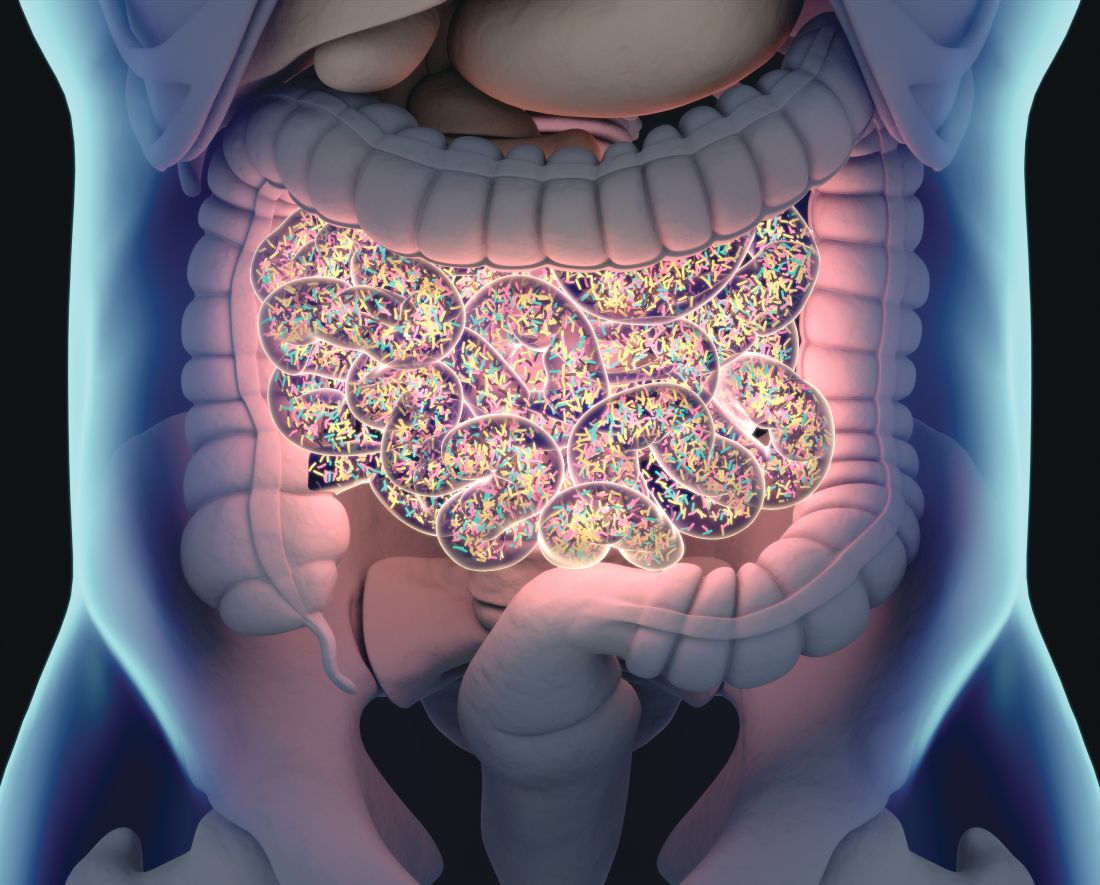
“Maybe we were too bold to say we will go for steroid-free endoscopic remission and response,” said Clara Caenepeel, MD, who was the presenting study investigator. “It’s a very strict endpoint.”
The reasoning for such a strict endpoint, however, was so that the trials’ findings could be compared with some of the other studies that have been done with FMT in UC. Importantly, all those trials have all been positive, making the results of the RESTORE-UC trial at odds with their findings.
“I think in the analysis that we will do now is definitely look at how many steps we went into the right direction,” noted Dr. Caenepeel, who is a doctoral researcher at IBD Leuven (Belgium).
Response to results
Although this is a negative trial, its findings are still important for future work looking at the role of FMT in managing patients with inflammatory bowel disease and identifying the best donor material and ways to deliver it.

While some have suggested it was back to the bench to explore negative results, others such as Michael A. Kamm, MBBS, MD, FRCP, FRACP, congratulated the investigators for undertaking the study, saying that “these studies are very hard to do!”
Dr. Kamm, who is professor of gastroenterology and leads the Kamm Gut Research Group at the University of Melbourne, was part of the Australian team that conducted the FOCUS (Faecal Microbiota Transplantation in Ulcerative Colitis) study. That study used the same primary endpoint of steroid-free endoscopic and clinical remission at 8 weeks but reported positive results – 27% of patients who had FMT versus just 8% of those who had a saline enema as a placebo achieved the endpoint (P = .021). Similarly positive findings have also been reported from five other studies.
“To understand why [RESTORE-UC] study is negative, coming after several positive studies, one needs to explore the differences in study design,” Dr. Kamm observed in an interview. Those differences include how donors were selected, how the FMT was delivered, and how patients were selected.
“All the early studies made no presumption about a favorable donor profile,” Dr. Kamm noted with regard to the selection of donors based on their microbial profile. Moreover “the mode of delivery – sigmoidoscopy without any colonoscopic whole-colon delivery, in contrast to previous studies – as well as patient selection, [with] no information on the anatomical extent of their disease,” could be important.
“There are enough robust positive studies of FMT in ulcerative colitis to believe that this therapy can be effective,” said Dr. Kamm. “Analysis of negative studies like this one should help us to understand what factors are needed to achieve a positive outcome.”
RESTORE-UC trial
“Fecal microbiota transplantation is a new emerging strategy in the treatment of active ulcerative colitis,” Dr. Caenepeel observed during her presentation. At the time the study was started in 2017 there had been four other studies, with “very heterogeneous” designs in terms of the samples used, the placebos given, the delivery of FMT, and the primary endpoints. The idea of superdonor samples also came out of those trials.
So the aim was to try to standardize practice and set up a trial “to examine if we could increase the FMT success rate in our active ulcerative colitis patients by strictly preselecting our donors; by standardized FMT preparation; and a standardized and repeated FMT administration,” Dr. Caenepeel said.
RESTORE-UC was a multicenter, randomized, double-blind, and sham-controlled trial conducted in seven Belgian hospitals. A predefined futility analysis was performed when 66% (n = 72) of the proposed 108 patients had been recruited. Of these, 36 receive autologous FMT and 30 received superdonor FMT.
“We put the emphasis on standardization. This started already with our donor selection,” Dr. Caenepeel said. From a potential 57 healthy donors, 15 were selected and altogether provided more than 500 samples that were then whittled down to the ones that provided the “best” microbial content.
FMT or autologous samples delivered four times – first by sigmoidoscopy and then at weekly intervals by rectal enema. Every patient received the same donor material, Dr. Caenepeel stressed, containing the same enterotype and concentration.
In addition to the primary endpoint of steroid-free endoscopic and clinical remission at Week 8, secondary endpoints included steroid-free clinical remission, steroid-free clinical response, steroid-free endoscopic remission, and steroid-free endoscopic response. Again, however, no significant differences were seen between the two study arms.
Two serious adverse events were seen in the trial, both occurring in the autologous sample group; these were dysuria/constipation and a worsening of colitis that needed surgery.
In discussion, Walter Reinisch, MD, the director of the inflammatory bowel disease study group at the Medical University of Vienna, picked up on why the study may have been negative. He observed that using a steroid-free endoscopic endpoint, where the Mayo score was zero, may have been a factor. A result of 19% at week 8 was not insignificant, he said, observing “if studies from big sponsors would get these results, they would be very happy.”
Perhaps the trials to date have been a little too simplistic by looking at the donor’s microbiota, Dr. Caenepeel. “It goes much further than microbiota,” she said. Thus, future work will perhaps look at the genetics and immunity of those undergoing FMT, she suggested.
Dr. Caenepeel, Dr. Kamm, and Dr. Reinisch had no conflicts of interest to disclose.
The success of fecal microbiota transplantation (FMT) in people with active ulcerative colitis (UC) was not improved by using highly standardized and controlled “superdonor” samples versus control samples, according to results reported at the 17th congress of the European Crohn’s and Colitis Organisation.
Indeed, a similar percentage (10% and 13.9%, respectively; P = .72) of patients achieved combined steroid-free endoscopic and clinical remission at 8 weeks, which was the primary endpoint of the randomized, controlled, RESTORE-UC trial.
“Maybe we were too bold to say we will go for steroid-free endoscopic remission and response,” said Clara Caenepeel, MD, who was the presenting study investigator. “It’s a very strict endpoint.”
The reasoning for such a strict endpoint, however, was so that the trials’ findings could be compared with some of the other studies that have been done with FMT in UC. Importantly, all those trials have all been positive, making the results of the RESTORE-UC trial at odds with their findings.
“I think in the analysis that we will do now is definitely look at how many steps we went into the right direction,” noted Dr. Caenepeel, who is a doctoral researcher at IBD Leuven (Belgium).
Response to results
Although this is a negative trial, its findings are still important for future work looking at the role of FMT in managing patients with inflammatory bowel disease and identifying the best donor material and ways to deliver it.
While some have suggested it was back to the bench to explore negative results, others such as Michael A. Kamm, MBBS, MD, FRCP, FRACP, congratulated the investigators for undertaking the study, saying that “these studies are very hard to do!”
Dr. Kamm, who is professor of gastroenterology and leads the Kamm Gut Research Group at the University of Melbourne, was part of the Australian team that conducted the FOCUS (Faecal Microbiota Transplantation in Ulcerative Colitis) study. That study used the same primary endpoint of steroid-free endoscopic and clinical remission at 8 weeks but reported positive results – 27% of patients who had FMT versus just 8% of those who had a saline enema as a placebo achieved the endpoint (P = .021). Similarly positive findings have also been reported from five other studies.
“To understand why [RESTORE-UC] study is negative, coming after several positive studies, one needs to explore the differences in study design,” Dr. Kamm observed in an interview. Those differences include how donors were selected, how the FMT was delivered, and how patients were selected.
“All the early studies made no presumption about a favorable donor profile,” Dr. Kamm noted with regard to the selection of donors based on their microbial profile. Moreover “the mode of delivery – sigmoidoscopy without any colonoscopic whole-colon delivery, in contrast to previous studies – as well as patient selection, [with] no information on the anatomical extent of their disease,” could be important.
“There are enough robust positive studies of FMT in ulcerative colitis to believe that this therapy can be effective,” said Dr. Kamm. “Analysis of negative studies like this one should help us to understand what factors are needed to achieve a positive outcome.”
RESTORE-UC trial
“Fecal microbiota transplantation is a new emerging strategy in the treatment of active ulcerative colitis,” Dr. Caenepeel observed during her presentation. At the time the study was started in 2017 there had been four other studies, with “very heterogeneous” designs in terms of the samples used, the placebos given, the delivery of FMT, and the primary endpoints. The idea of superdonor samples also came out of those trials.
So the aim was to try to standardize practice and set up a trial “to examine if we could increase the FMT success rate in our active ulcerative colitis patients by strictly preselecting our donors; by standardized FMT preparation; and a standardized and repeated FMT administration,” Dr. Caenepeel said.
RESTORE-UC was a multicenter, randomized, double-blind, and sham-controlled trial conducted in seven Belgian hospitals. A predefined futility analysis was performed when 66% (n = 72) of the proposed 108 patients had been recruited. Of these, 36 receive autologous FMT and 30 received superdonor FMT.
“We put the emphasis on standardization. This started already with our donor selection,” Dr. Caenepeel said. From a potential 57 healthy donors, 15 were selected and altogether provided more than 500 samples that were then whittled down to the ones that provided the “best” microbial content.
FMT or autologous samples delivered four times – first by sigmoidoscopy and then at weekly intervals by rectal enema. Every patient received the same donor material, Dr. Caenepeel stressed, containing the same enterotype and concentration.
In addition to the primary endpoint of steroid-free endoscopic and clinical remission at Week 8, secondary endpoints included steroid-free clinical remission, steroid-free clinical response, steroid-free endoscopic remission, and steroid-free endoscopic response. Again, however, no significant differences were seen between the two study arms.
Two serious adverse events were seen in the trial, both occurring in the autologous sample group; these were dysuria/constipation and a worsening of colitis that needed surgery.
In discussion, Walter Reinisch, MD, the director of the inflammatory bowel disease study group at the Medical University of Vienna, picked up on why the study may have been negative. He observed that using a steroid-free endoscopic endpoint, where the Mayo score was zero, may have been a factor. A result of 19% at week 8 was not insignificant, he said, observing “if studies from big sponsors would get these results, they would be very happy.”
Perhaps the trials to date have been a little too simplistic by looking at the donor’s microbiota, Dr. Caenepeel. “It goes much further than microbiota,” she said. Thus, future work will perhaps look at the genetics and immunity of those undergoing FMT, she suggested.
Dr. Caenepeel, Dr. Kamm, and Dr. Reinisch had no conflicts of interest to disclose.
The success of fecal microbiota transplantation (FMT) in people with active ulcerative colitis (UC) was not improved by using highly standardized and controlled “superdonor” samples versus control samples, according to results reported at the 17th congress of the European Crohn’s and Colitis Organisation.
Indeed, a similar percentage (10% and 13.9%, respectively; P = .72) of patients achieved combined steroid-free endoscopic and clinical remission at 8 weeks, which was the primary endpoint of the randomized, controlled, RESTORE-UC trial.
“Maybe we were too bold to say we will go for steroid-free endoscopic remission and response,” said Clara Caenepeel, MD, who was the presenting study investigator. “It’s a very strict endpoint.”
The reasoning for such a strict endpoint, however, was so that the trials’ findings could be compared with some of the other studies that have been done with FMT in UC. Importantly, all those trials have all been positive, making the results of the RESTORE-UC trial at odds with their findings.
“I think in the analysis that we will do now is definitely look at how many steps we went into the right direction,” noted Dr. Caenepeel, who is a doctoral researcher at IBD Leuven (Belgium).
Response to results
Although this is a negative trial, its findings are still important for future work looking at the role of FMT in managing patients with inflammatory bowel disease and identifying the best donor material and ways to deliver it.
While some have suggested it was back to the bench to explore negative results, others such as Michael A. Kamm, MBBS, MD, FRCP, FRACP, congratulated the investigators for undertaking the study, saying that “these studies are very hard to do!”
Dr. Kamm, who is professor of gastroenterology and leads the Kamm Gut Research Group at the University of Melbourne, was part of the Australian team that conducted the FOCUS (Faecal Microbiota Transplantation in Ulcerative Colitis) study. That study used the same primary endpoint of steroid-free endoscopic and clinical remission at 8 weeks but reported positive results – 27% of patients who had FMT versus just 8% of those who had a saline enema as a placebo achieved the endpoint (P = .021). Similarly positive findings have also been reported from five other studies.
“To understand why [RESTORE-UC] study is negative, coming after several positive studies, one needs to explore the differences in study design,” Dr. Kamm observed in an interview. Those differences include how donors were selected, how the FMT was delivered, and how patients were selected.
“All the early studies made no presumption about a favorable donor profile,” Dr. Kamm noted with regard to the selection of donors based on their microbial profile. Moreover “the mode of delivery – sigmoidoscopy without any colonoscopic whole-colon delivery, in contrast to previous studies – as well as patient selection, [with] no information on the anatomical extent of their disease,” could be important.
“There are enough robust positive studies of FMT in ulcerative colitis to believe that this therapy can be effective,” said Dr. Kamm. “Analysis of negative studies like this one should help us to understand what factors are needed to achieve a positive outcome.”
RESTORE-UC trial
“Fecal microbiota transplantation is a new emerging strategy in the treatment of active ulcerative colitis,” Dr. Caenepeel observed during her presentation. At the time the study was started in 2017 there had been four other studies, with “very heterogeneous” designs in terms of the samples used, the placebos given, the delivery of FMT, and the primary endpoints. The idea of superdonor samples also came out of those trials.
So the aim was to try to standardize practice and set up a trial “to examine if we could increase the FMT success rate in our active ulcerative colitis patients by strictly preselecting our donors; by standardized FMT preparation; and a standardized and repeated FMT administration,” Dr. Caenepeel said.
RESTORE-UC was a multicenter, randomized, double-blind, and sham-controlled trial conducted in seven Belgian hospitals. A predefined futility analysis was performed when 66% (n = 72) of the proposed 108 patients had been recruited. Of these, 36 receive autologous FMT and 30 received superdonor FMT.
“We put the emphasis on standardization. This started already with our donor selection,” Dr. Caenepeel said. From a potential 57 healthy donors, 15 were selected and altogether provided more than 500 samples that were then whittled down to the ones that provided the “best” microbial content.
FMT or autologous samples delivered four times – first by sigmoidoscopy and then at weekly intervals by rectal enema. Every patient received the same donor material, Dr. Caenepeel stressed, containing the same enterotype and concentration.
In addition to the primary endpoint of steroid-free endoscopic and clinical remission at Week 8, secondary endpoints included steroid-free clinical remission, steroid-free clinical response, steroid-free endoscopic remission, and steroid-free endoscopic response. Again, however, no significant differences were seen between the two study arms.
Two serious adverse events were seen in the trial, both occurring in the autologous sample group; these were dysuria/constipation and a worsening of colitis that needed surgery.
In discussion, Walter Reinisch, MD, the director of the inflammatory bowel disease study group at the Medical University of Vienna, picked up on why the study may have been negative. He observed that using a steroid-free endoscopic endpoint, where the Mayo score was zero, may have been a factor. A result of 19% at week 8 was not insignificant, he said, observing “if studies from big sponsors would get these results, they would be very happy.”
Perhaps the trials to date have been a little too simplistic by looking at the donor’s microbiota, Dr. Caenepeel. “It goes much further than microbiota,” she said. Thus, future work will perhaps look at the genetics and immunity of those undergoing FMT, she suggested.
Dr. Caenepeel, Dr. Kamm, and Dr. Reinisch had no conflicts of interest to disclose.
FROM ECCO 2022
Industry payments linked with rheumatologists’ prescribing
Payments to rheumatologists by pharmaceutical companies, whether through food and beverages or consulting fees, are linked with a higher likelihood of prescribing drugs and higher Medicare spending, according to a new study published Feb. 2 in Mayo Clinic Proceedings.
Alí Duarte-García, MD, of the division of rheumatology in the department of medicine at the Mayo Clinic in Rochester, Minn., led the study.
Researchers conducted a cross-sectional analysis of Medicare Part B Public Use File, Medicare Part D Public Use File, and Open Payments data for 2013-2015. They included prescription drugs that accounted for 80% of the total Medicare pharmaceutical expenditures in rheumatology.
They then calculated annual average drug cost per beneficiary per year, the percentage of rheumatologists who received payments, and the average payment per physician per drug per year. Industry payments were categorized as either food/beverage or consulting/compensation.
Multivariable regression models were used to assess links between industry payments, prescribing patterns, and prescription drug spending.
‘Directly associated’ with prescribing probability
The authors concluded that “pharmaceutical company payments to rheumatologists were directly associated with the probability of the physician’s prescribing a drug marketed by that company, the proportion of prescriptions that are for that drug, and the resulting Medicare expenditures.”

The authors noted that food and beverage payments were associated with increased Medicare reimbursement amounts for all drugs except rituximab.
The article includes examples that help quantify the link between payments and prescribing.
The authors wrote that for each $100 in food/beverage payments, Medicare reimbursement increased 6% to 44%. The increases were particularly high for infliximab and rACTH (repository corticotropin injection), “whereby a payment of $100 to a prescriber of these drugs was associated with increases of approximately $72,000 and $30,000 in Medicare reimbursements, respectively. For most of the other drugs, for every $100 in payments, the Medicare reimbursement increased by $8,000 to $13,000.”
The associations were strongest for food and beverage payments even though those were for lower dollar amounts.
The researchers found that every $100 in food and beverage payments, which also include gifts, entertainment, or educational materials, was linked with more than twofold higher probability of prescribing and higher Medicare reimbursements than for every $1,000 paid in consulting fees and compensation.
That finding and findings from previous studies, they say, “suggest that the current approach to regulating industry influence, which focuses on disclosure of large payments, may be inadequate.”
Aaron P. Mitchell, MD, a medical oncologist and health services researcher with Memorial Sloan Kettering Cancer Center in New York, told this news organization that the findings regarding rACTH show the potential harm of industry payments that are linked with prescribing.

The drug is a naturally produced hormone used for both rheumatologic and neurologic conditions. “Since it is an unpatentable drug – really just a hormone – it’s kind of grandfathered in and never had to get [Food and Drug Administration] approval for its current indications,” Dr. Mitchell said.
The drug, which costs nearly $230,000 per Medicare beneficiary, hasn’t been tested head to head in large randomized trials against much cheaper rheumatology drugs, such as prednisone.
In the case of infliximab, he noted, for every $100 in food/beverage payments, there was an increase of $72,000 in Medicare spending.
Dr. Mitchell studies industry influence in a variety of specialties and said rheumatology follows the universal pattern, although the drugs used in the specialty are more expensive than in many specialties.
He agrees with the authors that focusing on disclosures to address the problem is probably not enough.
“We’ve been in this period of full and open disclosure for going on 10 years, and we haven’t really seen a decline in these payments,” he said.
Results won’t surprise rheumatologists
Karen Onel, MD, a pediatric rheumatologist at the Hospital for Special Surgery, New York, and chair of the American College of Rheumatology’s Ethics and Conflict of Interest Committee, who said she was speaking only for herself and not on behalf of the committee, told this news organization that the study will not be surprising to rheumatologists or to physicians in other specialties who are aware of the plethora of studies that concluded that industry payments influence prescribing.*
Physicians are well aware of the problem, but “they all think it’s not them,” she said.
She said a shortcoming of this study is that it is unclear what the payments were for, because many things are lumped together in the categories. In the case of food and beverage payments, she said that could include payments physicians don’t realize are going on their open payments profile.
Dr. Onel gives a personal example. When she goes to a medical conference, she says, “I don’t eat on pharma’s dime.” But because badge numbers are scanned, it appears she accepted the food provided by the pharmaceutical sponsor when she enters a room where food or coffee is being served.
She said that although there are outliers like rACTH that often get highlighted, “the numbers are very low of the physicians who had [industry] money, and the change in prescribing patterns actually was very low.”
She pointed to an important limitation that the authors list: The study was limited to patients with fee-for-service Medicare coverage and did not include those with private insurance.
“For example, Aetna, Cigna, and UnitedHealthcare have restricted reimbursement for rACTH in recent years, citing its lack of proven efficacy and the availability of more affordable options, and rACTH is not in the Veterans Affairs formulary,” the authors wrote.
Rapid development of specialty drugs
Still, the authors wrote, the associations described in this article are of high interest because even though rheumatologists make up a small proportion of the physician workforce, they have among the highest costs per prescription in Medicare drug claims.
“Rheumatology, second only to oncology, has entered an era of rapid development of specialty drugs, including biologic disease-modifying antirheumatic drugs (DMARDs),” the authors wrote.
The complex drugs are expensive to produce and require expertise in handling. Most are under patent with no generic or approved biosimilar equivalent.
Nearly half of all U.S. rheumatologists received some payment from a pharmaceutical company in the study period, and most payments to rheumatologists were for low dollar amounts.
The highest per-year annual expenditures were attributed to etanercept ($741 million), adalimumab ($620 million), and infliximab ($539 million).
These drugs were expensive per beneficiary ($20,728 for etanercept, $21,492 for adalimumab, and $15,941 for infliximab) and were prescribed by a large number of rheumatologists (4,068, 3,872, and 1,349, respectively).
Addressing the problem
Dr. Mitchell says the leaders of individual societies need to fill the gaps that leave busy clinicians searching for easy ways to get up-to-date information on drugs.
He says in all specialties, “Industry should not be the most easily and readily available source of information.
“We’re in the age of Zoom now,” he said. “There’s no reason you have to be sitting for an hour at lunch with a sales rep and not a brown-bag lunch getting a 1-hour update from a society on a new drug indication.
“We will get higher-quality information if we’re doing the education ourselves, and we’d be removing the sense of obligation to pay back the industry gift givers,” Dr. Mitchell said.
Dr. Onel said among the most critical work is making sure that the leadership of ACR is free of conflicts of interest.
“They are making decisions for the entire organization. We need to feel safe and comfortable that they are acting in the best interest of the rheumatologists and patients versus corporate partners,” she said.
Guidelines must strictly follow the standards from the Institute of Medicine that fewer than 50% of the regular guideline committee members may have commercial conflicts, Dr. Onel said.
She added that training on real or apparent conflicts of interest must start in medical school, residency, and fellowship, before physicians start to think they know their own practice patterns and that the results don’t apply to them.
However, the reality is that the industry and physicians will always need each other, she said.
Dr. Onel describes a tension between rheumatologists needing industry’s help for research and education, especially when federal money for research can be difficult to get, and managing those relationships to avoid real or apparent conflicts.
“We want the public’s trust,” she said.
A study coauthor has served on advisory boards of Boehringer Ingelheim (> $10,000) and Gilead Sciences (> $10,000); has served on speakers bureaus for Simply Speaking (> $10,000) and Boehringer Ingelheim (< $10,000); and has received royalties from UpToDate (> $10,000). Dr. Mitchell and Dr. Onel reported no relevant financial relationships.
* Update, 2/25/22: This article, which originally attributed comments to Dr. Karen Onel personally, has been updated to further emphasize that these comments were not on behalf of the committee that she leads.
A version of this article first appeared on Medscape.com.
Payments to rheumatologists by pharmaceutical companies, whether through food and beverages or consulting fees, are linked with a higher likelihood of prescribing drugs and higher Medicare spending, according to a new study published Feb. 2 in Mayo Clinic Proceedings.
Alí Duarte-García, MD, of the division of rheumatology in the department of medicine at the Mayo Clinic in Rochester, Minn., led the study.
Researchers conducted a cross-sectional analysis of Medicare Part B Public Use File, Medicare Part D Public Use File, and Open Payments data for 2013-2015. They included prescription drugs that accounted for 80% of the total Medicare pharmaceutical expenditures in rheumatology.
They then calculated annual average drug cost per beneficiary per year, the percentage of rheumatologists who received payments, and the average payment per physician per drug per year. Industry payments were categorized as either food/beverage or consulting/compensation.
Multivariable regression models were used to assess links between industry payments, prescribing patterns, and prescription drug spending.
‘Directly associated’ with prescribing probability
The authors concluded that “pharmaceutical company payments to rheumatologists were directly associated with the probability of the physician’s prescribing a drug marketed by that company, the proportion of prescriptions that are for that drug, and the resulting Medicare expenditures.”
The authors noted that food and beverage payments were associated with increased Medicare reimbursement amounts for all drugs except rituximab.
The article includes examples that help quantify the link between payments and prescribing.
The authors wrote that for each $100 in food/beverage payments, Medicare reimbursement increased 6% to 44%. The increases were particularly high for infliximab and rACTH (repository corticotropin injection), “whereby a payment of $100 to a prescriber of these drugs was associated with increases of approximately $72,000 and $30,000 in Medicare reimbursements, respectively. For most of the other drugs, for every $100 in payments, the Medicare reimbursement increased by $8,000 to $13,000.”
The associations were strongest for food and beverage payments even though those were for lower dollar amounts.
The researchers found that every $100 in food and beverage payments, which also include gifts, entertainment, or educational materials, was linked with more than twofold higher probability of prescribing and higher Medicare reimbursements than for every $1,000 paid in consulting fees and compensation.
That finding and findings from previous studies, they say, “suggest that the current approach to regulating industry influence, which focuses on disclosure of large payments, may be inadequate.”
Aaron P. Mitchell, MD, a medical oncologist and health services researcher with Memorial Sloan Kettering Cancer Center in New York, told this news organization that the findings regarding rACTH show the potential harm of industry payments that are linked with prescribing.
The drug is a naturally produced hormone used for both rheumatologic and neurologic conditions. “Since it is an unpatentable drug – really just a hormone – it’s kind of grandfathered in and never had to get [Food and Drug Administration] approval for its current indications,” Dr. Mitchell said.
The drug, which costs nearly $230,000 per Medicare beneficiary, hasn’t been tested head to head in large randomized trials against much cheaper rheumatology drugs, such as prednisone.
In the case of infliximab, he noted, for every $100 in food/beverage payments, there was an increase of $72,000 in Medicare spending.
Dr. Mitchell studies industry influence in a variety of specialties and said rheumatology follows the universal pattern, although the drugs used in the specialty are more expensive than in many specialties.
He agrees with the authors that focusing on disclosures to address the problem is probably not enough.
“We’ve been in this period of full and open disclosure for going on 10 years, and we haven’t really seen a decline in these payments,” he said.
Results won’t surprise rheumatologists
Karen Onel, MD, a pediatric rheumatologist at the Hospital for Special Surgery, New York, and chair of the American College of Rheumatology’s Ethics and Conflict of Interest Committee, who said she was speaking only for herself and not on behalf of the committee, told this news organization that the study will not be surprising to rheumatologists or to physicians in other specialties who are aware of the plethora of studies that concluded that industry payments influence prescribing.*
Physicians are well aware of the problem, but “they all think it’s not them,” she said.
She said a shortcoming of this study is that it is unclear what the payments were for, because many things are lumped together in the categories. In the case of food and beverage payments, she said that could include payments physicians don’t realize are going on their open payments profile.
Dr. Onel gives a personal example. When she goes to a medical conference, she says, “I don’t eat on pharma’s dime.” But because badge numbers are scanned, it appears she accepted the food provided by the pharmaceutical sponsor when she enters a room where food or coffee is being served.
She said that although there are outliers like rACTH that often get highlighted, “the numbers are very low of the physicians who had [industry] money, and the change in prescribing patterns actually was very low.”
She pointed to an important limitation that the authors list: The study was limited to patients with fee-for-service Medicare coverage and did not include those with private insurance.
“For example, Aetna, Cigna, and UnitedHealthcare have restricted reimbursement for rACTH in recent years, citing its lack of proven efficacy and the availability of more affordable options, and rACTH is not in the Veterans Affairs formulary,” the authors wrote.
Rapid development of specialty drugs
Still, the authors wrote, the associations described in this article are of high interest because even though rheumatologists make up a small proportion of the physician workforce, they have among the highest costs per prescription in Medicare drug claims.
“Rheumatology, second only to oncology, has entered an era of rapid development of specialty drugs, including biologic disease-modifying antirheumatic drugs (DMARDs),” the authors wrote.
The complex drugs are expensive to produce and require expertise in handling. Most are under patent with no generic or approved biosimilar equivalent.
Nearly half of all U.S. rheumatologists received some payment from a pharmaceutical company in the study period, and most payments to rheumatologists were for low dollar amounts.
The highest per-year annual expenditures were attributed to etanercept ($741 million), adalimumab ($620 million), and infliximab ($539 million).
These drugs were expensive per beneficiary ($20,728 for etanercept, $21,492 for adalimumab, and $15,941 for infliximab) and were prescribed by a large number of rheumatologists (4,068, 3,872, and 1,349, respectively).
Addressing the problem
Dr. Mitchell says the leaders of individual societies need to fill the gaps that leave busy clinicians searching for easy ways to get up-to-date information on drugs.
He says in all specialties, “Industry should not be the most easily and readily available source of information.
“We’re in the age of Zoom now,” he said. “There’s no reason you have to be sitting for an hour at lunch with a sales rep and not a brown-bag lunch getting a 1-hour update from a society on a new drug indication.
“We will get higher-quality information if we’re doing the education ourselves, and we’d be removing the sense of obligation to pay back the industry gift givers,” Dr. Mitchell said.
Dr. Onel said among the most critical work is making sure that the leadership of ACR is free of conflicts of interest.
“They are making decisions for the entire organization. We need to feel safe and comfortable that they are acting in the best interest of the rheumatologists and patients versus corporate partners,” she said.
Guidelines must strictly follow the standards from the Institute of Medicine that fewer than 50% of the regular guideline committee members may have commercial conflicts, Dr. Onel said.
She added that training on real or apparent conflicts of interest must start in medical school, residency, and fellowship, before physicians start to think they know their own practice patterns and that the results don’t apply to them.
However, the reality is that the industry and physicians will always need each other, she said.
Dr. Onel describes a tension between rheumatologists needing industry’s help for research and education, especially when federal money for research can be difficult to get, and managing those relationships to avoid real or apparent conflicts.
“We want the public’s trust,” she said.
A study coauthor has served on advisory boards of Boehringer Ingelheim (> $10,000) and Gilead Sciences (> $10,000); has served on speakers bureaus for Simply Speaking (> $10,000) and Boehringer Ingelheim (< $10,000); and has received royalties from UpToDate (> $10,000). Dr. Mitchell and Dr. Onel reported no relevant financial relationships.
* Update, 2/25/22: This article, which originally attributed comments to Dr. Karen Onel personally, has been updated to further emphasize that these comments were not on behalf of the committee that she leads.
A version of this article first appeared on Medscape.com.
Payments to rheumatologists by pharmaceutical companies, whether through food and beverages or consulting fees, are linked with a higher likelihood of prescribing drugs and higher Medicare spending, according to a new study published Feb. 2 in Mayo Clinic Proceedings.
Alí Duarte-García, MD, of the division of rheumatology in the department of medicine at the Mayo Clinic in Rochester, Minn., led the study.
Researchers conducted a cross-sectional analysis of Medicare Part B Public Use File, Medicare Part D Public Use File, and Open Payments data for 2013-2015. They included prescription drugs that accounted for 80% of the total Medicare pharmaceutical expenditures in rheumatology.
They then calculated annual average drug cost per beneficiary per year, the percentage of rheumatologists who received payments, and the average payment per physician per drug per year. Industry payments were categorized as either food/beverage or consulting/compensation.
Multivariable regression models were used to assess links between industry payments, prescribing patterns, and prescription drug spending.
‘Directly associated’ with prescribing probability
The authors concluded that “pharmaceutical company payments to rheumatologists were directly associated with the probability of the physician’s prescribing a drug marketed by that company, the proportion of prescriptions that are for that drug, and the resulting Medicare expenditures.”
The authors noted that food and beverage payments were associated with increased Medicare reimbursement amounts for all drugs except rituximab.
The article includes examples that help quantify the link between payments and prescribing.
The authors wrote that for each $100 in food/beverage payments, Medicare reimbursement increased 6% to 44%. The increases were particularly high for infliximab and rACTH (repository corticotropin injection), “whereby a payment of $100 to a prescriber of these drugs was associated with increases of approximately $72,000 and $30,000 in Medicare reimbursements, respectively. For most of the other drugs, for every $100 in payments, the Medicare reimbursement increased by $8,000 to $13,000.”
The associations were strongest for food and beverage payments even though those were for lower dollar amounts.
The researchers found that every $100 in food and beverage payments, which also include gifts, entertainment, or educational materials, was linked with more than twofold higher probability of prescribing and higher Medicare reimbursements than for every $1,000 paid in consulting fees and compensation.
That finding and findings from previous studies, they say, “suggest that the current approach to regulating industry influence, which focuses on disclosure of large payments, may be inadequate.”
Aaron P. Mitchell, MD, a medical oncologist and health services researcher with Memorial Sloan Kettering Cancer Center in New York, told this news organization that the findings regarding rACTH show the potential harm of industry payments that are linked with prescribing.
The drug is a naturally produced hormone used for both rheumatologic and neurologic conditions. “Since it is an unpatentable drug – really just a hormone – it’s kind of grandfathered in and never had to get [Food and Drug Administration] approval for its current indications,” Dr. Mitchell said.
The drug, which costs nearly $230,000 per Medicare beneficiary, hasn’t been tested head to head in large randomized trials against much cheaper rheumatology drugs, such as prednisone.
In the case of infliximab, he noted, for every $100 in food/beverage payments, there was an increase of $72,000 in Medicare spending.
Dr. Mitchell studies industry influence in a variety of specialties and said rheumatology follows the universal pattern, although the drugs used in the specialty are more expensive than in many specialties.
He agrees with the authors that focusing on disclosures to address the problem is probably not enough.
“We’ve been in this period of full and open disclosure for going on 10 years, and we haven’t really seen a decline in these payments,” he said.
Results won’t surprise rheumatologists
Karen Onel, MD, a pediatric rheumatologist at the Hospital for Special Surgery, New York, and chair of the American College of Rheumatology’s Ethics and Conflict of Interest Committee, who said she was speaking only for herself and not on behalf of the committee, told this news organization that the study will not be surprising to rheumatologists or to physicians in other specialties who are aware of the plethora of studies that concluded that industry payments influence prescribing.*
Physicians are well aware of the problem, but “they all think it’s not them,” she said.
She said a shortcoming of this study is that it is unclear what the payments were for, because many things are lumped together in the categories. In the case of food and beverage payments, she said that could include payments physicians don’t realize are going on their open payments profile.
Dr. Onel gives a personal example. When she goes to a medical conference, she says, “I don’t eat on pharma’s dime.” But because badge numbers are scanned, it appears she accepted the food provided by the pharmaceutical sponsor when she enters a room where food or coffee is being served.
She said that although there are outliers like rACTH that often get highlighted, “the numbers are very low of the physicians who had [industry] money, and the change in prescribing patterns actually was very low.”
She pointed to an important limitation that the authors list: The study was limited to patients with fee-for-service Medicare coverage and did not include those with private insurance.
“For example, Aetna, Cigna, and UnitedHealthcare have restricted reimbursement for rACTH in recent years, citing its lack of proven efficacy and the availability of more affordable options, and rACTH is not in the Veterans Affairs formulary,” the authors wrote.
Rapid development of specialty drugs
Still, the authors wrote, the associations described in this article are of high interest because even though rheumatologists make up a small proportion of the physician workforce, they have among the highest costs per prescription in Medicare drug claims.
“Rheumatology, second only to oncology, has entered an era of rapid development of specialty drugs, including biologic disease-modifying antirheumatic drugs (DMARDs),” the authors wrote.
The complex drugs are expensive to produce and require expertise in handling. Most are under patent with no generic or approved biosimilar equivalent.
Nearly half of all U.S. rheumatologists received some payment from a pharmaceutical company in the study period, and most payments to rheumatologists were for low dollar amounts.
The highest per-year annual expenditures were attributed to etanercept ($741 million), adalimumab ($620 million), and infliximab ($539 million).
These drugs were expensive per beneficiary ($20,728 for etanercept, $21,492 for adalimumab, and $15,941 for infliximab) and were prescribed by a large number of rheumatologists (4,068, 3,872, and 1,349, respectively).
Addressing the problem
Dr. Mitchell says the leaders of individual societies need to fill the gaps that leave busy clinicians searching for easy ways to get up-to-date information on drugs.
He says in all specialties, “Industry should not be the most easily and readily available source of information.
“We’re in the age of Zoom now,” he said. “There’s no reason you have to be sitting for an hour at lunch with a sales rep and not a brown-bag lunch getting a 1-hour update from a society on a new drug indication.
“We will get higher-quality information if we’re doing the education ourselves, and we’d be removing the sense of obligation to pay back the industry gift givers,” Dr. Mitchell said.
Dr. Onel said among the most critical work is making sure that the leadership of ACR is free of conflicts of interest.
“They are making decisions for the entire organization. We need to feel safe and comfortable that they are acting in the best interest of the rheumatologists and patients versus corporate partners,” she said.
Guidelines must strictly follow the standards from the Institute of Medicine that fewer than 50% of the regular guideline committee members may have commercial conflicts, Dr. Onel said.
She added that training on real or apparent conflicts of interest must start in medical school, residency, and fellowship, before physicians start to think they know their own practice patterns and that the results don’t apply to them.
However, the reality is that the industry and physicians will always need each other, she said.
Dr. Onel describes a tension between rheumatologists needing industry’s help for research and education, especially when federal money for research can be difficult to get, and managing those relationships to avoid real or apparent conflicts.
“We want the public’s trust,” she said.
A study coauthor has served on advisory boards of Boehringer Ingelheim (> $10,000) and Gilead Sciences (> $10,000); has served on speakers bureaus for Simply Speaking (> $10,000) and Boehringer Ingelheim (< $10,000); and has received royalties from UpToDate (> $10,000). Dr. Mitchell and Dr. Onel reported no relevant financial relationships.
* Update, 2/25/22: This article, which originally attributed comments to Dr. Karen Onel personally, has been updated to further emphasize that these comments were not on behalf of the committee that she leads.
A version of this article first appeared on Medscape.com.
Excess sodium in soluble acetaminophen tied to CVD risk, death
a large observational study of more than 300,000 adults suggests.
“Numerous studies have reported that high sodium intake is associated with increased risks of cardiovascular disease,” Yuqing Zhang, DSc, with Massachusetts General Hospital and Harvard Medical School, Boston, told this news organization. “Given that the pain relief effect of non–sodium-containing acetaminophen is similar to that of sodium-containing acetaminophen, clinicians may prescribe non–sodium-containing acetaminophen to their patients to minimize the risk of CVD and mortality,” Dr. Zhang said.
The study was published online Feb. 24 in the European Heart Journal.
‘Compelling results’
Dr. Zhang and colleagues note that the effervescent and soluble formulations of 0.5 g acetaminophen contain 0.44 and 0.39 g of sodium, respectively.
Therefore, the intake of maximum daily dose (4 g/day) of sodium-containing acetaminophen corresponds to the ingestion of more than 3 g of sodium, a dose that alone exceeds the recommended total daily sodium intake allowance of the World Health Organization (2 g/day).
“This hidden extra sodium intake is often overlooked,” Dr. Zhang told this news organization.
Using data from the Health Improvement Network, a U.K. primary care database, the researchers examined 4,532 patients with hypertension taking sodium-containing acetaminophen and compared them with 146,866 patients with hypertension taking non–sodium-containing acetaminophen (tablet, capsule, or oral suspension formulations).
After 1 year, the risk of incident CVD (myocardial infarction, stroke, and heart failure) was 5.6% in those taking sodium-containing acetaminophen, compared with 4.6% in those taking non–sodium-containing acetaminophen (average weighted hazard ratio, 1.59; 95% confidence interval, 1.32-1.92).
A separate analysis of normotensive patients taking sodium-containing acetaminophen (n = 5,351) or non–sodium-containing acetaminophen (n = 141,948) gave similar results.
The 1-year risk of incident CVD was 4.4% in those taking sodium-containing acetaminophen vs. 3.7% among those taking non–sodium-containing acetaminophen (average weighted HR, 1.45; 95% CI, 1.18-1.79).
There was also evidence of a dose-response relationship.
In those with hypertension, CVD risk increased by roughly one-quarter (odds ratio, 1.26) for those with one prescription of sodium-containing acetaminophen and by nearly one half (OR, 1.45) for those with five or more prescriptions of sodium-containing acetaminophen. Similar findings were observed among adults without hypertension.
Mortality at 1 year was also higher in those taking sodium-containing acetaminophen than non–sodium-containing acetaminophen, in patients with hypertension (7.6% vs. 6.1%) and without hypertension (7.3% vs. 5.9%).
“The results are compelling,” write the authors of an editorial published with the study.
“The direct message from this study is clear – there are likely to be millions of people worldwide taking paracetamol on a daily basis in a ‘fast-acting’ effervescent or soluble formulation who are increasing their risks of cardiovascular disease and premature death,” say Aletta Schutte, PhD, and Bruce Neal, MBChB, PhD, of the George Institute for Global Health, Sydney.
“The weight of the evidence makes ongoing inaction on sodium-containing medications untenable. The widespread use of effervescent medication in the general population, and the enormous doses of sodium that can be consumed inadvertently by unsuspecting consumers requires urgent action,” Dr. Schutte and Dr. Neal say.
The study was supported by the National Natural Science Foundation of China, the National Key Research and Development Project, the Project Program of National Clinical Research Center for Geriatric Disorders, the Key Research and Development Program of Hunan Province, and the Science and Technology Program of Hunan Province. Dr. Zhang, Dr. Schutte, and Dr. Neal have disclosed no relevant financial relationships.
A version of this article first appeared on Medscape.com.
a large observational study of more than 300,000 adults suggests.
“Numerous studies have reported that high sodium intake is associated with increased risks of cardiovascular disease,” Yuqing Zhang, DSc, with Massachusetts General Hospital and Harvard Medical School, Boston, told this news organization. “Given that the pain relief effect of non–sodium-containing acetaminophen is similar to that of sodium-containing acetaminophen, clinicians may prescribe non–sodium-containing acetaminophen to their patients to minimize the risk of CVD and mortality,” Dr. Zhang said.
The study was published online Feb. 24 in the European Heart Journal.
‘Compelling results’
Dr. Zhang and colleagues note that the effervescent and soluble formulations of 0.5 g acetaminophen contain 0.44 and 0.39 g of sodium, respectively.
Therefore, the intake of maximum daily dose (4 g/day) of sodium-containing acetaminophen corresponds to the ingestion of more than 3 g of sodium, a dose that alone exceeds the recommended total daily sodium intake allowance of the World Health Organization (2 g/day).
“This hidden extra sodium intake is often overlooked,” Dr. Zhang told this news organization.
Using data from the Health Improvement Network, a U.K. primary care database, the researchers examined 4,532 patients with hypertension taking sodium-containing acetaminophen and compared them with 146,866 patients with hypertension taking non–sodium-containing acetaminophen (tablet, capsule, or oral suspension formulations).
After 1 year, the risk of incident CVD (myocardial infarction, stroke, and heart failure) was 5.6% in those taking sodium-containing acetaminophen, compared with 4.6% in those taking non–sodium-containing acetaminophen (average weighted hazard ratio, 1.59; 95% confidence interval, 1.32-1.92).
A separate analysis of normotensive patients taking sodium-containing acetaminophen (n = 5,351) or non–sodium-containing acetaminophen (n = 141,948) gave similar results.
The 1-year risk of incident CVD was 4.4% in those taking sodium-containing acetaminophen vs. 3.7% among those taking non–sodium-containing acetaminophen (average weighted HR, 1.45; 95% CI, 1.18-1.79).
There was also evidence of a dose-response relationship.
In those with hypertension, CVD risk increased by roughly one-quarter (odds ratio, 1.26) for those with one prescription of sodium-containing acetaminophen and by nearly one half (OR, 1.45) for those with five or more prescriptions of sodium-containing acetaminophen. Similar findings were observed among adults without hypertension.
Mortality at 1 year was also higher in those taking sodium-containing acetaminophen than non–sodium-containing acetaminophen, in patients with hypertension (7.6% vs. 6.1%) and without hypertension (7.3% vs. 5.9%).
“The results are compelling,” write the authors of an editorial published with the study.
“The direct message from this study is clear – there are likely to be millions of people worldwide taking paracetamol on a daily basis in a ‘fast-acting’ effervescent or soluble formulation who are increasing their risks of cardiovascular disease and premature death,” say Aletta Schutte, PhD, and Bruce Neal, MBChB, PhD, of the George Institute for Global Health, Sydney.
“The weight of the evidence makes ongoing inaction on sodium-containing medications untenable. The widespread use of effervescent medication in the general population, and the enormous doses of sodium that can be consumed inadvertently by unsuspecting consumers requires urgent action,” Dr. Schutte and Dr. Neal say.
The study was supported by the National Natural Science Foundation of China, the National Key Research and Development Project, the Project Program of National Clinical Research Center for Geriatric Disorders, the Key Research and Development Program of Hunan Province, and the Science and Technology Program of Hunan Province. Dr. Zhang, Dr. Schutte, and Dr. Neal have disclosed no relevant financial relationships.
A version of this article first appeared on Medscape.com.
a large observational study of more than 300,000 adults suggests.
“Numerous studies have reported that high sodium intake is associated with increased risks of cardiovascular disease,” Yuqing Zhang, DSc, with Massachusetts General Hospital and Harvard Medical School, Boston, told this news organization. “Given that the pain relief effect of non–sodium-containing acetaminophen is similar to that of sodium-containing acetaminophen, clinicians may prescribe non–sodium-containing acetaminophen to their patients to minimize the risk of CVD and mortality,” Dr. Zhang said.
The study was published online Feb. 24 in the European Heart Journal.
‘Compelling results’
Dr. Zhang and colleagues note that the effervescent and soluble formulations of 0.5 g acetaminophen contain 0.44 and 0.39 g of sodium, respectively.
Therefore, the intake of maximum daily dose (4 g/day) of sodium-containing acetaminophen corresponds to the ingestion of more than 3 g of sodium, a dose that alone exceeds the recommended total daily sodium intake allowance of the World Health Organization (2 g/day).
“This hidden extra sodium intake is often overlooked,” Dr. Zhang told this news organization.
Using data from the Health Improvement Network, a U.K. primary care database, the researchers examined 4,532 patients with hypertension taking sodium-containing acetaminophen and compared them with 146,866 patients with hypertension taking non–sodium-containing acetaminophen (tablet, capsule, or oral suspension formulations).
After 1 year, the risk of incident CVD (myocardial infarction, stroke, and heart failure) was 5.6% in those taking sodium-containing acetaminophen, compared with 4.6% in those taking non–sodium-containing acetaminophen (average weighted hazard ratio, 1.59; 95% confidence interval, 1.32-1.92).
A separate analysis of normotensive patients taking sodium-containing acetaminophen (n = 5,351) or non–sodium-containing acetaminophen (n = 141,948) gave similar results.
The 1-year risk of incident CVD was 4.4% in those taking sodium-containing acetaminophen vs. 3.7% among those taking non–sodium-containing acetaminophen (average weighted HR, 1.45; 95% CI, 1.18-1.79).
There was also evidence of a dose-response relationship.
In those with hypertension, CVD risk increased by roughly one-quarter (odds ratio, 1.26) for those with one prescription of sodium-containing acetaminophen and by nearly one half (OR, 1.45) for those with five or more prescriptions of sodium-containing acetaminophen. Similar findings were observed among adults without hypertension.
Mortality at 1 year was also higher in those taking sodium-containing acetaminophen than non–sodium-containing acetaminophen, in patients with hypertension (7.6% vs. 6.1%) and without hypertension (7.3% vs. 5.9%).
“The results are compelling,” write the authors of an editorial published with the study.
“The direct message from this study is clear – there are likely to be millions of people worldwide taking paracetamol on a daily basis in a ‘fast-acting’ effervescent or soluble formulation who are increasing their risks of cardiovascular disease and premature death,” say Aletta Schutte, PhD, and Bruce Neal, MBChB, PhD, of the George Institute for Global Health, Sydney.
“The weight of the evidence makes ongoing inaction on sodium-containing medications untenable. The widespread use of effervescent medication in the general population, and the enormous doses of sodium that can be consumed inadvertently by unsuspecting consumers requires urgent action,” Dr. Schutte and Dr. Neal say.
The study was supported by the National Natural Science Foundation of China, the National Key Research and Development Project, the Project Program of National Clinical Research Center for Geriatric Disorders, the Key Research and Development Program of Hunan Province, and the Science and Technology Program of Hunan Province. Dr. Zhang, Dr. Schutte, and Dr. Neal have disclosed no relevant financial relationships.
A version of this article first appeared on Medscape.com.
FROM THE EUROPEAN HEART JOURNAL
In-hospital detox or not, anti-CGRPs show efficacy for medication overuse headache
, according to investigators.
Abruptly discontinuing overused analgesics with health care provider oversight – a frequently resource-intensive and challenging process – is no more effective for controlling medication overuse headache than simply advising patients to stop, reported lead author Umberto Pensato, MD, of the University of Bologna, Italy, and colleagues.
“[C]urrently, the abrupt discontinuation of the overused painkiller(s), accompanied by the start of a pharmacological preventive therapy, is the most recommended strategy [for medication overuse headache],” the investigators wrote in Cephalalgia. “While painkiller(s) withdrawal could be accomplished on an outpatient basis in most cases, an in-hospital setting may be required to achieve successful discontinuation in a subgroup of patients with medication overuse headache, further weighing on individual and hospital costs. Additionally hampering this approach, the abrupt discontinuation of the overused painkiller(s) invariably results in disabling withdrawal symptoms for up to 2 weeks, including a transitory worsening of headache, the so-called ‘rebound headache.’ ”
Inpatient or outpatient: Does it matter?
According to Dr. Pensato and colleagues, early evidence suggests that previous painkiller withdrawal does not impact the efficacy of anti-CGRPs for medication overuse headache, yet relevant data remain scarce. To address this knowledge gap, they conducted a prospective, real-world study exploring the relationship between detoxification and outcomes after starting anti-CGRP therapy.
Out of 401 patients enrolled based on initiation of erenumab or galcanezumab, 111 satisfied inclusion criteria, including diagnosis of chronic migraine and medication overuse headache, at least 28 days of analgesic usage and headache days per month in the preceding 3 months, and other factors. Of these 111 patients, 83 underwent in-hospital detox, while the remaining 28 patients, who declined detox based on personal reasons or COVID-19–related bed shortage, were advised to discontinue overused medication on an outpatient basis (without oversight).
The primary endpoint was medication overuse headache responder rate after 3 months, as defined by ICHD-3 diagnostic criteria. Secondary endpoints included 6-item headache impact test (HIT-6), monthly headache days (MHD), migraine disability assessment score (MIDAS), mean pain intensity (MPI), monthly pain medication intake (MPMI), baseline predictors of response/refractoriness, and safety.
Three months after starting anti-CGRP therapy, 59% of patients had resolution of medication overuse headache, including 57% in the inpatient detox group and 64% in the outpatient group, a difference that was not statistically significant (P = .4788). Approximately half of the patients (51%) had at least 50% reduction in monthly headache days; although the rate was numerically lower in the inpatient group compared with the outpatient group, the difference was again not significant (51% vs. 54%; P = .8393).
“Our results support the emerging evidence that anti-CGRP drugs may be effective in these patients irrespective of the detoxification program,” the investigators concluded. “Further studies are needed to definitively confirm these results, potentially leading to a paradigm shift in the management of medication overuse headache.”
Abrupt or gradual detox?
According to Alan M. Rapoport, MD, clinical professor of neurology at the University of California, Los Angeles, and editor-in-chief of Neurology Reviews, the study was hampered by two major design limitations.
“The biggest problem I see is that the two groups were treated very differently for their detoxification,” Dr. Rapoport said. “One group was detoxified abruptly in the hospital, so the authors were sure that the patients were off acute-care medication before they started their preventives. The other group was advised to stop their medication on an outpatient basis. The issue is that we have no follow-up as to whether the outpatients did or did not abruptly detoxify. A bigger issue was that the two groups were not randomized so there are many other variables that may have come into consideration.”
Still, Dr. Rapoport, a past president of the International Headache Society (IHS), noted that the findings strengthen a growing body of evidence supporting the efficacy of monoclonal antibodies for medication overuse headache regardless of detoxification strategy. He cited a 2020 study by Carlsen and colleagues conducted at the Danish Headache Center in Copenhagen, which reported similar medication overuse headache outcomes across three randomized cohorts whether they received preventive therapy with detoxification, preventive therapy without detoxification, or detoxification followed 2 months later by preventive therapy.
“What I have noticed since we have had monoclonal antibodies in our armamentarium is that these drugs work very well even when the patient has not fully detoxified,” Dr. Rapoport said. “What I do with my patients is not teach them how to detoxify now, but simply educate them to take fewer acute care medications as their headaches get better from the monoclonal antibodies; they should try to take fewer acute care medications for milder, shorter headaches, and just let them go away on their own. Previous research suggests that even when a patient is not educated at all about medication overuse headache and the reason for detoxification, monoclonal antibodies still work in the presence of medication overuse headache, and improve it.”
The investigators disclosed relationships with Allergan, Novartis, Teva, and others. Dr. Rapoport is on the speakers bureau for AbbVie.
, according to investigators.
Abruptly discontinuing overused analgesics with health care provider oversight – a frequently resource-intensive and challenging process – is no more effective for controlling medication overuse headache than simply advising patients to stop, reported lead author Umberto Pensato, MD, of the University of Bologna, Italy, and colleagues.
“[C]urrently, the abrupt discontinuation of the overused painkiller(s), accompanied by the start of a pharmacological preventive therapy, is the most recommended strategy [for medication overuse headache],” the investigators wrote in Cephalalgia. “While painkiller(s) withdrawal could be accomplished on an outpatient basis in most cases, an in-hospital setting may be required to achieve successful discontinuation in a subgroup of patients with medication overuse headache, further weighing on individual and hospital costs. Additionally hampering this approach, the abrupt discontinuation of the overused painkiller(s) invariably results in disabling withdrawal symptoms for up to 2 weeks, including a transitory worsening of headache, the so-called ‘rebound headache.’ ”
Inpatient or outpatient: Does it matter?
According to Dr. Pensato and colleagues, early evidence suggests that previous painkiller withdrawal does not impact the efficacy of anti-CGRPs for medication overuse headache, yet relevant data remain scarce. To address this knowledge gap, they conducted a prospective, real-world study exploring the relationship between detoxification and outcomes after starting anti-CGRP therapy.
Out of 401 patients enrolled based on initiation of erenumab or galcanezumab, 111 satisfied inclusion criteria, including diagnosis of chronic migraine and medication overuse headache, at least 28 days of analgesic usage and headache days per month in the preceding 3 months, and other factors. Of these 111 patients, 83 underwent in-hospital detox, while the remaining 28 patients, who declined detox based on personal reasons or COVID-19–related bed shortage, were advised to discontinue overused medication on an outpatient basis (without oversight).
The primary endpoint was medication overuse headache responder rate after 3 months, as defined by ICHD-3 diagnostic criteria. Secondary endpoints included 6-item headache impact test (HIT-6), monthly headache days (MHD), migraine disability assessment score (MIDAS), mean pain intensity (MPI), monthly pain medication intake (MPMI), baseline predictors of response/refractoriness, and safety.
Three months after starting anti-CGRP therapy, 59% of patients had resolution of medication overuse headache, including 57% in the inpatient detox group and 64% in the outpatient group, a difference that was not statistically significant (P = .4788). Approximately half of the patients (51%) had at least 50% reduction in monthly headache days; although the rate was numerically lower in the inpatient group compared with the outpatient group, the difference was again not significant (51% vs. 54%; P = .8393).
“Our results support the emerging evidence that anti-CGRP drugs may be effective in these patients irrespective of the detoxification program,” the investigators concluded. “Further studies are needed to definitively confirm these results, potentially leading to a paradigm shift in the management of medication overuse headache.”
Abrupt or gradual detox?
According to Alan M. Rapoport, MD, clinical professor of neurology at the University of California, Los Angeles, and editor-in-chief of Neurology Reviews, the study was hampered by two major design limitations.
“The biggest problem I see is that the two groups were treated very differently for their detoxification,” Dr. Rapoport said. “One group was detoxified abruptly in the hospital, so the authors were sure that the patients were off acute-care medication before they started their preventives. The other group was advised to stop their medication on an outpatient basis. The issue is that we have no follow-up as to whether the outpatients did or did not abruptly detoxify. A bigger issue was that the two groups were not randomized so there are many other variables that may have come into consideration.”
Still, Dr. Rapoport, a past president of the International Headache Society (IHS), noted that the findings strengthen a growing body of evidence supporting the efficacy of monoclonal antibodies for medication overuse headache regardless of detoxification strategy. He cited a 2020 study by Carlsen and colleagues conducted at the Danish Headache Center in Copenhagen, which reported similar medication overuse headache outcomes across three randomized cohorts whether they received preventive therapy with detoxification, preventive therapy without detoxification, or detoxification followed 2 months later by preventive therapy.
“What I have noticed since we have had monoclonal antibodies in our armamentarium is that these drugs work very well even when the patient has not fully detoxified,” Dr. Rapoport said. “What I do with my patients is not teach them how to detoxify now, but simply educate them to take fewer acute care medications as their headaches get better from the monoclonal antibodies; they should try to take fewer acute care medications for milder, shorter headaches, and just let them go away on their own. Previous research suggests that even when a patient is not educated at all about medication overuse headache and the reason for detoxification, monoclonal antibodies still work in the presence of medication overuse headache, and improve it.”
The investigators disclosed relationships with Allergan, Novartis, Teva, and others. Dr. Rapoport is on the speakers bureau for AbbVie.
, according to investigators.
Abruptly discontinuing overused analgesics with health care provider oversight – a frequently resource-intensive and challenging process – is no more effective for controlling medication overuse headache than simply advising patients to stop, reported lead author Umberto Pensato, MD, of the University of Bologna, Italy, and colleagues.
“[C]urrently, the abrupt discontinuation of the overused painkiller(s), accompanied by the start of a pharmacological preventive therapy, is the most recommended strategy [for medication overuse headache],” the investigators wrote in Cephalalgia. “While painkiller(s) withdrawal could be accomplished on an outpatient basis in most cases, an in-hospital setting may be required to achieve successful discontinuation in a subgroup of patients with medication overuse headache, further weighing on individual and hospital costs. Additionally hampering this approach, the abrupt discontinuation of the overused painkiller(s) invariably results in disabling withdrawal symptoms for up to 2 weeks, including a transitory worsening of headache, the so-called ‘rebound headache.’ ”
Inpatient or outpatient: Does it matter?
According to Dr. Pensato and colleagues, early evidence suggests that previous painkiller withdrawal does not impact the efficacy of anti-CGRPs for medication overuse headache, yet relevant data remain scarce. To address this knowledge gap, they conducted a prospective, real-world study exploring the relationship between detoxification and outcomes after starting anti-CGRP therapy.
Out of 401 patients enrolled based on initiation of erenumab or galcanezumab, 111 satisfied inclusion criteria, including diagnosis of chronic migraine and medication overuse headache, at least 28 days of analgesic usage and headache days per month in the preceding 3 months, and other factors. Of these 111 patients, 83 underwent in-hospital detox, while the remaining 28 patients, who declined detox based on personal reasons or COVID-19–related bed shortage, were advised to discontinue overused medication on an outpatient basis (without oversight).
The primary endpoint was medication overuse headache responder rate after 3 months, as defined by ICHD-3 diagnostic criteria. Secondary endpoints included 6-item headache impact test (HIT-6), monthly headache days (MHD), migraine disability assessment score (MIDAS), mean pain intensity (MPI), monthly pain medication intake (MPMI), baseline predictors of response/refractoriness, and safety.
Three months after starting anti-CGRP therapy, 59% of patients had resolution of medication overuse headache, including 57% in the inpatient detox group and 64% in the outpatient group, a difference that was not statistically significant (P = .4788). Approximately half of the patients (51%) had at least 50% reduction in monthly headache days; although the rate was numerically lower in the inpatient group compared with the outpatient group, the difference was again not significant (51% vs. 54%; P = .8393).
“Our results support the emerging evidence that anti-CGRP drugs may be effective in these patients irrespective of the detoxification program,” the investigators concluded. “Further studies are needed to definitively confirm these results, potentially leading to a paradigm shift in the management of medication overuse headache.”
Abrupt or gradual detox?
According to Alan M. Rapoport, MD, clinical professor of neurology at the University of California, Los Angeles, and editor-in-chief of Neurology Reviews, the study was hampered by two major design limitations.
“The biggest problem I see is that the two groups were treated very differently for their detoxification,” Dr. Rapoport said. “One group was detoxified abruptly in the hospital, so the authors were sure that the patients were off acute-care medication before they started their preventives. The other group was advised to stop their medication on an outpatient basis. The issue is that we have no follow-up as to whether the outpatients did or did not abruptly detoxify. A bigger issue was that the two groups were not randomized so there are many other variables that may have come into consideration.”
Still, Dr. Rapoport, a past president of the International Headache Society (IHS), noted that the findings strengthen a growing body of evidence supporting the efficacy of monoclonal antibodies for medication overuse headache regardless of detoxification strategy. He cited a 2020 study by Carlsen and colleagues conducted at the Danish Headache Center in Copenhagen, which reported similar medication overuse headache outcomes across three randomized cohorts whether they received preventive therapy with detoxification, preventive therapy without detoxification, or detoxification followed 2 months later by preventive therapy.
“What I have noticed since we have had monoclonal antibodies in our armamentarium is that these drugs work very well even when the patient has not fully detoxified,” Dr. Rapoport said. “What I do with my patients is not teach them how to detoxify now, but simply educate them to take fewer acute care medications as their headaches get better from the monoclonal antibodies; they should try to take fewer acute care medications for milder, shorter headaches, and just let them go away on their own. Previous research suggests that even when a patient is not educated at all about medication overuse headache and the reason for detoxification, monoclonal antibodies still work in the presence of medication overuse headache, and improve it.”
The investigators disclosed relationships with Allergan, Novartis, Teva, and others. Dr. Rapoport is on the speakers bureau for AbbVie.
FROM CEPHALALGIA
FDA okays empagliflozin for HF regardless of ejection fraction
The Food and Drug Administration has approved an expanded heart failure indication for the sodium-glucose transporter 2 inhibitor empagliflozin (Jardiance) that now includes HF with mid-range or preserved left ventricular ejection fraction (LVEF), the agency announced on Feb. 24.
That means the SGLT2 inhibitor, once considered primarily an antidiabetic agent, is approved for use in patients with HF per se without regard to ventricular function. The drug received approval for HF with reduced LVEF in August 2021.
The expanded indication, specifically for reducing the risk of cardiovascular death and HF hospitalization in adults, was widely anticipated based on the landmark results from the EMPEROR-Preserved trial. The study saw a significant 21% relative reduction in that composite endpoint over about 2 years in patients with New York Heart Association class II-IV heart failure and an LVEF greater than 40% who received empagliflozin along with other standard care.
Interestingly, the drug’s expanded indication in HF resembles that approved for sacubitril/valsartan (Entresto) in February 2021 based mostly on the PARAGON-HF trial, which entered patients with HF and an LVEF at least 45%. The trial was “negative” in that it saw no significant advantage to the drug for its primary clinical outcome but did suggest benefit for some secondary endpoints.
The FDA had used more cautionary language in its expanded indication for sacubitril/valsartan, “to reduce the risk of cardiovascular death and hospitalization for heart failure in adult patients with chronic heart failure. Benefits are most clearly evident in patients with left ventricular ejection fraction below normal.”
A version of this article first appeared on Medscape.com.
The Food and Drug Administration has approved an expanded heart failure indication for the sodium-glucose transporter 2 inhibitor empagliflozin (Jardiance) that now includes HF with mid-range or preserved left ventricular ejection fraction (LVEF), the agency announced on Feb. 24.
That means the SGLT2 inhibitor, once considered primarily an antidiabetic agent, is approved for use in patients with HF per se without regard to ventricular function. The drug received approval for HF with reduced LVEF in August 2021.
The expanded indication, specifically for reducing the risk of cardiovascular death and HF hospitalization in adults, was widely anticipated based on the landmark results from the EMPEROR-Preserved trial. The study saw a significant 21% relative reduction in that composite endpoint over about 2 years in patients with New York Heart Association class II-IV heart failure and an LVEF greater than 40% who received empagliflozin along with other standard care.
Interestingly, the drug’s expanded indication in HF resembles that approved for sacubitril/valsartan (Entresto) in February 2021 based mostly on the PARAGON-HF trial, which entered patients with HF and an LVEF at least 45%. The trial was “negative” in that it saw no significant advantage to the drug for its primary clinical outcome but did suggest benefit for some secondary endpoints.
The FDA had used more cautionary language in its expanded indication for sacubitril/valsartan, “to reduce the risk of cardiovascular death and hospitalization for heart failure in adult patients with chronic heart failure. Benefits are most clearly evident in patients with left ventricular ejection fraction below normal.”
A version of this article first appeared on Medscape.com.
The Food and Drug Administration has approved an expanded heart failure indication for the sodium-glucose transporter 2 inhibitor empagliflozin (Jardiance) that now includes HF with mid-range or preserved left ventricular ejection fraction (LVEF), the agency announced on Feb. 24.
That means the SGLT2 inhibitor, once considered primarily an antidiabetic agent, is approved for use in patients with HF per se without regard to ventricular function. The drug received approval for HF with reduced LVEF in August 2021.
The expanded indication, specifically for reducing the risk of cardiovascular death and HF hospitalization in adults, was widely anticipated based on the landmark results from the EMPEROR-Preserved trial. The study saw a significant 21% relative reduction in that composite endpoint over about 2 years in patients with New York Heart Association class II-IV heart failure and an LVEF greater than 40% who received empagliflozin along with other standard care.
Interestingly, the drug’s expanded indication in HF resembles that approved for sacubitril/valsartan (Entresto) in February 2021 based mostly on the PARAGON-HF trial, which entered patients with HF and an LVEF at least 45%. The trial was “negative” in that it saw no significant advantage to the drug for its primary clinical outcome but did suggest benefit for some secondary endpoints.
The FDA had used more cautionary language in its expanded indication for sacubitril/valsartan, “to reduce the risk of cardiovascular death and hospitalization for heart failure in adult patients with chronic heart failure. Benefits are most clearly evident in patients with left ventricular ejection fraction below normal.”
A version of this article first appeared on Medscape.com.
PTSD symptoms common in families of COVID-19 patients
The pandemic has significantly affected the mental health of family members of patients with COVID-19, including high rates of posttraumatic stress disorder (PTSD), anxiety, and depression, new research suggests.

They also had a higher prevalence of depression and anxiety symptoms.
The results illustrate how the mental health of families has been adversely affected by strict isolation measures instituted at the height of the COVID pandemic, lead author Elie Azoulay, MD, PhD, professor of medicine at Diderot University and director of the Medical Intensive Care Unit, Saint Louis Hospital, Paris, told this news organization.
Such restrictions were unnecessary, Dr. Azoulay noted, adding that everyone, including health care professionals, benefits when families are allowed to interact with their loved ones in the ICU.
He added the study findings also emphasize the importance of social supports.
“We need to develop and really increase what we can do for family members” of patients staying in the ICU, said Dr. Azoulay.
The findings were published online Feb. 18 in JAMA.
Twenty-three ICUs in France
The study included adult family members of patients admitted with ARDS to 23 ICUs in France from January to October 2020.
Patients had a partial pressure of arterial oxygen to fraction of inspired oxygen ratio (PaO2/FiO2) of less than 300, and bilateral opacities on chest radiography not fully explained by cardiac failure or fluid overload.
Two trained clinical psychologists interviewed family members and patients by telephone a median of 112 days after ICU discharge. During this interview, participants completed the Impact of Event Scale Revised (IES-R) and the Hospital Anxiety and Depression Scale (HADS).
The IES-R score ranges from 0 (best) to 88 (worst) with a score of more than 22 indicating presence of PTSD-related symptoms of clinical concern. The HADS has separate subscales for anxiety and depression, with a score of 7 or greater on a 21-point scale indicating symptoms of anxiety or depression.
Family members also rated social supports on a scale from 0 (extremely limited) to 10 (extremely effective). Dr. Azoulay noted that social support is the subjective perception of the extent to which friends, mental health specialists, and others are available and helpful.
Investigators divided patients into two groups depending on whether or not the cause of ARDS was COVID-19. Causes other than COVID-19 mainly included community-acquired pneumonia and influenza.
The primary outcome was the prevalence of PTSD-related symptoms among family members. Secondary outcomes were the prevalence of anxiety and depression in family members.
The analysis included 303 family members of patients with COVID-19 ARDS and 214 family members of patients with non–COVID-19 ARDS. Almost half of the family members were spouses.
Those with family members with COVID-19 were younger than the non-COVID group (median age, 50 vs. 55 years). They were less frequently allowed to visit the ICU (35% vs. 88%) and more commonly received patient information by phone (84% vs. 20%).
Better strategies needed
Results showed PTSD symptoms were significantly more common in family members of patients with than without COVID-10 (35% vs. 19%; difference of 16%; 95% confidence interval, 8%-24%; P < .001).
Anxiety symptoms were significantly more common in the COVID-19 group (41% vs. 34%; difference of 8%; 95% CI, 0%-16%; P = .05), as were depression symptoms (31% vs. 18%; difference of 13%; 95% CI, 6%-21%; P < .001).
About 26% of the hospitalized relatives died. PTSD symptoms were more common among bereaved family members of patients who died from COVID-19 than of patients without COVID-19 (63% vs. 39%; difference of 24%; 95% CI, 7%-40%; P = .008).
In the COVID-19 group, significantly fewer family members reported having attended the funeral (77% vs. 91%, P = .04). This could be because of concerns over transmitting the virus, the investigators noted.
After adjustment for age, sex, and level of social support in a multivariable analysis, COVID-19 ARDS was significantly associated with increased risk for PTSD-related symptoms in family members (odds ratio, 2.05; 95% CI, 1.30-3.23; P =.002).
Other factors independently associated with PTSD symptoms were age, level of social support, and being male.
Factors associated with anxiety included having COVID-19 ARDS, age, being male, and level of social support. COVID-19 ARDS and level of social support were independently associated with depression.
Although isolation measures were implemented to prevent viral transmission during the pandemic, severely restricting family members from interacting with their sick loved ones in the ICU is “very destructive [and] deeply distressing,” said Dr. Azoulay. “It’s almost cruel.”
Fear may be at the heart of the “psycho-trauma” experienced by family members, he said.
“I would say one of the main sources is fear of getting infected, fear of abandoning family members, fear of leaving the kids alone without any support, and fear of infecting others,” he added.
Health care providers should develop strategies to better communicate with family members, who also feel a lot of guilt when they’re unable to be with their sick loved ones, said Dr. Azoulay.
‘Element of fear’
Commenting on the findings for this news organization, O. Joseph Bienvenu, MD, PhD, professor of psychiatry and behavioral sciences at Johns Hopkins Medicine, Baltimore, called the study “solid” and noted the lead author is “a well-recognized clinical researcher.”
It was “remarkable” that investigators were able to include a control group of family members of patients with ARDS not due to COVID-19, added Dr. Bienvenu, who was not involved with the research.
“It sounds like the bottom line is COVID adds an additional element of fear in loved ones,” he said.
Dr. Bienvenu added this fits with his own clinical experience – and noted that some COVID-19 follow-up clinics now include family members in their assessments and care.
“I think this study nicely illustrates the utility of this,” he concluded.
The study received funding from the French Ministry of Health. Dr. Azoulay reported receipt of personal fees from lectures from Pfizer, Gilead, Baxter, and Alexion, and institutional research grants from Merck Sharp and Dohme, Pfizer, Baxter, and Alexion. Dr. Bienvenu has disclosed no relevant financial relationships.
A version of this article first appeared on Medscape.com.
The pandemic has significantly affected the mental health of family members of patients with COVID-19, including high rates of posttraumatic stress disorder (PTSD), anxiety, and depression, new research suggests.
They also had a higher prevalence of depression and anxiety symptoms.
The results illustrate how the mental health of families has been adversely affected by strict isolation measures instituted at the height of the COVID pandemic, lead author Elie Azoulay, MD, PhD, professor of medicine at Diderot University and director of the Medical Intensive Care Unit, Saint Louis Hospital, Paris, told this news organization.
Such restrictions were unnecessary, Dr. Azoulay noted, adding that everyone, including health care professionals, benefits when families are allowed to interact with their loved ones in the ICU.
He added the study findings also emphasize the importance of social supports.
“We need to develop and really increase what we can do for family members” of patients staying in the ICU, said Dr. Azoulay.
The findings were published online Feb. 18 in JAMA.
Twenty-three ICUs in France
The study included adult family members of patients admitted with ARDS to 23 ICUs in France from January to October 2020.
Patients had a partial pressure of arterial oxygen to fraction of inspired oxygen ratio (PaO2/FiO2) of less than 300, and bilateral opacities on chest radiography not fully explained by cardiac failure or fluid overload.
Two trained clinical psychologists interviewed family members and patients by telephone a median of 112 days after ICU discharge. During this interview, participants completed the Impact of Event Scale Revised (IES-R) and the Hospital Anxiety and Depression Scale (HADS).
The IES-R score ranges from 0 (best) to 88 (worst) with a score of more than 22 indicating presence of PTSD-related symptoms of clinical concern. The HADS has separate subscales for anxiety and depression, with a score of 7 or greater on a 21-point scale indicating symptoms of anxiety or depression.
Family members also rated social supports on a scale from 0 (extremely limited) to 10 (extremely effective). Dr. Azoulay noted that social support is the subjective perception of the extent to which friends, mental health specialists, and others are available and helpful.
Investigators divided patients into two groups depending on whether or not the cause of ARDS was COVID-19. Causes other than COVID-19 mainly included community-acquired pneumonia and influenza.
The primary outcome was the prevalence of PTSD-related symptoms among family members. Secondary outcomes were the prevalence of anxiety and depression in family members.
The analysis included 303 family members of patients with COVID-19 ARDS and 214 family members of patients with non–COVID-19 ARDS. Almost half of the family members were spouses.
Those with family members with COVID-19 were younger than the non-COVID group (median age, 50 vs. 55 years). They were less frequently allowed to visit the ICU (35% vs. 88%) and more commonly received patient information by phone (84% vs. 20%).
Better strategies needed
Results showed PTSD symptoms were significantly more common in family members of patients with than without COVID-10 (35% vs. 19%; difference of 16%; 95% confidence interval, 8%-24%; P < .001).
Anxiety symptoms were significantly more common in the COVID-19 group (41% vs. 34%; difference of 8%; 95% CI, 0%-16%; P = .05), as were depression symptoms (31% vs. 18%; difference of 13%; 95% CI, 6%-21%; P < .001).
About 26% of the hospitalized relatives died. PTSD symptoms were more common among bereaved family members of patients who died from COVID-19 than of patients without COVID-19 (63% vs. 39%; difference of 24%; 95% CI, 7%-40%; P = .008).
In the COVID-19 group, significantly fewer family members reported having attended the funeral (77% vs. 91%, P = .04). This could be because of concerns over transmitting the virus, the investigators noted.
After adjustment for age, sex, and level of social support in a multivariable analysis, COVID-19 ARDS was significantly associated with increased risk for PTSD-related symptoms in family members (odds ratio, 2.05; 95% CI, 1.30-3.23; P =.002).
Other factors independently associated with PTSD symptoms were age, level of social support, and being male.
Factors associated with anxiety included having COVID-19 ARDS, age, being male, and level of social support. COVID-19 ARDS and level of social support were independently associated with depression.
Although isolation measures were implemented to prevent viral transmission during the pandemic, severely restricting family members from interacting with their sick loved ones in the ICU is “very destructive [and] deeply distressing,” said Dr. Azoulay. “It’s almost cruel.”
Fear may be at the heart of the “psycho-trauma” experienced by family members, he said.
“I would say one of the main sources is fear of getting infected, fear of abandoning family members, fear of leaving the kids alone without any support, and fear of infecting others,” he added.
Health care providers should develop strategies to better communicate with family members, who also feel a lot of guilt when they’re unable to be with their sick loved ones, said Dr. Azoulay.
‘Element of fear’
Commenting on the findings for this news organization, O. Joseph Bienvenu, MD, PhD, professor of psychiatry and behavioral sciences at Johns Hopkins Medicine, Baltimore, called the study “solid” and noted the lead author is “a well-recognized clinical researcher.”
It was “remarkable” that investigators were able to include a control group of family members of patients with ARDS not due to COVID-19, added Dr. Bienvenu, who was not involved with the research.
“It sounds like the bottom line is COVID adds an additional element of fear in loved ones,” he said.
Dr. Bienvenu added this fits with his own clinical experience – and noted that some COVID-19 follow-up clinics now include family members in their assessments and care.
“I think this study nicely illustrates the utility of this,” he concluded.
The study received funding from the French Ministry of Health. Dr. Azoulay reported receipt of personal fees from lectures from Pfizer, Gilead, Baxter, and Alexion, and institutional research grants from Merck Sharp and Dohme, Pfizer, Baxter, and Alexion. Dr. Bienvenu has disclosed no relevant financial relationships.
A version of this article first appeared on Medscape.com.
The pandemic has significantly affected the mental health of family members of patients with COVID-19, including high rates of posttraumatic stress disorder (PTSD), anxiety, and depression, new research suggests.
They also had a higher prevalence of depression and anxiety symptoms.
The results illustrate how the mental health of families has been adversely affected by strict isolation measures instituted at the height of the COVID pandemic, lead author Elie Azoulay, MD, PhD, professor of medicine at Diderot University and director of the Medical Intensive Care Unit, Saint Louis Hospital, Paris, told this news organization.
Such restrictions were unnecessary, Dr. Azoulay noted, adding that everyone, including health care professionals, benefits when families are allowed to interact with their loved ones in the ICU.
He added the study findings also emphasize the importance of social supports.
“We need to develop and really increase what we can do for family members” of patients staying in the ICU, said Dr. Azoulay.
The findings were published online Feb. 18 in JAMA.
Twenty-three ICUs in France
The study included adult family members of patients admitted with ARDS to 23 ICUs in France from January to October 2020.
Patients had a partial pressure of arterial oxygen to fraction of inspired oxygen ratio (PaO2/FiO2) of less than 300, and bilateral opacities on chest radiography not fully explained by cardiac failure or fluid overload.
Two trained clinical psychologists interviewed family members and patients by telephone a median of 112 days after ICU discharge. During this interview, participants completed the Impact of Event Scale Revised (IES-R) and the Hospital Anxiety and Depression Scale (HADS).
The IES-R score ranges from 0 (best) to 88 (worst) with a score of more than 22 indicating presence of PTSD-related symptoms of clinical concern. The HADS has separate subscales for anxiety and depression, with a score of 7 or greater on a 21-point scale indicating symptoms of anxiety or depression.
Family members also rated social supports on a scale from 0 (extremely limited) to 10 (extremely effective). Dr. Azoulay noted that social support is the subjective perception of the extent to which friends, mental health specialists, and others are available and helpful.
Investigators divided patients into two groups depending on whether or not the cause of ARDS was COVID-19. Causes other than COVID-19 mainly included community-acquired pneumonia and influenza.
The primary outcome was the prevalence of PTSD-related symptoms among family members. Secondary outcomes were the prevalence of anxiety and depression in family members.
The analysis included 303 family members of patients with COVID-19 ARDS and 214 family members of patients with non–COVID-19 ARDS. Almost half of the family members were spouses.
Those with family members with COVID-19 were younger than the non-COVID group (median age, 50 vs. 55 years). They were less frequently allowed to visit the ICU (35% vs. 88%) and more commonly received patient information by phone (84% vs. 20%).
Better strategies needed
Results showed PTSD symptoms were significantly more common in family members of patients with than without COVID-10 (35% vs. 19%; difference of 16%; 95% confidence interval, 8%-24%; P < .001).
Anxiety symptoms were significantly more common in the COVID-19 group (41% vs. 34%; difference of 8%; 95% CI, 0%-16%; P = .05), as were depression symptoms (31% vs. 18%; difference of 13%; 95% CI, 6%-21%; P < .001).
About 26% of the hospitalized relatives died. PTSD symptoms were more common among bereaved family members of patients who died from COVID-19 than of patients without COVID-19 (63% vs. 39%; difference of 24%; 95% CI, 7%-40%; P = .008).
In the COVID-19 group, significantly fewer family members reported having attended the funeral (77% vs. 91%, P = .04). This could be because of concerns over transmitting the virus, the investigators noted.
After adjustment for age, sex, and level of social support in a multivariable analysis, COVID-19 ARDS was significantly associated with increased risk for PTSD-related symptoms in family members (odds ratio, 2.05; 95% CI, 1.30-3.23; P =.002).
Other factors independently associated with PTSD symptoms were age, level of social support, and being male.
Factors associated with anxiety included having COVID-19 ARDS, age, being male, and level of social support. COVID-19 ARDS and level of social support were independently associated with depression.
Although isolation measures were implemented to prevent viral transmission during the pandemic, severely restricting family members from interacting with their sick loved ones in the ICU is “very destructive [and] deeply distressing,” said Dr. Azoulay. “It’s almost cruel.”
Fear may be at the heart of the “psycho-trauma” experienced by family members, he said.
“I would say one of the main sources is fear of getting infected, fear of abandoning family members, fear of leaving the kids alone without any support, and fear of infecting others,” he added.
Health care providers should develop strategies to better communicate with family members, who also feel a lot of guilt when they’re unable to be with their sick loved ones, said Dr. Azoulay.
‘Element of fear’
Commenting on the findings for this news organization, O. Joseph Bienvenu, MD, PhD, professor of psychiatry and behavioral sciences at Johns Hopkins Medicine, Baltimore, called the study “solid” and noted the lead author is “a well-recognized clinical researcher.”
It was “remarkable” that investigators were able to include a control group of family members of patients with ARDS not due to COVID-19, added Dr. Bienvenu, who was not involved with the research.
“It sounds like the bottom line is COVID adds an additional element of fear in loved ones,” he said.
Dr. Bienvenu added this fits with his own clinical experience – and noted that some COVID-19 follow-up clinics now include family members in their assessments and care.
“I think this study nicely illustrates the utility of this,” he concluded.
The study received funding from the French Ministry of Health. Dr. Azoulay reported receipt of personal fees from lectures from Pfizer, Gilead, Baxter, and Alexion, and institutional research grants from Merck Sharp and Dohme, Pfizer, Baxter, and Alexion. Dr. Bienvenu has disclosed no relevant financial relationships.
A version of this article first appeared on Medscape.com.
FROM JAMA