User login
DDW: Aspirin cuts incidence of noncardiac gastric adenocarcinomas
WASHINGTON – Even wonder drugs have their limits: Aspirin use was associated with a significant reduction in the incidence of noncardiac gastric adenocarcinoma, but it had no effect on the incidence of esophageal adenocarcinomas, results of a cohort study suggest.
Among participants enrolled in the Prostate, Lung, Colorectal and Ovarian Cancer Screening Trial (PLCO), any aspirin use was associated with a nearly 40% reduction in the incidence of noncardiac gastric adenocarcinoma, whereas the incidence of gastroesophageal adenocarcinoma was numerically but not significantly increased, reported Dr. Jigarkumar A. Patel of the Walter Reed National Military Medical Center in Bethesda, Md.
Ibuprofen, another nonsteroidal anti-inflammatory drug (NSAID), showed a trend toward reduction in the incidence of esophageal adenocarcinoma but did not reach statistical significance.
“The role for aspirin or any other NSAID in cancer prevention still offers hope across some of the other upper gastrointestinal tract malignancies,” Dr. Patel said at the annual Digestive Disease Week.
Mortality rates for esophageal and gastric adenocarcinomas are among the highest of common cancers, with 5-year survival of 18% and 28%, respectively. The incidence of esophageal cancer has risen in the past several decades, with adenocarcinoma in the distal esophagus accounting for most cases in the United States, he said.
A 2011 analysis of individual patient data from randomized controlled trials showed that 5 or more years of aspirin use was associated with significantly lower risk for death from gastrointestinal cancer among all adult age groups, Dr. Patel noted.
To see whether chemoprevention with aspirin or ibuprofen could reduce the incidence of esophageal and gastric cancers, Dr. Patel and his colleagues looked at data on the use of each drug, collected from 1993 through 2001, for 149,024 participants in the PLCO trial. The participants ranged from 55 to 74 years in age and were followed for a median of 12.4 years. The investigators collected data on the incidence of esophageal and gastric cancers for the cohort and created multivariate models to arrive at hazard ratios (HR) for each type of cancer.
There were 487 upper gastrointestinal tract malignancies, which the authors divided by diagnostic codes into either esophageal, cardioesophageal, or noncardiac gastric (i.e., in the distal stomach) adenocarcinomas. They did not include squamous cell malignancies in the analysis.
Any aspirin use was associated with a significant reduction in risk for incident noncardiac gastric adenocarcinoma (HR, 0.61; P = .001). Aspirin had no apparent effects, however, on either esophageal or cardioespohageal cancers.
The strongest effect was seen among participants who reported using aspirin less than once a day but more than once a week (HR, 0.47; P = .005).
As noted before, there was a nonsignificant trend toward a benefit for ibuprofen use against noncardiac adenocarcinomas but only for those who reported it using it daily; weekly or monthly ibuprofen use did not appear to be protective.
“The mixed data could be in part due to some limitations of having multiple confounding factors, such as having Barrett’s esophagus, having reflux disease, having H. pylori, or reverse causation, which is a factor when patients consider taking NSAIDS when counseled by their primary care doctors,” he said.
Dr. Patel said that their findings are similar to those seen in other large cohort studies. However, until the results of randomized, prospective trials of aspirin chemoprevention, such as the study of Aspirin and Esomeprazole Chemoprevention in Barrett’s Metaplasia (ASPECT) and the Aspirin in Reducing Events in the Elderly trial, (ASPREE) become available, prospective cohort studies for evidence of aspirin’s protective effects will have to be relied upon.
The study was supported by the National Cancer Institute. Dr. Patel reported no conflicts of interest.
WASHINGTON – Even wonder drugs have their limits: Aspirin use was associated with a significant reduction in the incidence of noncardiac gastric adenocarcinoma, but it had no effect on the incidence of esophageal adenocarcinomas, results of a cohort study suggest.
Among participants enrolled in the Prostate, Lung, Colorectal and Ovarian Cancer Screening Trial (PLCO), any aspirin use was associated with a nearly 40% reduction in the incidence of noncardiac gastric adenocarcinoma, whereas the incidence of gastroesophageal adenocarcinoma was numerically but not significantly increased, reported Dr. Jigarkumar A. Patel of the Walter Reed National Military Medical Center in Bethesda, Md.
Ibuprofen, another nonsteroidal anti-inflammatory drug (NSAID), showed a trend toward reduction in the incidence of esophageal adenocarcinoma but did not reach statistical significance.
“The role for aspirin or any other NSAID in cancer prevention still offers hope across some of the other upper gastrointestinal tract malignancies,” Dr. Patel said at the annual Digestive Disease Week.
Mortality rates for esophageal and gastric adenocarcinomas are among the highest of common cancers, with 5-year survival of 18% and 28%, respectively. The incidence of esophageal cancer has risen in the past several decades, with adenocarcinoma in the distal esophagus accounting for most cases in the United States, he said.
A 2011 analysis of individual patient data from randomized controlled trials showed that 5 or more years of aspirin use was associated with significantly lower risk for death from gastrointestinal cancer among all adult age groups, Dr. Patel noted.
To see whether chemoprevention with aspirin or ibuprofen could reduce the incidence of esophageal and gastric cancers, Dr. Patel and his colleagues looked at data on the use of each drug, collected from 1993 through 2001, for 149,024 participants in the PLCO trial. The participants ranged from 55 to 74 years in age and were followed for a median of 12.4 years. The investigators collected data on the incidence of esophageal and gastric cancers for the cohort and created multivariate models to arrive at hazard ratios (HR) for each type of cancer.
There were 487 upper gastrointestinal tract malignancies, which the authors divided by diagnostic codes into either esophageal, cardioesophageal, or noncardiac gastric (i.e., in the distal stomach) adenocarcinomas. They did not include squamous cell malignancies in the analysis.
Any aspirin use was associated with a significant reduction in risk for incident noncardiac gastric adenocarcinoma (HR, 0.61; P = .001). Aspirin had no apparent effects, however, on either esophageal or cardioespohageal cancers.
The strongest effect was seen among participants who reported using aspirin less than once a day but more than once a week (HR, 0.47; P = .005).
As noted before, there was a nonsignificant trend toward a benefit for ibuprofen use against noncardiac adenocarcinomas but only for those who reported it using it daily; weekly or monthly ibuprofen use did not appear to be protective.
“The mixed data could be in part due to some limitations of having multiple confounding factors, such as having Barrett’s esophagus, having reflux disease, having H. pylori, or reverse causation, which is a factor when patients consider taking NSAIDS when counseled by their primary care doctors,” he said.
Dr. Patel said that their findings are similar to those seen in other large cohort studies. However, until the results of randomized, prospective trials of aspirin chemoprevention, such as the study of Aspirin and Esomeprazole Chemoprevention in Barrett’s Metaplasia (ASPECT) and the Aspirin in Reducing Events in the Elderly trial, (ASPREE) become available, prospective cohort studies for evidence of aspirin’s protective effects will have to be relied upon.
The study was supported by the National Cancer Institute. Dr. Patel reported no conflicts of interest.
WASHINGTON – Even wonder drugs have their limits: Aspirin use was associated with a significant reduction in the incidence of noncardiac gastric adenocarcinoma, but it had no effect on the incidence of esophageal adenocarcinomas, results of a cohort study suggest.
Among participants enrolled in the Prostate, Lung, Colorectal and Ovarian Cancer Screening Trial (PLCO), any aspirin use was associated with a nearly 40% reduction in the incidence of noncardiac gastric adenocarcinoma, whereas the incidence of gastroesophageal adenocarcinoma was numerically but not significantly increased, reported Dr. Jigarkumar A. Patel of the Walter Reed National Military Medical Center in Bethesda, Md.
Ibuprofen, another nonsteroidal anti-inflammatory drug (NSAID), showed a trend toward reduction in the incidence of esophageal adenocarcinoma but did not reach statistical significance.
“The role for aspirin or any other NSAID in cancer prevention still offers hope across some of the other upper gastrointestinal tract malignancies,” Dr. Patel said at the annual Digestive Disease Week.
Mortality rates for esophageal and gastric adenocarcinomas are among the highest of common cancers, with 5-year survival of 18% and 28%, respectively. The incidence of esophageal cancer has risen in the past several decades, with adenocarcinoma in the distal esophagus accounting for most cases in the United States, he said.
A 2011 analysis of individual patient data from randomized controlled trials showed that 5 or more years of aspirin use was associated with significantly lower risk for death from gastrointestinal cancer among all adult age groups, Dr. Patel noted.
To see whether chemoprevention with aspirin or ibuprofen could reduce the incidence of esophageal and gastric cancers, Dr. Patel and his colleagues looked at data on the use of each drug, collected from 1993 through 2001, for 149,024 participants in the PLCO trial. The participants ranged from 55 to 74 years in age and were followed for a median of 12.4 years. The investigators collected data on the incidence of esophageal and gastric cancers for the cohort and created multivariate models to arrive at hazard ratios (HR) for each type of cancer.
There were 487 upper gastrointestinal tract malignancies, which the authors divided by diagnostic codes into either esophageal, cardioesophageal, or noncardiac gastric (i.e., in the distal stomach) adenocarcinomas. They did not include squamous cell malignancies in the analysis.
Any aspirin use was associated with a significant reduction in risk for incident noncardiac gastric adenocarcinoma (HR, 0.61; P = .001). Aspirin had no apparent effects, however, on either esophageal or cardioespohageal cancers.
The strongest effect was seen among participants who reported using aspirin less than once a day but more than once a week (HR, 0.47; P = .005).
As noted before, there was a nonsignificant trend toward a benefit for ibuprofen use against noncardiac adenocarcinomas but only for those who reported it using it daily; weekly or monthly ibuprofen use did not appear to be protective.
“The mixed data could be in part due to some limitations of having multiple confounding factors, such as having Barrett’s esophagus, having reflux disease, having H. pylori, or reverse causation, which is a factor when patients consider taking NSAIDS when counseled by their primary care doctors,” he said.
Dr. Patel said that their findings are similar to those seen in other large cohort studies. However, until the results of randomized, prospective trials of aspirin chemoprevention, such as the study of Aspirin and Esomeprazole Chemoprevention in Barrett’s Metaplasia (ASPECT) and the Aspirin in Reducing Events in the Elderly trial, (ASPREE) become available, prospective cohort studies for evidence of aspirin’s protective effects will have to be relied upon.
The study was supported by the National Cancer Institute. Dr. Patel reported no conflicts of interest.
AT DDW 2015
Key clinical point: Aspirin use is associated with a lower risk of developing some cancers.
Major finding: Aspirin use was associated with a 39% reduction in the risk of the incidence of noncardiac gastric adenocarcinoma.
Data source: Prospective cohort study of 149,024 subjects.
Disclosures: The study was supported by the National Cancer Institute. Dr. Patel reported no conflicts of interest.
DDW: Recurrent C. difficile infections take heavy toll on IBD patients
WASHINGTON – Patients with inflammatory bowel disease had a one-third higher risk for having a recurrent Clostridium difficile infection than did the general population, and a 20-fold higher risk for needing a total colectomy because of the infection, a study showed.
Risk factors for recurrent C. difficile infection (rCDI) in patients with inflammatory bowel disease (IBD) include a recent hospitalization, immunosuppressive drugs, and antibiotics, but which drugs are most culpable is unclear, according to Dr. Roshan Razik of Mount Sinai Hospital, Toronto, and the University of Toronto.
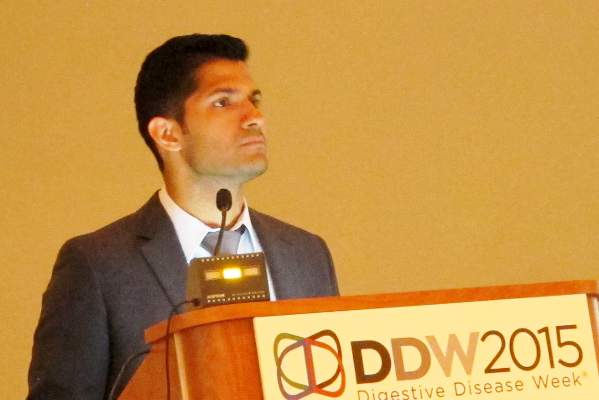
“The drugs that we’re using do place patients at higher risk for recurrent C. difficile, but it’s yet to come out which drugs within drug categories – immunomodulators, antibiotics, biologics – pose a higher risk, although we are beginning to see evidence, for example, that azathioprine is higher risk than methotrexate, infliximab might be higher risk than adalimumab, so we have to continue to parse through the data,” he said in an interview.
He and his colleagues conducted two retrospective studies to assess the effects of rCDI on patients with IBD.
The first study used a case-control design, including patients with IBD who had two or more documented instances of rCDI from 2010 through 2013 as cases, and IBD patients with only one infection as controls.
The second study used a retrospective cohort to calculate the incidence of rCDI in patients with IBD, compared with patients without IBD, Dr. Razik reported at the annual Digestive Disease Week.
There were a total of 503 patients who tested positive for CDI included in the studies: 110 patients with IBD (49% with Crohn’s disease and 51% with ulcerative colitis) and 393 without. The mean age was 58.8 years, and 61.4% were female.
Compared with patients without IBD, patients with Crohn’s disease or ulcerative colitis developed CDI at a younger age (39 years vs. 64 years, P < .001), used more steroids (39.1% vs. 12%, P < .001), used more immunosuppressive agents (42.7% vs. 13.2%, P < .001), and were more likely to have a prior bowel resection (28.2% vs. 11.5%, P < .001).
In all, 32% of patients with IBD had a recurrent CDI, compared with 24% of non-IBD patients (P < .01). There were no significant differences between the groups in the number of hospitalizations due to CDI, but patients with IBD were significantly more likely to require colectomy because of the infections (6.4% vs. 0.3%, P < .001).
In a multivariate analysis, risk factors for rCDI in patients with IBD included nonileal Crohn’s disease (odds ratio, 2.59; P < .001), recent antibiotic therapy (OR, 2.60; P < .001), use of a 5-aminosalicylic acid drug (OR, 3.06; P < .001), steroid use (OR, 2.94; P < .001), biologic therapy (OR, 2.50; P = .001), a recent hospitalization (OR, 2.62; P < .001), and no previous bowel resections (OR, 1.72; P = .020).
Clinicians need to look beyond the usual suspects, antibiotics, as causative agents for rCDI. Immunomodulators and biologic agents also were strongly associated with rCDI in the study, Dr. Razik noted.
The study source was not disclosed. He reported having no relevant financial conflicts of interest.
WASHINGTON – Patients with inflammatory bowel disease had a one-third higher risk for having a recurrent Clostridium difficile infection than did the general population, and a 20-fold higher risk for needing a total colectomy because of the infection, a study showed.
Risk factors for recurrent C. difficile infection (rCDI) in patients with inflammatory bowel disease (IBD) include a recent hospitalization, immunosuppressive drugs, and antibiotics, but which drugs are most culpable is unclear, according to Dr. Roshan Razik of Mount Sinai Hospital, Toronto, and the University of Toronto.
“The drugs that we’re using do place patients at higher risk for recurrent C. difficile, but it’s yet to come out which drugs within drug categories – immunomodulators, antibiotics, biologics – pose a higher risk, although we are beginning to see evidence, for example, that azathioprine is higher risk than methotrexate, infliximab might be higher risk than adalimumab, so we have to continue to parse through the data,” he said in an interview.
He and his colleagues conducted two retrospective studies to assess the effects of rCDI on patients with IBD.
The first study used a case-control design, including patients with IBD who had two or more documented instances of rCDI from 2010 through 2013 as cases, and IBD patients with only one infection as controls.
The second study used a retrospective cohort to calculate the incidence of rCDI in patients with IBD, compared with patients without IBD, Dr. Razik reported at the annual Digestive Disease Week.
There were a total of 503 patients who tested positive for CDI included in the studies: 110 patients with IBD (49% with Crohn’s disease and 51% with ulcerative colitis) and 393 without. The mean age was 58.8 years, and 61.4% were female.
Compared with patients without IBD, patients with Crohn’s disease or ulcerative colitis developed CDI at a younger age (39 years vs. 64 years, P < .001), used more steroids (39.1% vs. 12%, P < .001), used more immunosuppressive agents (42.7% vs. 13.2%, P < .001), and were more likely to have a prior bowel resection (28.2% vs. 11.5%, P < .001).
In all, 32% of patients with IBD had a recurrent CDI, compared with 24% of non-IBD patients (P < .01). There were no significant differences between the groups in the number of hospitalizations due to CDI, but patients with IBD were significantly more likely to require colectomy because of the infections (6.4% vs. 0.3%, P < .001).
In a multivariate analysis, risk factors for rCDI in patients with IBD included nonileal Crohn’s disease (odds ratio, 2.59; P < .001), recent antibiotic therapy (OR, 2.60; P < .001), use of a 5-aminosalicylic acid drug (OR, 3.06; P < .001), steroid use (OR, 2.94; P < .001), biologic therapy (OR, 2.50; P = .001), a recent hospitalization (OR, 2.62; P < .001), and no previous bowel resections (OR, 1.72; P = .020).
Clinicians need to look beyond the usual suspects, antibiotics, as causative agents for rCDI. Immunomodulators and biologic agents also were strongly associated with rCDI in the study, Dr. Razik noted.
The study source was not disclosed. He reported having no relevant financial conflicts of interest.
WASHINGTON – Patients with inflammatory bowel disease had a one-third higher risk for having a recurrent Clostridium difficile infection than did the general population, and a 20-fold higher risk for needing a total colectomy because of the infection, a study showed.
Risk factors for recurrent C. difficile infection (rCDI) in patients with inflammatory bowel disease (IBD) include a recent hospitalization, immunosuppressive drugs, and antibiotics, but which drugs are most culpable is unclear, according to Dr. Roshan Razik of Mount Sinai Hospital, Toronto, and the University of Toronto.
“The drugs that we’re using do place patients at higher risk for recurrent C. difficile, but it’s yet to come out which drugs within drug categories – immunomodulators, antibiotics, biologics – pose a higher risk, although we are beginning to see evidence, for example, that azathioprine is higher risk than methotrexate, infliximab might be higher risk than adalimumab, so we have to continue to parse through the data,” he said in an interview.
He and his colleagues conducted two retrospective studies to assess the effects of rCDI on patients with IBD.
The first study used a case-control design, including patients with IBD who had two or more documented instances of rCDI from 2010 through 2013 as cases, and IBD patients with only one infection as controls.
The second study used a retrospective cohort to calculate the incidence of rCDI in patients with IBD, compared with patients without IBD, Dr. Razik reported at the annual Digestive Disease Week.
There were a total of 503 patients who tested positive for CDI included in the studies: 110 patients with IBD (49% with Crohn’s disease and 51% with ulcerative colitis) and 393 without. The mean age was 58.8 years, and 61.4% were female.
Compared with patients without IBD, patients with Crohn’s disease or ulcerative colitis developed CDI at a younger age (39 years vs. 64 years, P < .001), used more steroids (39.1% vs. 12%, P < .001), used more immunosuppressive agents (42.7% vs. 13.2%, P < .001), and were more likely to have a prior bowel resection (28.2% vs. 11.5%, P < .001).
In all, 32% of patients with IBD had a recurrent CDI, compared with 24% of non-IBD patients (P < .01). There were no significant differences between the groups in the number of hospitalizations due to CDI, but patients with IBD were significantly more likely to require colectomy because of the infections (6.4% vs. 0.3%, P < .001).
In a multivariate analysis, risk factors for rCDI in patients with IBD included nonileal Crohn’s disease (odds ratio, 2.59; P < .001), recent antibiotic therapy (OR, 2.60; P < .001), use of a 5-aminosalicylic acid drug (OR, 3.06; P < .001), steroid use (OR, 2.94; P < .001), biologic therapy (OR, 2.50; P = .001), a recent hospitalization (OR, 2.62; P < .001), and no previous bowel resections (OR, 1.72; P = .020).
Clinicians need to look beyond the usual suspects, antibiotics, as causative agents for rCDI. Immunomodulators and biologic agents also were strongly associated with rCDI in the study, Dr. Razik noted.
The study source was not disclosed. He reported having no relevant financial conflicts of interest.
AT DDW 2015
Key clinical point: Patients with inflammatory bowel disease are at higher risk for recurrent Clostridium difficile infections.
Major finding: 32% of patients with IBD had a recurrent CDI, compared with 24% of non-IBD patients
Data source: Retrospective case-control studies with 503 patients, comparing patients with IBD with and without recurrent C. difficile infections and comparing patients with IBD with non-IBD patients.
Disclosures: The study source was not disclosed. Dr. Razik reported having no relevant financial conflicts of interest.
DDW: Urinary enzymes hint at gastric cancer
WASHINGTON – A simple urine test could detect gastric cancer even at an early stage, the test’s developers say.
The test, which looks for the presence of two metalloprotease enzymes labeled ADAM 12 and MMP-9/NGAL had 77.1% sensitivity and 82.9% specificity for gastric cancer when tested in 35 patients with the malignancy and an equal number of healthy controls, reported Dr. Takaya Shimura from the department of surgery at Boston Children’s Hospital and Harvard Medical School in Boston.

“This study represents the first demonstration of the presence of ADAM 12 and MMO-9/NGAL complex in the urine of gastric cancer patients,” he said at the annual Digestive Disease Week.
Dr. Stephen J. Meltzer of Johns Hopkins University, Baltimore, commented in an interview that the findings are convincing but preliminary.
A randomized clinical trial enrolling a larger number of patients and controls would be required before he would consider screening patients for the enzymes, said Dr. Meltzer, who was not involved in the study and comoderated the meeting session where the results were presented.
ADAM 12 (a disintegrin and metalloprotease 12) and MMP-9 (matrix metalloprotease 9) are both members of a family of enzymes involved in cellular adhesion, invasion, growth, and angiogenesis, Dr. Shimura explained. MMP-9, when complexed with NGAL (neutrophil gelatinase associated lipocalin) is protected from autodegradation.
The investigators, from the lab of Dr. Marsha A. Moses at Boston Children’s Hospital, and their collaborators in Japan had previously reported that MMPs in urine were independent predictors of both organ-confined and metastatic cancer.
Urinary assays are noninvasive, using easily accessed tissues that can be handled simply and inexpensively, making them ideal for cancer detection, Dr, Shimura said.
Current tests for gastric cancer, such as carcinoembryonic antigen (CEA) and cancer antigens (CA) 19-9 and 72-4, have poor sensitivity for detecting advanced disease, and are even worse at spotting early disease, he noted.
To see whether they could improve on the current lot of tests, the investigators enrolled 106 patients in a case-control study, settling eventually, after age and sex matching, on a cohort of 70 patients: 35 with primarily early-stage gastric cancer, and 35 healthy controls.
After screening the urine of participants for about 50 different antigenic proteins, they found that the patients with gastric cancer had significantly higher levels in their urine of both ADAM 12 (P < .001) and the MMP-9/NGAL complex (P = .020).
In a multivariate analysis, they showed that both enzymes were strong, independent predictors of gastric cancer, with an odds ratio for urinary MMO-9/NGAL of 6.71 (P = .002), and an OR of 15.4 for ADAM 12 (P = .002). In contrast, Helicobacter pylori infection was associated with a nonsignificant OR of 2.54.
In a receiver operating characteristic (ROC) analysis, they also found that MMP-9/NGAL was associated with an area-under-the curve (AUC) of 0.657 (P = .024), ADAM 12 was associated with an AUC of 0.757 (P < .001), and that the two combined had an AUC of 0.825 (P < .001).
As noted before, the sensitivity of the combined enzymes was 77%, and the specificity was 83%.
Finally, using immunohistochemical analysis, the investigators were able to show that gastric cancer tissues had high levels of coexpression of MMP-9 and NGAL (P <.001) and high expression levels of ADAM 12 (P < .001), compared with adjacent normal tissues.
WASHINGTON – A simple urine test could detect gastric cancer even at an early stage, the test’s developers say.
The test, which looks for the presence of two metalloprotease enzymes labeled ADAM 12 and MMP-9/NGAL had 77.1% sensitivity and 82.9% specificity for gastric cancer when tested in 35 patients with the malignancy and an equal number of healthy controls, reported Dr. Takaya Shimura from the department of surgery at Boston Children’s Hospital and Harvard Medical School in Boston.
“This study represents the first demonstration of the presence of ADAM 12 and MMO-9/NGAL complex in the urine of gastric cancer patients,” he said at the annual Digestive Disease Week.
Dr. Stephen J. Meltzer of Johns Hopkins University, Baltimore, commented in an interview that the findings are convincing but preliminary.
A randomized clinical trial enrolling a larger number of patients and controls would be required before he would consider screening patients for the enzymes, said Dr. Meltzer, who was not involved in the study and comoderated the meeting session where the results were presented.
ADAM 12 (a disintegrin and metalloprotease 12) and MMP-9 (matrix metalloprotease 9) are both members of a family of enzymes involved in cellular adhesion, invasion, growth, and angiogenesis, Dr. Shimura explained. MMP-9, when complexed with NGAL (neutrophil gelatinase associated lipocalin) is protected from autodegradation.
The investigators, from the lab of Dr. Marsha A. Moses at Boston Children’s Hospital, and their collaborators in Japan had previously reported that MMPs in urine were independent predictors of both organ-confined and metastatic cancer.
Urinary assays are noninvasive, using easily accessed tissues that can be handled simply and inexpensively, making them ideal for cancer detection, Dr, Shimura said.
Current tests for gastric cancer, such as carcinoembryonic antigen (CEA) and cancer antigens (CA) 19-9 and 72-4, have poor sensitivity for detecting advanced disease, and are even worse at spotting early disease, he noted.
To see whether they could improve on the current lot of tests, the investigators enrolled 106 patients in a case-control study, settling eventually, after age and sex matching, on a cohort of 70 patients: 35 with primarily early-stage gastric cancer, and 35 healthy controls.
After screening the urine of participants for about 50 different antigenic proteins, they found that the patients with gastric cancer had significantly higher levels in their urine of both ADAM 12 (P < .001) and the MMP-9/NGAL complex (P = .020).
In a multivariate analysis, they showed that both enzymes were strong, independent predictors of gastric cancer, with an odds ratio for urinary MMO-9/NGAL of 6.71 (P = .002), and an OR of 15.4 for ADAM 12 (P = .002). In contrast, Helicobacter pylori infection was associated with a nonsignificant OR of 2.54.
In a receiver operating characteristic (ROC) analysis, they also found that MMP-9/NGAL was associated with an area-under-the curve (AUC) of 0.657 (P = .024), ADAM 12 was associated with an AUC of 0.757 (P < .001), and that the two combined had an AUC of 0.825 (P < .001).
As noted before, the sensitivity of the combined enzymes was 77%, and the specificity was 83%.
Finally, using immunohistochemical analysis, the investigators were able to show that gastric cancer tissues had high levels of coexpression of MMP-9 and NGAL (P <.001) and high expression levels of ADAM 12 (P < .001), compared with adjacent normal tissues.
WASHINGTON – A simple urine test could detect gastric cancer even at an early stage, the test’s developers say.
The test, which looks for the presence of two metalloprotease enzymes labeled ADAM 12 and MMP-9/NGAL had 77.1% sensitivity and 82.9% specificity for gastric cancer when tested in 35 patients with the malignancy and an equal number of healthy controls, reported Dr. Takaya Shimura from the department of surgery at Boston Children’s Hospital and Harvard Medical School in Boston.
“This study represents the first demonstration of the presence of ADAM 12 and MMO-9/NGAL complex in the urine of gastric cancer patients,” he said at the annual Digestive Disease Week.
Dr. Stephen J. Meltzer of Johns Hopkins University, Baltimore, commented in an interview that the findings are convincing but preliminary.
A randomized clinical trial enrolling a larger number of patients and controls would be required before he would consider screening patients for the enzymes, said Dr. Meltzer, who was not involved in the study and comoderated the meeting session where the results were presented.
ADAM 12 (a disintegrin and metalloprotease 12) and MMP-9 (matrix metalloprotease 9) are both members of a family of enzymes involved in cellular adhesion, invasion, growth, and angiogenesis, Dr. Shimura explained. MMP-9, when complexed with NGAL (neutrophil gelatinase associated lipocalin) is protected from autodegradation.
The investigators, from the lab of Dr. Marsha A. Moses at Boston Children’s Hospital, and their collaborators in Japan had previously reported that MMPs in urine were independent predictors of both organ-confined and metastatic cancer.
Urinary assays are noninvasive, using easily accessed tissues that can be handled simply and inexpensively, making them ideal for cancer detection, Dr, Shimura said.
Current tests for gastric cancer, such as carcinoembryonic antigen (CEA) and cancer antigens (CA) 19-9 and 72-4, have poor sensitivity for detecting advanced disease, and are even worse at spotting early disease, he noted.
To see whether they could improve on the current lot of tests, the investigators enrolled 106 patients in a case-control study, settling eventually, after age and sex matching, on a cohort of 70 patients: 35 with primarily early-stage gastric cancer, and 35 healthy controls.
After screening the urine of participants for about 50 different antigenic proteins, they found that the patients with gastric cancer had significantly higher levels in their urine of both ADAM 12 (P < .001) and the MMP-9/NGAL complex (P = .020).
In a multivariate analysis, they showed that both enzymes were strong, independent predictors of gastric cancer, with an odds ratio for urinary MMO-9/NGAL of 6.71 (P = .002), and an OR of 15.4 for ADAM 12 (P = .002). In contrast, Helicobacter pylori infection was associated with a nonsignificant OR of 2.54.
In a receiver operating characteristic (ROC) analysis, they also found that MMP-9/NGAL was associated with an area-under-the curve (AUC) of 0.657 (P = .024), ADAM 12 was associated with an AUC of 0.757 (P < .001), and that the two combined had an AUC of 0.825 (P < .001).
As noted before, the sensitivity of the combined enzymes was 77%, and the specificity was 83%.
Finally, using immunohistochemical analysis, the investigators were able to show that gastric cancer tissues had high levels of coexpression of MMP-9 and NGAL (P <.001) and high expression levels of ADAM 12 (P < .001), compared with adjacent normal tissues.
AT DDW 2015
Key clinical point: Urinary levels of two metalloproteases were significantly elevated in the urine of patients with gastric cancer, compared with controls.
Major finding: High expression of ADAM 12 and MMP-9/NGAL complex had a 77% sensitivity and 83% specificity for gastric cancer.
Data source: Case-control study of 35 patients with gastric cancer and 35 controls.
Disclosures: The study was supported by the Advanced Medical Research Foundation in the United States and the Research Fellowship of the Uehara Memorial Foundation, Japan. Dr. Shimura reported having no conflicts of interest.

DDW: Barrett’s ‘indefinite for dysplasia’ may be cancer harbinger
WASHINGTON – A diagnosis of Barrett’s esophagus “indefinite for dysplasia” doesn’t mean that the patient is home free; it may, in fact, be an indicator of increased risk for progression to high-grade dysplasia or esophageal adenocarcinoma, investigators suggest.
Among 87 patients who had follow-up endoscopies and biopsies within a year of a diagnosis of Barrett’s indefinite for dysplasia (IND), 7 had progression of disease, including 5 who developed high-grade dysplasia or adenocarcinoma, and 2 who developed low-grade disease.
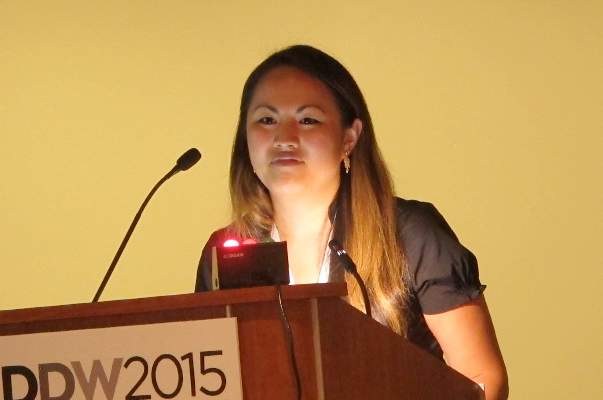
Of these seven patients, four had disease progression with 6 months of a diagnosis of Barrett’s IND, Dr, Michelle Ma reported at the annual Digestive Disease Week.
“Indefinite for dysplasia is an important diagnostic category that is associated with an increased risk for prevalent dysplasia, particularly within the first 6 months after diagnosis. After 12 months, the risk for progressing to advanced neoplasia is low, and similar to other studies,” said Dr. Ma of the University of Pennsylvania, Philadelphia.
Although there is fairly strong evidence to guide the management of patients with low-grade and high-grade dysplasia, it’s less clear whether Barrett’s IND is risk marker for progression. Dr. Ma said, citing a somewhat fuzzy definition of the term: “Epithelial abnormalities insufficient to diagnose dysplasia, or epithelial abnormalities unclear due to inflammation or sampling.”
Uncertainty about the natural history of IND is reflected in practice guidelines, which either don’t address it, call for repeat endoscopy in 6 months, or call for an expert gastrointestinal pathology review with repeat endoscopy to clarify dysplasia status if the evidence is of low quality, Dr. Ma said.
To determine the rate of, and risk factors for, neoplastic progression of IND, the authors took a retrospective look at patients in their center’s pathology database and Barrett’s esophagus register with a histopathologic diagnosis of IND from 2000 through 2014. They excluded patients with frank dysplasia or carcinoma on diagnosis, and those who did not have follow-up endoscopies.
The investigatoes factored demographic variables into their analysis, including age, gender, body-mass index, smoking history, use of proton-pump inhibitors (PPI), nonsteroidal anti-inflammatory drugs, and family history of Barrett’s or esophageal adenocarcinoma. They also considered endoscopic/pathologic characteristics such as hiatal hernia size, Barrett’s segment length, muscosal nodularity, and multifocal IND.
A total of 106 patients with IND were eligible for the analysis, 87 of whom had follow-up endoscopy and biopsy within a year of diagnosis. As noted before, 7 of these patients had prevalent disease, with prevalence rates of 2.3% for low-grade dysplasia, 4.6% for high-grade dysplasia, and 1.1% for esophageal adenocarcinoma.
To determine the incidence of dysplasia, the authors first excluded the 7 patients with prevealent dysplasia and 33 patients who did not have a surveillance endoscopy in the first year following a diagnosis of IND, leaving 66 patients for analysis. Of this group, 3 developed incident dysplasia or adenocarcinoma, yielding an incidence of 4.5% over a median of 32 months of follow-up.
An analysis of risk factors for prevalent dysplasia showed that none of the variables was significant, although Barrett’s segment length approached statistical significance. Looking at risk factors for incident dysplasia, both smoking status (P = .0207) and segment length (P = .0253) were significant predictors.
A pathologist who was not involved in the study pointed out that a diagnosis of IND can mean many things to many people.
“Indefinite for dysplasia is really not an entity, it’s about 5,000 things that we choose to put into that category. It’s a horribly non-reproducible diagnosis,” commented Dr. Henry D. Appelman, a professor of anatomic pathology at the University of Michigan in Ann Arbor, during a aquestion-and-answer period.
He questioned whether the diagnoses of IND were subject to review at her center.
Dr. Ma noted that Barrett’s specimens at her institution are routinely reviewed by pathologists specializing in Barrett’s, who will also review slides of patients referred to the center from other institutions.
The study was internally funded. The authors reported no conflicts of interest.
WASHINGTON – A diagnosis of Barrett’s esophagus “indefinite for dysplasia” doesn’t mean that the patient is home free; it may, in fact, be an indicator of increased risk for progression to high-grade dysplasia or esophageal adenocarcinoma, investigators suggest.
Among 87 patients who had follow-up endoscopies and biopsies within a year of a diagnosis of Barrett’s indefinite for dysplasia (IND), 7 had progression of disease, including 5 who developed high-grade dysplasia or adenocarcinoma, and 2 who developed low-grade disease.
Of these seven patients, four had disease progression with 6 months of a diagnosis of Barrett’s IND, Dr, Michelle Ma reported at the annual Digestive Disease Week.
“Indefinite for dysplasia is an important diagnostic category that is associated with an increased risk for prevalent dysplasia, particularly within the first 6 months after diagnosis. After 12 months, the risk for progressing to advanced neoplasia is low, and similar to other studies,” said Dr. Ma of the University of Pennsylvania, Philadelphia.
Although there is fairly strong evidence to guide the management of patients with low-grade and high-grade dysplasia, it’s less clear whether Barrett’s IND is risk marker for progression. Dr. Ma said, citing a somewhat fuzzy definition of the term: “Epithelial abnormalities insufficient to diagnose dysplasia, or epithelial abnormalities unclear due to inflammation or sampling.”
Uncertainty about the natural history of IND is reflected in practice guidelines, which either don’t address it, call for repeat endoscopy in 6 months, or call for an expert gastrointestinal pathology review with repeat endoscopy to clarify dysplasia status if the evidence is of low quality, Dr. Ma said.
To determine the rate of, and risk factors for, neoplastic progression of IND, the authors took a retrospective look at patients in their center’s pathology database and Barrett’s esophagus register with a histopathologic diagnosis of IND from 2000 through 2014. They excluded patients with frank dysplasia or carcinoma on diagnosis, and those who did not have follow-up endoscopies.
The investigatoes factored demographic variables into their analysis, including age, gender, body-mass index, smoking history, use of proton-pump inhibitors (PPI), nonsteroidal anti-inflammatory drugs, and family history of Barrett’s or esophageal adenocarcinoma. They also considered endoscopic/pathologic characteristics such as hiatal hernia size, Barrett’s segment length, muscosal nodularity, and multifocal IND.
A total of 106 patients with IND were eligible for the analysis, 87 of whom had follow-up endoscopy and biopsy within a year of diagnosis. As noted before, 7 of these patients had prevalent disease, with prevalence rates of 2.3% for low-grade dysplasia, 4.6% for high-grade dysplasia, and 1.1% for esophageal adenocarcinoma.
To determine the incidence of dysplasia, the authors first excluded the 7 patients with prevealent dysplasia and 33 patients who did not have a surveillance endoscopy in the first year following a diagnosis of IND, leaving 66 patients for analysis. Of this group, 3 developed incident dysplasia or adenocarcinoma, yielding an incidence of 4.5% over a median of 32 months of follow-up.
An analysis of risk factors for prevalent dysplasia showed that none of the variables was significant, although Barrett’s segment length approached statistical significance. Looking at risk factors for incident dysplasia, both smoking status (P = .0207) and segment length (P = .0253) were significant predictors.
A pathologist who was not involved in the study pointed out that a diagnosis of IND can mean many things to many people.
“Indefinite for dysplasia is really not an entity, it’s about 5,000 things that we choose to put into that category. It’s a horribly non-reproducible diagnosis,” commented Dr. Henry D. Appelman, a professor of anatomic pathology at the University of Michigan in Ann Arbor, during a aquestion-and-answer period.
He questioned whether the diagnoses of IND were subject to review at her center.
Dr. Ma noted that Barrett’s specimens at her institution are routinely reviewed by pathologists specializing in Barrett’s, who will also review slides of patients referred to the center from other institutions.
The study was internally funded. The authors reported no conflicts of interest.
WASHINGTON – A diagnosis of Barrett’s esophagus “indefinite for dysplasia” doesn’t mean that the patient is home free; it may, in fact, be an indicator of increased risk for progression to high-grade dysplasia or esophageal adenocarcinoma, investigators suggest.
Among 87 patients who had follow-up endoscopies and biopsies within a year of a diagnosis of Barrett’s indefinite for dysplasia (IND), 7 had progression of disease, including 5 who developed high-grade dysplasia or adenocarcinoma, and 2 who developed low-grade disease.
Of these seven patients, four had disease progression with 6 months of a diagnosis of Barrett’s IND, Dr, Michelle Ma reported at the annual Digestive Disease Week.
“Indefinite for dysplasia is an important diagnostic category that is associated with an increased risk for prevalent dysplasia, particularly within the first 6 months after diagnosis. After 12 months, the risk for progressing to advanced neoplasia is low, and similar to other studies,” said Dr. Ma of the University of Pennsylvania, Philadelphia.
Although there is fairly strong evidence to guide the management of patients with low-grade and high-grade dysplasia, it’s less clear whether Barrett’s IND is risk marker for progression. Dr. Ma said, citing a somewhat fuzzy definition of the term: “Epithelial abnormalities insufficient to diagnose dysplasia, or epithelial abnormalities unclear due to inflammation or sampling.”
Uncertainty about the natural history of IND is reflected in practice guidelines, which either don’t address it, call for repeat endoscopy in 6 months, or call for an expert gastrointestinal pathology review with repeat endoscopy to clarify dysplasia status if the evidence is of low quality, Dr. Ma said.
To determine the rate of, and risk factors for, neoplastic progression of IND, the authors took a retrospective look at patients in their center’s pathology database and Barrett’s esophagus register with a histopathologic diagnosis of IND from 2000 through 2014. They excluded patients with frank dysplasia or carcinoma on diagnosis, and those who did not have follow-up endoscopies.
The investigatoes factored demographic variables into their analysis, including age, gender, body-mass index, smoking history, use of proton-pump inhibitors (PPI), nonsteroidal anti-inflammatory drugs, and family history of Barrett’s or esophageal adenocarcinoma. They also considered endoscopic/pathologic characteristics such as hiatal hernia size, Barrett’s segment length, muscosal nodularity, and multifocal IND.
A total of 106 patients with IND were eligible for the analysis, 87 of whom had follow-up endoscopy and biopsy within a year of diagnosis. As noted before, 7 of these patients had prevalent disease, with prevalence rates of 2.3% for low-grade dysplasia, 4.6% for high-grade dysplasia, and 1.1% for esophageal adenocarcinoma.
To determine the incidence of dysplasia, the authors first excluded the 7 patients with prevealent dysplasia and 33 patients who did not have a surveillance endoscopy in the first year following a diagnosis of IND, leaving 66 patients for analysis. Of this group, 3 developed incident dysplasia or adenocarcinoma, yielding an incidence of 4.5% over a median of 32 months of follow-up.
An analysis of risk factors for prevalent dysplasia showed that none of the variables was significant, although Barrett’s segment length approached statistical significance. Looking at risk factors for incident dysplasia, both smoking status (P = .0207) and segment length (P = .0253) were significant predictors.
A pathologist who was not involved in the study pointed out that a diagnosis of IND can mean many things to many people.
“Indefinite for dysplasia is really not an entity, it’s about 5,000 things that we choose to put into that category. It’s a horribly non-reproducible diagnosis,” commented Dr. Henry D. Appelman, a professor of anatomic pathology at the University of Michigan in Ann Arbor, during a aquestion-and-answer period.
He questioned whether the diagnoses of IND were subject to review at her center.
Dr. Ma noted that Barrett’s specimens at her institution are routinely reviewed by pathologists specializing in Barrett’s, who will also review slides of patients referred to the center from other institutions.
The study was internally funded. The authors reported no conflicts of interest.
AT DDW 2015
Key clinical point: Barrett’s esophagus indefinite for dysplasia may progress to dysplasia or adenocarcinoma within a year of diagnosis.
Major finding: Seven of 87 patients with a diagnosis of Barrett’s indefinite for dysplasia (IND) had disease progression within 1 year.
Data source: Retrospective case series of 87 patients who had follow-up endoscopies and biopsies within a year of a diagnosis of Barrett’s IND.
Disclosures: The study was internally funded. The authors reported no conflicts of interest.
DDW: Biologic agents improve Crohn’s disease picture
WASHINGTON – The course of Crohn’s disease has changed for the better since the introduction of biological therapies and other treatments in the late 1990s.
“In an era of novel treatment options and strategies for Crohn’s disease, we are seeing that the hospitalization and surgery rates have declined, but progression to a complicated phenotype is unfortunately still common nowadays,” said Dr. Steven Jeuring from Maastricht (the Netherlands) University Medical Center.
A community-based study comparing outcomes for patients with Crohn’s Disease (CD) before and after the introduction of infliximab (Remicade) in the Netherlands in 1999 showed the risk of hospitalization was 55% lower for patients treated after 1999, and the risk for hospitalization during the course of the disease was 35% lower. Similarly, the risk for requiring surgery was 77% lower for patients treated in the modern era, and the risk for surgery at any time in the disease course was 54% lower, Dr. Jeuring said at the annual Digestive Disease Week.

The prevalence of a complicated CD phenotype, marked by the presence of bowel stricturing and/or penetration, was also 48% lower at the time of diagnosis among patients treated within the last two decades, but the rate of progression from an inflammatory to complicated phenotype remained unchanged from the pre-biologics era, Dr. Jeuring said.
He and his colleagues conducted a retrospective study with a population-based cohort of adults with incident inflammatory bowel disease diagnosed from 1991 through 1998 (342 patients) and from 1999 through 2011 (820 patients). The cohort represented 93% of all patients in the IBD registry of the South Limburg region of the Netherlands.
They found that the distribution of disease phenotypes was significantly different between the two time periods, with 45% of patients having complicated disease in the pre-biologics era, compared with 37% during the biologics era, translating into a 23% reduction over time. However, in both cohorts, a fairly large proportion of patients already had complicated disease at the time of diagnosis, Dr. Jeuring noted.
When the investigators looked at the risk of developing stricturing or penetrating disease during 8 years of follow-up, however, they found that there was no difference between the groups, with 30% of patients in the earlier cohort having disease progression, compared with 28% of patients in the later cohort, translating into a non-significant hazard ratio (HR) of 0.95.
Dr. Jeuring said that this finding was “very, very disappointing.”
More encouraging, however was the finding that hospitalization rates in the modern era were significantly lower than in the pre-biologics period. For example, the likelihood of being hospitalized at any time during 8 years of follow-up was 72% in the earlier cohort, compared with 52% in the later cohort.
The HR for being hospitalized at the time of diagnosis among the later vs. earlier cohorts was 0.45, and was statistically significant. Similarly, the HR for being hospitalized at any time over 8 years was 0.65 for patients in the modern era (also significant, with a 95% confidence interval that did not cross 1).
Even more dramatically, more modern therapies were associated with a significant reduction in the risk of being rehospitalized, with a significant HR of 0.29.
The risk for surgical resection either at diagnosis or during the 8-year follow-up period was 52% among patients diagnosed and started on treatment in the 1990s, compared with 25% for patients treated in the new millennium. For the latter cohort, the HRs for surgery at the time of diagnosis and for surgery during follow-up were 0.23 and 0.46, respectively. Both were statistically significant.
The lower risk for surgery for patients in the modern era is primarily driven by decreased risk for surgery for inflammatory disease, Dr, Jeuring said.
The study was supported by Maastricht University Medical Center. Dr. Jeuring reported having no conflicts of interest.
WASHINGTON – The course of Crohn’s disease has changed for the better since the introduction of biological therapies and other treatments in the late 1990s.
“In an era of novel treatment options and strategies for Crohn’s disease, we are seeing that the hospitalization and surgery rates have declined, but progression to a complicated phenotype is unfortunately still common nowadays,” said Dr. Steven Jeuring from Maastricht (the Netherlands) University Medical Center.
A community-based study comparing outcomes for patients with Crohn’s Disease (CD) before and after the introduction of infliximab (Remicade) in the Netherlands in 1999 showed the risk of hospitalization was 55% lower for patients treated after 1999, and the risk for hospitalization during the course of the disease was 35% lower. Similarly, the risk for requiring surgery was 77% lower for patients treated in the modern era, and the risk for surgery at any time in the disease course was 54% lower, Dr. Jeuring said at the annual Digestive Disease Week.
The prevalence of a complicated CD phenotype, marked by the presence of bowel stricturing and/or penetration, was also 48% lower at the time of diagnosis among patients treated within the last two decades, but the rate of progression from an inflammatory to complicated phenotype remained unchanged from the pre-biologics era, Dr. Jeuring said.
He and his colleagues conducted a retrospective study with a population-based cohort of adults with incident inflammatory bowel disease diagnosed from 1991 through 1998 (342 patients) and from 1999 through 2011 (820 patients). The cohort represented 93% of all patients in the IBD registry of the South Limburg region of the Netherlands.
They found that the distribution of disease phenotypes was significantly different between the two time periods, with 45% of patients having complicated disease in the pre-biologics era, compared with 37% during the biologics era, translating into a 23% reduction over time. However, in both cohorts, a fairly large proportion of patients already had complicated disease at the time of diagnosis, Dr. Jeuring noted.
When the investigators looked at the risk of developing stricturing or penetrating disease during 8 years of follow-up, however, they found that there was no difference between the groups, with 30% of patients in the earlier cohort having disease progression, compared with 28% of patients in the later cohort, translating into a non-significant hazard ratio (HR) of 0.95.
Dr. Jeuring said that this finding was “very, very disappointing.”
More encouraging, however was the finding that hospitalization rates in the modern era were significantly lower than in the pre-biologics period. For example, the likelihood of being hospitalized at any time during 8 years of follow-up was 72% in the earlier cohort, compared with 52% in the later cohort.
The HR for being hospitalized at the time of diagnosis among the later vs. earlier cohorts was 0.45, and was statistically significant. Similarly, the HR for being hospitalized at any time over 8 years was 0.65 for patients in the modern era (also significant, with a 95% confidence interval that did not cross 1).
Even more dramatically, more modern therapies were associated with a significant reduction in the risk of being rehospitalized, with a significant HR of 0.29.
The risk for surgical resection either at diagnosis or during the 8-year follow-up period was 52% among patients diagnosed and started on treatment in the 1990s, compared with 25% for patients treated in the new millennium. For the latter cohort, the HRs for surgery at the time of diagnosis and for surgery during follow-up were 0.23 and 0.46, respectively. Both were statistically significant.
The lower risk for surgery for patients in the modern era is primarily driven by decreased risk for surgery for inflammatory disease, Dr, Jeuring said.
The study was supported by Maastricht University Medical Center. Dr. Jeuring reported having no conflicts of interest.
WASHINGTON – The course of Crohn’s disease has changed for the better since the introduction of biological therapies and other treatments in the late 1990s.
“In an era of novel treatment options and strategies for Crohn’s disease, we are seeing that the hospitalization and surgery rates have declined, but progression to a complicated phenotype is unfortunately still common nowadays,” said Dr. Steven Jeuring from Maastricht (the Netherlands) University Medical Center.
A community-based study comparing outcomes for patients with Crohn’s Disease (CD) before and after the introduction of infliximab (Remicade) in the Netherlands in 1999 showed the risk of hospitalization was 55% lower for patients treated after 1999, and the risk for hospitalization during the course of the disease was 35% lower. Similarly, the risk for requiring surgery was 77% lower for patients treated in the modern era, and the risk for surgery at any time in the disease course was 54% lower, Dr. Jeuring said at the annual Digestive Disease Week.
The prevalence of a complicated CD phenotype, marked by the presence of bowel stricturing and/or penetration, was also 48% lower at the time of diagnosis among patients treated within the last two decades, but the rate of progression from an inflammatory to complicated phenotype remained unchanged from the pre-biologics era, Dr. Jeuring said.
He and his colleagues conducted a retrospective study with a population-based cohort of adults with incident inflammatory bowel disease diagnosed from 1991 through 1998 (342 patients) and from 1999 through 2011 (820 patients). The cohort represented 93% of all patients in the IBD registry of the South Limburg region of the Netherlands.
They found that the distribution of disease phenotypes was significantly different between the two time periods, with 45% of patients having complicated disease in the pre-biologics era, compared with 37% during the biologics era, translating into a 23% reduction over time. However, in both cohorts, a fairly large proportion of patients already had complicated disease at the time of diagnosis, Dr. Jeuring noted.
When the investigators looked at the risk of developing stricturing or penetrating disease during 8 years of follow-up, however, they found that there was no difference between the groups, with 30% of patients in the earlier cohort having disease progression, compared with 28% of patients in the later cohort, translating into a non-significant hazard ratio (HR) of 0.95.
Dr. Jeuring said that this finding was “very, very disappointing.”
More encouraging, however was the finding that hospitalization rates in the modern era were significantly lower than in the pre-biologics period. For example, the likelihood of being hospitalized at any time during 8 years of follow-up was 72% in the earlier cohort, compared with 52% in the later cohort.
The HR for being hospitalized at the time of diagnosis among the later vs. earlier cohorts was 0.45, and was statistically significant. Similarly, the HR for being hospitalized at any time over 8 years was 0.65 for patients in the modern era (also significant, with a 95% confidence interval that did not cross 1).
Even more dramatically, more modern therapies were associated with a significant reduction in the risk of being rehospitalized, with a significant HR of 0.29.
The risk for surgical resection either at diagnosis or during the 8-year follow-up period was 52% among patients diagnosed and started on treatment in the 1990s, compared with 25% for patients treated in the new millennium. For the latter cohort, the HRs for surgery at the time of diagnosis and for surgery during follow-up were 0.23 and 0.46, respectively. Both were statistically significant.
The lower risk for surgery for patients in the modern era is primarily driven by decreased risk for surgery for inflammatory disease, Dr, Jeuring said.
The study was supported by Maastricht University Medical Center. Dr. Jeuring reported having no conflicts of interest.
AT DDW 2015
Key clinical point: The advent of biologic agents has improved hospitalization and surgery rates for patients with Crohn’s disease.
Major finding: The risk of hospitalization for patients treated after 1999 or for hospitalization during the course of the disease was 55% and 35% lower, respectively. and the risks for requiring surgery in the modern era or at any time in the disease course was 77% and 54% lower.
Data source: Population-based cohort study of 1,162 patients with inflammatory bowel disease in the South Limburg region of the Netherlands.
Disclosures: The study was supported by Maastricht University Medical Center. Dr. Jeuring reported having no conflicts of interest.

Augmenting therapy boosts event-free survival in high-risk Wilms tumor
Augmenting standard chemotherapy regimens with additional cytotoxic agents significantly boosted event-free survival rates in children with high-risk forms of Wilms tumor, particularly those with advanced-stage disease.
Adding doxorubicin to standard therapy with vincristine and dactinomycin in patients with stage I/II Wilms tumors carrying high-risk loss of heterozygosity mutations increased 4-year event-free survival (EFS) rates from 74.9% (with vincristine and dactinomycin chemotherapy alone), to 83.9.%
In patients with high-risk stage III/IV disease, adding four cycles of cyclophosphamide and etoposide to a standard regimen of vincristine, dactinomycin, doxorubicin and radiation improved 4-year EFS from 65.9% to 91.5%, reported Dr. David B. Dix of the British Columbia Children’s Hospital, Vancouver, B.C.
“Our committee is particularly encouraged by these results in that they clearly show evidence that augmentation of therapy can overcome a known adverse biomarker, and they also provide encouragement to search for other biomarkers of prognostic significance, ideally found in a higher percentage of patients,” he said at a briefing of studies to be presented at the 2015 annual meeting of the American Society of Clinical Oncology.
Dr. Julie M. Vose, ASCO president-elect, who comoderated the briefing but was not involved in the studies, said that the results show the importance of genetic testing to prevent overtreatment and rein in costs for low-risk patients, and to help improve treatment of high-risk patients with augmented therapies or additional treatment strategies.
The investigators focused on improving outcomes for children with favorable histology Wilms tumor who have loss of heterozygosity (LOH) mutations in chromosomal location 1p and 16q.
In the National Wilms Tumor Study 5, a multicenter North American cooperative trial, children with these mutations, who comprised 5% of the study population, had significantly worse outcomes. Among patients with stage I/II disease with LOH mutations at both chromosomal locations, the 4-year EFS in that trial was 74.9%, compared with 92% for patients with no LOH mutations. Among patients with stage III/IV disease, the respective 4-year EFS rates were 65.9% vs. 83%.
The investigators tested whether augmenting therapy would improve EFS for patients with favorable histology Wilms tumor with the combined LOH 1p and 16q mutations in two trials:
AREN0532 compared vincristine and dactinomycin with the same two drugs plus doxorubicin in patients with stage I/II disease.
AREN0533compared vincristine, dactinomycin, doxorubicin and radiation therapy with the same regimen plus four cycles of cyclophosphamide and etoposide in patients with stage III/IV disease.
In each trial, 4-year EFS rates were compared with those of the National Wilms Tumor Study 4. Median follow-up was 3.6 years.
The patients were generally able to tolerate the therapy well, Dr. Dix said. Short-term toxicities for patients with stage I/II disease were manageable, he noted.
Among patients with stage III/IV disease, the augmented regimen was associated with myelosuppression in 60% of patients, although this too was manageable, the investigators reported.
Dr. Dix and his colleagues noted that the augmented regimen for stage III/IV tumors may spare many patients from requiring even more intensive salvage therapy. They also acknowledged, however, that the augmented regimen is likely to cause reduced fertility in some patients, and urged clinicians to discuss the risks and benefits of augmented therapy with the patients’ families.
Testing for LOH 1p and 16q is available at the Children’s Oncology Group Biopathology Center at Nationwide Children’s Hospital in Columbus, Ohio, and at several other centers across North America, Dr. Dix noted.
Augmenting standard chemotherapy regimens with additional cytotoxic agents significantly boosted event-free survival rates in children with high-risk forms of Wilms tumor, particularly those with advanced-stage disease.
Adding doxorubicin to standard therapy with vincristine and dactinomycin in patients with stage I/II Wilms tumors carrying high-risk loss of heterozygosity mutations increased 4-year event-free survival (EFS) rates from 74.9% (with vincristine and dactinomycin chemotherapy alone), to 83.9.%
In patients with high-risk stage III/IV disease, adding four cycles of cyclophosphamide and etoposide to a standard regimen of vincristine, dactinomycin, doxorubicin and radiation improved 4-year EFS from 65.9% to 91.5%, reported Dr. David B. Dix of the British Columbia Children’s Hospital, Vancouver, B.C.
“Our committee is particularly encouraged by these results in that they clearly show evidence that augmentation of therapy can overcome a known adverse biomarker, and they also provide encouragement to search for other biomarkers of prognostic significance, ideally found in a higher percentage of patients,” he said at a briefing of studies to be presented at the 2015 annual meeting of the American Society of Clinical Oncology.
Dr. Julie M. Vose, ASCO president-elect, who comoderated the briefing but was not involved in the studies, said that the results show the importance of genetic testing to prevent overtreatment and rein in costs for low-risk patients, and to help improve treatment of high-risk patients with augmented therapies or additional treatment strategies.
The investigators focused on improving outcomes for children with favorable histology Wilms tumor who have loss of heterozygosity (LOH) mutations in chromosomal location 1p and 16q.
In the National Wilms Tumor Study 5, a multicenter North American cooperative trial, children with these mutations, who comprised 5% of the study population, had significantly worse outcomes. Among patients with stage I/II disease with LOH mutations at both chromosomal locations, the 4-year EFS in that trial was 74.9%, compared with 92% for patients with no LOH mutations. Among patients with stage III/IV disease, the respective 4-year EFS rates were 65.9% vs. 83%.
The investigators tested whether augmenting therapy would improve EFS for patients with favorable histology Wilms tumor with the combined LOH 1p and 16q mutations in two trials:
AREN0532 compared vincristine and dactinomycin with the same two drugs plus doxorubicin in patients with stage I/II disease.
AREN0533compared vincristine, dactinomycin, doxorubicin and radiation therapy with the same regimen plus four cycles of cyclophosphamide and etoposide in patients with stage III/IV disease.
In each trial, 4-year EFS rates were compared with those of the National Wilms Tumor Study 4. Median follow-up was 3.6 years.
The patients were generally able to tolerate the therapy well, Dr. Dix said. Short-term toxicities for patients with stage I/II disease were manageable, he noted.
Among patients with stage III/IV disease, the augmented regimen was associated with myelosuppression in 60% of patients, although this too was manageable, the investigators reported.
Dr. Dix and his colleagues noted that the augmented regimen for stage III/IV tumors may spare many patients from requiring even more intensive salvage therapy. They also acknowledged, however, that the augmented regimen is likely to cause reduced fertility in some patients, and urged clinicians to discuss the risks and benefits of augmented therapy with the patients’ families.
Testing for LOH 1p and 16q is available at the Children’s Oncology Group Biopathology Center at Nationwide Children’s Hospital in Columbus, Ohio, and at several other centers across North America, Dr. Dix noted.
Augmenting standard chemotherapy regimens with additional cytotoxic agents significantly boosted event-free survival rates in children with high-risk forms of Wilms tumor, particularly those with advanced-stage disease.
Adding doxorubicin to standard therapy with vincristine and dactinomycin in patients with stage I/II Wilms tumors carrying high-risk loss of heterozygosity mutations increased 4-year event-free survival (EFS) rates from 74.9% (with vincristine and dactinomycin chemotherapy alone), to 83.9.%
In patients with high-risk stage III/IV disease, adding four cycles of cyclophosphamide and etoposide to a standard regimen of vincristine, dactinomycin, doxorubicin and radiation improved 4-year EFS from 65.9% to 91.5%, reported Dr. David B. Dix of the British Columbia Children’s Hospital, Vancouver, B.C.
“Our committee is particularly encouraged by these results in that they clearly show evidence that augmentation of therapy can overcome a known adverse biomarker, and they also provide encouragement to search for other biomarkers of prognostic significance, ideally found in a higher percentage of patients,” he said at a briefing of studies to be presented at the 2015 annual meeting of the American Society of Clinical Oncology.
Dr. Julie M. Vose, ASCO president-elect, who comoderated the briefing but was not involved in the studies, said that the results show the importance of genetic testing to prevent overtreatment and rein in costs for low-risk patients, and to help improve treatment of high-risk patients with augmented therapies or additional treatment strategies.
The investigators focused on improving outcomes for children with favorable histology Wilms tumor who have loss of heterozygosity (LOH) mutations in chromosomal location 1p and 16q.
In the National Wilms Tumor Study 5, a multicenter North American cooperative trial, children with these mutations, who comprised 5% of the study population, had significantly worse outcomes. Among patients with stage I/II disease with LOH mutations at both chromosomal locations, the 4-year EFS in that trial was 74.9%, compared with 92% for patients with no LOH mutations. Among patients with stage III/IV disease, the respective 4-year EFS rates were 65.9% vs. 83%.
The investigators tested whether augmenting therapy would improve EFS for patients with favorable histology Wilms tumor with the combined LOH 1p and 16q mutations in two trials:
AREN0532 compared vincristine and dactinomycin with the same two drugs plus doxorubicin in patients with stage I/II disease.
AREN0533compared vincristine, dactinomycin, doxorubicin and radiation therapy with the same regimen plus four cycles of cyclophosphamide and etoposide in patients with stage III/IV disease.
In each trial, 4-year EFS rates were compared with those of the National Wilms Tumor Study 4. Median follow-up was 3.6 years.
The patients were generally able to tolerate the therapy well, Dr. Dix said. Short-term toxicities for patients with stage I/II disease were manageable, he noted.
Among patients with stage III/IV disease, the augmented regimen was associated with myelosuppression in 60% of patients, although this too was manageable, the investigators reported.
Dr. Dix and his colleagues noted that the augmented regimen for stage III/IV tumors may spare many patients from requiring even more intensive salvage therapy. They also acknowledged, however, that the augmented regimen is likely to cause reduced fertility in some patients, and urged clinicians to discuss the risks and benefits of augmented therapy with the patients’ families.
Testing for LOH 1p and 16q is available at the Children’s Oncology Group Biopathology Center at Nationwide Children’s Hospital in Columbus, Ohio, and at several other centers across North America, Dr. Dix noted.
FROM THE ASCO 2015 PRESSCAST
Key clinical point: Augmented therapies improve event-free survival in children with favorable histology Wilms tumor with high-risk chromosomal mutations.
Major finding: In patients with high-risk stage III/IV disease, augmented therapy improved 4-year EFS from 65.9% to 91.5%.
Data source: Two clinical studies comparing augmented therapy in 35 patients with stage I/II disease and 52 patients with stage III/IV disease.
Disclosures: The National Institutes of Health sponsored the study. Dr. Dix reported no conflicts of interest. Several of his colleagues reported financial ties with various pharmaceutical companies.
Elotuzumab plus len-dex extends remissions of multiple myeloma
Adding the investigational monoclonal antibody elotuzumab to a standard regimen for early relapsed/refractory multiple myeloma extended the duration of remissions by a mean of 5 months.
The combination of elotuzumab (elo), lenalidomide (len), and dexamethasone (dex) was associated with a 30% reduction in the risk of disease progression or death compared with len/dex alone, and the benefit of the drug was also seen, although to a lesser degree, in patients with high-risk disease mutations, reported Dr. Sagar Lonial of the Winship Cancer Institute of Emory University, Atlanta.
“We were certainly excited about the fact that there is such a big difference in progression-free survival between the two arms,” he said at a briefing on studies to be presented at the annual meeting of the American Society of Clinical Oncology.
“Patients who received elotuzumab had a longer duration of remission and had a higher overall response rate, and this improvement in clinical parameters occurred without a significant increase in adverse events or toxicity,” he added.
Dr. Julie M. Vose, ASCO president-elect, who comoderated the briefing, said that “although we have had monoclonal antibodies in a number of other malignancies for years, this truly is the first one for myeloma.”
Dr. Lonial reported interim results from ELOQUENT-2, a phase III study comparing the efficacy and safety of the elo/len/dex combination vs. len/dex alone in 646 patients with relapsed/refractory multiple myeloma who had received one, two, or three prior lines of therapy and whose disease was not resistant to len/dex.
The patients were randomized to receive either oral len/dex on a standard schedule, or oral lenalidomide plus oral dexamethasone on weeks when there was no elotuzumab infusion, with both oral and intravenous dexamethasone delivered on weeks when the antibody was delivered by solutional infusion. The regimens were delivered in 28-day cycles until disease progression or unacceptable toxicities occurred.
At 24 months median follow-up, the mean progression-free survival (PFS) for patients on elo/len/dex was 19.4 months, compared with 14.9 months for len/dex alone (P = .0004). One-year PFS rates were 68% for elo/len/dex, compared with 57% for len/dex. Two-year PFS rates were 41% vs. 27%, respectively.
The overall response rate with the antibody-containing combination was 79% compared with 66% for len/dex alone (P = .0002). Dr. Lonial noted that the antibody-containing combination was effective both in patients with average risk, and in those with the high risk cytogenetic abnormalities, including the 17p deletion and the t(4;14) chromosomal translocation, although the response was not as robust in these patients.
A total of 210 patients died during follow-up, 94 who had been treated with elo/len/dex, and 116 who had been treated with len/dex.
Grade 3 or 4 adverse events occurring in 15% or more of patients included neutropenia in 25% of patients on elo/len/dex, and 33% of patients on len/dex, and anemia, which occurred in 15% and 16% of patients, respectively. In all, 10% of patients in the elotuzumab arm had mild infusion reactions after the first few doses.
Based on data from earlier trials, the Food and Drug Administration has granted elotuzumab breakthrough designation for treatment of multiple myeloma that has relapsed or is refractory to at least one prior line of therapy. Breakthrough status entitles the manufacturer to an expedited review of the drug.
Adding the investigational monoclonal antibody elotuzumab to a standard regimen for early relapsed/refractory multiple myeloma extended the duration of remissions by a mean of 5 months.
The combination of elotuzumab (elo), lenalidomide (len), and dexamethasone (dex) was associated with a 30% reduction in the risk of disease progression or death compared with len/dex alone, and the benefit of the drug was also seen, although to a lesser degree, in patients with high-risk disease mutations, reported Dr. Sagar Lonial of the Winship Cancer Institute of Emory University, Atlanta.
“We were certainly excited about the fact that there is such a big difference in progression-free survival between the two arms,” he said at a briefing on studies to be presented at the annual meeting of the American Society of Clinical Oncology.
“Patients who received elotuzumab had a longer duration of remission and had a higher overall response rate, and this improvement in clinical parameters occurred without a significant increase in adverse events or toxicity,” he added.
Dr. Julie M. Vose, ASCO president-elect, who comoderated the briefing, said that “although we have had monoclonal antibodies in a number of other malignancies for years, this truly is the first one for myeloma.”
Dr. Lonial reported interim results from ELOQUENT-2, a phase III study comparing the efficacy and safety of the elo/len/dex combination vs. len/dex alone in 646 patients with relapsed/refractory multiple myeloma who had received one, two, or three prior lines of therapy and whose disease was not resistant to len/dex.
The patients were randomized to receive either oral len/dex on a standard schedule, or oral lenalidomide plus oral dexamethasone on weeks when there was no elotuzumab infusion, with both oral and intravenous dexamethasone delivered on weeks when the antibody was delivered by solutional infusion. The regimens were delivered in 28-day cycles until disease progression or unacceptable toxicities occurred.
At 24 months median follow-up, the mean progression-free survival (PFS) for patients on elo/len/dex was 19.4 months, compared with 14.9 months for len/dex alone (P = .0004). One-year PFS rates were 68% for elo/len/dex, compared with 57% for len/dex. Two-year PFS rates were 41% vs. 27%, respectively.
The overall response rate with the antibody-containing combination was 79% compared with 66% for len/dex alone (P = .0002). Dr. Lonial noted that the antibody-containing combination was effective both in patients with average risk, and in those with the high risk cytogenetic abnormalities, including the 17p deletion and the t(4;14) chromosomal translocation, although the response was not as robust in these patients.
A total of 210 patients died during follow-up, 94 who had been treated with elo/len/dex, and 116 who had been treated with len/dex.
Grade 3 or 4 adverse events occurring in 15% or more of patients included neutropenia in 25% of patients on elo/len/dex, and 33% of patients on len/dex, and anemia, which occurred in 15% and 16% of patients, respectively. In all, 10% of patients in the elotuzumab arm had mild infusion reactions after the first few doses.
Based on data from earlier trials, the Food and Drug Administration has granted elotuzumab breakthrough designation for treatment of multiple myeloma that has relapsed or is refractory to at least one prior line of therapy. Breakthrough status entitles the manufacturer to an expedited review of the drug.
Adding the investigational monoclonal antibody elotuzumab to a standard regimen for early relapsed/refractory multiple myeloma extended the duration of remissions by a mean of 5 months.
The combination of elotuzumab (elo), lenalidomide (len), and dexamethasone (dex) was associated with a 30% reduction in the risk of disease progression or death compared with len/dex alone, and the benefit of the drug was also seen, although to a lesser degree, in patients with high-risk disease mutations, reported Dr. Sagar Lonial of the Winship Cancer Institute of Emory University, Atlanta.
“We were certainly excited about the fact that there is such a big difference in progression-free survival between the two arms,” he said at a briefing on studies to be presented at the annual meeting of the American Society of Clinical Oncology.
“Patients who received elotuzumab had a longer duration of remission and had a higher overall response rate, and this improvement in clinical parameters occurred without a significant increase in adverse events or toxicity,” he added.
Dr. Julie M. Vose, ASCO president-elect, who comoderated the briefing, said that “although we have had monoclonal antibodies in a number of other malignancies for years, this truly is the first one for myeloma.”
Dr. Lonial reported interim results from ELOQUENT-2, a phase III study comparing the efficacy and safety of the elo/len/dex combination vs. len/dex alone in 646 patients with relapsed/refractory multiple myeloma who had received one, two, or three prior lines of therapy and whose disease was not resistant to len/dex.
The patients were randomized to receive either oral len/dex on a standard schedule, or oral lenalidomide plus oral dexamethasone on weeks when there was no elotuzumab infusion, with both oral and intravenous dexamethasone delivered on weeks when the antibody was delivered by solutional infusion. The regimens were delivered in 28-day cycles until disease progression or unacceptable toxicities occurred.
At 24 months median follow-up, the mean progression-free survival (PFS) for patients on elo/len/dex was 19.4 months, compared with 14.9 months for len/dex alone (P = .0004). One-year PFS rates were 68% for elo/len/dex, compared with 57% for len/dex. Two-year PFS rates were 41% vs. 27%, respectively.
The overall response rate with the antibody-containing combination was 79% compared with 66% for len/dex alone (P = .0002). Dr. Lonial noted that the antibody-containing combination was effective both in patients with average risk, and in those with the high risk cytogenetic abnormalities, including the 17p deletion and the t(4;14) chromosomal translocation, although the response was not as robust in these patients.
A total of 210 patients died during follow-up, 94 who had been treated with elo/len/dex, and 116 who had been treated with len/dex.
Grade 3 or 4 adverse events occurring in 15% or more of patients included neutropenia in 25% of patients on elo/len/dex, and 33% of patients on len/dex, and anemia, which occurred in 15% and 16% of patients, respectively. In all, 10% of patients in the elotuzumab arm had mild infusion reactions after the first few doses.
Based on data from earlier trials, the Food and Drug Administration has granted elotuzumab breakthrough designation for treatment of multiple myeloma that has relapsed or is refractory to at least one prior line of therapy. Breakthrough status entitles the manufacturer to an expedited review of the drug.
Key clinical point: The novel antibody elotuzumab extended multiple myeloma remissions when added to standard therapy.
Major finding: Mean progression-free survival at 24-months median follow-up was 19.4 months for elotuzumab plus lenalidomide/dexamethasone, vs. 14.9 months for lenalidomide/dexamethasone alone.
Data source: Interim analysis of a phase III randomized trial of 646 patients with relapsed/refractory multiple myeloma.
Disclosures: Bristol-Myers Squibb and AbbVie sponsored the trial. Dr. Lonial disclosed consulting/advisory roles with BMS and other companies. His coauthors disclosed multiple industry relationships.
Low-risk luminal A breast cancers may not require radiation Tx
Some women with the luminal A subtype of breast cancer appear to be at low risk of relapse and may not need breast radiotherapy, the results of a retrospective analysis suggested.
Among 501 patients with tissue blocks that were retrospectively analyzed for breast cancer risk markers, patients with luminal A tumors had an overall risk for 10-year ipsilateral breast recurrence (IBR) of 5.2%, compared with 10.5% for the luminal B subtype and 21.3% for the high-risk subtypes. In addition, a subanalysis of patients with clinical low-risk luminal A disease showed that the 10-year IBR was not significantly better with tamoxifen plus radiotherapy (RT) than with tamoxifen alone (5.0% vs. 1.3%, P = .42), Dr. Fei-Fei Liu of the Princess Margaret Cancer Centre in Toronto and associates reported (Journ. Clin. Onc. 2015 May 11 [doi:10.1200/JCO.2014.57.7999]).
“These results suggest that when luminal A subtype is combined with clinical and pathologic factors, a subgroup of patients with a low risk of IBR may be defined for whom the benefits of RT are small. However, omitting RT and using intrinsic subtyping and clinical factors is a substantial change in care. The breast cancer community would likely require additional prospective evidence before this becomes standard of practice,” the investigators wrote.
They looked at tissue samples from patients enrolled in the Toronto–British Columbia trial, in which older patients with node-negative breast cancer were randomly assigned to tamoxifen or tamoxifen plus radiotherapy. The samples were analyzed with a panel of six immunohistochemical (IHC) markers to identify whether intrinsic subtypes could predict radiotherapy benefit. The markers were estrogen receptor, progesterone receptor, human epidermal growth factor receptor 2 (HER2), cytokeratin 5/6, epidermal growth factor receptor, and Ki-67.
Of the 501 samples analyzed, 265 were determined to be the luminal A subtype, 165 were luminal B, and the remaining 71 were high-risk subtypes, including luminal HER2, HER2 enriched, basal-like and triple negative.
In an exploratory analysis, the authors sought to identify women with a 10-year IBR risk below 5% who might be spared radiotherapy, and found that when they added clinicopathologic features to intrinsic subtyping, there was a subgroup of 151 low-risk luminal A patients with a 10-year 1BR rate of just 3.1%.
Canadian investigators have initiated a prospective, single-arm clinical trial open to women aged 55 or older with pT1N0 grade 1/2 luminal A breast cancer. The patients will undergo breast-conserving surgery and endocrine therapy without radiotherapy. The trial will be stopped if the projected risk of IBR exceeds 5%, Dr. Liu and colleagues said.
The study was supported by the Canadian Institutes of Health Research, the Guglietti Foundation, the Princess Margaret Cancer Foundation, the Campbell Family Institute for Cancer Research, and the Ministry of Health and Long-term Planning, Province of Ontario. Dr. Liu reported no conflicts of interest. Four of her coauthors reported having financial relationships with industry.
Given the overall lower rates of local recurrence seen in modern studies after breast-conserving surgery and radiation therapy, coupled with the possibility of being able to more precisely stratify patients on the basis of risk of recurrence with RT, the question of omitting RT in the treatment of patients with early-stage disease once again comes to the forefront. The reanalysis of the prospective Toronto–British Columbia trial by Liu et al. that accompanies this editorial is a positive step forward in this regard.
This study, coupled with the earlier subtype-based analyses, paves the way for other prospective initiatives using the tumor’s biologic identity to select patients with such a low risk of local recurrence that RT can be avoided without adversely affecting survival.
Dr. Jennifer R. Bellon is at the Dana-Farber Cancer Institute, and is with the department of radiation oncology at Harvard Medical School, Boston. These remarks are taken from an editorial accompanying the study by Dr. Liu and associates (Journ. Clin. Onc. 2015 May 11 [doi:10.1200/JCO.2015.61.2069]).
Given the overall lower rates of local recurrence seen in modern studies after breast-conserving surgery and radiation therapy, coupled with the possibility of being able to more precisely stratify patients on the basis of risk of recurrence with RT, the question of omitting RT in the treatment of patients with early-stage disease once again comes to the forefront. The reanalysis of the prospective Toronto–British Columbia trial by Liu et al. that accompanies this editorial is a positive step forward in this regard.
This study, coupled with the earlier subtype-based analyses, paves the way for other prospective initiatives using the tumor’s biologic identity to select patients with such a low risk of local recurrence that RT can be avoided without adversely affecting survival.
Dr. Jennifer R. Bellon is at the Dana-Farber Cancer Institute, and is with the department of radiation oncology at Harvard Medical School, Boston. These remarks are taken from an editorial accompanying the study by Dr. Liu and associates (Journ. Clin. Onc. 2015 May 11 [doi:10.1200/JCO.2015.61.2069]).
Given the overall lower rates of local recurrence seen in modern studies after breast-conserving surgery and radiation therapy, coupled with the possibility of being able to more precisely stratify patients on the basis of risk of recurrence with RT, the question of omitting RT in the treatment of patients with early-stage disease once again comes to the forefront. The reanalysis of the prospective Toronto–British Columbia trial by Liu et al. that accompanies this editorial is a positive step forward in this regard.
This study, coupled with the earlier subtype-based analyses, paves the way for other prospective initiatives using the tumor’s biologic identity to select patients with such a low risk of local recurrence that RT can be avoided without adversely affecting survival.
Dr. Jennifer R. Bellon is at the Dana-Farber Cancer Institute, and is with the department of radiation oncology at Harvard Medical School, Boston. These remarks are taken from an editorial accompanying the study by Dr. Liu and associates (Journ. Clin. Onc. 2015 May 11 [doi:10.1200/JCO.2015.61.2069]).
Some women with the luminal A subtype of breast cancer appear to be at low risk of relapse and may not need breast radiotherapy, the results of a retrospective analysis suggested.
Among 501 patients with tissue blocks that were retrospectively analyzed for breast cancer risk markers, patients with luminal A tumors had an overall risk for 10-year ipsilateral breast recurrence (IBR) of 5.2%, compared with 10.5% for the luminal B subtype and 21.3% for the high-risk subtypes. In addition, a subanalysis of patients with clinical low-risk luminal A disease showed that the 10-year IBR was not significantly better with tamoxifen plus radiotherapy (RT) than with tamoxifen alone (5.0% vs. 1.3%, P = .42), Dr. Fei-Fei Liu of the Princess Margaret Cancer Centre in Toronto and associates reported (Journ. Clin. Onc. 2015 May 11 [doi:10.1200/JCO.2014.57.7999]).
“These results suggest that when luminal A subtype is combined with clinical and pathologic factors, a subgroup of patients with a low risk of IBR may be defined for whom the benefits of RT are small. However, omitting RT and using intrinsic subtyping and clinical factors is a substantial change in care. The breast cancer community would likely require additional prospective evidence before this becomes standard of practice,” the investigators wrote.
They looked at tissue samples from patients enrolled in the Toronto–British Columbia trial, in which older patients with node-negative breast cancer were randomly assigned to tamoxifen or tamoxifen plus radiotherapy. The samples were analyzed with a panel of six immunohistochemical (IHC) markers to identify whether intrinsic subtypes could predict radiotherapy benefit. The markers were estrogen receptor, progesterone receptor, human epidermal growth factor receptor 2 (HER2), cytokeratin 5/6, epidermal growth factor receptor, and Ki-67.
Of the 501 samples analyzed, 265 were determined to be the luminal A subtype, 165 were luminal B, and the remaining 71 were high-risk subtypes, including luminal HER2, HER2 enriched, basal-like and triple negative.
In an exploratory analysis, the authors sought to identify women with a 10-year IBR risk below 5% who might be spared radiotherapy, and found that when they added clinicopathologic features to intrinsic subtyping, there was a subgroup of 151 low-risk luminal A patients with a 10-year 1BR rate of just 3.1%.
Canadian investigators have initiated a prospective, single-arm clinical trial open to women aged 55 or older with pT1N0 grade 1/2 luminal A breast cancer. The patients will undergo breast-conserving surgery and endocrine therapy without radiotherapy. The trial will be stopped if the projected risk of IBR exceeds 5%, Dr. Liu and colleagues said.
The study was supported by the Canadian Institutes of Health Research, the Guglietti Foundation, the Princess Margaret Cancer Foundation, the Campbell Family Institute for Cancer Research, and the Ministry of Health and Long-term Planning, Province of Ontario. Dr. Liu reported no conflicts of interest. Four of her coauthors reported having financial relationships with industry.
Some women with the luminal A subtype of breast cancer appear to be at low risk of relapse and may not need breast radiotherapy, the results of a retrospective analysis suggested.
Among 501 patients with tissue blocks that were retrospectively analyzed for breast cancer risk markers, patients with luminal A tumors had an overall risk for 10-year ipsilateral breast recurrence (IBR) of 5.2%, compared with 10.5% for the luminal B subtype and 21.3% for the high-risk subtypes. In addition, a subanalysis of patients with clinical low-risk luminal A disease showed that the 10-year IBR was not significantly better with tamoxifen plus radiotherapy (RT) than with tamoxifen alone (5.0% vs. 1.3%, P = .42), Dr. Fei-Fei Liu of the Princess Margaret Cancer Centre in Toronto and associates reported (Journ. Clin. Onc. 2015 May 11 [doi:10.1200/JCO.2014.57.7999]).
“These results suggest that when luminal A subtype is combined with clinical and pathologic factors, a subgroup of patients with a low risk of IBR may be defined for whom the benefits of RT are small. However, omitting RT and using intrinsic subtyping and clinical factors is a substantial change in care. The breast cancer community would likely require additional prospective evidence before this becomes standard of practice,” the investigators wrote.
They looked at tissue samples from patients enrolled in the Toronto–British Columbia trial, in which older patients with node-negative breast cancer were randomly assigned to tamoxifen or tamoxifen plus radiotherapy. The samples were analyzed with a panel of six immunohistochemical (IHC) markers to identify whether intrinsic subtypes could predict radiotherapy benefit. The markers were estrogen receptor, progesterone receptor, human epidermal growth factor receptor 2 (HER2), cytokeratin 5/6, epidermal growth factor receptor, and Ki-67.
Of the 501 samples analyzed, 265 were determined to be the luminal A subtype, 165 were luminal B, and the remaining 71 were high-risk subtypes, including luminal HER2, HER2 enriched, basal-like and triple negative.
In an exploratory analysis, the authors sought to identify women with a 10-year IBR risk below 5% who might be spared radiotherapy, and found that when they added clinicopathologic features to intrinsic subtyping, there was a subgroup of 151 low-risk luminal A patients with a 10-year 1BR rate of just 3.1%.
Canadian investigators have initiated a prospective, single-arm clinical trial open to women aged 55 or older with pT1N0 grade 1/2 luminal A breast cancer. The patients will undergo breast-conserving surgery and endocrine therapy without radiotherapy. The trial will be stopped if the projected risk of IBR exceeds 5%, Dr. Liu and colleagues said.
The study was supported by the Canadian Institutes of Health Research, the Guglietti Foundation, the Princess Margaret Cancer Foundation, the Campbell Family Institute for Cancer Research, and the Ministry of Health and Long-term Planning, Province of Ontario. Dr. Liu reported no conflicts of interest. Four of her coauthors reported having financial relationships with industry.
Key clinical point: Patients with low-risk luminal A breast cancers may not need radiation therapy.
Major finding: Older women with low-risk luminal A breast tumors had a 1.3% 10-year same-breast recurrence rate when treated with tamoxifen alone.
Data source: A retrospective intrinsic subtype analysis of 501 breast tissue samples.
Disclosures: The study was supported by the Canadian Institutes of Health Research, the Guglietti Foundation, the Princess Margaret Cancer Foundation, the Campbell Family Institute for Cancer Research, and the Ministry of Health and Long-Term Planning, Province of Ontario. Dr. Liu reported no conflicts of interest. Four of her coauthors reported having financial relationships with industry.
Androgen deprivation linked to cognitive impairment
Men treated with androgen-deprivation therapy for advanced prostate cancer appear to be at risk for cognitive decline within 6 months of starting therapy, investigators found in a controlled comparison study.
The results, if confirmed, suggest that discussions of the risks and benefits of androgen-deprivation therapy (ADT) should include the possibility of cognitive problems, said Brian D. Gonzalez, Ph.D., and his colleagues from the Moffitt Cancer Center in Tampa.
“Clinicians may also consider inquiring about changes in cognitive functioning that may have occurred after starting ADT and refer patients for assessment and treatment as needed,” they wrote in the Journal of Clinical Oncology.
Because there is, at best, mixed evidence of potential cognitive changes in men undergoing ADT, the investigators conducted cognitive assessments of 58 men within 21 days of starting on ADT and at 6 and 12 months. They compared the results with those of age- and education-matched controls, including 84 with prostate cancer treated with prostatectomy alone and 88 men without prostate cancer.
They used a battery of neuropsychological tests, including validated measures of verbal memory, visual memory, attention, executive function, and cognitive reserve. They compared mean cognitive performance scores using mixed models and cognitive impairment using generalized estimating equations.
They found that there were no differences at any time point in either mean-level cognitive performance nor impaired cognitive performance between the prostatectomy-only controls and the controls without prostate cancer. Therefore, the two groups were combined into a single, larger control cohort.
The men who received ADT were not different from controls at baseline in terms of impaired cognitive performance, but over time they had significantly higher rates of impaired cognitive performance relative to controls (P = .01), and at both the 6-month (P < .05) and 12-month (P < .05) intervals, Dr. Gonzalez and his associates reported (J. Clin. Oncol. 2015 May 11 [doi:10.1200/JCO.2014.60.1963]).
In logistic regression analysis, neither age, baseline cognitive reserve, depression, fatigue, or the presence of hot flashes moderated the effects of ADT on change in impaired cognitive performance.
The authors noted that their findings contradict those of a previous study (J. Clin. Oncol. 2010;28:5030-37), in which investigators found no evidence of higher rates of impaired performance either overall or on specific tests between ADT-treated men and controls over 12 months. They said that the earlier study, however, relied on less stringent criteria of impairment.
“Interestingly, both studies found evidence suggesting that practice effects (ie, improvement over time as function of repeated exposure to same tests) were limited primarily to control groups,” they wrote.
The study was supported by National Cancer Institute grants. Dr. Gonzalez reported having no conflicts of interest to disclose.
Men treated with androgen-deprivation therapy for advanced prostate cancer appear to be at risk for cognitive decline within 6 months of starting therapy, investigators found in a controlled comparison study.
The results, if confirmed, suggest that discussions of the risks and benefits of androgen-deprivation therapy (ADT) should include the possibility of cognitive problems, said Brian D. Gonzalez, Ph.D., and his colleagues from the Moffitt Cancer Center in Tampa.
“Clinicians may also consider inquiring about changes in cognitive functioning that may have occurred after starting ADT and refer patients for assessment and treatment as needed,” they wrote in the Journal of Clinical Oncology.
Because there is, at best, mixed evidence of potential cognitive changes in men undergoing ADT, the investigators conducted cognitive assessments of 58 men within 21 days of starting on ADT and at 6 and 12 months. They compared the results with those of age- and education-matched controls, including 84 with prostate cancer treated with prostatectomy alone and 88 men without prostate cancer.
They used a battery of neuropsychological tests, including validated measures of verbal memory, visual memory, attention, executive function, and cognitive reserve. They compared mean cognitive performance scores using mixed models and cognitive impairment using generalized estimating equations.
They found that there were no differences at any time point in either mean-level cognitive performance nor impaired cognitive performance between the prostatectomy-only controls and the controls without prostate cancer. Therefore, the two groups were combined into a single, larger control cohort.
The men who received ADT were not different from controls at baseline in terms of impaired cognitive performance, but over time they had significantly higher rates of impaired cognitive performance relative to controls (P = .01), and at both the 6-month (P < .05) and 12-month (P < .05) intervals, Dr. Gonzalez and his associates reported (J. Clin. Oncol. 2015 May 11 [doi:10.1200/JCO.2014.60.1963]).
In logistic regression analysis, neither age, baseline cognitive reserve, depression, fatigue, or the presence of hot flashes moderated the effects of ADT on change in impaired cognitive performance.
The authors noted that their findings contradict those of a previous study (J. Clin. Oncol. 2010;28:5030-37), in which investigators found no evidence of higher rates of impaired performance either overall or on specific tests between ADT-treated men and controls over 12 months. They said that the earlier study, however, relied on less stringent criteria of impairment.
“Interestingly, both studies found evidence suggesting that practice effects (ie, improvement over time as function of repeated exposure to same tests) were limited primarily to control groups,” they wrote.
The study was supported by National Cancer Institute grants. Dr. Gonzalez reported having no conflicts of interest to disclose.
Men treated with androgen-deprivation therapy for advanced prostate cancer appear to be at risk for cognitive decline within 6 months of starting therapy, investigators found in a controlled comparison study.
The results, if confirmed, suggest that discussions of the risks and benefits of androgen-deprivation therapy (ADT) should include the possibility of cognitive problems, said Brian D. Gonzalez, Ph.D., and his colleagues from the Moffitt Cancer Center in Tampa.
“Clinicians may also consider inquiring about changes in cognitive functioning that may have occurred after starting ADT and refer patients for assessment and treatment as needed,” they wrote in the Journal of Clinical Oncology.
Because there is, at best, mixed evidence of potential cognitive changes in men undergoing ADT, the investigators conducted cognitive assessments of 58 men within 21 days of starting on ADT and at 6 and 12 months. They compared the results with those of age- and education-matched controls, including 84 with prostate cancer treated with prostatectomy alone and 88 men without prostate cancer.
They used a battery of neuropsychological tests, including validated measures of verbal memory, visual memory, attention, executive function, and cognitive reserve. They compared mean cognitive performance scores using mixed models and cognitive impairment using generalized estimating equations.
They found that there were no differences at any time point in either mean-level cognitive performance nor impaired cognitive performance between the prostatectomy-only controls and the controls without prostate cancer. Therefore, the two groups were combined into a single, larger control cohort.
The men who received ADT were not different from controls at baseline in terms of impaired cognitive performance, but over time they had significantly higher rates of impaired cognitive performance relative to controls (P = .01), and at both the 6-month (P < .05) and 12-month (P < .05) intervals, Dr. Gonzalez and his associates reported (J. Clin. Oncol. 2015 May 11 [doi:10.1200/JCO.2014.60.1963]).
In logistic regression analysis, neither age, baseline cognitive reserve, depression, fatigue, or the presence of hot flashes moderated the effects of ADT on change in impaired cognitive performance.
The authors noted that their findings contradict those of a previous study (J. Clin. Oncol. 2010;28:5030-37), in which investigators found no evidence of higher rates of impaired performance either overall or on specific tests between ADT-treated men and controls over 12 months. They said that the earlier study, however, relied on less stringent criteria of impairment.
“Interestingly, both studies found evidence suggesting that practice effects (ie, improvement over time as function of repeated exposure to same tests) were limited primarily to control groups,” they wrote.
The study was supported by National Cancer Institute grants. Dr. Gonzalez reported having no conflicts of interest to disclose.
Key clinical point: Androgen-deprivation therapy may be associated with cognitive impairment.
Major finding: Men on androgen-deprivation therapy had higher rates of impaired cognitive performance at both 6 and 12 months on therapy, compared with controls.
Data source: Controlled comparison study of 58 men on ADT for prostate cancer, 84 men with prostate cancer treated with surgery only, and 88 men without prostate cancer.
Disclosures: The study was supported by National Cancer Institute grants. Dr. Gonzalez reported having no conflicts of interest to disclose.
Cardiac monitoring falls short in elderly breast cancer patients given trastuzumab
Nearly two-thirds of older women receiving trastuzumab for breast cancer do not get adequate cardiac monitoring, despite the known risks for cardiotoxicity, investigators reported.
Only 36% of 2,203 patients with a median age of 72 years who received trastuzumab (Herceptin)-based adjuvant therapy had adequate cardiac monitoring, based on a review (J. Clin. Oncol 2015 May 11 [doi:10.1200/JCO.2014.58.9465]).
“Our study shows that cardiac monitoring is an area that requires improvement. Actions to increase the rates of cardiac monitoring in this vulnerable population are needed, and adequate cardiac monitoring among trastuzumab-treated patients should be considered a marker of quality of care. Efforts to further disseminate current guidelines should be a priority for our hospitals, training programs, and medical societies,” wrote Dr. Mariana Chavez-MacGregor and colleagues from the University of Texas MD Anderson Cancer Center in Houston.
The authors reviewed Medicare data on patients aged 66 years and older with stage I-III breast cancer treated with trastuzumab-based therapy. They found that 79% of the patients had a baseline cardiac evaluation and that 68% had cardiac tests within 4 months of starting on therapy. Only 43% of patients, however, received subsequent monitoring once every 4 months as recommended in treatment guidelines, and only 36% received optimal monitoring with baseline exam and scheduled follow-up evaluations, the researchers reported.
In multivariable models controlling for demographic/socioeconomic factors (age, race, marital status, education, income, urban/rural residence), clinical stage, comorbidities, and anthracycline and taxane use, factors associated with the likelihood of getting optimal monitoring included more recent year of diagnosis, anthracycline exposure, female prescribing physician, and physician age. Physicians who graduated from medical school after 1990 were significantly more likely to recommend monitoring.
“We estimated the relative contributions of physician and patient-level effects to the variance of the observation; 15.3% of the variance in the adequacy of cardiac monitoring was attributable to physician factors, and only 5.2% of the variance was attributable to measured patient factors,” the authors wrote.
Dr. Chavez-MacGregor disclosed financial relationships with Genomic Health, Roche, and Novartis.
Nearly two-thirds of older women receiving trastuzumab for breast cancer do not get adequate cardiac monitoring, despite the known risks for cardiotoxicity, investigators reported.
Only 36% of 2,203 patients with a median age of 72 years who received trastuzumab (Herceptin)-based adjuvant therapy had adequate cardiac monitoring, based on a review (J. Clin. Oncol 2015 May 11 [doi:10.1200/JCO.2014.58.9465]).
“Our study shows that cardiac monitoring is an area that requires improvement. Actions to increase the rates of cardiac monitoring in this vulnerable population are needed, and adequate cardiac monitoring among trastuzumab-treated patients should be considered a marker of quality of care. Efforts to further disseminate current guidelines should be a priority for our hospitals, training programs, and medical societies,” wrote Dr. Mariana Chavez-MacGregor and colleagues from the University of Texas MD Anderson Cancer Center in Houston.
The authors reviewed Medicare data on patients aged 66 years and older with stage I-III breast cancer treated with trastuzumab-based therapy. They found that 79% of the patients had a baseline cardiac evaluation and that 68% had cardiac tests within 4 months of starting on therapy. Only 43% of patients, however, received subsequent monitoring once every 4 months as recommended in treatment guidelines, and only 36% received optimal monitoring with baseline exam and scheduled follow-up evaluations, the researchers reported.
In multivariable models controlling for demographic/socioeconomic factors (age, race, marital status, education, income, urban/rural residence), clinical stage, comorbidities, and anthracycline and taxane use, factors associated with the likelihood of getting optimal monitoring included more recent year of diagnosis, anthracycline exposure, female prescribing physician, and physician age. Physicians who graduated from medical school after 1990 were significantly more likely to recommend monitoring.
“We estimated the relative contributions of physician and patient-level effects to the variance of the observation; 15.3% of the variance in the adequacy of cardiac monitoring was attributable to physician factors, and only 5.2% of the variance was attributable to measured patient factors,” the authors wrote.
Dr. Chavez-MacGregor disclosed financial relationships with Genomic Health, Roche, and Novartis.
Nearly two-thirds of older women receiving trastuzumab for breast cancer do not get adequate cardiac monitoring, despite the known risks for cardiotoxicity, investigators reported.
Only 36% of 2,203 patients with a median age of 72 years who received trastuzumab (Herceptin)-based adjuvant therapy had adequate cardiac monitoring, based on a review (J. Clin. Oncol 2015 May 11 [doi:10.1200/JCO.2014.58.9465]).
“Our study shows that cardiac monitoring is an area that requires improvement. Actions to increase the rates of cardiac monitoring in this vulnerable population are needed, and adequate cardiac monitoring among trastuzumab-treated patients should be considered a marker of quality of care. Efforts to further disseminate current guidelines should be a priority for our hospitals, training programs, and medical societies,” wrote Dr. Mariana Chavez-MacGregor and colleagues from the University of Texas MD Anderson Cancer Center in Houston.
The authors reviewed Medicare data on patients aged 66 years and older with stage I-III breast cancer treated with trastuzumab-based therapy. They found that 79% of the patients had a baseline cardiac evaluation and that 68% had cardiac tests within 4 months of starting on therapy. Only 43% of patients, however, received subsequent monitoring once every 4 months as recommended in treatment guidelines, and only 36% received optimal monitoring with baseline exam and scheduled follow-up evaluations, the researchers reported.
In multivariable models controlling for demographic/socioeconomic factors (age, race, marital status, education, income, urban/rural residence), clinical stage, comorbidities, and anthracycline and taxane use, factors associated with the likelihood of getting optimal monitoring included more recent year of diagnosis, anthracycline exposure, female prescribing physician, and physician age. Physicians who graduated from medical school after 1990 were significantly more likely to recommend monitoring.
“We estimated the relative contributions of physician and patient-level effects to the variance of the observation; 15.3% of the variance in the adequacy of cardiac monitoring was attributable to physician factors, and only 5.2% of the variance was attributable to measured patient factors,” the authors wrote.
Dr. Chavez-MacGregor disclosed financial relationships with Genomic Health, Roche, and Novartis.
FROM THE JOURNAL OF CLINICAL ONCOLOGY
Key clinical point: Older patients on trastuzumab-based adjuvant therapy require baseline and regular cardiac monitoring.
Major finding: Only 36% of women aged 66 years and older received optimal monitoring during trastuzumab-based therapy.
Data source: Review of SEER-Medicare and Texas Cancer Registry Medicare data on 2,203 women with a mean age of 72 years.
Disclosures: Dr. Chavez-MacGregor disclosed financial relationships with Genomic Health, Roche, and Novartis.