User login
Acute Hepatitis B Incidence Double in People With Diabetes
ATLANTA – The incidence of acute hepatitis B is nearly twice as high among adults with diabetes as in those without, according to new data from the Centers for Disease Control and Prevention.
The finding, presented by Meredith Reilly, M.P.H., at a meeting of the CDC’s Advisory Committee on Immunization Practices, was based on 2009-2010 data from four sites (Connecticut, Colorado, Oregon, and New York City) that participate in the CDC’s Emerging Infection Program. Data from 2006-2008 from New York City also were included.
Those data were compared with study population denominator data from the Behavioral Risk Factor Surveillance System.
Overall, the prevalence of diabetes in 2009 was 8.4% among more than 12 million individuals at the four sites, ranging from 6.3% in Colorado to 10.0% in New York City. Diabetes prevalence ranged from 5.2% for adults aged 23-59 years, to 18.0% for those aged 60 years and older.
There were 326 reported cases of acute hepatitis B in the study population; diabetes information was available for 226. Of those patients, 15% (34) had diabetes and 85% (192) did not. Thus, the diabetes rate among the hepatitis B cases was nearly double that of the entire study population (15% vs. 8.4%), noted Ms. Reilly of the CDC’s division of viral hepatitis.
Other reported risk factors for acute hepatitis B were less common among those with hepatitis B who had diabetes than in both the nondiabetic subjects and the group of 100 for whom diabetes information was not available. Injection drug use was reported by 3% of those with diabetes, compared with 7% of those without and 27% of those with unknown diabetes status.
The estimated annual incidence of acute hepatitis B per 100,000 adults aged 23 years and older was 1.4 for those with diabetes versus 0.7 for those without, for a rate ratio of 1.9. By age, the rate ratio for acute hepatitis B between those with diabetes and those without was 2.6 for those aged 23-59 years and 2.0 for aged 60 and above. The difference was statistically significant for the younger cohort but not the older, Ms. Reilly noted.
The Advisory Committee on Immunization Practices is currently considering whether to recommend the hepatitis B vaccine for individuals with diabetes, an idea initially triggered by reports of hepatitis B outbreaks traced to improper infection-control practices associated with use of blood glucose testing and insulin injection devices in health care settings.
Next steps include results of a cost-effectiveness analysis and seroprotection studies in residents of assisted living facilities with hepatitis B outbreaks, along with estimates of current vaccination coverage. The plan is to discuss implementation strategies and address an evidence-based proposed recommendation at an upcoming meeting, said Dr. Trudy Murphy, also of the CDC’s division of viral hepatitis.
Dr. Murphy and Ms. Reilly are CDC employees with no disclosures.
ATLANTA – The incidence of acute hepatitis B is nearly twice as high among adults with diabetes as in those without, according to new data from the Centers for Disease Control and Prevention.
The finding, presented by Meredith Reilly, M.P.H., at a meeting of the CDC’s Advisory Committee on Immunization Practices, was based on 2009-2010 data from four sites (Connecticut, Colorado, Oregon, and New York City) that participate in the CDC’s Emerging Infection Program. Data from 2006-2008 from New York City also were included.
Those data were compared with study population denominator data from the Behavioral Risk Factor Surveillance System.
Overall, the prevalence of diabetes in 2009 was 8.4% among more than 12 million individuals at the four sites, ranging from 6.3% in Colorado to 10.0% in New York City. Diabetes prevalence ranged from 5.2% for adults aged 23-59 years, to 18.0% for those aged 60 years and older.
There were 326 reported cases of acute hepatitis B in the study population; diabetes information was available for 226. Of those patients, 15% (34) had diabetes and 85% (192) did not. Thus, the diabetes rate among the hepatitis B cases was nearly double that of the entire study population (15% vs. 8.4%), noted Ms. Reilly of the CDC’s division of viral hepatitis.
Other reported risk factors for acute hepatitis B were less common among those with hepatitis B who had diabetes than in both the nondiabetic subjects and the group of 100 for whom diabetes information was not available. Injection drug use was reported by 3% of those with diabetes, compared with 7% of those without and 27% of those with unknown diabetes status.
The estimated annual incidence of acute hepatitis B per 100,000 adults aged 23 years and older was 1.4 for those with diabetes versus 0.7 for those without, for a rate ratio of 1.9. By age, the rate ratio for acute hepatitis B between those with diabetes and those without was 2.6 for those aged 23-59 years and 2.0 for aged 60 and above. The difference was statistically significant for the younger cohort but not the older, Ms. Reilly noted.
The Advisory Committee on Immunization Practices is currently considering whether to recommend the hepatitis B vaccine for individuals with diabetes, an idea initially triggered by reports of hepatitis B outbreaks traced to improper infection-control practices associated with use of blood glucose testing and insulin injection devices in health care settings.
Next steps include results of a cost-effectiveness analysis and seroprotection studies in residents of assisted living facilities with hepatitis B outbreaks, along with estimates of current vaccination coverage. The plan is to discuss implementation strategies and address an evidence-based proposed recommendation at an upcoming meeting, said Dr. Trudy Murphy, also of the CDC’s division of viral hepatitis.
Dr. Murphy and Ms. Reilly are CDC employees with no disclosures.
ATLANTA – The incidence of acute hepatitis B is nearly twice as high among adults with diabetes as in those without, according to new data from the Centers for Disease Control and Prevention.
The finding, presented by Meredith Reilly, M.P.H., at a meeting of the CDC’s Advisory Committee on Immunization Practices, was based on 2009-2010 data from four sites (Connecticut, Colorado, Oregon, and New York City) that participate in the CDC’s Emerging Infection Program. Data from 2006-2008 from New York City also were included.
Those data were compared with study population denominator data from the Behavioral Risk Factor Surveillance System.
Overall, the prevalence of diabetes in 2009 was 8.4% among more than 12 million individuals at the four sites, ranging from 6.3% in Colorado to 10.0% in New York City. Diabetes prevalence ranged from 5.2% for adults aged 23-59 years, to 18.0% for those aged 60 years and older.
There were 326 reported cases of acute hepatitis B in the study population; diabetes information was available for 226. Of those patients, 15% (34) had diabetes and 85% (192) did not. Thus, the diabetes rate among the hepatitis B cases was nearly double that of the entire study population (15% vs. 8.4%), noted Ms. Reilly of the CDC’s division of viral hepatitis.
Other reported risk factors for acute hepatitis B were less common among those with hepatitis B who had diabetes than in both the nondiabetic subjects and the group of 100 for whom diabetes information was not available. Injection drug use was reported by 3% of those with diabetes, compared with 7% of those without and 27% of those with unknown diabetes status.
The estimated annual incidence of acute hepatitis B per 100,000 adults aged 23 years and older was 1.4 for those with diabetes versus 0.7 for those without, for a rate ratio of 1.9. By age, the rate ratio for acute hepatitis B between those with diabetes and those without was 2.6 for those aged 23-59 years and 2.0 for aged 60 and above. The difference was statistically significant for the younger cohort but not the older, Ms. Reilly noted.
The Advisory Committee on Immunization Practices is currently considering whether to recommend the hepatitis B vaccine for individuals with diabetes, an idea initially triggered by reports of hepatitis B outbreaks traced to improper infection-control practices associated with use of blood glucose testing and insulin injection devices in health care settings.
Next steps include results of a cost-effectiveness analysis and seroprotection studies in residents of assisted living facilities with hepatitis B outbreaks, along with estimates of current vaccination coverage. The plan is to discuss implementation strategies and address an evidence-based proposed recommendation at an upcoming meeting, said Dr. Trudy Murphy, also of the CDC’s division of viral hepatitis.
Dr. Murphy and Ms. Reilly are CDC employees with no disclosures.
FROM A MEETING OF THE CDC's ADVISORY COMMITTEE ON IMMUNIZATION PRACTICES
Acute Hepatitis B Incidence Double in People With Diabetes
ATLANTA – The incidence of acute hepatitis B is nearly twice as high among adults with diabetes as in those without, according to new data from the Centers for Disease Control and Prevention.
The finding, presented by Meredith Reilly, M.P.H., at a meeting of the CDC’s Advisory Committee on Immunization Practices, was based on 2009-2010 data from four sites (Connecticut, Colorado, Oregon, and New York City) that participate in the CDC’s Emerging Infection Program. Data from 2006-2008 from New York City also were included.
Those data were compared with study population denominator data from the Behavioral Risk Factor Surveillance System.
Overall, the prevalence of diabetes in 2009 was 8.4% among more than 12 million individuals at the four sites, ranging from 6.3% in Colorado to 10.0% in New York City. Diabetes prevalence ranged from 5.2% for adults aged 23-59 years, to 18.0% for those aged 60 years and older.
There were 326 reported cases of acute hepatitis B in the study population; diabetes information was available for 226. Of those patients, 15% (34) had diabetes and 85% (192) did not. Thus, the diabetes rate among the hepatitis B cases was nearly double that of the entire study population (15% vs. 8.4%), noted Ms. Reilly of the CDC’s division of viral hepatitis.
Other reported risk factors for acute hepatitis B were less common among those with hepatitis B who had diabetes than in both the nondiabetic subjects and the group of 100 for whom diabetes information was not available. Injection drug use was reported by 3% of those with diabetes, compared with 7% of those without and 27% of those with unknown diabetes status.
The estimated annual incidence of acute hepatitis B per 100,000 adults aged 23 years and older was 1.4 for those with diabetes versus 0.7 for those without, for a rate ratio of 1.9. By age, the rate ratio for acute hepatitis B between those with diabetes and those without was 2.6 for those aged 23-59 years and 2.0 for aged 60 and above. The difference was statistically significant for the younger cohort but not the older, Ms. Reilly noted.
The Advisory Committee on Immunization Practices is currently considering whether to recommend the hepatitis B vaccine for individuals with diabetes, an idea initially triggered by reports of hepatitis B outbreaks traced to improper infection-control practices associated with use of blood glucose testing and insulin injection devices in health care settings.
Next steps include results of a cost-effectiveness analysis and seroprotection studies in residents of assisted living facilities with hepatitis B outbreaks, along with estimates of current vaccination coverage. The plan is to discuss implementation strategies and address an evidence-based proposed recommendation at an upcoming meeting, said Dr. Trudy Murphy, also of the CDC’s division of viral hepatitis.
Dr. Murphy and Ms. Reilly are CDC employees with no disclosures.
ATLANTA – The incidence of acute hepatitis B is nearly twice as high among adults with diabetes as in those without, according to new data from the Centers for Disease Control and Prevention.
The finding, presented by Meredith Reilly, M.P.H., at a meeting of the CDC’s Advisory Committee on Immunization Practices, was based on 2009-2010 data from four sites (Connecticut, Colorado, Oregon, and New York City) that participate in the CDC’s Emerging Infection Program. Data from 2006-2008 from New York City also were included.
Those data were compared with study population denominator data from the Behavioral Risk Factor Surveillance System.
Overall, the prevalence of diabetes in 2009 was 8.4% among more than 12 million individuals at the four sites, ranging from 6.3% in Colorado to 10.0% in New York City. Diabetes prevalence ranged from 5.2% for adults aged 23-59 years, to 18.0% for those aged 60 years and older.
There were 326 reported cases of acute hepatitis B in the study population; diabetes information was available for 226. Of those patients, 15% (34) had diabetes and 85% (192) did not. Thus, the diabetes rate among the hepatitis B cases was nearly double that of the entire study population (15% vs. 8.4%), noted Ms. Reilly of the CDC’s division of viral hepatitis.
Other reported risk factors for acute hepatitis B were less common among those with hepatitis B who had diabetes than in both the nondiabetic subjects and the group of 100 for whom diabetes information was not available. Injection drug use was reported by 3% of those with diabetes, compared with 7% of those without and 27% of those with unknown diabetes status.
The estimated annual incidence of acute hepatitis B per 100,000 adults aged 23 years and older was 1.4 for those with diabetes versus 0.7 for those without, for a rate ratio of 1.9. By age, the rate ratio for acute hepatitis B between those with diabetes and those without was 2.6 for those aged 23-59 years and 2.0 for aged 60 and above. The difference was statistically significant for the younger cohort but not the older, Ms. Reilly noted.
The Advisory Committee on Immunization Practices is currently considering whether to recommend the hepatitis B vaccine for individuals with diabetes, an idea initially triggered by reports of hepatitis B outbreaks traced to improper infection-control practices associated with use of blood glucose testing and insulin injection devices in health care settings.
Next steps include results of a cost-effectiveness analysis and seroprotection studies in residents of assisted living facilities with hepatitis B outbreaks, along with estimates of current vaccination coverage. The plan is to discuss implementation strategies and address an evidence-based proposed recommendation at an upcoming meeting, said Dr. Trudy Murphy, also of the CDC’s division of viral hepatitis.
Dr. Murphy and Ms. Reilly are CDC employees with no disclosures.
ATLANTA – The incidence of acute hepatitis B is nearly twice as high among adults with diabetes as in those without, according to new data from the Centers for Disease Control and Prevention.
The finding, presented by Meredith Reilly, M.P.H., at a meeting of the CDC’s Advisory Committee on Immunization Practices, was based on 2009-2010 data from four sites (Connecticut, Colorado, Oregon, and New York City) that participate in the CDC’s Emerging Infection Program. Data from 2006-2008 from New York City also were included.
Those data were compared with study population denominator data from the Behavioral Risk Factor Surveillance System.
Overall, the prevalence of diabetes in 2009 was 8.4% among more than 12 million individuals at the four sites, ranging from 6.3% in Colorado to 10.0% in New York City. Diabetes prevalence ranged from 5.2% for adults aged 23-59 years, to 18.0% for those aged 60 years and older.
There were 326 reported cases of acute hepatitis B in the study population; diabetes information was available for 226. Of those patients, 15% (34) had diabetes and 85% (192) did not. Thus, the diabetes rate among the hepatitis B cases was nearly double that of the entire study population (15% vs. 8.4%), noted Ms. Reilly of the CDC’s division of viral hepatitis.
Other reported risk factors for acute hepatitis B were less common among those with hepatitis B who had diabetes than in both the nondiabetic subjects and the group of 100 for whom diabetes information was not available. Injection drug use was reported by 3% of those with diabetes, compared with 7% of those without and 27% of those with unknown diabetes status.
The estimated annual incidence of acute hepatitis B per 100,000 adults aged 23 years and older was 1.4 for those with diabetes versus 0.7 for those without, for a rate ratio of 1.9. By age, the rate ratio for acute hepatitis B between those with diabetes and those without was 2.6 for those aged 23-59 years and 2.0 for aged 60 and above. The difference was statistically significant for the younger cohort but not the older, Ms. Reilly noted.
The Advisory Committee on Immunization Practices is currently considering whether to recommend the hepatitis B vaccine for individuals with diabetes, an idea initially triggered by reports of hepatitis B outbreaks traced to improper infection-control practices associated with use of blood glucose testing and insulin injection devices in health care settings.
Next steps include results of a cost-effectiveness analysis and seroprotection studies in residents of assisted living facilities with hepatitis B outbreaks, along with estimates of current vaccination coverage. The plan is to discuss implementation strategies and address an evidence-based proposed recommendation at an upcoming meeting, said Dr. Trudy Murphy, also of the CDC’s division of viral hepatitis.
Dr. Murphy and Ms. Reilly are CDC employees with no disclosures.
FROM A MEETING OF THE CDC's ADVISORY COMMITTEE ON IMMUNIZATION PRACTICES
Major Finding: The estimated annual incidence of acute hepatitis B per 100,000 adults aged 23 years and older was 1.4 for those with diabetes versus 0.7 for those without, for a rate ratio of 1.9.
Data Source: A population-based study conducted by the Centers for Disease Control and Prevention.
Disclosures: Dr. Murphy and Ms. Reilly are CDC employees with no disclosures.
ACR/EULAR Criteria Define RA Remission
The American College of Rheumatology and the European League Against Rheumatism have issued two new provisional definitions for remission in rheumatoid arthritis for clinical trials.
The need for two definitions was based on considerations of both face and predictive validity, the need for stringency, and the determination by a 27-member committee that patient-reported outcomes should be among the criteria, lead author Dr. David T. Felson, professor of medicine and epidemiology at Boston University and his coauthors wrote in the March issue of Annals of the Rheumatic Diseases (Ann. Rheum. Dis. 2011;70:404-13).
One definition requires the patient to satisfy all of the following at any time point: no more than one tender or swollen joint, C-reactive protein of less than or equal to 1 mg/dL, and a patient global assessment of 1 or less on a 0- to 10-point scale. For the tender and swollen joint counts, it is preferable to include feet and ankles in addition to the standard 28-joint count.
The second definition is based on a composite index of RA activity, the Simplified Disease Activity Index (SDAI) score, which is the sum of the tender and swollen joint count (using 28 joints), patient global assessment (0-10 scale), physician global assessment (0-10 scale) and C-reactive protein level (mg/dL). At any time point, the patient must have an SDAI score of 3.3 or less to be considered to be in remission.
The authors recommend that one of the two definitions be selected as a trial outcome measure but that the results of both be reported.
The criteria have been approved provisionally by both ACR and EULAR, meaning that they have been quantitatively validated using patient data but have not undergone validation based on an external data set. As such, they are expected to undergo intermittent updates.
The previous ACR definition of remission in RA was developed in 1981, prior to the introduction of the RA core set measures and before the advent of biologics for treatment, when true remission was rare.
In an accompanying editorial, Dr. Lennart T.H. Jacobsson and Dr. Merete Lund Hetland said the new criteria represent a step forward (Ann. Rheum. Dis. 2011;70:401-3). "The old remission criteria were like silent films – with disease potentially progressing silently under a cover of remission that allowed substantial disease activity to be present. The new criteria are more like a 3-D movie, requiring no or minimal activity based on three dimensions: clinician’s (swollen and tender joint counts) and patient’s (global health score) judgments together with laboratory data (CRP)."
The ACR/EULAR authors noted that because the definitions have not yet been validated in observational data sets – that’s the next step – their uses in clinical practice settings are limited. The document provides additional definitions including joint counts and physican/observer/patient global assessments that do not require an acute-phase reactant (such as C-reactive protein) and therefore may be more useful in clinical settings. "Nevertheless, our preliminary suggestions for defining remission in clinical practice are still incomplete, as we did not test them in a clinic-based setting." Inclusion of acute-phase reactants is important because they predict later radiographic damage, they noted.
However, the editorialists Dr. Jacobsson and Dr. Hetland noted that the criteria are feasible to use in routine care, and they can assist in the monitoring of treated patients. Moreover, the generalizability of the criteria is likely to be improved by the use of contemporary data from clinical trials published during the last decade in which modern biologics therapy has been represented in one or more treatment arms.
The new definitions also "represent another successful ACR-EULAR collaboration," said Dr. Jacobsson, professor of clinical sciences (rheumatology) at Lund University, Malmo, Sweden, and Dr. Hetland, of Copenhagen University Hospital, Glostrup, Denmark. And, they added, "With ‘treat to target’ as the modern treatment principle, permanent remission is the ultimate goal – although not a realistic one in all patients. Nevertheless, aiming at remission will also improve outcome in those patients who do not achieve remission."
They noted that subsequent additions of additional response criteria such as imaging techniques will probably render the definitions more complex and less suitable for use in clinical practice. "The new preliminary ACR/EULAR criteria are therefore likely to be used for a long time."
The project was funded by the ACR, EULAR, and a grant from the National Institutes of Health. Dr. Felson, Dr. Jacobsson, and Dr. Hetland all stated that they had no disclosures.
The American College of Rheumatology and the European League Against Rheumatism have issued two new provisional definitions for remission in rheumatoid arthritis for clinical trials.
The need for two definitions was based on considerations of both face and predictive validity, the need for stringency, and the determination by a 27-member committee that patient-reported outcomes should be among the criteria, lead author Dr. David T. Felson, professor of medicine and epidemiology at Boston University and his coauthors wrote in the March issue of Annals of the Rheumatic Diseases (Ann. Rheum. Dis. 2011;70:404-13).
One definition requires the patient to satisfy all of the following at any time point: no more than one tender or swollen joint, C-reactive protein of less than or equal to 1 mg/dL, and a patient global assessment of 1 or less on a 0- to 10-point scale. For the tender and swollen joint counts, it is preferable to include feet and ankles in addition to the standard 28-joint count.
The second definition is based on a composite index of RA activity, the Simplified Disease Activity Index (SDAI) score, which is the sum of the tender and swollen joint count (using 28 joints), patient global assessment (0-10 scale), physician global assessment (0-10 scale) and C-reactive protein level (mg/dL). At any time point, the patient must have an SDAI score of 3.3 or less to be considered to be in remission.
The authors recommend that one of the two definitions be selected as a trial outcome measure but that the results of both be reported.
The criteria have been approved provisionally by both ACR and EULAR, meaning that they have been quantitatively validated using patient data but have not undergone validation based on an external data set. As such, they are expected to undergo intermittent updates.
The previous ACR definition of remission in RA was developed in 1981, prior to the introduction of the RA core set measures and before the advent of biologics for treatment, when true remission was rare.
In an accompanying editorial, Dr. Lennart T.H. Jacobsson and Dr. Merete Lund Hetland said the new criteria represent a step forward (Ann. Rheum. Dis. 2011;70:401-3). "The old remission criteria were like silent films – with disease potentially progressing silently under a cover of remission that allowed substantial disease activity to be present. The new criteria are more like a 3-D movie, requiring no or minimal activity based on three dimensions: clinician’s (swollen and tender joint counts) and patient’s (global health score) judgments together with laboratory data (CRP)."
The ACR/EULAR authors noted that because the definitions have not yet been validated in observational data sets – that’s the next step – their uses in clinical practice settings are limited. The document provides additional definitions including joint counts and physican/observer/patient global assessments that do not require an acute-phase reactant (such as C-reactive protein) and therefore may be more useful in clinical settings. "Nevertheless, our preliminary suggestions for defining remission in clinical practice are still incomplete, as we did not test them in a clinic-based setting." Inclusion of acute-phase reactants is important because they predict later radiographic damage, they noted.
However, the editorialists Dr. Jacobsson and Dr. Hetland noted that the criteria are feasible to use in routine care, and they can assist in the monitoring of treated patients. Moreover, the generalizability of the criteria is likely to be improved by the use of contemporary data from clinical trials published during the last decade in which modern biologics therapy has been represented in one or more treatment arms.
The new definitions also "represent another successful ACR-EULAR collaboration," said Dr. Jacobsson, professor of clinical sciences (rheumatology) at Lund University, Malmo, Sweden, and Dr. Hetland, of Copenhagen University Hospital, Glostrup, Denmark. And, they added, "With ‘treat to target’ as the modern treatment principle, permanent remission is the ultimate goal – although not a realistic one in all patients. Nevertheless, aiming at remission will also improve outcome in those patients who do not achieve remission."
They noted that subsequent additions of additional response criteria such as imaging techniques will probably render the definitions more complex and less suitable for use in clinical practice. "The new preliminary ACR/EULAR criteria are therefore likely to be used for a long time."
The project was funded by the ACR, EULAR, and a grant from the National Institutes of Health. Dr. Felson, Dr. Jacobsson, and Dr. Hetland all stated that they had no disclosures.
The American College of Rheumatology and the European League Against Rheumatism have issued two new provisional definitions for remission in rheumatoid arthritis for clinical trials.
The need for two definitions was based on considerations of both face and predictive validity, the need for stringency, and the determination by a 27-member committee that patient-reported outcomes should be among the criteria, lead author Dr. David T. Felson, professor of medicine and epidemiology at Boston University and his coauthors wrote in the March issue of Annals of the Rheumatic Diseases (Ann. Rheum. Dis. 2011;70:404-13).
One definition requires the patient to satisfy all of the following at any time point: no more than one tender or swollen joint, C-reactive protein of less than or equal to 1 mg/dL, and a patient global assessment of 1 or less on a 0- to 10-point scale. For the tender and swollen joint counts, it is preferable to include feet and ankles in addition to the standard 28-joint count.
The second definition is based on a composite index of RA activity, the Simplified Disease Activity Index (SDAI) score, which is the sum of the tender and swollen joint count (using 28 joints), patient global assessment (0-10 scale), physician global assessment (0-10 scale) and C-reactive protein level (mg/dL). At any time point, the patient must have an SDAI score of 3.3 or less to be considered to be in remission.
The authors recommend that one of the two definitions be selected as a trial outcome measure but that the results of both be reported.
The criteria have been approved provisionally by both ACR and EULAR, meaning that they have been quantitatively validated using patient data but have not undergone validation based on an external data set. As such, they are expected to undergo intermittent updates.
The previous ACR definition of remission in RA was developed in 1981, prior to the introduction of the RA core set measures and before the advent of biologics for treatment, when true remission was rare.
In an accompanying editorial, Dr. Lennart T.H. Jacobsson and Dr. Merete Lund Hetland said the new criteria represent a step forward (Ann. Rheum. Dis. 2011;70:401-3). "The old remission criteria were like silent films – with disease potentially progressing silently under a cover of remission that allowed substantial disease activity to be present. The new criteria are more like a 3-D movie, requiring no or minimal activity based on three dimensions: clinician’s (swollen and tender joint counts) and patient’s (global health score) judgments together with laboratory data (CRP)."
The ACR/EULAR authors noted that because the definitions have not yet been validated in observational data sets – that’s the next step – their uses in clinical practice settings are limited. The document provides additional definitions including joint counts and physican/observer/patient global assessments that do not require an acute-phase reactant (such as C-reactive protein) and therefore may be more useful in clinical settings. "Nevertheless, our preliminary suggestions for defining remission in clinical practice are still incomplete, as we did not test them in a clinic-based setting." Inclusion of acute-phase reactants is important because they predict later radiographic damage, they noted.
However, the editorialists Dr. Jacobsson and Dr. Hetland noted that the criteria are feasible to use in routine care, and they can assist in the monitoring of treated patients. Moreover, the generalizability of the criteria is likely to be improved by the use of contemporary data from clinical trials published during the last decade in which modern biologics therapy has been represented in one or more treatment arms.
The new definitions also "represent another successful ACR-EULAR collaboration," said Dr. Jacobsson, professor of clinical sciences (rheumatology) at Lund University, Malmo, Sweden, and Dr. Hetland, of Copenhagen University Hospital, Glostrup, Denmark. And, they added, "With ‘treat to target’ as the modern treatment principle, permanent remission is the ultimate goal – although not a realistic one in all patients. Nevertheless, aiming at remission will also improve outcome in those patients who do not achieve remission."
They noted that subsequent additions of additional response criteria such as imaging techniques will probably render the definitions more complex and less suitable for use in clinical practice. "The new preliminary ACR/EULAR criteria are therefore likely to be used for a long time."
The project was funded by the ACR, EULAR, and a grant from the National Institutes of Health. Dr. Felson, Dr. Jacobsson, and Dr. Hetland all stated that they had no disclosures.
FROM ANNALS OF THE RHEUMATIC DISEASES
ACR/EULAR Criteria Define RA Remission
The American College of Rheumatology and the European League Against Rheumatism have issued two new provisional definitions for remission in rheumatoid arthritis for clinical trials.
The need for two definitions was based on considerations of both face and predictive validity, the need for stringency, and the determination by a 27-member committee that patient-reported outcomes should be among the criteria, lead author Dr. David T. Felson, professor of medicine and epidemiology at Boston University and his coauthors wrote in the March issue of Annals of the Rheumatic Diseases (Ann. Rheum. Dis. 2011;70:404-13).
One definition requires the patient to satisfy all of the following at any time point: no more than one tender or swollen joint, C-reactive protein of less than or equal to 1 mg/dL, and a patient global assessment of 1 or less on a 0- to 10-point scale. For the tender and swollen joint counts, it is preferable to include feet and ankles in addition to the standard 28-joint count.
The second definition is based on a composite index of RA activity, the Simplified Disease Activity Index (SDAI) score, which is the sum of the tender and swollen joint count (using 28 joints), patient global assessment (0-10 scale), physician global assessment (0-10 scale) and C-reactive protein level (mg/dL). At any time point, the patient must have an SDAI score of 3.3 or less to be considered to be in remission.
The authors recommend that one of the two definitions be selected as a trial outcome measure but that the results of both be reported.
The criteria have been approved provisionally by both ACR and EULAR, meaning that they have been quantitatively validated using patient data but have not undergone validation based on an external data set. As such, they are expected to undergo intermittent updates.
The previous ACR definition of remission in RA was developed in 1981, prior to the introduction of the RA core set measures and before the advent of biologics for treatment, when true remission was rare.
In an accompanying editorial, Dr. Lennart T.H. Jacobsson and Dr. Merete Lund Hetland said the new criteria represent a step forward (Ann. Rheum. Dis. 2011;70:401-3). "The old remission criteria were like silent films – with disease potentially progressing silently under a cover of remission that allowed substantial disease activity to be present. The new criteria are more like a 3-D movie, requiring no or minimal activity based on three dimensions: clinician’s (swollen and tender joint counts) and patient’s (global health score) judgments together with laboratory data (CRP)."
The ACR/EULAR authors noted that because the definitions have not yet been validated in observational data sets – that’s the next step – their uses in clinical practice settings are limited. The document provides additional definitions including joint counts and physican/observer/patient global assessments that do not require an acute-phase reactant (such as C-reactive protein) and therefore may be more useful in clinical settings. "Nevertheless, our preliminary suggestions for defining remission in clinical practice are still incomplete, as we did not test them in a clinic-based setting." Inclusion of acute-phase reactants is important because they predict later radiographic damage, they noted.
However, the editorialists Dr. Jacobsson and Dr. Hetland noted that the criteria are feasible to use in routine care, and they can assist in the monitoring of treated patients. Moreover, the generalizability of the criteria is likely to be improved by the use of contemporary data from clinical trials published during the last decade in which modern biologics therapy has been represented in one or more treatment arms.
The new definitions also "represent another successful ACR-EULAR collaboration," said Dr. Jacobsson, professor of clinical sciences (rheumatology) at Lund University, Malmo, Sweden, and Dr. Hetland, of Copenhagen University Hospital, Glostrup, Denmark. And, they added, "With ‘treat to target’ as the modern treatment principle, permanent remission is the ultimate goal – although not a realistic one in all patients. Nevertheless, aiming at remission will also improve outcome in those patients who do not achieve remission."
They noted that subsequent additions of additional response criteria such as imaging techniques will probably render the definitions more complex and less suitable for use in clinical practice. "The new preliminary ACR/EULAR criteria are therefore likely to be used for a long time."
The project was funded by the ACR, EULAR, and a grant from the National Institutes of Health. Dr. Felson, Dr. Jacobsson, and Dr. Hetland all stated that they had no disclosures.
The American College of Rheumatology and the European League Against Rheumatism have issued two new provisional definitions for remission in rheumatoid arthritis for clinical trials.
The need for two definitions was based on considerations of both face and predictive validity, the need for stringency, and the determination by a 27-member committee that patient-reported outcomes should be among the criteria, lead author Dr. David T. Felson, professor of medicine and epidemiology at Boston University and his coauthors wrote in the March issue of Annals of the Rheumatic Diseases (Ann. Rheum. Dis. 2011;70:404-13).
One definition requires the patient to satisfy all of the following at any time point: no more than one tender or swollen joint, C-reactive protein of less than or equal to 1 mg/dL, and a patient global assessment of 1 or less on a 0- to 10-point scale. For the tender and swollen joint counts, it is preferable to include feet and ankles in addition to the standard 28-joint count.
The second definition is based on a composite index of RA activity, the Simplified Disease Activity Index (SDAI) score, which is the sum of the tender and swollen joint count (using 28 joints), patient global assessment (0-10 scale), physician global assessment (0-10 scale) and C-reactive protein level (mg/dL). At any time point, the patient must have an SDAI score of 3.3 or less to be considered to be in remission.
The authors recommend that one of the two definitions be selected as a trial outcome measure but that the results of both be reported.
The criteria have been approved provisionally by both ACR and EULAR, meaning that they have been quantitatively validated using patient data but have not undergone validation based on an external data set. As such, they are expected to undergo intermittent updates.
The previous ACR definition of remission in RA was developed in 1981, prior to the introduction of the RA core set measures and before the advent of biologics for treatment, when true remission was rare.
In an accompanying editorial, Dr. Lennart T.H. Jacobsson and Dr. Merete Lund Hetland said the new criteria represent a step forward (Ann. Rheum. Dis. 2011;70:401-3). "The old remission criteria were like silent films – with disease potentially progressing silently under a cover of remission that allowed substantial disease activity to be present. The new criteria are more like a 3-D movie, requiring no or minimal activity based on three dimensions: clinician’s (swollen and tender joint counts) and patient’s (global health score) judgments together with laboratory data (CRP)."
The ACR/EULAR authors noted that because the definitions have not yet been validated in observational data sets – that’s the next step – their uses in clinical practice settings are limited. The document provides additional definitions including joint counts and physican/observer/patient global assessments that do not require an acute-phase reactant (such as C-reactive protein) and therefore may be more useful in clinical settings. "Nevertheless, our preliminary suggestions for defining remission in clinical practice are still incomplete, as we did not test them in a clinic-based setting." Inclusion of acute-phase reactants is important because they predict later radiographic damage, they noted.
However, the editorialists Dr. Jacobsson and Dr. Hetland noted that the criteria are feasible to use in routine care, and they can assist in the monitoring of treated patients. Moreover, the generalizability of the criteria is likely to be improved by the use of contemporary data from clinical trials published during the last decade in which modern biologics therapy has been represented in one or more treatment arms.
The new definitions also "represent another successful ACR-EULAR collaboration," said Dr. Jacobsson, professor of clinical sciences (rheumatology) at Lund University, Malmo, Sweden, and Dr. Hetland, of Copenhagen University Hospital, Glostrup, Denmark. And, they added, "With ‘treat to target’ as the modern treatment principle, permanent remission is the ultimate goal – although not a realistic one in all patients. Nevertheless, aiming at remission will also improve outcome in those patients who do not achieve remission."
They noted that subsequent additions of additional response criteria such as imaging techniques will probably render the definitions more complex and less suitable for use in clinical practice. "The new preliminary ACR/EULAR criteria are therefore likely to be used for a long time."
The project was funded by the ACR, EULAR, and a grant from the National Institutes of Health. Dr. Felson, Dr. Jacobsson, and Dr. Hetland all stated that they had no disclosures.
The American College of Rheumatology and the European League Against Rheumatism have issued two new provisional definitions for remission in rheumatoid arthritis for clinical trials.
The need for two definitions was based on considerations of both face and predictive validity, the need for stringency, and the determination by a 27-member committee that patient-reported outcomes should be among the criteria, lead author Dr. David T. Felson, professor of medicine and epidemiology at Boston University and his coauthors wrote in the March issue of Annals of the Rheumatic Diseases (Ann. Rheum. Dis. 2011;70:404-13).
One definition requires the patient to satisfy all of the following at any time point: no more than one tender or swollen joint, C-reactive protein of less than or equal to 1 mg/dL, and a patient global assessment of 1 or less on a 0- to 10-point scale. For the tender and swollen joint counts, it is preferable to include feet and ankles in addition to the standard 28-joint count.
The second definition is based on a composite index of RA activity, the Simplified Disease Activity Index (SDAI) score, which is the sum of the tender and swollen joint count (using 28 joints), patient global assessment (0-10 scale), physician global assessment (0-10 scale) and C-reactive protein level (mg/dL). At any time point, the patient must have an SDAI score of 3.3 or less to be considered to be in remission.
The authors recommend that one of the two definitions be selected as a trial outcome measure but that the results of both be reported.
The criteria have been approved provisionally by both ACR and EULAR, meaning that they have been quantitatively validated using patient data but have not undergone validation based on an external data set. As such, they are expected to undergo intermittent updates.
The previous ACR definition of remission in RA was developed in 1981, prior to the introduction of the RA core set measures and before the advent of biologics for treatment, when true remission was rare.
In an accompanying editorial, Dr. Lennart T.H. Jacobsson and Dr. Merete Lund Hetland said the new criteria represent a step forward (Ann. Rheum. Dis. 2011;70:401-3). "The old remission criteria were like silent films – with disease potentially progressing silently under a cover of remission that allowed substantial disease activity to be present. The new criteria are more like a 3-D movie, requiring no or minimal activity based on three dimensions: clinician’s (swollen and tender joint counts) and patient’s (global health score) judgments together with laboratory data (CRP)."
The ACR/EULAR authors noted that because the definitions have not yet been validated in observational data sets – that’s the next step – their uses in clinical practice settings are limited. The document provides additional definitions including joint counts and physican/observer/patient global assessments that do not require an acute-phase reactant (such as C-reactive protein) and therefore may be more useful in clinical settings. "Nevertheless, our preliminary suggestions for defining remission in clinical practice are still incomplete, as we did not test them in a clinic-based setting." Inclusion of acute-phase reactants is important because they predict later radiographic damage, they noted.
However, the editorialists Dr. Jacobsson and Dr. Hetland noted that the criteria are feasible to use in routine care, and they can assist in the monitoring of treated patients. Moreover, the generalizability of the criteria is likely to be improved by the use of contemporary data from clinical trials published during the last decade in which modern biologics therapy has been represented in one or more treatment arms.
The new definitions also "represent another successful ACR-EULAR collaboration," said Dr. Jacobsson, professor of clinical sciences (rheumatology) at Lund University, Malmo, Sweden, and Dr. Hetland, of Copenhagen University Hospital, Glostrup, Denmark. And, they added, "With ‘treat to target’ as the modern treatment principle, permanent remission is the ultimate goal – although not a realistic one in all patients. Nevertheless, aiming at remission will also improve outcome in those patients who do not achieve remission."
They noted that subsequent additions of additional response criteria such as imaging techniques will probably render the definitions more complex and less suitable for use in clinical practice. "The new preliminary ACR/EULAR criteria are therefore likely to be used for a long time."
The project was funded by the ACR, EULAR, and a grant from the National Institutes of Health. Dr. Felson, Dr. Jacobsson, and Dr. Hetland all stated that they had no disclosures.
FROM ANNALS OF THE RHEUMATIC DISEASES
ACR/EULAR Criteria Define RA Remission
The American College of Rheumatology and the European League Against Rheumatism have issued two new provisional definitions for remission in rheumatoid arthritis for clinical trials.
The need for two definitions was based on considerations of both face and predictive validity, the need for stringency, and the determination by a 27-member committee that patient-reported outcomes should be among the criteria, reported lead author Dr. David T. Felson, professor of medicine and epidemiology at Boston University, and his coauthors (Ann. Rheum. Dis. 2011;70:404-13).
One definition requires the patient to satisfy all of the following at any time point: no more than one tender or swollen joint, C-reactive protein of less than or equal to 1 mg/dL, and a patient global assessment of 1 or less on a 0- to 10-point scale. For the tender and swollen joint counts, it is preferable to include feet and ankles in addition to the standard 28-joint count.
The second definition is based on a composite index of RA activity, the Simplified Disease Activity Index (SDAI) score, which is the sum of the tender and swollen joint count (using 28 joints), patient global assessment (0-10 scale), physician global assessment (0-10 scale), and C-reactive protein level (mg/dL). At any time point, the patient must have an SDAI score of 3.3 or less to be considered to be in remission.
The authors recommend that one of the two definitions be selected as a trial outcome measure but that the results of both be reported.
The criteria have been approved provisionally by both ACR and EULAR, meaning that they have been quantitatively validated using patient data but have not undergone validation based on an external data set. As such, they are expected to undergo intermittent updates.
The previous ACR definition of remission in RA was developed in 1981, prior to the introduction of the RA core set measures and before the advent of biologics for treatment, when true remission was rare.
In an accompanying editorial, Dr. Lennart T.H. Jacobsson and Dr. Merete Lund Hetland said the new criteria represent a step forward (Ann. Rheum. Dis. 2011;70:401-3) 2
“The old remission criteria were like silent films – with disease potentially progressing silently under a cover of remission that allowed substantial disease activity to be present. The new criteria are more like a 3-D movie, requiring no or minimal activity based on three dimensions: clinician's (swollen and tender joint counts) and patient's (global health score) judgments together with laboratory data (CRP).”
The ACR/EULAR authors noted that because the definitions have not yet been validated in observational data sets – that's the next step – their uses in clinical practice settings are limited.
The document provides additional definitions including joint counts and physican/observer/patient global assessments that do not require an acute-phase reactant (such as C-reactive protein) and therefore may be more useful in clinical settings.
“Nevertheless, our preliminary suggestions for defining remission in clinical practice are still incomplete, as we did not test them in a clinic-based setting.” Inclusion of acute-phase reactants is important because they predict later radiographic damage, they noted.
However, the editorialists Dr. Jacobsson and Dr. Hetland noted that the criteria are feasible to use in routine care, and they can assist in the monitoring of treated patients.
Moreover, the generalizability of the criteria is likely to be improved by the use of contemporary data from clinical trials published during the last decade in which modern biological therapy has been represented in one or more treatment arms.
The new definitions also “represent another successful ACR-EULAR collaboration,” said Dr. Jacobsson, professor of clinical sciences (rheumatology) at Lund University, Malmo, Sweden, and Dr. Hetland, of Copenhagen University Hospital, Glostrup, Denmark.
And, they added, “With 'treat to target' as the modern treatment principle, permanent remission is the ultimate goal – although not a realistic one in all patients. Nevertheless, aiming at remission will also improve outcome in those patients who do not achieve remission.”
They noted that subsequent additions of additional response criteria such as imaging techniques will probably render the definitions more complex and less suitable for use in clinical practice.
“The new preliminary ACR/EULAR criteria are therefore likely to be used for a long time.”
The project was funded by the ACR, EULAR, and a grant from the National Institutes of Health. Dr. Felson, Dr. Jacobsson, and Dr. Hetland all stated that they had no disclosures.
The American College of Rheumatology and the European League Against Rheumatism have issued two new provisional definitions for remission in rheumatoid arthritis for clinical trials.
The need for two definitions was based on considerations of both face and predictive validity, the need for stringency, and the determination by a 27-member committee that patient-reported outcomes should be among the criteria, reported lead author Dr. David T. Felson, professor of medicine and epidemiology at Boston University, and his coauthors (Ann. Rheum. Dis. 2011;70:404-13).
One definition requires the patient to satisfy all of the following at any time point: no more than one tender or swollen joint, C-reactive protein of less than or equal to 1 mg/dL, and a patient global assessment of 1 or less on a 0- to 10-point scale. For the tender and swollen joint counts, it is preferable to include feet and ankles in addition to the standard 28-joint count.
The second definition is based on a composite index of RA activity, the Simplified Disease Activity Index (SDAI) score, which is the sum of the tender and swollen joint count (using 28 joints), patient global assessment (0-10 scale), physician global assessment (0-10 scale), and C-reactive protein level (mg/dL). At any time point, the patient must have an SDAI score of 3.3 or less to be considered to be in remission.
The authors recommend that one of the two definitions be selected as a trial outcome measure but that the results of both be reported.
The criteria have been approved provisionally by both ACR and EULAR, meaning that they have been quantitatively validated using patient data but have not undergone validation based on an external data set. As such, they are expected to undergo intermittent updates.
The previous ACR definition of remission in RA was developed in 1981, prior to the introduction of the RA core set measures and before the advent of biologics for treatment, when true remission was rare.
In an accompanying editorial, Dr. Lennart T.H. Jacobsson and Dr. Merete Lund Hetland said the new criteria represent a step forward (Ann. Rheum. Dis. 2011;70:401-3) 2
“The old remission criteria were like silent films – with disease potentially progressing silently under a cover of remission that allowed substantial disease activity to be present. The new criteria are more like a 3-D movie, requiring no or minimal activity based on three dimensions: clinician's (swollen and tender joint counts) and patient's (global health score) judgments together with laboratory data (CRP).”
The ACR/EULAR authors noted that because the definitions have not yet been validated in observational data sets – that's the next step – their uses in clinical practice settings are limited.
The document provides additional definitions including joint counts and physican/observer/patient global assessments that do not require an acute-phase reactant (such as C-reactive protein) and therefore may be more useful in clinical settings.
“Nevertheless, our preliminary suggestions for defining remission in clinical practice are still incomplete, as we did not test them in a clinic-based setting.” Inclusion of acute-phase reactants is important because they predict later radiographic damage, they noted.
However, the editorialists Dr. Jacobsson and Dr. Hetland noted that the criteria are feasible to use in routine care, and they can assist in the monitoring of treated patients.
Moreover, the generalizability of the criteria is likely to be improved by the use of contemporary data from clinical trials published during the last decade in which modern biological therapy has been represented in one or more treatment arms.
The new definitions also “represent another successful ACR-EULAR collaboration,” said Dr. Jacobsson, professor of clinical sciences (rheumatology) at Lund University, Malmo, Sweden, and Dr. Hetland, of Copenhagen University Hospital, Glostrup, Denmark.
And, they added, “With 'treat to target' as the modern treatment principle, permanent remission is the ultimate goal – although not a realistic one in all patients. Nevertheless, aiming at remission will also improve outcome in those patients who do not achieve remission.”
They noted that subsequent additions of additional response criteria such as imaging techniques will probably render the definitions more complex and less suitable for use in clinical practice.
“The new preliminary ACR/EULAR criteria are therefore likely to be used for a long time.”
The project was funded by the ACR, EULAR, and a grant from the National Institutes of Health. Dr. Felson, Dr. Jacobsson, and Dr. Hetland all stated that they had no disclosures.
The American College of Rheumatology and the European League Against Rheumatism have issued two new provisional definitions for remission in rheumatoid arthritis for clinical trials.
The need for two definitions was based on considerations of both face and predictive validity, the need for stringency, and the determination by a 27-member committee that patient-reported outcomes should be among the criteria, reported lead author Dr. David T. Felson, professor of medicine and epidemiology at Boston University, and his coauthors (Ann. Rheum. Dis. 2011;70:404-13).
One definition requires the patient to satisfy all of the following at any time point: no more than one tender or swollen joint, C-reactive protein of less than or equal to 1 mg/dL, and a patient global assessment of 1 or less on a 0- to 10-point scale. For the tender and swollen joint counts, it is preferable to include feet and ankles in addition to the standard 28-joint count.
The second definition is based on a composite index of RA activity, the Simplified Disease Activity Index (SDAI) score, which is the sum of the tender and swollen joint count (using 28 joints), patient global assessment (0-10 scale), physician global assessment (0-10 scale), and C-reactive protein level (mg/dL). At any time point, the patient must have an SDAI score of 3.3 or less to be considered to be in remission.
The authors recommend that one of the two definitions be selected as a trial outcome measure but that the results of both be reported.
The criteria have been approved provisionally by both ACR and EULAR, meaning that they have been quantitatively validated using patient data but have not undergone validation based on an external data set. As such, they are expected to undergo intermittent updates.
The previous ACR definition of remission in RA was developed in 1981, prior to the introduction of the RA core set measures and before the advent of biologics for treatment, when true remission was rare.
In an accompanying editorial, Dr. Lennart T.H. Jacobsson and Dr. Merete Lund Hetland said the new criteria represent a step forward (Ann. Rheum. Dis. 2011;70:401-3) 2
“The old remission criteria were like silent films – with disease potentially progressing silently under a cover of remission that allowed substantial disease activity to be present. The new criteria are more like a 3-D movie, requiring no or minimal activity based on three dimensions: clinician's (swollen and tender joint counts) and patient's (global health score) judgments together with laboratory data (CRP).”
The ACR/EULAR authors noted that because the definitions have not yet been validated in observational data sets – that's the next step – their uses in clinical practice settings are limited.
The document provides additional definitions including joint counts and physican/observer/patient global assessments that do not require an acute-phase reactant (such as C-reactive protein) and therefore may be more useful in clinical settings.
“Nevertheless, our preliminary suggestions for defining remission in clinical practice are still incomplete, as we did not test them in a clinic-based setting.” Inclusion of acute-phase reactants is important because they predict later radiographic damage, they noted.
However, the editorialists Dr. Jacobsson and Dr. Hetland noted that the criteria are feasible to use in routine care, and they can assist in the monitoring of treated patients.
Moreover, the generalizability of the criteria is likely to be improved by the use of contemporary data from clinical trials published during the last decade in which modern biological therapy has been represented in one or more treatment arms.
The new definitions also “represent another successful ACR-EULAR collaboration,” said Dr. Jacobsson, professor of clinical sciences (rheumatology) at Lund University, Malmo, Sweden, and Dr. Hetland, of Copenhagen University Hospital, Glostrup, Denmark.
And, they added, “With 'treat to target' as the modern treatment principle, permanent remission is the ultimate goal – although not a realistic one in all patients. Nevertheless, aiming at remission will also improve outcome in those patients who do not achieve remission.”
They noted that subsequent additions of additional response criteria such as imaging techniques will probably render the definitions more complex and less suitable for use in clinical practice.
“The new preliminary ACR/EULAR criteria are therefore likely to be used for a long time.”
The project was funded by the ACR, EULAR, and a grant from the National Institutes of Health. Dr. Felson, Dr. Jacobsson, and Dr. Hetland all stated that they had no disclosures.
Pertussis Vaccine Urged for All Health Workers
ATLANTA – All health care personnel should receive a single dose of the tetanus-diphtheria-acellular pertussis vaccine if they have not already, regardless of the duration since their last tetanus-diphtheria dose.
That recommendation, approved on Feb. 23 by the Advisory Committee on Immunization Practices of the Centers for Disease Control and Prevention, updates a previous ACIP recommendation (MMWR 2006;55:RR-17).
The committee also voted separately to recommend postexposure antimicrobial prophylaxis for all health care personnel (HCP) who have unprotected exposure to pertussis and are likely to expose high-risk patients – such as pregnant women or hospitalized newborns – to the disease, even if the HCP were previously vaccinated.
“Protecting HCP from acquiring and transmitting infectious diseases is a public health goal,” said Dr. Jennifer Liang of the CDC's National Center for Immunization and Respiratory Diseases.
In one hospital-based study of serum samples collected over 1–3 years, serologic evidence of pertussis infection was detected in 2 of 106 residents, for an annual incidence rate of 1.3%, and 3 of 39 emergency department employees, for annual incidence rate of 3.6%. Two of the five infected subjects had symptomatic disease (Infect. Control Hosp. Epidemiol. 1999;20:120-3).
The new Tdap recommendation removes a previous 2-year interval requirement since the last Td dose, and also includes HCP who are aged 65 years and older.
Since Tdap is not currently licensed for multiple administrations, subsequent routine 10-year boosters should be given as Td, according to the language the committee approved by a near-unanimous vote of 14 members, with just 1 abstaining.
Also included was a recommendation that hospitals and ambulatory care facilities provide Tdap for HCP and use approaches that maximize vaccination rates, such as education about the benefits of vaccination, convenient access, and provision of the vaccine at no charge.
The second vote was aimed at addressing the fact that pertussis infection can occur even among those who are immunized.
In an as-yet unpublished study from Vanderbilt University in Nashville, Tenn., of 116 exposures to pertussis among different HCP, pertussis infection did not occur in 40 of 44 (91%) of those who were monitored but did not receive postexposure prophylaxis (PEP) compared with 41 of 42 (98%) of those who received PEP.
While not conclusive, those findings suggested that there may be a benefit to both monitoring and PEP in vaccinated HCP, Dr. Liang said.
In addition to the PEP recommendation for HCP with unprotected exposure to pertussis who are likely to expose high-risk patients, ACIP also advised that other vaccinated HCP should either receive antimicrobial PEP or be monitored daily for 21 days after pertussis exposure and treated at the onset of signs and symptoms of pertussis.
Health care facilities maximize efforts to prevent transmission of Bordetella pertussis, and take respiratory precautions to prevent unprotected exposure to pertussis, ACIP advised.
As an employee of the CDC, Dr. Liang has no relevant financial disclosures.
ATLANTA – All health care personnel should receive a single dose of the tetanus-diphtheria-acellular pertussis vaccine if they have not already, regardless of the duration since their last tetanus-diphtheria dose.
That recommendation, approved on Feb. 23 by the Advisory Committee on Immunization Practices of the Centers for Disease Control and Prevention, updates a previous ACIP recommendation (MMWR 2006;55:RR-17).
The committee also voted separately to recommend postexposure antimicrobial prophylaxis for all health care personnel (HCP) who have unprotected exposure to pertussis and are likely to expose high-risk patients – such as pregnant women or hospitalized newborns – to the disease, even if the HCP were previously vaccinated.
“Protecting HCP from acquiring and transmitting infectious diseases is a public health goal,” said Dr. Jennifer Liang of the CDC's National Center for Immunization and Respiratory Diseases.
In one hospital-based study of serum samples collected over 1–3 years, serologic evidence of pertussis infection was detected in 2 of 106 residents, for an annual incidence rate of 1.3%, and 3 of 39 emergency department employees, for annual incidence rate of 3.6%. Two of the five infected subjects had symptomatic disease (Infect. Control Hosp. Epidemiol. 1999;20:120-3).
The new Tdap recommendation removes a previous 2-year interval requirement since the last Td dose, and also includes HCP who are aged 65 years and older.
Since Tdap is not currently licensed for multiple administrations, subsequent routine 10-year boosters should be given as Td, according to the language the committee approved by a near-unanimous vote of 14 members, with just 1 abstaining.
Also included was a recommendation that hospitals and ambulatory care facilities provide Tdap for HCP and use approaches that maximize vaccination rates, such as education about the benefits of vaccination, convenient access, and provision of the vaccine at no charge.
The second vote was aimed at addressing the fact that pertussis infection can occur even among those who are immunized.
In an as-yet unpublished study from Vanderbilt University in Nashville, Tenn., of 116 exposures to pertussis among different HCP, pertussis infection did not occur in 40 of 44 (91%) of those who were monitored but did not receive postexposure prophylaxis (PEP) compared with 41 of 42 (98%) of those who received PEP.
While not conclusive, those findings suggested that there may be a benefit to both monitoring and PEP in vaccinated HCP, Dr. Liang said.
In addition to the PEP recommendation for HCP with unprotected exposure to pertussis who are likely to expose high-risk patients, ACIP also advised that other vaccinated HCP should either receive antimicrobial PEP or be monitored daily for 21 days after pertussis exposure and treated at the onset of signs and symptoms of pertussis.
Health care facilities maximize efforts to prevent transmission of Bordetella pertussis, and take respiratory precautions to prevent unprotected exposure to pertussis, ACIP advised.
As an employee of the CDC, Dr. Liang has no relevant financial disclosures.
ATLANTA – All health care personnel should receive a single dose of the tetanus-diphtheria-acellular pertussis vaccine if they have not already, regardless of the duration since their last tetanus-diphtheria dose.
That recommendation, approved on Feb. 23 by the Advisory Committee on Immunization Practices of the Centers for Disease Control and Prevention, updates a previous ACIP recommendation (MMWR 2006;55:RR-17).
The committee also voted separately to recommend postexposure antimicrobial prophylaxis for all health care personnel (HCP) who have unprotected exposure to pertussis and are likely to expose high-risk patients – such as pregnant women or hospitalized newborns – to the disease, even if the HCP were previously vaccinated.
“Protecting HCP from acquiring and transmitting infectious diseases is a public health goal,” said Dr. Jennifer Liang of the CDC's National Center for Immunization and Respiratory Diseases.
In one hospital-based study of serum samples collected over 1–3 years, serologic evidence of pertussis infection was detected in 2 of 106 residents, for an annual incidence rate of 1.3%, and 3 of 39 emergency department employees, for annual incidence rate of 3.6%. Two of the five infected subjects had symptomatic disease (Infect. Control Hosp. Epidemiol. 1999;20:120-3).
The new Tdap recommendation removes a previous 2-year interval requirement since the last Td dose, and also includes HCP who are aged 65 years and older.
Since Tdap is not currently licensed for multiple administrations, subsequent routine 10-year boosters should be given as Td, according to the language the committee approved by a near-unanimous vote of 14 members, with just 1 abstaining.
Also included was a recommendation that hospitals and ambulatory care facilities provide Tdap for HCP and use approaches that maximize vaccination rates, such as education about the benefits of vaccination, convenient access, and provision of the vaccine at no charge.
The second vote was aimed at addressing the fact that pertussis infection can occur even among those who are immunized.
In an as-yet unpublished study from Vanderbilt University in Nashville, Tenn., of 116 exposures to pertussis among different HCP, pertussis infection did not occur in 40 of 44 (91%) of those who were monitored but did not receive postexposure prophylaxis (PEP) compared with 41 of 42 (98%) of those who received PEP.
While not conclusive, those findings suggested that there may be a benefit to both monitoring and PEP in vaccinated HCP, Dr. Liang said.
In addition to the PEP recommendation for HCP with unprotected exposure to pertussis who are likely to expose high-risk patients, ACIP also advised that other vaccinated HCP should either receive antimicrobial PEP or be monitored daily for 21 days after pertussis exposure and treated at the onset of signs and symptoms of pertussis.
Health care facilities maximize efforts to prevent transmission of Bordetella pertussis, and take respiratory precautions to prevent unprotected exposure to pertussis, ACIP advised.
As an employee of the CDC, Dr. Liang has no relevant financial disclosures.
Small Increase in Febrile Seizures With Fluzone Plus Prevnar 13
ATLANTA – A small but significantly increased risk for febrile seizures within a day of vaccination was seen among children aged 12–23 months who received Fluzone and Prevnar 13 concomitantly in a real-time analysis of data from a large managed care database that includes 2.2 million children.
The preliminary data from the Vaccine Safety Datalink (VSD), presented at the meeting suggest an attributable risk of 61 per 100,000 cases, or 1 excess febrile seizure for every 1,640 vaccinees who receive both vaccines simultaneously. There was no increased risk for the two vaccines given separately, nor for children younger or older than 12–23 months.
For comparison, the excess risk of febrile seizures for the measles-mumps-rubella-varicella vaccine, compared with MMR and varicella given separately, is 43 per 100,000 doses, noted Dr. Grace Lee of Harvard Pilgrim Health Care Institute, Boston.
Dr. Michael Marcy, a member of the Advisory Committee on Immunization Practices, commented that the average pediatrician sees about 200 newborns a year, so the excess risk translates to about one additional febrile seizure every 8 years. That's on top of the 48–90 febrile seizures per 1,600 children that already occur among children for a variety of reasons, including influenza. “It would get lost,” he said in an interview.
Indeed, the ACIP liaison from the American Academy of Family Physicians, Dr. Douglas Campos-Outcalt, said in an interview that “it's a pretty small risk. It certainly was an increased risk, but the absolute risk wasn't very high. You have to put the whole thing in context. Febrile seizures are a concern to parents, but they aren't life-threatening events. I think it's worth counseling parents, but vaccine risks are pretty low.”
Dr. David Kimberlin, co-liaison to ACIP from the American Academy of Pediatrics, said that “the data are extremely preliminary. Until we know more, there should be no changes to the use of influenza vaccine in pediatrics in the United States.”
Concern about Fluzone – the only influenza vaccine recommended for use for the 2010–2011 flu season in infants and children 6–23 months of age – arose from a data mining signal from the passive Vaccine Adverse Events Reporting System. Prior to that, a report from Australia suggested a statistically increased risk for febrile seizures within a day of receipt of another brand of flu vaccine that has since been pulled from the market worldwide.
The VSD will continue to monitor this until the end of the influenza season and will also look for possible roles of other concomitant vaccines. An ACIP working group will consider additional information on febrile seizures following vaccination, said Dr. Frank DeStefano of the CDC's Immunization Safety Office.
In a statement, Pfizer spokesman Curtis Allen said, “In addition to Pfizer's routine safety surveillance, we have conducted a comprehensive evaluation of our Prevnar 13 safety data, including results from clinical trials and our post-marketing safety database and, at this time, we have not observed a change in the safety profile with respect to febrile seizures. Our safety evaluation is ongoing and we will continue to work closely with the CDC and FDA to evaluate the CDC data, which are preliminary and require further investigation.”
ATLANTA – A small but significantly increased risk for febrile seizures within a day of vaccination was seen among children aged 12–23 months who received Fluzone and Prevnar 13 concomitantly in a real-time analysis of data from a large managed care database that includes 2.2 million children.
The preliminary data from the Vaccine Safety Datalink (VSD), presented at the meeting suggest an attributable risk of 61 per 100,000 cases, or 1 excess febrile seizure for every 1,640 vaccinees who receive both vaccines simultaneously. There was no increased risk for the two vaccines given separately, nor for children younger or older than 12–23 months.
For comparison, the excess risk of febrile seizures for the measles-mumps-rubella-varicella vaccine, compared with MMR and varicella given separately, is 43 per 100,000 doses, noted Dr. Grace Lee of Harvard Pilgrim Health Care Institute, Boston.
Dr. Michael Marcy, a member of the Advisory Committee on Immunization Practices, commented that the average pediatrician sees about 200 newborns a year, so the excess risk translates to about one additional febrile seizure every 8 years. That's on top of the 48–90 febrile seizures per 1,600 children that already occur among children for a variety of reasons, including influenza. “It would get lost,” he said in an interview.
Indeed, the ACIP liaison from the American Academy of Family Physicians, Dr. Douglas Campos-Outcalt, said in an interview that “it's a pretty small risk. It certainly was an increased risk, but the absolute risk wasn't very high. You have to put the whole thing in context. Febrile seizures are a concern to parents, but they aren't life-threatening events. I think it's worth counseling parents, but vaccine risks are pretty low.”
Dr. David Kimberlin, co-liaison to ACIP from the American Academy of Pediatrics, said that “the data are extremely preliminary. Until we know more, there should be no changes to the use of influenza vaccine in pediatrics in the United States.”
Concern about Fluzone – the only influenza vaccine recommended for use for the 2010–2011 flu season in infants and children 6–23 months of age – arose from a data mining signal from the passive Vaccine Adverse Events Reporting System. Prior to that, a report from Australia suggested a statistically increased risk for febrile seizures within a day of receipt of another brand of flu vaccine that has since been pulled from the market worldwide.
The VSD will continue to monitor this until the end of the influenza season and will also look for possible roles of other concomitant vaccines. An ACIP working group will consider additional information on febrile seizures following vaccination, said Dr. Frank DeStefano of the CDC's Immunization Safety Office.
In a statement, Pfizer spokesman Curtis Allen said, “In addition to Pfizer's routine safety surveillance, we have conducted a comprehensive evaluation of our Prevnar 13 safety data, including results from clinical trials and our post-marketing safety database and, at this time, we have not observed a change in the safety profile with respect to febrile seizures. Our safety evaluation is ongoing and we will continue to work closely with the CDC and FDA to evaluate the CDC data, which are preliminary and require further investigation.”
ATLANTA – A small but significantly increased risk for febrile seizures within a day of vaccination was seen among children aged 12–23 months who received Fluzone and Prevnar 13 concomitantly in a real-time analysis of data from a large managed care database that includes 2.2 million children.
The preliminary data from the Vaccine Safety Datalink (VSD), presented at the meeting suggest an attributable risk of 61 per 100,000 cases, or 1 excess febrile seizure for every 1,640 vaccinees who receive both vaccines simultaneously. There was no increased risk for the two vaccines given separately, nor for children younger or older than 12–23 months.
For comparison, the excess risk of febrile seizures for the measles-mumps-rubella-varicella vaccine, compared with MMR and varicella given separately, is 43 per 100,000 doses, noted Dr. Grace Lee of Harvard Pilgrim Health Care Institute, Boston.
Dr. Michael Marcy, a member of the Advisory Committee on Immunization Practices, commented that the average pediatrician sees about 200 newborns a year, so the excess risk translates to about one additional febrile seizure every 8 years. That's on top of the 48–90 febrile seizures per 1,600 children that already occur among children for a variety of reasons, including influenza. “It would get lost,” he said in an interview.
Indeed, the ACIP liaison from the American Academy of Family Physicians, Dr. Douglas Campos-Outcalt, said in an interview that “it's a pretty small risk. It certainly was an increased risk, but the absolute risk wasn't very high. You have to put the whole thing in context. Febrile seizures are a concern to parents, but they aren't life-threatening events. I think it's worth counseling parents, but vaccine risks are pretty low.”
Dr. David Kimberlin, co-liaison to ACIP from the American Academy of Pediatrics, said that “the data are extremely preliminary. Until we know more, there should be no changes to the use of influenza vaccine in pediatrics in the United States.”
Concern about Fluzone – the only influenza vaccine recommended for use for the 2010–2011 flu season in infants and children 6–23 months of age – arose from a data mining signal from the passive Vaccine Adverse Events Reporting System. Prior to that, a report from Australia suggested a statistically increased risk for febrile seizures within a day of receipt of another brand of flu vaccine that has since been pulled from the market worldwide.
The VSD will continue to monitor this until the end of the influenza season and will also look for possible roles of other concomitant vaccines. An ACIP working group will consider additional information on febrile seizures following vaccination, said Dr. Frank DeStefano of the CDC's Immunization Safety Office.
In a statement, Pfizer spokesman Curtis Allen said, “In addition to Pfizer's routine safety surveillance, we have conducted a comprehensive evaluation of our Prevnar 13 safety data, including results from clinical trials and our post-marketing safety database and, at this time, we have not observed a change in the safety profile with respect to febrile seizures. Our safety evaluation is ongoing and we will continue to work closely with the CDC and FDA to evaluate the CDC data, which are preliminary and require further investigation.”
Major Finding: Preliminary data suggest one excess febrile
seizure for every 1,640 vaccinees aged 12–23 months who receive Fluzone
and Prevnar vaccines simultaneously.
Data Source: Real-time analysis of data from a large managed care database that includes 2.2 million children.
Disclosures:
Dr. Lee and Dr. Marcy stated that they have no relevant financial
disclosures. Dr. Campos-Outcalt has no personal disclosures, but the
AAFP sponsors two vaccine fellowships funded by Merck. Dr. Kimberlin has
no personal disclosures, but his institution is a study site for
nonvaccine trials sponsored by GlaxoSmithKline, Cubist, and Cellex. Dr.
DeStefano is a CDC employee and has no relevant financial disclosures.
Data Shows Febrile Seizures Increased With Fluzone Plus Prevnar 13
ATLANTA – A small but significantly increased risk for febrile seizures within a day of vaccination was seen among children aged 12-23 months who received Fluzone and Prevnar 13 concomitantly in a real-time analysis of data from a large managed care database that includes 2.2 million children.
The preliminary data from the Vaccine Safety Datalink (VSD), presented Feb. 23 at a meeting of the Centers for Disease Control and Prevention’s Advisory Committee on Immunization Practices, suggest an attributable risk of 61 per 100,000 cases, or 1 excess febrile seizure for every 1,640 vaccinees who receive both vaccines simultaneously. There was no increased risk for the two vaccines given separately, nor for children younger or older than 12-23 months.
For comparison, the excess risk of febrile seizures for the measles-mumps-rubella-varicella vaccine, compared with MMR and varicella given separately, is 43 per 100,000 doses, noted Dr. Grace Lee of Harvard Pilgrim Health Care Institute, Boston.
Dr. Michael Marcy, a member of the Advisory Committee on Immunization Practices, commented that the average pediatrician sees about 200 newborns a year, so the excess risk translates to about one additional febrile seizure every 8 years. That’s on top of the 48-90 febrile seizures per 1,600 children that already occur among children for a variety of reasons, including influenza. "It would get lost," he said in an interview.
Indeed, the ACIP liaison from the American Academy of Family Physicians, Douglas Campos-Outcalt, said in an interview that "it’s a pretty small risk. It certainly was an increased risk, but the absolute risk wasn’t very high. You have to put the whole thing in context. Febrile seizures are a concern to parents, but they aren’t life-threatening events. I think it’s worth counseling parents, but vaccine risks are pretty low."
Dr. David Kimberlin, co-liaison to ACIP from the American Academy of Pediatrics, said that "the data are extremely preliminary. Until we know more, there should be no changes to the use of influenza vaccine in pediatrics in the United States."
Concern about Fluzone – the only influenza vaccine recommended for use for the 2010-2011 flu season in infants and children 6-23 months of age – arose from a data mining signal from the passive Vaccine Adverse Events Reporting System. Prior to that, a report from Australia suggested a statistically increased risk for febrile seizures within a day of receipt of another brand of flu vaccine that has since been pulled from the market worldwide.
The VSD will continue to monitor this until the end of the influenza season and will also look for possible roles of other concomitant vaccines. An ACIP working group will consider additional information on febrile seizures following vaccination, said Dr. Frank DeStefano of the CDC’s Immunization Safety Office.
In a statement, Pfizer spokesman Curtis Allen said, "In addition to Pfizer’s routine safety surveillance, we have conducted a comprehensive evaluation of our Prevnar 13 safety data, including results from clinical trials and our post-marketing safety database and, at this time, we have not observed a change in the safety profile with respect to febrile seizures. Our safety evaluation is ongoing and we will continue to work closely with the CDC and FDA to evaluate the CDC data, which are preliminary and require further investigation."
Dr. Lee and Dr. Marcy stated that they have no relevant financial disclosures. Dr. Campos-Outcalt has no personal disclosures, but the AAFP sponsors two vaccine fellowships funded by Merck. Dr. Kimberlin has no personal disclosures, but his institution is a study site for nonvaccine trials sponsored by GlaxoSmithKline, Cubist, and Cellex. Dr. DeStefano is a CDC employee and has no relevant financial disclosures.
Vaccine Safety Datalink, VSD, Centers for Disease Control and Prevention, CDC, Advisory Committee on Immunization Practices, ACIP, Dr. Grace Lee, Dr. Michael Marcy, newborns, influenza, Pfizer
ATLANTA – A small but significantly increased risk for febrile seizures within a day of vaccination was seen among children aged 12-23 months who received Fluzone and Prevnar 13 concomitantly in a real-time analysis of data from a large managed care database that includes 2.2 million children.
The preliminary data from the Vaccine Safety Datalink (VSD), presented Feb. 23 at a meeting of the Centers for Disease Control and Prevention’s Advisory Committee on Immunization Practices, suggest an attributable risk of 61 per 100,000 cases, or 1 excess febrile seizure for every 1,640 vaccinees who receive both vaccines simultaneously. There was no increased risk for the two vaccines given separately, nor for children younger or older than 12-23 months.
For comparison, the excess risk of febrile seizures for the measles-mumps-rubella-varicella vaccine, compared with MMR and varicella given separately, is 43 per 100,000 doses, noted Dr. Grace Lee of Harvard Pilgrim Health Care Institute, Boston.
Dr. Michael Marcy, a member of the Advisory Committee on Immunization Practices, commented that the average pediatrician sees about 200 newborns a year, so the excess risk translates to about one additional febrile seizure every 8 years. That’s on top of the 48-90 febrile seizures per 1,600 children that already occur among children for a variety of reasons, including influenza. "It would get lost," he said in an interview.
Indeed, the ACIP liaison from the American Academy of Family Physicians, Douglas Campos-Outcalt, said in an interview that "it’s a pretty small risk. It certainly was an increased risk, but the absolute risk wasn’t very high. You have to put the whole thing in context. Febrile seizures are a concern to parents, but they aren’t life-threatening events. I think it’s worth counseling parents, but vaccine risks are pretty low."
Dr. David Kimberlin, co-liaison to ACIP from the American Academy of Pediatrics, said that "the data are extremely preliminary. Until we know more, there should be no changes to the use of influenza vaccine in pediatrics in the United States."
Concern about Fluzone – the only influenza vaccine recommended for use for the 2010-2011 flu season in infants and children 6-23 months of age – arose from a data mining signal from the passive Vaccine Adverse Events Reporting System. Prior to that, a report from Australia suggested a statistically increased risk for febrile seizures within a day of receipt of another brand of flu vaccine that has since been pulled from the market worldwide.
The VSD will continue to monitor this until the end of the influenza season and will also look for possible roles of other concomitant vaccines. An ACIP working group will consider additional information on febrile seizures following vaccination, said Dr. Frank DeStefano of the CDC’s Immunization Safety Office.
In a statement, Pfizer spokesman Curtis Allen said, "In addition to Pfizer’s routine safety surveillance, we have conducted a comprehensive evaluation of our Prevnar 13 safety data, including results from clinical trials and our post-marketing safety database and, at this time, we have not observed a change in the safety profile with respect to febrile seizures. Our safety evaluation is ongoing and we will continue to work closely with the CDC and FDA to evaluate the CDC data, which are preliminary and require further investigation."
Dr. Lee and Dr. Marcy stated that they have no relevant financial disclosures. Dr. Campos-Outcalt has no personal disclosures, but the AAFP sponsors two vaccine fellowships funded by Merck. Dr. Kimberlin has no personal disclosures, but his institution is a study site for nonvaccine trials sponsored by GlaxoSmithKline, Cubist, and Cellex. Dr. DeStefano is a CDC employee and has no relevant financial disclosures.
ATLANTA – A small but significantly increased risk for febrile seizures within a day of vaccination was seen among children aged 12-23 months who received Fluzone and Prevnar 13 concomitantly in a real-time analysis of data from a large managed care database that includes 2.2 million children.
The preliminary data from the Vaccine Safety Datalink (VSD), presented Feb. 23 at a meeting of the Centers for Disease Control and Prevention’s Advisory Committee on Immunization Practices, suggest an attributable risk of 61 per 100,000 cases, or 1 excess febrile seizure for every 1,640 vaccinees who receive both vaccines simultaneously. There was no increased risk for the two vaccines given separately, nor for children younger or older than 12-23 months.
For comparison, the excess risk of febrile seizures for the measles-mumps-rubella-varicella vaccine, compared with MMR and varicella given separately, is 43 per 100,000 doses, noted Dr. Grace Lee of Harvard Pilgrim Health Care Institute, Boston.
Dr. Michael Marcy, a member of the Advisory Committee on Immunization Practices, commented that the average pediatrician sees about 200 newborns a year, so the excess risk translates to about one additional febrile seizure every 8 years. That’s on top of the 48-90 febrile seizures per 1,600 children that already occur among children for a variety of reasons, including influenza. "It would get lost," he said in an interview.
Indeed, the ACIP liaison from the American Academy of Family Physicians, Douglas Campos-Outcalt, said in an interview that "it’s a pretty small risk. It certainly was an increased risk, but the absolute risk wasn’t very high. You have to put the whole thing in context. Febrile seizures are a concern to parents, but they aren’t life-threatening events. I think it’s worth counseling parents, but vaccine risks are pretty low."
Dr. David Kimberlin, co-liaison to ACIP from the American Academy of Pediatrics, said that "the data are extremely preliminary. Until we know more, there should be no changes to the use of influenza vaccine in pediatrics in the United States."
Concern about Fluzone – the only influenza vaccine recommended for use for the 2010-2011 flu season in infants and children 6-23 months of age – arose from a data mining signal from the passive Vaccine Adverse Events Reporting System. Prior to that, a report from Australia suggested a statistically increased risk for febrile seizures within a day of receipt of another brand of flu vaccine that has since been pulled from the market worldwide.
The VSD will continue to monitor this until the end of the influenza season and will also look for possible roles of other concomitant vaccines. An ACIP working group will consider additional information on febrile seizures following vaccination, said Dr. Frank DeStefano of the CDC’s Immunization Safety Office.
In a statement, Pfizer spokesman Curtis Allen said, "In addition to Pfizer’s routine safety surveillance, we have conducted a comprehensive evaluation of our Prevnar 13 safety data, including results from clinical trials and our post-marketing safety database and, at this time, we have not observed a change in the safety profile with respect to febrile seizures. Our safety evaluation is ongoing and we will continue to work closely with the CDC and FDA to evaluate the CDC data, which are preliminary and require further investigation."
Dr. Lee and Dr. Marcy stated that they have no relevant financial disclosures. Dr. Campos-Outcalt has no personal disclosures, but the AAFP sponsors two vaccine fellowships funded by Merck. Dr. Kimberlin has no personal disclosures, but his institution is a study site for nonvaccine trials sponsored by GlaxoSmithKline, Cubist, and Cellex. Dr. DeStefano is a CDC employee and has no relevant financial disclosures.
Vaccine Safety Datalink, VSD, Centers for Disease Control and Prevention, CDC, Advisory Committee on Immunization Practices, ACIP, Dr. Grace Lee, Dr. Michael Marcy, newborns, influenza, Pfizer
Vaccine Safety Datalink, VSD, Centers for Disease Control and Prevention, CDC, Advisory Committee on Immunization Practices, ACIP, Dr. Grace Lee, Dr. Michael Marcy, newborns, influenza, Pfizer
FROM A MEETING OF THE CDC'S ADVISORY COMMITTEE ON IMMUNIZATION PRACTICES
Major Finding: Preliminary data suggest one excess febrile seizure for every 1,640 vaccinees aged 12-23 months who receive Fluzone and Prevnar vaccines simultaneously.
Data Source: Real-time analysis of data from a large managed care database that includes 2.2 million children.
Disclosures: Dr. Lee and Dr. Marcy stated that they have no relevant financial disclosures. Dr. Campos-Outcalt has no personal disclosures, but the AAFP sponsors two vaccine fellowships funded by Merck. Dr. Kimberlin has no personal disclosures, but his institution is a study site for nonvaccine trials sponsored by GlaxoSmithKline, Cubist, and Cellex. Dr. DeStefano is a CDC employee and has no relevant financial disclosures.
Data Shows Febrile Seizures Increased With Fluzone Plus Prevnar 13
ATLANTA – A small but significantly increased risk for febrile seizures within a day of vaccination was seen among children aged 12-23 months who received Fluzone and Prevnar 13 concomitantly in a real-time analysis of data from a large managed care database that includes 2.2 million children.
The preliminary data from the Vaccine Safety Datalink (VSD), presented Feb. 23 at a meeting of the Centers for Disease Control and Prevention’s Advisory Committee on Immunization Practices, suggest an attributable risk of 61 per 100,000 cases, or 1 excess febrile seizure for every 1,640 vaccinees who receive both vaccines simultaneously. There was no increased risk for the two vaccines given separately, nor for children younger or older than 12-23 months.
For comparison, the excess risk of febrile seizures for the measles-mumps-rubella-varicella vaccine, compared with MMR and varicella given separately, is 43 per 100,000 doses, noted Dr. Grace Lee of Harvard Pilgrim Health Care Institute, Boston.
Dr. Michael Marcy, a member of the Advisory Committee on Immunization Practices, commented that the average pediatrician sees about 200 newborns a year, so the excess risk translates to about one additional febrile seizure every 8 years. That’s on top of the 48-90 febrile seizures per 1,600 children that already occur among children for a variety of reasons, including influenza. "It would get lost," he said in an interview.
Indeed, the ACIP liaison from the American Academy of Family Physicians, Douglas Campos-Outcalt, said in an interview that "it’s a pretty small risk. It certainly was an increased risk, but the absolute risk wasn’t very high. You have to put the whole thing in context. Febrile seizures are a concern to parents, but they aren’t life-threatening events. I think it’s worth counseling parents, but vaccine risks are pretty low."
Dr. David Kimberlin, co-liaison to ACIP from the American Academy of Pediatrics, said that "the data are extremely preliminary. Until we know more, there should be no changes to the use of influenza vaccine in pediatrics in the United States."
Concern about Fluzone – the only influenza vaccine recommended for use for the 2010-2011 flu season in infants and children 6-23 months of age – arose from a data mining signal from the passive Vaccine Adverse Events Reporting System. Prior to that, a report from Australia suggested a statistically increased risk for febrile seizures within a day of receipt of another brand of flu vaccine that has since been pulled from the market worldwide.
The VSD will continue to monitor this until the end of the influenza season and will also look for possible roles of other concomitant vaccines. An ACIP working group will consider additional information on febrile seizures following vaccination, said Dr. Frank DeStefano of the CDC’s Immunization Safety Office.
In a statement, Pfizer spokesman Curtis Allen said, "In addition to Pfizer’s routine safety surveillance, we have conducted a comprehensive evaluation of our Prevnar 13 safety data, including results from clinical trials and our post-marketing safety database and, at this time, we have not observed a change in the safety profile with respect to febrile seizures. Our safety evaluation is ongoing and we will continue to work closely with the CDC and FDA to evaluate the CDC data, which are preliminary and require further investigation."
Dr. Lee and Dr. Marcy stated that they have no relevant financial disclosures. Dr. Campos-Outcalt has no personal disclosures, but the AAFP sponsors two vaccine fellowships funded by Merck. Dr. Kimberlin has no personal disclosures, but his institution is a study site for nonvaccine trials sponsored by GlaxoSmithKline, Cubist, and Cellex. Dr. DeStefano is a CDC employee and has no relevant financial disclosures.
Vaccine Safety Datalink, VSD, Centers for Disease Control and Prevention, CDC, Advisory Committee on Immunization Practices, ACIP, Dr. Grace Lee, Dr. Michael Marcy, newborns, influenza, Pfizer
ATLANTA – A small but significantly increased risk for febrile seizures within a day of vaccination was seen among children aged 12-23 months who received Fluzone and Prevnar 13 concomitantly in a real-time analysis of data from a large managed care database that includes 2.2 million children.
The preliminary data from the Vaccine Safety Datalink (VSD), presented Feb. 23 at a meeting of the Centers for Disease Control and Prevention’s Advisory Committee on Immunization Practices, suggest an attributable risk of 61 per 100,000 cases, or 1 excess febrile seizure for every 1,640 vaccinees who receive both vaccines simultaneously. There was no increased risk for the two vaccines given separately, nor for children younger or older than 12-23 months.
For comparison, the excess risk of febrile seizures for the measles-mumps-rubella-varicella vaccine, compared with MMR and varicella given separately, is 43 per 100,000 doses, noted Dr. Grace Lee of Harvard Pilgrim Health Care Institute, Boston.
Dr. Michael Marcy, a member of the Advisory Committee on Immunization Practices, commented that the average pediatrician sees about 200 newborns a year, so the excess risk translates to about one additional febrile seizure every 8 years. That’s on top of the 48-90 febrile seizures per 1,600 children that already occur among children for a variety of reasons, including influenza. "It would get lost," he said in an interview.
Indeed, the ACIP liaison from the American Academy of Family Physicians, Douglas Campos-Outcalt, said in an interview that "it’s a pretty small risk. It certainly was an increased risk, but the absolute risk wasn’t very high. You have to put the whole thing in context. Febrile seizures are a concern to parents, but they aren’t life-threatening events. I think it’s worth counseling parents, but vaccine risks are pretty low."
Dr. David Kimberlin, co-liaison to ACIP from the American Academy of Pediatrics, said that "the data are extremely preliminary. Until we know more, there should be no changes to the use of influenza vaccine in pediatrics in the United States."
Concern about Fluzone – the only influenza vaccine recommended for use for the 2010-2011 flu season in infants and children 6-23 months of age – arose from a data mining signal from the passive Vaccine Adverse Events Reporting System. Prior to that, a report from Australia suggested a statistically increased risk for febrile seizures within a day of receipt of another brand of flu vaccine that has since been pulled from the market worldwide.
The VSD will continue to monitor this until the end of the influenza season and will also look for possible roles of other concomitant vaccines. An ACIP working group will consider additional information on febrile seizures following vaccination, said Dr. Frank DeStefano of the CDC’s Immunization Safety Office.
In a statement, Pfizer spokesman Curtis Allen said, "In addition to Pfizer’s routine safety surveillance, we have conducted a comprehensive evaluation of our Prevnar 13 safety data, including results from clinical trials and our post-marketing safety database and, at this time, we have not observed a change in the safety profile with respect to febrile seizures. Our safety evaluation is ongoing and we will continue to work closely with the CDC and FDA to evaluate the CDC data, which are preliminary and require further investigation."
Dr. Lee and Dr. Marcy stated that they have no relevant financial disclosures. Dr. Campos-Outcalt has no personal disclosures, but the AAFP sponsors two vaccine fellowships funded by Merck. Dr. Kimberlin has no personal disclosures, but his institution is a study site for nonvaccine trials sponsored by GlaxoSmithKline, Cubist, and Cellex. Dr. DeStefano is a CDC employee and has no relevant financial disclosures.
ATLANTA – A small but significantly increased risk for febrile seizures within a day of vaccination was seen among children aged 12-23 months who received Fluzone and Prevnar 13 concomitantly in a real-time analysis of data from a large managed care database that includes 2.2 million children.
The preliminary data from the Vaccine Safety Datalink (VSD), presented Feb. 23 at a meeting of the Centers for Disease Control and Prevention’s Advisory Committee on Immunization Practices, suggest an attributable risk of 61 per 100,000 cases, or 1 excess febrile seizure for every 1,640 vaccinees who receive both vaccines simultaneously. There was no increased risk for the two vaccines given separately, nor for children younger or older than 12-23 months.
For comparison, the excess risk of febrile seizures for the measles-mumps-rubella-varicella vaccine, compared with MMR and varicella given separately, is 43 per 100,000 doses, noted Dr. Grace Lee of Harvard Pilgrim Health Care Institute, Boston.
Dr. Michael Marcy, a member of the Advisory Committee on Immunization Practices, commented that the average pediatrician sees about 200 newborns a year, so the excess risk translates to about one additional febrile seizure every 8 years. That’s on top of the 48-90 febrile seizures per 1,600 children that already occur among children for a variety of reasons, including influenza. "It would get lost," he said in an interview.
Indeed, the ACIP liaison from the American Academy of Family Physicians, Douglas Campos-Outcalt, said in an interview that "it’s a pretty small risk. It certainly was an increased risk, but the absolute risk wasn’t very high. You have to put the whole thing in context. Febrile seizures are a concern to parents, but they aren’t life-threatening events. I think it’s worth counseling parents, but vaccine risks are pretty low."
Dr. David Kimberlin, co-liaison to ACIP from the American Academy of Pediatrics, said that "the data are extremely preliminary. Until we know more, there should be no changes to the use of influenza vaccine in pediatrics in the United States."
Concern about Fluzone – the only influenza vaccine recommended for use for the 2010-2011 flu season in infants and children 6-23 months of age – arose from a data mining signal from the passive Vaccine Adverse Events Reporting System. Prior to that, a report from Australia suggested a statistically increased risk for febrile seizures within a day of receipt of another brand of flu vaccine that has since been pulled from the market worldwide.
The VSD will continue to monitor this until the end of the influenza season and will also look for possible roles of other concomitant vaccines. An ACIP working group will consider additional information on febrile seizures following vaccination, said Dr. Frank DeStefano of the CDC’s Immunization Safety Office.
In a statement, Pfizer spokesman Curtis Allen said, "In addition to Pfizer’s routine safety surveillance, we have conducted a comprehensive evaluation of our Prevnar 13 safety data, including results from clinical trials and our post-marketing safety database and, at this time, we have not observed a change in the safety profile with respect to febrile seizures. Our safety evaluation is ongoing and we will continue to work closely with the CDC and FDA to evaluate the CDC data, which are preliminary and require further investigation."
Dr. Lee and Dr. Marcy stated that they have no relevant financial disclosures. Dr. Campos-Outcalt has no personal disclosures, but the AAFP sponsors two vaccine fellowships funded by Merck. Dr. Kimberlin has no personal disclosures, but his institution is a study site for nonvaccine trials sponsored by GlaxoSmithKline, Cubist, and Cellex. Dr. DeStefano is a CDC employee and has no relevant financial disclosures.
Vaccine Safety Datalink, VSD, Centers for Disease Control and Prevention, CDC, Advisory Committee on Immunization Practices, ACIP, Dr. Grace Lee, Dr. Michael Marcy, newborns, influenza, Pfizer
Vaccine Safety Datalink, VSD, Centers for Disease Control and Prevention, CDC, Advisory Committee on Immunization Practices, ACIP, Dr. Grace Lee, Dr. Michael Marcy, newborns, influenza, Pfizer
FROM A MEETING OF THE CDC'S ADVISORY COMMITTEE ON IMMUNIZATION PRACTICES
Pertussis Vaccination Recommendation Revised for Health Care Personnel
ATLANTA – All health care personnel should receive a single dose of the tetanus-diphtheria-acellular pertussis vaccine if they have not already, regardless of the duration since their last tetanus-diphtheria dose.
That recommendation, approved on Feb. 23 by the Advisory Committee on Immunization Practices of the Centers for Disease Control and Prevention, updates a previous ACIP recommendation (MMWR 2006;55:RR-17).
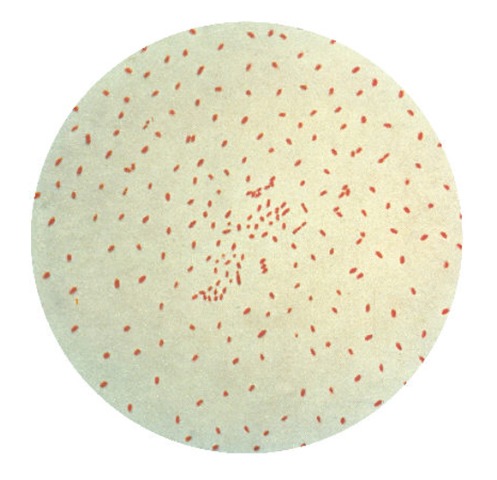
The committee also voted separately to recommend postexposure antimicrobial prophylaxis for all health care personnel (HCP) who have unprotected exposure to pertussis and are likely to expose high-risk patients – such as pregnant women or hospitalized newborns – to the disease, even if the HCP were previously vaccinated.
"Protecting HCP from acquiring and transmitting infectious diseases is a public health goal," said Dr. Jennifer Liang of the CDC’s National Center for Immunization and Respiratory Diseases.
In one hospital-based study of serum samples collected over 1-3 years, serologic evidence of pertussis infection was detected in 2 of 106 residents, for an annual incidence rate of 1.3%, and 3 of 39 emergency department employees, for annual incidence rate of 3.6%. Two of the five infected subjects had symptomatic disease (Infect. Control Hosp. Epidemiol. 1999;20:120-3).
The new Tdap recommendation removes a previous 2-year interval requirement since the last Td dose, and also includes HCP who are aged 65 years and older. Since Tdap is not currently licensed for multiple administrations, subsequent routine 10-year boosters should be given as Td, according to the language the committee approved by a near-unanimous vote of 14 members, with just one abstaining.
Also included was a recommendation that hospitals and ambulatory care facilities provide Tdap for HCP and use approaches that maximize vaccination rates, such as education about the benefits of vaccination, convenient access, and provision of the vaccine at no charge.
The second vote was aimed at addressing the fact that pertussis infection can occur even among those who are immunized. In an as-yet unpublished study from Vanderbilt University in Nashville, Tenn., of 116 exposures to pertussis among different HCP, pertussis infection did not occur in 40 of 44 (91%) of those who were monitored but did not receive postexposure prophylaxis (PEP) compared with 41 of 42 (98%) of those who received PEP.
While not conclusive, those findings suggested that there may be a benefit to both monitoring and PEP in vaccinated HCP, Dr. Liang said.
In addition to the PEP recommendation for HCP with unprotected exposure to pertussis who are likely to expose high-risk patients, ACIP also advised that other vaccinated HCP should either receive antimicrobial PEP or be monitored daily for 21 days after pertussis exposure and treated at the onset of signs and symptoms of pertussis.
Health care facilities should maximize efforts to prevent transmission of Bordetella pertussis, and take respiratory precautions to prevent unprotected exposure to pertussis, ACIP advised.
As an employee of the CDC, Dr. Liang has no relevant financial disclosures.
ATLANTA – All health care personnel should receive a single dose of the tetanus-diphtheria-acellular pertussis vaccine if they have not already, regardless of the duration since their last tetanus-diphtheria dose.
That recommendation, approved on Feb. 23 by the Advisory Committee on Immunization Practices of the Centers for Disease Control and Prevention, updates a previous ACIP recommendation (MMWR 2006;55:RR-17).
The committee also voted separately to recommend postexposure antimicrobial prophylaxis for all health care personnel (HCP) who have unprotected exposure to pertussis and are likely to expose high-risk patients – such as pregnant women or hospitalized newborns – to the disease, even if the HCP were previously vaccinated.
"Protecting HCP from acquiring and transmitting infectious diseases is a public health goal," said Dr. Jennifer Liang of the CDC’s National Center for Immunization and Respiratory Diseases.
In one hospital-based study of serum samples collected over 1-3 years, serologic evidence of pertussis infection was detected in 2 of 106 residents, for an annual incidence rate of 1.3%, and 3 of 39 emergency department employees, for annual incidence rate of 3.6%. Two of the five infected subjects had symptomatic disease (Infect. Control Hosp. Epidemiol. 1999;20:120-3).
The new Tdap recommendation removes a previous 2-year interval requirement since the last Td dose, and also includes HCP who are aged 65 years and older. Since Tdap is not currently licensed for multiple administrations, subsequent routine 10-year boosters should be given as Td, according to the language the committee approved by a near-unanimous vote of 14 members, with just one abstaining.
Also included was a recommendation that hospitals and ambulatory care facilities provide Tdap for HCP and use approaches that maximize vaccination rates, such as education about the benefits of vaccination, convenient access, and provision of the vaccine at no charge.
The second vote was aimed at addressing the fact that pertussis infection can occur even among those who are immunized. In an as-yet unpublished study from Vanderbilt University in Nashville, Tenn., of 116 exposures to pertussis among different HCP, pertussis infection did not occur in 40 of 44 (91%) of those who were monitored but did not receive postexposure prophylaxis (PEP) compared with 41 of 42 (98%) of those who received PEP.
While not conclusive, those findings suggested that there may be a benefit to both monitoring and PEP in vaccinated HCP, Dr. Liang said.
In addition to the PEP recommendation for HCP with unprotected exposure to pertussis who are likely to expose high-risk patients, ACIP also advised that other vaccinated HCP should either receive antimicrobial PEP or be monitored daily for 21 days after pertussis exposure and treated at the onset of signs and symptoms of pertussis.
Health care facilities should maximize efforts to prevent transmission of Bordetella pertussis, and take respiratory precautions to prevent unprotected exposure to pertussis, ACIP advised.
As an employee of the CDC, Dr. Liang has no relevant financial disclosures.
ATLANTA – All health care personnel should receive a single dose of the tetanus-diphtheria-acellular pertussis vaccine if they have not already, regardless of the duration since their last tetanus-diphtheria dose.
That recommendation, approved on Feb. 23 by the Advisory Committee on Immunization Practices of the Centers for Disease Control and Prevention, updates a previous ACIP recommendation (MMWR 2006;55:RR-17).
The committee also voted separately to recommend postexposure antimicrobial prophylaxis for all health care personnel (HCP) who have unprotected exposure to pertussis and are likely to expose high-risk patients – such as pregnant women or hospitalized newborns – to the disease, even if the HCP were previously vaccinated.
"Protecting HCP from acquiring and transmitting infectious diseases is a public health goal," said Dr. Jennifer Liang of the CDC’s National Center for Immunization and Respiratory Diseases.
In one hospital-based study of serum samples collected over 1-3 years, serologic evidence of pertussis infection was detected in 2 of 106 residents, for an annual incidence rate of 1.3%, and 3 of 39 emergency department employees, for annual incidence rate of 3.6%. Two of the five infected subjects had symptomatic disease (Infect. Control Hosp. Epidemiol. 1999;20:120-3).
The new Tdap recommendation removes a previous 2-year interval requirement since the last Td dose, and also includes HCP who are aged 65 years and older. Since Tdap is not currently licensed for multiple administrations, subsequent routine 10-year boosters should be given as Td, according to the language the committee approved by a near-unanimous vote of 14 members, with just one abstaining.
Also included was a recommendation that hospitals and ambulatory care facilities provide Tdap for HCP and use approaches that maximize vaccination rates, such as education about the benefits of vaccination, convenient access, and provision of the vaccine at no charge.
The second vote was aimed at addressing the fact that pertussis infection can occur even among those who are immunized. In an as-yet unpublished study from Vanderbilt University in Nashville, Tenn., of 116 exposures to pertussis among different HCP, pertussis infection did not occur in 40 of 44 (91%) of those who were monitored but did not receive postexposure prophylaxis (PEP) compared with 41 of 42 (98%) of those who received PEP.
While not conclusive, those findings suggested that there may be a benefit to both monitoring and PEP in vaccinated HCP, Dr. Liang said.
In addition to the PEP recommendation for HCP with unprotected exposure to pertussis who are likely to expose high-risk patients, ACIP also advised that other vaccinated HCP should either receive antimicrobial PEP or be monitored daily for 21 days after pertussis exposure and treated at the onset of signs and symptoms of pertussis.
Health care facilities should maximize efforts to prevent transmission of Bordetella pertussis, and take respiratory precautions to prevent unprotected exposure to pertussis, ACIP advised.
As an employee of the CDC, Dr. Liang has no relevant financial disclosures.
FROM A MEETING OF THE CDC'S ADVISORY COMMITTEE ON IMMUNIZATION PRACTICES