User login
Vitamin A as malaria prophylaxis

Photo by Sarah Mattison
New research suggests vitamin A may reduce the risk of malaria in young children.
The study showed that children under 5 living in sub-Saharan Africa were 54% less likely to develop malaria if they had been given a single, large dose of vitamin A.
The finding, published in eLife, indicates that vitamin A may be able to protect children from the malaria parasite, especially if administered during the wet season, when malaria-infected mosquitos are most prevalent.
“Now, we need to test vitamin A in a randomized, controlled, clinical trial to better understand whether this could really be an effective way to prevent this disease,” said study author Maria-Graciela Hollm-Delgado, PhD, of the Johns Hopkins Bloomberg School of Public Health in Baltimore, Maryland.
Dr Hollm-Delgado and her colleagues analyzed national survey data from 4 sub-Saharan countries—Burkina Faso, Mozambique, Rwanda, and Senegal—on children between the ages of 6 months and 59 months.
The goal was to determine the risk of Plasmodium parasitemia (n=8390) and Plasmodium falciparum-specific antigenemia (n=6121) following vitamin A supplementation and vaccinations.
The researchers found the measles and polio vaccines were not associated with malaria. And Bacille Calmette Guerin vaccination was associated with an increased risk of antigenemia (relative risk [RR]=4.06) but not parasitemia.
Only vitamin A was protective against malaria. Children who received vitamin A were less likely to present with parasitemia (RR=0.46) and antigenemia (RR=0.23).
Vitamin A appeared to be more protective under certain circumstances, including when administered during the rainy season, as well as when given to older children and when more time had passed since supplementation.
The researchers aren’t certain why vitamin A would reduce the rate of malaria infection, but they suspect it is because vitamin A, which is known to boost immunity and improve the ability to fight off infection, may help the body clear out the malaria parasite more quickly.
Only 62% of children in the study had received vitamin A supplementation, even though World Health Organization guidelines recommend that all children in sub-Saharan Africa receive a single, large dose of vitamin A.
Rates were higher for many vaccinations, Dr Hollm-Delgado said, noting that the guidelines for vitamin A aren’t as specific as they are for most vaccinations. 
Photo by Sarah Mattison
New research suggests vitamin A may reduce the risk of malaria in young children.
The study showed that children under 5 living in sub-Saharan Africa were 54% less likely to develop malaria if they had been given a single, large dose of vitamin A.
The finding, published in eLife, indicates that vitamin A may be able to protect children from the malaria parasite, especially if administered during the wet season, when malaria-infected mosquitos are most prevalent.
“Now, we need to test vitamin A in a randomized, controlled, clinical trial to better understand whether this could really be an effective way to prevent this disease,” said study author Maria-Graciela Hollm-Delgado, PhD, of the Johns Hopkins Bloomberg School of Public Health in Baltimore, Maryland.
Dr Hollm-Delgado and her colleagues analyzed national survey data from 4 sub-Saharan countries—Burkina Faso, Mozambique, Rwanda, and Senegal—on children between the ages of 6 months and 59 months.
The goal was to determine the risk of Plasmodium parasitemia (n=8390) and Plasmodium falciparum-specific antigenemia (n=6121) following vitamin A supplementation and vaccinations.
The researchers found the measles and polio vaccines were not associated with malaria. And Bacille Calmette Guerin vaccination was associated with an increased risk of antigenemia (relative risk [RR]=4.06) but not parasitemia.
Only vitamin A was protective against malaria. Children who received vitamin A were less likely to present with parasitemia (RR=0.46) and antigenemia (RR=0.23).
Vitamin A appeared to be more protective under certain circumstances, including when administered during the rainy season, as well as when given to older children and when more time had passed since supplementation.
The researchers aren’t certain why vitamin A would reduce the rate of malaria infection, but they suspect it is because vitamin A, which is known to boost immunity and improve the ability to fight off infection, may help the body clear out the malaria parasite more quickly.
Only 62% of children in the study had received vitamin A supplementation, even though World Health Organization guidelines recommend that all children in sub-Saharan Africa receive a single, large dose of vitamin A.
Rates were higher for many vaccinations, Dr Hollm-Delgado said, noting that the guidelines for vitamin A aren’t as specific as they are for most vaccinations.
Photo by Sarah Mattison
New research suggests vitamin A may reduce the risk of malaria in young children.
The study showed that children under 5 living in sub-Saharan Africa were 54% less likely to develop malaria if they had been given a single, large dose of vitamin A.
The finding, published in eLife, indicates that vitamin A may be able to protect children from the malaria parasite, especially if administered during the wet season, when malaria-infected mosquitos are most prevalent.
“Now, we need to test vitamin A in a randomized, controlled, clinical trial to better understand whether this could really be an effective way to prevent this disease,” said study author Maria-Graciela Hollm-Delgado, PhD, of the Johns Hopkins Bloomberg School of Public Health in Baltimore, Maryland.
Dr Hollm-Delgado and her colleagues analyzed national survey data from 4 sub-Saharan countries—Burkina Faso, Mozambique, Rwanda, and Senegal—on children between the ages of 6 months and 59 months.
The goal was to determine the risk of Plasmodium parasitemia (n=8390) and Plasmodium falciparum-specific antigenemia (n=6121) following vitamin A supplementation and vaccinations.
The researchers found the measles and polio vaccines were not associated with malaria. And Bacille Calmette Guerin vaccination was associated with an increased risk of antigenemia (relative risk [RR]=4.06) but not parasitemia.
Only vitamin A was protective against malaria. Children who received vitamin A were less likely to present with parasitemia (RR=0.46) and antigenemia (RR=0.23).
Vitamin A appeared to be more protective under certain circumstances, including when administered during the rainy season, as well as when given to older children and when more time had passed since supplementation.
The researchers aren’t certain why vitamin A would reduce the rate of malaria infection, but they suspect it is because vitamin A, which is known to boost immunity and improve the ability to fight off infection, may help the body clear out the malaria parasite more quickly.
Only 62% of children in the study had received vitamin A supplementation, even though World Health Organization guidelines recommend that all children in sub-Saharan Africa receive a single, large dose of vitamin A.
Rates were higher for many vaccinations, Dr Hollm-Delgado said, noting that the guidelines for vitamin A aren’t as specific as they are for most vaccinations.
Combo shows early promise for T-cell lymphomas
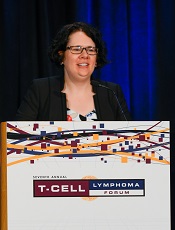
SAN FRANCISCO—Preclinical and early phase 1 results suggest the aurora A kinase inhibitor alisertib and the histone deacetylase (HDAC) inhibitor romidepsin have synergistic activity against T-cell lymphomas.
In the preclinical study, the drugs showed synergy in cutaneous T-cell lymphoma (CTCL) cell lines and a benefit over monotherapy in vivo.
In the phase 1 study, romidepsin and alisertib produced clinical benefits in patients with peripheral T-cell lymphoma (PTCL).
Unfortunately, there are currently no good markers for predicting which patients might benefit from this type of combination, potentially because the drugs have multivariate mechanisms of action, said Michelle Fanale, MD, of the University of Texas MD Anderson Cancer Center in Houston.
She presented data on romidepsin and alisertib in combination at the 7th Annual T-cell Lymphoma Forum.
Dr Fanale said she was inspired to test the combination (in a phase 1 trial) after researchers reported promising results with the aurora kinase inhibitors MK-0457 and MK-5108 in combination with the HDAC inhibitor vorinostat (Kretzner et al, Cancer Research 2011).
She noted that aurora kinase inhibitors work mainly through actions at the G2-M transition point, while HDAC inhibitors induce G1-S transition. HDAC inhibitors can also degrade aurora A and B kinases, and the drugs modify kinetochore assembly through hyperacetylation of pericentromeric histones.
“When you actually treat with an HDAC inhibitor by itself, you’re basically getting an increase of this sub-G1 population,” Dr Fanale said. “When you treat with your aurora kinase inhibitor by itself, you’re clearly getting an increase of cells that are arresting at G2/M.”
“When you treat with the combination, you’re actually getting a further increase in the sub-G1, denoting dead cells, and then you’re further getting some increase of cells spreading out now through the G2/M portion as well.”
Preclinical research
Dr Fanale presented preclinical results showing that alisertib is highly synergistic with romidepsin in T-cell, but not B-cell, lymphoma. She was not involved in the research, which was also presented at the recent ASH Annual Meeting (Zullo et al, ASH 2014, abst 4493).
The researchers administered romidepsin at IC10-20 concentrations, with increasing concentrations of alisertib, and incubated cells for 72 hours. A synergy coefficient less than 1 denoted synergy.
The combination demonstrated synergy in the HH (CTCL) cell line when alisertib was given at 100 nM or 1000 nM (0.68 and 0.40, respectively) but not at 50 nM (1.05).
Likewise, the combination demonstrated synergy in the H9 (CTCL) cell line when alisertib was given at 100 nM or 1000 nM (0.66 and 0.46, respectively) but not at 50 nM (1.1).
Romidepsin was shown to cause a mild increase in the percent of cells in G1 compared with alisertib, which significantly increased the percent of cells in G2/M arrest. And live cell imaging showed marked cytokinesis failure following treatment.
“When looking at further markers for apoptosis, when giving the combination, there’s further increase in caspase 3 and PARP cleavage, as well as other pro-apoptotic proteins, including PUMA, and a decrease in the anti-apoptotic protein Bcl-xL,” Dr Fanale noted.
She also pointed out that, in an in vivo xenograft model, alisertib and romidepsin produced significantly better results than those observed with monotherapy or in controls.
Phase 1 trial
The phase 1 trial of romidepsin and alisertib in combination included patients with aggressive B- and T-cell lymphomas (NCT01897012; Fanale et al, ASH 2014, abst 1744).
Twelve patients have been enrolled to date. Ninety-two percent of patients had primary refractory disease, they had a median of 3.5 prior lines of therapy (range, 1 to 7), and none of the patients had received a stem cell transplant.
The patients received treatment as follows:
- Alisertib at 20 mg orally twice daily on days 1-7 and romidepsin at 6 mg/m2 IV on days 1 and 8
- Alisertib at 20 mg orally twice daily on days 1-7 and romidepsin at 8 mg/m2 IV on days 1 and 8
- Alisertib at 20 mg orally twice daily on days 1-7 and romidepsin at 10 mg/m2 IV on days 1 and 8
- Alisertib at 40 mg orally twice daily on days 1-7 and romidepsin at 10 mg/m2 IV on days 1 and 8
- Alisertib at 40 mg orally twice daily on days 1-7 and romidepsin at 12 mg/m2 IV on days 1 and 8
- Alisertib at 40 mg orally twice daily on days 1-7 and romidepsin at 14 mg/m2 IV on days 1 and 8.
The maximum-tolerated dose has not yet been reached. The main side effect was reversible myelosuppression. In the 24 cycles administered, patients experienced grade 3/4 neutropenia (62.5%), anemia (29%), and thrombocytopenia (48%).
Dr Fanale noted that 3 of the 4 patients with T-cell lymphomas had some level of clinical benefit after therapy.
One patient, a heavily pretreated patient with PTCL who was treated at the lowest dose, had a complete response lasting 10 months. The patient had received 7 prior lines of therapy, including romidepsin alone.
Two other patients had stable disease, one with PTCL and one with an overlap diagnosis of B-cell and T-cell lymphoma. The PTCL patient went on to receive a matched, unrelated-donor transplant and is doing well, Dr Fanale said.
“We’ve taken a pause from this clinical trial,” she added. “We plan to reopen it toward T-cell lymphoma patients, potentially exclusively, . . . and also potentially to change a bit of the dosing schema with both romidepsin and alisertib.”
SAN FRANCISCO—Preclinical and early phase 1 results suggest the aurora A kinase inhibitor alisertib and the histone deacetylase (HDAC) inhibitor romidepsin have synergistic activity against T-cell lymphomas.
In the preclinical study, the drugs showed synergy in cutaneous T-cell lymphoma (CTCL) cell lines and a benefit over monotherapy in vivo.
In the phase 1 study, romidepsin and alisertib produced clinical benefits in patients with peripheral T-cell lymphoma (PTCL).
Unfortunately, there are currently no good markers for predicting which patients might benefit from this type of combination, potentially because the drugs have multivariate mechanisms of action, said Michelle Fanale, MD, of the University of Texas MD Anderson Cancer Center in Houston.
She presented data on romidepsin and alisertib in combination at the 7th Annual T-cell Lymphoma Forum.
Dr Fanale said she was inspired to test the combination (in a phase 1 trial) after researchers reported promising results with the aurora kinase inhibitors MK-0457 and MK-5108 in combination with the HDAC inhibitor vorinostat (Kretzner et al, Cancer Research 2011).
She noted that aurora kinase inhibitors work mainly through actions at the G2-M transition point, while HDAC inhibitors induce G1-S transition. HDAC inhibitors can also degrade aurora A and B kinases, and the drugs modify kinetochore assembly through hyperacetylation of pericentromeric histones.
“When you actually treat with an HDAC inhibitor by itself, you’re basically getting an increase of this sub-G1 population,” Dr Fanale said. “When you treat with your aurora kinase inhibitor by itself, you’re clearly getting an increase of cells that are arresting at G2/M.”
“When you treat with the combination, you’re actually getting a further increase in the sub-G1, denoting dead cells, and then you’re further getting some increase of cells spreading out now through the G2/M portion as well.”
Preclinical research
Dr Fanale presented preclinical results showing that alisertib is highly synergistic with romidepsin in T-cell, but not B-cell, lymphoma. She was not involved in the research, which was also presented at the recent ASH Annual Meeting (Zullo et al, ASH 2014, abst 4493).
The researchers administered romidepsin at IC10-20 concentrations, with increasing concentrations of alisertib, and incubated cells for 72 hours. A synergy coefficient less than 1 denoted synergy.
The combination demonstrated synergy in the HH (CTCL) cell line when alisertib was given at 100 nM or 1000 nM (0.68 and 0.40, respectively) but not at 50 nM (1.05).
Likewise, the combination demonstrated synergy in the H9 (CTCL) cell line when alisertib was given at 100 nM or 1000 nM (0.66 and 0.46, respectively) but not at 50 nM (1.1).
Romidepsin was shown to cause a mild increase in the percent of cells in G1 compared with alisertib, which significantly increased the percent of cells in G2/M arrest. And live cell imaging showed marked cytokinesis failure following treatment.
“When looking at further markers for apoptosis, when giving the combination, there’s further increase in caspase 3 and PARP cleavage, as well as other pro-apoptotic proteins, including PUMA, and a decrease in the anti-apoptotic protein Bcl-xL,” Dr Fanale noted.
She also pointed out that, in an in vivo xenograft model, alisertib and romidepsin produced significantly better results than those observed with monotherapy or in controls.
Phase 1 trial
The phase 1 trial of romidepsin and alisertib in combination included patients with aggressive B- and T-cell lymphomas (NCT01897012; Fanale et al, ASH 2014, abst 1744).
Twelve patients have been enrolled to date. Ninety-two percent of patients had primary refractory disease, they had a median of 3.5 prior lines of therapy (range, 1 to 7), and none of the patients had received a stem cell transplant.
The patients received treatment as follows:
- Alisertib at 20 mg orally twice daily on days 1-7 and romidepsin at 6 mg/m2 IV on days 1 and 8
- Alisertib at 20 mg orally twice daily on days 1-7 and romidepsin at 8 mg/m2 IV on days 1 and 8
- Alisertib at 20 mg orally twice daily on days 1-7 and romidepsin at 10 mg/m2 IV on days 1 and 8
- Alisertib at 40 mg orally twice daily on days 1-7 and romidepsin at 10 mg/m2 IV on days 1 and 8
- Alisertib at 40 mg orally twice daily on days 1-7 and romidepsin at 12 mg/m2 IV on days 1 and 8
- Alisertib at 40 mg orally twice daily on days 1-7 and romidepsin at 14 mg/m2 IV on days 1 and 8.
The maximum-tolerated dose has not yet been reached. The main side effect was reversible myelosuppression. In the 24 cycles administered, patients experienced grade 3/4 neutropenia (62.5%), anemia (29%), and thrombocytopenia (48%).
Dr Fanale noted that 3 of the 4 patients with T-cell lymphomas had some level of clinical benefit after therapy.
One patient, a heavily pretreated patient with PTCL who was treated at the lowest dose, had a complete response lasting 10 months. The patient had received 7 prior lines of therapy, including romidepsin alone.
Two other patients had stable disease, one with PTCL and one with an overlap diagnosis of B-cell and T-cell lymphoma. The PTCL patient went on to receive a matched, unrelated-donor transplant and is doing well, Dr Fanale said.
“We’ve taken a pause from this clinical trial,” she added. “We plan to reopen it toward T-cell lymphoma patients, potentially exclusively, . . . and also potentially to change a bit of the dosing schema with both romidepsin and alisertib.”
SAN FRANCISCO—Preclinical and early phase 1 results suggest the aurora A kinase inhibitor alisertib and the histone deacetylase (HDAC) inhibitor romidepsin have synergistic activity against T-cell lymphomas.
In the preclinical study, the drugs showed synergy in cutaneous T-cell lymphoma (CTCL) cell lines and a benefit over monotherapy in vivo.
In the phase 1 study, romidepsin and alisertib produced clinical benefits in patients with peripheral T-cell lymphoma (PTCL).
Unfortunately, there are currently no good markers for predicting which patients might benefit from this type of combination, potentially because the drugs have multivariate mechanisms of action, said Michelle Fanale, MD, of the University of Texas MD Anderson Cancer Center in Houston.
She presented data on romidepsin and alisertib in combination at the 7th Annual T-cell Lymphoma Forum.
Dr Fanale said she was inspired to test the combination (in a phase 1 trial) after researchers reported promising results with the aurora kinase inhibitors MK-0457 and MK-5108 in combination with the HDAC inhibitor vorinostat (Kretzner et al, Cancer Research 2011).
She noted that aurora kinase inhibitors work mainly through actions at the G2-M transition point, while HDAC inhibitors induce G1-S transition. HDAC inhibitors can also degrade aurora A and B kinases, and the drugs modify kinetochore assembly through hyperacetylation of pericentromeric histones.
“When you actually treat with an HDAC inhibitor by itself, you’re basically getting an increase of this sub-G1 population,” Dr Fanale said. “When you treat with your aurora kinase inhibitor by itself, you’re clearly getting an increase of cells that are arresting at G2/M.”
“When you treat with the combination, you’re actually getting a further increase in the sub-G1, denoting dead cells, and then you’re further getting some increase of cells spreading out now through the G2/M portion as well.”
Preclinical research
Dr Fanale presented preclinical results showing that alisertib is highly synergistic with romidepsin in T-cell, but not B-cell, lymphoma. She was not involved in the research, which was also presented at the recent ASH Annual Meeting (Zullo et al, ASH 2014, abst 4493).
The researchers administered romidepsin at IC10-20 concentrations, with increasing concentrations of alisertib, and incubated cells for 72 hours. A synergy coefficient less than 1 denoted synergy.
The combination demonstrated synergy in the HH (CTCL) cell line when alisertib was given at 100 nM or 1000 nM (0.68 and 0.40, respectively) but not at 50 nM (1.05).
Likewise, the combination demonstrated synergy in the H9 (CTCL) cell line when alisertib was given at 100 nM or 1000 nM (0.66 and 0.46, respectively) but not at 50 nM (1.1).
Romidepsin was shown to cause a mild increase in the percent of cells in G1 compared with alisertib, which significantly increased the percent of cells in G2/M arrest. And live cell imaging showed marked cytokinesis failure following treatment.
“When looking at further markers for apoptosis, when giving the combination, there’s further increase in caspase 3 and PARP cleavage, as well as other pro-apoptotic proteins, including PUMA, and a decrease in the anti-apoptotic protein Bcl-xL,” Dr Fanale noted.
She also pointed out that, in an in vivo xenograft model, alisertib and romidepsin produced significantly better results than those observed with monotherapy or in controls.
Phase 1 trial
The phase 1 trial of romidepsin and alisertib in combination included patients with aggressive B- and T-cell lymphomas (NCT01897012; Fanale et al, ASH 2014, abst 1744).
Twelve patients have been enrolled to date. Ninety-two percent of patients had primary refractory disease, they had a median of 3.5 prior lines of therapy (range, 1 to 7), and none of the patients had received a stem cell transplant.
The patients received treatment as follows:
- Alisertib at 20 mg orally twice daily on days 1-7 and romidepsin at 6 mg/m2 IV on days 1 and 8
- Alisertib at 20 mg orally twice daily on days 1-7 and romidepsin at 8 mg/m2 IV on days 1 and 8
- Alisertib at 20 mg orally twice daily on days 1-7 and romidepsin at 10 mg/m2 IV on days 1 and 8
- Alisertib at 40 mg orally twice daily on days 1-7 and romidepsin at 10 mg/m2 IV on days 1 and 8
- Alisertib at 40 mg orally twice daily on days 1-7 and romidepsin at 12 mg/m2 IV on days 1 and 8
- Alisertib at 40 mg orally twice daily on days 1-7 and romidepsin at 14 mg/m2 IV on days 1 and 8.
The maximum-tolerated dose has not yet been reached. The main side effect was reversible myelosuppression. In the 24 cycles administered, patients experienced grade 3/4 neutropenia (62.5%), anemia (29%), and thrombocytopenia (48%).
Dr Fanale noted that 3 of the 4 patients with T-cell lymphomas had some level of clinical benefit after therapy.
One patient, a heavily pretreated patient with PTCL who was treated at the lowest dose, had a complete response lasting 10 months. The patient had received 7 prior lines of therapy, including romidepsin alone.
Two other patients had stable disease, one with PTCL and one with an overlap diagnosis of B-cell and T-cell lymphoma. The PTCL patient went on to receive a matched, unrelated-donor transplant and is doing well, Dr Fanale said.
“We’ve taken a pause from this clinical trial,” she added. “We plan to reopen it toward T-cell lymphoma patients, potentially exclusively, . . . and also potentially to change a bit of the dosing schema with both romidepsin and alisertib.”
Balanced transfusion strategy may be better
Credit: UAB Hospital
A new study indicates that transfusing a balanced ratio of plasma, platelets, and red blood cells (RBCs) can decrease bleeding better than blood products with a higher ratio of RBCs, but this does not seem to affect mortality rates.
Patients who received blood products with a plasma-platelet-RBC ratio of 1:1:1 were more likely to achieve hemostasis and less likely to experience exsanguination than patients who received blood products with a ratio of 1:1:2.
However, there was no significant difference between the two transfusion strategies in overall death rates at 24 hours or at 30 days.
John B. Holcomb, MD, of the University of Texas Health Science Center at Houston, and his colleagues reported these results in JAMA.
The team conducted a study of 680 severely injured patients who arrived at 1 of 12 Level 1 trauma centers. The patients were predicted to require massive transfusion and were randomly assigned to receive blood products with ratios of 1:1:1 or 1:1:2 during active resuscitation, in addition to all local standard-of-care interventions.
The researchers found no significant differences for the primary outcomes of the study: mortality at 24 hours—12.7% in the 1:1:1 group and 17.0% in the 1:1:2 group (P=0.12)—or at 30 days—22.4% and 26.1%, respectively (P=0.26).
However, the incidence of exsanguination, which was the predominant cause of death within the first 24 hours, was significantly lower in the 1:1:1 group than in the 1:1:2 group—9.2% and 14.6%, respectively (P=0.03).
And more patients in the 1:1:1 group achieved hemostasis than in the 1:1:2 group—86% and 78%, respectively (P=0.006).
On the other hand, there were no significant differences between the two groups for rates of multiple inflammatory-mediated complications, such as acute respiratory distress syndrome, multiple organ failure, infection, sepsis, venous thromboembolism, and transfusion-related complications.
Based on these results, Dr Holcomb and his colleagues recommended that clinicians consider using a 1:1:1 transfusion protocol, starting with the initial units transfused while patients are actively bleeding, and then transitioning to laboratory-guided treatment once they’ve achieved hemorrhage control.
The team added that future studies should concentrate on the physiologically relevant period of active bleeding after injury and use acute complications and later deaths as safety endpoints.
Credit: UAB Hospital
A new study indicates that transfusing a balanced ratio of plasma, platelets, and red blood cells (RBCs) can decrease bleeding better than blood products with a higher ratio of RBCs, but this does not seem to affect mortality rates.
Patients who received blood products with a plasma-platelet-RBC ratio of 1:1:1 were more likely to achieve hemostasis and less likely to experience exsanguination than patients who received blood products with a ratio of 1:1:2.
However, there was no significant difference between the two transfusion strategies in overall death rates at 24 hours or at 30 days.
John B. Holcomb, MD, of the University of Texas Health Science Center at Houston, and his colleagues reported these results in JAMA.
The team conducted a study of 680 severely injured patients who arrived at 1 of 12 Level 1 trauma centers. The patients were predicted to require massive transfusion and were randomly assigned to receive blood products with ratios of 1:1:1 or 1:1:2 during active resuscitation, in addition to all local standard-of-care interventions.
The researchers found no significant differences for the primary outcomes of the study: mortality at 24 hours—12.7% in the 1:1:1 group and 17.0% in the 1:1:2 group (P=0.12)—or at 30 days—22.4% and 26.1%, respectively (P=0.26).
However, the incidence of exsanguination, which was the predominant cause of death within the first 24 hours, was significantly lower in the 1:1:1 group than in the 1:1:2 group—9.2% and 14.6%, respectively (P=0.03).
And more patients in the 1:1:1 group achieved hemostasis than in the 1:1:2 group—86% and 78%, respectively (P=0.006).
On the other hand, there were no significant differences between the two groups for rates of multiple inflammatory-mediated complications, such as acute respiratory distress syndrome, multiple organ failure, infection, sepsis, venous thromboembolism, and transfusion-related complications.
Based on these results, Dr Holcomb and his colleagues recommended that clinicians consider using a 1:1:1 transfusion protocol, starting with the initial units transfused while patients are actively bleeding, and then transitioning to laboratory-guided treatment once they’ve achieved hemorrhage control.
The team added that future studies should concentrate on the physiologically relevant period of active bleeding after injury and use acute complications and later deaths as safety endpoints.
Credit: UAB Hospital
A new study indicates that transfusing a balanced ratio of plasma, platelets, and red blood cells (RBCs) can decrease bleeding better than blood products with a higher ratio of RBCs, but this does not seem to affect mortality rates.
Patients who received blood products with a plasma-platelet-RBC ratio of 1:1:1 were more likely to achieve hemostasis and less likely to experience exsanguination than patients who received blood products with a ratio of 1:1:2.
However, there was no significant difference between the two transfusion strategies in overall death rates at 24 hours or at 30 days.
John B. Holcomb, MD, of the University of Texas Health Science Center at Houston, and his colleagues reported these results in JAMA.
The team conducted a study of 680 severely injured patients who arrived at 1 of 12 Level 1 trauma centers. The patients were predicted to require massive transfusion and were randomly assigned to receive blood products with ratios of 1:1:1 or 1:1:2 during active resuscitation, in addition to all local standard-of-care interventions.
The researchers found no significant differences for the primary outcomes of the study: mortality at 24 hours—12.7% in the 1:1:1 group and 17.0% in the 1:1:2 group (P=0.12)—or at 30 days—22.4% and 26.1%, respectively (P=0.26).
However, the incidence of exsanguination, which was the predominant cause of death within the first 24 hours, was significantly lower in the 1:1:1 group than in the 1:1:2 group—9.2% and 14.6%, respectively (P=0.03).
And more patients in the 1:1:1 group achieved hemostasis than in the 1:1:2 group—86% and 78%, respectively (P=0.006).
On the other hand, there were no significant differences between the two groups for rates of multiple inflammatory-mediated complications, such as acute respiratory distress syndrome, multiple organ failure, infection, sepsis, venous thromboembolism, and transfusion-related complications.
Based on these results, Dr Holcomb and his colleagues recommended that clinicians consider using a 1:1:1 transfusion protocol, starting with the initial units transfused while patients are actively bleeding, and then transitioning to laboratory-guided treatment once they’ve achieved hemorrhage control.
The team added that future studies should concentrate on the physiologically relevant period of active bleeding after injury and use acute complications and later deaths as safety endpoints.
mAb prompts responses in pretreated MM

Credit: Linda Bartlett
Single-agent daratumumab can elicit responses in patients with multiple myeloma (MM) who have failed treatment with proteasome inhibitors and immunomodulatory agents (IMiDs), preliminary results of a phase 2 study suggest.
The study enrolled MM patients who have received at least 3 different lines of therapy, including both a proteasome inhibitor and an IMiD, and patients who are double-refractory to a proteasome inhibitor and an IMiD.
Daratumumab, an anti-CD38 monoclonal antibody, has breakthrough therapy designation from the US Food and Drug Administration to treat this patient population.
Genmab A/S, the company that discovered daratumumab and licensed it to Janssen Biotech, Inc. for development, announced results from the phase 2 trial (Sirius MMY2002) yesterday.
This 2-part study enrolled 124 MM patients. The goal of part 1 was to define an optimal daratumumab regimen going forward, and part 2 was an expansion based on the optimal regimen.
Patients were randomized to receive daratumumab at 8 mg/kg every 4 weeks continuously by intravenous infusion or at 16 mg/kg administered at weekly intervals for 8 weeks, then every 2 weeks for an additional 16 weeks, and every 4 weeks thereafter by intravenous infusion.
Genmab reported that the overall response rate was 29.2% in the 16 mg/kg dosing group. And the median duration of response was 7.4 months, as determined by an independent review committee.
Daratumumab also showed a manageable safety profile, according to Genmab. The company said the data will be discussed with health authorities at upcoming meetings, pending their agreement.
Credit: Linda Bartlett
Single-agent daratumumab can elicit responses in patients with multiple myeloma (MM) who have failed treatment with proteasome inhibitors and immunomodulatory agents (IMiDs), preliminary results of a phase 2 study suggest.
The study enrolled MM patients who have received at least 3 different lines of therapy, including both a proteasome inhibitor and an IMiD, and patients who are double-refractory to a proteasome inhibitor and an IMiD.
Daratumumab, an anti-CD38 monoclonal antibody, has breakthrough therapy designation from the US Food and Drug Administration to treat this patient population.
Genmab A/S, the company that discovered daratumumab and licensed it to Janssen Biotech, Inc. for development, announced results from the phase 2 trial (Sirius MMY2002) yesterday.
This 2-part study enrolled 124 MM patients. The goal of part 1 was to define an optimal daratumumab regimen going forward, and part 2 was an expansion based on the optimal regimen.
Patients were randomized to receive daratumumab at 8 mg/kg every 4 weeks continuously by intravenous infusion or at 16 mg/kg administered at weekly intervals for 8 weeks, then every 2 weeks for an additional 16 weeks, and every 4 weeks thereafter by intravenous infusion.
Genmab reported that the overall response rate was 29.2% in the 16 mg/kg dosing group. And the median duration of response was 7.4 months, as determined by an independent review committee.
Daratumumab also showed a manageable safety profile, according to Genmab. The company said the data will be discussed with health authorities at upcoming meetings, pending their agreement.
Credit: Linda Bartlett
Single-agent daratumumab can elicit responses in patients with multiple myeloma (MM) who have failed treatment with proteasome inhibitors and immunomodulatory agents (IMiDs), preliminary results of a phase 2 study suggest.
The study enrolled MM patients who have received at least 3 different lines of therapy, including both a proteasome inhibitor and an IMiD, and patients who are double-refractory to a proteasome inhibitor and an IMiD.
Daratumumab, an anti-CD38 monoclonal antibody, has breakthrough therapy designation from the US Food and Drug Administration to treat this patient population.
Genmab A/S, the company that discovered daratumumab and licensed it to Janssen Biotech, Inc. for development, announced results from the phase 2 trial (Sirius MMY2002) yesterday.
This 2-part study enrolled 124 MM patients. The goal of part 1 was to define an optimal daratumumab regimen going forward, and part 2 was an expansion based on the optimal regimen.
Patients were randomized to receive daratumumab at 8 mg/kg every 4 weeks continuously by intravenous infusion or at 16 mg/kg administered at weekly intervals for 8 weeks, then every 2 weeks for an additional 16 weeks, and every 4 weeks thereafter by intravenous infusion.
Genmab reported that the overall response rate was 29.2% in the 16 mg/kg dosing group. And the median duration of response was 7.4 months, as determined by an independent review committee.
Daratumumab also showed a manageable safety profile, according to Genmab. The company said the data will be discussed with health authorities at upcoming meetings, pending their agreement.
Product deemed breakthrough for beta-thalassemia major
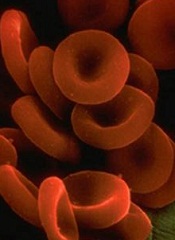
The US Food and Drug Administration (FDA) has granted breakthrough therapy designation to LentiGlobin® BB305 for the treatment of transfusion-dependent patients with beta-thalassemia major.
The product is created by inserting a functional human beta-globin gene into a patient’s hematopoietic stem cells ex vivo. The cells are returned to the patient via transplant.
The product is intended to treat sickle cell disease as well as beta-thalassemia major.
“The FDA’s breakthrough designation of LentiGlobin highlights that new therapies are needed for the treatment of patients with beta-thalassemia major, especially treatments with the potential to meaningfully reduce or liberate patients from transfusion dependence,” said David Davidson, MD, chief medical officer of bluebird bio, the company developing LentiGlobin.
“Our early clinical data investigating the use of LentiGlobin in patients with multiple genotypes of beta-thalassemia major . . . are very encouraging, and we remain on track to complete enrollment in the Northstar and HGB-205 studies in 2015.”
Early study results
The breakthrough designation is supported by data from the ongoing phase 1/2 Northstar (HGB-204) and HGB-205 studies. Findings in 8 subjects from both studies were presented at the 2014 ASH Annual Meeting.
As of December 1, five subjects with beta-thalassemia major had received LentiGlobin in the Northstar Study. The first 2 subjects were producing steadily increasing amounts of beta-T87Q-globin and were free of the need for transfusion for 5 months and 3 months, respectively.
Three additional subjects have received LentiGlobin as well, but researchers said it is too early to draw any meaningful conclusions on clinical efficacy.
As of December 1, two subjects with beta-thalassemia major received LentiGlobin as part of the HGB-205 study. Both achieved rapid transfusion independence with near-normal hemoglobin levels. And they were free from the need for transfusions for 12 months and 9 months, respectively.
The third treated subject, the first individual with sickle cell disease ever to be treated with gene therapy, has achieved neutrophil engraftment. But researchers said it is too early to draw any meaningful conclusions on clinical efficacy.
About breakthrough designation
The FDA’s breakthrough therapy designation is intended to expedite the development and review of a drug candidate intended to treat a serious or life-threatening condition.
For a drug to gain the designation, preliminary clinical evidence must suggest the drug could offer substantial improvement over existing therapies on one or more clinically significant endpoints.
The benefits of breakthrough designation include the same benefits as fast track designation (priority review, rolling review, etc.), plus an organizational commitment involving the FDA’s senior managers with more intensive guidance from the FDA.
Breakthrough therapy designation does not change the standards for approval.
The US Food and Drug Administration (FDA) has granted breakthrough therapy designation to LentiGlobin® BB305 for the treatment of transfusion-dependent patients with beta-thalassemia major.
The product is created by inserting a functional human beta-globin gene into a patient’s hematopoietic stem cells ex vivo. The cells are returned to the patient via transplant.
The product is intended to treat sickle cell disease as well as beta-thalassemia major.
“The FDA’s breakthrough designation of LentiGlobin highlights that new therapies are needed for the treatment of patients with beta-thalassemia major, especially treatments with the potential to meaningfully reduce or liberate patients from transfusion dependence,” said David Davidson, MD, chief medical officer of bluebird bio, the company developing LentiGlobin.
“Our early clinical data investigating the use of LentiGlobin in patients with multiple genotypes of beta-thalassemia major . . . are very encouraging, and we remain on track to complete enrollment in the Northstar and HGB-205 studies in 2015.”
Early study results
The breakthrough designation is supported by data from the ongoing phase 1/2 Northstar (HGB-204) and HGB-205 studies. Findings in 8 subjects from both studies were presented at the 2014 ASH Annual Meeting.
As of December 1, five subjects with beta-thalassemia major had received LentiGlobin in the Northstar Study. The first 2 subjects were producing steadily increasing amounts of beta-T87Q-globin and were free of the need for transfusion for 5 months and 3 months, respectively.
Three additional subjects have received LentiGlobin as well, but researchers said it is too early to draw any meaningful conclusions on clinical efficacy.
As of December 1, two subjects with beta-thalassemia major received LentiGlobin as part of the HGB-205 study. Both achieved rapid transfusion independence with near-normal hemoglobin levels. And they were free from the need for transfusions for 12 months and 9 months, respectively.
The third treated subject, the first individual with sickle cell disease ever to be treated with gene therapy, has achieved neutrophil engraftment. But researchers said it is too early to draw any meaningful conclusions on clinical efficacy.
About breakthrough designation
The FDA’s breakthrough therapy designation is intended to expedite the development and review of a drug candidate intended to treat a serious or life-threatening condition.
For a drug to gain the designation, preliminary clinical evidence must suggest the drug could offer substantial improvement over existing therapies on one or more clinically significant endpoints.
The benefits of breakthrough designation include the same benefits as fast track designation (priority review, rolling review, etc.), plus an organizational commitment involving the FDA’s senior managers with more intensive guidance from the FDA.
Breakthrough therapy designation does not change the standards for approval.
The US Food and Drug Administration (FDA) has granted breakthrough therapy designation to LentiGlobin® BB305 for the treatment of transfusion-dependent patients with beta-thalassemia major.
The product is created by inserting a functional human beta-globin gene into a patient’s hematopoietic stem cells ex vivo. The cells are returned to the patient via transplant.
The product is intended to treat sickle cell disease as well as beta-thalassemia major.
“The FDA’s breakthrough designation of LentiGlobin highlights that new therapies are needed for the treatment of patients with beta-thalassemia major, especially treatments with the potential to meaningfully reduce or liberate patients from transfusion dependence,” said David Davidson, MD, chief medical officer of bluebird bio, the company developing LentiGlobin.
“Our early clinical data investigating the use of LentiGlobin in patients with multiple genotypes of beta-thalassemia major . . . are very encouraging, and we remain on track to complete enrollment in the Northstar and HGB-205 studies in 2015.”
Early study results
The breakthrough designation is supported by data from the ongoing phase 1/2 Northstar (HGB-204) and HGB-205 studies. Findings in 8 subjects from both studies were presented at the 2014 ASH Annual Meeting.
As of December 1, five subjects with beta-thalassemia major had received LentiGlobin in the Northstar Study. The first 2 subjects were producing steadily increasing amounts of beta-T87Q-globin and were free of the need for transfusion for 5 months and 3 months, respectively.
Three additional subjects have received LentiGlobin as well, but researchers said it is too early to draw any meaningful conclusions on clinical efficacy.
As of December 1, two subjects with beta-thalassemia major received LentiGlobin as part of the HGB-205 study. Both achieved rapid transfusion independence with near-normal hemoglobin levels. And they were free from the need for transfusions for 12 months and 9 months, respectively.
The third treated subject, the first individual with sickle cell disease ever to be treated with gene therapy, has achieved neutrophil engraftment. But researchers said it is too early to draw any meaningful conclusions on clinical efficacy.
About breakthrough designation
The FDA’s breakthrough therapy designation is intended to expedite the development and review of a drug candidate intended to treat a serious or life-threatening condition.
For a drug to gain the designation, preliminary clinical evidence must suggest the drug could offer substantial improvement over existing therapies on one or more clinically significant endpoints.
The benefits of breakthrough designation include the same benefits as fast track designation (priority review, rolling review, etc.), plus an organizational commitment involving the FDA’s senior managers with more intensive guidance from the FDA.
Breakthrough therapy designation does not change the standards for approval.
A better HDAC inhibitor for PTCL?
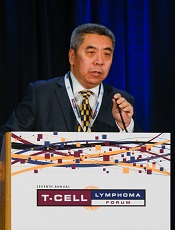
SAN FRANCISCO—The histone deacetylase (HDAC) inhibitor chidamide is effective and well-tolerated in patients with relapsed or refractory peripheral T-cell lymphoma (PTCL), results of the phase 2 CHIPEL trial suggest.
The study showed that chidamide can elicit higher response rates than those previously observed with the folate analog metabolic inhibitor pralatrexate and the HDAC inhibitor romidepsin.
Chidamide also prolonged survival and posed a lower risk of toxicity compared to pralatrexate and romidepsin.
Yuankai Shi, MD, PhD, of the Chinese Academy of Medical Science & Peking Union Medical College in Beijing, China, presented these results at the 7th Annual T-cell Lymphoma Forum. The trial is sponsored by Chipscreen Biosciences Ltd.
He noted that the CHIPEL study was split into two parts: an exploratory trial and a pivotal trial.
Exploratory trial
The exploratory trial included 19 patients who had a median age of 51 and were a median of 1.41 years from diagnosis. Seventeen patients had PTCL unspecified (PTCL-U), and 2 had other subtypes of PTCL.
The patients received chidamide at 30 mg (n=9) or 50 mg (n=10) twice a week for 2 weeks of a 3-week cycle. The overall response rate was 26% (n=5), and 16% of patients (n=3) had a complete response (CR) or unconfirmed CR (CRu).
Pivotal trial
The pivotal trial included 83 patients who had a median age of 53 and were a median of 1.06 years from diagnosis.
The patients had PTCL-U (29.1%, n=23), nasal NK/T-cell lymphoma (20.3%, n=16), anaplastic large-cell lymphoma (ALCL, 20.3%, n=16), angioimmunoblastic T-cell lymphoma (AITL, 11.4%, n=9), enteropathy-type T-cell lymphoma (2.5%, n=2), CD4-positive PTCL (1.3%, n=1), Lennert-type PTCL (1.3%, n=1), transformed mycosis fungoides (1.3%, n=1), and other subtypes of PTCL (12.7%, n=10).
These patients received chidamide at 30 mg twice a week without a drug-free holiday.
The overall response rate was 29% (n=23) according to investigators and 28% (n=22) according to an independent review committee. Fourteen percent of patients (n=11) had a CR/CRu, according to both sources.
The median progression-free survival was 2.1 months for all patients, 14 months for patients who achieved CR/CRus, 7.7 months in patients with partial responses, and 2.5 months in patients with stable disease.
The median overall survival was 21.4 months in all patients and not reached in patients who had a CR/CRu, partial response, or stable disease.
Overall safety
Of all 102 patients (in both the pivotal and exploratory analyses), 80% had at least one adverse event (AE), 37% had grade 3 or higher AEs, 17% had AEs leading to treatment discontinuation, and 8% had severe AEs.
The most common AEs were thrombocytopenia (50%), leukopenia (37%), neutropenia (19%), fatigue (11%), and fever (11%).
Twenty-four percent of patients had grade 3 or higher thrombocytopenia, 13% had grade 3 or higher leukopenia, and 10% had grade 3 or higher neutropenia.
Chidamide vs other agents
Dr Shi compared response rates with chidamide in the pivotal trial to those previously observed with pralatrexate (O’Connor et al, JCO 2011) and romidepsin (Coiffier et al, J Hematol Oncol 2014).
In patients with PTCL-U, response rates were similar for all 3 drugs (≈30%). In ALCL, the response rate with chidamide was higher (≈50%) than with pralatrexate (≈30%) or romidepsin (≈25%). And in AITL, the response rate with chidamide was higher (≈45%) than with pralatrexate (≈8%) or romidepsin (≈30%).
Chidamide also conferred better overall survival than pralatrexate, romidepsin, and other treatments from previous studies.
The median overall survival was 6.5 months with chemotherapy (Mak et al, JCO 2013), 14.5 months with pralatrexate (O’Connor et al, JCO 2011), 11.3 months with romidepsin (Coiffier et al, J Hematol Oncol 2014), 7.9 months with belinostat (Hyon-Zu Lee, Clinical Review 2009), and 21.4 months with chidamide.
Finally, Dr Shi compared the rates of AEs observed in the chidamide pivotal trial to AEs observed in the pralatrexate and romidepsin trials.
At least one AE occurred in 100% of patients treated with pralatrexate, 96% of patients on romidepsin, and 82% of patients on chidamide. Grade 3 or higher AEs occurred in 74%, 66%, and 39% of patients, respectively. And at least one severe AE occurred in 44%, 46%, and 8% of patients, respectively.
The favorable results observed with chidamide support the Chinese Food and Drug Administration’s December decision to approve the drug (under the brand name Epidaza) for use in patients with PTCL.
SAN FRANCISCO—The histone deacetylase (HDAC) inhibitor chidamide is effective and well-tolerated in patients with relapsed or refractory peripheral T-cell lymphoma (PTCL), results of the phase 2 CHIPEL trial suggest.
The study showed that chidamide can elicit higher response rates than those previously observed with the folate analog metabolic inhibitor pralatrexate and the HDAC inhibitor romidepsin.
Chidamide also prolonged survival and posed a lower risk of toxicity compared to pralatrexate and romidepsin.
Yuankai Shi, MD, PhD, of the Chinese Academy of Medical Science & Peking Union Medical College in Beijing, China, presented these results at the 7th Annual T-cell Lymphoma Forum. The trial is sponsored by Chipscreen Biosciences Ltd.
He noted that the CHIPEL study was split into two parts: an exploratory trial and a pivotal trial.
Exploratory trial
The exploratory trial included 19 patients who had a median age of 51 and were a median of 1.41 years from diagnosis. Seventeen patients had PTCL unspecified (PTCL-U), and 2 had other subtypes of PTCL.
The patients received chidamide at 30 mg (n=9) or 50 mg (n=10) twice a week for 2 weeks of a 3-week cycle. The overall response rate was 26% (n=5), and 16% of patients (n=3) had a complete response (CR) or unconfirmed CR (CRu).
Pivotal trial
The pivotal trial included 83 patients who had a median age of 53 and were a median of 1.06 years from diagnosis.
The patients had PTCL-U (29.1%, n=23), nasal NK/T-cell lymphoma (20.3%, n=16), anaplastic large-cell lymphoma (ALCL, 20.3%, n=16), angioimmunoblastic T-cell lymphoma (AITL, 11.4%, n=9), enteropathy-type T-cell lymphoma (2.5%, n=2), CD4-positive PTCL (1.3%, n=1), Lennert-type PTCL (1.3%, n=1), transformed mycosis fungoides (1.3%, n=1), and other subtypes of PTCL (12.7%, n=10).
These patients received chidamide at 30 mg twice a week without a drug-free holiday.
The overall response rate was 29% (n=23) according to investigators and 28% (n=22) according to an independent review committee. Fourteen percent of patients (n=11) had a CR/CRu, according to both sources.
The median progression-free survival was 2.1 months for all patients, 14 months for patients who achieved CR/CRus, 7.7 months in patients with partial responses, and 2.5 months in patients with stable disease.
The median overall survival was 21.4 months in all patients and not reached in patients who had a CR/CRu, partial response, or stable disease.
Overall safety
Of all 102 patients (in both the pivotal and exploratory analyses), 80% had at least one adverse event (AE), 37% had grade 3 or higher AEs, 17% had AEs leading to treatment discontinuation, and 8% had severe AEs.
The most common AEs were thrombocytopenia (50%), leukopenia (37%), neutropenia (19%), fatigue (11%), and fever (11%).
Twenty-four percent of patients had grade 3 or higher thrombocytopenia, 13% had grade 3 or higher leukopenia, and 10% had grade 3 or higher neutropenia.
Chidamide vs other agents
Dr Shi compared response rates with chidamide in the pivotal trial to those previously observed with pralatrexate (O’Connor et al, JCO 2011) and romidepsin (Coiffier et al, J Hematol Oncol 2014).
In patients with PTCL-U, response rates were similar for all 3 drugs (≈30%). In ALCL, the response rate with chidamide was higher (≈50%) than with pralatrexate (≈30%) or romidepsin (≈25%). And in AITL, the response rate with chidamide was higher (≈45%) than with pralatrexate (≈8%) or romidepsin (≈30%).
Chidamide also conferred better overall survival than pralatrexate, romidepsin, and other treatments from previous studies.
The median overall survival was 6.5 months with chemotherapy (Mak et al, JCO 2013), 14.5 months with pralatrexate (O’Connor et al, JCO 2011), 11.3 months with romidepsin (Coiffier et al, J Hematol Oncol 2014), 7.9 months with belinostat (Hyon-Zu Lee, Clinical Review 2009), and 21.4 months with chidamide.
Finally, Dr Shi compared the rates of AEs observed in the chidamide pivotal trial to AEs observed in the pralatrexate and romidepsin trials.
At least one AE occurred in 100% of patients treated with pralatrexate, 96% of patients on romidepsin, and 82% of patients on chidamide. Grade 3 or higher AEs occurred in 74%, 66%, and 39% of patients, respectively. And at least one severe AE occurred in 44%, 46%, and 8% of patients, respectively.
The favorable results observed with chidamide support the Chinese Food and Drug Administration’s December decision to approve the drug (under the brand name Epidaza) for use in patients with PTCL.
SAN FRANCISCO—The histone deacetylase (HDAC) inhibitor chidamide is effective and well-tolerated in patients with relapsed or refractory peripheral T-cell lymphoma (PTCL), results of the phase 2 CHIPEL trial suggest.
The study showed that chidamide can elicit higher response rates than those previously observed with the folate analog metabolic inhibitor pralatrexate and the HDAC inhibitor romidepsin.
Chidamide also prolonged survival and posed a lower risk of toxicity compared to pralatrexate and romidepsin.
Yuankai Shi, MD, PhD, of the Chinese Academy of Medical Science & Peking Union Medical College in Beijing, China, presented these results at the 7th Annual T-cell Lymphoma Forum. The trial is sponsored by Chipscreen Biosciences Ltd.
He noted that the CHIPEL study was split into two parts: an exploratory trial and a pivotal trial.
Exploratory trial
The exploratory trial included 19 patients who had a median age of 51 and were a median of 1.41 years from diagnosis. Seventeen patients had PTCL unspecified (PTCL-U), and 2 had other subtypes of PTCL.
The patients received chidamide at 30 mg (n=9) or 50 mg (n=10) twice a week for 2 weeks of a 3-week cycle. The overall response rate was 26% (n=5), and 16% of patients (n=3) had a complete response (CR) or unconfirmed CR (CRu).
Pivotal trial
The pivotal trial included 83 patients who had a median age of 53 and were a median of 1.06 years from diagnosis.
The patients had PTCL-U (29.1%, n=23), nasal NK/T-cell lymphoma (20.3%, n=16), anaplastic large-cell lymphoma (ALCL, 20.3%, n=16), angioimmunoblastic T-cell lymphoma (AITL, 11.4%, n=9), enteropathy-type T-cell lymphoma (2.5%, n=2), CD4-positive PTCL (1.3%, n=1), Lennert-type PTCL (1.3%, n=1), transformed mycosis fungoides (1.3%, n=1), and other subtypes of PTCL (12.7%, n=10).
These patients received chidamide at 30 mg twice a week without a drug-free holiday.
The overall response rate was 29% (n=23) according to investigators and 28% (n=22) according to an independent review committee. Fourteen percent of patients (n=11) had a CR/CRu, according to both sources.
The median progression-free survival was 2.1 months for all patients, 14 months for patients who achieved CR/CRus, 7.7 months in patients with partial responses, and 2.5 months in patients with stable disease.
The median overall survival was 21.4 months in all patients and not reached in patients who had a CR/CRu, partial response, or stable disease.
Overall safety
Of all 102 patients (in both the pivotal and exploratory analyses), 80% had at least one adverse event (AE), 37% had grade 3 or higher AEs, 17% had AEs leading to treatment discontinuation, and 8% had severe AEs.
The most common AEs were thrombocytopenia (50%), leukopenia (37%), neutropenia (19%), fatigue (11%), and fever (11%).
Twenty-four percent of patients had grade 3 or higher thrombocytopenia, 13% had grade 3 or higher leukopenia, and 10% had grade 3 or higher neutropenia.
Chidamide vs other agents
Dr Shi compared response rates with chidamide in the pivotal trial to those previously observed with pralatrexate (O’Connor et al, JCO 2011) and romidepsin (Coiffier et al, J Hematol Oncol 2014).
In patients with PTCL-U, response rates were similar for all 3 drugs (≈30%). In ALCL, the response rate with chidamide was higher (≈50%) than with pralatrexate (≈30%) or romidepsin (≈25%). And in AITL, the response rate with chidamide was higher (≈45%) than with pralatrexate (≈8%) or romidepsin (≈30%).
Chidamide also conferred better overall survival than pralatrexate, romidepsin, and other treatments from previous studies.
The median overall survival was 6.5 months with chemotherapy (Mak et al, JCO 2013), 14.5 months with pralatrexate (O’Connor et al, JCO 2011), 11.3 months with romidepsin (Coiffier et al, J Hematol Oncol 2014), 7.9 months with belinostat (Hyon-Zu Lee, Clinical Review 2009), and 21.4 months with chidamide.
Finally, Dr Shi compared the rates of AEs observed in the chidamide pivotal trial to AEs observed in the pralatrexate and romidepsin trials.
At least one AE occurred in 100% of patients treated with pralatrexate, 96% of patients on romidepsin, and 82% of patients on chidamide. Grade 3 or higher AEs occurred in 74%, 66%, and 39% of patients, respectively. And at least one severe AE occurred in 44%, 46%, and 8% of patients, respectively.
The favorable results observed with chidamide support the Chinese Food and Drug Administration’s December decision to approve the drug (under the brand name Epidaza) for use in patients with PTCL.
Corticosteroids increase risk of VTE in IBD
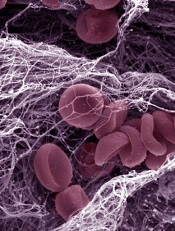
Credit: Kevin MacKenzie
Corticosteroid use may increase the risk of venous thromboembolism (VTE) in patients with inflammatory bowel disease (IBD), according to a study published in Clinical Gastroenterology and Hepatology.
The study showed that IBD patients who received corticosteroids alone or in combination with biologic therapy had a significantly higher risk of developing VTE than patients who received only biologic therapy.
“Venous thromboembolism is common in IBD and can lead to significant morbidity, increased death, and high rates of recurrent blood clots,” said lead study author Peter D.R. Higgins, MD, PhD, of the University of Michigan in Ann Arbor.
“The importance of understanding what causes this complication in this patient group cannot be understated.”
With that in mind, Dr Higgins and his colleagues conducted a retrospective analysis of adults with IBD identified from the Truven Health MarketScan® Databases.
The researchers assessed the rates of VTE over a 12-month period in 15,100 patients who were treated with biologics, corticosteroids, or a combination of the two.
In all, there were 325 VTEs. They occurred in 2.25% of patients who received only corticosteroids, 0.44% of patients who received biologics only, and 2.49% of patients who received combination therapy.
So the unadjusted risk of VTE within 12 months of an index prescription was 5-fold higher in patients who received corticosteroids alone and in combination with biologics than in patients who received biologics alone (P=0.028).
In a multivariate analysis in which corticosteroid-treated patients served as the reference, the odds ratio for VTE was 0.21 in patients who received biologics only (P<0.05) and 1.01 in patients treated with combination therapy (no significant difference).
“Combination therapy with corticosteroids and biologics was associated with nearly the same risk as corticosteroids alone, validating our conclusion that corticosteroids may truly increase venous thromboembolism risk and eliminate the potential benefit (for venous thromboembolic events) of inducing remission with biologics alone,” Dr Higgins said.
He and his colleagues noted that, although the association between active IBD flares and VTE has been well established, this is the first study to show a strong, independent association between corticosteroid use and VTE.
The study was funded by AbbVie Inc.
Credit: Kevin MacKenzie
Corticosteroid use may increase the risk of venous thromboembolism (VTE) in patients with inflammatory bowel disease (IBD), according to a study published in Clinical Gastroenterology and Hepatology.
The study showed that IBD patients who received corticosteroids alone or in combination with biologic therapy had a significantly higher risk of developing VTE than patients who received only biologic therapy.
“Venous thromboembolism is common in IBD and can lead to significant morbidity, increased death, and high rates of recurrent blood clots,” said lead study author Peter D.R. Higgins, MD, PhD, of the University of Michigan in Ann Arbor.
“The importance of understanding what causes this complication in this patient group cannot be understated.”
With that in mind, Dr Higgins and his colleagues conducted a retrospective analysis of adults with IBD identified from the Truven Health MarketScan® Databases.
The researchers assessed the rates of VTE over a 12-month period in 15,100 patients who were treated with biologics, corticosteroids, or a combination of the two.
In all, there were 325 VTEs. They occurred in 2.25% of patients who received only corticosteroids, 0.44% of patients who received biologics only, and 2.49% of patients who received combination therapy.
So the unadjusted risk of VTE within 12 months of an index prescription was 5-fold higher in patients who received corticosteroids alone and in combination with biologics than in patients who received biologics alone (P=0.028).
In a multivariate analysis in which corticosteroid-treated patients served as the reference, the odds ratio for VTE was 0.21 in patients who received biologics only (P<0.05) and 1.01 in patients treated with combination therapy (no significant difference).
“Combination therapy with corticosteroids and biologics was associated with nearly the same risk as corticosteroids alone, validating our conclusion that corticosteroids may truly increase venous thromboembolism risk and eliminate the potential benefit (for venous thromboembolic events) of inducing remission with biologics alone,” Dr Higgins said.
He and his colleagues noted that, although the association between active IBD flares and VTE has been well established, this is the first study to show a strong, independent association between corticosteroid use and VTE.
The study was funded by AbbVie Inc.
Credit: Kevin MacKenzie
Corticosteroid use may increase the risk of venous thromboembolism (VTE) in patients with inflammatory bowel disease (IBD), according to a study published in Clinical Gastroenterology and Hepatology.
The study showed that IBD patients who received corticosteroids alone or in combination with biologic therapy had a significantly higher risk of developing VTE than patients who received only biologic therapy.
“Venous thromboembolism is common in IBD and can lead to significant morbidity, increased death, and high rates of recurrent blood clots,” said lead study author Peter D.R. Higgins, MD, PhD, of the University of Michigan in Ann Arbor.
“The importance of understanding what causes this complication in this patient group cannot be understated.”
With that in mind, Dr Higgins and his colleagues conducted a retrospective analysis of adults with IBD identified from the Truven Health MarketScan® Databases.
The researchers assessed the rates of VTE over a 12-month period in 15,100 patients who were treated with biologics, corticosteroids, or a combination of the two.
In all, there were 325 VTEs. They occurred in 2.25% of patients who received only corticosteroids, 0.44% of patients who received biologics only, and 2.49% of patients who received combination therapy.
So the unadjusted risk of VTE within 12 months of an index prescription was 5-fold higher in patients who received corticosteroids alone and in combination with biologics than in patients who received biologics alone (P=0.028).
In a multivariate analysis in which corticosteroid-treated patients served as the reference, the odds ratio for VTE was 0.21 in patients who received biologics only (P<0.05) and 1.01 in patients treated with combination therapy (no significant difference).
“Combination therapy with corticosteroids and biologics was associated with nearly the same risk as corticosteroids alone, validating our conclusion that corticosteroids may truly increase venous thromboembolism risk and eliminate the potential benefit (for venous thromboembolic events) of inducing remission with biologics alone,” Dr Higgins said.
He and his colleagues noted that, although the association between active IBD flares and VTE has been well established, this is the first study to show a strong, independent association between corticosteroid use and VTE.
The study was funded by AbbVie Inc.
Platelet transfusions ineffective for TBI
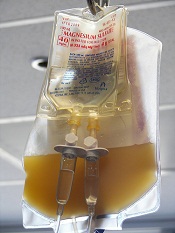
Platelet transfusions may not be appropriate treatment for patients with traumatic brain injury (TBI), new research suggests.
More than 1.7 million people in the US suffer a TBI every year, and as many as half of them experience progression of bleeding inside or around the brain, which is associated with an increased risk of death.
Platelet transfusions and desmopressin (DDAVP) are commonly used to prevent bleeding—and therefore death—in these patients.
But a new study published in the Journal of Neurotrauma suggests neither treatment is effective.
“Previous studies of platelet transfusion have looked only at mortality, and few studies have addressed the effect of DDAVP on bleeding in patients with TBI,” said study author Dennis Yong Kim, MD, of LA BioMed in Los Angeles, California.
“Our study found that the administration of platelets and DDAVP is no more effective in preventing progression of hemorrhage or death than was the use of none of these medications, irrespective of whether or not patients were on antiplatelet medications, such as aspirin, prior to their TBI.”
“Given the limited availability and potential for complications associated with transfusion of blood products like platelets, we believe that physicians should take a step back and re-think the necessity and efficacy of such treatments in patients with TBI.”
Dr Kim and his colleagues conducted a 3-year retrospective study of patients admitted to a Level 1 trauma center with TBI between January 1, 2010, and December 31, 2012. Of 408 patients, 126 received platelet transfusions and DDAVP, and 282 did not.
Overall, 37% of the patients demonstrated progression of traumatic intracranial hemorrhage within 4 hours of admission.
The researchers compared outcomes for the patients who received platelet transfusions and DDAVP to patients who did not receive the therapies.
A univariate analysis showed no difference in the incidence of hemorrhage progression, which occurred in 43.7% of patients who received transfusions and DDAVP and 34.2% of patients who received neither treatment (P=0.07).
And multivariate analyses showed that platelet transfusions and DDAVP were not associated with a decreased risk of hemorrhage progression (odds ratio=1.40, P=0.2) or mortality (odds ratio=1.50, P=0.4).
Platelet transfusions may not be appropriate treatment for patients with traumatic brain injury (TBI), new research suggests.
More than 1.7 million people in the US suffer a TBI every year, and as many as half of them experience progression of bleeding inside or around the brain, which is associated with an increased risk of death.
Platelet transfusions and desmopressin (DDAVP) are commonly used to prevent bleeding—and therefore death—in these patients.
But a new study published in the Journal of Neurotrauma suggests neither treatment is effective.
“Previous studies of platelet transfusion have looked only at mortality, and few studies have addressed the effect of DDAVP on bleeding in patients with TBI,” said study author Dennis Yong Kim, MD, of LA BioMed in Los Angeles, California.
“Our study found that the administration of platelets and DDAVP is no more effective in preventing progression of hemorrhage or death than was the use of none of these medications, irrespective of whether or not patients were on antiplatelet medications, such as aspirin, prior to their TBI.”
“Given the limited availability and potential for complications associated with transfusion of blood products like platelets, we believe that physicians should take a step back and re-think the necessity and efficacy of such treatments in patients with TBI.”
Dr Kim and his colleagues conducted a 3-year retrospective study of patients admitted to a Level 1 trauma center with TBI between January 1, 2010, and December 31, 2012. Of 408 patients, 126 received platelet transfusions and DDAVP, and 282 did not.
Overall, 37% of the patients demonstrated progression of traumatic intracranial hemorrhage within 4 hours of admission.
The researchers compared outcomes for the patients who received platelet transfusions and DDAVP to patients who did not receive the therapies.
A univariate analysis showed no difference in the incidence of hemorrhage progression, which occurred in 43.7% of patients who received transfusions and DDAVP and 34.2% of patients who received neither treatment (P=0.07).
And multivariate analyses showed that platelet transfusions and DDAVP were not associated with a decreased risk of hemorrhage progression (odds ratio=1.40, P=0.2) or mortality (odds ratio=1.50, P=0.4).
Platelet transfusions may not be appropriate treatment for patients with traumatic brain injury (TBI), new research suggests.
More than 1.7 million people in the US suffer a TBI every year, and as many as half of them experience progression of bleeding inside or around the brain, which is associated with an increased risk of death.
Platelet transfusions and desmopressin (DDAVP) are commonly used to prevent bleeding—and therefore death—in these patients.
But a new study published in the Journal of Neurotrauma suggests neither treatment is effective.
“Previous studies of platelet transfusion have looked only at mortality, and few studies have addressed the effect of DDAVP on bleeding in patients with TBI,” said study author Dennis Yong Kim, MD, of LA BioMed in Los Angeles, California.
“Our study found that the administration of platelets and DDAVP is no more effective in preventing progression of hemorrhage or death than was the use of none of these medications, irrespective of whether or not patients were on antiplatelet medications, such as aspirin, prior to their TBI.”
“Given the limited availability and potential for complications associated with transfusion of blood products like platelets, we believe that physicians should take a step back and re-think the necessity and efficacy of such treatments in patients with TBI.”
Dr Kim and his colleagues conducted a 3-year retrospective study of patients admitted to a Level 1 trauma center with TBI between January 1, 2010, and December 31, 2012. Of 408 patients, 126 received platelet transfusions and DDAVP, and 282 did not.
Overall, 37% of the patients demonstrated progression of traumatic intracranial hemorrhage within 4 hours of admission.
The researchers compared outcomes for the patients who received platelet transfusions and DDAVP to patients who did not receive the therapies.
A univariate analysis showed no difference in the incidence of hemorrhage progression, which occurred in 43.7% of patients who received transfusions and DDAVP and 34.2% of patients who received neither treatment (P=0.07).
And multivariate analyses showed that platelet transfusions and DDAVP were not associated with a decreased risk of hemorrhage progression (odds ratio=1.40, P=0.2) or mortality (odds ratio=1.50, P=0.4).
NICE gives conditional support for eculizumab
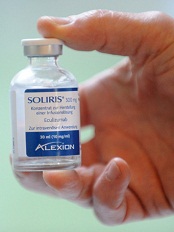
Credit: Globovision
The UK’s National Institute for Health and Care Excellence (NICE) has issued a final guidance recommending eculizumab (Soliris) as a treatment for atypical hemolytic uremic syndrome (aHUS), but only if certain conditions are met.
The guidance is the first to be produced as part of NICE’s highly specialized technologies program to evaluate treatments for very rare conditions.
aHUS affects around 200 people in England, with 20 to 30 new patients diagnosed with the condition each year.
The condition causes inflammation of blood vessels and thrombus formation throughout the body. So aHUS patients are at constant risk of sudden and progressive damage to, and failure of, vital organs.
“aHUS is a very distressing condition that imposes a significant burden both on those with the condition and their carers and families,” said NICE Chief Executive Sir Andrew Dillon.
“[A committee advising NICE] accepted that eculizumab is a step change in the management of aHUS and can be considered a significant innovation for a disease with a high unmet clinical need. It offers people with aHUS the possibility of avoiding end-stage renal failure, dialysis, and kidney transplantation, as well as other organ damage.”
“The drug is, however, very expensive. The committee felt that the budget impact of eculizumab would be lower if the potential for adjusting the dose of the drug and stopping treatment was explored. This is reflected in the guidance, which recommends eculizumab should be funded only if important conditions are met, including the development of rules for starting and stopping treatment for clinical reasons. In the meantime, NHS England and the company should consider what opportunities might exist to reduce the cost of eculizumab to the NHS.”
The conditions for funding eculizumab are as follows:
- Use of the drug must be coordinated through an expert center.
- Monitoring systems must record the number of people with aHUS, the number who receive eculizumab, and the dose and duration of treatment.
- A national protocol must be developed for starting and stopping eculizumab for clinical reasons.
- A research program is needed with robust methods to evaluate when stopping treatment or dose adjustment might occur.
Eculizumab usage and costs
Eculizumab is given intravenously in adults as initial treatment at a dose of 900 mg for 4 weeks, then as maintenance treatment at a dose of 1200 mg on week 5 and then every 12 to 16 days.
The summary of product characteristics for eculizumab states that “treatment is recommended to continue for a patient’s lifetime, unless discontinuation of treatment is clinically indicated.” Eculizumab costs £3150 per 30 mL vial (excluding tax).
The net budget impact of eculizumab is confidential. However, NICE has prepared an illustration of the possible budget impact of eculizumab for aHUS, using information that is available in the public domain.
This is based on a treatment cost of £340,200 per adult patient in the first year (based on the acquisition cost of the drug and the recommended dosing for an adult) and assumes a patient cohort of 170, as estimated by NHS England.
If it is assumed that all of these adults with aHUS are treated with eculizumab, the budget impact for the first year would be £57.8 million.
If an additional 20 new patients are treated the following year (based on a worldwide incidence of 0.4 per million), the budget impact will rise to £62.5 million in year 2, assuming all new patients are treated and all existing patients continue to be treated at the maintenance cost of £327,600 per year.
Using the same assumptions, the budget impact will rise to £69 million in year 3 (190 existing and 20 new patients), £75 million in year 4 (210 existing and 20 new patients), and £82 million in year 5 (230 existing and 20 new patients).
NHS England has indicated that the amount of the budget allocated for highly specialized services in 2013/14 was £544 million, and the money spent on high-cost drugs was £156 million.
The committee acknowledged that the estimate of the incremental cost of eculizumab made by Alexion Pharmaceuticals (the company developing eculizumab) compared with standard care was considerable. And incremental costs estimated by the evidence review group were higher still (although results are confidential).
Alexion estimated that eculizumab produced 25.22 additional quality-adjusted life-years (QALYs) per patient compared with standard care. Although the QALYs estimated in the evidence review group’s analysis were markedly lower than those calculated by the company, the advisory committee said both analyses produced substantial QALY gains of a magnitude that is rarely seen for any new drug.
For more information, see the guidance on the NICE website.
Credit: Globovision
The UK’s National Institute for Health and Care Excellence (NICE) has issued a final guidance recommending eculizumab (Soliris) as a treatment for atypical hemolytic uremic syndrome (aHUS), but only if certain conditions are met.
The guidance is the first to be produced as part of NICE’s highly specialized technologies program to evaluate treatments for very rare conditions.
aHUS affects around 200 people in England, with 20 to 30 new patients diagnosed with the condition each year.
The condition causes inflammation of blood vessels and thrombus formation throughout the body. So aHUS patients are at constant risk of sudden and progressive damage to, and failure of, vital organs.
“aHUS is a very distressing condition that imposes a significant burden both on those with the condition and their carers and families,” said NICE Chief Executive Sir Andrew Dillon.
“[A committee advising NICE] accepted that eculizumab is a step change in the management of aHUS and can be considered a significant innovation for a disease with a high unmet clinical need. It offers people with aHUS the possibility of avoiding end-stage renal failure, dialysis, and kidney transplantation, as well as other organ damage.”
“The drug is, however, very expensive. The committee felt that the budget impact of eculizumab would be lower if the potential for adjusting the dose of the drug and stopping treatment was explored. This is reflected in the guidance, which recommends eculizumab should be funded only if important conditions are met, including the development of rules for starting and stopping treatment for clinical reasons. In the meantime, NHS England and the company should consider what opportunities might exist to reduce the cost of eculizumab to the NHS.”
The conditions for funding eculizumab are as follows:
- Use of the drug must be coordinated through an expert center.
- Monitoring systems must record the number of people with aHUS, the number who receive eculizumab, and the dose and duration of treatment.
- A national protocol must be developed for starting and stopping eculizumab for clinical reasons.
- A research program is needed with robust methods to evaluate when stopping treatment or dose adjustment might occur.
Eculizumab usage and costs
Eculizumab is given intravenously in adults as initial treatment at a dose of 900 mg for 4 weeks, then as maintenance treatment at a dose of 1200 mg on week 5 and then every 12 to 16 days.
The summary of product characteristics for eculizumab states that “treatment is recommended to continue for a patient’s lifetime, unless discontinuation of treatment is clinically indicated.” Eculizumab costs £3150 per 30 mL vial (excluding tax).
The net budget impact of eculizumab is confidential. However, NICE has prepared an illustration of the possible budget impact of eculizumab for aHUS, using information that is available in the public domain.
This is based on a treatment cost of £340,200 per adult patient in the first year (based on the acquisition cost of the drug and the recommended dosing for an adult) and assumes a patient cohort of 170, as estimated by NHS England.
If it is assumed that all of these adults with aHUS are treated with eculizumab, the budget impact for the first year would be £57.8 million.
If an additional 20 new patients are treated the following year (based on a worldwide incidence of 0.4 per million), the budget impact will rise to £62.5 million in year 2, assuming all new patients are treated and all existing patients continue to be treated at the maintenance cost of £327,600 per year.
Using the same assumptions, the budget impact will rise to £69 million in year 3 (190 existing and 20 new patients), £75 million in year 4 (210 existing and 20 new patients), and £82 million in year 5 (230 existing and 20 new patients).
NHS England has indicated that the amount of the budget allocated for highly specialized services in 2013/14 was £544 million, and the money spent on high-cost drugs was £156 million.
The committee acknowledged that the estimate of the incremental cost of eculizumab made by Alexion Pharmaceuticals (the company developing eculizumab) compared with standard care was considerable. And incremental costs estimated by the evidence review group were higher still (although results are confidential).
Alexion estimated that eculizumab produced 25.22 additional quality-adjusted life-years (QALYs) per patient compared with standard care. Although the QALYs estimated in the evidence review group’s analysis were markedly lower than those calculated by the company, the advisory committee said both analyses produced substantial QALY gains of a magnitude that is rarely seen for any new drug.
For more information, see the guidance on the NICE website.
Credit: Globovision
The UK’s National Institute for Health and Care Excellence (NICE) has issued a final guidance recommending eculizumab (Soliris) as a treatment for atypical hemolytic uremic syndrome (aHUS), but only if certain conditions are met.
The guidance is the first to be produced as part of NICE’s highly specialized technologies program to evaluate treatments for very rare conditions.
aHUS affects around 200 people in England, with 20 to 30 new patients diagnosed with the condition each year.
The condition causes inflammation of blood vessels and thrombus formation throughout the body. So aHUS patients are at constant risk of sudden and progressive damage to, and failure of, vital organs.
“aHUS is a very distressing condition that imposes a significant burden both on those with the condition and their carers and families,” said NICE Chief Executive Sir Andrew Dillon.
“[A committee advising NICE] accepted that eculizumab is a step change in the management of aHUS and can be considered a significant innovation for a disease with a high unmet clinical need. It offers people with aHUS the possibility of avoiding end-stage renal failure, dialysis, and kidney transplantation, as well as other organ damage.”
“The drug is, however, very expensive. The committee felt that the budget impact of eculizumab would be lower if the potential for adjusting the dose of the drug and stopping treatment was explored. This is reflected in the guidance, which recommends eculizumab should be funded only if important conditions are met, including the development of rules for starting and stopping treatment for clinical reasons. In the meantime, NHS England and the company should consider what opportunities might exist to reduce the cost of eculizumab to the NHS.”
The conditions for funding eculizumab are as follows:
- Use of the drug must be coordinated through an expert center.
- Monitoring systems must record the number of people with aHUS, the number who receive eculizumab, and the dose and duration of treatment.
- A national protocol must be developed for starting and stopping eculizumab for clinical reasons.
- A research program is needed with robust methods to evaluate when stopping treatment or dose adjustment might occur.
Eculizumab usage and costs
Eculizumab is given intravenously in adults as initial treatment at a dose of 900 mg for 4 weeks, then as maintenance treatment at a dose of 1200 mg on week 5 and then every 12 to 16 days.
The summary of product characteristics for eculizumab states that “treatment is recommended to continue for a patient’s lifetime, unless discontinuation of treatment is clinically indicated.” Eculizumab costs £3150 per 30 mL vial (excluding tax).
The net budget impact of eculizumab is confidential. However, NICE has prepared an illustration of the possible budget impact of eculizumab for aHUS, using information that is available in the public domain.
This is based on a treatment cost of £340,200 per adult patient in the first year (based on the acquisition cost of the drug and the recommended dosing for an adult) and assumes a patient cohort of 170, as estimated by NHS England.
If it is assumed that all of these adults with aHUS are treated with eculizumab, the budget impact for the first year would be £57.8 million.
If an additional 20 new patients are treated the following year (based on a worldwide incidence of 0.4 per million), the budget impact will rise to £62.5 million in year 2, assuming all new patients are treated and all existing patients continue to be treated at the maintenance cost of £327,600 per year.
Using the same assumptions, the budget impact will rise to £69 million in year 3 (190 existing and 20 new patients), £75 million in year 4 (210 existing and 20 new patients), and £82 million in year 5 (230 existing and 20 new patients).
NHS England has indicated that the amount of the budget allocated for highly specialized services in 2013/14 was £544 million, and the money spent on high-cost drugs was £156 million.
The committee acknowledged that the estimate of the incremental cost of eculizumab made by Alexion Pharmaceuticals (the company developing eculizumab) compared with standard care was considerable. And incremental costs estimated by the evidence review group were higher still (although results are confidential).
Alexion estimated that eculizumab produced 25.22 additional quality-adjusted life-years (QALYs) per patient compared with standard care. Although the QALYs estimated in the evidence review group’s analysis were markedly lower than those calculated by the company, the advisory committee said both analyses produced substantial QALY gains of a magnitude that is rarely seen for any new drug.
For more information, see the guidance on the NICE website.
Outcomes still dismal in PTCL, project shows
SAN FRANCISCO—Outcomes remain dismal for the majority of patients with peripheral T-cell lymphoma (PTCL), according to a speaker at the 7th Annual T-cell Lymphoma Forum.
Massimo Federico, MD, of the Università di Modena e Reggio Emilia in Italy, presented an analysis of the first 1000 patients enrolled in the prospective T-Cell Project.
The data showed no improvements in survival for these patients compared to patients included in the retrospective International Peripheral T-Cell Lymphoma
Project.
The International Peripheral T-Cell Lymphoma Project included PTCL patients treated at various institutions between 1990 and 2002.
The T-Cell Project was designed to complement this retrospective analysis, providing prospective international data on PTCL patients.
“The main aim was to verify if a prospective collection of data would allow for more accurate information to better define prognosis of the most frequent subtypes of PTCL—PTCL not otherwise specified (NOS) and angioimmunoblastic T-cell lymphoma (AITL)—and improve our knowledge of clinical and biological characteristics and outcomes of the more uncommon subtypes of PTCL,” Dr Federico said.
He reported that, as of January 12, 2015, 73 institutions were recruiting patients for the project, and 6 institutions were active but not yet recruiting.
Of the 1308 patients registered at that point, 46% were from European countries (Italy, UK, Switzerland, Slovakia, Spain, and France), 20% were from the US, 20% were from South America (Argentina, Brazil, Chile, and Uruguay), and 14% were from the Middle East or Far East (South Korea, Hong Kong, and Israel).
Dr Federico went on to present data from the first 1000 patients registered in the project. The final analysis actually included 943 patients, as some patients withdrew consent, some did not have baseline data available, and some diagnoses could not be confirmed.
So of the 943 patients, 37% had PTCL-NOS, 17% had AITL, 15% had ALK-negative anaplastic large-cell lymphoma (ALCL), 7% had ALK-positive ALCL, 11% had natural killer/T-cell lymphoma (NKTCL), 8% had T-cell receptor γδ T-cell lymphoma, and 5% had other histologies.
The patients’ median age was 56 (range, 18-89), and 61% were male. Twenty-four percent of patients had an ECOG status greater than 1, 48% had B symptoms, and 71% had disease-related discomfort. Sixty-seven percent of patients had stage III-IV disease, 27% had nodal-only disease, 6% had bulky disease, 29% had more than 1 extranodal site, and 19% had bone marrow involvement.
The median follow-up was 41 months (range, 1-91). The 5-year overall survival (OS) was 44%, and the median OS was 39 months.
The 5-year OS was 35% for patients with PTCL-NOS, 42% for those with AITL, 45% for those with ALK-negative ALCL, 80% for those with ALK-positive ALCL, 48% for those with NKTCL (56% for nasal and 33% for extranasal), and 39% for those with T-cell receptor γδ T-cell lymphoma.
In comparison, the International Peripheral T-Cell Lymphoma Project showed a 5-year OS of 32% for patients with PTCL-NOS, 70% for patients with ALK-positive ALCL, and 49% for patients with ALK-negative ALCL (K. Savage et al. Blood 2008). The 5-year OS was 40% for patients with nasal NKTCL and 15% for those with extranasal NKTCL (W. Au et al. Blood 2008).
“[T]he outcome of PTCL continues to be dismal in the majority of cases, [with] no improvement in overall survival compared to older series,” Dr Federico summarized. “Treatment remains challenging, and new therapies are welcome.”
He added that the next steps for the T-Cell Project are to continue registration (with the goal of reaching 2000 assessable cases), extend the network to additional sites (particularly in under-represented areas such as Japan, China, India, and Oceania), and expand the collection of tissue.
“In particular, we intend to create an international tissue catalogue—including paraffin-embedded samples and, if possible, frozen ones—accessible to research groups with a solid reputation in investigating PTCLs at the molecular and translation level.”
SAN FRANCISCO—Outcomes remain dismal for the majority of patients with peripheral T-cell lymphoma (PTCL), according to a speaker at the 7th Annual T-cell Lymphoma Forum.
Massimo Federico, MD, of the Università di Modena e Reggio Emilia in Italy, presented an analysis of the first 1000 patients enrolled in the prospective T-Cell Project.
The data showed no improvements in survival for these patients compared to patients included in the retrospective International Peripheral T-Cell Lymphoma
Project.
The International Peripheral T-Cell Lymphoma Project included PTCL patients treated at various institutions between 1990 and 2002.
The T-Cell Project was designed to complement this retrospective analysis, providing prospective international data on PTCL patients.
“The main aim was to verify if a prospective collection of data would allow for more accurate information to better define prognosis of the most frequent subtypes of PTCL—PTCL not otherwise specified (NOS) and angioimmunoblastic T-cell lymphoma (AITL)—and improve our knowledge of clinical and biological characteristics and outcomes of the more uncommon subtypes of PTCL,” Dr Federico said.
He reported that, as of January 12, 2015, 73 institutions were recruiting patients for the project, and 6 institutions were active but not yet recruiting.
Of the 1308 patients registered at that point, 46% were from European countries (Italy, UK, Switzerland, Slovakia, Spain, and France), 20% were from the US, 20% were from South America (Argentina, Brazil, Chile, and Uruguay), and 14% were from the Middle East or Far East (South Korea, Hong Kong, and Israel).
Dr Federico went on to present data from the first 1000 patients registered in the project. The final analysis actually included 943 patients, as some patients withdrew consent, some did not have baseline data available, and some diagnoses could not be confirmed.
So of the 943 patients, 37% had PTCL-NOS, 17% had AITL, 15% had ALK-negative anaplastic large-cell lymphoma (ALCL), 7% had ALK-positive ALCL, 11% had natural killer/T-cell lymphoma (NKTCL), 8% had T-cell receptor γδ T-cell lymphoma, and 5% had other histologies.
The patients’ median age was 56 (range, 18-89), and 61% were male. Twenty-four percent of patients had an ECOG status greater than 1, 48% had B symptoms, and 71% had disease-related discomfort. Sixty-seven percent of patients had stage III-IV disease, 27% had nodal-only disease, 6% had bulky disease, 29% had more than 1 extranodal site, and 19% had bone marrow involvement.
The median follow-up was 41 months (range, 1-91). The 5-year overall survival (OS) was 44%, and the median OS was 39 months.
The 5-year OS was 35% for patients with PTCL-NOS, 42% for those with AITL, 45% for those with ALK-negative ALCL, 80% for those with ALK-positive ALCL, 48% for those with NKTCL (56% for nasal and 33% for extranasal), and 39% for those with T-cell receptor γδ T-cell lymphoma.
In comparison, the International Peripheral T-Cell Lymphoma Project showed a 5-year OS of 32% for patients with PTCL-NOS, 70% for patients with ALK-positive ALCL, and 49% for patients with ALK-negative ALCL (K. Savage et al. Blood 2008). The 5-year OS was 40% for patients with nasal NKTCL and 15% for those with extranasal NKTCL (W. Au et al. Blood 2008).
“[T]he outcome of PTCL continues to be dismal in the majority of cases, [with] no improvement in overall survival compared to older series,” Dr Federico summarized. “Treatment remains challenging, and new therapies are welcome.”
He added that the next steps for the T-Cell Project are to continue registration (with the goal of reaching 2000 assessable cases), extend the network to additional sites (particularly in under-represented areas such as Japan, China, India, and Oceania), and expand the collection of tissue.
“In particular, we intend to create an international tissue catalogue—including paraffin-embedded samples and, if possible, frozen ones—accessible to research groups with a solid reputation in investigating PTCLs at the molecular and translation level.”
SAN FRANCISCO—Outcomes remain dismal for the majority of patients with peripheral T-cell lymphoma (PTCL), according to a speaker at the 7th Annual T-cell Lymphoma Forum.
Massimo Federico, MD, of the Università di Modena e Reggio Emilia in Italy, presented an analysis of the first 1000 patients enrolled in the prospective T-Cell Project.
The data showed no improvements in survival for these patients compared to patients included in the retrospective International Peripheral T-Cell Lymphoma
Project.
The International Peripheral T-Cell Lymphoma Project included PTCL patients treated at various institutions between 1990 and 2002.
The T-Cell Project was designed to complement this retrospective analysis, providing prospective international data on PTCL patients.
“The main aim was to verify if a prospective collection of data would allow for more accurate information to better define prognosis of the most frequent subtypes of PTCL—PTCL not otherwise specified (NOS) and angioimmunoblastic T-cell lymphoma (AITL)—and improve our knowledge of clinical and biological characteristics and outcomes of the more uncommon subtypes of PTCL,” Dr Federico said.
He reported that, as of January 12, 2015, 73 institutions were recruiting patients for the project, and 6 institutions were active but not yet recruiting.
Of the 1308 patients registered at that point, 46% were from European countries (Italy, UK, Switzerland, Slovakia, Spain, and France), 20% were from the US, 20% were from South America (Argentina, Brazil, Chile, and Uruguay), and 14% were from the Middle East or Far East (South Korea, Hong Kong, and Israel).
Dr Federico went on to present data from the first 1000 patients registered in the project. The final analysis actually included 943 patients, as some patients withdrew consent, some did not have baseline data available, and some diagnoses could not be confirmed.
So of the 943 patients, 37% had PTCL-NOS, 17% had AITL, 15% had ALK-negative anaplastic large-cell lymphoma (ALCL), 7% had ALK-positive ALCL, 11% had natural killer/T-cell lymphoma (NKTCL), 8% had T-cell receptor γδ T-cell lymphoma, and 5% had other histologies.
The patients’ median age was 56 (range, 18-89), and 61% were male. Twenty-four percent of patients had an ECOG status greater than 1, 48% had B symptoms, and 71% had disease-related discomfort. Sixty-seven percent of patients had stage III-IV disease, 27% had nodal-only disease, 6% had bulky disease, 29% had more than 1 extranodal site, and 19% had bone marrow involvement.
The median follow-up was 41 months (range, 1-91). The 5-year overall survival (OS) was 44%, and the median OS was 39 months.
The 5-year OS was 35% for patients with PTCL-NOS, 42% for those with AITL, 45% for those with ALK-negative ALCL, 80% for those with ALK-positive ALCL, 48% for those with NKTCL (56% for nasal and 33% for extranasal), and 39% for those with T-cell receptor γδ T-cell lymphoma.
In comparison, the International Peripheral T-Cell Lymphoma Project showed a 5-year OS of 32% for patients with PTCL-NOS, 70% for patients with ALK-positive ALCL, and 49% for patients with ALK-negative ALCL (K. Savage et al. Blood 2008). The 5-year OS was 40% for patients with nasal NKTCL and 15% for those with extranasal NKTCL (W. Au et al. Blood 2008).
“[T]he outcome of PTCL continues to be dismal in the majority of cases, [with] no improvement in overall survival compared to older series,” Dr Federico summarized. “Treatment remains challenging, and new therapies are welcome.”
He added that the next steps for the T-Cell Project are to continue registration (with the goal of reaching 2000 assessable cases), extend the network to additional sites (particularly in under-represented areas such as Japan, China, India, and Oceania), and expand the collection of tissue.
“In particular, we intend to create an international tissue catalogue—including paraffin-embedded samples and, if possible, frozen ones—accessible to research groups with a solid reputation in investigating PTCLs at the molecular and translation level.”